The University of Kansas

Inside Spencer: The KSRL Blog

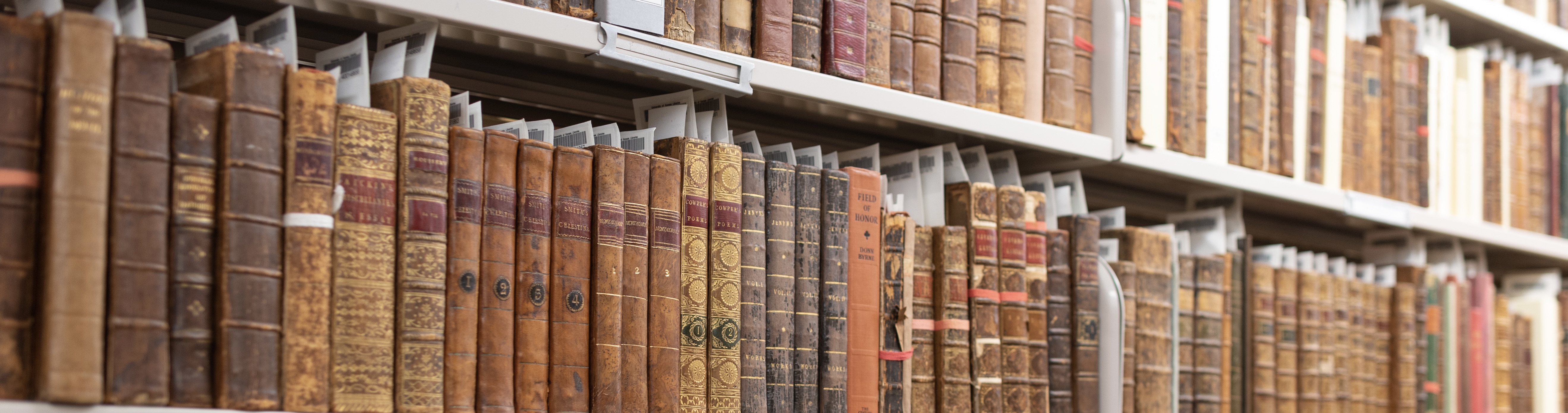
Books on a shelf

Welcome to the Kenneth Spencer Research Library blog! As the special collections and archives library at the University of Kansas, Spencer is home to remarkable and diverse collections of rare and unique items. Explore the blog to learn about the work we do and the materials we collect.

Throwback Thursday: Game Day Travel Edition

November 12th, 2015

Each week we’ll be posting a photograph from University Archives that shows a scene from KU’s past. We’ve also scanned more than 10,100 images from KU’s University Archives and made them available online; be sure to check them out!

Photograph of KU fans taking a carriage to a football game, 1895

KU fans taking a carriage to a football game, 1895. University Archives Photos.
Call Number: RG 71/66/14 1895: Student Activities: Sports: Football (Photos).
Click image to enlarge (redirect to Spencer’s digital collections).

The caption on the back of the photograph states that it shows members of “Kappa Alpha Theta going to a football game in the ‘Jim Donnelley Talley Ho’. black and gold trimmings on the horse.”

James Donnelly (1842-1918) was born in Ireland and arrived in Lawrence with his siblings in 1857. A 1909 article in the Lawrence Daily Journal described him as a “fixture in this town [who] has always been one of our best citizens.” James, partnered with his brother Neill, managed a livery stable – where horses and vehicles are cared for or rented out for pay – under the name Donnelly Brothers. The 1909 article, which reported the sale of the business due to James’s poor health, stated that the “livery stable has a reputation all over the state. It has always been a favorite with the students. The firm always kept high grade rigs and accommodated the public.” The livery stable was located on New Hampshire Street at Winthrop (now 7th Street).

Caitlin Donnelly (no known relation to James)
Head of Public Services

Melissa Kleinschmidt, Megan Sims, and Abbey Ulrich
Public Services Student Assistants

Throwback Thursday: Spencer Dedication Edition

November 5th, 2015

Each week we’ll be posting a photograph from University Archives that shows a scene from KU’s past. We’ve also scanned more than 9,800 images from KU’s University Archives and made them available online; be sure to check them out!

If you’ve ever visited Spencer Research Library, you may have noticed a plaque adjacent to our third-floor entrance: “This research library is a gift of Helen Foresman Spencer in memory of her husband Kenneth Aldred Spencer, November 8, 1968.” That was date, forty-seven years ago Sunday, that the library was dedicated in a private ceremony attended by several hundred of Mrs. Spencer’s friends and educators from across the country. It marked the completion of the library’s construction, which took nearly two years. A public opening occurred one week later.

A story about the new library in the December 1968/January 1969 Kansas Alumni magazine noted that “Mrs. Spencer waxed and polished the furnishings and the floor of the Spencer Room [memorial office] herself before the opening and created floral arrangements for many of the rooms” (12).

Photograph of Spencer Research Library dedication, November 8, 1968

Spencer Research Library dedication ceremony on the terrace, November 8, 1968.
British novelist, scientist, and government official Sir Charles Percy Snow is at the rostrum.
Mrs. Spencer is shown sitting to the right of the entrance, behind the speaker.
University Archives Photos. Call Number: RG 0/22/82 1968 Dedication Prints:
Campus: Buildings: Spencer Research Library (Photos). Click image to enlarge.

We look forward to sharing more photographs and documents about Spencer Research Library’s beginning and early years as we approach our fiftieth anniversary in 2018!

Caitlin Donnelly
Head of Public Services

Melissa Kleinschmidt, Megan Sims, and Abbey Ulrich
Public Services Student Assistants

Throwback Thursday: Beat Oklahoma Edition

October 29th, 2015

Each week we’ll be posting a photograph from University Archives that shows a scene from KU’s past. We’ve also scanned more than 9,800 images from KU’s University Archives and made them available online; be sure to check them out!

This Saturday’s Homecoming game will be against Oklahoma, so this week’s photo – taken by well-known Lawrence photographer Duke D’Ambra – captures the Jayhawks’ dramatic win over the Sooners in the 1946 game at Memorial Stadium.

Photograph of a football game versus Oklahoma, 1946

KU’s winning field goal against Oklahoma on November 9, 1946.
Photograph by Duke D’Ambra. University Archives Photos.
Call Number: RG 66/14 1946 Games Oklahoma: Athletic Department: Football (Photos).
Click image to enlarge (redirect to Spencer’s digital collections).

Information on the back of the photograph describes what happened.

At the KU-Oklahoma game in Lawrence, Kans. in 1946 it was foggy, dark, gloomy – and the score was 13-13 – and only one minute and 20 seconds remaining. With K.U. in possession, Paul Turner, an unknown, came on the field and kicked a field goal to win for Kansas. See the ball over the bars?

A May 22, 1972, article in the Lawrence Journal-World announced D’Ambra’s death and further described the scene captured in the photograph. As the article also noted, D’Amdra was a “familiar figure on the sidelines at KU sports events.”

One of [D’Ambra’s] most famous photos came in November of 1946 when Kansas and Oklahoma were tied 13-all in a league football title showdown. With 75 seconds left, KU’s Paul Turner was called on to try an “impossible” field goal from 41 yards out in a driving rain that made Memorial Stadium‘s field a quagmire.

D’Ambra, with a beat-up box-style Graflex camera was the only photographer to get into place for the shot. Turner did the “impossible” and D’Ambra chronicled the ball passing through the crossbars to give Kansas a 16-13 upset of the powerful Sooners.

Caitlin Donnelly
Head of Public Services

Melissa Kleinschmidt, Megan Sims, and Abbey Ulrich
Public Services Student Assistants

Prohibition in Kansas

October 28th, 2015

On October 28, 1919, Congress passed the National Prohibition Act, making it illegal to produce, sell or transport “intoxicating” liquors. It passed in spite of President Wilson’s veto. It was also known as the Volstead Act, named after Congressman Andrew J. Volstead of Minnesota, who worked closely with the Anti-Saloon League to draft and promote the bill until it became law. The Volstead Act implemented the Prohibition (Eighteenth) Amendment by defining the process and procedures for banning alcoholic beverages, as well as their production and distribution.

Photograph of men drinking in saloon just before the start of Prohibition, 1919

Men at an unknown saloon in June 1919. The caption reads “fill ’em up, boys; last chance.”
Ratification of the Eighteenth Amendment was certified on January 16, 1919;
it took effect one year later. Call Number: PH PH P238. Click image to enlarge.

Photograph of Ardmore [Oklahoma] Police Department members pouring out barrels of alcohol, November 22, 1916

Ardmore [Oklahoma] Police Department members pouring out barrels of alcohol,
November 22, 1916. Call Number: PH PH P1617. Click image to enlarge.

In Kansas, however, prohibition had been an issue even before statehood in 1861. Organized groups such as the Order of Good Templars, the Kansas State Temperance Union, and the Woman’s Christian Temperance Union fought for statewide prohibition, eventually establishing Kansas as the first state to adopt prohibition into its constitution. Strongly prohibitionist, Republican governor John P. St. John was elected in 1878, and by this time the legislature was like-minded. The state law was ratified by voters in November 1880, and prohibition in Kansas took effect on January 1, 1881, making it illegal to manufacture or sell intoxicating liquors in the state.

Photograph of Kansas delegates to Michigan prohibition meeting, undated

Kansas delegates to a Michigan prohibition meeting, undated.
Call Number: RH PH P164. Click image to enlarge.

Pages from Prohibition pamphlets

A Prohibition pamphlet published in Kansas City, Kansas,
by M. A. Waterman, etc., 1911. Call Number: RH C4581.
Click image to enlarge.

Prohibition may have been the law of the land in Kansas, but saloons and bars simply paid fines and used loopholes in the law to stay in business. Established temperance organizations still worked to get stronger laws and ensure enforcement of them, but the failure to enforce the law, combined with a decline of support for prohibition among the general population, caused a rise of prohibitionist radicals such as Carrie Nation (1846-1911). Nation and her followers attracted attention to the liquor issue by using unconventional methods, such as smashing saloons with rocks and hatchets and getting arrested as a result. Topeka, Kansas, became Nation’s home base as she traveled around, in state and out, taking her message to the people. While her methods may have been radical, they did get results. She addressed a joint session of the Kansas legislature, went on a lecture tour, and published a temperance newspaper called the Smasher’s Mail. In 1907 the government began real enforcement of the prohibition laws, and the governor and the legislature made the laws stronger, closing loopholes.

Cover of The Smasher’s Mail, 1901

The Smasher’s Mail, edited by Carrie Nation,
“your loving home defender.”
Topeka, Kansas: Nick Chiles, 1901.
Call Number: RH VLT H5. Click image to enlarge.

For several years national, state, and local law enforcement officials worked to make the country “dry.” However, by the 1930s, most citizens thought prohibition had failed, and the amendment was repealed by President Franklin Roosevelt in 1933. However, in Kansas prohibition continued to be the law until 1948, when it was finally voted down. Alcohol in Kansas returned to being subject to local option laws, much like those that had been in place seventy years before.

Image of two songs in the Prohibition Bugle Call, 1887

Two songs from The Prohibition Bugle Call: New Songs for Prohibition Clubs,
Temperance Societies, Gospel Temperance Meetings and the Home Circle
by H. H. Hawley.
New York: Biglow & Main, 1887. Call Number: Shull C148. Click image to enlarge.

Kathy Lafferty
Public Services

Throwback Thursday: Trick-or-Treat Edition

October 22nd, 2015

Each week we’ll be posting a photograph from University Archives that shows a scene from KU’s past. We’ve also scanned more than 9,800 images from KU’s University Archives and made them available online; be sure to check them out!

Photograph of the Hilltop Child Development Center Halloween Parade, 1987-1988

The Hilltop Child Development Center Halloween Parade
passing by Spooner Hall, 1987-1988. Photo by Robbin Loomas Kern.
University Archives Photos. Call Number: RG 0/42 1987/1988 Prints
University General: Hilltop Daycare (Photos). Click image to enlarge.

Caitlin Donnelly
Head of Public Services

Melissa Kleinschmidt, Megan Sims, and Abbey Ulrich
Public Services Student Assistants