The University of Kansas

Inside Spencer: The KSRL Blog

Books on a shelf

Welcome to the Kenneth Spencer Research Library blog! As the special collections and archives library at the University of Kansas, Spencer is home to remarkable and diverse collections of rare and unique items. Explore the blog to learn about the work we do and the materials we collect.

World War I Letters of Forrest W. Bassett: April 23-29, 1918

April 24th, 2018

In honor of the centennial of World War I, we’re going to follow the experiences of one American soldier: nineteen-year-old Forrest W. Bassett, whose letters are held in Spencer’s Kansas Collection. Each Monday we’ll post a new entry, which will feature selected letters from Forrest to thirteen-year-old Ava Marie Shaw from that following week, one hundred years after he wrote them.

Forrest W. Bassett was born in Beloit, Wisconsin, on December 21, 1897 to Daniel F. and Ida V. Bassett. On July 20, 1917 he was sworn into military service at Jefferson Barracks near St. Louis, Missouri. Soon after, he was transferred to Fort Leavenworth, Kansas, for training as a radio operator in Company A of the U. S. Signal Corps’ 6th Field Battalion.

Ava Marie Shaw was born in Chicago, Illinois, on October 12, 1903 to Robert and Esther Shaw. Both of Marie’s parents – and her three older siblings – were born in Wisconsin. By 1910 the family was living in Woodstock, Illinois, northwest of Chicago. By 1917 they were in Beloit.

Frequently mentioned in the letters are Forrest’s older half-sister Blanche Treadway (born 1883), who had married Arthur Poquette in 1904, and Marie’s older sister Ethel (born 1896).

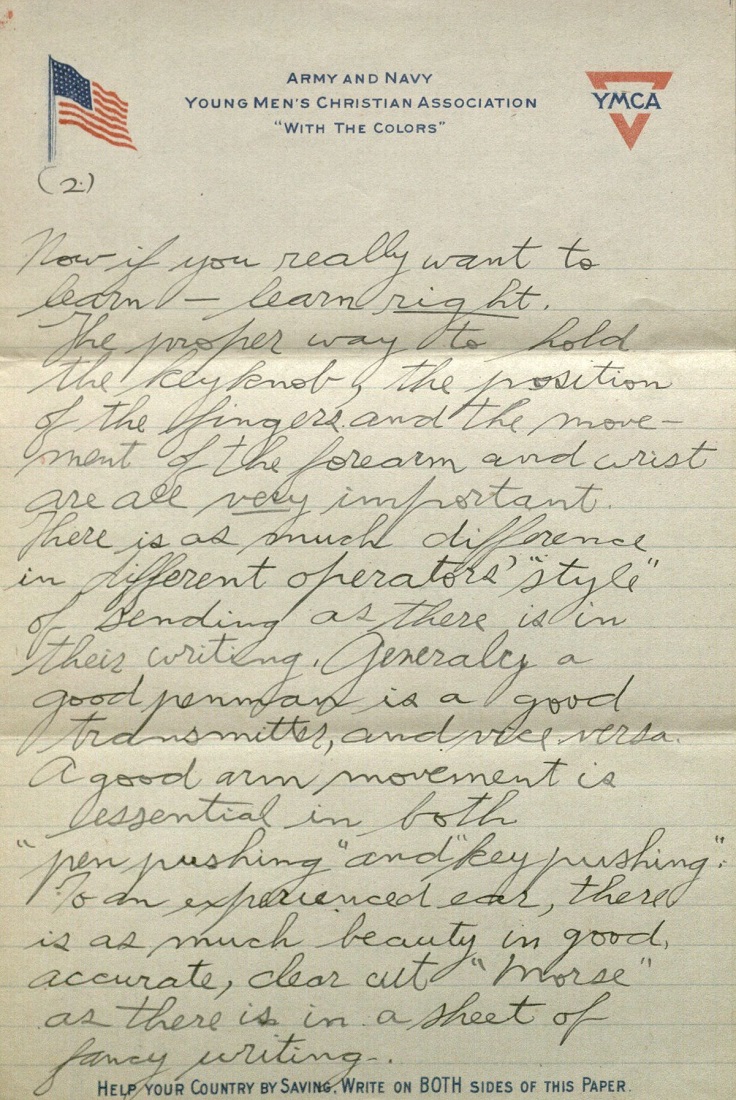
Highlights from this week’s letters include updates on Forrest’s transfer request (“I guess I may hope for a transfer, some day”) and advice to Marie about learning to telegraph (“to an experienced ear, there is as much beauty in good, accurate, clear cut ‘Morse’ as there is in a sheet of fancy writing”). “My life before I came here,” wrote Forrest on April 27, “seems more and more like a dream every day.”

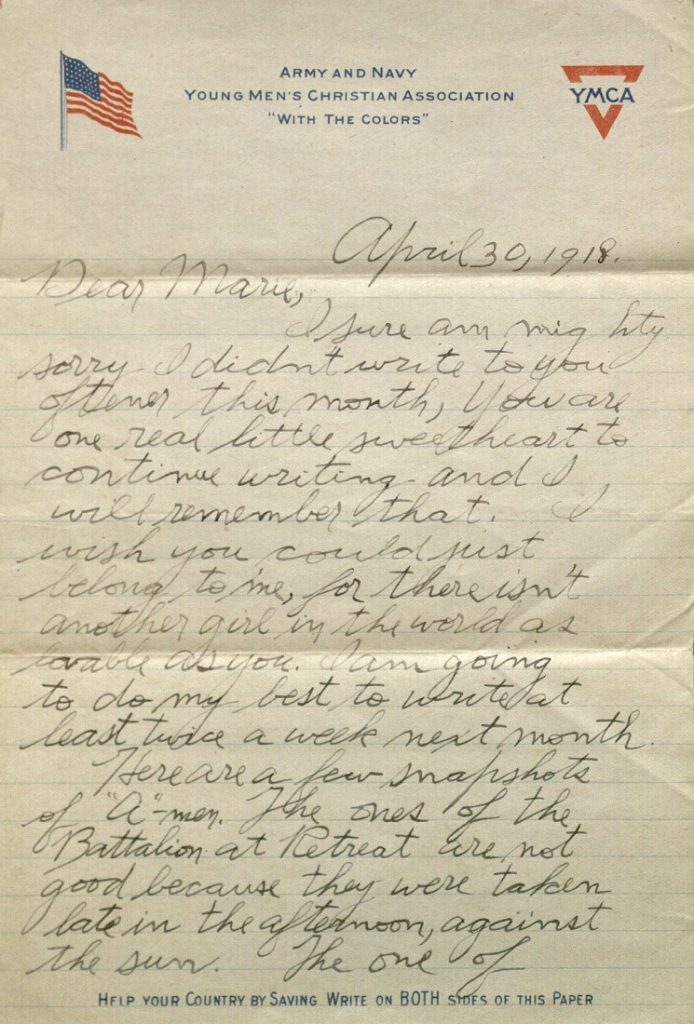
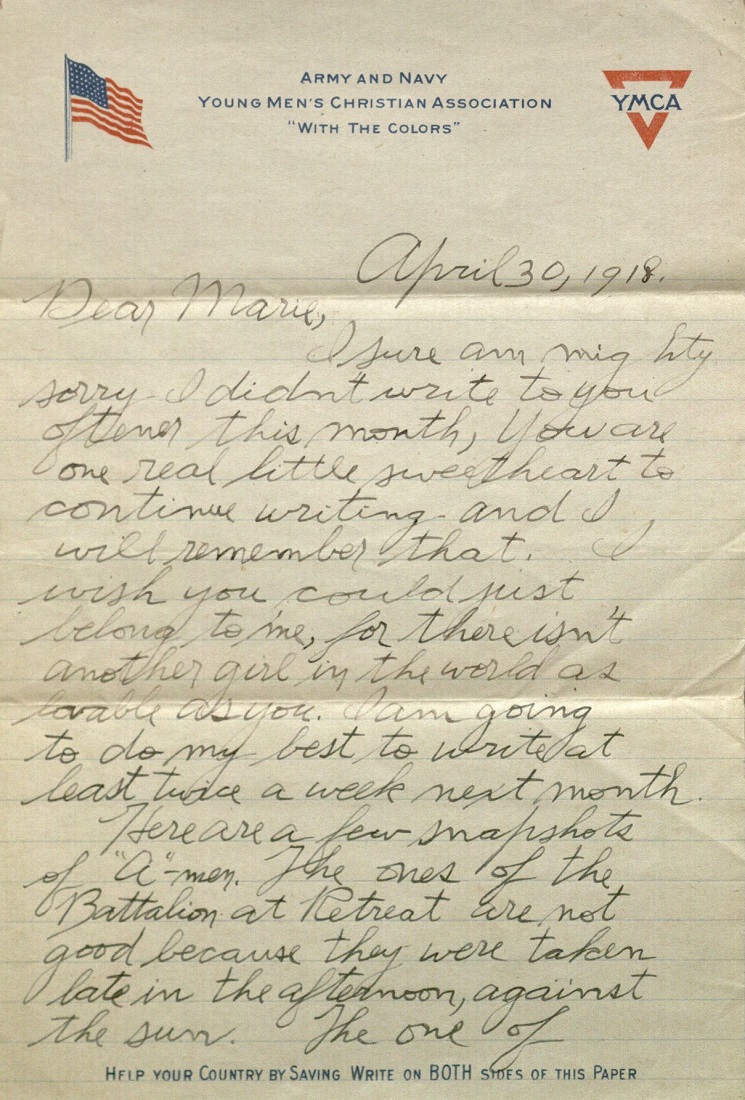
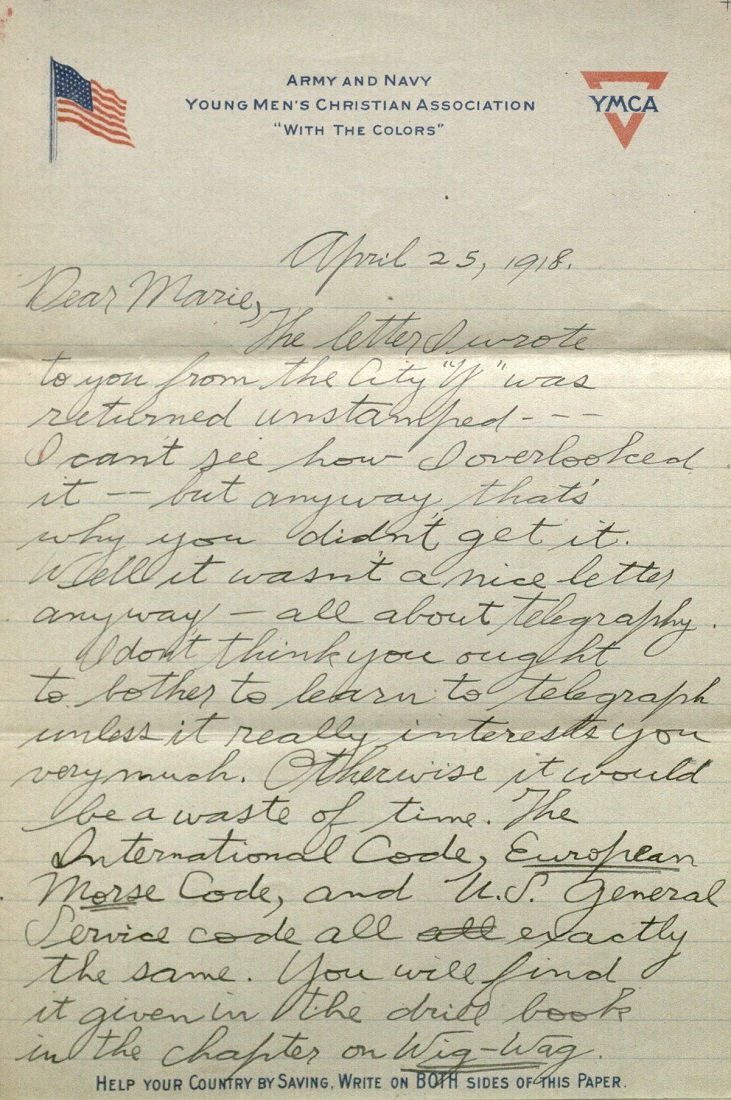
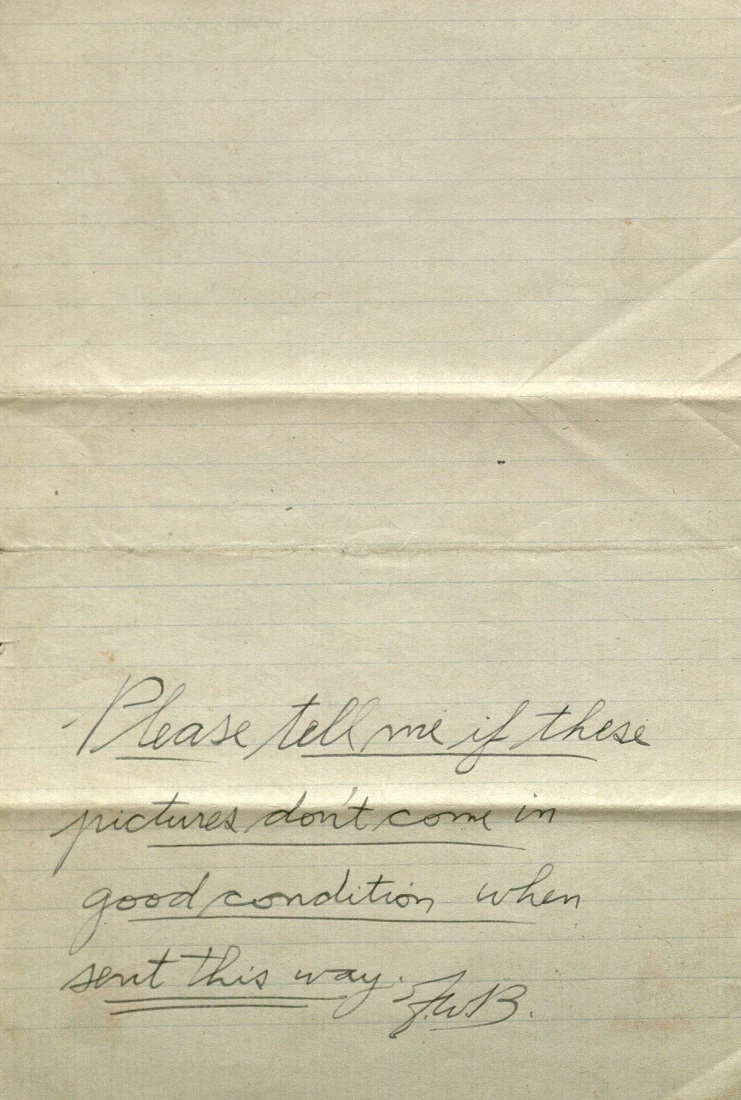
Image of Forrest W. Bassett's letter to Ava Marie Shaw, April 25, 1918 Image of Forrest W. Bassett's letter to Ava Marie Shaw, April 25, 1918

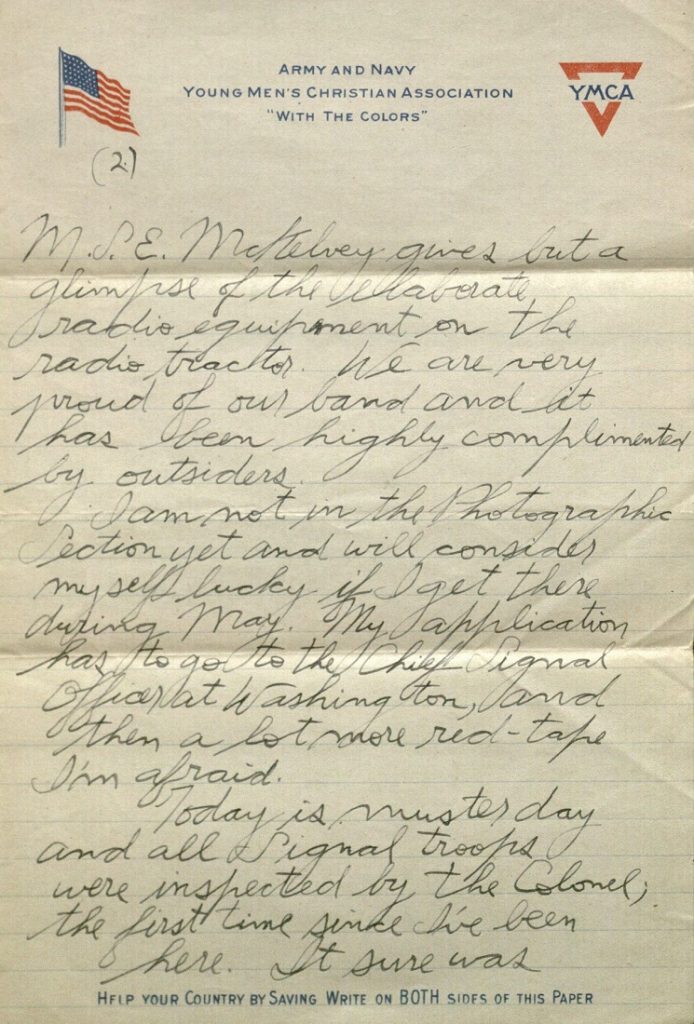
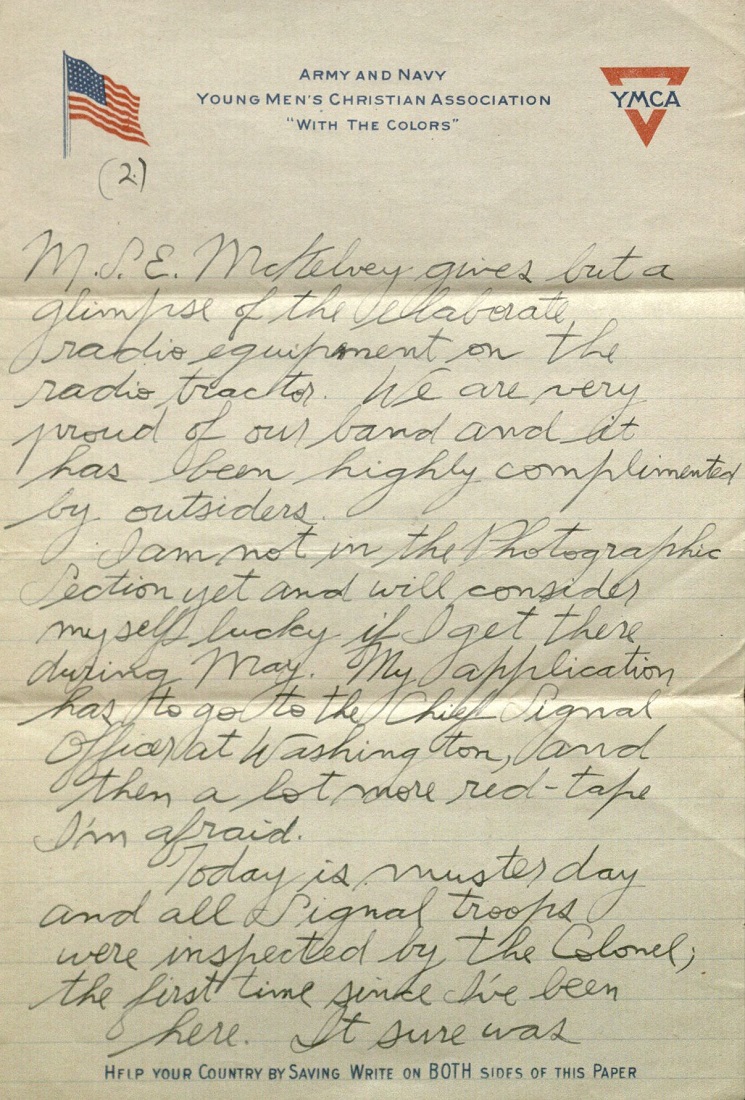
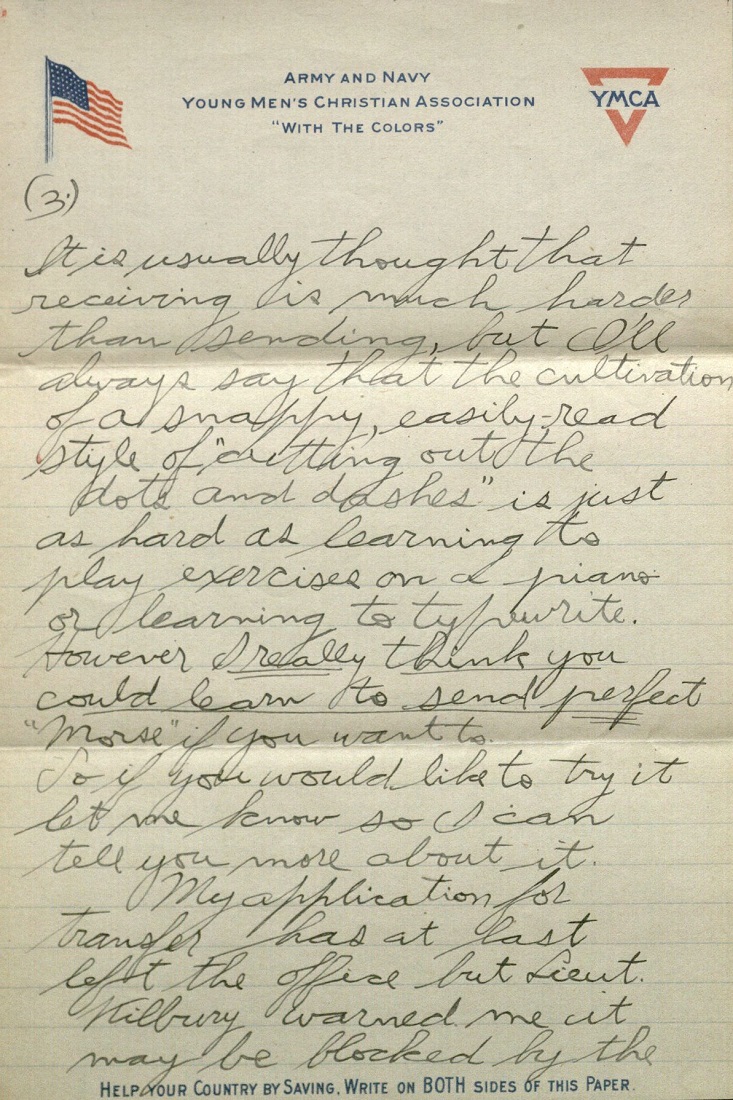
Image of Forrest W. Bassett's letter to Ava Marie Shaw, April 25, 1918 Image of Forrest W. Bassett's letter to Ava Marie Shaw, April 25, 1918

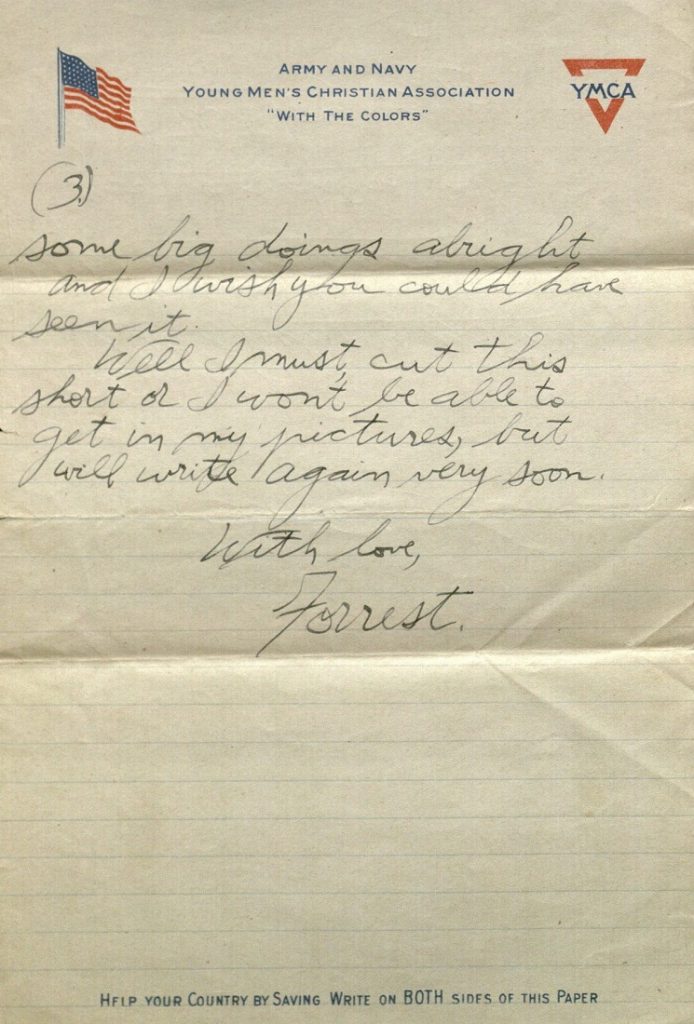
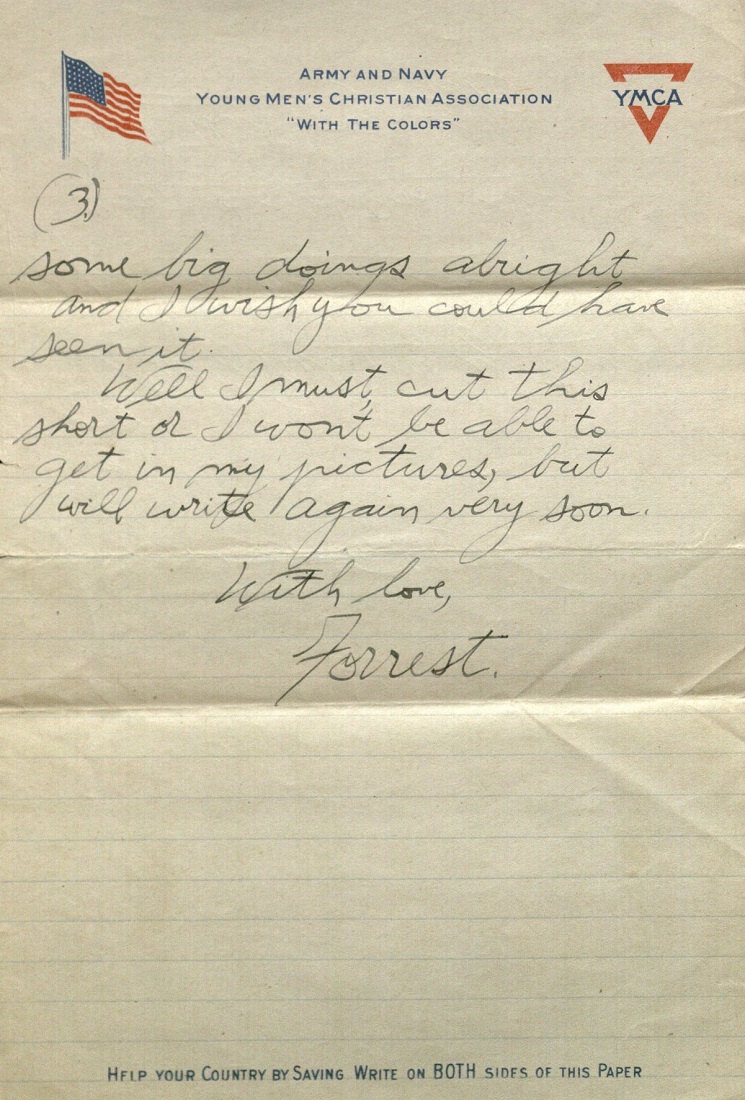
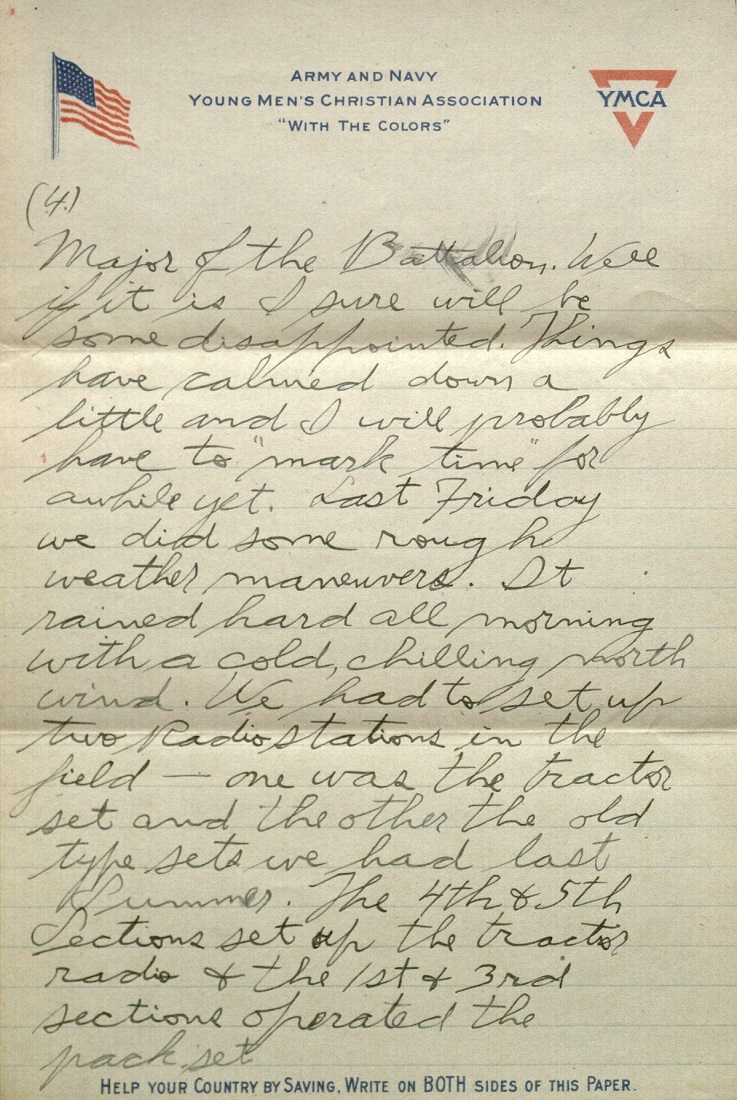
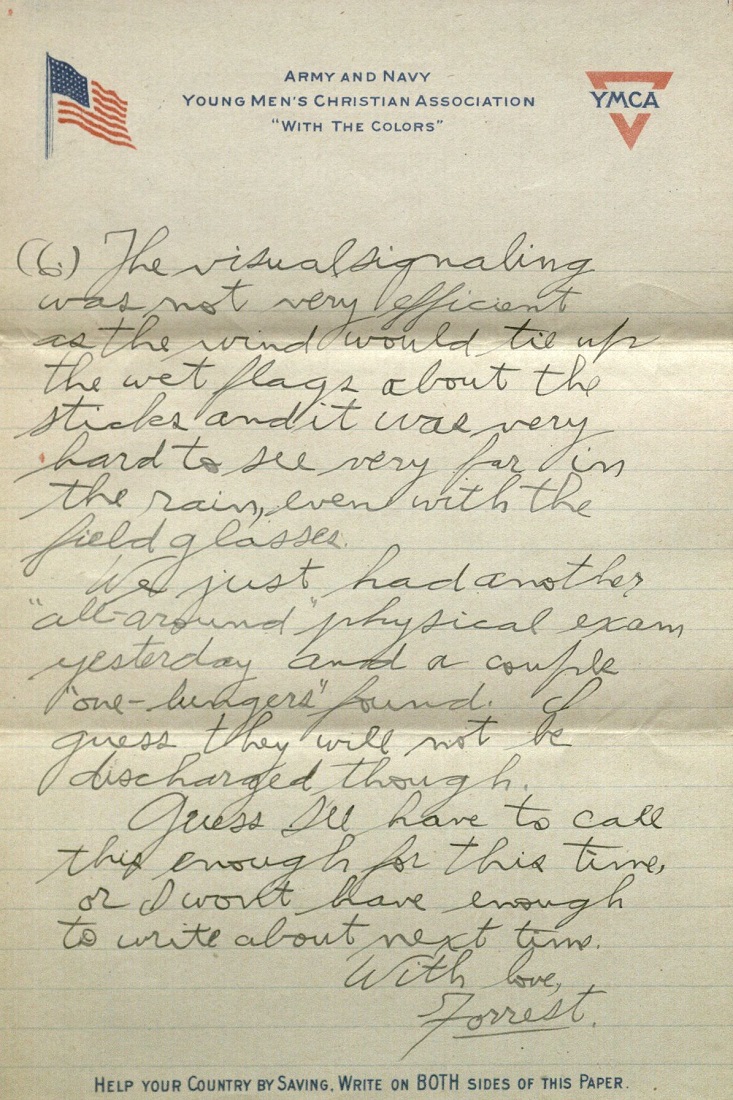
Image of Forrest W. Bassett's letter to Ava Marie Shaw, April 25, 1918 Image of Forrest W. Bassett's letter to Ava Marie Shaw, April 25, 1918

Click images to enlarge.

April 25, 1918.

Dear Marie,

The letter I wrote to you from the City “Y” was returned unstamped – I can’t see how I overlooked it – but anyway that’s why you didn’t get it. Well it wasn’t a nice letter anyway – all about telegraphy.

I don’t think you ought to bother to learn to telegraph unless it really interests you very much. Otherwise it would be a waste of time. The International Code, European Morse Code, and U.S. General Service code all exactly the same. You will find it given in the drill book in the chapter on Wig-Wag. Now if you really want to learn – learn right. The proper way to hold the key knob, the position of the fingers and the movement of the forearm and wrist are all very important. There is as much difference in different operators’ “style” of sending as there is in their writing. Generaly a good penman is a good transmitter, and vice versa. A good arm movement is essential in both “pen pushing” and “key pushing.” To an experienced ear, there is as much beauty in good, accurate, clear cut “Morse” as there is in a sheet of fancy writing. It is usually thought that receiving is much harder than sending, but I’ll always say that the cultivation of a snappy, easily-read style of “cutting out the dots and dashes” is just as hard as learning to play exercises on a piano or learning to typewrite. However I really think you could learn to send perfect “Morse” if you want to. So if you would like to try it let me know so I can tell you more about it.

My application for transfer has at last left the office but Lieut. Kilbury warned me it may be blocked by the Major of the Battalion. Well if it is I sure will be some disappointed. Things have calmed down a little and I will probably have to “mark time” for awhile yet. Last Friday we did some rough weather maneuvers. It rained hard all morning with a cold, chilling north wind. We had to set up two Radio stations in the field – one was the tractor set and the other the old type sets we had last Summer. The 4th & 5th Sections set up the tractor radio & the 1st & 3rd sections operated the pack set.

We (1st & 3rd) had a truck to take us out in the field and the clay was fierce. One hill stalled us and we got out and got behind. Well we set up our station by the Engineers’ trenches – the big tent and all. It sure was an awful morning and I thought my fingers would freeze while we were putting up the antenna. Everything went like clockwork and in record time. When we came in at noon we had the thick yellow clay up to our knees. I had to scrub my shoes, leggins and raincoat and shelter tent.

The visual signaling was not very efficient as the wind would tie up the wet flags about the sticks and it was very hard to see very far in the rain, even with the field glasses.

We just had another “all-around” physical exam yesterday and a couple “one-lungers” found. I guess they will not be discharged though.

Guess I’ll have to call this enough for this time, or I won’t have enough to write about next time.

With love,
Forrest.

April 27, 1918.

Dear Marie,

Your little note came this morning. I don’t blame you a bit for feeling that I ought to write oftener, for I guess I haven’t written much to anyone lately. Please don’t think that I haven’t thought of you much lately. And Marie, whatever you think don’t get the idea in your head that I might think myself too good for you or that I ever tire of your letters.

My life before I came here seems more and more like a dream every day. When I look at those two portraits of you (I have them back again) I can hardly believe that I ever held you close in my arms. It seems as if the days when we were together were years ago, and you seem like a big precious thing, altogether lost to me.

Well I don’t suppose I ought to write to you this way but I love you so much I can’t always hold back the feeling it causes.

Lietenant Kilbury is now a Captain and is our Company Commander. He has been in the Army all his life and has seen considerable active service. He is known all over the Fort as “Hard boiled Willie” and the title fits to a hair, for I don’t believe any officer could be any more rigid in discipline than he is. He sure is just plain “Hard Boiled.” He gave one man in our section five days in the guard house at hard labor for not marking his shoes with initials and Co. number. His favorite theme is absolute unyielding discipline – also that “non-commissioned officers will win the war.” Woe to the private that dares to speak to a non-com without addressing him as either “Corporal” or “Sergeant.”

He made a little speech this morning in which he said that Co-A of the 6th was the crack signal outfit in the Army and that he was going to make it a Company that never need have fear of meeting anything superior. Well there may be some “bunk” in that , but the Personnel Officer from Washington, who examined us for qualification as Signal men, told Captain Murphy that the men of “A”-Company were of the highest class he had worked with yet.

I guess my application for transfer passed the Major alright. Captain Kilbury marked my character “Excellent,” and the Company Clerk told me it was very unusual to get higher than “Very Good.” So I guess I may hope for a transfer, some day. Sergeant Baber, my Section Chief, has been recommended for the Officers traning Camp. Sergeant Williams, who used to be my Section Chief when I was in the 5th Section, went to the Officers training camp last January and is now a lieutenant. Well it’s a gay life and I can’t be worried, and lose my Milwaukee shape.

What kind of work do you intend to do this summer? I wish you would write more fully. I hate to think of you working outside, especially during a vacation.

With love,
Forrest.

Meredith Huff
Public Services

Emma Piazza
Public Services Student Assistant
The Hippie Cookbook

April 20th, 2018

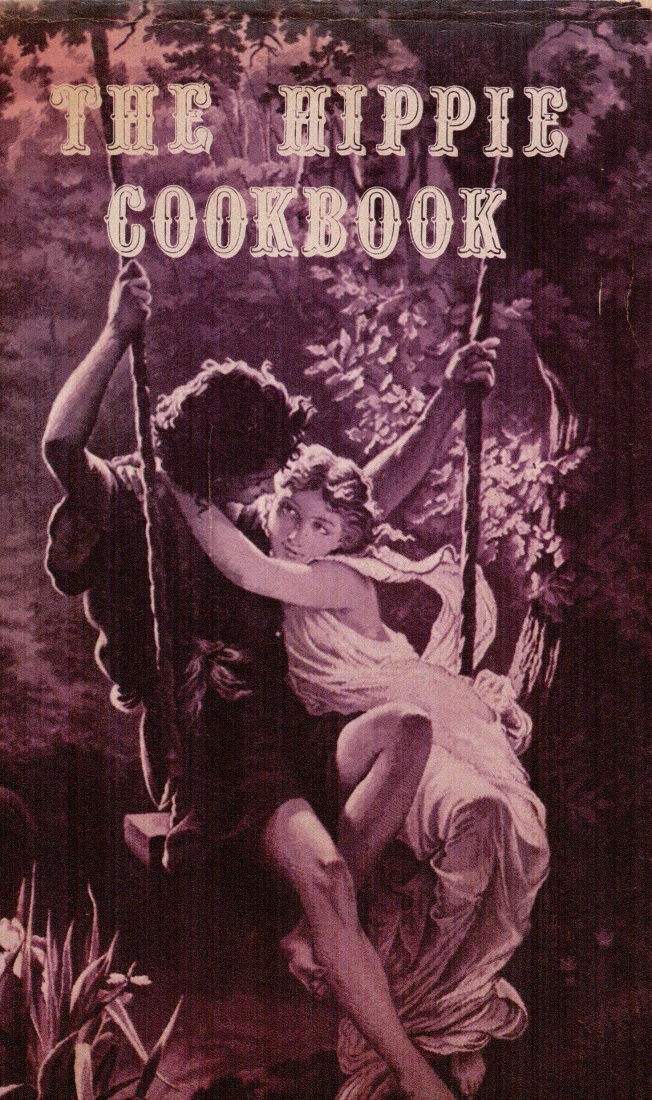
Just when you might think you have a solid understanding of the range of materials in the holdings at Kenneth Spencer Research Library, they surprise you. A recent addition to the Wilcox Collection of Contemporary Political Movements, which brings together U.S. political literature and documents, is a terrific (and somewhat humorous) example: The Hippie Cookbook, or, Don’t Eat Your Food Stamps was authored by Gordon and Phyllis Grabe and published in 1970 by the Paisley Shawl Publishing Company of Forestville, California.

Image of the cover of The Hippie Cookbook, 1970

Cover of The Hippie Cookbook, or, Don’t Eat Your Food Stamps, 1970.
Call Number: RH WL AK105. Click image to enlarge.

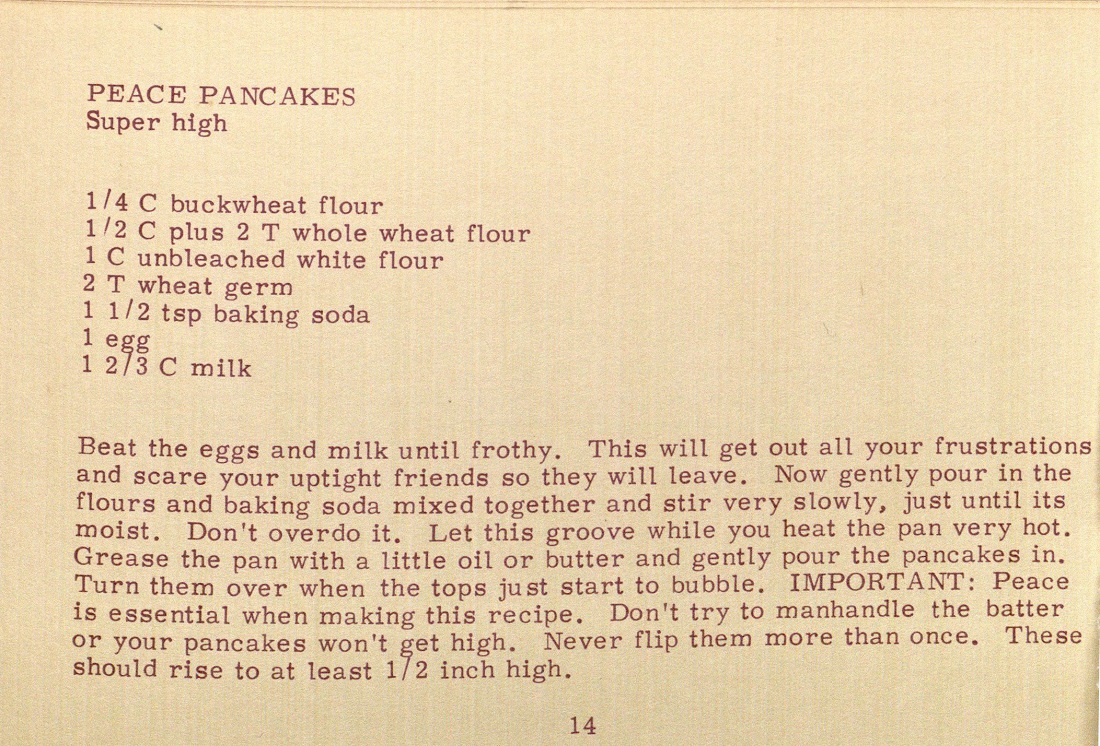
Recipes in The Hippie Cookbook range from average fare such as cheesecake (page 25) and stuffed bell peppers (page 57) to hippie lifestyle-specific dishes such as “Paddy Wagon Rice Patties,” which are “good hot or cold and can be carried with you as quick snacks for emergency eating” (page 11). Other dishes are unremarkable in their ingredients but have intriguing titles such as “Peace Pancakes” (page 14) and “Good Karma Casserole” (page 67).

Image of a recipe for peace pancakes in The Hippie Cookbook, 1970

Recipe for peace pancakes in The Hippie Cookbook. Call Number: RH WL AK105.
Click image to enlarge.

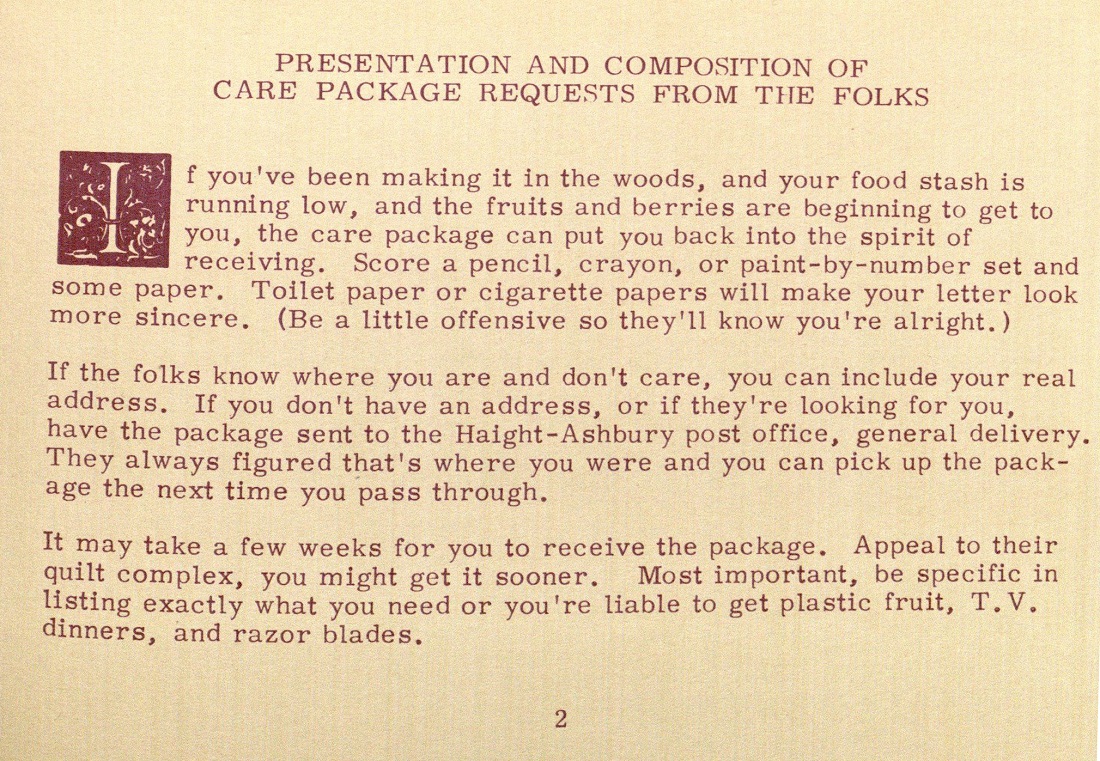
Included in The Hippie Cookbook are sections offering advice on hippie food preparation, including “Brown Bagging for Peace Marches” (page 10), “Cooking in the Nude” (page 24), and “Presentation and Composition of Care Package Requests from the Folks” (page 2).

Image showing information about care packages in The Hippie Cookbook, 1970

Instructions for requesting and receiving care packages “from the folks”
in The Hippie Cookbook. Call Number: RH WL AK105. Click image to enlarge.

In addition, shorter “hippie hints” are included throughout the text. As an example, Hippie Hint No. 9 advises that “if you burn your dinner put butter on it” (page 90).

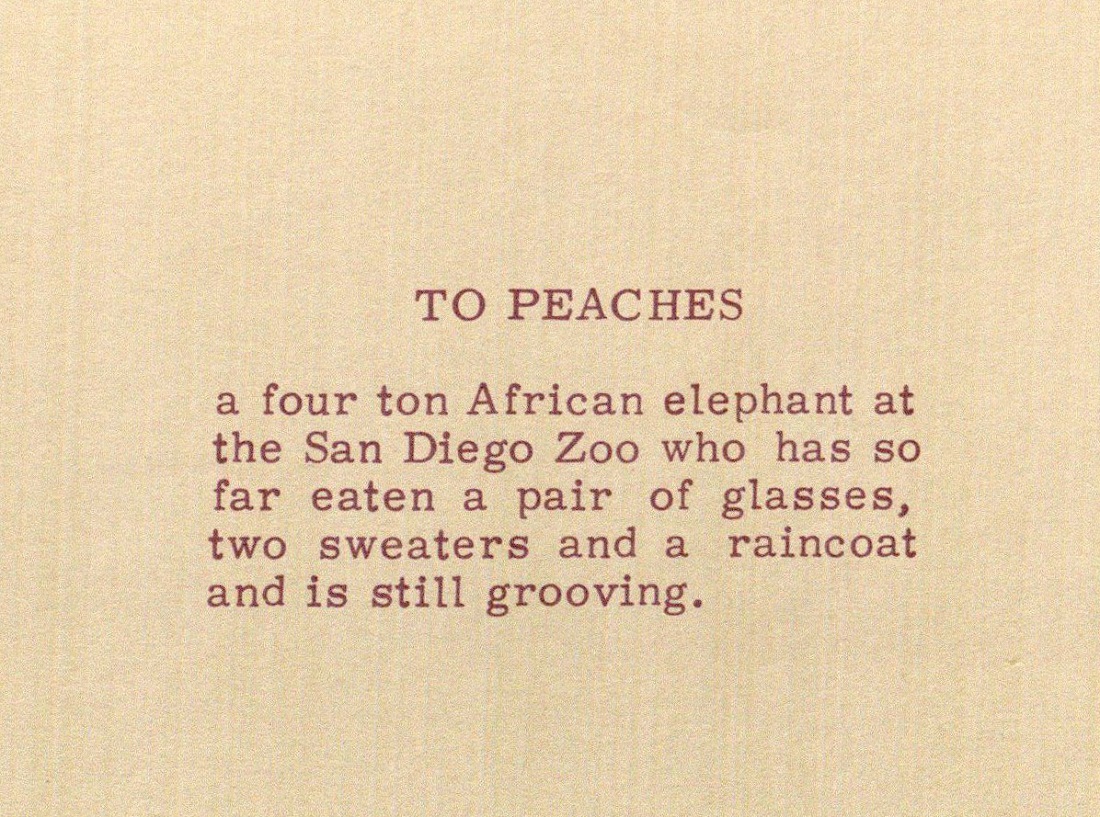
But perhaps my favorite feature is the book’s dedication, which reads: “TO PEACHES: A four ton African elephant at the San Diego Zoo who has so far eaten a pair of glasses, two sweaters and a raincoat and is still grooving.”

Image of the dedication in The Hippie Cookbook, 1970

The dedication to Peaches in The Hippie Cookbook. Call Number: RH WL AK105.
Click image to enlarge.

Sarah Polo
Public Services Student Assistant
Throwback Thursday: Kansas Relays Edition

April 19th, 2018

Each week we’ll be posting a photograph from University Archives that shows a scene from KU’s past. We’ve also scanned more than 34,800 images from KU’s University Archives and made them available online; be sure to check them out!

The 91st Kansas Relays began yesterday and will be underway through Saturday. Are you attending any of the events?

Photograph of six athletes running the hurdles at the Kansas Relays, 1936

Six athletes running the hurdles at the Kansas Relays, 1936.
The event took place at Memorial Stadium, which hosted the Relays
from 1923 through 2013. University Archives Photos.
Call Number: RG 66/19 1936: Athletic Department: Track (Photos).
Click image to enlarge (redirect to Spencer’s digital collections).

Note the campus buildings seen in the background of this week’s photo; from left to right, they are the Kansas Union, Dyche Hall, Old Green (now Lippincott) Hall, Old Fraser Hall, and Watson Library.

Additional photos of previous Kansas Relays are available online through Spencer’s digital collections.

Caitlin Donnelly
Head of Public Services

Throwback Thursday: Picnic Edition, Part II

April 12th, 2018

Each week we’ll be posting a photograph from University Archives that shows a scene from KU’s past. We’ve also scanned more than 34,800 images from KU’s University Archives and made them available online; be sure to check them out!

Head outside, Jayhawks, and enjoy the sunshine and warm weather! Cold temperatures return this weekend.

Photograph of students on the lawn in front of Old Fraser Hall, 1900s

Students sitting and picnicking on the lawn in front of Old Fraser Hall, 1900s.
University Archives Photos. Call Number: RG 0/17 1900s Prints: University General:
Commencement (Photos). Click image to enlarge (redirect to Spencer’s digital collections).

Old Fraser Hall was located roughly where the modern Fraser Hall now stands. The above picture was taken during commencement festivities; if you zoom in to examine details in the image, you can see that some students are wearing mortar boards.

Caitlin Donnelly
Head of Public Services

Ephemera and Binder’s Waste in Summerfield E397

April 10th, 2018

Last year, I wrote about my survey of part of the Summerfield Collection of Renaissance and Early Modern Books, and all of the lovely hidden treasures within that collection. One item that I identified during the survey as a candidate for future treatment is Summerfield E397, De statu religionis et reipublicae, Carolo Quinto Caesare, commentarii, by Johannes Sleidanus, published in 1555.

What caught my attention about this volume is the fragment of parchment manuscript that was taped inside the lower board. Actually, there are two fragments – halves of a leaf that long ago was cut apart and used to form flanges that were sewn onto either side of the text block and then adhered between the boards and pastedowns. At some later time, the book was repaired and the manuscript flanges were removed. Whoever removed them chose to retain them, piecing them back together with glassine tape and affixing them inside the back of the book.

Summerfield E97, Spencer Research Library, University of Kansas Libraries

Manuscript fragments, previously used as binder’s waste,
taped into the back of Summerfield E397. Click image to enlarge.

In the front of the volume are affixed two letters dated in February 1896 that a one-time owner of the volume – one Robert A. Scott Macfie – received from a William Y. Fletcher in response to an inquiry he had sent about the book (Fletcher’s name appears in a 1908 list of members of the Bibliographical Society of London). The second of these letters mentions that Fletcher had shown the book (which Macfie had lent him to examine) to “Mr. Scott and Mr. Warner, the Keeper and Assistant Keeper of MSS in the [British] Museum, and they consider [the fragments] to have belonged to an English or Scottish MS (most probably the former) of the 15th century.” How fascinating and fortunate that these records of the book’s life have survived with it.

Summerfield E97, Spencer Research Library, University of Kansas Libraries

Left: Cover of Summerfield E397. Right: Fletcher’s letters to Macfie
taped onto front flyleaf. Click image to enlarge.

At the time that I surveyed this book, I consulted with the curator about how to approach the treatment and made a note to revisit it at a later date. I recently reviewed my queue of projects and this one presented itself. In my discussion with the curator, we had agreed to leave the letters as-is, but to remove the tape from the manuscript fragments, reunite them with wheat starch paste and Japanese tissue, and tip them back into the volume with the same. Their presence in the volume tells something of the book’s story, but we felt it would be beneficial to remove the brittle, discolored tape from the parchment.

Summerfield E97, Spencer Research Library, University of Kansas Libraries

Visible threads (top) and sewing holes (bottom) indicating
these fragments had been used as binder’s waste.
Click image to enlarge.

Luckily, if one has to remove tape, this type of tape is about as easy to remove as they come. The gummed adhesive layer on this tape responds very well and quickly to a light application of methylcellulose; after just a couple of minutes, the tape carrier and most of the adhesive lift away easily. I reduced the remaining adhesive residue by gently swabbing it with damp cotton, but I did not pursue this very far – overly aggressive cleaning would leave those areas of the parchment looking too starkly white. When the tape was all removed, I used a soft brush to dislodge some surface dirt that had accumulated in the creases.

Summerfield E97, Spencer Research Library, University of Kansas Libraries

Removing the tape hinge that had held the fragments in place.
In the red circle, note the stain left by one of the blue manuscript capitals
from when the fragments served as binding material. Click image to enlarge.

Summerfield E97, Spencer Research Library, University of Kansas Libraries

Detail of the seam where the two halves of this leaf were cut apart long ago.
Click image to enlarge.

Next, I used very dry paste and thin tissue to reattach the two halves to one another. I chose to do this in lapped sections rather than a continuous strip to allow the skins to expand and contract with subtle changes in the environment, and to distribute the stress of the repair evenly along both sides of the leaves, as well as to avoid placing adhesive over areas where ink was present. Finally, I reattached the fragments inside the lower board using a hinge of Japanese tissue and paste.

Summerfield E97, Spencer Research Library, University of Kansas Libraries

The finished manuscript fragments replaced into the volume.
Click image to enlarge.

Angela Andres
Special Collections Conservator
Conservation Services