The University of Kansas

Inside Spencer: The KSRL Blog

Books on a shelf

Welcome to the Kenneth Spencer Research Library blog! As the special collections and archives library at the University of Kansas, Spencer is home to remarkable and diverse collections of rare and unique items. Explore the blog to learn about the work we do and the materials we collect.

This blog may contain archived web content. This blog may link to catalog records which no longer exist as of a software change in 2026.

Meet Josefina at Spencer Research Library

September 4th, 2026

As an elder millennial who loved history as a child and grew up with American Girl, I’ve been excited about the company’s 40th anniversary this year. As a result, I will be sharing a series of posts highlighting Spencer collection materials that connect to AG’s six original historical characters, in chronological order of when they “lived”: Felicity Merriman, Josefina Montoya, Kirsten Larson, Addy Walker, Samantha Parkington, and Molly McIntyre. Each post will focus on a different character and explore a selection of items that relate to the time and place in which she “lived” and topics or themes explored in her stories.

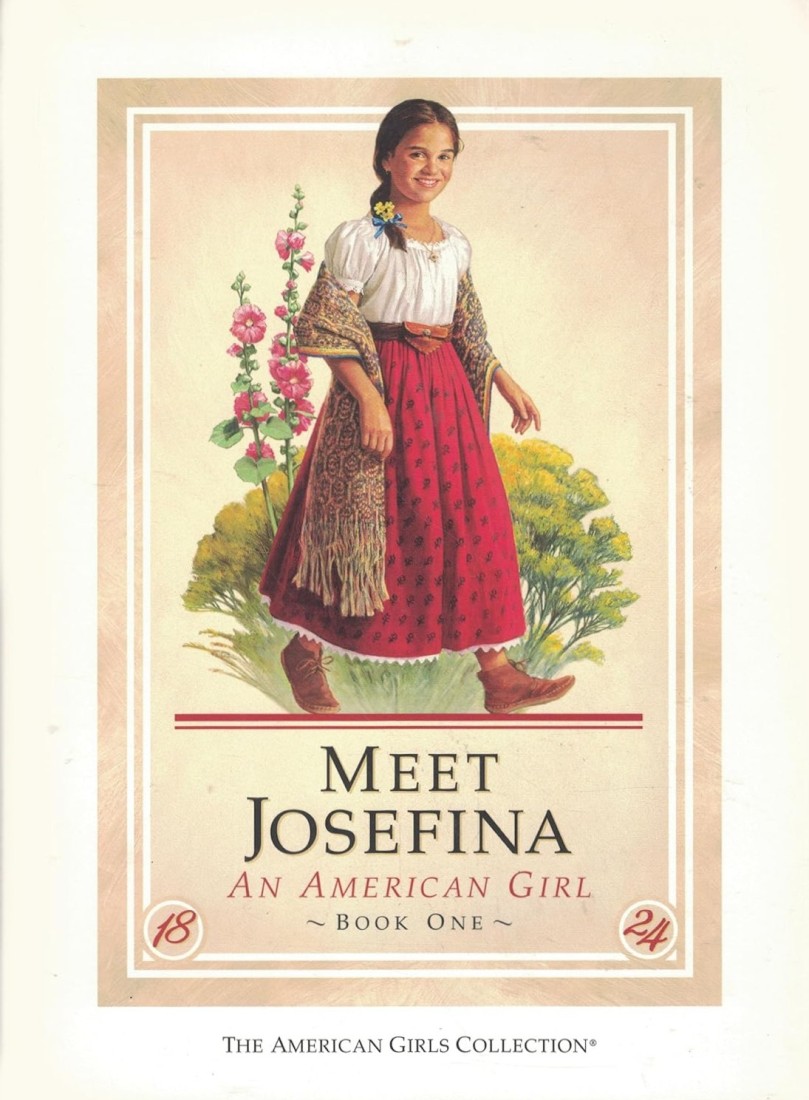
This image contains text with a color illustration of a girl with dark hair in a braid. She is wearing a white blouse, a red skirt, and a shawl and walking in front of a flowering bush.
The front cover of the first book in Josefina’s series, first published in 1997. The book was also published in Spanish with the title Así es Josefina: Una Niña Americana. Click image to enlarge.

When readers meet Josefina Montoya, she is a nine-year girl described as having a big heart and big hopes. She lives with her father and sisters on a ranch outside Santa Fe, New Mexico – then part of Mexico – in 1824. Josefina’s stories are set against the backdrop of Mexico’s recent independence from Spain, and a significant plot point is the arrival of Americans via the Santa Fe Trail (which passed through Douglas County, Kansas, roughly fifteen miles south of Lawrence and KU). Throughout her stories, Josefina grieves and remembers her deceased mother; adjusts to changes at the ranch brought about her aunt, Tía Dolores; deals with goats, including her nemesis Florecita and the orphaned baby goat Sombrita; and starts the journey of becoming a curandera (healer).

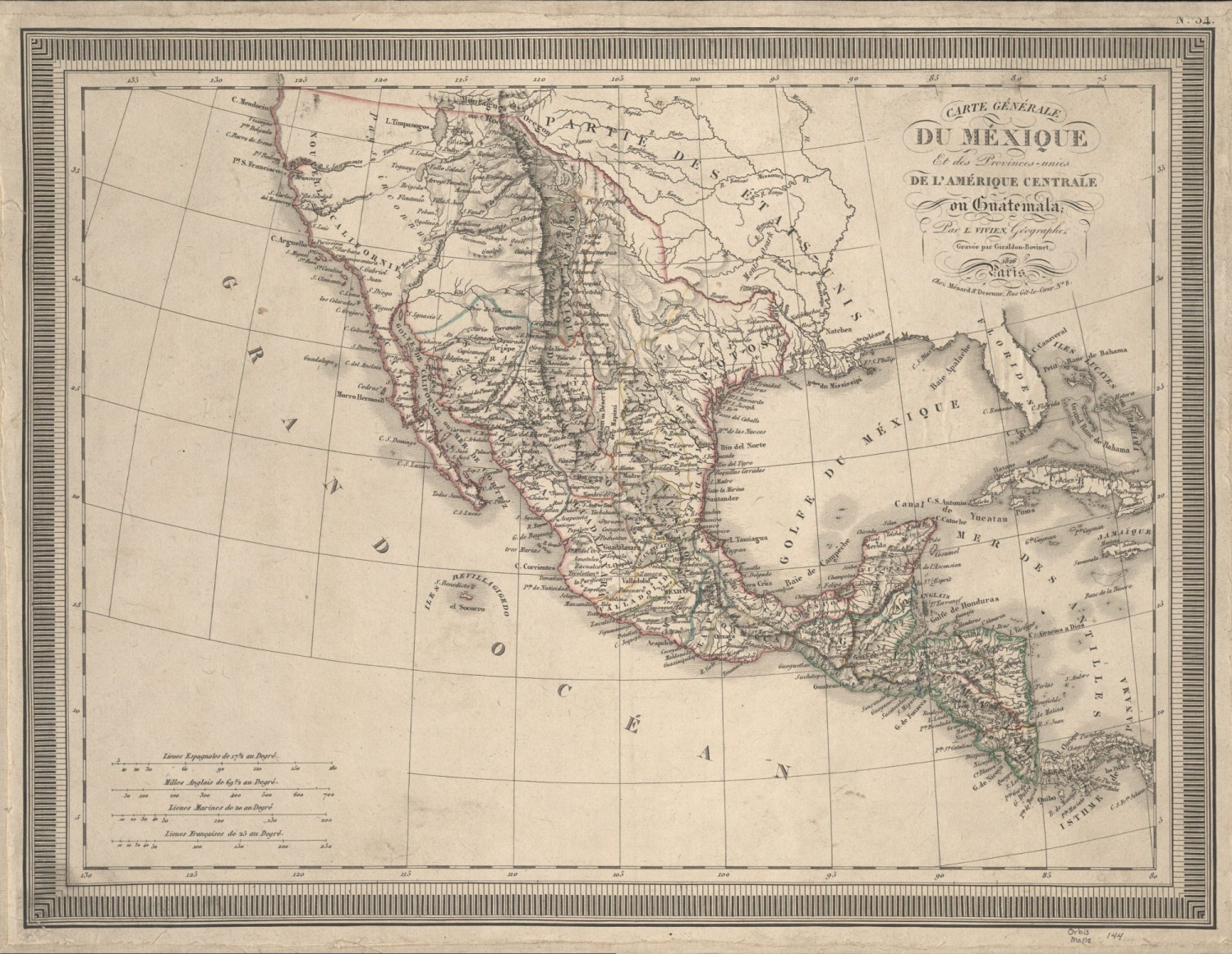
Printed black-and-white map with some borders in color.
A French map of Mexico and Central America [Carte générale du Méxique et des provinces-unies de l’Amérique centrale on Guatemala], 1826. Call Number: Orbis Maps 1:144. Click image to enlarge.
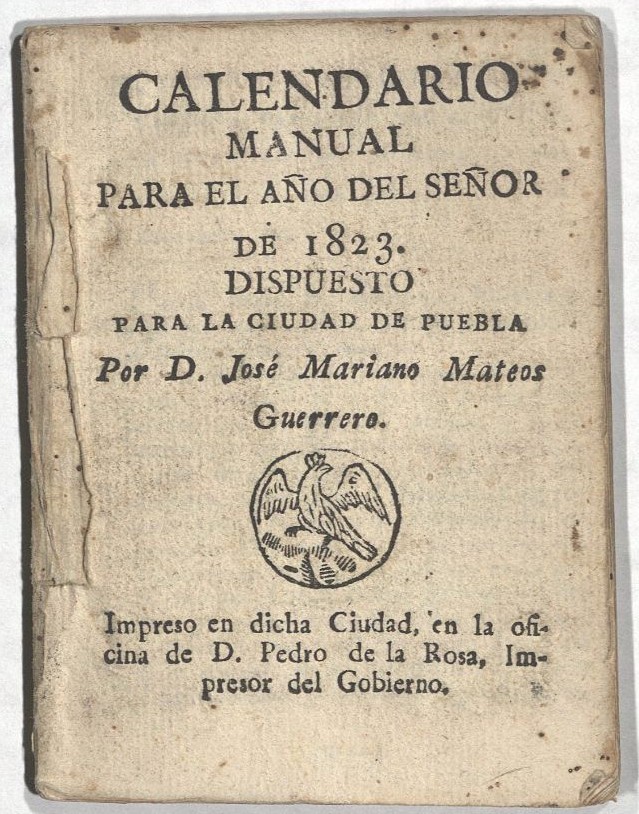
This image has text.
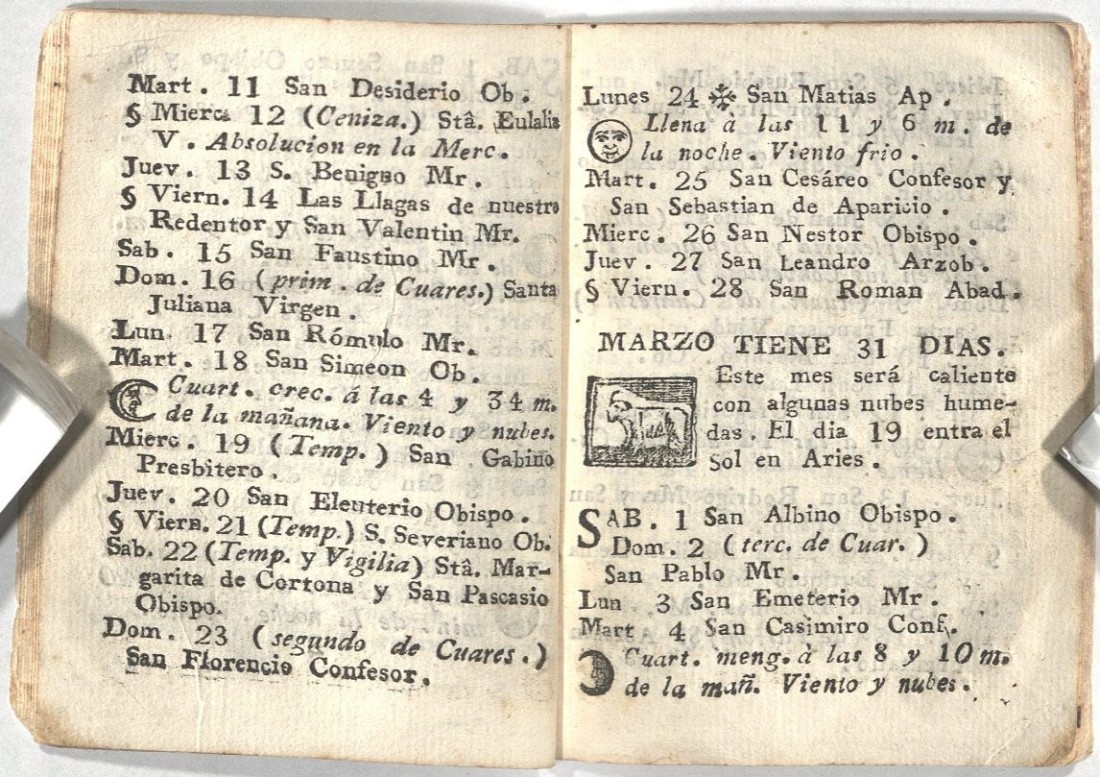
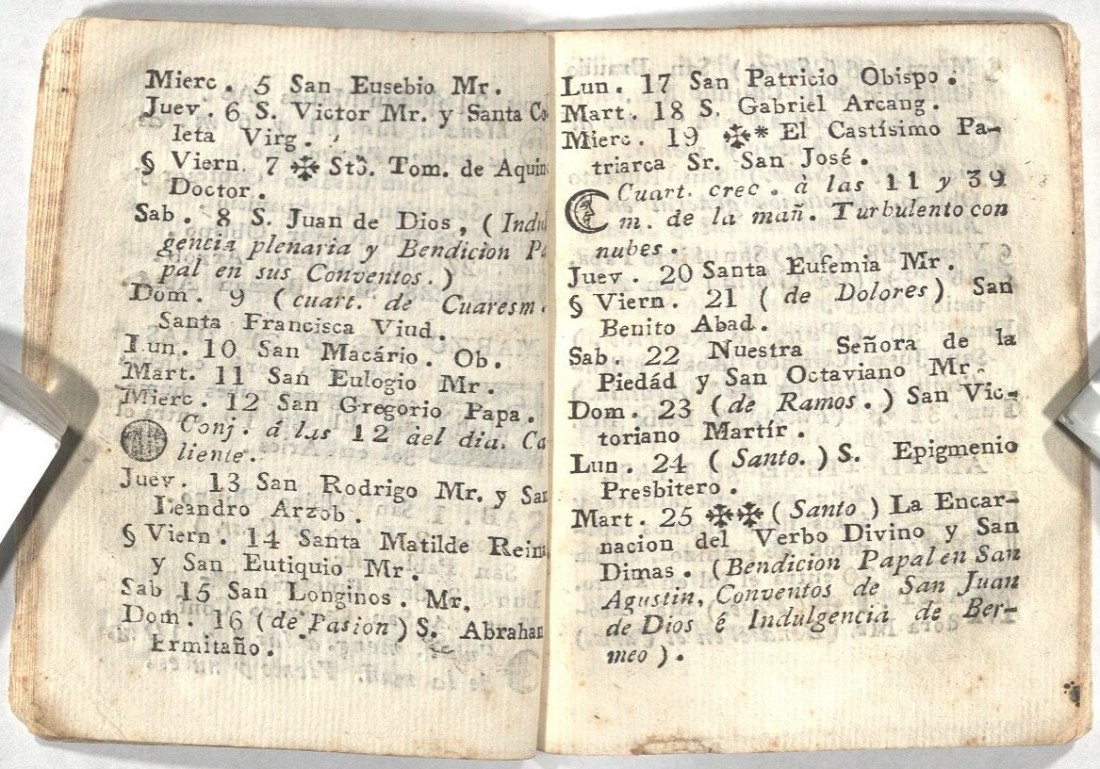
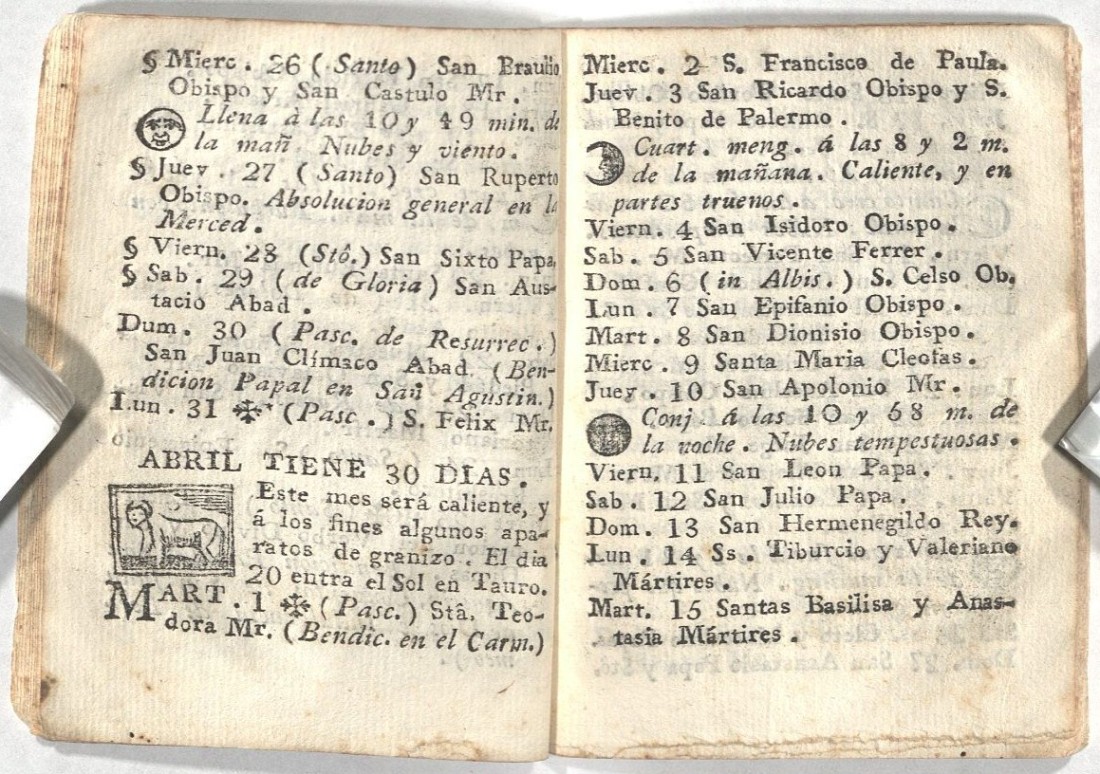
The title page and pages for the month of March in the pocket-sized Calendario manual para el año del señor de 1823. Dispuesto para la ciudad de Puebla [Manual Calendar for the Year of Our Lord 1823. Prepared for the City of Puebla]. Josefina’s birthday is March 19, the feast day of San José (St. Joseph). Call Number: t131. Click image to enlarge.
This image has text.
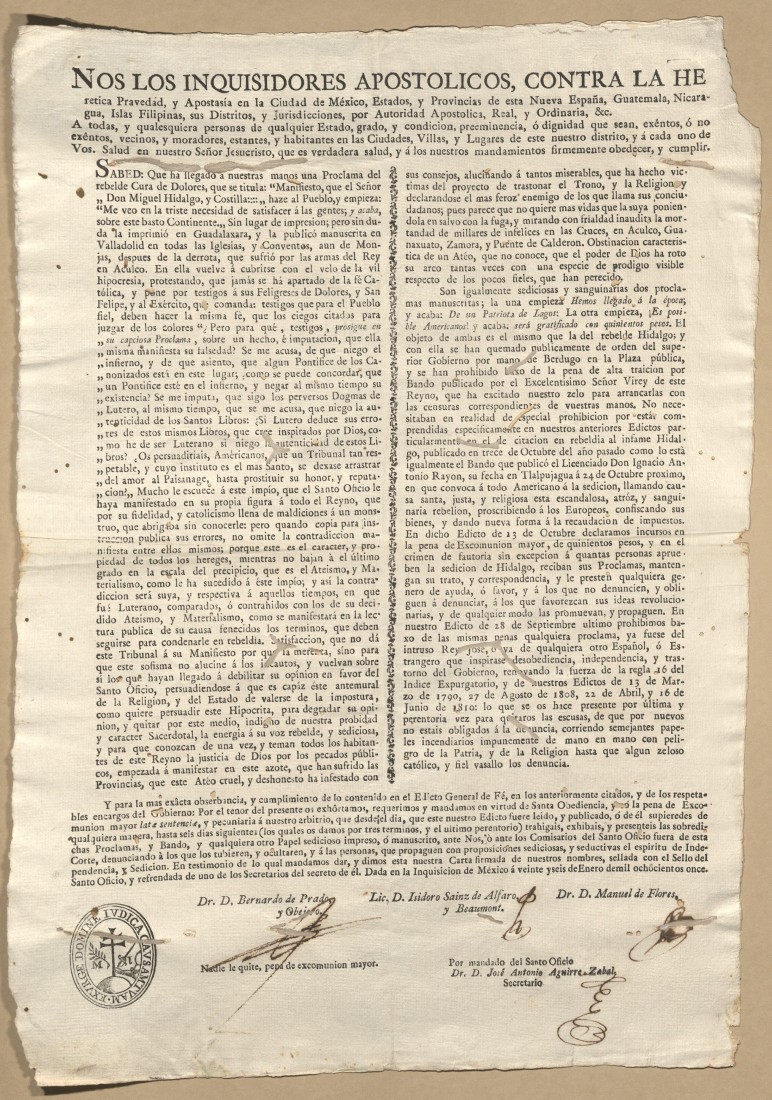
A broadside communicating an edict issued by the Inquisition of Mexico against the revolutionary proclamations of Miguel Hidalgo y Costilla, January 26, 1811. Hidalgo was a Catholic priest who led the first phase of the Mexican War of Independence beginning in 1810. Captured in March 1811, he was officially defrocked and excommunicated before being executed in July of that year. Call Number: Summerfield H121. Click image to enlarge.
This image has text.
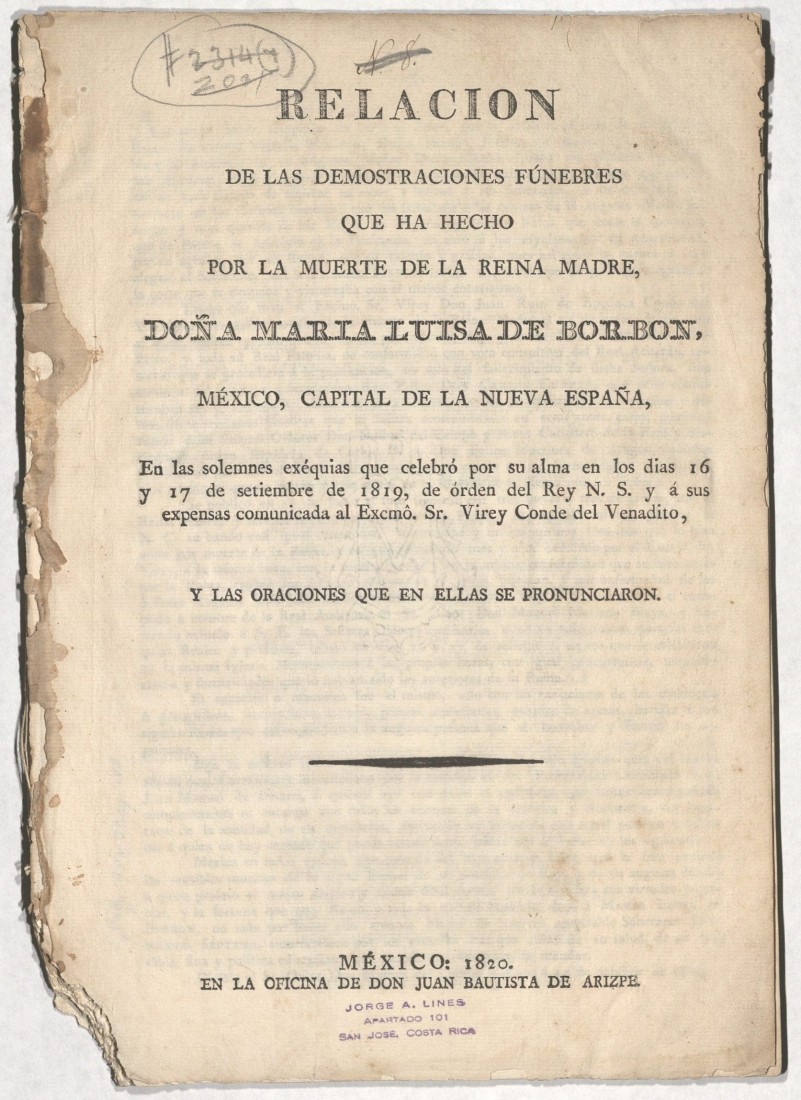
The title page of an account of the elaborate funeral ceremonies held for Maria Luisa of Parma, formerly the Queen Consort of Spain, in Mexico City, September 16-17, 1819. Josefina’s Tía Dolores would have been living in Mexico City at that time. Call Number: D3524. Click image to enlarge.
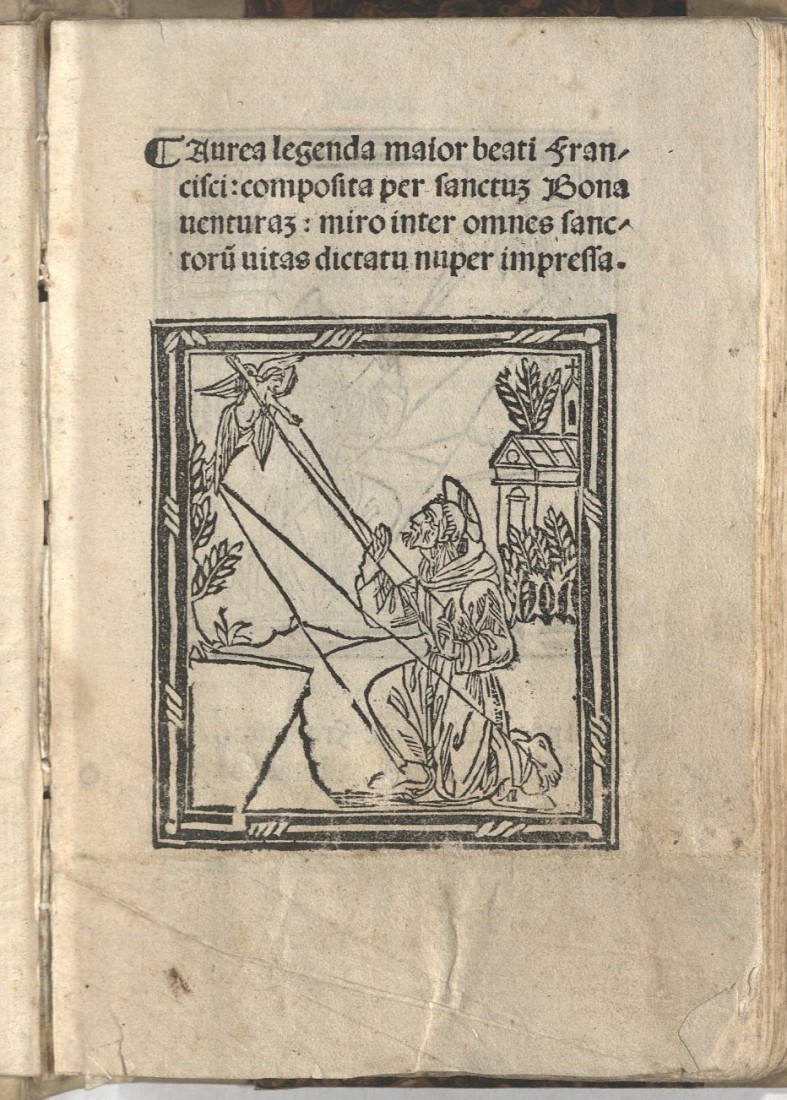
This image has the text of the work's title in Latin with a woodcut of St. Francis's vision of a seraph giving him the gift of the five wounds of Christ.
The title page of a 1509 copy of St. Bonaventure‘s biography of St. Francis of Assisi, who is the patron saint of Santa Fe. The city’s name – Spanish for “Holy Faith” – is the shortened form of its original name, La Villa Real de la Santa Fe de San Francisco de Asís (Royal Town of the Holy Faith of Saint Francis of Assisi). The image depicts St. Francis receiving the wounds of Christ. Call Number: Summerfield B584. Click image to enlarge.
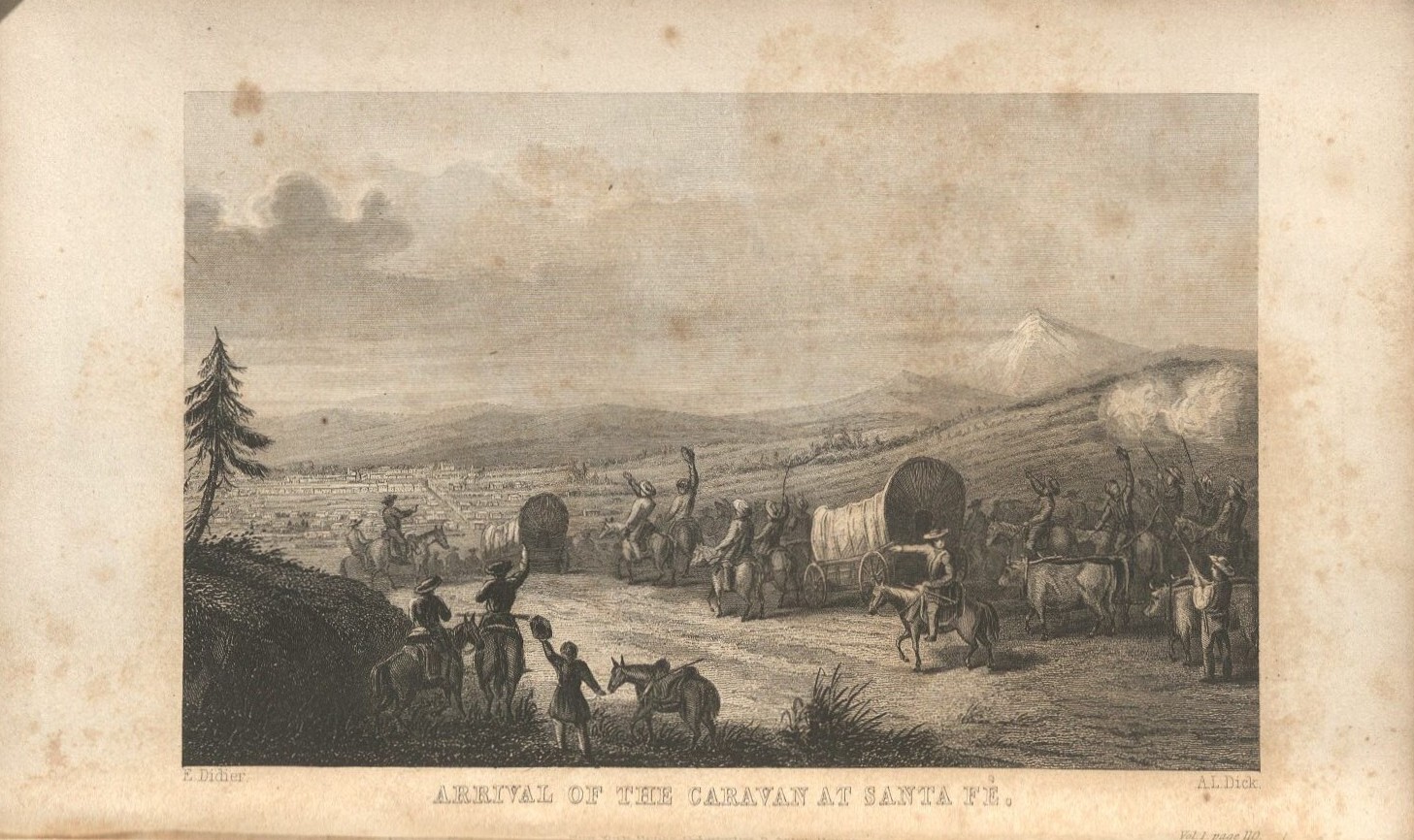
Black-and-white illustration of covered wagons and men on horses descending a hill into a small town in the distance.
“Arrival of the Caravan at Santa Fe,” the frontispiece illustration in Commerce of the Prairies, or, The Journal of a Santa Fé Trader (Volume 1) by Josiah Gregg, 1844. In this work, Gregg describes his travels along the Santa Fe Trail between 1831 and 1839. Call Number: RH C521. Click image to enlarge.

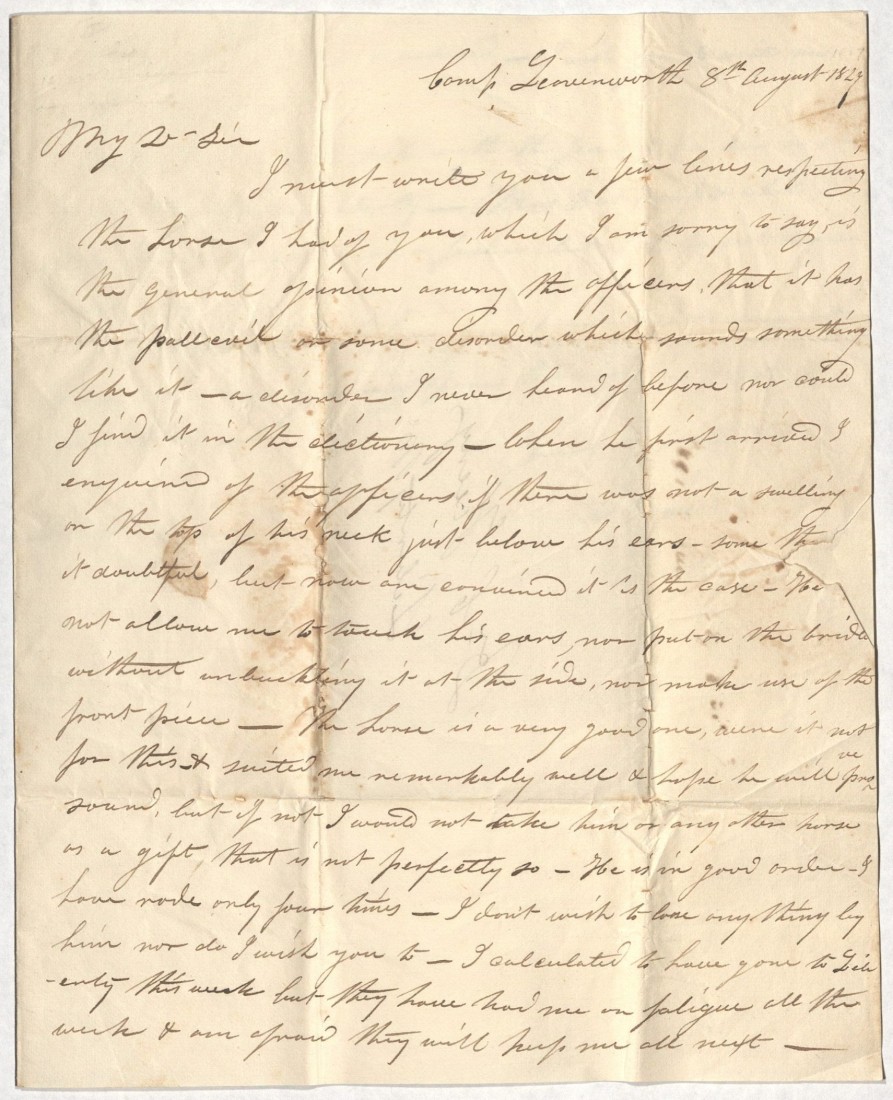
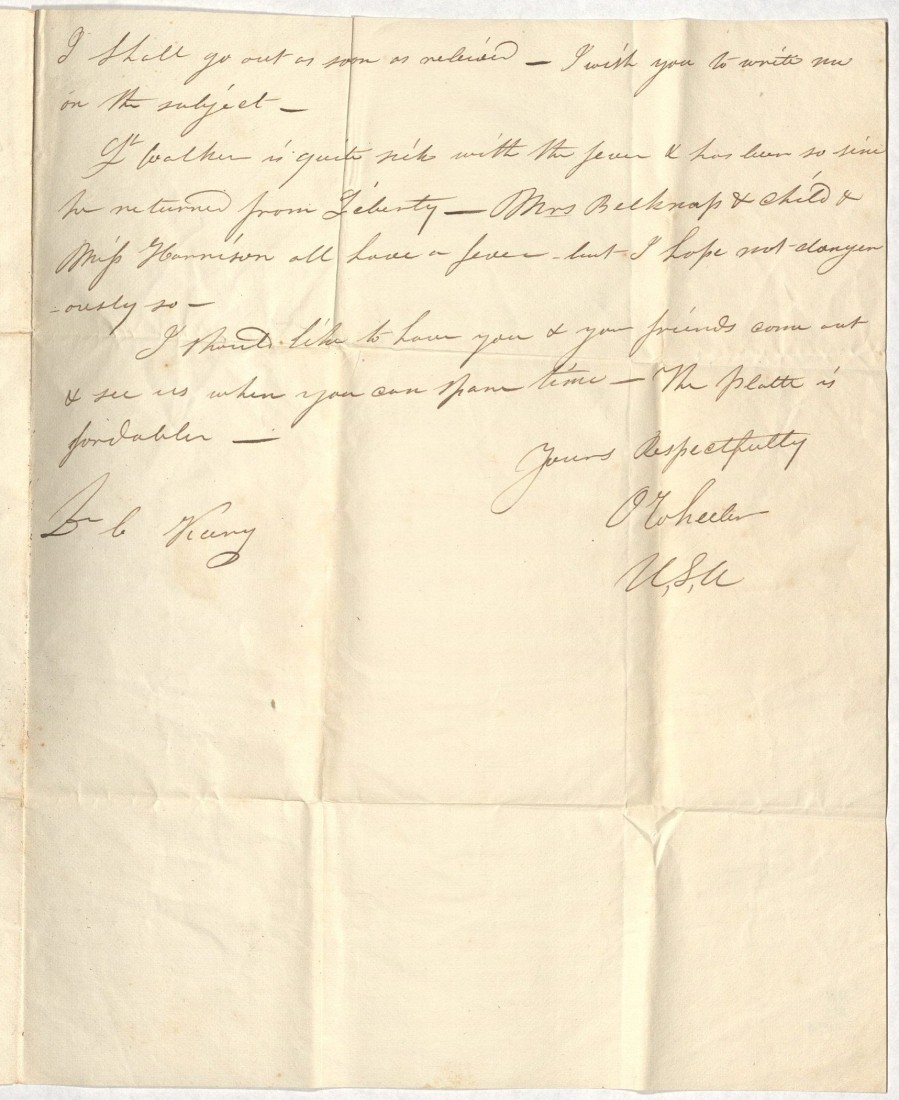
A letter from O. Wheeler, Camp Leavenworth, Kansas, to Dr. C. Keeny, Liberty, Missouri, August 8, 1827. Most of the letter concerns a “disorder” or illness affecting Wheeler’s horse. The U. S. Army established Camp (now Fort) Leavenworth in 1827, the same year this letter was written, to serve as a forward base protecting the Santa Fe Trail. Call Number: RH MS P174.

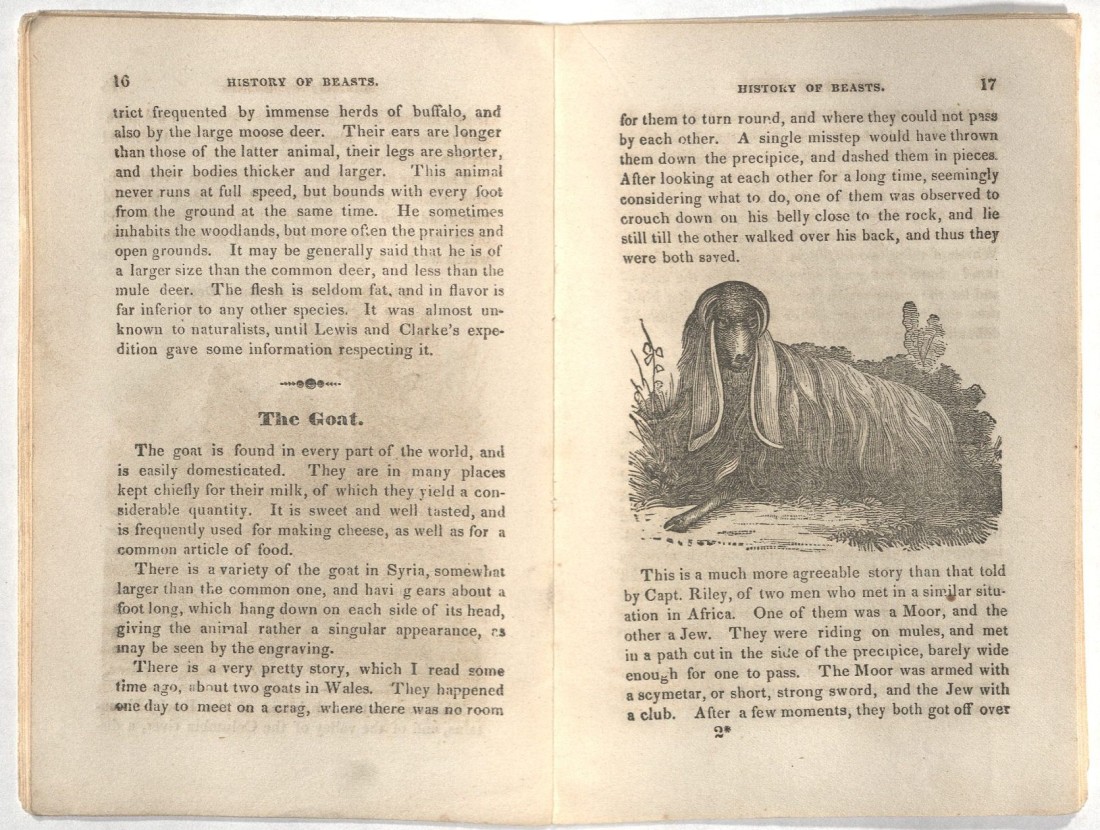
This image has text, accompanied by a black-and-white illustration of a goat.
Information and commentary about goats in the children’s book The Natural History of Beasts: Illustrated with Cuts, 1843. The lesson the author draws from the two featured stories is that “surely the goats were wiser than the men – and let the young reader learn from this, that kindness and humanity are better calculated to remove difficulties than pride and obstinacy.” Call Number: Children 504B. Click image to enlarge.
Selected Additional Collection Items

Maps

  • Regni Mexicani seu Novæ Hispaniæ, Floridæ, Novæ Angliæ, Carolinæ, Virginiæ, et Pennsylvaniæ, nec non insvlarvm archipelagi Mexicani in America septentrionali [The Kingdom of Mexico, or New Spain, Florida, New England, the Carolinas, Virginia, and Pennsylvania, as Well as the Insular Archipelago of Mexico in North America] by Johann Baptist Homann, 1722. Call Number: Orbis Maps 1:60.
  • A Map of Louisiana and Mexico = Carte de la Louisiane et du Mexique, 1820. Call Number: Orbis Maps 1:134.
  • Map of the Western Territory of the United States by Lt. Enoch Steen. Coverage includes Indian lands from 80 miles east of Leavenworth to 50 miles west of Pikes Peak and Black Hill to Santa Fe. Call Number: RH Map S31.
  • A Map of the Indian Territory, Northern Texas and New Mexico: Showing the Great Western Prairies by Josiah Gregg, from Commerce of the Prairies, 1844. Call Number: RH Map Q57.
  • Mapa de los Estados Unidos de Méjico [Map of the United States of Mexico], 1847. Call Number: Orbis Maps 2:61.
  • Map of Santa Fe County, New Mexico, 1880s? Shows railroads and pre-European pueblos in and near Santa Fe County. Call Number: RH Map R529.

New Spain and Mexico

  • Exploratory Travels Through the Western Territories of North America by Zebulon Pike, 1811. During his 1806-1807 expedition to the region south and west of the Louisiana Purchase, Pike ended up in Spanish territory. His party was captured by Spanish soldiers, and their subsequent journey took them through Santa Fe. Call Number: D678.
  • Memoirs of the Mexican Revolution: Including a Narrative of the Expedition of General Xavier Mina by William Davis Robinson, 1820. Call Number: Howey C4191.
  • Six Months’ Residence and Travels in Mexico by William Bullock, 1824. Call Number: Ellis Aves C207.
  • A View of South-America and Mexico, Comprising Their History, the Political Condition, Geography, Agriculture, Commerce, &c. by John M. Niles, 1825. Call Number: B11232.

New Mexico, Santa Fe, and the Santa Fe Trail

  • The Daily New Mexican newspaper, published in Santa Fe, 1880-1881. Call Number: RH H24.
  • Santa Fe: Ancient and Modern, Including Its Resources and Industries edited by W.G. Ritch, 1885. Call Number: RH C1375.
  • Southwest on the Turquoise Trail: The First Diaries on the Road to Santa Fe edited by Archer Butler Hulbert, 1933. Call Number: RH C451.
  • Historic Santa Fe, Founded About 1525: Oldest Town in the United States: The End of the Old Santa Fe Trail, 1940s? Call Number: RH AK121.
  • Santa Fe Trail: First Reports, 1825 by Augustus Storrs and Alphonso Wetmore, 1960. Call Number: RH B1126.

Household Matters

  • Quatro libros de la naturaleza, y virtudes de las plantas, y animales que estan receuidos en el uso de medicina en la Nueua España [Four Books on the Nature and Virtues of Plants and Animals for Medicinal Purposes in New Spain] by Francisco Hernandez, 1615. Call Number: Summerfield B2225.
  • Mexican recipes, early 1800s. This is a collection of culinary recipes – written in various hands and mostly undated – that appear to be from central and southern Mexico. The collection was previously featured on Spencer’s blog. Call Number: MS 346.
  • A New Dictionary of the Spanish and English Languages compiled by by Henry Neuman, 1823. Call Number: C26852.
  • El cocinero mexicano, o Coleccion de las mejores recetas para guisar al estilo americano [The Mexican Cook, or Collection of the Best Recipes for Cooking in the American Style], volume 3 only, 1831. This work is one of two cookbooks from 1831 that are considered the first on Mexican cuisine published in Mexico. Call Number: B14945.

Caitlin Klepper
Public Engagement Librarian

The Photographs of Frank C. Morrow, Leavenworth, Kansas

March 3rd, 2020

In 1985, librarian Winnie Lichtenwalter was rummaging around in the basement of the Leavenworth Public Library. She was preparing for the move from the old Carnegie Library to the library’s new building when she discovered several boxes of glass plate negatives. The images depicted the city of Leavenworth, Kansas, at the turn of the twentieth century. Initially no one among the library staff knew anything about the photographs. After conducting some research into the library’s records, they found that Leavenworth resident and amateur photographer Frank C. Morrow was the one who had made them.

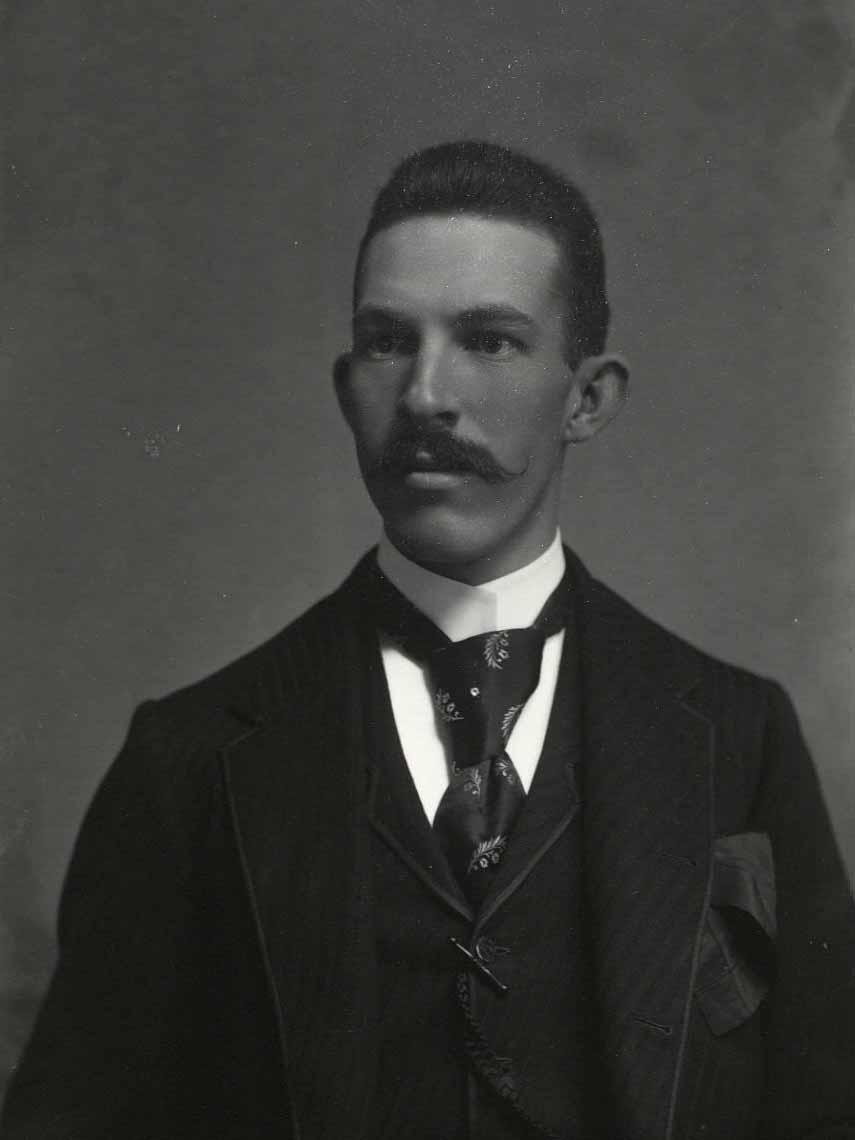
Photograph of Frank C. Morrow, circa 1900
Frank C. Morrow, circa 1900. Leavenworth Public Library Collection. Call Number: RH PH 72:125. Click image to enlarge.

Morrow was born in Pickway, Ohio, on May 15, 1867. By 1885, at the age of 18, he was living in Leavenworth, Kansas, where he worked for the Great Western Stove Company. He worked there for fifty years, retiring one year before his death in 1936. His wife, Anne Zipp Morrow, died in 1945. They had one son who was born in 1899 and died in 1923.

Lichtenwalter, knowing that her library could not properly house and care for Morrow’s collection, contacted Nicolette Bromberg, a former photo archivist at Kenneth Spencer Research Library. By their nature, glass plate negatives are very fragile. In addition to the risk of breakage, the delicate chemical emulsion will peel and crack on the glass without proper storage and suitable environmental conditions, and Morrow’s plates were already showing signs of stress. Spencer Research Library houses and cares for several glass plate collections, so acquiring Morrow’s plates was a natural fit. When Bromberg went to the Leavenworth Public Library to pick up the boxes, she searched around the basement a little more and found yet another box of negatives that the staff had missed. In all there are 314 glass negatives.

Following are some examples of Morrow’s work, now known as the Leavenworth Public Library Photograph Collection.

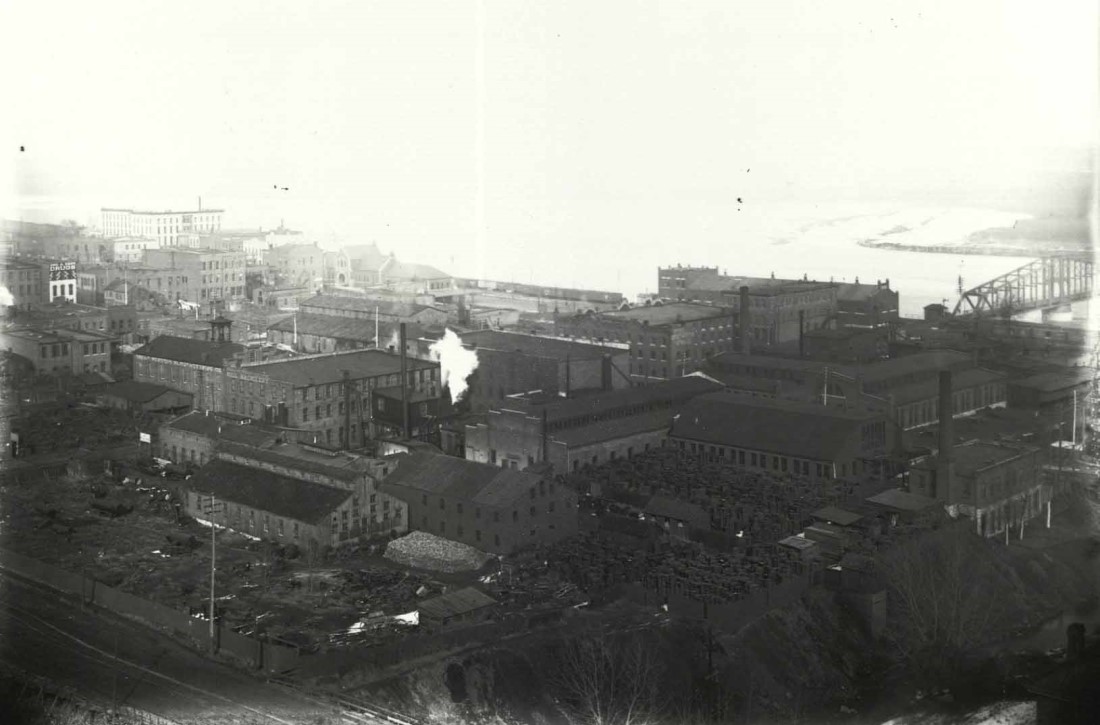
Photograph of the Great Western Stove Company and Leavenworth, circa 1900
A view of the Great Western Stove Company and Leavenworth, circa 1900. Leavenworth Public Library Collection. Call Number: RH PH 72:114. Click image to enlarge.
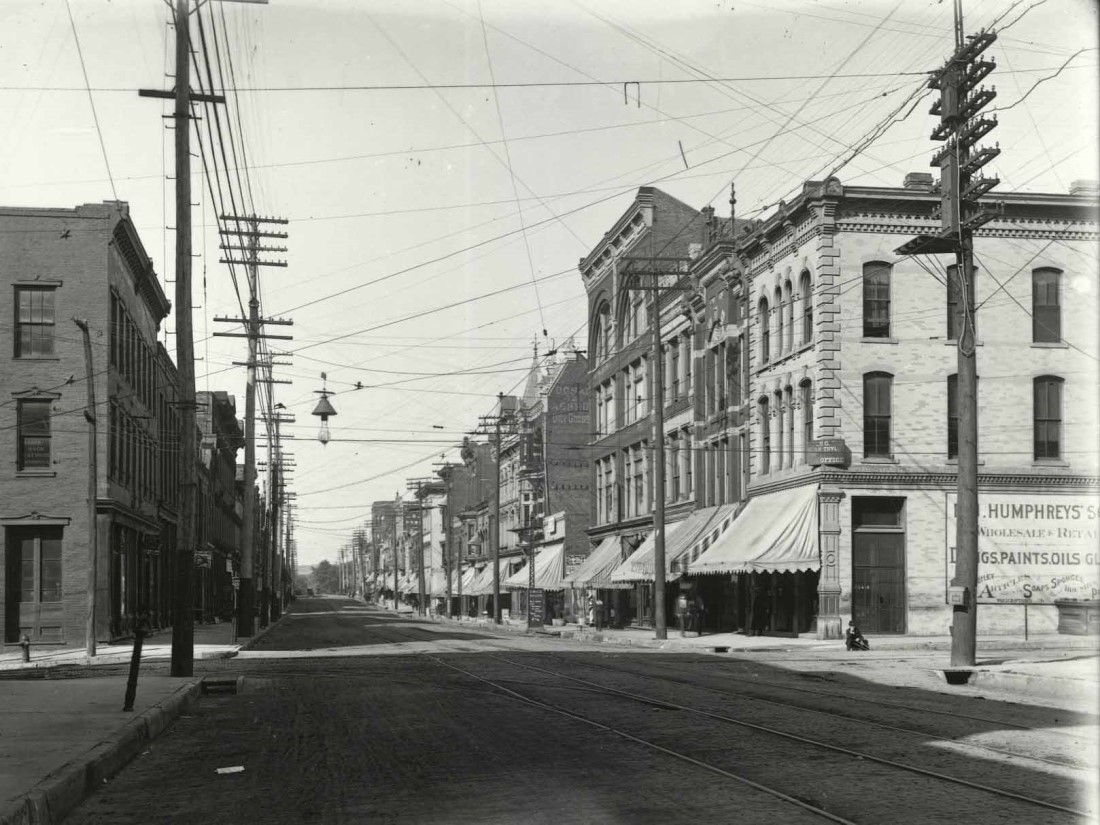
Photograph of electric streetcar lines on Delaware Street in Leavenworth, circa 1896
Electric streetcar lines on Delaware Street in Leavenworth, circa 1896. Leavenworth Public Library Collection. Call Number: RH PH 72:73. Click image to enlarge.
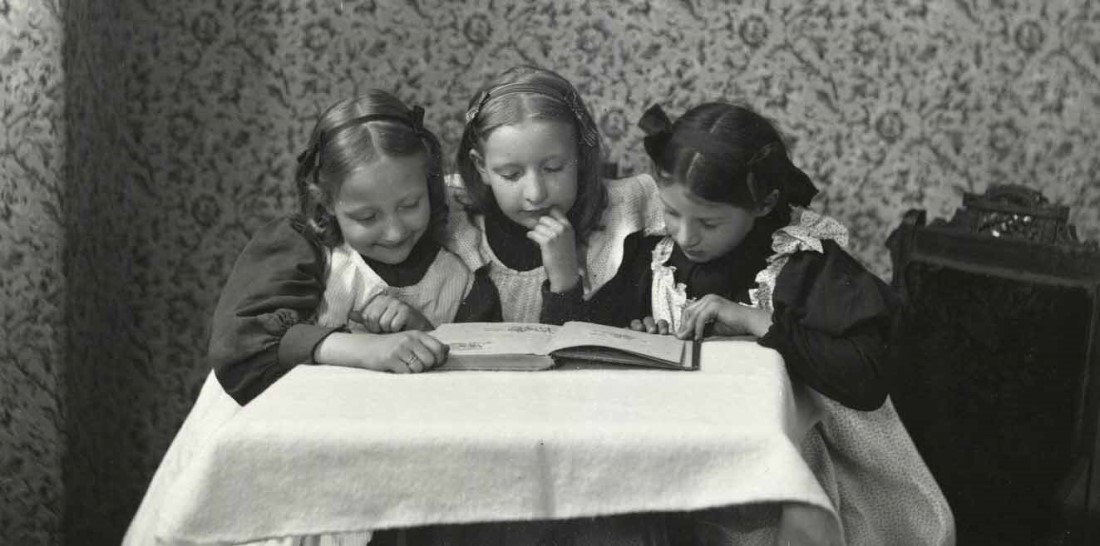
Photograph of three girls looking at a book, circa 1900
Three girls looking at a book, circa 1900. Leavenworth Public Library Collection. Call Number: RH PH 72:164. Click image to enlarge.
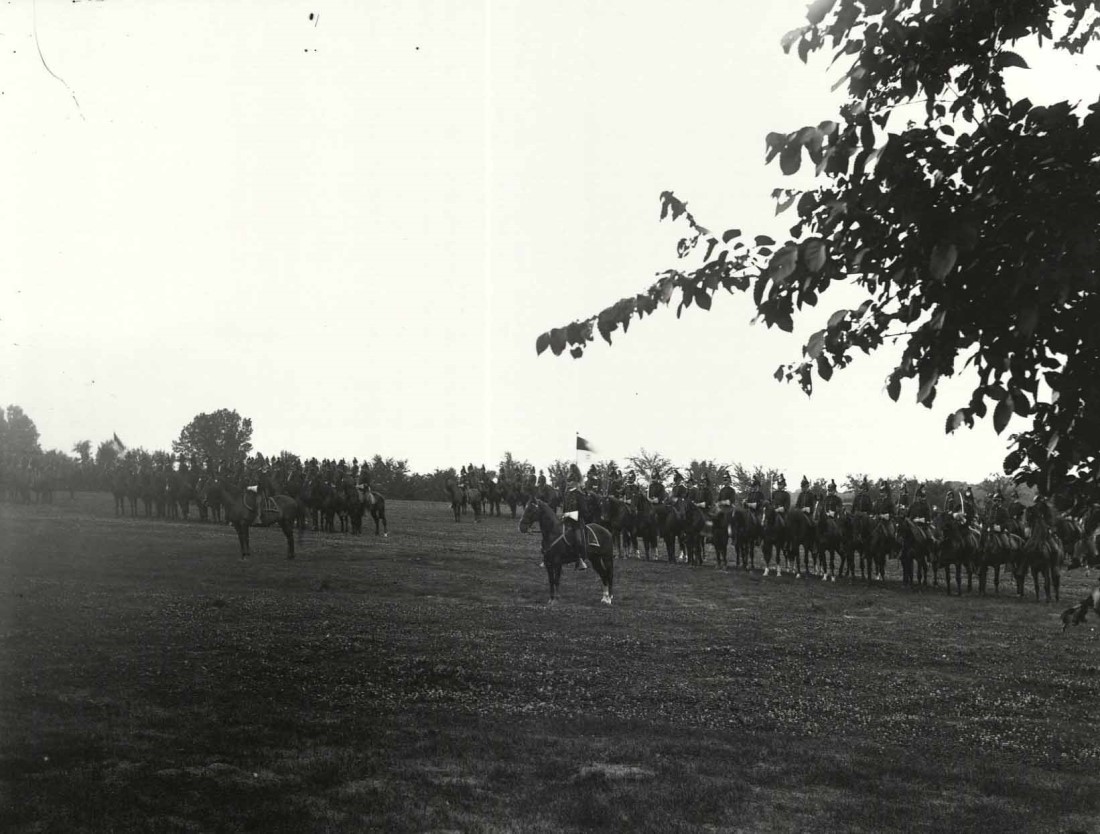
Photograph of the Fort Leavenworth guard mount (1st Regiment of Dragoons), circa 1900
The Fort Leavenworth guard mount (1st Regiment of Dragoons), circa 1900. Leavenworth Public Library Collection. Call Number: RH PH 72:27. Click image to enlarge.
Photograph of a flood on the Missouri River, 1903
Flooding on the Missouri River, 1903. Leavenworth Public Library Collection. Call Number: RH PH 72:48. Click image to enlarge.
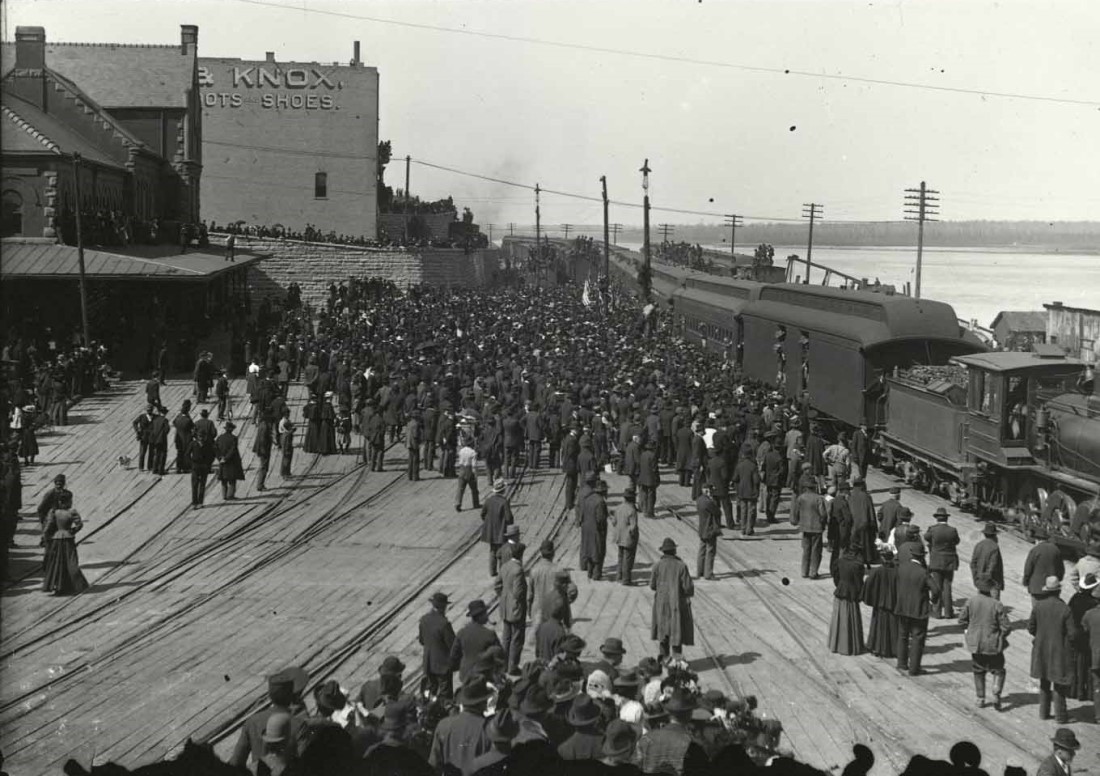
Photograph of the 20th Regiment leaving Union Station for the Philippines during the Spanish American War, 1895
The 20th Regiment leaving Union Station for the Philippines during the Spanish American War, 1895. Leavenworth Public Library Collection. Call Number: RH PH 72:210. Click image to enlarge.

Kathy Lafferty
Public Services

World War I Letters of Forrest W. Bassett: Epilogue

May 29th, 2018

In honor of the centennial of World War I, we’re going to follow the experiences of one American soldier: nineteen-year-old Forrest W. Bassett, whose letters are held in Spencer’s Kansas Collection. Each Monday we’ll post a new entry, which will feature selected letters from Forrest to thirteen-year-old Ava Marie Shaw from that following week, one hundred years after he wrote them.

Forrest W. Bassett was born in Beloit, Wisconsin, on December 21, 1897 to Daniel F. and Ida V. Bassett. On July 20, 1917 he was sworn into military service at Jefferson Barracks near St. Louis, Missouri. Soon after, he was transferred to Fort Leavenworth, Kansas, for training as a radio operator in Company A of the U. S. Signal Corps’ 6th Field Battalion.

Ava Marie Shaw was born in Chicago, Illinois, on October 12, 1903 to Robert and Esther Shaw. Both of Marie’s parents – and her three older siblings – were born in Wisconsin. By 1910 the family was living in Woodstock, Illinois, northwest of Chicago. By 1917 they were in Beloit.

Frequently mentioned in the letters are Forrest’s older half-sister Blanche Treadway (born 1883), who had married Arthur Poquette in 1904, and Marie’s older sister Ethel (born 1896).

Photograph of Forrest Bassett in The Beloiter yearbook, 1916

Forrest Bassett’s senior picture in the
Beloit Memorial High School yearbook, The Beloiter, 1916.
The quotation accompanying his picture is “without my camera, I would be lost.”
Image courtesy of the Beloit Historical Society. Click image to enlarge.

We have reached the last of Forrest’s letters from Fort Leavenworth. By May 31, 1918, he had reached Camp Wadsworth, South Carolina. Forrest’s experiences there are documented in a collection of his letters at the South Caroliniana Library at the University of South Carolina. According to Army Transport Service passenger lists, Forrest and the other members of Co. A left New York City, heading for Europe, on July 7, 1918, aboard the Darro. He returned to the United States almost a year later: on June 3, 1919, he set sail from Brest, France, on board the USS Mount Vernon. This was almost eight months after the armistice but only a week after the Treaty of Versailles formally ended World War I.

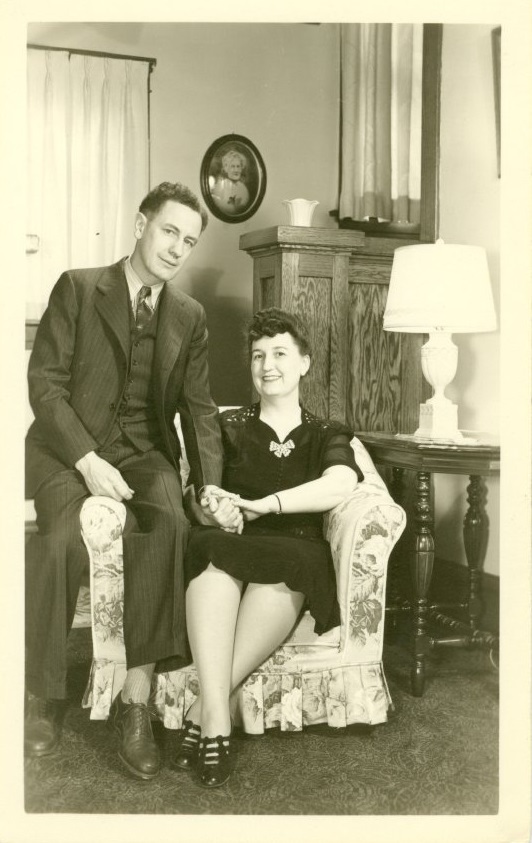
Forrest and Marie were married on March 6, 1920, in Beloit, Wisconsin. They had two children: Sally Ann Bassett (1930- ) and Terrence Shaw Bassett (1932-1996).

Photograph of Forrest and Marie Bassett on their twenty-fifth anniversary, March 6, 1945

Forrest and Marie Bassett on their twenty-fifth anniversary, March 6, 1945.
Image courtesy of the Beloit Historical Society. Click image to enlarge.

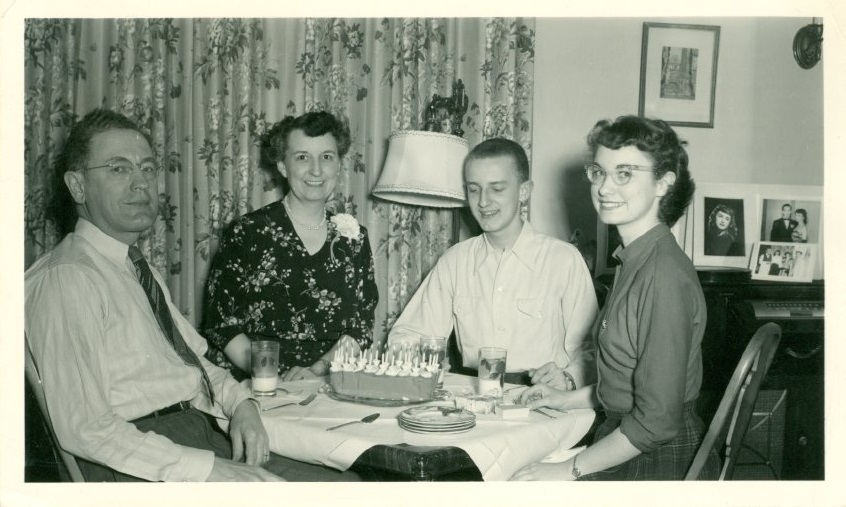
Photograph of Sally Ann Bassett's twentieth birthday, March 22, 1950

Forrest, Marie, and Terrence Bassett celebrating Sally’s twentieth birthday, March 22, 1950.
A note on the back of the photograph says “Ethel [Marie’s sister?] came down and took this for us.
(The cake is a chocolate ice box cake made with ladyfingers. It was good. You’d have liked it, I know.)”
Image courtesy of the Beloit Historical Society. Click image to enlarge.

According to Forrest’s obituary in the Janesville (Wisconsin) Gazette, he was employed for forty years at Yates-American Machine Co. After retiring, he worked for ten years in the credit department at Dane Aluminum Co. Forrest was a member of numerous community organizations, including American Legion Post No. 48, William J. Huemphner World War I Barracks, the Second Congregational Church, and the Men’s Garden and Beloit Camera clubs.

According to Marie’s obituary in the Janesville Gazette, she was a teacher of speech and oral interpretation for many years. She also worked as a secretary for the Freeman Shoe Company, Yates-American Machine Co., Fairbanks Morse, and the Second Congregational Church, and she served as coordinator of volunteers at the Beloit Senior Center. An “accomplished actress, singer, and solo dramatist,” Marie was a founding member of Beloit Civic Theatre and served on its board of directors. She was also a member and former president of the group Treble Clef.

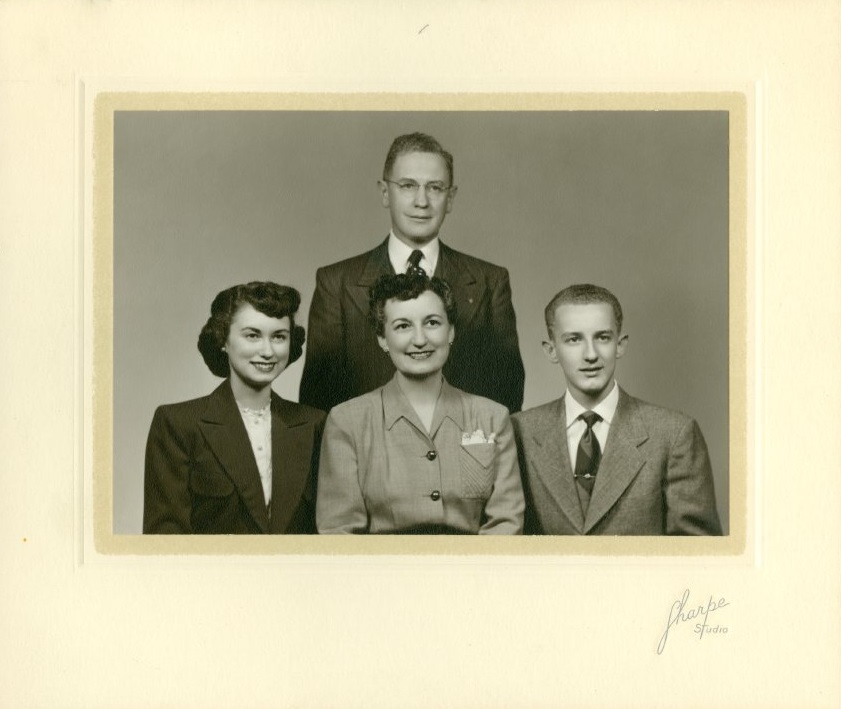
Photograph of the Bassett family, undated

Forrest and Marie Bassett with their children Sally and Terrence, undated.
Image courtesy of the Beloit Historical Society. Click image to enlarge.

Forrest died on August 3, 1985; Marie died October 8, 1992. They are both buried in Oakwood Cemetery in Beloit, Wisconsin.

Special thanks to the staff at the Beloit Historical Society for locating and scanning the images included in this post.

Caitlin Donnelly
Head of Public Services

Meredith Huff
Public Services

Emma Piazza
Public Services Student Assistant

World War I Letters of Forrest W. Bassett: May 21-27, 1918

May 21st, 2018

In honor of the centennial of World War I, we’re going to follow the experiences of one American soldier: nineteen-year-old Forrest W. Bassett, whose letters are held in Spencer’s Kansas Collection. Each Monday we’ll post a new entry, which will feature selected letters from Forrest to thirteen-year-old Ava Marie Shaw from that following week, one hundred years after he wrote them.

Forrest W. Bassett was born in Beloit, Wisconsin, on December 21, 1897 to Daniel F. and Ida V. Bassett. On July 20, 1917 he was sworn into military service at Jefferson Barracks near St. Louis, Missouri. Soon after, he was transferred to Fort Leavenworth, Kansas, for training as a radio operator in Company A of the U. S. Signal Corps’ 6th Field Battalion.

Ava Marie Shaw was born in Chicago, Illinois, on October 12, 1903 to Robert and Esther Shaw. Both of Marie’s parents – and her three older siblings – were born in Wisconsin. By 1910 the family was living in Woodstock, Illinois, northwest of Chicago. By 1917 they were in Beloit.

Frequently mentioned in the letters are Forrest’s older half-sister Blanche Treadway (born 1883), who had married Arthur Poquette in 1904, and Marie’s older sister Ethel (born 1896).

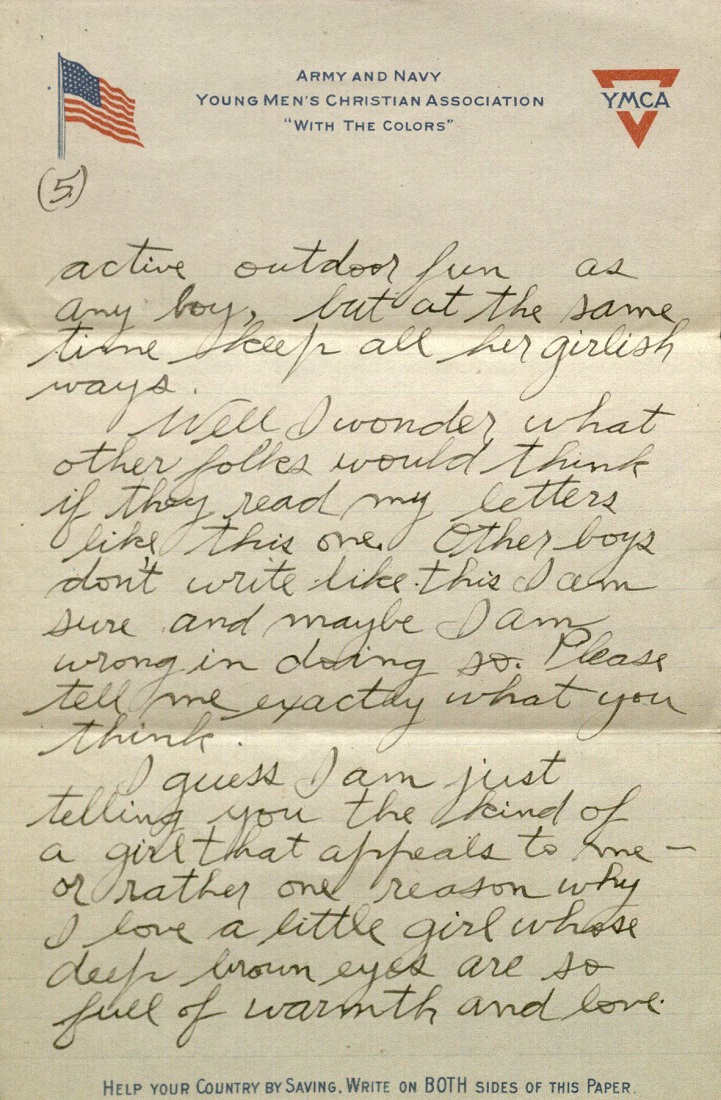
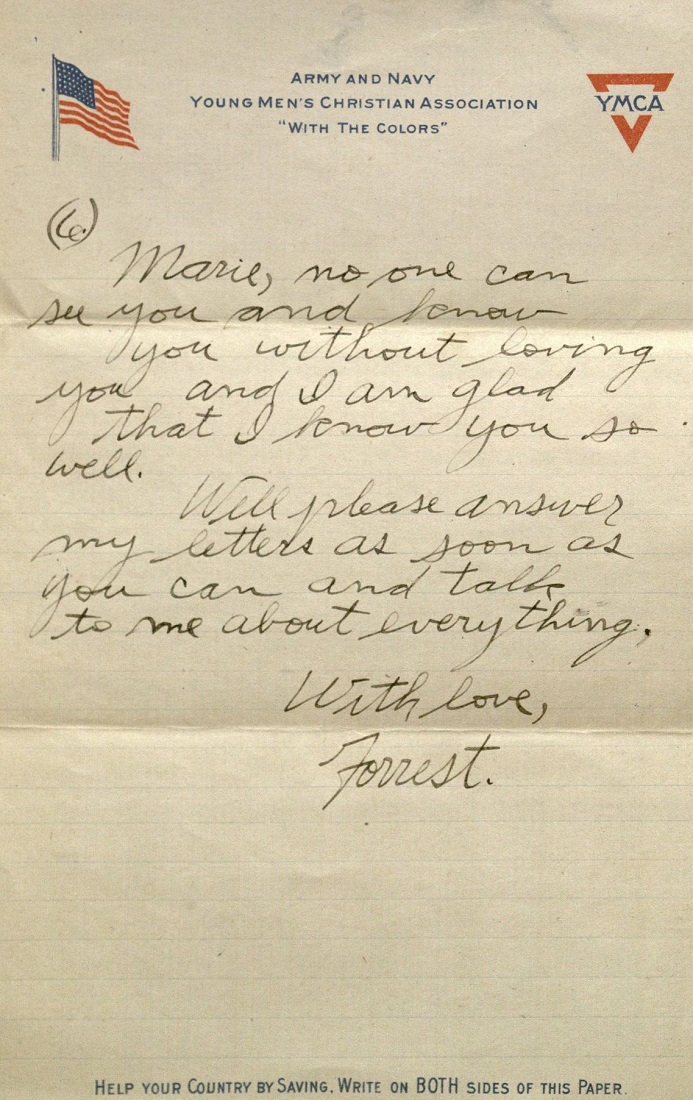
This week’s letters focus primarily on Forrest’s examination of his relationship with Marie. “Well I wonder what other folks would think if they read my letters like this one,” he wrote on May 27, 1918. “Other boys don’t write like this I am sure and maybe I am wrong in doing so. Please tell me exactly what you think.” Other highlights from this week’s letters include Forrest waiting to leave Fort Leavenworth (“we are still at Fort Leavenworth but still always expecting to leave the next day”) and advising Marie to become a “true Outdoor Girl” (“a girl should be as much a lover of good active outdoor fun as any boy, but at the same time keep all her girlish ways”).
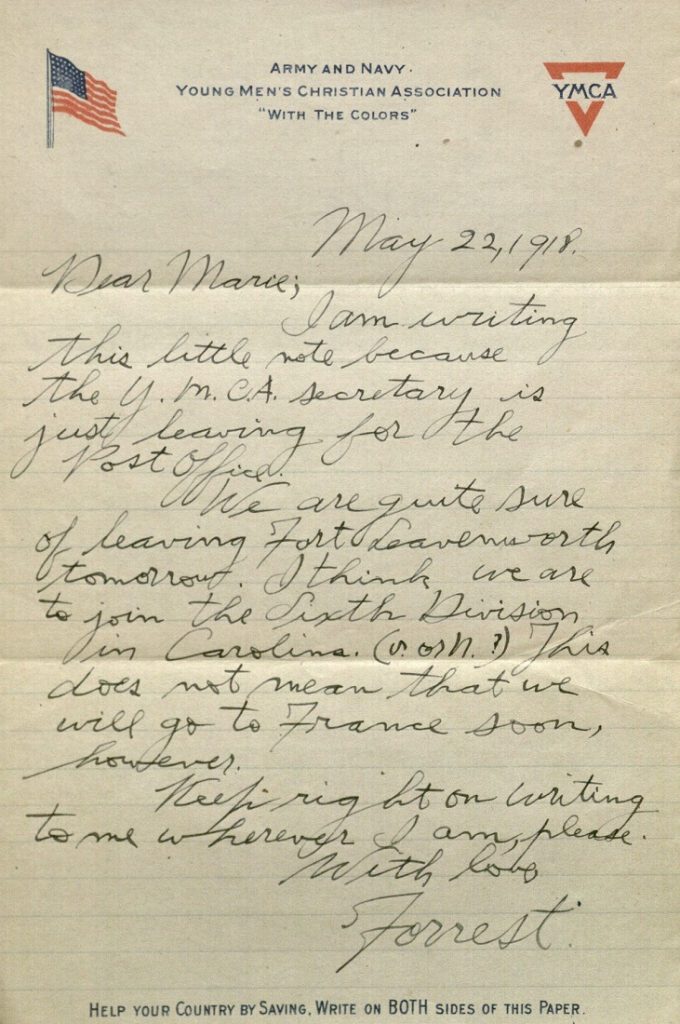
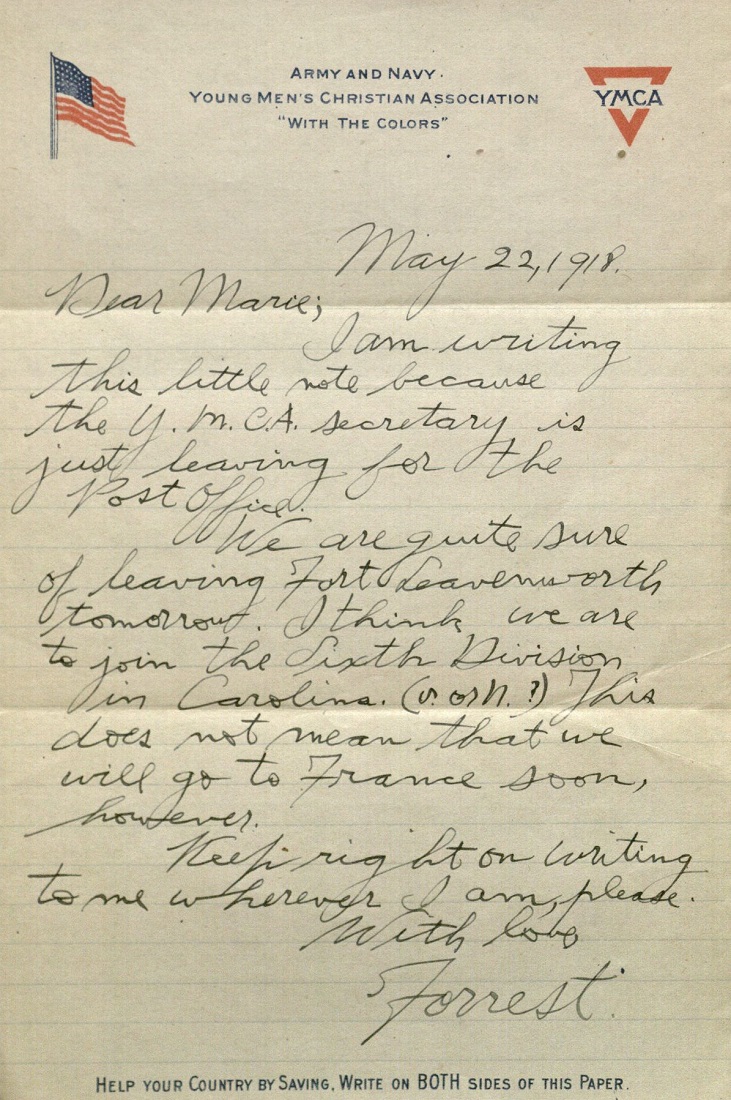
Image of Forrest W. Bassett's letter to Ava Marie Shaw, May 22, 1918

Click image to enlarge.

May 22, 1918.

Dear Marie;

I am writing this little note because the Y.M.C.A. secretary is just leaving for the Post Office.

We are quite sure of leaving Fort Leavenworth tomorrow. I think we are to join the Sixth Division in Carolina. (S. or N.?) This does not mean that we will go to France soon, however.

Keep right on writing to me whenever I am, please.

With love,
Forrest.

May 22, 1918.

Dear Marie,

I just finished a little note for you, so it would be mailed right away, so will write my letter now. Did you get all of my letters last week? I think I wrote two and another, typewritten, one about telegraphy. You read my “Morse” letter OK. I just got your letter of the 18th & 19th this noon. Please keep a little note of the dates on your letters and then when you get my letters notice the dates on them and tell me so that I can be sure no letters are lost.

I located Morse’s company Monday night but he wasn’t there so I left a note on his bunk. Last night he came down to the Cantonments but it was after 9:30 P:M. so we had very little time to get acquainted.

Now please do not think I am even the least bit “peeved” because you wrote but once last week. I realize that you have not the time to write as often as I like to hear from you.

Marie, I know you must love me very much as there is not the slightest touch of insincerity in your letters. And I know you too well to misunderstand you, I think. And, Marie I know you do not doubt me in the least, either. It’s simply impossible for me to make you feel how very much I care, and I guess it would be better that you do not know, anyway. You must remember that I have told you that we can never “belong to eachother,” and that we can never be more than good friends. Now Marie you simply must believe this. I would not tell you this if I were not sure of it, for it hurts me and I believe it hurts you, too, in a way. You will remember that I told you that if I were not very sure you would be glad to forget me in a few years, that I would not write another letter. I still say the same. For awhile last year I had hopes of your being “my little girl” some day but I no longer can hope that even if I were free to come back home now. There is no “little message” between the lines of my letters to you – except that I love you to the utmost. However, it is all useless and so I shall never mention my love for you again.

It may be better to “love some one you can’t have, than to have someone you can’t love,” but that isn’t right either way.

Yes, I remember the little incidents you spoke of. The violets down below the pasture and the buried flowers at the “Big Hills.” And I remember the slippers, too. I have the picture of you on the porch rail with the kitten and you look so big and so close, just as if I could just open my arms and hold you close. Marie, some day you will realize how unworthy I am, then you will not care.

Will not you try to be my friend, but at the same time forget your love for me?

I do not want to forget my love for you because it helps me so much in so many ways.

And you also help Mother and Dad so much, and you don’t suspect how much they really love you. In her last letter Mother writes, “Marie has just gone. She is a ray of sunshine just now flashing in and out, with her cheery smile and “Hello, how’s everybody?” ”

It is such a perfect picture of you as I would want you to be always.

I would like to write about Physical Culture but it is “lights out” time now.

Forget all about telegraphy – Please.

Well I must leave you for this time.

Sincerely,
Forrest.

May 26, 1918.

Dear Marie,

We are still at Fort Leavenworth but still always expecting to leave the next day. The trip to Camp Wadsworth will take five days and we are having trouble getting pullman cars.

Your letter of the 23rd came yesterday noon and I was going to answer it last night but I started a letter to Gladys Warren, a sister of a good friend of mine, which was interrupted by Morse, who came down for a visit. He stayed until supper time and I walked up to his barracks with him. Morse is sure a fine fellow and I am sorry he and I did not get acquainted sooner. We talked radio, buzzer, and ground telegraph almost half the afternoon.

Your telegraphic message was O.K. In your last letter you told me to tell you exactly what I wanted you to do, to please me the most so I am going to take that liberty.

Regarding telegraphing I would advise you to drop it entirely. Don’t waste time on a thing of no value to you unless you find real fun in it. My pet weakness during the last five or six years was studying too much, too many different things. Radio and buzzer telegraphy, photography, chemistry and a half a dozen other hobbies all had a hold on me and I spent time studying technical books which I might better have spent otherwise. I don’t want to pat myself on the back too hard but I believe that my understanding of the theory of radio is better than that of the average man in the Company and for photography, the Personnel Officer from Washington told Captain Murphy that I had the best technical knowledge of photography of any of the 80,000 men he had examined. But what have I gained by it? The long hours I spent at home studying these things have paid me back very poorly and I look back at that waste of time with a good healthy feeling of regret: So please let me caution you against studying too much outside of school. Of course photography is a worthwhile hobby which I expect to be of value to me. If you really like telegraphy as a recreation go to it but remember that swimming & outdoor sports of all kinds are absolutely the best and I would say necessary for a normal life.

I am certainly glad that you have the opportunity to learn to ride and sure do hope that you will make the most of it. The drill book gives some interesting dope on riding and the managing of saddle horses. Spend all the time you can outdoors – swimming, hiking, bicycle riding, tennis or anything else.

What wouldn’t I give to be with you this summer. Just when we have learned to understand eachother and love, we are separated. Marie you have my full unselfish love and it urges me to help you to my limit.

You will never understand me, maybe, but my own sisters don’t either.

In your last letter you hoped that my next letter from 7th, would be a “nice” one. Well I don’t know what you thought of the one I wrote last but I simply had to write that way. I told you that I would never mention my love for you again and I mean it.

Do you realize that you are only fifteen (right?) years old and yet we talk of belonging to eachother. Marie I do love you and you only and I believe you love me – more than you should. It is dead wrong for you to think of me as you do. You are shutting yourself from other boys and that is one thing I am dead against. Of course I realize that you are too young to be going to theatres, etc., a great deal with boys – but anyway it’s your thoughts.

Judging from your letters this Spring, I have put the idea in your mind that I am a little better in some ways than the next fellow – and then the more I said in the opposite, the more you believed it. Forget it.

Well I will put it to you this way – You were only fourteen years old last year I think. We became acquainted and were together a great deal and I am sure that I learned your ways, your character and your whole self as well or better than my own sister. And even though you were, and are, so young, I learned to love you as I have never loved anyone else – and it’s the purest and most unselfish love anyone can give. The greatest thing I could look forward to would be to make you my own, and I feel positive that I never will marry unless it is you. For I never could be satisfied with anyone else after caring as I do for you.

Now you must feel that I am in earnest and sincere in what I am writing.

But I want you to know that I am almost sure that I never will marry – the war not being considered at all, yet I wish and hope that we can remain what we are to eachother, until you are – say – well along in High School. Please tell me exactly what you think and be equally frank and honest with me.

I do love you, Marie, and I do want you to love me, too, but please have other good friends among boys. It must seem queer to you to read this, but there are a great many things to think of and I want us to avoid any mistakes.

With love,
Forrest.
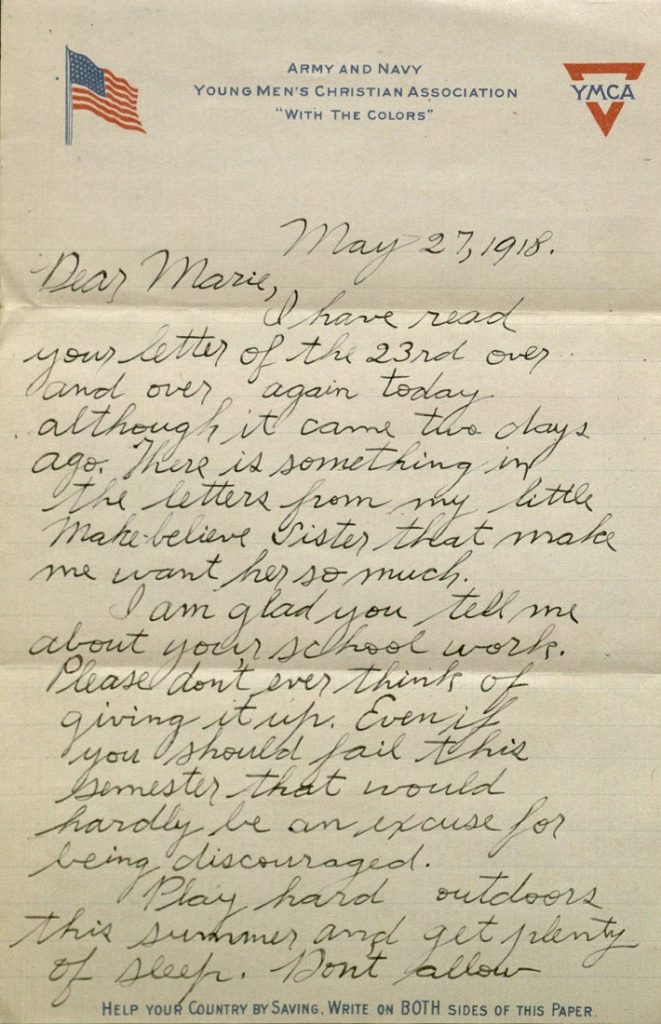
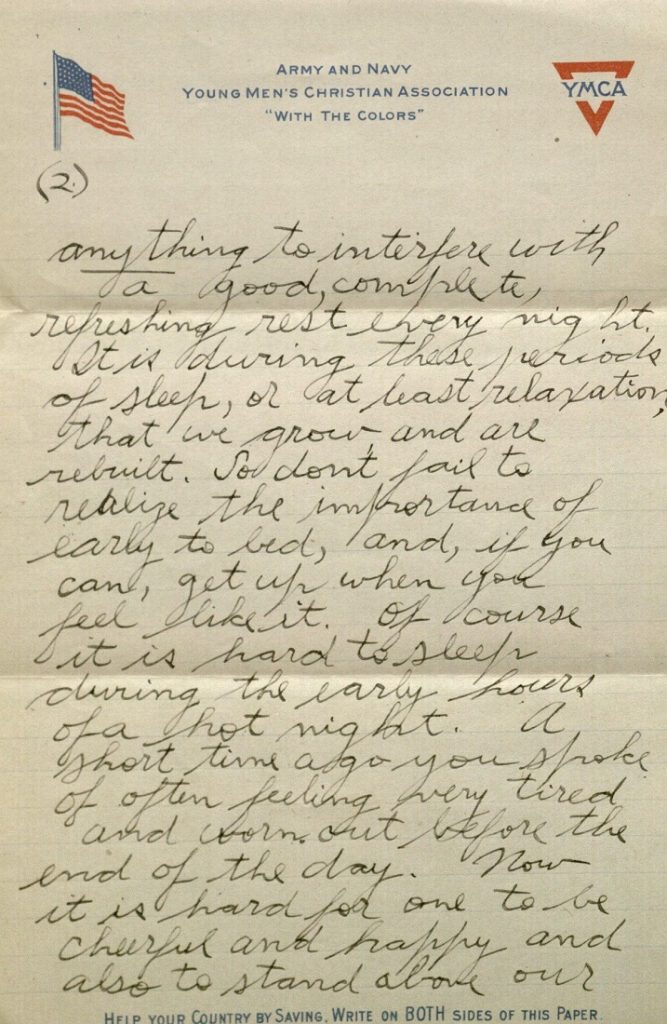
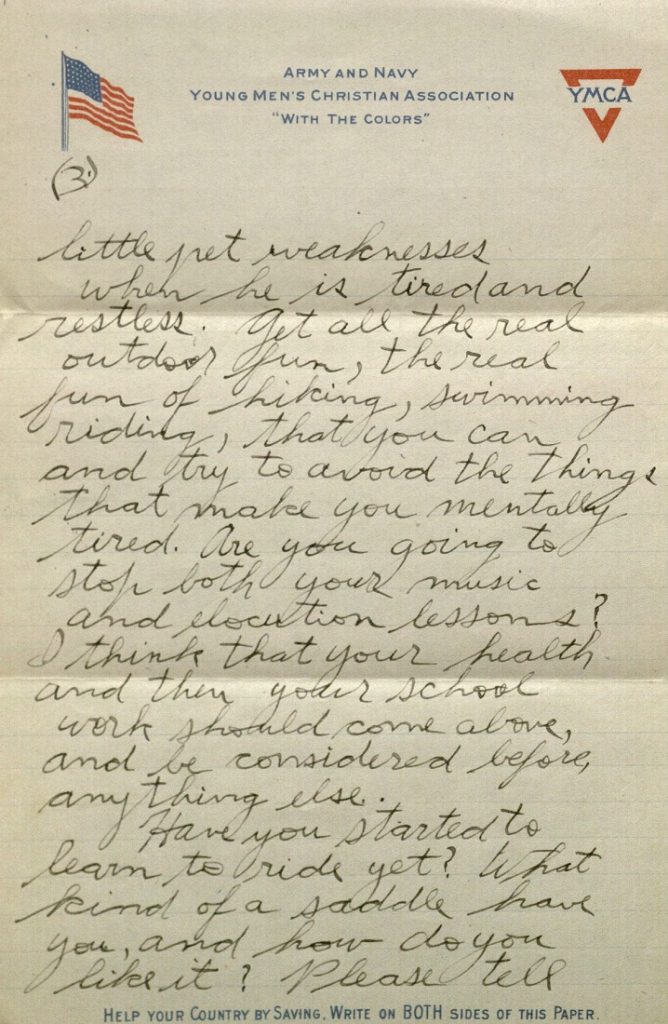
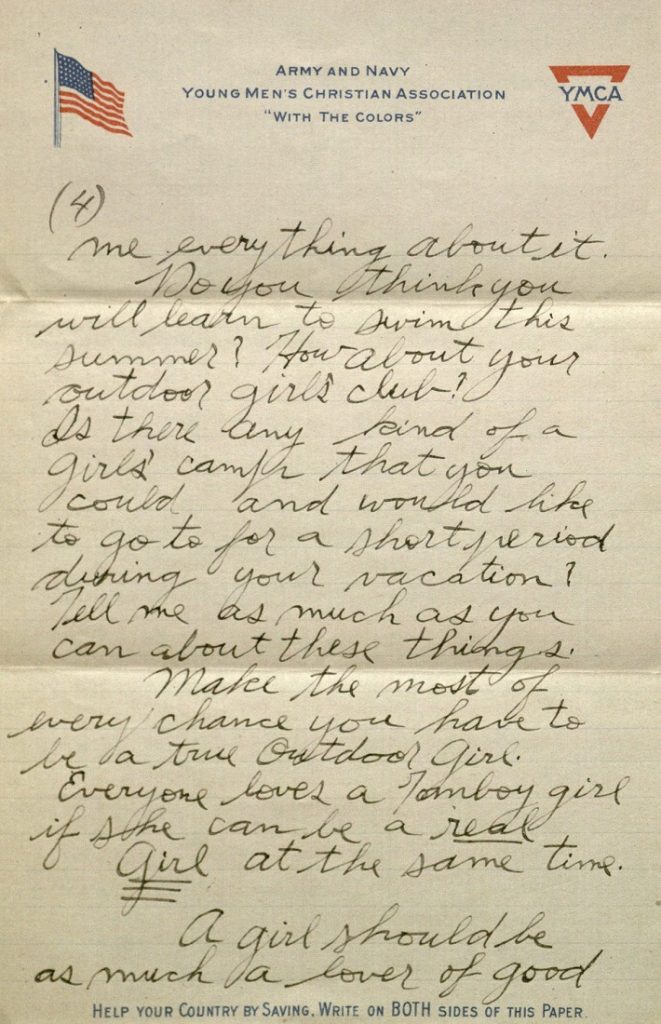
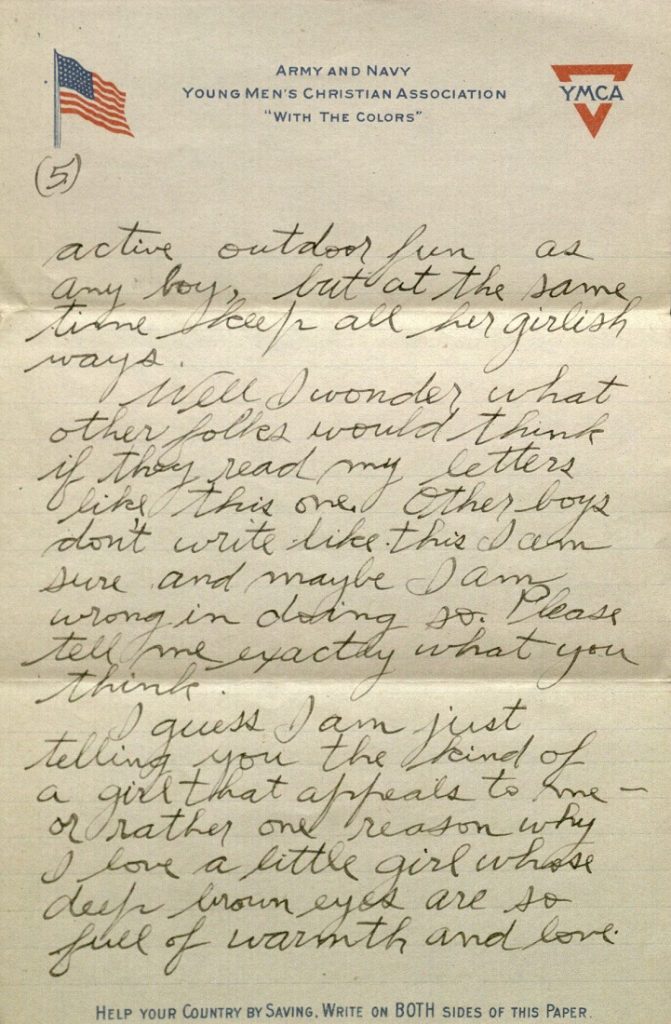
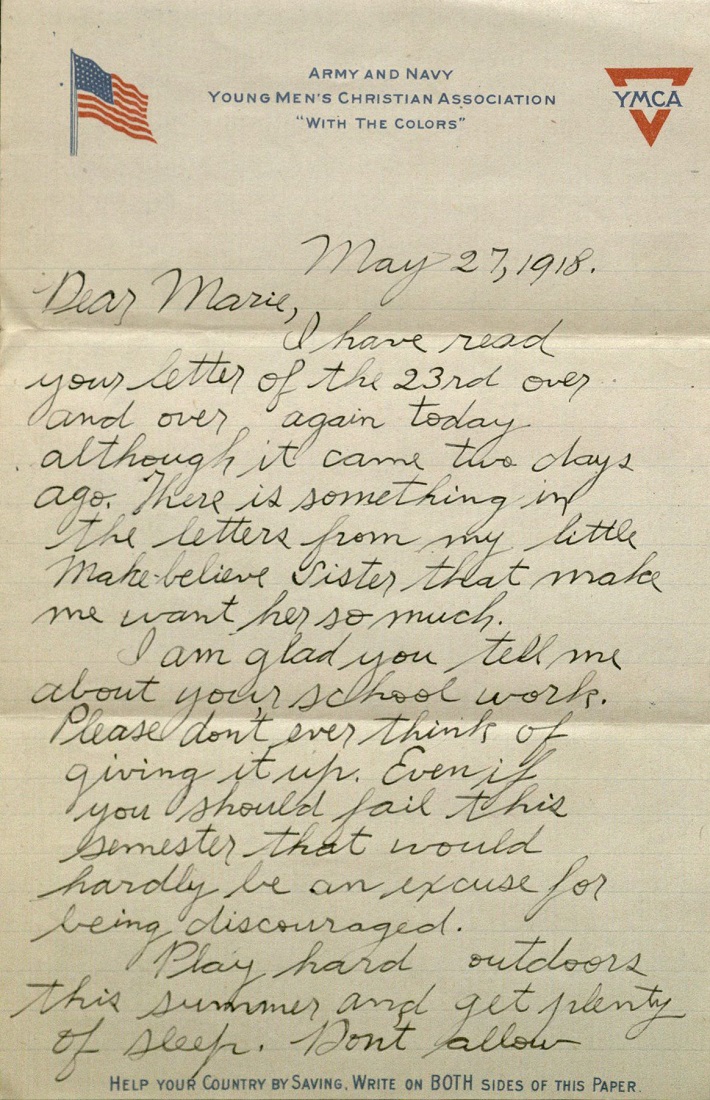
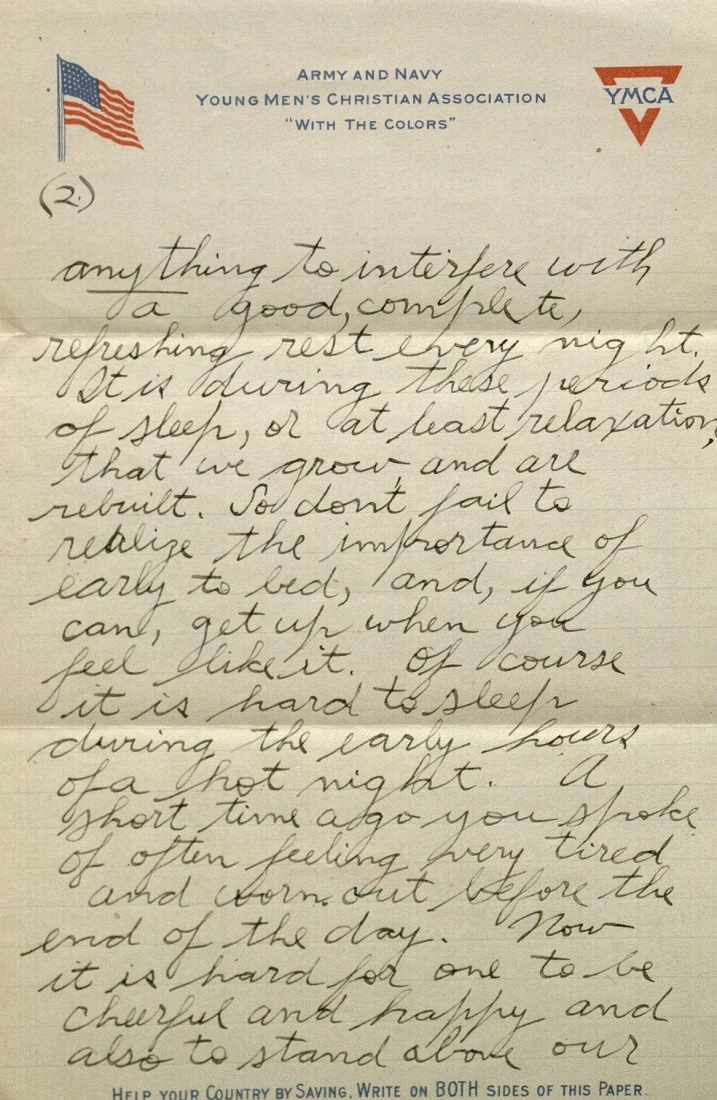
Image of Forrest W. Bassett's letter to Ava Marie Shaw, May 27, 1918 Image of Forrest W. Bassett's letter to Ava Marie Shaw, May 27, 1918

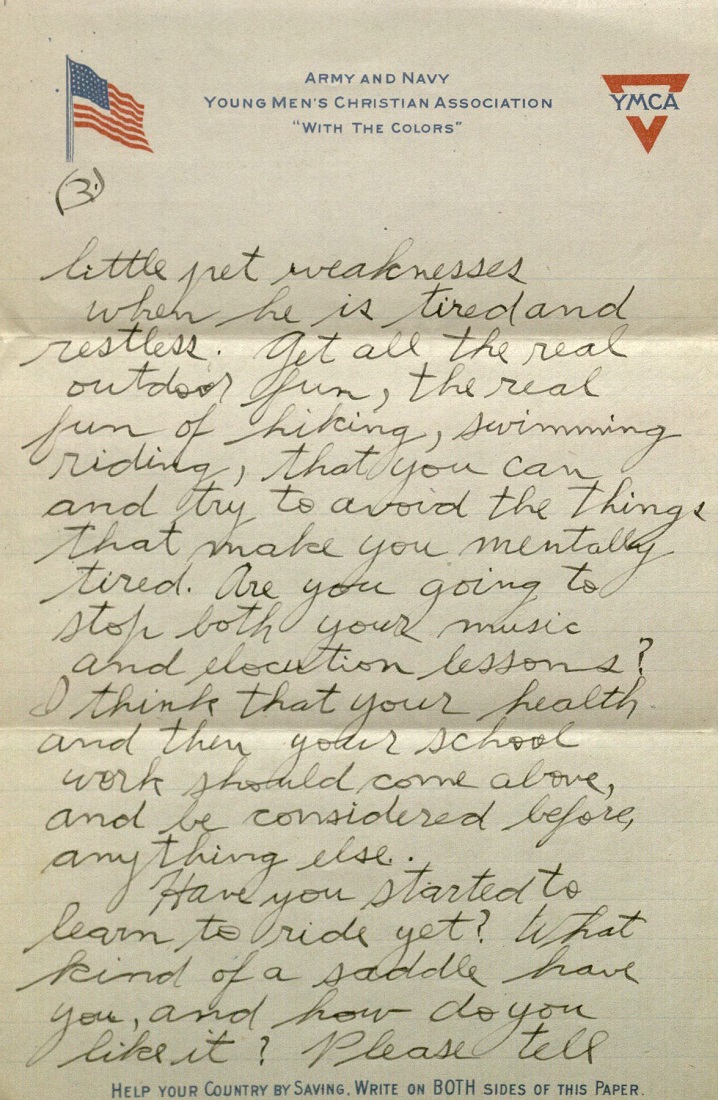
Image of Forrest W. Bassett's letter to Ava Marie Shaw, May 27, 1918 Image of Forrest W. Bassett's letter to Ava Marie Shaw, May 27, 1918

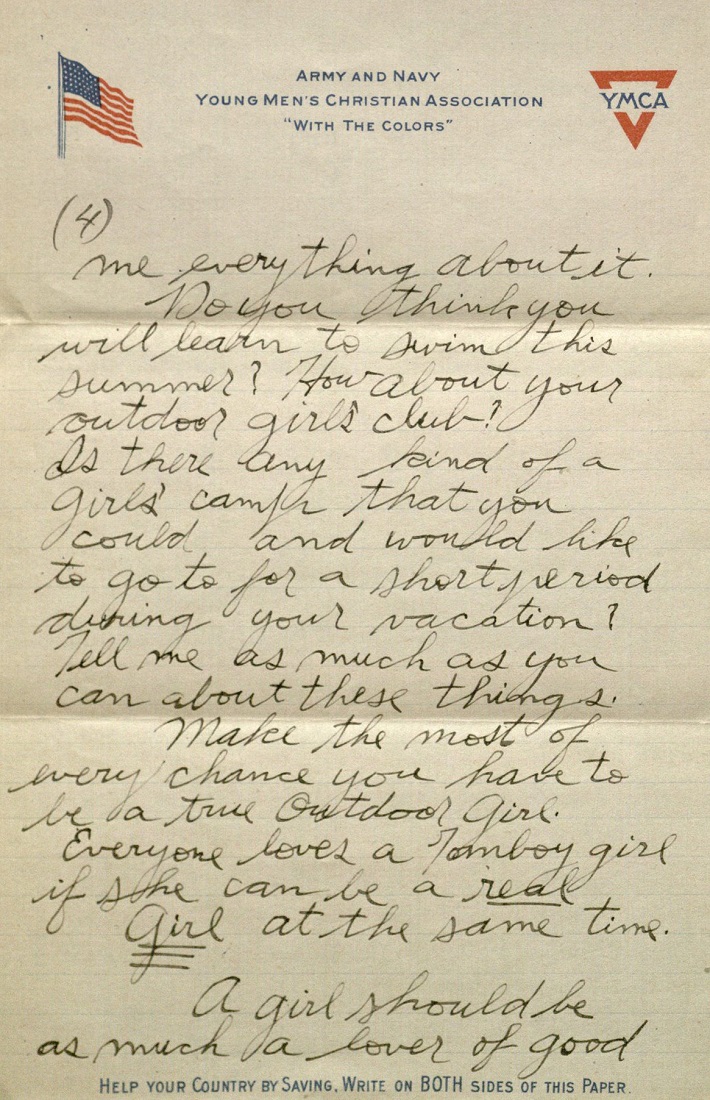
Image of Forrest W. Bassett's letter to Ava Marie Shaw, May 27, 1918 Image of Forrest W. Bassett's letter to Ava Marie Shaw, May 27, 1918

Click images to enlarge.

May 27, 1918.

Dear Marie,

I have read your letter of the 23rd over and over again today although it came two days ago. There is something in the letters from my little Make believe Sister that make me want her so much.

I am glad you tell me about your school work. Please don’t ever think of giving it up. Even if you should fail this semester that would hardly be an excuse for being discouraged.

Play hard outdoors this summer and get plenty of sleep. Don’t allow anything to interfere with a good, complete, refreshing rest every night. It is during these periods of sleep, or at least relaxation, that we grow and are rebuilt. So don’t fail to realize the importance of early to be, and, if you can, get up when you feel like it. Of course it is hard to sleep during the early hours of a hot night. A short time ago you spoke of often feeling very tired and worn out before the end of the day. Now it is hard for one to be cheerful and happy and also to stand above our little pet weaknesses when he is tired and restless. Get all the real outdoor fun, the real fun of hiking, swimming[,] riding, that you can and try to avoid the things that make you mentally tired. Are you going to stop both your music and elocution lessons? I think that your health and then your school work should come above, and be considered before, anything else.

Have you started to learn to ride yet? What kind of a saddle have you, and how do you like it? Please tell me everything about it.

Do you think you will learn to swim this summer? How about your outdoor girls’ club? Is there any kind of a girls’ camp that you could and would like to go to for a short period during your vacation? Tell me as much as you can about these things.

Make the most of every chance you have to be a true Outdoor Girl. Everyone loves a Tomboy girl if she can be a real Girl at the same time.

A girl should be as much a lover of good active outdoor fun as any boy, but at the same time keep all her girlish ways.

Well I wonder what other folks would think if they read my letters like this one. Other boys don’t write like this I am sure and maybe I am wrong in doing so. Please tell me exactly what you think.

I guess I am just telling you the kind of a girl that appeals to me – or rather one reason why I love a little girl whose deep brown eyes are so full of warmth and love.

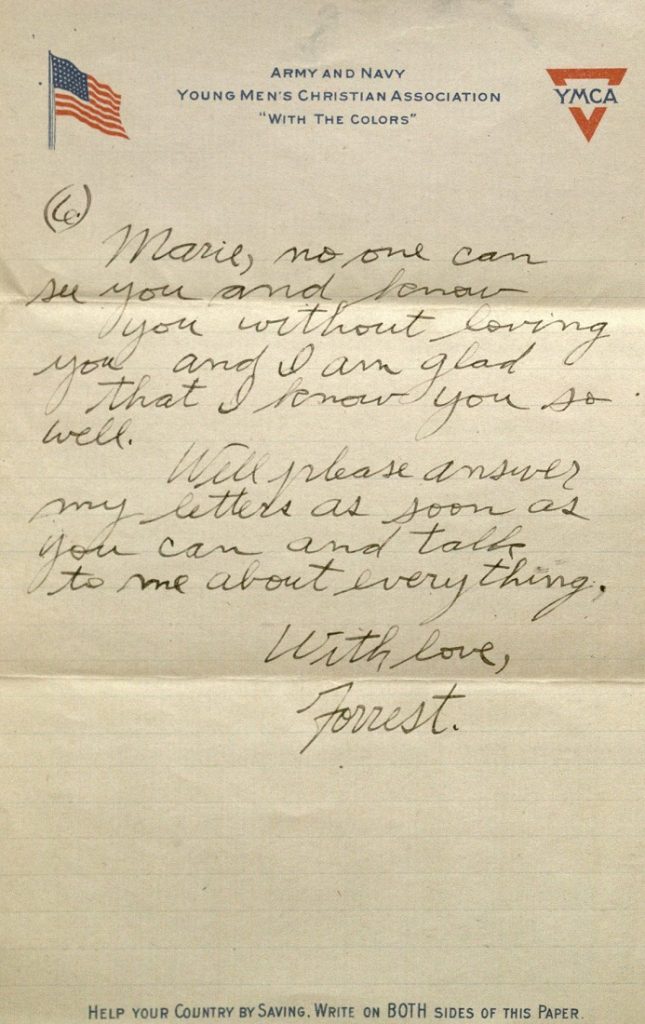
Marie, no one can see you and know you without loving you and I am glad that I know you so well.

Well please answer my letters as soon as you can and talk to me about everything.

With love,
Forrest.

Meredith Huff
Public Services

Emma Piazza
Public Services Student Assistant
World War I Letters of Forrest W. Bassett: May 14-20, 1918

May 14th, 2018

In honor of the centennial of World War I, we’re going to follow the experiences of one American soldier: nineteen-year-old Forrest W. Bassett, whose letters are held in Spencer’s Kansas Collection. Each Monday we’ll post a new entry, which will feature selected letters from Forrest to thirteen-year-old Ava Marie Shaw from that following week, one hundred years after he wrote them.

Forrest W. Bassett was born in Beloit, Wisconsin, on December 21, 1897 to Daniel F. and Ida V. Bassett. On July 20, 1917 he was sworn into military service at Jefferson Barracks near St. Louis, Missouri. Soon after, he was transferred to Fort Leavenworth, Kansas, for training as a radio operator in Company A of the U. S. Signal Corps’ 6th Field Battalion.

Ava Marie Shaw was born in Chicago, Illinois, on October 12, 1903 to Robert and Esther Shaw. Both of Marie’s parents – and her three older siblings – were born in Wisconsin. By 1910 the family was living in Woodstock, Illinois, northwest of Chicago. By 1917 they were in Beloit.

Frequently mentioned in the letters are Forrest’s older half-sister Blanche Treadway (born 1883), who had married Arthur Poquette in 1904, and Marie’s older sister Ethel (born 1896).

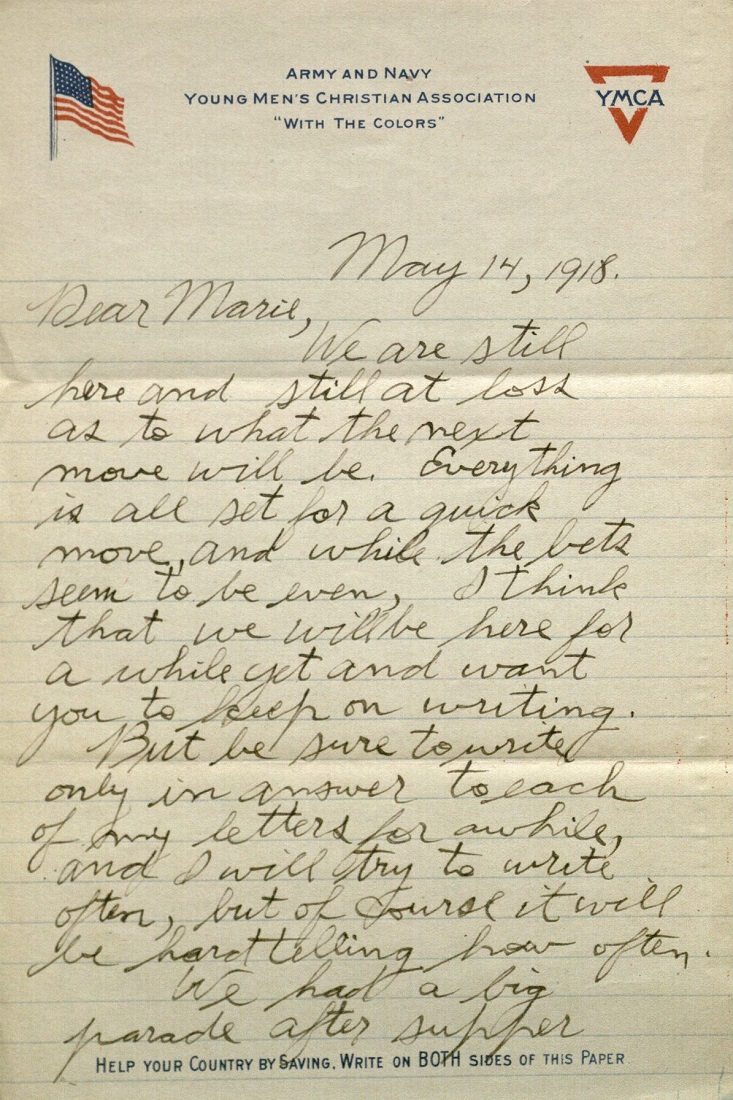
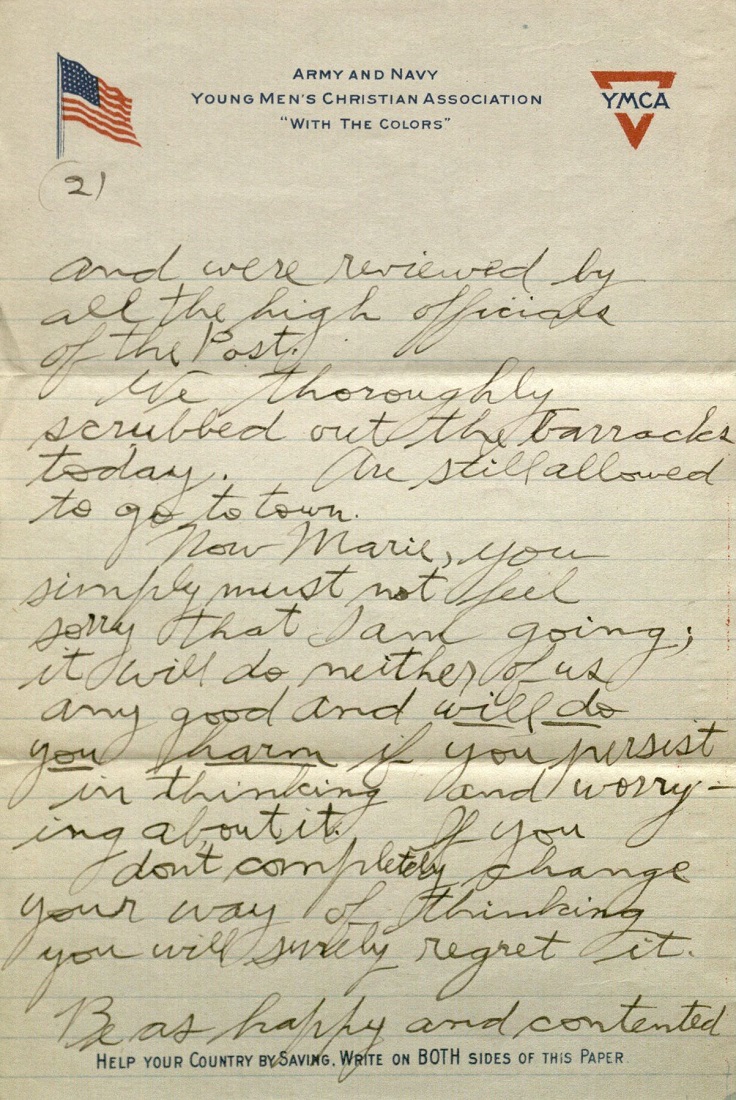
This week’s letter focuses on the uncertainty of Forrest’s future (“we are still here and still at loss as to what the next move will be”) and Marie’s concern, presumably about him going to Europe (“you simply must not feel sorry that I am going”).

Image of Forrest W. Bassett's letter to Ava Marie Shaw, May 14, 1918 Image of Forrest W. Bassett's letter to Ava Marie Shaw, May 14, 1918

Image of Forrest W. Bassett's letter to Ava Marie Shaw, May 14, 1918

Click images to enlarge.

May 14, 1918.

Dear Marie,

We are still here and still at loss as to what the next move will be. Everything is all set for a quick move, and while the bets seem to be even, I think that we will be here for a while yet and want you to keep on writing.

But be sure to write only in answer to each of my letters for a while, and I will try to write often, but of course it will be hard telling how often.

We had a big parade after supper and were reviewed by all the high officials of the Post.

We thoroughly scrubbed out the barracks today. Are still allowed to go to town.

Now Marie, you simply must not feel sorry that I am going; it will do neither of us any good and will do you harm if you persist in thinking and worrying about it. If you don’t completely change your way of thinking you will surely regret it.

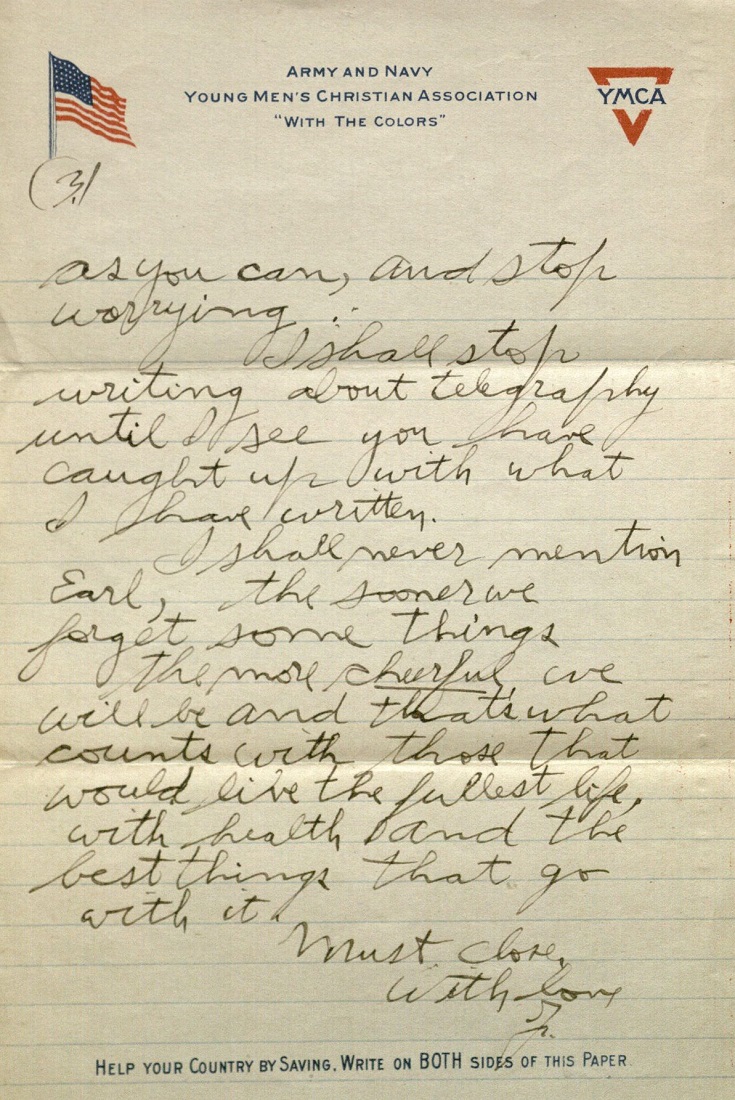
Be as happy and contented as you can, and stop worrying.

I shall stop writing about telegraphy until I see you have caught up with what I have written.

I shall never mention Earl*, the sooner we forget some things the more cheerful we will be and that’s what counts with those that would live the fullest life, with health and the best things that go with it.

Must close,
With love,
F.

*Earl Treadway was Forrest’s older half-brother, born 1881. Last week’s letters suggest that Earl had recently been ill; he died around May 10 and was buried on May 12, 1918. He was thirty-seven years old.

Meredith Huff
Public Services

Emma Piazza
Public Services Student Assistant