The University of Kansas

Inside Spencer: The KSRL Blog

Books on a shelf

Welcome to the Kenneth Spencer Research Library blog! As the special collections and archives library at the University of Kansas, Spencer is home to remarkable and diverse collections of rare and unique items. Explore the blog to learn about the work we do and the materials we collect.

This blog may contain archived web content. This blog may link to catalog records which no longer exist as of a software change in 2026.

The Art of Nature

July 31st, 2018

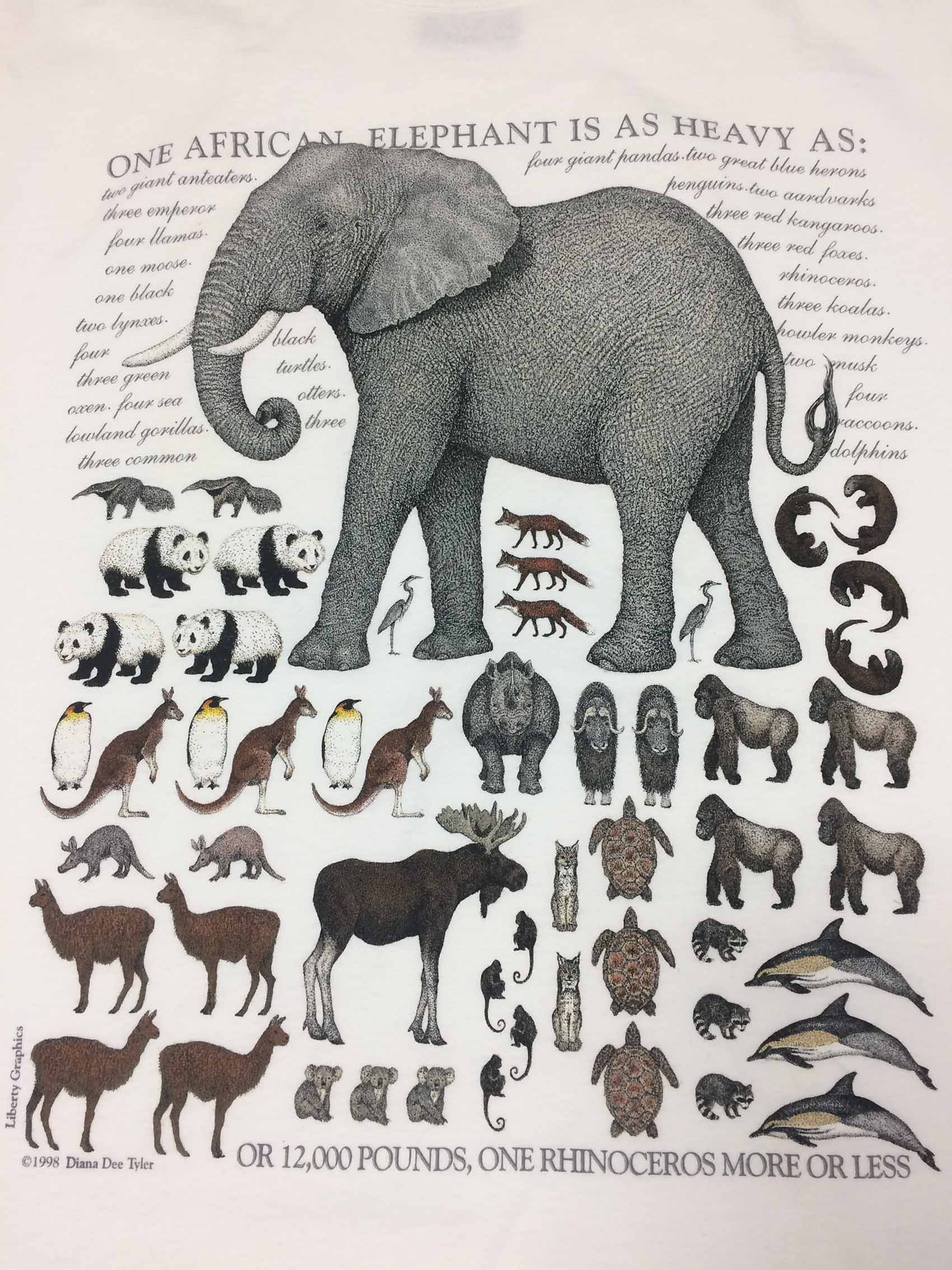
Just how heavy is an African elephant? What insects hang out together on milkweed plants? Satisfy your curiosity by visiting Kenneth Spencer Research Library’s summer 2018 exhibition before it closes on August 30.

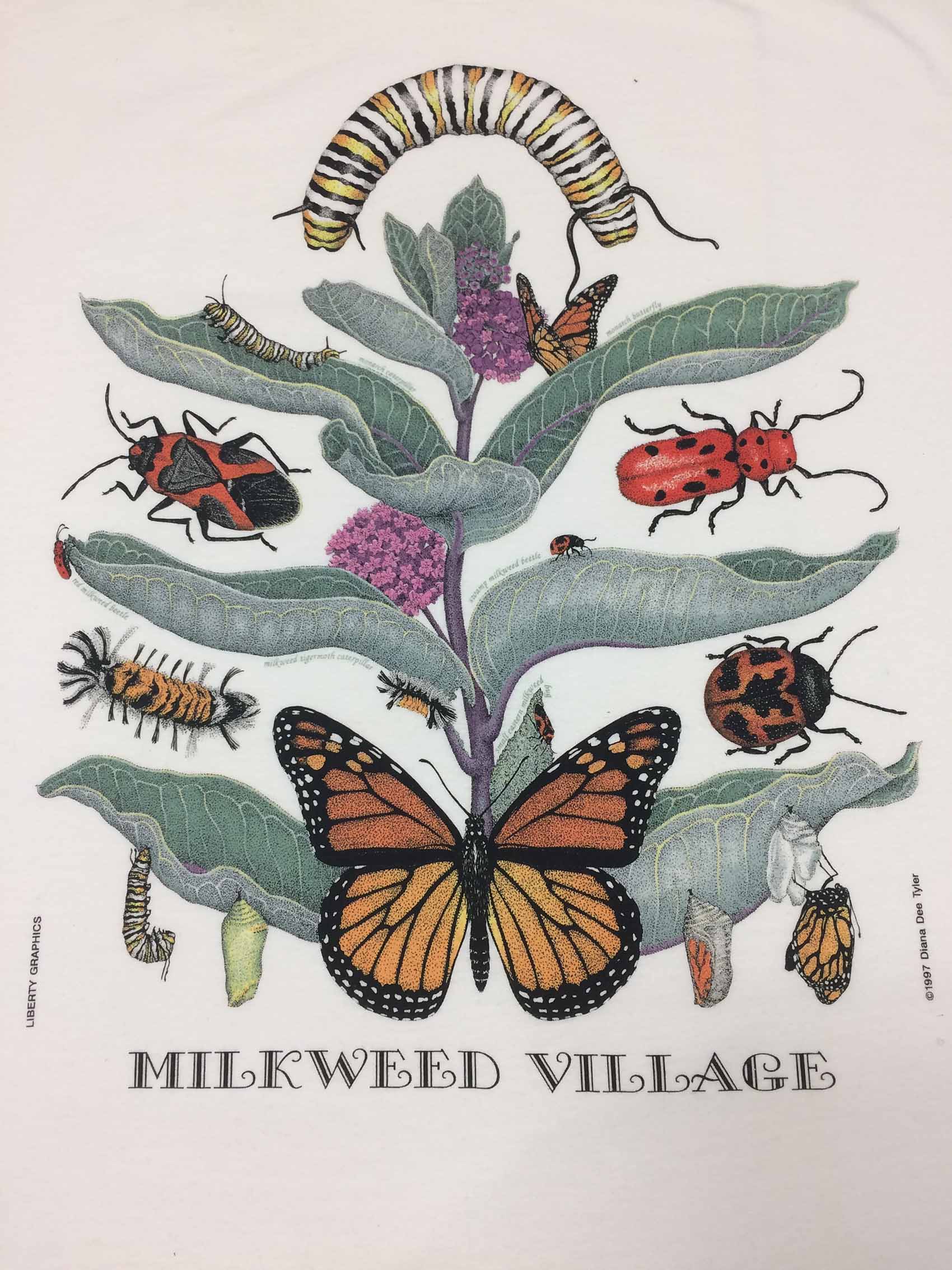
Image of the T-Shirt Design by D.D. Tyler, "One African Elephant Is as Heavy as…" Milkweed Village T-Shirt design by D. D. Tyler

D.D. Tyler. “One African Elephant Is as Heavy as…” t-shirt and
“Milkweed Village” t-shirt. D. D. Tyler Collection.
Call Number: MS QA 22, Box 4. Click images to enlarge.

The pictorial T-shirts displayed in “The Art of Nature: Natural History Art and Illustrations by D.D. Tyler” answer such questions in the nicest possible way. These beautiful T-shirts selected from nearly 200 designed by natural-history artist D.D. (Diana Dee) Tyler charm the eye while they stimulate the mind. The same is true of her natural-history illustrations for periodicals, guidebooks, and children’s books.

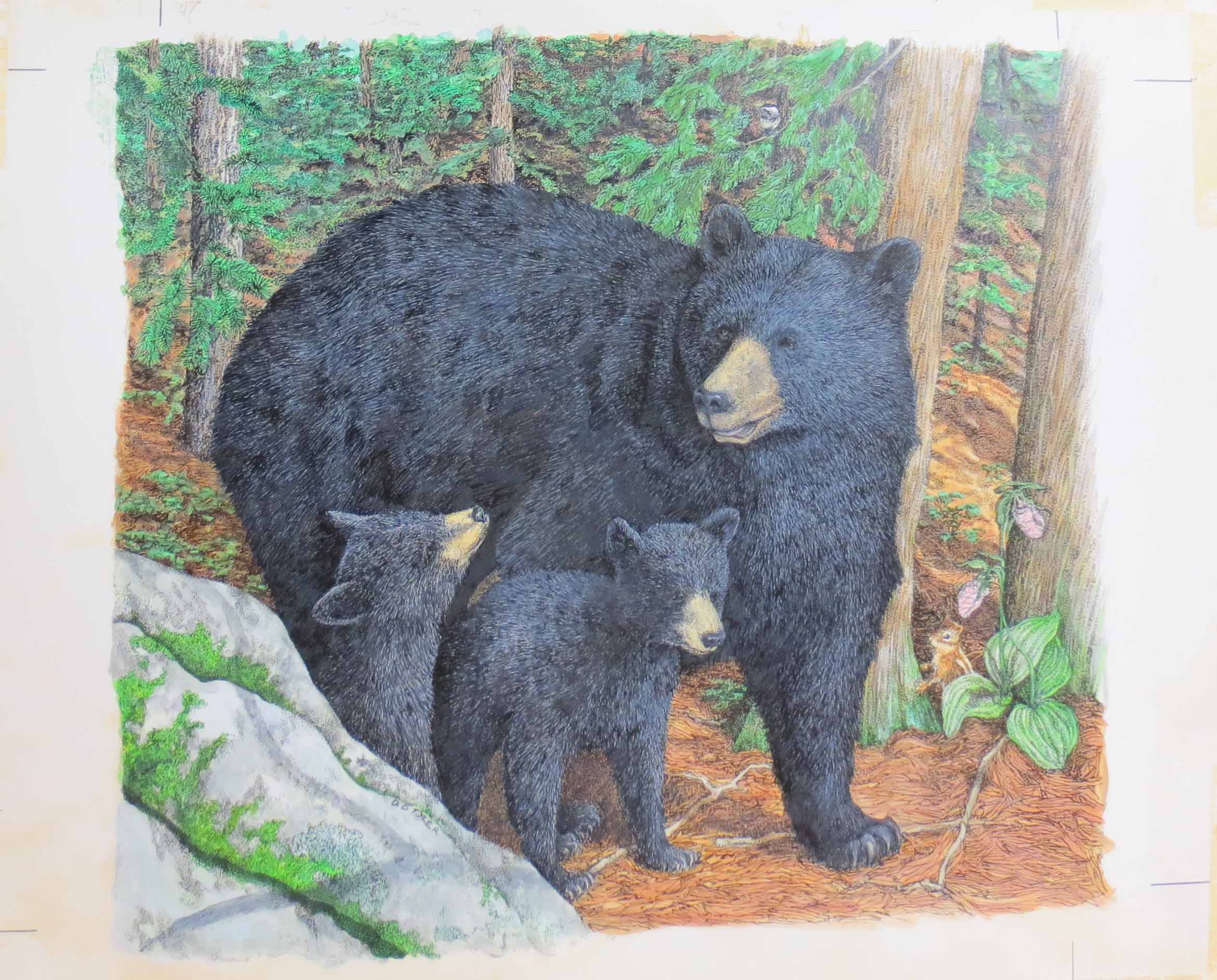
Color drawing by D. D. Tyler of Mother Bear and Cubs for book Bears in the Wild by Ada and Frank Graham, 1981
D.D. Tyler. Mother Bear and Cubs. Color drawing for book
Bears in the Wild by Ada and Frank Graham, 1981.
Addition to the D. D. Tyler Collection received 12/17/2017. Click image to enlarge.

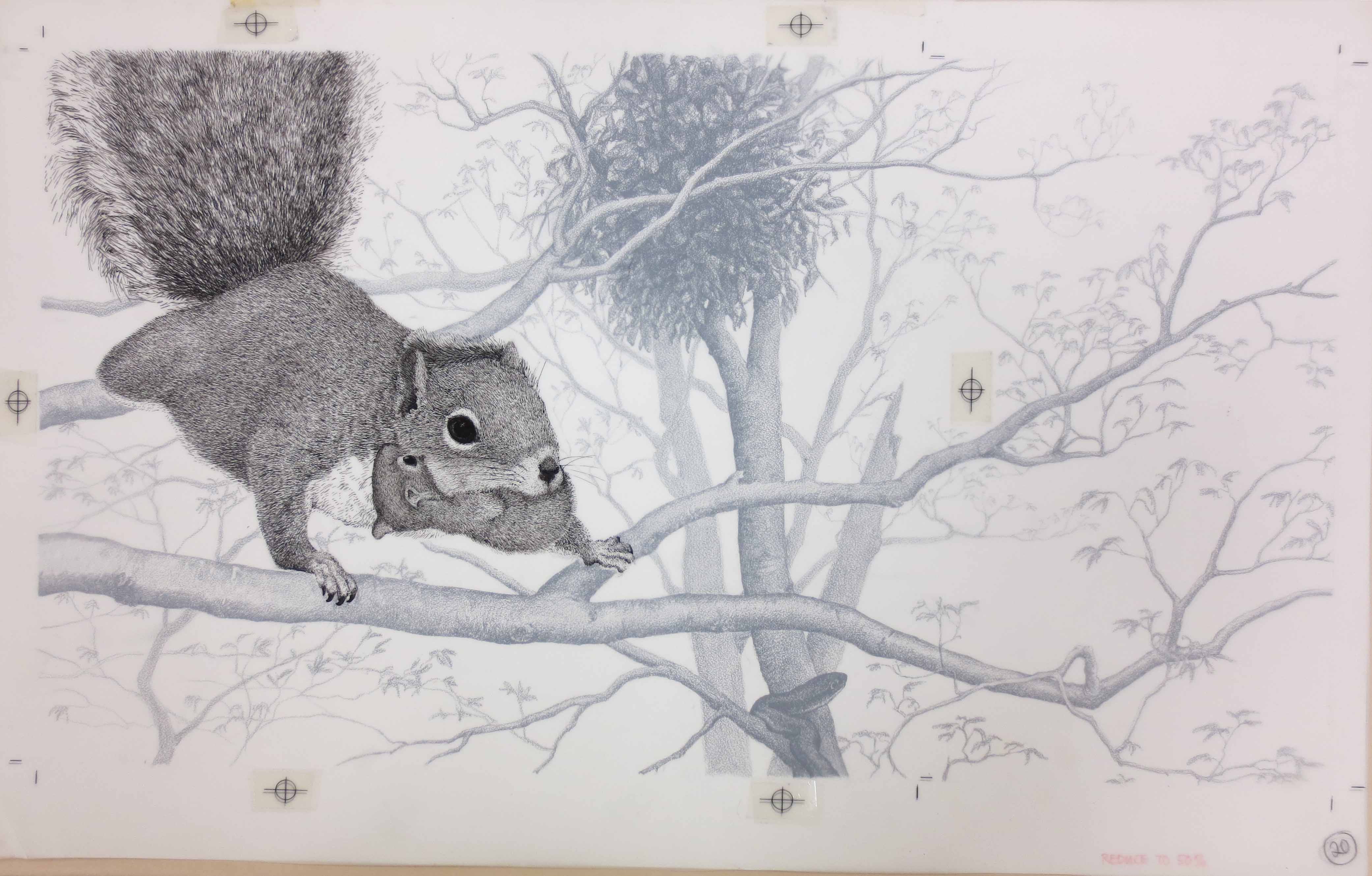
The detailed and scientifically accurate pen-and-ink drawings breathe life into each book author’s written descriptions of animals and their lives. In the exhibition, her impressive original drawings, never meant to be seen, can be compared with the published versions reduced photographically to half-size.

Ink and crayon drawing by D. D. Tyler of a Mother Squirrel Carrying Baby Squirrel for the book We Watch Squirrels by Ada and Frank Graham, 1985

D.D. Tyler. Mother Squirrel Carrying Baby Squirrel. Ink and crayon drawing
for book We Watch Squirrels by Ada and Frank Graham, 1985.
D. D. Tyler Collection. Call Number: MS QA 22, Box 1, Folder 30. Click image to enlarge.

A native Kansan, D.D. Tyler completed a Fine Arts degree at the University of Kansas in 1970. After backpacking around the world, she settled in Maine, where her career as an artist developed in tandem with her interest in the natural world. Now semi-retired, she recently donated her artistic archive representing forty years of work to Kenneth Spencer Research Library, where anyone using our reading room can request and view items from the D.D. Tyler collection, along with the many other books and manuscripts in the library’s collections.  Kenneth Spencer Research Library, located in the central KU Campus on Poplar Lane between Strong Hall and the Campanile, is open Mondays-Fridays 9-5 and (after fall semester classes begin August 20) Saturdays 9-1.

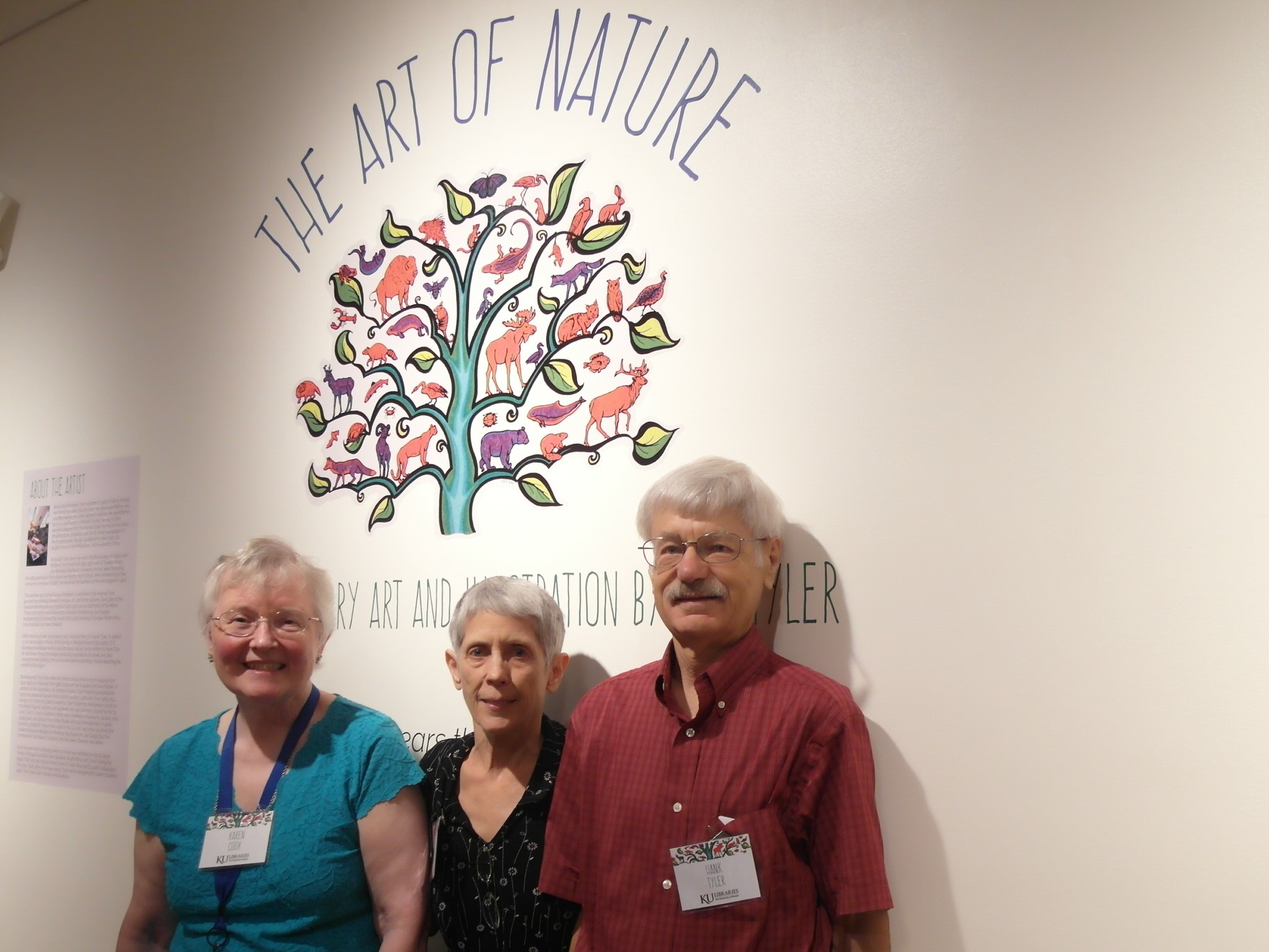
Karen Cook, DD Tyler, and Hank Tyler in front of the main exhibition title for "The Art of Nature," July 12, 2018

The artist, D.D. Tyler (center), and her husband, Hank Tyler (right), at the exhibition
with Karen Cook (left), curator of the exhibition. Click image to enlarge.

Karen Severud Cook
Special Collections Librarian

The Liberty Boys of “76”: Dime Novel Set During the American Revolution

July 3rd, 2018

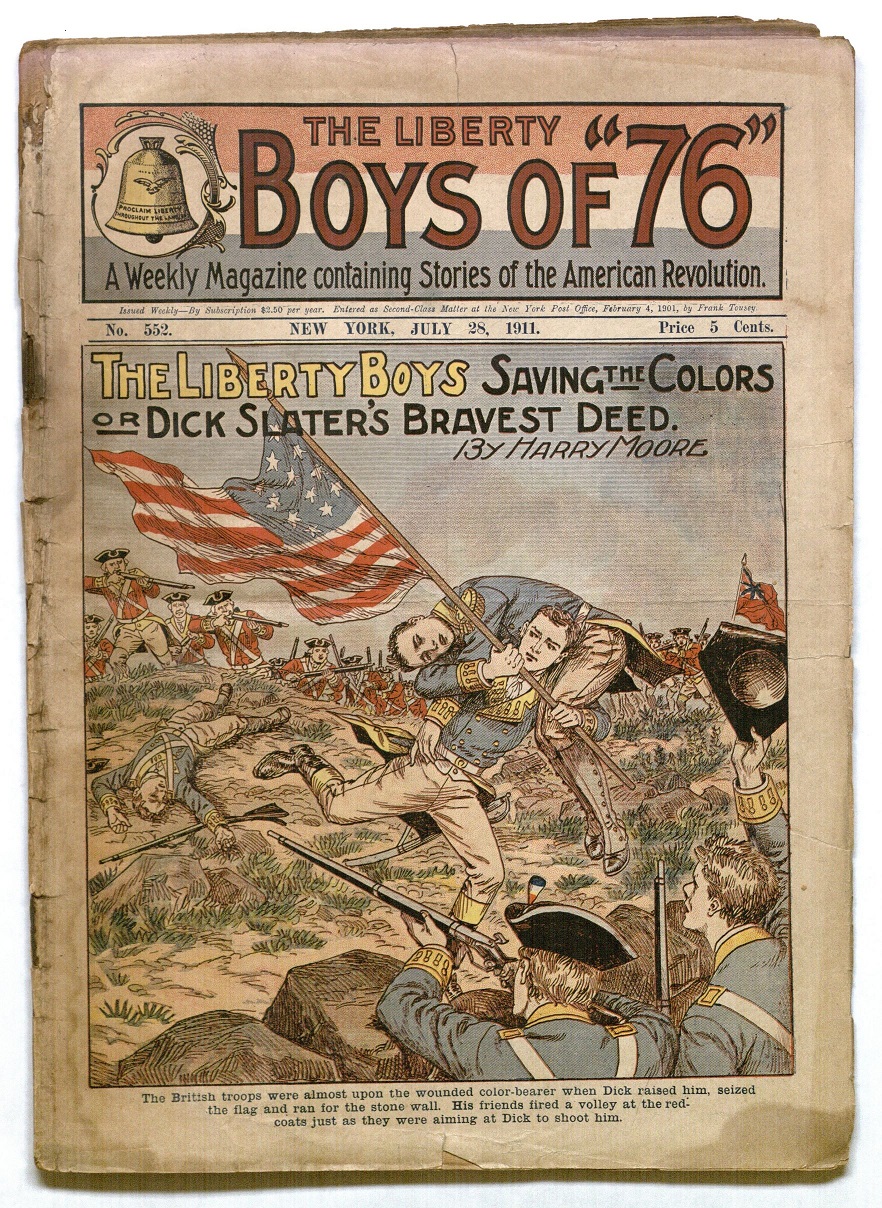
Cover of Issue of the Liberty Boys featuring the story "The Liberty Boys Saving the Colors OR Dick Slater's Bravest Deed" (July 28, 1911)

Harry Judson bore the colors, and was the proudest boy in all the troop as he advanced, waving them over the heads of the brave boys who followed…. Suddenly a shot struck Harry and he was seen to fall, the flag trailing upon the ground…. Dick flew across the open space toward Harry, who was beginning to revive, not having been killed, but only wounded…. It was Dick Slater’s bravest deed, and now both redcoats and Liberty Boys cheered as he ran toward the wall, bearing Harry across his shoulders and waving the colors triumphantly. 

Quotation from The Liberty Boys of “76,”  No. 552 (July 28, 1911), page 19.
Call Number: Children 6112. Cover of that issue pictured above. Click image to enlarge.

The term “dime novel” began as a serial title. Beadle’s Dime Novels (1860-1874) were small paper books, published in a series and sold for ten cents each. They laid the groundwork for what would come to be known as the dime novel. Every Beadle’s edition contained a fast-paced, fictional story with an exaggerated, melodramatic plot, and included a beautifully illustrated cover. Rival publishers soon began to produce their own versions of dime novels, resulting in an explosion of cheaply produced fiction in the latter half of the nineteenth century, and into the twentieth century, most of it aimed at young, male readers. Among them was The Liberty Boys of “76.”

From 1901 to 1925, young readers could follow the adventures of the Liberty Boys. Published every week by Frank Tousey, this dime novel told the stories of a fictional group of young Patriots that consisted of up to 100 members, all doing their part in the war for American independence. Their leader in every issue was Captain Dick Slater. The stories were ghost written by Cecil Burleigh and Stephen Angus Douglas Cox, under the pen name of Harry Moore. The authors drew heavily on Benson John Lossing’s Pictorial Field-Book of the Revolution for their research, and as a result, many historical figures appear in the stories, and most of the stories take place during actual battles and events of the Revolution. Thomas Worth, who also was an illustrator for Harper’s Weekly, produced many of the illustrated covers. Ironically, and sadly, as popular as the covers of dime novels became, the identity of most of the cover artists is unknown.

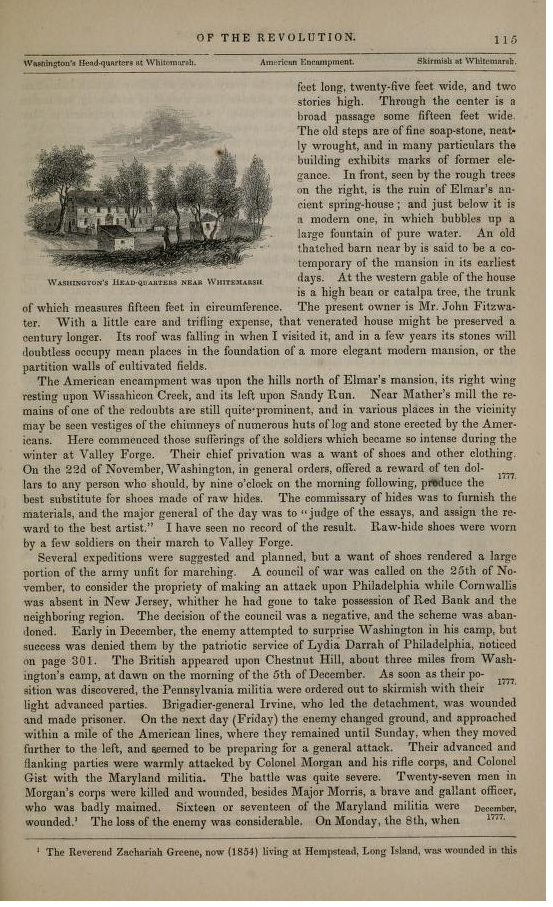
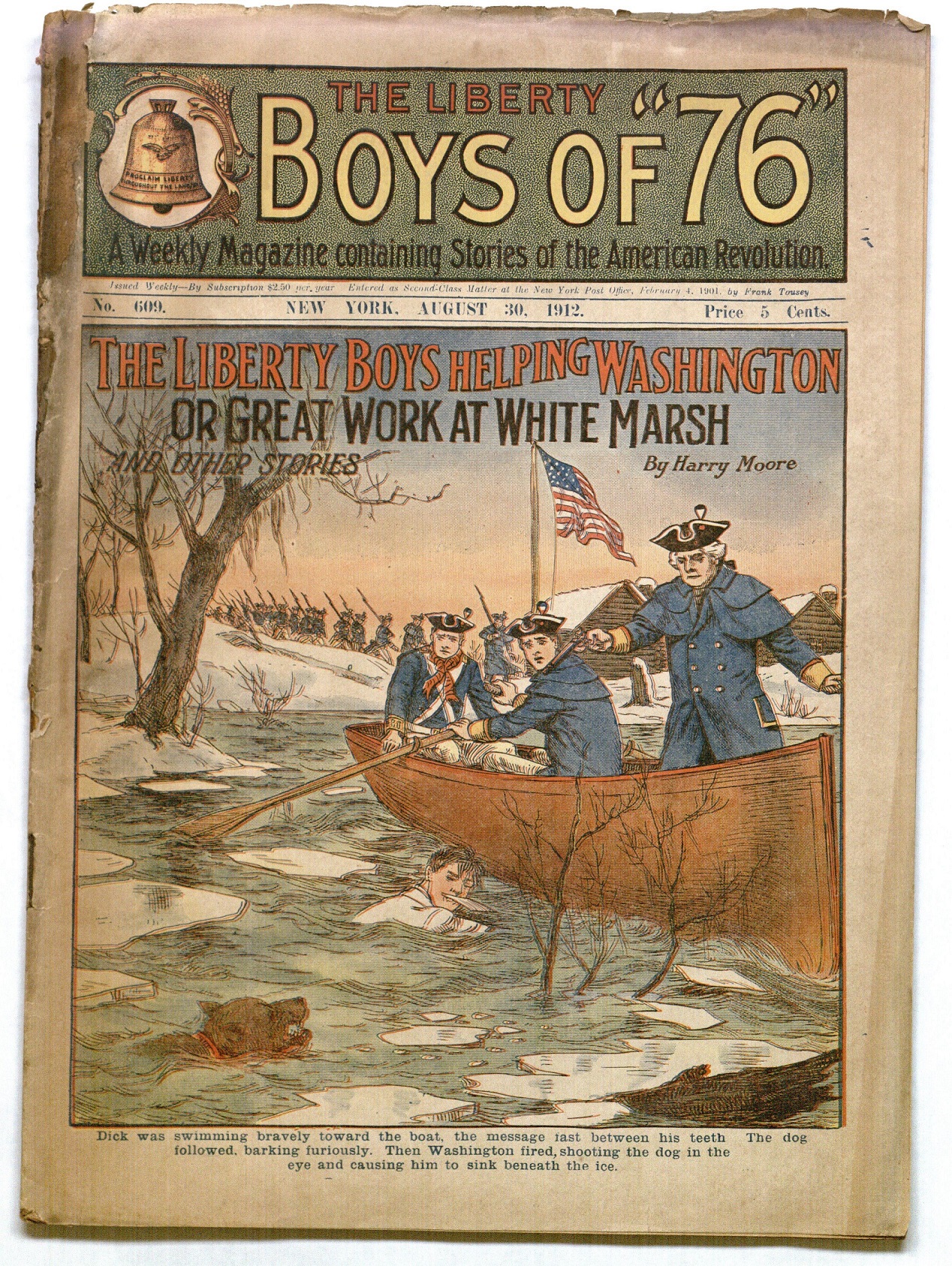
Passage describing the Battle of White Marsh in Lossing's Pictorial Field-Book of the Revolution Vol. 2, p.115   Cover of the issue of The Liberty Boys of "76" treating the Battle of White March (August 30, 1912)

Left: A page from Lossing’s book, Pictorial Field-Book of the Revolution, describing events of the
Battle of White Marsh, part of the Philadelphia campaign of 1777 from a copy contributed to the
Internet Archive
by the University of Illinois Urbana-Champaign (Vol. 2, p. 115).
Right: The fictional account of the Liberty Boys’ participation at
White Marsh, No. 609 (August 30, 1912). Call Number: Children 6112. Click images to enlarge.

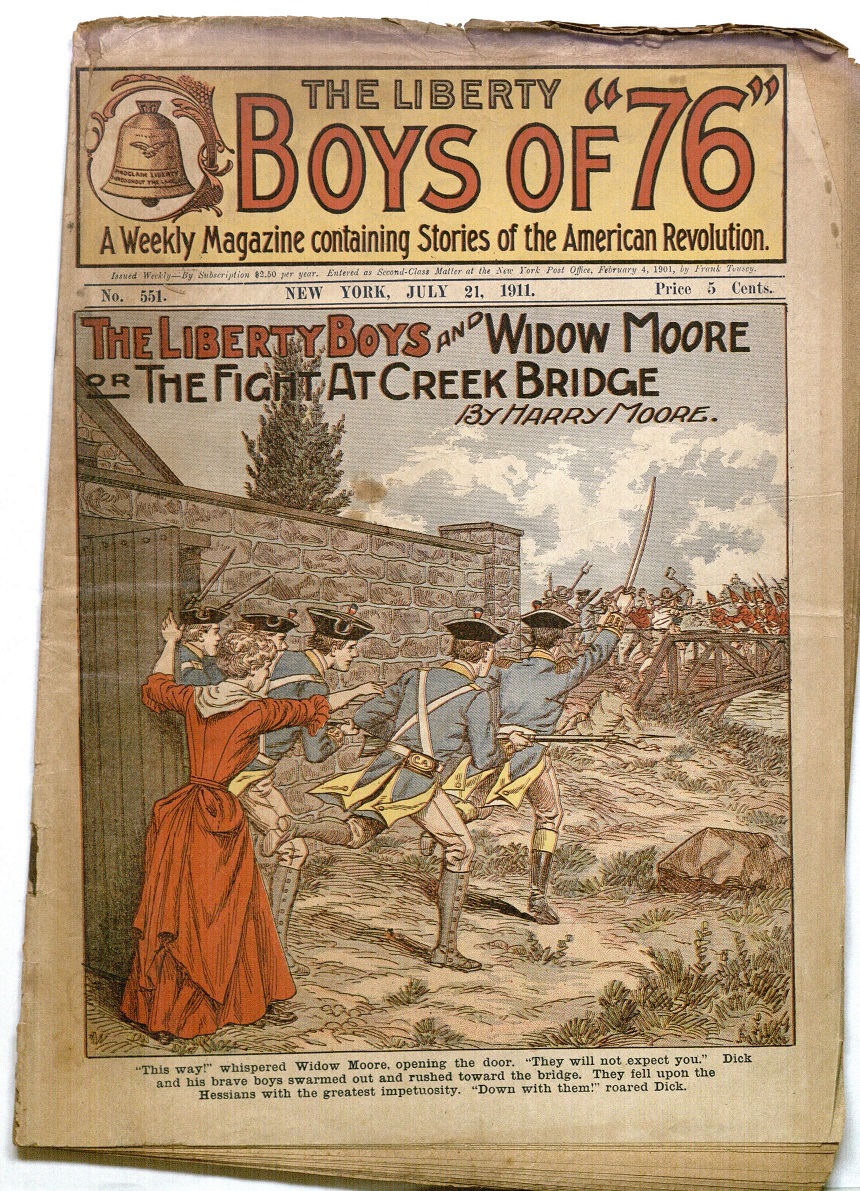
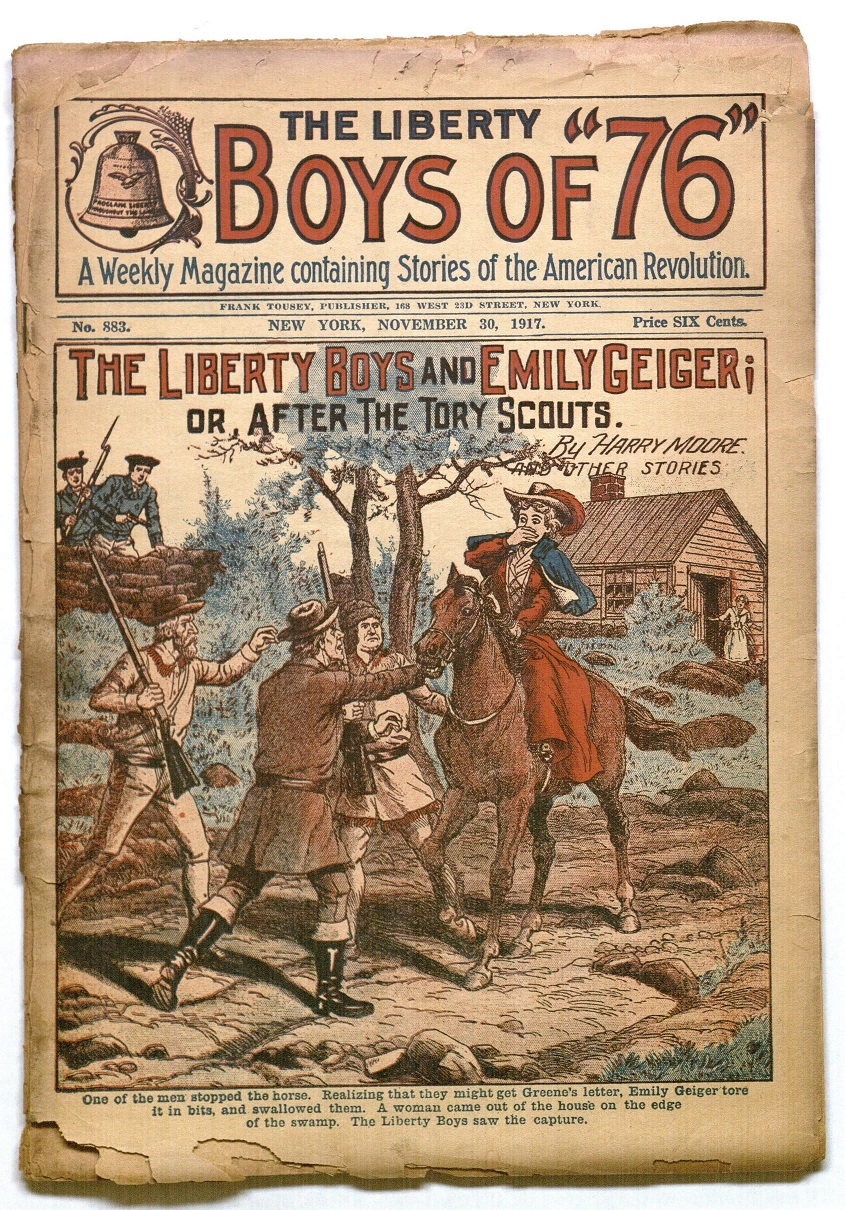
Cover of Issue of the Liberty Boys featuring the story "The Liberty Boys and Widow Moore OR the Fight at Creek Bridge" (July 21, 1911)    Cover of the issue of The Liberty Boys containing "The Liberty Boys and Emily Geiger; or, After the Tory Scouts" (November 30, 1917)

While most of the stories were about the Liberty boys, a lot of them were about girls and women.
The novel on the right is based on the story of Emily Geiger, an actual Patriot hero.
Call Number: Children 6112. Click images to enlarge.

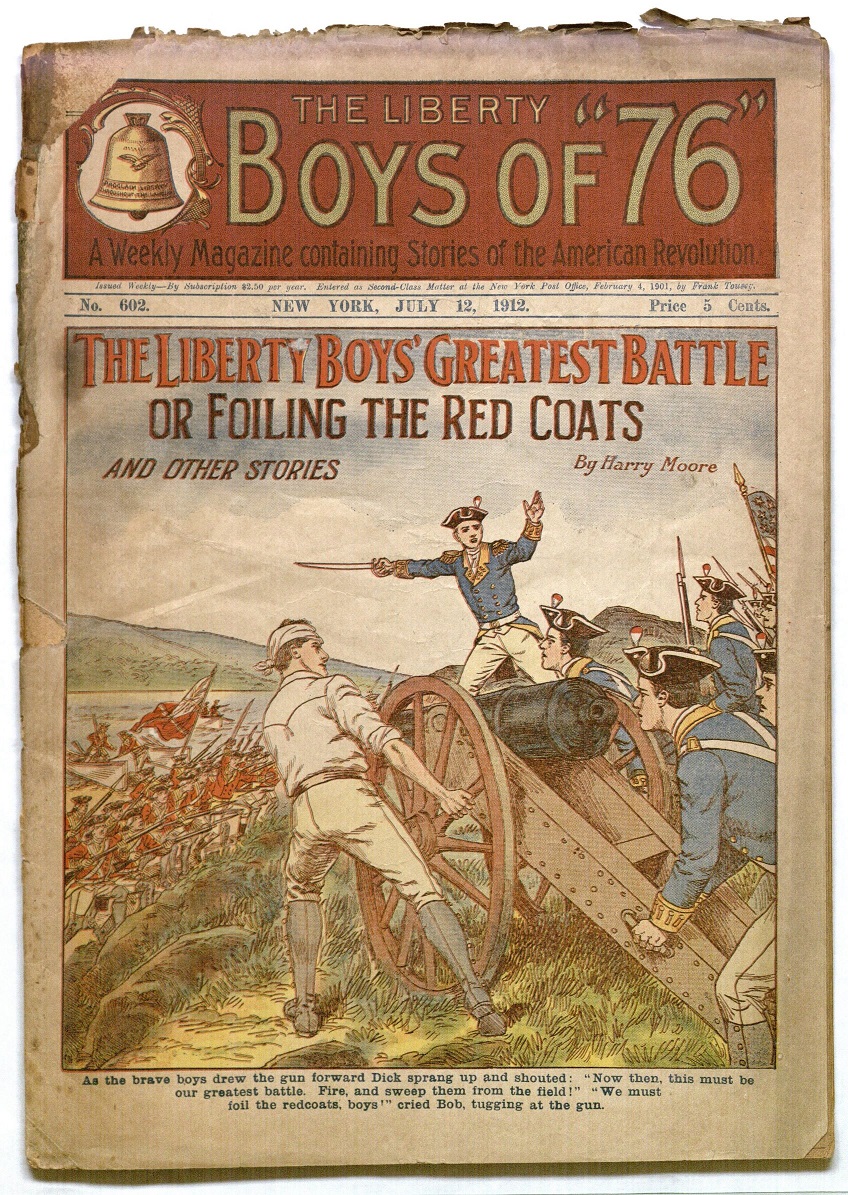
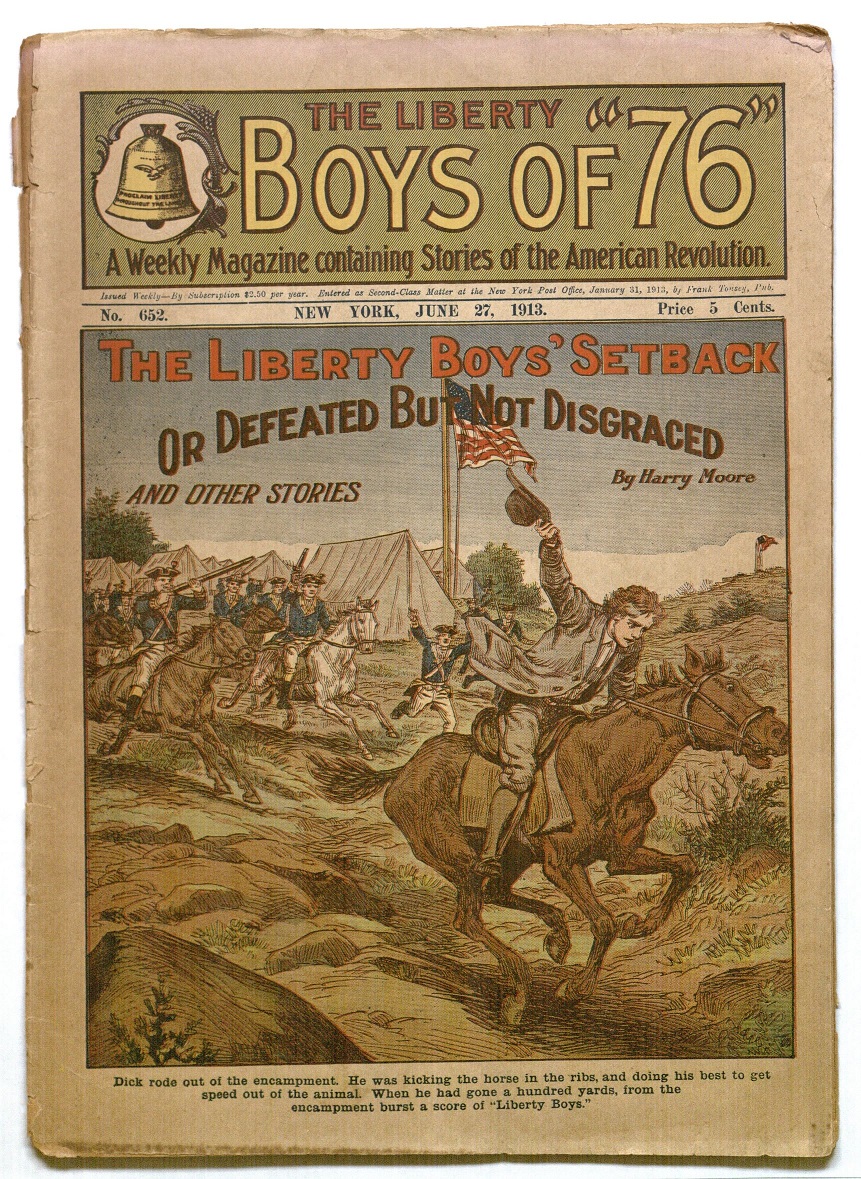
Cover of Issue of the Liberty Boys featuring the story "The Liberty Boys' Greatest Battle; Or Foiling the Read Coats" (July 12, 1912)    Cover of Issue of the Liberty Boys featuring the story "The Liberty Boys' Setback; Or Defeated but not Disgraced" (June 27, 1913)

Additional examples of The Liberty Boys of “76.” Call Number: Children 6112. Click images to enlarge.

The Liberty Boys of “76” provided children with entertaining reading material, but also slipped in a history lesson at the same time. This approach is still used in today’s historical fiction for children.

The publishers liked to keep their audiences coming back for more tales of adventure.  The July 28th, 1911 issue whose cover is featured at the top of this post ended with the following teaser:  “Next week’s issue will contain “THE LIBERTY BOYS’ SWAMP ANGELS; OR, OUT WITH MARION AND HIS MEN.” 

Kathy Lafferty
Public Services

SOURCES CONSULTED:

Anderson, Vicki. The Dime Novel in Children’s Literature. Jefferson, North Carolina: McFarland & Company, Inc., Publishers, 2005.

Cox, J. Randolph. The Dime Novel Companion: A Source Book. Westport, Connecticut: Greenwood Press, 2000.

Lossing, Benson J. The Pictorial Field-Book of the Revolution. New York:  Harper & Brothers Publishers, 1860.

Moore, Harry. The Liberty Boys of “76.” New York, New York: Frank Tousey, Publisher, 1901-1925. Kenneth Spencer Research Library, Call Number: Children 6112.

The George F. Jenks Map Collection

June 13th, 2018

Note: A selection of materials from the Jenks collection, including the items shown here, were exhibited in the library’s North Gallery in June-July 2018. An online version of the exhibit is now available.

This past semester I helped process the George F. Jenks Map Collection under the guidance of Spencer Special Collections Librarian Karen Cook. Jenks (1916-1996) taught in KU’s Geography Department from 1949 to 1986, and during his tenure he established a renowned cartography program and became internationally recognized as a preeminent cartographer and scholar. The collection is composed of hundreds of maps, graphics, and associated artwork that he produced for publication and in support of his research. In this post I highlight a few items from the collection to illustrate the scope of Jenks’ career.

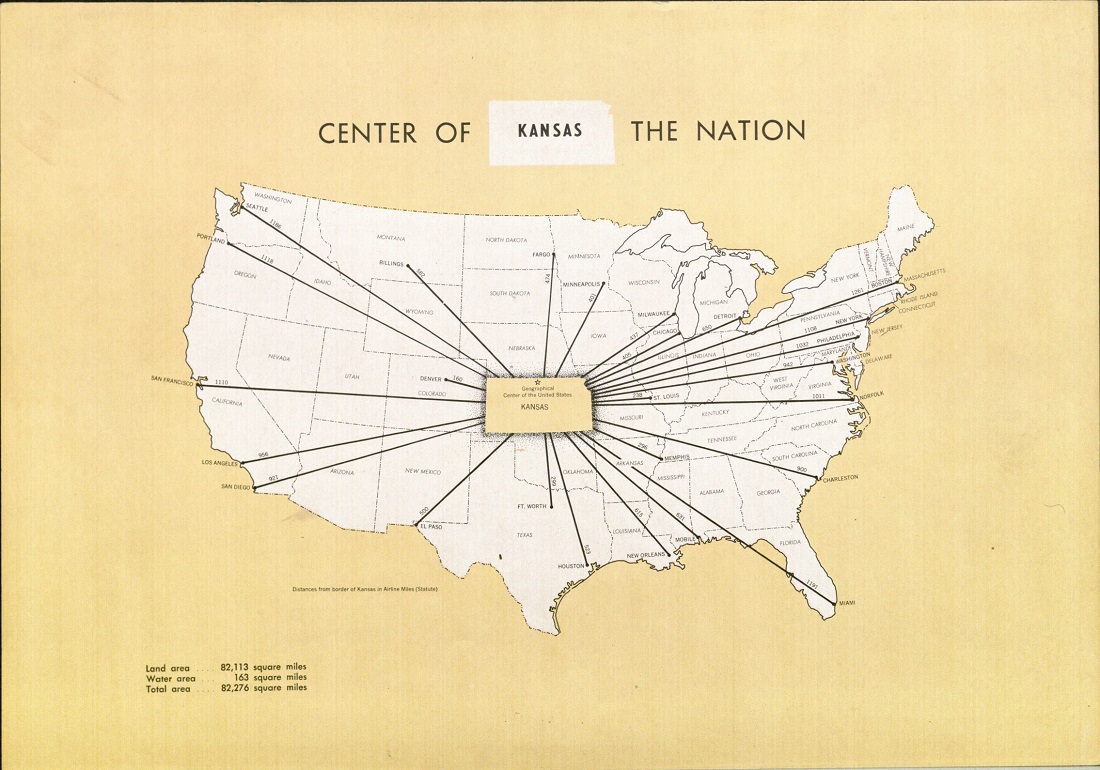
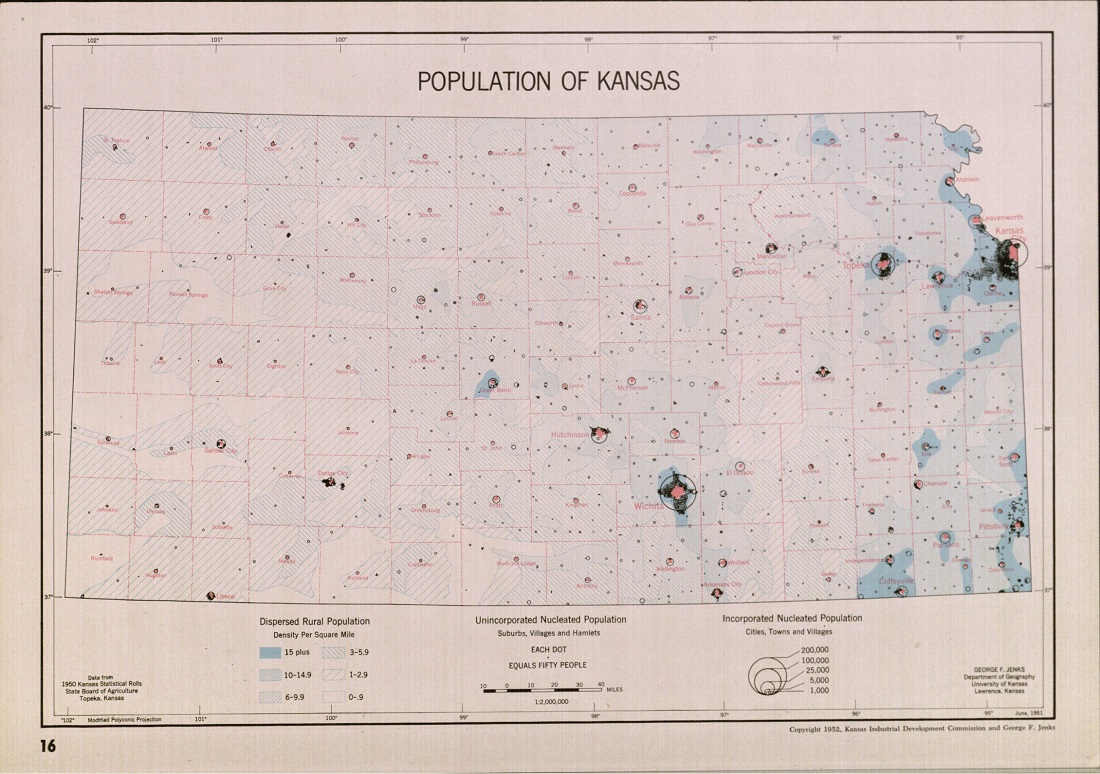
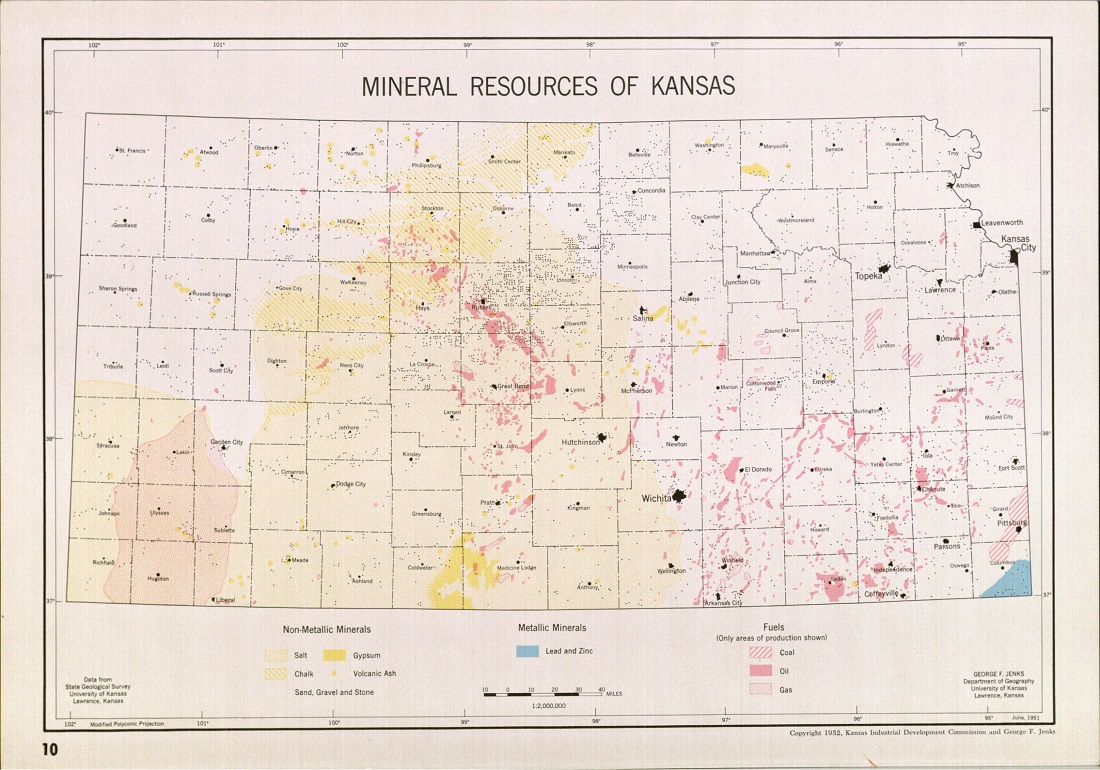
Jenks spent much of the 1950s producing statistical maps of Kansas. Representative examples of this work can be found in A Kansas Atlas (1952) and the maps he designed for the Kansas Industrial Development Commission. At a time when most state mapping agencies were either nascent or nonexistent, having a cartographer of Jenks’ caliber proved to be a boon for both the state and private industry. A Kansas Atlas was a rarity upon publication: a multi-color in-depth statistical atlas devoted to a single state. Jenks mapped an exhaustive variety of topics, ranging from population dynamics to agricultural productivity, using a variety of cutting-edge symbolization techniques. It should be noted that Jenks pioneered or fine-tuned many of the map symbolization methods used in this atlas and still in use to this day.
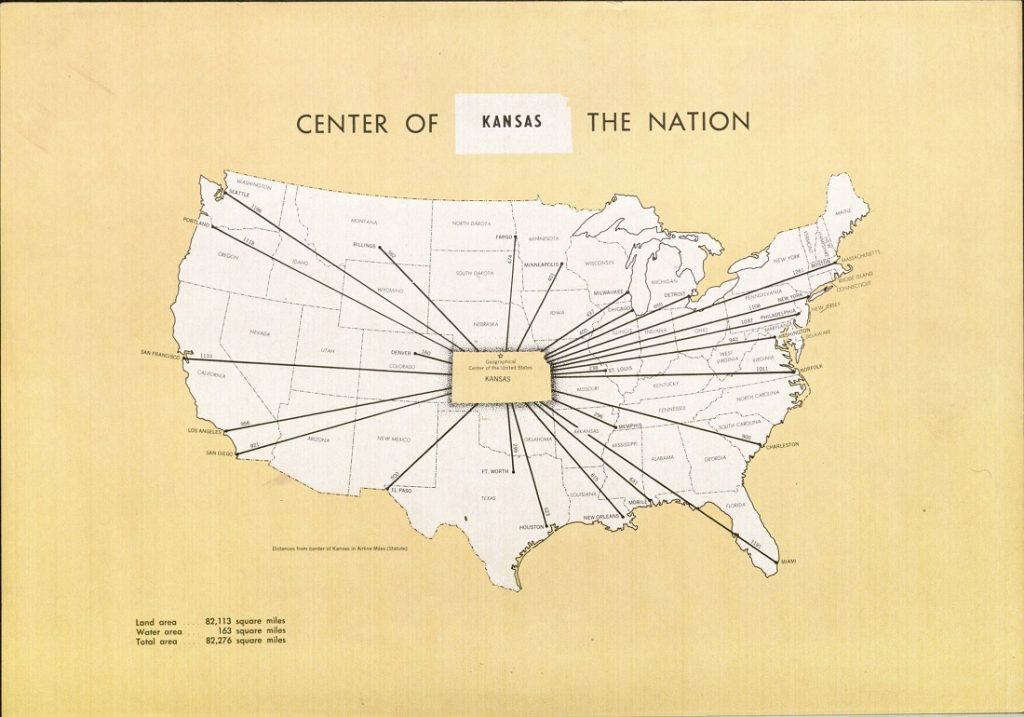
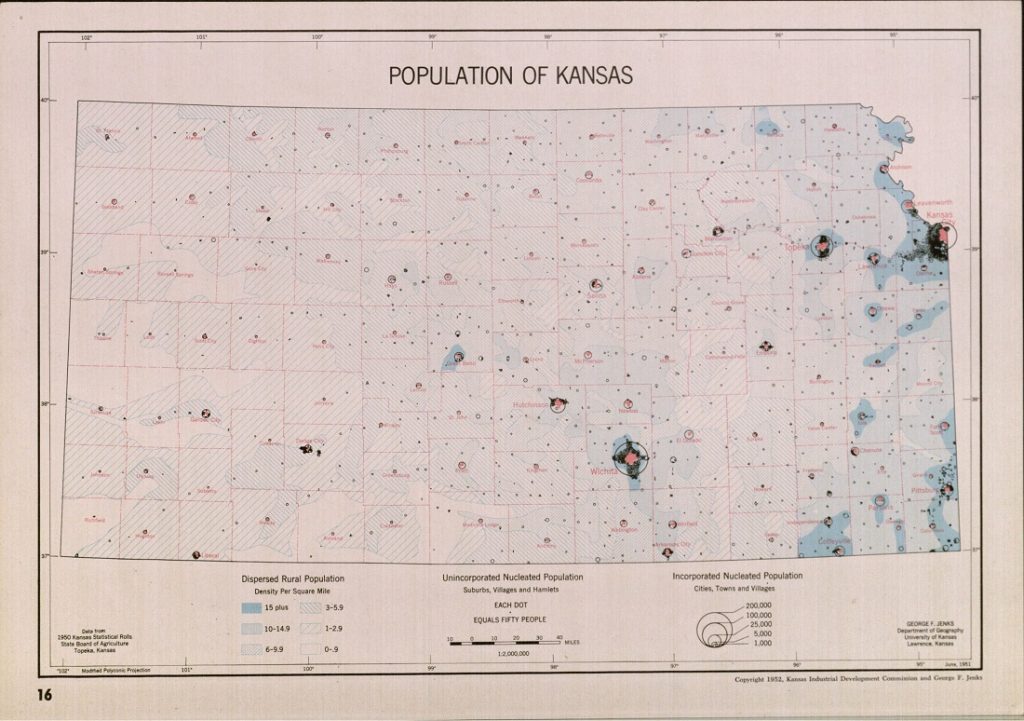
Image of the "center of the nation" map in A Kansas Atlas, 1952

Image of a map of the population of Kansas in A Kansas Atlas, 1952

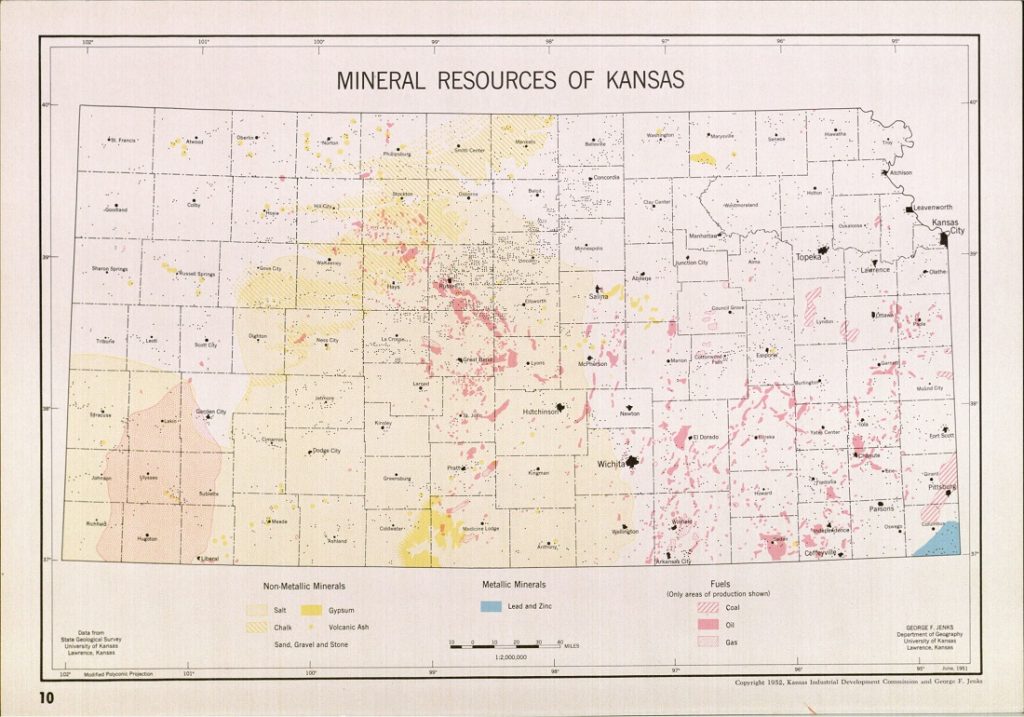
Image of a map of Kansas mineral resources in A Kansas Atlas, 1952

Selected maps from A Kansas Atlas (1952).
George F. Jenks Map Collection. Click images to enlarge.

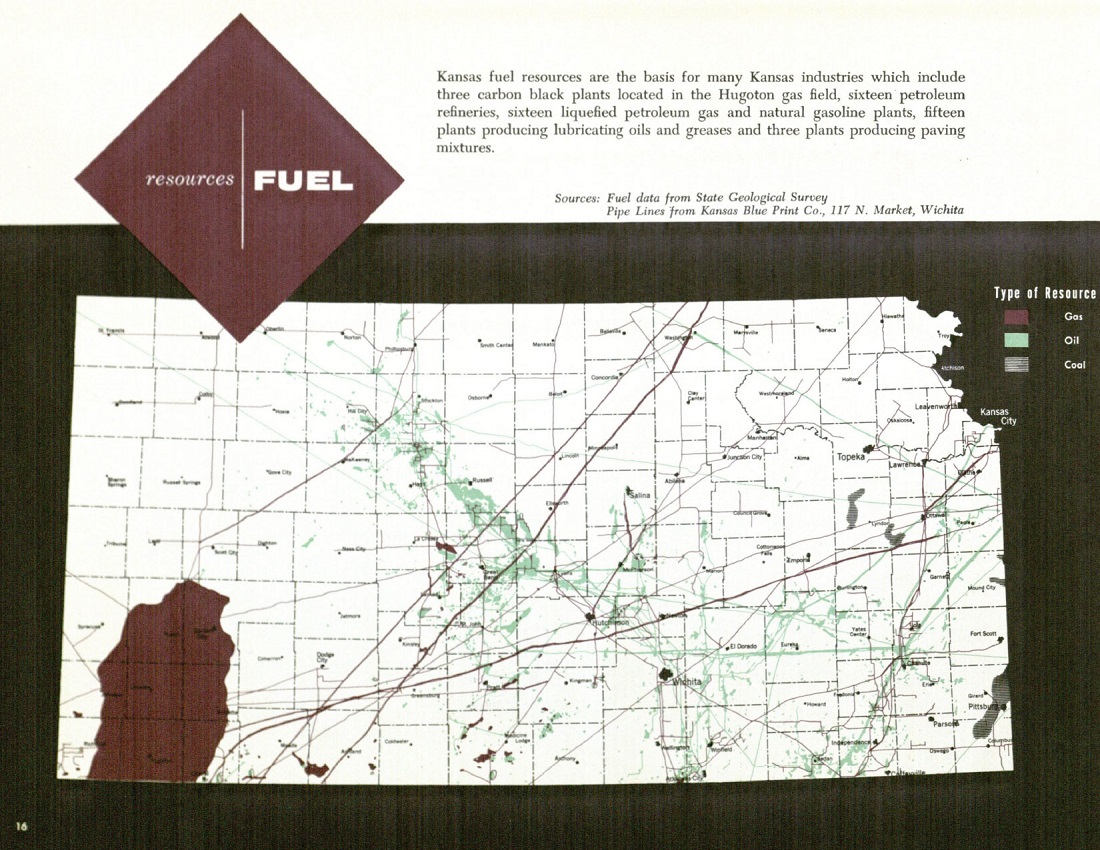
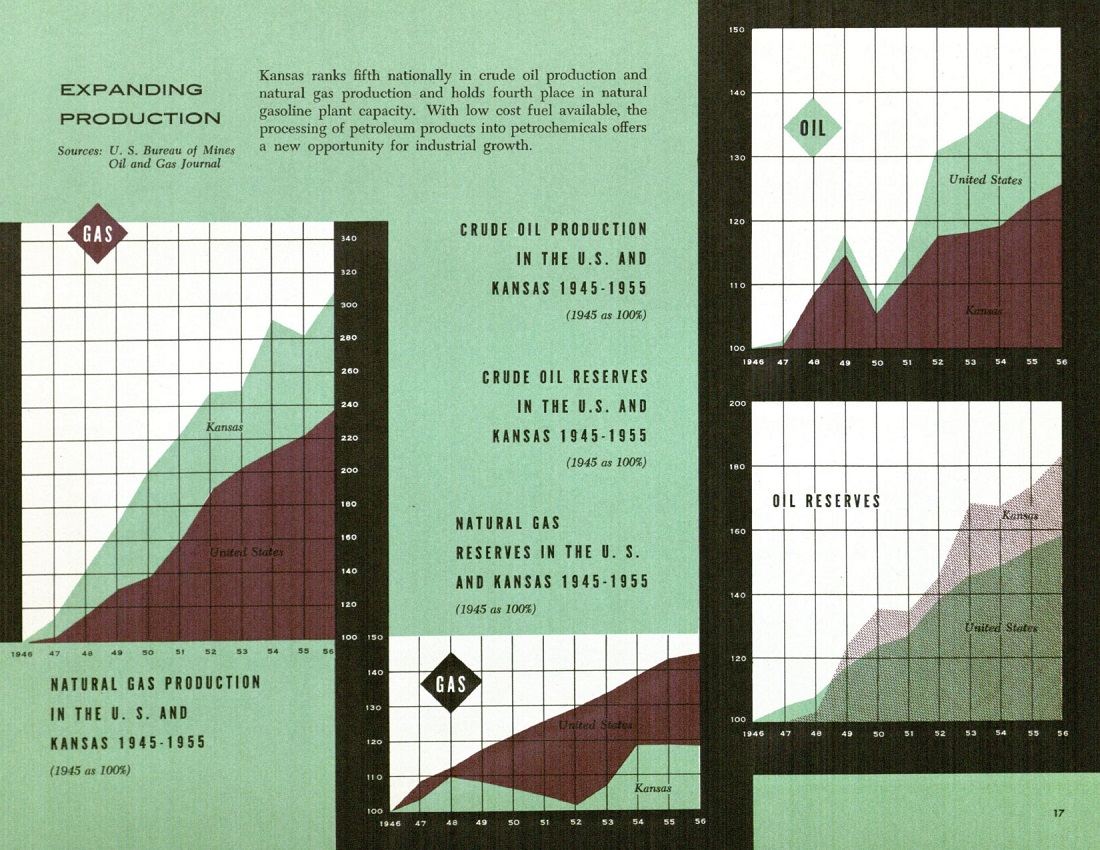
The Kansas Industrial Resources atlas (1956) is a masterclass in two-color map design and artful cartographic generalization. Jenks took mundane topics such as railroad freight service and electricity grids and simplified them to create visually arresting, statistically accurate maps. This is no small feat: to this day mapmakers struggle with the challenge of generalizing data so that important information stands out while preserving the accuracy of that information.
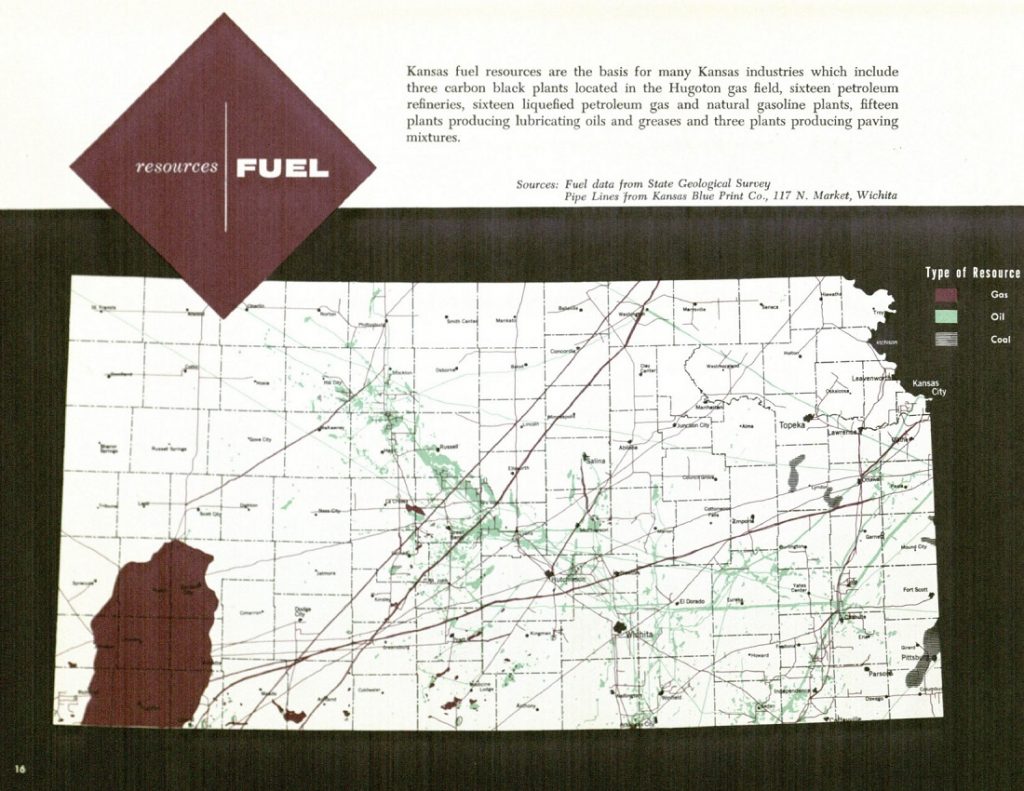
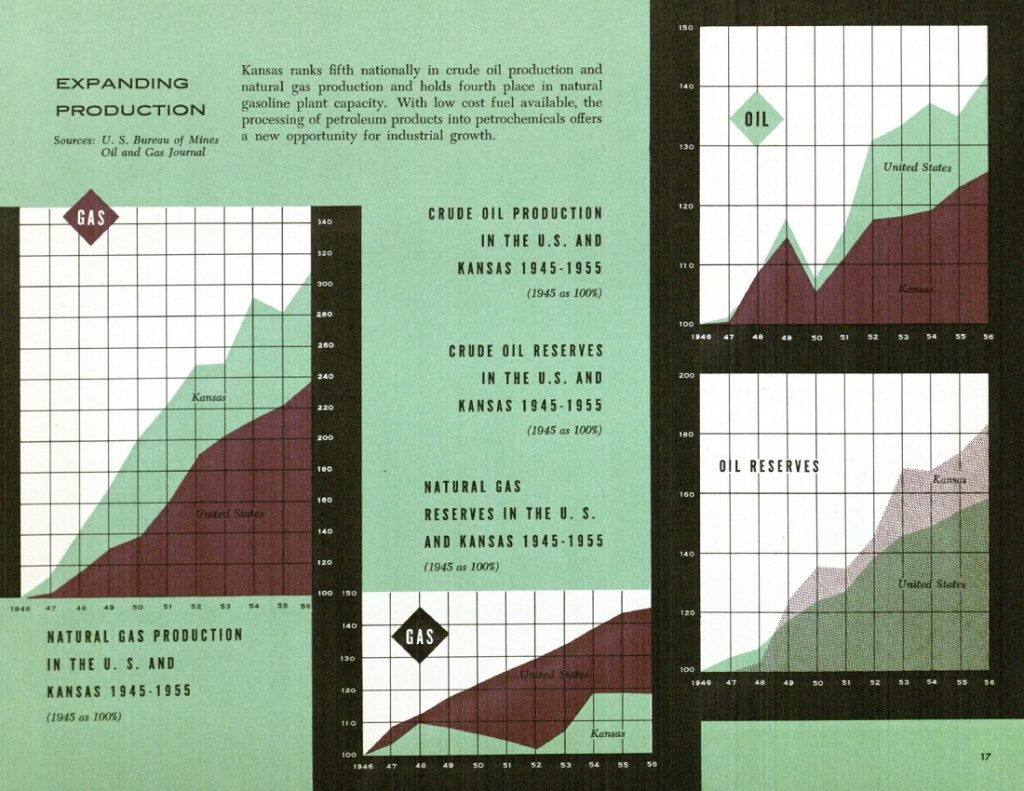
Image of the fuel resources map spread in Kansas Industrial Resources, 1956

Image of the fuel resources map spread in Kansas Industrial Resources, 1956

Fuel resources map spread, Kansas Industrial Resources (1956).
George F. Jenks Map Collection. Click images to enlarge.

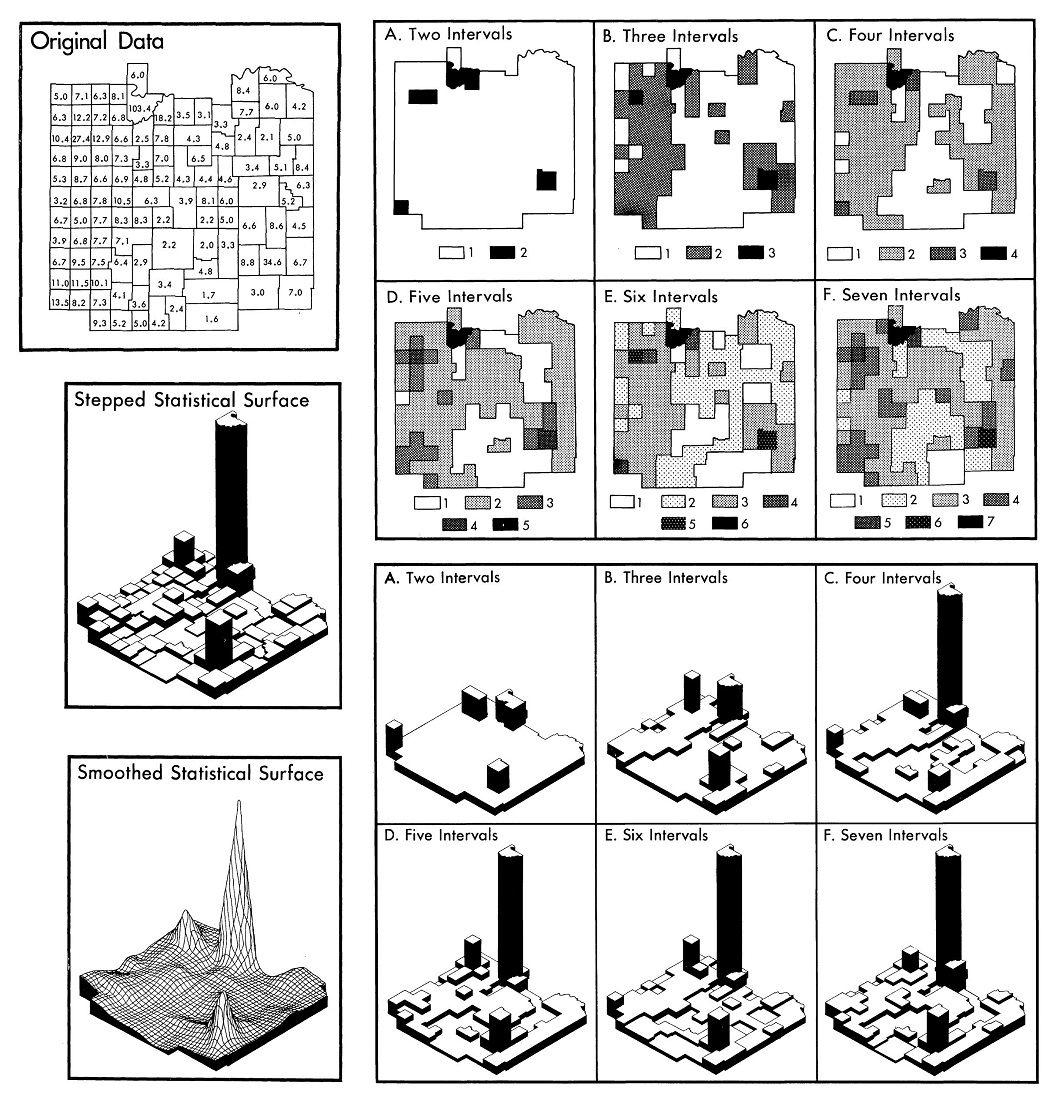
Generalization was a key theme of Jenks’ research in the 1960s and 1970s. Two of his publications, “Generalization in Statistical Mapping” (1963) and “Class Intervals for Statistical Maps” (1963), remain staples in the cartographic literature. Through this research, Jenks helped to systematize the process for classifying spatial data and devised rules to guide the selection of effective classification methods. The collection contains the maps and graphics Jenks created to illustrate these concepts, many of which are still used in cartography textbooks. Examples from his 1963 articles are below. Also included in the collection are hundreds of the maps he used in in his various generalization experiments.
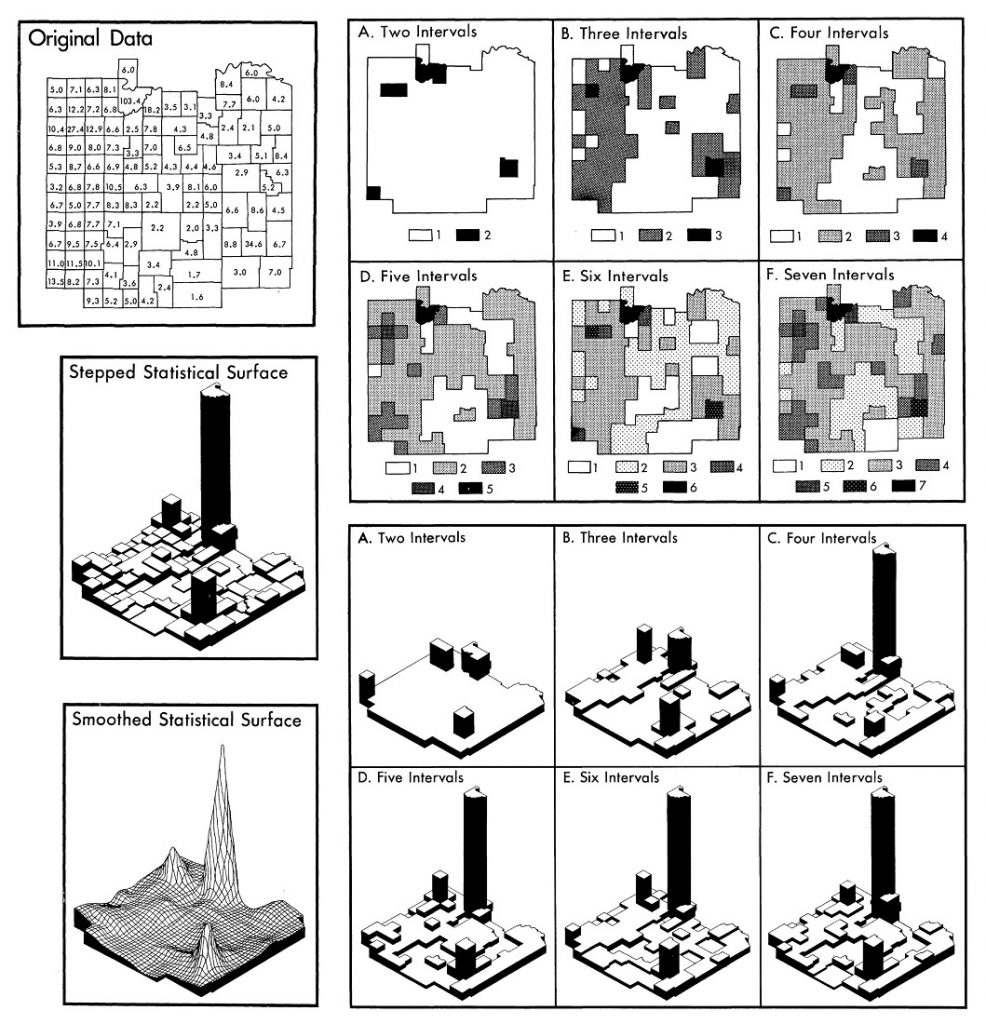
Image of graphics from “Class Intervals for Statistical Maps,” 1963

Graphics from “Class Intervals for Statistical Maps” (1963) illustrating the
process of data generalization. Different class intervals affect the appearance of the
data on the map. George F. Jenks Map Collection. Click image to enlarge.

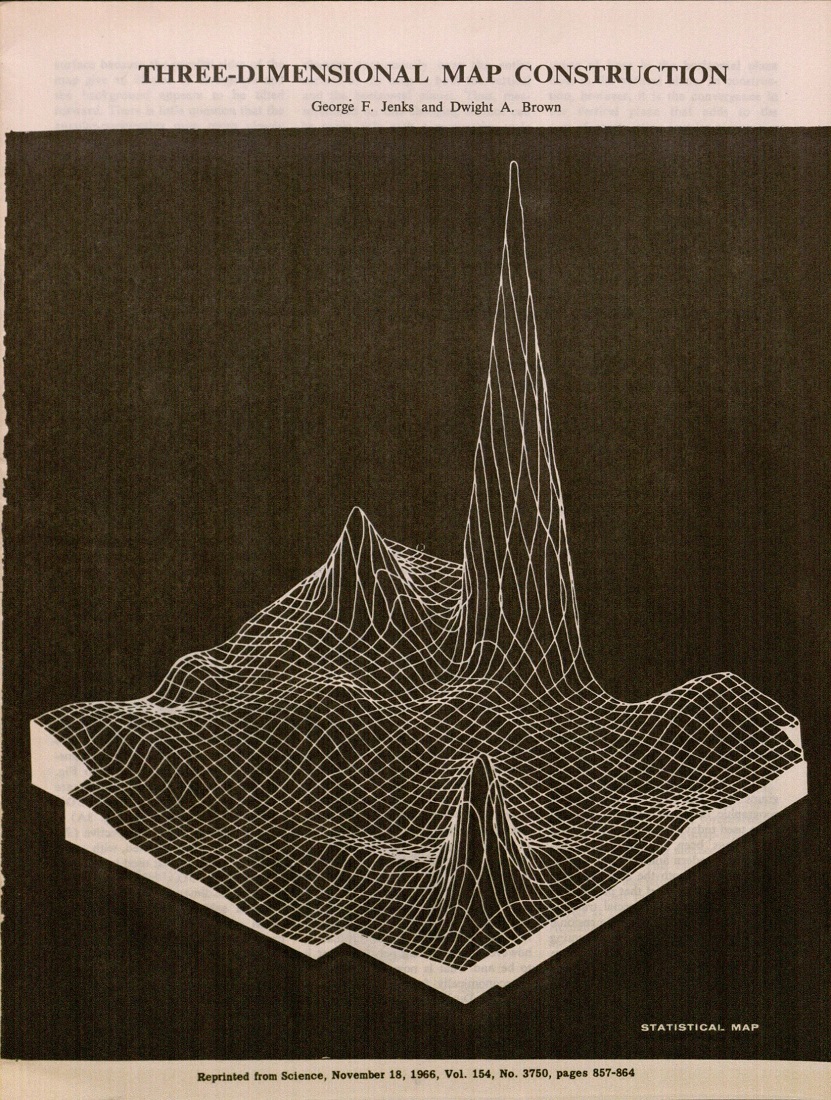
Another staple of Jenks’ work are three-dimensional map. Starting in the mid-1960s until the end of his academic career, Jenks refined three-dimensional mapping techniques, first by hand and later using computers. He recognized the potential of representing spatial phenomena in three dimensions, running many experiments and publishing many papers exploring the issue. One publication, “Three Dimensional Map Construction” (1966), remains highly recognizable within cartographic circles, and it also featured one of Jenks’ most famous maps: a three-dimensional representation of population density in central Kansas.
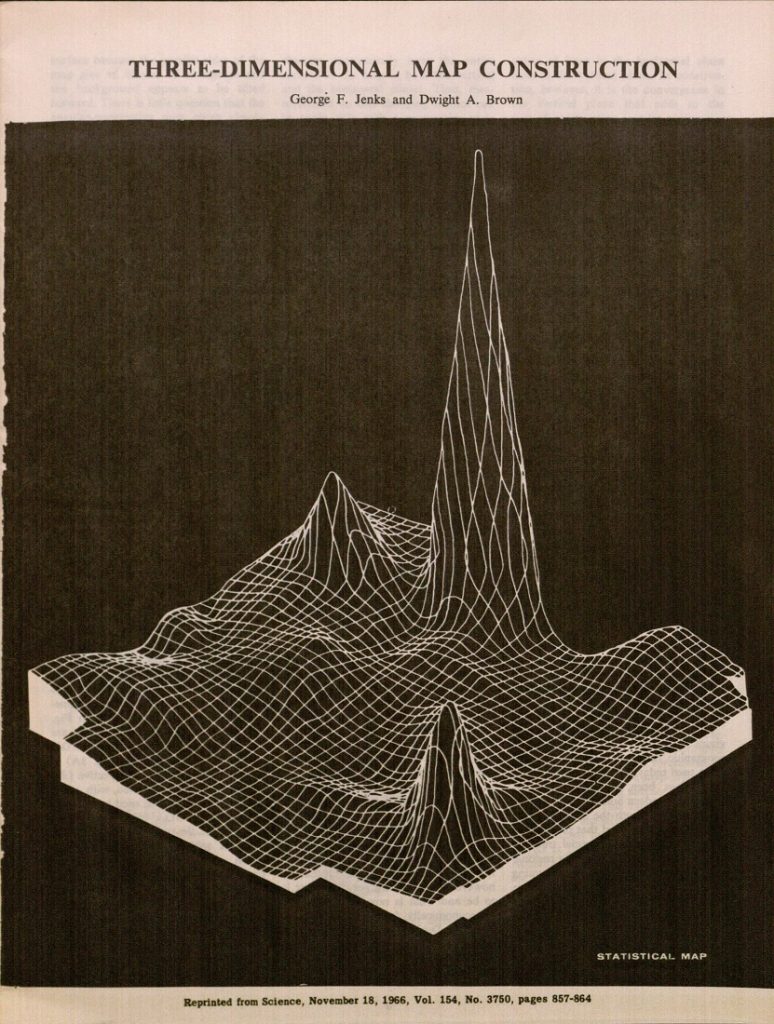
Image of a three-dimensional “smoothed statistical surface” map in the article Three-Dimensional Map Construction, 1966

A three-dimensional “smoothed statistical surface” map representing
population density in central Kansas. This graphic graced the cover of the
November 18, 1966 issue of Science. Jenks originally created this graphic for his
class intervals research. George F. Jenks Map Collection. Click image to enlarge.

This post only skims the surface of Jenks’ celebrated career and barely hints at the contents of the Jenks Map Collection. Readers should keep in mind that while many of the maps featured in this post may not appear noteworthy by today’s standards or software capabilities, they were considered at the cutting edge in their time. Perusing both his personal papers (also maintained at Spencer Research Library) and this map collection reveals the breadth and depth of his cartographic expertise. Jenks was an innovator in many areas; in addition to his aforementioned research interests, he was also recognized as an expert in the areas of curriculum design, cartographic reproduction techniques, and the links between cartography, psychology, and human factors. The Jenks Map Collection preserves a wide assortment of the preliminary and production artwork underpinning his academic and professional careers. The collection finding aid is undergoing finalization and should be published to the Spencer Research Library website in the coming months.

Travis M. White
Special Collections Cartography Intern and 2018 KU graduate (Ph.D., Geography)

References

Jenks, George. (1952). A Kansas Atlas. Topeka: Kansas Industrial Development Commission.

Jenks, George. (October 1956). Kansas Industrial Resources. Topeka: Kansas Industrial Development Commission.

Jenks, G. F. (1963). Generalization in statistical mapping. Annals of the Association of American Geographers, 53(1), 15-26.

Jenks, G. F., Coulson, M. R. C. (1963). Class intervals for statistical maps. International Yearbook of Cartography. 119-134.

Jenks, G. F., Brown, D. A. (November 1966). Three-dimensional map construction. Science. 154(3751), 857-864.
The Mystery of MS A7

May 22nd, 2018

This blog post has been a long time coming. I actually started writing about MS A7 last fall. I wanted to do a simple post that talked about this manuscript and highlighted its interesting watercolor and ink drawings. However, in the preliminary stages of my research, the information I found brought up a series of questions that I have been attempting to answer for the past few months. Here is a peek at what I have learned so far!

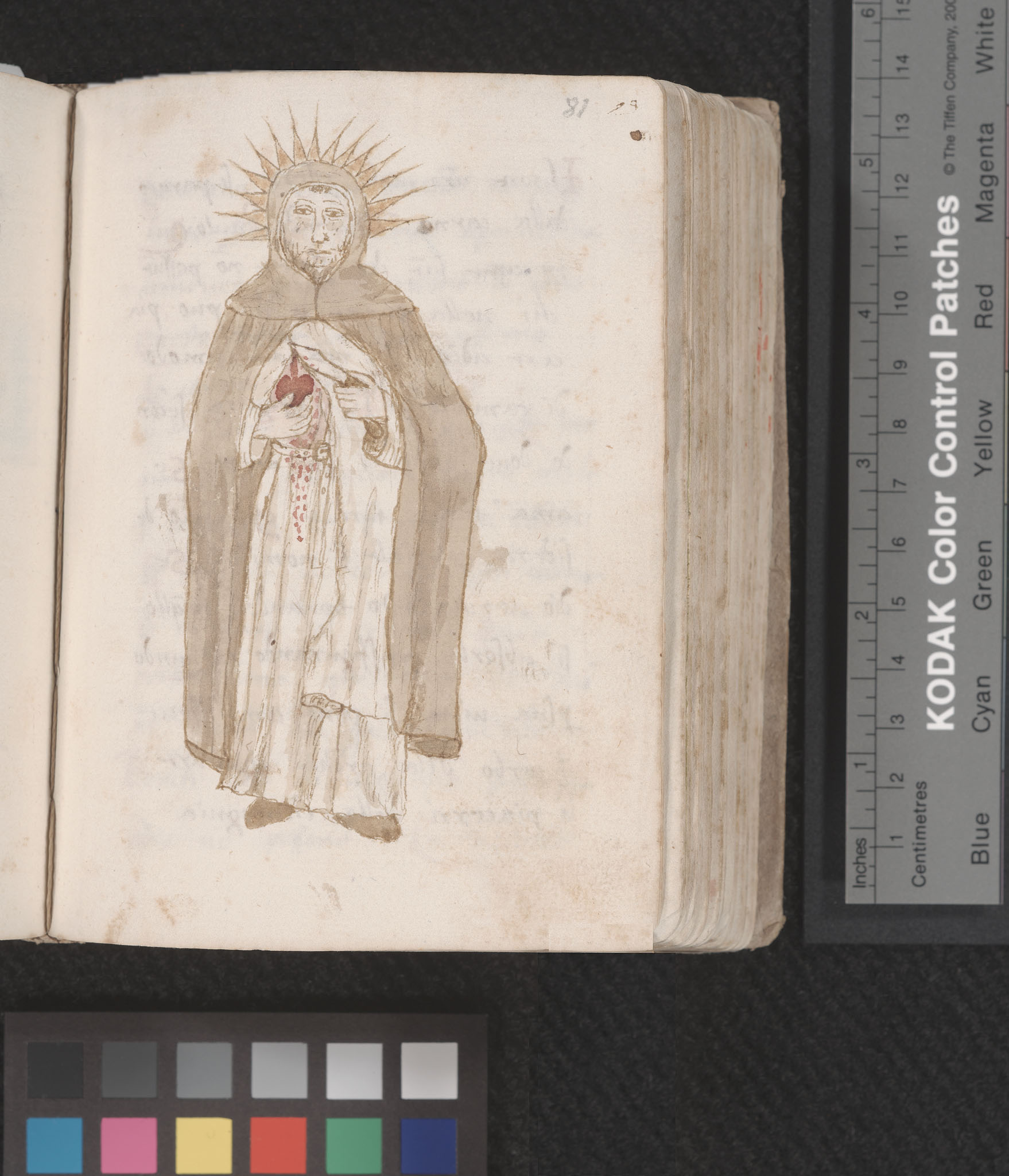
Prediche sul nome di Gesu is a late 15th to early 16th-century Italian manuscript. The manuscript features a series of sermons on the name of Jesus by Saint Bernardinus of Siena (San Bernardino in Italian). The content of the manuscript is pretty straightforward; it is the images that prompted serious questions for me. There are several full-page drawings that feature a monk involved in a series of activities that are confusing at best (and completely macabre at worst).

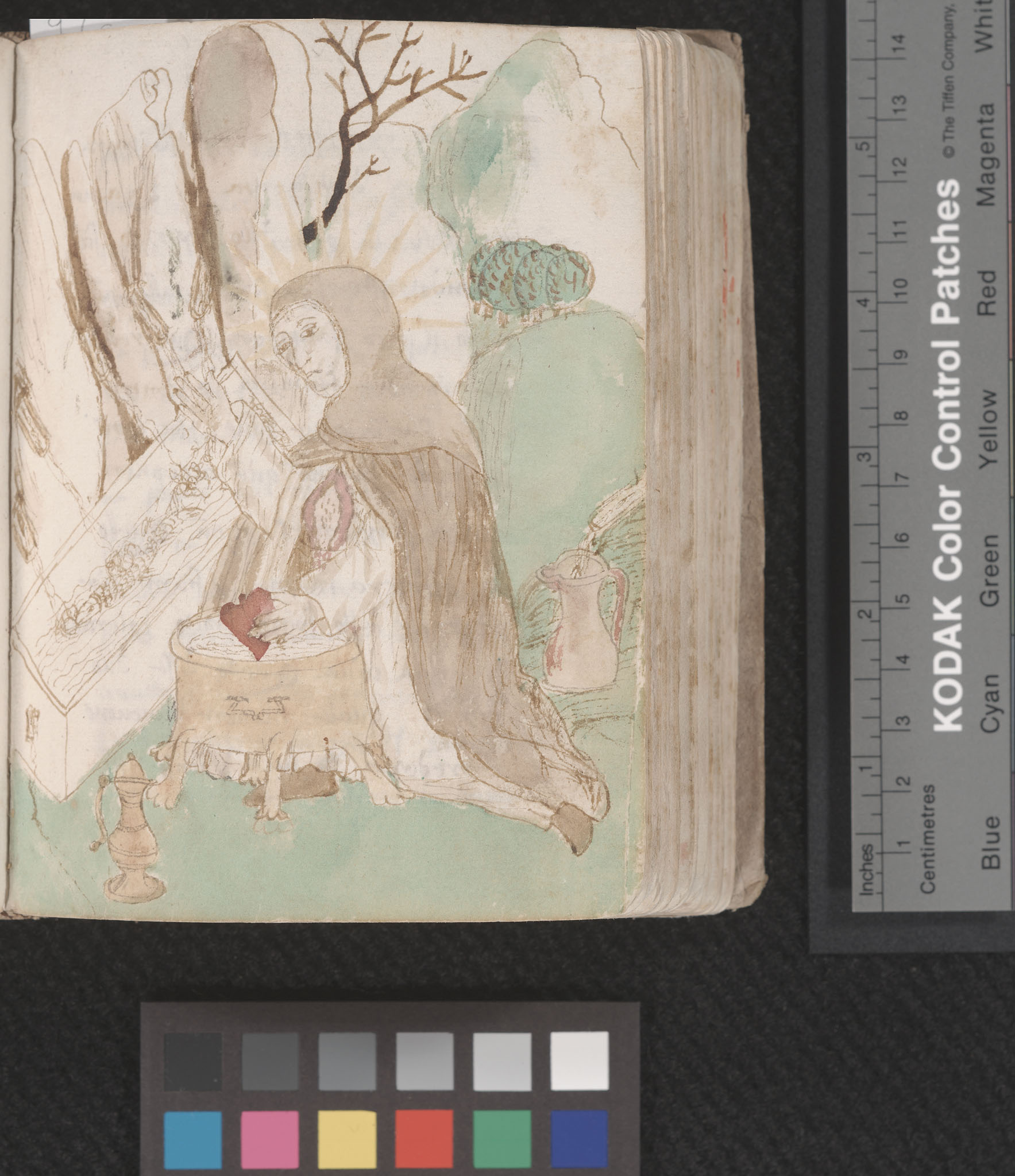
MS A7, Prediche sul nome di Gesu, image of monk revealing/cutting his heart, f.81r MS A7, Prediche sul nome di Gesu, image of monk washing his heart, f.88r

With the open chest wound and heart in hand, the image on the right was the one that initially piqued my interest
in this manuscript. How was the monk alive without his heart? Did the seeming improbability of what was happening
in the image mean this was the depiction of a vision or metaphor within the text? Folio 81r (left) and 88r (right)
from Saint Bernardinus of Siena’s Prediche sul nome di Gesu, Italy, circa late 15th-16th century.
Call Number: MS A7. Click images to enlarge.

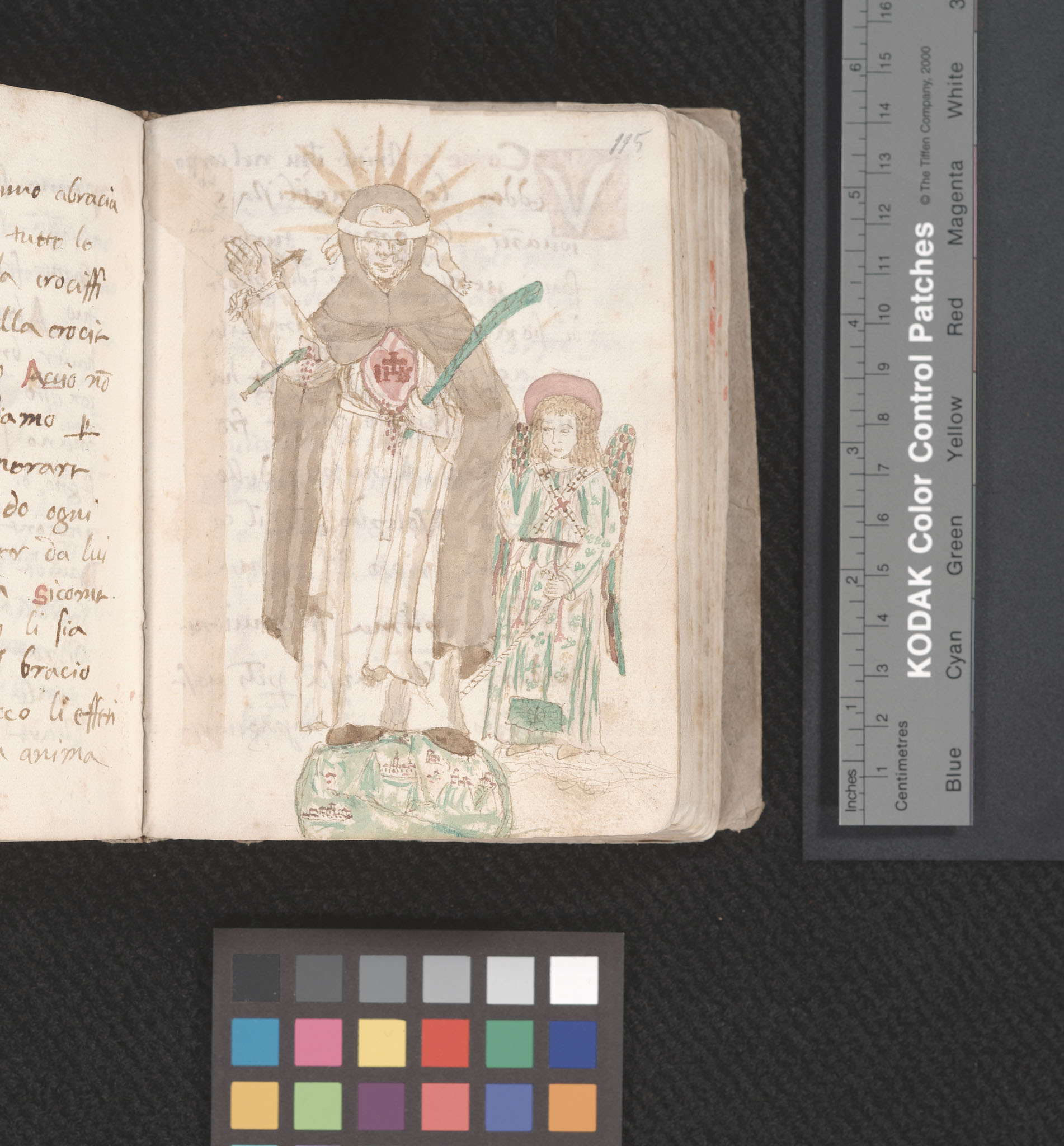
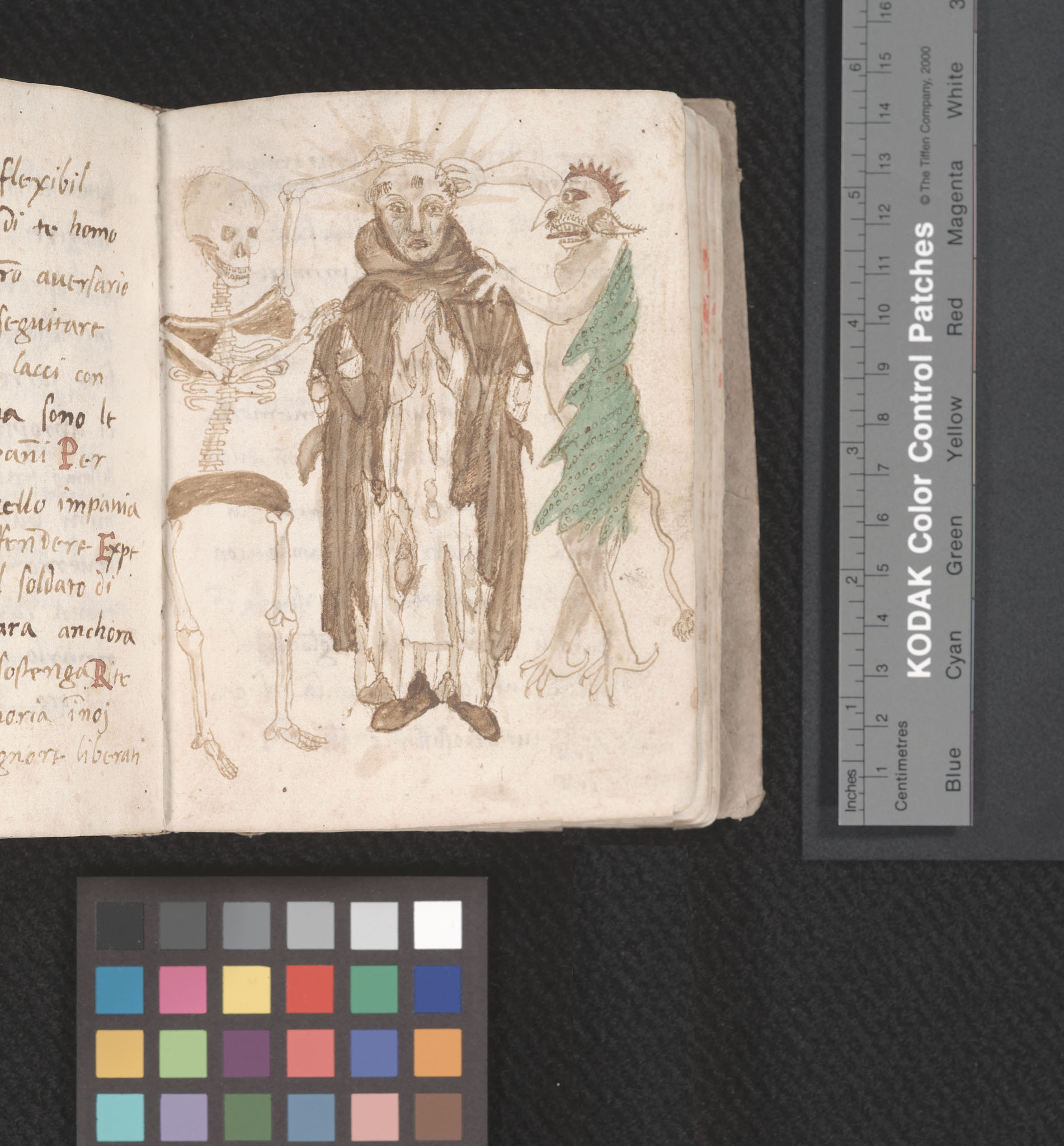
MS A7, Prediche sul nome di Gesu, image of blindfolded monk atop the world with angel, f. 115r MS A7, Prediche sul nome di Gesu, image of monk tortured by skeleton and demon, f.137r

The image on the left has prompted so many questions. How does this image relate to the previous images of the monk?
Is it even supposed to be the same monk? Why is he blindfolded? Folio 115r (left) and 137r (right) from Saint Bernardinus
of Siena’s Prediche sul nome di Gesu, Italy, circa late 15th-16th century. Call Number: MS A7. Click images to enlarge.

Were these images meant to depict scenes from the life of San Bernardino? A series of visions the saint experienced? Preliminary research on the life of San Bernardino seemed to indicate that neither one of those conclusions was likely. I then turned to our records concerning the manuscript – accession files, catalogue entries, bookseller correspondence, etc. The lack of concrete information and answers in those records solidified my growing belief that little to no serious research had ever been done on this manuscript (not unusual with collections the size of ours). It became clear that if I wanted answers, I was going to have to find them myself. I had a hunch that the images were related to the text, possibly even very literal depictions of passages in the sermons. However, without any significant knowledge of Italian, I knew I needed quite a bit of help.

The next steps in my research process demonstrate just how lucky we are to have the amazing faculty we do at KU. First and foremost, our Special Collections curators, Karen Cook and Elspeth Healey, provided insight, access to files, suggestions of where to look next, and beginning translation help. The next step was to find someone to more fully translate the Italian and provide some more information about the images themselves. This led me to Dr. Areli Marina in the Kress Foundation Department of Art History here at KU.

Dr. Marina’s translation work and insight have helped me immensely. With her assistance, I have started to get a clearer picture of what is happening in the manuscript (my initial hunch seems to be on the right track). However, with each new bit of information, more questions continue to arise. For example, do these sermons and images have any connections to certain established monastic communities and their traditions? Hopefully, I will have more answers to share with you all soon!

Emily Beran
Public Services

Ephemera and Binder’s Waste in Summerfield E397

April 10th, 2018

Last year, I wrote about my survey of part of the Summerfield Collection of Renaissance and Early Modern Books, and all of the lovely hidden treasures within that collection. One item that I identified during the survey as a candidate for future treatment is Summerfield E397, De statu religionis et reipublicae, Carolo Quinto Caesare, commentarii, by Johannes Sleidanus, published in 1555.

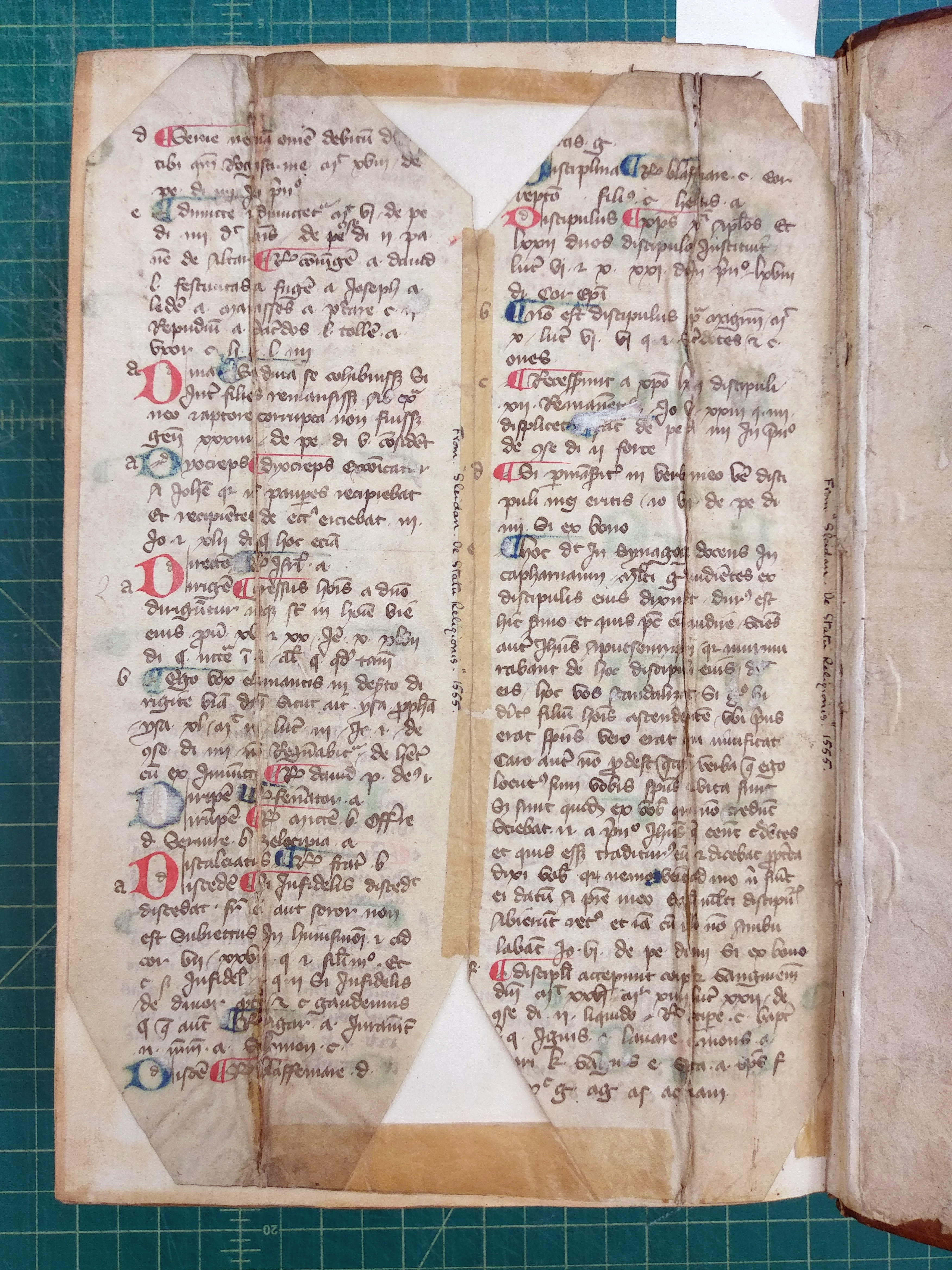
What caught my attention about this volume is the fragment of parchment manuscript that was taped inside the lower board. Actually, there are two fragments – halves of a leaf that long ago was cut apart and used to form flanges that were sewn onto either side of the text block and then adhered between the boards and pastedowns. At some later time, the book was repaired and the manuscript flanges were removed. Whoever removed them chose to retain them, piecing them back together with glassine tape and affixing them inside the back of the book.

Summerfield E97, Spencer Research Library, University of Kansas Libraries

Manuscript fragments, previously used as binder’s waste,
taped into the back of Summerfield E397. Click image to enlarge.

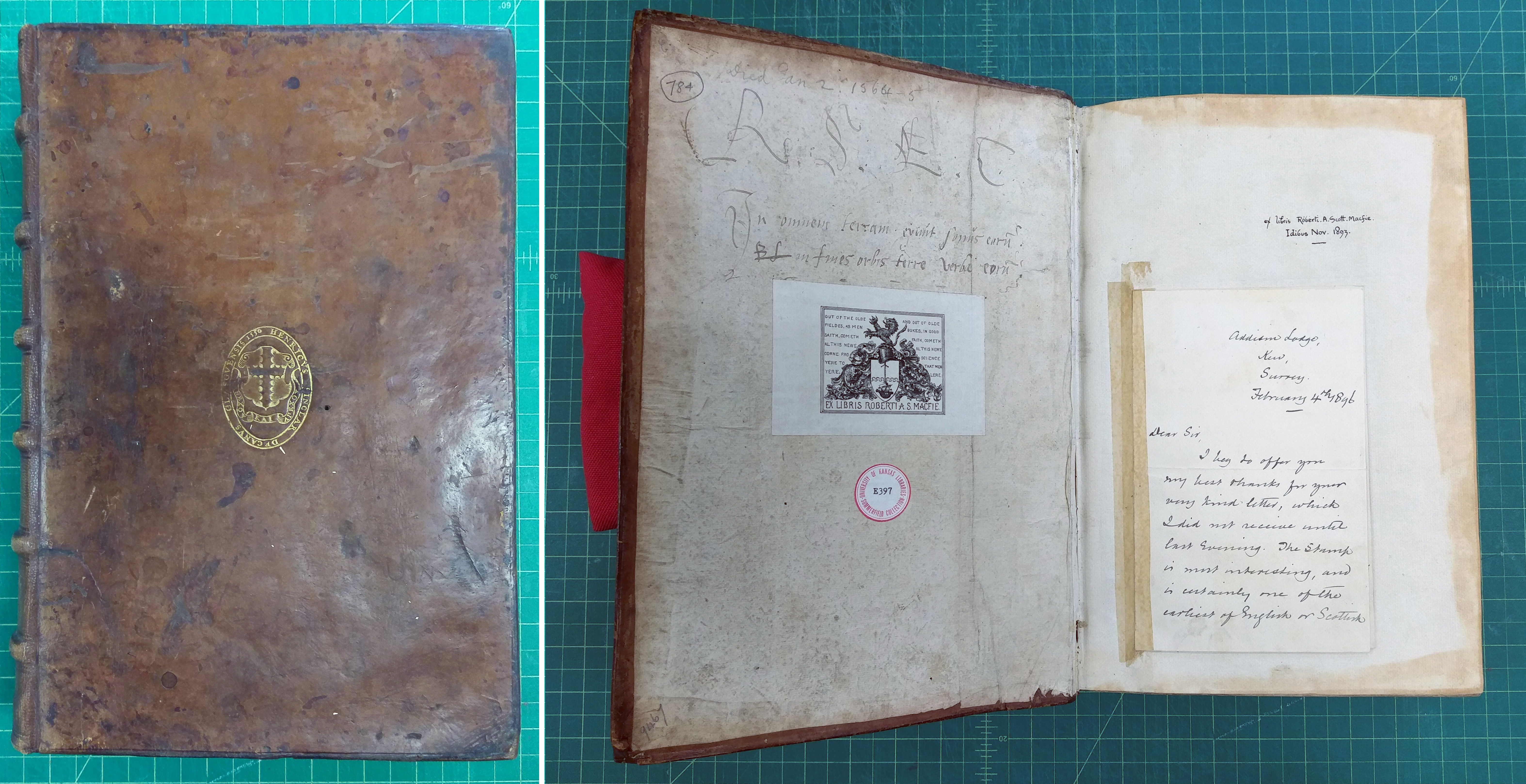
In the front of the volume are affixed two letters dated in February 1896 that a one-time owner of the volume – one Robert A. Scott Macfie – received from a William Y. Fletcher in response to an inquiry he had sent about the book (Fletcher’s name appears in a 1908 list of members of the Bibliographical Society of London). The second of these letters mentions that Fletcher had shown the book (which Macfie had lent him to examine) to “Mr. Scott and Mr. Warner, the Keeper and Assistant Keeper of MSS in the [British] Museum, and they consider [the fragments] to have belonged to an English or Scottish MS (most probably the former) of the 15th century.” How fascinating and fortunate that these records of the book’s life have survived with it.

Summerfield E97, Spencer Research Library, University of Kansas Libraries

Left: Cover of Summerfield E397. Right: Fletcher’s letters to Macfie
taped onto front flyleaf. Click image to enlarge.

At the time that I surveyed this book, I consulted with the curator about how to approach the treatment and made a note to revisit it at a later date. I recently reviewed my queue of projects and this one presented itself. In my discussion with the curator, we had agreed to leave the letters as-is, but to remove the tape from the manuscript fragments, reunite them with wheat starch paste and Japanese tissue, and tip them back into the volume with the same. Their presence in the volume tells something of the book’s story, but we felt it would be beneficial to remove the brittle, discolored tape from the parchment.

Summerfield E97, Spencer Research Library, University of Kansas Libraries

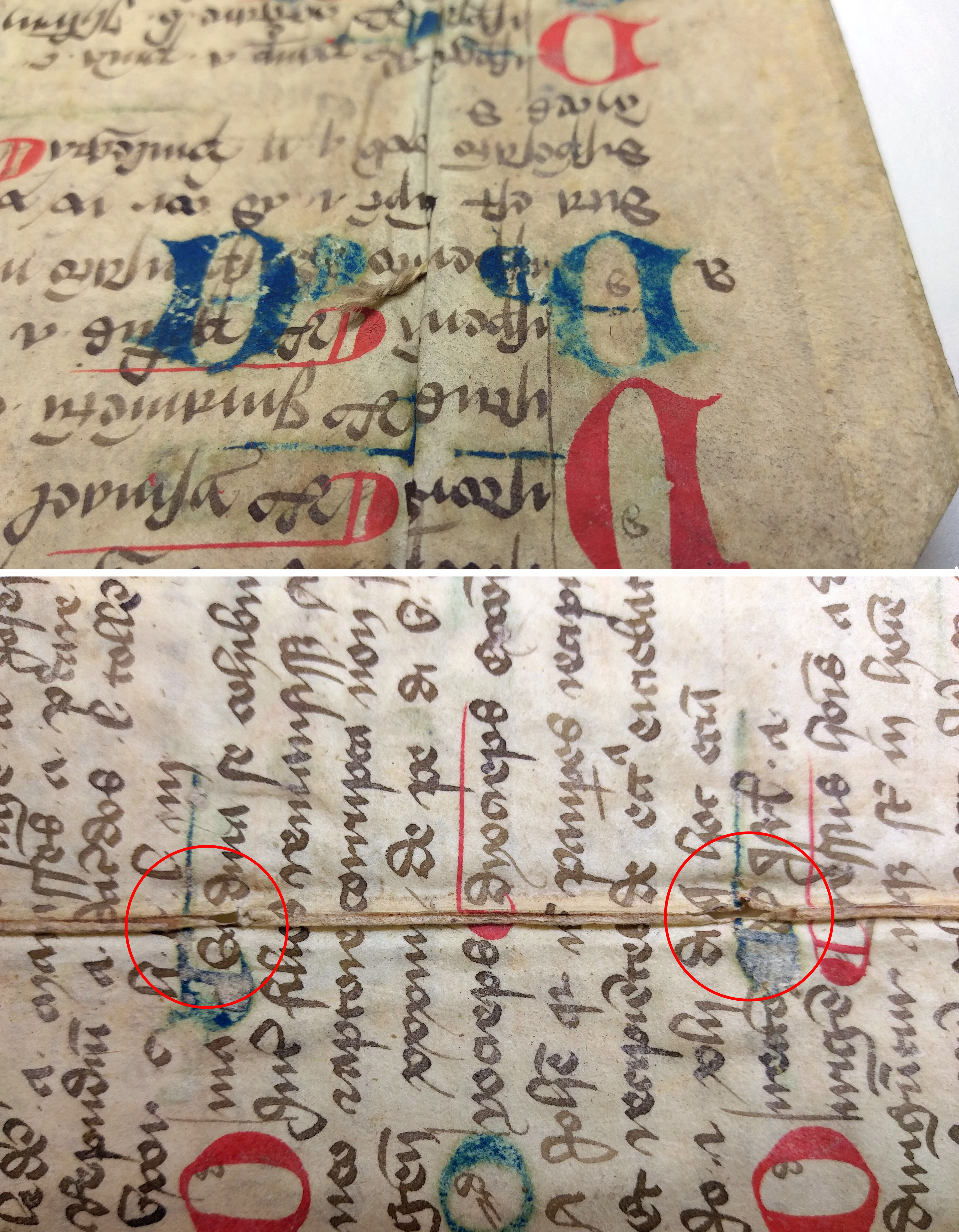
Visible threads (top) and sewing holes (bottom) indicating
these fragments had been used as binder’s waste.
Click image to enlarge.

Luckily, if one has to remove tape, this type of tape is about as easy to remove as they come. The gummed adhesive layer on this tape responds very well and quickly to a light application of methylcellulose; after just a couple of minutes, the tape carrier and most of the adhesive lift away easily. I reduced the remaining adhesive residue by gently swabbing it with damp cotton, but I did not pursue this very far – overly aggressive cleaning would leave those areas of the parchment looking too starkly white. When the tape was all removed, I used a soft brush to dislodge some surface dirt that had accumulated in the creases.

Summerfield E97, Spencer Research Library, University of Kansas Libraries

Removing the tape hinge that had held the fragments in place.
In the red circle, note the stain left by one of the blue manuscript capitals
from when the fragments served as binding material. Click image to enlarge.

Summerfield E97, Spencer Research Library, University of Kansas Libraries

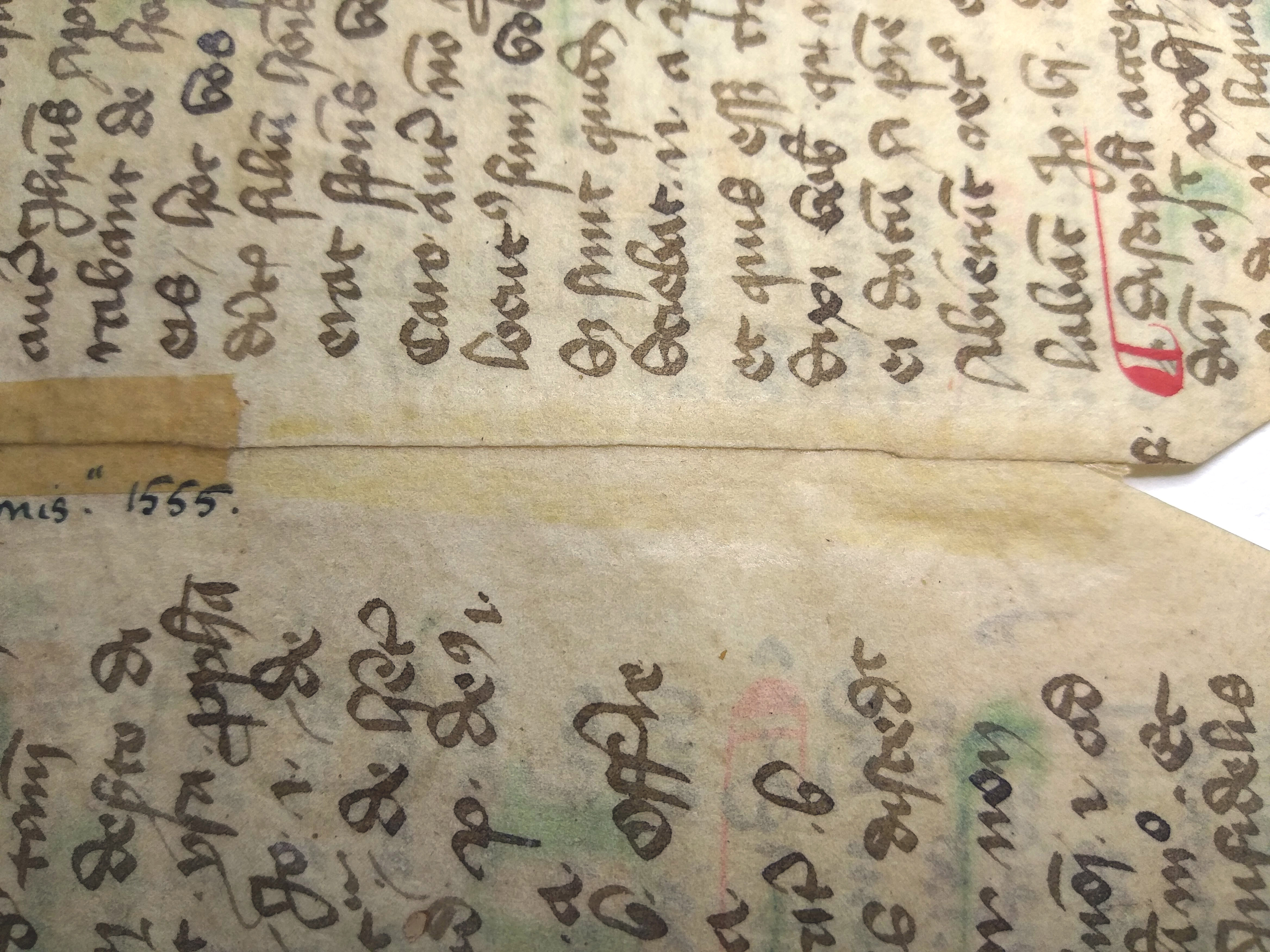
Detail of the seam where the two halves of this leaf were cut apart long ago.
Click image to enlarge.

Next, I used very dry paste and thin tissue to reattach the two halves to one another. I chose to do this in lapped sections rather than a continuous strip to allow the skins to expand and contract with subtle changes in the environment, and to distribute the stress of the repair evenly along both sides of the leaves, as well as to avoid placing adhesive over areas where ink was present. Finally, I reattached the fragments inside the lower board using a hinge of Japanese tissue and paste.

Summerfield E97, Spencer Research Library, University of Kansas Libraries

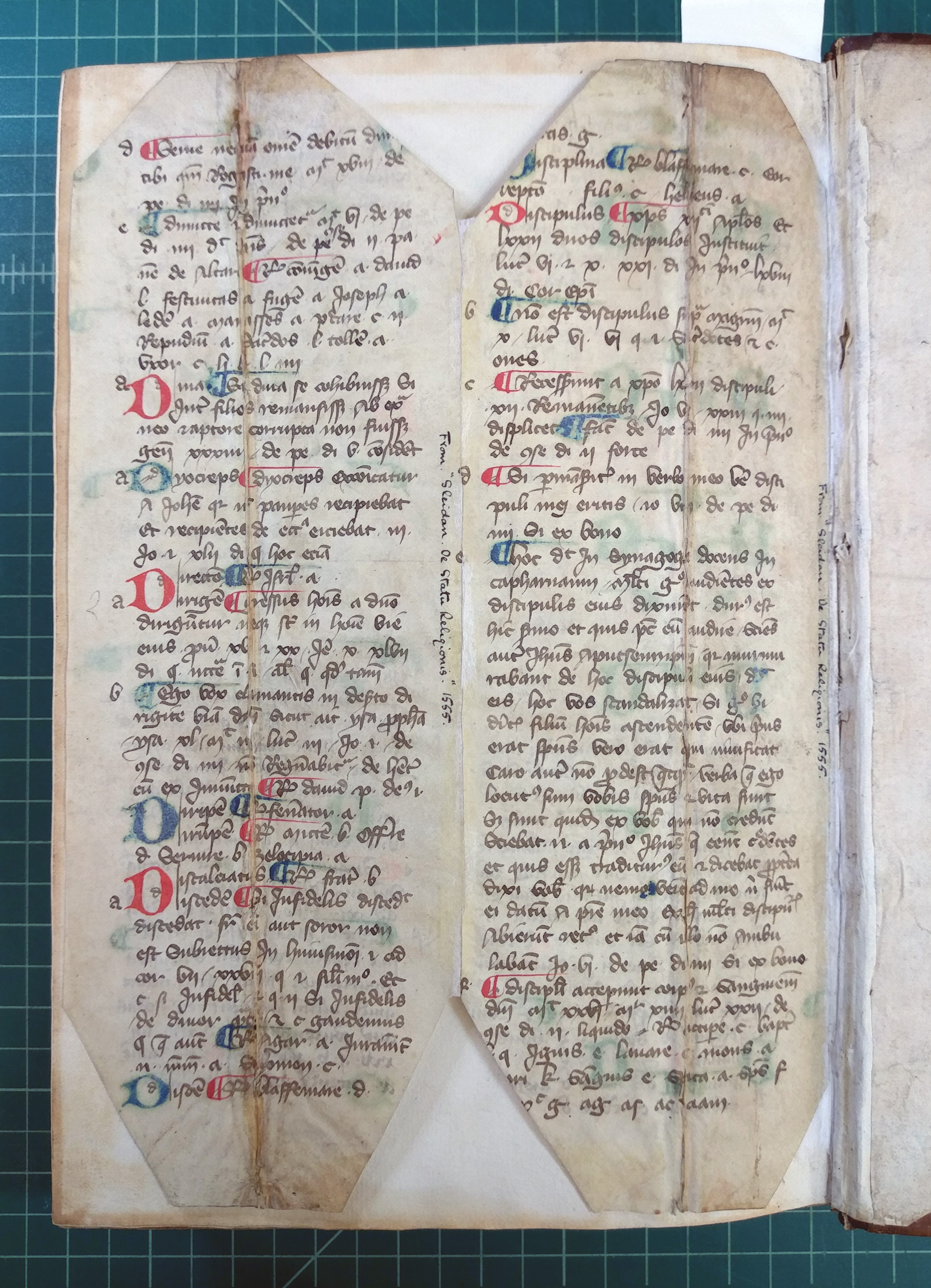
The finished manuscript fragments replaced into the volume.
Click image to enlarge.

Angela Andres
Special Collections Conservator
Conservation Services