The University of Kansas

Inside Spencer: The KSRL Blog

Books on a shelf

Welcome to the Kenneth Spencer Research Library blog! As the special collections and archives library at the University of Kansas, Spencer is home to remarkable and diverse collections of rare and unique items. Explore the blog to learn about the work we do and the materials we collect.

Holiday Hosting with “The ‘Home Queen’ Cook Book”

December 7th, 2018

December has arrived and with it the winter holiday season! Since the holiday season means holiday parties, I wanted to look into hosting an oft forgotten type of affair – a lovely, elegant dinner party!

Personally, I do not have much experience with dinner parties so I decided to go to the best source I could find: The “Home Queen” Cook Book. Compiled during the 1893 World’s Fair in Chicago, The “Home Queen” Cook Book features recipes, etiquette, and entertaining suggestions from “over two hundred World’s Fair lady managers, wives of governors, and other ladies of position and influence.” Armed with the advice of these many esteemed ladies, I set out to see if I could recreate an elegant dinner party from generations past. What follows is a story of research, abandoned dreams, and a final feeble attempt to do anything I had originally hoped to accomplish.

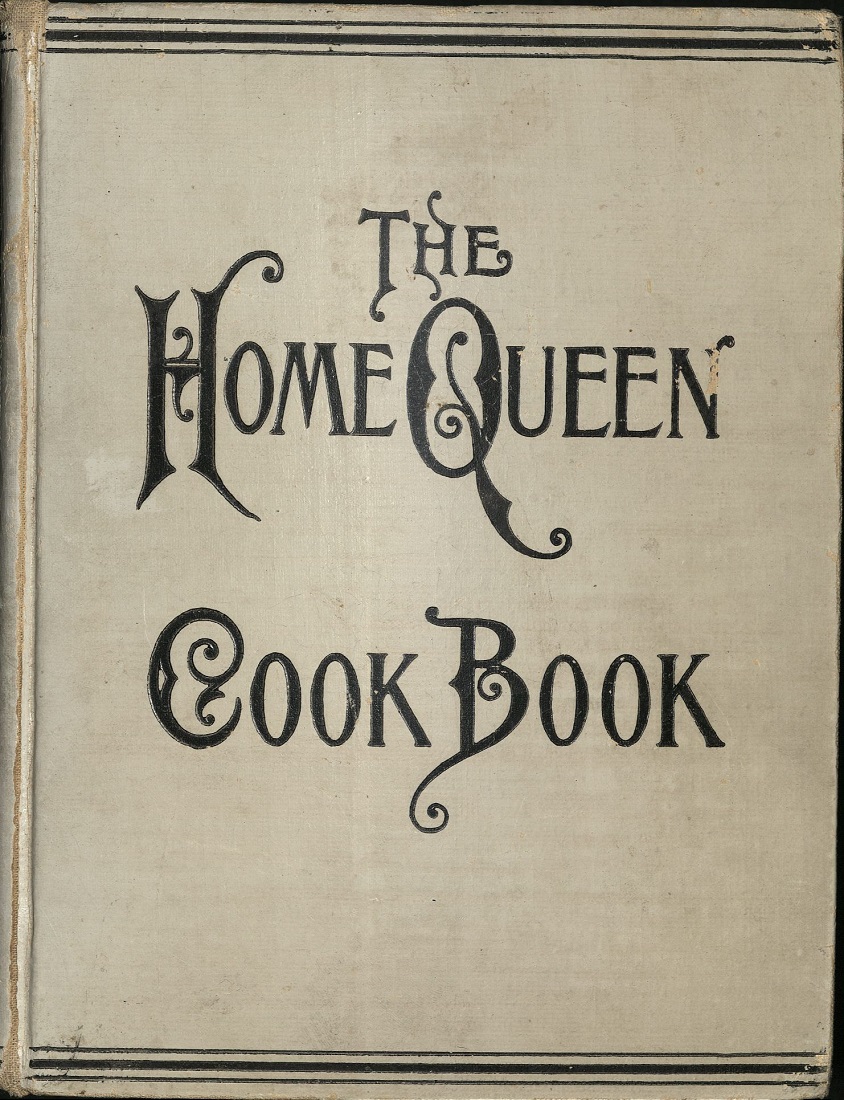
Image of the cover of "The 'Home Queen' Cook Book," 1901

The cover of The “Home Queen” Cook Book, 1901.
Call Number: Galloway C35. Click image to enlarge.

Now, I do not know what everyone else pictures when they think of a dinner party, but I was envisioning an elegantly set table with beautiful linens and fine china to hold a magnificent multi-course meal. With that image in mind, I immediately began examining the section on “Party Suppers” in The “Home Queen” Cook Book. That sounds like the place to start, right? And what did I learn? First, a “party supper” and a dinner party are not synonymous. A party supper is much less formal than what I was expecting when I read the heading:

An evening party… would assemble quite early in the evening. This would give plenty of time for social intercourse, music and innocent amusements. Refreshments might be carried around on trays, and the guests served with cake, coffee or lemonade. Fine large napkins should first be handed around. These should be spread on the knees to receive the plates afterward furnished. Delicate sandwiches of chopped tongue, spread thinly on sandwich biscuits, or the white meat of turkey or check are very nice for such entertainments. Ice cream, confectionery, and ripe fruit of any kind may be served.

I liked the idea of this informal gathering, which was meant to “facilitate conversation, ease, and the choosing of congenial companions out of mixed gatherings at large parties.” What more could you want from a festive holiday party? However, I still had the aforementioned picture of a dinner party in my mind. This prompted me to look to the sections on “The Mid-Day Meal” and “The Evening Meal” in the book, hoping to find any information that might be of use. Lo and behold, I found exactly what I was picturing in “The Mid-Day Meal” section! In it was everything I could ever want to know about table settings, the most appropriate food choices, even how to properly invite your guests to the affair. Before spending a great deal of time on the overwhelming amount of food described, I decided to focus first on the most basic aspect of the evening: a proper table setting.

After reading the descriptions of the proper linens, plates, crystal, and silver, I realized that just setting the table would cost a small fortune. The proper “snow white” table linen made of the suggested “handsome Irish damask” would easily cost over $100 for a small tablecloth. Any attempt at recreating the quality of a proper dinner table setting was clearly out of reach.

“Ok,” I thought to myself, “If the expected quality is unmanageable, what can I do that would dress up a somewhat subpar table setting so that it at least looks elegant?” Returning to the book, I found the perfect remedy: an artfully folded napkin. Aided by the “Folding Table Napkins” section, I began my attempt to create anything that might give me the air of sophistication I had hoped to achieve when I originally formed this brilliant plan of mine.

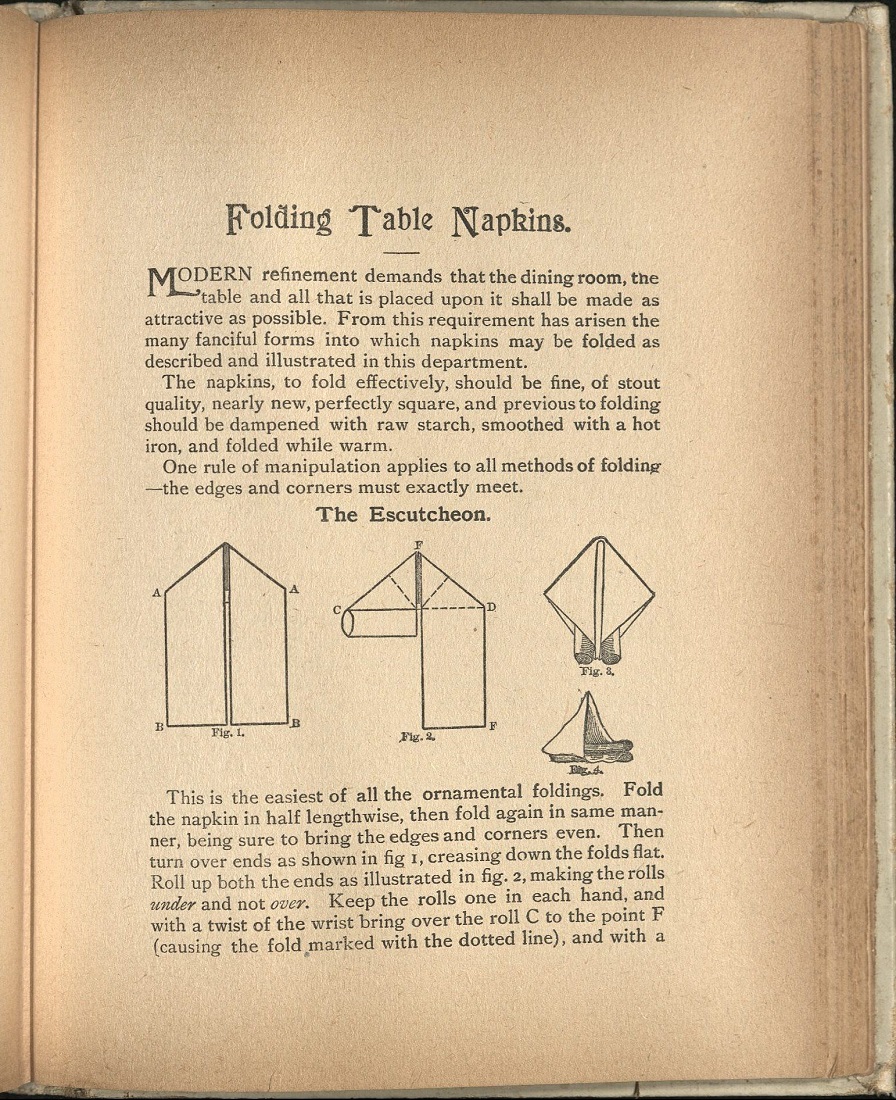
Image of the instructions for the Escutcheon napkin fold in "The 'Home Queen' Cook Book," 1901

Escutcheon napkin fold diagram and instructions in
The “Home Queen” Cook Book, 1901.
Call Number: Galloway C35. Click image to enlarge.

The “Home Queen” Cook Book features no less than twenty-one different napkin-folding techniques to help ensure that “the dining room, the table and all that is placed upon it shall be made as attractive as possible.” With such a plethora of options – all with detailed instructions and pictures to guide me – I thought I had finally found the perfect starting point on my way to my dream dinner party. Unfortunately, my optimism and confidence were quickly destroyed after attempting only two of the possible folds: the Escutcheon (picture above) and the Chestnut Pocket (pictured below).

Image of the instructions for the Chestnut Pocket napkin fold in "The 'Home Queen' Cook Book," 1901

The Chestnut Pocket napkin fold diagram and instructions in
The “Home Queen” Cook Book, 1901.
Call Number: Galloway C35. Click image to enlarge.

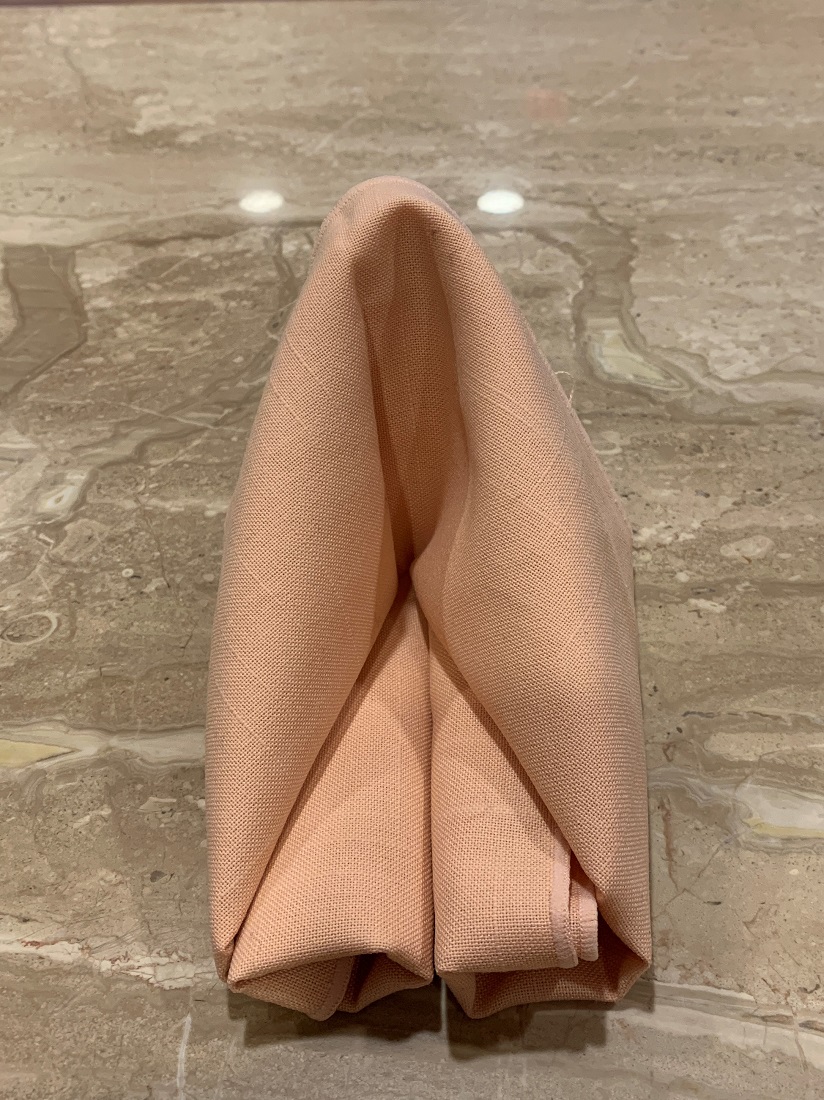
The Escutcheon: Described as “the easiest of all the ornamental foldings,” the Escutcheon was the beginning of the end for me. It was here I learned that the instructions to starch and iron the napkins immediately before folding was not a suggestion but truly an absolute requirement. After close to a half an hour of intense labor and a great deal of swearing, I finally managed to produce… something.

Photograph of an Escutcheon napkin fold attempt

My attempt at the Escutcheon napkin fold. Click image to enlarge.

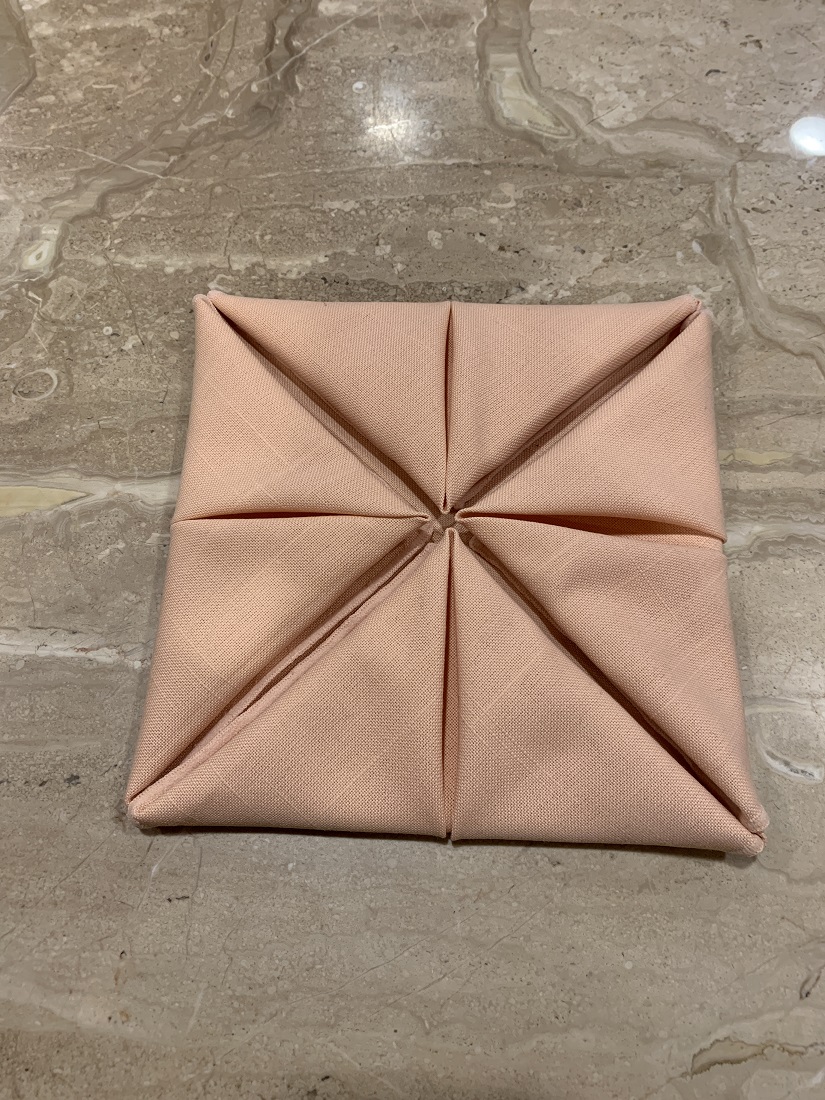
The Chestnut Pocket: My attempt to regaining any semblance of dignity after being so embarrassingly defeated by the Escutcheon finally yielded a positive result for me! I even took it a step beyond the Chestnut Pocket and created the Pocket Napkin. I found that the secret to success lay in finding a napkin-folding technique that did not need to stand up. With this revelation, I managed to produce the following creation:

Photograph of a Pocket napkin fold attempt

My successful attempt at the Pocket napkin fold
(a variation on the Chestnut Pocket napkin fold).
Click image to enlarge.

So after all of this – the research, the numerous disappointments, the defeat, and eventual triumph – I am sure you must be wondering: will I be hosting my envisioned elegant dinner party this holiday season? To put it succinctly, absolutely not. There is only so much embarrassment by fabric I am willing to put myself through in the name of holiday entertaining.

Emily Beran
Public Services

The Vacant Chair: Thanksgiving 1861

November 20th, 2018

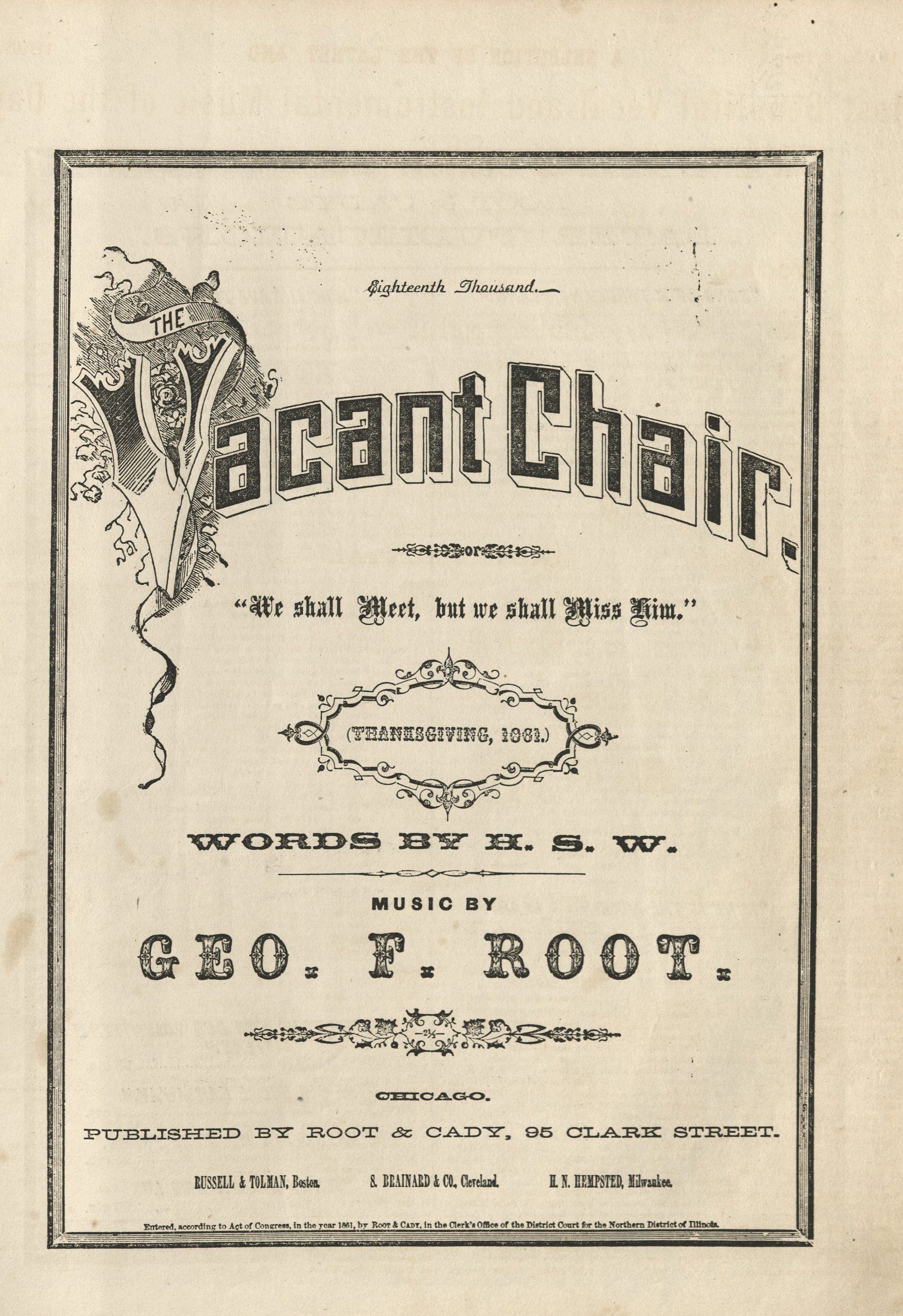
The Carl N. and Dorothy H. Shull Collection of Hymnals and Music Books, housed in Kenneth Spencer Research Library, includes bound volumes of sheet music. One of those songs is “The Vacant Chair,” with lyrics written by poet Henry Stevenson Washburn (H.S.W.), and set to music by George F. Root.

Image of the cover page for the sheet music of The Vacant Chair

Root, Geo. F. and H.S.W. “The Vacant Chair, or, We Shall Meet, but We Shall Miss Him: (Thanksgiving, 1861).”
Chicago: Root & Cady, 1861. KSRL call number: Shull Score E45, item 14

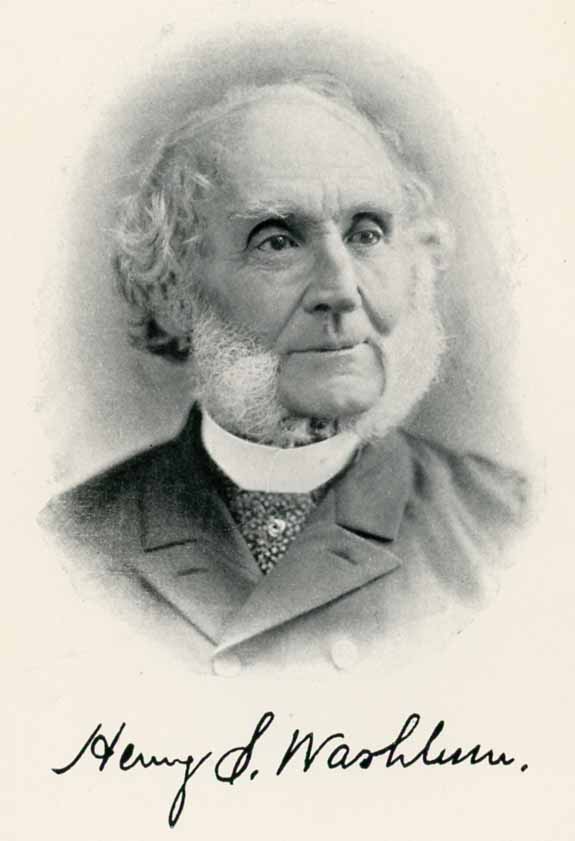
Henry Stevenson Washburn was born on June 10, 1813. He spent his childhood in Kingston, Massachusetts. Throughout his career, he was in manufacturing, was president of Union Mutual Life Insurance Company, and served as both a state representative and state senator. Best remembered for his poetry, he published a book of his collected works in 1895, at the age of 82.

Detail from the Frontispiece Portrait of Henry S. Washburn from his poetry collection, The Vacant Chair (1895)
Washburn, Henry S. The Vacant Chair and Other Poems.
New York: Silver, Burdett and Company, 1895, frontispiece portrait detail.
Image from copy obtained via InterLibrary Loan.

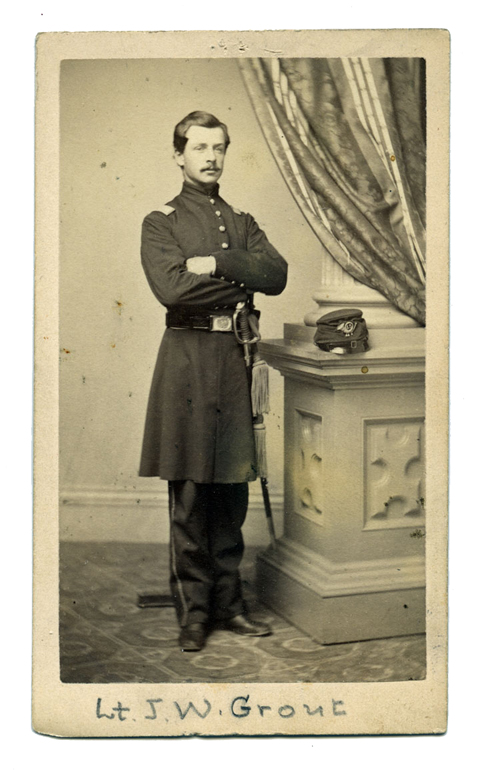
Washburn wrote “The Vacant Chair” in 1861 during the first year of the American Civil War, to memorialize the death of John William Grout, known as Willie, an eighteen-year-old lieutenant in the Union Army from Massachusetts. In his book, The Vacant Chair and Other Poems, Washburn tells the story of how Grout lost his life, selflessly helping his men retreat across the Potomac river under heavy enemy fire at the battle of Ball’s Bluff, Virginia, on October 21st in that first year of war. Mortally wounded, his body, and those of the men who fell with him, floated down river. He was not found until November 5th, identified by his clothing and the letters in his pockets. He was returned to his family, and was buried on November 12th, shortly before the nation, and Willie’s own family, observed Thanksgiving on the 28th. The song became popular throughout the remainder of the war, as many families would experience a “vacant chair.”

Carte de Visite showing "Lt J. W. Grout" in uniform, August 1961
John William “Willie” Grout, 1843-1861, 15th Massachusetts Regiment, Albumen carte-de-visite
by C.R.B. Claflin, Worcester, August 1861. American Antiquarian Society.
Image included in Almanac: American Antiquarian Society Newsletter. No. 81 (March 2011), p. 6.

Recording artist, Kathy Mattea, recorded her version of “The Vacant Chair,” and it is available for listening on You Tube.


The Vacant Chair

We shall meet, but we shall miss him, there will be one vacant chair;
We shall linger to caress him when we breathe our evening prayer.
When a year ago we gathered, joy was in his mild blue eye,
But a golden cord is severed, and our hopes in ruin lie.

We shall meet, but we shall miss him, there will be one vacant chair;
We shall linger to caress him when we breathe our evening prayer.

At our fireside, sad and lonely, often will the bosom swell
At remembrance of the story how our noble Willie fell;
How he strove to bear our banner thro’ the thickest of the fight,
And uphold our country’s honor, in the strength of manhood’s might.

We shall meet, but we shall miss him, there will be one vacant chair;
We shall linger to caress him when we breathe our evening prayer.

True they tell us wreaths of glory ever more will deck his brow,
But this soothes the anguish only sweeping o’er our heartstrings now.
Sleep today, o early fallen, in thy green and narrow bed,
Dirges from the pine and cypress mingle with the tears we shed.

We shall meet, but we shall miss him, there will be one vacant chair;
We shall linger to caress him when we breathe our evening prayer.

Kathy Lafferty
Public Services

‘Palm’ Reading with MS Q57

October 9th, 2018

Throughout history, people have found innovative ways to record the written word. Civilizations have used clay, stone, papyrus, animal skin – almost anything they could think of to produce records and share their stories. Recently, I was introduced to another innovative writing surface: palm leaves!

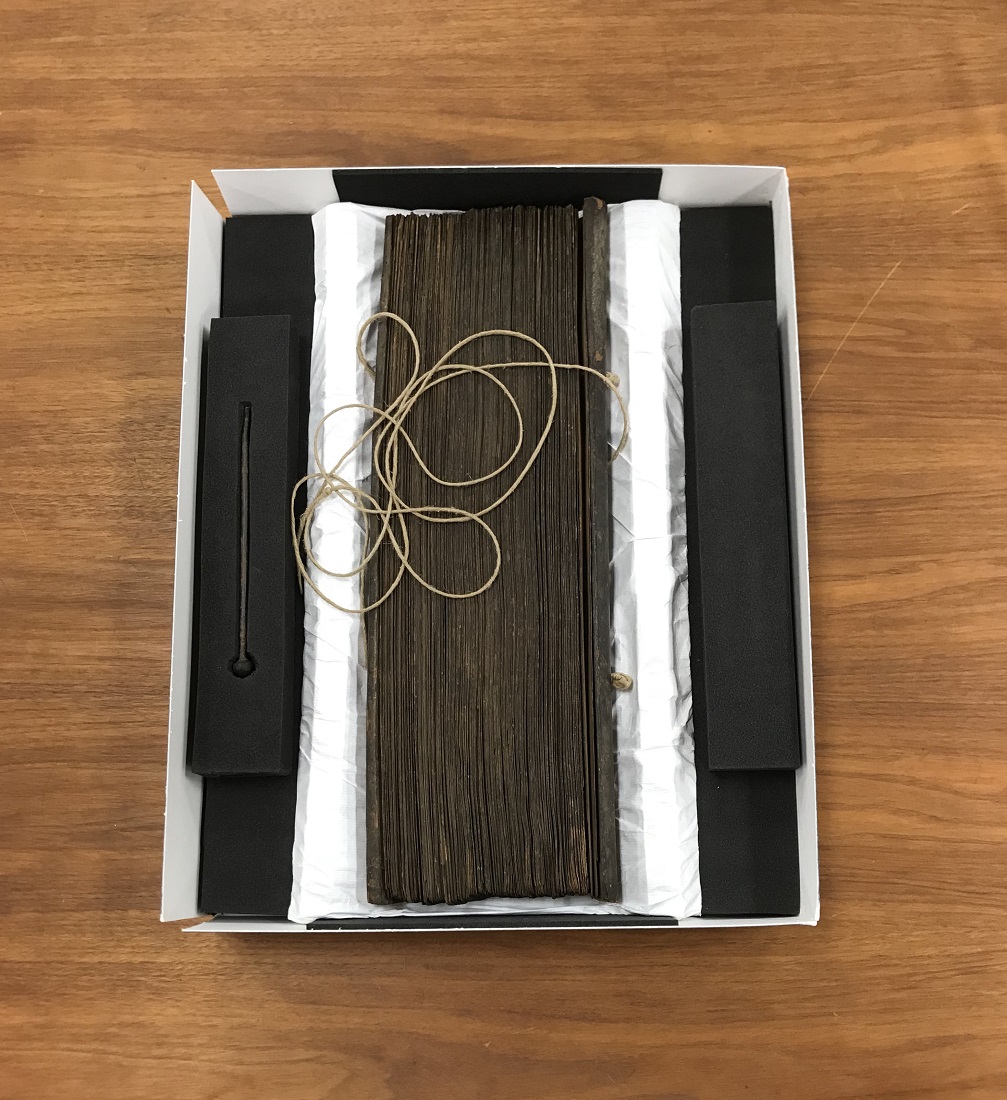
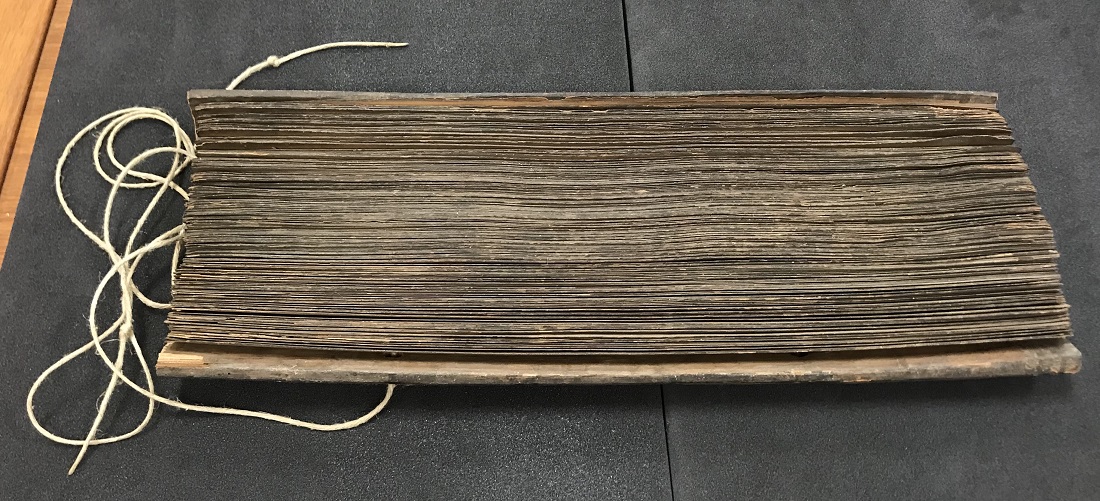
Photograph of the Rāmāyaņa palm-leaf manuscript, circa 1600s

Spencer’s Rāmāyaņa palm-leaf manuscript inside its acid-free storage box.
Call Number: MS Q57. Click image to enlarge.

Created in the 17th century, this palm-leaf manuscript (also referred to as a Pothi) contains the first five books of the Rāmāyaņa, an ancient Sanskrit epic about Prince Rama’s quest to rescue his wife, Sita, from Ravana, the 10-headed Rakshasa king of Lanka. While the epic itself dates back to over two millennia ago, the text in Spencer Research Library’s manuscript is a Telugu translation from the 13th century.

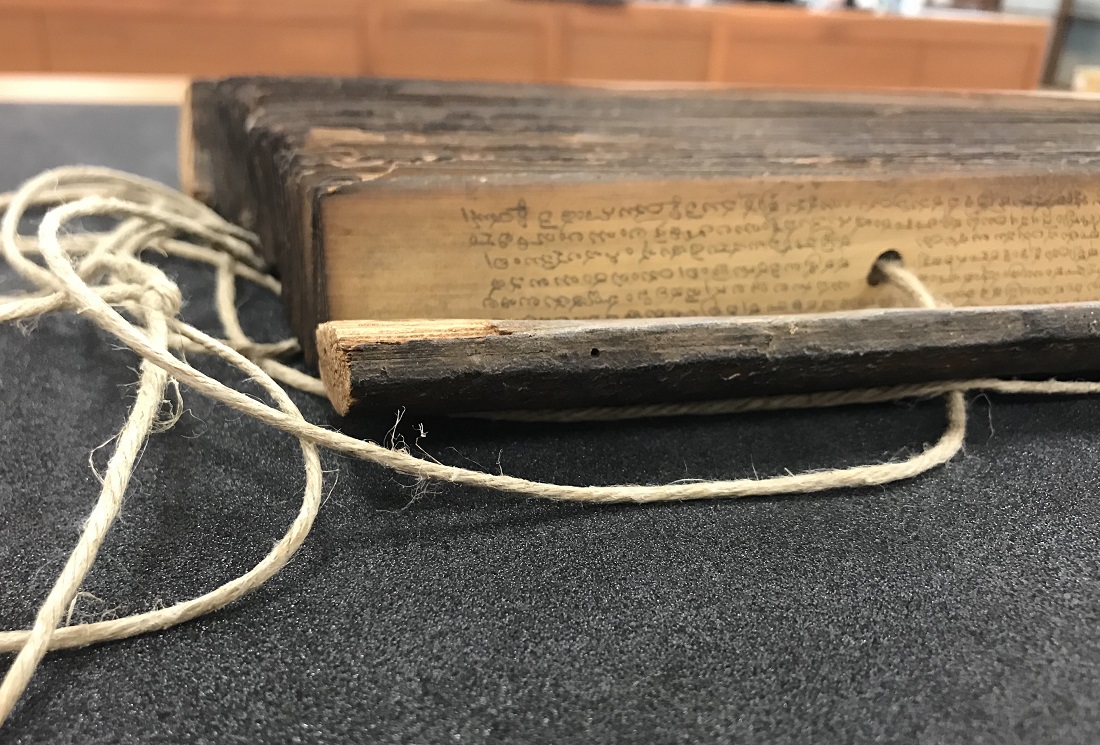
Photograph of the Rāmāyaņa palm-leaf manuscript, circa 1600s

Photograph of the Rāmāyaņa palm-leaf manuscript, circa 1600s

Close-up views of Spencer’s Rāmāyaņa palm-leaf manuscript.
Call Number: MS Q57. Click image to enlarge.

Palm-leaf manuscripts were created by drying and curing palm leaves. Holes were then added to the leaves so that a string could pass through, securing the leaves into a book. To create the text, scribes used a stylus to etch the characters before adding a layer of black soot or turmeric to improve the text’s readability. While the use of palm leaves for writing declined in South India as the printing press became more widely used in the 19th century, thousands of palm-leaf manuscripts containing the history, traditions, and knowledge of the region still exist today.

Emily Beran
Public Services

Save up for your next adventure with Publico student coupons! Enjoy great deals on all your favorite products. Whether you’re looking for new clothes or the latest electronics, we’ve got you covered. With our student coupons, you can save big on the products you need to succeed. Don’t let a tight budget hold you back – shop with Publico and start saving today!

Banned Books Week: The Well of Loneliness

September 28th, 2018

It’s the end of September, which means that it’s Banned Books Week (this year, September 23-29th), an annual celebration of the freedom to read.  Among the most frequently challenged books in recent years have been ones that include LGBTQ content or themes, such as same-sex relationships or issues surrounding gender identity. (Four of the 2017 and five of the 2016 top ten most challenged books, as compiled by the American Library Association’s Office of Intellectual Freedom, were challenged in part for LGBTQ subject matter.)  With this in mind, today we feature a typescript from Spencer’s collections for a novel that stands as a landmark in the history of lesbian literature and the history of censorship, Radclyffe Hall’s The Well of Loneliness (1928).

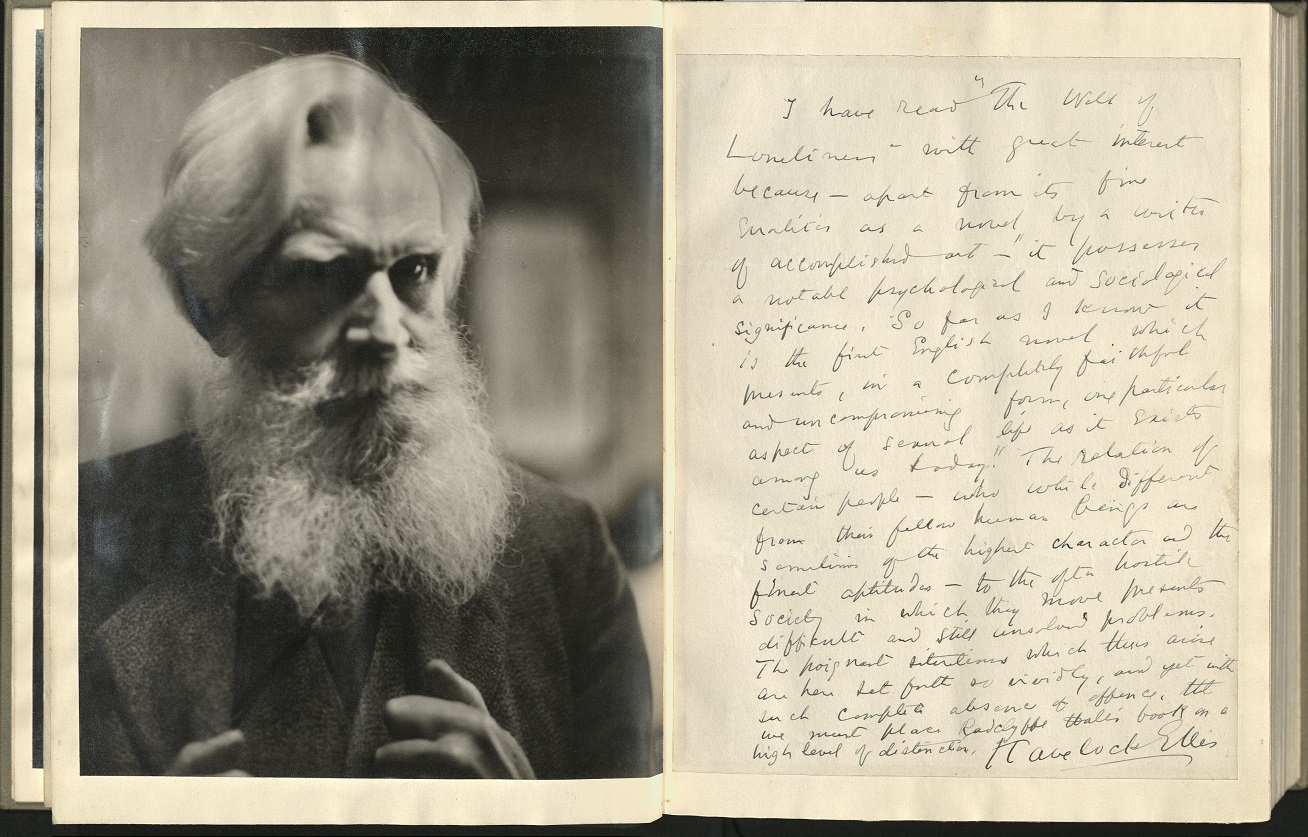
The Well of Loneliness tells the story of Stephen Gordon as she struggles to find love and acceptance in a society that rejects same-sex desire. Often discussed as the first openly lesbian novel in English, The Well of Loneliness favors the term “invert” over lesbian.  The novel’s author, the British writer Radclyffe Hall, imported this word from late nineteenth and early twentieth century writings of sexologists such as Richard von Krafft-Ebing and Havelock Ellis.  Indeed, Havelock Ellis wrote a prefatory comment for Radclyffe Hall’s novel, and Spencer Research Library’s typescript copy appears to have been given by Hall to Ellis.  It includes a manuscript copy of Ellis’s introductory “comment,” and is marked “Special Copy I” in Radclyffe Hall’s hand on the title page.  Photographic portraits of both Hall and Ellis have been added to the typescript, perhaps by some later owner.
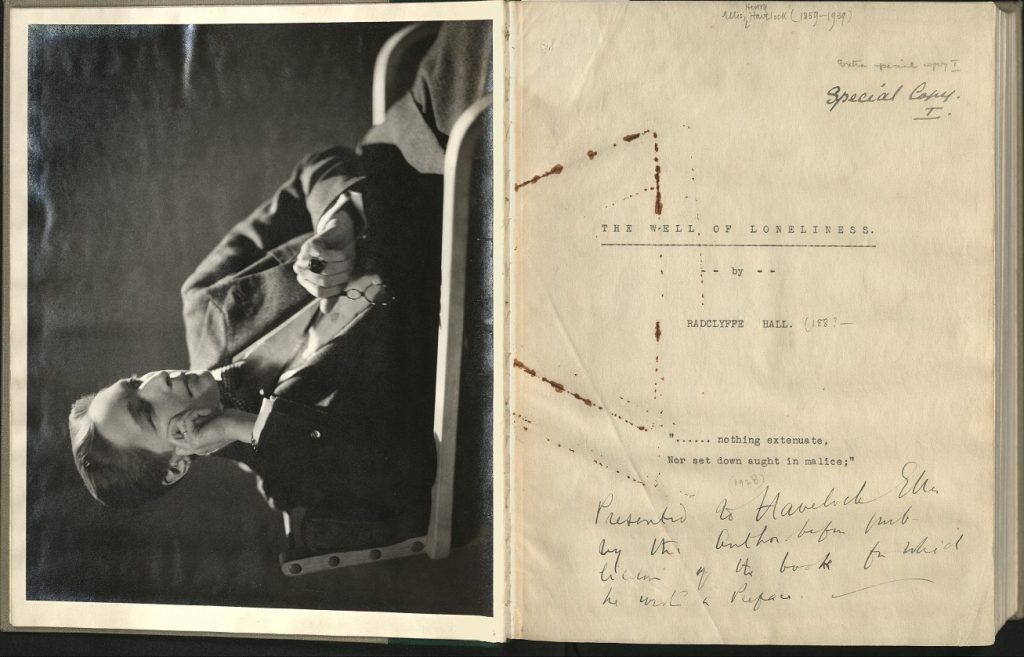
Well of Loneliness typescript title page marked "Special Copy I", with tipped in photographic portrait of Radclyffe Hall

Photograph of Radclyffe Hall pasted next to the title page of a typescript of her novel The Well of Loneliness. England, approximately 1928. Call #: MS D45. Click image to enlarge.

Hall intended her novel as both a work of art and a means of gaining sympathy and recognition for same-sex love.  In his introductory comment, Havelock Ellis writes,

So far as I know, it is the first English novel which presents, in a completely faithful and uncompromising form, one particular aspect of sexual life as it exists among us to-day. The relation of certain people—who, while different from their fellow human beings, are sometimes of the highest character and finest aptitudes—to the often hostile society in which they move presents difficult and still unsolved problems.  The poignant situations which thus arise here are set forth so vividly, and yet with such complete absence of offence, that we must place Radclyffe Hall’s book on a high level of distinction.
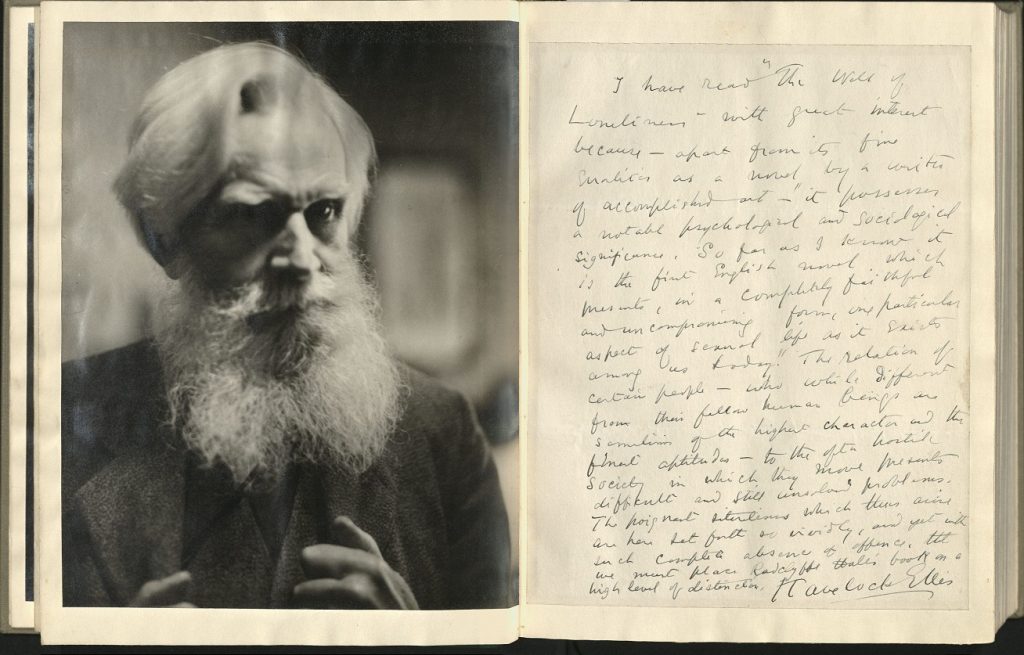
Manuscript of Havelock Ellis's prefatory "commentary" with pasted facing page gelatin print of Havelock Ellis

Havelock Ellis’s prefatory “commentary,” with photograph of Ellis in the first volume of a typescript for Radclyffe Hall’s The Well of Loneliness. England, approximately 1928. Call #: MS D45. Click image to enlarge.

Ellis’s careful allusion to the “complete absence of offense,” however, did not convince all readers. Though The Well of Loneliness contains no sexually explicit scenes, its subject matter and its insistence on the humanity of its queer characters inspired controversy upon its release in 1928.  James Douglas, the editor of the tabloid newspaper the Sunday Express, published an article in which he famously and bombastically asserted that he “would rather give a healthy boy or a healthy girl a phial of prussic acid” than Radclyffe Hall’s novel. “Poison kills the body but moral poison kills the soul, Douglas wrote as he called upon the government to take action to suppress the book.  At the urging of England’s Home Secretary, the novel’s publisher, Jonathan Cape, withdrew it from sale.  However, Cape also arranged to have the printing molds sent to the Pegasus Press in Paris, with the plan of importing copies.  When those copies of the novel were brought back into the UK from France, both Cape and the London bookseller involved, Leonard Hill, were charged under the Obscene Publications Act of 1857.  Following a trial, Chief Magistrate Chartres Biron ordered copies of the novel be destroyed, and The Well of Loneliness was not republished in the United Kingdom until 1949.

Across the ocean, the novel fared better. John Sumner of the New York Society for the Suppression of Vice lodged a complaint against the American publisher of The Well of Loneliness, Covici-Friede.  But ultimately, attorney Morris L. Ernst succeeded in defending Friede against the charge of possessing and selling an obscene book.  A victory edition of the novel was released in the U. S., and the controversy that had surrounded it fueled its sales.

The corrected typescript at Spencer Research Library gives insight into Radclyffe Hall’s process in writing and revising the novel, and it includes emendations in at least two hands. Though some of the deletions remain difficult to read, others can be seen through the black ink and blue crayon used in the editing process (click on the images below to enlarge them).  For example, in a scene in which Stephen and her mother argue over the disclosure of young Stephen’s love for the married Angela Crossby, we see that Hall has edited down some of Stephen’s more vocal justifications of her love.
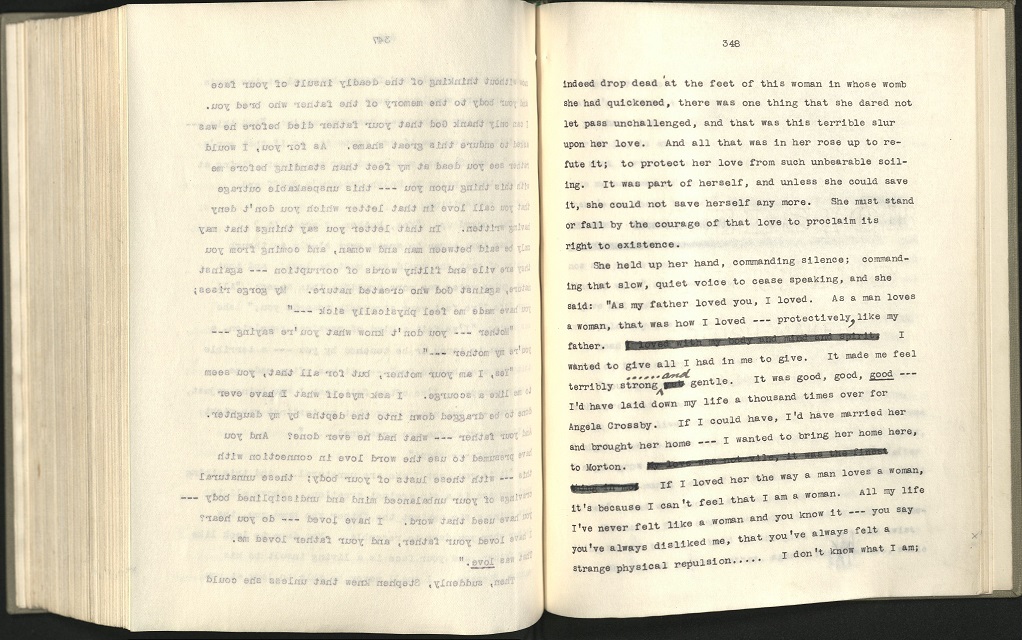
The Well of Loneliness typescript p. 348 with deleted passages and manuscript emendations

Deletions on p. 348 of a typescript for Radclyffe Hall’s The Well of Loneliness. England, approximately 1928. Call #: MS D45. Click image to enlarge.

The blacked out lines in the passage above read “I loved with my body and mind and spirit” and “My love was not vile, it was the finest thing in me.”   The succeeding lines, which Hall leaves untouched, suggest how the author’s depiction of Stephen’s “inversion” is inflected with elements of what we now call transgender identity.  Stephen explains to her mother, “If I loved her the way a man loves a woman, it’s because I can’t feel that I am a woman. All my life I’ve never felt a woman and you know it —.“

On the following page, Hall also deletes a line in which Stephen invokes God in explaining her love.  “I’m not ashamed of it, there’s no shame in me,” Stephen declares, and then the deleted text continues, “I glory in my love for Angela Crossby.  It was good, it is good, for all true loving must be good if you believe in God’s existence —.“
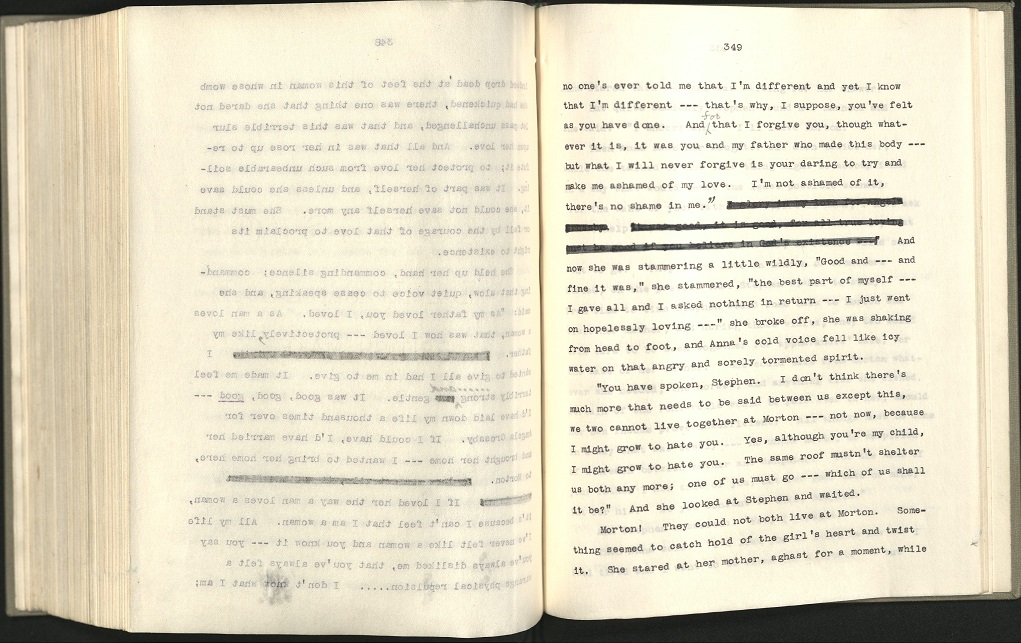
The Well of Loneliness typescript p. 349 with deleted passage.

Additional deletions on p. 349 of the typescript for Radclyffe Hall’s The Well of Loneliness. England, approximately 1928. Call #: MS D45. Click image to enlarge.

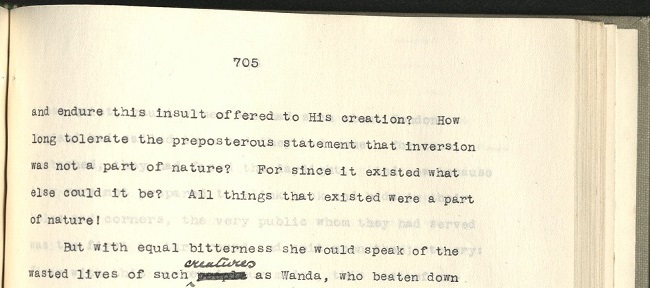
The idea that same-sex love is a part of God’s creation recurs throughout the novel, as does Stephen’s anguish at being persecuted by society for it nevertheless.  Following the tragic deaths of Stephen’s two friends, Barbara and Jamie, Hall writes of Stephen, “She would clench her hands in a kind of fury. How long was this persecution to last? How long would God sit still and endure this insult offered to His creation? How long tolerate the preposterous statement that inversion was not a part of nature? For since it existed what else could it be?  All things that existed were a part of nature!”
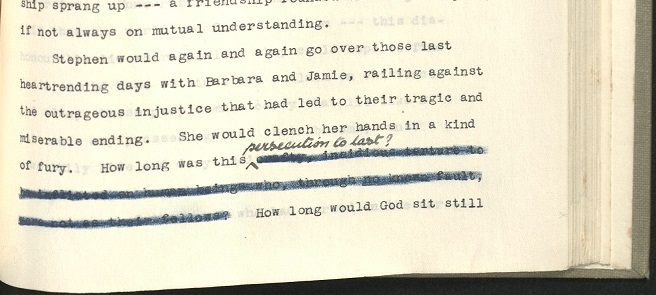
Detail from The Well of Loneliness typescript p. 704.

Detail from The Well of Loneliness typescript p. 705.

How long was this persecution to last? Details from p. 704-705 of a typescript for Radclyffe Hall’s The Well of Loneliness. England, approximately 1928. Call #: MS D45. Click images to enlarge.

2018 marks ninety years since The Well of Loneliness was first published.  In spite of its suppression for two decades in the UK and the attempt to suppress it in the US, readers and scholars continue to analyze and respond to Radclyffe Hall’s novel. We invite you to delve further into its history by exploring the “special” typescript copy, with emendations, held at the Spencer Research Library. Researchers can then compare this copy to other drafts available in the collection of papers for Hall and her partner Una Troubridge at the Harry Ransom Center in Austin, Texas.

Interested in more material related to banned books?  Take a peek at last year’s banned books week post on Spencer Library’s copy of a 1512 edition of Dante’s Divine Comedy that was expurgated at the behest of the Inquisition in Spain.  Curious about more contemporary instances of censorship and challenges to books? Read through the lists of the top 10 most frequently challenged books for each year since 2001.

Elspeth Healey
Special Collections Librarian

The Art of Nature

July 31st, 2018

Just how heavy is an African elephant? What insects hang out together on milkweed plants? Satisfy your curiosity by visiting Kenneth Spencer Research Library’s summer 2018 exhibition before it closes on August 30.

Image of the T-Shirt Design by D.D. Tyler, "One African Elephant Is as Heavy as…" Milkweed Village T-Shirt design by D. D. Tyler

D.D. Tyler. “One African Elephant Is as Heavy as…” t-shirt and
“Milkweed Village” t-shirt. D. D. Tyler Collection.
Call Number: MS QA 22, Box 4. Click images to enlarge.

The pictorial T-shirts displayed in “The Art of Nature: Natural History Art and Illustrations by D.D. Tyler” answer such questions in the nicest possible way. These beautiful T-shirts selected from nearly 200 designed by natural-history artist D.D. (Diana Dee) Tyler charm the eye while they stimulate the mind. The same is true of her natural-history illustrations for periodicals, guidebooks, and children’s books.

Color drawing by D. D. Tyler of Mother Bear and Cubs for book Bears in the Wild by Ada and Frank Graham, 1981
D.D. Tyler. Mother Bear and Cubs. Color drawing for book
Bears in the Wild by Ada and Frank Graham, 1981.
Addition to the D. D. Tyler Collection received 12/17/2017. Click image to enlarge.

The detailed and scientifically accurate pen-and-ink drawings breathe life into each book author’s written descriptions of animals and their lives. In the exhibition, her impressive original drawings, never meant to be seen, can be compared with the published versions reduced photographically to half-size.

Ink and crayon drawing by D. D. Tyler of a Mother Squirrel Carrying Baby Squirrel for the book We Watch Squirrels by Ada and Frank Graham, 1985

D.D. Tyler. Mother Squirrel Carrying Baby Squirrel. Ink and crayon drawing
for book We Watch Squirrels by Ada and Frank Graham, 1985.
D. D. Tyler Collection. Call Number: MS QA 22, Box 1, Folder 30. Click image to enlarge.

A native Kansan, D.D. Tyler completed a Fine Arts degree at the University of Kansas in 1970. After backpacking around the world, she settled in Maine, where her career as an artist developed in tandem with her interest in the natural world. Now semi-retired, she recently donated her artistic archive representing forty years of work to Kenneth Spencer Research Library, where anyone using our reading room can request and view items from the D.D. Tyler collection, along with the many other books and manuscripts in the library’s collections.  Kenneth Spencer Research Library, located in the central KU Campus on Poplar Lane between Strong Hall and the Campanile, is open Mondays-Fridays 9-5 and (after fall semester classes begin August 20) Saturdays 9-1.

Karen Cook, DD Tyler, and Hank Tyler in front of the main exhibition title for "The Art of Nature," July 12, 2018

The artist, D.D. Tyler (center), and her husband, Hank Tyler (right), at the exhibition
with Karen Cook (left), curator of the exhibition. Click image to enlarge.

Karen Severud Cook
Special Collections Librarian