The University of Kansas

Inside Spencer: The KSRL Blog

Books on a shelf

Welcome to the Kenneth Spencer Research Library blog! As the special collections and archives library at the University of Kansas, Spencer is home to remarkable and diverse collections of rare and unique items. Explore the blog to learn about the work we do and the materials we collect.

This blog may contain archived web content. This blog may link to catalog records which no longer exist as of a software change in 2026.

Meet the KSRL Staff: Lynn Ward

February 20th, 2018

This is the thirteenth (lucky number thirteen!) installment in a recurring series of posts introducing readers to the staff of Kenneth Spencer Research Library. Today’s profile features Lynn Ward, who joined the Spencer Research Library processing unit in late October as a processing archivist. 

Where are you from?

Since most of my adult life has been spent in Lawrence, I like to say that’s where I’m from. I grew up in Missouri but attended the University of Kansas for my bachelor’s degree (anthropology) and masters (museum studies). I have moved from Lawrence a few times, but I keep coming back!

What does your job at Spencer entail?

How do researchers know what’s on the shelves in the archives? That’s my job. I work on making all the amazing information that is here in the library—in documents, letters, maps, photographs, diaries, drawings, scrapbooks, and records—accessible. I do that by processing donations and collections and then making finding aids for them online. Then the information contained in the donations and collections can be searched, found, and utilized.
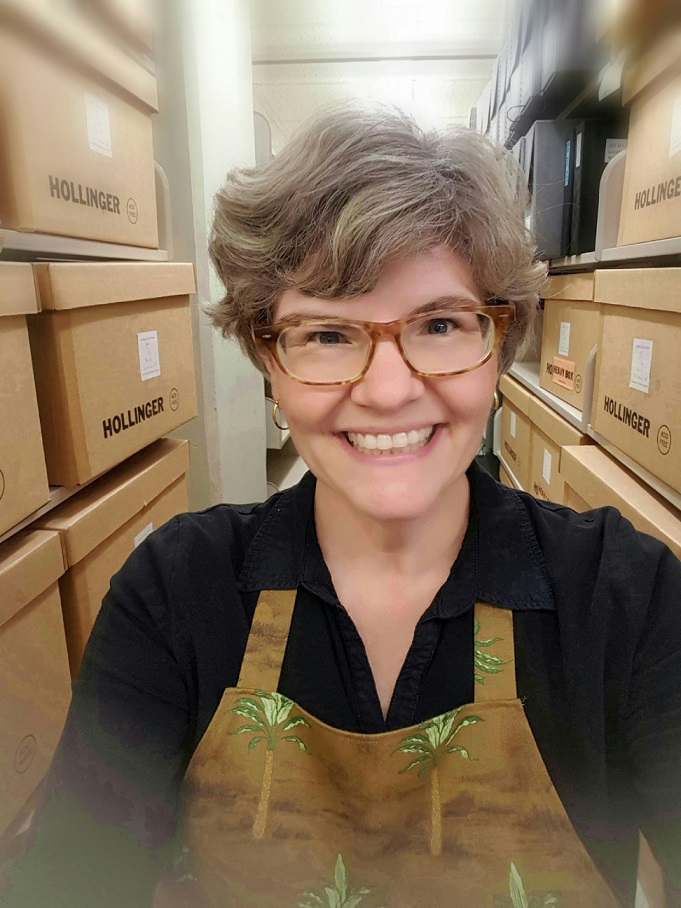
Lynn Ward in the Kansas Collection Stacks

Making Spencer’s collections accessible:
Lynn Ward in the Kansas Collection stacks.

How did you come to work at Spencer Research Library?

This isn’t the first time I have worked at Spencer Research Library. When I was a graduate student in the Museum Studies program here at KU, I worked in the University Archives up on the 4th floor. That was my first archives position. Since then, I have had a long career working in a variety of museums, archives, and libraries. At each one, I have learned new skills, experienced many situations, and gained lots of knowledge! I’m happy to bring all this to Spencer Research Library where I can use all these skills and knowledge, plus learn even more from the excellent staff here. In a way, I’ve come full circle and now I’m back home.

What is one of the most interesting items you’ve come across in Spencer’s collections?

It’s hard to narrow down one, because I find it all so interesting! I have worked on some great collections since starting here in late October. But, I would have to say that I am most interested in the territorial Kansas and also the early KU history material. In the lobby of the Spencer Research Library there is a map of Lawrence from 1854 that I love to look at—especially since “Kansas” is spelled with a “z”—“Kanzas.” I also like to walk in the North Gallery and see a cross-section of all the fascinating collections that are in the library. I love looking at all of the books and exhibits in that beautiful space.
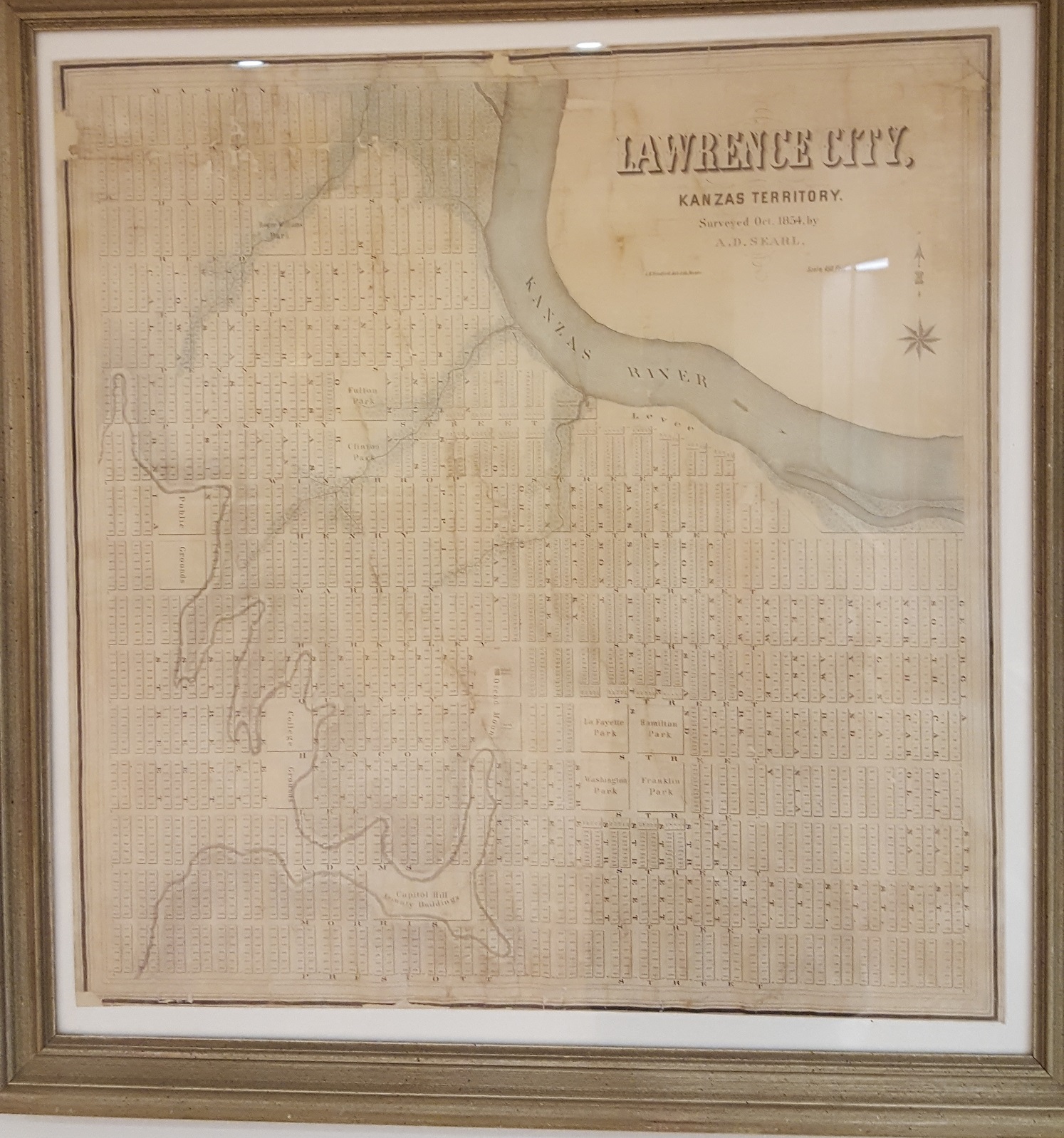
Picture of the 1854 SearleMap of Lawrence housed in the Spencer Research Library Lobby

Map of “Lawrence City, Kanzas Territory, Surveyed Oct. 1854 by A. D. Searl.”
This map hangs in the Spencer Research Library lobby. Click image to enlarge.

What part of your job do you like best?

I like the feeling of being part of a team. We are all working to make the collections accessible so that everyone—the public, historians, students, genealogists—can benefit from them.

What are some of your favorite pastimes outside of work?

I love, love, love to travel and explore. I’m happy going anyplace and doing anything. For example, a few weeks ago, I went with a friend on a fun daytrip exploring territorial history in Big Springs, Kansas. And last summer, my daughter and I found a cool shark’s tooth near Hays, Kansas. (I’m a huge dinosaur and prehistoric life fan.) I enjoy little adventures like that! I’ve got two teenage kids, so my husband and I spend a lot of our time involved in their activities. I also read a lot—mostly books about Kansas history—but I do enjoy a good historical fiction or a Michael Creighton novel, too!

What piece of advice would you offer a researcher walking into Spencer Research Library for the first time?

I would tell them to take the time to talk to the reference room staff. If the staff know about your research project, they can help you think of resources here at Spencer Research Library.

Lynn Ward
Processing Archivist
New Finding Aids Available, Part III

December 12th, 2017

Is the cold weather encouraging you to stay indoors? Why not dive into a new research project using one of the recently processed collections at Spencer Research Library? Today we share with you a list of finding aids published between May 2017 and November 2017. Finding aids are inventories or guide documents that assist researchers in navigating collections of manuscripts, organizational records, personal papers, photographs, and audio visual materials. You can learn more about finding aids in an earlier Finding Aids 101 post, and you can search the library’s finding aids here. As you begin your research, remember that Spencer Library will be closed for the holidays from December 23-January 1. However, if your New Year’s resolution is to conduct more archival research, you’re in luck since Spencer Library re-opens on January 2nd!

Enjoy a few images from three of these recently processed collections, and then scroll down for the full list of new finding aids.

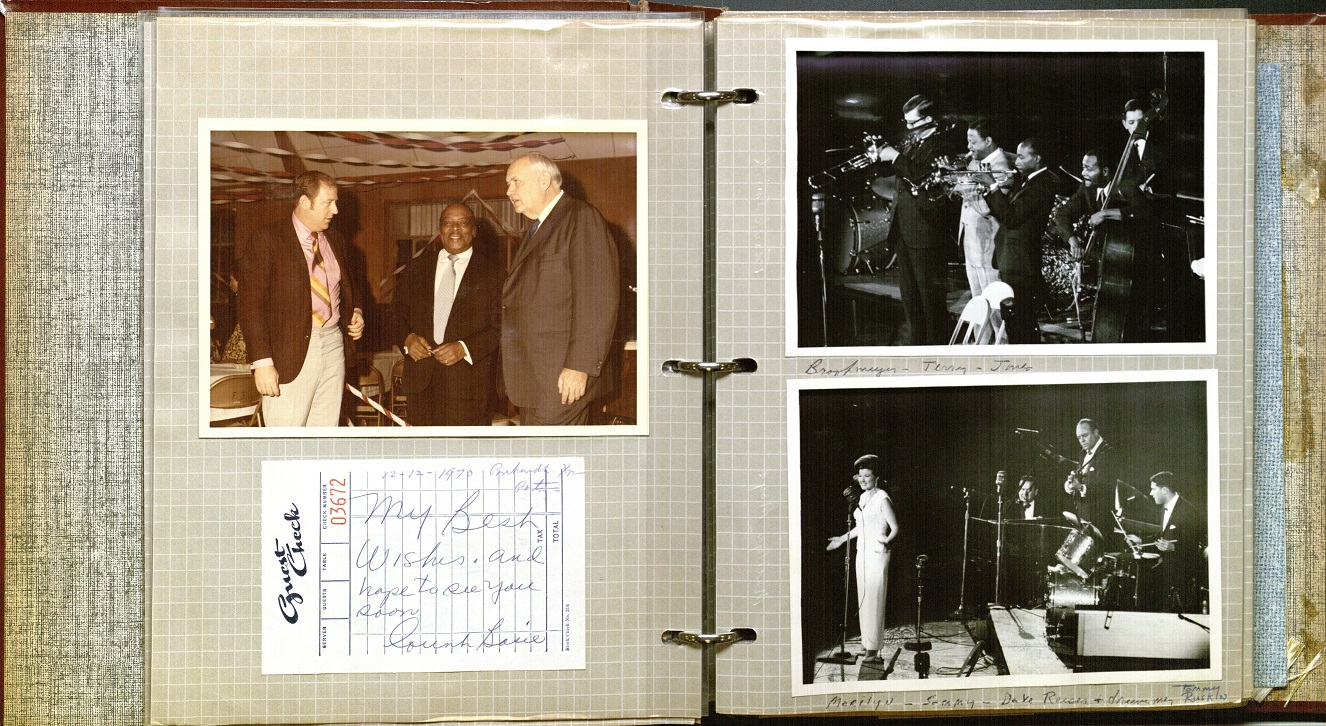
Photograph of an opening showing an autograph and photo of Count Basie in vol. 1 of the Chesterman C. Linley jazz scrapbooks

Selected pages from a jazz scrapbook from the Chesterman C. Linley Scrapbooks.
Left page: Chesterman C. Linley with Count Basie at the at the Panhandle Christmas Party,
with Count Basie’s signature below. Right: Bobby Brookmeyer, Clark Terry, and Carmell Jones (top),
and Marilyn Maye (bottom). Call Number: RH MS EK5, Vol. 1. Click image to enlarge.

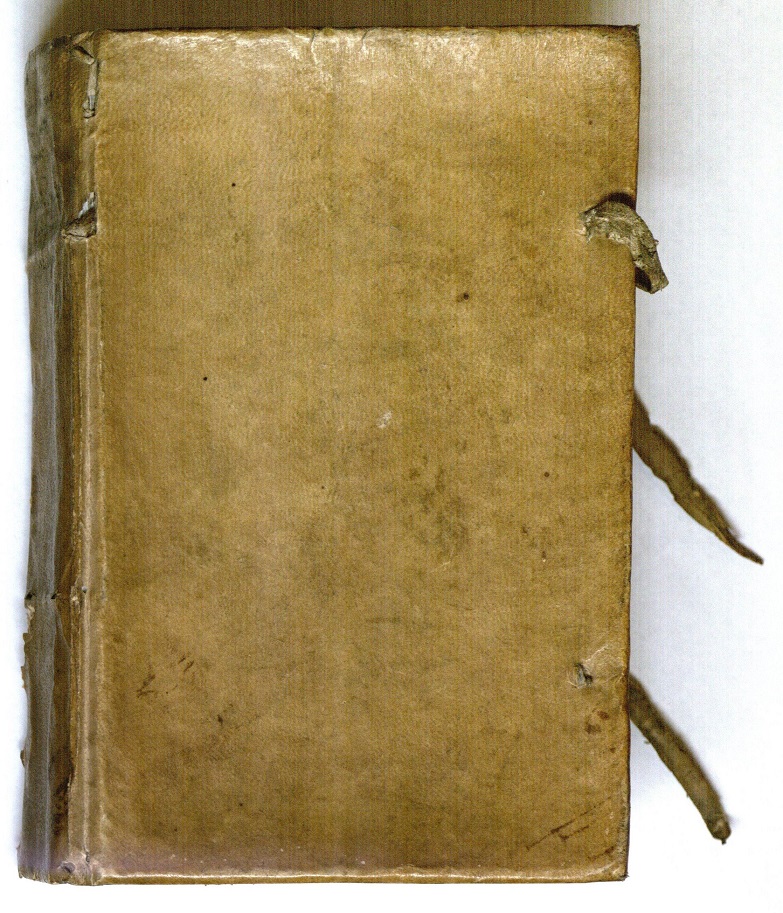
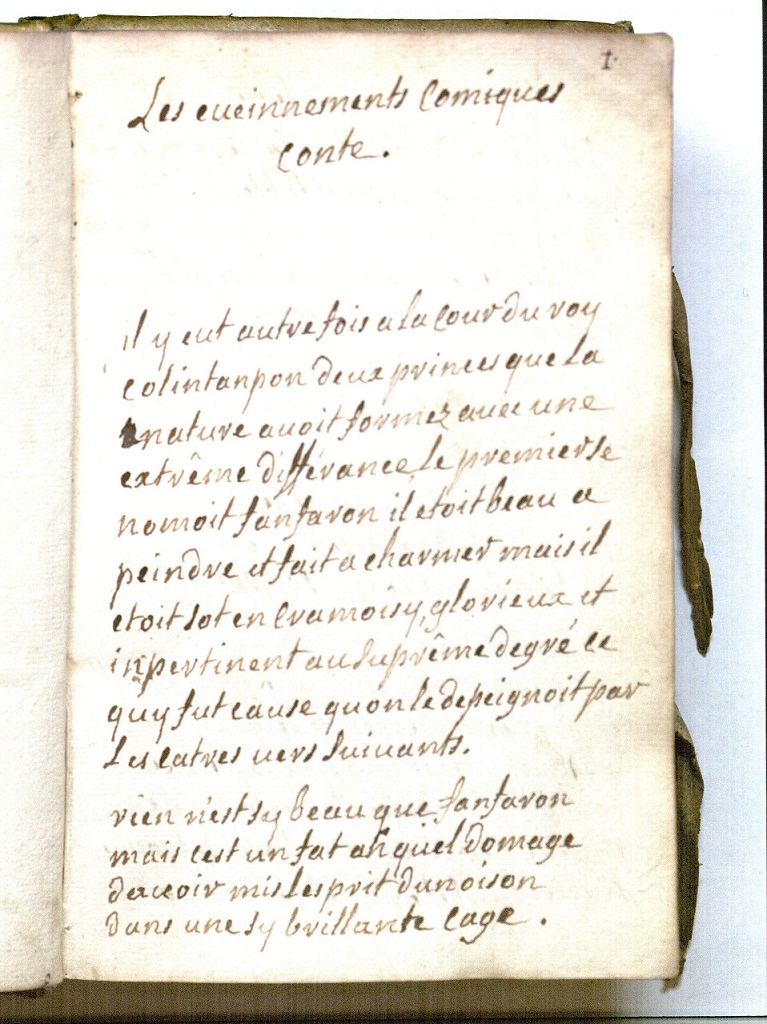
Velum binding with tawed skin ties for a volume containing two manuscripts by Mlle de Lubert Beginning of "Les evenements comiques conte", one of two literary manuscripts by Mlle de Lubert bound together in a volume.

A volume containing two literary manuscripts by Mademoiselle de Lubert, “Les événements comiques conte” (above) and “Chélidonide histoire grecque,” approximately 1740-1760. Call Number: MS B182. Click images to enlarge.

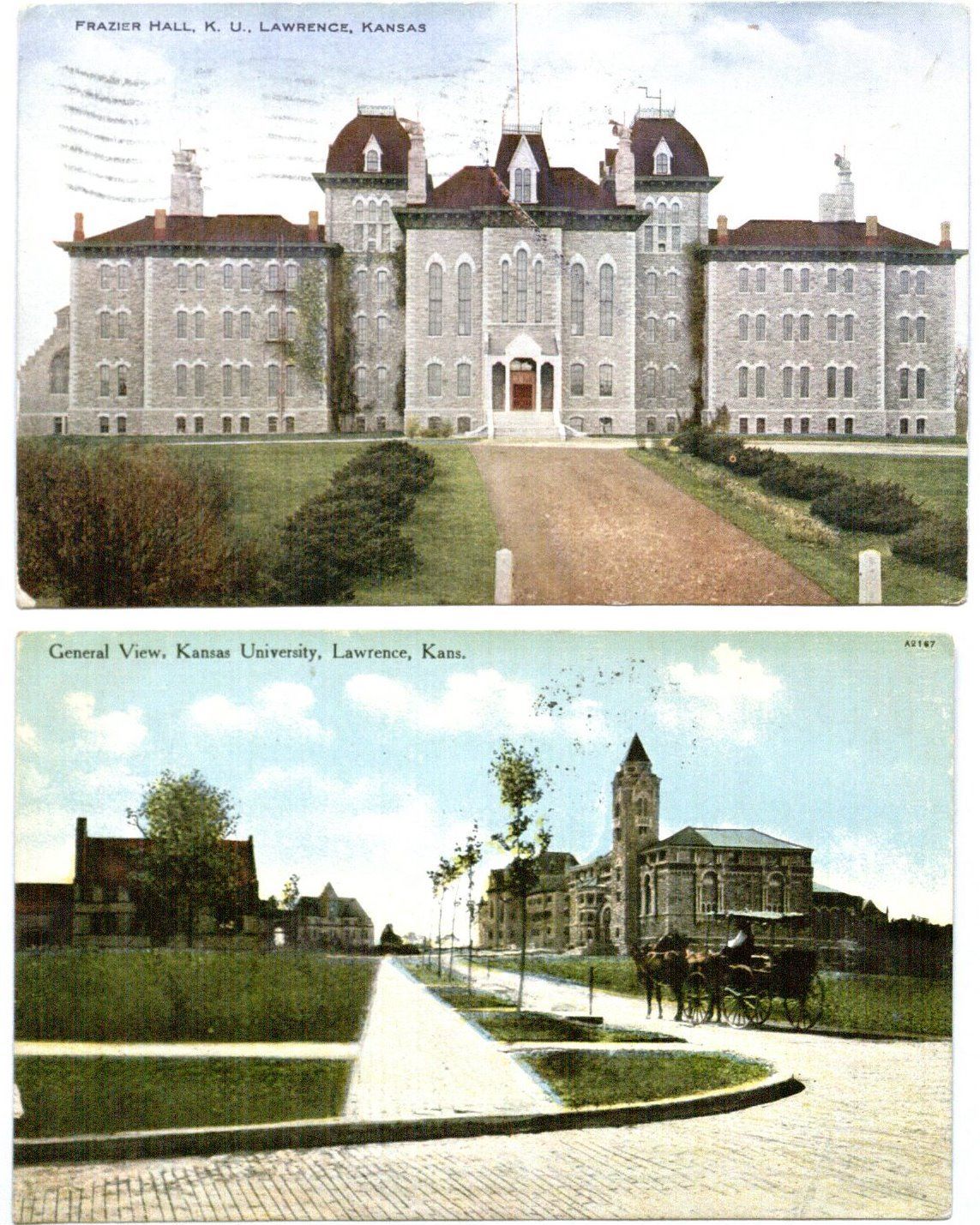
Image of a color postcards of Frazier Hall (1909) and a general view of campus (1910), University of Kansas

University of Kansas postcards showing Frazier (i.e. Fraser) Hall (1909)
and a general view of campus (1910), from the Miller Family Postcard Collection.
Call Number: PP 581. Click image to enlarge.

New Finding aids

Elspeth Healey
Special Collections Librarian
and
Marcella Huggard
Archives and Manuscripts Processing Coordinator

African American Photograph Album: How to Process?

July 17th, 2017

In order to make manuscript collections available to researchers, we have to describe what we have so they know whether it is of interest or not. Typically archival description provides information about what is in the collection itself, as well as some contextual information to aid researchers in understanding more about why materials may be in the collection—a biographical note or administrative history of the creator of the collection, for example, or information about how Spencer acquired the collection. This additional information may come from the collection itself—the creator handily leaves a copy of their resume in their files, or the organization has created annual reports that provide some historical information about them. It can also come from external sources, such as websites and materials the creator and/or donor provided the curator when transferring the collection to Spencer, including notes the curator took when discussing the collection with the donor.

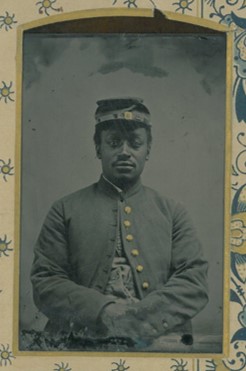
Sometimes, particularly with photographic collections that have little to no textual material donated with them, processing staff have very little to go on when creating a finding aid to help researchers. Take, for example, a collection of cabinet cards and tintypes that had been assembled into a photograph album. These photographic images are beautiful, posed portraits of African Americans in late 19th-century eastern Kansas—but we have very little external information about these images. We’re not even sure how we acquired this collection, or the story behind the creation of the photograph album. If any portrait is identified with a name, it’s hidden on the back, and we haven’t taken the album page package apart, even if the album overall was disbound due to its severe deterioration.

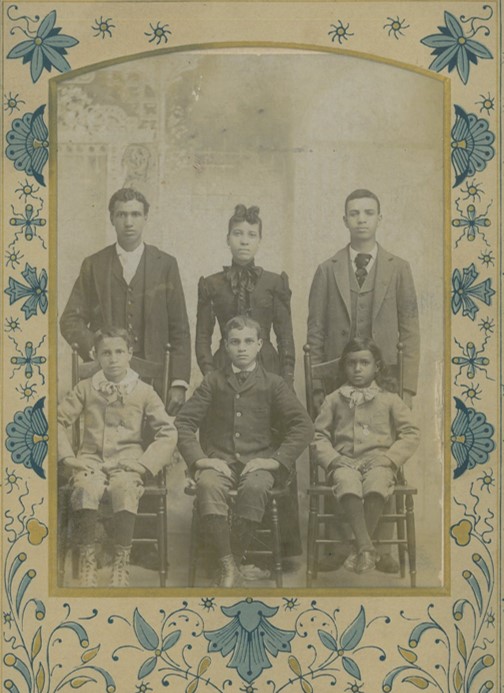
Photograph of a family group

Family group, circa 1890s? African American Photograph Collection.
Call Number: RH PH 531. Click image to enlarge.

In this kind of situation, we provide what information we can. We can describe simply at the collection-level, or we can attempt to describe at the file or individual item level, but those descriptions will necessarily be generic: “Tintype of a soldier in a Civil War-era uniform.”

Tintype of a soldier in Civil War-era uniform

Tintype of a soldier in a Civil War-era
uniform, circa 1880-1900.
African American Photograph Collection.
Call Number: RH PH 531. Click image to enlarge

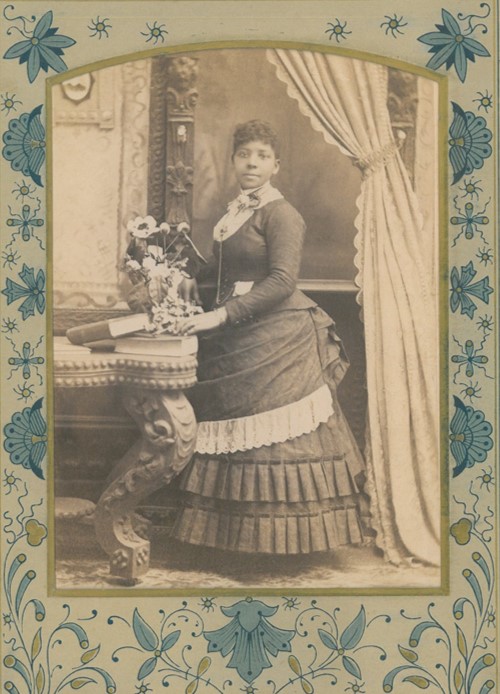
We can also provide rough date estimates for when the portraits were made, based upon the clothing worn by the sitters and upon the photographic processes used.

Photograph of an unknown woman

This woman’s overskirt—draped at the back of her dress
helping to create a bustle—tightly-fitted sleeves with cuffs,
and fitted basque-type bodice all indicate her photograph
was probably taken around the mid-1880s. African American Photograph Collection.
Call Number: RH PH 531. Click image to enlarge.

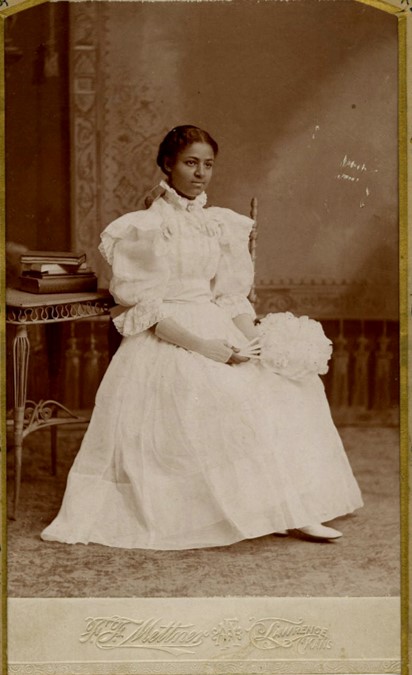
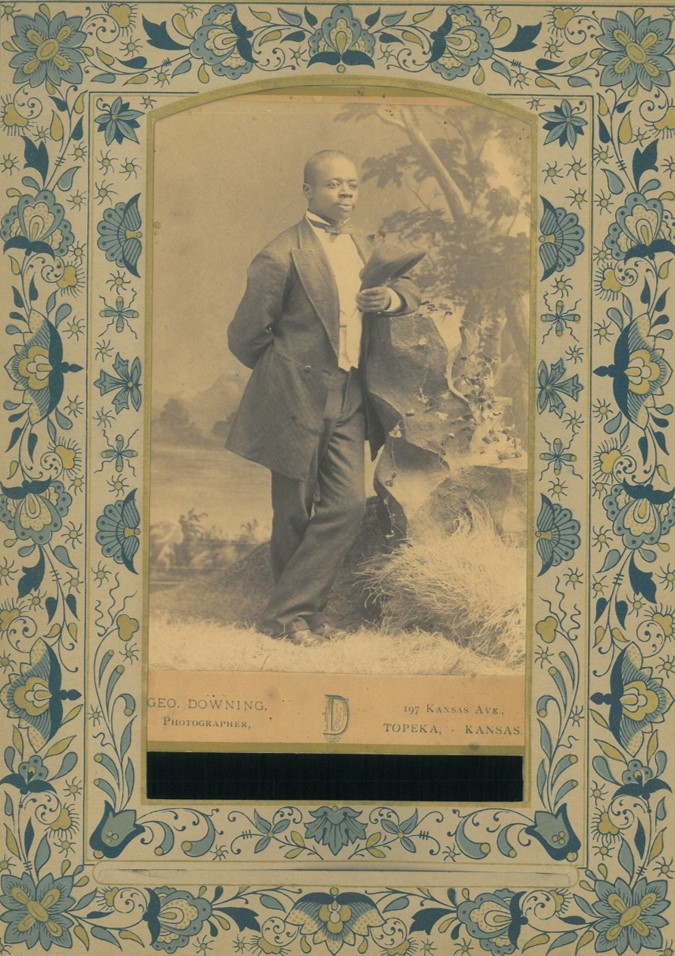
Photographers’ names, often provided on the bottom of cabinet cards and cartes de visite—think about watermarks on professionally-made digital photographs in the 21st century—also provide clues about where and when a collection is from. The photographers found in this collection mostly appear to come from Topeka, Kansas, with some also from Atchison, Lawrence, and perhaps other towns in the eastern part of the state.

Photograph of an unknown woman

The text under the image indicates it was taken by F. F. Mettner,
photographer of Lawrence, Kansas. Also notice the girl’s giant
leg o’mutton sleeves; this style was quite popular in the mid-1890s.
African American Photograph Collection. Call Number: RH PH 531. Click image to enlarge.

There are many decisions that go into processing a collection like this: Do we take apart the individual album pages to see if we can find more identifying information? Do we leave as is because this was how the images were intended to be seen (and who knows if anybody wrote anything on the back anyway)? Do we describe at a detailed level when we cannot provide names, or are we content with providing a simple collection-level description and hope that researchers are able to realize there may be a treasure trove from that collective description?

Photograph of an unknown gentleman

Who is this gentleman? If we knew his name,
what other information could it provide?
African American Photograph Collection.
Call Number: RH PH 531. Click image to enlarge.

No matter what we choose to do, archival description cannot capture the beauty of the women’s and children’s dresses and men’s suits—the sitters no doubt wearing their Sunday finest—the personalities that peek through even these stiffly posed studio portraits, the stories that may be hiding in the pictures themselves.

Photograph of an unknown woman

Portrait of an unknown woman, circa 1880-1900.
Marcella is especially fond of this photograph.
African American Photograph Collection.
Call Number: RH PH 531. Click image to enlarge.

If you have any information about any of these images, or others in the collection, we would be happy to add that information to the finding aid. To request to use the collection, contact Public Services staff at ksrlref@ku.edu. To provide more information about the collection, please also contact our African American Experience field archivist, Deborah Dandridge, at ddandrid@ku.edu.

Marcella Huggard
Manuscript Processing Coordinator

New Finding Aids Available: Part II

April 4th, 2017

Finding aids are documents created by a repository’s staff members as a point of access for an archival or manuscript collection. To understand more about how finding aids helps researchers navigate collections of manuscripts, organizational records, personal papers, letters, diaries, and photographs, check out our Finding Aids 101 blog post. Here’s a list of some of Kenneth Spencer Research Library’s newest finding aids, so see which collections interest you!

A photograph of members belonging to the Alpha Phi Alpha Fraternity at a banquet from the Dorothy McField collection of sorority and fraternity papers. African American Experience Collection, Spencer Research Library.

A photograph of members belonging to the Alpha Phi Alpha Fraternity at a banquet
from the Dorothy McField collection of sorority and fraternity papers.
African American Experience Collection. Call number: RH MS P944.3. Click image to enlarge.

The first page of a listing of titles for Éigse Eireann ["Poetry Ireland"] from the Catholic Bulletin collection. Special Collections.

The first page of a listing of titles for Éigse Eireann [“Poetry Ireland”]
from the Catholic Bulletin collection. Special Collections.
Call number: MS 329, Box 2, Folder 45. Click image to enlarge.

A photograph of two cowboys on horseback from the Wallace, Kansas photographs collection. Kansas Collection.

A photograph of two cowboys on horseback from the Wallace, Kansas photographs collection.
Kansas Collection. Call number: RH PH 60, Folder 1. Click image to enlarge.

The title page from Eugène Farcot’s Literary Manuscript Un Voyage Aérien; Dans Cinquante Ans. Special Collections.

The title page from Eugène Farcot’s Literary Manuscript Un Voyage Aérien; Dans Cinquante Ans.
Special Collections. Call number: MS K32. Click image to enlarge.

May 7th and 8th from the five year Diary of Maude Egbert, note her entry on May 8, 1945 or Victory in Europe Day (V-E Day). Kansas Collection.

May 7th and 8th from the five year Diary of Maude Egbert, note her entry on May 8, 1945
or Victory in Europe Day (V-E Day). Kansas Collection.
Call number: RH MS B77. Click image to enlarge.

Other new finding aids:

Mindy Babarskis
Reference Specialist
Public Services

Workshop Recap: Care and Identification of Photographs with Gawain Weaver

June 20th, 2016

Last week Spencer Research Library hosted a workshop on the care and identification of photographs, taught by photograph conservator Gawain Weaver. I was fortunate to attend the four-day workshop along with three other fellow Spencer staff members from Conservation, Public Services, and Processing, as well as archivists and conservators from Missouri, Texas, and elsewhere in Kansas.

Our group met in Spencer’s Johnson Room and jumped right into things on day one by preparing paper to make our own salt prints. We coated paper first in a sodium chloride solution and, once dry, in a silver nitrate solution, then we placed leaves on the coated paper and exposed them in the sunlight over our lunch break. This simple exercise was a fun and engaging way to demonstrate the fundamentals of photographic chemistry.

Salt print (photograph)

The salt print I made in the workshop…it isn’t pretty, but the exercise was very useful!

Over the four days, we divided our time between Gawain’s incredibly information-packed lectures on the history of photographic and photomechanical processes, and lively hands-on sessions examining examples of many of the processes we’d learned about. The workshop fee included a small 60x-100x handheld microscope and a binder filled with the lecture slides, reference guides for identifying various processes, articles and recommended reading lists, and lots more useful information. Participants also had the option to purchase a sample set of photographic and photomechanical prints – a great addition to an archivist’s or conservator’s reference library.

Hand-held microscope

This microscope is small, inexpensive, and very handy for identifying photographic & printmaking processes.

Photographic sample set provided by Gawain Weaver

Photograph sample set of eighteen different photographic and photomechanical prints.

In addition to covering photographic history and technique, Gawain also discussed digital prints and issues of photograph deterioration, storage conditions, and proper housings. I enjoyed this workshop a great deal, and I came away with a clearer understanding of how photographs are made as well as greater confidence in my ability to identify photographic processes and to better address the particular preservation needs of photographs in the collections I work on. Many of the guides and resources in the workshop packet are available for purchase or to download for free from Gawain’s website, along with links to many more resources and information about this and other workshops that Gawain offers.

Angela Andres
Special Collections Conservator
Conservation Services