The University of Kansas

Inside Spencer: The KSRL Blog

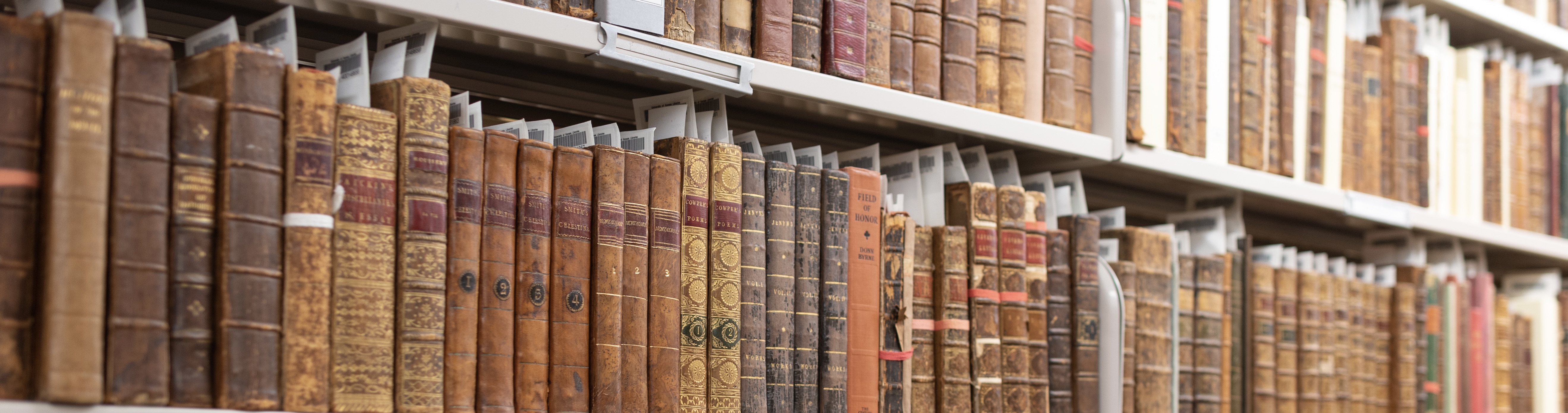
Books on a shelf

Welcome to the Kenneth Spencer Research Library blog! As the special collections and archives library at the University of Kansas, Spencer is home to remarkable and diverse collections of rare and unique items. Explore the blog to learn about the work we do and the materials we collect.

Love Apples: Guess the Fruit

March 30th, 2015

The first fruits (berries, botanically speaking) of these vines to be eaten in Europe were probably yellow varieties: “golden apples” the Italians called them. The Italians loved them, but the rest of the world needed more convincing of their merits because they were thought to be either poisonous or aphrodisiac “love apples”, not too surprising considering their resemblance to other dangerous members of the same plant family.

At any rate, as late as the nineteenth century in America Dr. George Washington Carver, interested in improving nutrition among the poor, got up on a stage and ate these in public in order to prove that they were not poisonous.

In the annals of medical mysteries there was a case involving one of these ‘berries’ that killed off some folks; mystery solved when it was discovered that its stems had been spliced to the stems of one of the poisonous members of the family, jimsonweed, not with any mal-intent (pun intended), apparently, just the desire for bigger, better, and juicier.

They should have waited; genetic engineers are now splicing away, but at the genetic level. But … caveat emptor:  in 1992, just prior to the mounting of the Haunted Forest exhibition in which this label originally appeared, the first President Bush announced that the government would allow the sale, without government testing – by 1993 – of the Flavr Savr, courtesy of Calgene, Inc. of Davis, California. Long story short, the experiment failed: rising costs prevented the company from becoming profitable, and the Flavr Savr was gone by 1997.

Have you guessed the identity of the fruit whose vine is pictured below?

The name of this common berry is… TOMATO (highlight the blank space to the left to reveal the plant’s name).

Plate for Solanum lycopersicum  (tomato) in  Kniphof's Botanica in originali seu Herbarum vivum (1757-1767).

Our mystery berry: Solanum Lycopersicum. Johann Hieronymus Kniphof (1704-1763). Botanica in originali
seu Herbarum vivum
. Hallae Magdeburgicae, 1757-1767.  Centur. 4, 1758. Linnaeana E15 Click image to enlarge.

This unusual-looking botany book is one of the earliest, if not the first work of any extent, to use the process known as nature printing, by which a plant is laid out flat, blackened with printer’s ink, and placed between two pieces of paper to which pressure is applied. The ink imparts an impression of veins and fibers which is then colored by hand. Like a number of the works shown in this exhibition, this is one of considerable bibliographical complexity and it exists in fewer than fifteen copies, not all of which are colored and no two appear to be alike. This herbarum vivum is notable for being perhaps the first botanical plate book to cite Linnaeus’s Species plantarum, 1753, in which binomials were first used consistently for naming plants.

Title page, featuring nature printing, for Centur III-IV of Kniphof's Botanica in originali seu Herbarum vivum

Title page for Centur III-IV of Kniphof’s Botanica in originali seu Herbarum vivum.
Hallae Magdeburgicae, 1757-1767.   Linnaeana E15 Click image to enlarge.

Sally Haines
Rare Books Cataloger

Adapted from her Kenneth Spencer Research Library exhibit, The Haunted Forest: New World Plants & Animals (1992).

King of the Wild Frontier

March 6th, 2015

Today marks the 179th anniversary of the Battle of the Alamo. Spencer Research Library is home to a small collection about the Alamo’s most famous defender: frontiersman and former Tennessee Congressman David Crockett (1786-1836).

Image of Fisher's Crockett Almanac, cover, 1843

The cover of Fisher’s Crockett Almanac, 1843.
Call Number: B10218. Click image to enlarge.

The items I find most interesting are the Crockett Almanacs. At least forty-five were published by various firms over a twenty-year period beginning in 1835, the year that Crockett lost his Congressional seat and famously told his constituents that “since you have chosen to elect a man with a timber toe to succeed me, you may all go to hell and I will go to Texas.” Shown here are selected pages from the 1843 edition of Fisher’s Crockett Almanac.

Image of Fisher's Crockett Almanac, March calendar, 1843

“Valuable Recipes” and the March calendar in
Fisher’s Crockett Almanac, 1843. This information might
come in handy if you have, say, mildewy linen or
tarnished gilt frames. Call Number: B10218. Click image to enlarge.

The Crockett almanacs contained some of the same information found in other early American almanacs, including calendars, sunrise and sunset times, astronomical data, and important dates, historical anniversaries, and holidays. Primarily, however, the almanacs focused on a comical, exaggerated version of Crockett, drawing and expanding upon popular books and plays that had already been written by and about him. As historian Paul Andrew Hutton explained in an article about the almanacs, they were filled with a cast of peculiar and outlandish characters; folk wisdom; tall hunting tales based on the “celebrated hunting skills of the real Crockett” (16); and stories of “daring escapes from wild beasts, descriptions of animals, and dialect humor” that the real Crockett was masterful at telling (15).

Image of Fisher's Crockett Almanac, preface, 1843

Fictional Ben Hardin was introduced to readers as an old sailor who
met Davy Crockett and “decided to devote himself to the continuation
of his friend’s almanacs” (Hutton 15). Beginning in 1841, the almanacs
were also based on the myth that Crockett had survived the
Battle of the Alamo and was a prisoner in Mexico forced to work
in the mines. Fisher’s Crockett Almanac, preface, 1843.
Call Number: B10218. Click image to enlarge.

Image of Fisher's Crockett Almanac, "Crockett Discovering the Pole," 1843 Image of Fisher's Crockett Almanac, "An Apology," 1843 Image of Fisher's Crockett Almanac, "Crockett and the Devil," 1843

Selected stories from Fisher’s Crockett Almanac, 1843.
Call Number: B10218. Click image to enlarge.

Taken together, writes Hutton, the almanacs created a fictional version of David Crockett in which he was “a tall-tale trickster with the strength of Hercules, the valor of Lancelot, the veracity of Baron Munchausen, and the wit of Brer Rabbit. This comic superman insured Crockett a rare immortality, enshrined the humor of the Old Southwest in print, provided an eventually triumphant rival to the romantic, class-conscious frontier hero of James Fenimore Cooper, and further defined the emerging American national character” (10).

In short, writes Hutton,

A celebrity in his own time, Crockett was elevated to near-mythical status by his heroic death at the Alamo in 1836. Rediscovered in the middle of the twentieth century, he again became a towering figure of American popular culture. He had courted fame while alive, and unlike Daniel Boone – whose mantle as America’s great frontier hero he inherited – he had taken an active role in the creation of his own overblown legend. His story, however, quickly became the property of others. They greatly embellished the core of truth he had projected to create the archetypical backwoodsman and Jacksonian self-made man who captured the imagination of the world. None were more important important in this heroic evolution than the imaginative creators of the wildly popular Crockett almanacs (10).

Image of Fisher's Crockett Almanac, "The Indian, Crockett and the Boa Constrictor," 1843

Fisher’s Crockett Almanac, back cover, 1843. Call Number: B10218. Click image to enlarge.

Want to know more about David/Davy Crockett? Check out these sources at Spencer and Watson libraries.

The Life and Adventures of Colonel David Crockett, of West Tennessee (1833): This anonymously-published work has been attributed to Matthew St. Clair Clarke and copyright holder James S. French. Hugely popular, it was republished under the title Sketches and Eccentricities of Col. David Crockett, of West Tennessee (1833).

An Account of Col. Crockett’s Tour to the North and Down East (1835): Increasingly displeased seeing others prosper from writing about – and in some cases caricaturing – him and seeking a way to pay off his debts, Crockett wrote his autobiography, published as A Narrative of the Life of David Crockett, of the State of Tennessee (1834). He promoted the work during the grand tour described in this book. It was written by friend and fellow Congressman William Clark based on newspaper accounts, other documents, and notes provided by Crockett.

The Life of Martin Van Buren, Heir-Apparent to the “Government,” and the Appointed Successor of General Andrew Jackson (sixteenth edition, 1837): This bitterly partisan work reflected Crockett’s virulent opposition to Jackson and Van Buren. He lent his name to the title page of this book, although it was written by Augustin Clayton. The publisher was so nervous about being sued for libel that the firm left its name off the title page of the first edition.

Col. Crockett’s Exploits and Adventures in Texas (1837): This is a work of mostly fiction by Richard Penn Smith masquerading as fact, allegedly based on Crockett’s own diary, a document that does not exist.

The Crockett Almanac (1839, 1840, 1841)

Ben Hardin’s Crockett Almanac (1842)

Three Roads to the Alamo: The Lives and Fortunes of David Crockett, James Bowie, and William Barret Travis by William C. Davis (1998)

Reference

Hutton, Paul Andrew. “‘Going to Congress and making allmynacks is my trade’: Davy Crockett, His Almanacs, and the Evolution of a Frontier Legend.” Journal of the West 37:2 (April 1998): 10-22.

Note

I previously wrote about the Crockett Almanacs for the blog of the Daughters of the Republic of Texas Library at the Alamo.

Caitlin Donnelly
Head of Public Services

Happy Birthday, Charles Darwin!

February 11th, 2015

Tomorrow, February 12, marks Charles Darwin’s 206th birthday. To mark this anniversary, we’re sharing a letter that Darwin wrote to James E. Todd in April 1882. At the time, Todd was a professor of natural science at Tabor College, a Christian college in Tabor, Iowa, that operated from 1853 to 1927. He went on to teach geology at KU from 1907 until his death in 1922.

Image of the first page of a letter, Charles Darwin to James E. Todd, 1882

Image of the second and third pages of a letter, Charles Darwin to James E. Todd, 1882

Image of the fourth page of a letter, Charles Darwin to James E. Todd, 1882

Letter, Charles Darwin to James E. Todd, 1882.
Call Number: MS C78. Click images to enlarge.

An article about this letter in Transactions of the Kansas Academy of Science (Vol. 48, No. 3, December 1945) describes the circumstances in which it was written, although the author’s speculation that the document was “Darwin’s last letter” appears to be erroneous.

In April 1882, James E. Todd…published in the American Naturalist (volume 16, pages 281-287) a paper, “On the Flowers of Solanum Rostratum and Cassia Chamaecrista.” The paper soon came to the attention of Charles Darwin, then in his seventy-fourth year. Almost immediately Darwin wrote the letter to Professor Todd [shown here]…

The most extraordinary feature of the letter is its date, written nine days before Darwin’s death on April 19, 1882. Darwin had been in poor health for some time and beginning in December 1881 underwent a series of heart attacks. He rallied from these attacks and, as the letter indicates, by April was still mentally active and planning work for the future. Five days after writing the letter his final illness began…

Dr. Fritz Müller, referred to by Darwin in the letter [above], carried on an extensive correspondence with Darwin for many years, although the two naturalists never met (317).

Charles Darwin spent decades gathering evidence for evolution before publishing his groundbreaking book, On the Origin of the Species by Means of Natural Selection, in 1859. As demonstrated by his letter to Professor Todd, he remained active in scientific research until the end of his life.

Want to learn more about Charles Darwin? Spencer Research Library holds copies of many of his published writings, including a first edition copy of On the Origin of Species. You can find these sources by searching the KU Libraries online catalog. Spencer’s collections also contain two additional letters from Darwin; transcriptions of both documents are available online (letter to Emma Gärtner and Charles Lyell). As always, however, anyone interested in seeing these materials in their original physical form are welcome to do so at Spencer!

Digital copies of many sources by and about Darwin are also available; see the Darwin Correspondence Project and Darwin Online.

A transcription of Darwin’s letter to Professor Todd, also from the Transactions of the Kansas Academy of Science article quoted above, follows.

April 10 1882.

Down,
Beckenham, Kent.
Railway Station
Orpington. S. E. R.

Dear Sir

I hope that you will excuse the liberty which as a stranger I take in begging a favor of you. I have read with unusual interest your very interesting paper in the American Naturalist on the structure of the flowers of Solanum rostratum, & I shd. [should] be grateful if you would send me some seed in a small box (telling me whether to plant in as annual, so that I may know when to sow the seeds), in order that I may have the pleasure of seeing the flowers & experimenting on them. But if you intend to experiment on them, of course you will not send me the seeds, as I shd. be very unwilling to interfere in any way with your work. I shd. also rather like to look at the flowers of Cassia chamaecrista.

Many years ago I tried some experiments in a remotely analogous case & this year am trying others. I described what I was doing to Dr. Fritz Müller (Blumenau, St. Catharina, Brazil) & he has told me that he believes that in certain plants producing 2 sets of anthers of a different colour, the bees collect the pollen from one of the sets alone. He wd. [would] therefore be much interested in your paper, if you have a spare copy that you could send him. I think, but my memory now often fails me, that he has published on the subject in Kosmos.

Hoping that you will excuse me, I remain, Dear Sir
Yours faithfully
Ch. Darwin

P. S. In my little book on the Fertilization of Orchids, you will find under Mormodes ignea, an account of a flower laterally asymmetrical, & what I think that I called right-handed or left-handed flowers.

Caitlin Donnelly
Head of Public Services

Once Upon a Time…In Spencer

January 26th, 2015

Last week you met Mindy Babarskis, now she highlights some illustrations from one of the volumes in Spencer’s Children’s Books Collection.

Spencer Research Library houses around 7,000 children’s books,  and many of these are folk tales and fairy tales. This immediately brings the Grimm Brothers’ European tales to mind, but did you know that A.L. Grimm also published tales from the Middle East and Asia? Here’s a beautifully bound and illustrated edition of Tales from the Eastern-Land by A.L. Grimm, translated from the German by H.V.

Cover of Tales from the Eastern-Land (1852), featuring an image of a gold Buddha Table of Contents of Grimm's Tales from the Eastern-Land

Gold stamped Buddha image on the front cover and the table of contents (with an old and lonely flower petal) in Spencer Research Library’s copy of A. L. Grimm’s Tales from the Eastern-Land,  Illustrated by J.B. Sonderland. London: H.G. Bohn, 1852. Call Number: Children 6035. Click images to enlarge.

Illustration of a Djinn from Grimm's Tales from the Eastern-Land.

I bet you’ve never seen a djinn portrayed quite like this; not the friendly big blue spirit depicted by Disney. Illustration by J. B. Sonderland in A. L. Grimm’s Tales from the Eastern-Land, 1852. Call Number: Children 6035. Click image to enlarge.

Illustration of a fainting woman in Grimm's Tales from the Eastern-Land

It wouldn’t be a book from the 1800’s without a fainting woman. Sadly, she forgot her smelling salts. Tales from the Eastern-Land, 1852. Call Number: Children 6035. Click image to enlarge.

Interesting architecture in an illustration from Tales from the Eastern-Land.

The architectural details in this image are wonderful; take some time and study the background of Sonderland’s illustration. Tales from the Eastern-Land, 1852. Call Number: Children 6035. Click image to enlarge.

Illustration from "The Three Trials" in Tales from the Eastern-Land

Here’s an emotional moment from “The Three Trials” in Tales from the Eastern-Land, 1852. Call Number: Children 6035. Click image to enlarge.

Mindy Babarskis
Public Services Library Assistant

Appellation Spring

January 13th, 2015

Linnnaeus (whose citation at the end of a binomial is simply “L.”) invented a practical system for the classification of plants and animals; more importantly, he established a uniform method of referring to species by two Latin words–a reform that led eventually to binomial nomenclature. Although his classification system was superseded, his principles of nomenclature continue to provide the rules for application of names to thousands of species of animals and plants newly identified every year. Volume 1, Animalia, of the tenth edition of the Systema Naturae (1758), is one of the most important books in the history of science, for it marks the beginning of the modern zoological nomenclature and systematics. In it, Linnaeus first consistently applied binomial nomenclature to the whole animal kingdom.

Linneana B65 v.6:146

Image from Siren lacertina, 1766. Linneana B65 v.6:146, Special Collections

Unfortunately the great Linnaeus had little love for herps, thought them “disgusting,” and would have done well to adopt the classifcation system of John Ray. We quote, in rough translation, from the Systema: “Amphibia are loathsome because of their cool and colorless skin, cartilaginous skeleton, despicable appearance, evil eye, awful stench, harsh sound, filthy habitat, and deadly venom; and so God has not seen fit to create many of them.” Many of Linnaeus’s descriptions were based on those in books by Aldrovandus, Seba, Catesby, Jonstonus, and others. His use of the word “Amphibia” denoted not only all reptiles and amphibians, but also the cartilaginous fishes.

This work is the doctoral dissertation of one of Linnaeus’s students; it was the tradition of the day for a professor to write the thesis, but the student “respondent” had to defend it and pay for its publication.

Sally Haines
Rare Books Cataloger
Adapted from her Spencer Research Library exhibit and catalog, Slithy Toves: Illustrated Classic Herpetological Books at the University of Kansas in Pictures and Conservations