The University of Kansas

Inside Spencer: The KSRL Blog

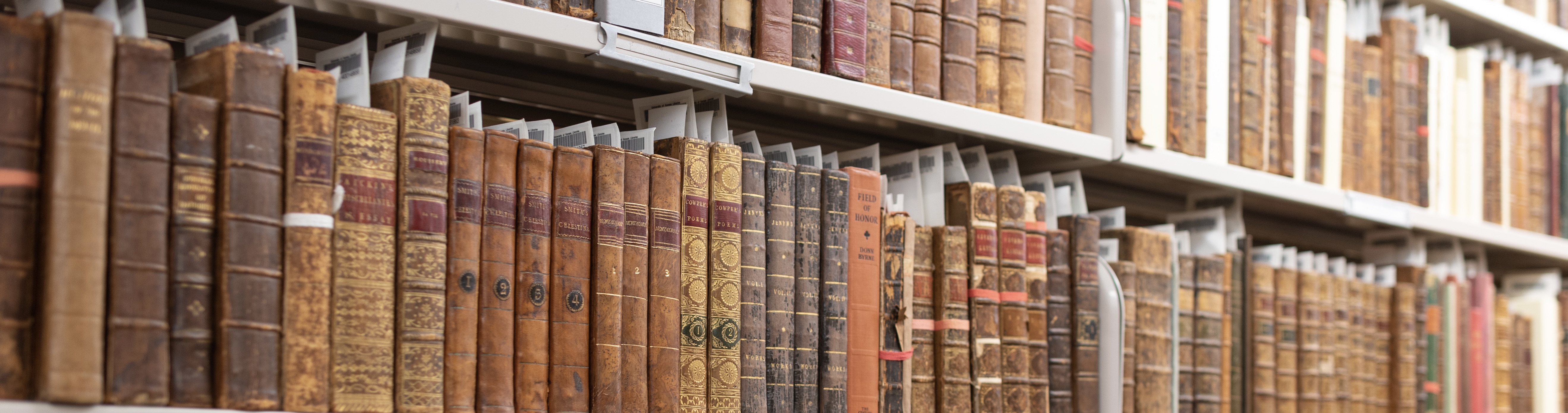
Books on a shelf

Welcome to the Kenneth Spencer Research Library blog! As the special collections and archives library at the University of Kansas, Spencer is home to remarkable and diverse collections of rare and unique items. Explore the blog to learn about the work we do and the materials we collect.

Inventory and Rehousing: A workflow for 3D objects in archives

April 14th, 2026
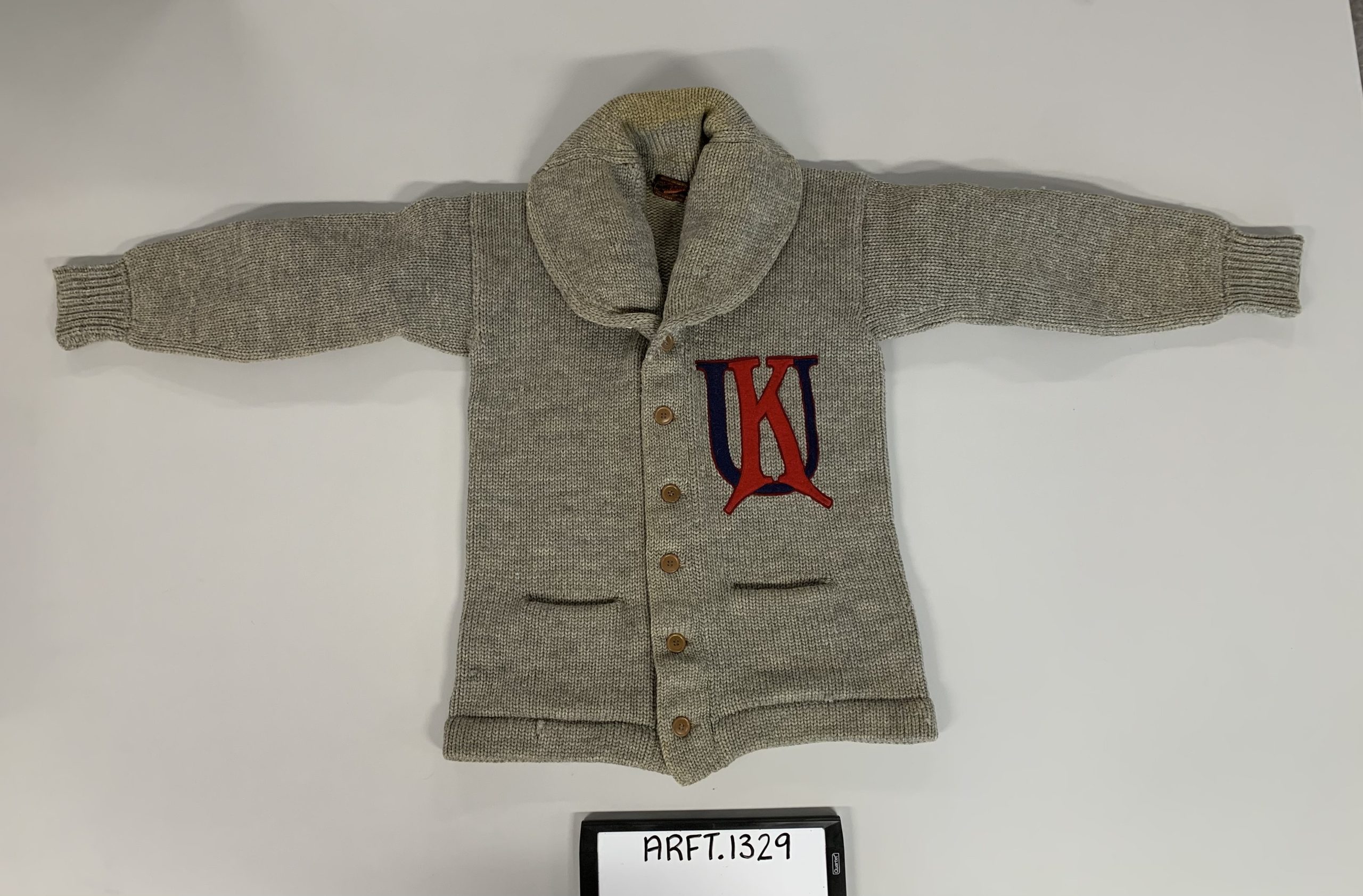
Lela Duncan Cardozo’s KU letter sweater is pictured. The sweater is knitted from gray wool with red capital letter K and blue capital letter U sewn on the left front.
Figure 1: Lela Duncan Cardozo’s KU letter sweater. Call number RG 66/20.

From Student Senate buttons and sports memorabilia to a vial of uranium connected to the Manhattan Project, the unexpected breadth of objects preserved by the University Archives reveals lesser-known aspects of the University of Kansas’s history. The University Archives is the official repository for all materials related to the University of Kansas. Its holdings include official records, publications, correspondence, research papers, and more. However, the University Archives contains more than just documents; it has a robust Artifact Collection that uses objects to tell the KU story.

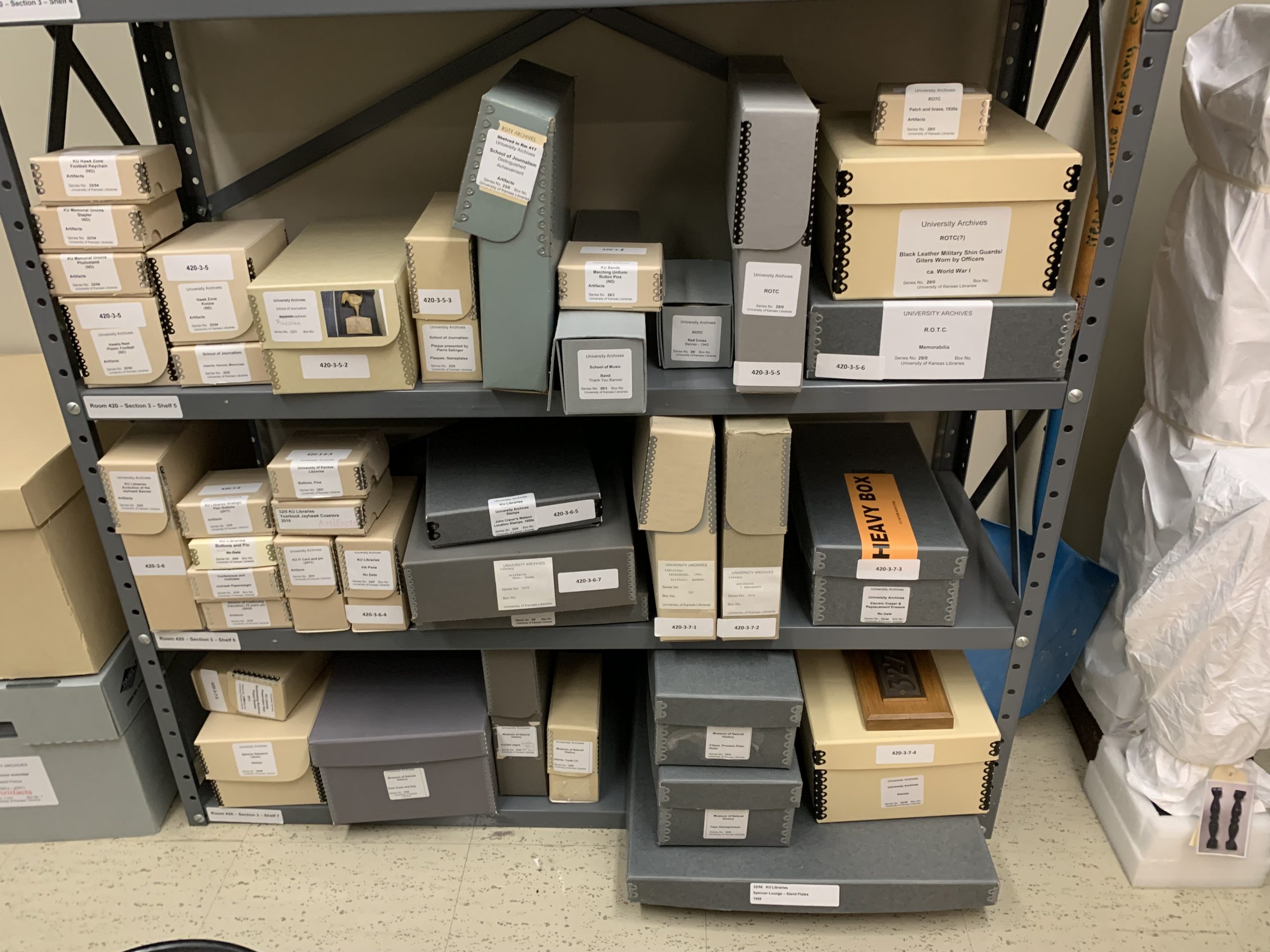
I began my Graduate Assistant position with Conservation Services in August 2025, and I quickly became familiar with the Artifact Collection and its unique challenges. The University Archives has been collecting objects for decades, but documentation and housing efforts have been largely inconsistent. When I began this project, there was no item-level inventory of the collection, and many objects were stacked precariously in mismatched or overfilled boxes (See Figure 2). Inconsistent storage practices increase the risk of physical damage, and a lack of intellectual control over the collection makes items difficult to access.

Archival artifact storage is pictured before inventory and rehousing, with many disparate sizes and shapes of boxes.
Figure 2: Inconsistent storage practices highlighted a need to standardize future storage solutions.

This project consisted of several key phases. First, I conducted a full item-level inventory of the Artifact Collection to gain a complete understanding of its contents. For each object, I assigned a unique sequential Artifact ID number (e.g. ARFT.1, ARFT.2, etc.) and recorded any label information from the exterior of the box, including associated Record Group numbers. I then created a brief title and a full description noting color, material type, and any identifiable features on the object, along with any dates indicated on the item or its housing. I documented the object’s exact measurements in centimeters, assessed and recorded its condition, and noted its current location, housing method, and any outstanding questions or comments.

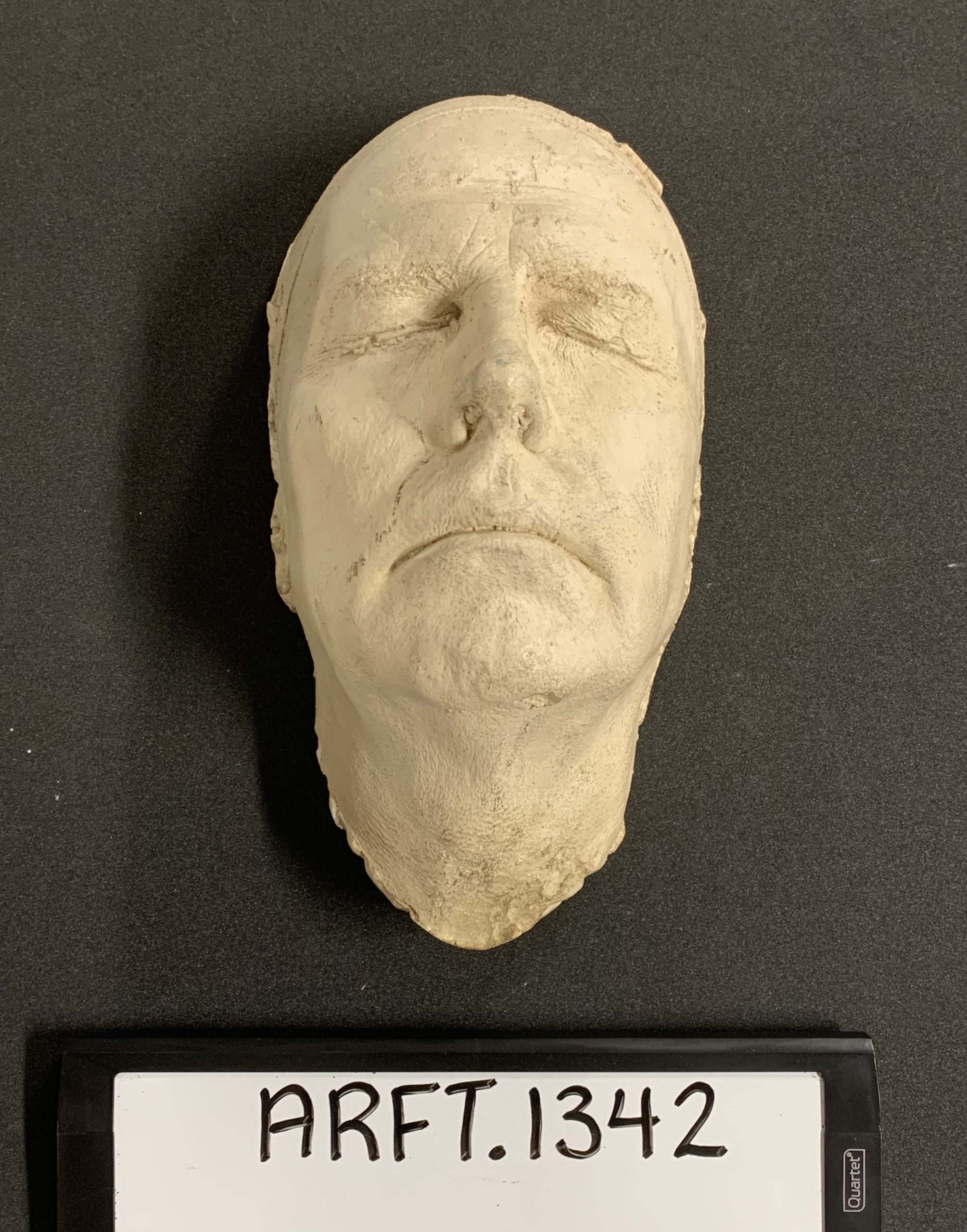
Following the written documentation, I photographed each object using a temporary photo setup consisting of a white paper background and a light-diffusing shade made from corrugated plastic. I used my iPhone to take the photographs, which were intended to provide visual documentation of the objects rather than high-quality, exhibit-ready images. Their purpose was to capture essential physical details that cannot be conveyed through text alone. In each image, I included a small dry-erase board displaying the Artifact ID number in each image to ensure consistent identification (See Figure 3).

A sample photo from the project inventory, showing the plaster mask of Chancellor Franklin Murphy, 1957.
Figure 3: A sample photo from the project inventory, showing the plaster mask of Chancellor Franklin Murphy, 1957. Call number: RG 22/12.

Finally, I attached a small, hand-cut white paper tag to each object using simple white thread and labeled it with its corresponding Artifact ID number. Instead of ordering object tags from an archival supply company, I created the tags in-house using scrap paper to conserve resources. I inventoried as many objects as possible every day, and I reserved the final half-hour of my shift to upload photos, downloading them to a shared networked drive and organizing them into folders based on the objects’ current room locations. This consistent workflow not only ensured thorough documentation but also allows future users to track the overall timeline and progress of the inventory for similar projects.

After the inventory phase, I developed a comprehensive rehousing plan for the University Archives’ Artifact Collection that focused on standardizing storage materials in order to improve the long-term safety and accessibility of the collection. Developing this rehousing plan required balancing preventive conservation best practices, archival theory, spatial limitations, and institutional realities. Organizing by size improves efficiency and reduces handling risks, while material-based grouping mitigates chemical and environmental threats. On the other hand, contextual organization preserves provenance and research value, and standardized documentation ensures continued intellectual control. Balancing all of these concepts, the rehousing plan details first steps and priorities, lists existing storage solutions to follow, and models potential storage solutions for objects whose current housings need improvement. It also provides a list of standard box sizes so that storage solutions stay consistent moving forward. Designed with flexibility in mind, the plan is meant to support future growth, ensuring the collection can evolve without compromising curatorial integrity. Following this plan, I have now begun rehousing objects.

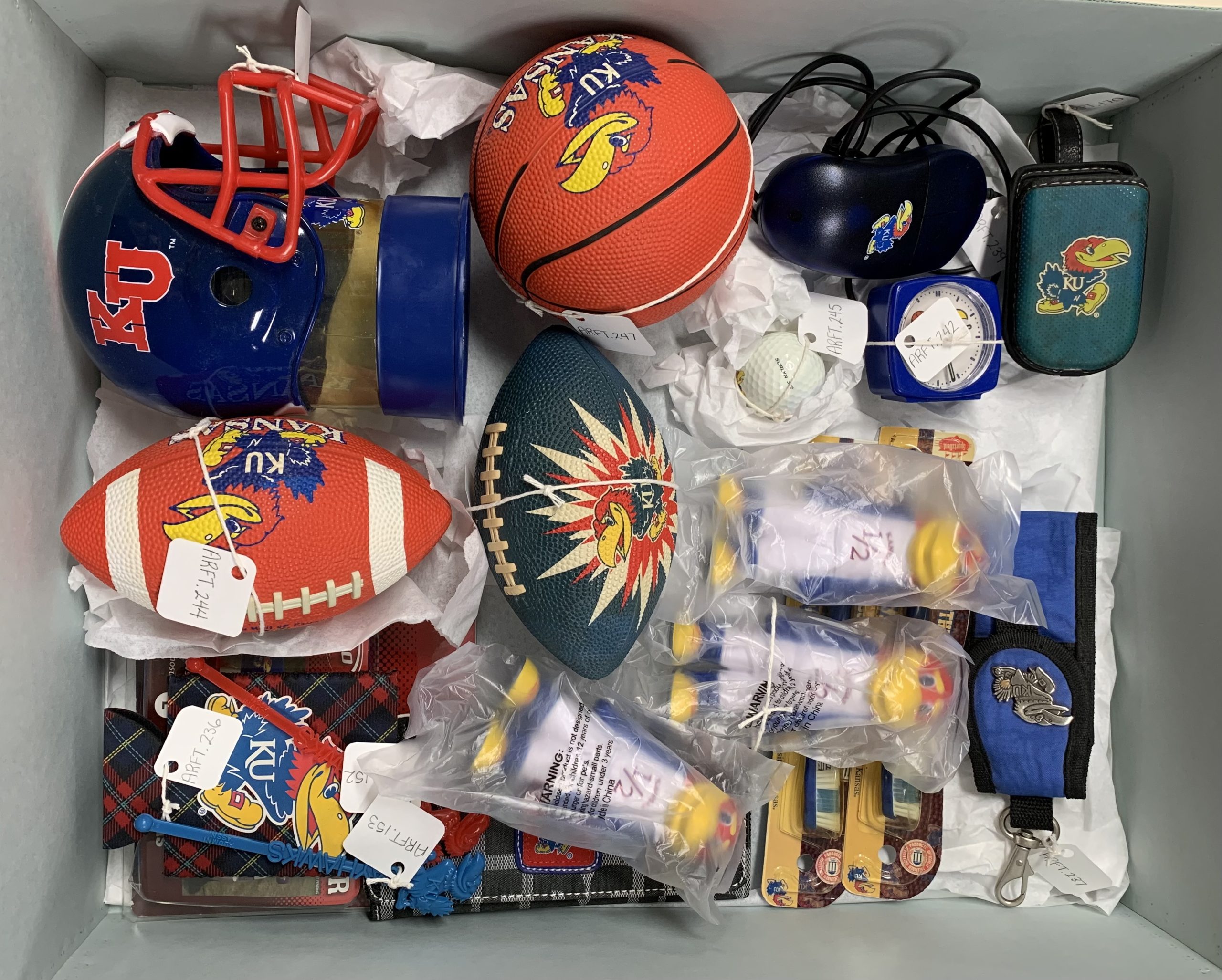
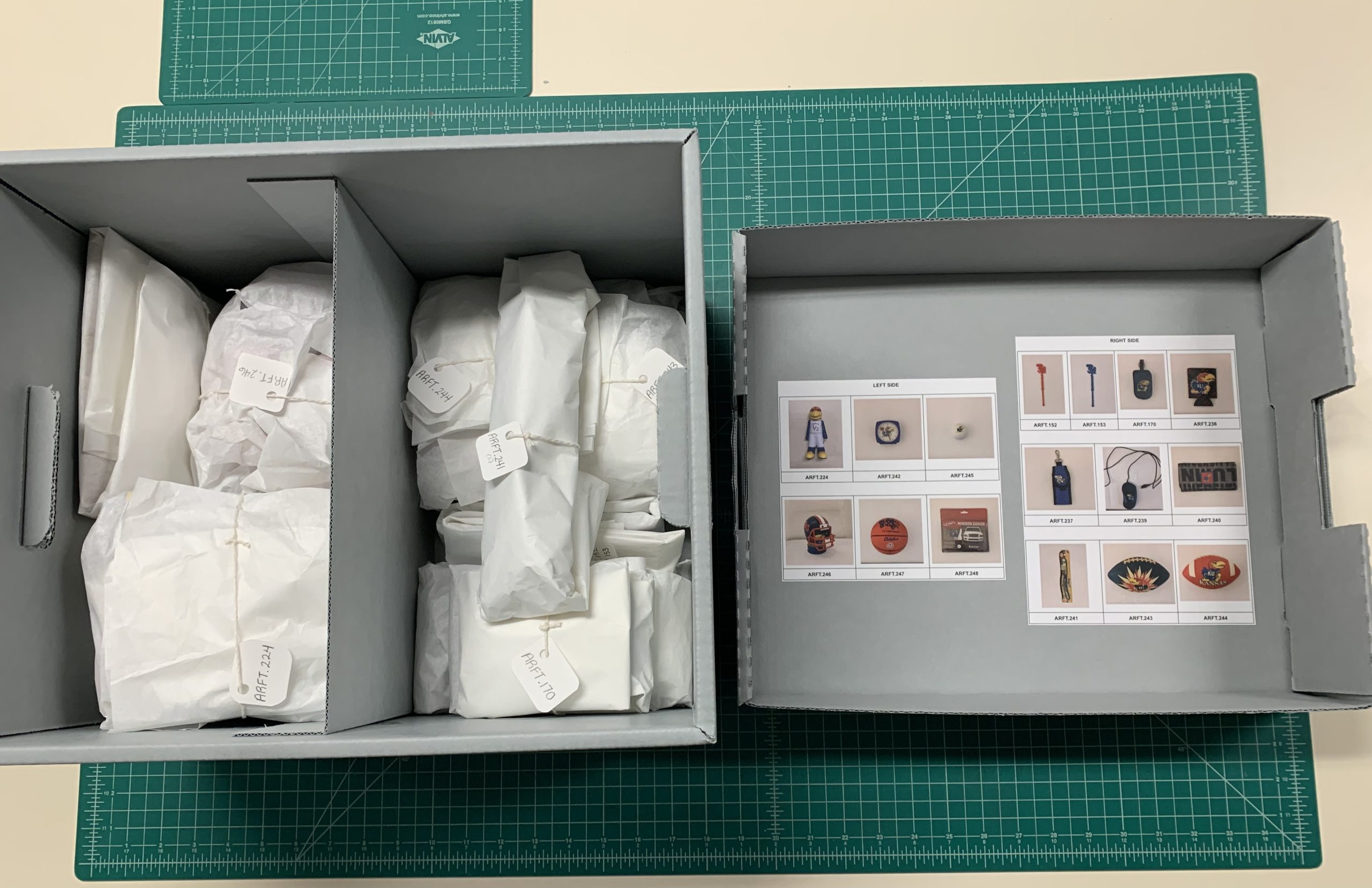
While rehousing Record Group 0/25: Jayhawks, I encountered an oversized box filled with plastic objects that were visibly deteriorating (see Figure 4). Several items exhibited yellowing and surface changes that suggested they were being affected by surrounding materials. In response, I removed all non-plastic objects from the box and rehoused them separately. The remaining plastics, particularly those showing signs of degradation, were wrapped individually in tissue and placed in a standard banker’s box designed to function as a containment unit rather than a highly customized enclosure. Photographs of each object were affixed to the lid, and labeled tags were tied to the exterior of each wrapped item to improve retrievability (see Figure 5). Because these objects possess relatively low research value, constructing individualized custom enclosures was not an efficient use of limited resources. Instead, I prioritized risk mitigation and containment. This solution reflects a central methodological principle of this project: rehousing does not aim for perfection, but for measurable improvement and increased standardization.

An assortment of off-gassing plastic artifacts are pictured together in a box before rehousing.
Figure 4: Off-gassing plastic artifacts before rehousing. Call number: RG 0/25.
Plastic artifacts pictured after rehousing, individually wrapped and numbered with a photographic key affixed to the inner lid of the box.
Figure 5: Plastic artifacts rehoused. Call number: RG 0/25.

Every storage decision reflects institutional realities, professional standards, and long-term stewardship commitments. By integrating collections management strategies with conservation principles, this project provides a flexible and sustainable framework for not only the continued care of the Artifact Collection but an example for any archive drawing on museological best practices to deal with 3D objects.

While I was able to complete an item-level inventory of the Artifact Collection, the rehousing stage of the project will likely extend beyond my time at KU. As a result, the rehousing plan developed here will serve as a guide for future staff, supporting consistent and standardized decision-making. In addition, I have outlined detailed workflows for the continued care of the collection. This project would not have been possible without the collaboration of the University Archives, Conservation Services, and Spencer’s Archival Processing Team.

A very special thanks to Letha Johnson for warmly welcoming me into the University Archives and for placing her trust in me as I engaged critically with the Artifact Collection. Her trust and collaboration were essential to the success of this project.

Brenna Hobbs, M.A. Museum Studies 2026, Graduate Assistant in Conservation Services

Entre los Estantes: Latina/o Collection Items

April 6th, 2026

As I work to develop the Spencer’s new Latina/o Collections*, I wanted to take a moment and look back at the interesting materials that are already sitting within our library stacks and viewable in our Reading Room today! All the materials presented allow us to briefly see how Latina/os have gathered and built community within different places across Kansas.

Take a look at some of those materials below.

Aztlán de Leavenworth, volume 1

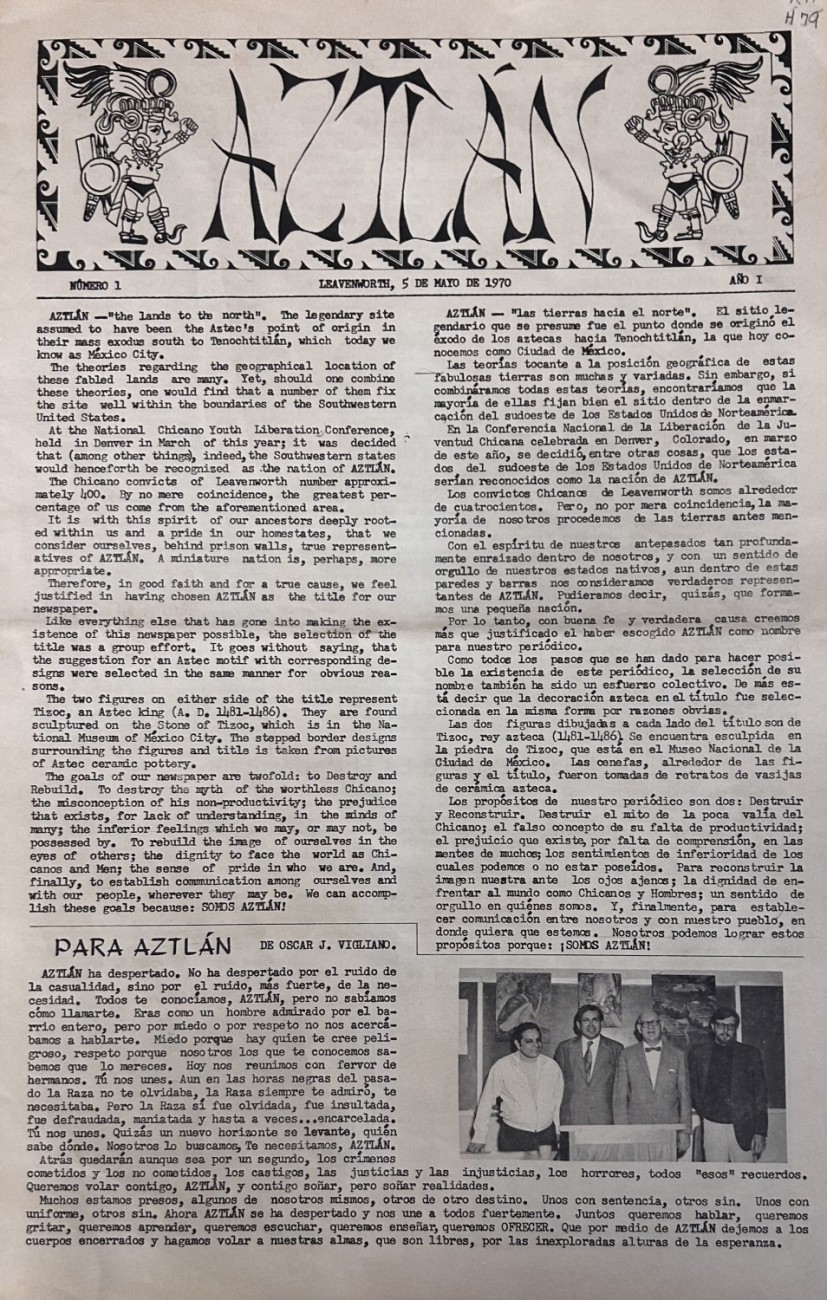
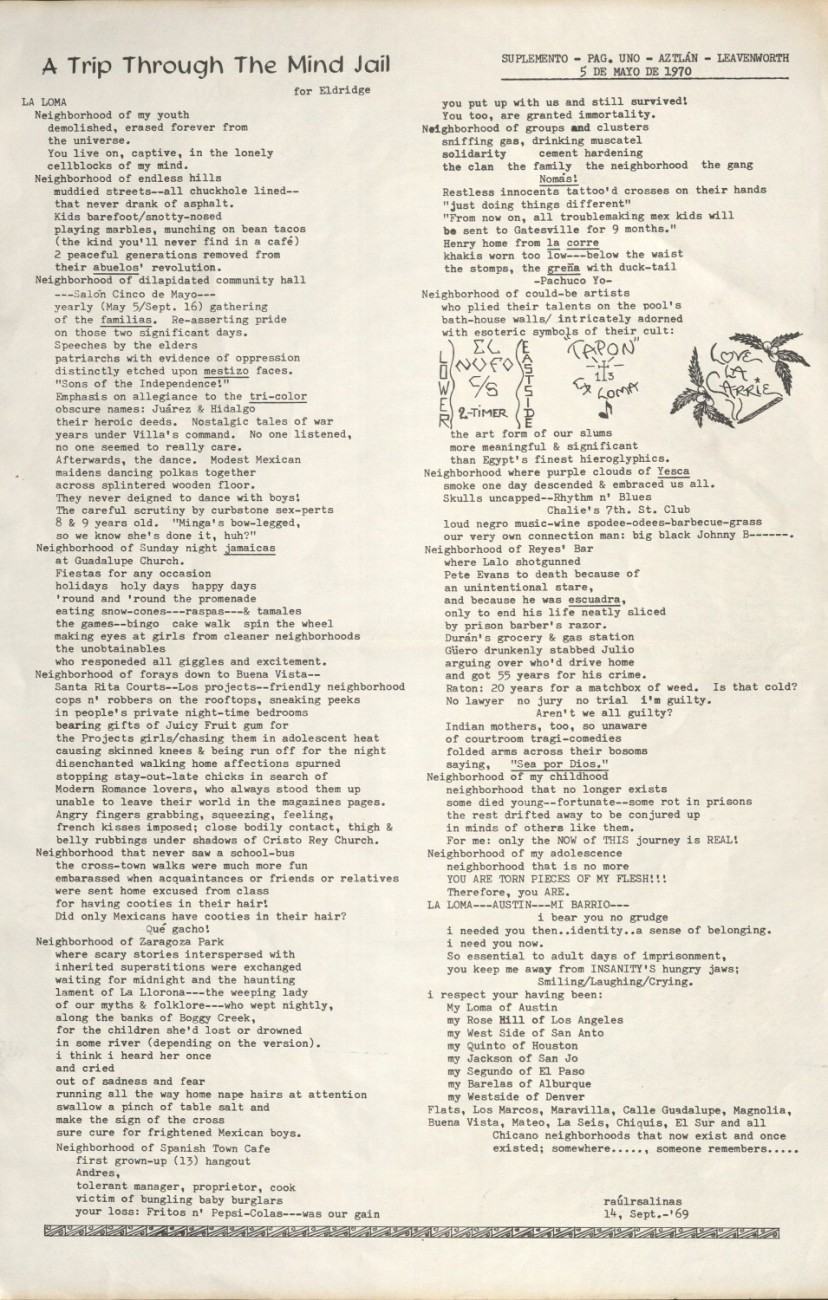
First published May 5, 1970, Aztlán de Leavenworth was a bilingual Chicano prisoner newspaper edited and published at Leavenworth Federal Penitentiary in Kansas. It features poet and activist raúlrsalinas’ famous poem “A Trip Through the Mind Jail.” Other members of the publication team included Albert Mares, Ruben Estrella, Alfredo Arellanes, Ricardo Mena, and Beto Palomino. Inspired by Aztec history and iconography, the newspaper is named after Aztlán, the ancestral home of the Aztecs, and features images of Tizoc and designs inspired by Aztec art.

Left: The front cover of Aztlán de Leavenworth, 1970. Right: The page of Aztlán de Leavenworth featuring “A Trip Through the Mind Jail,” 1970. Call Number: RH H79, volume 1. Click images to enlarge.

KACMAA Special Report, 1981

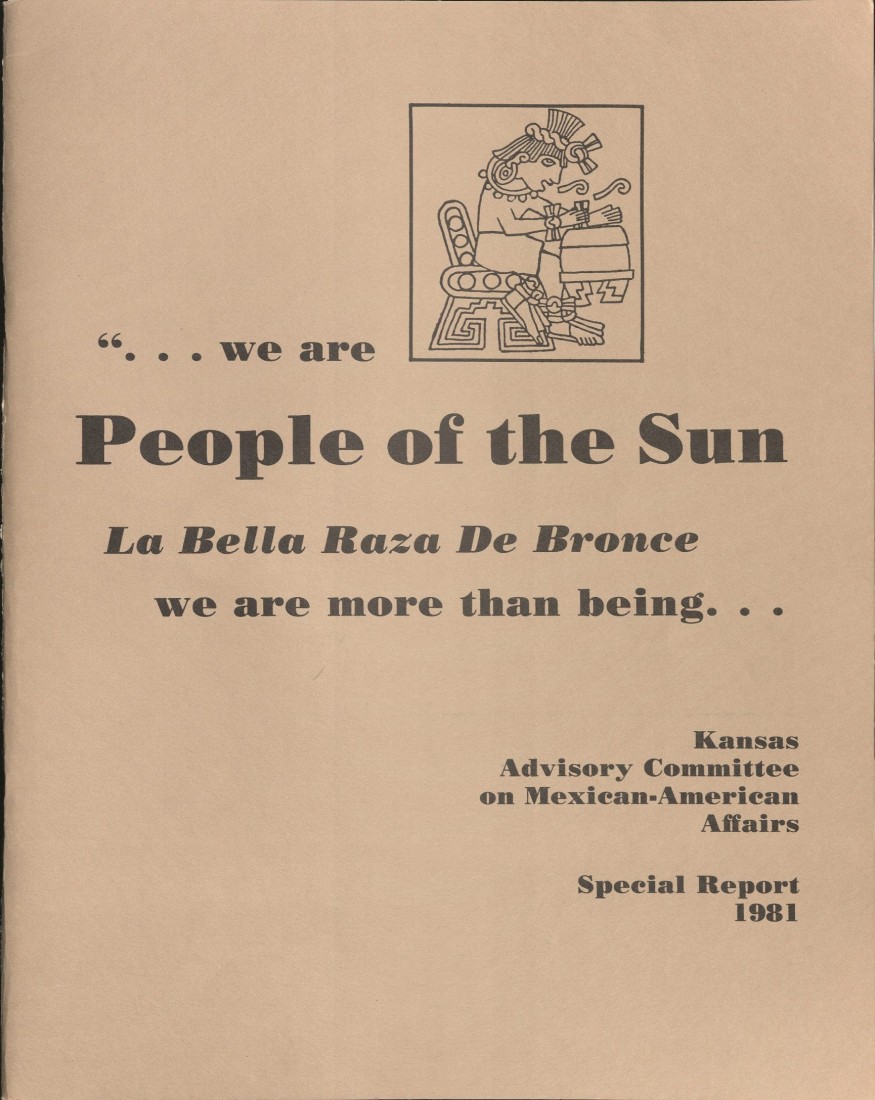
This 1981 special report was created by Kansas’ Advisory Committee in Mexican American Affairs (KACMAA). As explained in the report’s introduction, it “optimistically highlights important accomplishments and measurable in Hispanic’s social, economic, and political life” but also “clarifies the work that remains to be done.” While the KACMAA originally concentrated on projects to promote people of Mexican heritage, the organization evolved to include all Hispanics and Latinos across the state and is now known as the Kansas Hispanic and Latino American Affairs Commission.

Line drawing of an Aztec symbol with the text "...we are People of the Sun / La Bella Raza De Bronce / we are more than being..."
The front cover of the KCMAA’s 1981 Special Report. Call Number: RH D6100. Click image to enlarge.
Music groups in Emporia

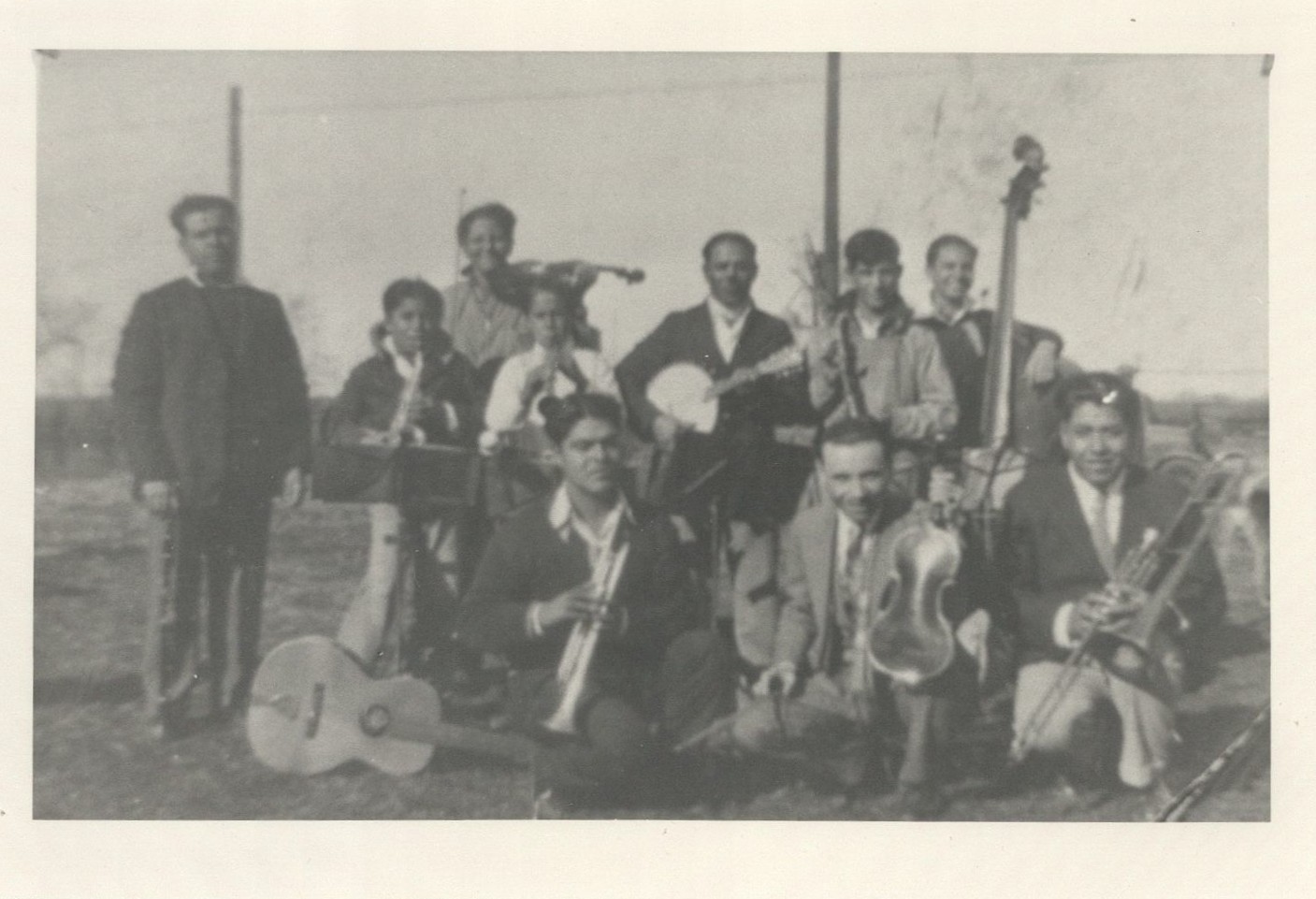
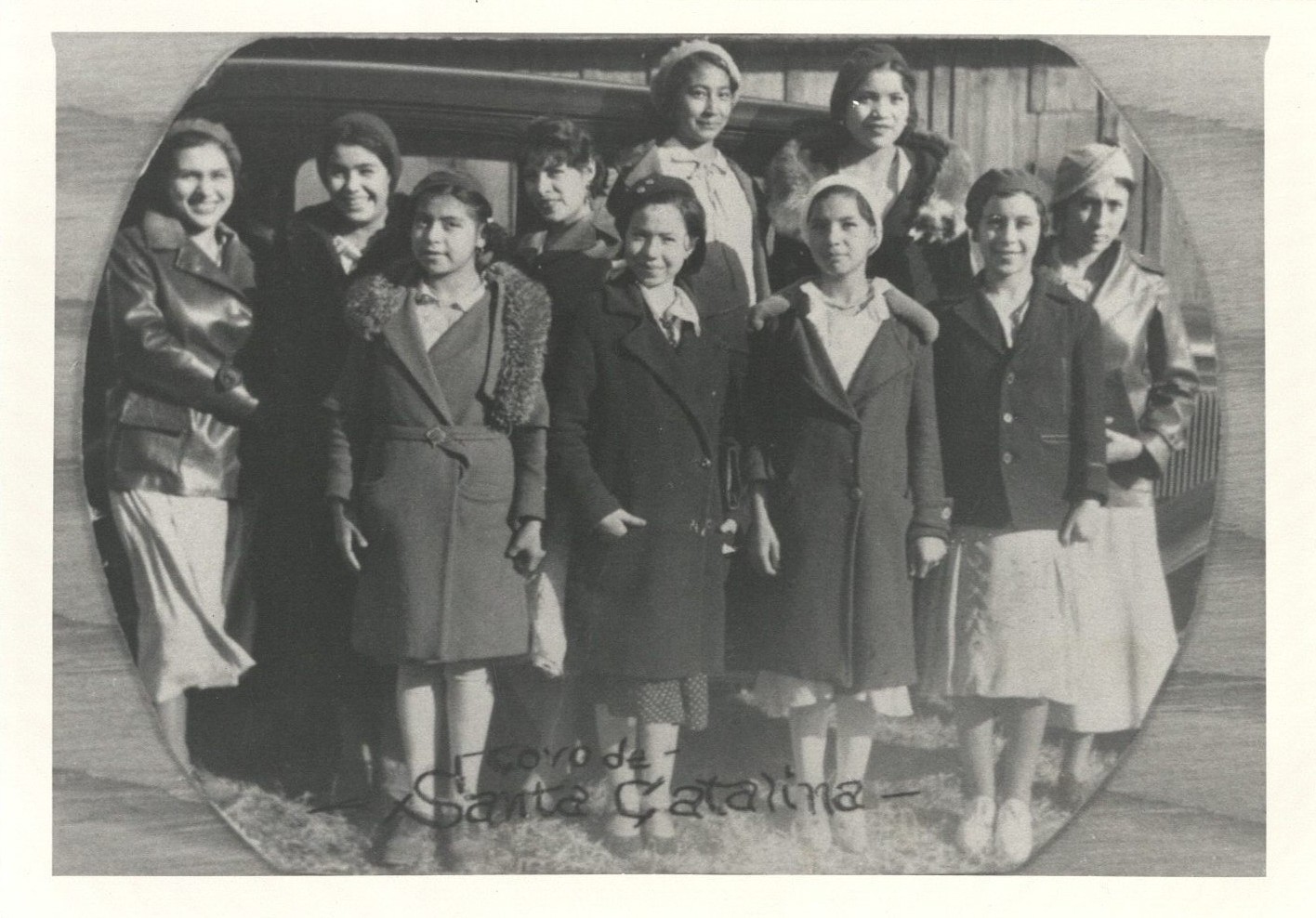
Taken some time in 1932, these photographic prints from the Oral History Project Regarding the Hispanic Community of Emporia, Kansas (Call Number: RH PH 182) allow us to see some of Emporia’s early musical groups. The first photo shows members of the Mexican band Orquesta de Leora posing with their instruments, while the second features the women who made up the Coro de Santa Catalina, or St. Catherine’s Choir. St. Catherine’s Catholic Church still exists to this day and continues to offer Catholic services to Spanish speakers in Emporia.

Left: Photograph of Orquesta de Leora, 1932. Right: Photograph of St. Catherine’s Choir, 1932. Oral History Project Regarding the Hispanic Community of Emporia, Kansas. Call Number: RH PH 182, Box 1, Folders 11 and 19. Click images to enlarge.

MEChA & HALO Pamphlets

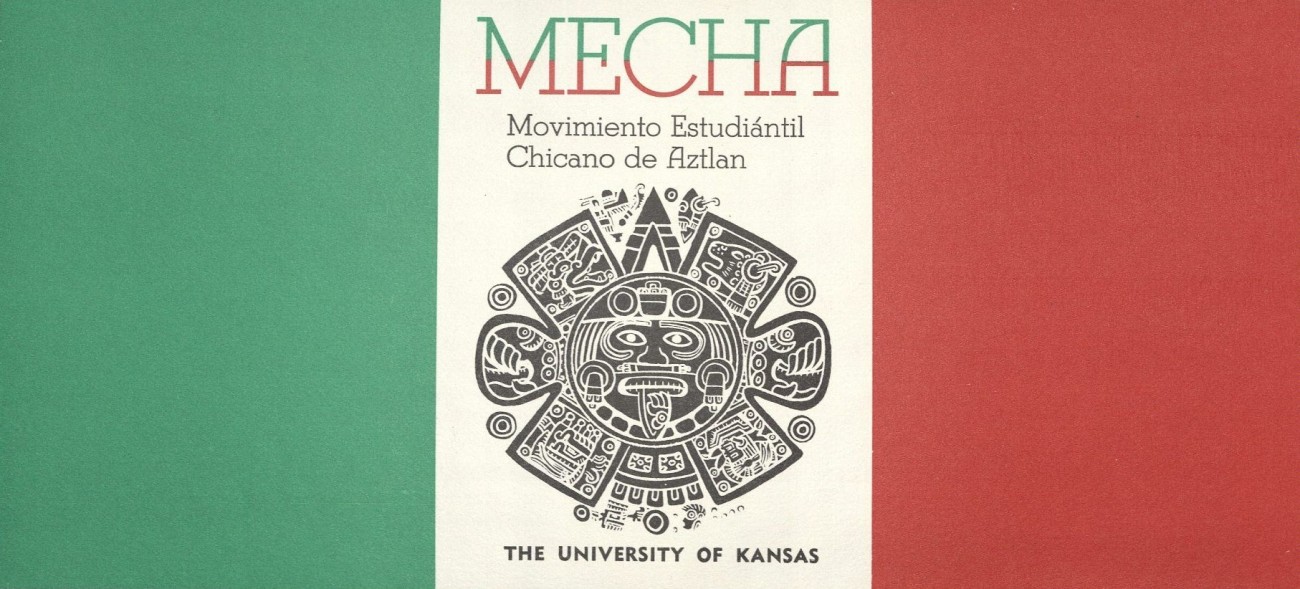
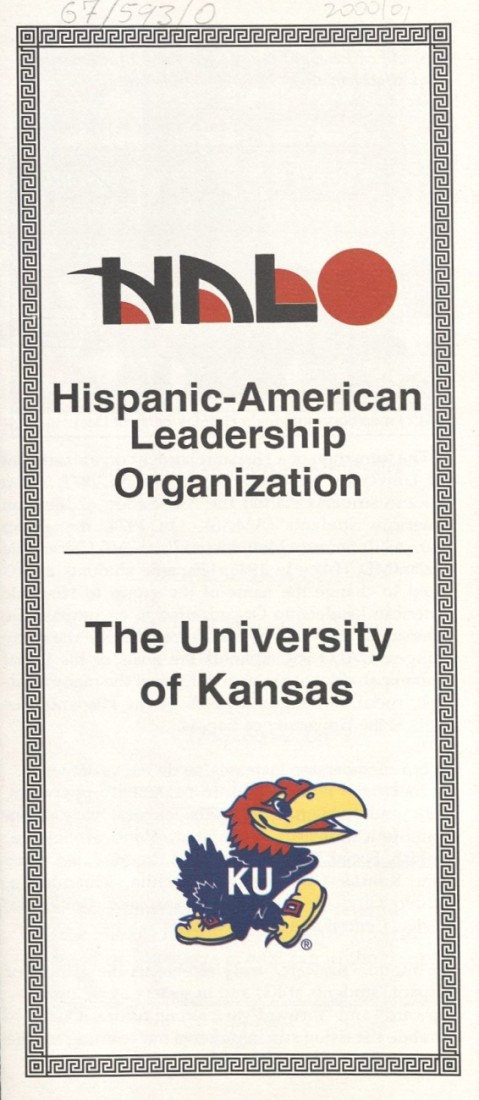
Records of a Latina/o focused group at the University of Kansas have existed since the 1970s. However, before it was LASU (Latin American Student Union), KU’s Latino student group went by many names. It first went by the name AMAS (Association of Mexican American Students), and then it was MEChA (Movimiento Estudiantil Chicano de Aztlán). The group took the name HALO (Hispanic American Leadership Organization) when it was re-established in the 1980s, and it finally became LASU to further expand its inclusion of all students of Latin American heritage or background.  

The name of the organization with a black-and-white sketch of an Aztec symbol, all against the Mexican tri-color flag as a background.
|
The name of the organization with a Jayhawk, all against a white background.
Top: MEChA pamphlet, circa 1970. Bottom: HALO pamphlet, circa 1997. KU Student Organization Records: Hispanic American Leadership Organization. Call Number: RG 67/593, Box 1, Folders 1970s and 1997. Click images to enlarge.

Rebekah Ramos
Curator of Latina/o Collections

Sources

“A Trip Through the Mind Jail: A Textual History of raúlrsalinas’ Magnum Opus” by Santiago Vidales Martínez in Textual Cultures 14.1 (2021): 208–229. DOI: https://doi.org/10.14434/tc.v14i1.32858

Kansas Hispanic & Latino American Affairs Commission website, “Our Mission and Our Origins from KACMAA to KHLAAC.”

KU Latin American Student Union website, “LASU History.”

*While many terms exist to identify people in the United States of Latin American origin and/or ancestry (i.e. Hispanic, Chicano, Latino, Latina/o, Latinx, Latine) at Spencer Research Library we chose to use “Latina/o” for the collection’s title. As the collection grows and evolves, the term used might change.

Charlton Hinman, Optical Collation, and the Big Grey Machine

January 12th, 2026

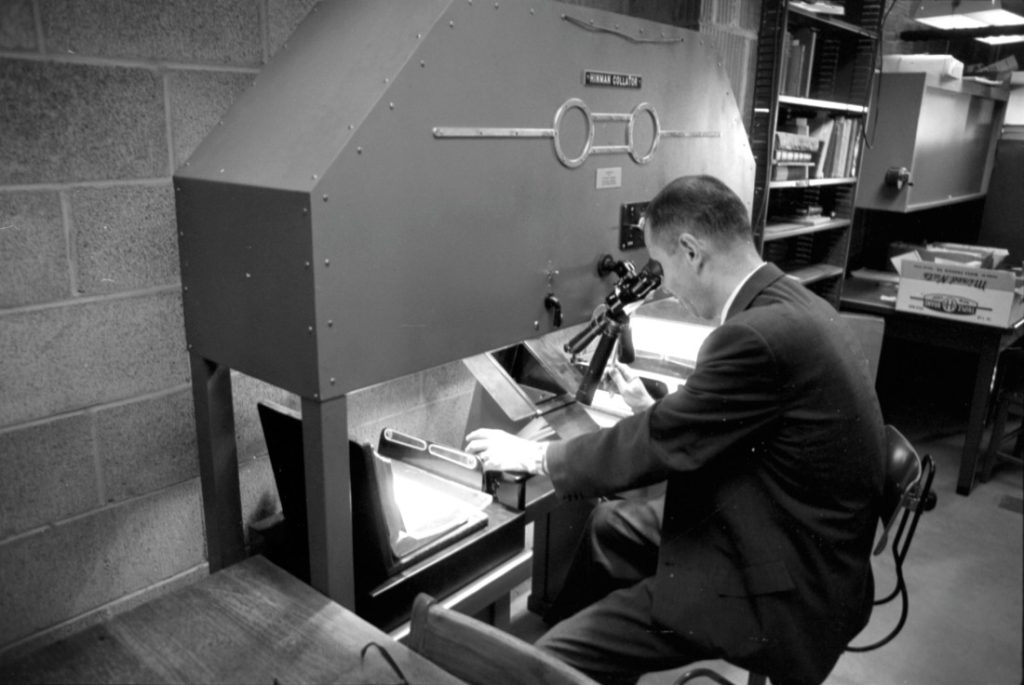
Charlton Hinman was a looker. Of course, that was true of so many of Fredson Bowers’ students – they tended to be lookers. We won’t make any comment on the relative attractiveness of Charlton Joseph Kadio Hinman or Bowers’ students, but we refer instead to the tradition of close examination and description of books that Bowers codified and Hinman continued here at the University of Kansas. On the north side of the Marilyn Stokstad Reading Room at Kenneth Spencer Research Library is the Hinman Collator, a hulking grey machine that stands as a reminder of (and a tool for) precisely that kind of work. Our colleague Caitlin Klepper wrote a post about the collator previously, but we thought we might delve more in-depth here.

Black-and-white photograph sitting in front of a large piece of equipment and looking through an eyepiece.
Professor Charlton Hinman working at the Hinman Collator, circa 1960-1975. University Archives Photos. Call Number: RG 41/ Faculty and Staff: Hinman, Charlton (Photos). Click image to enlarge (redirect to Spencer’s digital collections).

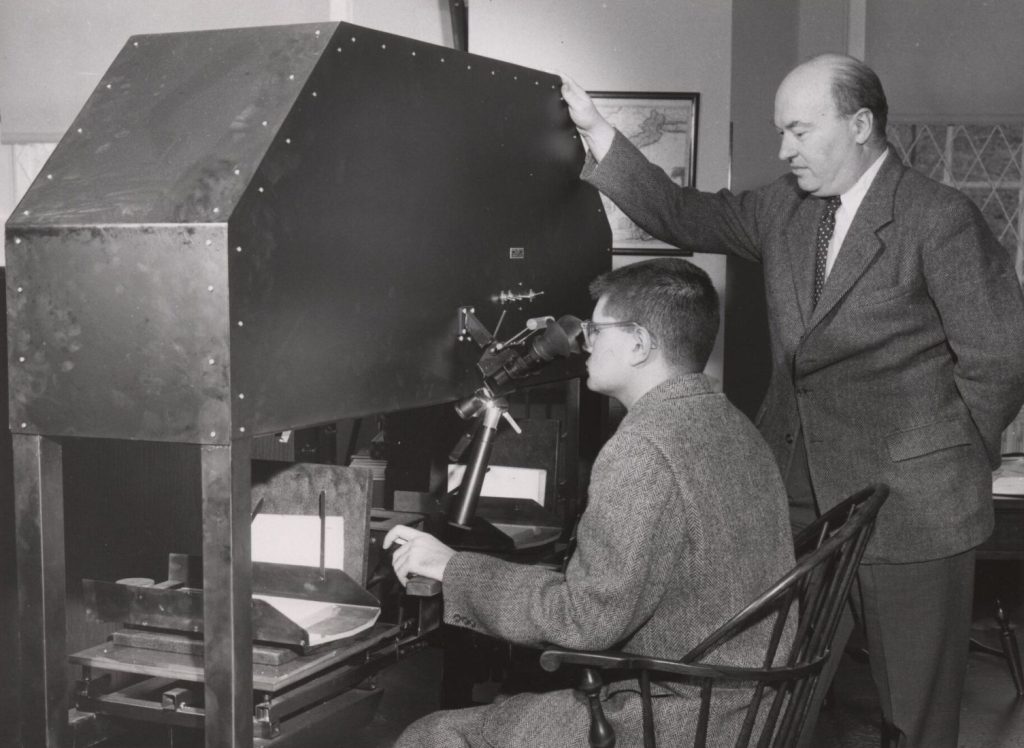
Modern descriptive bibliography – the close physical examination and description of books – begins with Fredson Bowers’ book Principles of Bibliographical Description (1949). Bowers was a professor of English at the University of Virginia, and Charlton Hinman was Bowers’ first PhD student there. Both Hinman and Bowers had analytical minds with similar bents, which served them well in the Second World War. They were involved in cryptography and code breaking, with Bowers again leading Hinman as his commanding officer. Following their service, Bowers returned to Virginia, publishing the aforementioned Principles.

Black-and-white photograph of a man standing in front of a large machine while a second man sits and looks through the eyepiece.
Fredson Bowers supervises a student with the Hinman Collator, undated. Image courtesy of Special Collections, University of Virginia Library. University of Virginia Visual History Collection. Call Number: RG-30/1/10.011. Click image to enlarge (redirect to UVA’s digital collections).

Hinman’s dissertation, The Printing of the First Quarto of Othello, led to his first position as a research fellow at the Folger Shakespeare Library, where he collated copies of the first folio of Othello. It was Hinman’s time as a fellow at the Folger that inspired his creation of the collation machine. Collation – or, the work of examining and describing the physical evidence in a copy of a book – is time consuming. Hinman’s work was even more intensive, as he sought to find all of the different states of the pages down to the most minor corrections or insertions made by the printer in the course of printing the book. Looking at each page of text line by line is an almost impossible task. Hinman hints at this problem in his preliminary essay about the machine, which was titled “Mechanized Collation: A Preliminary Report” and printed in the Papers of the Bibliographical Society of America in 1947.

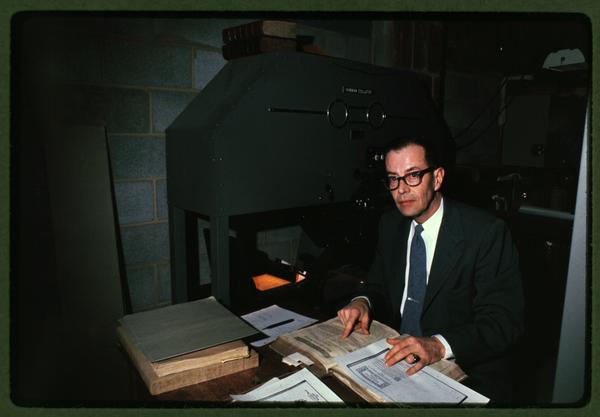
Color photo of a man with glasses sitting at desk covered in books and papers.
Charlton Hinman working at his desk (with the collator behind him), circa 1960-1975. University Archives Photos. Call Number: RG 41/ Faculty and Staff: Hinman, Charlton (Photos). Click image to enlarge (redirect to Spencer’s digital collections).

Hinman’s time in the military helped point the way to a solution, supposedly through military reconnaissance use of photography. He described the idea of taking two pictures of the same area and rapidly alternating them to spot differences. He didn’t claim he had done it as part of his cryptography work; rather, he claimed he heard about it while in the military. However, the process Hinman described was never used for reconnaissance purposes. While the military did use aerial photography, they didn’t use any method that alternated two images in a similar way to the function of the Collator. In his article “‘The Eternal Verities Verified’: Charlton Hinman and the Roots of Mechanical Collation” (Studies in Bibliography, 2000), Steven Escar Smith writes that “using World War II technology, it simply would not have been possible to photograph the same patch of ground twice from exactly the same altitude and position.” According to Smith, Hinman seems to have acknowledged that the story wasn’t entirely true, but it’s not clear whether he actually discouraged its telling.

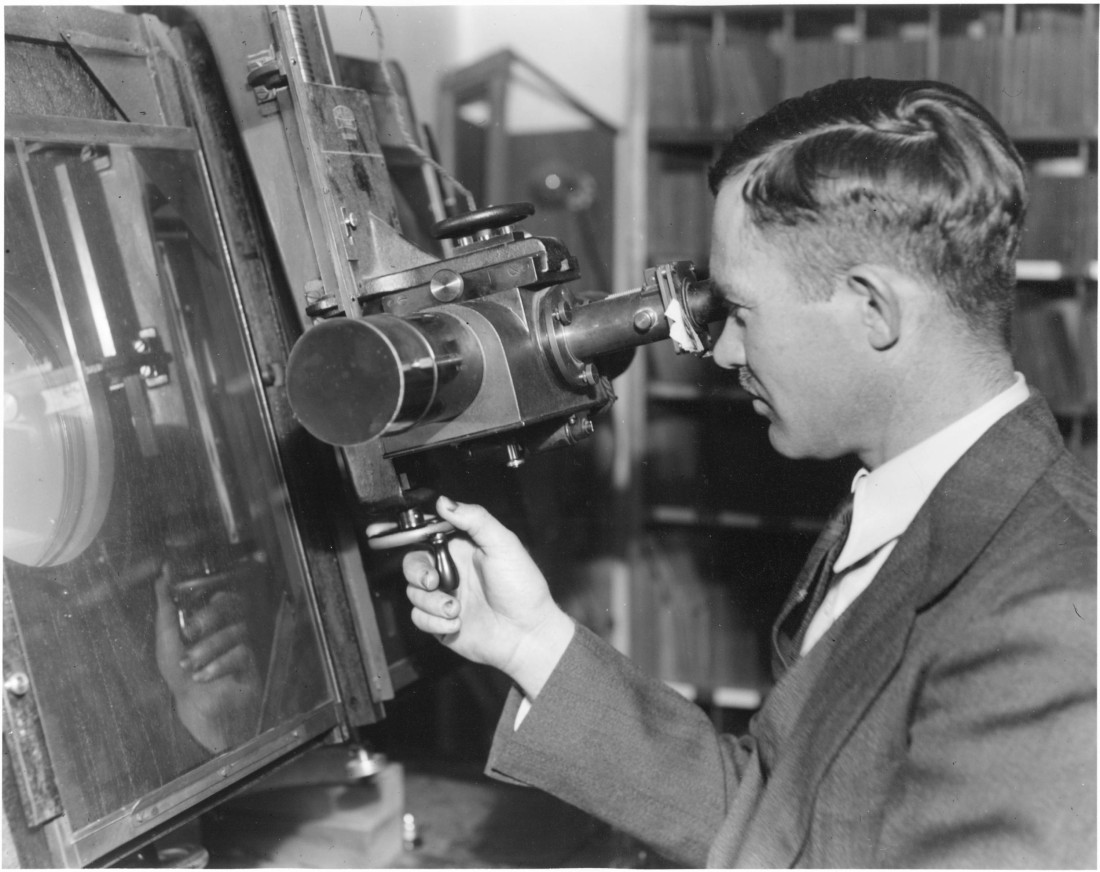
Arthur M. Johnson, Hinman’s partner who took over building and selling collators around 1956, may have been the one to accurately describe how Hinman got the idea for the collator. Johnson wrote that Hinman had studied something that Johnson called an “astronomer’s microscope.” It used the same principle of “blink comparison” to compare images of the night sky, most famously by Kansan (and KU alumnus) Clyde W. Tombaugh in his observation of Pluto. Although it’s not known whether Hinman ever saw or used a blink comparator, he knew of the one at the observatory at UVA when he was a PhD student there. This was the true technological ancestor of Hinman’s machine.

Black-and-white photograph of a man looking through an eyepiece connected to a larger machine.
Clyde W. Tombaugh at a blink comparator, undated. Image courtesy of New Mexico State University Library Archives and Special Collections, Clyde W. Tombaugh papers, image 04070052. Click image to enlarge.

These kinds of devices are simpler than the Hinman Collator in that one can use flat images of similar size – not possible with books. Hinman’s great improvement and contribution, then, was the creation of a machine that could deal with books of different sizes, thicknesses, and even formats. Hinman had a long career as a professor of English, first at Johns Hopkins University (1945-1960) and then at the University of Kansas (1960-1975), where he eventually became a University Distinguished Professor of English. Approximately 50 collators survive. The collator at Spencer (A9 in Steven Escar Smith’s 2002 census of existing Hinman Collators, published in Studies in Bibliography) is one of two that remain that Hinman himself used; the other is at the Folger Library. The effect of the collator is reproduced in this short video by Sam Lemley. Bibliographer J.P. Ascher has also made a good video about how one might use the collator, utilizing the machine at the University of Virginia.

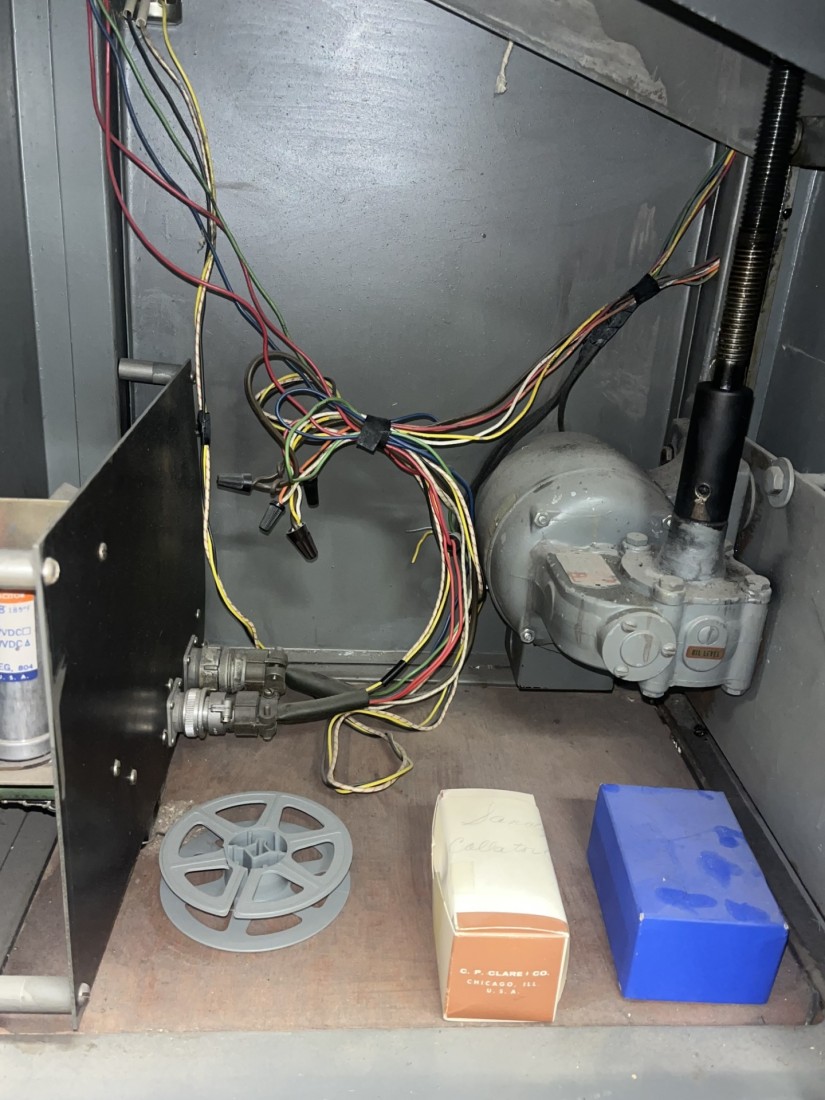
Hoping to actually use Spencer’s machine, we ventured to the Reading Room before opening. We powered it on, and, to our delight, the 400-pound machine came to life. Unfortunately, this was not to be, as we discovered that the “blink” feature, the key function, is not currently working. Thanks to the efforts of our colleague Molly Bauer, we are slowly learning what might be wrong and what the fix might be. Look for a follow-up post in the spring about our efforts, as well as digital alternatives to optical collation that bibliographers can use today.

Color photograph of multicolored wires bundled together in a larger metal box.
Wiring inside the Hinman Collator at Spencer Research Library. Click image to enlarge.

The Hinman Collator, for now, stands as a testament to the ongoing work of descriptive an analytical bibliography here at the University of Kansas. Much like its creator, the machine is complicated and devoted to a very specific purpose – close looking at material objects we regularly take for granted.

Jason W. Dean and Adrienne Sanders
Rare Materials Cataloging Librarians

“Snap Shots of My University Life”: The Student Scrapbook of Nola Ayers 

March 7th, 2025
This image has text.
Nola Ayers’s senior picture and a description of her KU life in the 1909 Jayhawker yearbook. University Archives. Call Number: LD 2697 .J3. Click image to enlarge.

Nola Mary Ayers was born in Horton, Kansas, in 1886. She arrived in Lawrence in the fall of 1905 to enter the University of Kansas and graduated from KU with a bachelor’s degree in 1909. Nola documented her college years by creating a scrapbook, as did many other university students at the time. 

Typically, students purchased a large scrapbook from one of the bookstores near the university. Nola broke with tradition by using a blank “Specimens” science notebook to paste in mementos of her life at KU. 

Red book cover with the word "Specimens" in black text.
The front cover of Nola Ayers’s scrapbook, 1905-1909. Call Number: SB 71/99/8. Click image to enlarge.

Nola’s scrapbook was also unique because she was an artist and decorated her album with original pen and ink drawings. One of the first drawings in the scrapbook is a self-portrait where she describes herself as a “poor home sick freshman” whose “college home for the year 1905-06 was 1305 Vermont St. Lawrence, Kansas with Mother Dow to call us eight girls down.” This house on Vermont is still standing in the Oread neighborhood. In the years before dormitories, many students lived in boarding houses near campus; many of these large multi-story houses still exist. 

This image has text accompanied by a black-and-white sketch of a woman sitting at a desk. There is also a photograph of Spooner Library.
Nola Ayers’s scrapbook entry about being “a poor home-sick freshman,” 1905. Call Number: SB 71/99/8. Click image to enlarge.

Nola documented her studies in her scrapbook. As seen in the image below, she took “Hygiene” and “Gymnasium” during her freshman year – courses that all KU students in the early twentieth century were required to enroll in. Nola also studied rhetoric, German, geology, solid geometry, and botany. Her scrapbook reflects her love of drawing, and her coursework included drawing, ornament design, and Greek art. 

List of classes taken by Nola Mary Ayers in the fall and spring terms of her freshman year. There is a black-and-white sketch of a man reading and writing.
Nola Ayers’s freshman-year courses listed in her student scrapbook, circa 1906. Call Number: SB 71/99/8. Click image to enlarge.

Besides coursework, friendships with other students are well represented in the pages of Nola’s scrapbook. She documented slumber parties with other girls, popcorn making, a Halloween party where she dressed as the “Western Girl,” and events at her sorority, Kappa Kappa Gamma. Nola celebrated Valentine’s Day with a party and red hearts pasted into her scrapbook. 

Two black-and-white photos attached to a larger piece of off-white paper. One shows a group of girls making and eating popcorn. The other shows a group of girls laying on a bed "in Maude's room."
|
Two-page scrapbook page. On the left is a dance card and a black-and-white sketch of a girl in an evening gown. On the right are two black-and-white photos: a group at a Halloween party and Nola Mary Ayers dressed as "the Western Girl."
|
Two-page scrapbook page with Valentine's notes and red paper hearts.
Selected pages from Nola Ayers’s scrapbook showing her hanging out and celebrating holidays with friends, 1905-1909. Call Number: SB 71/99/8. Click images to enlarge.

As evidenced by her scrapbook, Nola partook many of the outdoor activities KU students enjoyed in the early twentieth century: walking, boating on the Kaw River, picnicking in the countryside, and attending sporting events. According to the 1908 Jayhawker yearbook, Nola was an “authority on baseball” and an “enthusiastic fan.” Indeed, she pasted photos of the KU baseball team into her scrapbook. Nola also included items related to the KU debate team. Debate was almost as popular as athletic sports during the early twentieth century, and students would travel to other cities like Topeka to support the KU team. 

Two-page scrapbook page with photographs of students enjoying "lunch in the woods" and "a Saturday's stroll." There are also two items from KU debate team events.
A two-page spread in Nola Ayers’s scrapbook, circa 1906. Call Number: SB 71/99/8. Click image to enlarge.

According to a newspaper article, Nola was crowned Queen of the May at the second annual May Fete in 1909. She was a member of Allemania (German Club) and attended their events. She appeared to have attended many dances, plays, and concerts while a student, as documented by the many programs decorating her scrapbook. Plays and concerts were held on campus and in downtown Lawrence at the Bowersock Opera House. 

Two-page scrapbook page with invitations, dance cards, photographs, and a dance program.
A page of invitations and dance cards in Nola Ayers’s KU student scrapbook, circa 1907-1908. Call Number: SB 71/99/8. Click image to enlarge.
Scrapbook page with two black-and-white photographs: the Kappa Kappa Gamma House at the University of Colorado, and a group of women in graduation caps and gowns.
The bottom photo on this page might show Nola Ayers with her housemates, circa 1909. During her junior and senior years at KU, Nola lived at 1400 Tennessee Street in Lawrence. Call Number: SB 71/99/8. Click image to enlarge.

Nola Ayers married KU alumus Benjamin P. Young in 1910. According to a newspaper article announcing their wedding, the couple settled in Halstead, Kansas, where Ben was a high school principal. Ben and Nola relocated to Ithaca, New York, by 1923 and appear to have lived there for the rest of their lives. They had two children. Ben died in 1958; Nola passed away in 1973 at age 86.

Becky Schulte
Retired University Archivist and Curator of the Wilcox Collection

That’s Distinctive!: Halloween Party Dance Card

October 18th, 2024

Check the blog each Friday for a new “That’s Distinctive!” post. I created this series to provide a lighthearted glimpse into the diverse and unique items at Spencer. “That’s Distinctive!” is meant to show that the library has something for everyone regardless of interest. If you have suggested topics for a future item feature or questions about the collections, you can leave a comment at the bottom of this page. All collections, including those highlighted on the blog, are available for members of the public to explore in the Reading Room during regular hours.

This week on That’s Distinctive! we continue on our journey of spooky items. Today I am sharing yet another item from the Herd family papers. With the collection spanning the time frame of 1817 to 2013, there is just about anything a person could be looking for. The item shown today is a dance card from KU’s third annual all-university Halloween party. It took place in 1917, six months after the U.S. entered World War I. The card shows that it was held in Robinson Gymnasium, which was located where Wescoe Hall now stands. The current Robinson Center is just east of Allen Fieldhouse.

This image has the text of the name, place, and date of the Halloween party.
|
The left-side page in this image has the text of the female students who participated in the Moon Dance and Fairy Dance in the Grand March. The page on the right has blank numbered lines for listing dance partners.
Pages from an All-University Halloween Party dance card, 1917. Herd Family Papers. Call Number: RH MS 1374. Click images to enlarge.
This image contains text.
|
This image contains text.
Two articles about the party in the University Daily Kansan, October 29, 1917. Florence (Mrs. Eustace) Brown was the “advisor of women” at KU (and sometimes cited as the school’s first Dean of Women), 1914-1918. Courtesy Newspapers.com. Click images to enlarge.

Tiffany McIntosh
Public Services