The University of Kansas

Inside Spencer: The KSRL Blog

Books on a shelf

Welcome to the Kenneth Spencer Research Library blog! As the special collections and archives library at the University of Kansas, Spencer is home to remarkable and diverse collections of rare and unique items. Explore the blog to learn about the work we do and the materials we collect.

This blog may contain archived web content. This blog may link to catalog records which no longer exist as of a software change in 2026.

A History of Día de Muertos 

October 30th, 2026

While sometimes incorrectly touted as the “Mexican Halloween,” Día de Muertos (Day of the Dead) is much more than that. Like many modern-day holidays, Día de Muertos looks very different today than it did at the beginning. 

Origins

The origins of Día de Muertos can be traced back thousands of years to traditions of the Aztecs and other Indigenous peoples of Mesoamerica. For the Aztecs, death was not the end, but the beginning of their journey to Mictlan, the underworld governed by Mictlantecuhtli and Mictecacíhuatl. Many of the events honoring the dead included the placing of food on altars and the burning of incense. With the arrival of the Spanish to Latin America, these events were moved to coincide with the Catholic holidays of All Saints’ Day and All Souls’ Day at the beginning of November. However, Indigenous beliefs remained and led to a syncretic tradition that honored the cyclical nature of life and death seen in pre-Hispanic and Catholic traditions. 

Very colorful image of two entities and a vertical border grid with smaller illustrations on two sides
The Aztec god of death Mictlantecuhtli and god of life Quetzalcoatl in Spencer’s facsimile copy (page 56) of the Códice Borgia, a pre-Columbian manuscript, 1993. Call Number: D3918. Click image to enlarge.

In the early 1900s, four hundred years after the Spanish conquest of Latin America and about a hundred years after Mexico’s Independence from Spain, the Mexican government began to encourage the celebration of Día de Muertos in an effort to unite the Mexican people during a time of great political turmoil.  

The calavera imagery often associated with Día de Muertos is in large part because of Jose Guadalupe Posada’s calaveras. Posada began to make satirical prints using this calavera imagery to poke fun at society and politicians, as was the case with his famous La Catrina. These depictions of calaveras were soon adopted by those participating in Día de Muertos, with it becoming a symbol of the celebration. 

This image has black text against an orange or faded red background.
The front side of Posada’s La Calavera Oaxaqueña, a single sheet broadside featuring a calavera caricature dressed as a charro, 1910. Call Number: Q154.
Día de Muertos in the United States 

As Mexican immigrants made their way to the United States, so did their customs and traditions. Traced back to the 1980s, Mexican Americans in the Southwest maintained the religious tradition of visiting their past one’s gravesites. However, this did not include the Indigenous practices of setting up ofrendas or burning copal incense. Instead, many of these communities engaged in “folk Catholic” traditions that tended to be more solemn to honor All Saints’ Day and Souls’ Day, rather than the vibrant and celebratory Día de Muertos of today. 

However, during the 1970s the Chicano Movement embraced the traditions of Día de Muertos celebrations as a way to connect to their Mexican identity and Indigenous roots. Starting in California, these early Día de Muertos events were seen as a way for Chicano artists to publicize their art and celebrate Latino culture. In 1972, a Chicano activist group from East Los Angeles called Self Help Graphics & Arts organized what is considered the first Día de Muertos event in the country. This included a small procession to a nearby cemetery, calaveras, and ofrendas. Since then, Día de Muertos events in the United States have transformed the holiday and differed from traditional Mexican and Indigenous traditions, with politically themed altars, posters, danzas, lowriders, calavera face painting, and fashion shows. This evolution of the holiday was so impactful that it’s also influenced Mexico’s Día de Muertos celebrations.  
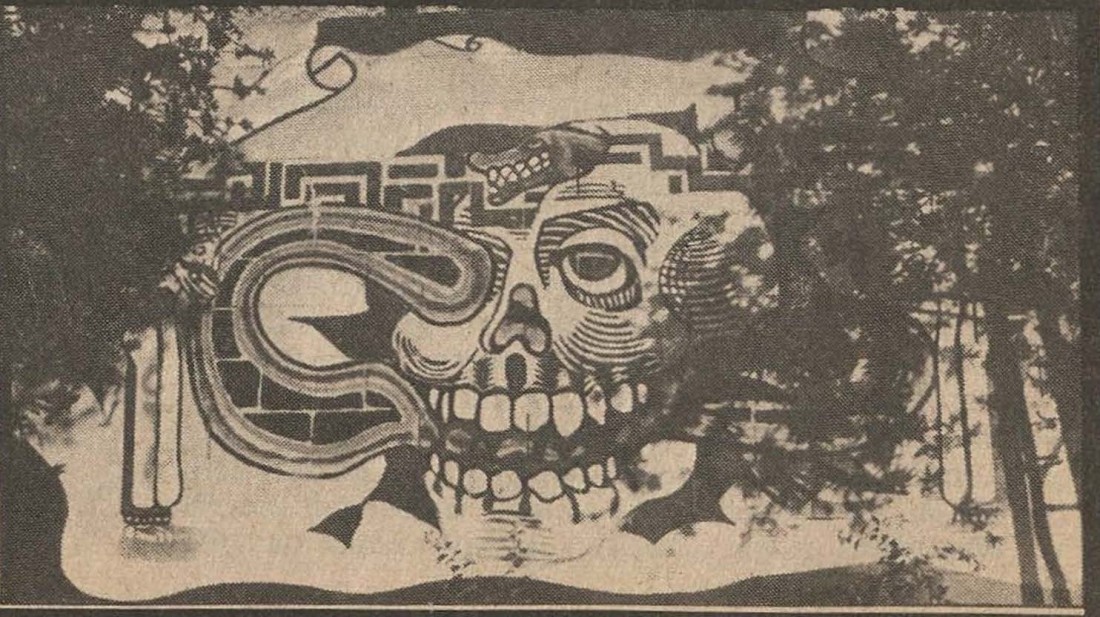
Black-and-white photo showing a large skull with several smaller icons.
A photo of a mural showing examples of Chicano iconography, taken by Manuel Barrera and published in La Raza, a Chicano activist newspaper and magazine in East Los Angeles, 1967. Call number: RH WL G501. Click image to enlarge.
Día de Muertos in the Midwest and Kansas 

As Día de Muertos gained more popularity, Mexican American communities across the country also began to adopt the holiday, including the Midwest. For example, Chicago’s National Museum of Mexican Art began celebrating Día de Muertos in 1986. In Kansas City, several Latino service organizations have celebrated the holiday by hosting events for the community, including the Guadalupe Centers and Mattie Rhodes Center, which has hosted a Día de Muertos celebration since 1998. 
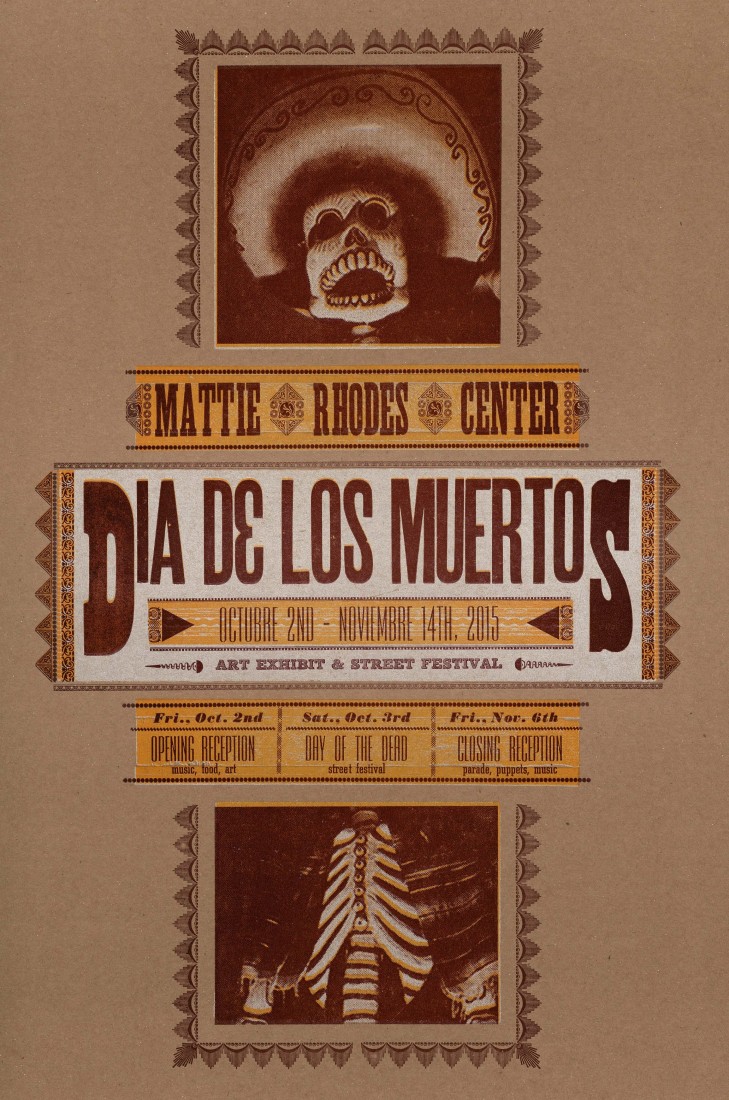
This image has text in shades of dark brown against a background of cream, yellow, and light brown.
A poster from the 2015 Día de los Muertos art exhibit and street festival organized by Kansas City’s Mattie Rhodes Center. Call Number: R97. Click image to enlarge.

In Lawrence, the University of Kansas’s Museum of Anthropology, now part of the university’s Biodiversity Institute, hosted a Día de Muertos exhibit in 1994 and several events while it remained open. Similarly, KU’s Latin American Student Union has also hosted many Día de Muertos celebrations throughout the years and continues to do so to this day. 

This image has text with a black-and-white illustration of a calavera.
A flyer from the 1994 Los Dias de Los Muertos exhibit at KU’s Museum of Anthropology. University Archives. Call Number: RG 33/18, Box “Grants, exhibits, loans, 1982-2000”: Museum of Natural History Records: Museum of Anthropology. Click image to enlarge.
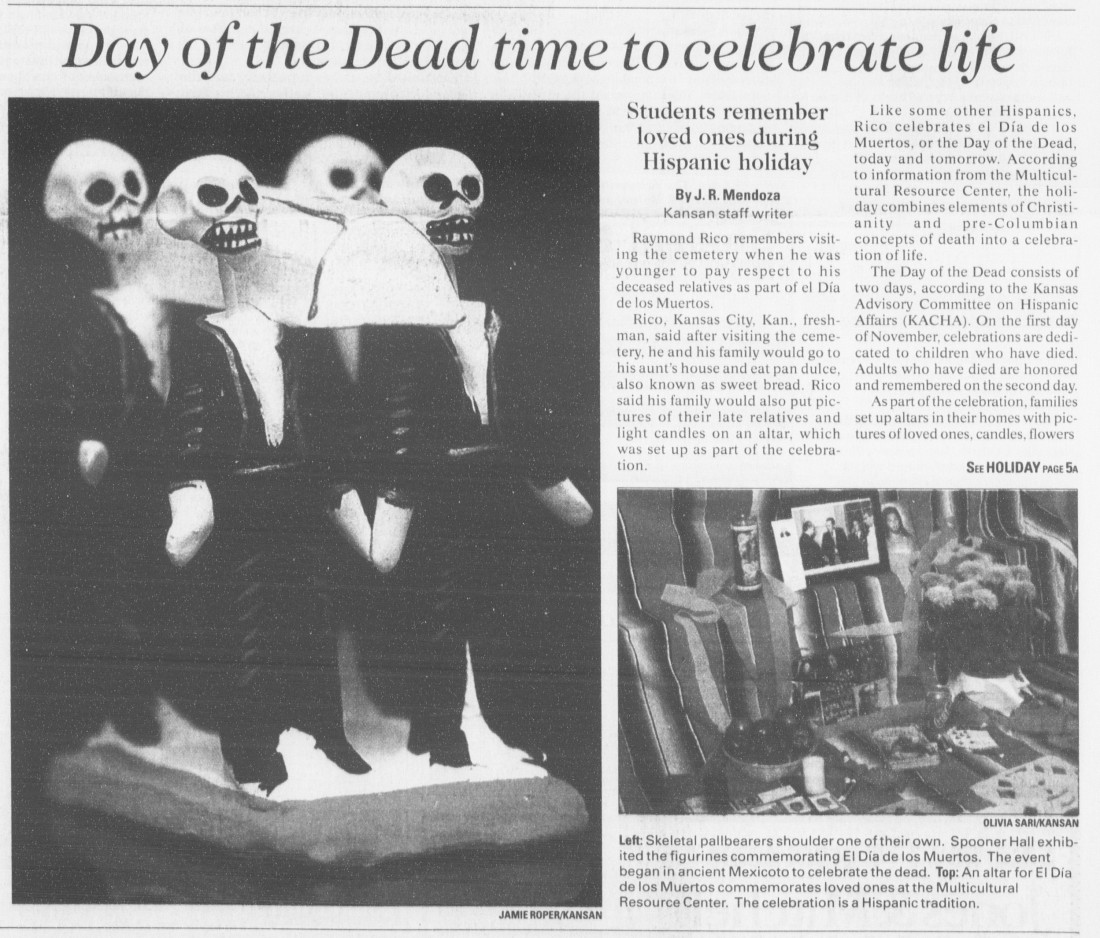
This image has text.
A first part of a 2001 article in the University Daily Kansan highlighting Día de Muertos and the Museum of Anthropology’s exhibit. You can read the full article online through the Libraries’ digital collection of KU student newspapers. Call Number: UA Ser 69/2/1. Click image to enlarge.
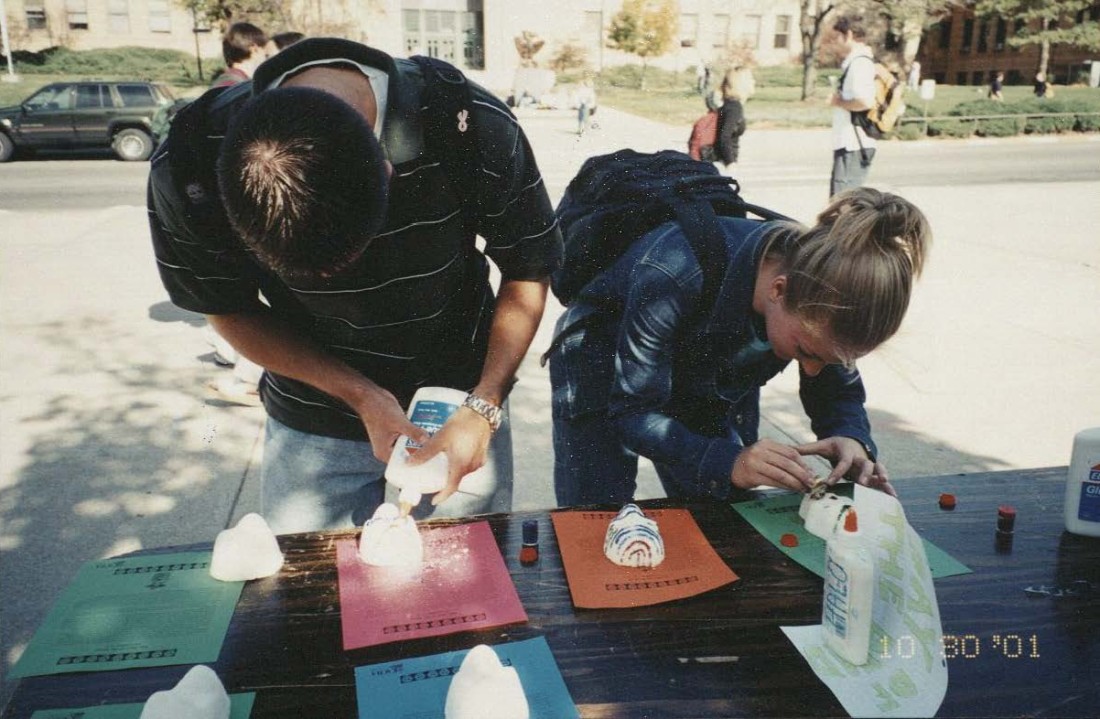
Photograph of two students using glue to make calaveras.
Students participating in a Día de los Muertos activity on Wescoe Beach, 2001. The event was hosted by KU’s Hispanic American Leadership Organization (now known as LASU). University Archives Photos. Call Number: RG 67/593/UP 2001 Prints: Student Organizations: HALO. Click image to enlarge.

Outside of campus, Somos Lawrence, a nonprofit organization focused on serving the non-English speakers of Lawrence, has hosted a Día de Muertos event the last couple of years, and will be doing so again this November 1st. 

Just as Latino communities in the United States continue to grow and diversify, Día de Muertos celebrations will continue to evolve. In recent years, one might’ve noticed an increased commodification of Día de Muertos decorations and events, something that many in Mexican American and Latino communities fear could lead to gentrification of the holiday. However, with changes to the holiday, there has also been an effort to incorporate elements from similar celebrations in Central America to Día de Muertos celebrations, especially as a way to be inclusive of more recent immigrants from countries in that region.  

So, if you go to a Día de Muertos celebration this November 1st, I invite you to think about the history and traditions this holiday holds as you eat some pan the muerto and enjoy the community ofrendas! 

Rebekah Ramos
Curator of Latina/o Collections

Sources

Day of the Dead Guide [PDF]. National Museum of Mexican Art, 2020. Accessed 26 October 2026. 

“Day of the Dead.” Encyclopaedia Britannica, Encyclopaedia Britannica, Inc. Accessed 28 October 2026. 

“Día de los Muertos in the United States.” Smithsonian American Art Museum Blog, Smithsonian American Art Museum, 1 November 2017. Accessed 26 October 2026. 

Marchi, Regina M. Day of the Dead in the USA, Second Edition: The Migration and Transformation of a Cultural Phenomenon, Rutgers University Press, 2022. JSTOR, https://doi.org/10.2307/j.ctv2v55jxd.10. Accessed 28 October 2026. 
Entre los Estantes: Latina/o Collection Items

April 6th, 2026

As I work to develop the Spencer’s new Latina/o Collections*, I wanted to take a moment and look back at the interesting materials that are already sitting within our library stacks and viewable in our Reading Room today! All the materials presented allow us to briefly see how Latina/os have gathered and built community within different places across Kansas.

Take a look at some of those materials below.

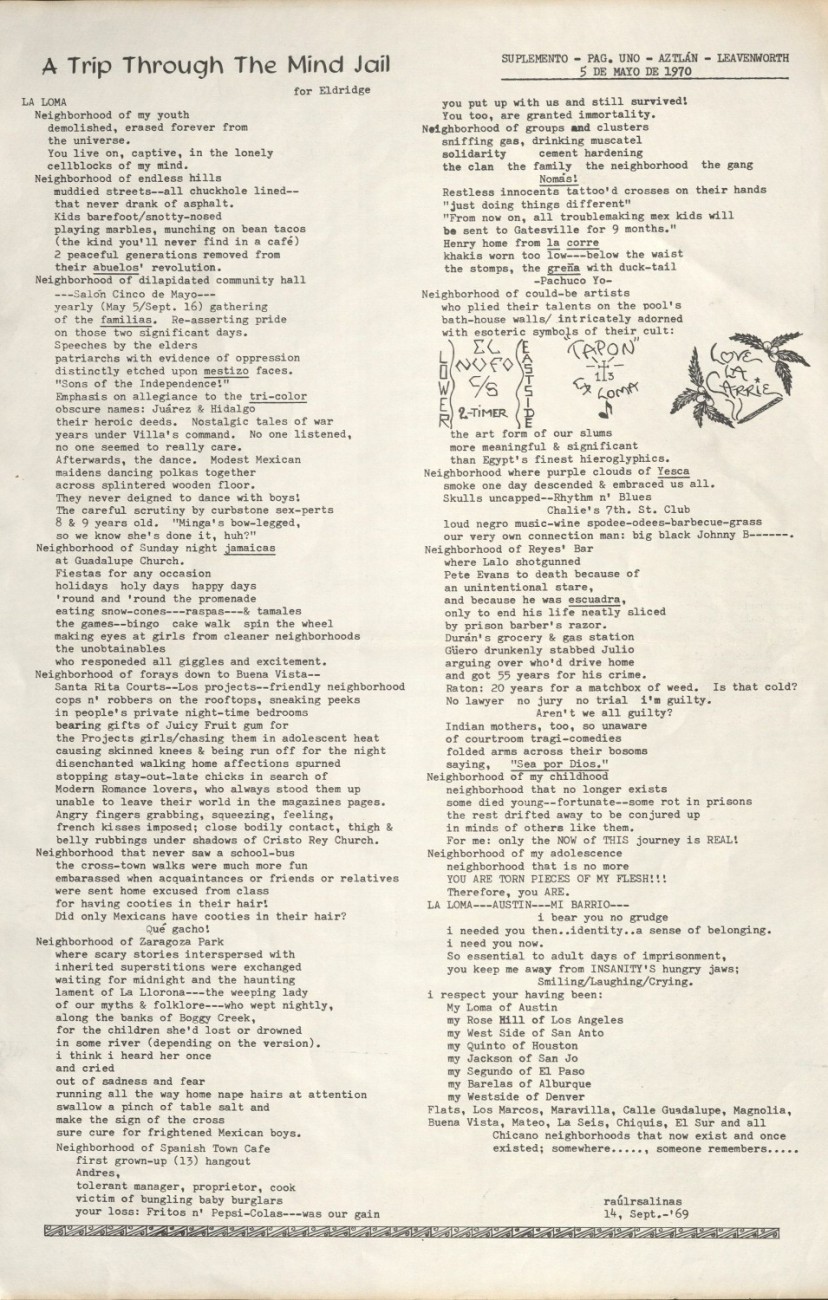
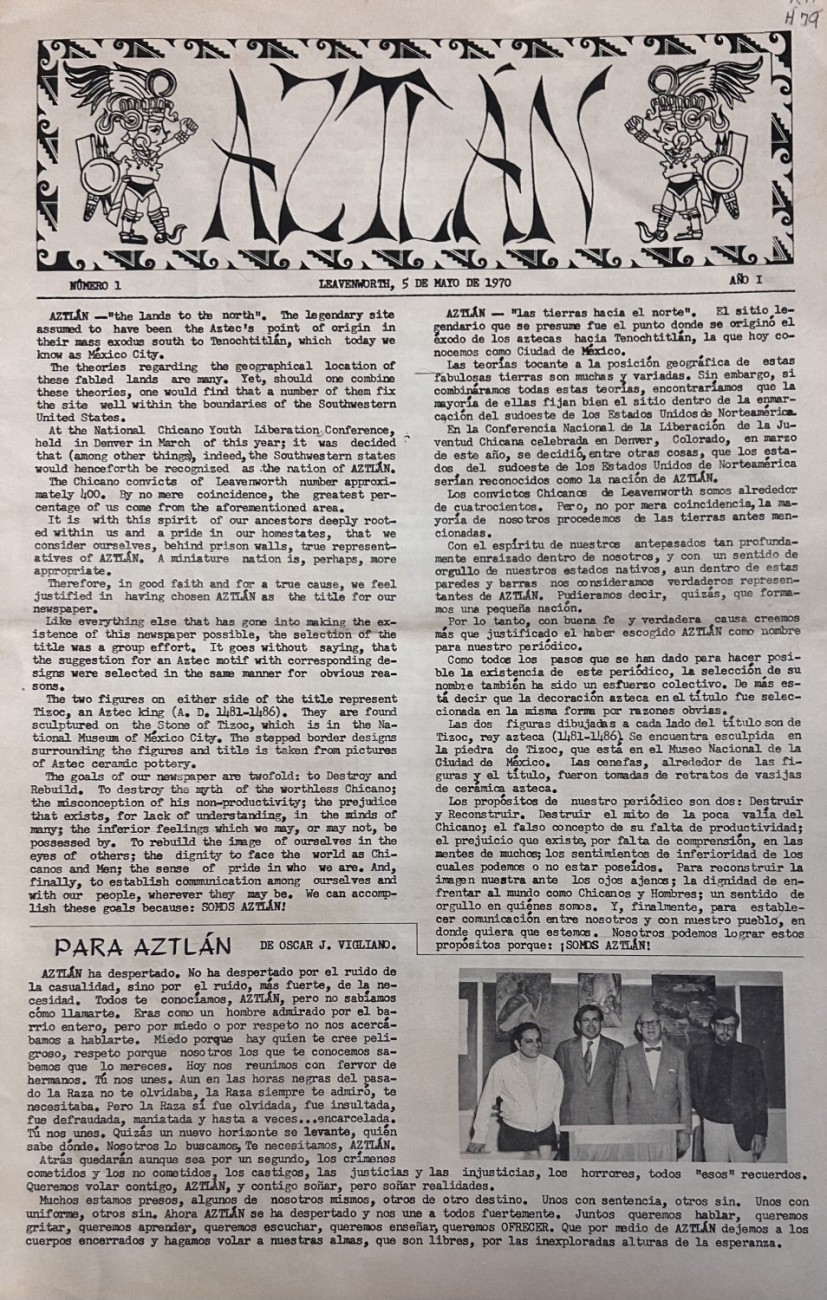
Aztlán de Leavenworth, volume 1

First published May 5, 1970, Aztlán de Leavenworth was a bilingual Chicano prisoner newspaper edited and published at Leavenworth Federal Penitentiary in Kansas. It features poet and activist raúlrsalinas’ famous poem “A Trip Through the Mind Jail.” Other members of the publication team included Albert Mares, Ruben Estrella, Alfredo Arellanes, Ricardo Mena, and Beto Palomino. Inspired by Aztec history and iconography, the newspaper is named after Aztlán, the ancestral home of the Aztecs, and features images of Tizoc and designs inspired by Aztec art.

Left: The front cover of Aztlán de Leavenworth, 1970. Right: The page of Aztlán de Leavenworth featuring “A Trip Through the Mind Jail,” 1970. Call Number: RH H79, volume 1. Click images to enlarge.

KACMAA Special Report, 1981

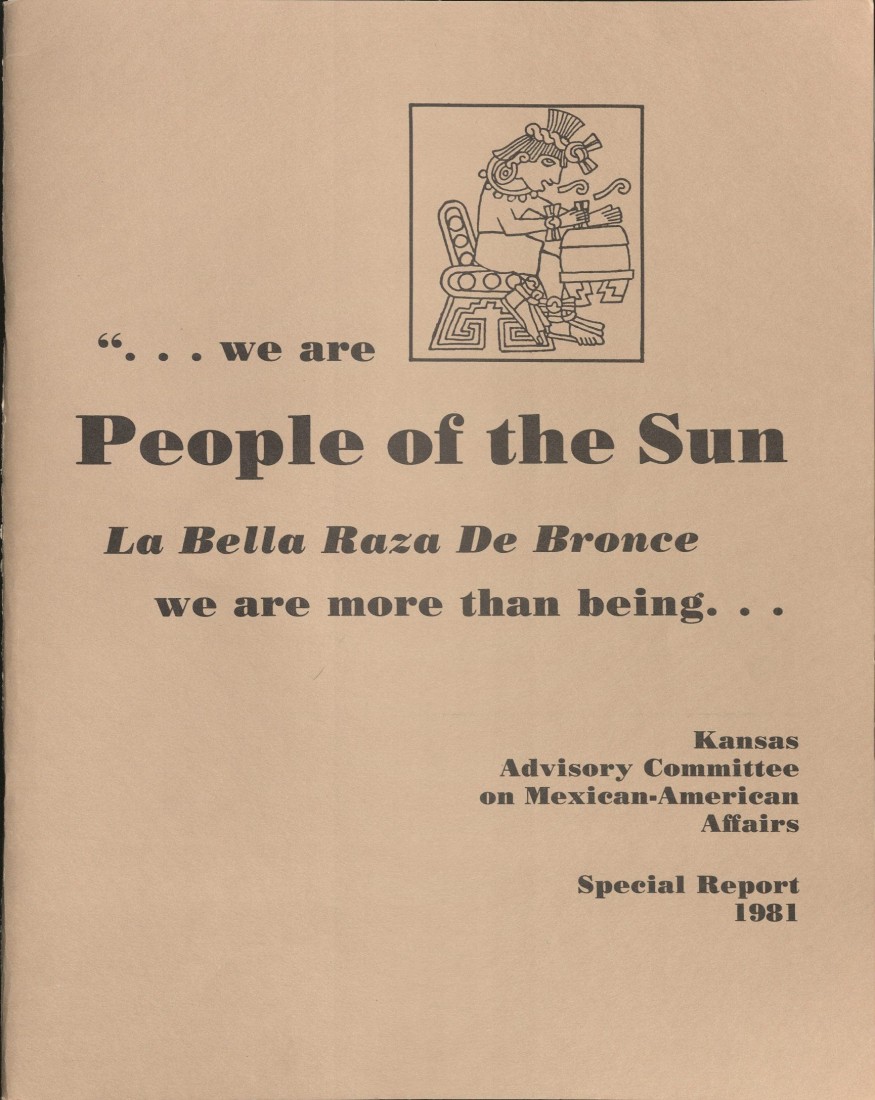
This 1981 special report was created by Kansas’ Advisory Committee in Mexican American Affairs (KACMAA). As explained in the report’s introduction, it “optimistically highlights important accomplishments and measurable in Hispanic’s social, economic, and political life” but also “clarifies the work that remains to be done.” While the KACMAA originally concentrated on projects to promote people of Mexican heritage, the organization evolved to include all Hispanics and Latinos across the state and is now known as the Kansas Hispanic and Latino American Affairs Commission.

Line drawing of an Aztec symbol with the text "...we are People of the Sun / La Bella Raza De Bronce / we are more than being..."
The front cover of the KCMAA’s 1981 Special Report. Call Number: RH D6100. Click image to enlarge.
Music groups in Emporia

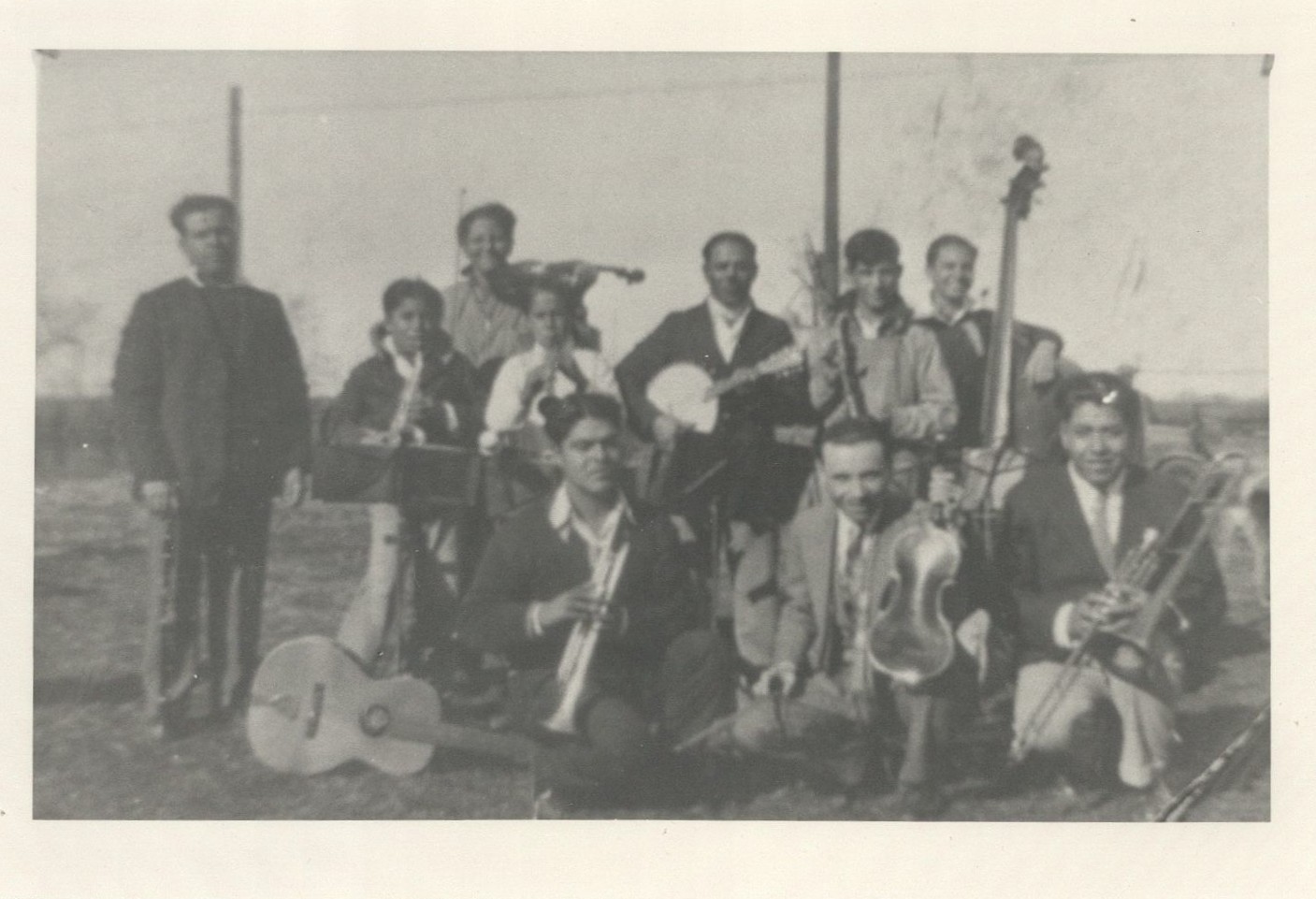
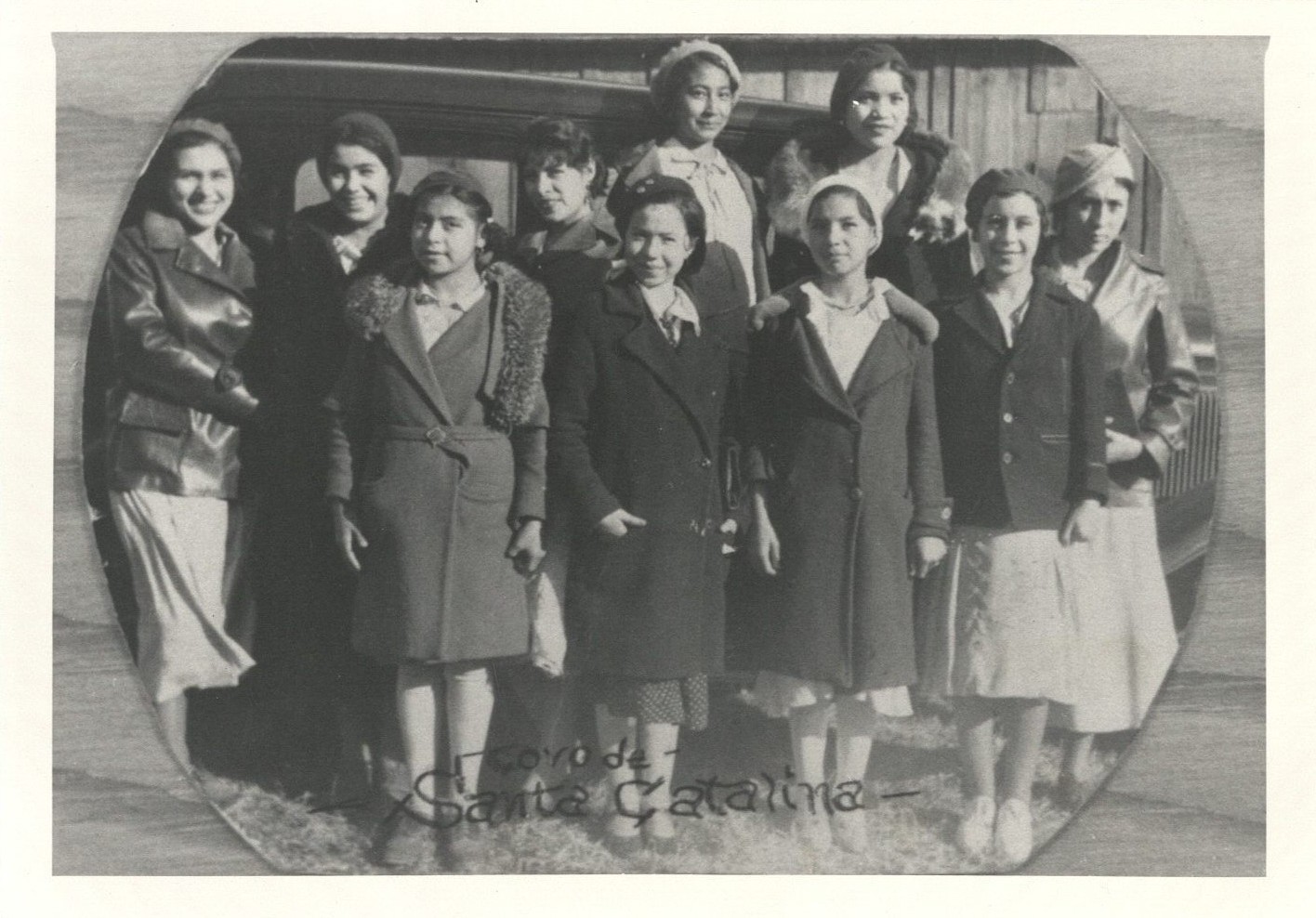
Taken some time in 1932, these photographic prints from the Oral History Project Regarding the Hispanic Community of Emporia, Kansas (Call Number: RH PH 182) allow us to see some of Emporia’s early musical groups. The first photo shows members of the Mexican band Orquesta de Leora posing with their instruments, while the second features the women who made up the Coro de Santa Catalina, or St. Catherine’s Choir. St. Catherine’s Catholic Church still exists to this day and continues to offer Catholic services to Spanish speakers in Emporia.

Left: Photograph of Orquesta de Leora, 1932. Right: Photograph of St. Catherine’s Choir, 1932. Oral History Project Regarding the Hispanic Community of Emporia, Kansas. Call Number: RH PH 182, Box 1, Folders 11 and 19. Click images to enlarge.

MEChA & HALO Pamphlets

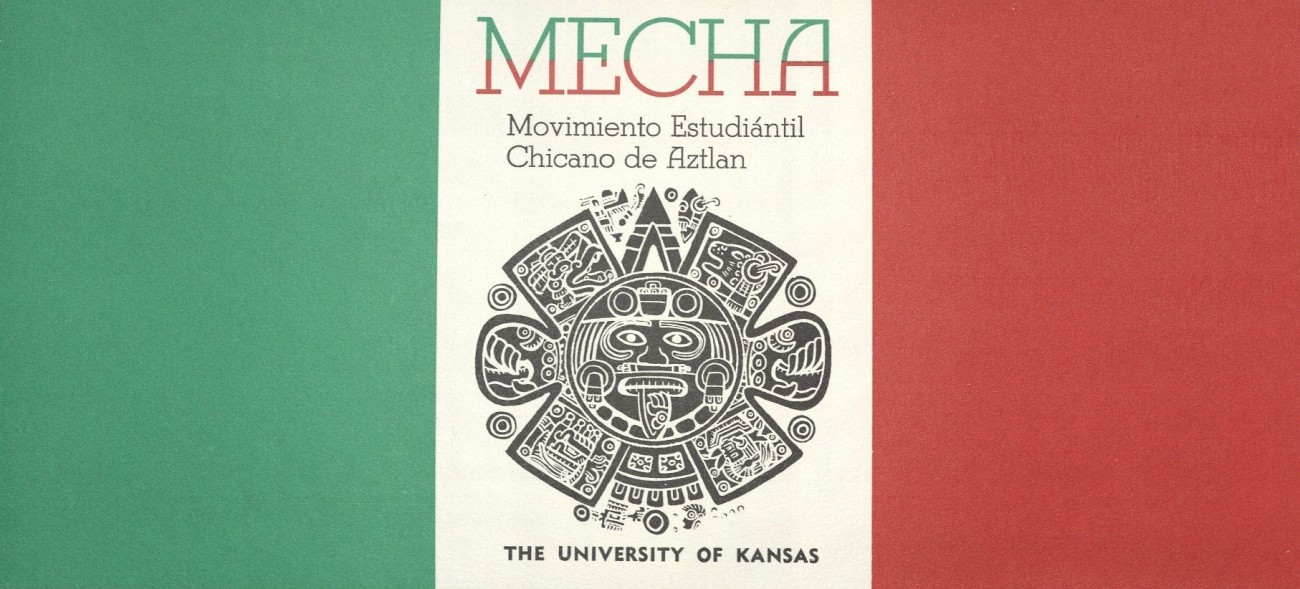
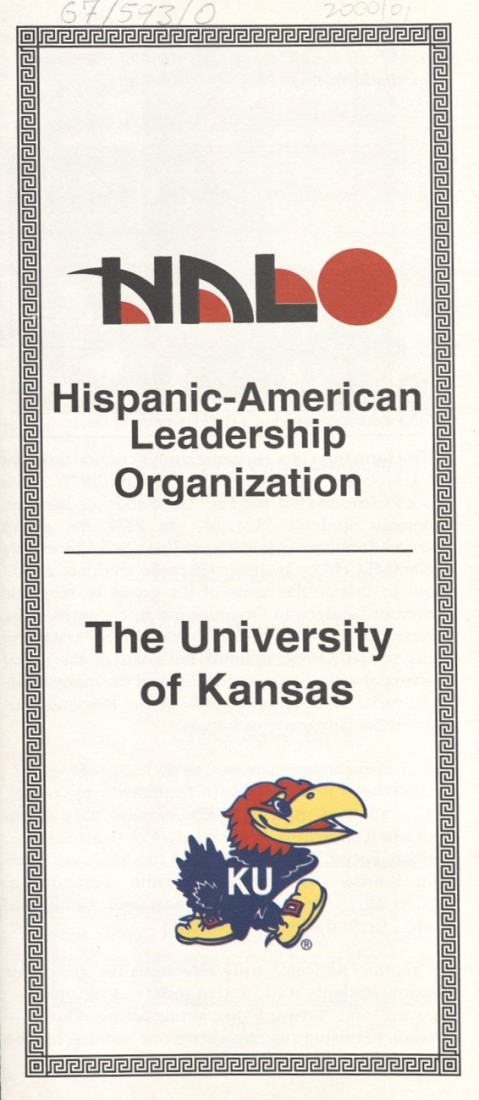
Records of a Latina/o focused group at the University of Kansas have existed since the 1970s. However, before it was LASU (Latin American Student Union), KU’s Latino student group went by many names. It first went by the name AMAS (Association of Mexican American Students), and then it was MEChA (Movimiento Estudiantil Chicano de Aztlán). The group took the name HALO (Hispanic American Leadership Organization) when it was re-established in the 1980s, and it finally became LASU to further expand its inclusion of all students of Latin American heritage or background.  

The name of the organization with a black-and-white sketch of an Aztec symbol, all against the Mexican tri-color flag as a background.
|
The name of the organization with a Jayhawk, all against a white background.
Top: MEChA pamphlet, circa 1970. Bottom: HALO pamphlet, circa 1997. KU Student Organization Records: Hispanic American Leadership Organization. Call Number: RG 67/593, Box 1, Folders 1970s and 1997. Click images to enlarge.

Rebekah Ramos
Curator of Latina/o Collections

Sources

“A Trip Through the Mind Jail: A Textual History of raúlrsalinas’ Magnum Opus” by Santiago Vidales Martínez in Textual Cultures 14.1 (2021): 208–229. DOI: https://doi.org/10.14434/tc.v14i1.32858

Kansas Hispanic & Latino American Affairs Commission website, “Our Mission and Our Origins from KACMAA to KHLAAC.”

KU Latin American Student Union website, “LASU History.”

*While many terms exist to identify people in the United States of Latin American origin and/or ancestry (i.e. Hispanic, Chicano, Latino, Latina/o, Latinx, Latine) at Spencer Research Library we chose to use “Latina/o” for the collection’s title. As the collection grows and evolves, the term used might change.

Meet the KSRL Staff: Rebekah Ramos

February 4th, 2026

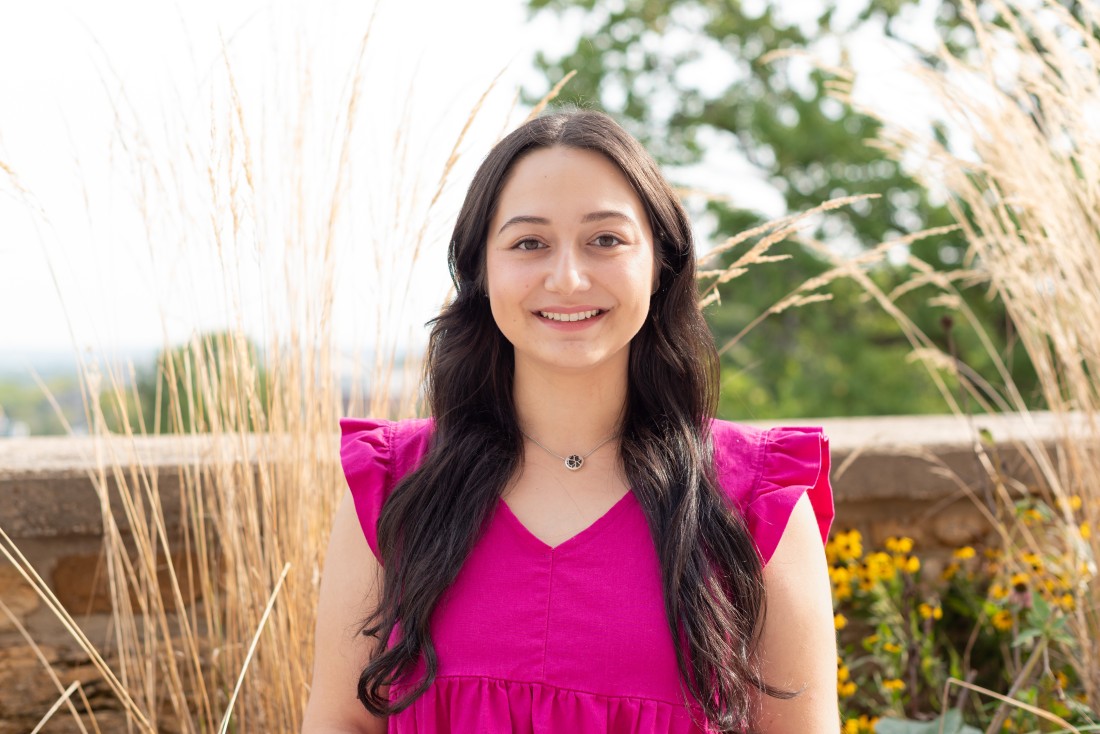
This is the latest installment in a recurring series of posts introducing readers to the staff of Kenneth Spencer Research Library. Today’s profile features Rebekah Ramos, who joined Spencer Research Library in August 2025 as the Curator of Latina/o Collections.

Headshot photograph of a woman in a bright pink top.
Rebekah Ramos, Curator of Latina/o Collections. Click image to enlarge.
Where are you from?

I was born and raised in Puerto Vallarta, Jalisco, Mexico but I moved to Texas when I was sixteen. I jumped around the state quite a bit for school, living in cities like Frisco, Lubbock, Sherman, and most recently Austin.

What does your job at Spencer entail?

As curator of Latina/o Collections I’m in charge of collecting materials that document and preserve the history of Latina/o individuals, families, and organizations in Kansas. Latinos have been part of this state’s history for more than a hundred years, and I’m working to build a collection that reflects the many experiences and stories that exist within this community.

How did you come to work in libraries/archives/special collections?

During undergrad, in the midst of a new semester and trying to stay sane during Zoom classes, I applied for and was hired as a student assistant at the Vietnam Center and Sam Johnson Vietnam Archive’s Oral History Project. During my time there, I reviewed and cleaned up transcriptions of oral history interviews that were conducted with Vietnam War veterans. Then, while I was completing my degree in Information Studies at the University of Texas at Austin, I worked as a graduate student technician at the LLILAS Benson’s Digital Scholarship Lab, where I had the opportunity to work with Latin American and U.S. Latina/o archival materials.  

What part of your job do you like best?

I love getting to meet new people! As someone who is not originally from here, it’s been interesting getting to learn about the variety of nationalities, backgrounds, and stories that make up the Latino community in Kansas.

What do you have on your desk?

I have a bunch of sticky notes with reminders of things I need to look up or do, and a huge pile of books I’m trying to read, like What Kansas Means to Me, Who Owns Native Culture?, and Catching Stories: A Practical Guide to Oral History. There are also a couple of trinkets to remind me of home, like a Mexican rag doll I keep under my monitor.

What is one of the most interesting items you’ve come across in Spencer’s collections?

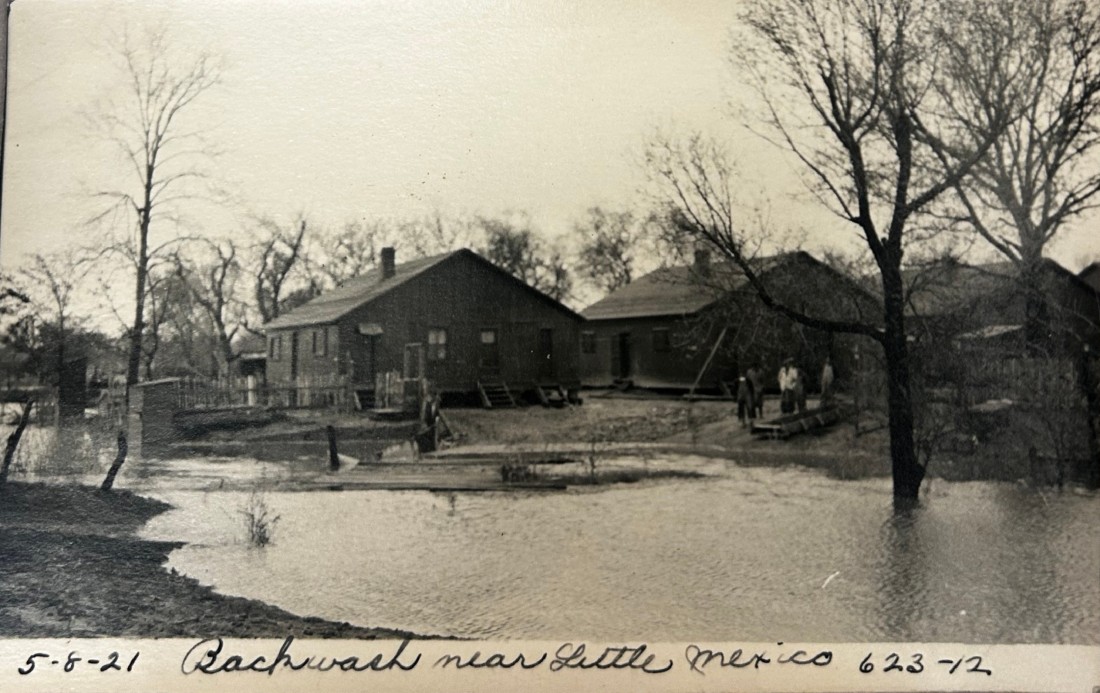
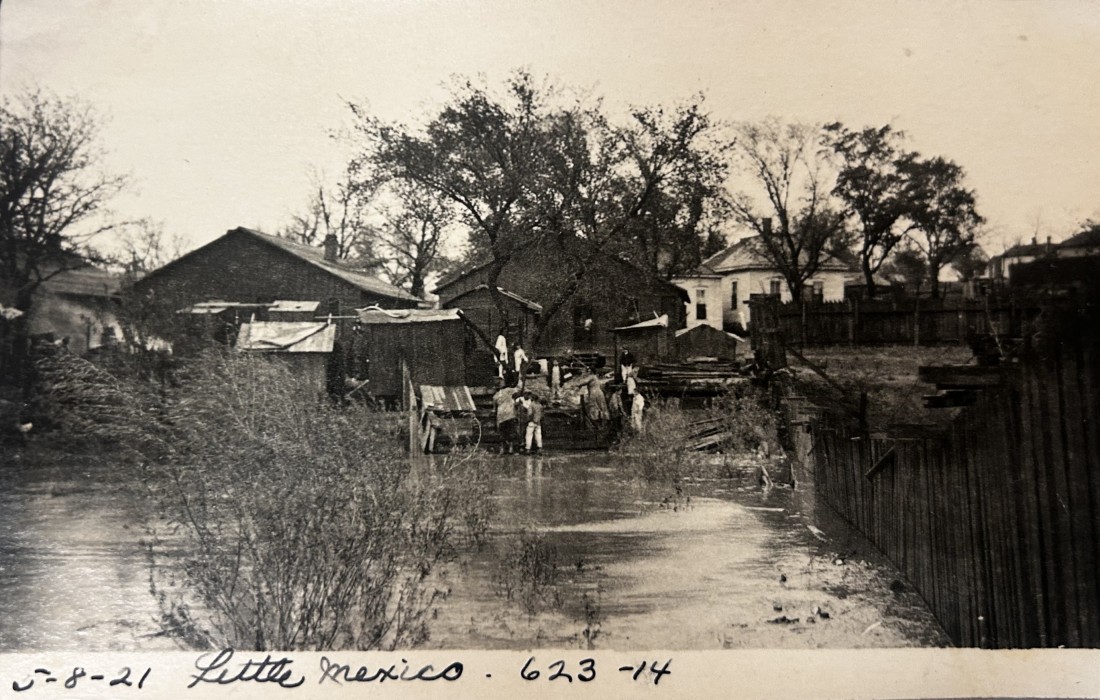
Some of the most interesting items I’ve come across were two photographs I found in the Bourquin Family Collection. Photographs in this collection were taken by a Swiss family that moved to Horton, Kansas, in the late 1800s. The collection’s finding aid showed that there are a couple of photographs that include the name “Little Mexico” in their title.

I was really surprised to find these photographs, since I hadn’t seen any record or evidence of Mexican immigrants in Horton in any of our other collections or online sources. Digitized newspaper clippings confirmed that during the 1920s there was an area of the town that housed many of the Mexican immigrants that had come to work at the local railroad center.

“High water at railroad dam and Little Mexico, May 8, 1921.” Bourquin Family Collection. Call Number: RH PH 30, Box 14, Folder 623. Click images to enlarge.

What are some of your favorite pastimes outside of work?

I am an avid reader and proud bookworm! But I also love going to the movie theater, getting food or coffee with friends, baking, and watching TV.

Rebekah Ramos
Curator of Latina/o Collections