The University of Kansas

Inside Spencer: The KSRL Blog

Books on a shelf

Welcome to the Kenneth Spencer Research Library blog! As the special collections and archives library at the University of Kansas, Spencer is home to remarkable and diverse collections of rare and unique items. Explore the blog to learn about the work we do and the materials we collect.

This blog may contain archived web content. This blog may link to catalog records which no longer exist as of a software change in 2026.

December-January Exhibit: Women Students’ Writings in KU’s Department of English, 1899-1900

December 11th, 2018

A new temporary exhibit is currently on display at the entrances to the North Gallery at Kenneth Spencer Research Library. This exhibit is titled “Writing within Required Genres: Women Students’ Writings in KU’s Department of English, 1899-1900” and showcases many of the materials that serve as the basis of my dissertation work in the Department of English’s Rhetoric and Composition Ph.D. program.
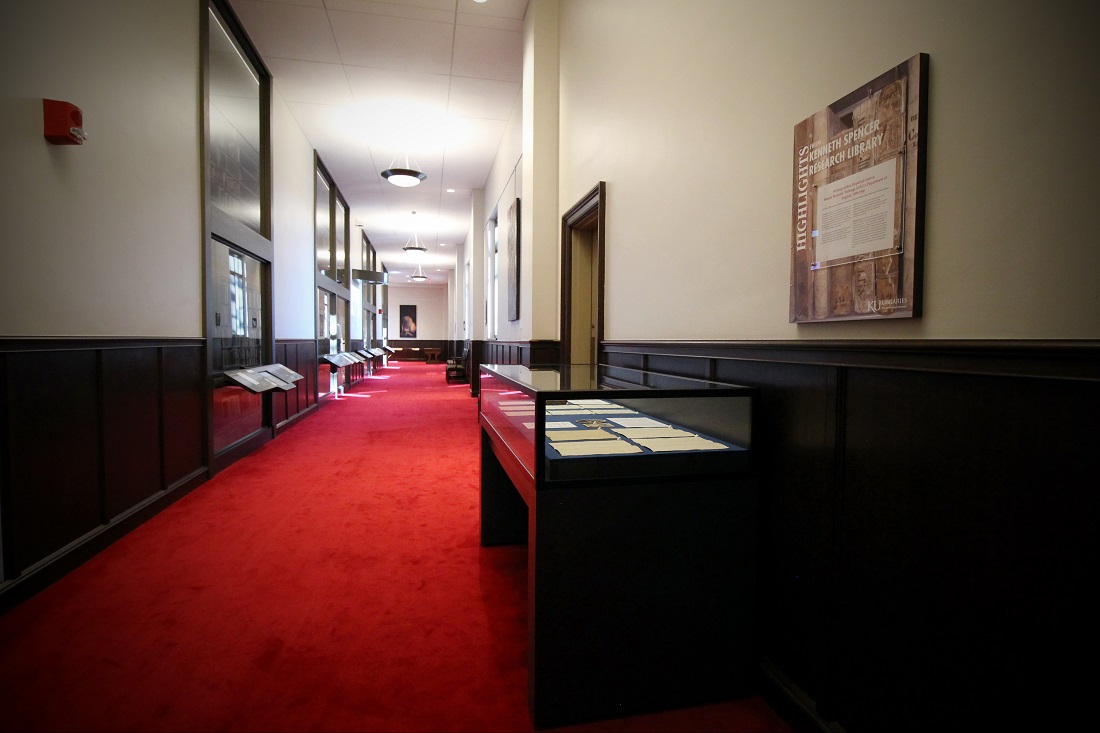
Photograph of the east side of Spencer Research Library's North Gallery

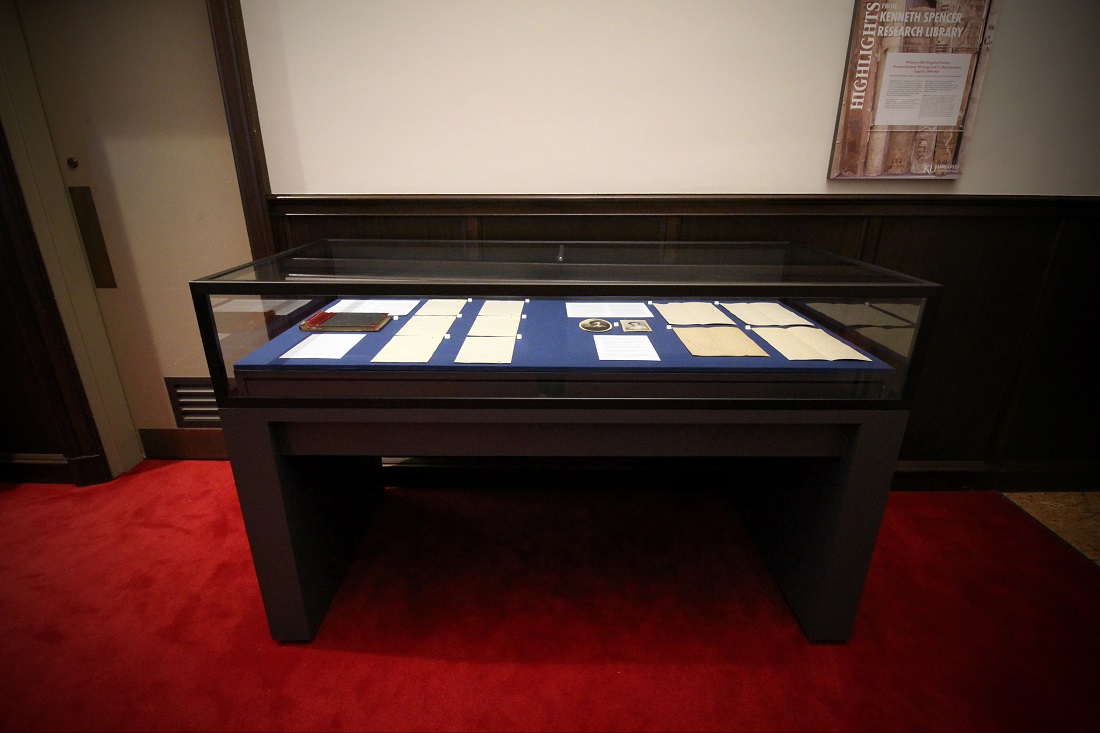
Photograph of the temporary exhibit case on the east side of Spencer Research Library's North Gallery

The temporary exhibit case on the east side of Spencer’s North Gallery.
Click images to enlarge.

Throughout its history, the Department of English at the University of Kansas has experienced many changes in its structure, policies, and approaches to the teaching of writing. In this exhibit, materials from KU’s University Archives at Kenneth Spencer Research Library help narrate a snapshot of time in that history—the turn from the nineteenth to the twentieth century, and a course titled “Advanced English Composition.”

This exhibit provides information about the Department of English, its teachers, and this particular course. Moreover, it showcases the importance of examining the writings of individual students and their unique responses to the writing instruction they received.

Exhibit Case 1 is located at the west entrance to the North Gallery. It contains materials that help contextualize “Advanced English Composition” and the student writings produced for it. Included are course catalogues, photographs, English Department publications, and more.
Photograph of the temporary exhibit case on the west side of Spencer Research Library's North Gallery

Exhibit Case 1 seeks to contextualize the writings of students
Margaret Kane and Kate Hansen. Click image to enlarge.
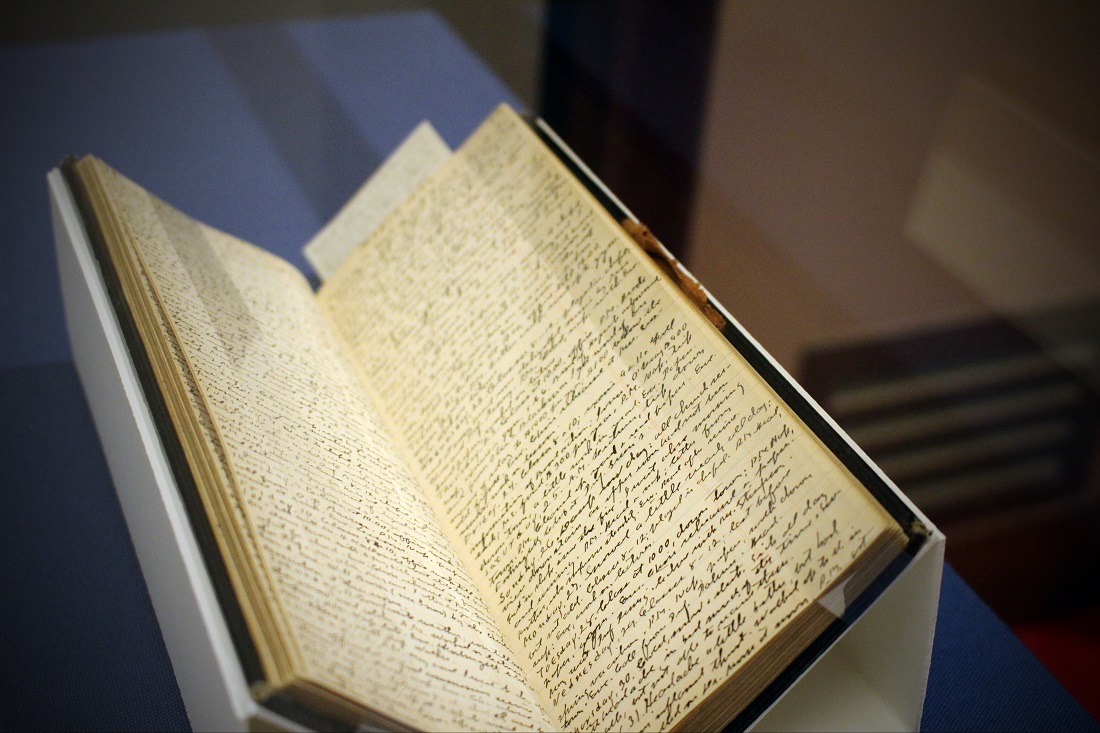
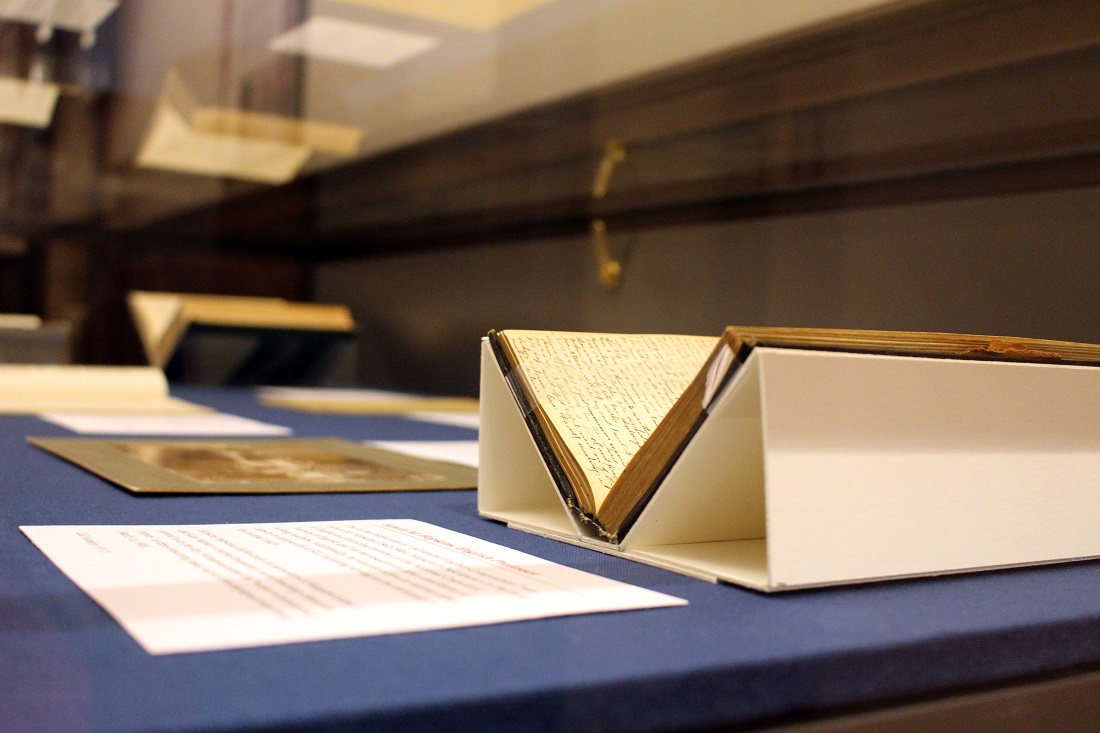
Photograph of pages in a diary kept by KU English Professor Edwin M. Hopkins

A sample item on display in Exhibit Case 1: a diary of KU English Professor
Edwin M. Hopkins. Call Number: PP 73. Click image to enlarge.

Exhibit Case 2 is located at the east entrance to the North Gallery. It contains the actual writings produced by two women students for “Advanced English Composition”: the 1899 course notes of Margaret Kane (PP 23) and the 1900 course papers of Kate Hansen (PP 19). These texts were required for the successful completion of their courses. They show instances of Margaret and Kate writing within, pushing against, and even occasionally even moving beyond the expectations of these genres. These writings stress the importance of viewing students—those in the past and in the present—as unique individuals, not a homogeneous group.
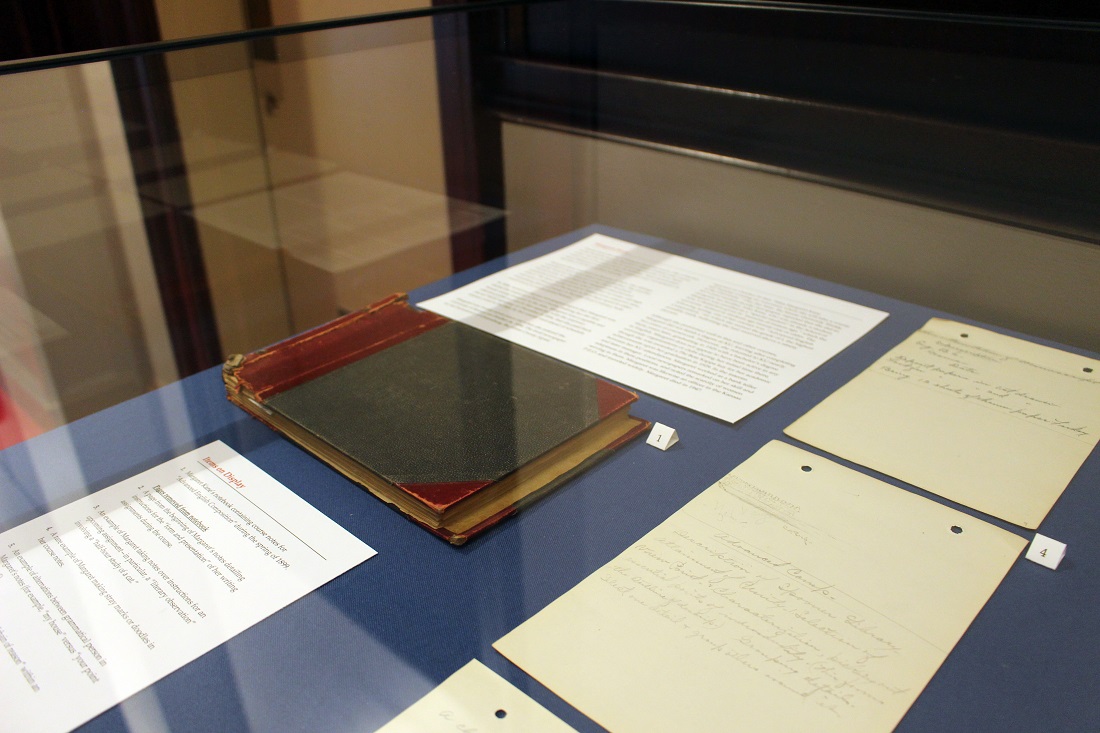
Phtoograph of selected writings of Margaret Kane

Exhibit Case 2 highlights information from life of student
Margaret Kane and features her notebook and course notes.
Call Number: PP 23. Click image to enlarge.
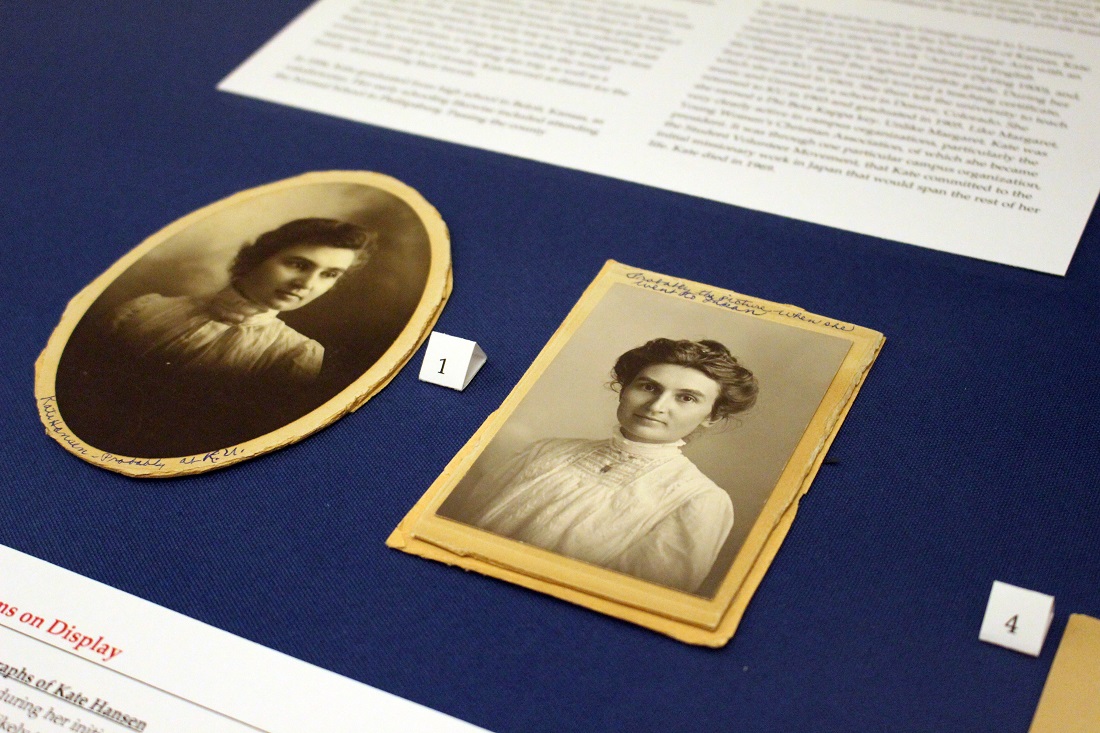
Photographs of Kate Hansen

Exhibit Case 2 likewise highlights information about the life of student
Kate Hansen, including these two photographs taken during and
shortly after her time at KU. Call Number: PP 19. Click image to enlarge.
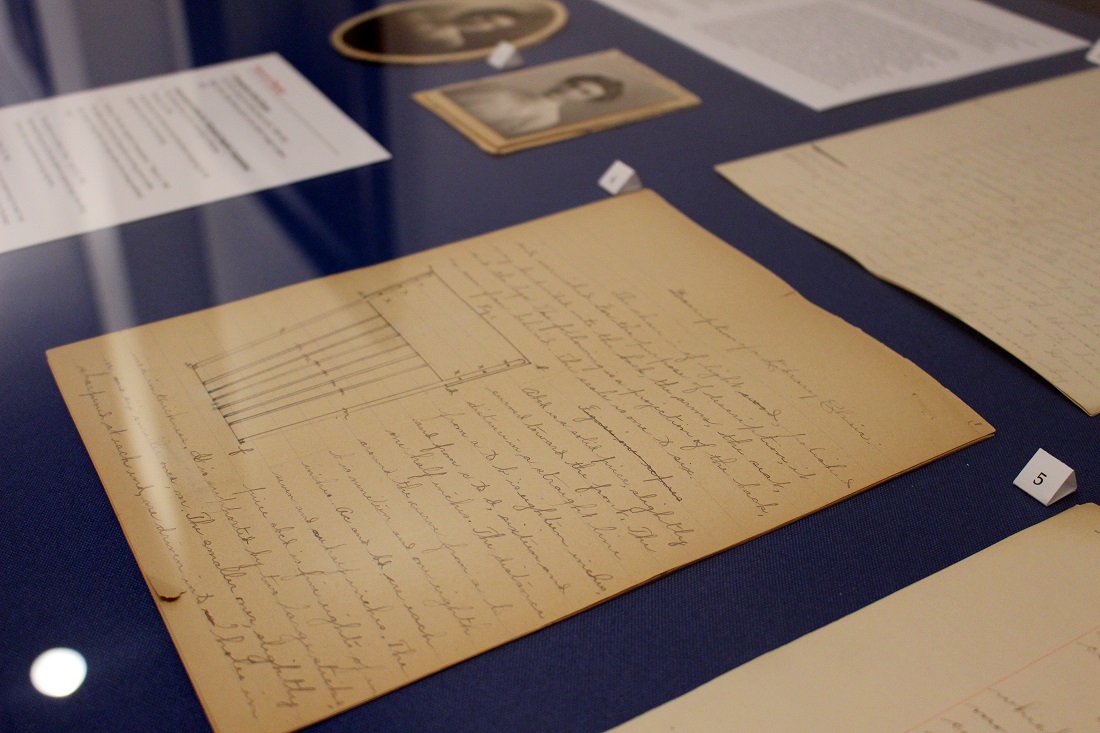
Photograph of "Description of a Library Chair" by Kate Hansen

Among Kate Hansen’s featured papers is her essay providing a
“Description of a Library Chair.” Call Number: PP 19. Click image to enlarge.

Curating this exhibit has been a joy. It has provided an opportunity to share my research with a more public audience, a feature that dissertations and the academic publications that stem from them too often lack. I’m extremely grateful to the staff at Kenneth Spencer Research Library—particularly those in public services, conservation, and University Archives—for assisting me with this process.

Sarah E. Polo
KU Doctoral Candidate in Rhetoric and Composition
Public Services Student Assistant
Holiday Hosting with “The ‘Home Queen’ Cook Book”

December 7th, 2018

December has arrived and with it the winter holiday season! Since the holiday season means holiday parties, I wanted to look into hosting an oft forgotten type of affair – a lovely, elegant dinner party!

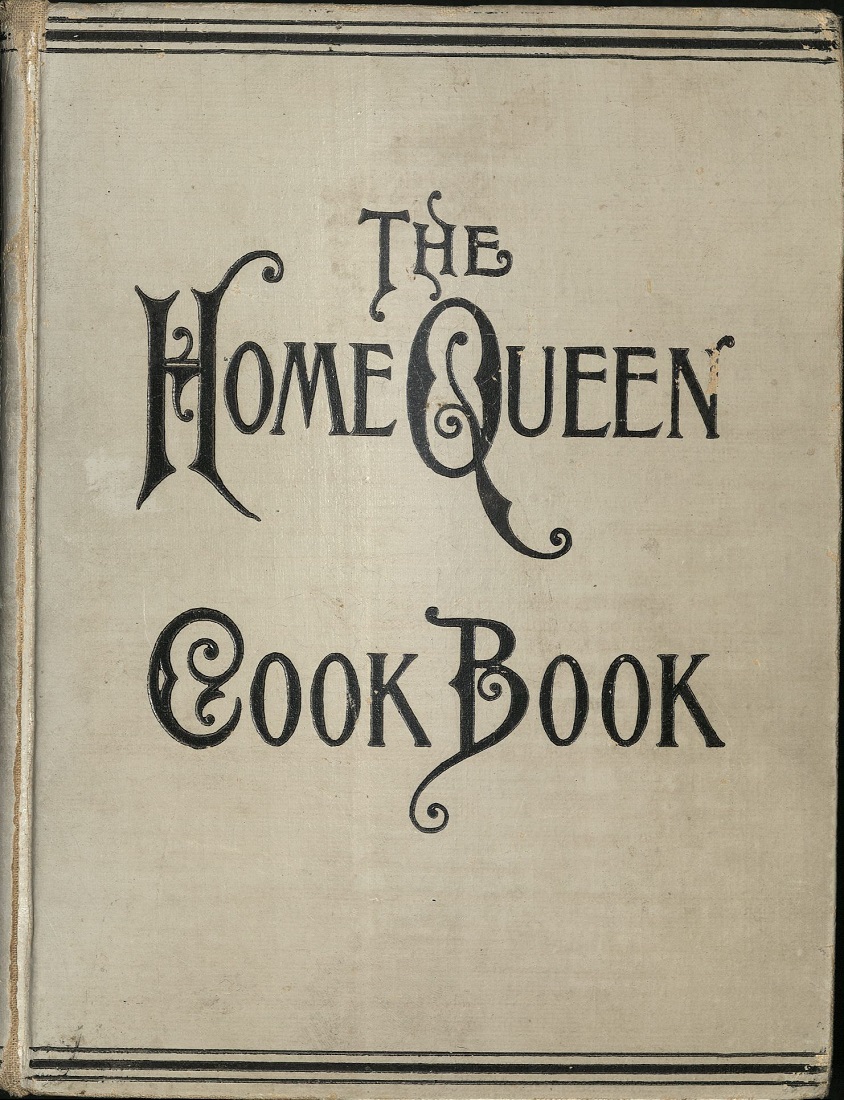
Personally, I do not have much experience with dinner parties so I decided to go to the best source I could find: The “Home Queen” Cook Book. Compiled during the 1893 World’s Fair in Chicago, The “Home Queen” Cook Book features recipes, etiquette, and entertaining suggestions from “over two hundred World’s Fair lady managers, wives of governors, and other ladies of position and influence.” Armed with the advice of these many esteemed ladies, I set out to see if I could recreate an elegant dinner party from generations past. What follows is a story of research, abandoned dreams, and a final feeble attempt to do anything I had originally hoped to accomplish.

Image of the cover of "The 'Home Queen' Cook Book," 1901

The cover of The “Home Queen” Cook Book, 1901.
Call Number: Galloway C35. Click image to enlarge.

Now, I do not know what everyone else pictures when they think of a dinner party, but I was envisioning an elegantly set table with beautiful linens and fine china to hold a magnificent multi-course meal. With that image in mind, I immediately began examining the section on “Party Suppers” in The “Home Queen” Cook Book. That sounds like the place to start, right? And what did I learn? First, a “party supper” and a dinner party are not synonymous. A party supper is much less formal than what I was expecting when I read the heading:

An evening party… would assemble quite early in the evening. This would give plenty of time for social intercourse, music and innocent amusements. Refreshments might be carried around on trays, and the guests served with cake, coffee or lemonade. Fine large napkins should first be handed around. These should be spread on the knees to receive the plates afterward furnished. Delicate sandwiches of chopped tongue, spread thinly on sandwich biscuits, or the white meat of turkey or check are very nice for such entertainments. Ice cream, confectionery, and ripe fruit of any kind may be served.

I liked the idea of this informal gathering, which was meant to “facilitate conversation, ease, and the choosing of congenial companions out of mixed gatherings at large parties.” What more could you want from a festive holiday party? However, I still had the aforementioned picture of a dinner party in my mind. This prompted me to look to the sections on “The Mid-Day Meal” and “The Evening Meal” in the book, hoping to find any information that might be of use. Lo and behold, I found exactly what I was picturing in “The Mid-Day Meal” section! In it was everything I could ever want to know about table settings, the most appropriate food choices, even how to properly invite your guests to the affair. Before spending a great deal of time on the overwhelming amount of food described, I decided to focus first on the most basic aspect of the evening: a proper table setting.

After reading the descriptions of the proper linens, plates, crystal, and silver, I realized that just setting the table would cost a small fortune. The proper “snow white” table linen made of the suggested “handsome Irish damask” would easily cost over $100 for a small tablecloth. Any attempt at recreating the quality of a proper dinner table setting was clearly out of reach.

“Ok,” I thought to myself, “If the expected quality is unmanageable, what can I do that would dress up a somewhat subpar table setting so that it at least looks elegant?” Returning to the book, I found the perfect remedy: an artfully folded napkin. Aided by the “Folding Table Napkins” section, I began my attempt to create anything that might give me the air of sophistication I had hoped to achieve when I originally formed this brilliant plan of mine.

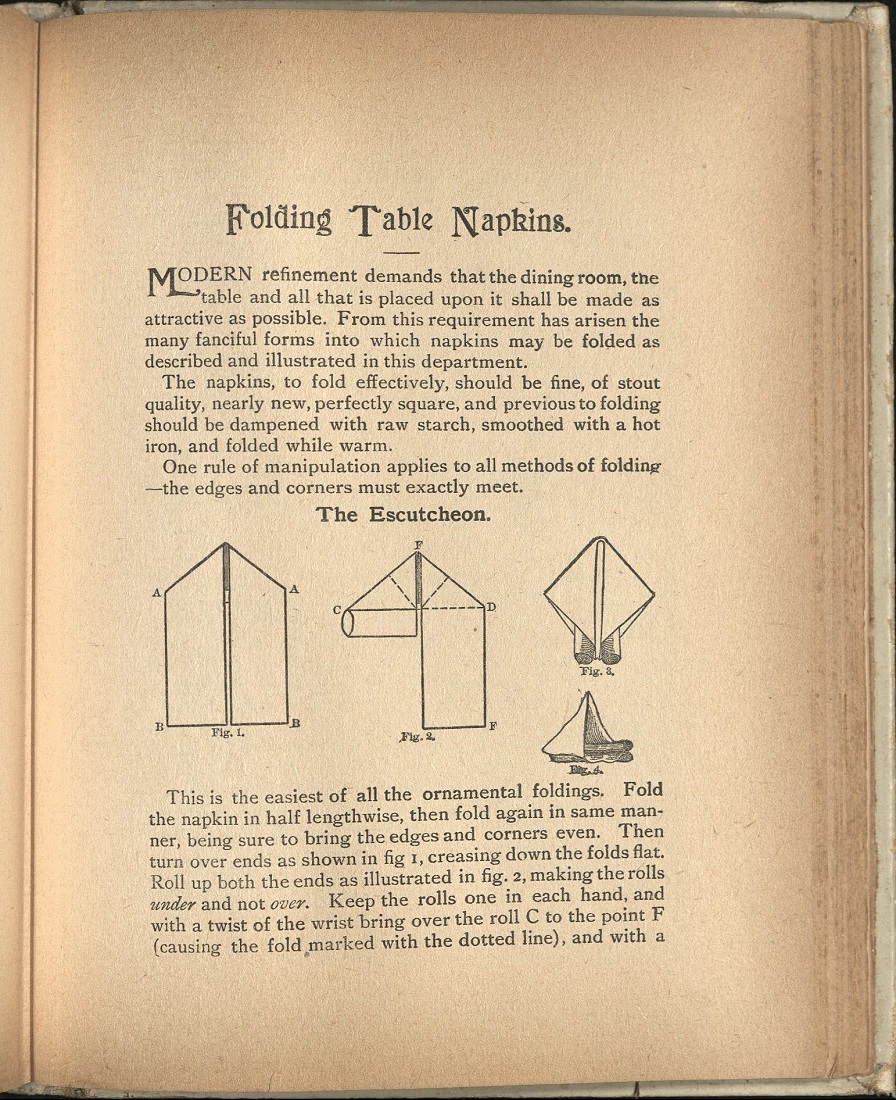
Image of the instructions for the Escutcheon napkin fold in "The 'Home Queen' Cook Book," 1901

Escutcheon napkin fold diagram and instructions in
The “Home Queen” Cook Book, 1901.
Call Number: Galloway C35. Click image to enlarge.

The “Home Queen” Cook Book features no less than twenty-one different napkin-folding techniques to help ensure that “the dining room, the table and all that is placed upon it shall be made as attractive as possible.” With such a plethora of options – all with detailed instructions and pictures to guide me – I thought I had finally found the perfect starting point on my way to my dream dinner party. Unfortunately, my optimism and confidence were quickly destroyed after attempting only two of the possible folds: the Escutcheon (picture above) and the Chestnut Pocket (pictured below).

Image of the instructions for the Chestnut Pocket napkin fold in "The 'Home Queen' Cook Book," 1901

The Chestnut Pocket napkin fold diagram and instructions in
The “Home Queen” Cook Book, 1901.
Call Number: Galloway C35. Click image to enlarge.

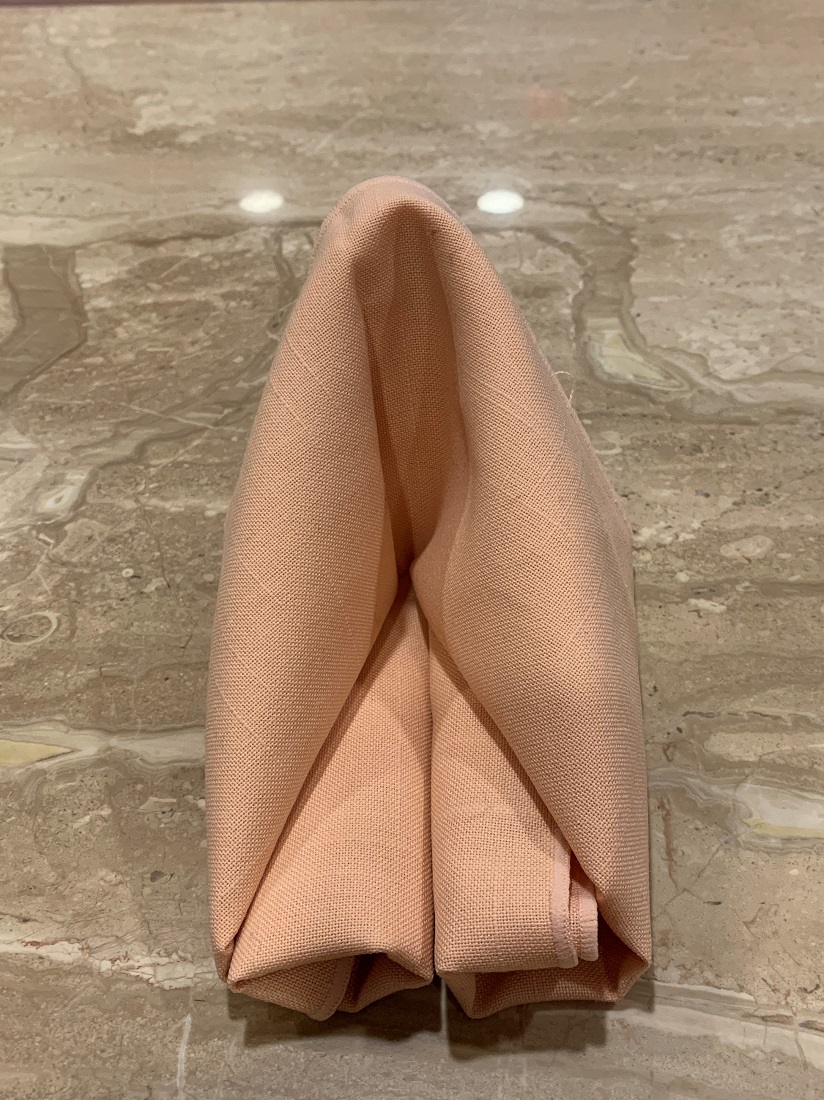
The Escutcheon: Described as “the easiest of all the ornamental foldings,” the Escutcheon was the beginning of the end for me. It was here I learned that the instructions to starch and iron the napkins immediately before folding was not a suggestion but truly an absolute requirement. After close to a half an hour of intense labor and a great deal of swearing, I finally managed to produce… something.

Photograph of an Escutcheon napkin fold attempt

My attempt at the Escutcheon napkin fold. Click image to enlarge.

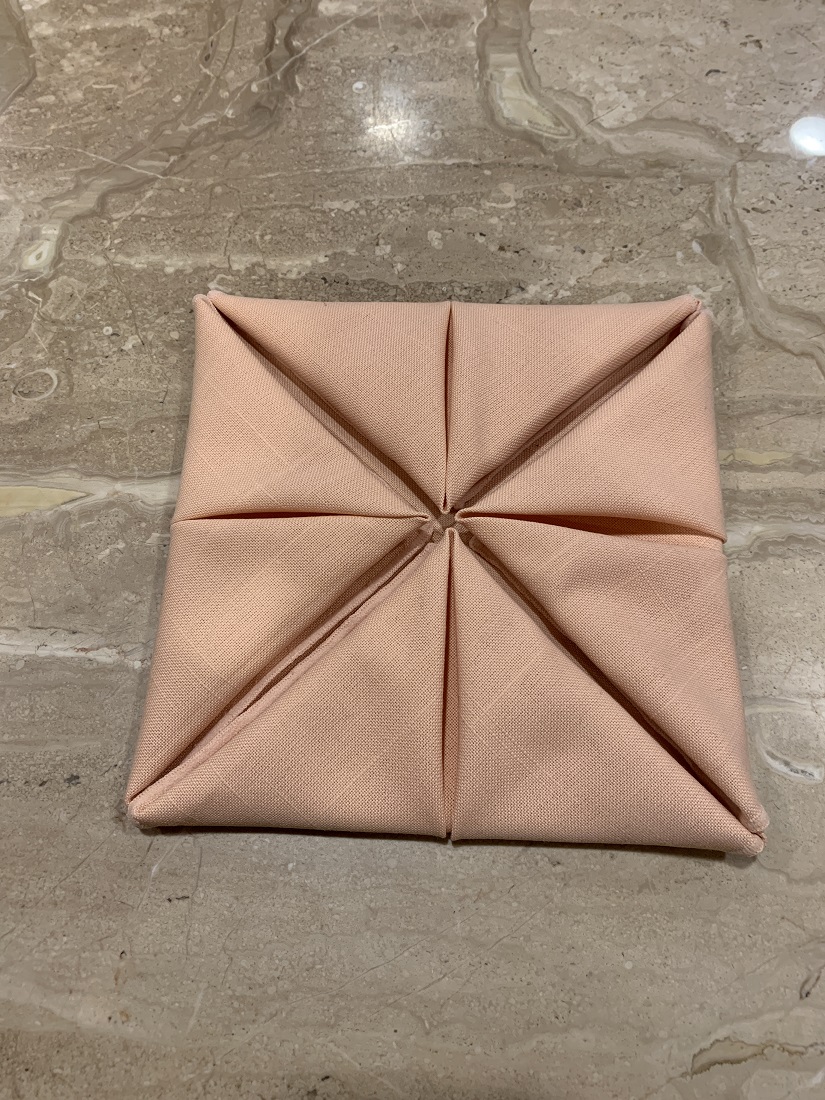
The Chestnut Pocket: My attempt to regaining any semblance of dignity after being so embarrassingly defeated by the Escutcheon finally yielded a positive result for me! I even took it a step beyond the Chestnut Pocket and created the Pocket Napkin. I found that the secret to success lay in finding a napkin-folding technique that did not need to stand up. With this revelation, I managed to produce the following creation:

Photograph of a Pocket napkin fold attempt

My successful attempt at the Pocket napkin fold
(a variation on the Chestnut Pocket napkin fold).
Click image to enlarge.

So after all of this – the research, the numerous disappointments, the defeat, and eventual triumph – I am sure you must be wondering: will I be hosting my envisioned elegant dinner party this holiday season? To put it succinctly, absolutely not. There is only so much embarrassment by fabric I am willing to put myself through in the name of holiday entertaining.

Emily Beran
Public Services

Throwback Thursday: Reading Room Edition

December 6th, 2018

Each week we’ll be posting a photograph from University Archives that shows a scene from KU’s past. We’ve also scanned more than 34,800 images from KU’s University Archives and made them available online; be sure to check them out!

Good luck on finals next week, Jayhawks! Spencer’s Reading Room and lounge are great options for quiet places to study.

Photograph of Special Collections Reading Room at Spencer Research Library, 1968

The Special Collections Reading Room at Spencer Research Library, 1968.
University Archives Photos. Call Number: RG 32/37 1968: University of Kansas
Libraries: Special Collections (Photos). Click image to enlarge.

Spencer Research Library opened to researchers on December 2, 1968 – a couple of weeks after the dedication ceremony (November 8th) and public opening (November 15th). At the time, the Kansas Collection, Special Collections, and University Archives had separate Reading Rooms on the second, third, and fourth floors, respectively. Today, Spencer has one Reading Room for all researchers, and the above photo was taken from roughly where the reference desk is now located.

Caitlin Donnelly
Head of Public Services

World War I Letters of Milo H. Main: December 3-9, 1918

December 3rd, 2018

In honor of the centennial of World War I, this is the second series in which we follow the experiences of one American soldier: twenty-five year old Milo H. Main, whose letters are held in Spencer’s Kansas Collection. On Mondays we’ll post a new entry featuring selected letters from Milo to his family from that following week, one hundred years after he wrote them.

Milo Hugh Main was born in or near Pittsfield, Illinois, on November 21, 1892 to William and Rose Ella Henry Main. The family moved to Argonia, Sumner County, Kansas, in 1901. After his mother died in 1906, Milo remained in Argonia with his father and his two sisters Gladys (b. 1890) and June (b. 1899). His youngest sister Fern (b. 1905) was sent to live with relatives in Illinois.

As Milo reported to the Kansas State Historical Society in 1919, after graduating from high school he worked as a store clerk. He resigned in July 1917 and took a position at Standard Oil Company, possibly co-managing a gas station in Argonia.

Milo entered into military service on September 21, 1917. He served as a wagoner – a person who drives a wagon or transports goods by wagon – in Battery F, 130th Field Artillery. He was stationed at Camp Funston (September-October 1917) and Camp Doniphan (October 1917-May 1918). On May 19, 1918, he boarded the ship Ceramic in New York City and departed for Europe.

Image of Milo H. Main's letter to his family, December 8, 1918

Dec 8th, 1918

“In Paris.”

Dear Father & Sisters:-

Just a line to let you know that I am in Paris to-nite and feeling fine. Some town.

Yours truly,

Milo H. Main

Bat 7 130 FA
A.E.F.

Meredith Huff
Public Services

Emma Piazza
Public Services Student Assistant

Throwback Thursday: Bobsled Edition

November 29th, 2018

Each week we’ll be posting a photograph from University Archives that shows a scene from KU’s past. We’ve also scanned more than 34,800 images from KU’s University Archives and made them available online; be sure to check them out!

Did you use Monday’s snow day as an opportunity to go sledding? If so, we hope you had a sturdier sled than the one in this week’s photograph!

Photograph of KU students on a makeshift bobsled, 1912

KU students on a makeshift bobsled, 1912. University Archives Photos.
Call Number: RG 71/0 1912 Prints: Student Activities (Photos).
Click image to enlarge (redirect to Spencer’s digital collections).

Caitlin Donnelly
Head of Public Services