The University of Kansas

Inside Spencer: The KSRL Blog

Books on a shelf

Welcome to the Kenneth Spencer Research Library blog! As the special collections and archives library at the University of Kansas, Spencer is home to remarkable and diverse collections of rare and unique items. Explore the blog to learn about the work we do and the materials we collect.

This blog may contain archived web content. This blog may link to catalog records which no longer exist as of a software change in 2026.

Meet the KSRL Staff: Elspeth Healey

July 23rd, 2019

This is the latest installment in a recurring series of posts introducing readers to the staff of Kenneth Spencer Research Library. Today’s profile features Elspeth Healey, who joined the Spencer Research Library in 2011 as a special collections librarian. 

Where are you from?

I was born in the U.S., but I grew up in Toronto, Canada. From time to time, I’ll have a student come up to me after a class session and say “where are you from?” I have lived in the U. S. since college–so more than half of my life–but sometimes that Canadian accent still shines through!
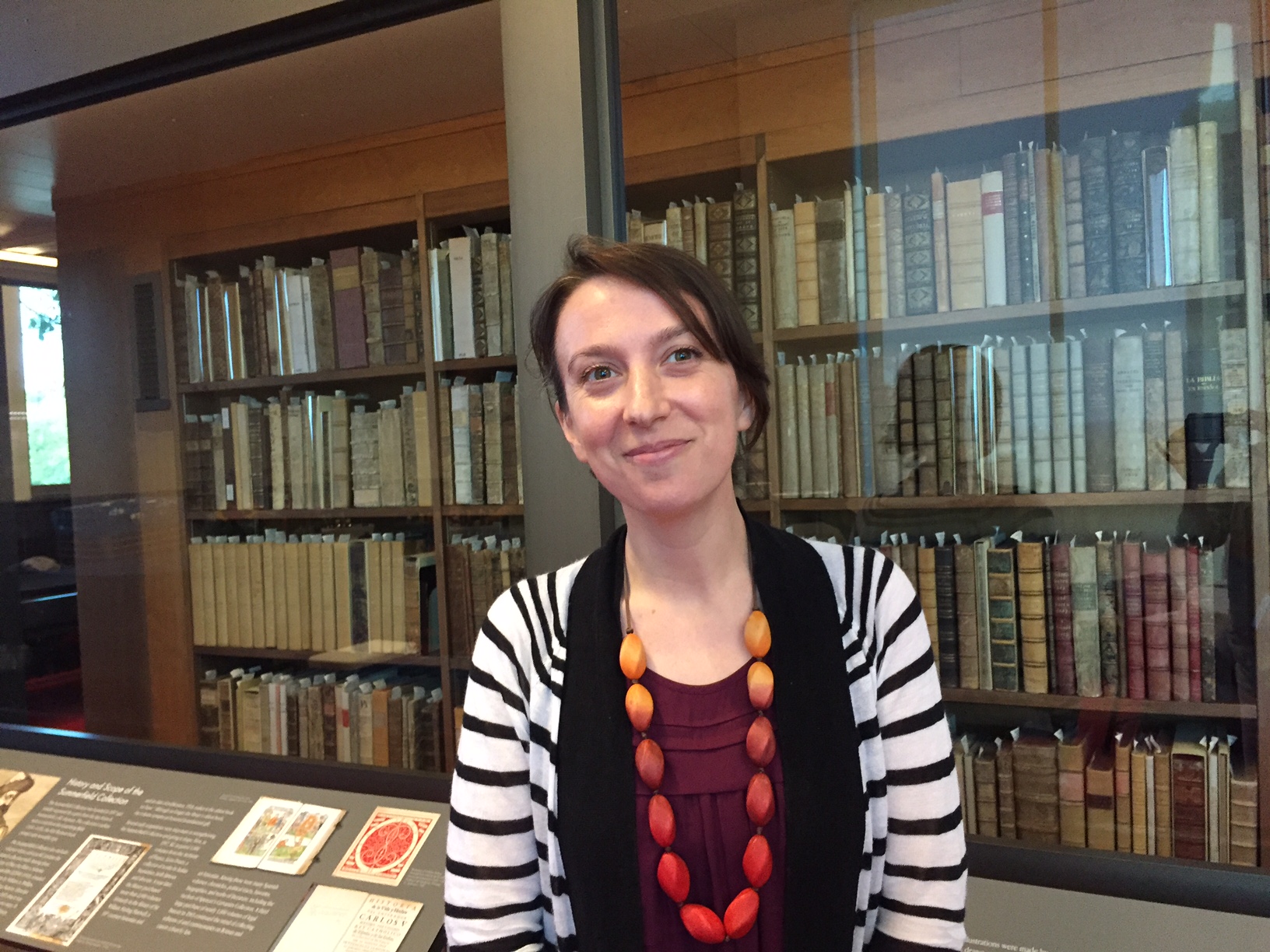
Elspeth Healey in Spencer Library's North Gallery

Elspeth Healey, Special Collections Librarian, in Spencer Research Library’s North Gallery. Click image to enlarge.

What does your job at Spencer entail?

With my colleague Karen Cook, I am one of two special collections librarians. My curatorial responsibilities include materials for the Americas, including Latin America, the United Kingdom, and Ireland. In addition to building Spencer’s collections by working with donors and booksellers, I collaborate with cataloging and conservation to make the library’s collections accessible, lead instruction sessions, engage in outreach (through events, blog posts, exhibitions, etc.), answer reference queries for researchers on and off site, and contribute to digital projects.

How did you come to work in special collections and archives?

As an undergraduate, I had worked in the preservation department of my university’s special collections library, making mylar wrappers, drop-spine boxes, and other protective enclosures. I was fascinated by the variety of books that would come across my work bench, from 20th century poetry and plays to 18th century mathematical treatises. Later, as I was researching my dissertation in English literature, I came to realize that the moments that excited me most were those spent conducting archival research. I was energized not only by the materials I examined that related to my specific project, but I also enjoyed encountering materials that related to the projects of friends and colleagues and would alert them to those materials. That is what this job is at its heart: helping to connect researchers (of all types) with the materials that have the potential to advance and transform their understanding of a particular question or subject. I applied to library school as I was finishing my dissertation, and attended a program where I had the opportunity to work 20-hours a week in a special collections library while taking the coursework for my MSIS (Master of Science in Information Studies) degree. I always advise those who want to enter the field that gaining hands-on experience working in a special collections library and archives is one of the most important things you can do in library school: it is what will help you secure a job following graduation, and it is what will enable you to determine if this is really what you want to do as a profession.

What is the strangest item you’ve come across in Spencer’s collections?

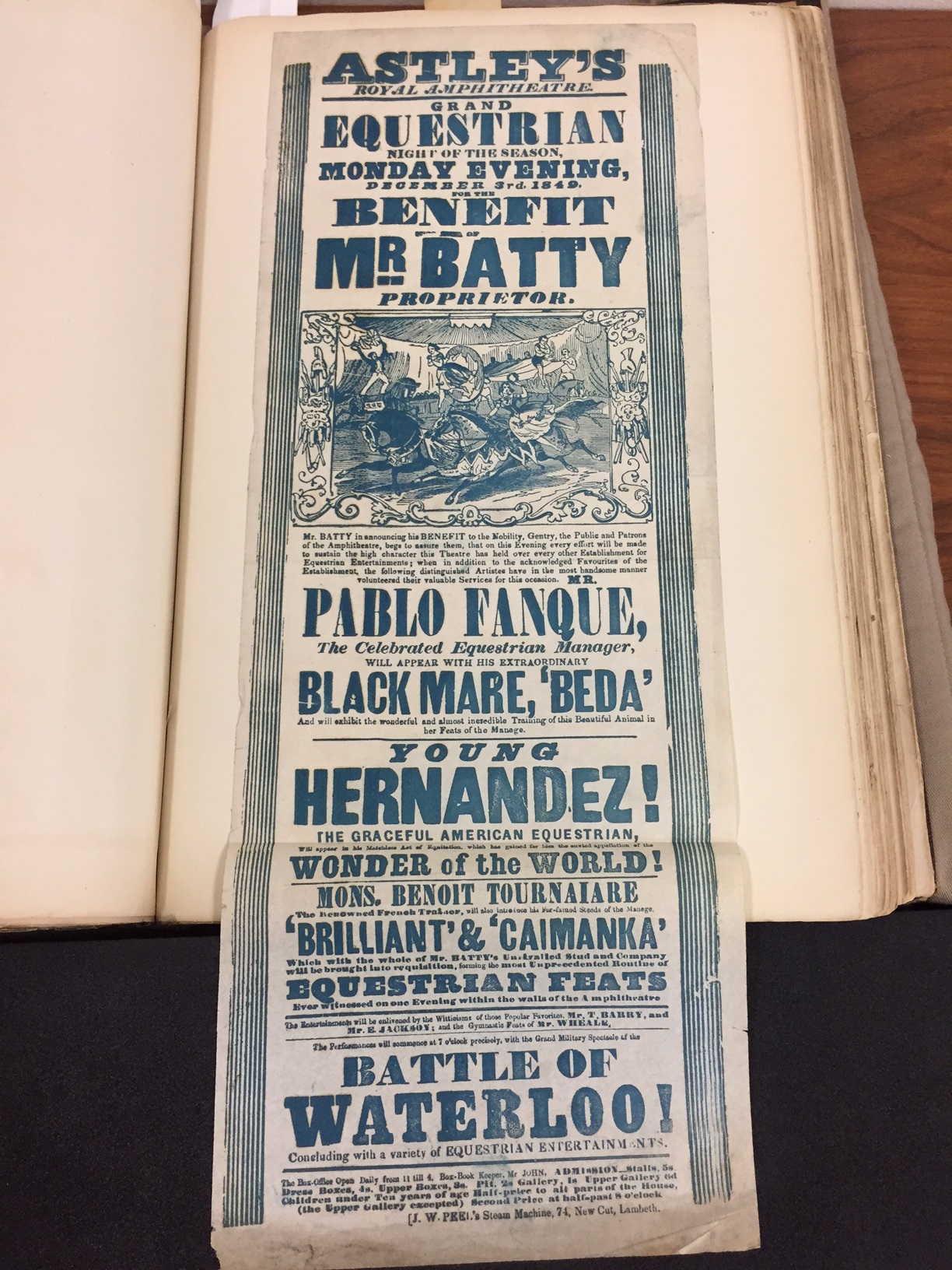
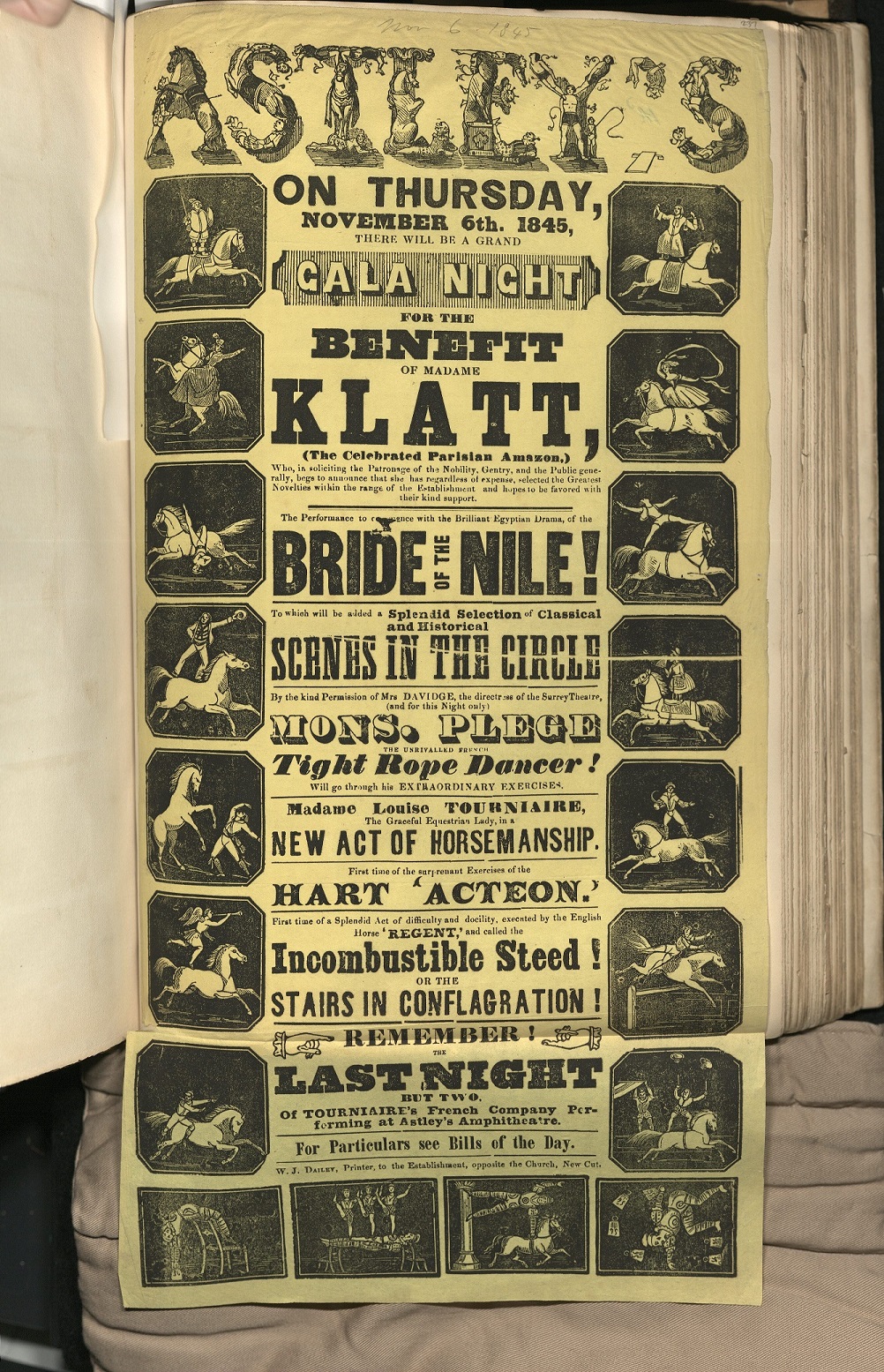
There are so many strange and interesting things in Spencer’s collections. We have a three volume scrapbook containing rare ephemera for Astley’s Amphitheatre, which opened in London in the late 18th-century and was originally known for its equestrian spectacles and show riding. As it developed, it incorporated circus-type features alongside other types of performance, so it is often recognized as London’s first circus. The posters, flyers, clippings, and ephemera in the scrapbooks offer a fascinating record of its history, and we hope to feature them at greater length in a future blog post. Other unusual items that pop to mind include 1930s form rejection letters from a science fiction pulp magazine, early Don Quixote fan fiction, and locks of hair (a favorite 19th century keepsake). I love that each day I might come across some new intriguing item that I can then share with others.
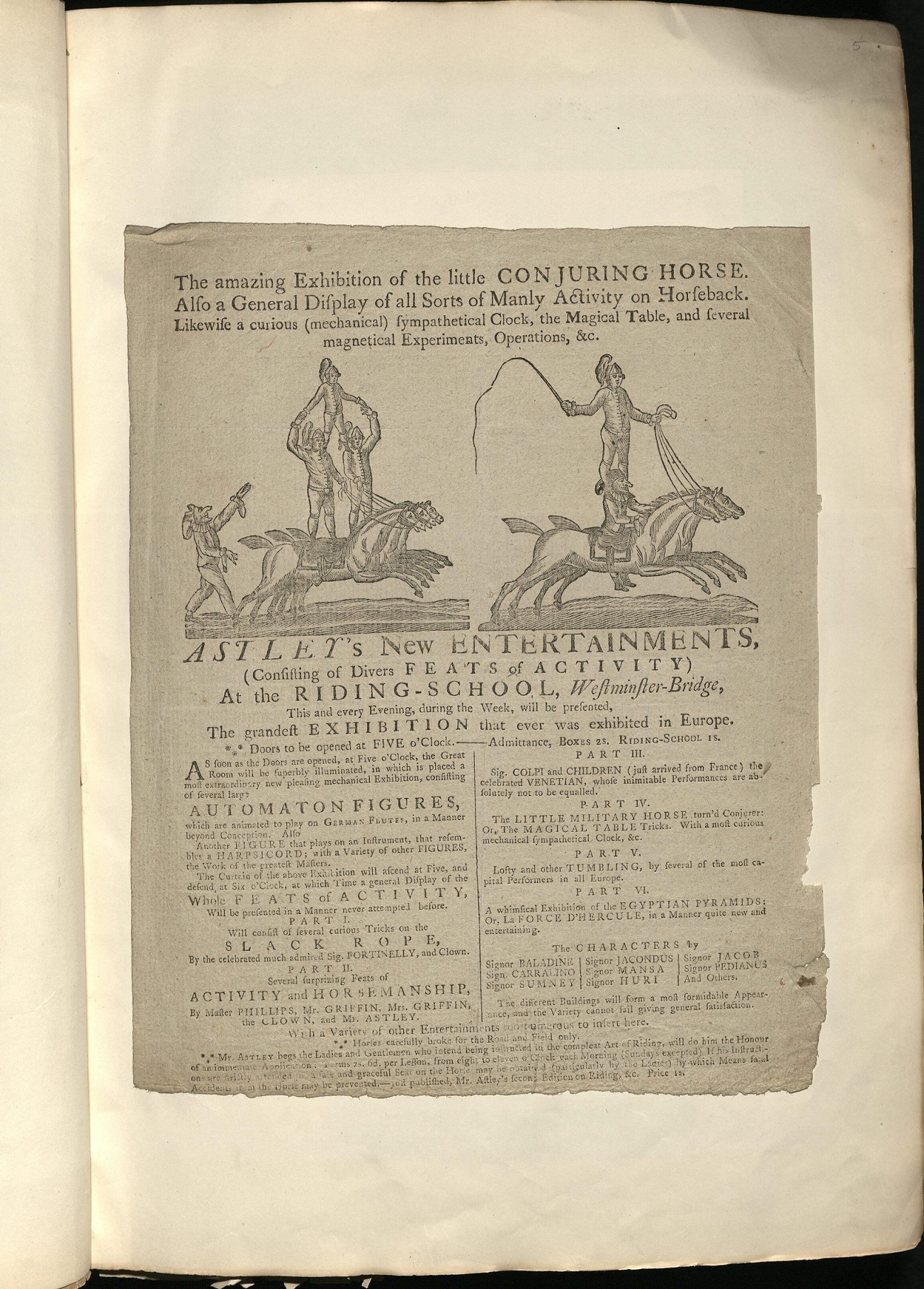
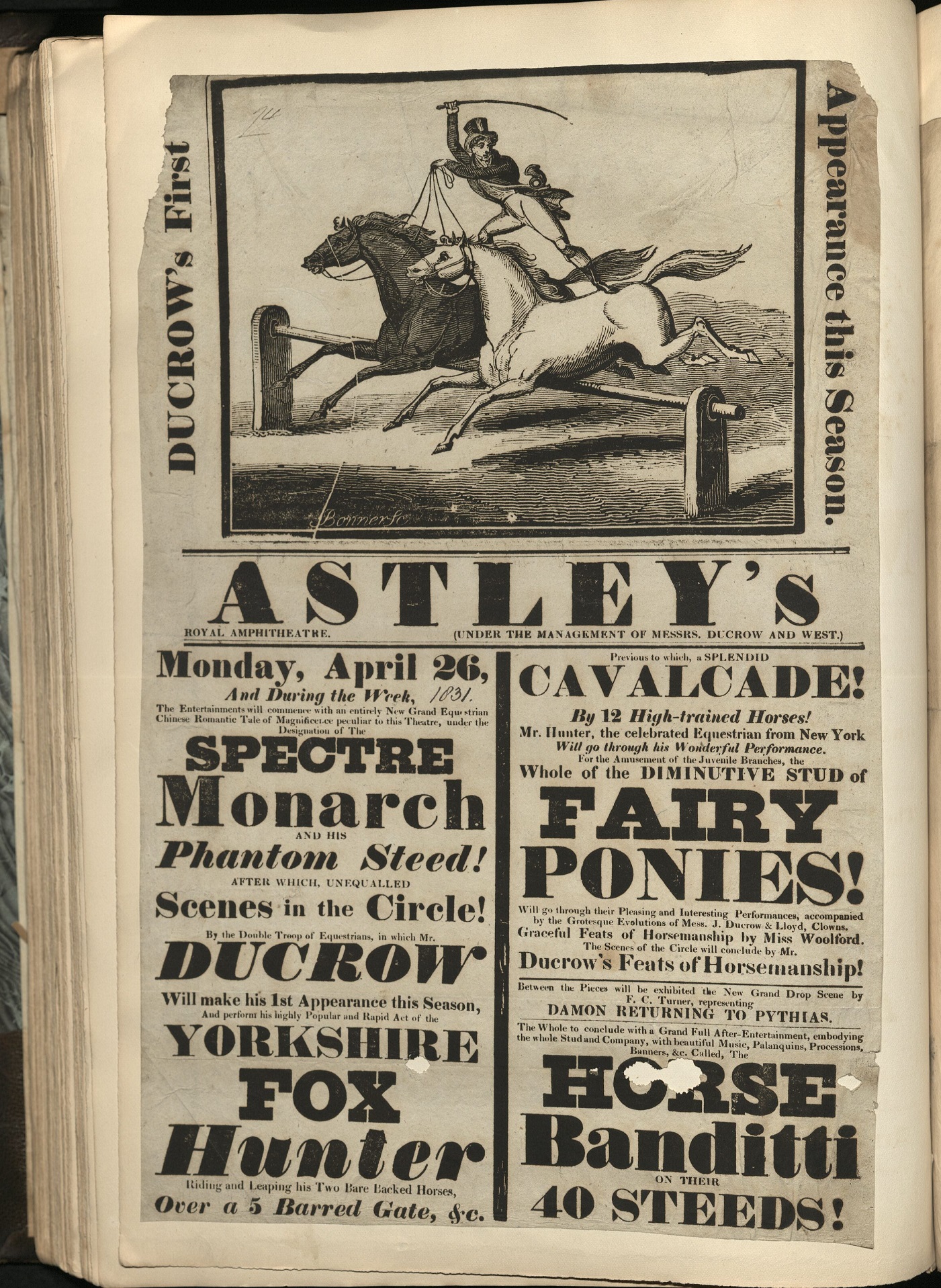
Scrapbook page containing flyer for "The Amazing Exhibition of the little Conjuring Horse," Astley's New Entertainments.   Scrapbook page containing "Ducrow's First Appearance this Season" with picture of a man with one foot on the back of each of two horses, April 1831. Astley's Royal Amphitheatre

Image of scrapbook page containing a poster for Astley's Royal Amphitheatre, advertising a Grand Equestrian evening and events featuring Pablo Fanque, Young Hernandez, etc.  Poster for "Astley's on Thursday, November 6, 1845 ...Gala Night," with pictures of show riding along the exterior of the poster in Astley's Amphitheatre scrapbook, volume 3, p. 237

Posterbills for Astley’s performances and Astley’s Amphitheatre in Astley’s Amphitheatre scrapbooks. Posters shown are circa 1775-1847. Call Number: G126, volumes 1-3. Click on images to enlarge (it’s worth it!).

What part of your job do you like best?

See above! I relish connecting researchers–whether students, scholars, or members of the public–with materials that will open up new perspectives and avenues of inquiry.

What are your favorite pastimes outside of work?

The usual things like reading, walking, movies, and travel, but I also love tracking down some of my favorite Canadian delicacies whenever I can: Nanaimo bars, butter tarts, poutine, and candy bars like Eat-more and Coffee Crisp. I’m still waiting for the day when they open a Tim Horton’s in Kansas… Lawrence certainly has much better (and less corporate) coffee and pastries, but some things just remind you of your youth…

What piece of advice would you offer a researcher walking into Spencer Research Library for the first time?

Not everything is in the online catalog. We aspire to get it all there one day, but every special collections library holds materials that haven’t quite made it into the catalog yet for one reason or another. Accordingly it’s always worth speaking to the librarian who oversees the subject area in which you are conducting research to see if there might be materials you that have missed.

The other piece of advice is to enjoy the research process. Sometimes the thing that you came to the library to examine won’t end up being the thing that really captures your intellect and imagination. Instead, it will be a folder of letters you might come across in the box next to the manuscript you were seeking to examine. This unanticipated discovery may lead your project in a new direction. Embrace the serendipity that archival research permits!

Elspeth Healey
Special Collections Librarian
Throwback Thursday: KU Astronaut Edition

July 18th, 2019

Each week we’ll be posting a photograph from University Archives that shows a scene from KU’s past. We’ve also scanned more than 34,800 images from KU’s University Archives and made them available online; be sure to check them out!

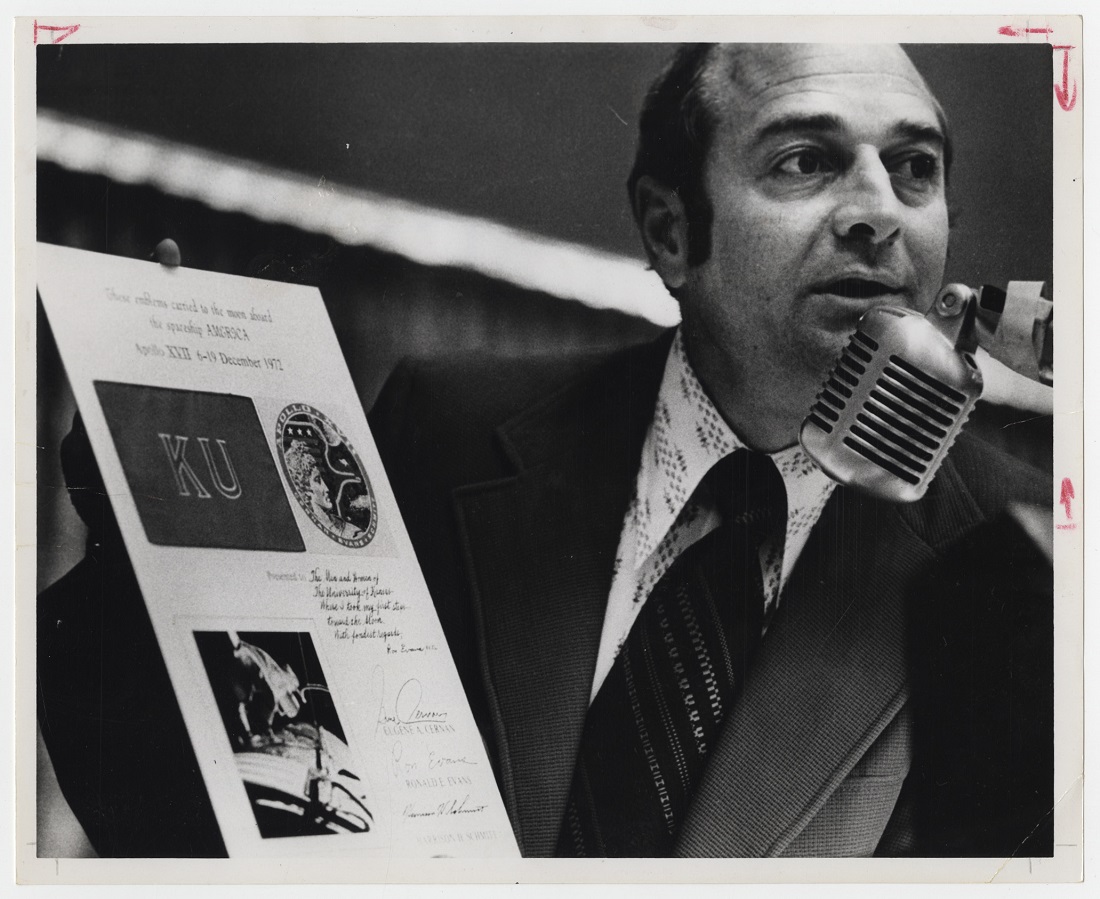
As we commemorate the fiftieth anniversary of Apollo 11 – the first manned mission to land on the Moon – this week’s photograph features astronaut Ron Evans (1933-1990), a Kansas native who graduated from KU with a bachelor’s degree in 1955.

A Navy pilot during the Vietnam War, Evans was one of the nineteen astronauts selected by NASA in 1966. He served as a member of the astronaut support crews for the Apollo 7 and Apollo 11 flights and as backup Command Module Pilot for Apollo 14. Evans’ only space flight was as Command Module Pilot of Apollo 17. (It was during this December 1972 mission that the moon rock housed at Spencer Research Library was collected.)

Photograph of Astronaut Ron Evans presenting a memento carried to the moon, April 1973
Astronaut Ron Evans presenting a KU flag he carried to the moon during the Apollo 17 mission, April 1973. The plaque is inscribed “To the men and women of KU where I took my first steps toward the moon.” Lawrence Journal-World Photo Collection, University Archives Photos. Call Number: RG LJW P/ Ron Evans (Photos). Click image to enlarge.

During the Apollo 17 mission, Evans piloted the command module to the Moon. Once there, the lunar module separated from the command module and carried astronauts Eugene Cernan and Harrison Schmitt to the Moon’s surface. Evans (and five mice) maintained lunar orbit while Cernan and Schmitt explored the Moon’s surface, setting records for the longest time in lunar orbit (almost 148 hours) and the number of lunar orbits (seventy-five). According to a NASA description of Apollo 17, Evans also conducted numerous scientific activities.

In addition to the panoramic camera, the mapping camera, and the laser altimeter (which were used on previous missions), three new experiments were included in the service module. An ultraviolet spectrometer measured lunar atmospheric density and composition, an infrared radiometer mapped the thermal characteristics of the Moon, and a lunar sounder acquired data on the subsurface structure.

Finally, Evans brought the astronauts back to Earth. While en route, he completed an hour-long spacewalk to retrieve film cassettes from the lunar sounder, mapping camera, and panoramic camera.

Evans returned to the KU campus in April 1973 to receive the university’s Distinguished Services Award, the highest honor given by the University of Kansas and the KU Alumni Association. (Kenneth and Helen Spencer were the first couple to receive the citation – in 1943 and 1968, respectively.) Evans also spoke a the Senior-Parent luncheon, an event for graduating seniors and their relatives. During the luncheon, Evans presented Chancellor Raymond Nichols with the plaque shown in the photograph above. The plaque was placed in the auditorium of Nichols Hall, which was then the space technology building on campus. The hall’s auditorium was renamed the Ron Evans Apollo Room.

A letter from Robert P. Ryan to Robert E. Foster, 1972
A letter from Robert E. Foster to Robert P. Ryan, 1972
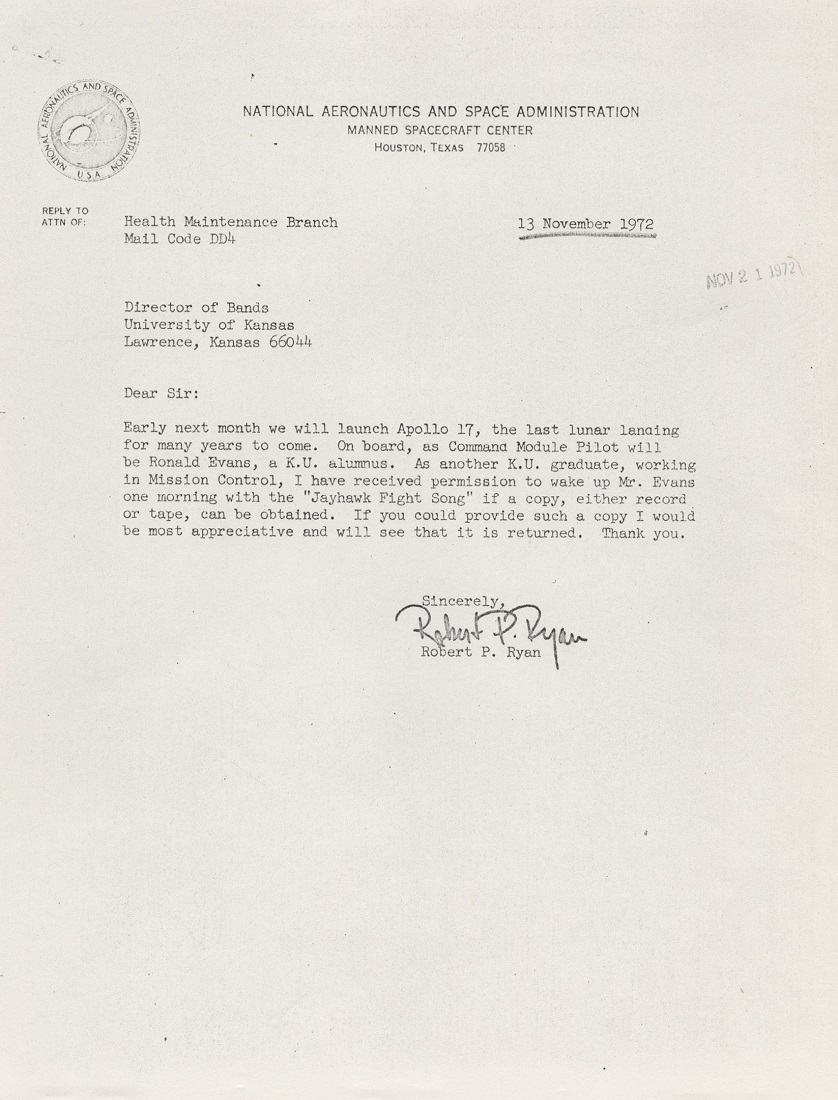
One month before the Apollo 17 mission, KU alumnus Robert P. Ryan at NASA wrote to Robert E. Foster, KU’s Director of Bands, requesting a copy of KU fight songs. Ryan had “received permission to wake up Mr. Evans one morning with” one. Foster was able to provide the songs. Copies of letters in Ron Evans’ biographical file, University Archives. Click images to enlarge.

According to an account in the June 1973 issue of Kansas Alumni, Evans noted in his brief talk at the Senior-Parent luncheon that “I have come back to KU to redeem myself. One day during the flight, they played the Jayhawk fight song three or four times to wake me up and I didn’t hear it!”

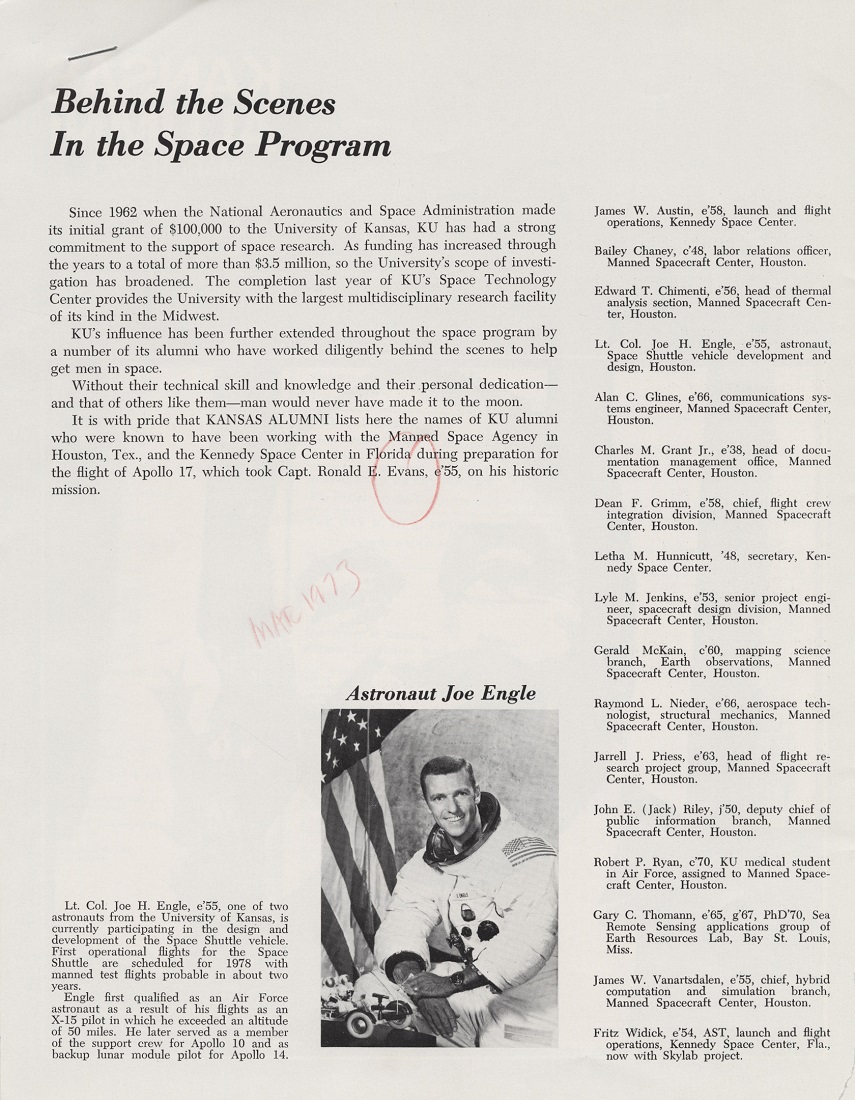
An article entitled "Behind the Scenes in the Space Program," Kansas Alumni, March 1973
This article in the March 1973 issue of Kansas Alumni lists the names of KU alumni with known involvement in the space program during preparations for the Apollo 17 mission. Call Number: LH 1 .K3 G73. Click image to enlarge.

Caitlin Donnelly
Head of Public Services

Spencer Research Library: Home of Kansas’s Apollo 17 Moon Rock

July 17th, 2019

We have previously highlighted the oldest man-made item in Spencer’s collections: a cuneiform tablet that is more than 4,000 years old. You can visit the library and see the tablet on display in the library’s North Gallery exhibit.

But, did you know that there is one item in Spencer’s holdings that is even older than the cuneiform tablet? It’s a moon rock that is approximately 3.7 billion years old!

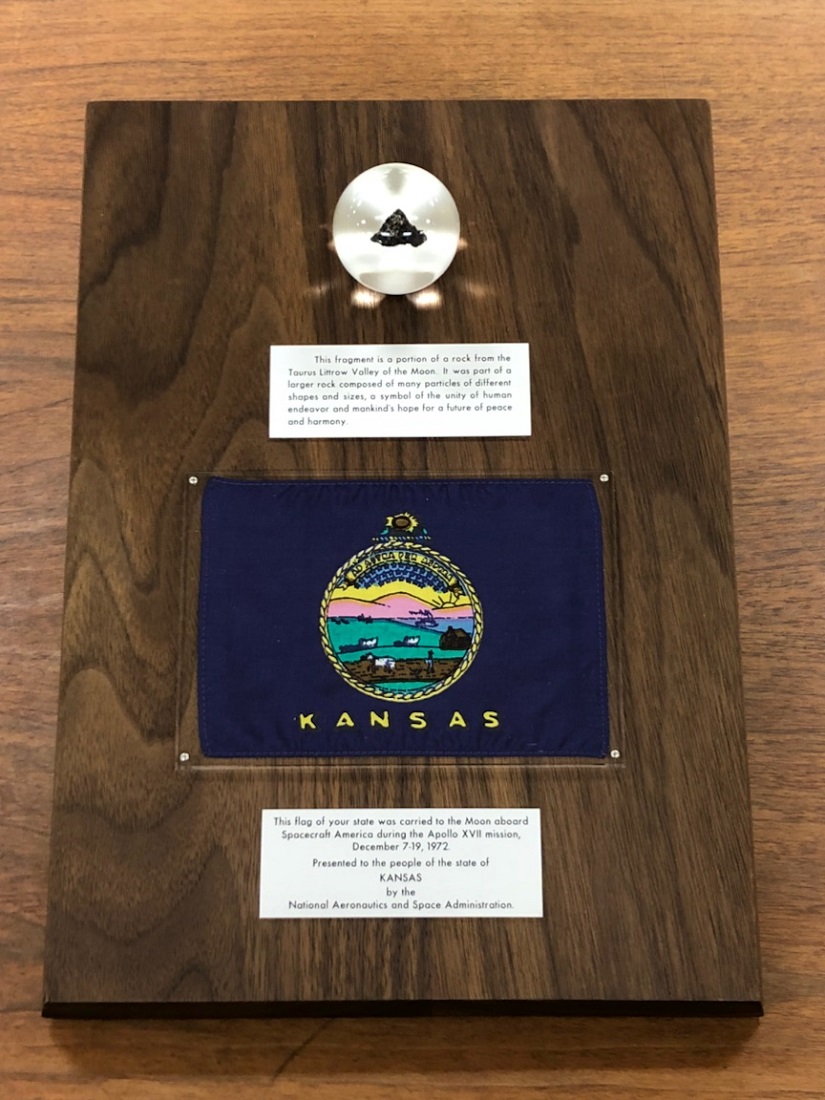
Photograph of the Kansas Apollo 17 lunar sample display, 1972
Kansas’s Apollo 17 lunar sample display, 1972. Robert Blackwell Docking Papers. Call Number: RH MS VLT 167. Click image to enlarge.

The rock was gathered during the December 1972 Apollo 17 mission, the last human expedition to the Moon. According to information from the Smithsonian National Air and Space Museum,

[Apollo 17] carried the only trained geologist to walk on the lunar surface, lunar module pilot Harrison Schmitt. Compared to previous Apollo missions, Apollo 17 astronauts traversed the greatest distance using the Lunar Roving Vehicle and returned the greatest amount of rock and soil samples. Eugene Cernan, commander of Apollo 17, still holds the distinction of being the last man to walk on the Moon, as no humans have visited the Moon since December 14, 1972.

Specifically, according to a NASA description of the mission, the Apollo 17 astronauts “deployed or conducted ten science experiments, including the Apollo Lunar Surface Experiments Package (ALSEP) suite of instruments, took more than 2,000 photographs and collected about 243 pounds (110 kilograms) of soil and rock samples at twenty-two different sites.”

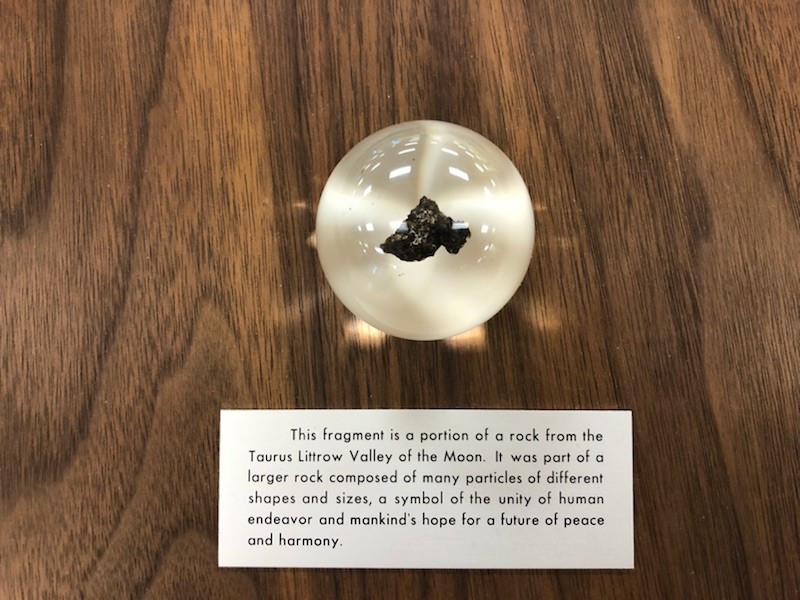
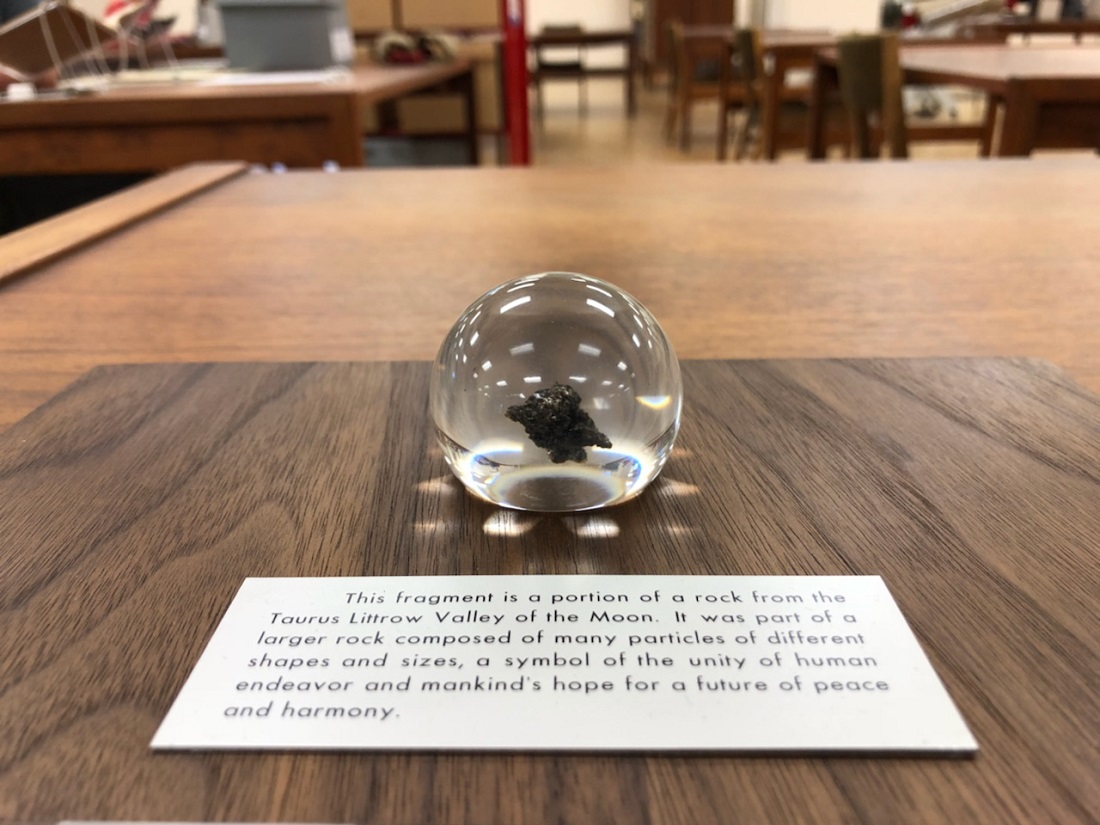
Photograph of the Kansas Apollo 17 lunar sample display, 1972
Close-ups of the lunar sample in Kansas’s Apollo 17 display. The 1.1 gram rock is encased in a small Lucite ball. Robert Blackwell Docking Papers. Call Number: RH MS VLT 167. Click image to enlarge. Click images to enlarge.

The moon rock now housed at Spencer was part of a larger sample gathered at the end of the third and final Extravehicular Activity (EVA) moonwalk on December 13-14, 1972. Here is what astronaut Eugene A. Cernan said as he collected the sample in the Taurus Littrow Valley. (The section below is excerpted from a transcription of the EVA-3 closeout at the archived Apollo 17 Lunar Surface Journal website. You can also watch footage of the sample being collected by clicking on the 169.41.46 video clip link; the section quoted below starts about a minute and a half into the footage.)

I think probably one of the most significant things we can think about when we think about Apollo is that it has opened for us – “for us” being the world – a challenge of the future. The door is now cracked, but the promise of the future lies in the young people, not just in America, but the young people all over the world learning to live and learning to work together. In order to remind all the people of the world in so many countries throughout the world that this is what we all are striving for in the future, Jack has picked up a very significant rock, typical of what we have here in the valley of Taurus-Littrow.

It’s a rock composed of many fragments, of many sizes, and many shapes, probably from all parts of the Moon, perhaps billions of years old. But fragments of all sizes and shapes – and even colors – that have grown together to become a cohesive rock, outlasting the nature of space, sort of living together in a very coherent, very peaceful manner. When we return this rock or some of the others like it to Houston, we’d like to share a piece of this rock with so many of the countries throughout the world. We hope that this will be a symbol of what our feelings are, what the feelings of the Apollo Program are, and a symbol of mankind: that we can live in peace and harmony in the future.

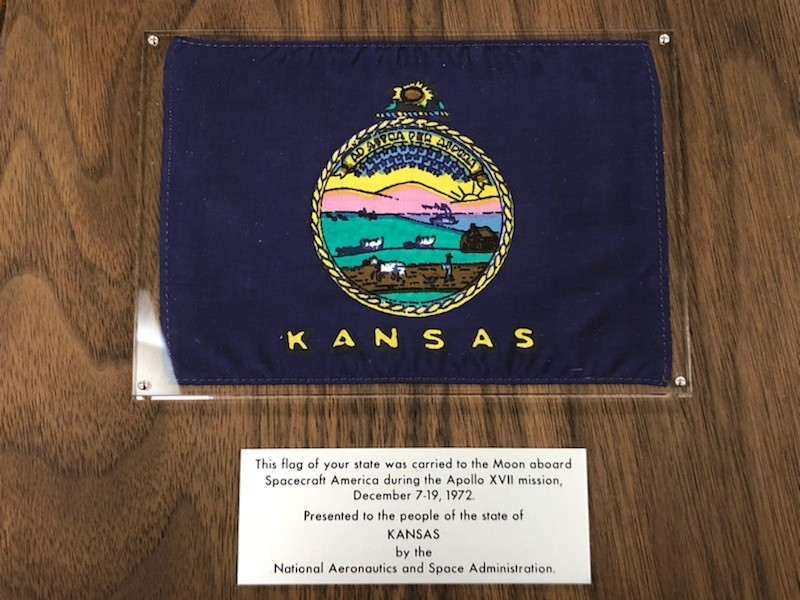
Photograph of the Kansas Apollo 17 lunar sample display, 1972
A close-up of the state flag on Kansas’s Apollo 17 lunar sample display. Robert Blackwell Docking Papers. Call Number: RH MS VLT 167. Click image to enlarge.

An article on the website Collect Space describes what happened to the larger moon rock when it arrived on Earth.

Three months after Apollo 17 returned home in December 1972, then-U.S. President Richard Nixon ordered the distribution of fragments from the rock that Cernan and Schmitt collected, since labeled sample 70017, to 135 foreign heads of state, the fifty U.S. states and its provinces. Each rock, encased in an acrylic button, was mounted to a plaque with the intended recipient’s flag, also flown to the Moon.

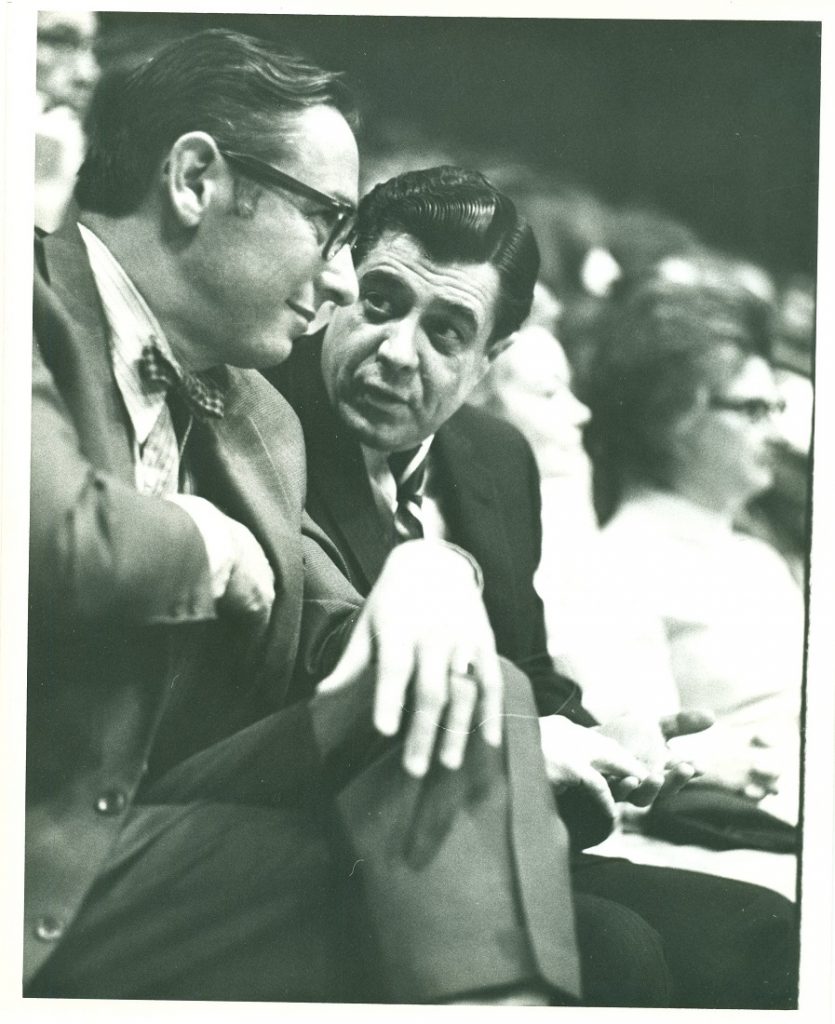
Photograph of Kansas Governor Robert Docking with KU Chancellor E. Laurence Chalmers at a basketball game, circa 1969-1972
Kansas Governor Robert Docking (right) with KU Chancellor E. Laurence Chalmers (left) at a basketball game, circa 1969-1972. Lawrence Journal-World Photo Collection, University Archives Photos. Call Number: RG LJW P/ Robert Docking (Photos). Click image to enlarge (redirect to Spencer’s digital collections).

Kansas’s Apollo 17 moon rock is housed at Spencer as part of Robert Blackwell Docking’s papers. Docking was the governor of Kansas at the time of the Apollo 17 mission (1967-1974); he donated his papers to Spencer in 1975.

A similar lunar sample display was presented to each state after the 1969 Apollo 11 mission, the first manned mission to land on the Moon. You can see Kansas’s Apollo 11 moon rock on display at the Kansas Museum of History.

Caitlin Donnelly
Head of Public Services

Throwback Thursday: First Chancellor’s Residence Edition

July 11th, 2019

Each week we’ll be posting a photograph from University Archives that shows a scene from KU’s past. We’ve also scanned more than 34,800 images from KU’s University Archives and made them available online; be sure to check them out!

Did you know that KU did not have an official residence for the Chancellor until 1893, when the university was almost thirty years old? This first residence wasn’t The Outlook, the home of Jabez and Elizabeth Watkins that became the Chancellor’s Residence in 1939. It was another home at 1345 Louisiana that was demolished in 1953 to make way for present-day Douthart Hall.

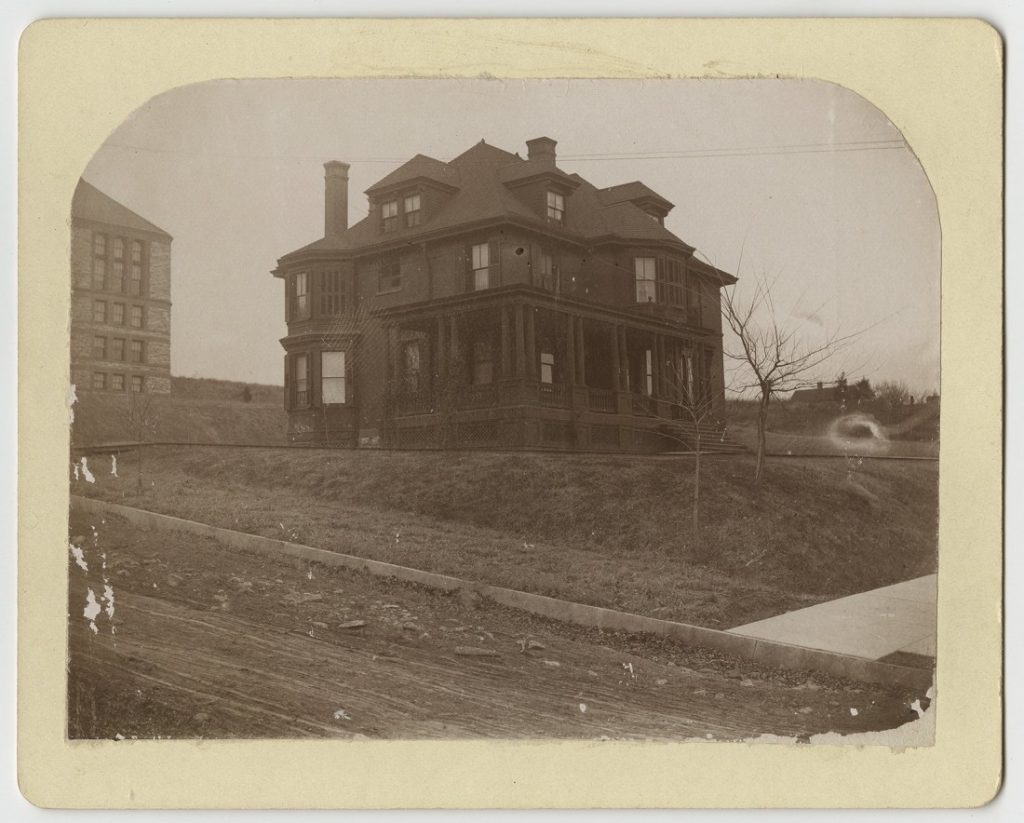
Photograph of the KU Chancellor's Residence at 1345 Louisiana, 1897
The KU Chancellor’s Residence at 1345 Louisiana, 1897. It was located just behind Spooner Hall, the corner of which is visible on the left. University Archives Photos. Call Number: RG 0/22/11 1897 Prints: Campus: Buildings: Chancellor’s Residence (Photos). Click image to enlarge (redirect to Spencer’s digital collections).

The article “An Old Friend” on the KU history website tells the story of how the first Chancellor’s Residence came to be built.

In 1891, the University had received a generous $91,618 bequest from the estate of William B. Spooner, a successful Boston leather merchant and philanthropist. Spooner, the uncle of then-KU Chancellor Francis Huntington Snow, had placed no restrictions on the use of his donation. The bulk of these funds, approximately $80,000, thus went to fill a desperate University need, that being a new freestanding library. Completed in 1894 and named in honor of its benefactor, the Henry van Brunt-designed Spooner Library – now known as Spooner Hall – stands today as Mount Oread’s oldest continually used academic structure.

Adequate library space was hardly the only thing the not yet 30-year-old University of Kansas lacked at this time. Also missing was an official chancellor’s residence, which forced KU’s early chief executives to keep their own private homes in town. Perhaps it was only fitting, then – considering the Spooner endowment’s familial origins – that when KU decided to spend the remaining $12,000 to construct a proper chancellor’s quarters, Chancellor Snow should be the first one to benefit.

Another van Brunt creation, the three-story, early Prairie Style home located at 1345 Louisiana Street welcomed the Snow family in December 1893.

Caitlin Donnelly
Head of Public Services

New Finding Aids, January-June 2019

July 10th, 2019

In case the summer heat and humidity is getting to you, here are the finding aids newly published to the Kenneth Spencer Research Library website in the last six months. Come do some research in the cool air conditioning!

1970 political campaigns collection, 1970 (RH MS 1453, RH MS R433)

Governor Mike Hayden’s family on Harvest Day slides, July 1983 (RH PH 534)

Lawrence Chamber of Commerce records, 1948-1986 (bulk 1968-1975) (RH MS 1454)

Lawrence Friends of Music records, 1967-2006 (RH MS 1463)

Cora Parker collection, approximately 1860-1940 (RH MS 1464, RH MS-P 1464(f))

GRIST records, 1963-1968 (MS 53)

Hill family papers, 1900-2005 (RH MS 1461, RH MS Q443, RH MS R438, RH MS-P 1461, RH MS-P 1461(f))

William A. Smith papers, 1931-1938 (RH MS 1465)

Fannie Dixon photograph album, 1923-1928 (RH PH 538)

Stephen Kellison family collection, 1893-1983 (RH MS 1471, RH MS G87, RH MS E208, RH MS EK7, RH MS Q456)

William Tuttle’s research and teaching in African American history and the history of racial violence in 20th century America, 1899-2016 (RH MS 1472, RH MF 193, KC AV 59, RH MS R442)

Bessie Wilson photographs, approximately 1920s-1960s (RH PH P2832, RH PH P2832(f))

Artificial Kansas-based photographs collection, approximately 1875-1984 (bulk 1900s-1910s) (RH PH 535, RH PH 535(f), RH PH 535(ff))

Andrew J. Haynes papers, 1866-1907 (RH MS E209)

Illustrated Cold War current events calendars, 1981-1991 (RH MS R441)

KU Athletic Director’s records, 1919-1943 (bulk 1920s-1930s) (RG 66/11/4)

Personal papers of Edward L. Meyen, 1962-2018 (PP 608, UA AV 7)

Personal papers of Elizabeth A. Schultz, 1897-2018 (bulk 1944-2018) (PP 606, UA AV 8)

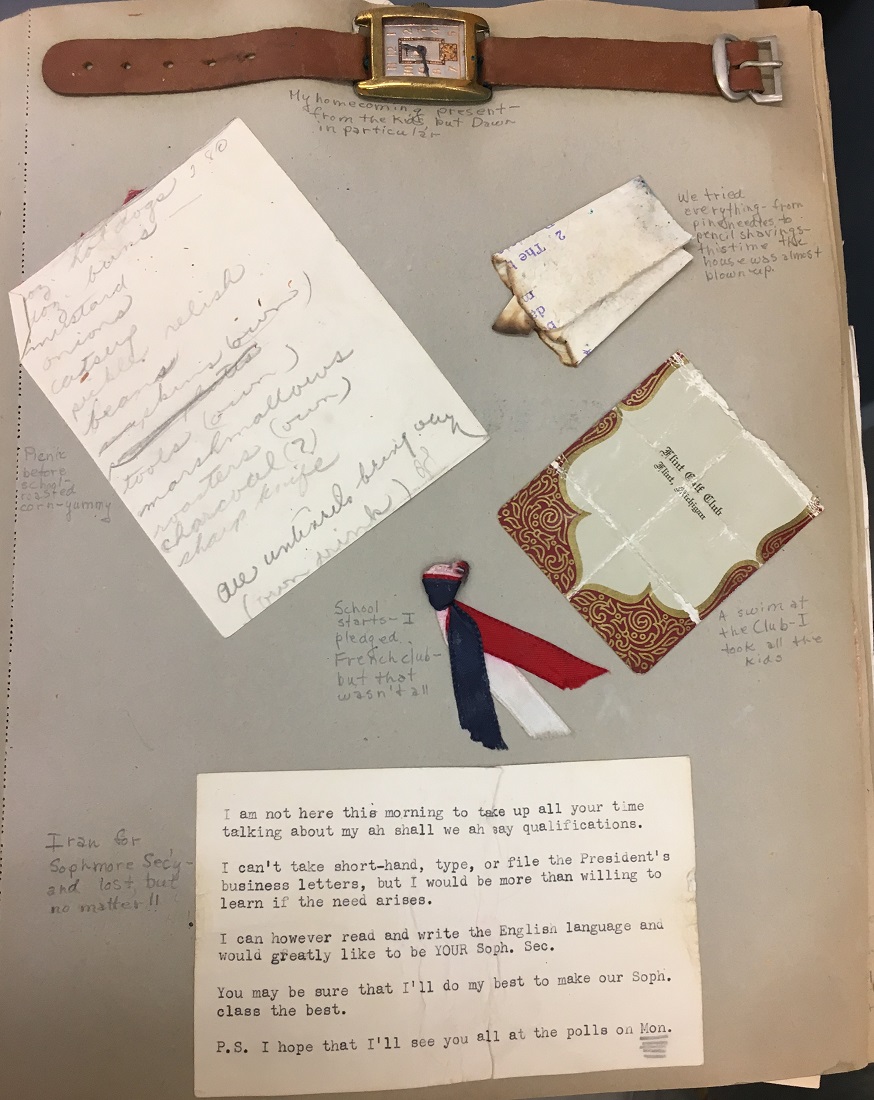
Photograph of a page from one of Elizabeth Schultz’s school scrapbooks
A page from one of Elizabeth Schultz’s school scrapbooks. Personal Papers of Elizabeth A. Schultz. Call Number: PP 606. Click image to enlarge.

Artificial portraits collection, approximately 1868-1986 (bulk 1900s-1960s)

Artificial non-Kansas based photographs collection, approximately 1867-1954 (bulk 1900s-1920s) (RH PH 539, RH PH 539(f), RH PH 539(ff))

William Maria Boedefeld architectural renderings, 1940s (RH AD 15)

Leonard Hollmann photograph collection, bulk 1850s-1920s, 1930-2015 (RH PH 536, RH PH 536(f), RH PH  536 glass negatives)

Old Windmill of West Lawrence, Kansas, drawing, January 21, 1904 (RH MS R445)

Letters of Orvis Hull, 1918 (RH MS P962)

Lawrence Woodwind Quintet records, 1970-2018 (RH MS 1475)

Trans World Airlines’ Hostess School photographs, 1938-1973 (RH PH 541, RH PH 541(f))

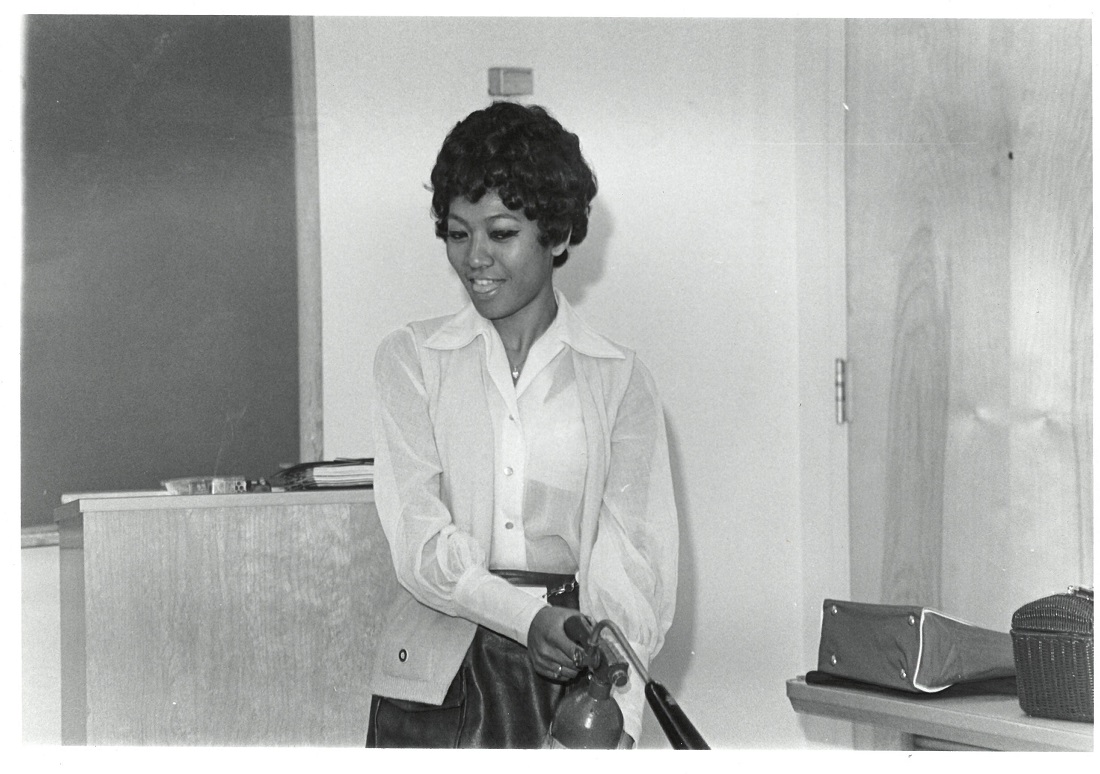
Photograph of a flight attendant student at the TWA Training School practicing with a fire extinguisher
A flight attendant student at the TWA Training School practicing with a fire extinguisher. Trans World Airlines’ Hostess School Photographs. Call Number: RH PH 541. Click image to enlarge.

Ruth Bloom collection of Larry Eigner materials, 1953-1996 (MS 349, MS Q81)

Scrapbook concerning the assumption of Presidency of Paraguay by Andres Rodriguez, 1989 (MS Q79, MS R22)

Mexican recipes, early 19th century (MS 346)

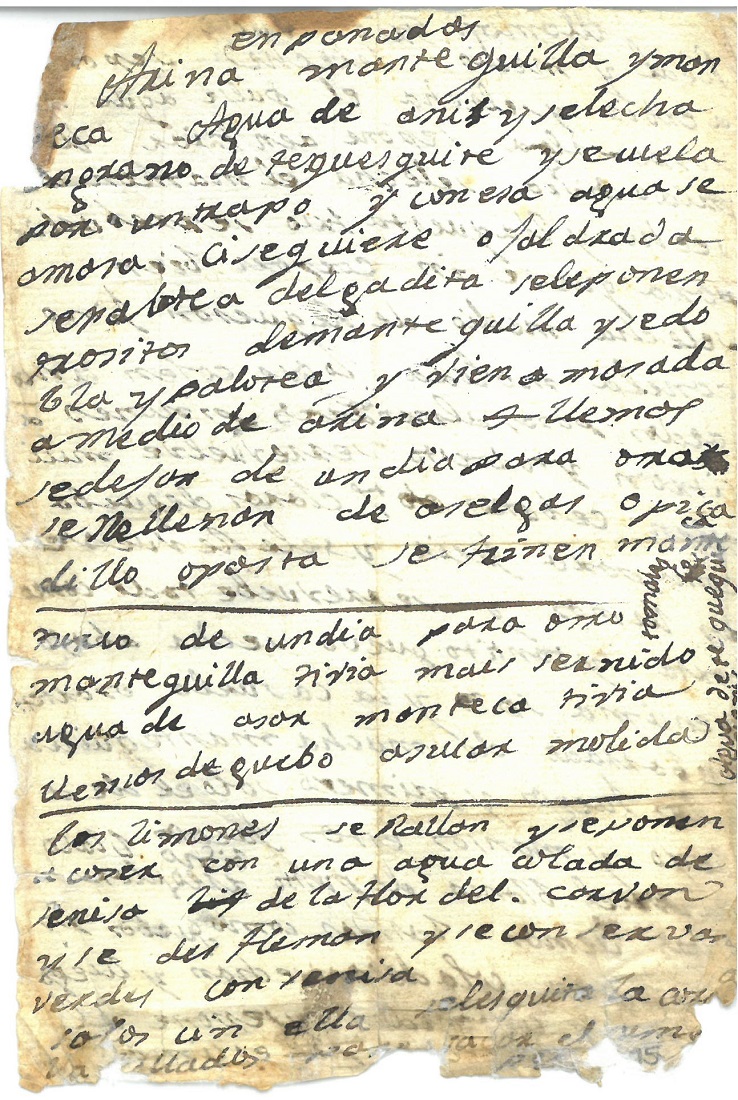
A recipe for “enpanadas” from an early 19th century set of recipes from Mexico
A recipe for “enpanadas” from an early nineteenth-century set of recipes from Mexico. These recipes – in various hands and on differently-sized pieces of paper – were originally placed together in a leather wrapper. Conservation staff recently disassembled the pages and placed them in folders. Staff included Shelley Miller Memorial Fund student Indira Garcia, who also inventoried the collection. Mexican Recipes. Call Number: MS 346. Click image to enlarge.

Francisco Maria Nunez Monge papers, 1940, 1941 (MS 88)

Theodore Sturgeon’s A Way Home manuscript collection, 1946-1955 (MS 351, MS J37)

Katie Armitage papers, 1953-2017 (RH MS 1479, RH MS Q451, RH MS R447)

Ernst Ulmer collection, 1950 (RH MS R449)

Edith Falkenstien’s Menninger Bible Study course materials, 1941-1945 (RH MS 1483)

John C. Johnson papers, 1930s-1940s, 1975-2015 (bulk 1975-2015) (RH MS 1476)

Kansas Commission on Civil Rights film, approximately 1961 (KC AV 72)

John C. Morley architectural drawings, 1958-1985 (RH AD 14, RH MS Q447)

Rexford Scott Sorenson negatives collection, 1957-2009 (RH PH 537)

Norman York and The Invincibles: Interstate Troop of Corresponding Scouts letters, 1914-1916 (RH MS 1482)

Abraham Lincoln portrait, 1911 from an 1860 drawing (RH MS R446)

William E. Barnes collection, 1878-1910 (RH MS 1484)

Elmer and Viola McColm glass plate negative collection, 1900s-1920s? (RH PH 543)

Basketball team portraits, 1912-1917 (RH PH 542)

Personal papers of Shirley L. Patterson, 1950-2018 (PP 607)

Meade, Kansas, glass plate negatives, approximately 1920s (RH PH 544)

Film by Paul Hausman, approximately 1960s (KC AV 71)

Slides of Lawrence, Kansas, churches, approximately 1990s (RH PH P2833)

Lawrence, Kansas, photographs, 1909 (RH PH P2834)

William and Donna Mitchell family papers, 1945-1965 (RH MS 1487)

Dr. Wilda Smith collection of Peggy Hull biographical materials, 1914-1991 (RH MS 1485, RH MS-P 1485, RH MS Q453)

Cottonwood Falls, Kansas, eighth grade class snapshots, 1918 (RH PH P2836)

Katherine Goldsmith papers, 1825-1999 (RH MS 1093, RH MS 569, RH MS 1072, RH MS Q454, RH MS R452, RH MS R453, RH MS S62, KC AV 78)

Florence Harkrader Hastings photographs, 1915 (RH PH 545(f))

James H. Holmes letter, 1856 (RH MS P963)

Martha McCoy dental ledger, volume 1, 1899-1902 (RH MS P965)

Leo L. McKenzie Body Works photographs, approximately 1950s (RH PH P2835)

Papers of Gregory Corso, 1953-1979 (MS 138)

Papers of Jean Ingelow and Mackenzie Bell, 1870-1897 (MS 45, MS R8)

Photograph album of the funeral of Bernardo Soto Alfaro, 1931 (MS K35)

Personal papers of Chuck Berg, 1965-2016 (PP 609)

Personal papers of Ann Hyde, 1934-2008 (PP 610)

Personal papers of R. Keith Lawton, 1951-1982 (PP 611)

Marcella Huggard
Archives and Manuscripts Processing Coordinator