The University of Kansas

Inside Spencer: The KSRL Blog

Books on a shelf

Welcome to the Kenneth Spencer Research Library blog! As the special collections and archives library at the University of Kansas, Spencer is home to remarkable and diverse collections of rare and unique items. Explore the blog to learn about the work we do and the materials we collect.

Color Our Collections – Round 3!

February 4th, 2020
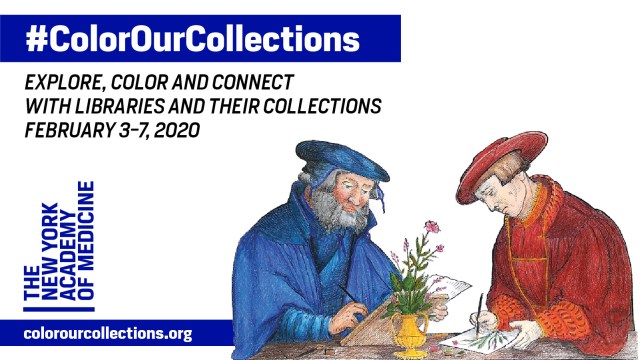
Color Our Collections logo, 2020

It’s the fourth-annual Color Our Collections week! Started by the New York Academy of Medicine Library in 2016, Color Our Collections is a week of coloring fun where libraries, archives, and other cultural institutions around the world share coloring pages that feature their collection materials.

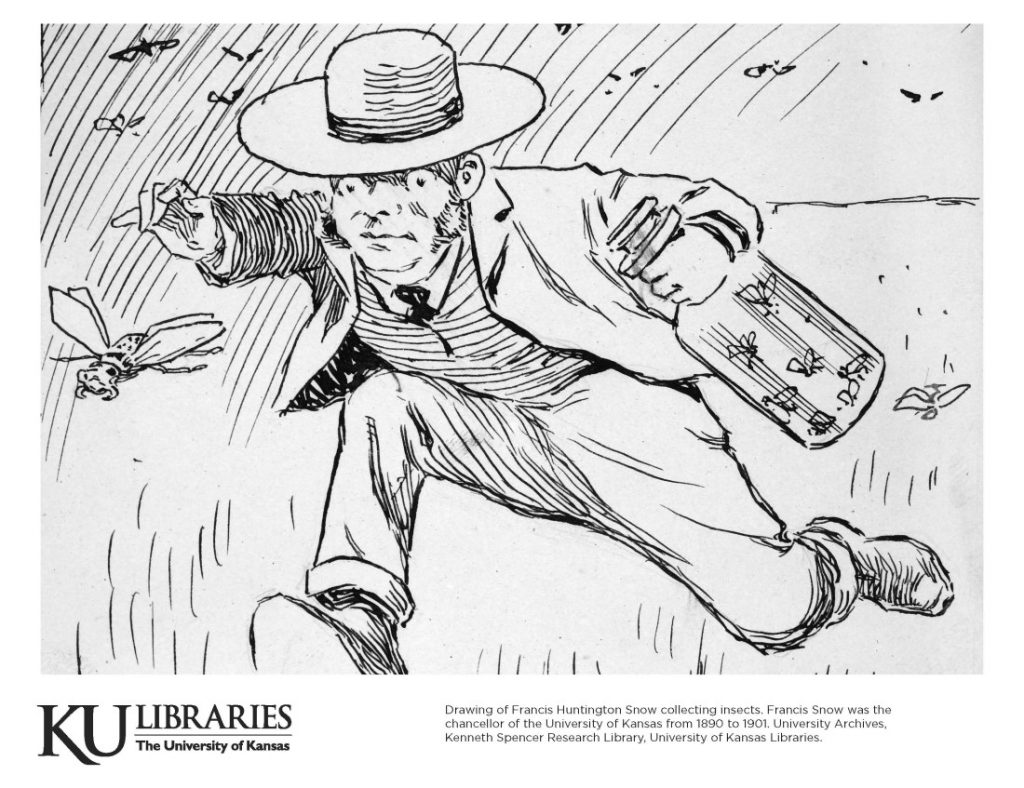
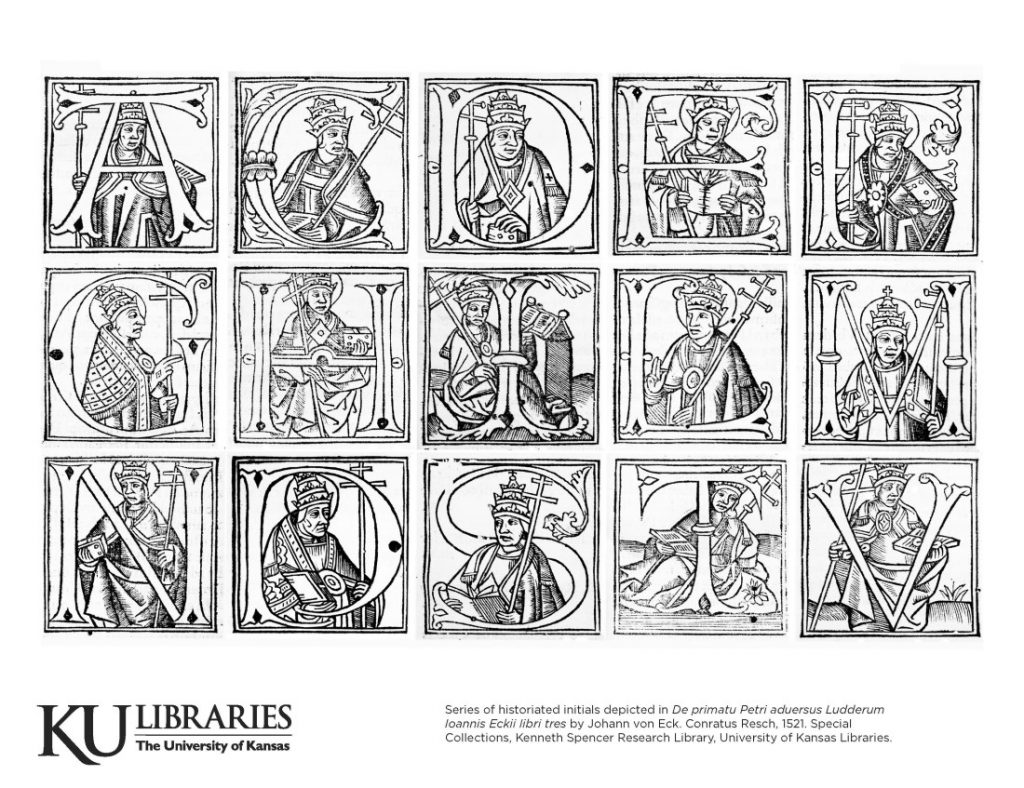
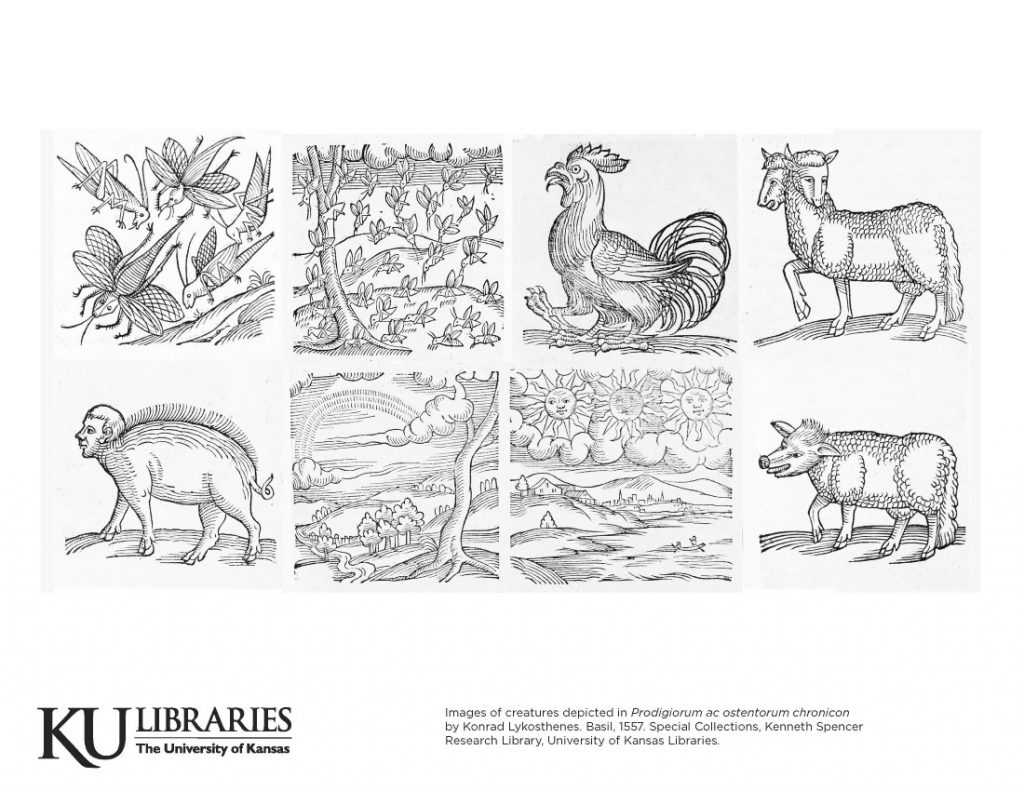
KU Libraries is pleased to share this year’s submission for the annual week of coloring craziness. Featuring the collections at Spencer Research Library, this year’s coloring book celebrates nature, history, and even mythical creatures! You can download and print the book via the Color Our collections website. While you are there, be sure to check out the submissions from our colleagues at other institutions!

As a preview, here are three pages from the book. Click on the images to enlarge them.

Spencer Research Library image in the KU Libraries coloring book, 2020

Are you a fan of the collections at Spencer? Have you ever come across an image in our materials that would make a great coloring page? Tell us about it in the comments or email us at ksrlref@ku.edu!  

Happy coloring, everyone!

Emily Beran
Public Services

Manuscript of the Month: A Sixteenth-Century Copy of the Life of Cardinal Dominicus Capranica

January 28th, 2020

N. Kıvılcım Yavuz is conducting research on pre-1600 manuscripts at the Kenneth Spencer Research Library. Each month she will be writing about a manuscript she has worked with. The current KU Library catalog records (linked below) will be updated in accordance with her findings. 

Kenneth Spencer Research Library, MS C247 is a thin parchment manuscript that was produced in the middle of the sixteenth century. It consists of 38 parchment leaves and contains a single text written in Humanistic cursive script by an unknown scribe: the Vita Capranicae [lit. Life of Capranica] by Giovanni Battista Bracciolini (1440–1470). A biography of Cardinal Dominicus Capranica (1400–1458), the Vita Capranicae is thought to have been composed in 1460s, shortly after the Cardinal’s death in 1458. The author of the biography, Giovanni Battista Bracciolini, was the second son of the renowned Italian humanist Poggio Bracciolini (1380–1459) and personally knew Cardinal Capranica; therefore, the biography is thought to be partly based on his first-hand knowledge and observations. The Vita Capranicae was first edited and published under the title Cardinalis Firmani vita in 1680 by Étienne Baluze (1630–1718) as part of his Miscellaneorum Liber Tertius. In this first edition, the text was divided into twenty-seven chapters and was misattributed to another Battista Poggio from Genoa. Over the centuries, the Vita Capranicae also was sometimes mistakenly attributed to Poggio Bracciolini himself and not to his son, as is the case in the older records of the Kenneth Spencer Research Library.

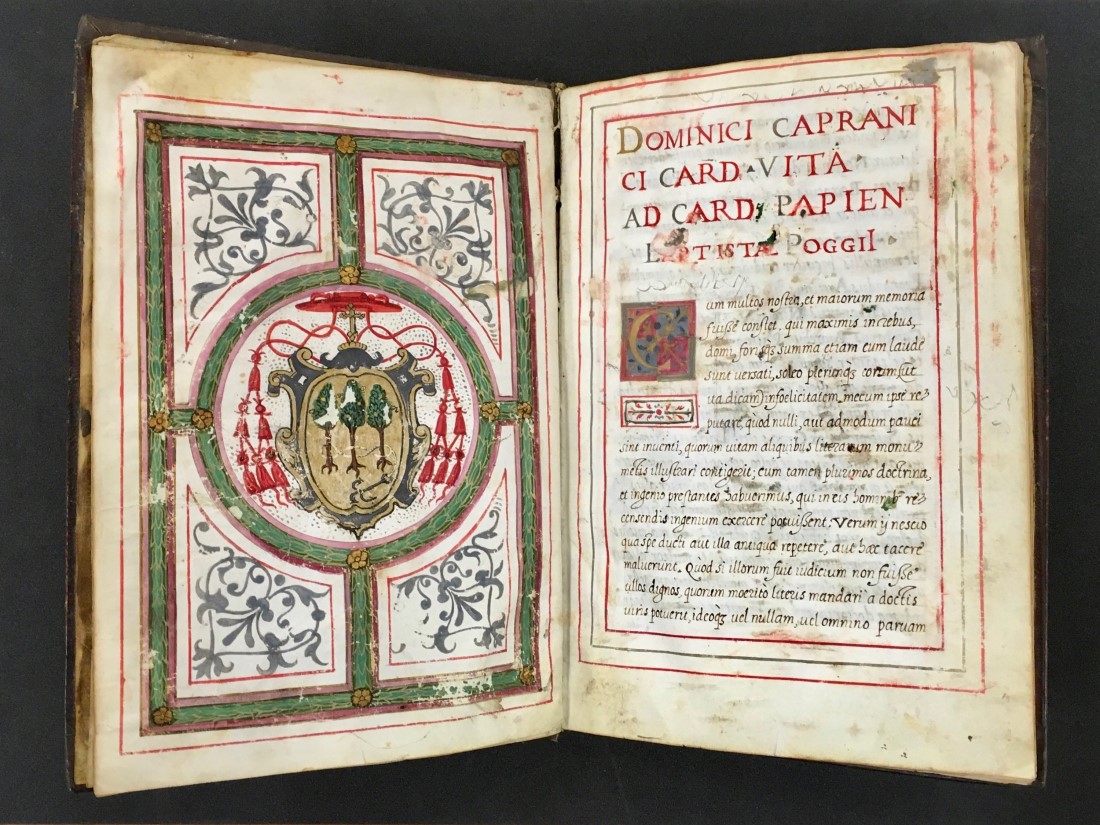
Photograph of the frontispiece and beginning beginning of the Vita Capranicae in MS C247
Left: Frontispiece with the coat of arms of Dominicus Capranica. Right: Beginning of the Vita Capranicae. Call Number: MS C247. Click image to enlarge.

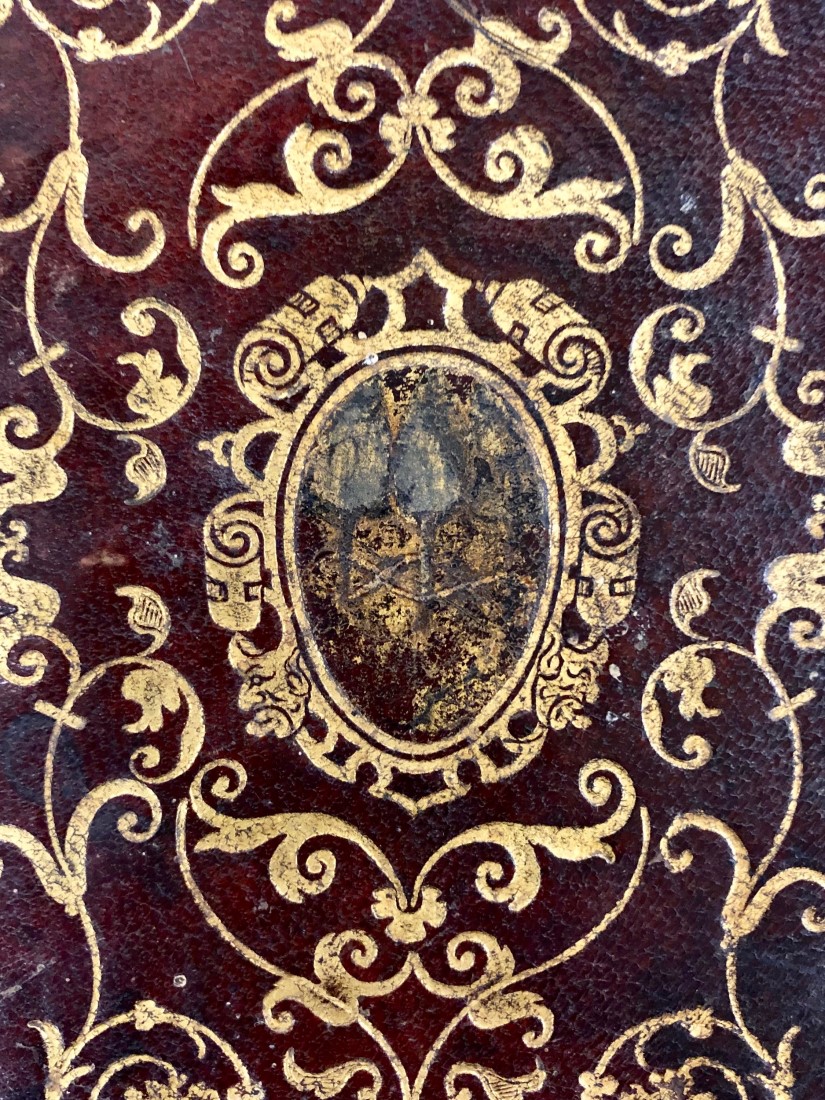
In MS C247 the text is preceded by a decorated frontispiece on folio 4v with the coat of arms of Dominicus Capranica. The coat of arms is charged with an anchor tied to a hawser intertwined around three uprooted Cypress trees on a golden field and adorned with a cross bottony and a red galero with six tassels in three rows on each side. The binding of the manuscript is contemporary to the copying of the text, possibly original. Based on stylistic features, it can be dated to the mid-sixteenth century like the text itself and was probably made in a workshop in Rome, Italy. In addition to delicate gold-tooling, the dark red leather binding also features the painted shield of Dominicus Capranica at the center of both covers.

Photograph of the binding of MS C247, featuring the shield of Dominicus Capranica
Photograph of the detail of the painted shield from the front cover of MS C247
Top: The binding featuring the shield of Dominicus Capranica. Bottom: Detail of the painted shield, now partly effaced, from the front cover. Call Number: MS C247. Click images to enlarge.

According to Ruut Kataisto, there are only nine surviving manuscripts containing the Vita Capranicae, one of which is Kenneth Spencer Research Library, MS C247. Even though it is not the earliest witness to the text, this is one of two manuscripts written on parchment (the other being Vatican City, Biblioteca Apostolica Vaticana, Vat. lat. 5882 dated to the fifteenth century) and the only one with the arms of Cardinal Capranica. As there is a frontispiece with the coat of arms of Dominicus Capranica at the beginning of the text and his shield is also featured on the binding, I think the manuscript might have been originally commissioned by a member of the Capranica family or by the Almo Collegio Capranica in Rome. Recognized as the oldest pontifical college in Rome, the Almo Collegio Capranica was founded by Cardinal Capranica in 1457 and had many notable ecclesiastics, including Pope Benedict XV and Pope Pius XII, among its students over the centuries. The coat of arms of Cardinal Capranica was adopted by the College and is still in use today.

Photograph of a bookplate, ownership inscription, and shelfmark in MS C247
Left: Bookplate of Frederick North, 5th Earl of Guilford in the middle of the front pastedown. Right: Ownership inscription of Rinaldo Ridolfini (“Ranaldus Ridolfinus”) and shelfmark of Sir Thomas Phillipps (“8274”). Call Number: MS C247. Click image to enlarge.

The exact origin of the manuscript is unknown but soon after its production, in the second half of the sixteenth century, it was probably in the possession of Rinaldo Ridolfini, a lawyer in Perugia, Italy, based on an inscription on folio 2r: “Ranaldus Ridolfinus.” Almost three centuries later, in 1822, the manuscript was purchased in Perugia by Frederick North (1766–1827), the 5th Earl of Guildford. Frederick North’s bookplate is pasted on the front pastedown (folio 1v) and two almost identical inscriptions, presumably by him, are found in the manuscript denoting the details of this purchase: “e libris F. Com. de Guilford empt. Perusia A. D. 1822” on folio 1v and “e libris Friderici Com. de Guilford empt. Perusia AD. 1822” on folio 2r.

The manuscript was later in the collection of Richard Heber (1773–1833), another renowned book collector in England, presumably acquired in the 1830 auction of Frederick North’s manuscripts. Within a few years, the manuscript was purchased by Payne & Foss for Sir Thomas Phillipps (1792–1872) in the 1836 auction of Heber’s manuscripts, and became part of the famous Phillipps manuscript collection, the largest private manuscript collection in the world at the time. It is inscribed “8274” in blue crayon on folio 2r, and there is also a rectangular Phillipps label with a typeset number “8274” adhered to the tail of the spine. It is estimated that Sir Thomas had some 40,000 printed books and 60,000 manuscripts in addition to paintings, prints, photographs and other materials. After his death, his will was contested but eventually Sir Thomas Phillipps’s library was inherited by Katharine Fenwick, his daughter, and later passed on to Thomas FitzRoy Fenwick, his grandson. This manuscript was probably among those inherited; however, there is no known record of it in the subsequent sales from the Phillipps library, which spanned several decades.

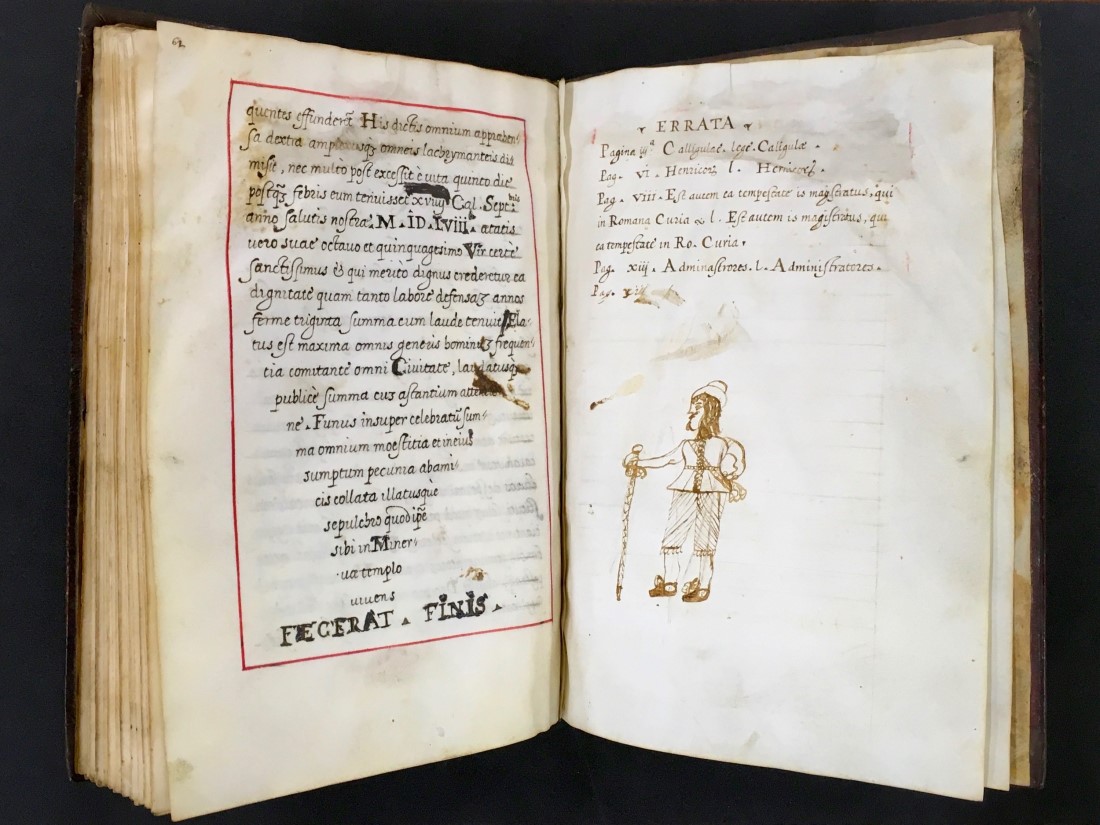
Photograph of the ending of the Vita Capranicae and the “Errata” page in MS C247
Left: Ending of the Vita Capranicae. Right: The “Errata” page. Call Number: MS C247. Click image to enlarge.

One of the most interesting features of the manuscript is that it contains an “Errata” at the end of the text on folio 36r in which the scribe lists the errors made and corrects the text. In medieval and early modern manuscripts, it is much more common to see mistakes corrected immediately over the text itself or in the margins. The end of the text on folio 35v, which is arranged like an inverted triangle, with the margins gradually increasing, as well as a doodle of a man with a sword on the lower half of folio 36r, probably drawn by a later owner, are also noteworthy.

The Kenneth Spencer Research Library purchased the manuscript from Hofmann & Freeman Antiquarian Booksellers in March 1970, and it is available for consultation in the library’s Marilyn Stokstad Reading Room.

Read more about Vita Capranicae and the other eight surviving manuscripts here: Ruut Kataisto. “G. B. Bracciolini: Vita Capranicae.” Studia Neophilologica 86, no. sup1 (2014): 104–11. DOI: https://doi.org/10.1080/00393274.2013.834105.

N. Kıvılcım Yavuz
Ann Hyde Postdoctoral Researcher

Collection Snapshot: Is a Picture Worth More Than a Thousand Words?

January 3rd, 2020
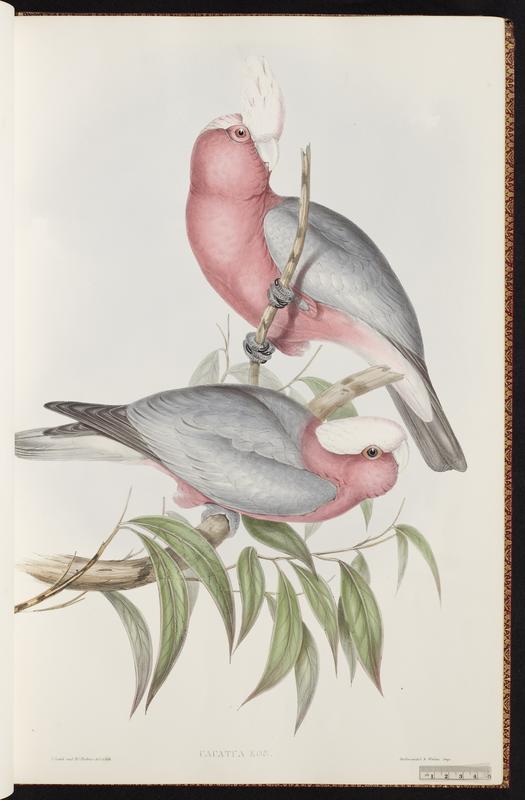
Illustration for the Rose-breasted cockatoo or Cacutua Eos (Plate IV, Vol. 5) from John Gould's Birds of Australia (1848), consisting of two birds in greenery.
Rose-breasted cockatoo or Cacutua Eos (Plate IV, Vol. 5) from John Gould’s Birds of Australia. London: Printed by R. and J.E. Taylor: Published by the author, 1848. Call Number: Ellis Aves H141. Click image to enlarge.

This Rose-breasted Cockatoo or Cacatua Eos from John Gould’s Birds of Australia (1848) can be seen online as part of KU Libraries’ larger John Gould Ornithological Collection. The digital collection includes all of Gould’s large-format natural-history books and nearly 2000 preliminary drawings for his books. It is a natural temptation to focus on the beautiful hand-colored lithographs of birds illustrating these books and pay less attention to the text. However, John Gould was a keen observer of the birds of numerous countries, including Australia, and his first-hand descriptions of their behavior enliven the pictures:

The Rose-breasted Cockatoo possess considerable power of wing, and like the house-pigeon of this country [England], frequently passes in flocks over the plains with a long sweeping flight, the group at one minute displaying their beautiful silvery grey backs to the gaze of the spectator, and at the next by a simultaneous change of position bringing their rich rosy breasts into view, the effect of which is so beautiful to be hold, that it is a source of regret to me that my readers cannot participate in the pleasure I have derived from the sight.

–John Gould. Birds of Australia. London: Printed by R. and J.E. Taylor: Published by the author, 1848. (Text for plate IV, vol. 5). Call #: Ellis Aves H141

Karen S. Cook
Special Collections Librarian
Meet the KSRL Staff: N. Kıvılcım Yavuz

October 22nd, 2019

This is the latest installment in a recurring series of posts introducing readers to the staff of Kenneth Spencer Research Library. Today’s profile features N. Kıvılcım Yavuz, who joined Spencer in September as Ann Hyde Postdoctoral Researcher.

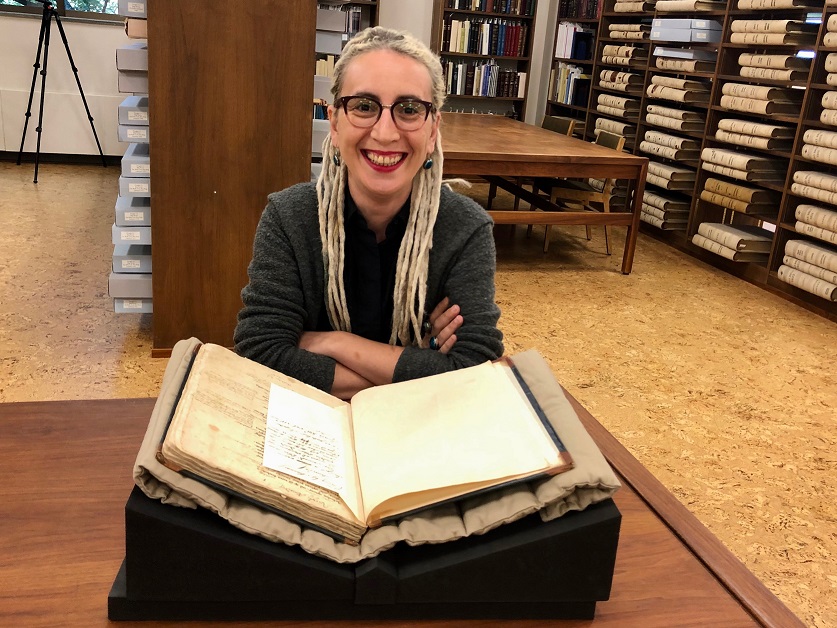
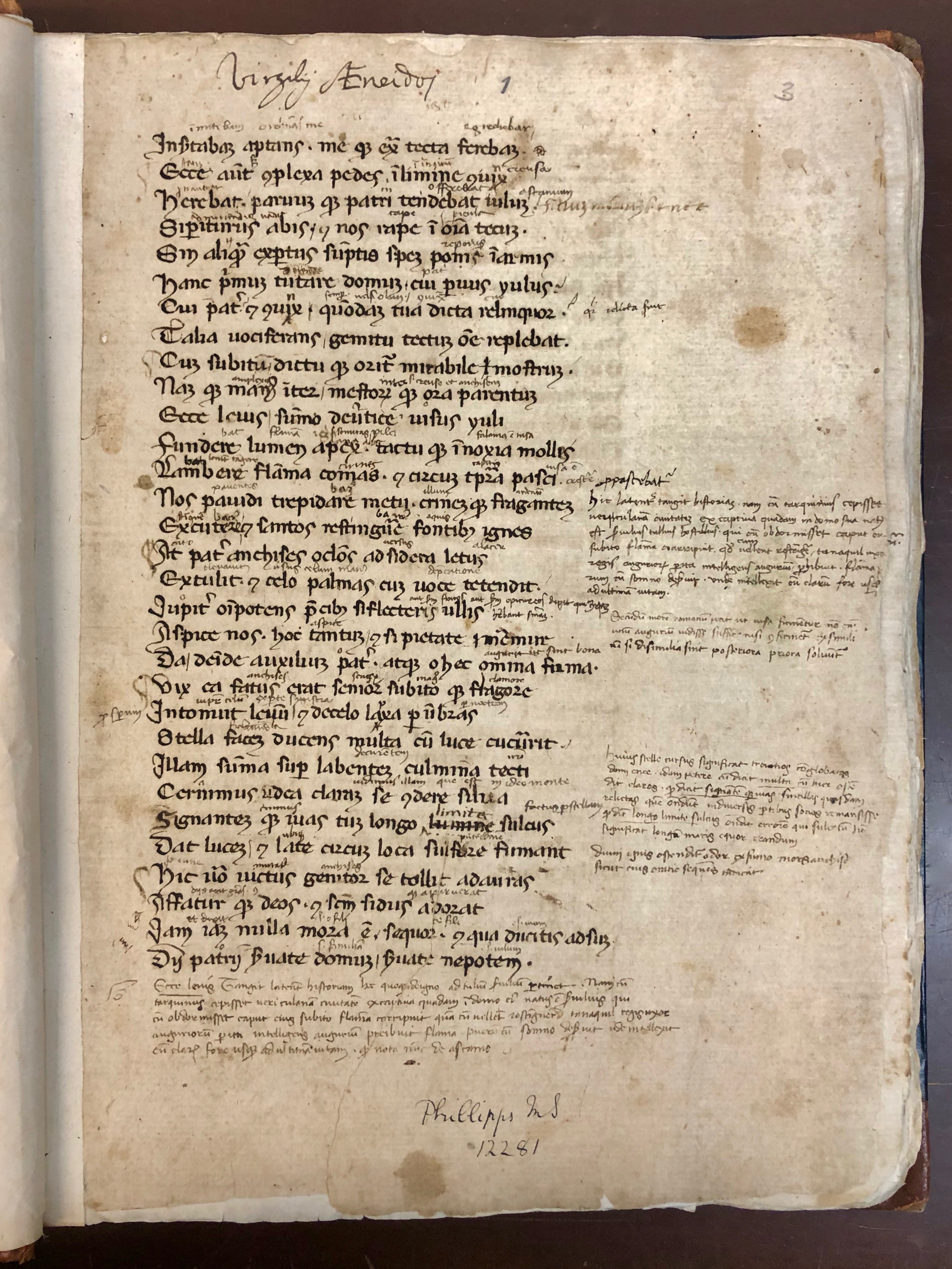
Photograph of N. Kivilcim Yavuz in the Kenneth Spencer Research Library's Reading Room with MS E71 (a manuscript copy of Vergil's Aeneid, Italy, circa the early 1400s)

N. Kıvılcım Yavuz in Spencer Research Library’s Reading Room with MS E71.

Where are you from?

I was born in Turkey and grew up there, but I spent the past eight years in the United Kingdom and Denmark, doing a PhD in Medieval Studies and working at the Universities of Leeds and Copenhagen before moving to Lawrence, KS and starting work at the Spencer Research Library this past September.

What does your job at Spencer entail?

I am the first Ann Hyde Postdoctoral Researcher of the Spencer Research Library. The position was created thanks to an endowment by Alexandra Mason, former Spencer Librarian, in honor of Ann Hyde, former Manuscripts Librarian at Spencer who specialized in medieval manuscripts. I work with the two Special Collections librarians Elspeth Healey and Karen Cook and my job entails making medieval and early modern manuscripts more accessible to the wider scholarly community and the public by conducting research and creating detailed catalog records as well as enhancing the visibility of the excellent special collections we have here, especially through digital means, social media and other outreach activities.

How did you come to work in special collections and archives?

My background is in Comparative Literature and I have always been interested in the concept of rewriting and repurposing of old stories in new contexts. I discovered the world of manuscripts during my master’s in Medieval Studies at the University of Leeds and did my thesis on two fifteenth-century historical roll manuscripts. It was an amazing experience to work on manuscripts that hardly anyone had looked at in the last century. My work with manuscripts continued with my PhD studies, also at Leeds. It was then that I came to understand even more fully the central importance of the material context of the text, and that every time a text is copied it became a new work. It was impressed on me that when looking at handwritten materials we need to change our modern expectations about a text being fixed and having a fixed meaning. Only in this way can we appreciate the scribal practices and the mindset of the medieval and early modern scribes and compilers. During visits to manuscript archives such as the National Library of France and the Vatican Library, I developed a deep appreciation not only about manuscripts themselves but also about collection development and conservation practices. I became more and more interested in how manuscripts were put together and used over time and how they travelled from one place to the other, changing hands across centuries. I also noticed how difficult it is to access information about manuscripts, because catalog information was incomplete or inaccurate, was stored in different places, or had not been recorded at all. Since I completed my doctoral studies, I have been conducting research exclusively on manuscripts in special collections and archives in Europe and most of this work is geared towards making these manuscripts better known and more accessible. I am so happy now that I have the opportunity to work at a US institution, because the ways in which European manuscripts travelled across the ocean and the people involved in their travels are an interesting research area in itself and we do not know enough about it.

What is one of the most interesting items you’ve come across in Spencer’s collections?

The medieval and early modern manuscripts at Spencer as a whole are exceptionally interesting as they reflect the collection building efforts by the former librarians of the University of Kansas, especially during the middle decades of the last century. My specialty is in the reception of the Trojan War in the Middle Ages and I am especially interested in the history of the book, so if I had to pick one item, I would have to go with MS E71, which contains an incomplete copy of Vergil’s Aeneid.

A poem about the story of Aeneas, a Trojan who travelled to Italy after the fall of Troy and who is considered to be the ancestor of the Romans, Vergil’s Aeneid was probably the most read and most consulted classical work throughout the Middle Ages and beyond. This means that we still have surviving copies of this work by the hundreds if not the thousands. Until recently, most scholarly research was focused on early copies of texts, so this manuscript, which contains a copy from the beginning of the fifteenth century of a text that was written in the first century BCE, would not have been considered significant. What is more is that it is defective so it does not even contain the entirety of the text! But the state of the manuscript as we have it reflects a rich history of reading, writing and ownership in the past five hundred years. Its pages are full of annotations by different hands which reflect the interests of the readers and users of this handwritten book at particular points in time.

The history of the manuscript, which probably originates from Italy, is also significant. MS E71 is part of a larger gift from Robert T. Aitchison (1887-1964), along with 42 printed editions of Vergil’s works. A native Kansan, Aitchison was an artist and a book collector, and served as the president and director of the Kansas Historical Society among other things. Formerly, the manuscript belonged to Sir Thomas Phillipps (1792–1872), who owned the largest collection of handwritten material in the nineteenth century and who is recorded to have said that he wanted to own one of every book in the world. This is all to say that there are great things to discover and sometimes, the real gems are not the shiniest ones.

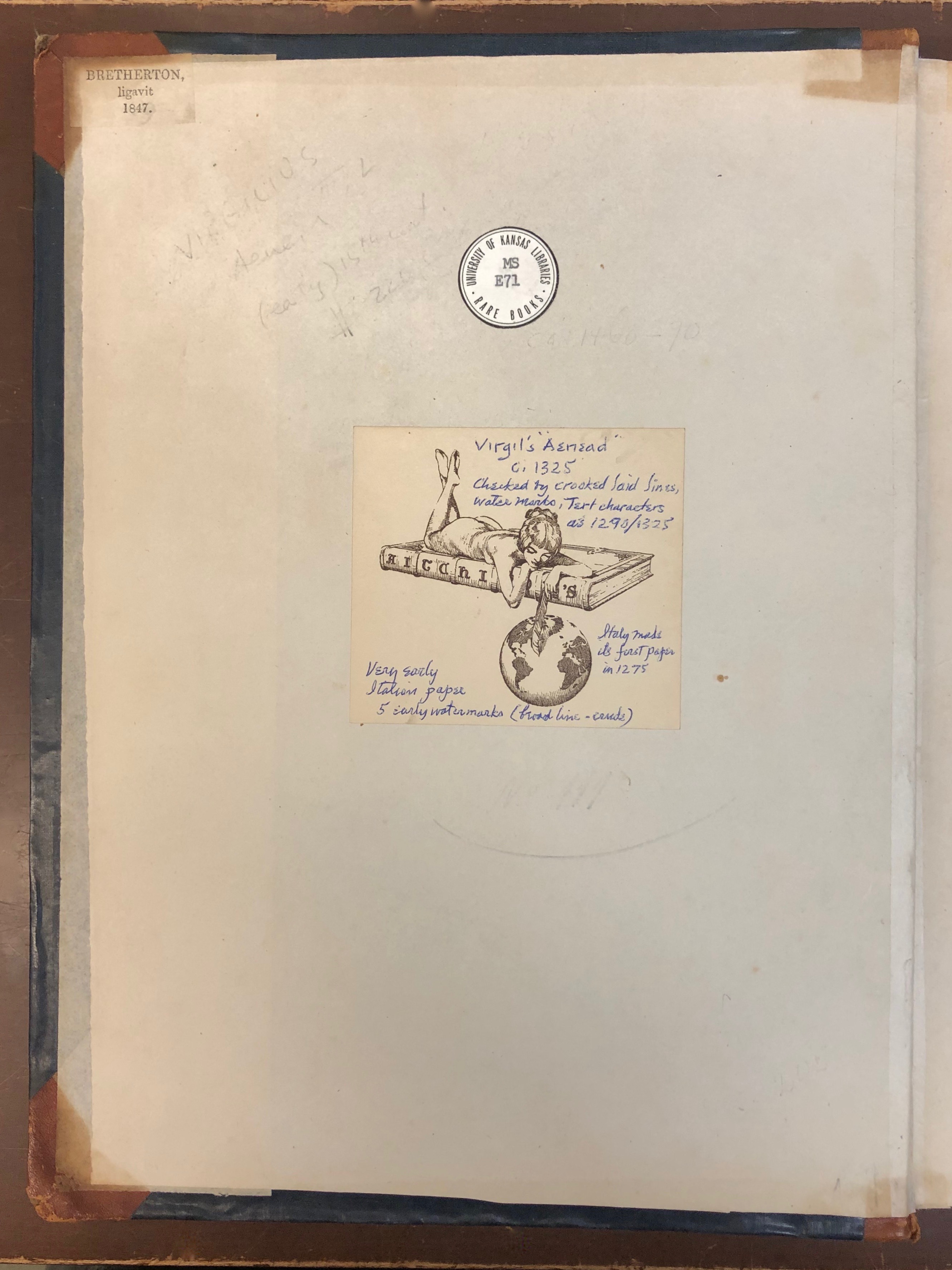
Bookplate of Robert T. Aitchison in the middle of the front pastedown of MS E71 (a manuscript copy of Vergil's Aeneid). The ticket of the binder, George Bretherton, is also visible on the top left corner indicating that the current binding had been done for Sir Thomas Phillipps in 1847. Sir Thomas Phillipps’s handwritten note on the recto of the first leaf of this manuscript copy of Vergil's Aeneid,MS E71 (“Phillipps MS 12281”) along with other annotations on the text by different previous hands.

Image 1 Bookplate of Robert T. Aitchison in the middle of the front pastedown of MS E71 (a manuscript copy of Vergil’s Aeneid. Italy, early 1400s). The ticket of the binder, George Bretherton, is also visible on the top left corner indicating that the current binding had been done for Sir Thomas Phillipps in 1847. Click image to enlarge.

Image 2 Sir Thomas Phillipps’s handwritten note on the recto of the first leaf of MS E71 (“Phillipps MS 12281”) along with other annotations on the text by different previous hands. Click image to enlarge.

What part of your job do you like best?

I enjoy discovering new, previously unnoticed things in manuscripts. In the past decades the interest in manuscripts solely as carrier of texts has shifted. We now know that there is more to discover when looking at handwritten artifacts: what is it made of, how was it made, what kind of processes it went through, what kind of materials was used, where did the materials come from, who was involved in the making, who was it made for, how much did it cost, what was the purpose of it, who read it over the years, who owned it until it became part of its current collection and so on. So much to discover that makes manuscripts into living creatures and not merely the carriers of texts!

What are some of your favorite pastimes outside of work?

I love cooking and gardening. I also like visiting new places and meeting new people, even though I find the airline travel tedious. Every year, I try to go to a place I have never been before; often this involves a visit to a new library. For example, last year I taught at a summer school in Reykjavik (Iceland) and consulted manuscripts in Milan (Italy) and Stuttgart (Germany) and earlier this year I vacationed in Marrakesh (Morocco) and taught a class and looked at manuscripts at the University Library in Leipzig (Germany).

What piece of advice would you offer a researcher walking into Spencer Research Library for the first time?

Just remember that we are here to help. Do not hesitate to ask questions. If you are working on primary sources, let the manuscripts guide your research. Keep an open mind and you never know what unexpected thing you will find!

N. Kıvılcım Yavuz
Ann Hyde Postdoctoral Researcher

Treatment and Rebinding of MS E279 – Part 1

October 8th, 2019

In today’s post I will describe the preparation for and early stages of conservation treatment on MS E279, or Historia flagellantium…De recto et perverso flagrorum usu apud Christianos…Ex antiquis Scripturæ, patrum, pontificum, conciliorum, & scriptorum profanorum monumentis cum curâ & fide expressa, by Jacques Boileau. This volume is the manuscript, dated 1691 and with annotations in the author’s own hand, for the printed version of the same title published in 1700. Spencer also holds a copy of the printed edition at Summerfield B2655.

Damaged cover of MS E279, Historia flagellantium..., prior to conservation treatment.
Damaged cover of MS E279, Historia flagellantium prior to conservation treatment. Click image to enlarge.

The upper third of this volume suffered significant water damage at some time in the past, and mold growth that probably resulted from the water exposure has caused weakness and losses in the paper throughout the upper portion of the volume. The boards are also extremely weak and soft. Because the binding is not contemporary to the text, the curator agreed to a treatment plan that includes disbinding the volume, mending and stabilizing the damaged areas, and placing the text in a new conservation paper case similar to this one.

Because Spencer holds both the manuscript and printed versions of this text, I pulled the later volume from the stacks in order to compare the two. While not strictly necessary to the conservation treatment of the manuscript, it is nonetheless just so interesting to see this text at two different stages in its creation – and one never knows when related material might reveal something about the item being treated. Just for fun, here are the title pages and first chapter headings from each version:

Side-by-side comparison of the title pages of both the manuscript and printed version of Jacques Boileau's "Historia flagellantium..."
Side-by-side comparison of the title pages of both the 1691 manuscript and 1700 printed version of Jacques Boileau’s Historia flagellantium. Click images to enlarge.
Side-by-side comparison of the first chapter headings of both the manuscript and printed version of Jacques Boileau's "Historia flagellantium..."
Side-by-side comparison of the first chapter headings of both the manuscript and printed version of Jacques Boileau’s Historia flagellantium. Click images to enlarge.

This treatment is in the early stages. I have documented its condition in both writing and photographs, gently cleaned mold spots with soft sponges and brushes (working in our special biosafety cabinet to protect both staff and collections from mold exposure), and begun the process of taking apart the binding. The next steps of mending, preparation for sewing, and binding will happen over the coming weeks, with updates here on the blog!

Angela Andres
Special Collections Conservator
Conservation Services