The University of Kansas

Inside Spencer: The KSRL Blog

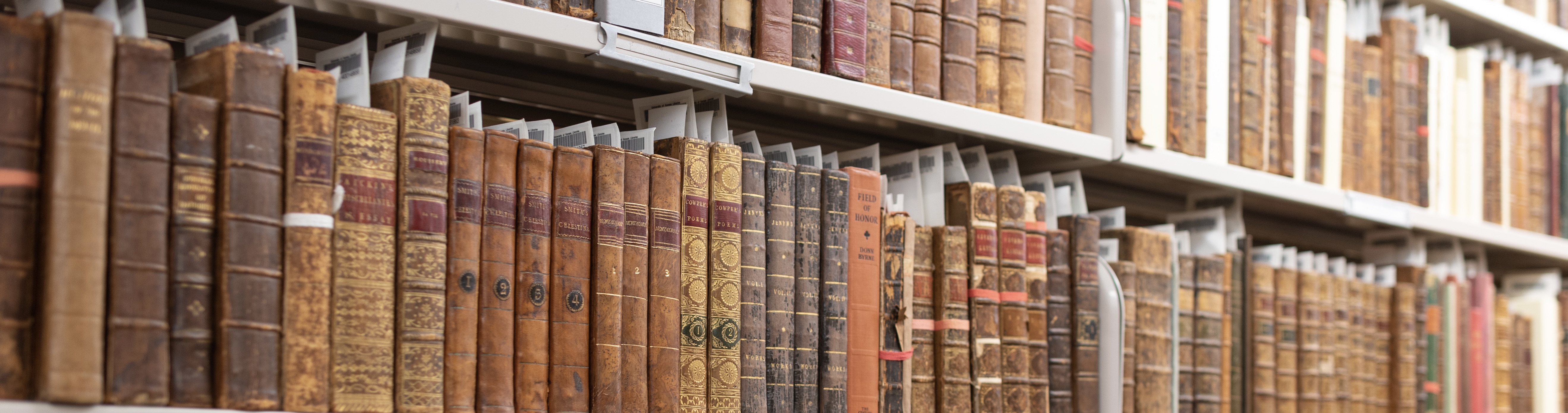
Books on a shelf

Welcome to the Kenneth Spencer Research Library blog! As the special collections and archives library at the University of Kansas, Spencer is home to remarkable and diverse collections of rare and unique items. Explore the blog to learn about the work we do and the materials we collect.

This blog may contain archived web content. This blog may link to catalog records which no longer exist as of a software change in 2026.

Happy Birthday, Amelia Earhart!

July 22nd, 2015

Friday marks the 118th birthday of the famous aviatrix and Kansas native, so this week we’re highlighting a letter in the Kansas Collection that Earhart (1897-1937) wrote to a young girl, encouraging her to pursue her interest in flying.

The recipient of the letter was sixteen-year-old Helen Edna Mason of Greenfield, Franklin County, Massachusetts. Helen was the oldest sister of Alexandra (Sandy) Mason, a longtime and distinguished librarian at Spencer Research Library. Preliminary research indicates that Helen (1911-2000) was a lifelong resident of Franklin County, located in the northwest part of the state. She married Lawrence H. Wheeler in the late 1930s and had at least three children. It’s unknown whether she studied aviation, worked in the industry, or became a pilot.

Image of Amelia Earhart letter to Helen Mason, page 1, 1927

Image of Amelia Earhart letter to Helen Mason, page 2, 1927

Image of Amelia Earhart letter to Helen Mason, page 3, 1927

Amelia Earhart’s letter to Helen Mason, September 12, 1927.
Earhart flew on the first official flight out of Dennison Airport
nine days earlier; she had also helped finance its construction.
Charles Lindbergh had completed his solo nonstop flight
across the Atlantic earlier that year, May 20–21, 1927.
Helen E. Mason Correspondence and Memorabilia.
Call Number: RH MS P23. Click on images to enlarge.

September 12, 1927.

My dear Miss Mason,

Your letter contained so little about yourself that I do not feel I can advise you adequately about aviation possibilities. I do not know whether you must earn your own living or just wish to. Nor do I know whether you are willing to leave your family.

Presuming that you are “foot-loose” I should think application at one of the large airplane factories would be the best move. Ofcourse you could not get the “job” you wish, but even if you entered as a stenographer or a factory worker, you would be on the staff and could use the knowledge gained in one department to help you in another.

Frankly, I fell into aeronautics. I took my first “job” to pay for flying instruction. I am not in on much of an earning basis yet, as I have divided my time between social work, teaching and various other occupations.

I have given your name, and the substance of your letter, to Mr. Kurt, the general manager of the Dennison Company. There are several women students and I asked him to tell you of them and give you any advice he could.

I quite agree with you that everyone should as far as possible do what he or she really wishes. If an inclination is very strong, not conforming to it means unhappiness.

I wish you luck in your inclination.

Very truly yours,
Amelia M Earhart

Interested in learning more about Amelia Earhart? Collections of her papers can be found at Purdue University and the Arthur and Elizabeth Schlesinger Library on the History of Women in America at Radcliffe College, Harvard University. See also the Wikipedia article about Earhart, which provides links to various other paper and online primary and secondary sources.

Spencer Research Library also houses materials about other female pilots. See, for example, the records of the Northeast Kansas Chapter of the Ninety-Nines, an international organization of women pilots that elected Amelia Earhart its first president in 1931, and the reminiscences of member Dorothy Maloney.

Caitlin Donnelly
Head of Public Services

Housing the Zodiac Club Doll Collection

July 13th, 2015

One of my favorite group of objects that has come to Conservation Services for housing is the Zodiac Club peanut doll collection, housed in the Kansas Collection. As the name implies, it is a series of dolls made from shelled peanuts for heads, with wire bodies and intricate, period-appropriate dress.

The Zodiac Club was founded as women’s studying group, organized on February 5, 1878, by nine women from the Lawrence, KS area. Over the years the club met in members’ homes every Tuesday to read and discuss items relating to “cultural improvement.”

In 1943, when the Zodiac Club celebrated its 65th anniversary, twelve dolls were made to represent the original members of the Zodiac Club. The dolls are made of a frame of covered wire with peanuts for faces and dressed in costumes from the 1870s. Besides the dolls, the collection includes miniature period furniture, as well as leather-bound books, a tea service, spinning wheel, tintype photographs, needlepoint, and braid rug.

Zodiac Club doll collection,before rehousing, Kansas Collection      Furniture from Zodiac Club doll collection, Kansas Collection

Left: Zodiac Club doll collection before housing. Right: Examples of the other items housed with the dolls.
Kansas Collection, call number RH MS Q61.

All the dolls, furniture, and other items were wrapped in paper towels and placed together in a box, making it difficult to tell what was in the box and to access particular items. A museum studies student intern was assigned to rehouse the collection into a more usable form.

Doll in paper towel from Zodiac Club doll collection, Kansas Collection

Peanut-headed doll wrapped in paper towel. Note the fine detail in the costume.
Kansas Collection, call number RH MS Q61.

I asked her to create a housing that would keep the dolls and the other items in one box. She devised an ingenious two-tray system: the furniture and other items that are less frequently accessed are on the bottom layer, and the dolls are in a removable tray on top. Featured on the outside and inside of the box is a diagram that indicates how everything fits in the housing. Now the peanut ladies will be better protected and more easily displayed for many years to come.

Zodiac Club doll collection, after rehousing, Kansas Collection  Zodiac Club doll collection, after rehousing, Kansas Collection

Left: Top tray with dolls and housing guide. Right: Bottom tray with furniture and other items.
Kansas Collection, call number RH MS Q61.

Whitney Baker
Head, Conservation Services

A Kansas Fourth of July, 1898

June 30th, 2015

To celebrate the Fourth of July, here are a selection of festive photographs from the Kansas Collection at Kenneth Spencer Research Library.

John S. Salmon (1867-1927), owner of Salmon Brothers Photography Studio, took these photographs of the 1898 Fourth of July Parade in Mount Hope, Kansas, located in the south-central part of the state between Wichita and Hutchinson. Operating his studio at the turn of the century, Salmon captured the town just as it was making the shift from horse transportation to the automobile.

Photograph of a buggy decorated for the Fourth of July, 1898

Photograph of a buggy decorated for the Fourth of July, 1898

Buggies decorated for the Fourth of July, Mount Hope, Kansas, 1898.
Salmon Brothers, Mt. Hope Photograph Collection. Call Number: RH PH 131.
Click images to enlarge.

Photograph of the Georgetown Band, 1898

Georgetown Band playing on the Fourth of July, Mount Hope, Kansas, 1898.
Salmon Brothers, Mt. Hope Photograph Collection. Call Number: RH PH 131.
Click image to enlarge.

Photograph of the Fourth of July parade, Mount Hope, Kansas, 1898

Photograph of the Fourth of July parade, Mount Hope, Kansas, 1898

Fourth of July parade, Mount Hope, Kansas, 1898.
Salmon Brothers, Mt. Hope Photograph Collection. Call Number: RH PH 131.
Click images to enlarge.

Additional records documenting the activities of the Salmon Brothers Photography Studio can be found at Wichita State University’s Special Collections and University Archives, which has made an inventory of the collection available online.

Kathy Lafferty
Public Services

“Hope to See You Before Father’s Day Again”

June 19th, 2015

Many archival collections at Spencer Research Library contain letters exchanged between fathers and their children. In honor of Father’s Day on Sunday, we’re sharing several items from our collection of Leo W. Zahner, Jr.’s World War II letters, housed in the Kansas Collection.

Photograph of Leo W. Zahner, Jr. and other sailors, 1946

Leo W. Zahner, Jr. and other sailors at the College Inn, San Diego, California,
January 1946. Leo is the second from the right, seated in the front row.
Leo Zahner, Jr. World War II Letters. Call Number: RH MS-P 1079.
Click image to enlarge.

Zahner (1925-2007) was a lifelong resident of Kansas City, Missouri. He joined the Navy during World War II, receiving training from August to November 1943 at the U.S. Naval Training Station at Farragut, Idaho. In late November, he was transferred to the Navy’s metalsmith school at Great Lakes, Illinois, where he was hospitalized with scarlet fever in December 1943. In the summer of 1944, he shipped overseas, where he served on a tank landing ship at U.S. combat zones in New Guinea and the Philippines. He returned to the U.S. mainland in December 1945 and was discharged from service in March 1946.

The Zahner collection contains three items specifically related to Father’s Day. One is a letter he wrote to his father to celebrate the holiday in 1945; the other two items (a card and a souvenir handkerchief) are undated, and a cursory examination of the collection didn’t reveal when Leo sent them to his father.

Image of a Father's Day card, circa 1940-1946

Image of a Father's Day card, circa 1940-1946

Father’s Day card, circa 1940-1946. Leo Zahner, Jr. World War II Letters.
Call Number: RH MS 1079. Click images to enlarge.

Image of a painted souvenir handkerchief from the South Pacific, circa 1944-1945

Painted souvenir handkerchief from the South Pacific, circa 1944-1945.
Leo Zahner, Jr. World War II Letters. Call Number: RH MS Q270. Click image to enlarge.

Image of a letter, Leo W. Zahner, Jr. to his father, June 17, 1945Image of a letter, Leo W. Zahner, Jr. to his father, June 17, 1945

Letter, Leo W. Zahner, Jr. to his father, June 17, 1945. Leo Zahner, Jr. World War II Letters.
Call Number: RH MS 1079. Click images to enlarge. Transcription below.

June 17, 1945
Fathers Day.

Dear Dad;
Well its Fathers Day again and I’m still over here. Hope every thing is going fine with you.

The war looks like it’s going pretty good in general and looks better at [our?] end too.

I wish you could get a letter off to me. its been a long time and you ought [owe] me a couple.

Mother keeps me pretty well up on the shop [the family business in Kansas City, A. Zahner Sheet Metal Company] lately. I hear Russell White is working for you Hows his friend Billy. There ought to be a lot of the old men come back

The 1st Lieutenant just call me up I’ve got to [go?] he wants me to fill out requestion for our supplies here in the C & R. He’s our offer of Deck [officer on deck?]. were under [illegible]. I’ve got them all made out now so I can finish this letter to you. I take care of every thing we need down here. Its a pretty good job thank goodness it don’t happen very often. He try to get me [illegible] but [i]s having lots of trouble. If I get 3/r [3rd?] in at most couple of months I have a good chance of getting 2/nd, but I settle for third. ha. ha. before going home. It would make a lot of difference after I get off this tub.

I’ve got all the gear to gather for Mellott to run off a batch of icecream. We had a pretty good snack last night Red and Ed did a little [illegible] for batch. So I had [break and the fire?] pot. The hot plates busted. I do the biggest part of the cooking.

We got turkey for chow today it was pretty good except the hide was about 1/2 thick with pen [illegible] like welding rod.

This is the first holiday weve had in three weeks. I sleep till noon. There was no church. It was felt good to sleep that late.

I’ve got a pretty nice job tomorrow a making a couple of brass covers for front of some big lights. [diagram] I like that kind of work.

Well Dad hope you had a happy fathers Day. Well write me soon now so Ill have something write back about.

Hope to see you before fathers Day again. About the end of this year. I hope I’ve counted my chickens right before the hatch.

Your Son
Junior.

Caitlin Donnelly
Head of Public Services

George Allen Collection of Stereoviews, 1867-1915

May 13th, 2015

Photograph of George Allen, 1989

George Allen with his collection, December 1989.
Lawrence Journal-World Photo. George Allen Photograph Collection
accession file. Click image to enlarge.

George Allen (1913-2007) was born in Wichita, Kansas. His family moved to Lawrence in 1927. He graduated from Liberty Memorial High School, and then earned a law degree from Kansas University. He practiced law in Lawrence for forty years. Mr. Allen also collected stereoviews, a hobby fueled by his love of history and an interest in photography. He bought his first stereoview in the 1950s from a woman who operated an antique shop behind her house. He would go on to spend thirty-five years collecting thousands more, with his collection peaking somewhere between 20,000 and 25,000. In 1990 he sold 722 stereoviews to the University of Kansas Libraries. Among the collection are views of Kansas, Arizona, Illinois, Nebraska, New Mexico, North Dakota, Ohio, Pennsylvania, Texas, Missouri, Dakota Territory, as well as images of cowboys, sod homes, coal mining, floods, cattle raising, the Chicago Exposition of 1874, and railroads.

Photograph of theEmporia News building, Emporia, Kansas, undated

Emporia News building on Commercial Street, Emporia, Kansas, undated.
George Allen Photograph Collection. Call Number: RH PH 137.
Click image to enlarge.

Photograph of a flood in Abilene, Kansas, 1903

Flood in Abilene, Kansas, 1903. George Allen Photograph Collection.
Call Number: RH PH 137. Click image to enlarge.

Photograph of boys bathing in Mud Creek, Dickinson County, Kansas, undated

Boys bathing in Mud Creek, Dickinson County, Kansas, undated.
George Allen Photograph Collection. Call Number: RH PH 137.
Click image to enlarge.

The most popular stereoviews from Mr. Allen’s collection are fifty-five from Alexander Gardner’s “Across the Continent on the Union Pacific Railway, Eastern Division” series, which include several images of post-Civil War Lawrence, Kansas. Gardner, working for the Union Pacific Railway, took his photography wagon, loaded with chemicals and glass plates, across the west in 1867. He first followed the existing railroad line, which passed through Kansas, and then he continued along the proposed railroad route to the Pacific Ocean. He documented the towns, landscapes, and people he encountered on the way, using stereoviews to do so.

Photograph of Massachusetts Street, Lawrence, Kansas, 1867

Image of Massachusetts Street, Lawrence, Kansas, 1867 (back)

Massachusetts Street, Lawrence, Kansas, 1867 (front and back of card).
The image shows the rebirth of the town within five years of Quantrill’s Raid.
Alexander Gardner, Across the Continent on the Union Pacific Railway, Eastern Division.
George Allen Photograph Collection. Call Number: RH PH 137.
Click images to enlarge.

Stereoscopic photography consists of two nearly identical images pasted on a board, side by side. To get the two images, the photographer would make an exposure, then move the camera 2 1/2 inches, the average distance between human eyes, and make a second exposure. The photographer would then develop each of the images and paste the prints onto the board. When the two images are viewed through an apparatus called a stereoscope, or stereoviewer, the eyes force the two images into one image, creating the appearance of depth perception, or 3D. Another method was to use a twin-lens camera, which allowed the photographer to make the two exposures simultaneously, saving time and eliminating the need to reload the camera.

Image of a stereoviewer

An example of a stereoviewer, also known as a stereoscope.
Image courtesy of Gilai Collectibles. Click image to enlarge.

Collecting and trading stereoviews of plays, famous sites, people, or events was quite popular in the mid nineteenth and early twentieth centuries. Most homes had a stereoviewer in the parlor, which allowed viewers to see, for example, views of Paris without actually traveling. Mr. Allen enjoyed stereoviews for the way they portrayed history and told the story of our shared past.

Photograph of a round-up on the Sherman Ranch, Genesee, Kansas, undated

Image of a round-up on the Sherman Ranch, Genesee, Kansas, undated

Round-up on the Sherman Ranch, Genesee, Kansas, undated (front and back of card).
George Allen Photograph Collection. Call Number: RH PH 137. Click images to enlarge.

Photograph of a dugout sod home, Kansas, undated

Dugout sod home, Kansas, undated. George Allen Photograph Collection.
Call Number: RH PH 137. Click image to enlarge.

Kathy Lafferty
Public Services