The University of Kansas

Inside Spencer: The KSRL Blog

Books on a shelf

Welcome to the Kenneth Spencer Research Library blog! As the special collections and archives library at the University of Kansas, Spencer is home to remarkable and diverse collections of rare and unique items. Explore the blog to learn about the work we do and the materials we collect.

This blog may contain archived web content. This blog may link to catalog records which no longer exist as of a software change in 2026.

Happy Election Day!

November 3rd, 2015

November 3rd is Election Day here in the U.S. and although it’s not time for the presidential elections, the races and ballot initiatives taking place are no less vital. To celebrate the importance of civic engagement, I’ve selected a few items from Spencer Library’s Kansas Collection that highlight different ways of being politically active.

One of our researchers from the University of Chicago found this delicious thank-you note. Coffeyville, Kansas, native Bruce McKinney was thanked by Bill Clinton and Al Gore for his vote by receiving his very own copy of Hillary Clinton’s Chippers recipe!
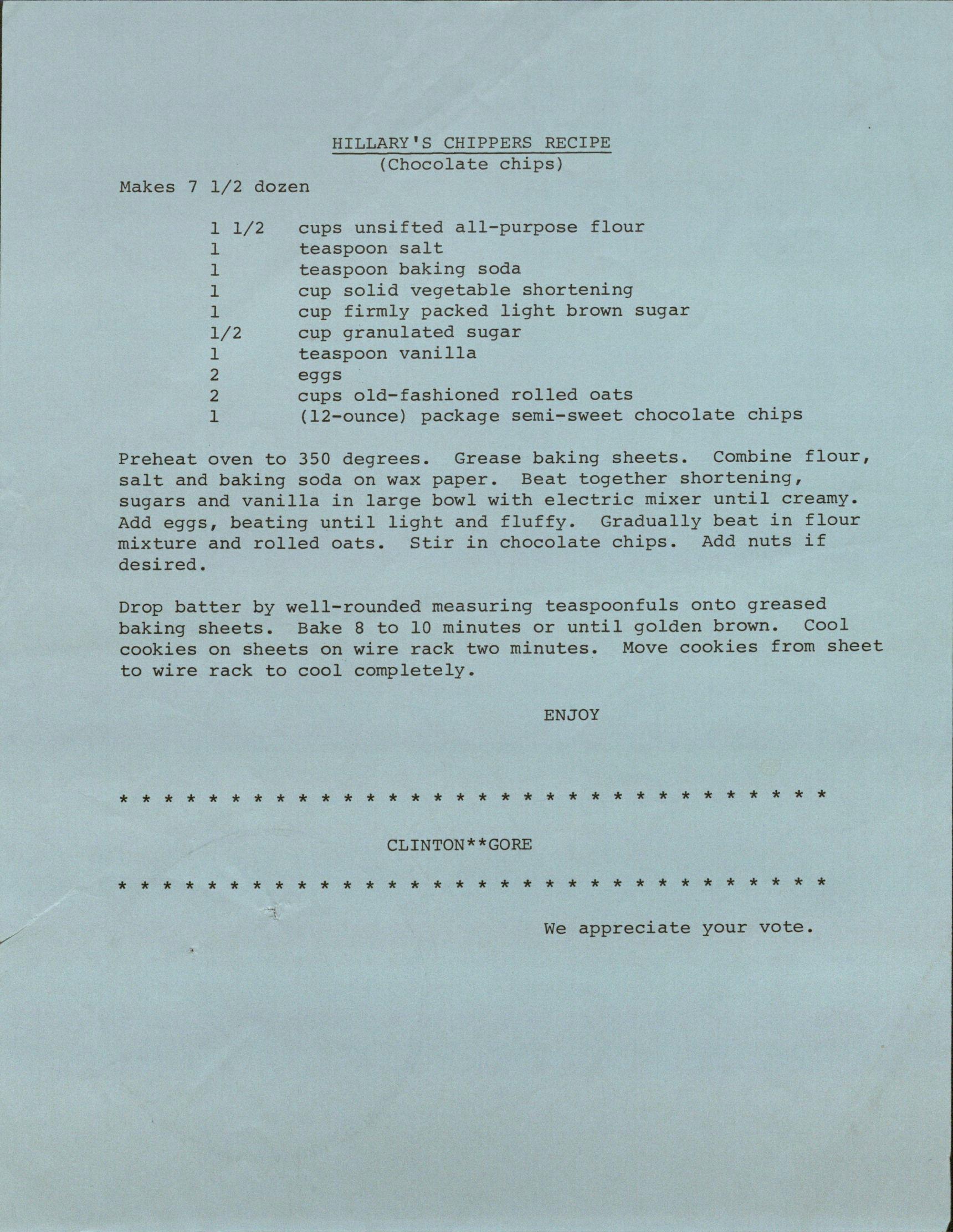
Hillary Clinton's Chippers Recipe and note of appreciation for Bruce McKinney's vote for Clinton and Gore

Hillary Clinton’s Chippers Recipe, circa 1992-1996.
Papers of Bruce McKinney, 1900-2008. Call Number: RH MS 1164.
Click image to enlarge.

Mervyn Anderson was an active member of the League of Women Voters of Kansas. Her dedication to informing Kansans on political issues and candidates is evident in these two items from her papers.
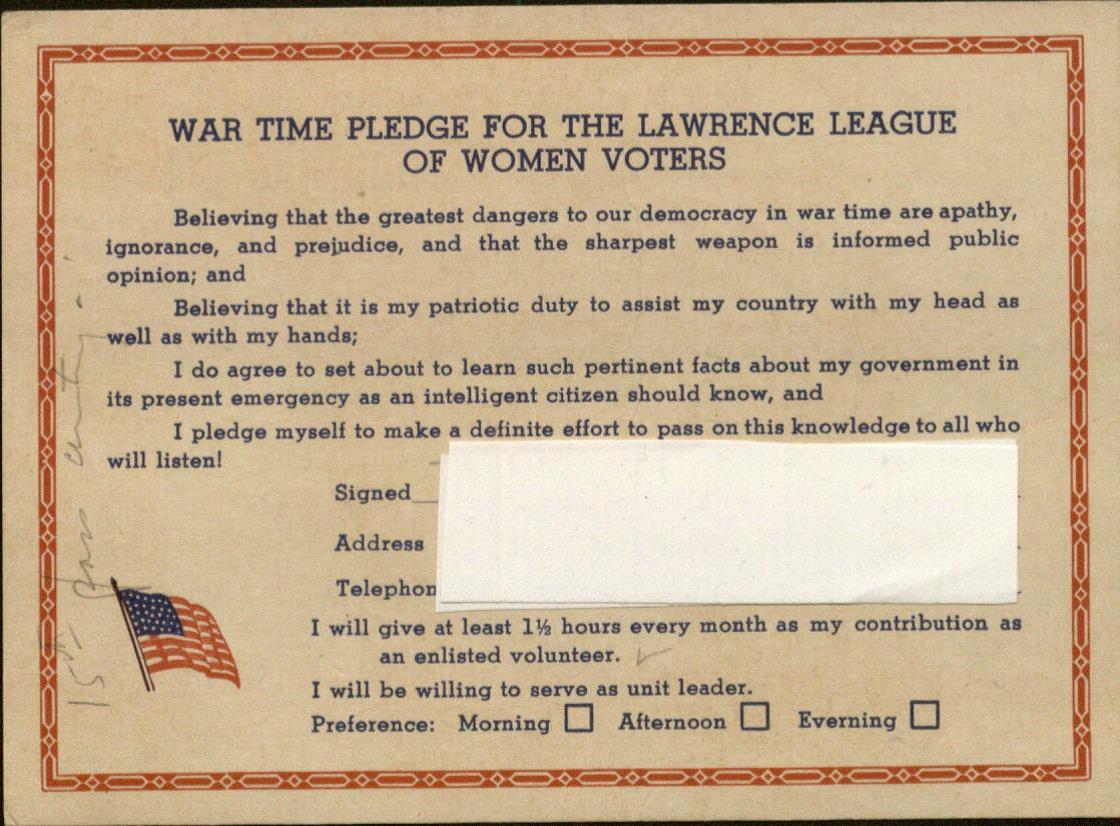
War Time Pledge Card for the League of Women Voters of Lawrence, Kansas

War time (probably referring to the Vietnam War) pledge card for the
League of Women Voters of Lawrence, Kansas.
Mervyn Anderson Papers, 1956-1987. Call Number: RH MS 1091.
Click image to enlarge.
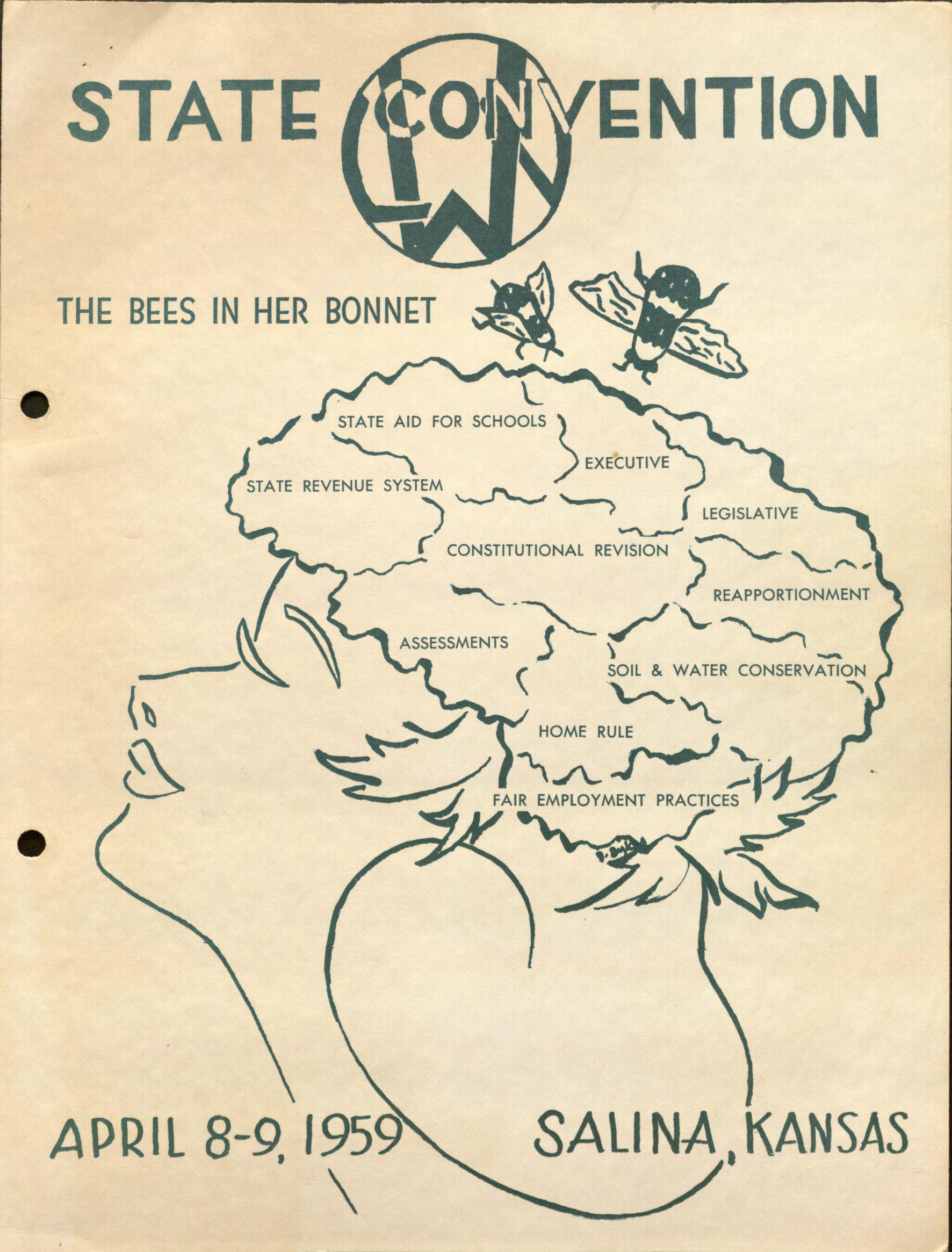
Cover of the April 8-9, 1959 League of Women Voters State Convention program in Salina, Kansas.

Cover of the April 8-9, 1959 League of Women Voters State Convention
program in Salina, Kansas. Mervyn Anderson Papers, 1956-1987.
Call Number: RH MS 1091. Click image to enlarge.

Many Kansans have engaged politically by serving in local, state, or national government. Robert C. Caldwell is an excellent example of a public servant to the city of Salina, where he was elected as the first African American mayor in 1970.
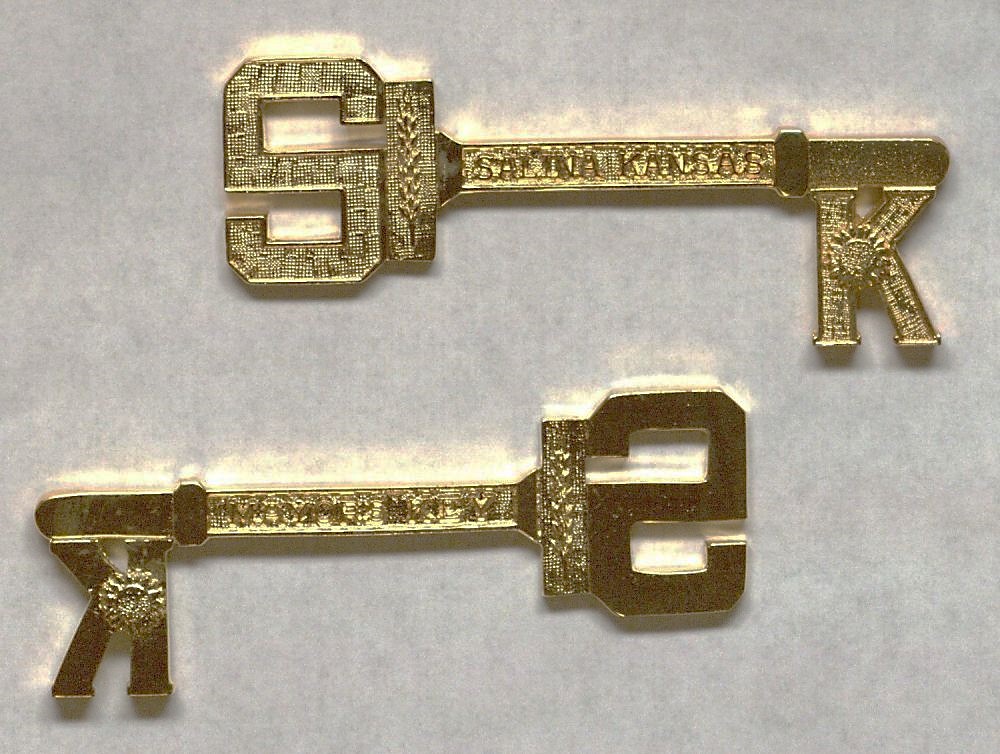
Mayor Robert C. Caldwell's keys to the city of Salina, Kansas.

Two identical keys to the city of Salina, Kansas, undated.
The key at the top displays the side engraved with Salina, Kansas,
while the key on the bottom is engraved with Mayor’s Key.
Robert C. Caldwell Family Papers, 1922-1999. Call Number: RH MS Q119. Click image to enlarge.

Mindy Babarskis
Library Assistant and Supply Coordinator

Prohibition in Kansas

October 28th, 2015

On October 28, 1919, Congress passed the National Prohibition Act, making it illegal to produce, sell or transport “intoxicating” liquors. It passed in spite of President Wilson’s veto. It was also known as the Volstead Act, named after Congressman Andrew J. Volstead of Minnesota, who worked closely with the Anti-Saloon League to draft and promote the bill until it became law. The Volstead Act implemented the Prohibition (Eighteenth) Amendment by defining the process and procedures for banning alcoholic beverages, as well as their production and distribution.

Photograph of men drinking in saloon just before the start of Prohibition, 1919

Men at an unknown saloon in June 1919. The caption reads “fill ’em up, boys; last chance.”
Ratification of the Eighteenth Amendment was certified on January 16, 1919;
it took effect one year later. Call Number: PH PH P238. Click image to enlarge.

Photograph of Ardmore [Oklahoma] Police Department members pouring out barrels of alcohol, November 22, 1916

Ardmore [Oklahoma] Police Department members pouring out barrels of alcohol,
November 22, 1916. Call Number: PH PH P1617. Click image to enlarge.

In Kansas, however, prohibition had been an issue even before statehood in 1861. Organized groups such as the Order of Good Templars, the Kansas State Temperance Union, and the Woman’s Christian Temperance Union fought for statewide prohibition, eventually establishing Kansas as the first state to adopt prohibition into its constitution. Strongly prohibitionist, Republican governor John P. St. John was elected in 1878, and by this time the legislature was like-minded. The state law was ratified by voters in November 1880, and prohibition in Kansas took effect on January 1, 1881, making it illegal to manufacture or sell intoxicating liquors in the state.

Photograph of Kansas delegates to Michigan prohibition meeting, undated

Kansas delegates to a Michigan prohibition meeting, undated.
Call Number: RH PH P164. Click image to enlarge.

Pages from Prohibition pamphlets

A Prohibition pamphlet published in Kansas City, Kansas,
by M. A. Waterman, etc., 1911. Call Number: RH C4581.
Click image to enlarge.

Prohibition may have been the law of the land in Kansas, but saloons and bars simply paid fines and used loopholes in the law to stay in business. Established temperance organizations still worked to get stronger laws and ensure enforcement of them, but the failure to enforce the law, combined with a decline of support for prohibition among the general population, caused a rise of prohibitionist radicals such as Carrie Nation (1846-1911). Nation and her followers attracted attention to the liquor issue by using unconventional methods, such as smashing saloons with rocks and hatchets and getting arrested as a result. Topeka, Kansas, became Nation’s home base as she traveled around, in state and out, taking her message to the people. While her methods may have been radical, they did get results. She addressed a joint session of the Kansas legislature, went on a lecture tour, and published a temperance newspaper called the Smasher’s Mail. In 1907 the government began real enforcement of the prohibition laws, and the governor and the legislature made the laws stronger, closing loopholes.

Cover of The Smasher’s Mail, 1901

The Smasher’s Mail, edited by Carrie Nation,
“your loving home defender.”
Topeka, Kansas: Nick Chiles, 1901.
Call Number: RH VLT H5. Click image to enlarge.

For several years national, state, and local law enforcement officials worked to make the country “dry.” However, by the 1930s, most citizens thought prohibition had failed, and the amendment was repealed by President Franklin Roosevelt in 1933. However, in Kansas prohibition continued to be the law until 1948, when it was finally voted down. Alcohol in Kansas returned to being subject to local option laws, much like those that had been in place seventy years before.

Image of two songs in the Prohibition Bugle Call, 1887

Two songs from The Prohibition Bugle Call: New Songs for Prohibition Clubs,
Temperance Societies, Gospel Temperance Meetings and the Home Circle
by H. H. Hawley.
New York: Biglow & Main, 1887. Call Number: Shull C148. Click image to enlarge.

Kathy Lafferty
Public Services

Throwback Thursday: Alexander Gardner Edition

October 15th, 2015

Each week we’ll be posting a photograph from University Archives that shows a scene from KU’s past. We’ve also scanned more than 8,200 images from KU’s University Archives and made them available online; be sure to check them out!

This week’s images are among the earliest we have of the KU campus, showing the new university within its first two years. The stereoviews were taken by renowned Civil War photographer Alexander Gardner in 1867 and 1868 for his series Across the Continent on the Union Pacific Railway, Eastern Division. Gardner’s 194th birthday is this Saturday, October 17th. These photographs form part of the George Allen Photograph Collection in Spencer’s Kansas Collection.

View of North College, 1867

“State University, Lawrence, Kansas,” 1867-1868. Shown is North College,
the first building at KU and its only structure until 1872. Located on forty acres
donated by former Kansas governor Charles Robinson and his wife Sara,
the site was located where Corbin and Gertrude Sellards Pearson Halls currently stand.
Alexander Gardner, Across the Continent on the Union Pacific Railway, Eastern Division.
George Allen Photograph Collection. Call Number: RH PH 137. Click image to enlarge.

View of Lawrence from fort with KU on left, 1867

“Lawrence, Kansas from Fort. State University, on the Left,” 1867-1868.
Alexander Gardner, Across the Continent on the Union Pacific Railway, Eastern Division.
George Allen Photograph Collection. Call Number: RH PH 137. Click image to enlarge.

View of Lawrence from Mount Oread, 1867

Back of stereograph card, 1867

Front and back of the stereoview card, “Lawrence, Kansas, from
Mount Oriad [sic], Kansas,” 1867-1868. Alexander Gardner,
Across the Continent on the Union Pacific Railway, Eastern Division.
George Allen Photograph Collection. Call Number: RH PH 137. Click image to enlarge.

Author John Charlton provides some context for these images in his article “Westward, The Course of Empire Takes Its Way” (Kansas History, Summer 1997).

[Gardner’s] series of stereographic images begins at the Union Pacific Railway, ED, company offices and depot in St. Louis, Missouri, and follows the railroad’s construction progress westward between Kansas City, Missouri, to just past Fort Hays, on the High Plains…

Gardner’s photographs in Kansas, and his photographs along the survey for the railway company’s planned future route, were made in the late summer of 1867 through the winter of 1868 between St. Louis, Missouri, and San Francisco, California. He was commissioned by Union Pacific officials to make this photographic series to illustrate the company’s report of its survey of a southern railroad route across the continent with the goal of gaining congressional approval of federal funding for construction. The Union Pacific Railway, ED, line was in close competition with the Omaha-based Union Pacific Railroad to build the first transcontinental railroad (118).

You can further explore KU’s early years by visiting Spencer’s current exhibit, “Achievement of a Dream: The Birth of the University of Kansas.”

Caitlin Donnelly
Head of Public Services

Melissa Kleinschmidt, Megan Sims, and Abbey Ulrich
Public Services Student Assistants

The House of David Baseball Team in Kansas

October 13th, 2015

Photograph of the Israelite House of David headquarters, entrance gate, undated

Entrance gate at the Israelite House of David headquarters, undated.
T. Y. Baird Papers. Call Number: RH MS-P 414. Click image to enlarge.

The Israelite House of David is a religious society with headquarters in Benton Harbor, Michigan. Founded by Benjamin and Mary Purnell in 1903, the society is still in operation today. Throughout its existence it has not only been a religious order, but has also undertaken numerous business ventures, such as an amusement park, dairy, amphitheater, zoo and aviary, bowling alley, restaurant, hotel, logging operation, and bottled water plant.

Perhaps the society’s most successful business enterprise was owning and managing its own baseball teams, known simply as the “House of David.” The teams existed in varying forms from 1913 through the 1940s. As with all of their businesses, the teams were a way to both provide income for the society and to evangelize.

Photograph of the Israelite House of David ballpark, undated

Israelite House of David ballpark, undated. T. Y. Baird Papers.
Call Number: RH MS-P 414. Click image to enlarge.

Photograph of the House of David baseball team, undated

A House of David baseball team, undated. Call Number: RH PH P1637.
Click image to enlarge.

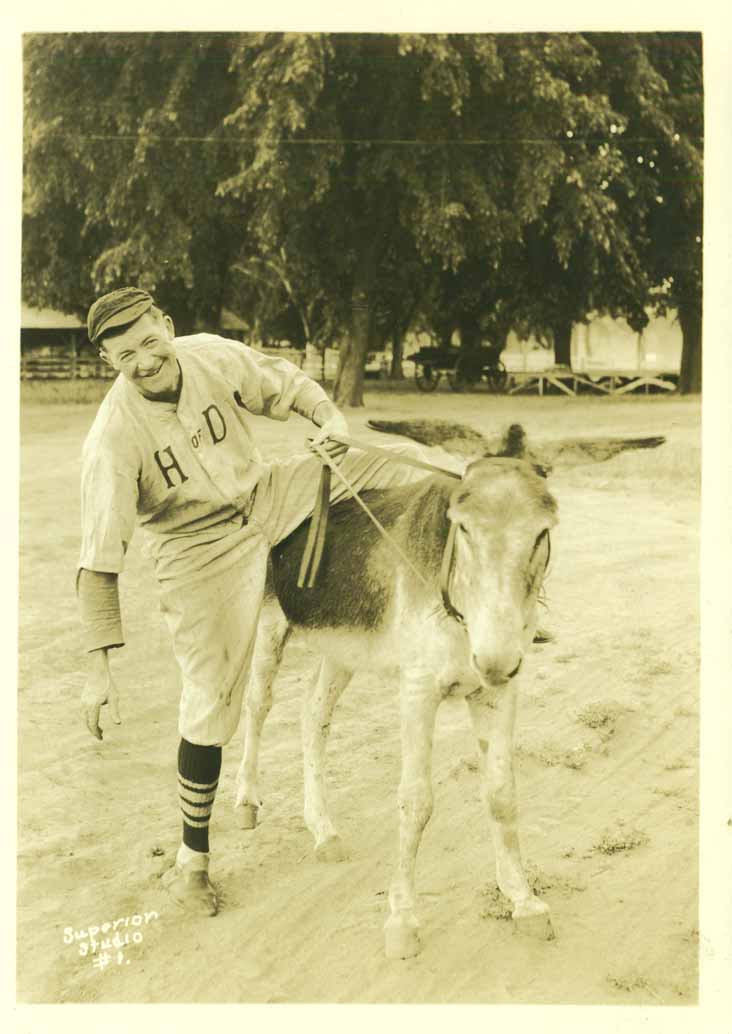
The teams were originally comprised entirely of House of David members, but by the 1920s they began to hire professional athletes in order to remain competitive and provide better entertainment. Two of the most famous professional athletes to play for House of David teams were future Hall of Famers Grover Cleveland Alexander and Satchel Paige. The society hired women players, too. For example, Babe Didrikson Zaharias – a successful female athlete in golf, basketball, and track and field – and Jackie Mitchell, a professional female baseball pitcher in the minor leagues, were signed to play. Growing long hair and beards were part of the society’s religious beliefs, and, although it was not required, some of the hired players grew out their hair and beards as a way of showing respect for the society.

Photograph of Grover Cleveland Alexander, undated

Grover Cleveland Alexander, undated. T. Y. Baird Papers.
Call Number: RH MS-P 414. Click image to enlarge.

Photograph of Babe Didrickson, undated

Babe Didrickson, undated. T. Y. Baird Papers.
Call Number: RH MS-P 414. Click image to enlarge.

Photograph of George Anderson, undated

House of David baseball player George Anderson, undated.
T. Y. Baird Papers. Call Number: RH MS-P 414. Click image to enlarge.

Because the House of David operated outside of the framework of major league baseball, the teams barnstormed to find other teams to play. Barnstorming involved independent teams traveling to various towns around the country to play in exhibition games against hometown teams. The House of David also played teams from the Negro Leagues, which also barnstormed during and after their regular season.

Thomas Younger (T. Y.) Baird owned the Kansas City Monarchs, a Negro League baseball team, from 1947 to 1956. For a brief period during that time he was also the booking agent for the House of David teams. The photographs in this post are from the papers and photographs of T. Y. Baird held in the Kansas Collection at Kenneth Spencer Research Library.

Photograph of T. Y. Baird with a House of David team and the Kansas City Monarchs light boys, undated

T. Y. Baird, in the back row wearing a suit and tie, with a House of David team, undated.
Also shown are the the Kansas City Monarchs light boys, who set up stadium lights for night games.
T. Y. Baird Papers. Call Number: RH MS-P 414. Click image to enlarge.

Advertisement, House of David vs. Kansas City Monarchs Travelers, May 28, 1950

Advertisement, House of David vs. Kansas City Monarchs Travelers,
May 28, 1950. T. Y. Baird Papers. Call Number: RH MS Q209.
Click image to enlarge.

Kathy Lafferty
Public Services

Ribbon Roundup

August 31st, 2015

Among the many treasures in the Kansas Collection are the Fowler-Rose-Thompson Collection ribbons. These beautiful silk ribbons depict Abraham Lincoln and Theodore Roosevelt and commemorate the Almena, Kansas Congregational Church’s “Old Folks Day.” The over 100-year-old ribbons arrived in the conservation lab stored vertically in an archival folder. Due to their age and fragility, the ribbons were torn, fraying, and wrinkled. After the ribbons were flattened and mended by Whitney Baker, Conservator for KU Libraries, their storage situation needed to be addressed.

RH MS 88_Silk ribbons

Three ribbons from the Fowler-Rose-Thompson Collection, call number RH MS 88. Click image to enlarge.

To better preserve these delicate ribbons, an entirely new housing arrangement was in order. The priorities for the new housing were to 1) ensure that the ribbons were stored horizontally to prevent any sagging or further wrinkling of the fragile silk and 2) to minimize the need for direct handling of the ribbons. A hinged, floating mount achieves both requisites.

The floating mount arrangement that Whitney advised allows for the attachment of the ribbons to a piece of mat board without the use of damaging adhesives. Instead, strips of polyethylene tape run through slits on either side of the ribbons. The polyethylene tape acts like a seat-belt, holding the ribbons in place without obstructing the view of the ribbons.

RH MS 88_Silk ribbons

Detail of polyethylene strapping over bottom of ribbon. Click image to enlarge.

Hinged to this first piece of mat board with gummed tape is a mat board frame. The frame allows the entirety of the ribbons to remain visible, which reduces the need for handling, while acting as a buffer for the floating mount’s cover. The cover, a third piece of mat board, is also hinged with gummed tape to the first piece of mat board to further protect the ribbons.

RH MS 88_Silk ribbons   RH MS 88_Silk ribbons

Left: Attaching mat frame to back board with gummed tape. Right: The final three-part mat. Click images to enlarge.

This book-like housing arrangement was then placed into a plastazote-lined archival box for added protection and to ensure that the ribbons remain horizontal.

Brecken Liebl
Conservation Intern
KU Museum Studies Graduate Student