The University of Kansas

Inside Spencer: The KSRL Blog

Books on a shelf

Welcome to the Kenneth Spencer Research Library blog! As the special collections and archives library at the University of Kansas, Spencer is home to remarkable and diverse collections of rare and unique items. Explore the blog to learn about the work we do and the materials we collect.

This blog may contain archived web content. This blog may link to catalog records which no longer exist as of a software change in 2026.

Meet Josefina at Spencer Research Library

September 4th, 2026

As an elder millennial who loved history as a child and grew up with American Girl, I’ve been excited about the company’s 40th anniversary this year. As a result, I will be sharing a series of posts highlighting Spencer collection materials that connect to AG’s six original historical characters, in chronological order of when they “lived”: Felicity Merriman, Josefina Montoya, Kirsten Larson, Addy Walker, Samantha Parkington, and Molly McIntyre. Each post will focus on a different character and explore a selection of items that relate to the time and place in which she “lived” and topics or themes explored in her stories.
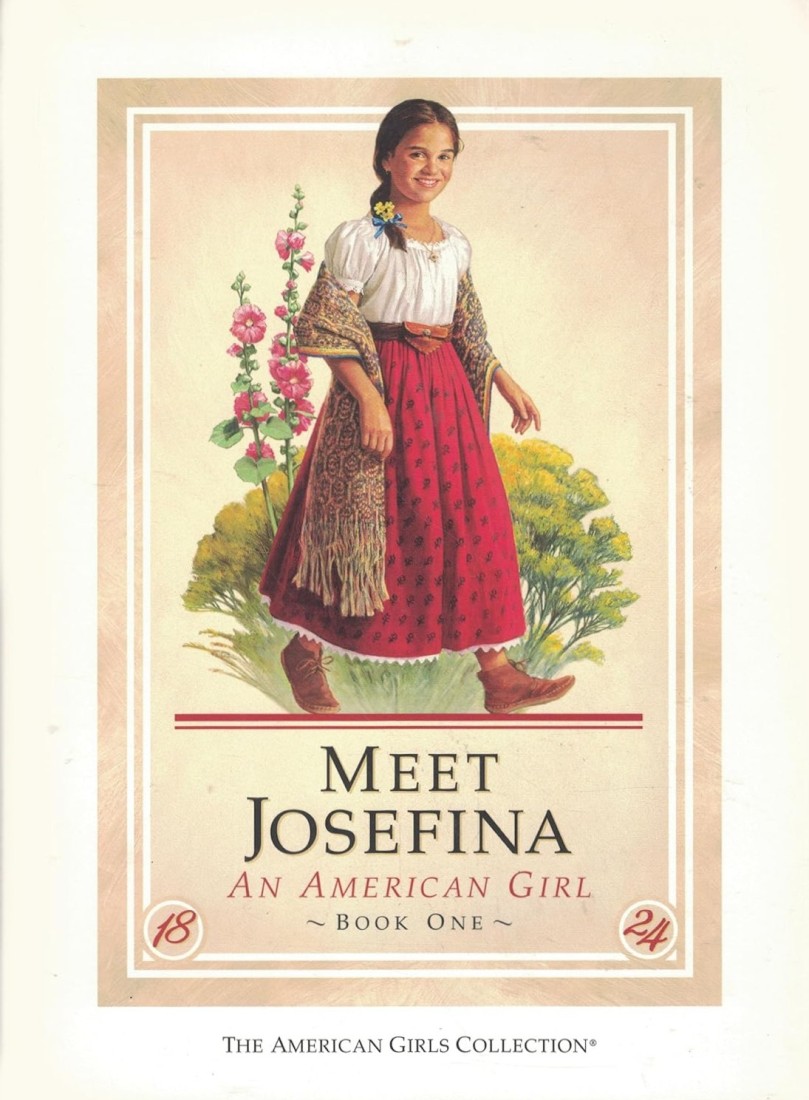
This image contains text with a color illustration of a girl with dark hair in a braid. She is wearing a white blouse, a red skirt, and a shawl and walking in front of a flowering bush.
The front cover of the first book in Josefina’s series, first published in 1997. The book was also published in Spanish with the title Así es Josefina: Una Niña Americana. Click image to enlarge.

When readers meet Josefina Montoya, she is a nine-year girl described as having a big heart and big hopes. She lives with her father and sisters on a ranch outside Santa Fe, New Mexico – then part of Mexico – in 1824. Josefina’s stories are set against the backdrop of Mexico’s recent independence from Spain, and a significant plot point is the arrival of Americans via the Santa Fe Trail (which passed through Douglas County, Kansas, roughly fifteen miles south of Lawrence and KU). Throughout her stories, Josefina grieves and remembers her deceased mother; adjusts to changes at the ranch brought about her aunt, Tía Dolores; deals with goats, including her nemesis Florecita and the orphaned baby goat Sombrita; and starts the journey of becoming a curandera (healer).
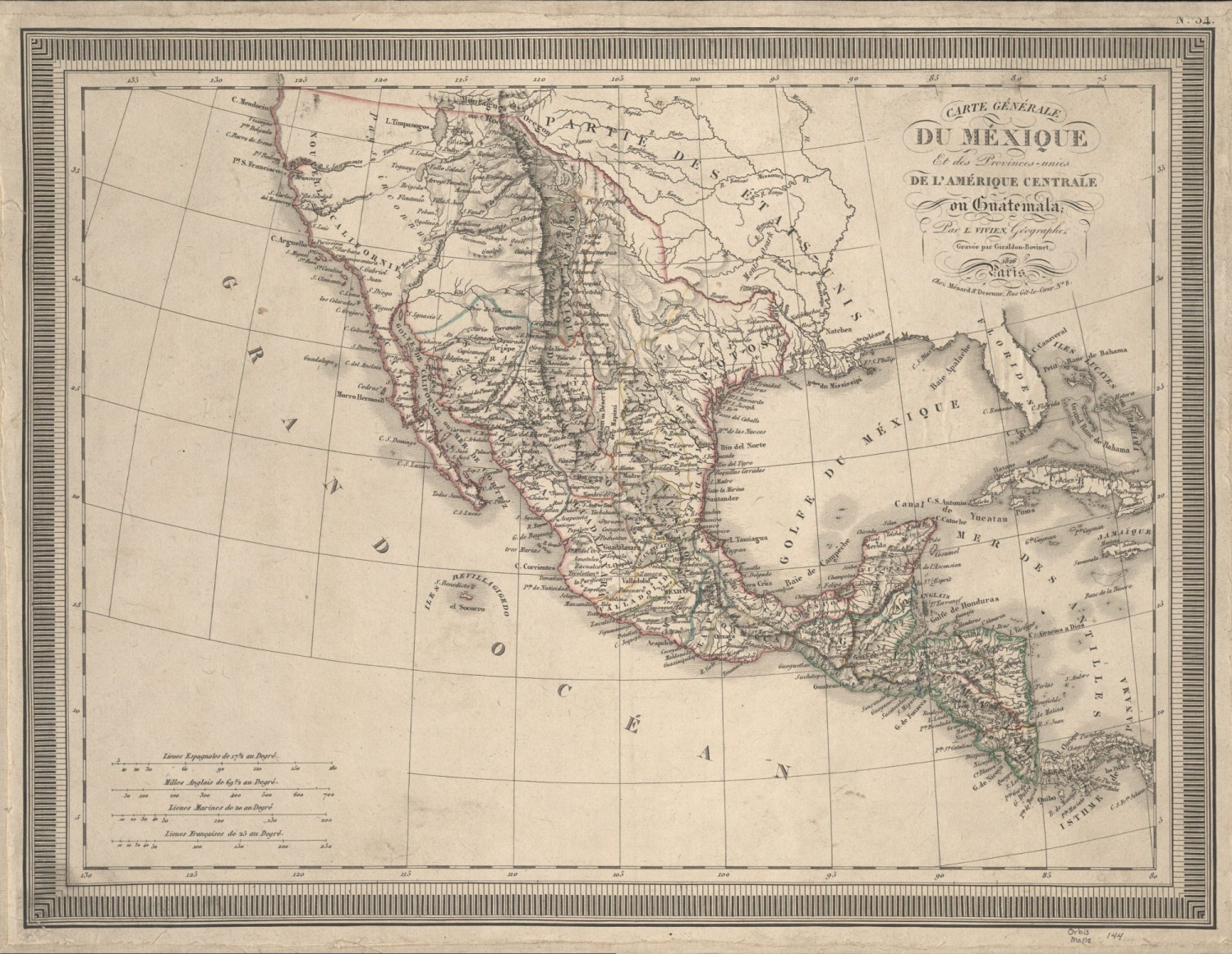
Printed black-and-white map with some borders in color.
A French map of Mexico and Central America [Carte générale du Méxique et des provinces-unies de l’Amérique centrale on Guatemala], 1826. Call Number: Orbis Maps 1:144. Click image to enlarge.
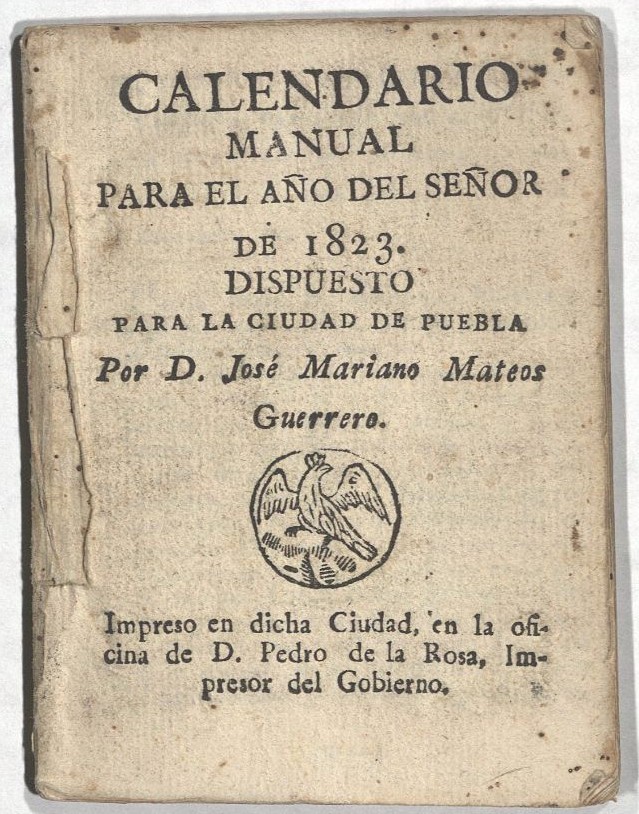
This image has text.
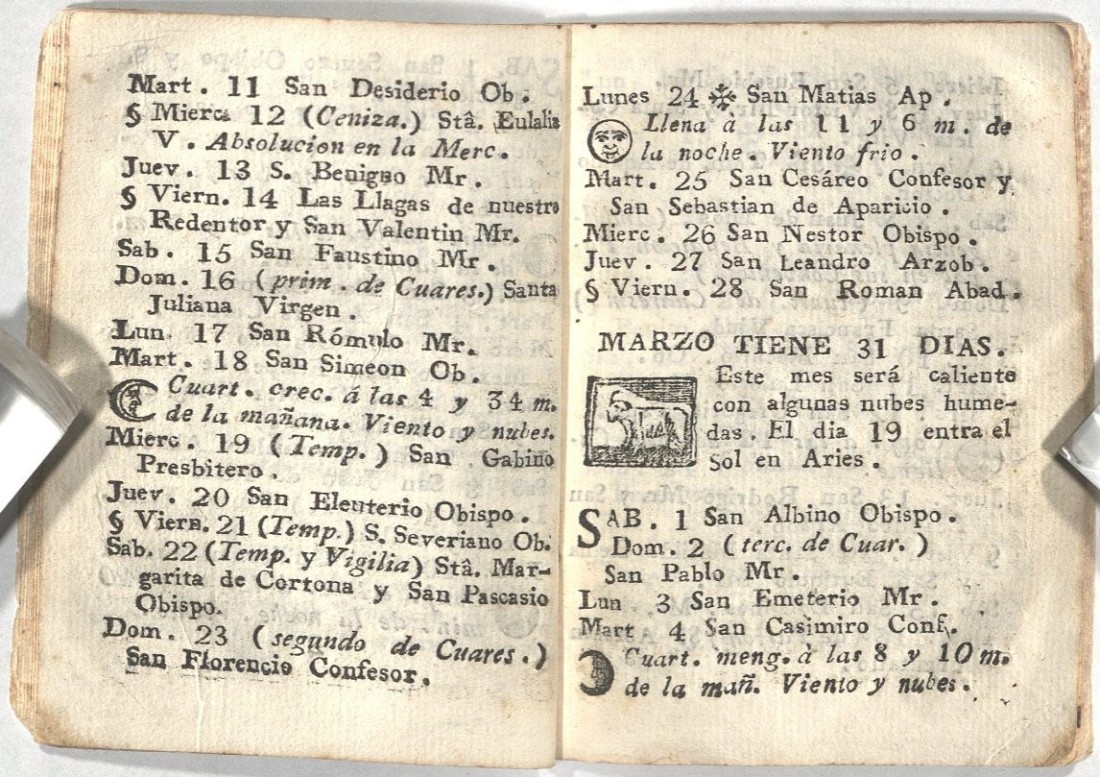
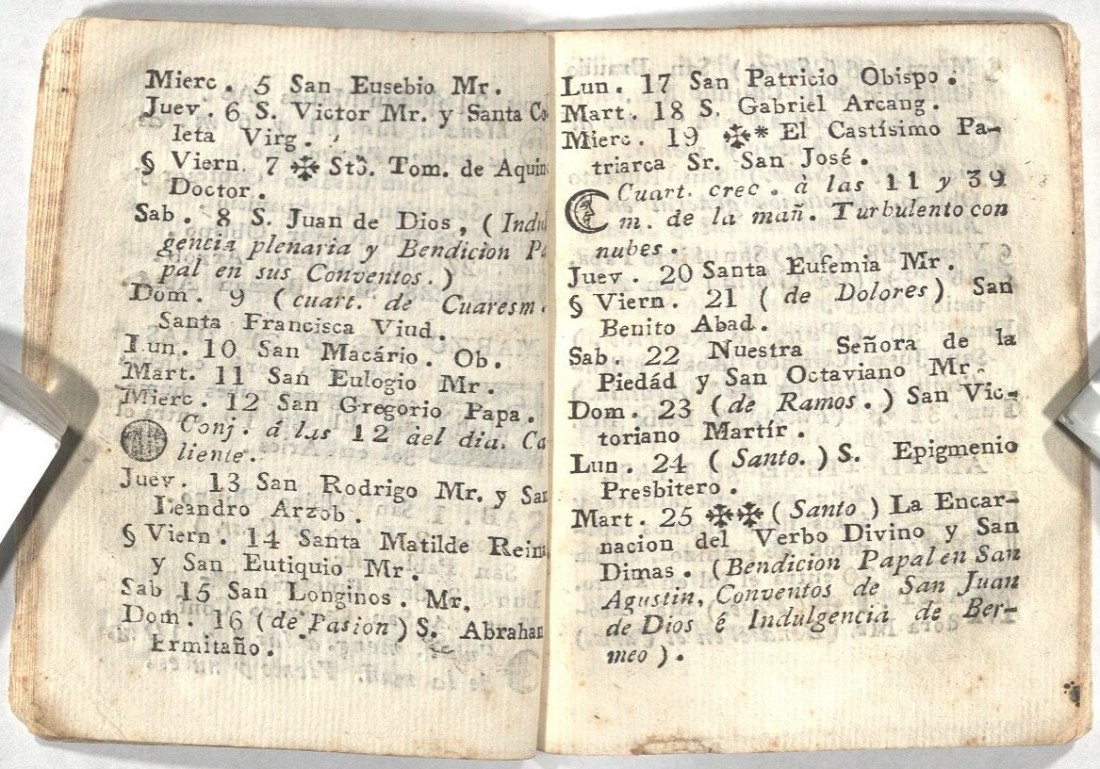
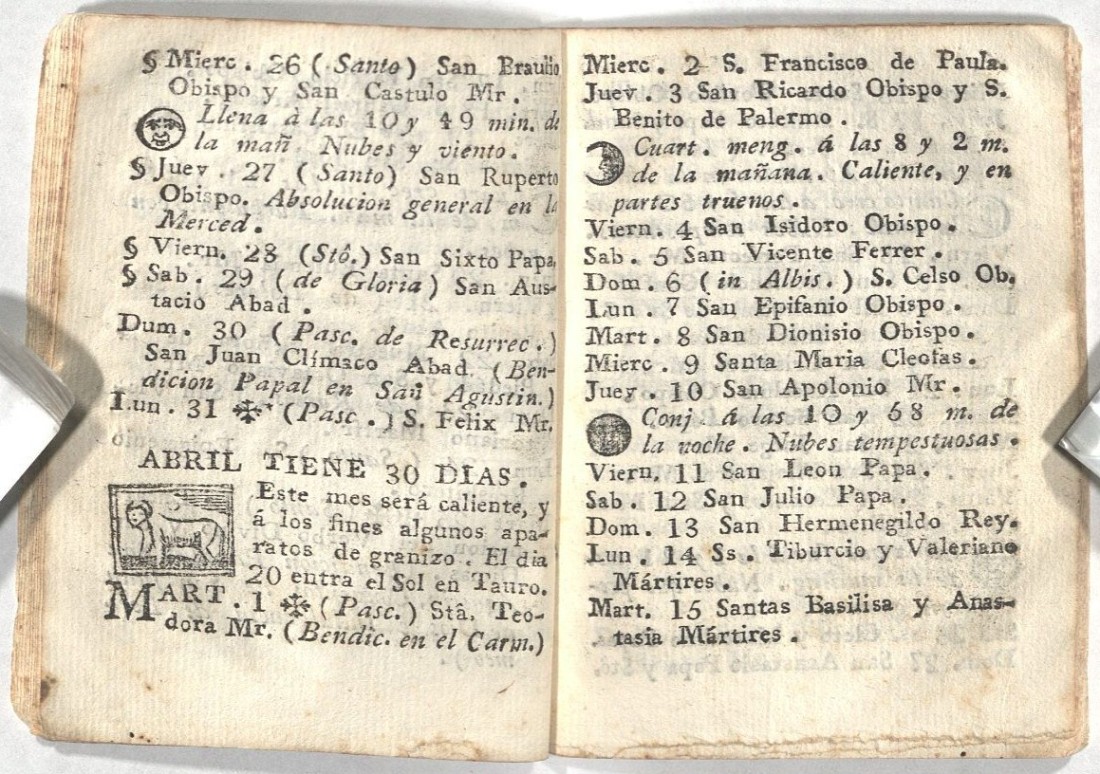
The title page and pages for the month of March in the pocket-sized Calendario manual para el año del señor de 1823. Dispuesto para la ciudad de Puebla [Manual Calendar for the Year of Our Lord 1823. Prepared for the City of Puebla]. Josefina’s birthday is March 19, the feast day of San José (St. Joseph). Call Number: t131. Click image to enlarge.
This image has text.
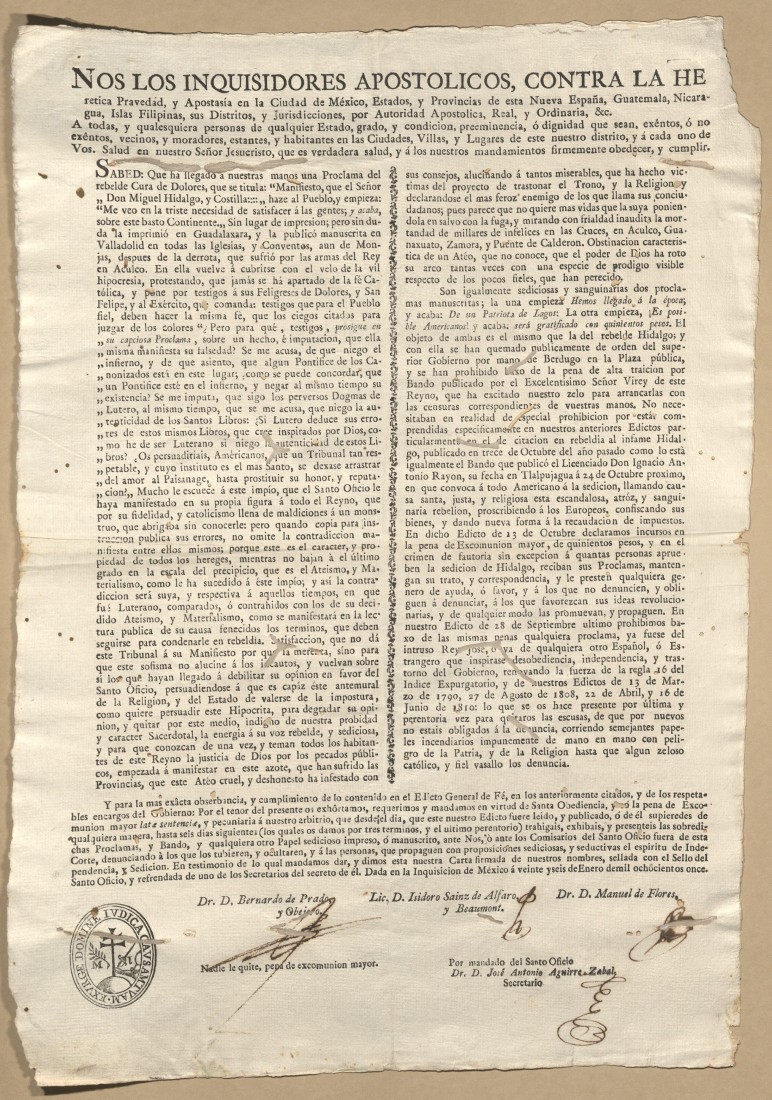
A broadside communicating an edict issued by the Inquisition of Mexico against the revolutionary proclamations of Miguel Hidalgo y Costilla, January 26, 1811. Hidalgo was a Catholic priest who led the first phase of the Mexican War of Independence beginning in 1810. Captured in March 1811, he was officially defrocked and excommunicated before being executed in July of that year. Call Number: Summerfield H121. Click image to enlarge.
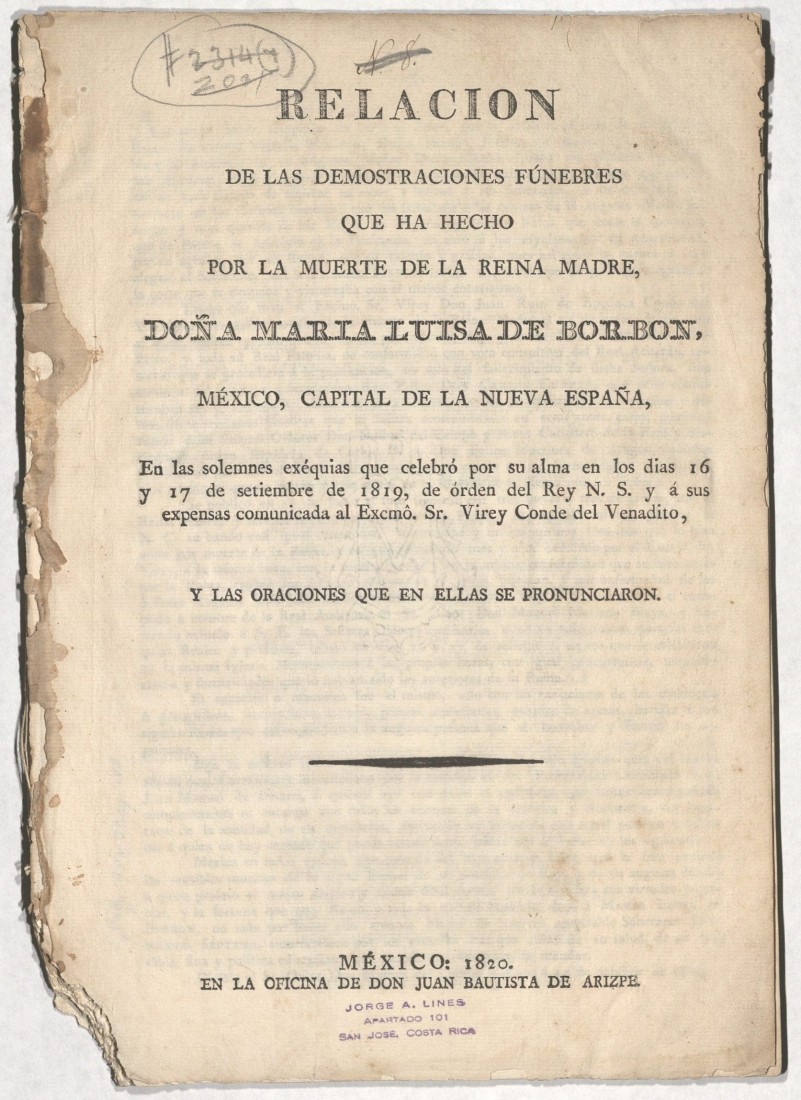
This image has text.
The title page of an account of the elaborate funeral ceremonies held for Maria Luisa of Parma, formerly the Queen Consort of Spain, in Mexico City, September 16-17, 1819. Josefina’s Tía Dolores would have been living in Mexico City at that time. Call Number: D3524. Click image to enlarge.
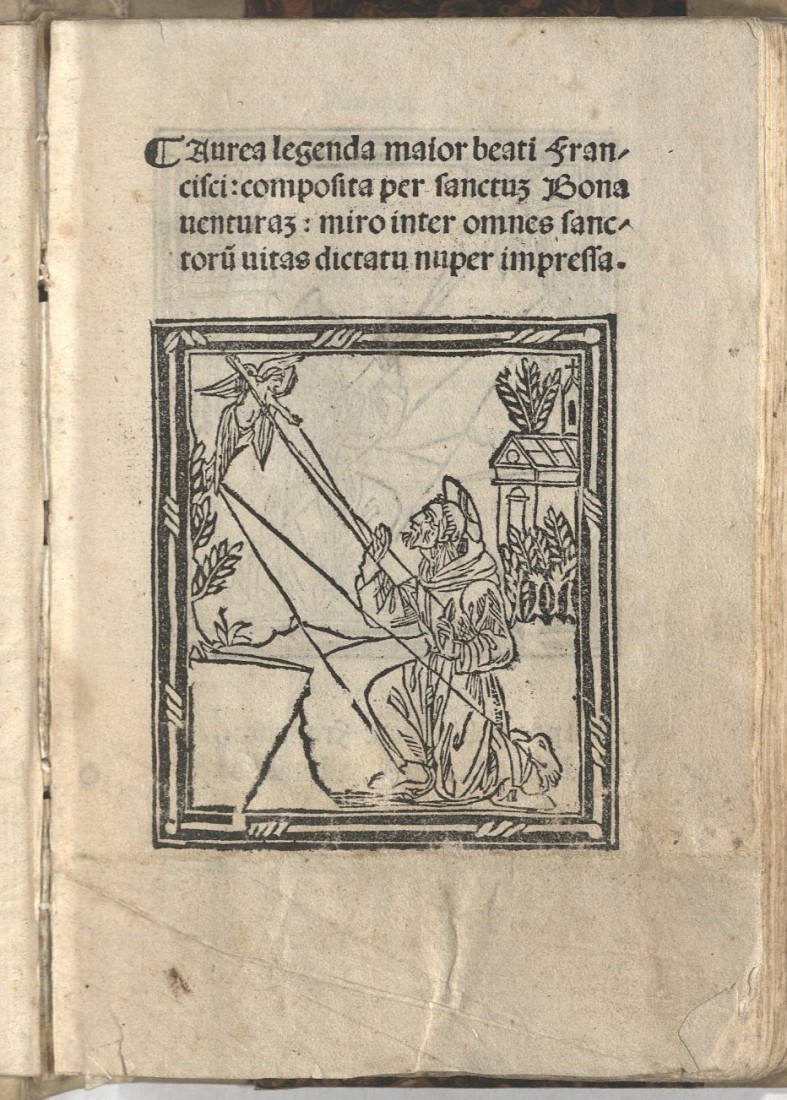
This image has the text of the work's title in Latin with a woodcut of St. Francis's vision of a seraph giving him the gift of the five wounds of Christ.
The title page of a 1509 copy of St. Bonaventure‘s biography of St. Francis of Assisi, who is the patron saint of Santa Fe. The city’s name – Spanish for “Holy Faith” – is the shortened form of its original name, La Villa Real de la Santa Fe de San Francisco de Asís (Royal Town of the Holy Faith of Saint Francis of Assisi). The image depicts St. Francis receiving the wounds of Christ. Call Number: Summerfield B584. Click image to enlarge.
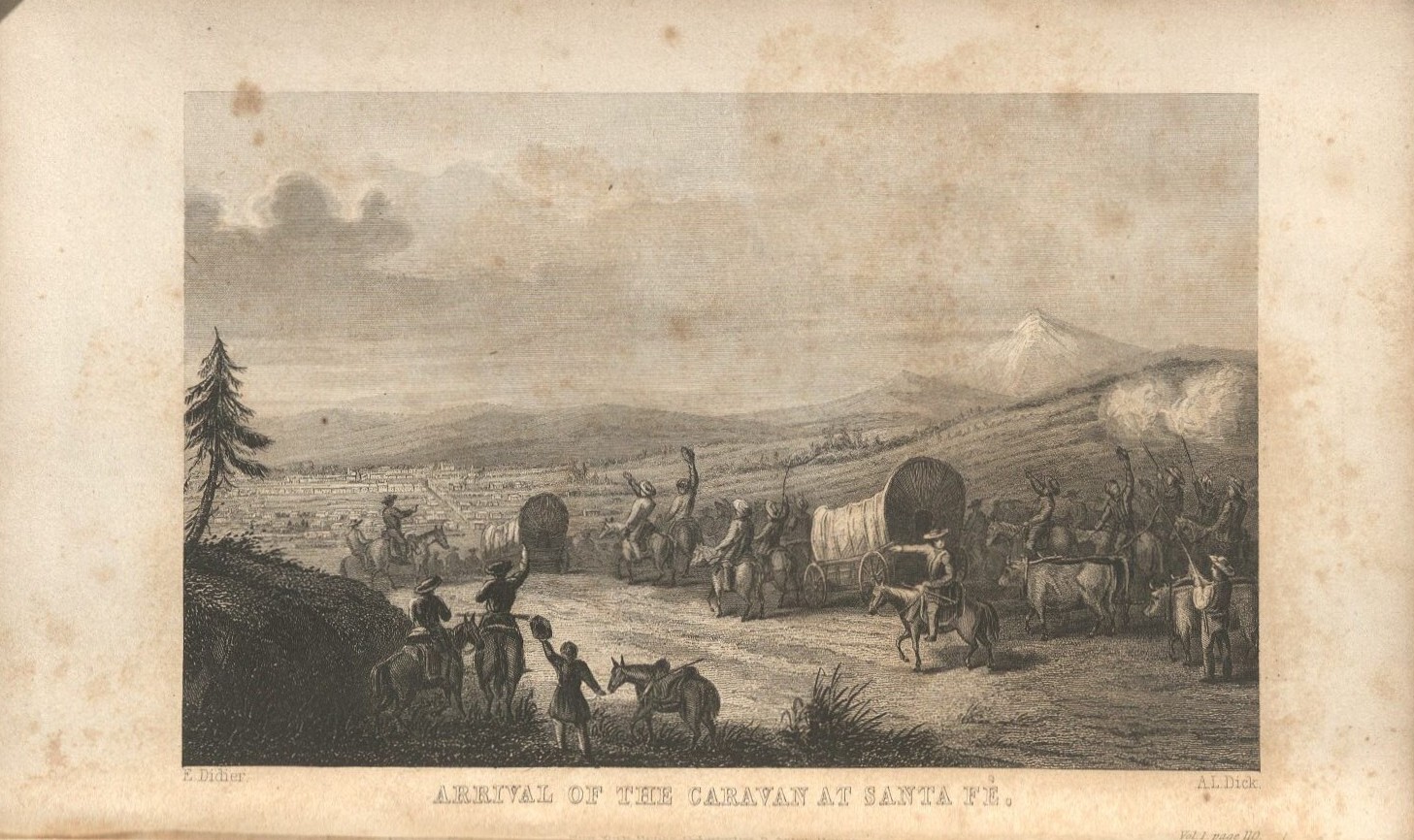
Black-and-white illustration of covered wagons and men on horses descending a hill into a small town in the distance.
“Arrival of the Caravan at Santa Fe,” the frontispiece illustration in Commerce of the Prairies, or, The Journal of a Santa Fé Trader (Volume 1) by Josiah Gregg, 1844. In this work, Gregg describes his travels along the Santa Fe Trail between 1831 and 1839. Call Number: RH C521. Click image to enlarge.

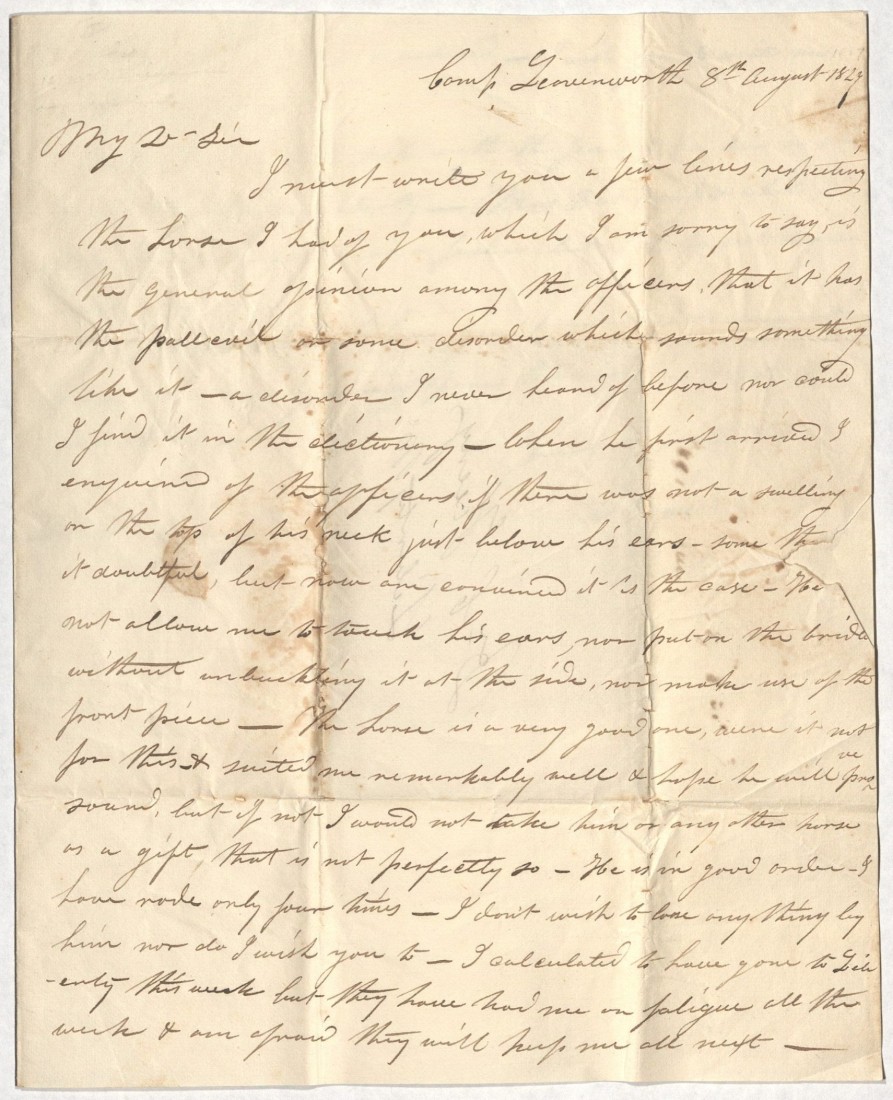
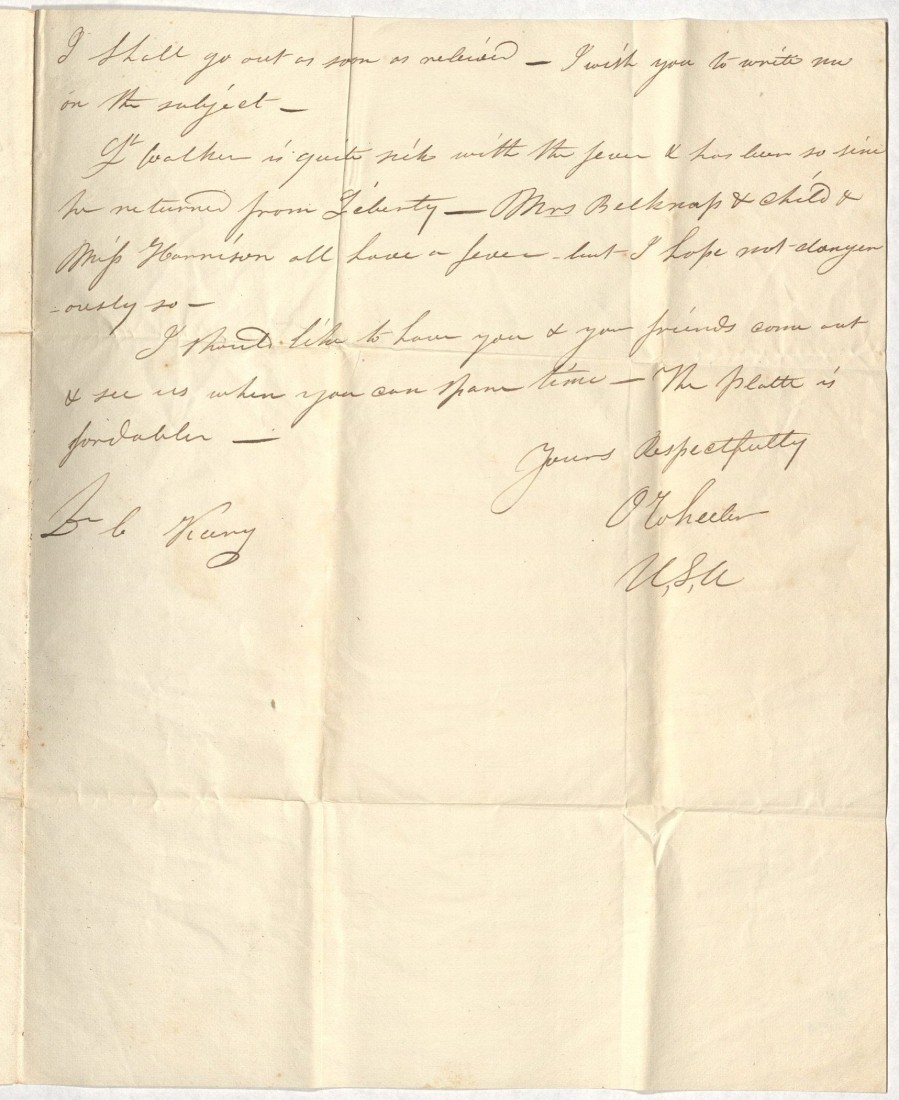
A letter from O. Wheeler, Camp Leavenworth, Kansas, to Dr. C. Keeny, Liberty, Missouri, August 8, 1827. Most of the letter concerns a “disorder” or illness affecting Wheeler’s horse. The U. S. Army established Camp (now Fort) Leavenworth in 1827, the same year this letter was written, to serve as a forward base protecting the Santa Fe Trail. Call Number: RH MS P174.
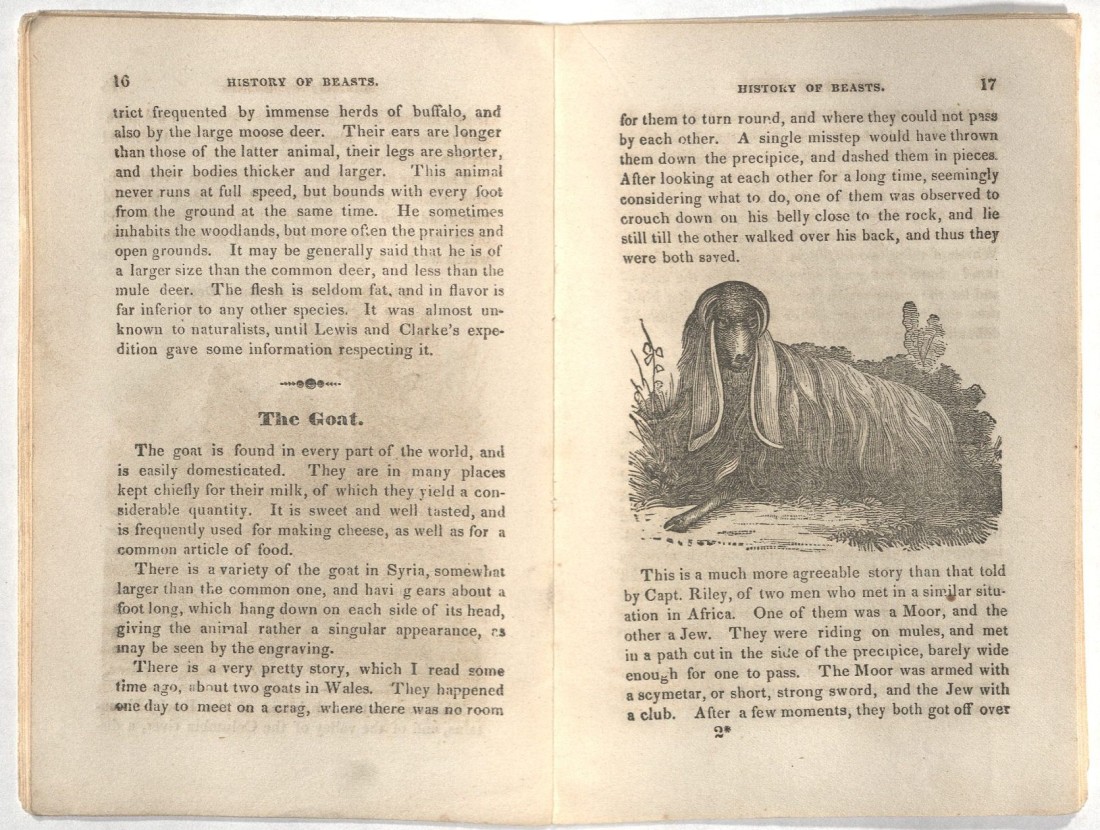
This image has text, accompanied by a black-and-white illustration of a goat.
Information and commentary about goats in the children’s book The Natural History of Beasts: Illustrated with Cuts, 1843. The lesson the author draws from the two featured stories is that “surely the goats were wiser than the men – and let the young reader learn from this, that kindness and humanity are better calculated to remove difficulties than pride and obstinacy.” Call Number: Children 504B. Click image to enlarge.
Selected Additional Collection Items

Maps

  • Regni Mexicani seu Novæ Hispaniæ, Floridæ, Novæ Angliæ, Carolinæ, Virginiæ, et Pennsylvaniæ, nec non insvlarvm archipelagi Mexicani in America septentrionali [The Kingdom of Mexico, or New Spain, Florida, New England, the Carolinas, Virginia, and Pennsylvania, as Well as the Insular Archipelago of Mexico in North America] by Johann Baptist Homann, 1722. Call Number: Orbis Maps 1:60.
  • A Map of Louisiana and Mexico = Carte de la Louisiane et du Mexique, 1820. Call Number: Orbis Maps 1:134.
  • Map of the Western Territory of the United States by Lt. Enoch Steen. Coverage includes Indian lands from 80 miles east of Leavenworth to 50 miles west of Pikes Peak and Black Hill to Santa Fe. Call Number: RH Map S31.
  • A Map of the Indian Territory, Northern Texas and New Mexico: Showing the Great Western Prairies by Josiah Gregg, from Commerce of the Prairies, 1844. Call Number: RH Map Q57.
  • Mapa de los Estados Unidos de Méjico [Map of the United States of Mexico], 1847. Call Number: Orbis Maps 2:61.
  • Map of Santa Fe County, New Mexico, 1880s? Shows railroads and pre-European pueblos in and near Santa Fe County. Call Number: RH Map R529.

New Spain and Mexico

  • Exploratory Travels Through the Western Territories of North America by Zebulon Pike, 1811. During his 1806-1807 expedition to the region south and west of the Louisiana Purchase, Pike ended up in Spanish territory. His party was captured by Spanish soldiers, and their subsequent journey took them through Santa Fe. Call Number: D678.
  • Memoirs of the Mexican Revolution: Including a Narrative of the Expedition of General Xavier Mina by William Davis Robinson, 1820. Call Number: Howey C4191.
  • Six Months’ Residence and Travels in Mexico by William Bullock, 1824. Call Number: Ellis Aves C207.
  • A View of South-America and Mexico, Comprising Their History, the Political Condition, Geography, Agriculture, Commerce, &c. by John M. Niles, 1825. Call Number: B11232.

New Mexico, Santa Fe, and the Santa Fe Trail

  • The Daily New Mexican newspaper, published in Santa Fe, 1880-1881. Call Number: RH H24.
  • Santa Fe: Ancient and Modern, Including Its Resources and Industries edited by W.G. Ritch, 1885. Call Number: RH C1375.
  • Southwest on the Turquoise Trail: The First Diaries on the Road to Santa Fe edited by Archer Butler Hulbert, 1933. Call Number: RH C451.
  • Historic Santa Fe, Founded About 1525: Oldest Town in the United States: The End of the Old Santa Fe Trail, 1940s? Call Number: RH AK121.
  • Santa Fe Trail: First Reports, 1825 by Augustus Storrs and Alphonso Wetmore, 1960. Call Number: RH B1126.

Household Matters

  • Quatro libros de la naturaleza, y virtudes de las plantas, y animales que estan receuidos en el uso de medicina en la Nueua España [Four Books on the Nature and Virtues of Plants and Animals for Medicinal Purposes in New Spain] by Francisco Hernandez, 1615. Call Number: Summerfield B2225.
  • Mexican recipes, early 1800s. This is a collection of culinary recipes – written in various hands and mostly undated – that appear to be from central and southern Mexico. The collection was previously featured on Spencer’s blog. Call Number: MS 346.
  • A New Dictionary of the Spanish and English Languages compiled by by Henry Neuman, 1823. Call Number: C26852.
  • El cocinero mexicano, o Coleccion de las mejores recetas para guisar al estilo americano [The Mexican Cook, or Collection of the Best Recipes for Cooking in the American Style], volume 3 only, 1831. This work is one of two cookbooks from 1831 that are considered the first on Mexican cuisine published in Mexico. Call Number: B14945.

Caitlin Klepper
Public Engagement Librarian
That’s Distinctive!: Mexican Recipes

September 22nd, 2023

Check the blog each Friday for a new “That’s Distinctive!” post. I created the series because I genuinely believe there is something in our collections for everyone, whether you’re writing a paper or just want to have a look. “That’s Distinctive!” will provide a more lighthearted glimpse into the diverse and unique materials at Spencer – including items that many people may not realize the library holds. If you have suggested topics for a future item feature or questions about the collections, feel free to leave a comment at the bottom of this page.

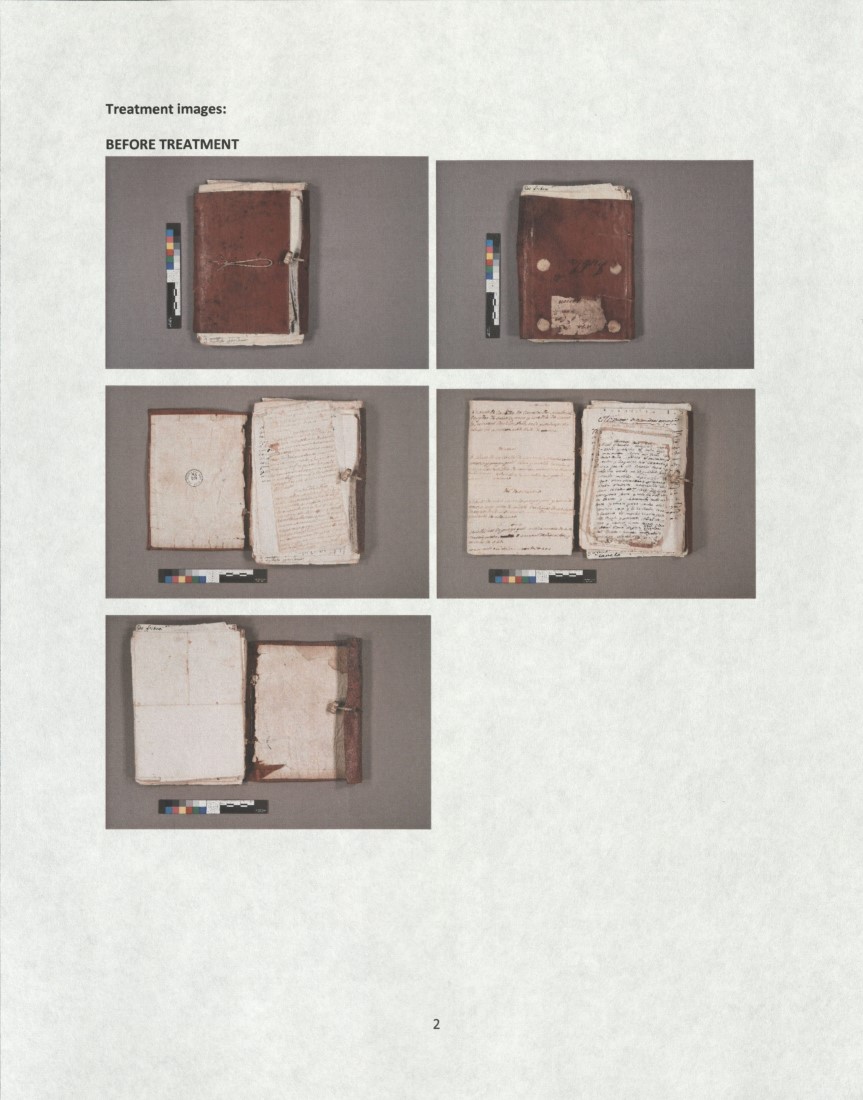
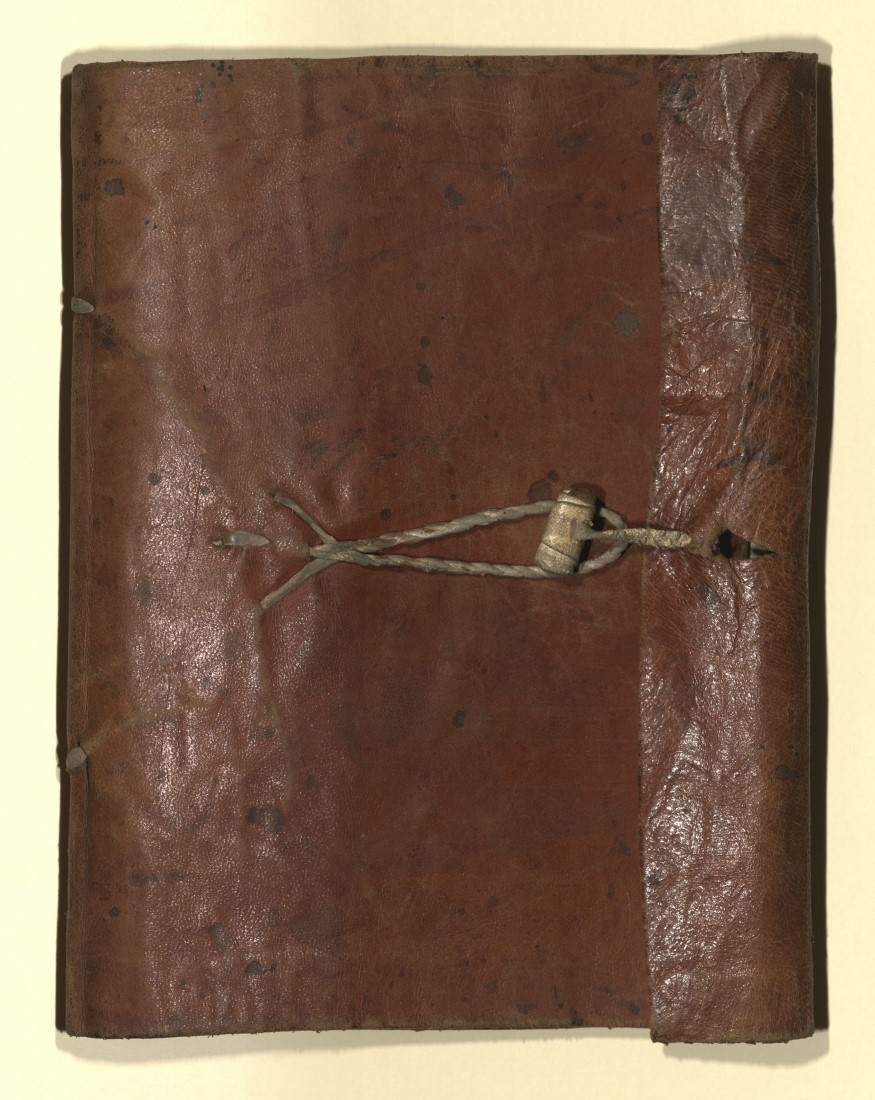
This week on That’s Distinctive! I am sharing the tastiest collection I have ever found. It houses 62 recipes from central and southern Mexico dating to the early nineteenth century. Most of the recipes are undated, though one is dated 1817. The recipes are written in Spanish and Castilian with no authors indicated, though a few – like the recipe for “marmones” – include a name that appears to be a recipient (in this case Doña Maria Rafaela Vazquez). The recipes (both loose leaf and bound) were housed in a leather wrapper when they arrived at the library. For their preservation, the recipes have been re-housed in folders, and the leather wrapper kept with the collection. Just a little fun fact: the collection was processed by our former Spanish and Portuguese Preservation and Processing student, Indira Garcia Varela, back in 2019.

Dark brown leather book cover, tied together with string or rope.
The original leather wrapper in which Spencer Research Library received the recipes. Call Number: MS 346. Click image to enlarge.
An arrangement of five photographs showing the recipes and leather wrapper from different angles.
A conservation document showing the condition of the recipes before treatment. Call Number: MS 346. Click image to enlarge.

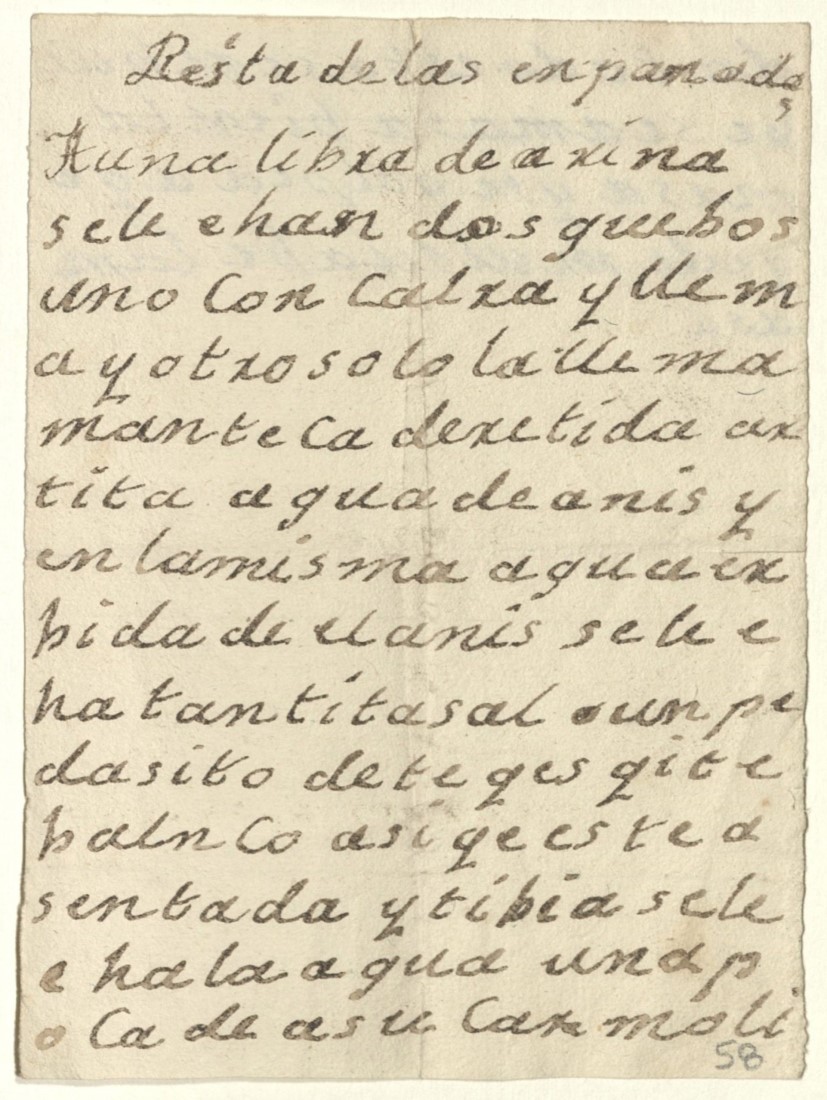
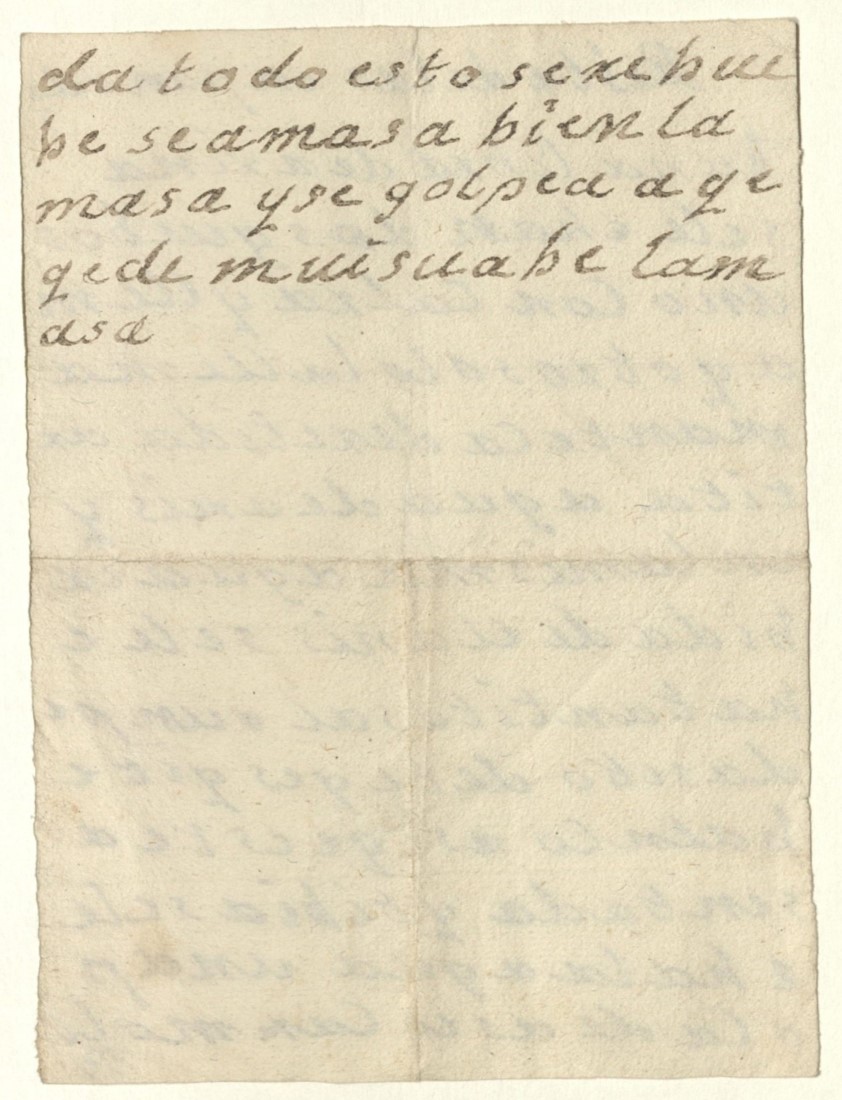
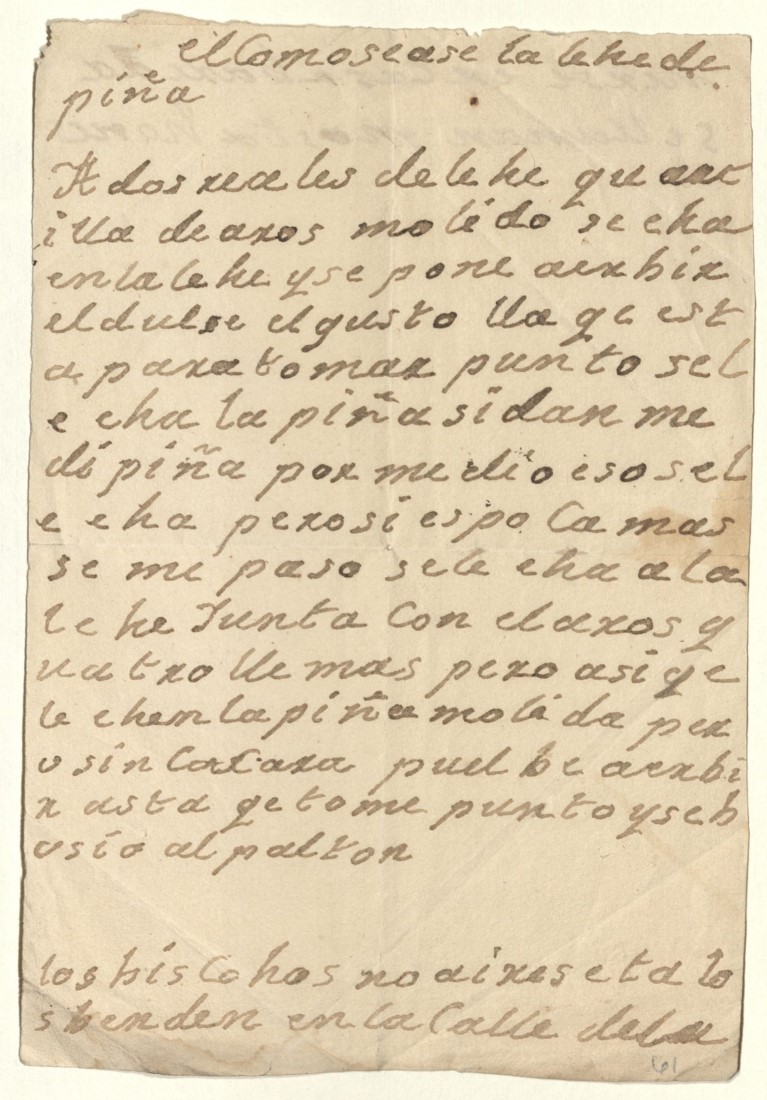
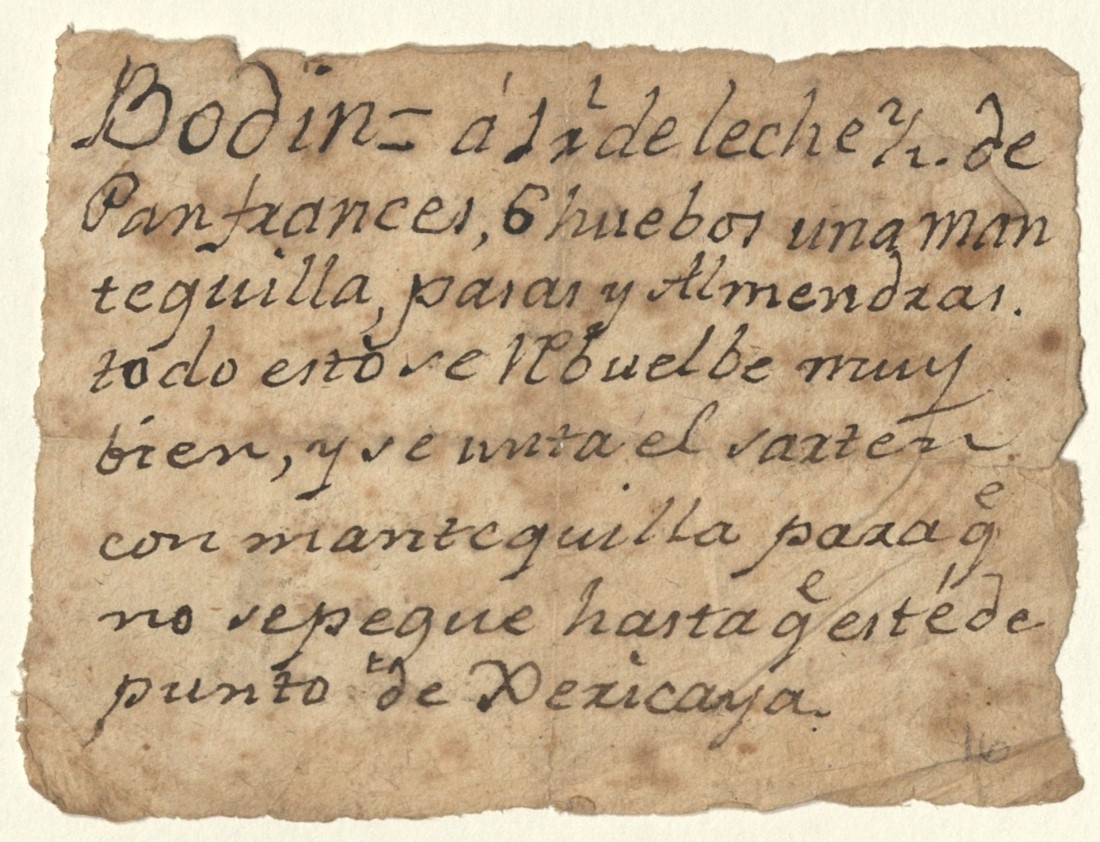
Examples of recipes within the collection include directions for making “enpanadas” (as it is spelled in the manuscript), tamales, tortas, and buñuelos. I am sharing three recipes below with a translation for bodin provided by Whitney Baker, Head of Conversation Services at KU Libraries, and Dr. Milton Machuca-Galvez, Assistant Librarian for Spanish, Portuguese, and Latin American and Caribbean Studies. The recipes shown below are titled Bodin, Reseta de las Enpanadas, and Leche de Piña.

So why this collection? Having Mexican heritage myself, stumbling upon this collection in the finding aid really tugged at my heartstrings. The more I learned about the collection, the more fascinated I became. Sifting through the recipes, there were many items and words I recognized, and it can be interesting to see how the spelling of words has changed with time. The recipes are handwritten, which helps call to mind the person who wrote down the recipe roughly two hundred years ago. I was hesitant to share items in a language other than English given much of our audience is English speaking, but the collection is too fun to not to highlight.

This image has handwritten text in Spanish. This image has handwritten text in Spanish.

The recipe for reseta de las enpanadas. Call Number: MS 346. Click images to enlarge.

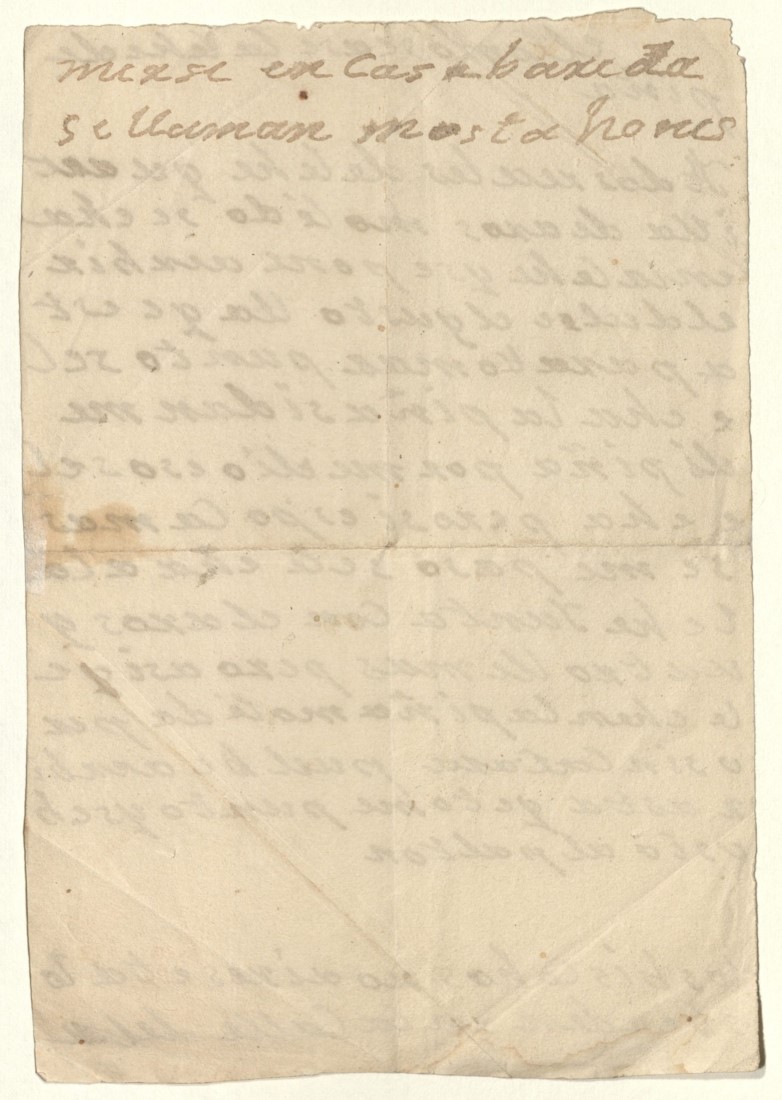
This image has handwritten text in Spanish. This image has handwritten text in Spanish.

The recipe for leche de piña, undated. Call Number: MS 346. Click image to enlarge.

This image has handwritten text in Spanish.
The recipe for bodin, undated. Call Number: MS 346. Click image to enlarge.

Bodin = a 1 taza de leche 2/1 de pan frances, 6 huebos, una mantequilla, pasas y almendras. Todo esto se revuelbe muy bien, y se unta el sartén con mantequilla para que no se pegue hasta que esté de punto de Xericaya

Pudding = Add to 1 cup of milk, (half a?) French bread, six eggs, butter, raisins and almonds. Mix all of this well, and rub a frying pan with butter so that it doesn’t stick until it’s at the point of [consistency of] a jericalla [a Mexican custard dessert].

The gist of the last sentence, better worded, might be, “rub a frying pan with butter so it doesn’t stick, and mix all of this well until it’s at the consistency of a jericalla [Mexican custard dessert].”

Tiffany McIntosh
Public Services