The University of Kansas

Inside Spencer: The KSRL Blog

Books on a shelf

Welcome to the Kenneth Spencer Research Library blog! As the special collections and archives library at the University of Kansas, Spencer is home to remarkable and diverse collections of rare and unique items. Explore the blog to learn about the work we do and the materials we collect.

This blog may contain archived web content. This blog may link to catalog records which no longer exist as of a software change in 2026.

Meet Josefina at Spencer Research Library

September 4th, 2026

As an elder millennial who loved history as a child and grew up with American Girl, I’ve been excited about the company’s 40th anniversary this year. As a result, I will be sharing a series of posts highlighting Spencer collection materials that connect to AG’s six original historical characters, in chronological order of when they “lived”: Felicity Merriman, Josefina Montoya, Kirsten Larson, Addy Walker, Samantha Parkington, and Molly McIntyre. Each post will focus on a different character and explore a selection of items that relate to the time and place in which she “lived” and topics or themes explored in her stories.
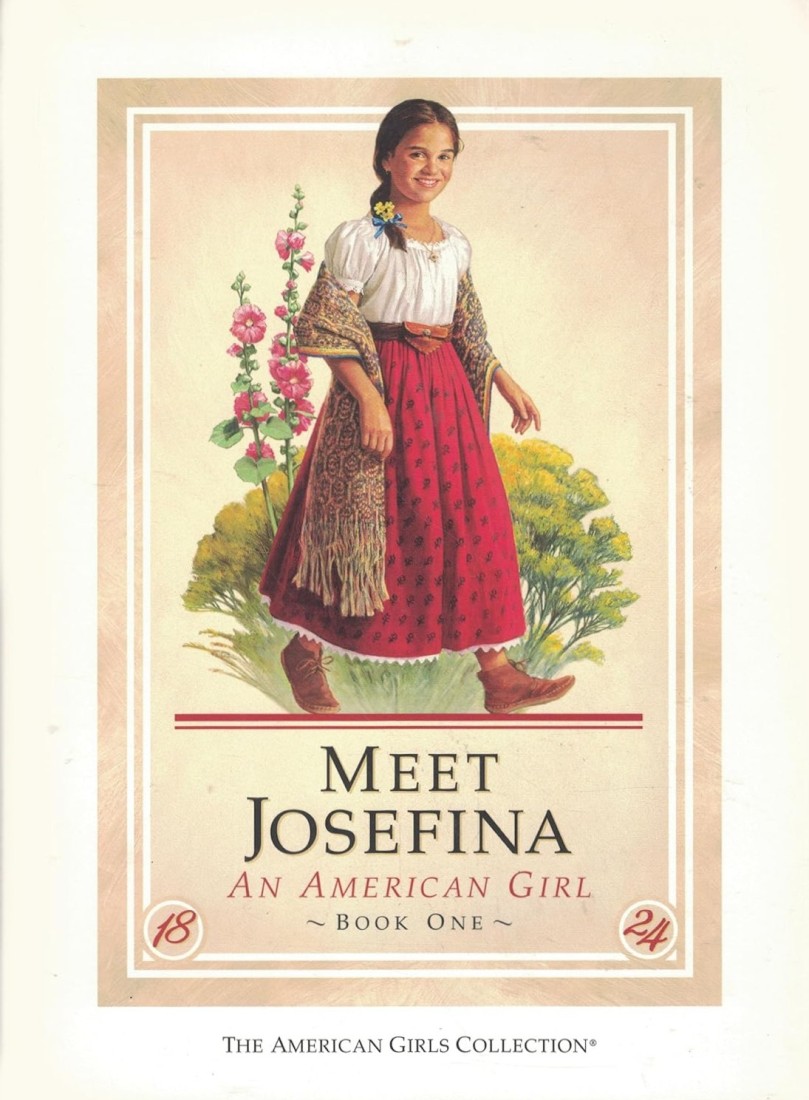
This image contains text with a color illustration of a girl with dark hair in a braid. She is wearing a white blouse, a red skirt, and a shawl and walking in front of a flowering bush.
The front cover of the first book in Josefina’s series, first published in 1997. The book was also published in Spanish with the title Así es Josefina: Una Niña Americana. Click image to enlarge.

When readers meet Josefina Montoya, she is a nine-year girl described as having a big heart and big hopes. She lives with her father and sisters on a ranch outside Santa Fe, New Mexico – then part of Mexico – in 1824. Josefina’s stories are set against the backdrop of Mexico’s recent independence from Spain, and a significant plot point is the arrival of Americans via the Santa Fe Trail (which passed through Douglas County, Kansas, roughly fifteen miles south of Lawrence and KU). Throughout her stories, Josefina grieves and remembers her deceased mother; adjusts to changes at the ranch brought about her aunt, Tía Dolores; deals with goats, including her nemesis Florecita and the orphaned baby goat Sombrita; and starts the journey of becoming a curandera (healer).

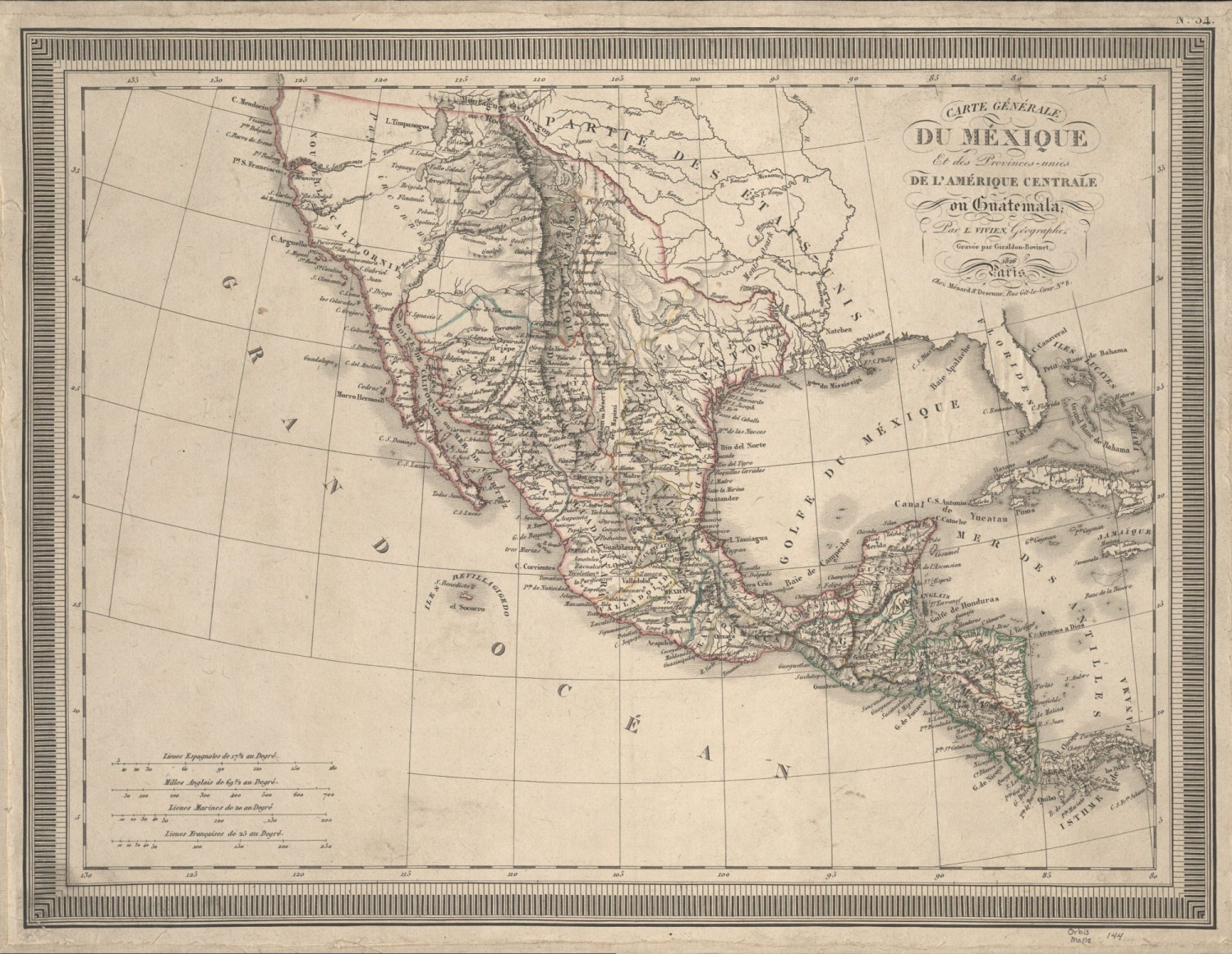
Printed black-and-white map with some borders in color.
A French map of Mexico and Central America [Carte générale du Méxique et des provinces-unies de l’Amérique centrale on Guatemala], 1826. Call Number: Orbis Maps 1:144. Click image to enlarge.
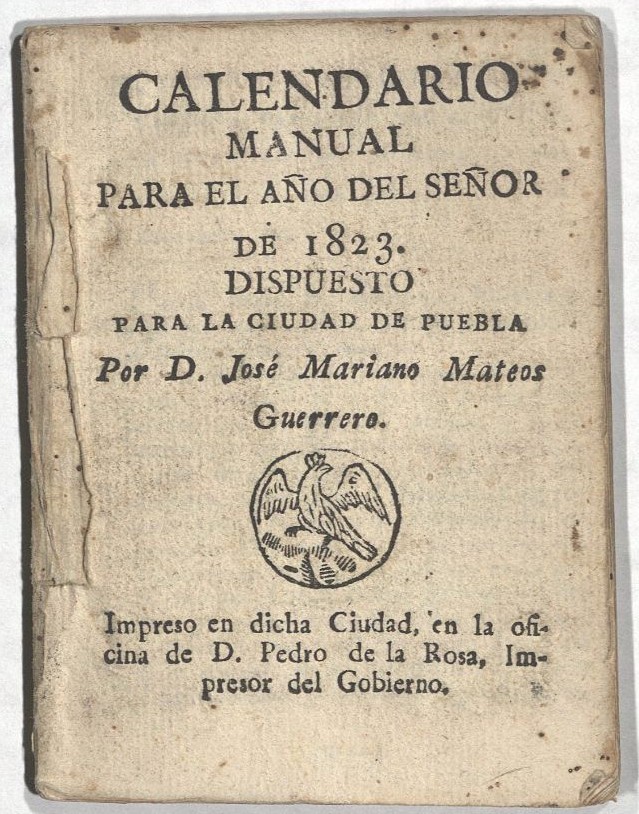
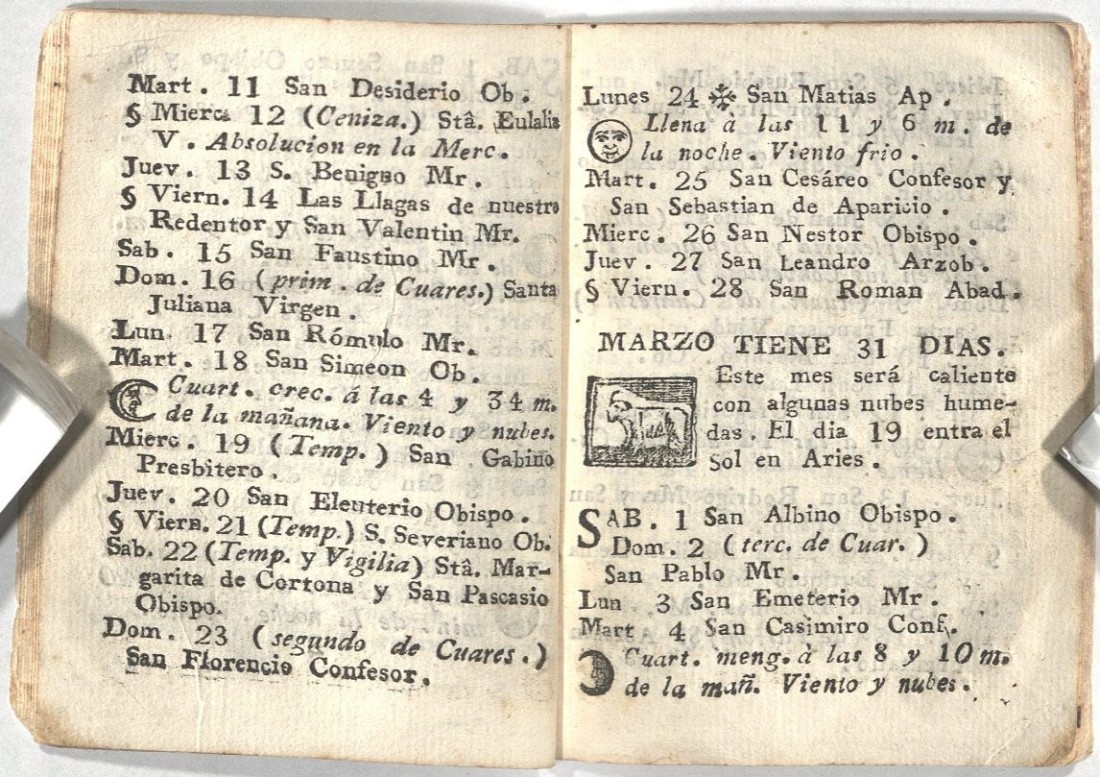
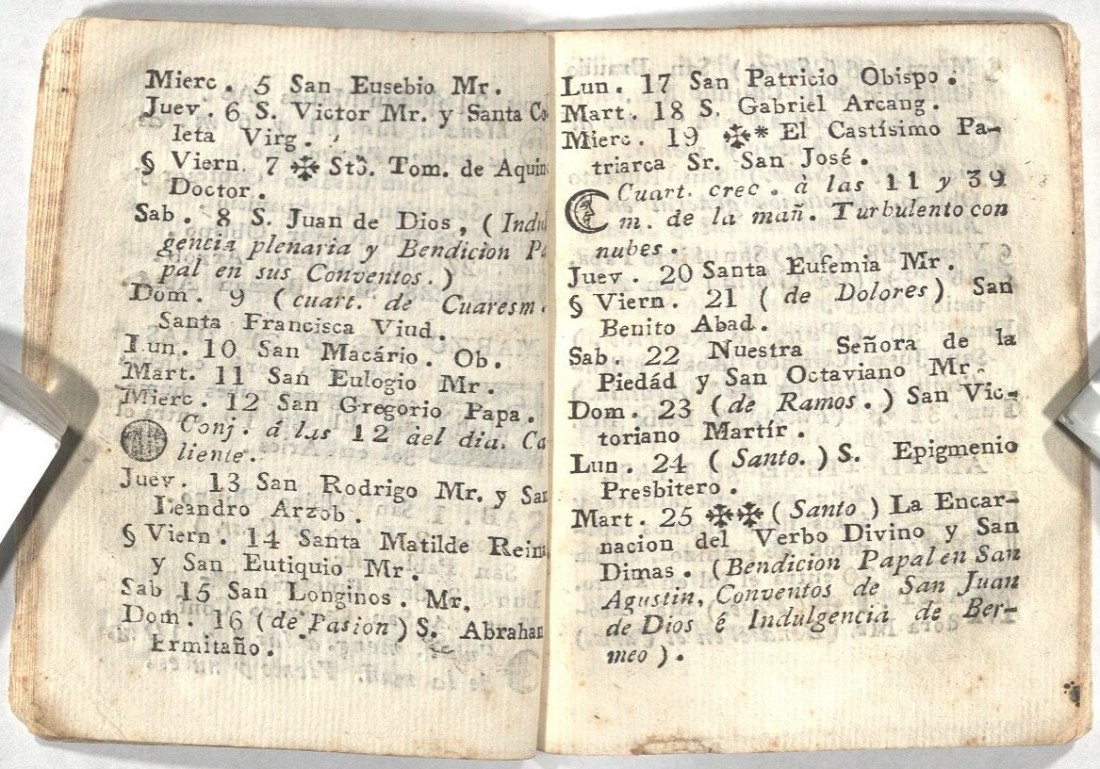
This image has text.
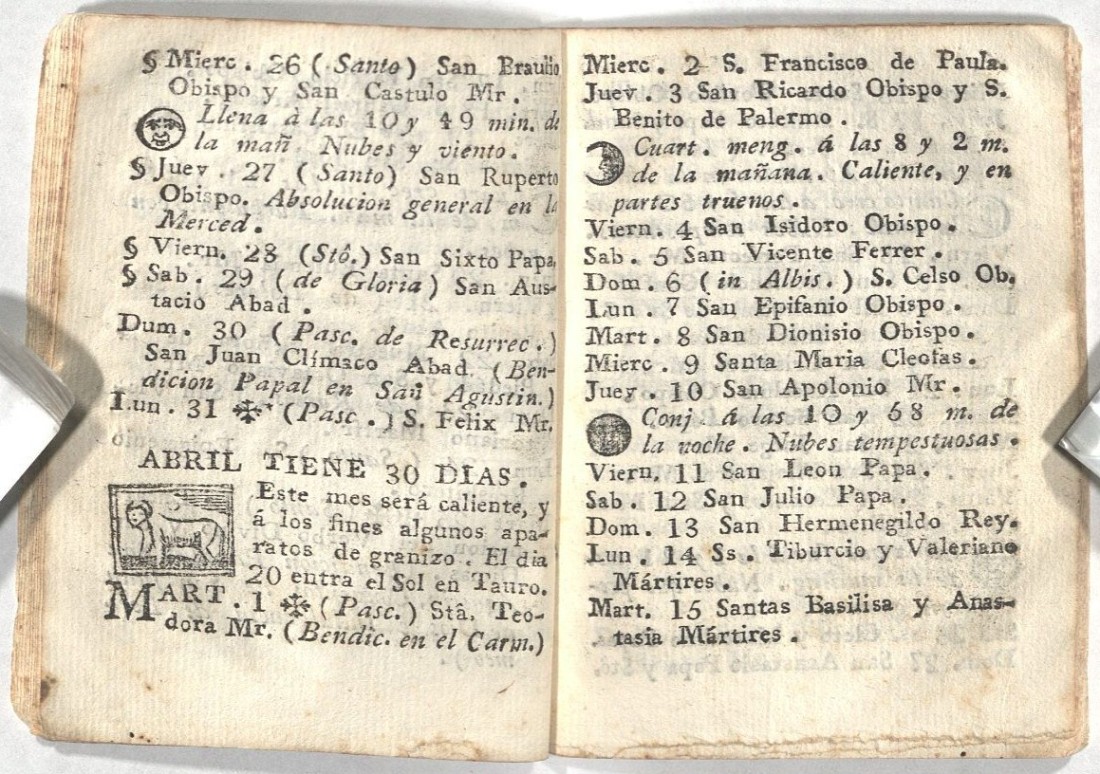
The title page and pages for the month of March in the pocket-sized Calendario manual para el año del señor de 1823. Dispuesto para la ciudad de Puebla [Manual Calendar for the Year of Our Lord 1823. Prepared for the City of Puebla]. Josefina’s birthday is March 19, the feast day of San José (St. Joseph). Call Number: t131. Click image to enlarge.
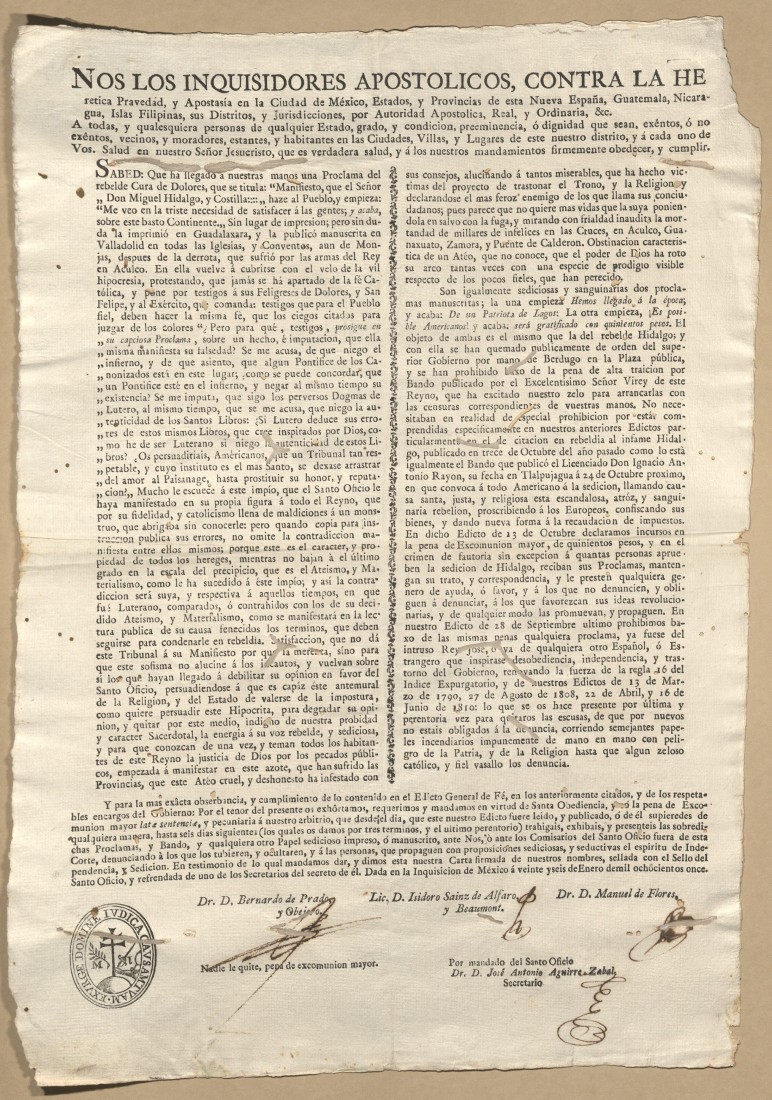
This image has text.
A broadside communicating an edict issued by the Inquisition of Mexico against the revolutionary proclamations of Miguel Hidalgo y Costilla, January 26, 1811. Hidalgo was a Catholic priest who led the first phase of the Mexican War of Independence beginning in 1810. Captured in March 1811, he was officially defrocked and excommunicated before being executed in July of that year. Call Number: Summerfield H121. Click image to enlarge.
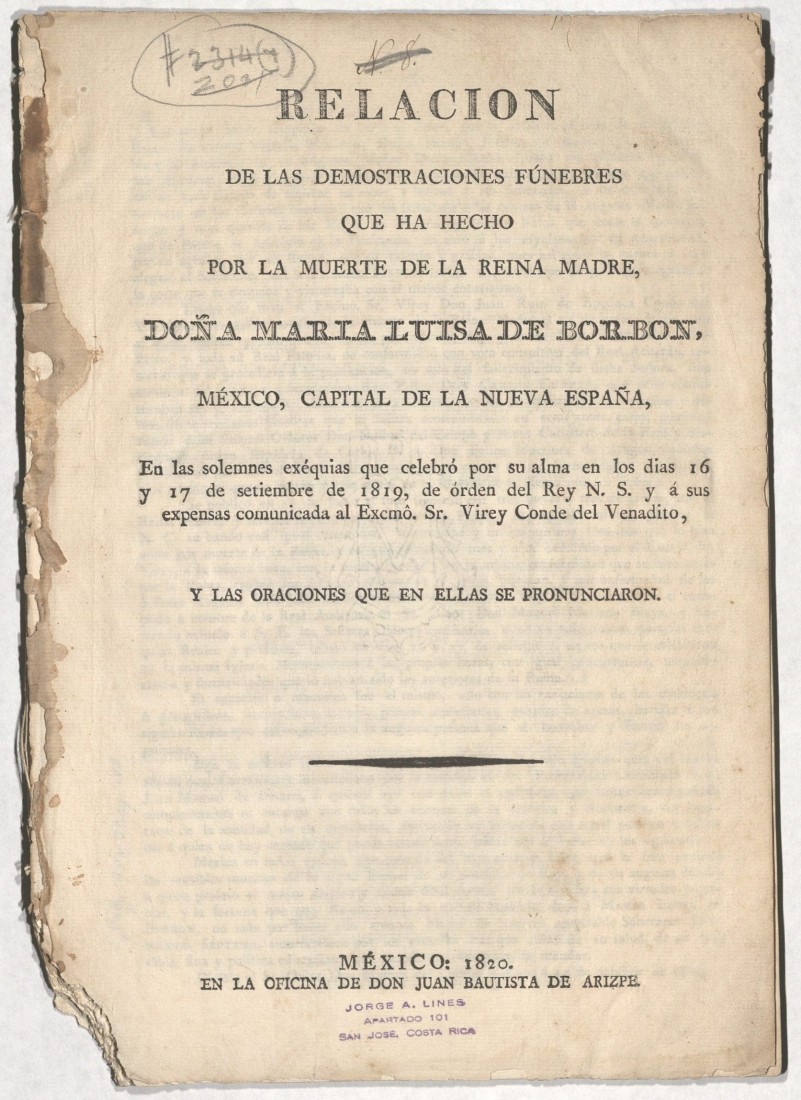
This image has text.
The title page of an account of the elaborate funeral ceremonies held for Maria Luisa of Parma, formerly the Queen Consort of Spain, in Mexico City, September 16-17, 1819. Josefina’s Tía Dolores would have been living in Mexico City at that time. Call Number: D3524. Click image to enlarge.
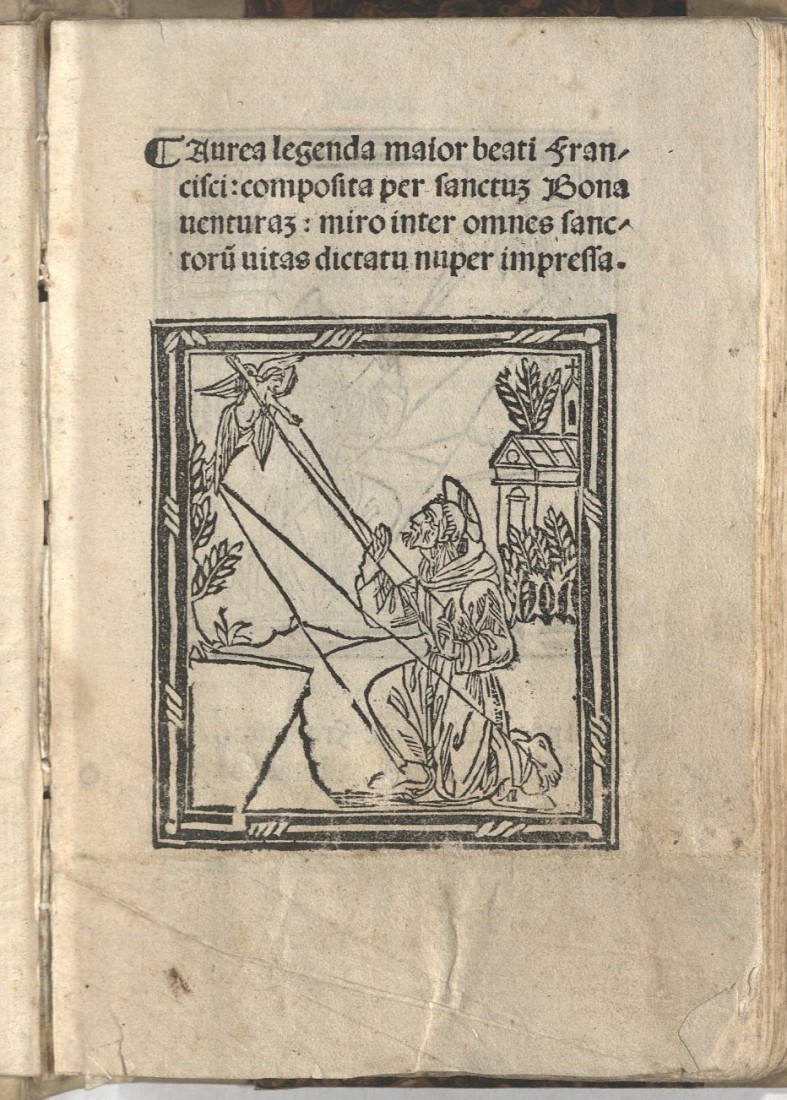
This image has the text of the work's title in Latin with a woodcut of St. Francis's vision of a seraph giving him the gift of the five wounds of Christ.
The title page of a 1509 copy of St. Bonaventure‘s biography of St. Francis of Assisi, who is the patron saint of Santa Fe. The city’s name – Spanish for “Holy Faith” – is the shortened form of its original name, La Villa Real de la Santa Fe de San Francisco de Asís (Royal Town of the Holy Faith of Saint Francis of Assisi). The image depicts St. Francis receiving the wounds of Christ. Call Number: Summerfield B584. Click image to enlarge.
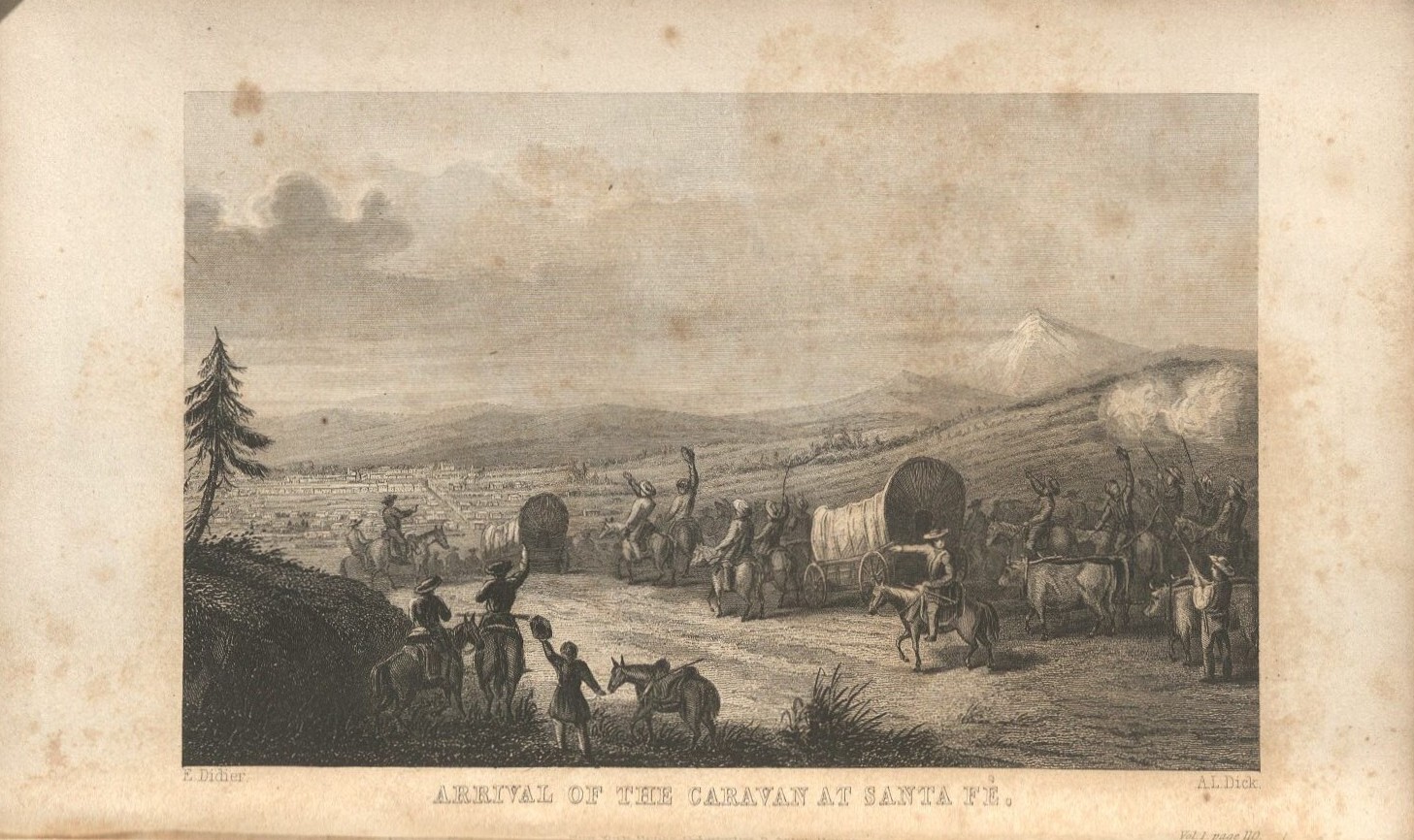
Black-and-white illustration of covered wagons and men on horses descending a hill into a small town in the distance.
“Arrival of the Caravan at Santa Fe,” the frontispiece illustration in Commerce of the Prairies, or, The Journal of a Santa Fé Trader (Volume 1) by Josiah Gregg, 1844. In this work, Gregg describes his travels along the Santa Fe Trail between 1831 and 1839. Call Number: RH C521. Click image to enlarge.

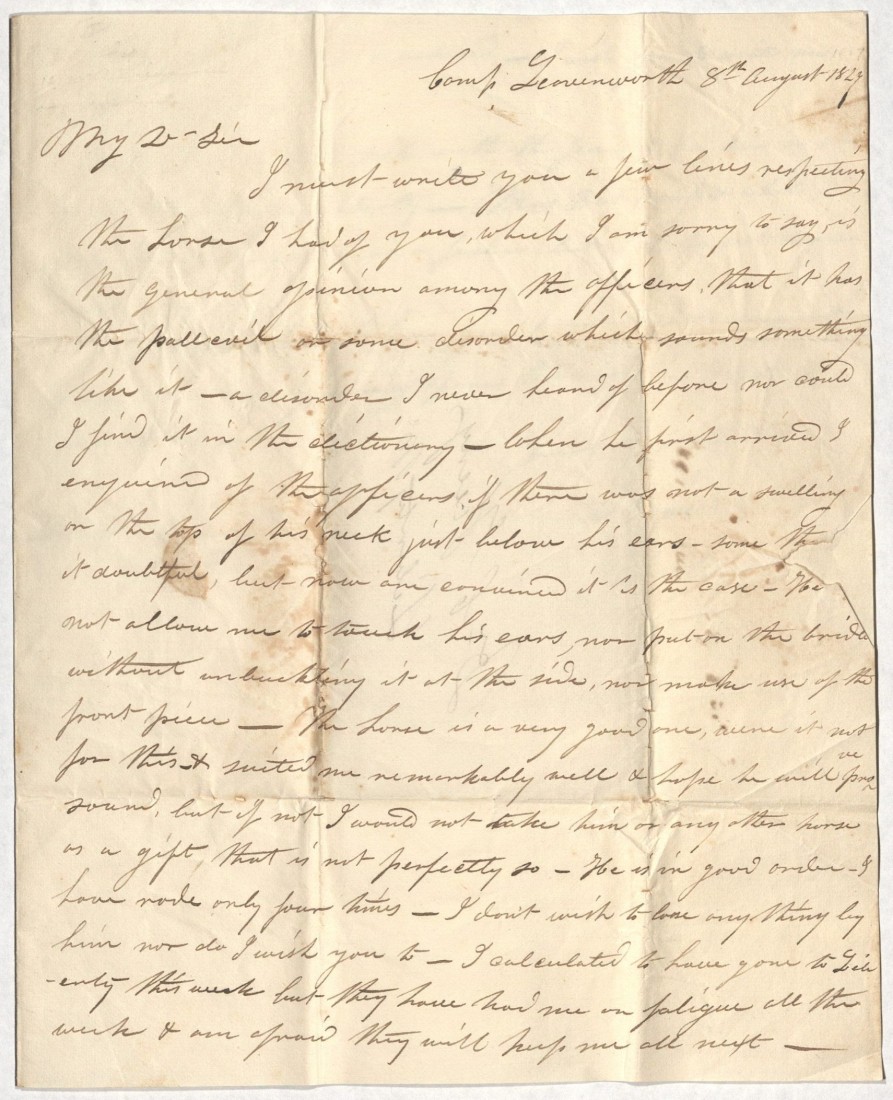
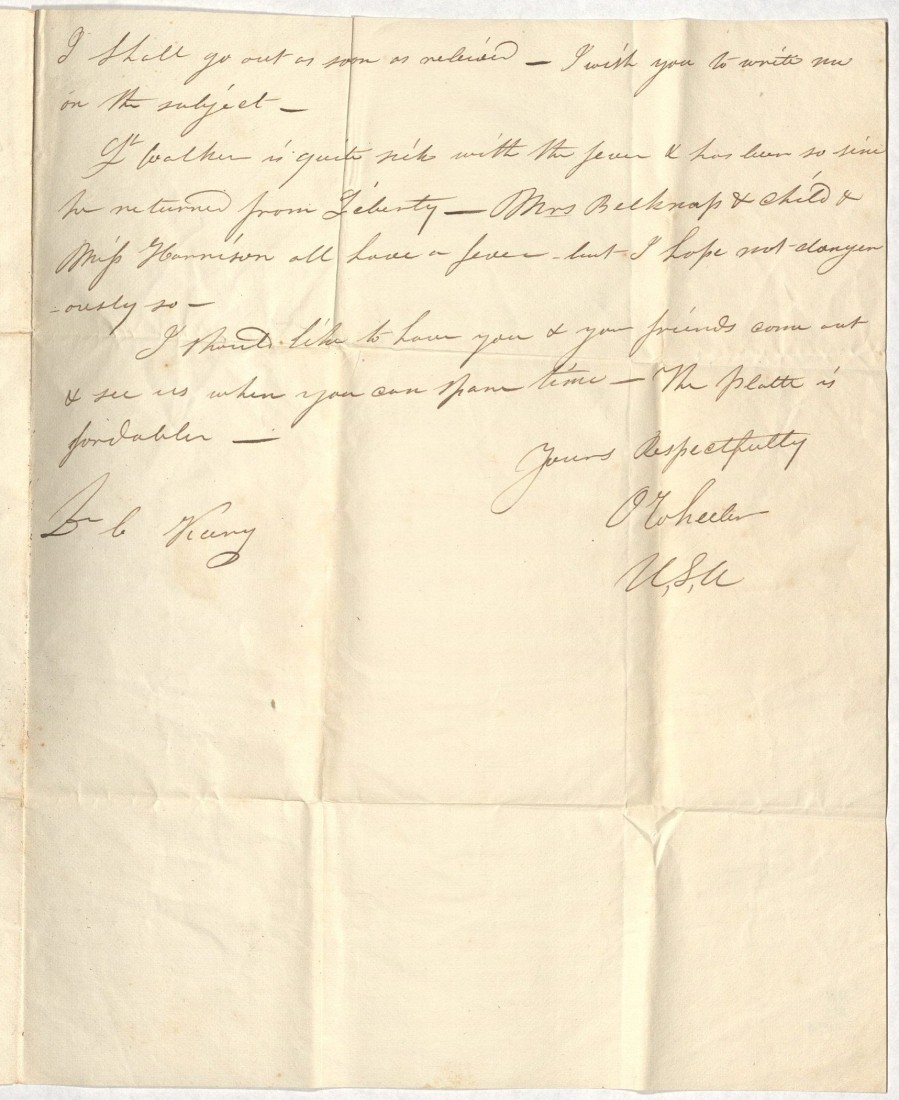
A letter from O. Wheeler, Camp Leavenworth, Kansas, to Dr. C. Keeny, Liberty, Missouri, August 8, 1827. Most of the letter concerns a “disorder” or illness affecting Wheeler’s horse. The U. S. Army established Camp (now Fort) Leavenworth in 1827, the same year this letter was written, to serve as a forward base protecting the Santa Fe Trail. Call Number: RH MS P174.

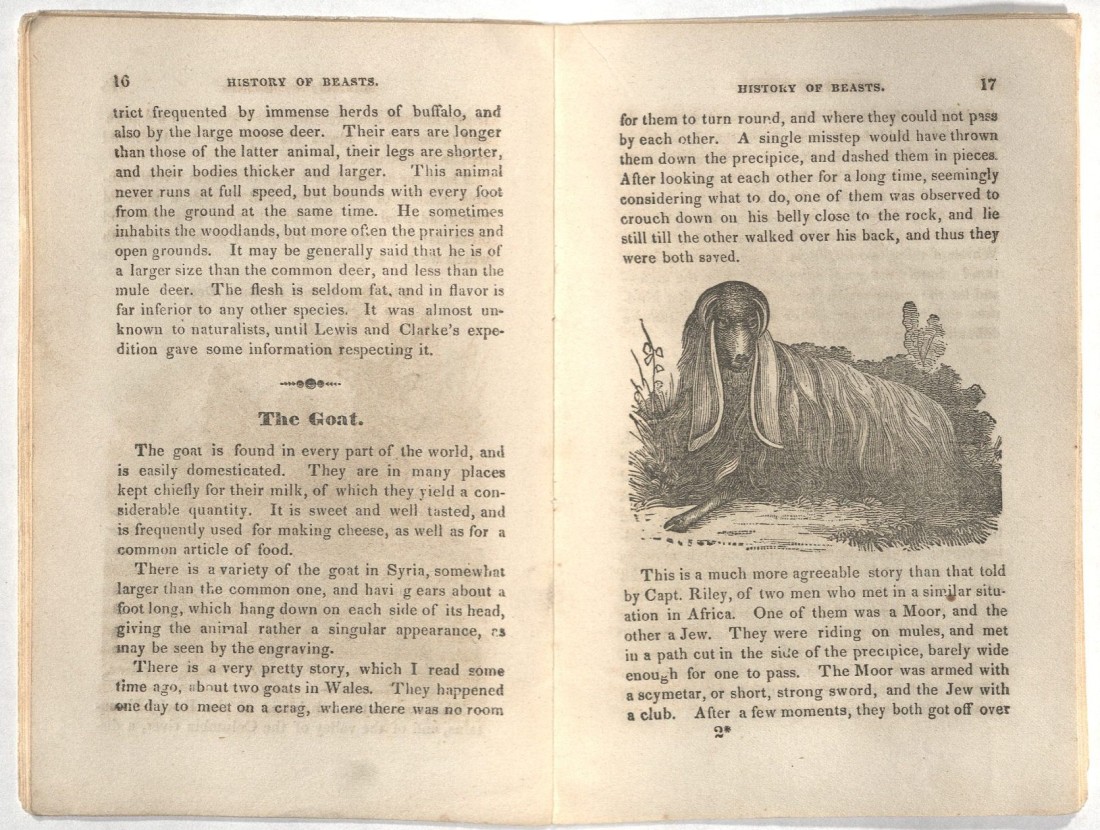
This image has text, accompanied by a black-and-white illustration of a goat.
Information and commentary about goats in the children’s book The Natural History of Beasts: Illustrated with Cuts, 1843. The lesson the author draws from the two featured stories is that “surely the goats were wiser than the men – and let the young reader learn from this, that kindness and humanity are better calculated to remove difficulties than pride and obstinacy.” Call Number: Children 504B. Click image to enlarge.
Selected Additional Collection Items

Maps

  • Regni Mexicani seu Novæ Hispaniæ, Floridæ, Novæ Angliæ, Carolinæ, Virginiæ, et Pennsylvaniæ, nec non insvlarvm archipelagi Mexicani in America septentrionali [The Kingdom of Mexico, or New Spain, Florida, New England, the Carolinas, Virginia, and Pennsylvania, as Well as the Insular Archipelago of Mexico in North America] by Johann Baptist Homann, 1722. Call Number: Orbis Maps 1:60.
  • A Map of Louisiana and Mexico = Carte de la Louisiane et du Mexique, 1820. Call Number: Orbis Maps 1:134.
  • Map of the Western Territory of the United States by Lt. Enoch Steen. Coverage includes Indian lands from 80 miles east of Leavenworth to 50 miles west of Pikes Peak and Black Hill to Santa Fe. Call Number: RH Map S31.
  • A Map of the Indian Territory, Northern Texas and New Mexico: Showing the Great Western Prairies by Josiah Gregg, from Commerce of the Prairies, 1844. Call Number: RH Map Q57.
  • Mapa de los Estados Unidos de Méjico [Map of the United States of Mexico], 1847. Call Number: Orbis Maps 2:61.
  • Map of Santa Fe County, New Mexico, 1880s? Shows railroads and pre-European pueblos in and near Santa Fe County. Call Number: RH Map R529.

New Spain and Mexico

  • Exploratory Travels Through the Western Territories of North America by Zebulon Pike, 1811. During his 1806-1807 expedition to the region south and west of the Louisiana Purchase, Pike ended up in Spanish territory. His party was captured by Spanish soldiers, and their subsequent journey took them through Santa Fe. Call Number: D678.
  • Memoirs of the Mexican Revolution: Including a Narrative of the Expedition of General Xavier Mina by William Davis Robinson, 1820. Call Number: Howey C4191.
  • Six Months’ Residence and Travels in Mexico by William Bullock, 1824. Call Number: Ellis Aves C207.
  • A View of South-America and Mexico, Comprising Their History, the Political Condition, Geography, Agriculture, Commerce, &c. by John M. Niles, 1825. Call Number: B11232.

New Mexico, Santa Fe, and the Santa Fe Trail

  • The Daily New Mexican newspaper, published in Santa Fe, 1880-1881. Call Number: RH H24.
  • Santa Fe: Ancient and Modern, Including Its Resources and Industries edited by W.G. Ritch, 1885. Call Number: RH C1375.
  • Southwest on the Turquoise Trail: The First Diaries on the Road to Santa Fe edited by Archer Butler Hulbert, 1933. Call Number: RH C451.
  • Historic Santa Fe, Founded About 1525: Oldest Town in the United States: The End of the Old Santa Fe Trail, 1940s? Call Number: RH AK121.
  • Santa Fe Trail: First Reports, 1825 by Augustus Storrs and Alphonso Wetmore, 1960. Call Number: RH B1126.

Household Matters

  • Quatro libros de la naturaleza, y virtudes de las plantas, y animales que estan receuidos en el uso de medicina en la Nueua España [Four Books on the Nature and Virtues of Plants and Animals for Medicinal Purposes in New Spain] by Francisco Hernandez, 1615. Call Number: Summerfield B2225.
  • Mexican recipes, early 1800s. This is a collection of culinary recipes – written in various hands and mostly undated – that appear to be from central and southern Mexico. The collection was previously featured on Spencer’s blog. Call Number: MS 346.
  • A New Dictionary of the Spanish and English Languages compiled by by Henry Neuman, 1823. Call Number: C26852.
  • El cocinero mexicano, o Coleccion de las mejores recetas para guisar al estilo americano [The Mexican Cook, or Collection of the Best Recipes for Cooking in the American Style], volume 3 only, 1831. This work is one of two cookbooks from 1831 that are considered the first on Mexican cuisine published in Mexico. Call Number: B14945.

Caitlin Klepper
Public Engagement Librarian
Meet Felicity at Spencer Research Library

June 1st, 2026

As an elder millennial who loved history as a child and grew up with American Girl, I’ve been excited about the company’s 40th anniversary this year. As a result, I will be sharing a series of posts highlighting Spencer collection materials that connect to AG’s six original historical characters, in chronological order of when they “lived”: Felicity Merriman, Josefina Montoya, Kirsten Larson, Addy Walker, Samantha Parkington, and Molly McIntyre. Each post will focus on a different character and explore a selection of items that relate to the time and place in which she “lived” and topics or themes explored in her stories.

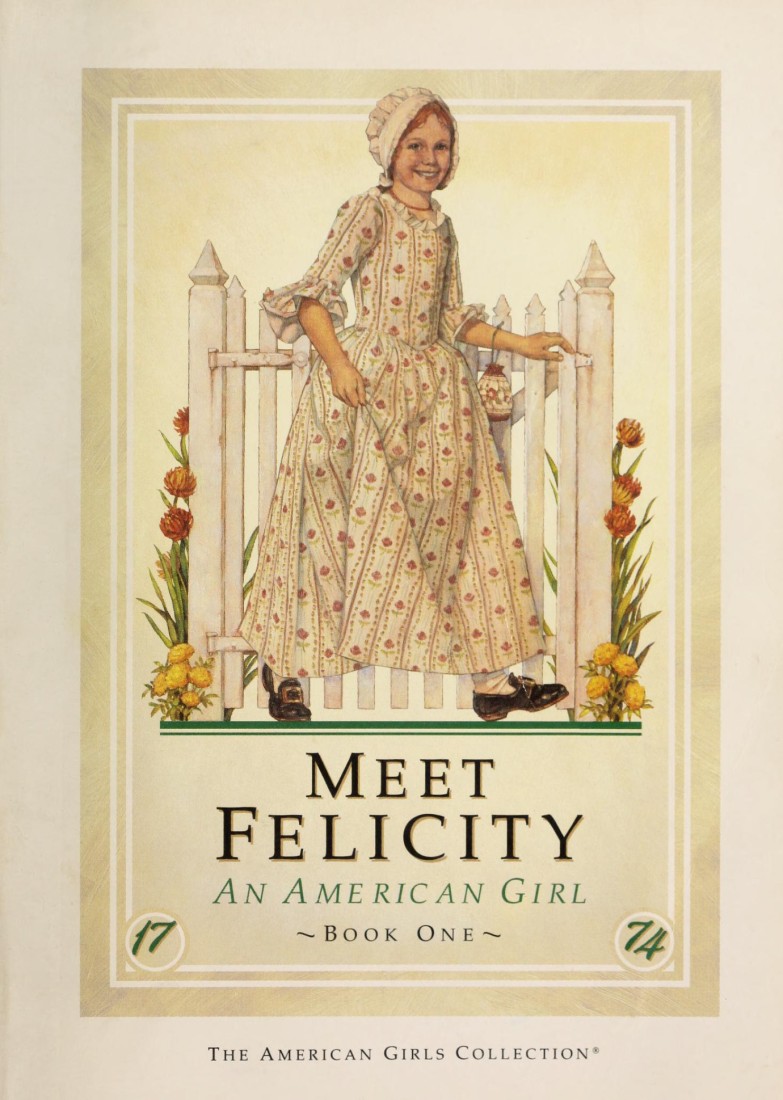
A color illustration of a red-haired girl wearing a long dress and walking in front of a white picket fence, plus text.
The front cover of the first book in Felicity’s series, first published in 1991.

When readers meet Felicity Merriman, she is a “spunky, sprightly” nine-year-old girl living in Williamsburg, Virginia, in 1774. Her stories are set against the backdrop of rising tensions between Patriots and Loyalists just before the American Revolution, and the theme of independence runs throughout them. Felicity herself balks at learning expected housewifery skills, and she attempts to free a beloved horse named Penny from an abusive owner. The questions of freedom, liberty, and equality asked in the stories are not extended to the enslaved characters (and one free person of color) who are mentioned or implied. Other topics in Felicity’s books include education for girls, illnesses and injuries, British taxation especially on tea, her father’s store, and maintaining friendships in the face of disagreements.

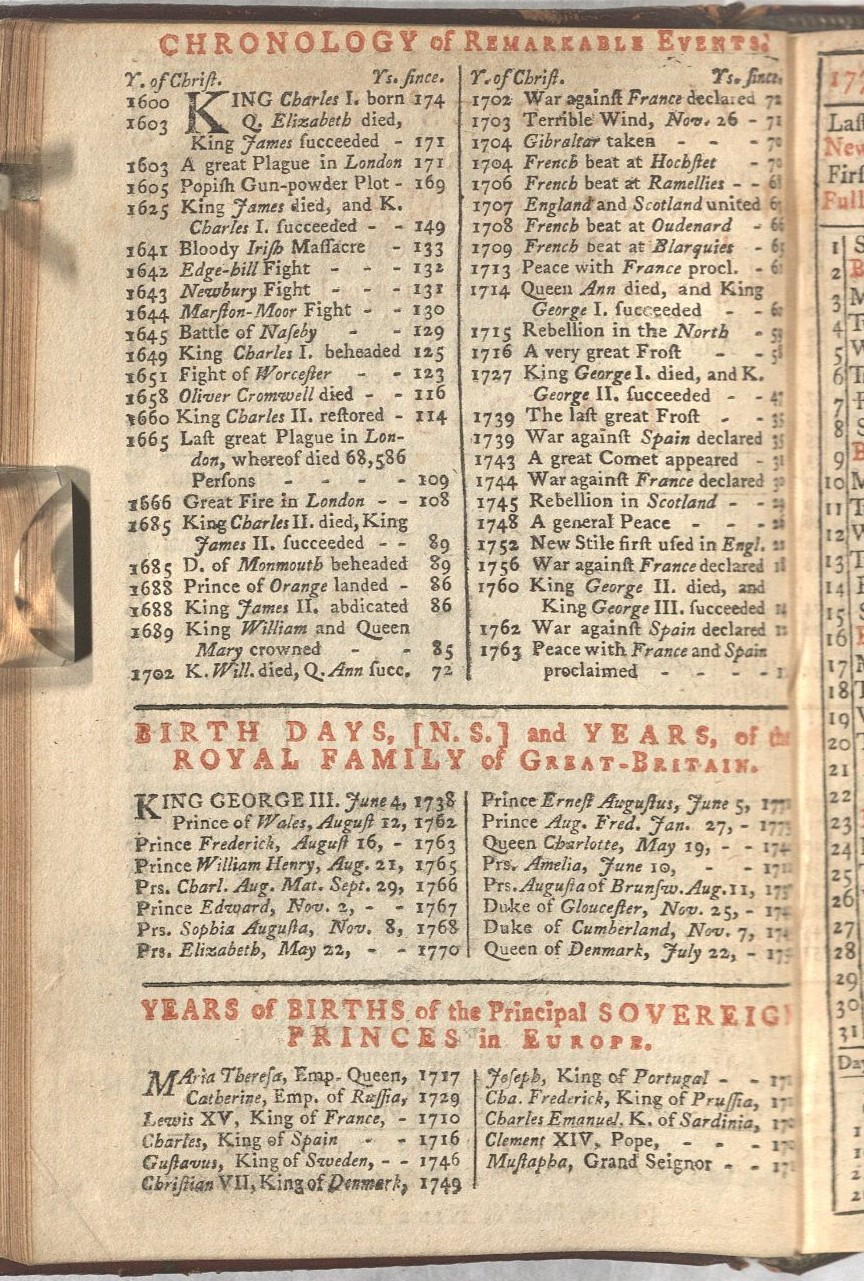
Selected pages in The Ladies’ Diary, or, Woman’s Almanack for the Year of Our Lord 1774. Published in London between 1704 and 1841, The Ladies’ Diary, or, Woman’s Almanack famously featured puzzles and mathematical questions in addition to calendars and important dates. Spencer’s 1774 copy appears to feature a red two-pence duty tax stamp. It is also bound with nine other popular Company of Stationers almanacs from the same year; similar volumes from several years between 1744 and 1826 can also be found at Spencer under the call number “Bond B17.” Call Number: Bond B17 1774. Click images to enlarge.

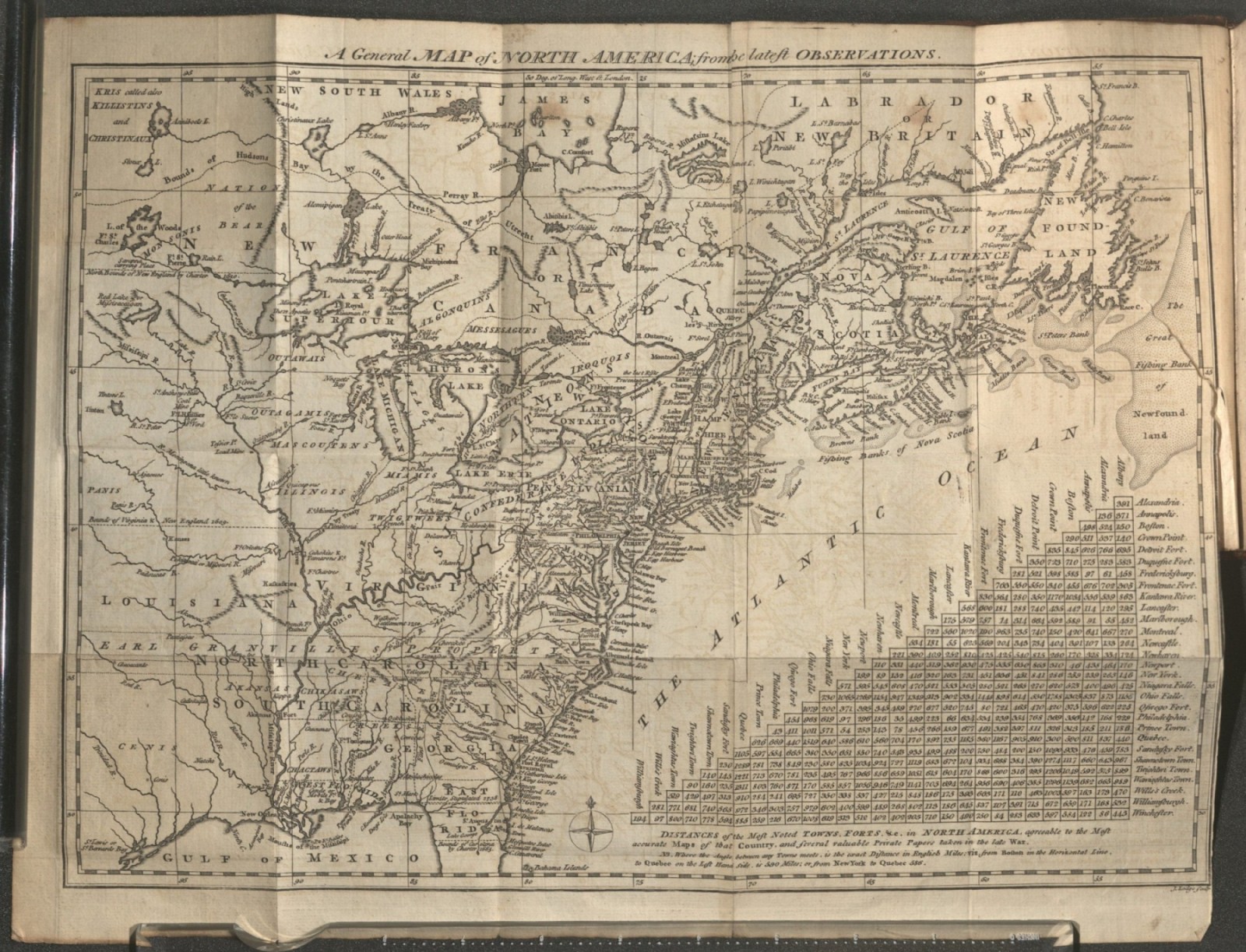
This image has text.
A folded map of North America in The North-American and the West-Indian Gazetter, London: 1778. The table in the lower right includes distances between Williamsburg and other other places. Note the inclusion of the “Kanses” indigenous tribe on the far left side of the map. The Gazetter was an encyclopedic guide to the “cities, towns, harbours, ports, bays, rivers, lakes, mountains, number of inhabitants &c.” of the continent. The 1778 edition can be read online through the Internet Archive. Call Number: B14256. Click image to enlarge.
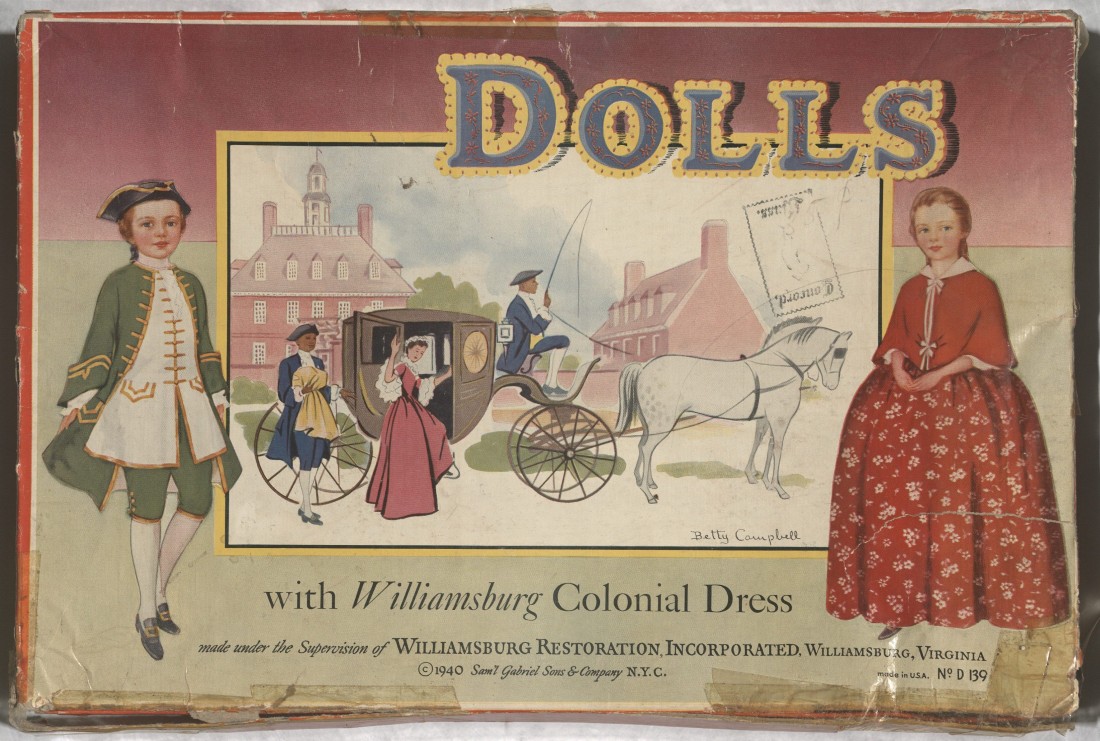
Color illustrations of a boy and girl in colonial outfits, with a background illustration of a woman getting into a horse-drawn carriage in front of the Governor's Palace.
The box lid for Dolls with Williamsburg Colonial Dress, 1940. “Let’s pretend,” declares the accompanying booklet in this set of paper dolls, “that this is a family that lived in Williamsburg in Virginia about the year 1760…There are Father and Mother. They have two children. Their little girl is called Belinda. She is twelve years old. Their little boy is Phillip. He is ten years old. Sukey is the [presumably enslaved] cook. Moses is the [presumably enslaved] colored man. Sukey and Moses do much of the work in the house.” Call Number: H180. Click image to enlarge.

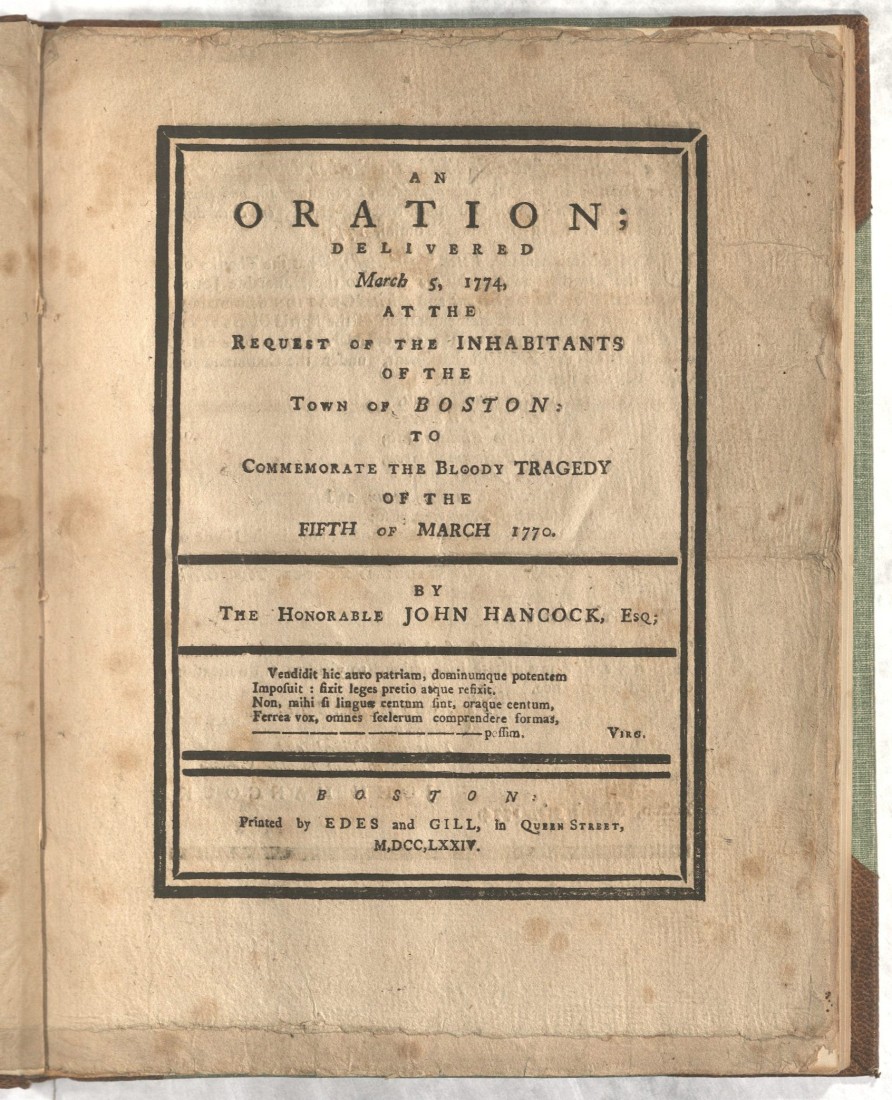
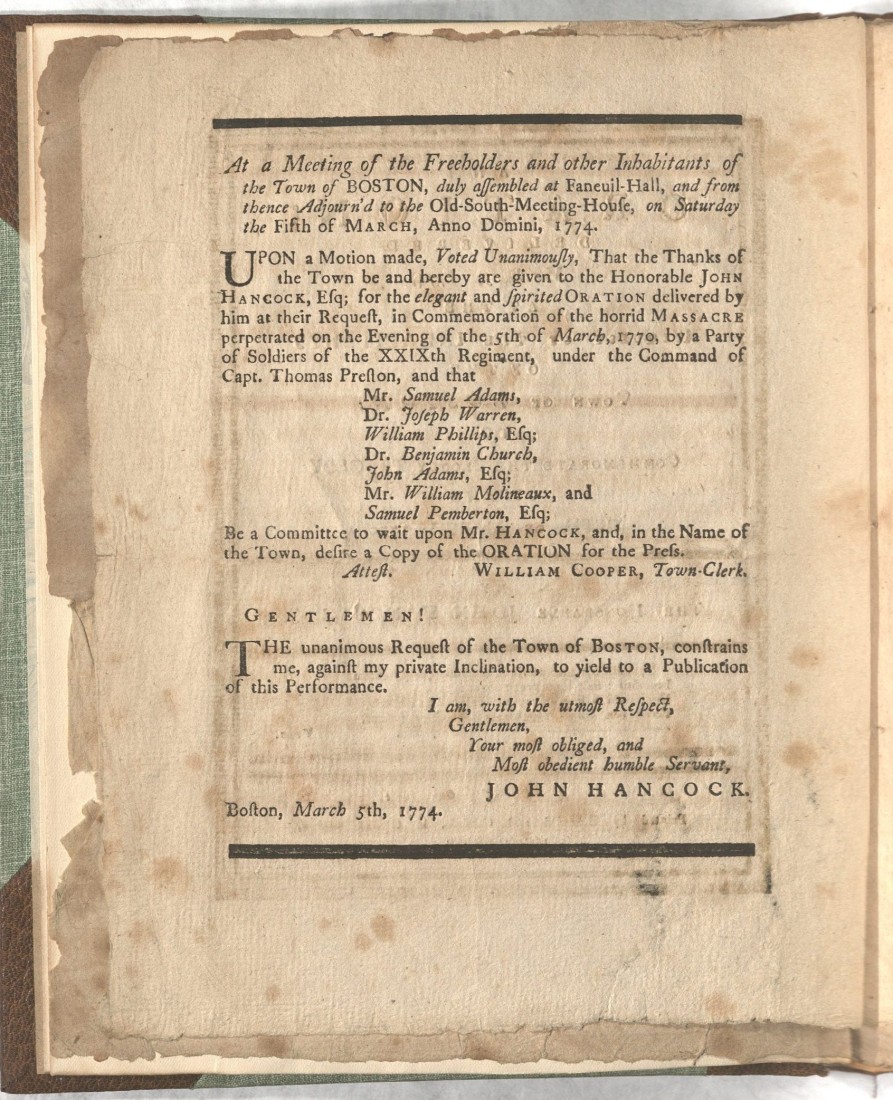
The title page and publication note of An Oration Delivered March 5, 1774: At the Request of the Inhabitants of the Town of Boston; To Commemorate the Bloody Tragedy of the Fifth of March 1770 by John Hancock, Boston: 1774. “Some boast of being friends to government,” Hancock asserted in this speech. “I am a friend to righteous government, to a government founded upon the principles of reason and justice; but I glory in publicly avowing my eternal enmity to tyranny.” This speech can be read online through the Massachusetts Historical Society; a transcription is available through the UMKC School of Law “Famous Trials” website. Call Number: D845. Click images to enlarge.

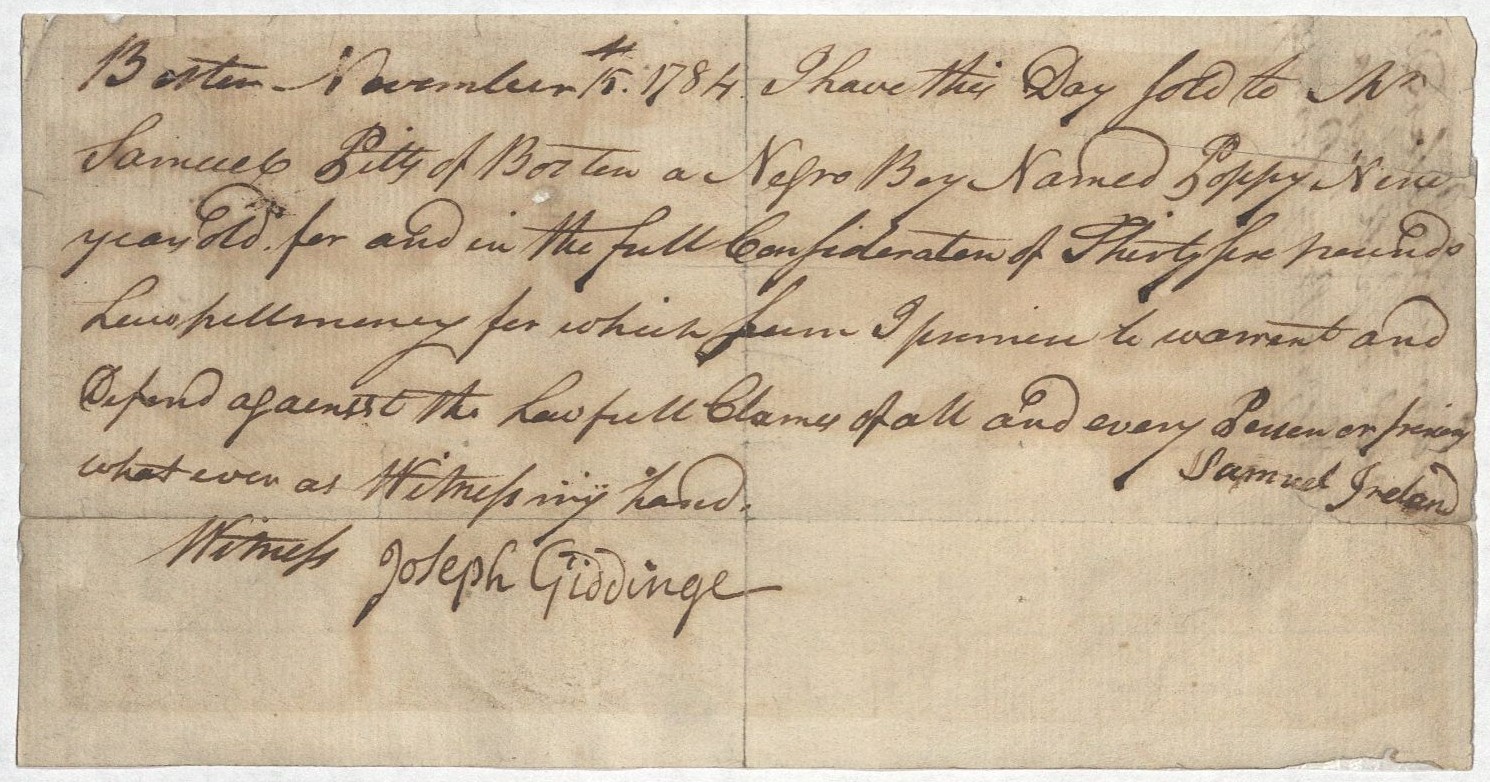
This image has handwritten text.
A bill of sale for “a Negro Boy Named Poppy Nine years old” in Boston, November 15, 1784. This boy was the same age as Felicity when readers first meet her in 1774. Call Number: MS B26. Click image to enlarge.

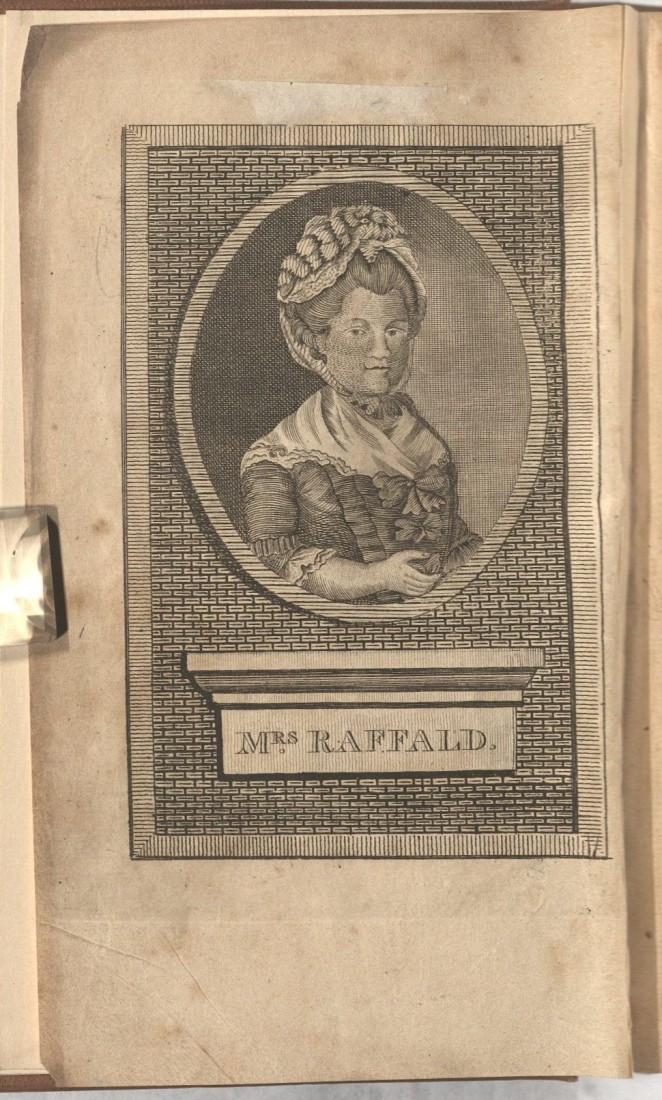
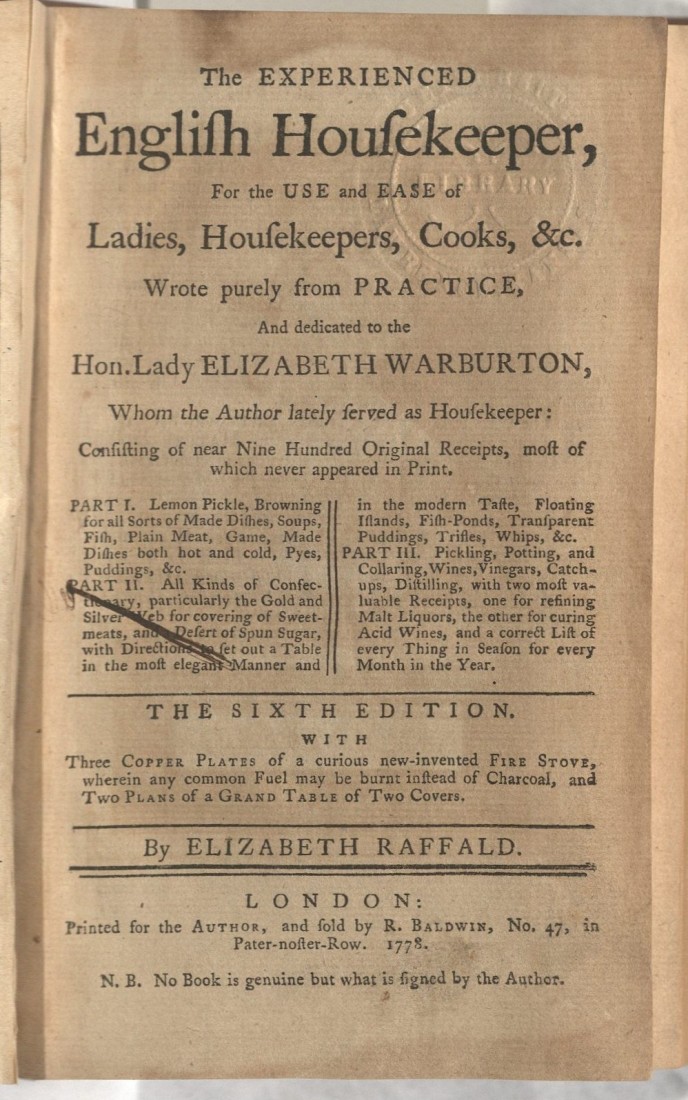
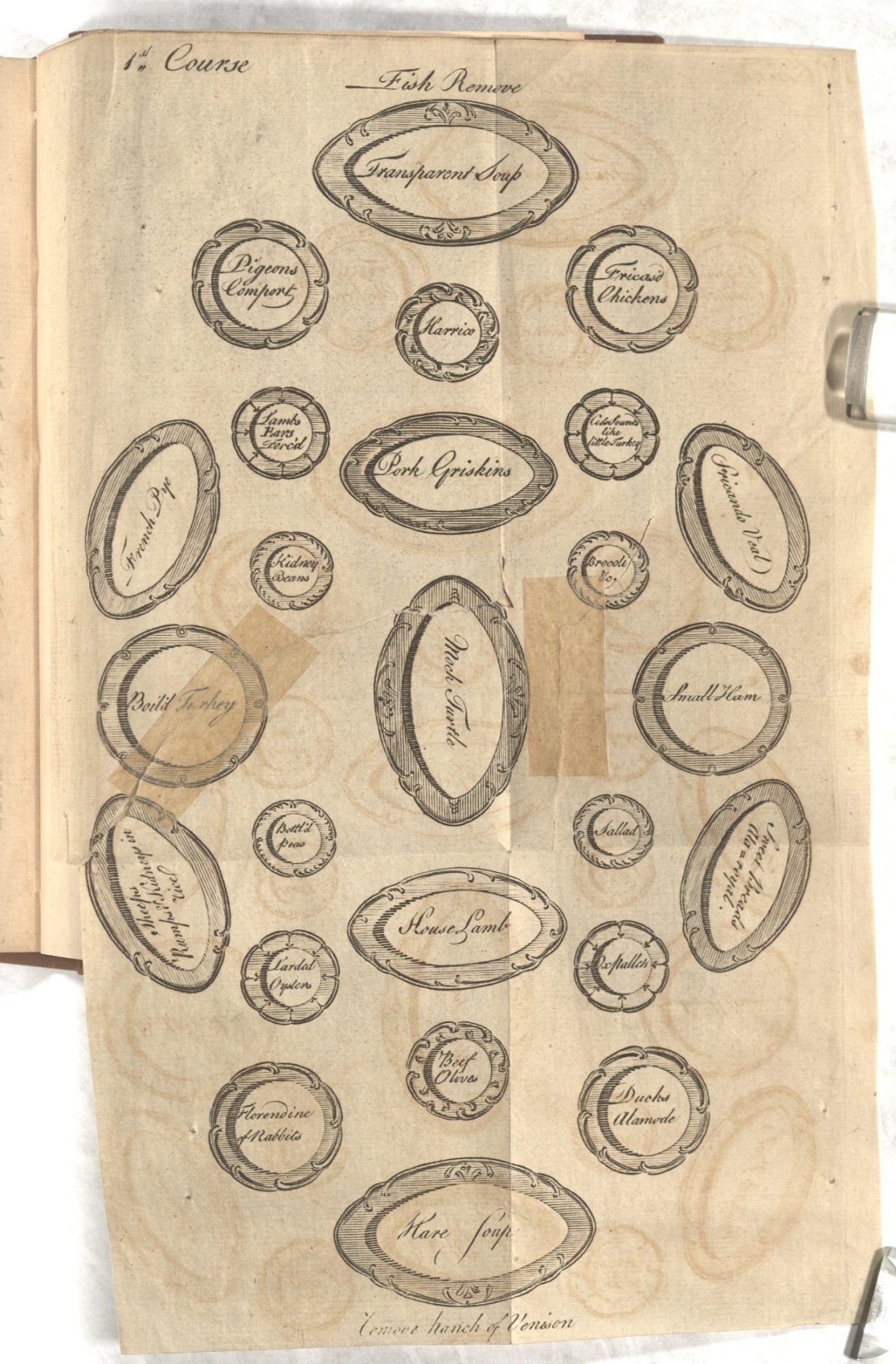
The frontispiece (left) and title page (middle) of The Experienced English Housekeeper, for the Use and Ease of Ladies, Housekeepers, Cooks, &c. by Elizabeth Raffald, London: 1778. On the right is a fold-out copper plate diagram of a first-course dinner arrangement consisting of 25 dishes, part of what Raffald calls a “grand table”: “January being a month when entertainments are most used, and most wanted, from that motive I have drawn my dinner at that season of the year.” A second copper plate diagram shows another 25 dishes, and Raffald asserts that the third (dessert) course “must” therefore “be of the same number.” Call Number: C3670. Click images to enlarge.

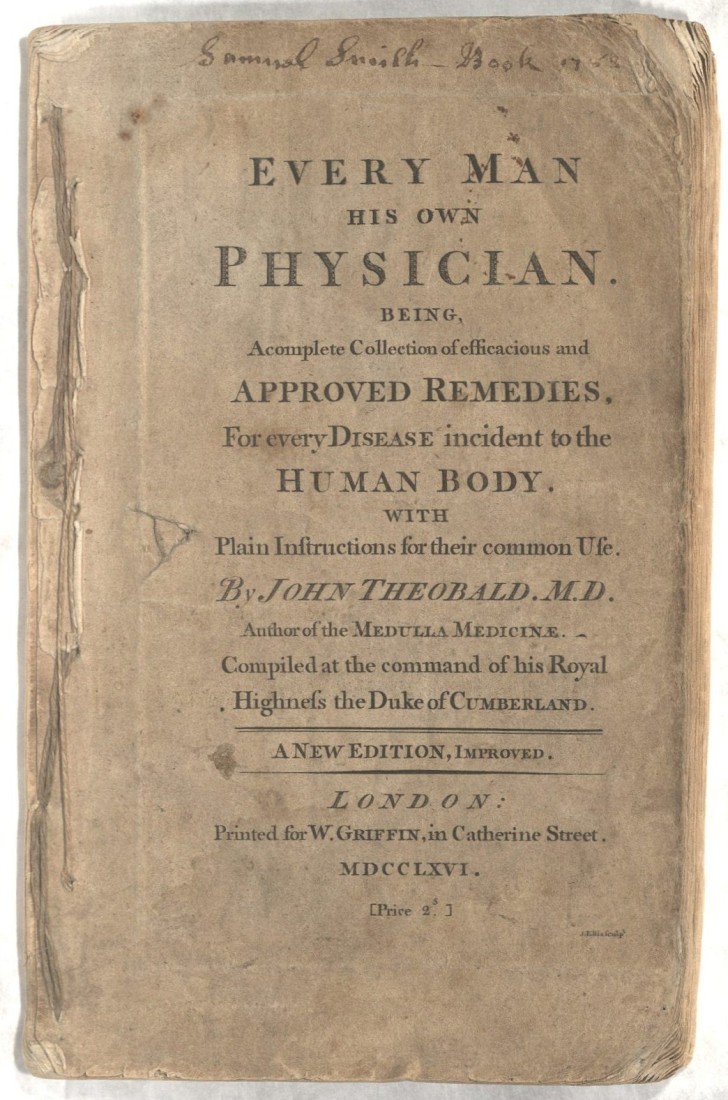
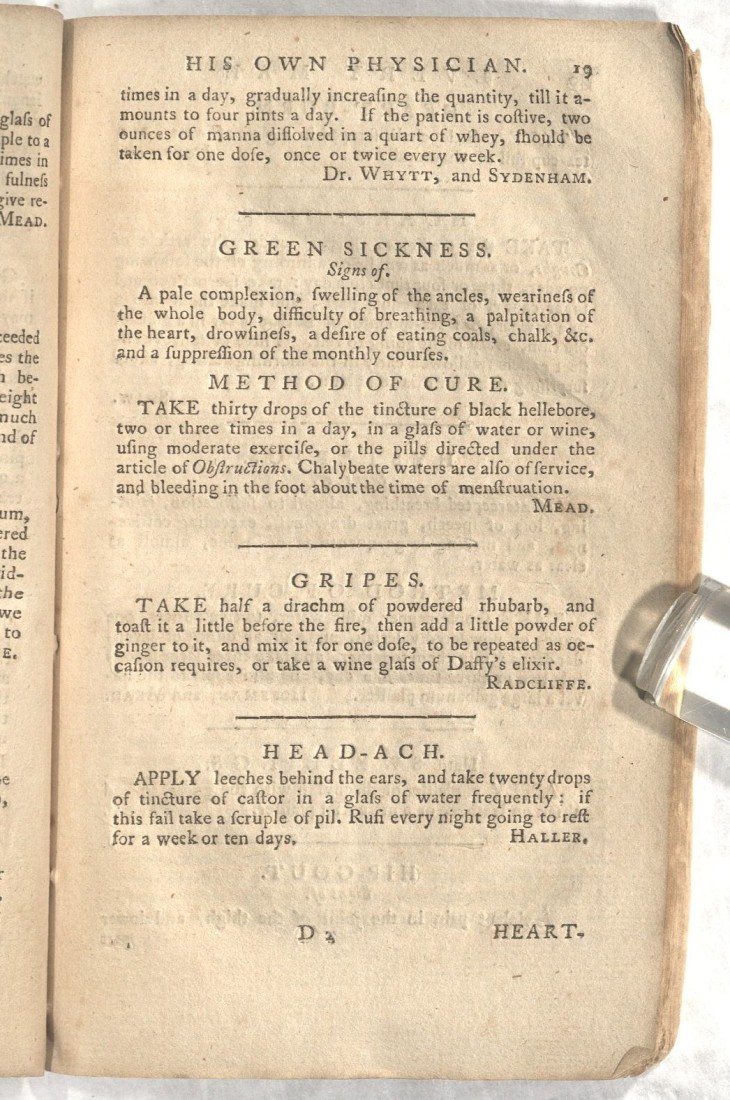
The title page and a selection of treatments in Every Man His Own Physician by John Theobald, London: 1766 (a “new edition, improved). Historically known as chlorosis, “green sickness” was primarily diagnosed in young, unmarried teenage girls. “Gripes” is an older term for influenza. Note that the cure for headaches includes “leeches behind the ears.” Call Number: B9522. Click images to enlarge.

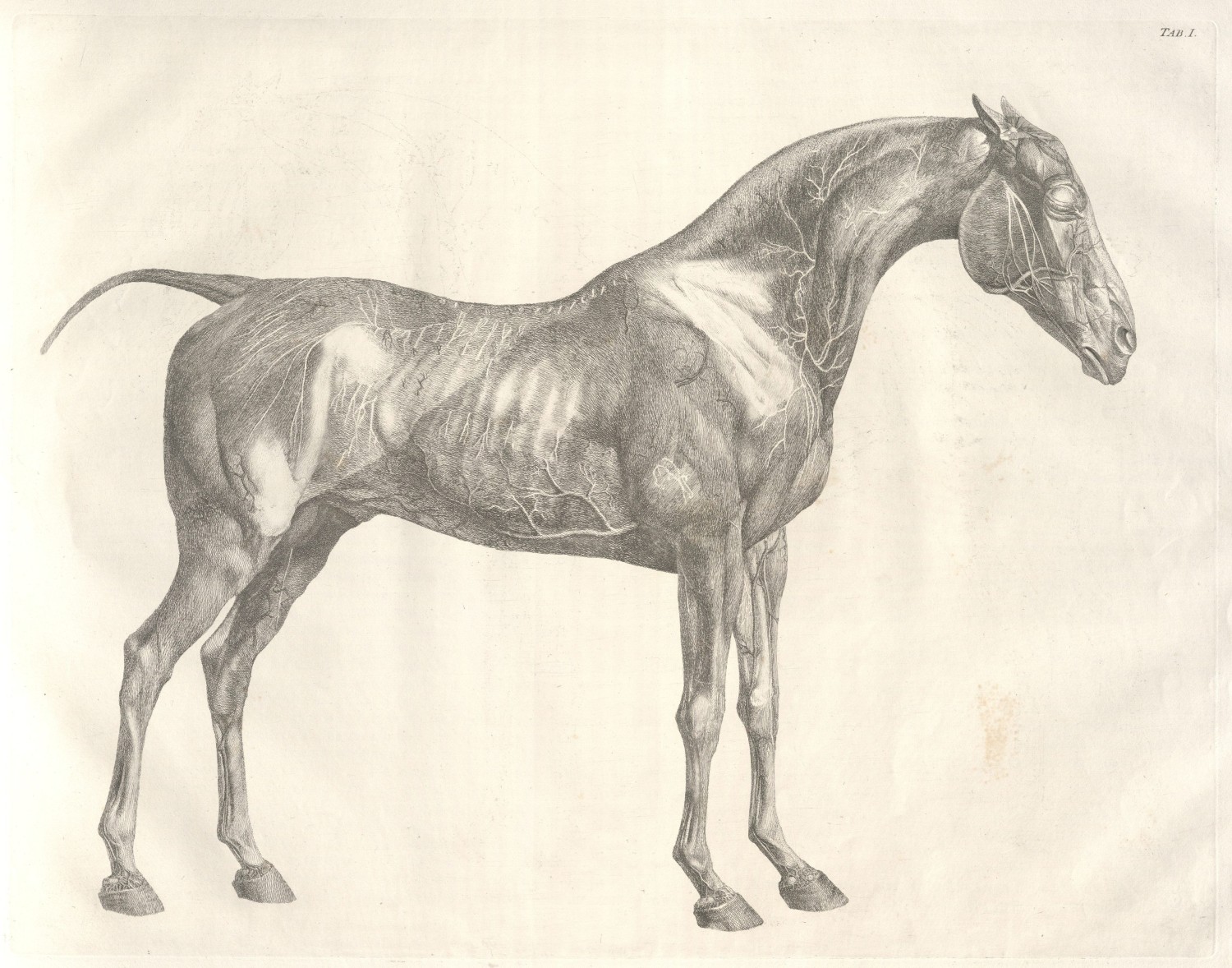
Black-and-white illustration of the side of a horse.
The “first anatomical table of the muscles, fascias, ligaments, nerves, arteries, veins, glands, and cartilages” in The Anatomy of the Horse by George Stubbs, London: 1766. This volume includes “eighteen tables [illustrations], all done from nature,” each accompanied by explanatory text. Call Number: Ellis Omnia H16. Click image to enlarge.
Selected Additional Collection Items

Colonial British America, Virginia, and Williamsburg

  • Map, North America, as Divided Amongst the European Powers, London: 1774. Call Number: Orbis Maps 1:85.
  • The Office and Authority of a Justice of Peace Explained and Digested, Under Proper Titles by Richard Starke, Williamsburg: 1774. Includes a section on penalties for (ahem, Felicity) stealing horses. George Washington had a copy of this work in his library. Call Number: C14997.
  • Map, A New and Correct Map of North America, With the West India Islands; Divided According to the Last Treaty of Peace, Concluded at Paris. 10th. Feby. 1763, London: 1777. Call Number: N6 Orbis 1:81.
  • Map, Bowles’s New Map of North America and the West Indies, London: 1781. Call Number: N7 Orbis 1:82.
  • Notes on the State of Virginia by Thomas Jefferson, London: 1787. Call Number: C1485.
  • Colonial Williamsburg, the First Twenty-Five Years; A Report, 1952. Call Number: RH D1411.

Rising Tensions Before the American Revolution

  • First [-Fifth] Report from the Committee Appointed to Enquire [sic] into the Nature, State, and Condition, of the East India Company, and of the British Affairs in the East Indies, London: 1773? These reports document the UK Parliament’s investigation into the East India Company in 1772 and 1773. One result of this inquiry was the Tea Act of 1773, which features prominently in Felicity’s stories. Call Number: G374 v.3 items 6-10.
  • Considerations on the Measures Carrying on With Respect to the British Colonies in North America, anonymously written by Matthew Robinson, 2nd Baron Rokeby, London: 1774. Call Number: 18th century Prose 716.
  • Extracts from the Votes and Proceedings of the American Continental Congress, Held at Philadelphia, on the Fifth of September, 1774, Philadelphia: 1774. Call Number: 18th century Prose 2275.
  • American Independence the Interest and Glory of Great Britain by John Cartwright, London: 1774. Call Number: C1497.
  • Speech of Edmund Burke, Esq. on American Taxation, April 19, 1774, London: 1775. Call Number: C3454 item 3.

Slavery in Colonial British America

  • A Caution to Great Britain and Her Colonies, in a Short Representation of the Calamitous State of the Enslaved Negroes in the British Dominions by Anthony Benezet, London: 1767. Call Number: C3749.
  • Thoughts Upon Slavery by John Wesley, London: 1774. Call Number: Howey B2111.
  • Fragment of an Original Letter on the Slavery of the Negroes; Written in the Year 1776 by Thomas Day, London: 1784. Call Number: Howey C3950 item 2.

Household Matters and Girls’ Education

  • The Ready Calculator: or, Trader’s Certain Guide, in Computing the Price, or Amount of Any Quantity of Goods and Merchandizes by Thomas Slack, London: 1771. Call Number: Howey B856.
  • An Essay Upon Nursing and the Management of Children, From Their Birth to Three Years of Age by William Cadogan, Boston: 1772. Call Number: C1801.
  • Letters on the Improvement of the Mind, Addressed to a Young Lady. In Two Volumes by Mrs. (Hester) Chapone, London: 1773. Call Number: B3783.
  • An Essay on the Learning, Genius, and Abilities of the Fair-Sex: Proving Them Not Inferior to Man, From a Variety of Examples, Extracted From Ancient and Modern History, an English translation of Defensa de las mujer by Benito Jerónimo Feijoo y Montenegro, London: 1774. Call Number: B7649.
  • The Toilet of Flora, an English translation (with alterations) of La toilette de flore by Pierre-Joseph Buc’hoz, London: 1775. Contains “a collection of the most simple and approved methods of preparing baths, essences, pomatums, powders, perfumes, sweet-scented waters, and opiates for preserving and whitening the teeth” with “receipts [recipes] for cosmetics of every kind, that can smooth and brighten the skin, give force to beauty, and take off the appearance of old age and decay.” Call Number: B8738.
  • The Complete Vermin-Killer: A Valuable and Useful Companion for Families, in Town and Country, London: 1777. Includes “safe and quick methods of destroying bugs, lice, fleas, rats, mice, moles, weazels [sic], caterpillars, frogs, pismires, snails, frogs, moths, earwigs, wasps, pole-cats, badgers, foxes, otters, and fish and birds of all kinds.” Also includes “useful family receipts, for the preparation of medicines” and “directions for the purchase, management and cure of horses.” Call Number: Ellis Omnia C437.

Horses

  • Observations Upon the Shoeing of Horses: With an Anatomical Description of the Bones in the Foot of a Horse by James Clark, Edinburgh: 1770. Call Number: 18th century Prose 1841.
  • A Treatise on Cattle: Shewing the Most Approved Methods of Breeding, Rearing, and Fitting for Use, Horses, Asses, Mules, Horned Cattle, Sheep, Goats, and Swine by John Mills, Dublin: 1776. Call Number: C4072.

Caitlin Klepper
Public Engagement Librarian