Welcome to the Kenneth Spencer Research Library blog! As the special collections and archives library at the University of Kansas, Spencer is home to remarkable and diverse collections of rare and unique items. Explore the blog to learn about the work we do and the materials we collect.
This blog may contain archived web content. This blog may link to catalog records which no longer exist as of a software change in 2026.
As an elder millennial who loved history as a child and grew up with American Girl, I’ve been excited about the company’s 40th anniversary this year. As a result, I will be sharing a series of posts highlighting Spencer collection materials that connect to AG’s six original historical characters, in chronological order of when they “lived”: Felicity Merriman, Josefina Montoya, Kirsten Larson, Addy Walker, Samantha Parkington, and Molly McIntyre. Each post will focus on a different character and explore a selection of items that relate to the time and place in which she “lived” and topics or themes explored in her stories.
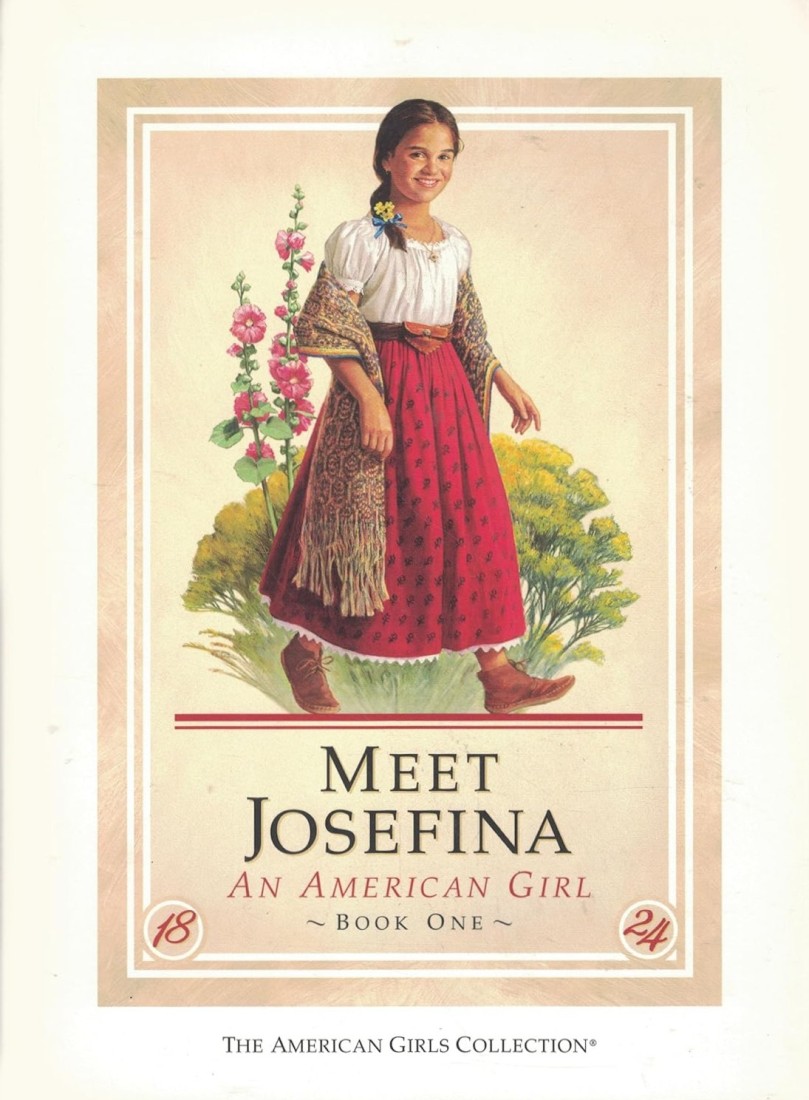
The front cover of the first book in Josefina’s series, first published in 1997. The book was also published in Spanish with the title Así es Josefina: Una Niña Americana. Click image to enlarge.
When readers meet Josefina Montoya, she is a nine-year girl described as having a big heart and big hopes. She lives with her father and sisters on a ranch outside Santa Fe, New Mexico – then part of Mexico – in 1824. Josefina’s stories are set against the backdrop of Mexico’s recent independence from Spain, and a significant plot point is the arrival of Americans via the Santa Fe Trail (which passed through Douglas County, Kansas, roughly fifteen miles south of Lawrence and KU). Throughout her stories, Josefina grieves and remembers her deceased mother; adjusts to changes at the ranch brought about her aunt, Tía Dolores; deals with goats, including her nemesis Florecita and the orphaned baby goat Sombrita; and starts the journey of becoming a curandera (healer).
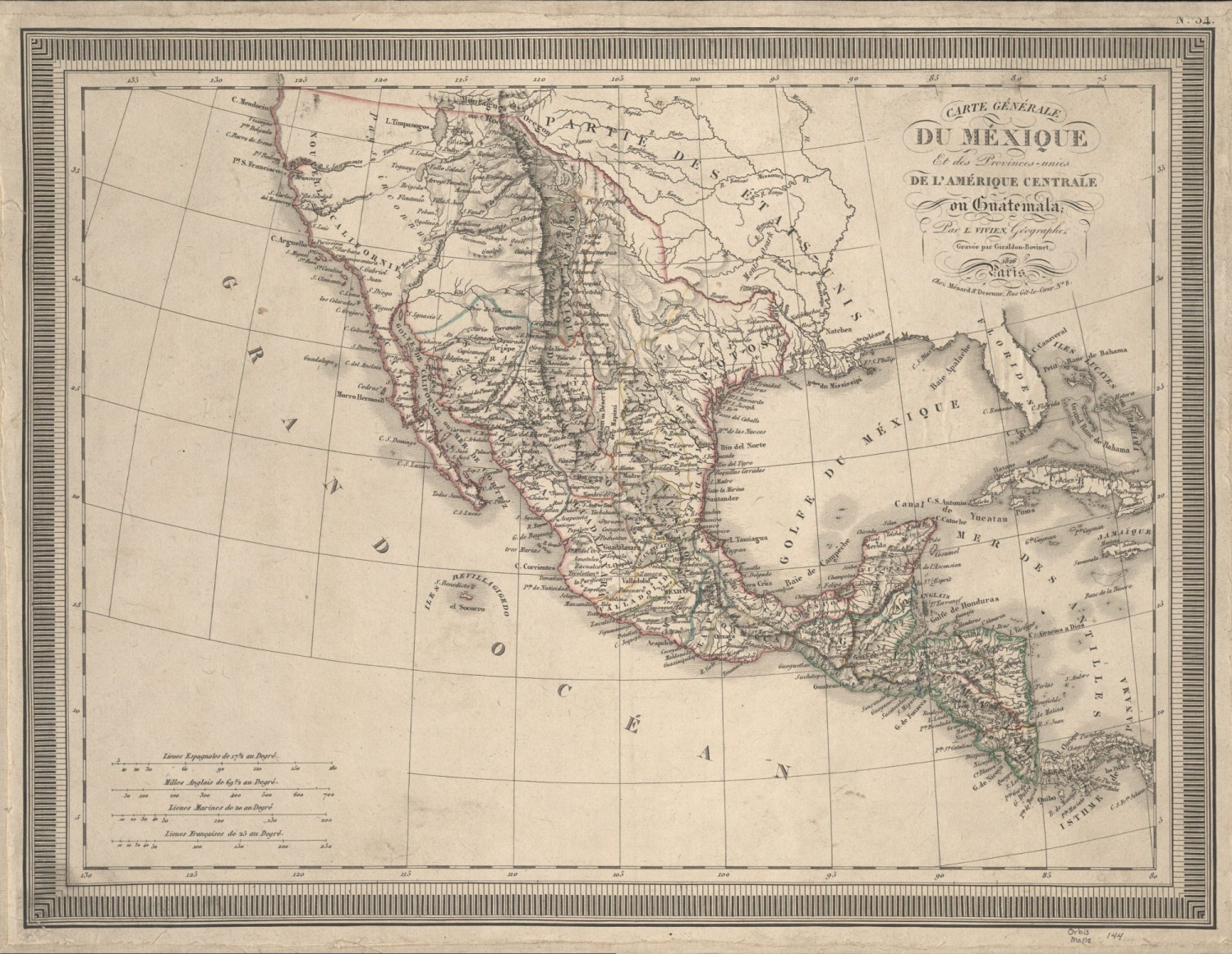
A French map of Mexico and Central America [Carte générale du Méxique et des provinces-unies de l’Amérique centrale on Guatemala], 1826. Call Number: Orbis Maps 1:144. Click image to enlarge.
–
–
–
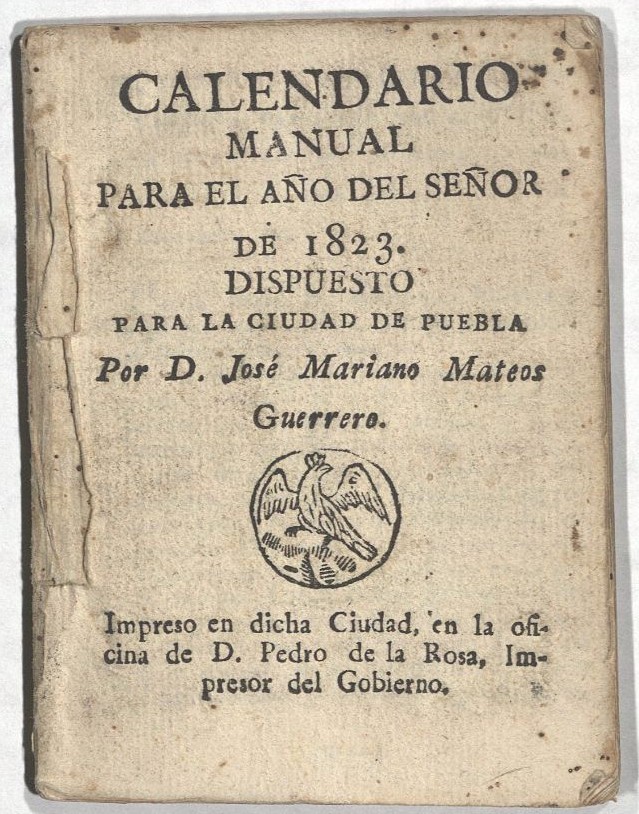
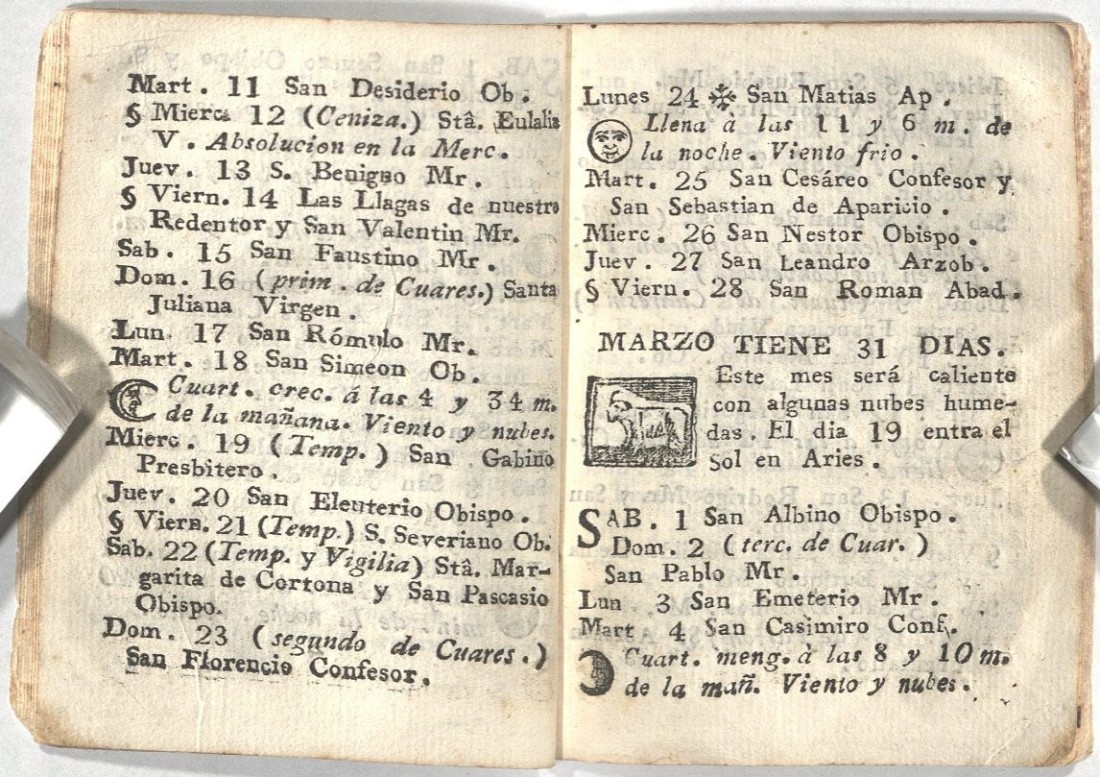
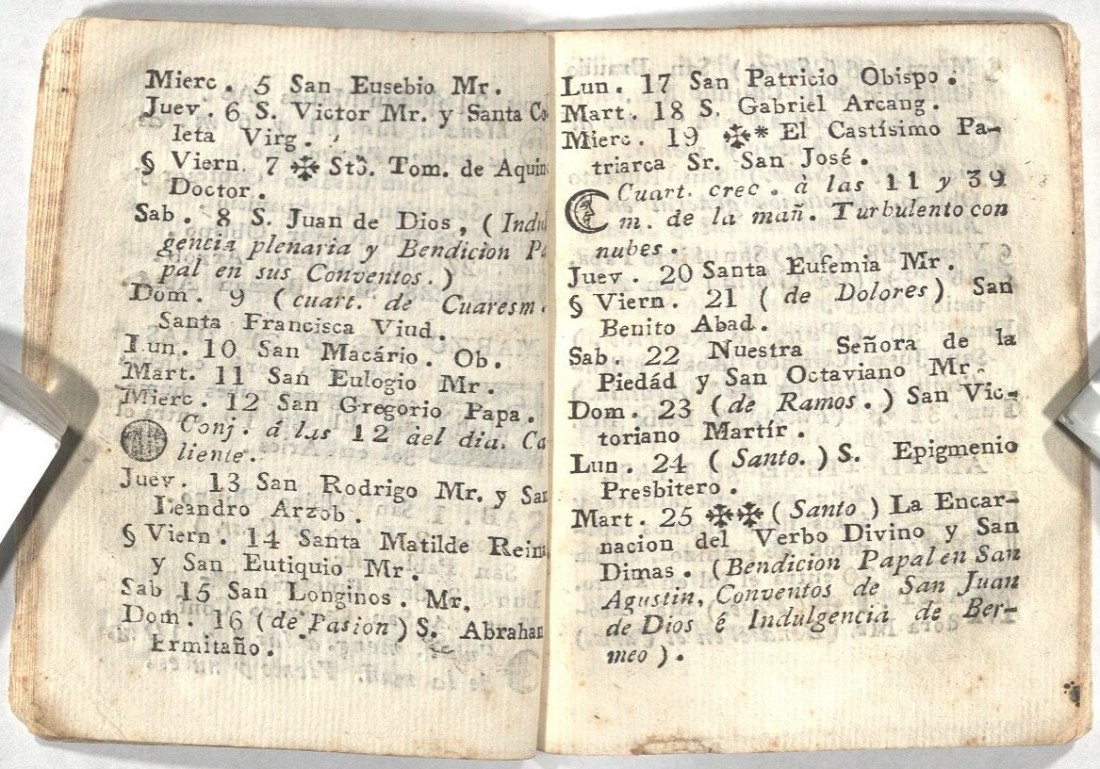
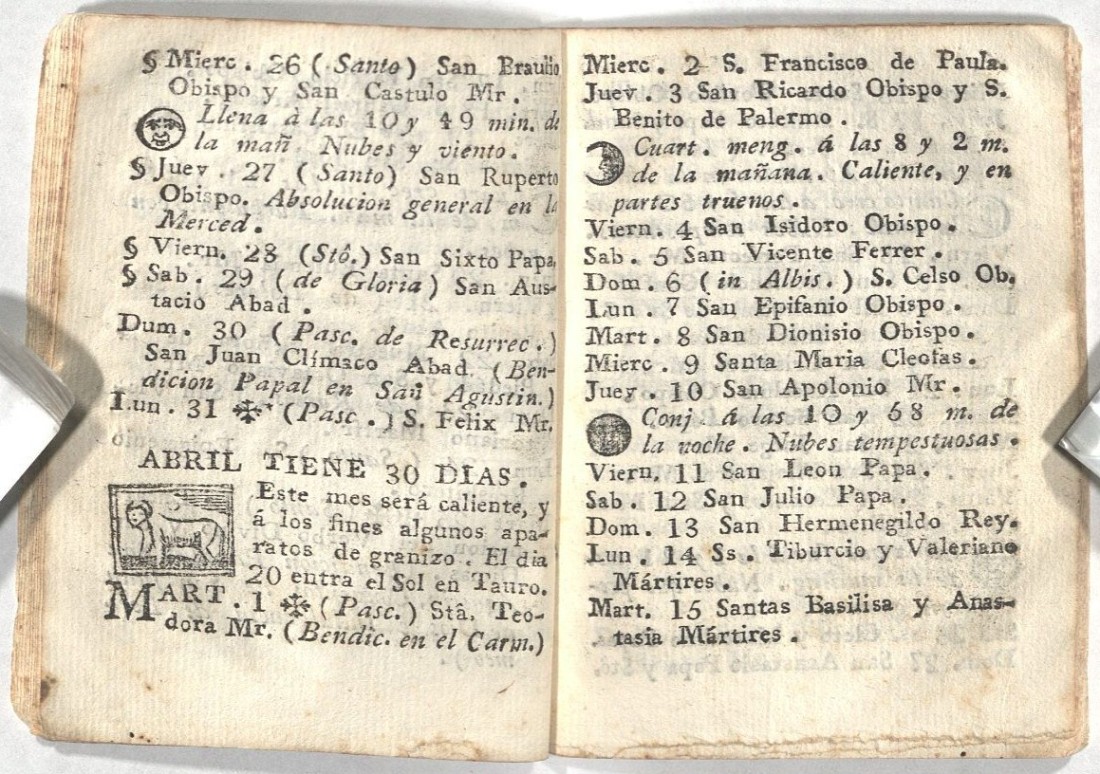
The title page and pages for the month of March in the pocket-sized Calendario manual para el año del señor de 1823. Dispuesto para la ciudad de Puebla [Manual Calendar for the Year of Our Lord 1823. Prepared for the City of Puebla]. Josefina’s birthday is March 19, the feast day of San José (St. Joseph). Call Number: t131. Click image to enlarge.
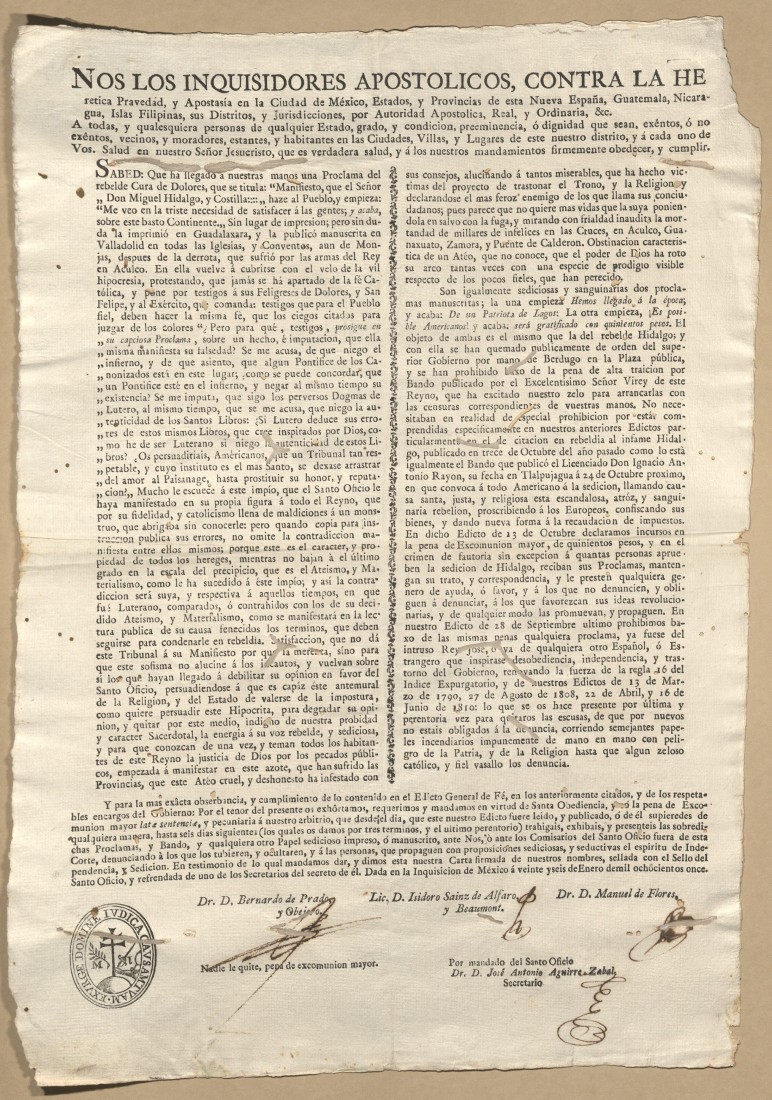
A broadside communicating an edict issued by the Inquisition of Mexico against the revolutionary proclamations of Miguel Hidalgo y Costilla, January 26, 1811. Hidalgo was a Catholic priest who led the first phase of the Mexican War of Independence beginning in 1810. Captured in March 1811, he was officially defrocked and excommunicated before being executed in July of that year. Call Number: Summerfield H121. Click image to enlarge.
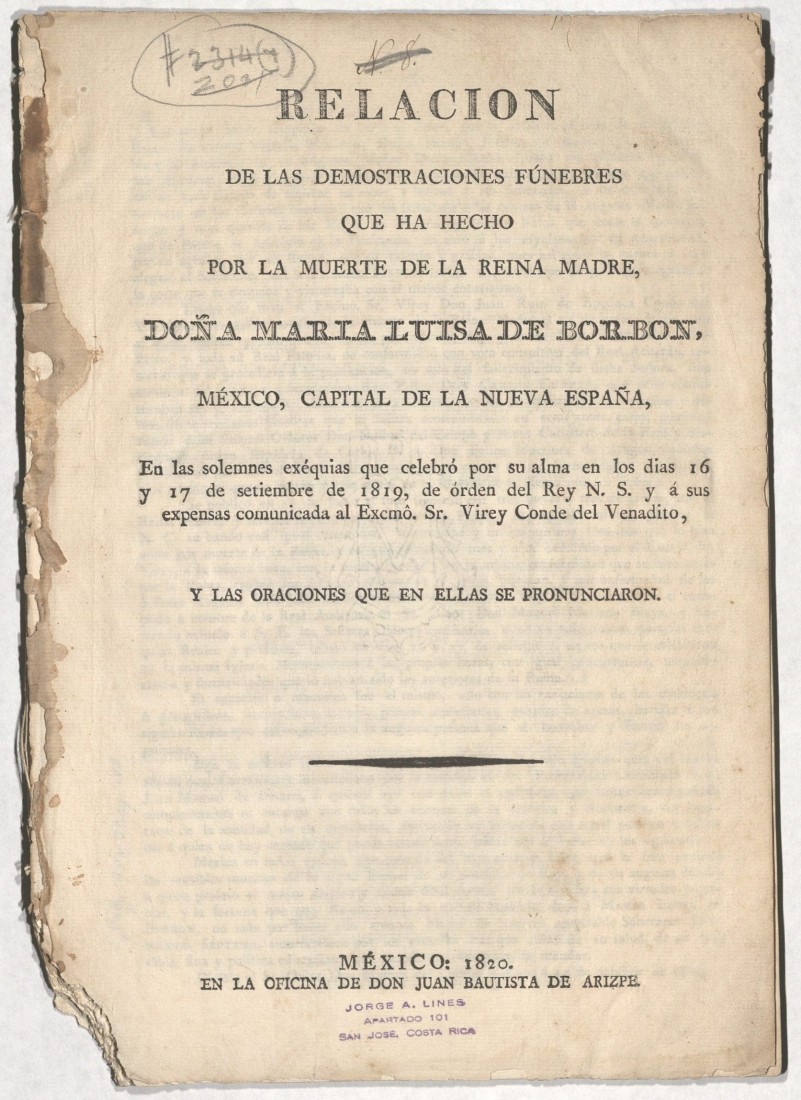
The title page of an account of the elaborate funeral ceremonies held for Maria Luisa of Parma, formerly the Queen Consort of Spain, in Mexico City, September 16-17, 1819. Josefina’s Tía Dolores would have been living in Mexico City at that time. Call Number: D3524. Click image to enlarge.
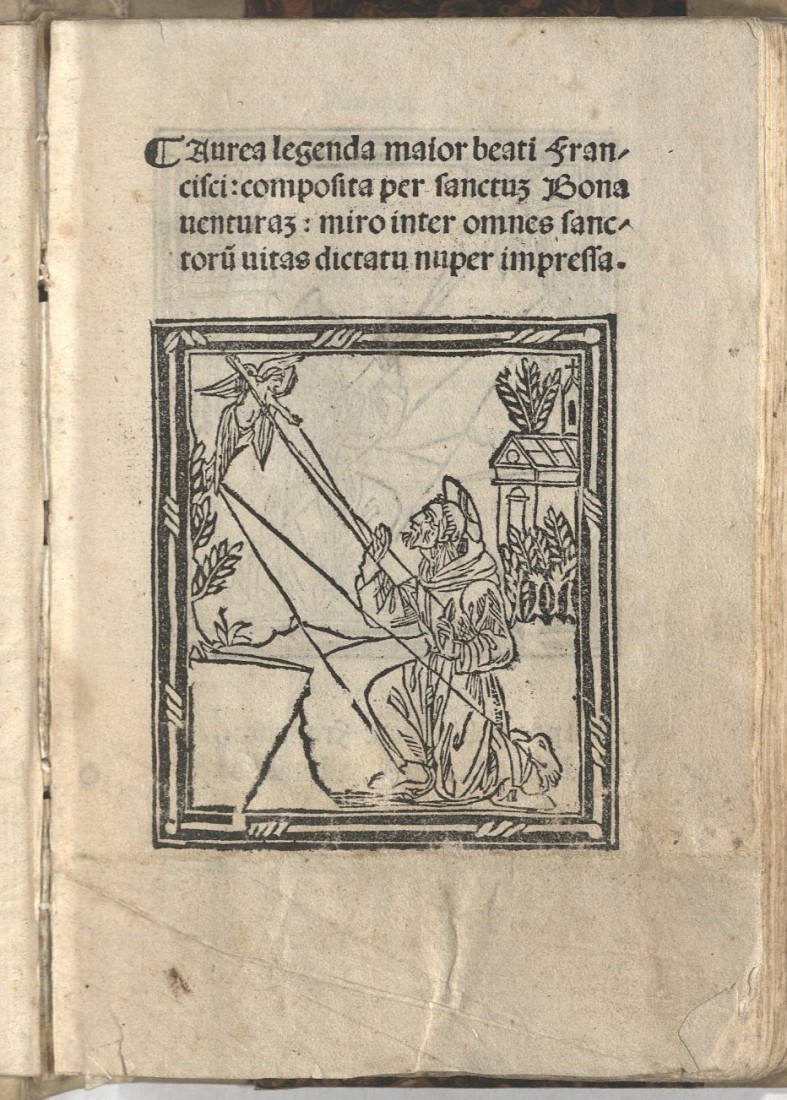
The title page of a 1509 copy of St. Bonaventure‘s biography of St. Francis of Assisi, who is the patron saint of Santa Fe. The city’s name – Spanish for “Holy Faith” – is the shortened form of its original name, La Villa Real de la Santa Fe de San Francisco de Asís (Royal Town of the Holy Faith of Saint Francis of Assisi). The image depicts St. Francis receiving the wounds of Christ. Call Number: Summerfield B584. Click image to enlarge.
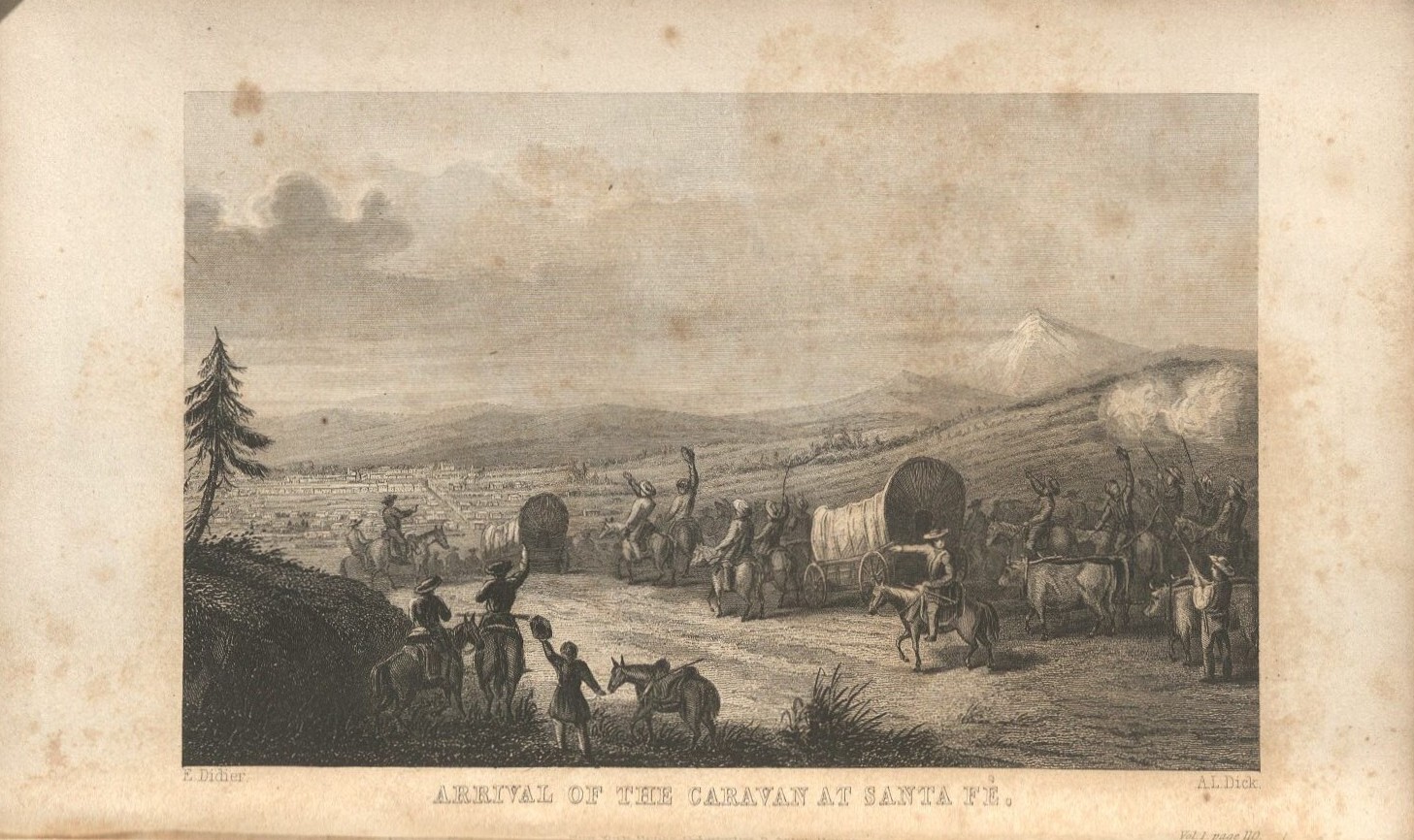
“Arrival of the Caravan at Santa Fe,” the frontispiece illustration in Commerce of the Prairies, or, The Journal of a Santa Fé Trader (Volume 1) by Josiah Gregg, 1844. In this work, Gregg describes his travels along the Santa Fe Trail between 1831 and 1839. Call Number: RH C521. Click image to enlarge.
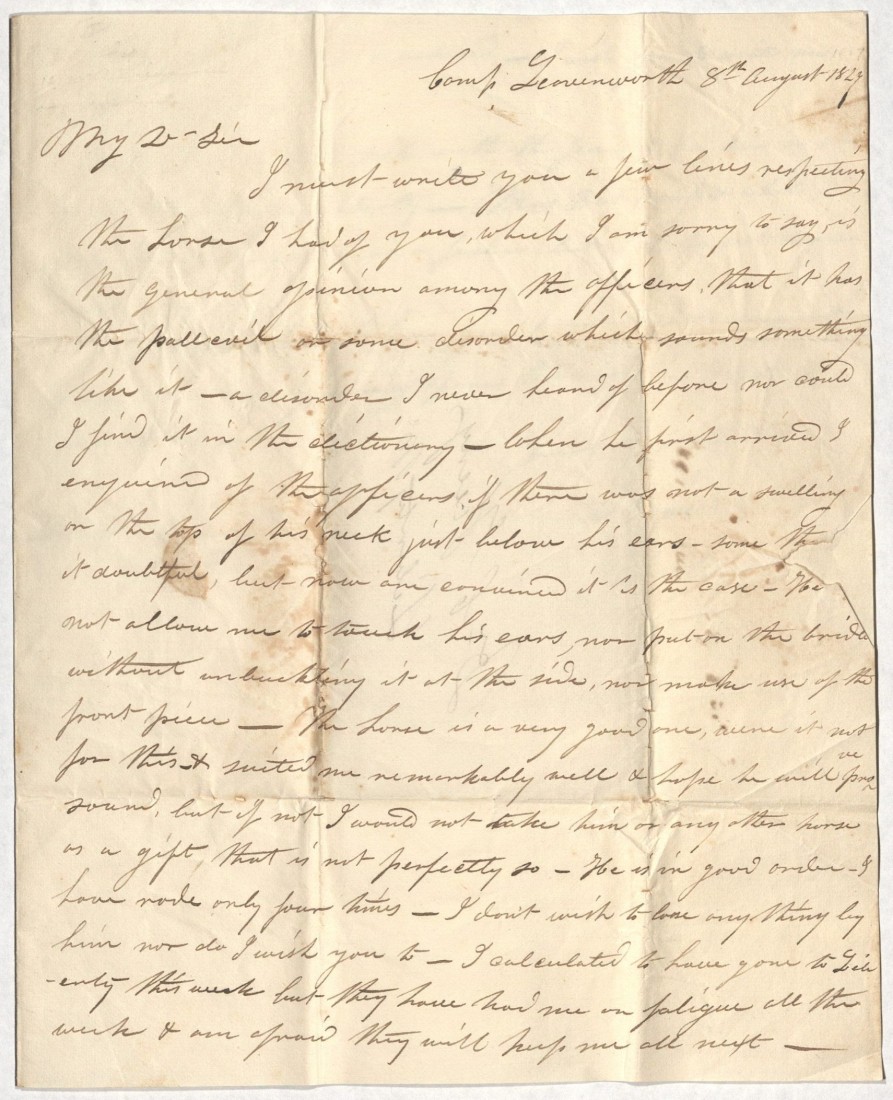
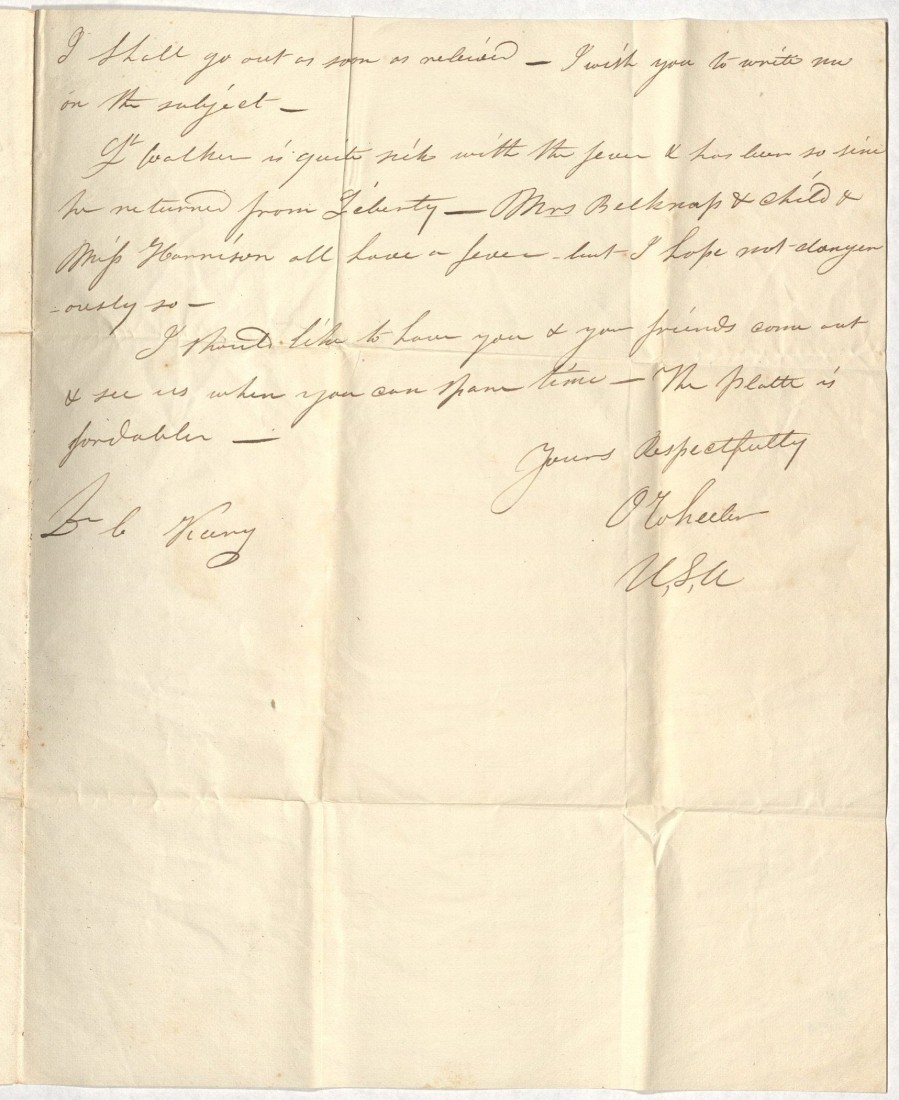
A letter from O. Wheeler, Camp Leavenworth, Kansas, to Dr. C. Keeny, Liberty, Missouri, August 8, 1827. Most of the letter concerns a “disorder” or illness affecting Wheeler’s horse. The U. S. Army established Camp (now Fort) Leavenworth in 1827, the same year this letter was written, to serve as a forward base protecting the Santa Fe Trail. Call Number: RH MS P174.
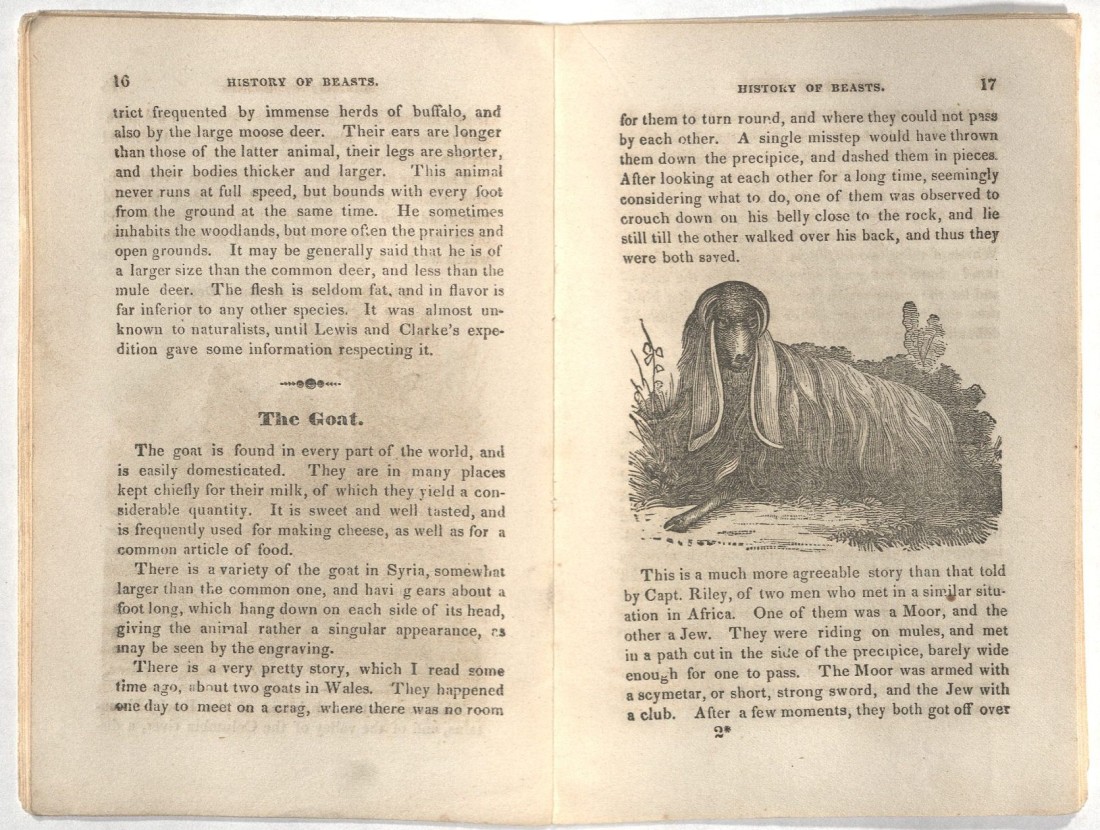
Information and commentary about goats in the children’s book The Natural History of Beasts: Illustrated with Cuts, 1843. The lesson the author draws from the two featured stories is that “surely the goats were wiser than the men – and let the young reader learn from this, that kindness and humanity are better calculated to remove difficulties than pride and obstinacy.” Call Number: Children 504B. Click image to enlarge.
Selected Additional Collection Items
Maps
Regni Mexicani seu Novæ Hispaniæ, Floridæ, Novæ Angliæ, Carolinæ, Virginiæ, et Pennsylvaniæ, nec non insvlarvm archipelagi Mexicani in America septentrionali [The Kingdom of Mexico, or New Spain, Florida, New England, the Carolinas, Virginia, and Pennsylvania, as Well as the Insular Archipelago of Mexico in North America] by Johann Baptist Homann, 1722. Call Number: Orbis Maps 1:60.
A Map of Louisiana and Mexico = Carte de la Louisiane et du Mexique, 1820. Call Number: Orbis Maps 1:134.
Map of the Western Territory of the United States by Lt. Enoch Steen. Coverage includes Indian lands from 80 miles east of Leavenworth to 50 miles west of Pikes Peak and Black Hill to Santa Fe. Call Number: RH Map S31.
A Map of the Indian Territory, Northern Texas and New Mexico: Showing the Great Western Prairies by Josiah Gregg, from Commerce of the Prairies, 1844. Call Number: RH Map Q57.
Mapa de los Estados Unidos de Méjico [Map of the United States of Mexico], 1847. Call Number: Orbis Maps 2:61.
Map of Santa Fe County, New Mexico, 1880s? Shows railroads and pre-European pueblos in and near Santa Fe County. Call Number: RH Map R529.
New Spain and Mexico
Exploratory Travels Through the Western Territories of North America by Zebulon Pike, 1811. During his 1806-1807 expedition to the region south and west of the Louisiana Purchase, Pike ended up in Spanish territory. His party was captured by Spanish soldiers, and their subsequent journey took them through Santa Fe. Call Number: D678.
Memoirs of the Mexican Revolution: Including a Narrative of the Expedition of General Xavier Mina by William Davis Robinson, 1820. Call Number: Howey C4191.
Six Months’ Residence and Travels in Mexico by William Bullock, 1824. Call Number: Ellis Aves C207.
A View of South-America and Mexico, Comprising Their History, the Political Condition, Geography, Agriculture, Commerce, &c. by John M. Niles, 1825. Call Number: B11232.
New Mexico, Santa Fe, and the Santa Fe Trail
The Daily New Mexican newspaper, published in Santa Fe, 1880-1881. Call Number: RH H24.
Santa Fe: Ancient and Modern, Including Its Resources and Industries edited by W.G. Ritch, 1885. Call Number: RH C1375.
Southwest on the Turquoise Trail: The First Diaries on the Road to Santa Fe edited by Archer Butler Hulbert, 1933. Call Number: RH C451.
Historic Santa Fe, Founded About 1525: Oldest Town in the United States: The End of the Old Santa Fe Trail, 1940s? Call Number: RH AK121.
Santa Fe Trail: First Reports, 1825 by Augustus Storrs and Alphonso Wetmore, 1960. Call Number: RH B1126.
Household Matters
Quatro libros de la naturaleza, y virtudes de las plantas, y animales que estan receuidos en el uso de medicina en la Nueua España [Four Books on the Nature and Virtues of Plants and Animals for Medicinal Purposes in New Spain] by Francisco Hernandez, 1615. Call Number: Summerfield B2225.
Mexican recipes, early 1800s. This is a collection of culinary recipes – written in various hands and mostly undated – that appear to be from central and southern Mexico. The collection was previously featured on Spencer’s blog. Call Number: MS 346.
A New Dictionary of the Spanish and English Languages compiled by Henry Neuman, 1823. Call Number: C26852.
El cocinero mexicano, o Coleccion de las mejores recetas para guisar al estilo americano [The Mexican Cook, or Collection of the Best Recipes for Cooking in the American Style], volume 3 only, 1831. This work is one of two cookbooks from 1831 that are considered the first on Mexican cuisine published in Mexico. Call Number: B14945.
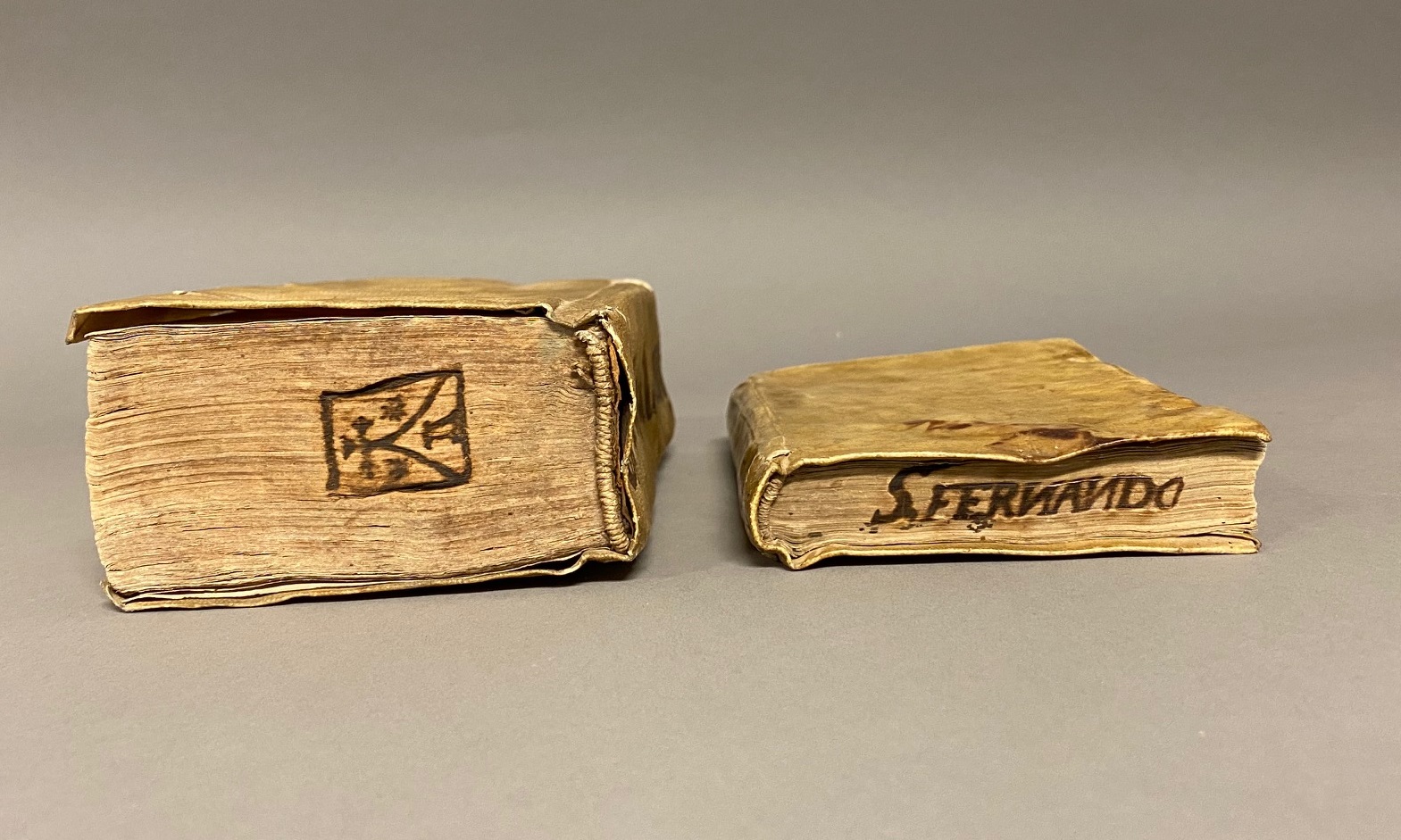
Marcas de fuego on Part 1 (right) and Part 2 (left) of Spencer Research Library’s copies of Advertencias para los confesores de los naturales by Fray Juan Bautista. Mexico: Por M. Ocharte, año 1600 (Parte 1); Excudebat Ludovicus Ocharte Figueroa, 1601 (Parte 2). Call Number #: B620.
Today we share two examples of “marcas de fuego” from Spencer Research Library’s collections. In colonial Mexico, “marcas de fuego” (that is, “marks of fire” or fire brands) identified a book as belonging to a particular religious order or institution. This identifying emblem (or sometimes a set of stylized initials or a name) would be burned into the edge of the text block of a book using a hot metal instrument. The scholars and librarians associated with the Catálogo Colectivo de Marcas de Fuego (Collective catalog of fire brands) date this practice from the second half of the 16th century into the first decades of the 19th century.
The marcas de fuego shown above appear on the top edges of the two parts of Spencer Research Library’s copy of Fray Juan Bautista’s Advertencias para los confesores de los naturales. Printed in Mexico City in 1600 (Parte 1) and 1601 (Parte 2), Bautista’s Advertencias was a manual offering guidance for priests taking the confessions of the indigenous peoples of “New Spain.” Printing came to the Americas in 1539 when Juan Pablos established a printing press in Mexico City. Bautista’s text is included in that first group of editions (roughly 220 in Mexico City and 20 in Lima, Peru) printed in the Americas prior to 1601. These are sometimes known in Spanish as “Incunable Americano,” after the practice of calling books printed in Europe prior to 1501—the “cradle stage” of printing—incunabula.
Interestingly, although Spencer Research Library acquired the two parts of Bautista’s Advertencias together from the California-based bookseller Zeitlin & Ver Brugge, their marcas de fuego suggest that the two separate volumes haven’t always resided together. Using the enormously helpful Catálogo Colectivo de Marcas de Fuego, we’ve been able to identify the fire brand that appears on each of the two volumes.
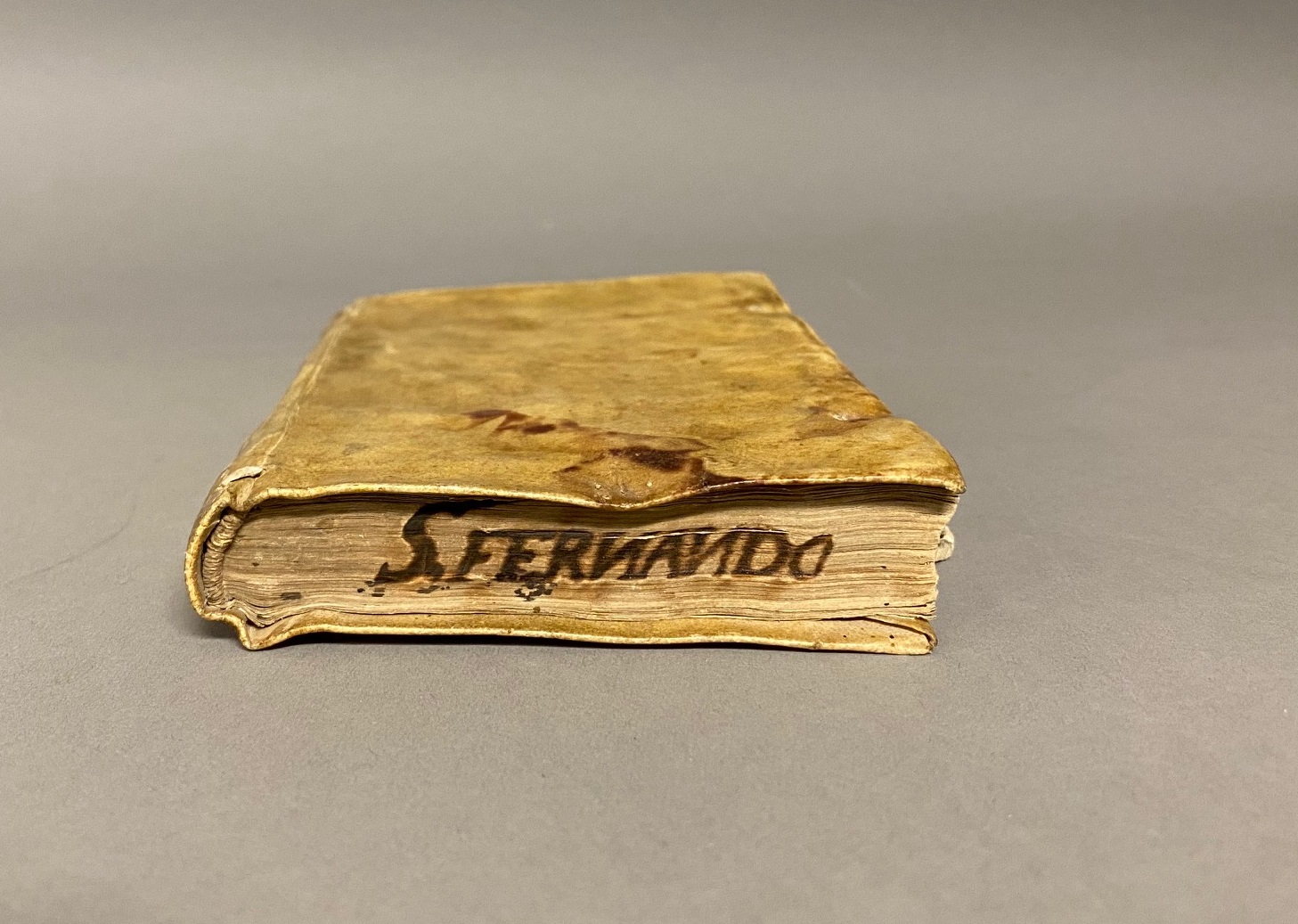
Marca de fuego of the Colegio de San Fernando at the top (head) of the text block of Juan Bautista’s Advertencias para los confesores de los naturales, Parte 1 (1600). Call Number #: B620.
The marca de fuego that appears on “Parte 1” is that of the Colegio de San Fernando in Mexico City (see this entry in the Catálogo Colectivo for comparison). We’ll admit that this marca is among the more self-evident! The Colegio de San Fernando was founded in the 1730s as a Franciscan missionary college or seminary. Since one of its primary purposes was to train priests for conducting missionary work with indigenous peoples, it’s not surprising to see a copy of Bautista’s Advertencias with the marca de fuego of the Colegio de San Fernando.
Marca de fuego of the Convento del Carmen (Atlixco, Puebla) at the top (head) of the text block of Juan Bautista’s Advertencias para los confesores de los naturales, Parte 2 (1601). Call Number #: B620.
The marca de fuego on “Parte 2” appears to be that of the Convento del Carmen in Atlixco, Puebla (see this entry for comparison). The term “Covento” in the Spanish colonial context refers to complex or facility used by a religious order, without the strong connotation of a female order present in the English term “convent.” Founded by the Carmelites, the Convento and the associated church were built the during the first two decades of the 1600s. The marca contains several elements of the Carmelite shield (the cross, the mount, and two of its characteristic three stars), and, as the Catálogo Colectivoentry for the marca notes, the initial “A” at the bottom of the marca might be an abbreviation for Atlixco. The “Convento” was dissolved in the mid 19th century and its belongings sold, but the much of the building structure still stands (with a more modern façade), though it did sustain damage in the 2017 earthquake that hit the region.
The Catálogo Colectivo de Marcas de Fuego is a fascinating resource for researching provenance and the movement of books in colonial Mexico and beyond. In order to encourage you to explore it (and marcas de fuego more generally) we share one final “snapshot” from Spencer’s collections — a photograph that we use on the page of our website that discusses Spencer’s Renaissance and Early Modern Imprints. Unlike the Advertenicas which was printed in Mexico City, the six volume Complutensian Polyglot Bible was printed in Spain under the patronage of Cardinal Francisco Ximenes de Cisneros in 1514-17, as noted in the volume (though actually, 1520/1521). However, at some point in the decades and centuries following its publication, Spencer’s copy travelled to “New Spain” and received its marcas de fuego. Can you identify whose heart-shaped brand this is? Take a look through the Catálogo Colectivo de Marcas de Fuego and then highlight the text in the square brackets to confirm your identification: [Convento de san Agustín (Puebla, Puebla), see for example the variations on the brand BJML-1005.]
Marcas de fuego of [Convento de san Agustín (Puebla, Puebla)] on Spencer Research Library’s copy of Biblia polyglotta. Alcala de Henares: in Complutensi universitate, industria Arnaldi Gulielmi de Brocario, 1514-1517 [i.e., 1520 or 1521]. Call #: Summerfield G41. (Highlight the text in brackets to reveal the source of the brand).
Both parts of Spencer’s copy of Advertencias para los confesores de los naturales by Fray Juan Bautista have been digitized and are available online (Images 1-370 are “Parte 1” and the binding of “Parte 2” begins at Image 371). You’ll also find a digitized copy of Spencer’s other “Mexican Incunable”– the 1571 edition of Alonso de Monlina Vocabulario en lengua Castellana y Mexicana (Call #: D214), a Nahuatl-Spanish dictionary–in our digital collections. To read more about both of these volumes, visit the online version of Spencer’s 2016 exhibition In the Shadow of Cortés: From Veracruz to Mexico City, where Caitlin Klepper discusses them in the section headed “The Colonization of This Land.”
This blog post was originally intended to post in November 2020, but was postponed due to a time-sensitive post. Since then, a colleague at another university, Michael Taylor, has written a fascinating and more detailed post on marcas de fuego for the blog of the Book Club of Washington. Take a read to dive even further into the history and nature of these bibliographic firebrands.

![Marcas de fuego from the Convento de san Agustín (Puebla, Puebla) on Spencer Research Library's copy of Biblia polyglotta. Alcala de Henares: in Complutensi universitate, industria Arnaldi Gulielmi de Brocario, 1514-1517 [i.e. 1520 or 1521]. Call # Summerfield G41.](https://exhibits.lib.ku.edu/files/original/46c9f79ac0226357bb080b0e11e0f47d.jpg)