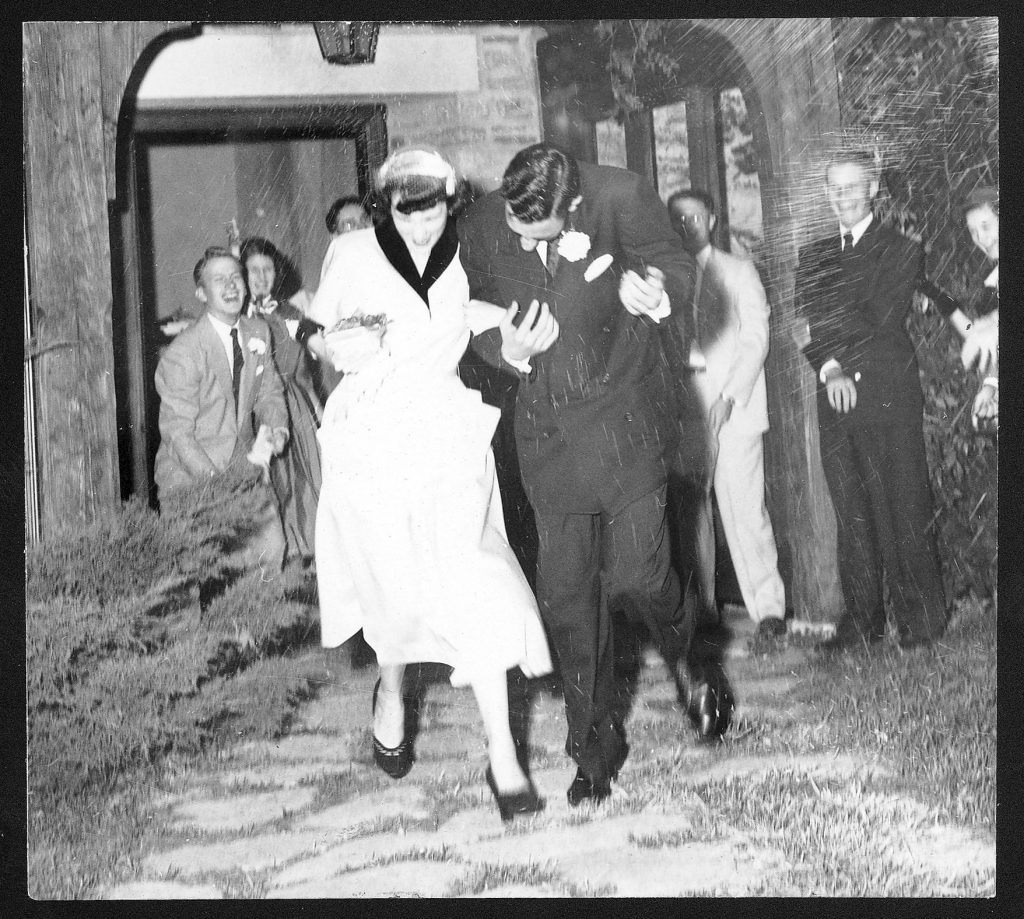
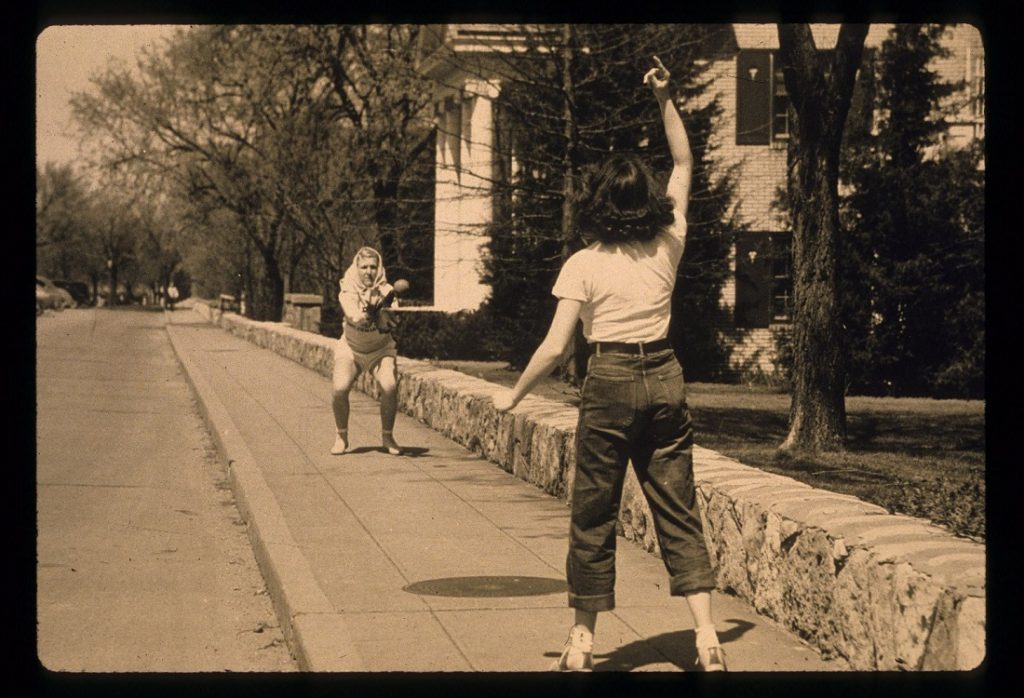
In honor of the centennial of World War I, we’re going to follow the experiences of one American soldier: nineteen-year-old Forrest W. Bassett, whose letters are held in Spencer’s Kansas Collection. Each Monday we’ll post a new entry, which will feature selected letters from Forrest to thirteen-year-old Ava Marie Shaw from that following week, one hundred years after he wrote them.
Forrest W. Bassett was born in Beloit, Wisconsin, on December 21, 1897 to Daniel F. and Ida V. Bassett. On July 20, 1917 he was sworn into military service at Jefferson Barracks near St. Louis, Missouri. Soon after, he was transferred to Fort Leavenworth, Kansas, for training as a radio operator in Company A of the U. S. Signal Corps’ 6th Field Battalion.
Ava Marie Shaw was born in Chicago, Illinois, on October 12, 1903 to Robert and Esther Shaw. Both of Marie’s parents – and her three older siblings – were born in Wisconsin. By 1910 the family was living in Woodstock, Illinois, northwest of Chicago. By 1917 they were in Beloit.
Frequently mentioned in the letters are Forrest’s older half-sister Blanche Treadway (born 1883), who had married Arthur Poquette in 1904, and Marie’s older sister Ethel (born 1896).
This week’s letters focus primarily on Forrest’s examination of his relationship with Marie. “Well I wonder what other folks would think if they read my letters like this one,” he wrote on May 27, 1918. “Other boys don’t write like this I am sure and maybe I am wrong in doing so. Please tell me exactly what you think.” Other highlights from this week’s letters include Forrest waiting to leave Fort Leavenworth (“we are still at Fort Leavenworth but still always expecting to leave the next day”) and advising Marie to become a “true Outdoor Girl” (“a girl should be as much a lover of good active outdoor fun as any boy, but at the same time keep all her girlish ways”).
Click image to enlarge.
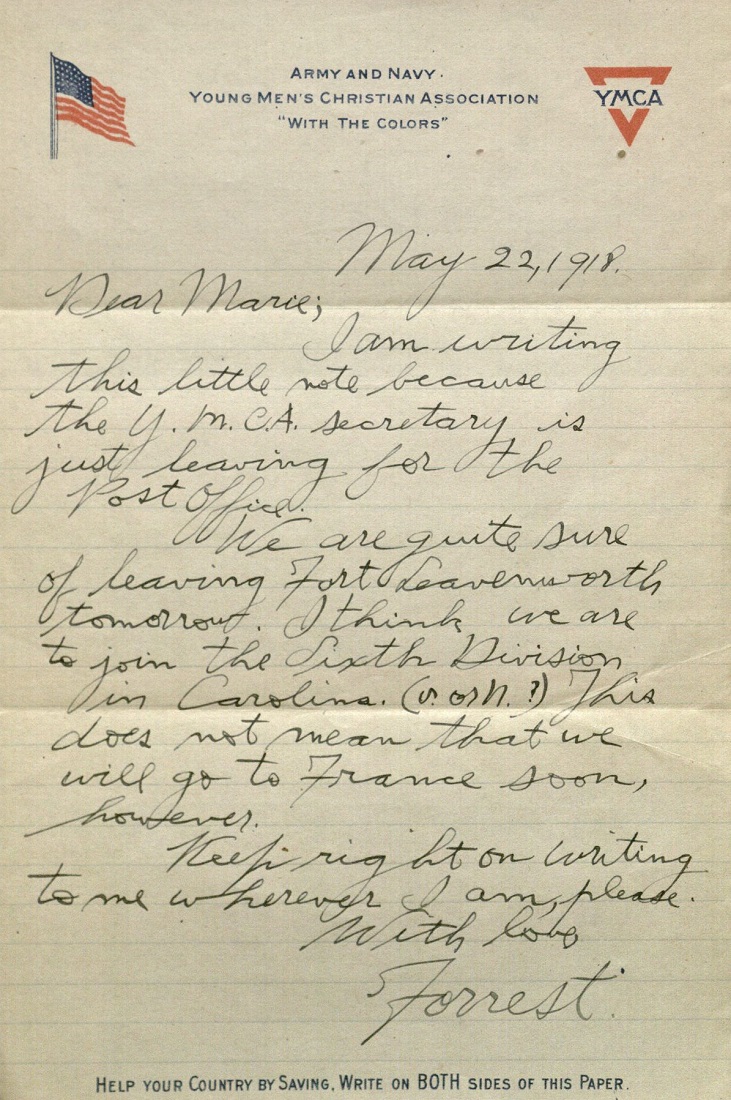
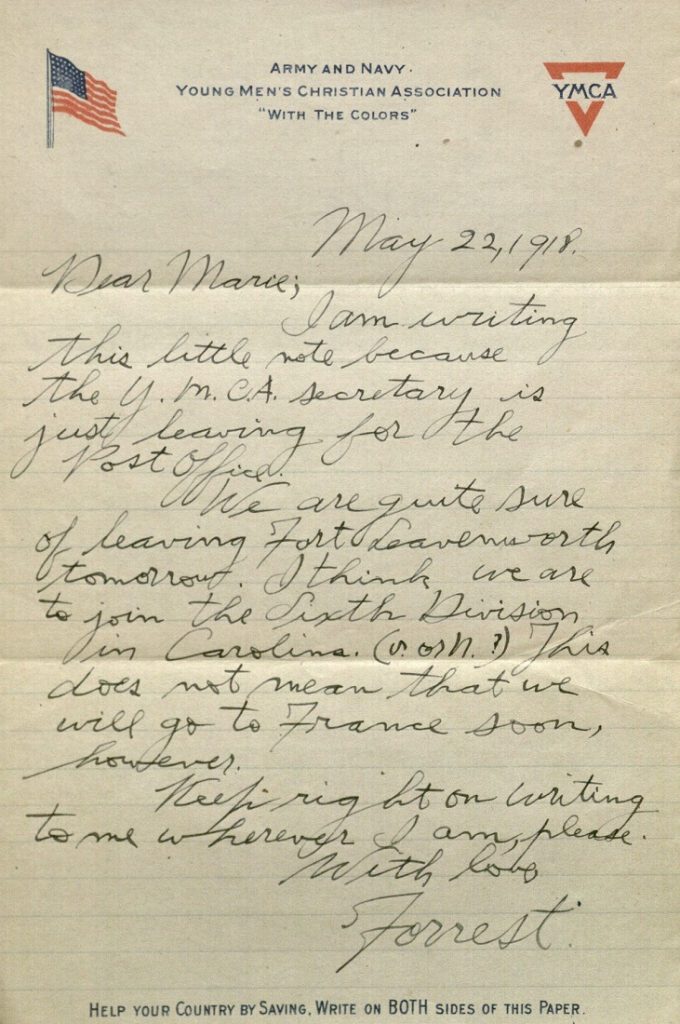
May 22, 1918.
Dear Marie;
I am writing this little note because the Y.M.C.A. secretary is just leaving for the Post Office.
We are quite sure of leaving Fort Leavenworth tomorrow. I think we are to join the Sixth Division in Carolina. (S. or N.?) This does not mean that we will go to France soon, however.
Keep right on writing to me whenever I am, please.
With love,
Forrest.
May 22, 1918.
Dear Marie,
I just finished a little note for you, so it would be mailed right away, so will write my letter now. Did you get all of my letters last week? I think I wrote two and another, typewritten, one about telegraphy. You read my “Morse” letter OK. I just got your letter of the 18th & 19th this noon. Please keep a little note of the dates on your letters and then when you get my letters notice the dates on them and tell me so that I can be sure no letters are lost.
I located Morse’s company Monday night but he wasn’t there so I left a note on his bunk. Last night he came down to the Cantonments but it was after 9:30 P:M. so we had very little time to get acquainted.
Now please do not think I am even the least bit “peeved” because you wrote but once last week. I realize that you have not the time to write as often as I like to hear from you.
Marie, I know you must love me very much as there is not the slightest touch of insincerity in your letters. And I know you too well to misunderstand you, I think. And, Marie I know you do not doubt me in the least, either. It’s simply impossible for me to make you feel how very much I care, and I guess it would be better that you do not know, anyway. You must remember that I have told you that we can never “belong to eachother,” and that we can never be more than good friends. Now Marie you simply must believe this. I would not tell you this if I were not sure of it, for it hurts me and I believe it hurts you, too, in a way. You will remember that I told you that if I were not very sure you would be glad to forget me in a few years, that I would not write another letter. I still say the same. For awhile last year I had hopes of your being “my little girl” some day but I no longer can hope that even if I were free to come back home now. There is no “little message” between the lines of my letters to you – except that I love you to the utmost. However, it is all useless and so I shall never mention my love for you again.
It may be better to “love some one you can’t have, than to have someone you can’t love,” but that isn’t right either way.
Yes, I remember the little incidents you spoke of. The violets down below the pasture and the buried flowers at the “Big Hills.” And I remember the slippers, too. I have the picture of you on the porch rail with the kitten and you look so big and so close, just as if I could just open my arms and hold you close. Marie, some day you will realize how unworthy I am, then you will not care.
Will not you try to be my friend, but at the same time forget your love for me?
I do not want to forget my love for you because it helps me so much in so many ways.
And you also help Mother and Dad so much, and you don’t suspect how much they really love you. In her last letter Mother writes, “Marie has just gone. She is a ray of sunshine just now flashing in and out, with her cheery smile and “Hello, how’s everybody?” ”
It is such a perfect picture of you as I would want you to be always.
I would like to write about Physical Culture but it is “lights out” time now.
Forget all about telegraphy – Please.
Well I must leave you for this time.
Sincerely,
Forrest.
May 26, 1918.
Dear Marie,
We are still at Fort Leavenworth but still always expecting to leave the next day. The trip to Camp Wadsworth will take five days and we are having trouble getting pullman cars.
Your letter of the 23rd came yesterday noon and I was going to answer it last night but I started a letter to Gladys Warren, a sister of a good friend of mine, which was interrupted by Morse, who came down for a visit. He stayed until supper time and I walked up to his barracks with him. Morse is sure a fine fellow and I am sorry he and I did not get acquainted sooner. We talked radio, buzzer, and ground telegraph almost half the afternoon.
Your telegraphic message was O.K. In your last letter you told me to tell you exactly what I wanted you to do, to please me the most so I am going to take that liberty.
Regarding telegraphing I would advise you to drop it entirely. Don’t waste time on a thing of no value to you unless you find real fun in it. My pet weakness during the last five or six years was studying too much, too many different things. Radio and buzzer telegraphy, photography, chemistry and a half a dozen other hobbies all had a hold on me and I spent time studying technical books which I might better have spent otherwise. I don’t want to pat myself on the back too hard but I believe that my understanding of the theory of radio is better than that of the average man in the Company and for photography, the Personnel Officer from Washington told Captain Murphy that I had the best technical knowledge of photography of any of the 80,000 men he had examined. But what have I gained by it? The long hours I spent at home studying these things have paid me back very poorly and I look back at that waste of time with a good healthy feeling of regret: So please let me caution you against studying too much outside of school. Of course photography is a worthwhile hobby which I expect to be of value to me. If you really like telegraphy as a recreation go to it but remember that swimming & outdoor sports of all kinds are absolutely the best and I would say necessary for a normal life.
I am certainly glad that you have the opportunity to learn to ride and sure do hope that you will make the most of it. The drill book gives some interesting dope on riding and the managing of saddle horses. Spend all the time you can outdoors – swimming, hiking, bicycle riding, tennis or anything else.
What wouldn’t I give to be with you this summer. Just when we have learned to understand eachother and love, we are separated. Marie you have my full unselfish love and it urges me to help you to my limit.
You will never understand me, maybe, but my own sisters don’t either.
In your last letter you hoped that my next letter from 7th, would be a “nice” one. Well I don’t know what you thought of the one I wrote last but I simply had to write that way. I told you that I would never mention my love for you again and I mean it.
Do you realize that you are only fifteen (right?) years old and yet we talk of belonging to eachother. Marie I do love you and you only and I believe you love me – more than you should. It is dead wrong for you to think of me as you do. You are shutting yourself from other boys and that is one thing I am dead against. Of course I realize that you are too young to be going to theatres, etc., a great deal with boys – but anyway it’s your thoughts.
Judging from your letters this Spring, I have put the idea in your mind that I am a little better in some ways than the next fellow – and then the more I said in the opposite, the more you believed it. Forget it.
Well I will put it to you this way – You were only fourteen years old last year I think. We became acquainted and were together a great deal and I am sure that I learned your ways, your character and your whole self as well or better than my own sister. And even though you were, and are, so young, I learned to love you as I have never loved anyone else – and it’s the purest and most unselfish love anyone can give. The greatest thing I could look forward to would be to make you my own, and I feel positive that I never will marry unless it is you. For I never could be satisfied with anyone else after caring as I do for you.
Now you must feel that I am in earnest and sincere in what I am writing.
But I want you to know that I am almost sure that I never will marry – the war not being considered at all, yet I wish and hope that we can remain what we are to eachother, until you are – say – well along in High School. Please tell me exactly what you think and be equally frank and honest with me.
I do love you, Marie, and I do want you to love me, too, but please have other good friends among boys. It must seem queer to you to read this, but there are a great many things to think of and I want us to avoid any mistakes.
With love,
Forrest.
Click images to enlarge.
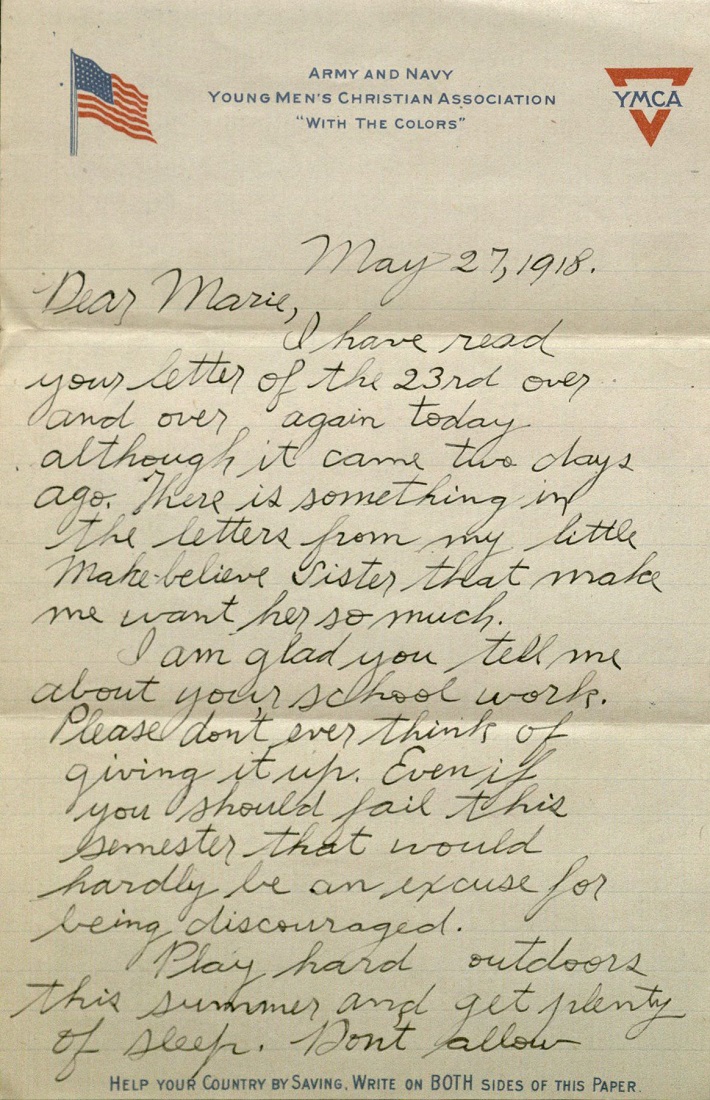
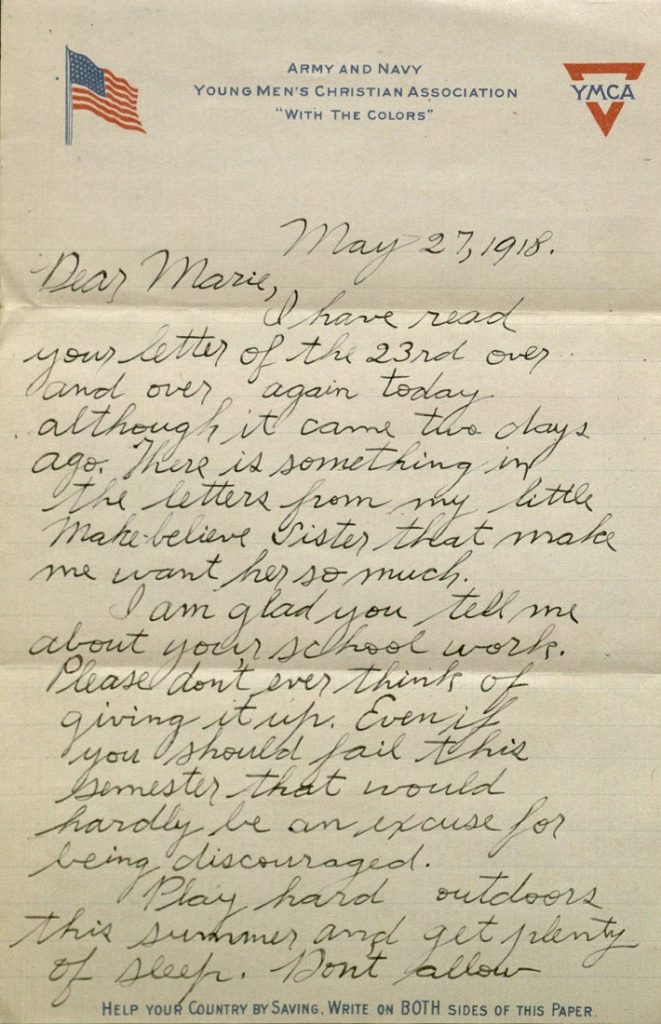
May 27, 1918.
Dear Marie,
I have read your letter of the 23rd over and over again today although it came two days ago. There is something in the letters from my little Make believe Sister that make me want her so much.
I am glad you tell me about your school work. Please don’t ever think of giving it up. Even if you should fail this semester that would hardly be an excuse for being discouraged.
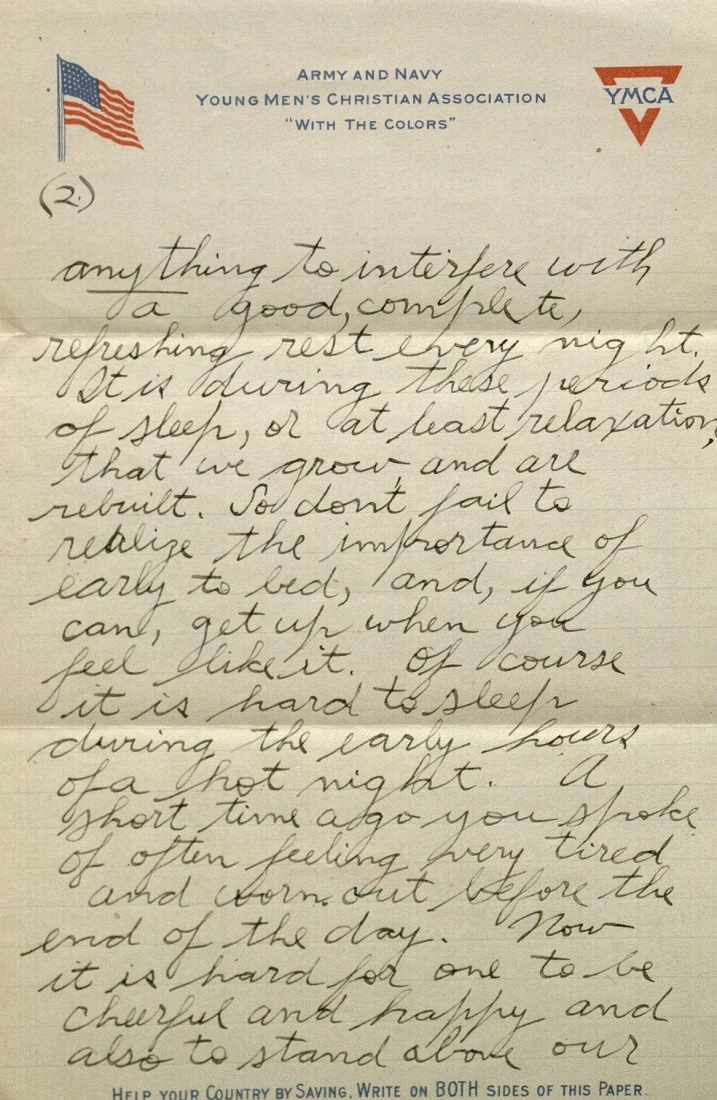
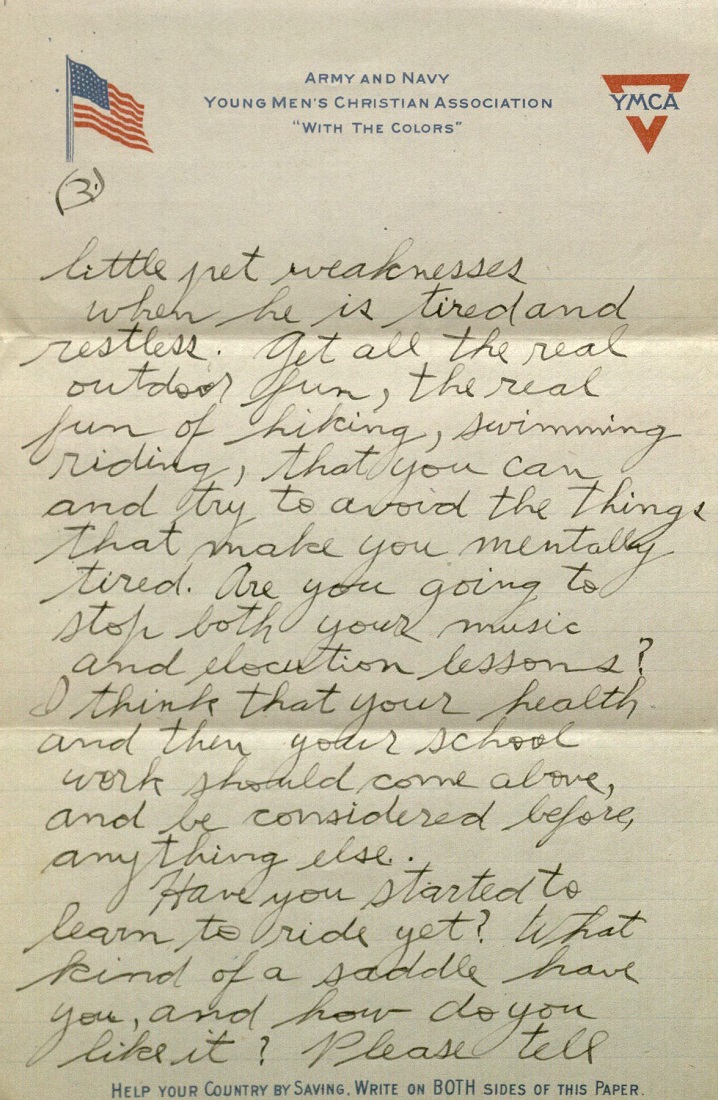
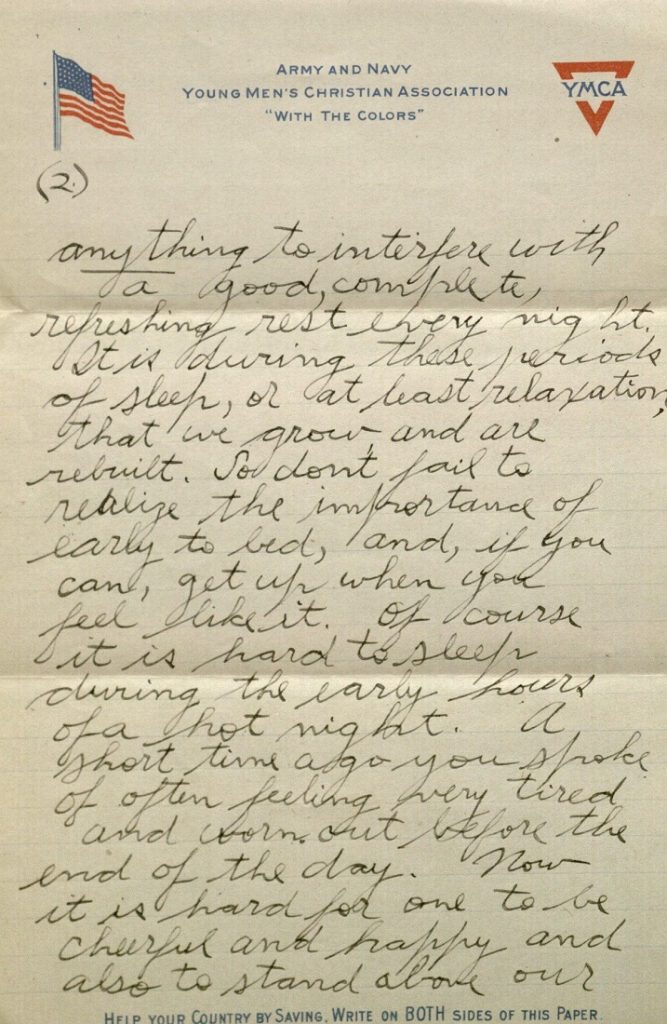
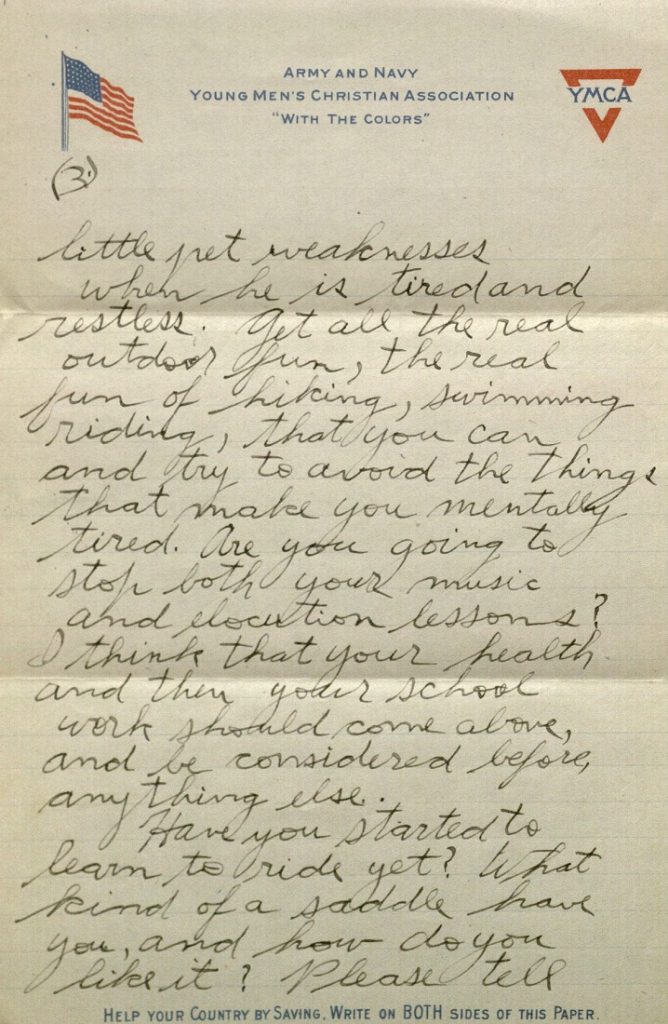
Play hard outdoors this summer and get plenty of sleep. Don’t allow anything to interfere with a good, complete, refreshing rest every night. It is during these periods of sleep, or at least relaxation, that we grow and are rebuilt. So don’t fail to realize the importance of early to be, and, if you can, get up when you feel like it. Of course it is hard to sleep during the early hours of a hot night. A short time ago you spoke of often feeling very tired and worn out before the end of the day. Now it is hard for one to be cheerful and happy and also to stand above our little pet weaknesses when he is tired and restless. Get all the real outdoor fun, the real fun of hiking, swimming[,] riding, that you can and try to avoid the things that make you mentally tired. Are you going to stop both your music and elocution lessons? I think that your health and then your school work should come above, and be considered before, anything else.
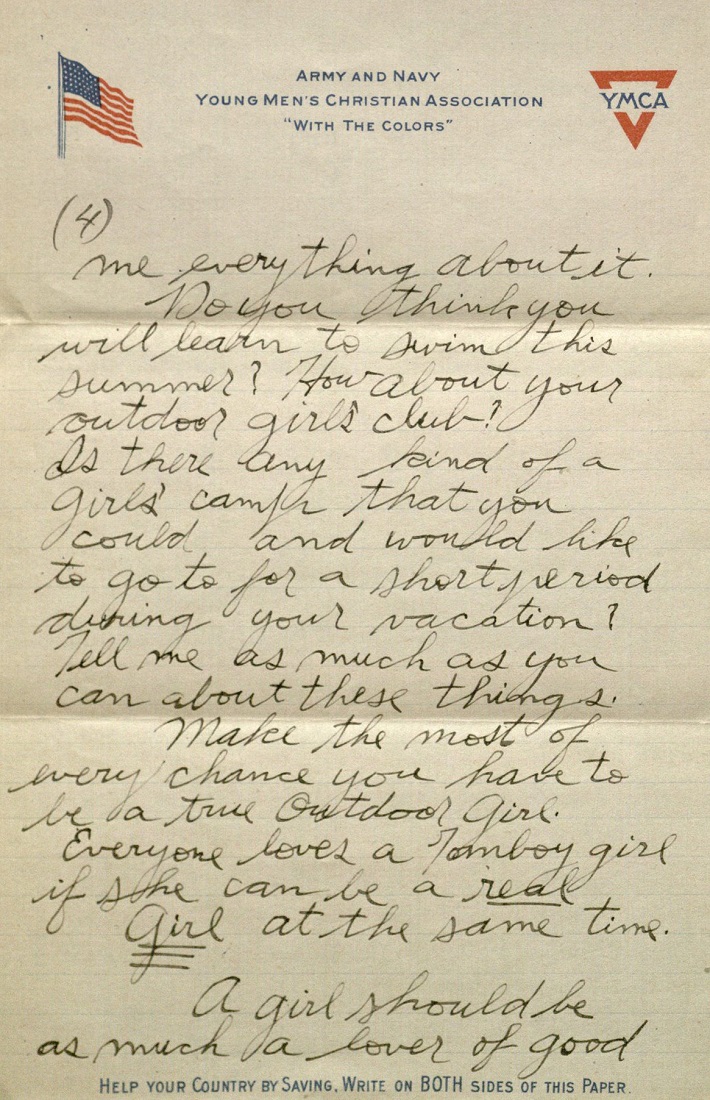
Have you started to learn to ride yet? What kind of a saddle have you, and how do you like it? Please tell me everything about it.
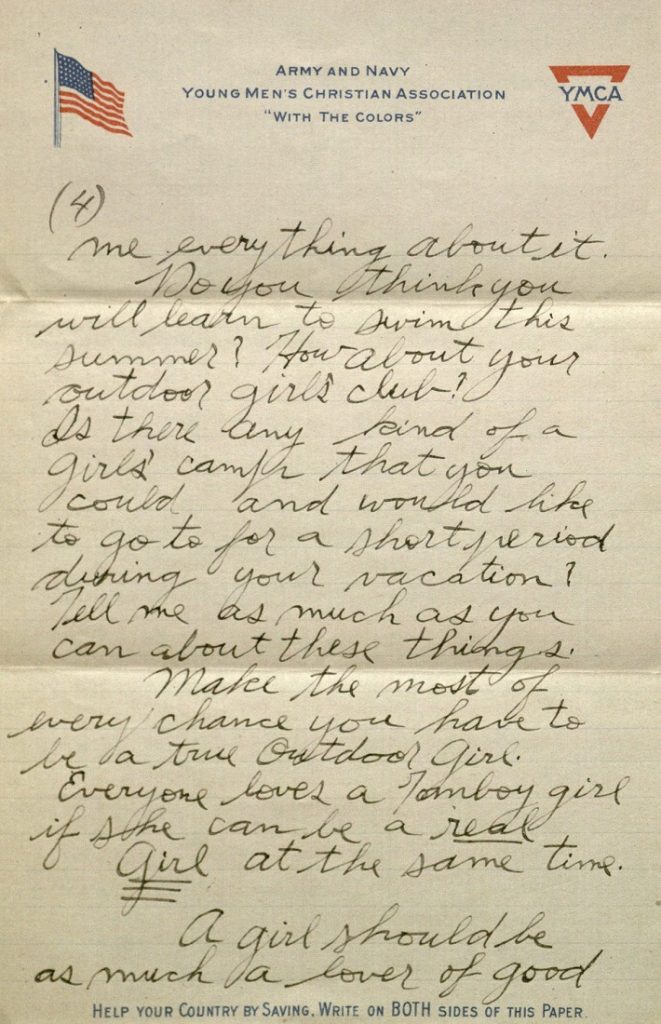
Do you think you will learn to swim this summer? How about your outdoor girls’ club? Is there any kind of a girls’ camp that you could and would like to go to for a short period during your vacation? Tell me as much as you can about these things.
Make the most of every chance you have to be a true Outdoor Girl. Everyone loves a Tomboy girl if she can be a real Girl at the same time.
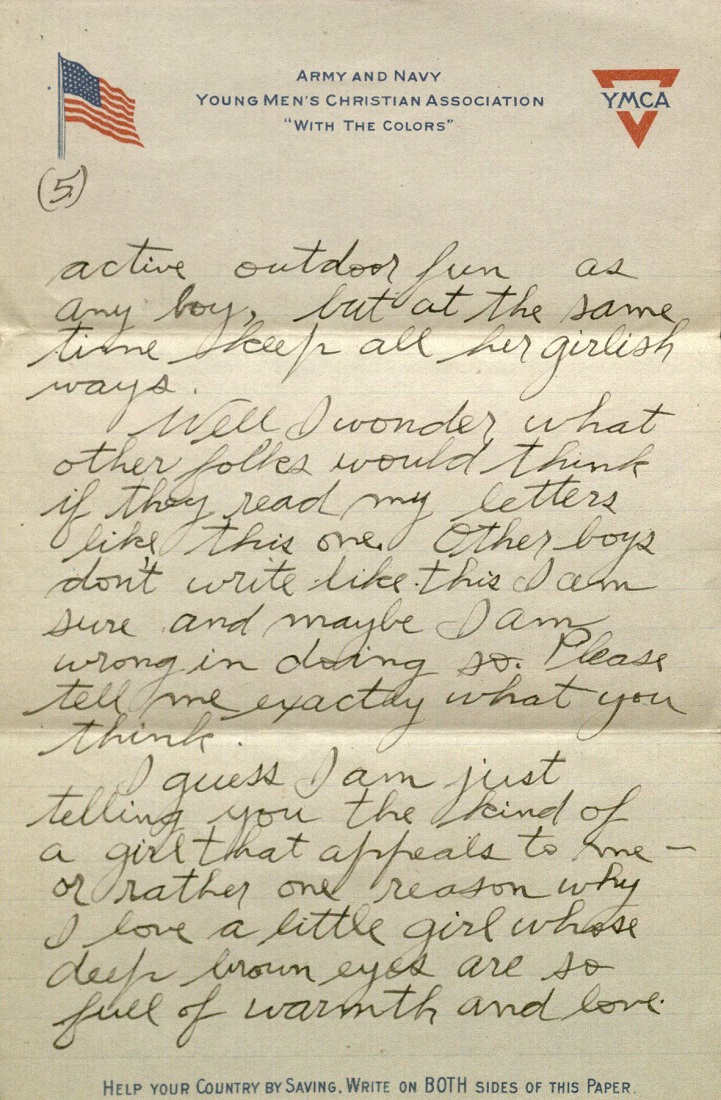
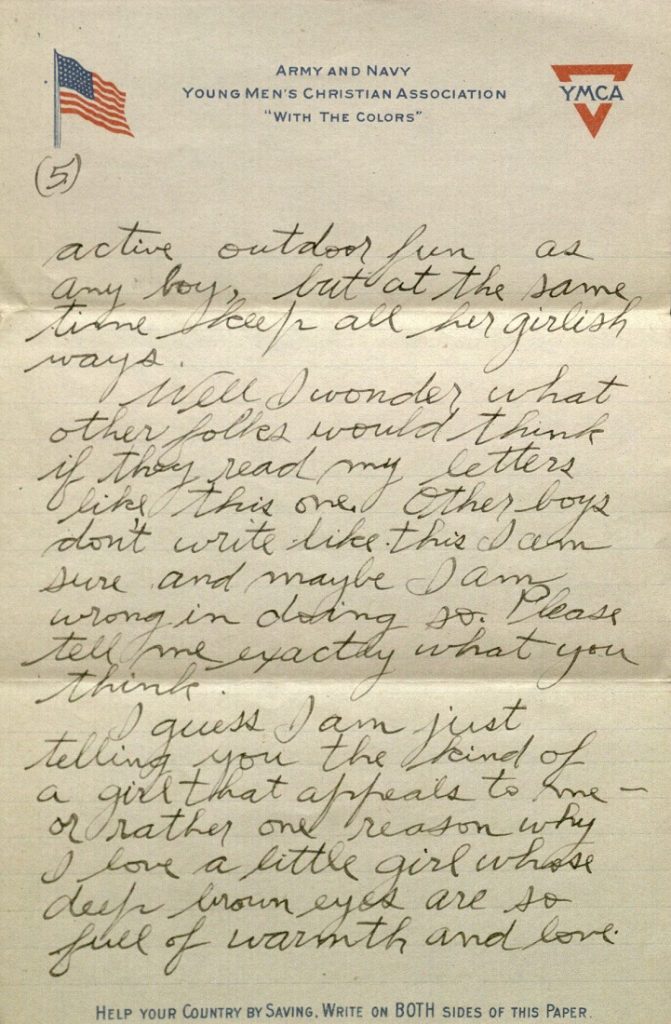
A girl should be as much a lover of good active outdoor fun as any boy, but at the same time keep all her girlish ways.
Well I wonder what other folks would think if they read my letters like this one. Other boys don’t write like this I am sure and maybe I am wrong in doing so. Please tell me exactly what you think.
I guess I am just telling you the kind of a girl that appeals to me – or rather one reason why I love a little girl whose deep brown eyes are so full of warmth and love.
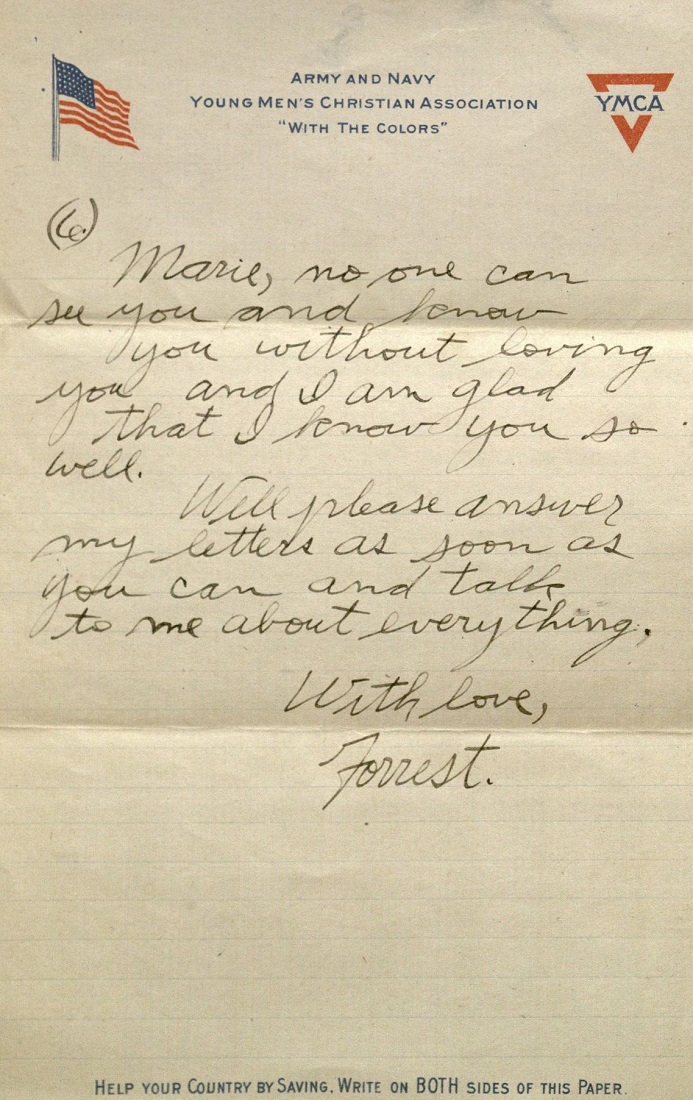
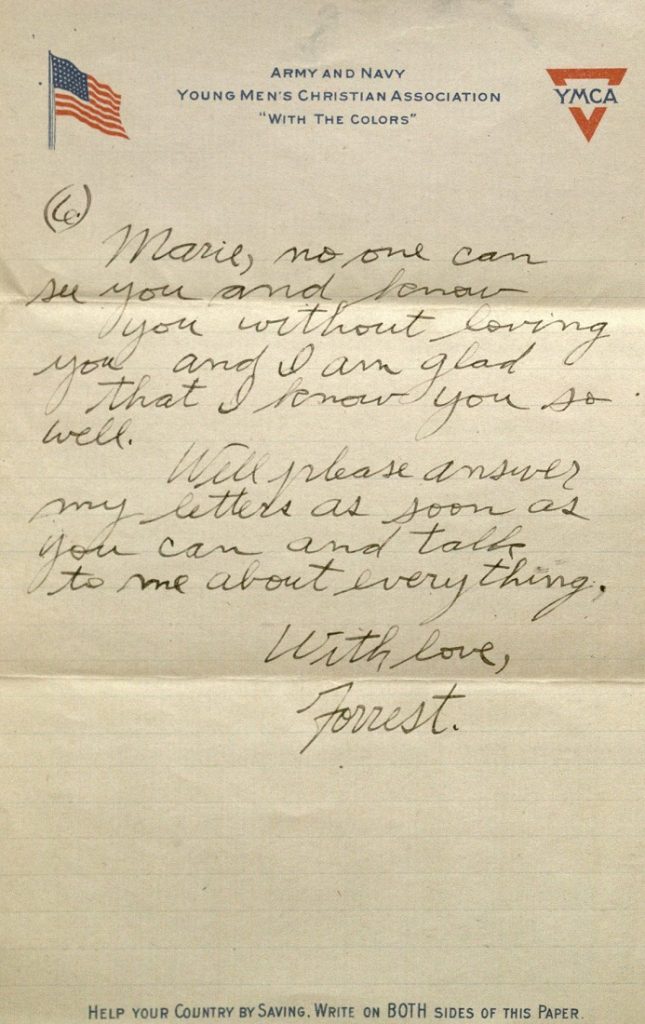
Marie, no one can see you and know you without loving you and I am glad that I know you so well.
Well please answer my letters as soon as you can and talk to me about everything.
With love,
Forrest.
Meredith Huff
Public Services
Emma Piazza
Public Services Student Assistant