The University of Kansas

Inside Spencer: The KSRL Blog

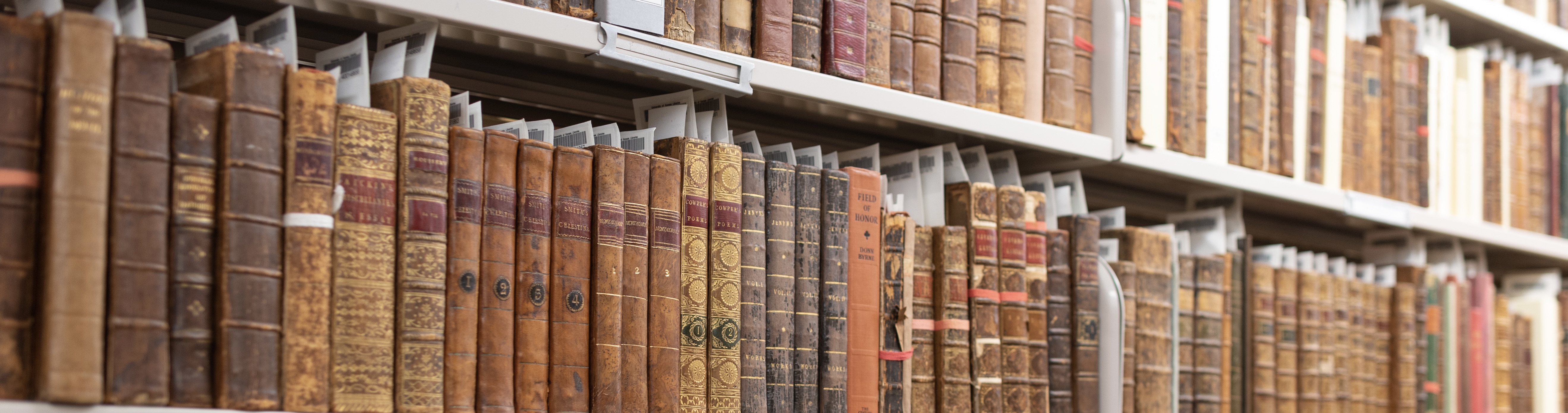
Books on a shelf

Welcome to the Kenneth Spencer Research Library blog! As the special collections and archives library at the University of Kansas, Spencer is home to remarkable and diverse collections of rare and unique items. Explore the blog to learn about the work we do and the materials we collect.

Robert E. Hemenway, August 1941- July 2015

August 10th, 2015

Chosen as the 16th Chancellor of the University of Kansas in 1995, Robert Hemenway passed away July 31 at the age of 73. During his years as Chancellor he focused on the improvement of the student experience, the achievement of a National Cancer Institute designation for the KU Cancer Center, and setting record-high fundraising levels that benefited both the University and the state of Kansas. Upon retirement in 2009, his legacy was honored by the establishment of the Dole Institute Robert Hemenway Award for Outstanding Public Service, and by the naming of the Robert E. Hemenway Life Sciences Innovation Center, a research facility on the KU Medical Center campus.

Chancellor Hemenway reading a story at Mayfest, Potter Lake, 1998

Chancellor Hemenway reading a story at Mayfest, Potter Lake, 1998.
Photograph by KU University Relations. University Archives Photos.
Call Number: RG 2/19 1998 Prints: Chancellors: Hemenway (Photos).
Click image to enlarge.

Zach Hemenway recalled his father’s passion for education saying, “He really instilled that in all of us—the value of learning and being curious and challenging yourself.” That passion made Hemenway a beloved Chancellor and colleague. Current Chancellor Bernadette Gray-Little issued a heartfelt message about the Chancellor who always preferred to be called “Bob.”

Throughout his tenure Chancellor Hemenway taught English and American Studies courses. Here he is shown as a guest speaker in “Feminist Theory in Anthropology.” Photograph by KU University Relations. University Archives Photos. Call Number: RG 2/19 2001 Prints: Chancellors: Hemenway (Photos).

Throughout his tenure Chancellor Hemenway taught English and American Studies courses.
He is pictured as a guest speaker in “Feminist Theory in Anthropology.”
Photograph by KU University Relations. University Archives Photos.
Call Number: RG 2/19 2001 Prints: Chancellors: Hemenway (Photos).
Click image to enlarge.

You can learn much more about Chancellor Hemenway at Spencer Research Library. As the repository of the University’s official documents, University Archives houses the papers and correspondence of all KU chancellors. Please note that the records of the sitting chancellor as well as the preceding chancellor require permission from the Office of the Chancellor for access. Spencer is also home to Dr. Hemenway’s personal papers, which include administrative documents from previous posts at the University of Kentucky, the University of Wyoming, and the University of Oklahoma; research, teaching materials, and course notes on American literature, particularly African American literature; research related to his literary biography of Zora Neale Hurston, and his dissertation on Charles Brockden Brown.

JoJo Palko
KU 150 Research Archivist
University Archives

The Streetcar of Old K.U.

July 6th, 2015

Streetcars once scaled Mt. Oread. From 1910 until 1933 the electric streetcar carried students and faculty up, across, and down the campus. The date of the first complete trip was May 26, 1910, when the Kansan reported, “The first car to complete the circuit on the Tennessee-Mississippi line carried a party of citizens and newspaper people over the Hill this afternoon.” There are reports of earlier trips on April, 9, 10, or 19, but these trips were most likely not a complete trip like that of May 26th.

Streetcar on KU Campus, Mississippi St. looking north  Streetcar on Mississippi St., Lawrence

Left: Front of a streetcar on Mississippi St. looking north. Right: Streetcar line up Mississippi Street. Call number 0/24/1/Streetcars.
From KU Luna image collections.

At the height of streetcar popularity, there were three service routes. Known as the KU Loop, the run started at 8th and Massachusetts, ran west to Mississippi St., then south to McCook Field (near present-day Memorial Stadium). There was a single track from McCook Field to the top of the hill, and a double track switch near the old Robinson Gymnasium. The cars came down by the same route, running on a single track. Two cars on this line provided service to KU every 15 minutes.

1993 KU Campus Map

A 1933 campus map created by F.A. Russell for the 25th Anniversary Reunion of the Class of 1908.  The streetcar line is shown running from north to south along Mississippi St.
Call number 0/24/Campus Map/1933.

Students exiting streetcar, KU Campus

Students exiting and entering a streetcar. Call number 0/24/1/Streetcars/1925.
From KU Luna image collections.

With the advent and popularity of buses in the 1930s, the streetcar system was no longer in use by 1933. The streetcar then entered into popular university lore, with stories of mischief and adventure told by those who got to experience a unique part of campus history.

Streetcar in front of Strong Hall, KU Campus. 0.24.1_streetcars_1925_0002

Streetcar in front of Strong Hall after it crossed over Jayhawk Boulevard in 1925. Call number 0/24/1/Streetcars/1925.
From KU Luna image collections.

Just recently some pieces of that history were uncovered when construction began on Phase 2 of the Jayhawk Boulevard reconstruction in the summer of 2014. Sections of the track were found and a few pieces are now housed in the University Archives, with a large piece of the track on display in the Kansas Union.

KU streetcar token   KU streetcar nails

Left: KU streetcar token. Right: KU streetcar nail spikes found in 2014.

KU Streetcar rail fragment view 2    KU streetcar rail fragment view 1

Two views of a KU streetcar rail fragment uncovered in 2014.

JoJo Palko
KU Sesquicentennial Research Assistant
University Archives

Yearbook in a Box: The 1971 Jayhawker

June 22nd, 2015

Unique, playful, interactive” are words that describe the 1971 Jayhawker. Packaged in a blue box, the yearbook stands out amongst those that came before and after.

1971 Jayhawker box

Box housing the parts of the 1971 Jayhawker yearbook

Inside, however, are the usual contents to any Jayhawker yearbook: sections on athletics, the seniors, Greek life, administration, hot topics, and more. But the way in which they were presented was unusual, satirical, and perhaps a commentary on the year that was by the Jayhawker staff. For example, the section on Greek life was titled “Agricultural Almanac of Flowering Plants in Eastern Kansas.”

Another part included an interactive “Love Sun” mobile. To see what this Love Sun mobile actually looked like, I put one together for the University Archives. Below are pictures from this endeavor, with the completed Love Sun hanging in the University Archives in front of the yearbook collection.


Constructing Love Sun card mobile from 1971 Jayhawker yearbook  Step 2_1971 yearbook

Left: Instructions for making the Love Sun mobile. Right: The six cards that form the mobile.

Step 3_1971 yearbook  Constructing Love Sun card mobile from 1971 Jayhawker yearbook

Right and left: Constructing the Love Sun mobile.

Constructing Love Sun card mobile from 1971 Jayhawker yearbook

Completed Love Sun mobile hanging in the University Archives.


JoJo Palko
KU Sesquicentennial Research Assistant
University Archives

Celebrating National Running Day with Jim Ryun

June 1st, 2015

In honor of National Running Day on June 3rd, we’re highlighting our collection of one of KU’s most talented and famous milers, Jim Ryun. Starting his career at Wichita East High School, where he became the first high school student to run a mile in under four minutes, Ryun continued to break records at the University of Kansas. Not only did he set a new world record while running for KU in 1966 with a 3:51.3 minute mile, but he also won a silver medal at the Mexico City Olympic Games in 1968. To learn more about Ryun’s extraordinary life and running career, check out “Ryun’s Run” by KU History’s Mark D. Hersey.

Jim Ryun running for Wichita East High School

Ryun running at Wichita East High School, where he became the first high school student to run a mile in under four minutes. University Archives Photos. Call Number: RG 66/19 Ryun, Jim Prints: Athletics: Track and Field (Photos). Click image to enlarge.


KU’s Alumni Magazine feature on Jim Ryun

A portion of an article from KU’s Alumni Magazine reporting on Ryun’s mile time that broke the world record in 1966. University Archives. Call Number: Biographical/Morgue File Jim Ryun. Click image to enlarge.


Notes on Jim Ryun, 1967

This document, created by Jay Simon, the Sports Information Director at KU in 1967, lists Ryun’s mile times that were under four minutes. University Archives. Call Number: Biographical/Morgue File Jim Ryun. Click image to enlarge.


Jim Ryun and Campanille

Ryun in his KU track uniform with the Campanile in the background, circa 1967. University Archives Photos. Call Number: RG 66/19 Ryun, Jim Prints: Athletics: Track and Field (Photos). Click image to enlarge.


Jim Ryun signing autographs

Ryun signing autographs at the 1969 Kansas Relays. University Archives Photos. Call Number: RG 66/19 Ryun, Jim Prints: Athletics: Track and Field (Photos). Click image to enlarge.


Jim Ryun at Kansas Relays

Ryun running in the Kansas Relays in 1987. University Archives Photos. Call Number: RG 66/19 Ryun, Jim Prints: Athletics: Track and Field (Photos). Click image to enlarge.


Mindy Babarskis
Spencer Research Library Public Services

Smoke and Fire: Political and Civil Unrest at the University

May 5th, 2015

By 1969 American society was increasingly uncivil and the University of Kansas was facing a crisis. The struggle for civil rights and racial equality continued, but was joined by a radicalized white youth. They did not believe that American involvement in the Vietnam War was justifiable and had no interest in being drafted. Tension would remain high throughout the year, culminating in the so-called “Days of Rage” that included racial conflicts, student protests, bomb threats, arson, and sniper fire. This second and final part in a series about two of the most tumultuous years for the University outlines the events from May 1969 to May 1970.

May 9, 1969: Protest Cancels ROTC Review

The annual Chancellor’s ROTC Review was cancelled when 200 protesters broke down the gate into Memorial Stadium. They began by reading the names of the 33,379 servicemen and women killed in Vietnam to date and then joined together on the field and started a sit-in, chanting and waving signs against the ROTC. Chancellor W. Clarke Wescoe decided the review could not be accomplished in such circumstances and wanted to avoid violence from the agitated crowd. The protest was organized by KU Students for a Democratic Society (SDS). Afterward, 33 of 71 identified protestors were suspended for one semester by KU in confidential hearings. The event left Wescoe visibly drained and worried about what lay ahead; his fears would not be unfounded.

Photograph of ROTC demonstration in front of Strong Hall, May 1969

The group of protestors rallies in front of Strong Hall before their disruption
of the ROTC Review, May 1969. University Archives Photos.
Call Number: RG 71/18 1969: Student Activities: Student Protests (Photos).
Click image to enlarge (redirect to Spencer’s digital collections).

Photograph of a ROTC demonstration, May 9, 1969

Protestors during the ROTC Review at Memorial Stadium, May 9, 1969.
ROTC members stand on the track in the background. University Archives Photos.
Call Number: RG 71/18 1969: Student Activities: Student Protests (Photos).
Click image to enlarge (redirect to Spencer’s digital collections).

October 15, 1969: National Vietnam Moratorium Day

More than 3,500 KU students, faculty, and locals paraded on Memorial Drive and Jayhawk Boulevard in protest of the Vietnam War. Later, about 150 people gathered in front of Strong Hall in a silent vigil held behind rows of white crosses. The day also included four KU professors making their case against the war inside Hoch Auditorium, attended by 3,000 students. Similar rallies and gatherings were happening all over the country, pressuring President Nixon to change policy in the Vietnam War.

Photograph of protestors lined up behind white crosses, October 15, 1969

Protestors lined up behind white crosses on the lawn of Strong Hall on
National Vietnam Moratorium Day, October 15, 1969. University Archives Photos.
Call Number: RG 71/18 1969: Student Activities: Student Protests (Photos).
Click images to enlarge (redirect to Spencer’s digital collections).

Photograph of two men silently protesting on campus, October 15, 1969

Two men silently protesting on campus,
National Vietnam Moratorium Day, October 15, 1969.
University Archives Photos. Call Number: RG 71/18 1969:
Student Activities: Student Protests (Photos).
Click image to enlarge (redirect to Spencer’s digital collections).

February 23, 1970: University Daily Kansan dumped into Potter Lake

In retaliation for the University printers’ decision to no longer print the Black Student Union’s (BSU) Harambee, the group gathered 6,000 copies of the UDK and tossed them into Potter Lake on campus. Harambee celebrated black culture and encouraged black solidarity. It ran information for a scholarship program established by BSU but also included Black Power Movement ideology, like the need for oppressed people to arm themselves to achieve freedom. The reaction from some white groups deemed the material obscene and inflammatory, leading to the printers’ decision to discontinue its service.

Photograph of men pulling copies of the University Daily Kansan out of Potter Pond, February 23, 1970

Photograph of men pulling copies of the University Daily Kansan out of Potter Pond, February 23, 1970

Black Student Union Protest, men pulling copies of the University Daily Kansan
out of Potter Pond, February 23, 1970. University Archives Photos.
Call Number: RG 71/18 1970: Student Activities: Student Protests (Photos).
Click image to enlarge (redirect to Spencer’s digital collections).

February 26, 1970: Black Student Union Protest

The BSU presented a list of demands calling for more black faculty members and students and the creation of a black studies program. The timetable for the demands was deemed unrealistic by Chancellor Chalmers, but an African Studies program would be created later in the year.

April 20, 1970: Arson Fire at Memorial Union

The culminating act in a day of mayhem and a week of civil disorder on the KU campus, a period often referred to as the “Days of Rage,” was the April 20, 1970, fire at the Kansas Union. Eventually deemed arson, the fire caused nearly a million dollars in damage and took place against the backdrop of a nation in turmoil over the Vietnam War and racial unrest in a college town considered a “hot bed” of political activism and protest.

Photograph of the Memorial Union fire, 1970

Memorial Union fire, 1970. University Archives Photos.
Call Number: RG 0/22/54/f 1970: Campus Buildings: Memorial Union (Photos).
Click image to enlarge (redirect to Spencer’s digital collections).

Photograph of the Memorial Union fire, exterior damage, 1970

Memorial Union fire, exterior damage, 1970. University Archives Photos.
Call Number: RG 0/22/54/f 1970: Campus Buildings: Memorial Union (Photos).
Click image to enlarge (redirect to Spencer’s digital collections).

Photograph of Memorial Union fire, interior damage, 1970

Memorial Union fire, interior damage, 1970. University Archives Photos.
Call Number: RG 0/22/54/i 1970: Campus Buildings: Memorial Union (Photos).
Click image to enlarge (redirect to Spencer’s digital collections).

May 5-8, 1970

The month of May witnessed the greatest display of campus dissent and disorder. As the end of the 1970 school year approached, KU protesters urged fellow students to go on strike. After the US invasion of Cambodia and four student deaths at Kent State, the campus was on high alert.

May 5: A coffin-bearing crowd of 500 marches against the U.S. invasion of Cambodia and the Kent State massacre.

May 6: ROTC Review was cancelled for the second straight year as a crowd of 1,000 rallies against the group on campus. About 200 re-grouped and damaged the Military Science Building on campus.

Photograph of the Military Science Building, damage from student protests, May 7, 1970

Military Science Building, damage from student protests, May 7, 1970. University Archives Photos.
Call Number: RG 71/18 1970: Student Activities: Student Protests (Photos).
Click image to enlarge (redirect to Spencer’s digital collections).

May 8: Chancellor E. Laurence Chalmers held an Alternative Convocation attended by 12,000 and allowed students to choose between finishing the semester in classes or completing the semester early and taking part in some political activity of their choice. Antiwar activists were upset the University did not take an official stand against the war and close down. Conservative politicians, regents, and alumni thought the Chancellor caved in to student radicals.

Photograph of Day of Alternatives, Chancellor Chalmers with students, May 8, 1970

Chancellor Chalmers with students at Memorial Stadium for the
Alternative Convocation, May 8, 1970. University Archives Photos.
Call Number: RG 71/18 1970: Student Activities: Student Protests (Photos).
Click image to enlarge (redirect to Spencer’s digital collections).

Photograph of Day of Alternatives, Chancellor Chalmers addressing students, May 8, 1970

Day of Alternatives, Chancellor Chalmers addressing students at Memorial Stadium, May 8, 1970.
University Archives Photos. Call Number: RG 71/18 1970: Student Activities: Student Protests (Photos).
Click image to enlarge (redirect to Spencer’s digital collections).

JoJo Palko
University Archives Intern