The University of Kansas

Inside Spencer: The KSRL Blog

Books on a shelf

Welcome to the Kenneth Spencer Research Library blog! As the special collections and archives library at the University of Kansas, Spencer is home to remarkable and diverse collections of rare and unique items. Explore the blog to learn about the work we do and the materials we collect.

This blog may contain archived web content. This blog may link to catalog records which no longer exist as of a software change in 2026.

Banned Books Week: Redacted for the Inquisition

September 28th, 2017

September 24-30 is Banned Books Week, an annual event in which libraries and readers celebrate the freedom to read. With this in mind, today we feature several images from an early printed copy of The Divine Comedy by the medieval Italian poet Dante Alighieri (1265-1321). The copy in question is from a 1512 edition printed by Bernadino Stagnino in Venice, a city that served as a vibrant center for early printing and the book trade. Stagnino’s edition combines a recently re-edited version of Dante’s text (1502) with an earlier commentary on the poem by the 15th century humanist scholar Cristoforo Landino.

But wait, you ask, what does this have to do with censorship? Sometime in the decades following its printing, Spencer’s copy traveled from Venice to Spain, and in the late 1500s fell under the review of the Inquisition and Catholic clerics concerned with religious orthodoxy and the spread of heretical ideas.  A manuscript notation in Spanish on the volume’s title page reads:  “Con comisión de los S[eñor]es Inquisidores teste y borre lo prohibido deste libro” (“With commission from the Señores Inquisitors cross out and erase what is prohibited in this book”) followed by the name [E]stevan Joan Velasco Vicario de S[an]t Nicolás (Esteban Juan Velasco, vicar of San Nicolás).*
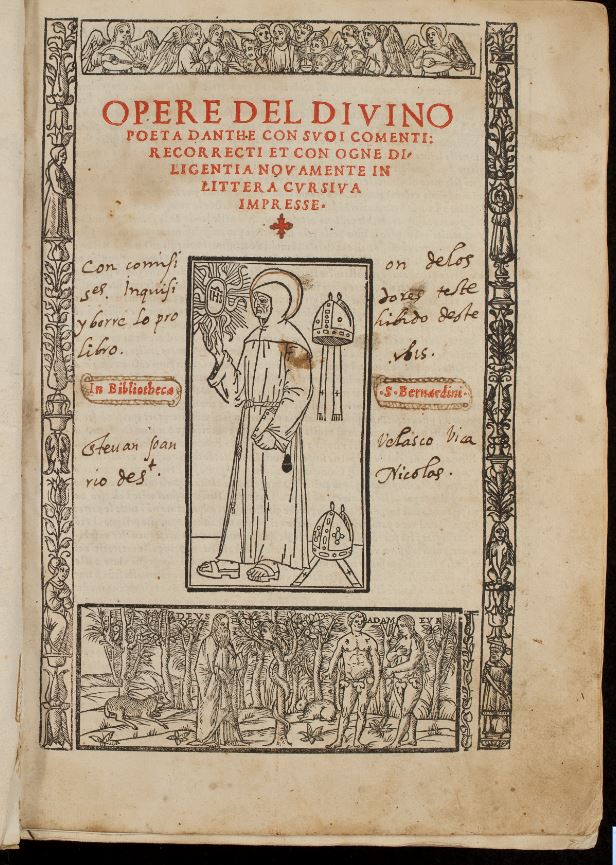
Title page of 1512 edition of Dante's Comedia, with redaction command in manuscript.

“…cross out and erase what is prohibited in this book”: the title page, with notations in Spanish, of Spencer’s copy of Opere del die vino poeta Danthe [Divina Commedia]. Venice: Bernardino Stagnino, 1512. Call #: Summerfield C1189. Click image to enlarge.

A similar notation by a different cleric appears on the verso of the volume’s final page of text: “Por lo mandado de los señores inquisidores teste y borre lo prohibido en estas comedias del dante conforme a la censura del Sto Off[ci]o [h]oy a 25 de mayo de 1585. Fray Juan Vidal” (By the order of the señores inquisitors cross out and erase what is prohibited in these comedies of Dante according to the censure of the Holy Office today, 25 May 1585 Fray Juan Vidal).*
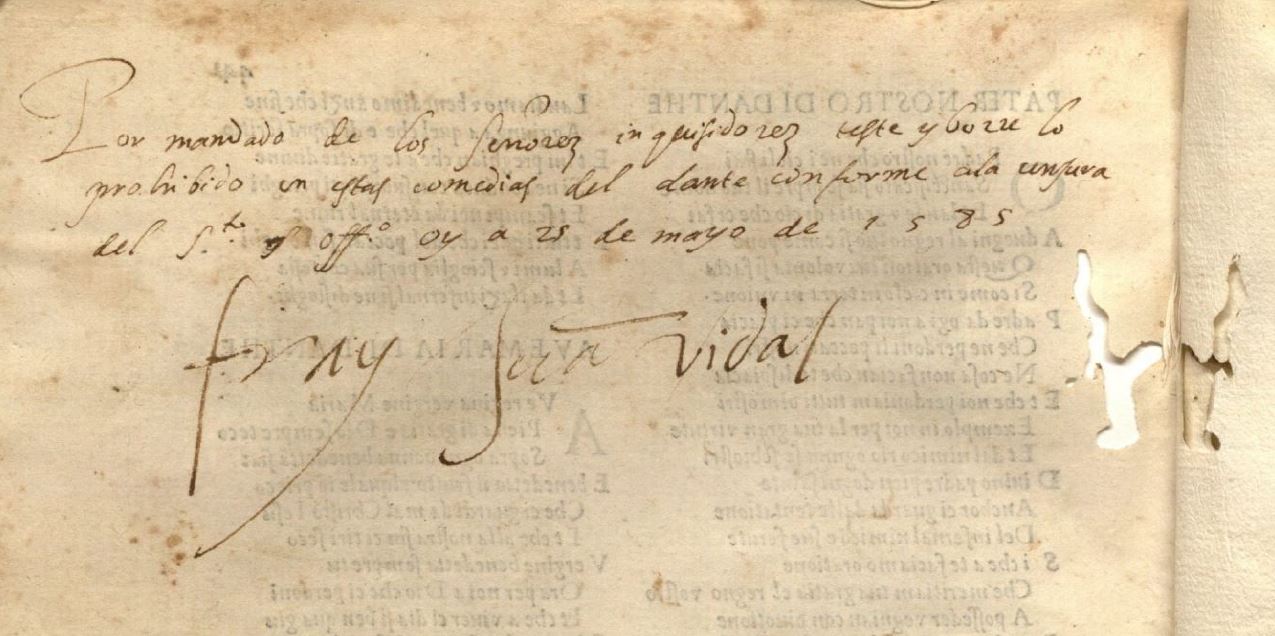
Detail of a second notation in Spanish from the end of the volume regarding the redaction of this copy.

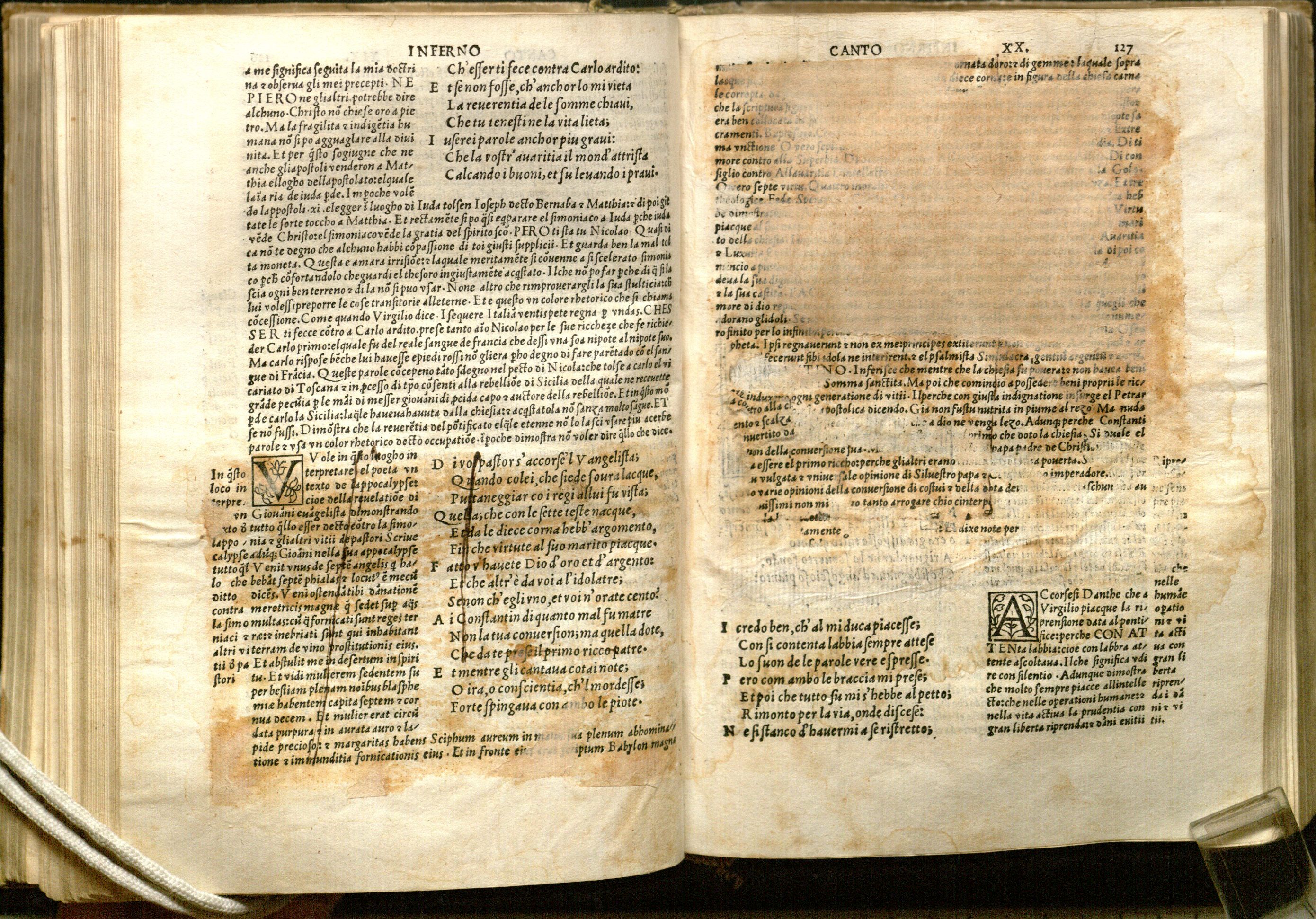
In paging through the volume, readers will find several redacted passages of varying lengths. Landino’s commentary receives the most expurgation, though lines from Dante’s poem are redacted on occasion as well. In some places, an offending line is simply crossed out in ink, while longer passages have been papered over so as to render them illegible. Once the prohibited passages had been redacted, the volume could be retained and consulted.
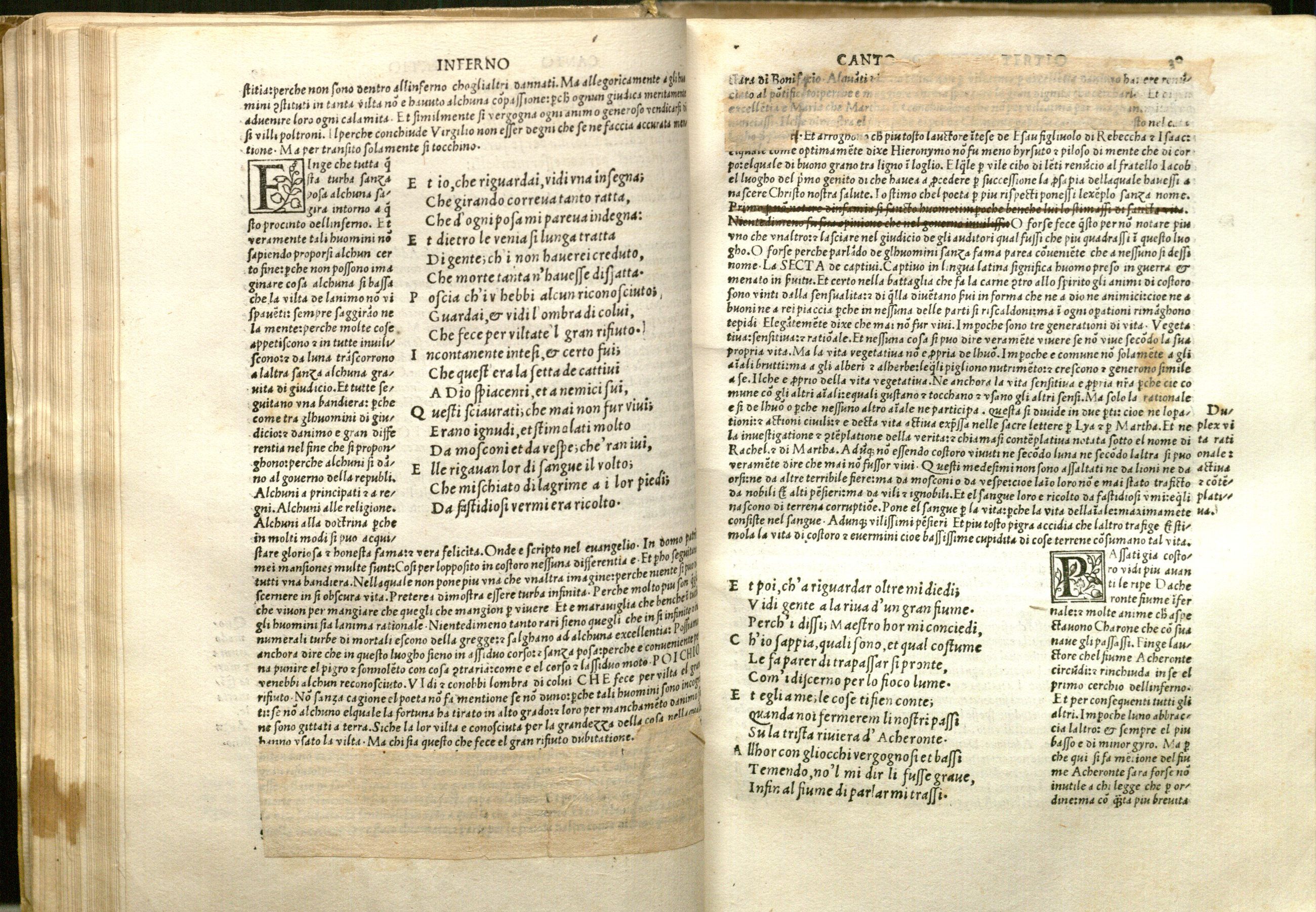
Image of passages redacted in ink and by the pasting of paper on folio 29v and 30r

Passages in Landino’s commentary that have been redacted by the addition of blank paper slips and by crossing out lines of text in ink.

A later reader appears to have succeeded in removing much of the paper that once covered some of the offending passages. Although some discoloration remains from the glue used to affix the paper slips, the text is now visible.  You can also see the censor’s original ink dash, marking the portions of text to be redacted or pasted over.
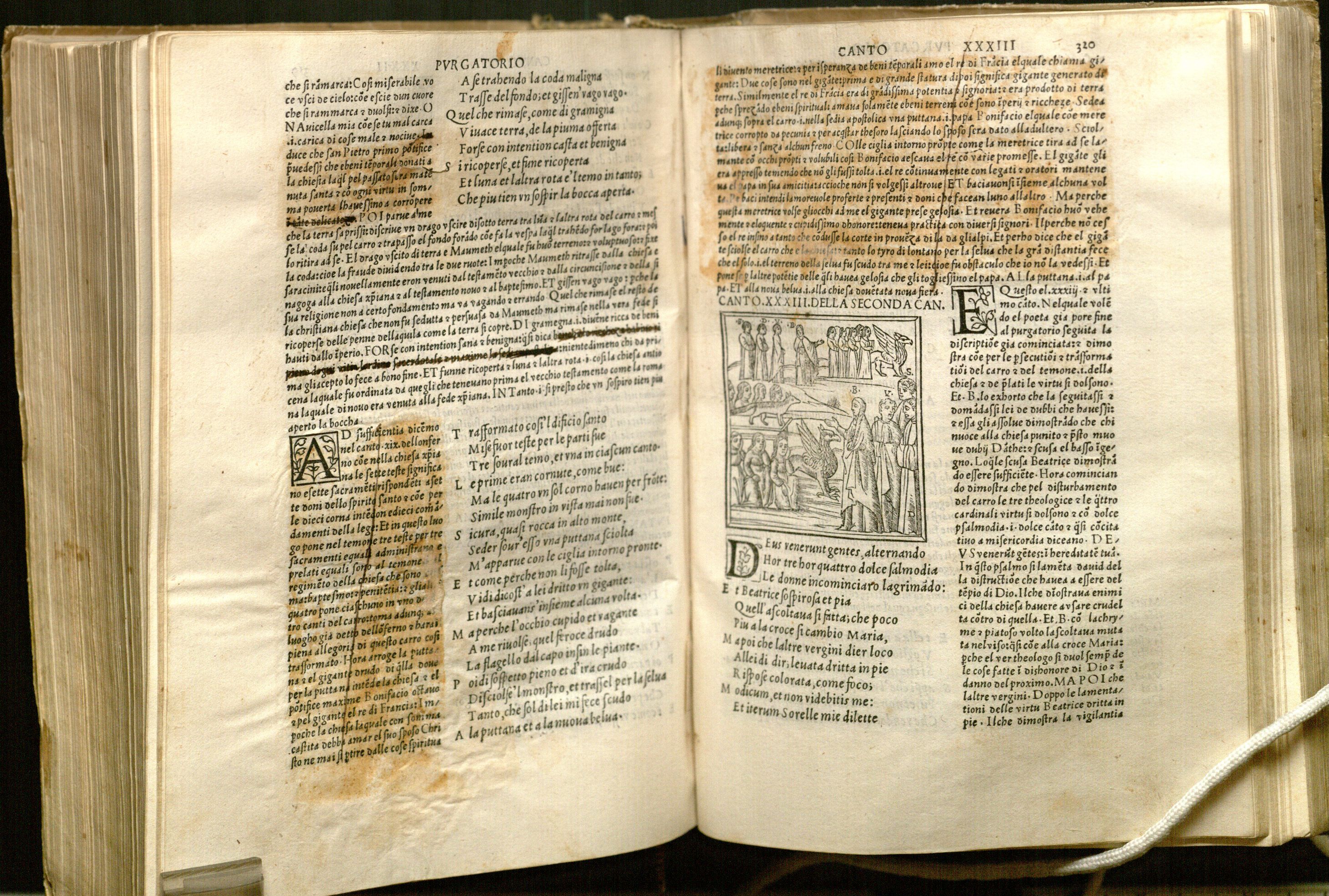
Image of redactions to the commentary for the Purgatorio (f. 319v and 320r)

Text restored?: the yellowy-brown patches indicate sections where paper slips were once glued to cover over passages judged offensive. Some remnants of the paper are visible above in the block of text at the bottom left (click image to enlarge). Dante Alighieri. Opere del die vino poeta Danthe [Divina Commedia]. Venice: Bernardino Stagnino, 1512. Call #: Summerfield C1189.

As readers of Dante know, The Divine Comedy is divided into three sections or “canticles,” one for each of the three realms of the afterlife visited by the character of Dante over the course of the poem: Inferno, Purgatorio, and Paradiso (Hell, Purgatory, and Paradise).  As one might expect, most of the redacted passages appear in the Inferno. (It can be controversial to put historical personages, including Church leaders, in Hell, and to discuss the political and theological matters that result in damnation.) However, Spencer’s copy also contains at least one censored passage in both the text and commentary of the Purgatorio and Paradiso as well.
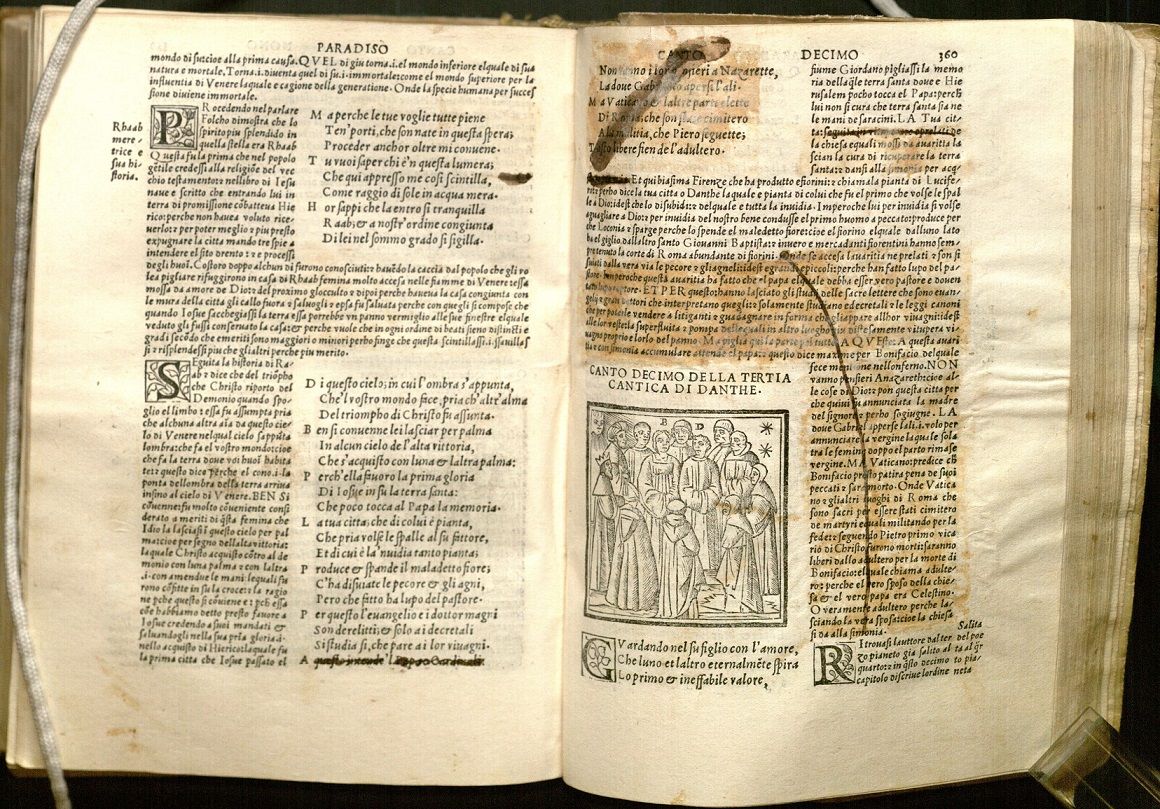
Image of redactions to Dante's text and Landino's commentary in the Paradiso, f. 359r and f. 360r.

Trouble in Paradise: expurgated passages in Dante’s verse and Landino’s commentary toward the end of Canto IX  in the “Paradiso” section of The Divine Comedy (click image to enlarge).  Dante Alighieri. Opere del die vino poeta Danthe [Divina Commedia]. Venice: Bernardino Stagnino, 1512. Call #: Summerfield C1189. This passage, which critiques the Vatican and Church leaders, is also redacted in a copy of a 1564 edition of Dante’s work (with commentaries) held at Brandeis University.

Spencer’s expurgated copy of the Dante’s Divine Comedy offers a fascinating material example of censorship in early modern Spain.  If this brief post has whet your appetite for exploring this subject further, consider visiting He who destroyes a good booke, kills reason it selfe, an online re-issue of a notable 1955 KU Libraries exhibition catalogue on intellectual freedom. The catalogue’s section on Spain contains examples of other volumes from the library’s collections that were censored under the Inquisition, including a book on proverbs by Juan de Aranda that has been redacted with ornamented slips.

Curious about more contemporary instances of censorship and challenges to books? Take a look at the list of the top ten most challenged books of 2016, as compiled by the American Library Association Office for Intellectual Freedom. Or, if you live in Lawrence, consider visiting the Lawrence Public Library, which will be distributing a different card in its 2017 Banned Books Trading Card series each day this week.

Elspeth Healey
Special Collections Librarian

*Transcriptions and translations courtesy of Professor Luis Corteguera, with additional insight from Professors Patricia Manning and Isidro Rivera.

Click on the thumbnails below for images of additional redacted passages in Spencer’s 1512 edition of Dante’s Divine Comedy with commentary by Cristoforo Landino.
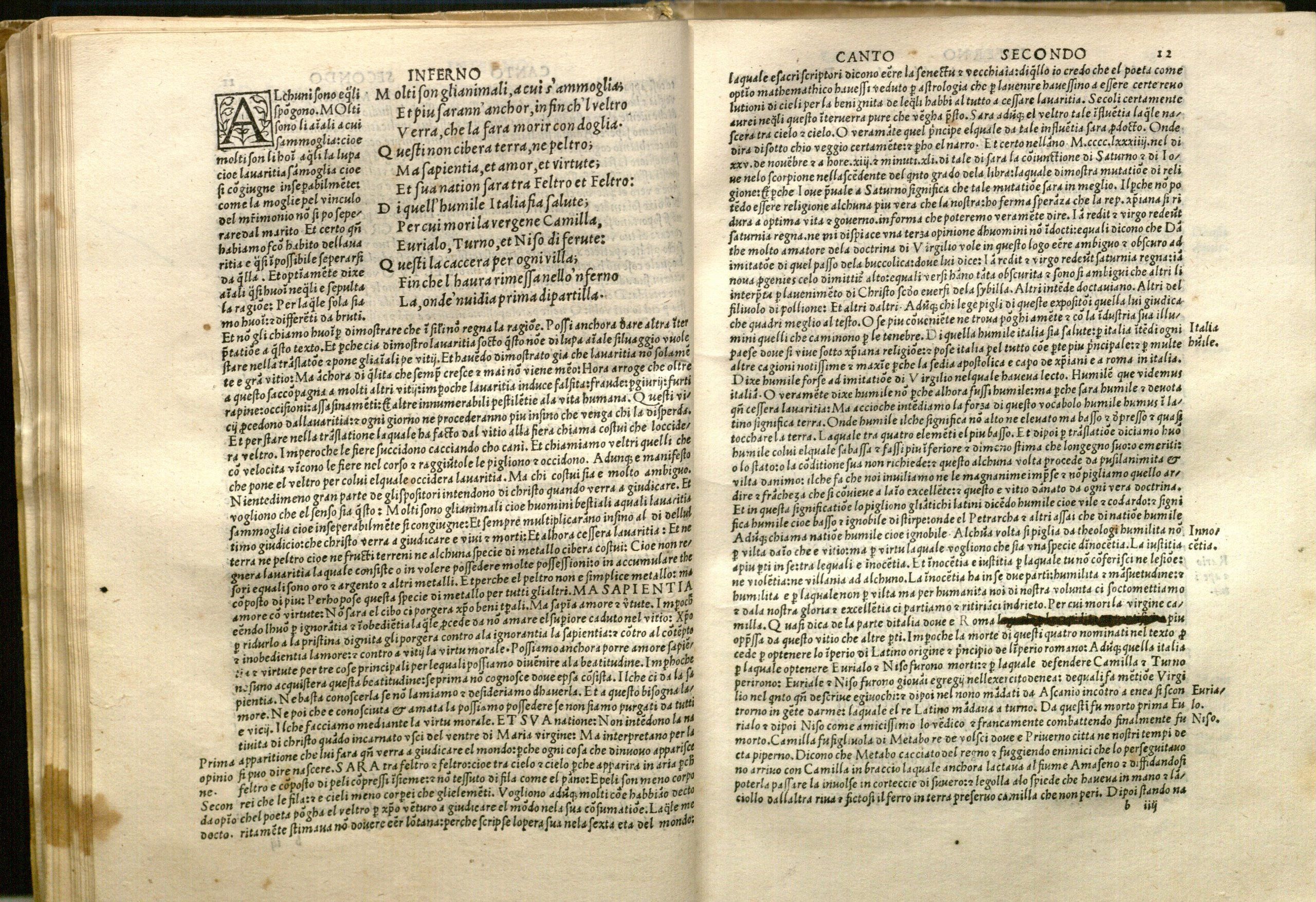
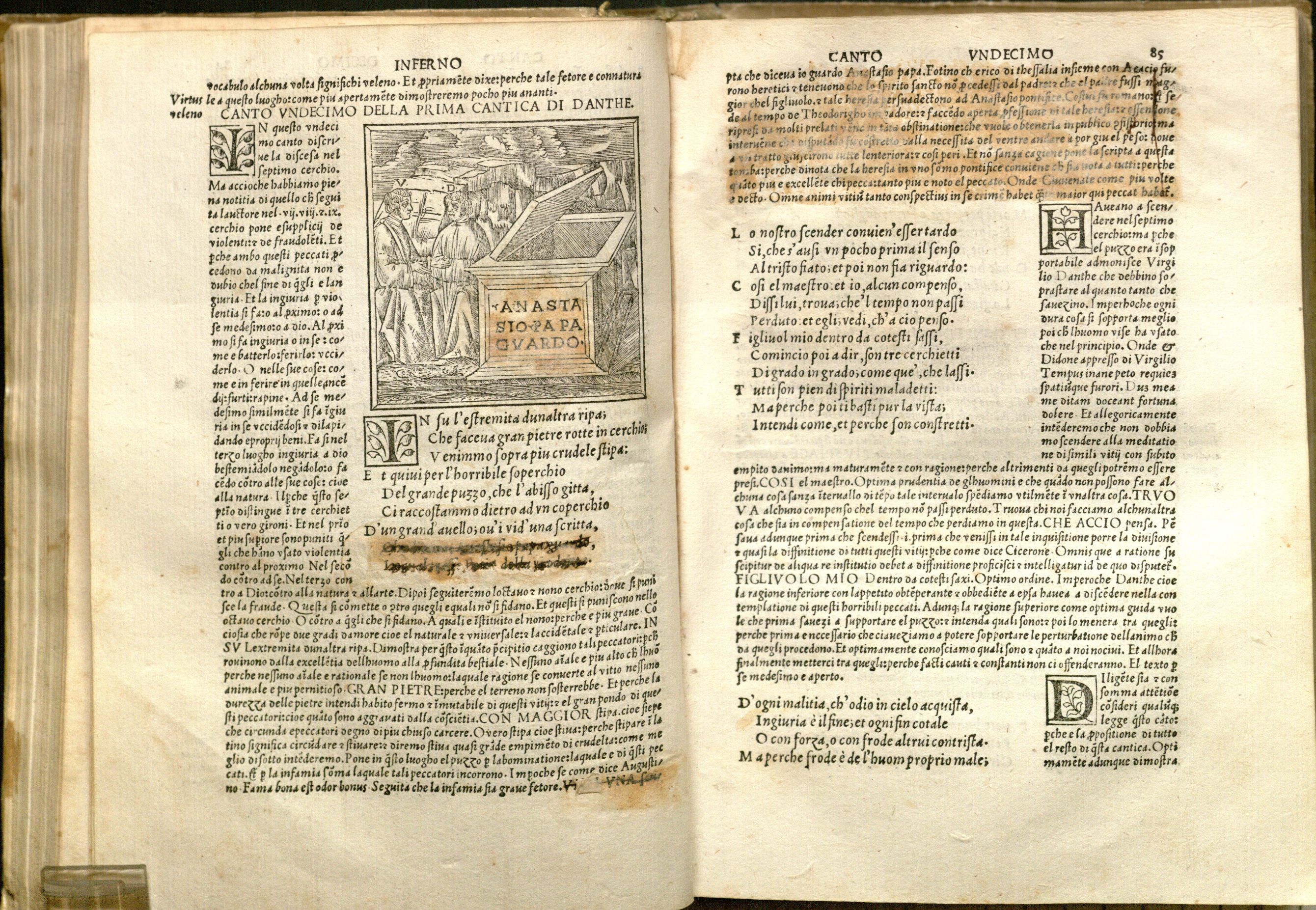
Small ink redaction to the commentary on f. 12r.  Image of Redactions to both Dante's verse (left, f84v) and Landino's commetary (right f85r)  Image of remnants of a paper-ever passage, f. 126v and 127r

Brian Aldiss, 1925-2017

August 31st, 2017

On August 19th, science fiction writer and critic Brian Aldiss died, a day after turning 92. In an obituary for The Guardian, fellow writer Christopher Priest characterized Aldiss as “by a long chalk the premier British science fiction writer.” As fans and scholars of speculative fiction around the world mourn this loss, some will be surprised to discover that part of the British writer’s literary legacy resides in Kansas: the Spencer Research Library a holds significant collection of papers for Aldiss, including materials for his Billion Year Spree and his Helliconia Trilogy. The trilogy, which consists of the novels Helliconia Spring (1982), Helliconia Summer (1983), and Helliconia Winter (1985), is among Aldiss’s most admired works. “This depiction of a world that circles a double star, where an orbital Great Year lasts long enough for cultures to emerge, prosper and fail,” Priest writes in his remembrance of Aldiss, “is a subtle, deeply researched and intellectually rigorous work.”

Brian Aldiss accepting the John W. Campbell Memorial Award for Helliconia Spring, Lawrence, KS, 1983.

Brian Aldiss accepting the John W. Campbell Memorial Award for best science fiction novel for Helliconia Spring (1982) in Lawrence, KS in 1983.  Call number: RG 0/19: Aldiss, Brian

The collection of Aldiss’s papers at KU provides a wealth of evidence for the research and rigor that went into his writings. The 25 boxes of materials for the Helliconia Trilogy include, for example, Aldiss’s extensive correspondence with scientists and scholars to determine the scientific basis for the world he was creating. Those consulted include Iain Nicholson of Hatfield Polytechnic Observatory on the subject of astronomy, Peter Cattermole of the University of Sheffield on geology and climate, and Tom Shippey, then at the University of Leeds, on the languages of the novel. The result is a world  striking in its attention to detail.

A selection of research Correspondence for the Helliconia Trilogy.

A selection of research correspondence with Iain Nicholson, Peter Cattermole, and Tom Shippey concerning the creation of Helliconia. Brian Wilson Aldiss Papers. Call #: MS 214: A.

Not only do these letters reveal the extent to which technical and scientific matters underpin the trilogy’s concept, plot, and themes, but they also offer lighter moments of humor between on-going collaborators. Aldiss, for example, begins a June 1981 letter to Cattermole by quipping, “Helliconian scholars have failed to study Helliconia’s sister planets in any depth; they have been too busy drinking the whisky out of their orrerys.” (MS 214:Aa:2:14a).  Writing again to Cattermole in September of 1982, following the publication of Helliconia Spring earlier that February, Aldiss reports,

Vol. 1 has been very well received, especially in the States; over here there were complaints, as you say, about names. Well, it’s no good building up an intense winter atmosphere in Embruddock and then call[ing] the sods Joe and Charlie. There will be more complaints of that nature with Vol II, where I have a vast character list, with over fifty speaking parts, but I see no way of evading the problem and so forge on hopefully.  Wait till you meet Queen MyrdalemInggala….. (MS 214Aa:2:16b)

Spencer Research Library’s collections also include manuscript materials for Aldiss’s groundbreaking Billion Year Spree (1973)subtitled “The True History of Science Fiction,” which he later expanded with David Wingrove into Trillion Year Spree (1986). The volume argues for Mary Shelley’s Frankenstein: or, The Modern Prometheus (1818) as the birth of science fiction.

Aldiss’s ties to the University of Kansas grew out of his relationship with fellow science fiction writer and critic, James Gunn, Professor Emeritus of English and the founder of KU’s Gunn Center for the Study of Science Fiction. “We were long-time friends, although an ocean between us limited our encounters,” Gunn explains.

I was a guest in his Oxford home for a couple of days after the founding of World SF in Ireland [in 1976], and he was a guest in my home during his author’s visit here.  We were competitors only in the writing of science-fiction histories.  We both started in 1971, but circumstances (and maybe the complexities of illustrations) held up Alternate Worlds (1975) [Gunn’s illustrated history of SF] for a couple of years.  When I wrote him for a photograph, he suggested that we exchange blurbs–that I would say his history was the best and he would do the same for mine.

Though the delay in the publication of Gunn’s Alternate Worlds meant that the exchange of blurbs never came to pass, researchers can explore both Aldiss’s and Gunn’s processes in writing their respective histories of science fiction by examining the collections of their papers at Spencer Research Library.

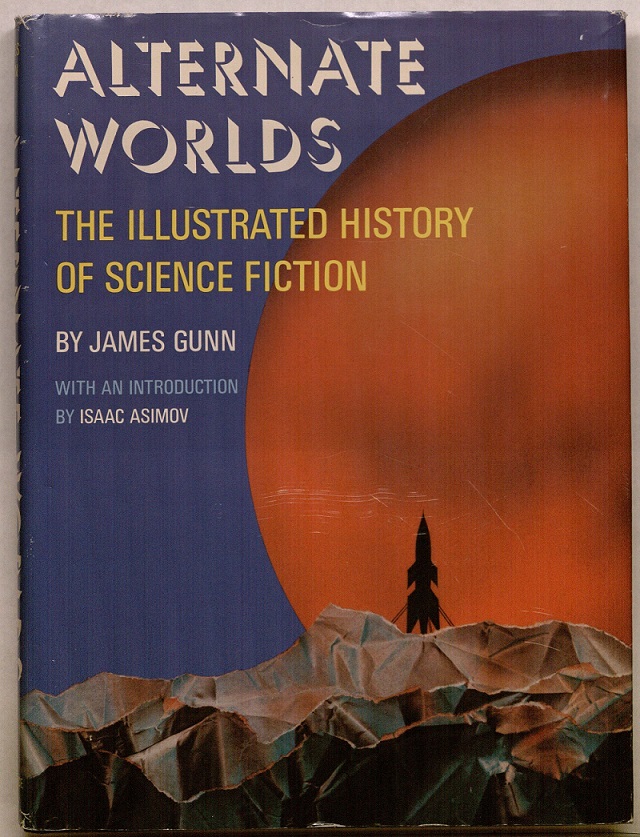
Cover of Brian Aldiss's Billion Year Spree (1974 paperback edition)  Cover of James Gunn's Alternate Worlds (1975)

Left: Brian Aldiss’s Billion Year Spree (1973). Schocken paperback edition, second printing. New York: Schocken Books, 1975. Call #: ASF B1245. Right: James Gunn’s Alternate Worlds. First edition. Englewood Cliffs, N.J : Prentice-Hall, 1975. Call #: E2598.

In his introduction to Billion Year Spree, Aldiss mused, “Possibly this book will help further the day when writers who invent whole worlds are as highly valued as those who re-create the rise and fall of a movie magnate or the breaking of two hearts in a bedsitter. The invented universe, the invented time, are often so much closer to us than Hollywood or Kensington.” Thank you for those invented universes, Brian Aldiss.

Elspeth Healey
Special Collections Librarian

An Embarrassment of Riches: Highlights from a Survey of the Summerfield Collection

August 29th, 2017

This year I have been conducting a survey of part of the Summerfield Collection of Renaissance and Early Modern Books. It is not an exhaustive survey, but rather a cursory look at each volume to determine its general condition, immediately address minor refurbishment or housing needs, and note any issues that can be followed up on in future projects. I have not been recording every small detail, but I still get to handle and glance over each volume, which is a great treat – the Summerfield collection is truly a treasure. Summerfield’s many beautiful bindings, in particular the limp vellum and ornately tooled alum-tawed pigskin bindings, merit their own post someday. But today I want to share some of the hidden gems that I’ve encountered in the course of my work.

Summerfield Collection, Kenneth Spencer Research Library, University of Kansas Libraries

This botanical text (Summerfield D519) has the most lovely line illustrations. Wouldn’t they make absolutely wonderful coloring pages?
(Click all images to enlarge.)


Summerfield Collection, Kenneth Spencer Research Library, University of Kansas Libraries

Summerfield E397 has two pieces of binder’s waste manuscript fragments taped into the back of the volume. Whoever put a new binding on this volume in the last century saved the fragments from the earlier binding.


Summerfield Collection, Kenneth Spencer Research Library, University of Kansas Libraries

Summerfield contains a wealth of pastepapers in classic crumpled-paper and combed patterns.


Summerfield Collection, Kenneth Spencer Research Library, University of Kansas Libraries

There are also printed pastepapers in big, bold patterns…


Summerfield Collection, Kenneth Spencer Research Library, University of Kansas Libraries

…as well as tiny, delicate printed patterns.


Summerfield Collection, Kenneth Spencer Research Library, University of Kansas Libraries

These endpapers with an oversize printed floral design might be made from wallpaper or wallpaper samples.


Summerfield Collection, Kenneth Spencer Research Library, University of Kansas Libraries

Here are two examples of colorful decorated text block edges.


Summerfield Collection, Kenneth Spencer Research Library, University of Kansas Libraries

It’s always fascinating to get a glimpse of a binding’s structure and the printed or manuscript matter that binders used in their work.


Summerfield Collection, Kenneth Spencer Research Library, University of Kansas Libraries

Traces of prior readers, such as this charming handmade bookmark, can be especially thrilling to encounter. Such evidence makes me feel particularly connected to the past and very lucky that I get to do this job!


Angela Andres
Special Collections Conservator
Conservation Services


Total Eclipse of the Heart(land)

August 18th, 2017

In honor of Monday’s total solar eclipse, the Spencer Research Library staff was curious about our collection holdings related to this celestial phenomenon. We found two reports detailing previous solar eclipses, one from South America in 1889 and one from the United States in 1900.

Selected from from the Report on the Total Eclipse of the Sun, 1889

Selected from from the Report on the Total Eclipse of the Sun, 1889

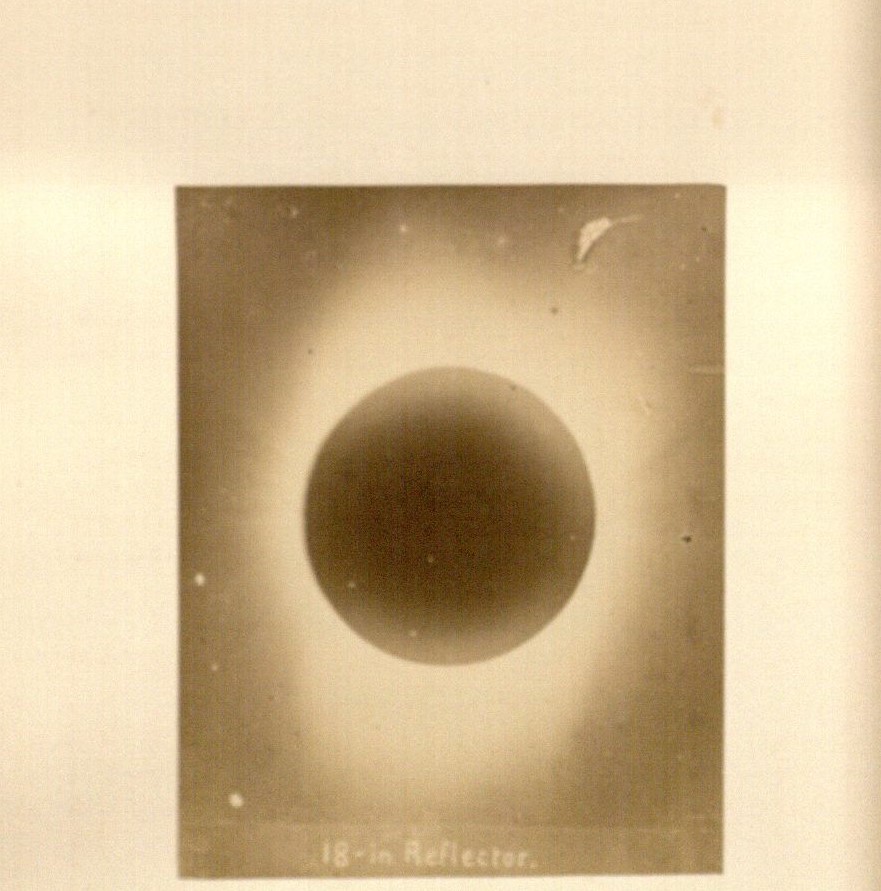
This image was developed using the negative from the exposure
created with the 18-inch reflector. Report on the Total Eclipse of the Sun,
Observed at Cayenne, French Guiana, South America, December 22, 1889

by S.W. Burnham and J.M. Schaeberle. Sacramento: A.J. Johnston,
Supt. State Printing, 1891. Call Number: C13311. Click images to enlarge.

The first report is from the Lick Observatory team’s visit to Cayenne, French Guiana, South America in 1889. The team left New York and traveled via boat to South America to observe and document the total solar eclipse on December 22nd. Despite some initial concerns about the weather, they were able to use several different lenses to create exposures of the eclipse that were later developed for further study.

Selected page from Total Eclipse of the Sun, May 28, 1900

Selected page from Total Eclipse of the Sun, May 28, 1900

The image shows what Charles Howard experienced when looking through
the telescope at the moment of the eclipse. Total Eclipse of the Sun,
May 28, 1900, Observed at Winton, North Carolina by Charles P. Howard
.
Hartford, Conn.: R.S. Peck & Co., printers and engravers, 1900.
Call Number: C13310. Click images to enlarge.

The second report is from Charles P. Howard’s visit to Winton, North Carolina, for the total solar eclipse in 1900. Howard joined the Trinity College team to observe and document the eclipse on May 28. Howard’s report also included images – created by the author – to convey his observations. His recorded thoughts show that he felt his images paled in comparison to the actual spectacle of the eclipse: ‘The view through the telescope, however, was far grander than the naked eye view and most awe-inspiring. Around the Sun was an appearance that almost made one exclaim, ‘the Sun is an enormous magnet, alive and hard at work.’” His illustration attempts to show the radiating waves he saw around the sun at the time of the eclipse.

If you are interested in learning more about the science behind a total solar eclipse, please take a look at Eclipse 101 from NASA!

Emily Beran
Public Services

The Pelican in Her Piety

July 24th, 2017

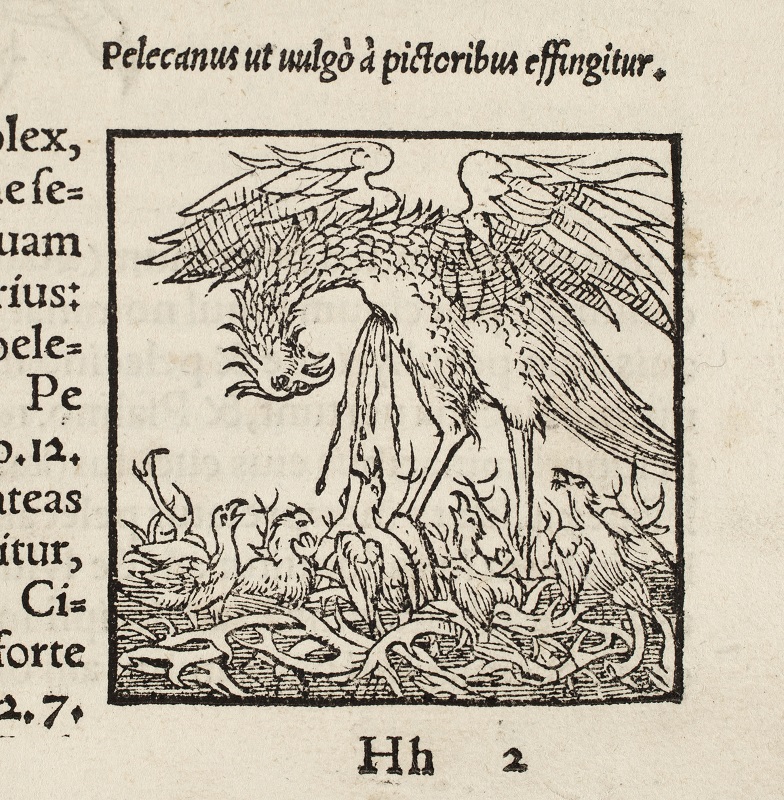
Just a few months after I began working at Kenneth Spencer Research Library, Dr. Elspeth Healey, one of our Special Collections librarians, showed me some materials she had pulled for a class on Renaissance printmaking. With my background in Medieval and Renaissance art history, I was excited to explore the materials she had selected. She drew my attention to a small image in Conrad Gessner’s Historiae Animalium, a sixteenth-century natural history tome featuring various bird species. The somewhat bizarre and gruesome image in question shows a pelican pecking at its breast with visible blood spilling on a nest of baby birds – a startling depiction but one familiar to me from medieval bestiaries. The rather macabre bird depicted was none other than a vulning or heraldic pelican.

Image of a vulning pelican in Historia animalium, 1555

A vulning pelican in Historia animalium by Conrad Gessner, 1555.
Call Number: Ellis Aves G97. Click image to enlarge.

The term vulning comes from the Latin verb “vulno” which means “to wound.” When pelicans feed their young, the mother macerates fish in the large sack in her beak then feeds it to her babies by lowering her beak to her chest to transfer the regurgitated fish more easily. The observation of this feeding practice led to the mistaken descriptions of female pelicans pecking their breasts and spilling blood onto their babies to provide sustenance. The idea of a pelican wounding herself for the sake of her young gained a religious connotation and became a symbol for Jesus Christ and his sacrificial death and resurrection – a necessary sacrifice for the redemption of humanity according to the Christian tradition. Also described as a “pelican in her piety,” the vulning pelican became a popular symbol in medieval heraldry and was featured in bestiaries (books about a mixture of real and imaginary animals) because of this religious association.

The presence of the vulning pelican in bestiaries could explains how this popular piece of religious symbolism found its way into a scientific study from the sixteenth century. Bestiaries were collections of descriptions of both real and mythological beasts. These creatures were typically accompanied by some moral tale that was meant to be instructional for the reader. While bestiaries had been around for centuries, they gained a high level of popularity during the Middle Ages. These bestiaries were in some ways the forerunners to later scientific publications like Conrad Gessner’s book about the natural history of animals. It is not surprising that certain illustrations were carried over from the bestiaries into early scientific books during the transition from the Medieval to the Renaissance period.

However, the vulning pelican also appeared in emblem books, a type of book that originated in Italy in the mid-sixteenth century, rapidly became fashionable throughout Europe, and remained popular until the early eighteenth century. An emblem book consists of a series of pictures, each accompanied by a motto and an explanatory poem, which together present a concept, usually with a moral, about a theme, such as religion, politics, or love. The vulning pelican appears in emblem books with a religious theme. This continuing popularity via another source could also account for the vulning pelican imagery’s use in naturalist texts.

The appropriation of the vulning pelican from religious symbol to scientific illustration has helped preserve the history of this strange depiction. Considering the vulning pelican’s history as a symbol of the Christian resurrection, it is rather ironic to see how this depiction has experienced a resurrection of its own throughout the centuries.

Emily Beran
Public Services