Welcome to the Kenneth Spencer Research Library blog! As the special collections and archives library at the University of Kansas, Spencer is home to remarkable and diverse collections of rare and unique items. Explore the blog to learn about the work we do and the materials we collect.
This blog may contain archived web content. This blog may link to catalog records which no longer exist as of a software change in 2026.
Check the blog each Friday for a new “That’s Distinctive!” post. I created the series because I genuinely believe there is something in our collections for everyone, whether you’re writing a paper or just want to have a look. “That’s Distinctive!” will provide a more lighthearted glimpse into the diverse and unique materials at Spencer – including items that many people may not realize the library holds. If you have suggested topics for a future item feature or questions about the collections, feel free to leave a comment at the bottom of this page.
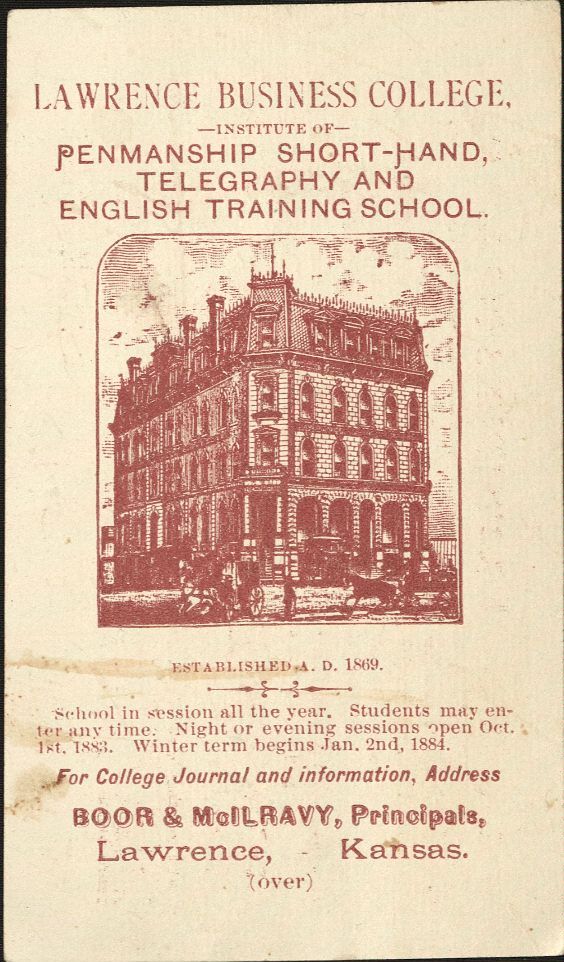
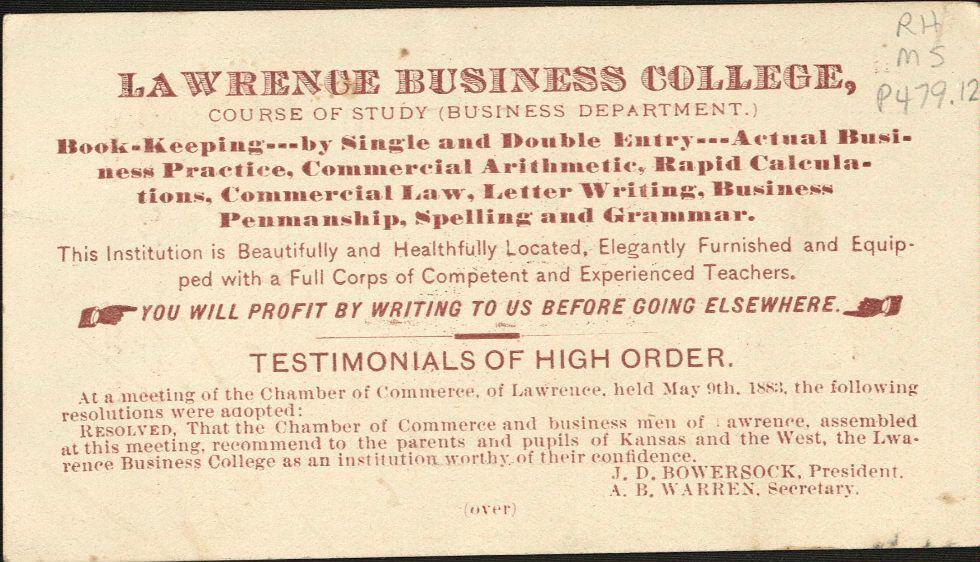
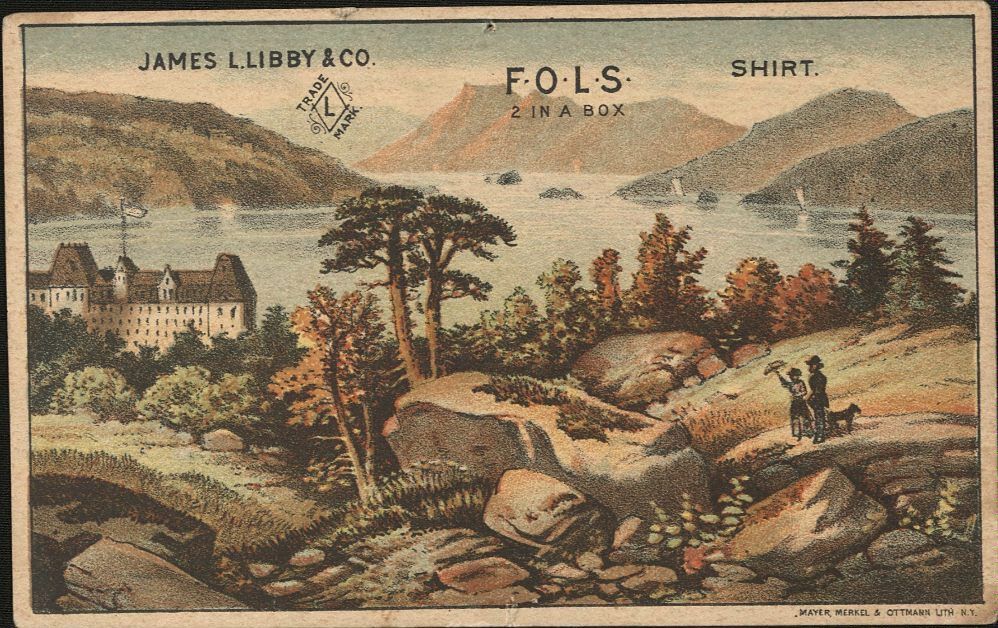
This week on That’s Distinctive! I’m sharing a small and simple collection of business cards from Lawrence. The Lawrence business card collection features business cards from mostly the 1880s. The two featured today are from the Lawrence Business College and J. House.
An online exhibit from the Lawrence Public Library notes that the Lawrence Business College was “established in 1869 by W.H. McCauley [and]…was the first business college in Kansas. The school was located in the Lawrence National Bank building on the third and fourth floors.” While the business college no longer exists, it is widely unknown when and why it shut its doors. Some personal accounts from attending the college can be found in the John L. Kilworth papers at the library.
|
The front (top) and back (bottom) of a business card for the Lawrence Business College, 1883-1884. Business Cards, Lawrence, Kansas. Call Number: RH MS P479. Click images to enlarge.
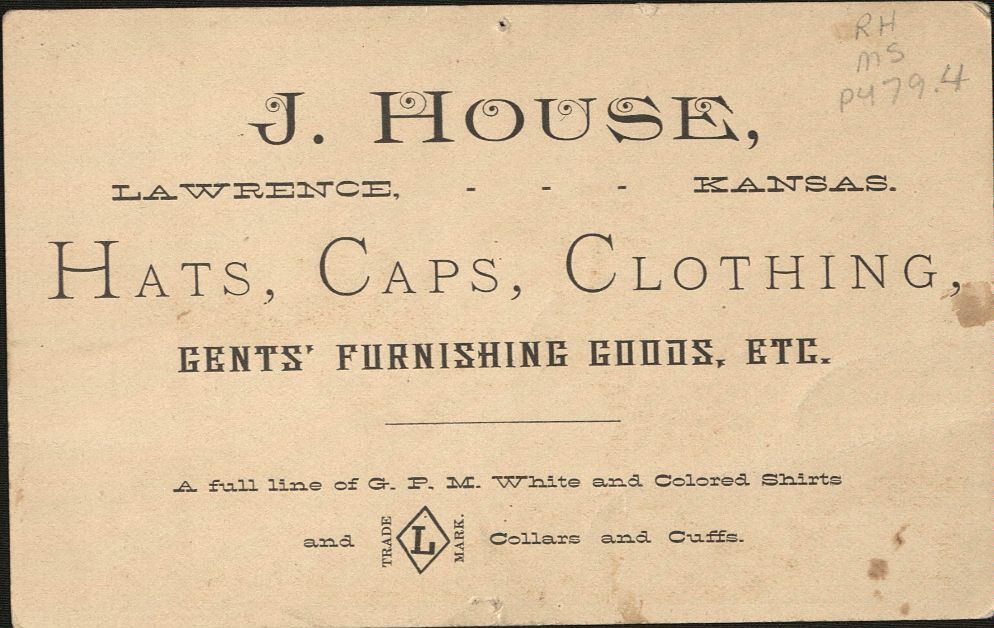
J. House was a clothing business operated for several decades by Jacob House at 729 Massachusetts Street in downtown Lawrence. The building is marked by a plaque as having survived Quantrill’s Raid in 1863. Jacob House, his wife Ricka, and their seven children resided at 805 Ohio Street for many years before relocating to 701 Tennessee in 1904. House’s 1913 obituary in the Lawrence Daily Journal-World declared that “no man in Lawrence stood higher in the esteem of the public” than him. The article noted that House was born in Austria in 1833. After emigrating to the United States in 1854 and living in a variety of places, he settled in Lawrence and opened his business in 1862. House was in his store at the time of Quantrill’s Raid; he was taken by a group of raiders and “kept as a prisoner and guide all day. He was forced to show them from place to place and everywhere he saw the dead bodies of his friends and acquaintances.”
|
The front (top) and back (bottom) of a business card for the J. House clothing business, undated. Business Cards, Lawrence, Kansas. Call Number: RH MS P479. Click images to enlarge.
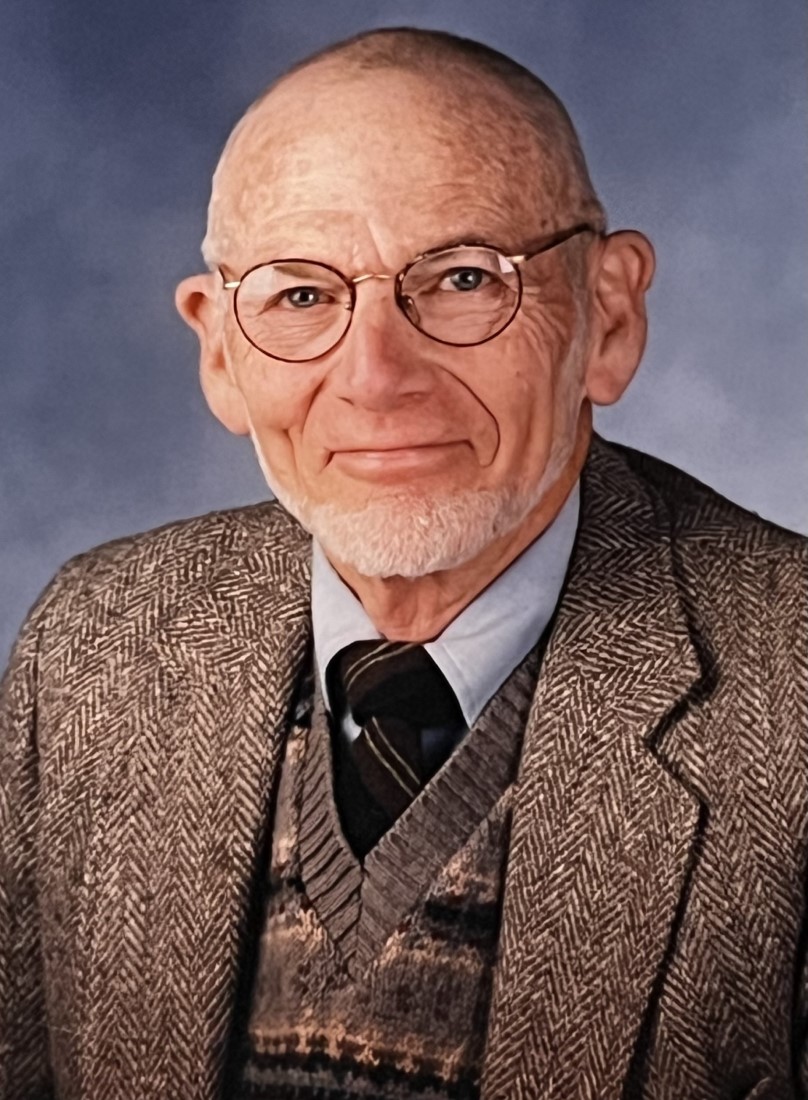
Kenneth Spencer Research Library has many faces working behind the scenes to maintain its collections and provide patrons with access to these materials. William Lawrence “Bill” Mitchell was one of these many faces, working with the Department of Special Collections. He served in various capacities at KU Libraries from 1967 to 1999. Both William and his wife Virginia Jean Mitchell died in March of this year.
Bill Mitchell in 1998, a year before his departure from KU Libraries. University Archives. Call Number: RG 41/ Faculty: Mitchell, William L. (Photos). Click image to enlarge.
William Mitchell was born on June 2, 1932, in Kansas City, Missouri, the son of William M. and Donna L. Mitchell. Before he joined the University of Kansas, Mitchell served in the United States Coast Guard from 1952 to 1956. He received his bachelor’s degree from KU in 1959 and then received his master’s degree in library science from the University of Illinois in 1960.
Mitchell’s work in libraries started before his master’s degree. Joining KU Libraries in 1957 as a student assistant for special collections, Mitchell worked his way through various library positions. He became a cataloger with KU in 1971 and eventually became chief cataloger. Mitchell’s work was well received; he earned membership in Beta Phi Mu, an honor society that recognizes high achievement in library science and librarianship. He was promoted to the rank of Librarian III in 1967, a marker of his distinguished career as a librarian.
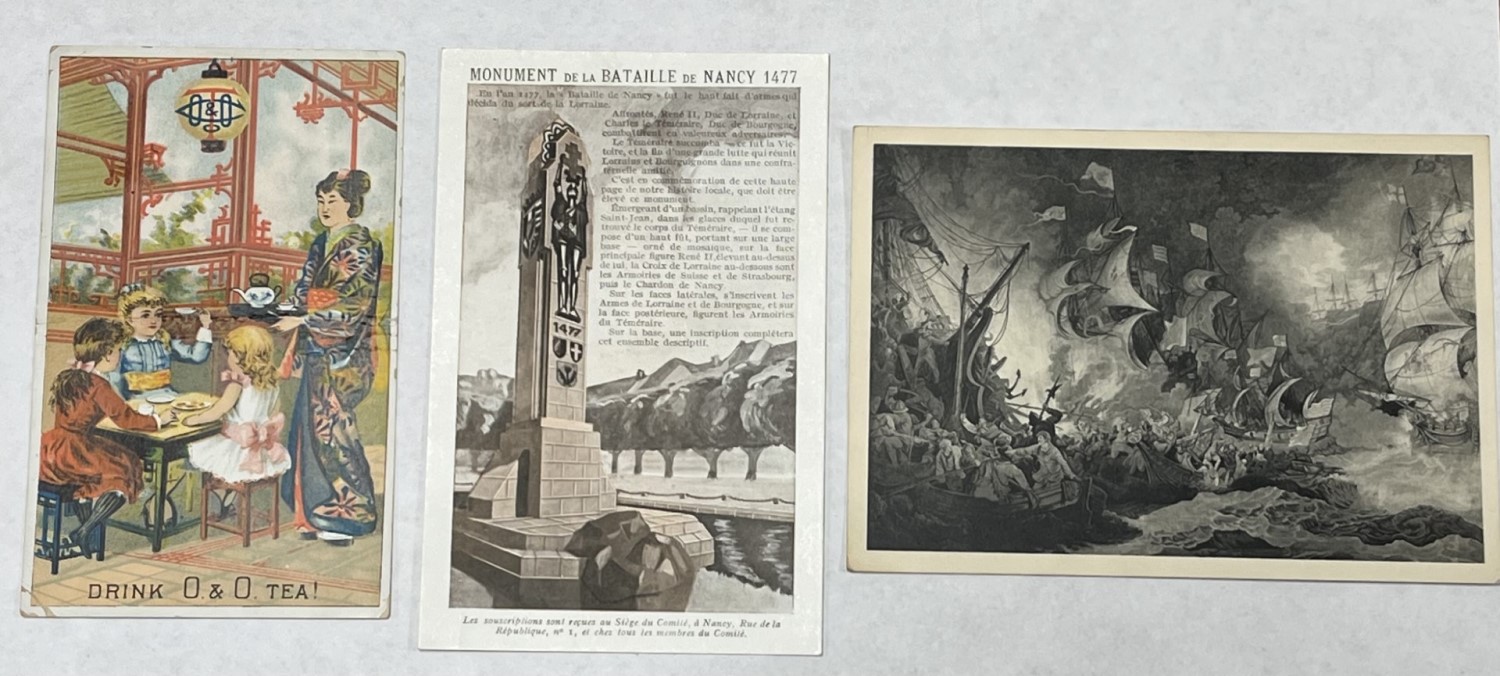
Special Collections weren’t Mitchell’s only interest. He often encouraged work with bibliography and advocated for the conservation of unstable library materials. He led several courses on conservation for KU’s Museum Studies program and, on occasion, spoke with history of the book classes. His interests in conservation covered a wide variety of materials, from the proper preservation of textual materials and bindery techniques to film preservation. He often kept interesting paper ephemera he came across – usually from other bookstores or vintage postcards – to preserve the history of his travels and work. Many of these postcards and syllabi can be found in his personal papers collection.
Several of Mitchell’s collected postcards. Personal Papers of William (Bill) Mitchell. Call Number: PP 649, Box 1, Folder 1. Click image to enlarge.
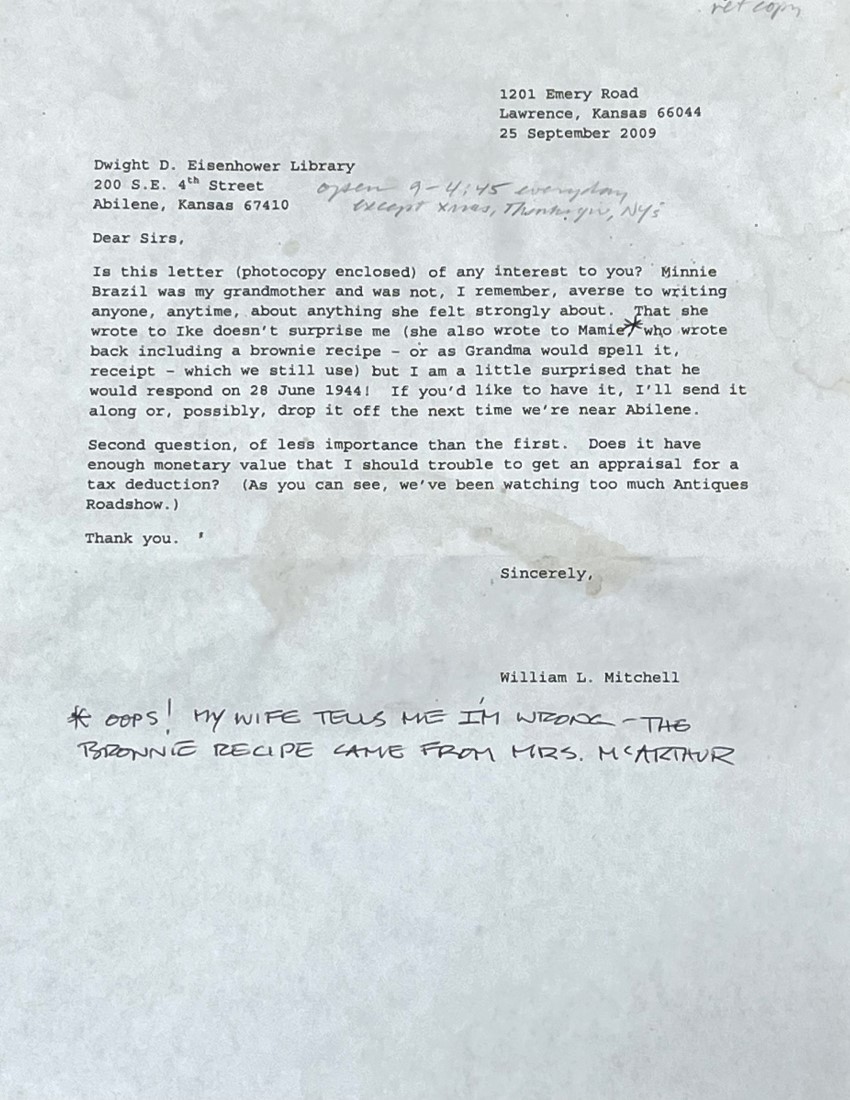
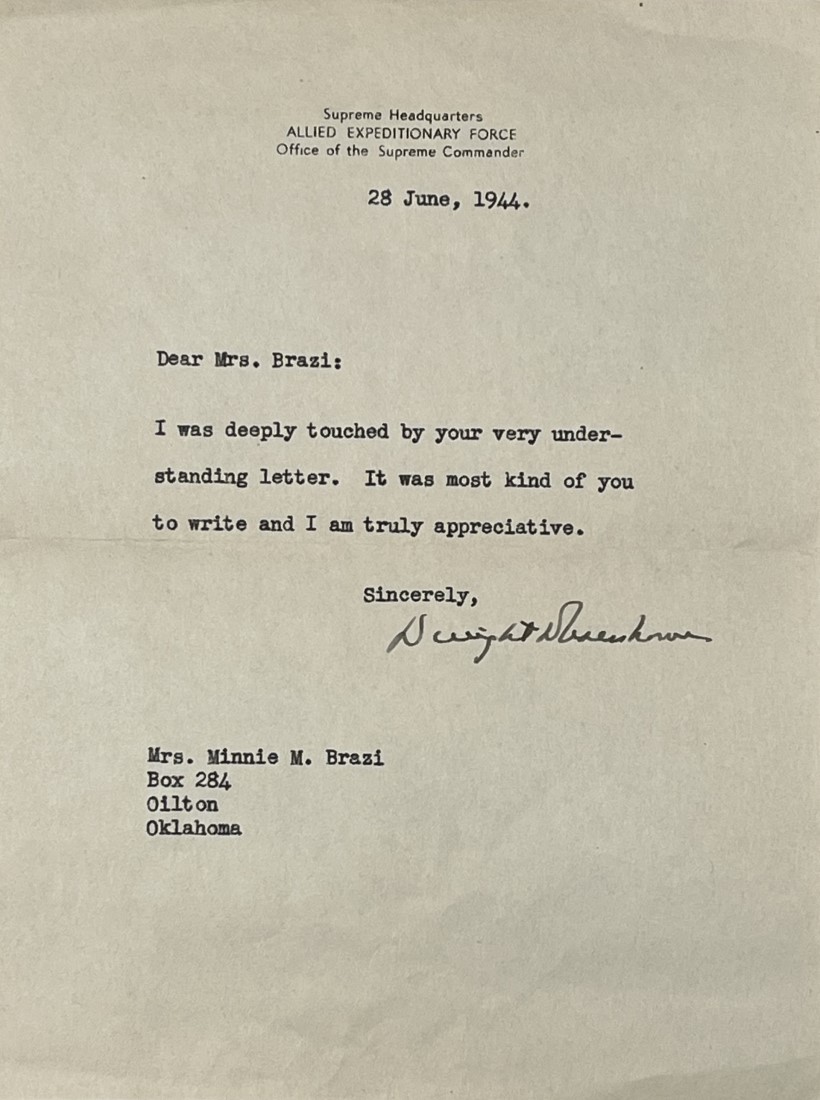
Mitchell’s love of preservation extended beyond KU and into surrounding communities. He consulted with several other libraries in the state, including at Kansas State University, Baker University, Saint Mary College, and the Wichita Public Library. He worked with the Dwight D. Eisenhower Presidential Library to save a letter from General Dwight Eisenhower that was sent to a family member. Mitchell presented at several library conferences and attended various conservation group meetings to bring further awareness on the necessity of conservation efforts.
Bill Mitchell’s letter to the Dwight D. Eisenhower Presidential Library discussing a letter that Eisenhower sent to Mitchell’s grandmother, Minnie Brazil (or Brazi). Personal Papers of William (Bill) Mitchell. Call Number: PP 649, Box 2, Folder 31. Click image to enlarge.
A 1944 letter from Dwight D. Eisenhower to Minnie Brazi (or Brazil), Bill Mitchell’s grandmother. D-Day was June 6, three weeks before Eisenhower wrote this document. Personal Papers of William (Bill) Mitchell. Call Number: PP 649, Box 2, Folder 31. Click image to enlarge.
Lawrence, Kansas, also had a special place in Mitchell’s life. He was a vocal historical building advocate, writing many letters to the Lawrence Journal-World with his concerns for historic Lawrence buildings regarding new proposed commercial developments. He wrote to the Lawrence Preservation Alliance and worked alongside the organization to protect a historic livery stable that was threatened by commercial development. But he was perhaps the most interested in preserving the history of West Hills, a neighborhood northwest of the University of Kansas campus. Many of his writings surround this neighborhood, from notes on traffic to rezoning laws allowing commercial enterprises to develop in the West Hills neighborhood.
William Mitchell retired from Spencer Research Library in 1999, though the Mitchells remained in Lawrence after retirement. Both Bill and Jean Mitchell supported Kenneth Spencer Research Library and the Helen Foresman Spencer Museum of Art; William’s papers were donated to the library in 2013, and Jean’s quilts and textiles are housed at the museum. Mitchells’ legacy continues on with The Bibliographical Society of America’s William L. Mitchell Award, given to researchers whose research focuses on eighteenth century English or English colonial periodicals.
Check the blog each Friday for a new “That’s Distinctive!” post. I created the series because I genuinely believe there is something in our collections for everyone, whether you’re writing a paper or just want to have a look. “That’s Distinctive!” will provide a more lighthearted glimpse into the diverse and unique materials at Spencer – including items that many people may not realize the library holds. If you have suggested topics for a future item feature or questions about the collections, feel free to leave a comment at the bottom of this page.
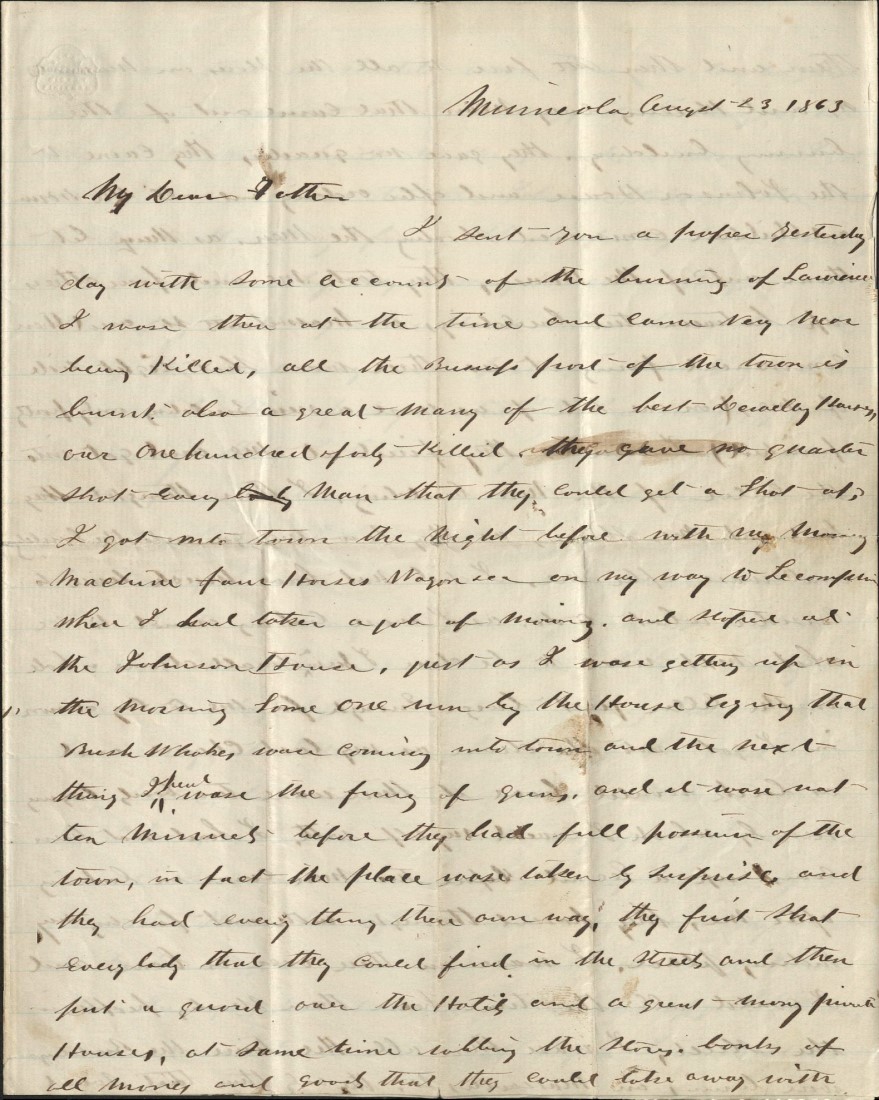
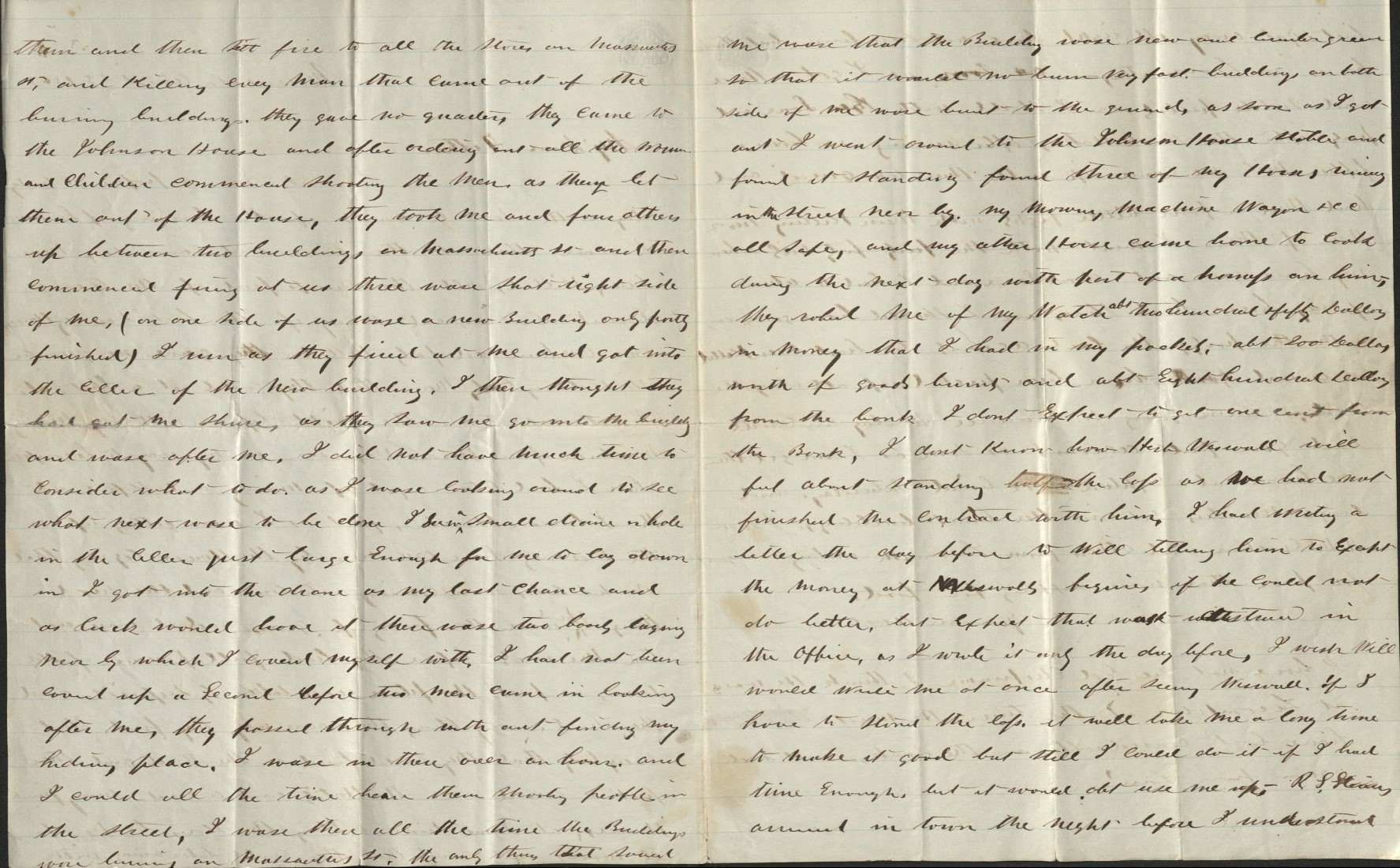
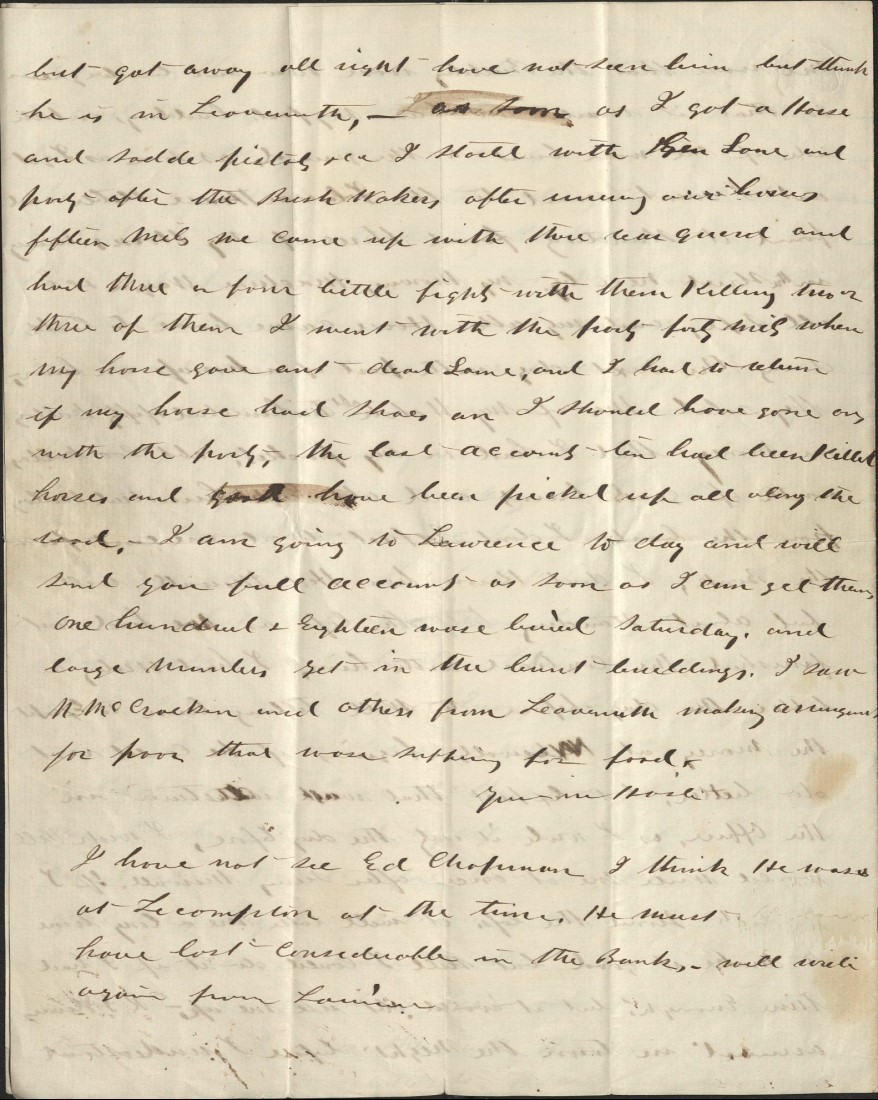
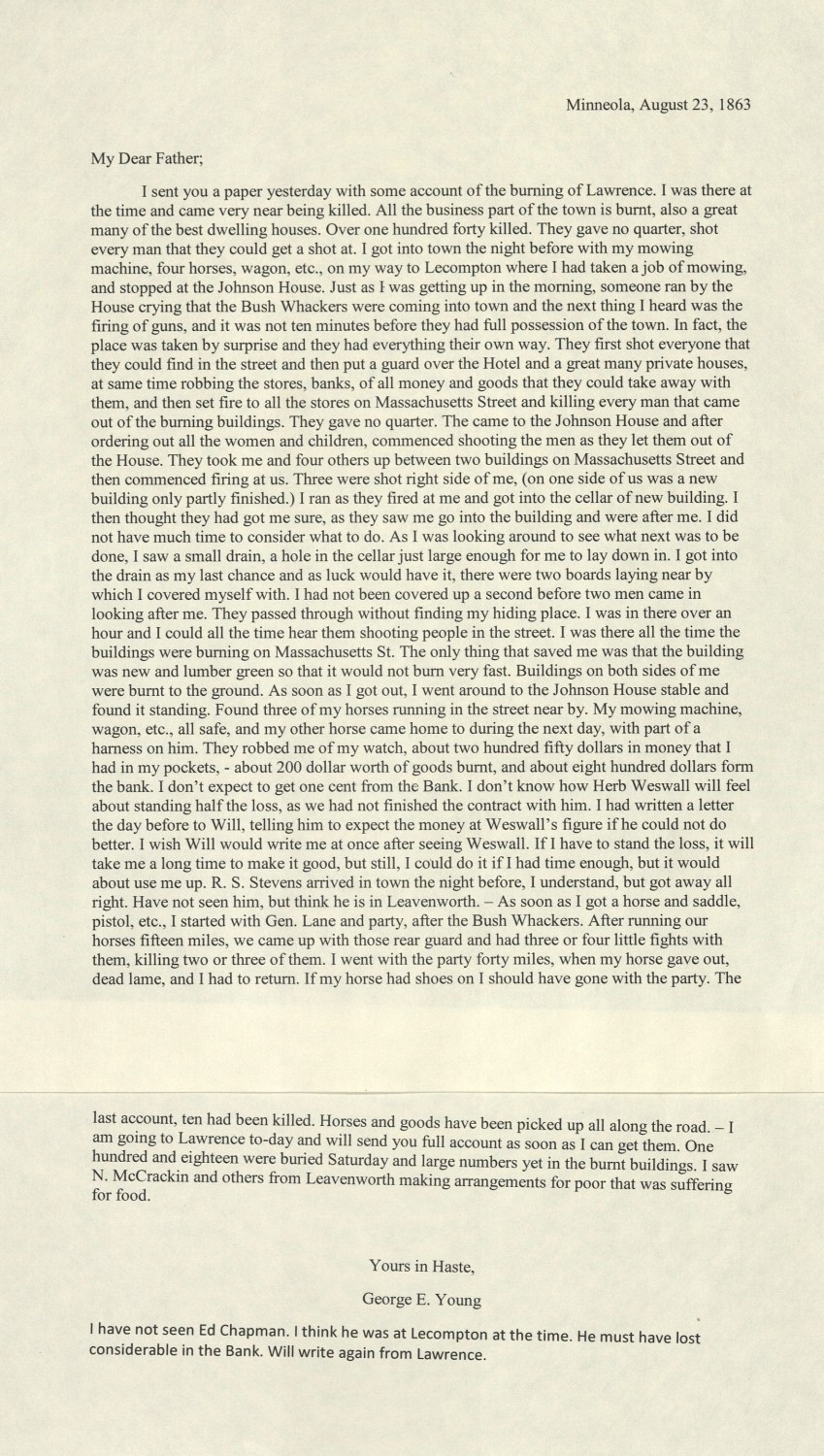
This week on That’s Distinctive! we share an original letter from George E. Young, a survivor of Quantrill’s Raid on Lawrence. This Monday, August 21st was the 160th anniversary of the raid, which left much of Lawrence in disarray and burned to the ground. Many innocent people lost their lives, and you can tell in the letter from George to his father that it seemed to be quite a distressing day for those who survived. The letter was written just two days after the raid. The results of the raid will likely never be forgotten.
Check the blog each Friday for a new “That’s Distinctive!” post. I created the series because I genuinely believe there is something in our collections for everyone, whether you’re writing a paper or just want to have a look. “That’s Distinctive!” will provide a more lighthearted glimpse into the diverse and unique materials at Spencer – including items that many people may not realize the library holds. If you have suggested topics for a future item feature or questions about the collections, feel free to leave a comment at the bottom of this page.
“First day of school! First day of school!” Nemo says excitedly in the beginning of Finding Nemo. The return to school is often an exciting time for students around the country. After a lengthy summer break, students are ready to return to the classroom with their new clothes, classroom supplies, and fancy lunch boxes. The night before, old routines are picked back up and much thought is put into the perfect first day outfit. Teachers have spent weeks preparing for the return of students, prepping to provide a safe and welcoming space for all identities.
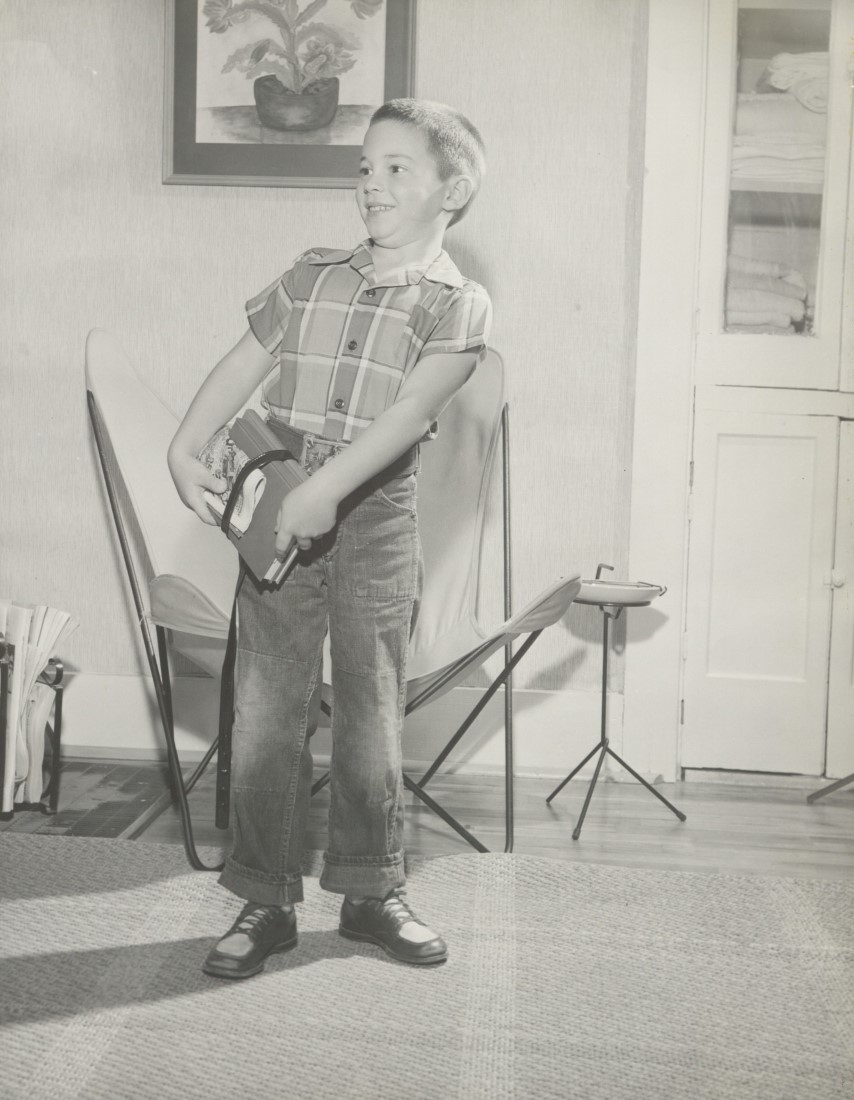
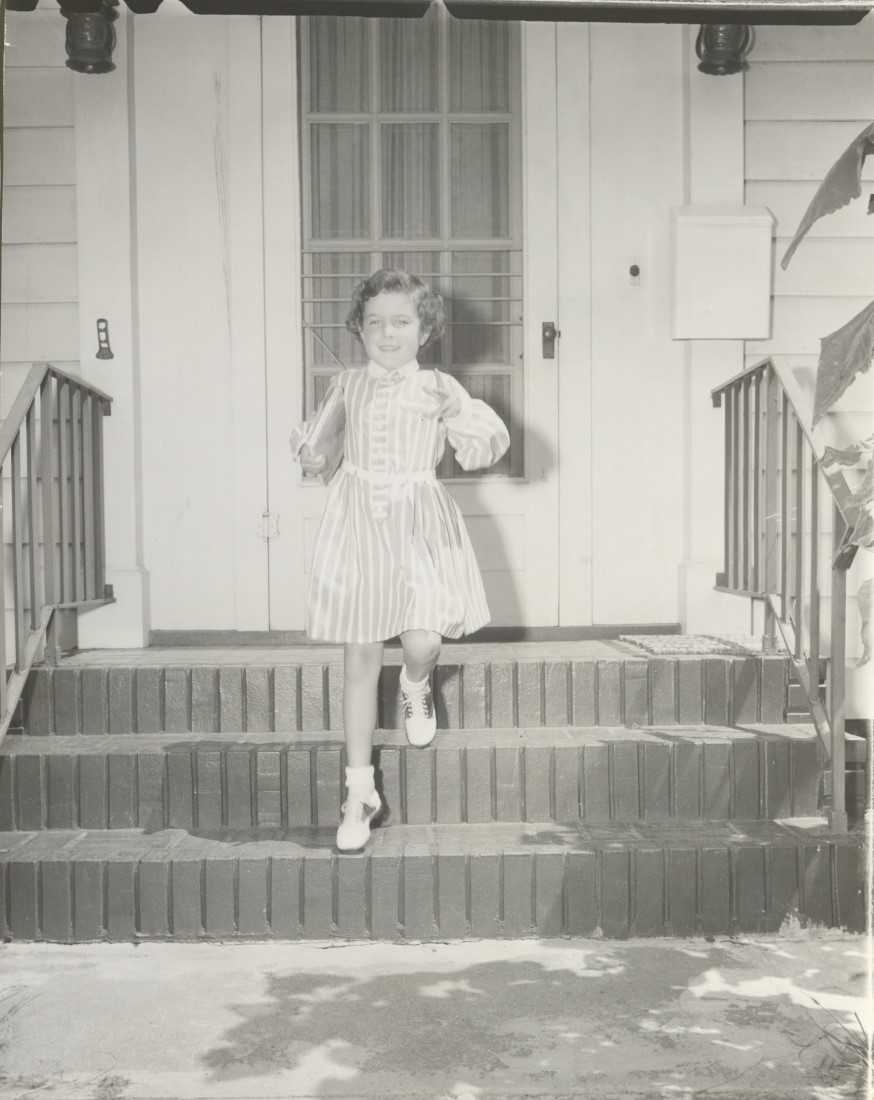
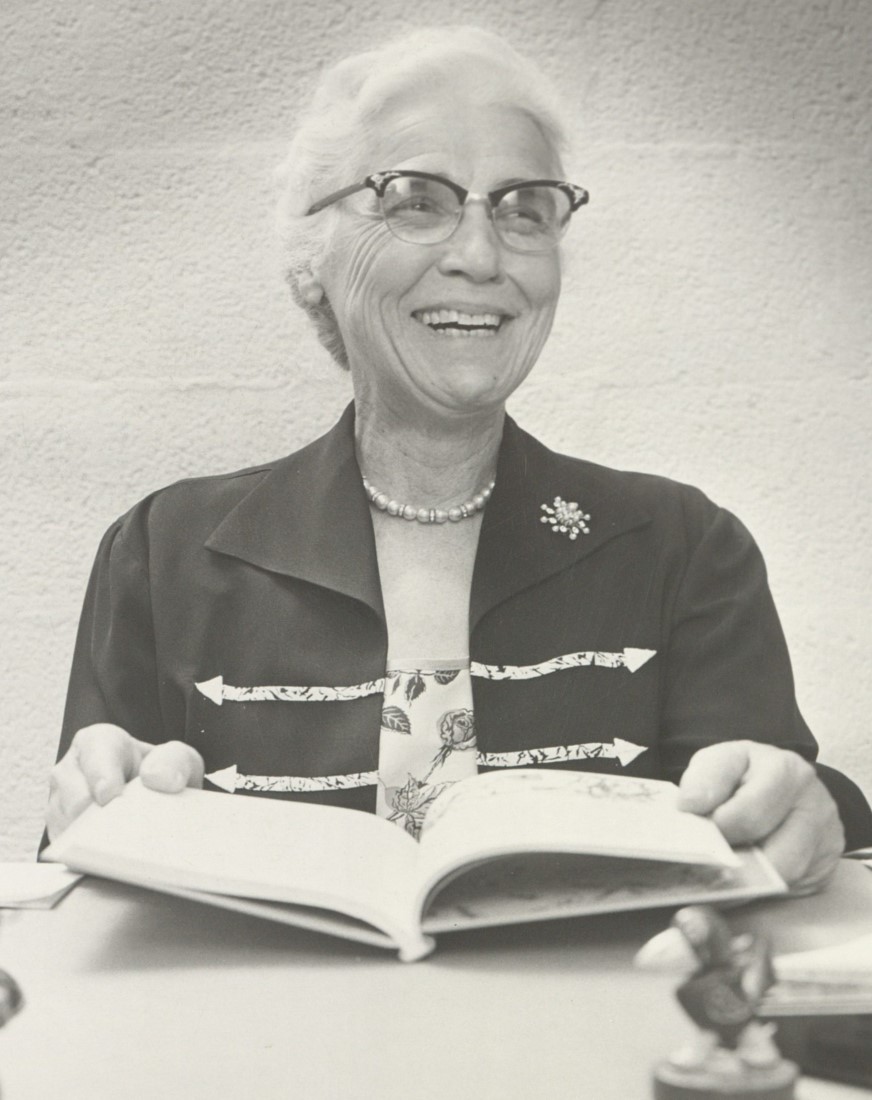
As it is once again time for students of all ages to head back to school, I thought it would be fun to share some Lawrence Journal-World photos from 1954 and 1955. The folders containing the photos are labeled “Back to School Edition.” The Journal-World Photograph Collection consists of approximately 660 boxes that house photos ranging from the 1950s through 2001. There are about 545 boxes of negatives, and an additional 113 boxes hold physical prints. Many of the photos involving KU have been removed from the collection and re-housed within University Archives.
A boy with his schoolbooks, 1954. Lawrence Journal-World Photograph Collection. Call Number: RH PH LJW. Click image to enlarge.
A girl on the front steps, 1954. Lawrence Journal-World Photograph Collection. Call Number: RH PH LJW. Click image to enlarge.
A woman, possibly a teacher, with a book, 1955. Lawrence Journal-World Photograph Collection. Call Number: RH PH LJW. Click image to enlarge.
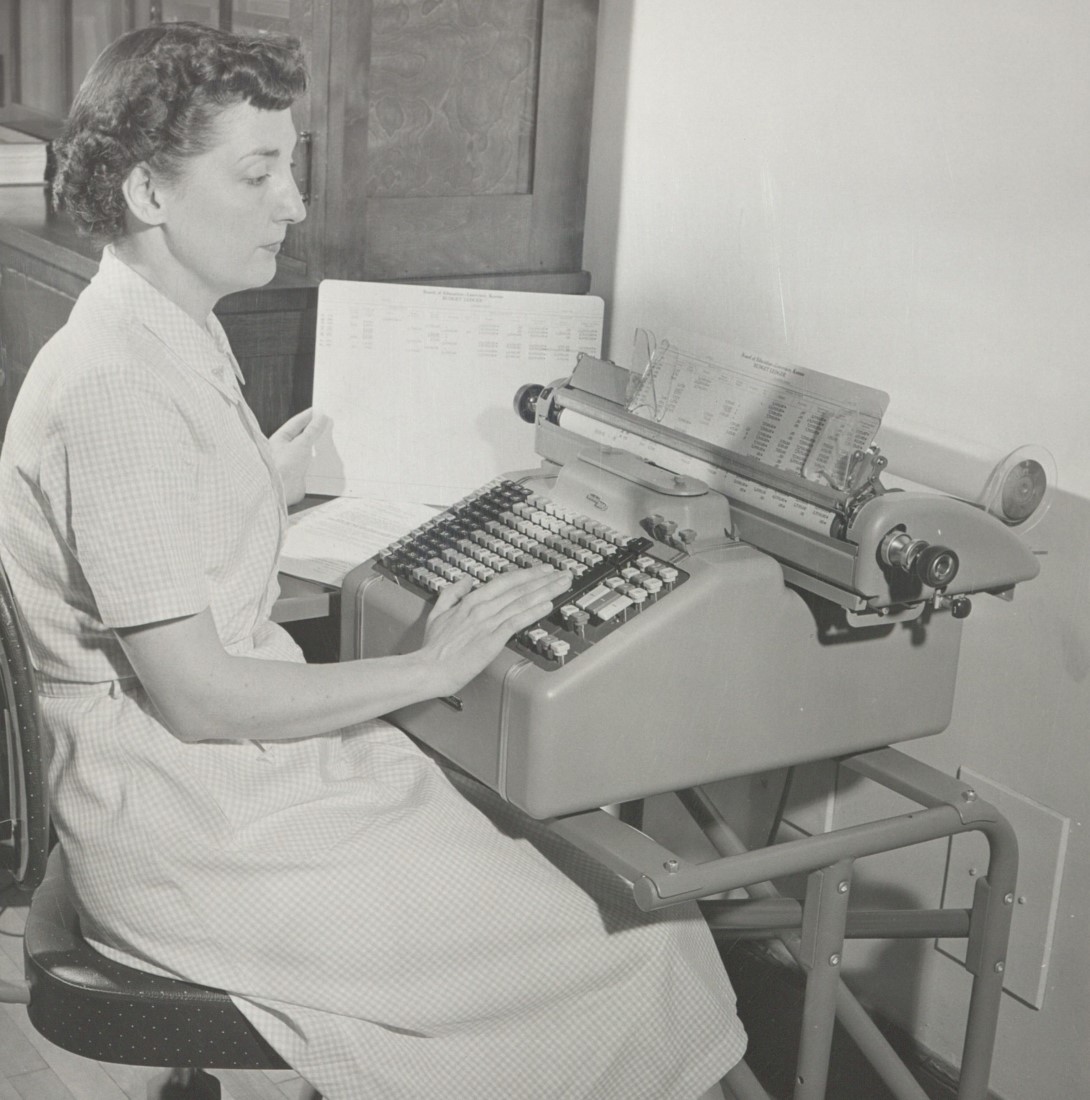
A woman, possibly a Lawrence School District employee, typing a budget ledger on a typewriter, 1955. Lawrence Journal-World Photograph Collection. Call Number: RH PH LJW. Click image to enlarge.
Check the blog each Friday for a new “That’s Distinctive!” post. I created the series because I genuinely believe there is something in our collections for everyone, whether you’re writing a paper or just want to have a look. “That’s Distinctive!” will provide a more lighthearted glimpse into the diverse and unique materials at Spencer – including items that many people may not realize the library holds. If you have suggested topics for a future item feature or questions about the collections, feel free to leave a comment at the bottom of this page.
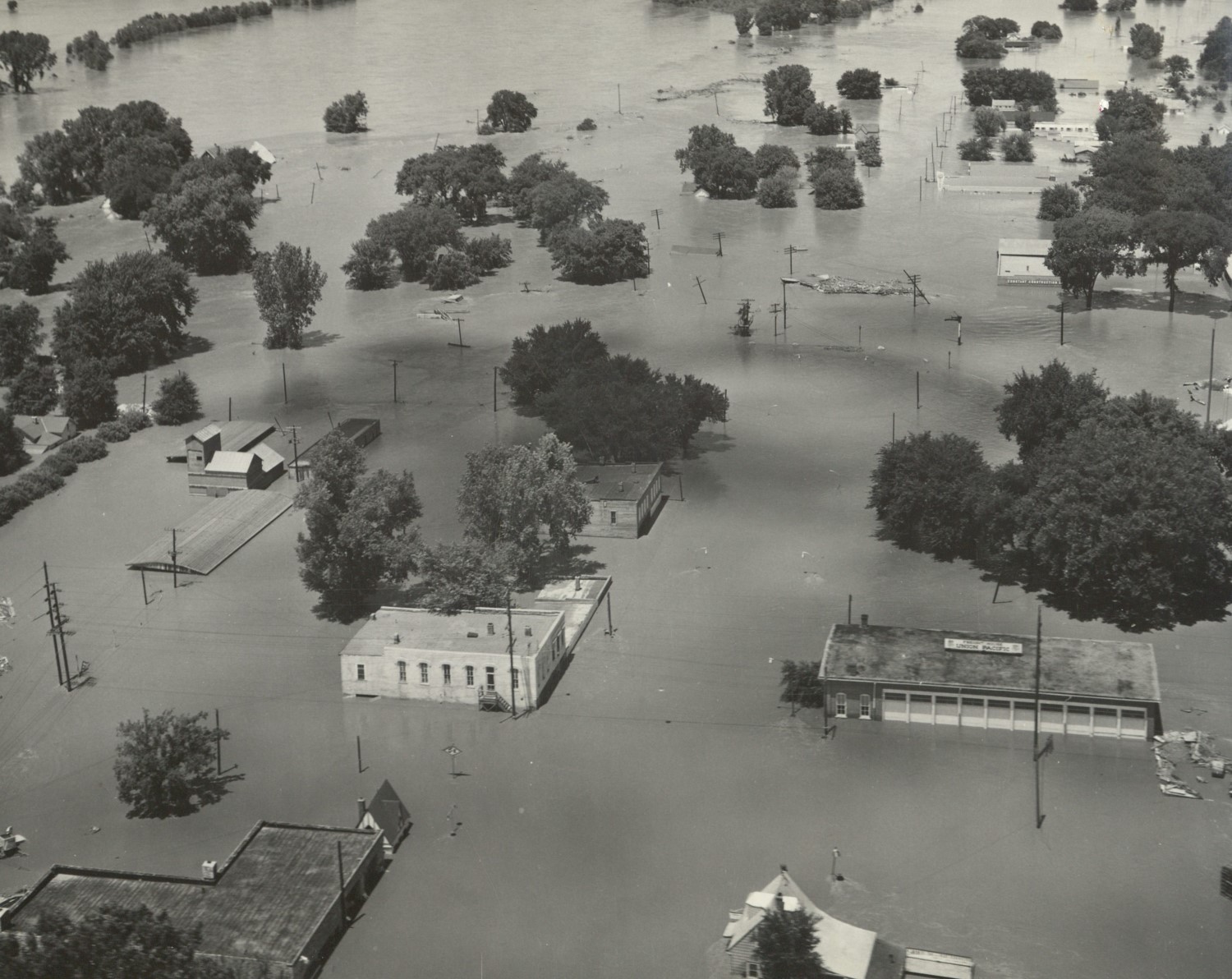
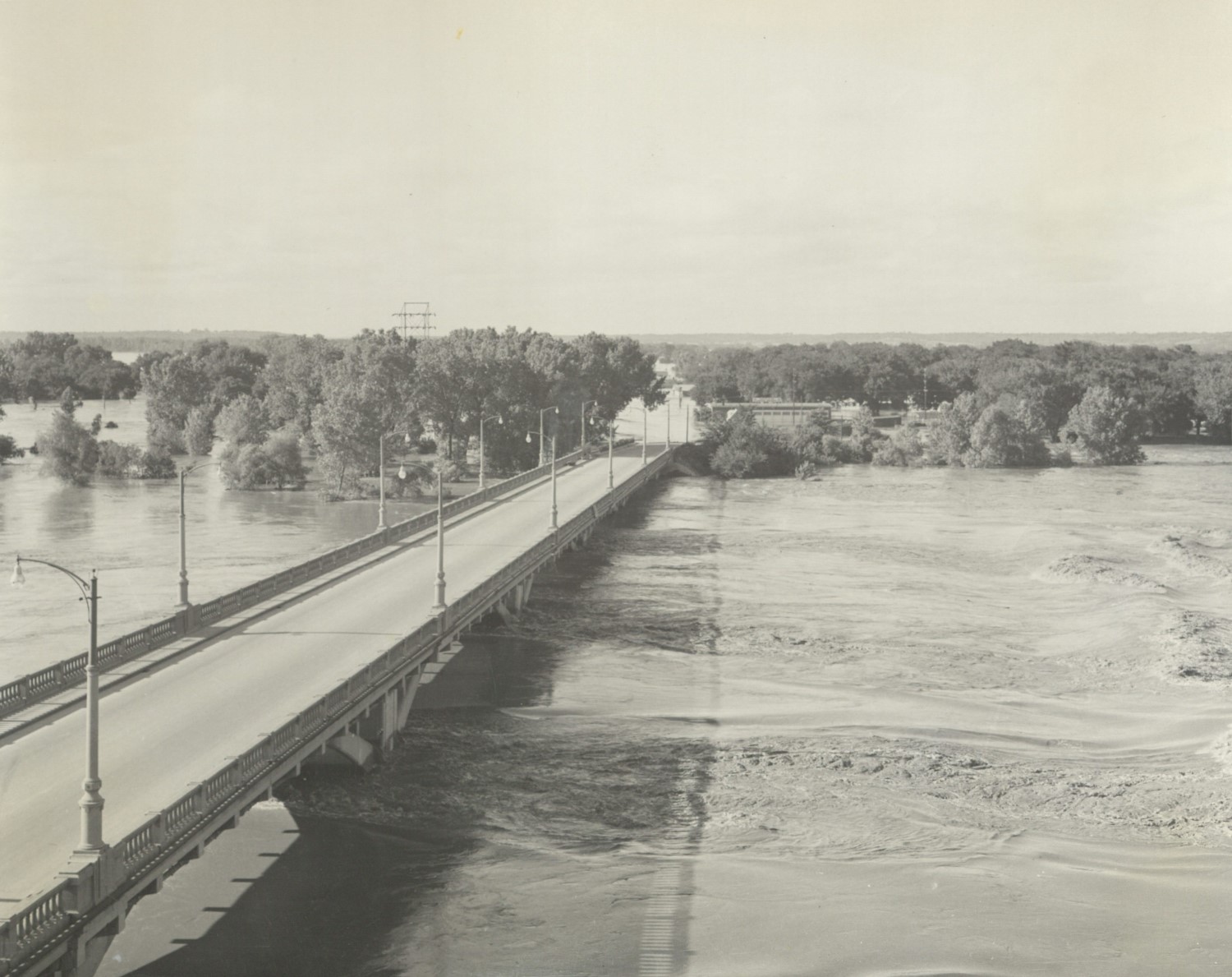
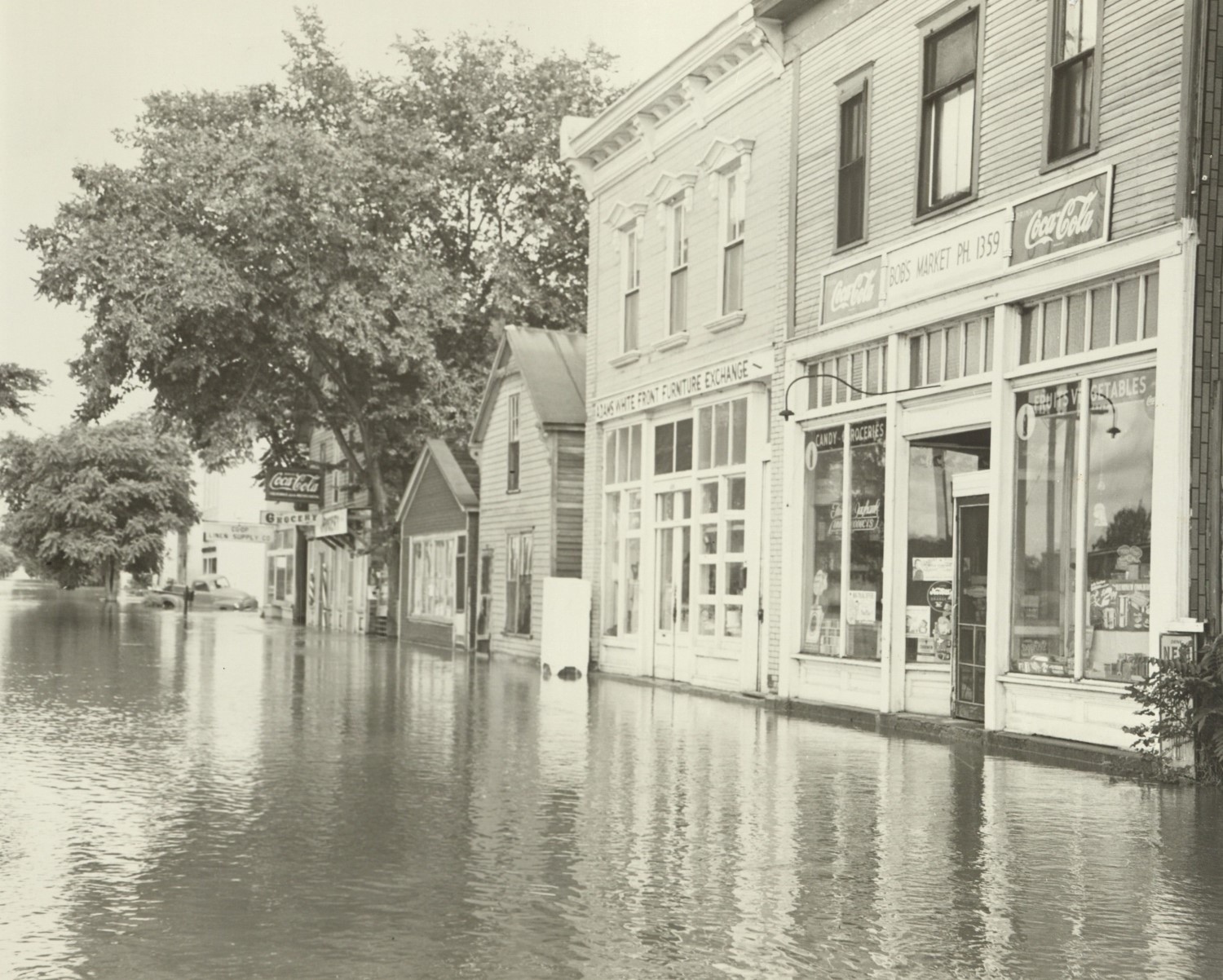
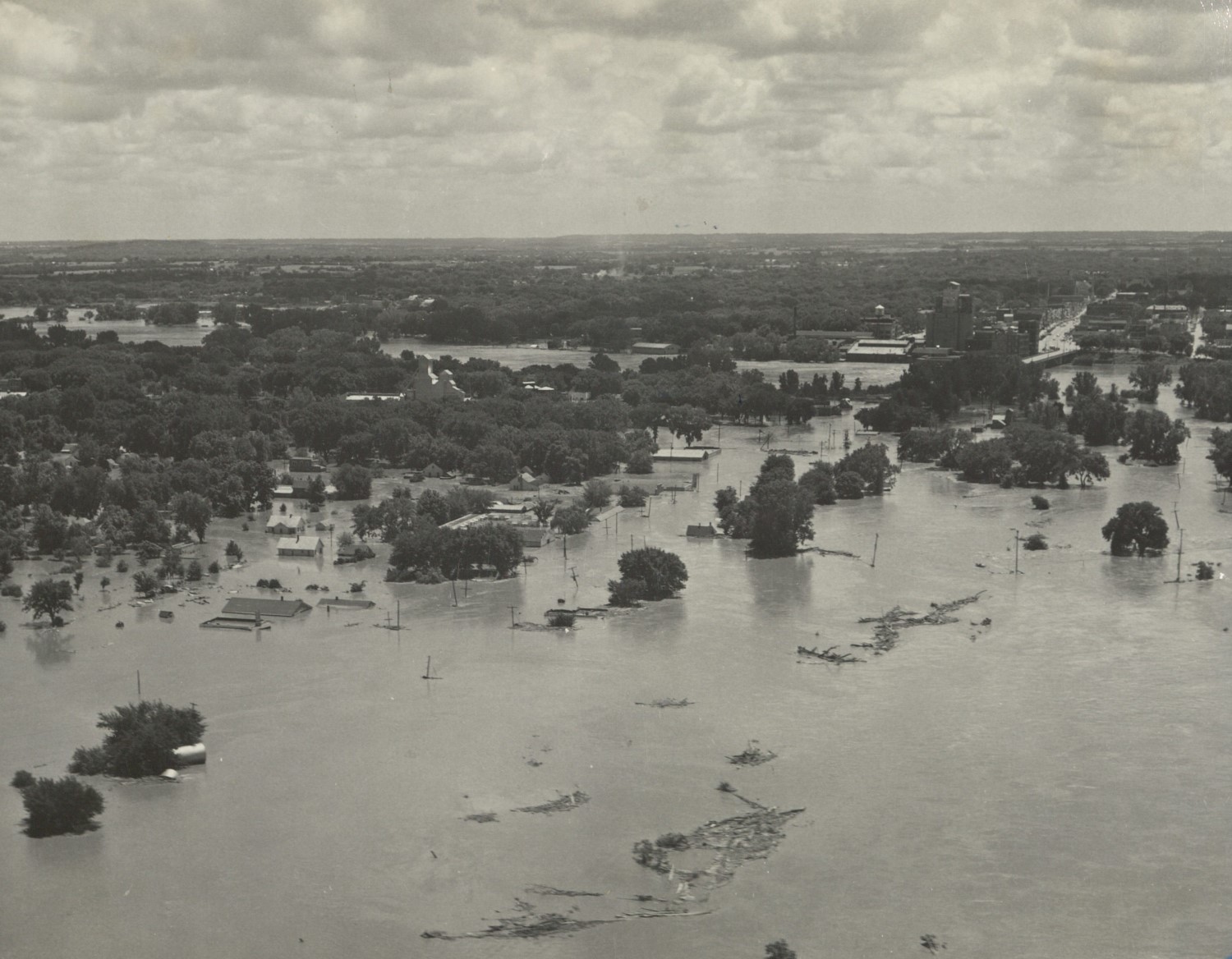
This week on That’s Distinctive! we share a photo collection from the flood of 1951. The photographs were taken by U.S. Naval Air Station Olathe personnel, unit NA87-2098-7-51 (Call Number: RH PH 172). According to Kansapedia, “July 13, 1951, has been called by some Black Friday.” This is the day that historic floods swept through the Kansas River Valley. Flooding began in Manhattan and continued down to Topeka, Lawrence, and Kansas City. The Kansas River crested in Lawrence at 29.90 feet, which was 11.90 feet above flood stage. In the end, 116 towns and cities were affected with 85,000 people evacuating homes and 10,000 farms suffering damage. According to the National Weather Service, damage was estimated to cost $760 million, which would be over $5 billion today.
North Lawrence in the vicinity of the Union Pacific Railway station at the height of the flood, 1951. 1951 Flood – Lawrence and Kansas City, Kansas, Photographs. Call Number: RH PH 172. Click image to enlarge.
The bridge over the Kansas (Kaw) River looking toward North Lawrence at the height of the flood, 1951. 1951 Flood – Lawrence and Kansas City, Kansas, Photographs. Call Number: RH PH 172. Click image to enlarge.
Locust Street in North Lawrence, 1951. 1951 Flood – Lawrence and Kansas City, Kansas, Photographs. Call Number: RH PH 172. Click image to enlarge.
North Lawrence, looking south, at the crest of the flood, 1951. 1951 Flood – Lawrence and Kansas City, Kansas, Photographs. Call Number: RH PH 172. Click image to enlarge.
The library houses many collections that share local history. Search our finding aids to see what we have.
More images of the flood can be found in person within other collections at Spencer or online through the Watkins Museum of History website.