The University of Kansas

Inside Spencer: The KSRL Blog

Books on a shelf

Welcome to the Kenneth Spencer Research Library blog! As the special collections and archives library at the University of Kansas, Spencer is home to remarkable and diverse collections of rare and unique items. Explore the blog to learn about the work we do and the materials we collect.

Student Spotlight: Claire Cox

October 9th, 2023

This is the latest installment in a series of posts introducing readers to student employees who make important contributions to the work of Spencer Research Library. Today’s profile features Public Services student assistant Claire Cox, who answered a few questions about the projects she works on at Spencer.

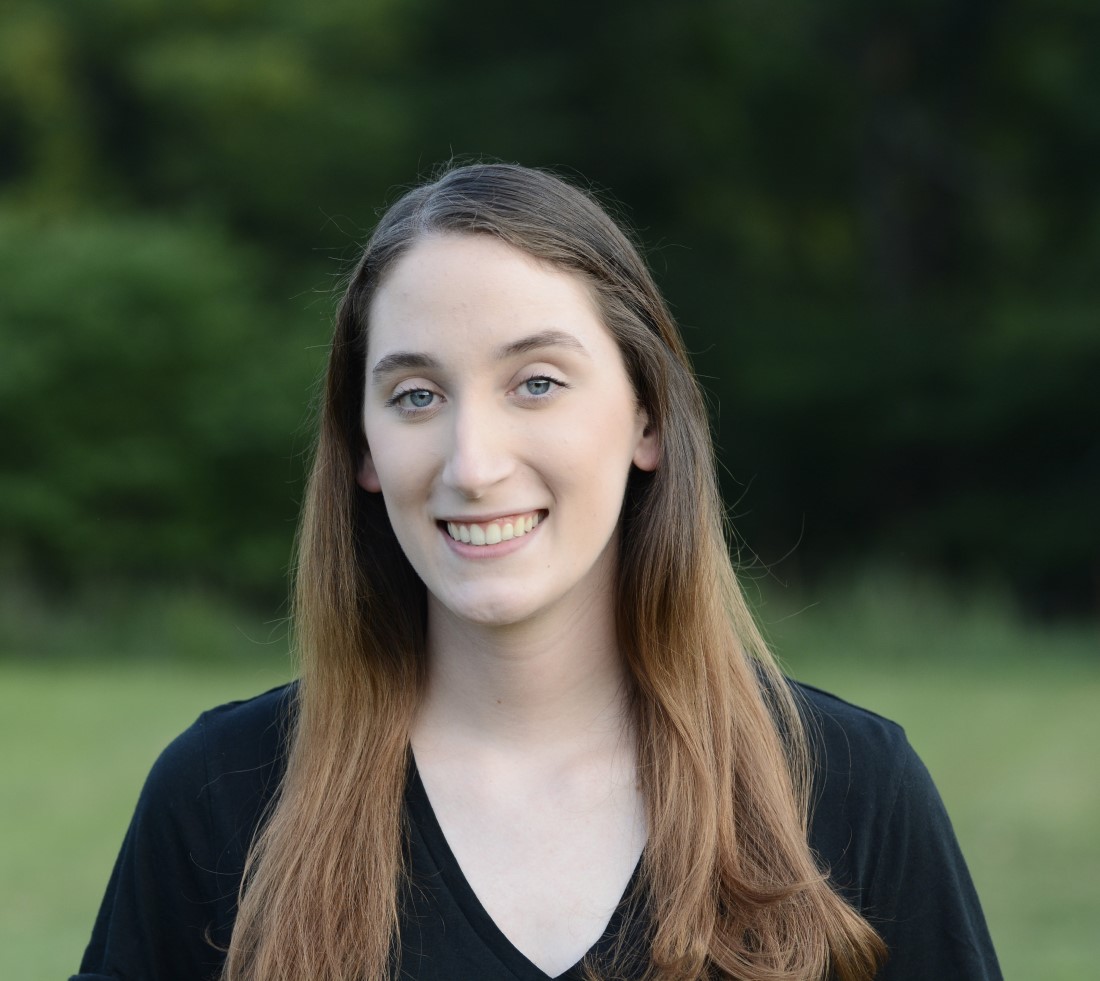
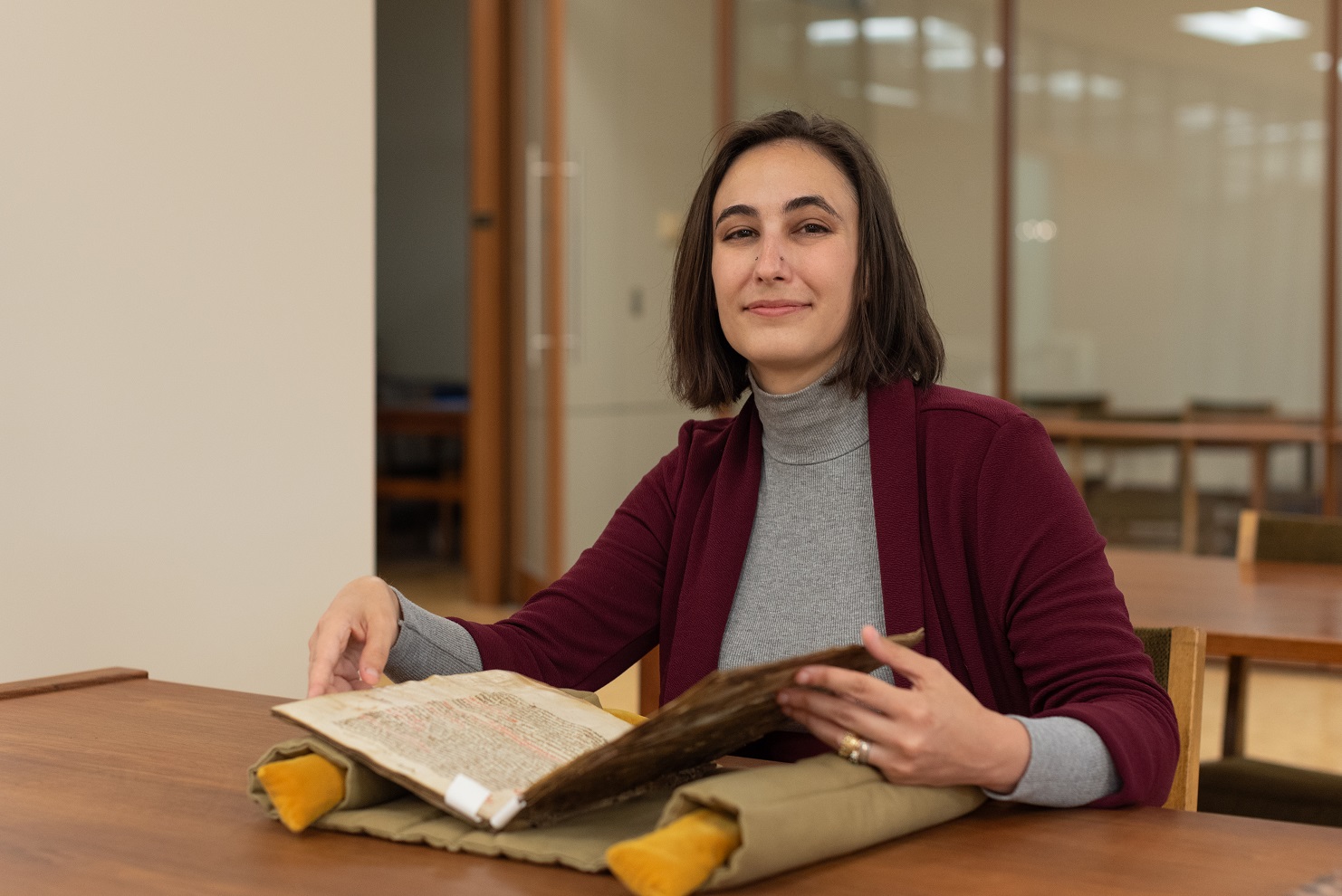
Headshot of a young woman.
Public Services student assistant Claire Cox. Click image to enlarge.
Please provide some brief biographical information about yourself.

I am an Accelerated M.A. student in the history department. This is my third year at KU, but my first year as a graduate student. As an undergraduate, I spent my first two years at Johnson County Community College before transferring to KU and earning my B.A. in May 2023. I majored in history with a minor in global and international studies. I started working at Spencer Research Library in August 2022.

What does your job at Spencer entail?

I am a public services employee. My job tasks include retrieving and re-shelving materials from the stacks, sitting at the reception and reference desks, and assisting researchers in the Reading Room. Occasionally I work on a shifting project in the stacks. I also get the opportunity to curate temporary exhibits located in our North Gallery.

What part of your job do you like best?

I really enjoy working in the stacks. Whether retrieving or re-shelving materials, I am usually handling new items that I have never seen before. Not only does this help me get to know the collections better, but it is also really fun and interesting. The Kansas Collection is my favorite part of Spencer. I am constantly looking at old books related to the Kansas environment from the nineteenth and early twentieth centuries. I also like working with the patrons that come into the Reading Room, and I love hearing about their research interests/projects.

What are you studying, and what do you hope to do in your future career? Has your work in at Spencer changed how you look at your studies or your future career plans in any way?

I study environmental history of the Great Plains in the twentieth century. I look forward to continuing my research on the relationship between Indigenous peoples, rural communities, and the environment by further examining the process of artificial lake-building in the region. As an undergraduate, I studied the construction of Clinton Lake near Lawrence. I plan to build upon this research throughout the upcoming year. As an employee at Spencer Research Library, I have learned a lot about how a special collections library works from behind the scenes. This knowledge informs how I conduct my own research, and I feel more confident when visiting other research institutions or archives. I have also found a lot of very useful material in the Kansas Collection about Clinton Lake, which I used for my undergraduate thesis project.

What advice would you offer other students thinking about working at Spencer Research Library?

I highly recommend working at Spencer. There are so many different opportunities for students to find a position that suits their own interests. Contrary to the stereotypical library job, working at Spencer never gets boring! Every day comes with new and exciting challenges.

Claire Cox
Public Services student assistant

Meet the KSRL Staff: Eve Wolynes

August 29th, 2023

This is the latest installment in a recurring series of posts introducing readers to the staff of Kenneth Spencer Research Library. Today’s profile features Eve Wolynes, who joined Spencer Research Library in June 2023 as an Assistant Librarian and a Special Collections Curator.

Special Collections Curator Eve Wolynes in the reading room of Spencer Research Library with MS E256

Eve Wolynes, Special Collections Curator, in Spencer Research Library’s reading room with MS E256. Click image to enlarge.

Where are you from?

I’ve hopped around a fair amount. I was born in Urbana-Champaign, Illinois, and moved to San Diego when I was ten. As an adult, I’ve lived in Berkeley, Houston, South Bend (Indiana), and Dayton (Ohio) before finally making my way here.

What does your job at Spencer entail?

I’m a Special Collections Curator. While other curators and archivists at Spencer tend to have specific subjects, regions or materials they work with, Elspeth Healey and I cover everything in the Special Collections, which includes a huge range of materials — from Roman funerary stones, to medieval manuscripts, to modern poetry, science fiction and artists books, and spans the entire globe, from Guatemala to Italy to Japan. My responsibilities include collection development – helping to build the collection through purchasing new items and coordinating donations – as well as instruction with undergraduates, answering reference questions and supporting use of the items by researchers and users, and engaging with outreach through things like exhibit design and public events.

How did you come to work in libraries/archives/special collections?

As with so many stories, it began with a very sickly dog. While I was in grad school, working on my Ph.D. in medieval history, my dog had a health emergency and needed surgery, but I couldn’t afford to pay the vet bill on my graduate student stipend. To pay off the debt, I took on a job at my university’s library, and eventually moved into their Special Collections department when a position opened. Eventually I paid off the vet bill but realized I still wanted to work at the library; I felt like I had found a sense of community, that the work was a fun series of puzzles, challenges and mysteries, something different to learn every day. I started considering it seriously as a potential career direction. After I defended my dissertation straight into the pandemic, I took the shutdowns as a moment of contemplation to evaluate what I wanted to do; I decided to get my MLIS and to commit to Special Collections – and the minute I got back into a library I knew it was the right choice; I was at home again.

What is one of the most interesting items you’ve come across in Spencer’s collections?

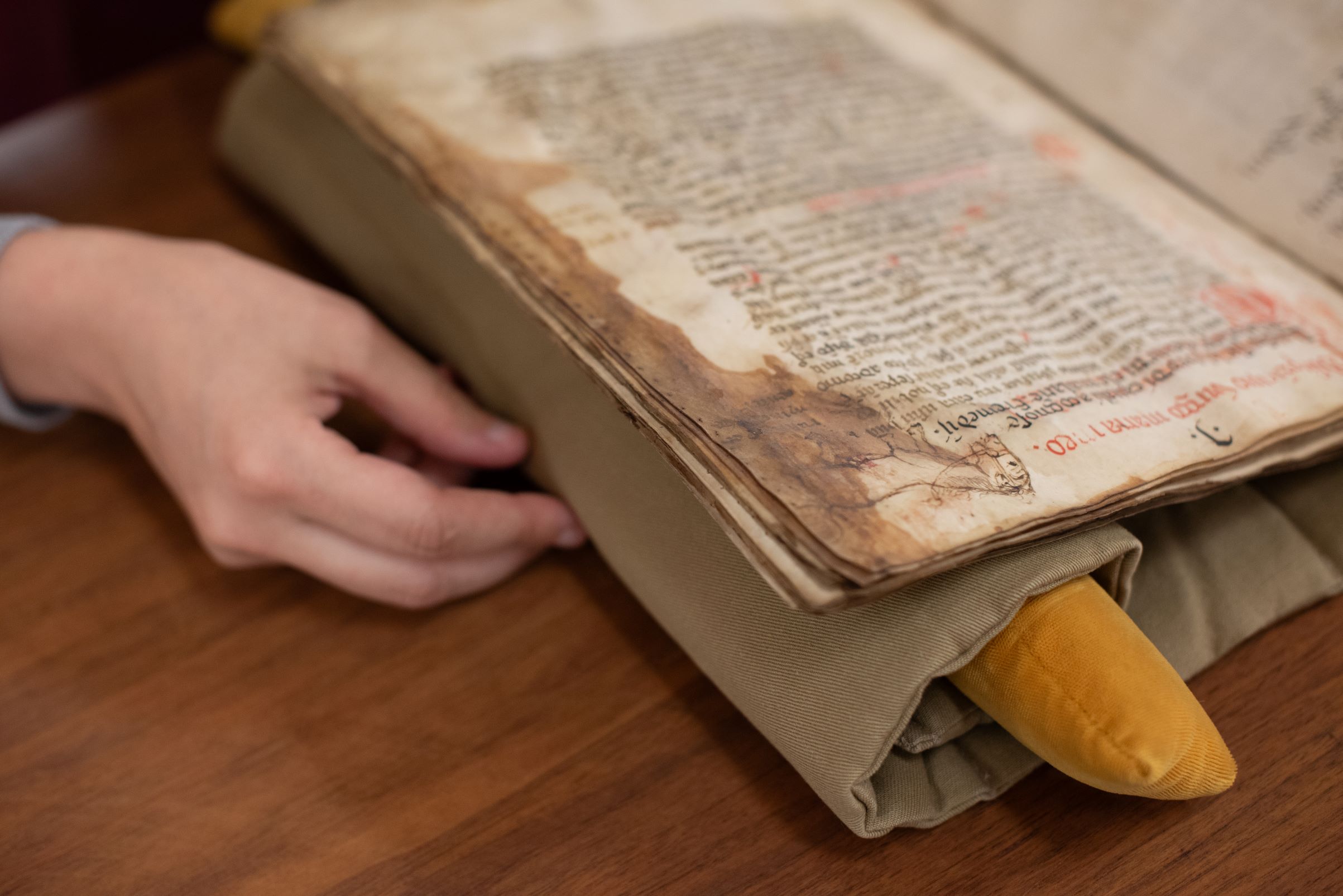
Lately I’ve been enamored with MS E256, Hippiatria by Giordano Ruffo; it’s a veterinary text on medicine, anatomy and training for horses dating to the 13th century. The manuscript gives you a sense of the relationship people had with their animals over seven-hundred years ago, and how our relationships with horses have transformed over time. Plus, it has a very cute little sketch of a pony on the first page. Which is the best part, really.

I also just love all the medieval manuscripts; there’s a special kind of love, work and dedication that goes into producing an entire text by hand, visible in the meticulous (and sometimes not so meticulous) handwriting, in the very pages themselves. They’re so human, from the shape of their letters to the scratches and scribbles in the margins, as every word embodies the person who took pen to page.

A manuscript copy of Giordano Ruffo's Hippiatria (MS E256) open to a leaf containing an illustration of a horse or pony.

A manuscript copy of Giordano Ruffo’s Hippiatria open to a leaf containing
a sketch of a pony. Italy, approximately 1290-1310. Call Number: MS E256. Click image to enlarge.

What part of your job do you like best?

I always love the strange and unique reference questions that lead me to fall down rabbit holes trying to hunt down an answer and make unexpected discoveries about materials in the collection; I love, too, when researchers and patrons can teach me something new in turn, or when I can help or watch them make a connection with the past – with their communities, cultures, experiences and memories, as embodied in the materials from our collections.

What are some of your favorite pastimes outside of work?

When I’m not living up the librarian life in the real world, I dabble in playing as a lore librarian in fantasy settings and video games like Baldur’s Gate 3 and Pathfinder Wrath of the Righteous, along with smaller indie games like Scarlet Hollow, Pentiment (a game practically made for medievalists and librarians), and The Excavation of Hob’s Barrow.

What piece of advice would you offer a researcher walking into Spencer Research Library for the first time?

If you’re worried about looking like you don’t know what you’re doing, or what you’re talking about – we’ve all been there, even the librarians! My first time in a special collections library was terrifying and confusing, too. The only reason librarians make everything look old hat and obvious is because we’ve had years or even decades to learn the often-labyrinthine logic and secrets from behind the scenes. But because we know all the twists and turns of our library and collection, we’re the best people to help guide you through it!

Eve Wolynes
Special Collections Curator

Behind the Scenes at Spencer Library: Paging and Shelving

August 16th, 2023

Visitors who have used collection materials in person at Spencer are familiar with the process: you create an Aeon account, check in at the reception desk, come into the Reading Room and check in with the librarian, and grab a table. Once that process has been completed, a student assistant (sometimes a staff member) goes into the stacks to retrieve your items and brings them to you.

While this seems like a simple process, many people outside of the library don’t really know what goes on behind the scenes. In fact, there are many internal processes in place to track each item’s every movement in the building and to ensure it is put back in the correct spot.

In today’s blog post we will discuss two related behind-the-scenes processes: paging and shelving. In short, paging refers to retrieving items from the stacks and shelving (sometimes referred to as re-shelving) deals with returning items to their appropriate place in the stacks. A majority of this work is done by our student workers, though staff contribute as well. Why don’t we have researchers page and shelve the materials they use? Well, with materials as distinct as ours, you can never be too careful. Spencer is a closed stacks library, which means that only staff members and student assistants are allowed to access secure collection storage areas known as the stacks. There are five levels of stacks throughout the building to house our materials. Additionally, as you may have seen in Marcella Huggard’s blog post from July 3rd, we use our own unique call number system within the stacks, and items are frequently shelved by size.

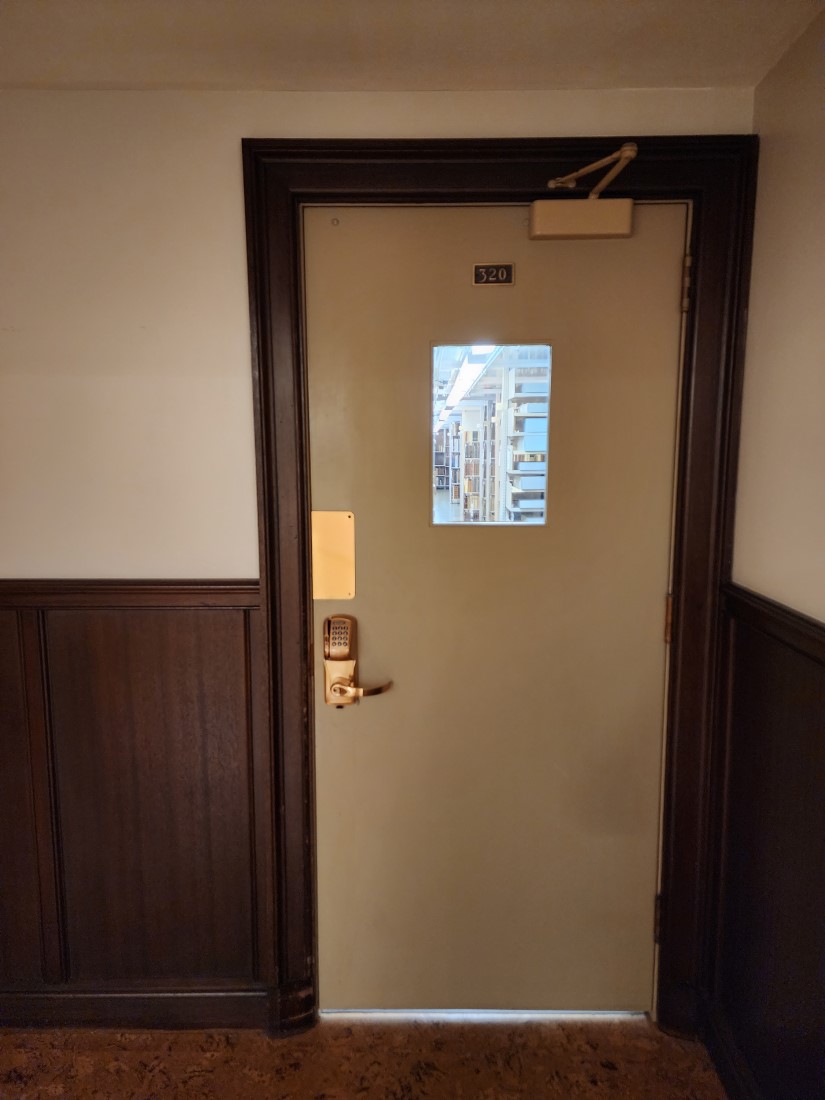
Color photograph of a tan door with a small window and a dark wood frame.
The door to a secure stacks, or collection storage, area at Spencer Research Library. Click image to enlarge.
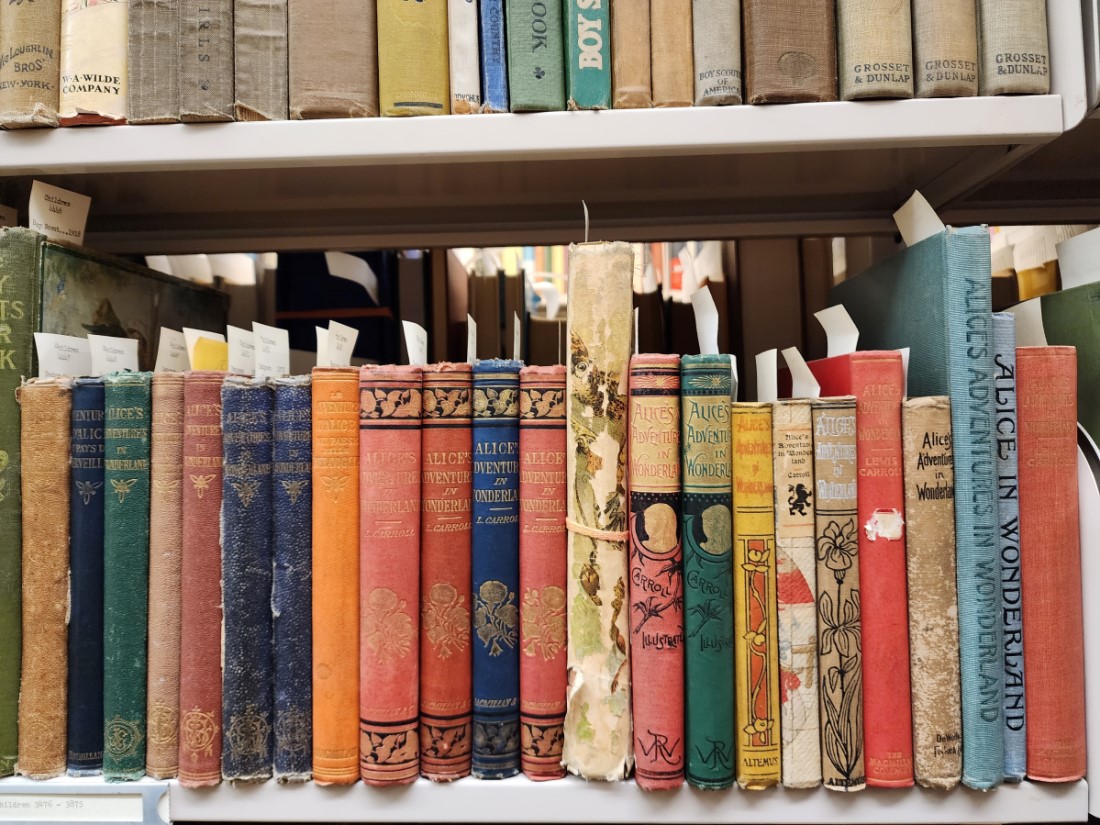
Color photograph of books - different editions of Alice's Adventures in Wonderland - lined up horizontally on a shelf.
A representative shelf of books in Spencer’s stacks. Click image to enlarge.
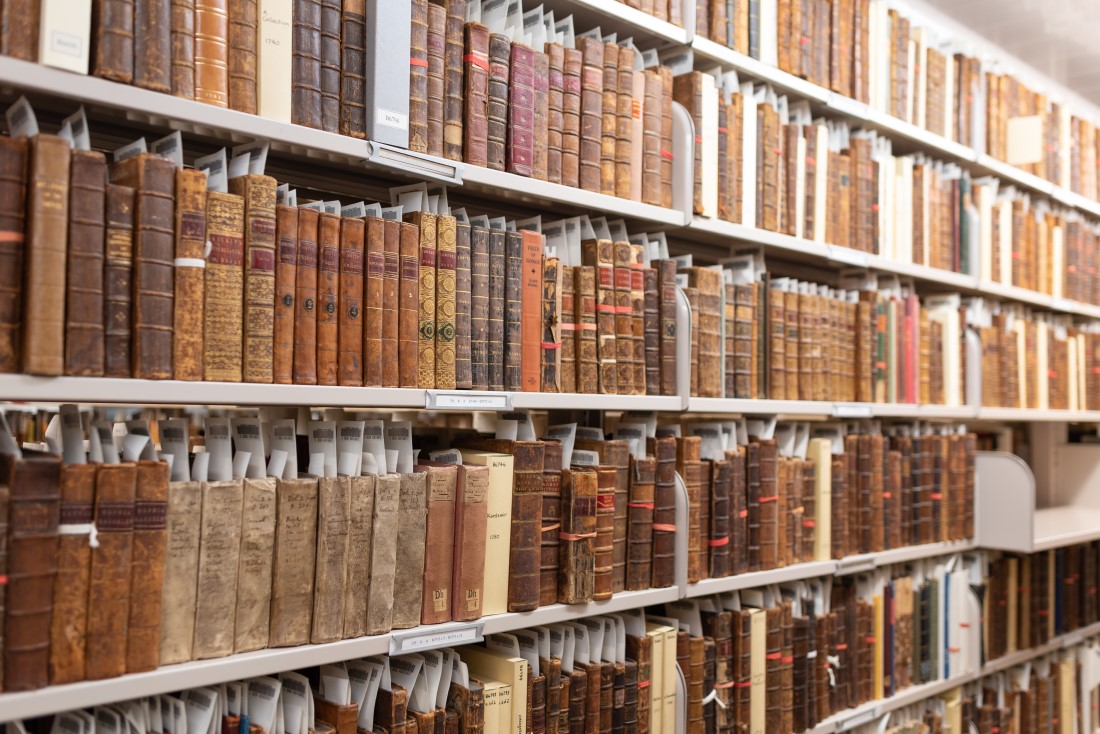
Color photograph of long rows of floor to ceiling shelves filled with books.
A section of Spencer’s stacks. Click image to enlarge.

Paging

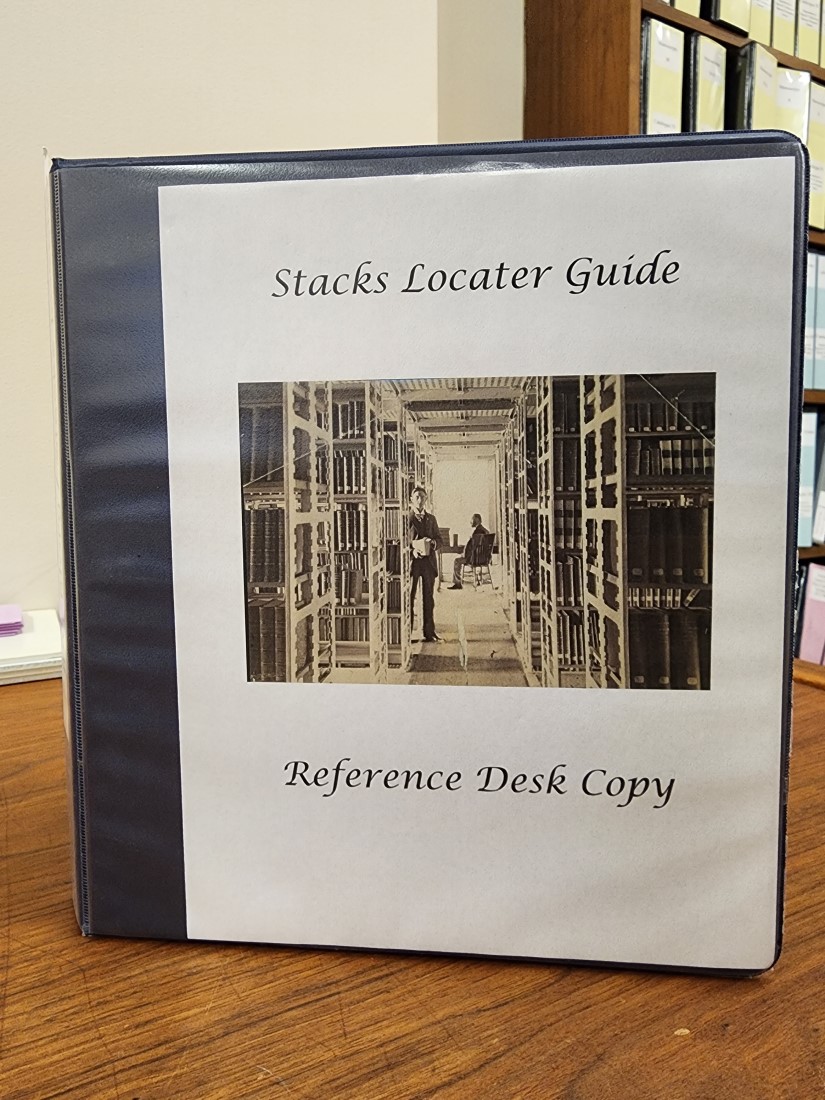
To begin paging, a call slip must first be printed. Once the call slip is printed and the item is marked as “being paged” in Aeon, the student uses our stacks locator guide to determine what room the item is in. The stacks locator guide is the document we use to indicate where every item in the collection is located. This detailed inventory, which is updated and revised frequently, helps staff keep track of where items are and when they have moved.

Color photograph of a binder standing vertically on a table, cover facing forward.
A copy of Spencer’s stacks locator guide. Click image to enlarge.

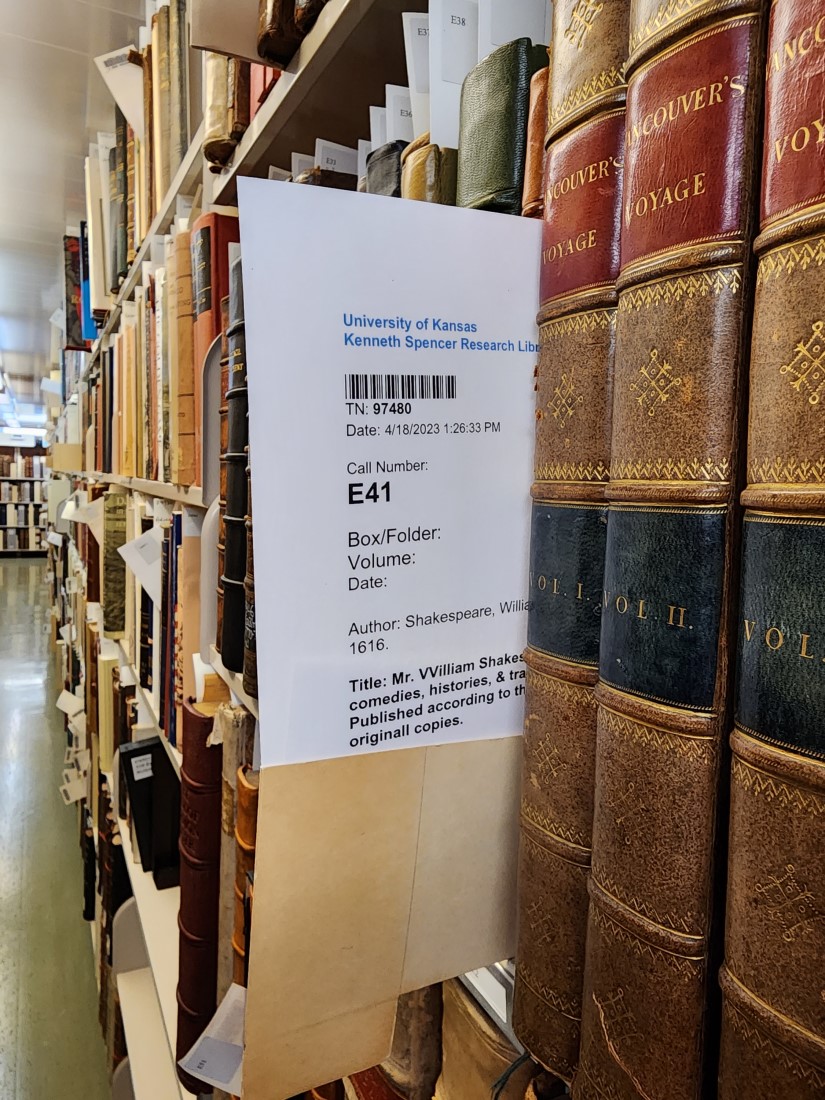
Once in the stacks, the student grabs a book truck and a charge-out flag. The student then goes through the stacks to the location of the item for retrieval. As the item is pulled off of the shelf, the charge-out flag containing one half of the call slip goes in its place on the shelf. You will notice in the photo below that the most essential parts of the call slip are the item name (title) and the call number. The other half of the call slip stays with the item. The item is then brought back to the Reading Room, marked as “checked out” in Aeon, and given to the patron.

Color photograph of a strip of white paper with text, sitting in a cardboard holder that hangs off a bookshelf.
A charge-out flag containing one half of a call slip. Click image to enlarge.

Spencer staff members do not monitor Aeon requests as they come in; all paging is done when the patron arrives. Depending on the location and quantity of requests, paging can take anywhere from five to ten minutes.

Shelving

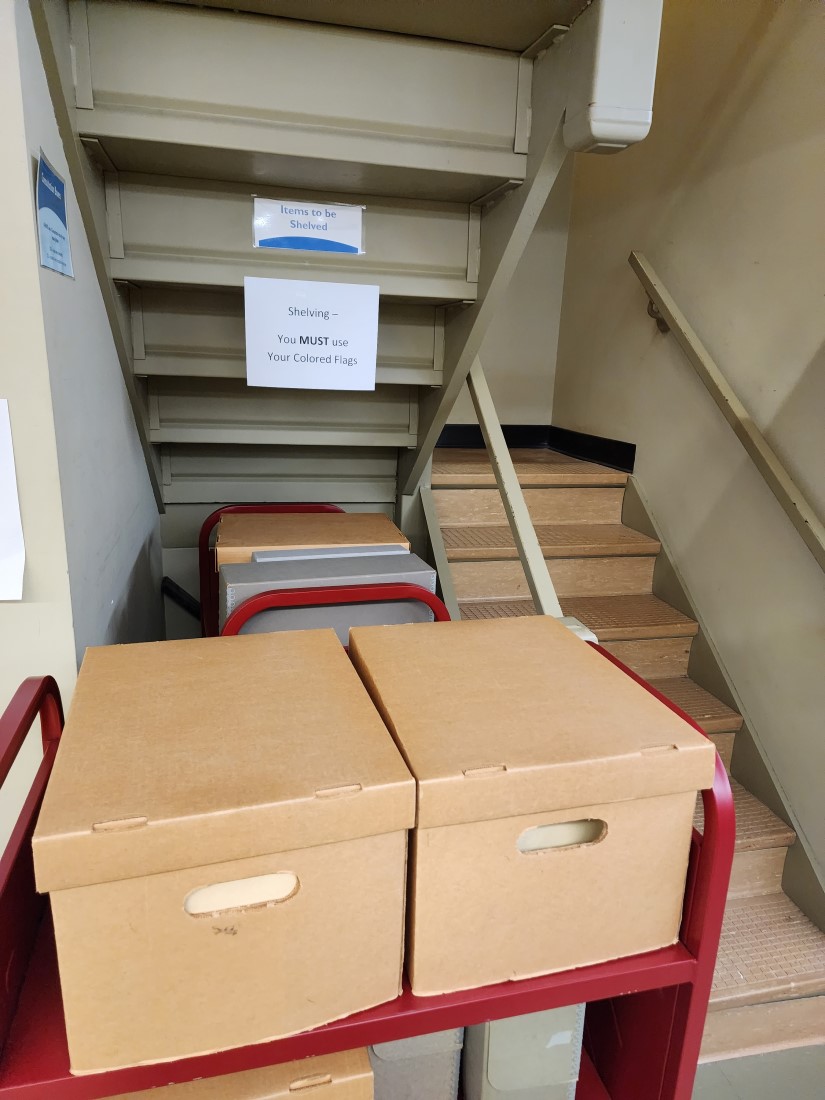
When a patron is done with an item, it is marked as “to be re-shelved” in Aeon and taken back to the stacks. Shelving is not done immediately. We have an area in the third-floor stacks where we place items to be re-shelved, and students work on it as they have down time.

Color photograph of cardboard boxes sitting on book trucks beneath and next to a staircase.
The re-shelving area at Spencer Research Library. Click image to enlarge.

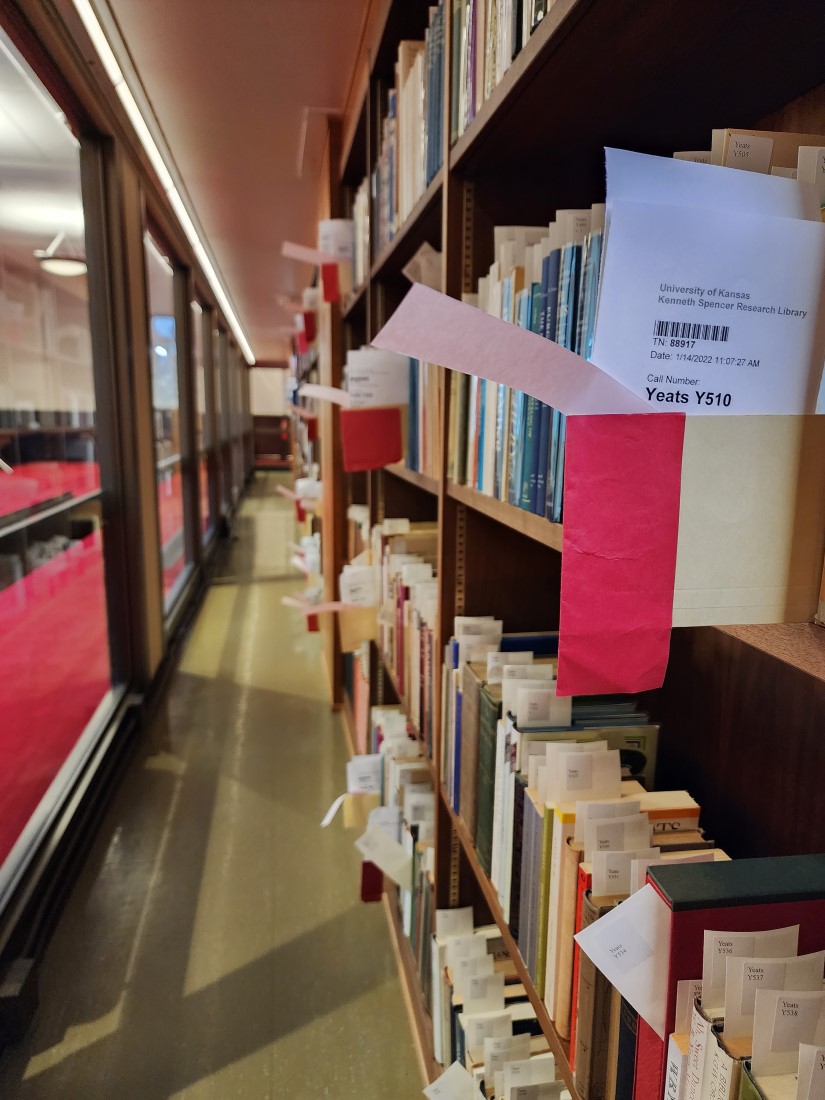
When a student goes to shelve an item, they hope the student who paged it wrote the item location on that half of the call slip. If not, the student who is shelving must also use the stacks locator guide to determine where the item belongs. Once the location is determined, the student takes the item back to that spot. Before placing the item in the proper location, the student confirms that the two halves of the call slip – the one that remained on the shelf and the other that traveled with the item – match identically. If this is the case, the student puts the item back on the shelf and adds the second half of the call slip to the charge-out flag along with the student’s re-shelving flag. Each student’s re-shelving flag is a different color so staff can determine who shelved an item if something is done incorrectly.

Color photograph of a strip of white paper with text, sitting with a pink slip of paper in a cardboard holder that hangs off a bookshelf.
A Spencer Research Library stacks area with re-shelving flags. Click image to enlarge.

After items are shelved, Spencer Operations Manager Meredith Phares goes through the aisles of the stacks and “revises” to double check that items are in the correct space. This is a whole other process that could use its own blog post.

Hopefully, this post helps patrons better understand the processes that happen behind the scenes when using the library. Everything that happens in the library has its own process that goes with it.

Tiffany McIntosh
Public Services
New Finding Aids, January-June 2023

July 3rd, 2023

Have you figured out how call numbers at the Spencer Research Library work yet?

Here are a couple of clues for manuscript collections; see if you can apply them when you review this listing of the front half of 2023’s new finding aids!

  • PP = Personal Papers, which are typically collected by the University Archives
  • RH = Regional History (the Kansas Collection’s name has gone back and forth over the years)
  • MS = manuscript (can be found in call numbers for textual materials in both the Kansas Collection and Special Collections)
  • PH = photograph (you will only see this call number designation in the Kansas Collection)
  • WL = Wilcox (historically, the Wilcox Collection has been associated with the Kansas Collection, so you’ll typically see “RH WL” together)

It’s a bit like a mathematical formula, if you combine parts of these call numbers. For example, “RH WL MS” means it’s a Wilcox manuscript collection.

Spencer Research Library also typically houses material by size, most often by height for volume call numbers. “A” volumes will be some of the smallest (typically measuring between ten and 15 cm tall), while “H” volumes are frequently stored flat because they are so large (usually over 45 cm tall).

Spencer also uses letters to designate other sizes of materials. A “P” in a call number means that it’s so thin and/or such a small amount of material it’s stored in a single folder or small number of folders, not enough to fill a box or stand upright on a shelf by itself.

So, for another call number formula example: “MS P” means it’s a Special Collections manuscript collection in a single or small number of folders.

Armed with this information, do you think you can figure out which collections belong to which collecting areas and what kind of housing they might have from our listing of newly processed collections?

Oak Ridge Birthday Club collection, 1923-2006 (RH MS 1577)

Winfield Lodge No. 101 of the Independent Order of Odd Fellows record book, June 11, 1891-March 31, 1898 (RH MS G89)

“The Kansas Primer,” 1889 (RH MS B79)

George W. Johnson letter, May 3, 1891; postmarked May 24, 1891 (RH MS P999)

Henry Schilb land grant, February 1, 1848 (RH MS Q499)

Kansas glass plate negatives, approximately 1890-1932 (RH PH 568)

Mike Rundle papers, 1981-2010 (RH MS 1571, RH MS Q496, RH MS R512, RH MS R514, RH MS S79, KC AV 127)

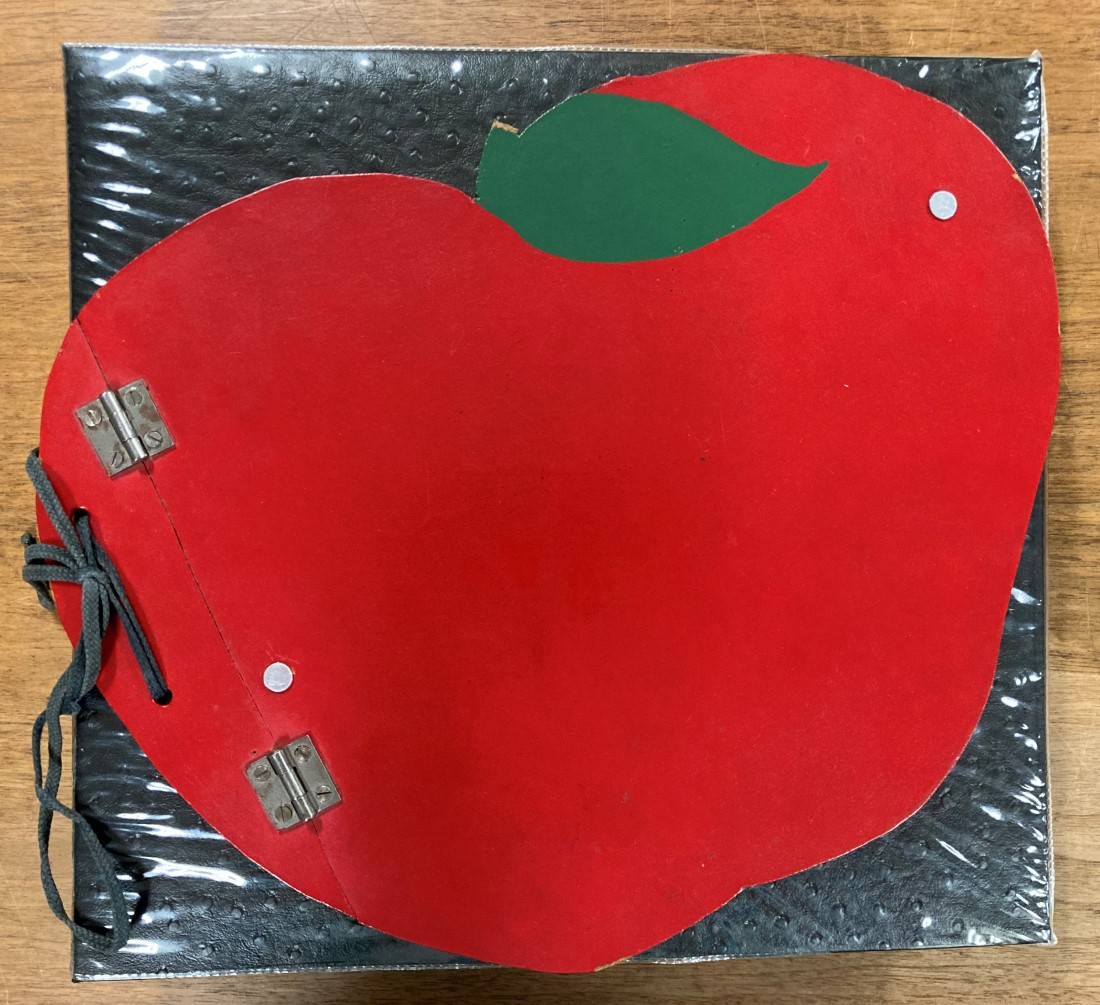
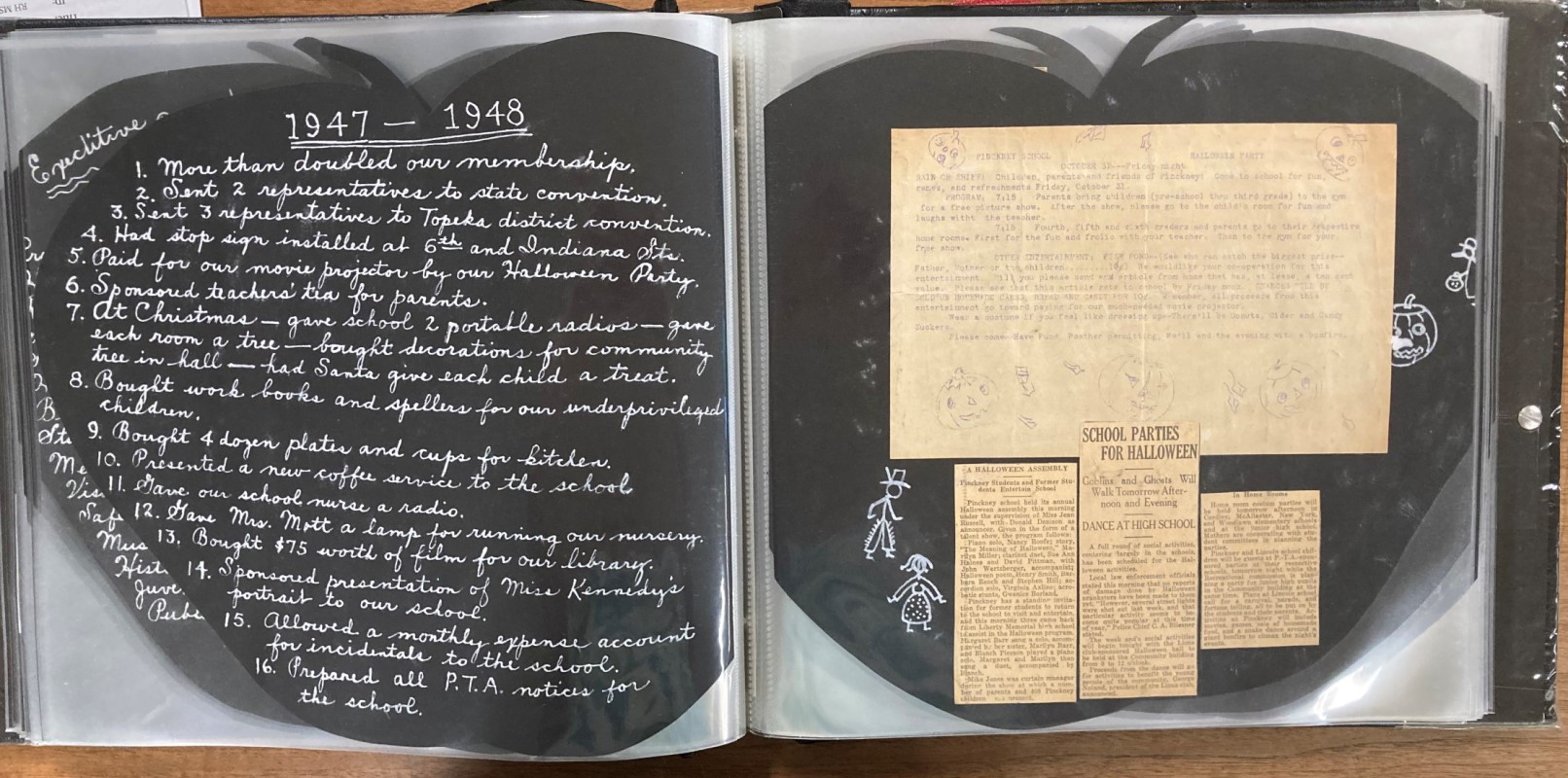
Pinckney School scrapbooks, 1947-2014 (bulk 1990-2014) (RH MS Q500)

Wooden red apple on top of and affixed to a black scrapbook cover.
|
Black pages in the shape of an apple. On the left is white handwritten text detailing highlights from the school year. On the right are clippings.
The cover of (above) and two pages in (below) a Pinckney School Parent Teacher Association (PTA) scrapbook, 1947-1948. School librarian Janet Reeder re-compiled the scrapbook at a later point, adding to it with reminiscences and other documents sent in from students who had attended Pinckney that year. Pinckney School Scrapbooks. Call Number: RH MS Q500. Click images to enlarge.

Elizabeth Szabronski-Carrie A. Hall quilt block research, approximately 1920s-1974 (RH MS 1578)

Personal papers of Mary K. Zimmerman, October 1976-April 2021 (PP 641)

Larry K. Laird papers, 1935-2006 (bulk 1980s-2000s) (RH MS 1579, RH MS Q502, RH MS R517)

Judge Earl E. O’Connor papers, 1941-1998 (RH MS 1581, RH MS Q504, RH MS R519, KC AV 128)

Penny L. Clark papers, 1971-2022 (RH MS 1553, RH MS Q487, KC AV 116)

Personal papers of Don and Del Fambrough, July 4, 1933-September 4, 2011 (PP 644)

Personal papers of Charles Himmelberg, 1895-2005 (bulk 1965-2005) (PP 643)

Personal papers of Harry Nicholas Rice, January 22, 1970-March 4, 2009 (bulk July 1970) (PP 647)

Green Thumb Garden Club records, 1961-2009 (RH MS 1585, RH MS Q506, RH MS R523)

Spencer Chemical Company photographs, 1940s-1950s; 2012 (RH PH 570)

S.D. Jeffers letter, approximately 1860s (RH MS P1000)

William L. Scheirman papers, approximately 1880s-1930s; 1991 (RH MS P1001)

Rolling Prairie Grange No. 1628 photographs, approximately 1916-1919; 2020 (RH PH P2948)

Arthur Moore collection, 1503-1857 not inclusive (bulk 1680s-1730s) (MS 143, MS Q32, MS Q96, MS C245, MS Qa39, MS R30)

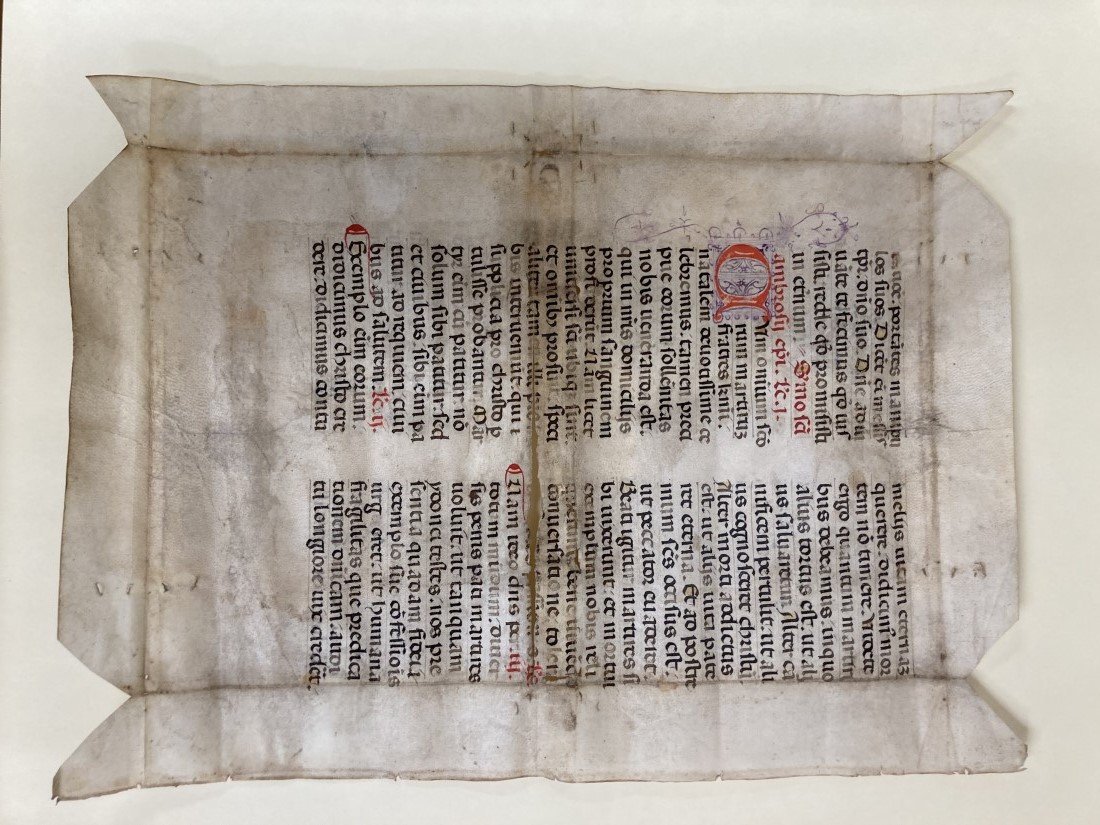
Manuscript fragments removed from book bindings, approximately 12th-16th, 19th centuries (MS 20, MS Q103)

Page with lettering and figures in red, purple, and (mostly) black ink. The corners of the page have been cut out, and there are noticeable lines where it was folded.
One of several binding fragments removed from some of Spencer’s earliest published volumes, in this case Giovanni Sfortunati’s sixteenth-century Nuovo lume libro de arithmetica at Summerfield C990. Call Number: MS Q103. Click image to enlarge.

Personal papers of Stuart Levine, 1932-2016 (bulk 1958-1986) (PP 646)

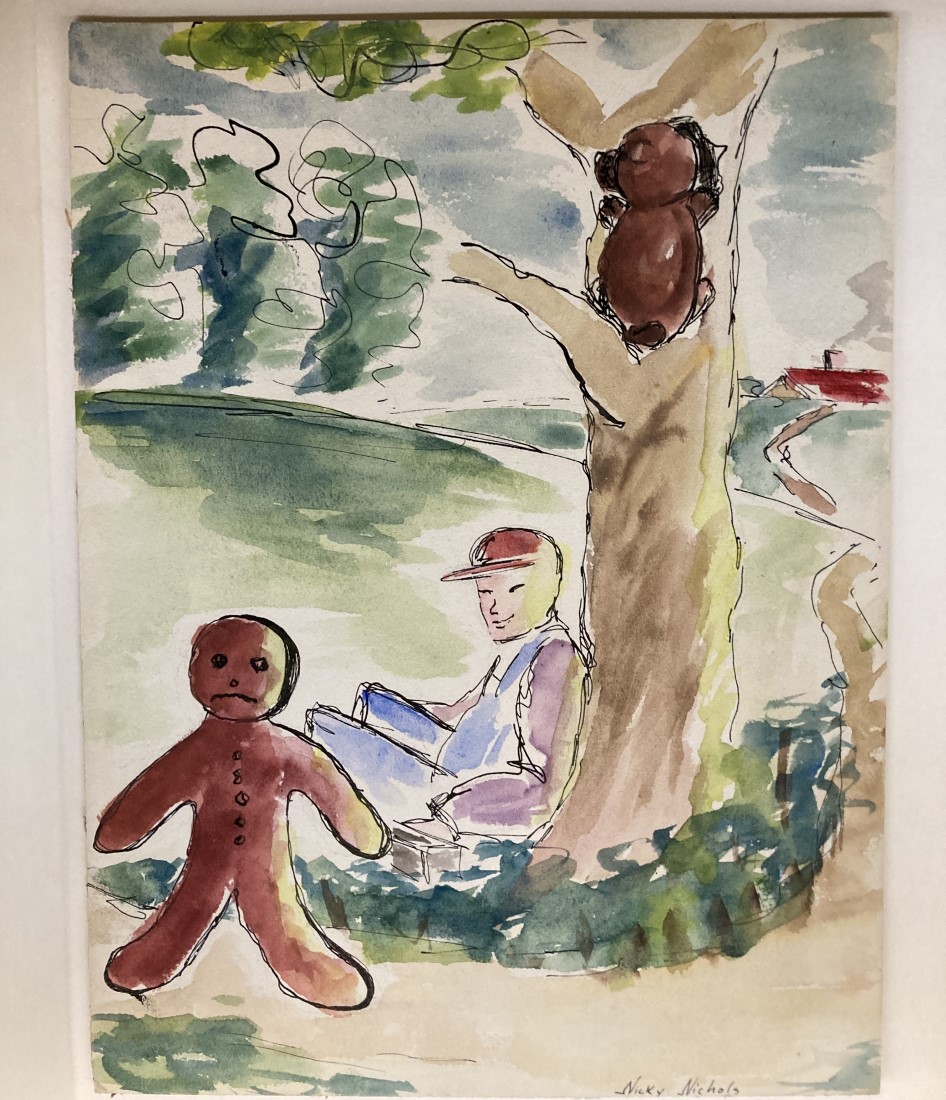
Personal papers of Mary Evelyn Nichols Lee, 1949-July 29, 1967 (PP 645)

Watercolor illustration of a boy sitting under a tree with a gingerbread man.
One of a small number of illustrations signed “Nicky Nichols.” They were presumably sketched and painted by Mary Evelyn Nichols Lee, a former University of Kansas student who later operated the Savoy Hotel in Kansas City, Missouri. Personal Papers of Mary Evelyn Nichols Lee. Call Number: PP 645. Click image to enlarge.

Eustace Mullins, 1962-1990 (RH WL MS P2)

Robinson-Cofield Commission Company letter, May 9, 1911 (RH MS P1002)

Kansas historical clippings, 1946-1950 (RH MS Q507)

Historical Geography of Lawrence Area tour records, fall 1998 (RH MS P1003)

Charles A. Smith glass plate negatives, approximately 1888-1904 (RH PH 569)

Evan Wright family, 1875-2003, 2022 (bulk 1940-1999) (RH MS 1587, RH MS Q508, RH MS R524, RH MS S82)

Melvin and Maxine Patterson family, March 21, 1952-January 31, 2016 (bulk 1985-2008) (RH MS 1588, RH MS R526, RH MS S82)

Ernst Moritz Arndt collection, 1843-1913; 1948-1961; 2002-2005 (MS 378, MS Q102)

Leslie Carson Wolfe collection, 1937-2023 (RH MS 1590, RH MS R527)

Kansas postcards collection, 1903-2001 not inclusive, mostly undated (RH PH 571)

Judge Julie A. Robinson papers, 1992-2014 (RH MS 1557)

“The Migrations of John B. Kelso,” September 1853-October 1877 (transcribed 2003) (RH MS P1004)

Leslie W. Nesmith scrapbook, 1957-1999 (RH MS 1589)

Kay Jay Laessig photographs, 1941-1945 (RH PH P2849)

A.C. Edwards’ Irish literary correspondence, 1928-1936, 1959-1972 (MS 379, MS Qa48)

Tom Clarke biographies by Seán McGarry, approximately 1943 and 1950 (MS P764)

James A. Healy collection of Irish-related printed materials, approximately 1895-1960s (bulk 1960s) 9MS 380, MS Qa49, MS R31)

George Watters papers, 1922-1924 (MS P765, MS A64)

Personal papers of William (Bill) Mitchell, 1919-2013 (PP 649)

Personal papers of Sandy Mason, 1931-2007 (PP 640)

Marcella Huggard
Manuscripts Processing Coordinator

Student Spotlight: Sarah Jane Dahms

June 6th, 2023

This is the latest installment in a series of posts introducing readers to student employees who make important contributions to the work of Spencer Research Library. Today’s profile features Conservation Services student assistant Sarah Jane Dahms, who answered a few questions about the projects she works on at Spencer.

Conservation Services student assistant Sarah Jane Dahms sits at a workbench in the conservation lab while scoring a piece of board for a tuxedo box.
Conservation Services student assistant Sarah Jane Dahms at work on a tuxedo box.
What is your role?

Here at the Spencer, I work in the Conservation Department. We work in a lab setting to stabilize and repair books and materials throughout the KU library system. As a student I work with materials that are in circulation. I do anything from stapling music pamphlets into pamphlet binders, securing dust jackets within archival plastic covers, and housing delicate books and materials in custom boxes to mending and rebinding books. It is a job full of conversation, collaboration, and problem solving. Each item has its own needs and desires, and it is our job to pay attention to the material and work with it, instead of overcorrecting or forcing a repair. No two days in the lab are the same.  

What are you studying, and what do you hope to do in your future career? Has your work at KSRL changed how you look at your studies or your future career plans in any way? 

I recently graduated this Spring with degrees in both English and Visual Arts. Working in the Conservation Lab gives me a unique space to combine both aspects of my study. Here, I constantly work with books, but I have an opportunity to get to know the materials creatively. Over the course of a few minutes to several hours, I collect clues about the history of the material to create a repair that supports the overall environment of the material. If I do my job well, then my repair should exist within the same world as the original did. Working here has honed my creative hand skills. We work on multistep processes where a millimeter makes all the difference, but we have the chance to create things that are aesthetically pleasing. Because of my experience here, and my time studying for a book arts certificate at KU, I will continue combining English and Art in a Master of Fine Arts this fall. Through the University of Alabama, I will study book arts in their Library and Information Sciences Department. This path was entirely inspired and supported by my time at the Spencer over the last two years. Through repairing and rebinding books, I have completely fallen in love with book structures and creation. I am honored to continue creating books artistically and focusing on their quality and longevity.  

What part of your job do you like best? 

One of the most important factors of my job is flexibility. Yes, our schedules are largely flexible, but the position itself allows for each student to shape the role. Over the course of the first six months every Conservation Student learns around fifteen multi-step treatments. These treatments range on a scale of technical hand skill and creative potential. Every student who comes through the lab falls in love with one, if not several of these creative processes. We each do all treatments, but many of us specialize in one or two of these areas. Because of this flexibility, students from all areas of campus thrive in the work environment. It allows us all a space to shape our job, and to get to know other students with different backgrounds and skills from our own. Separately from this day-to-day flexibility, we often work on long-term projects as a group. Sometimes the projects last weeks or months, as we move collections around the library. These projects give us time to explore the library and walk amongst hundreds of unique books and materials.  

Sarah Jane Dahms
Conservation Services student assistant