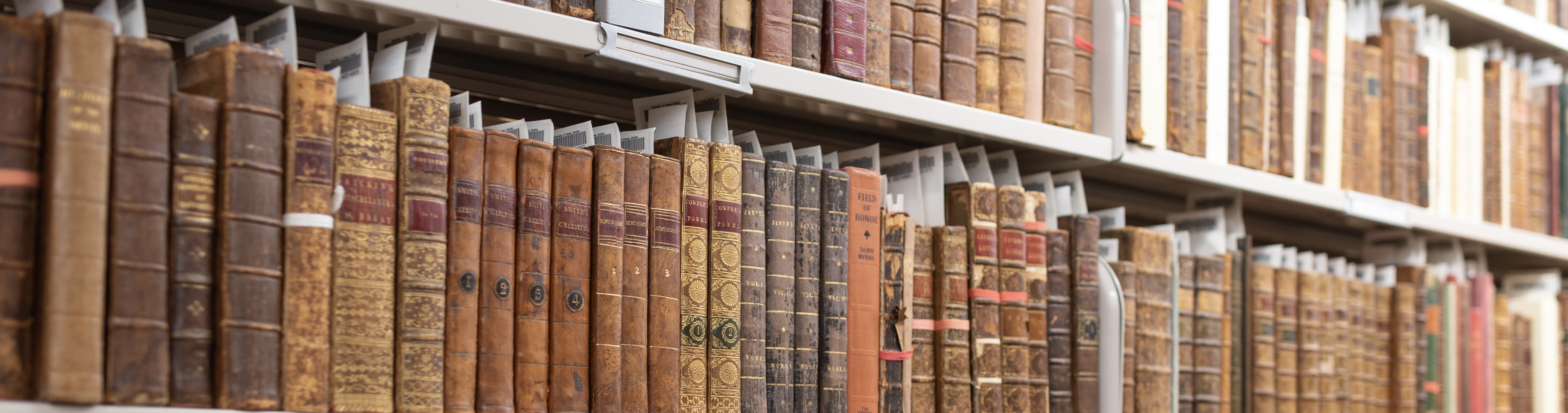
Meet Kirsten at Spencer Research Library
October 23rd, 2026As an elder millennial who loved history as a child and grew up with American Girl, I’ve been excited about the company’s 40th anniversary this year. As a result, I will be sharing a series of posts highlighting Spencer collection materials that connect to AG’s six original historical characters, in chronological order of when they “lived”: Felicity Merriman, Josefina Montoya, Kirsten Larson, Addy Walker, Samantha Parkington, and Molly McIntyre. Each post will focus on a different character and explore a selection of items that relate to the time and place in which she “lived” and topics or themes explored in her stories.
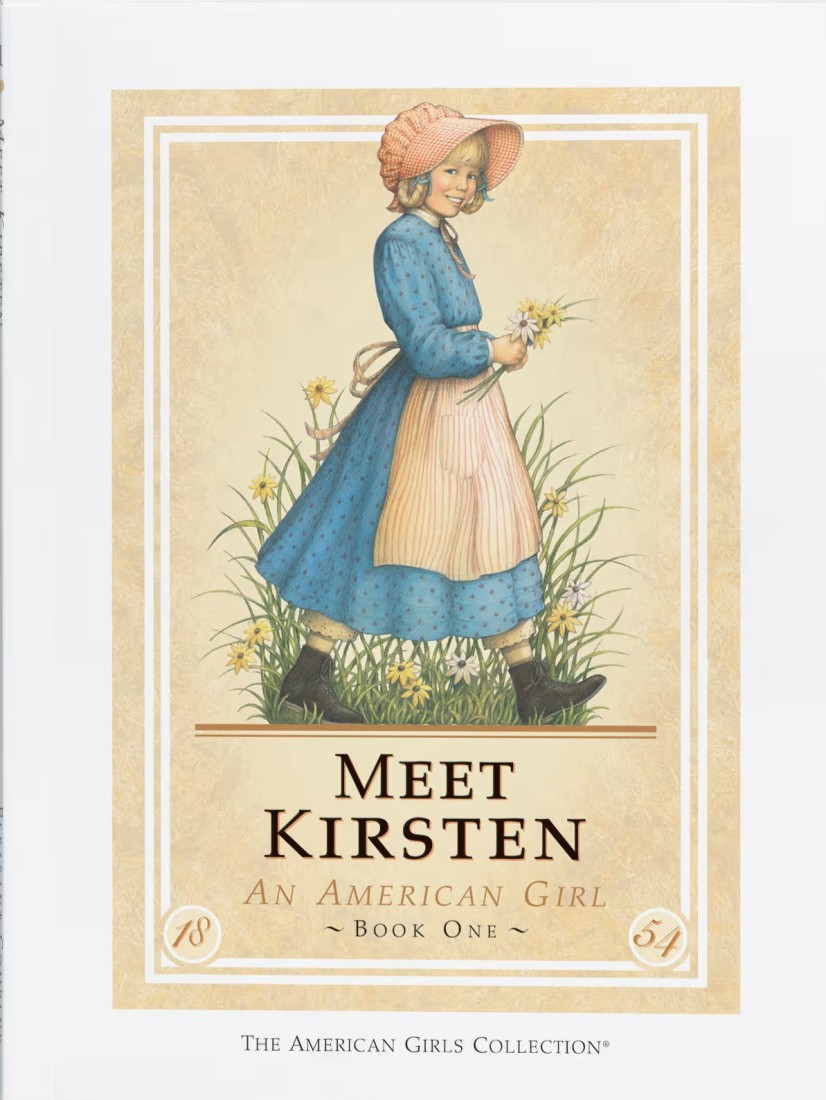
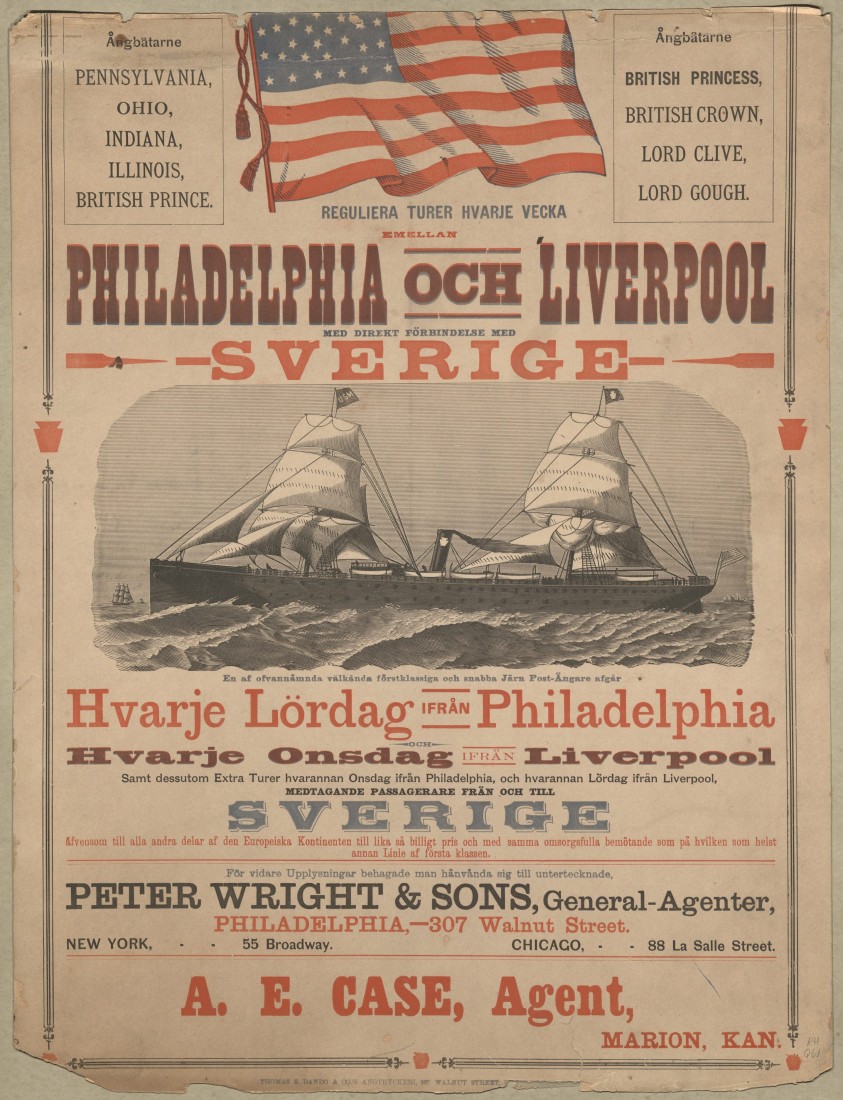
Nine-year-old Kirsten Larson is described as a girl of “strength and spirit.” When readers first meet Kirsten, she is on board a ship with her family and other Swedish immigrants in 1854. (Congress passed the Kansas-Nebraska Act that same year, although it is not mentioned in Kirsten’s books.) After landing in New York City, the Larsons travel by rail to Chicago, then by wagon to the Mississippi River, and then by riverboat to the territory of Minnesota, their final destination. Tragically – and memorably for young readers – Kirsten’s best friend Marta dies of cholera during the journey. Another iconic moment in Kirsten’s books occurs when she wears a wreath with lit candles to celebrate the feast day of St. Lucy (Saint Lucia) on December 13th. Additional plot points include Kirsten’s struggles to feel at home in America and learn English at school, her friendship with a Dakota girl named Singing Bird, her new baby sister, and dangerous encounters with bees and raccoons.
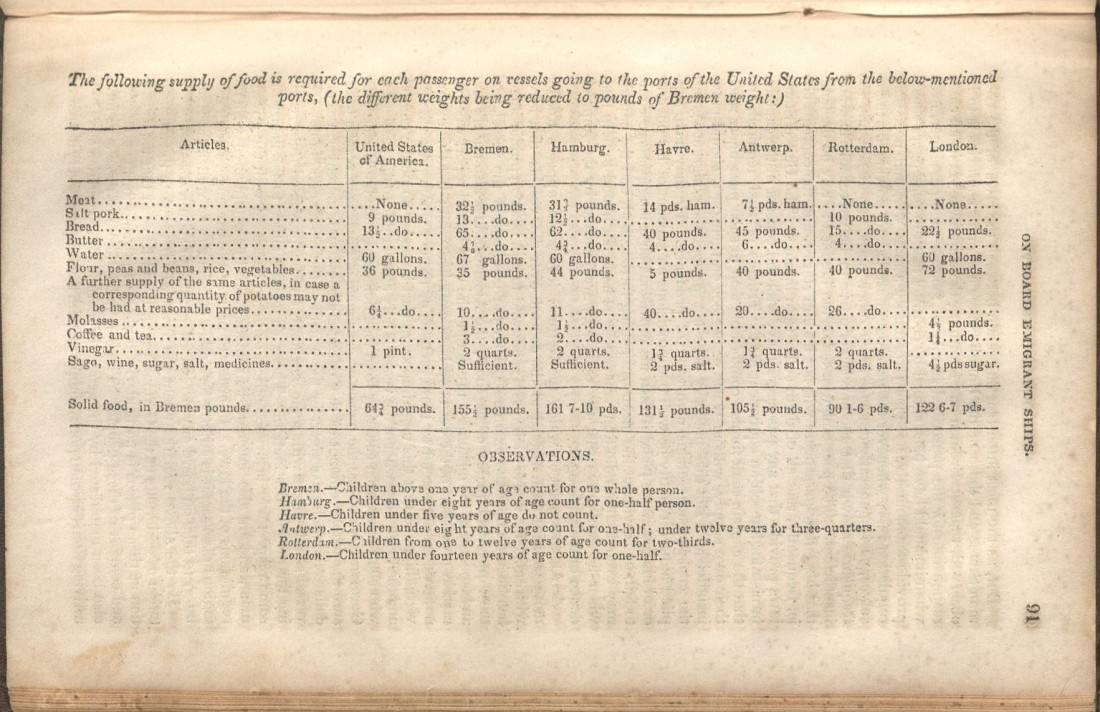
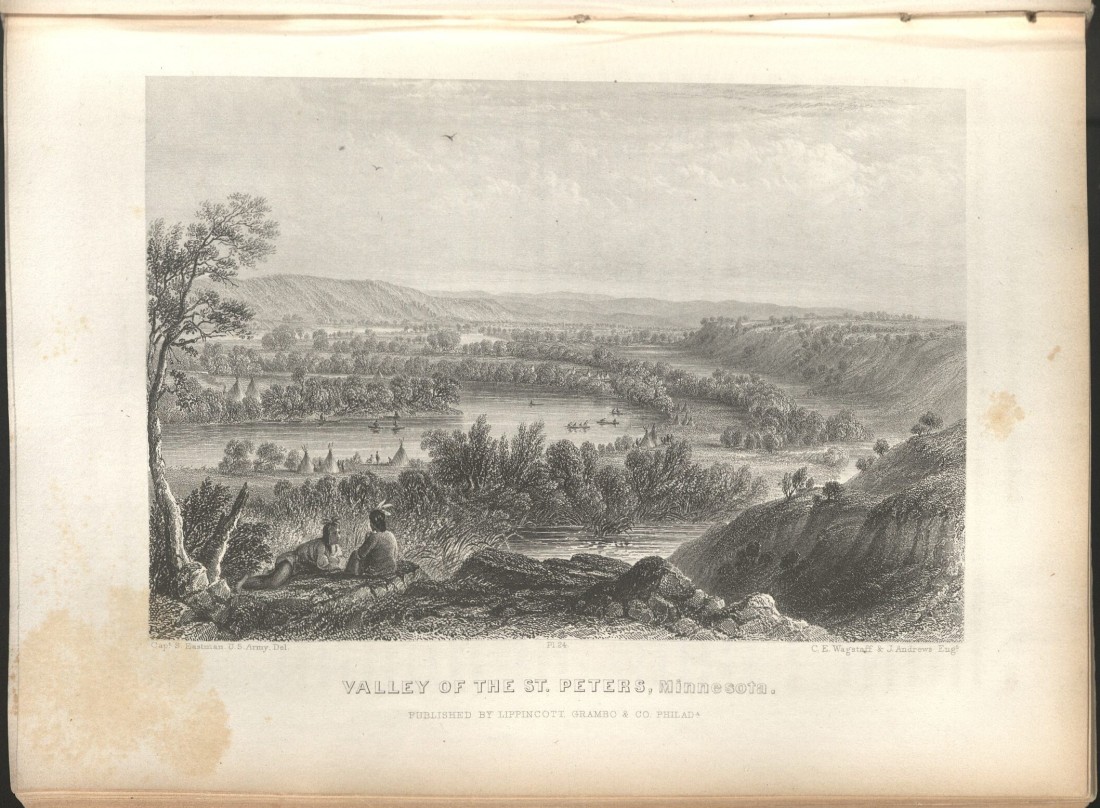
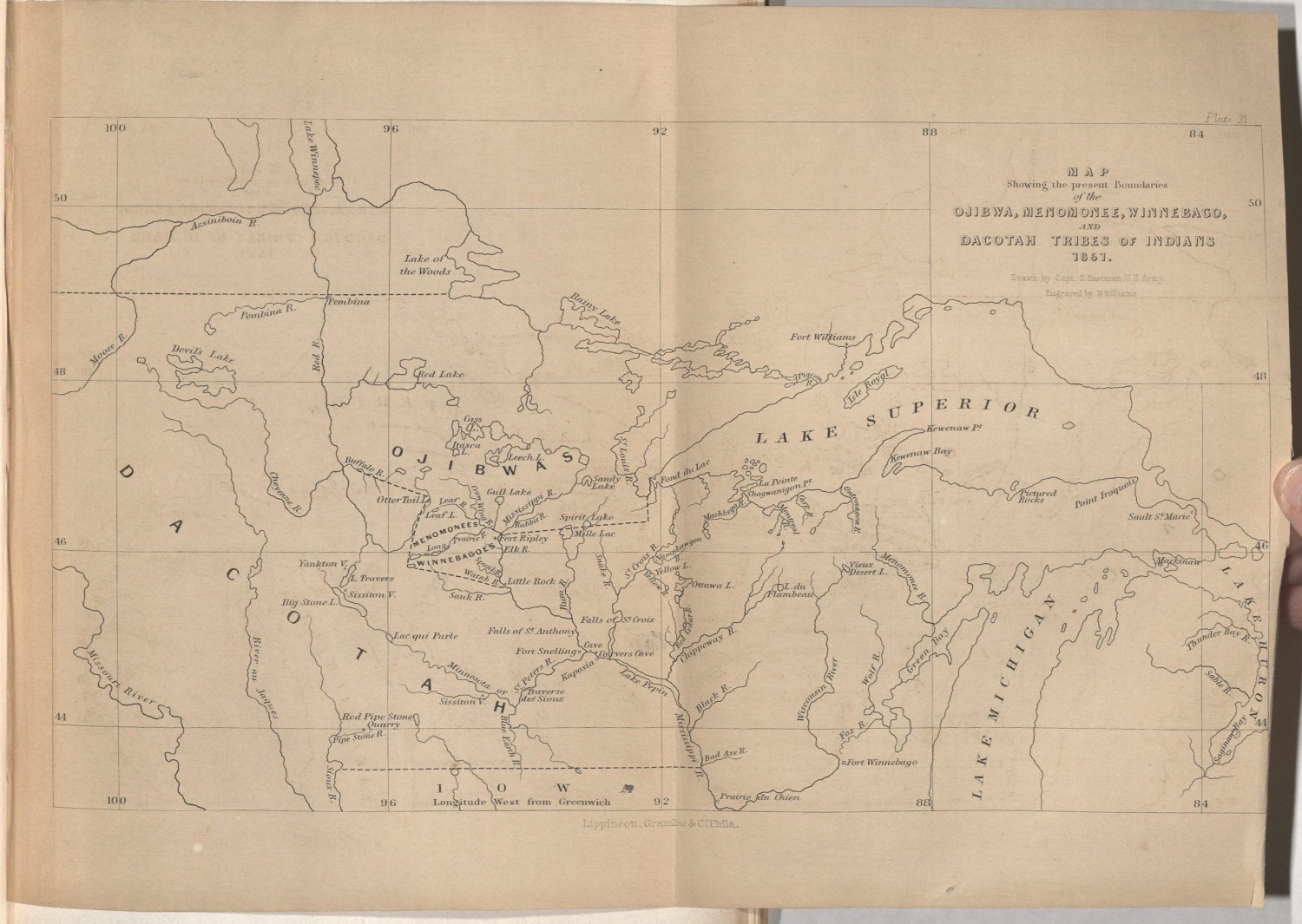
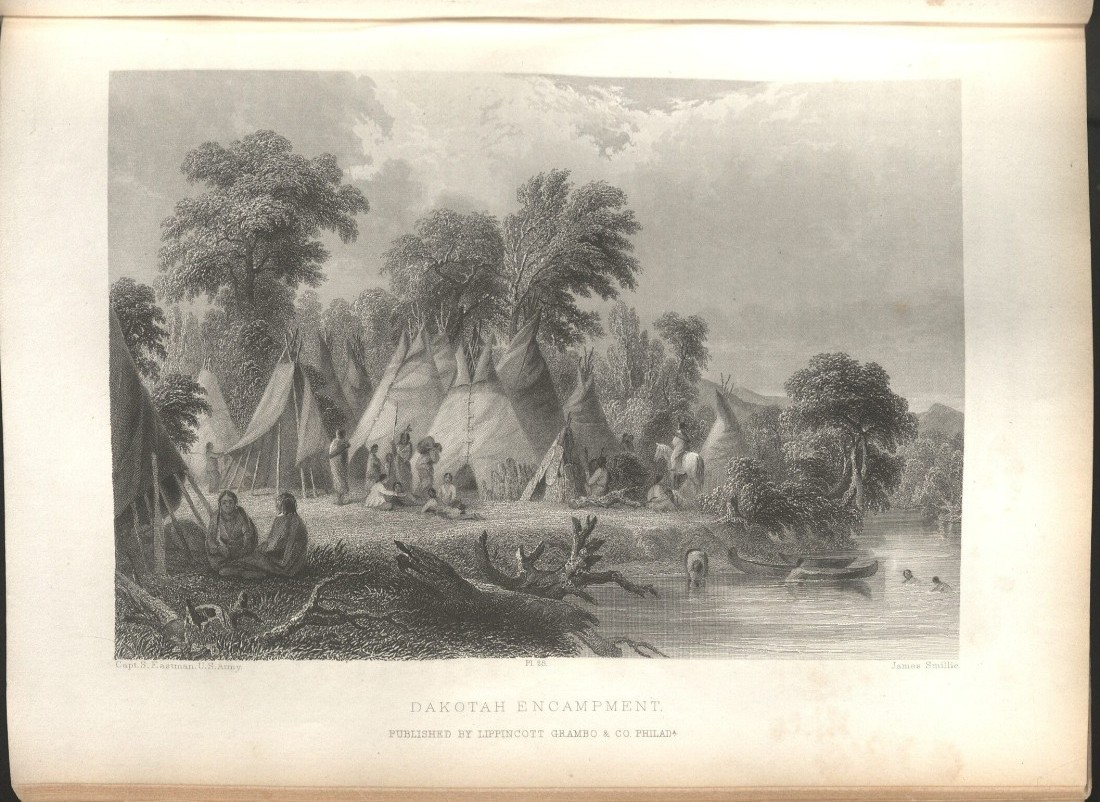
Left: A view of the scenic valley carved by the Minnesota River, which was previously named the St. Peter River. Middle: A “map showing the present boundaries of the Ojibwa [sic], Menomonee [sic], Winnebago, and Dacotah [sic] tribes.” Right: A “Dakotah [sic] encampment.” All images are from Information Respecting the History, Condition and Prospects of the Indian Tribes of the United States by Henry R. Schoolcraft and illustrated by Seth Eastman, volume 2, 1853. Containing six volumes of data “collected and prepared under the direction of the Bureau of Indian Affairs,” this work is considered the most comprehensive study of Native American cultures. Call Number: RH E175. Click images to enlarge.
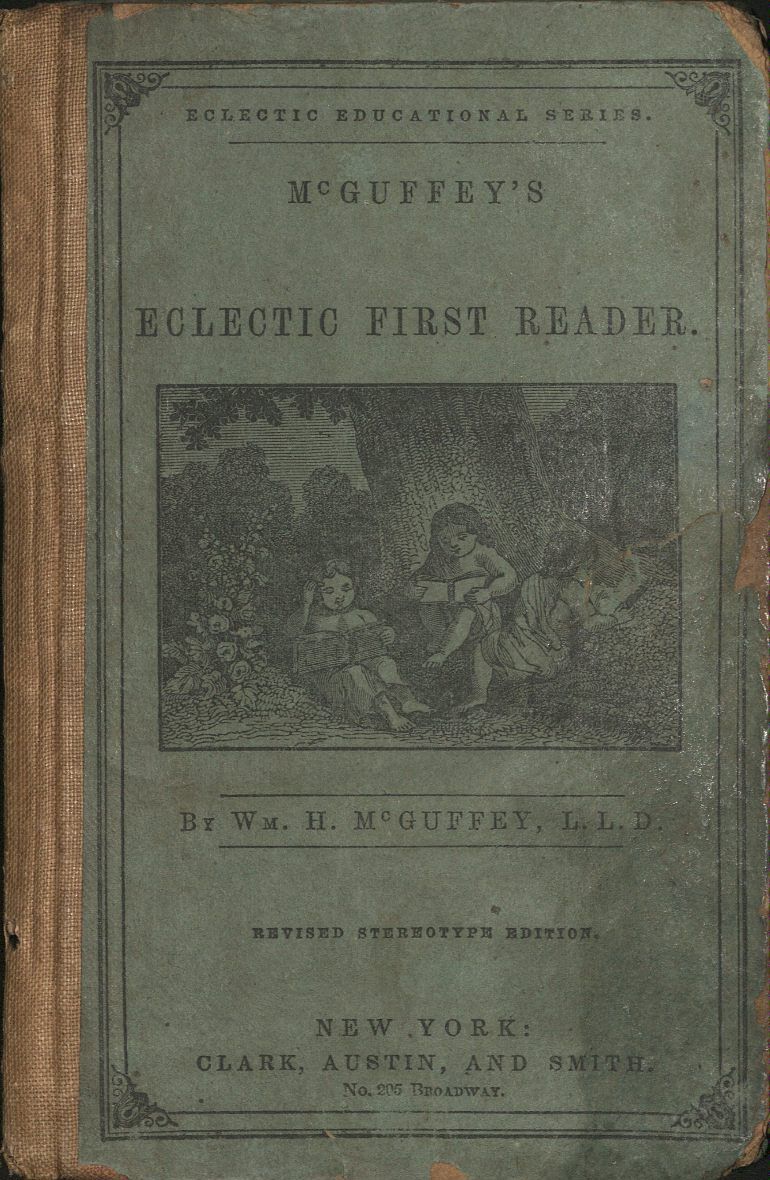
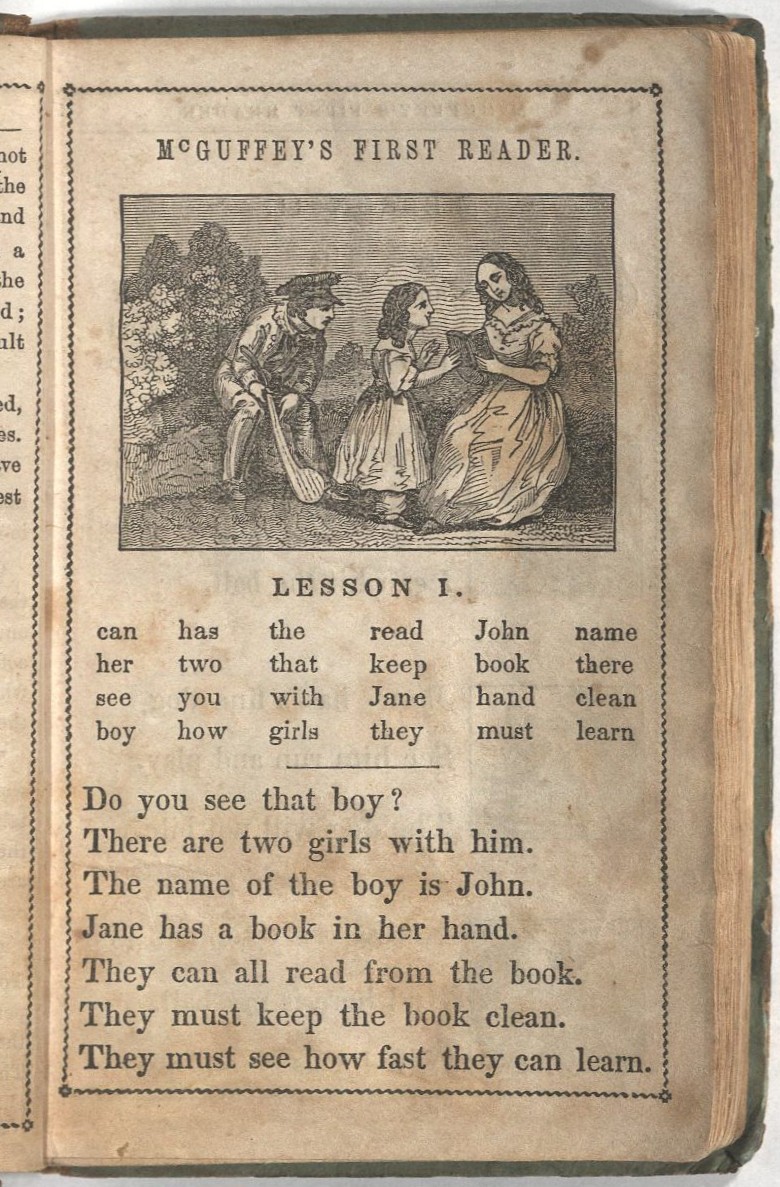
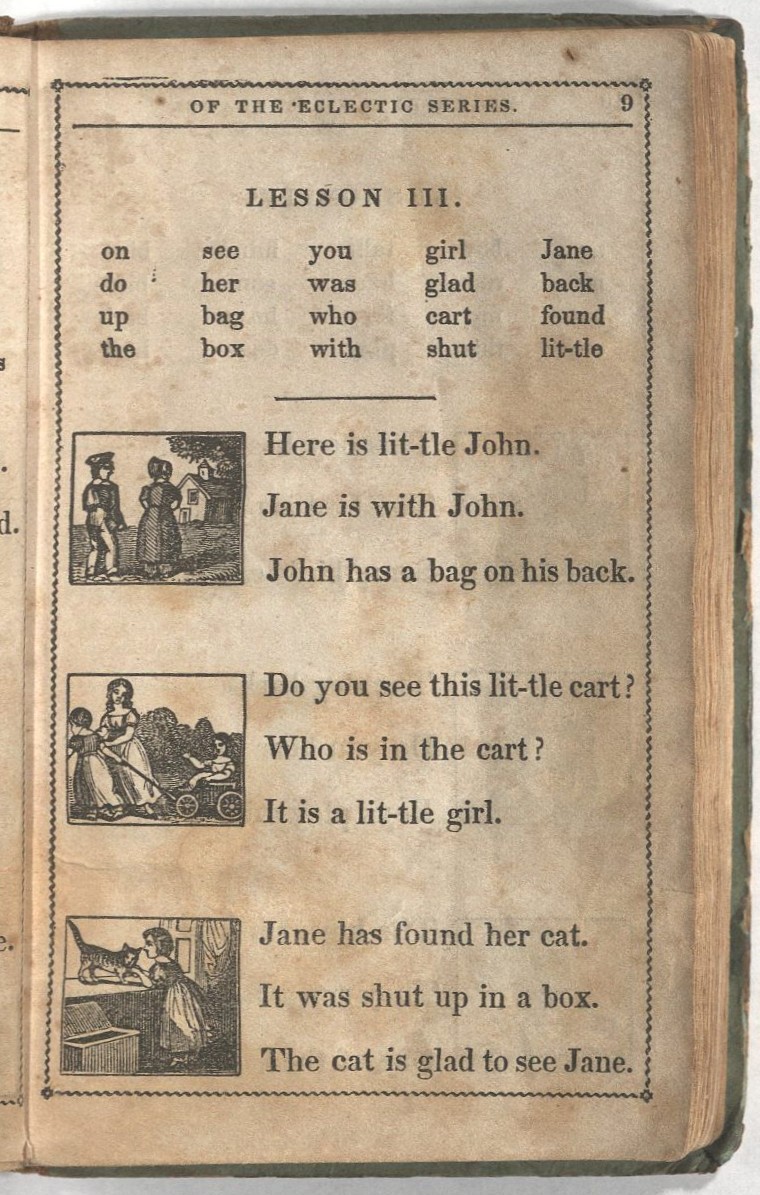
The front cover and selected early lessons from McGuffey’s New Eclectic First Reader by William H. McGuffey, 1853. According to Miami University Libraries, McGuffey Readers were an immediate success upon their initial publication in 1836. They “became standard texts in nearly all states, eclipsing all rival textbook publications for half a century and reaching a reputed total sale of over 150 million copies.” The textbook Kirsten used in school is listed below. Call Number: RH A94. Click images to enlarge.
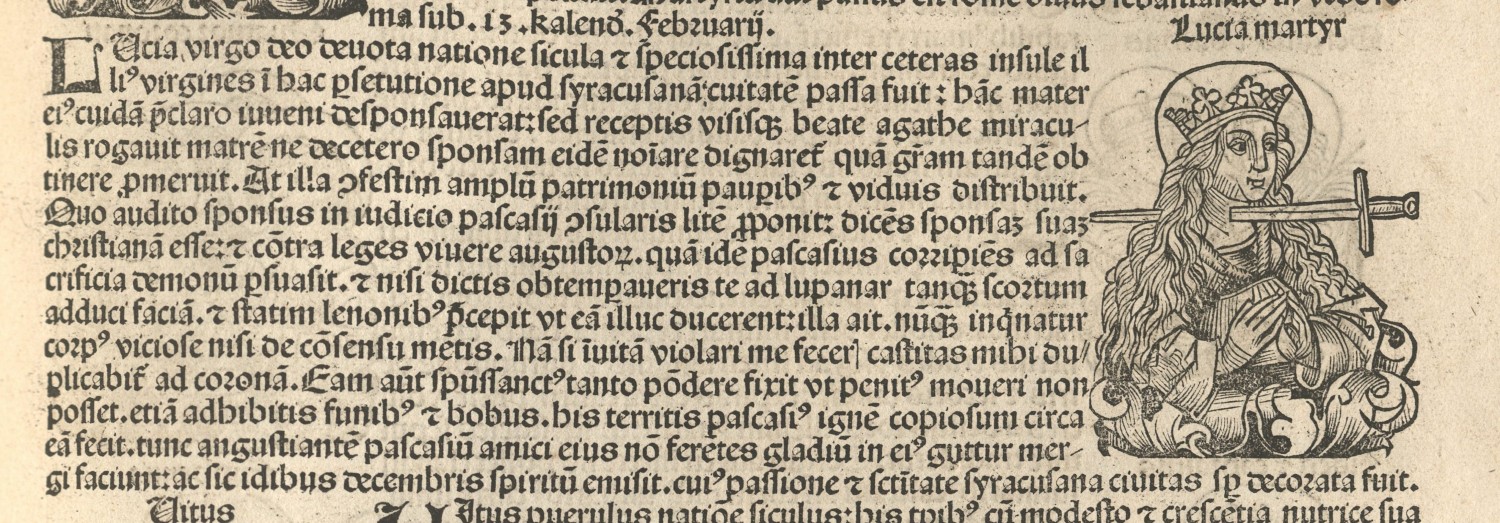

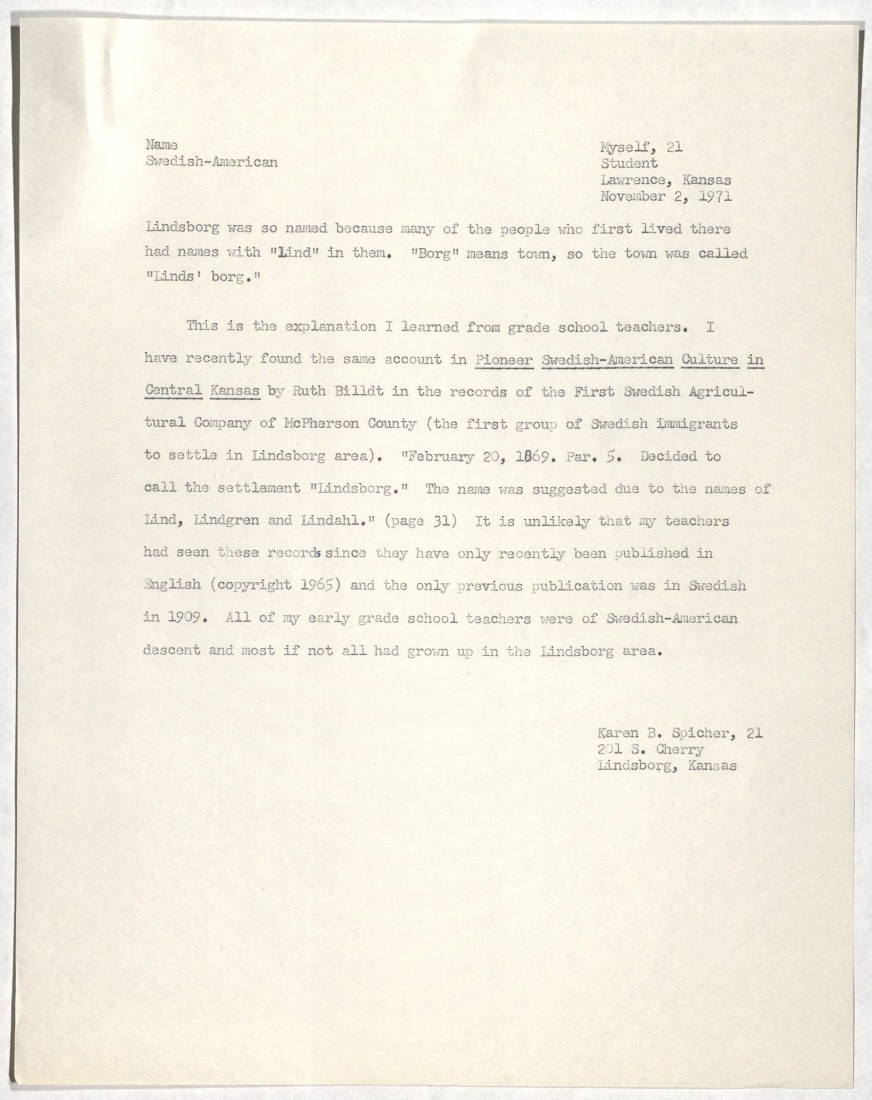
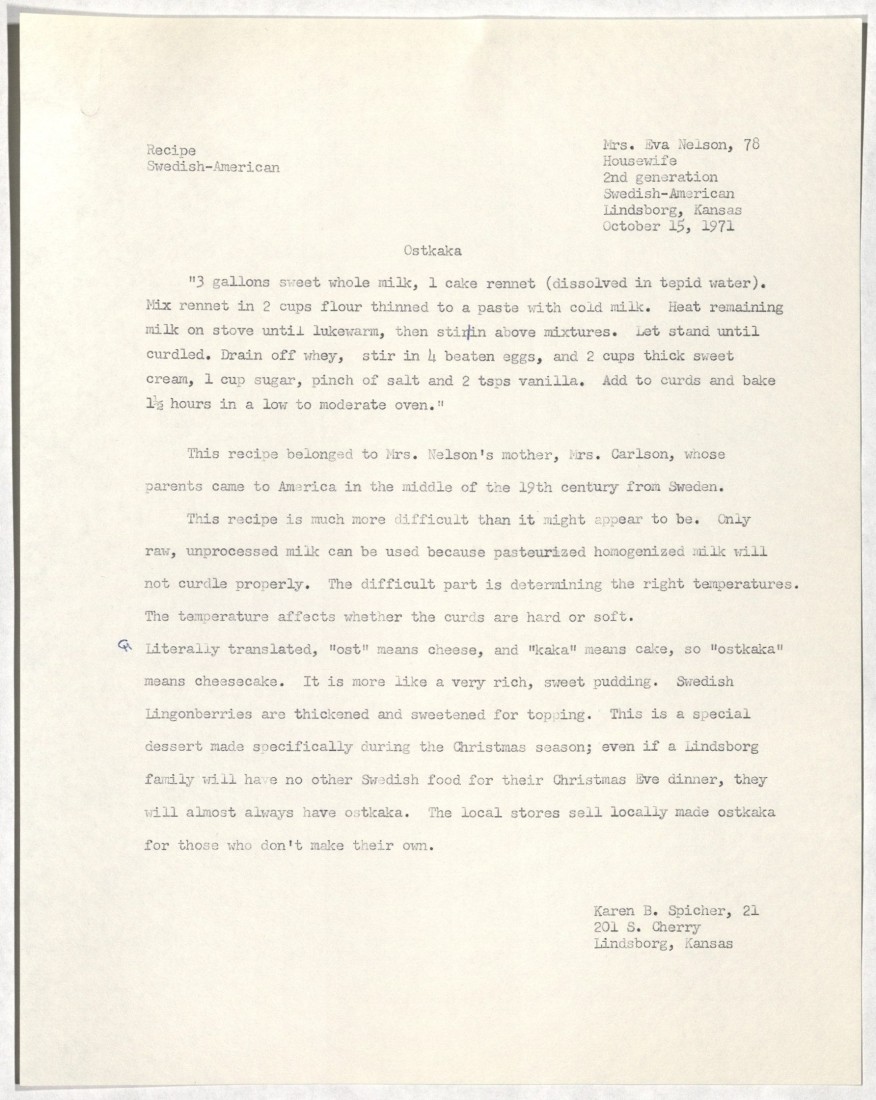
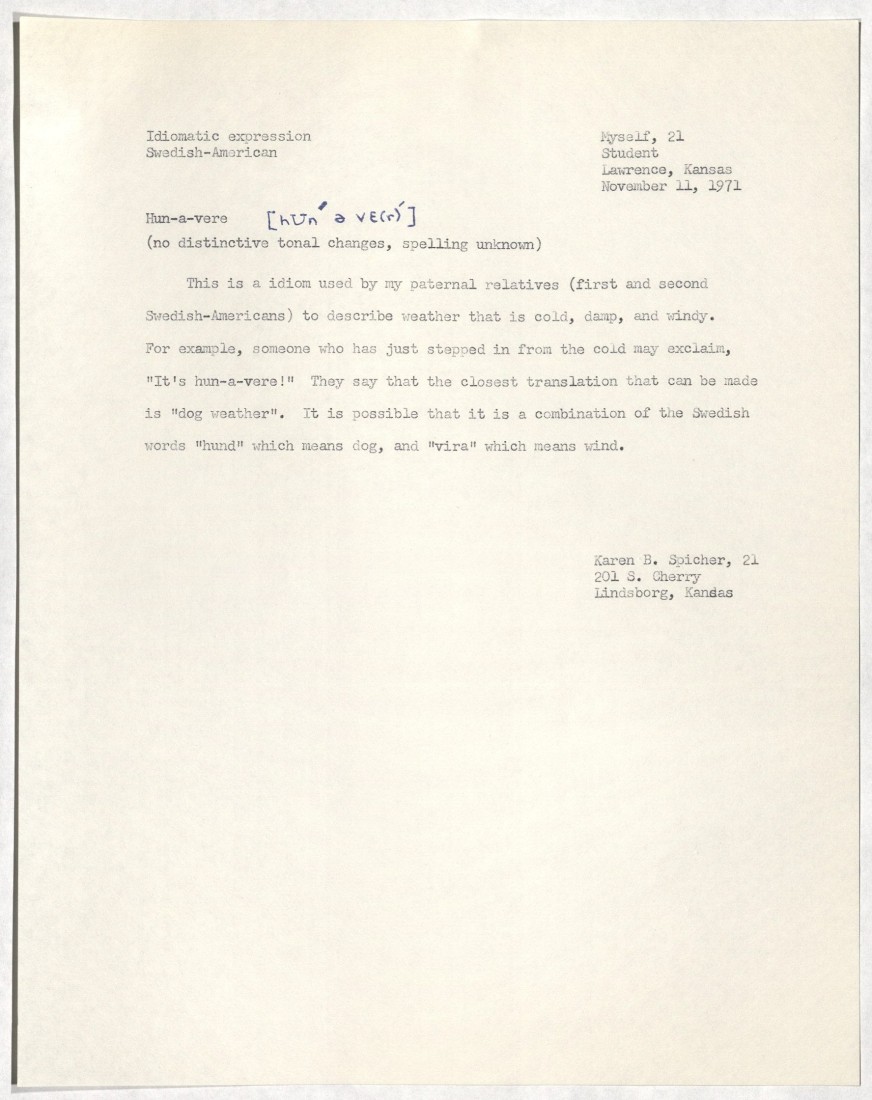
Selected pages from Karen B. Spicher’s “term paper and folklore collection relating to the Lindsborg, Kansas, area and Swedish-American culture,” English 104, University of Kansas, 1971. Swedish immigrants have been settling in Kansas since the 1850s, and Lindsborg (located roughly 160 miles west of Lawrence) is known as “Little Sweden USA.” Culture and Folklore Studies Collection. Call Number: RH MS 966. Click images to enlarge.
Selected Additional Collection Items
Sweden
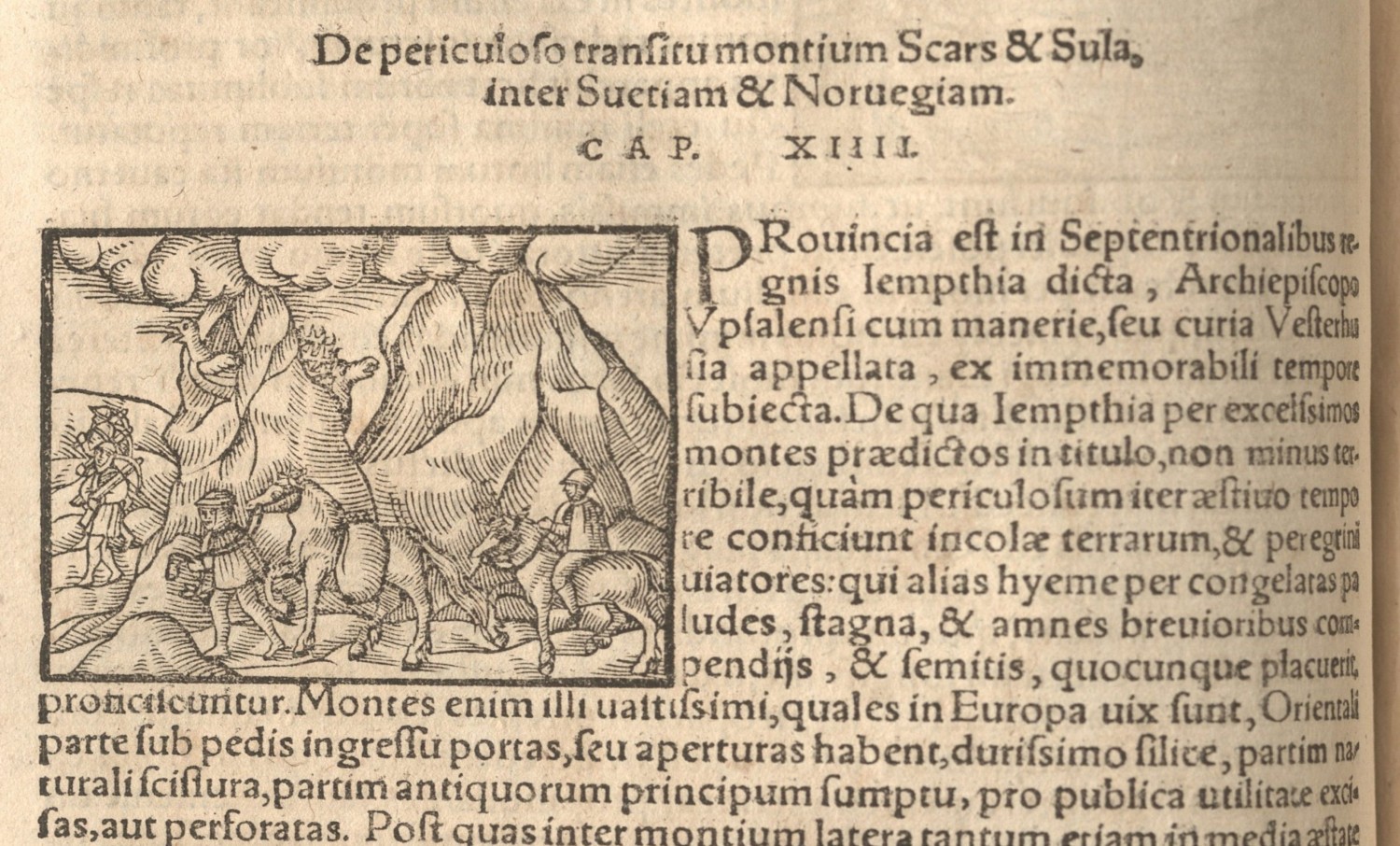
- A Compendious History of the Goths, Swedes, & Vandals and Other Northern Nations by Olaus Magnus, London: 1658. This is the first English publication of Magnus’s Historia de Gentibus Septentrionalibus (described above), although it was an abridged version and not a full translation. Call Number: D86.
- Konungariket sveriges industriella tillstand år 1847 [The Industrial State of the Kingdom of Sweden in the Year 1847] by Ole Jørgen Rawert, Stockholm: 1849. Call Number: Howey C1755.
- Yule-tide Stories: A Collection of Scandinavian and North German Popular Tales and Traditions, From the Swedish, Danish, and German edited by Benjamin Thorpe, London: 1853. Call Number: B12266.
Immigration, the West, and Minnesota (Including Maps)
- Several of the sources listed here also document the early history of Kansas. Spencer’s Kansas Collection includes many additional works about the 1854 Kansas-Nebraska Act and the often violent territorial period that followed.
- Historical Collections of the Great West by Henry Howe, Cincinnati: 1851. Call Number: RH C4344.
- Western Portraiture, and Emigrants’ Guide: A Description of Wisconsin, Illinois, and Iowa; With Remarks on Minnesota, and Other Territories by Daniel S. Curtiss, New York: 1852. Call Number: RH B829.
- Guide Through Ohio, Michigan, Indiana, Illinois, Missouri, Wisconsin & Iowa by J. Calvin Smith, New York: 1853. This map also includes Minnesota. It was frequently published with The Western Tourist and Emigrant’s Guide, listed below. Call Number: RH Map R244.
- Disturnell’s New Map of the United States and Canada: Showing All the Canals, Rail Roads, Telegraph Lines and Principal Stage Routes by Henry A. Burr, New York: 1853. Call Number: Orbis Maps 2:211.
- The Western Tourist and Emigrant’s Guide Through the States of Ohio, Michigan, Indiana, Illinois, Missouri, Iowa and Wisconsin, and the Territories of Minesota [sic], Missouri, and Nebraska by J. H. Colton, New York: 1854. Call Number: RH B1018.
- The States and Territories of the Great West by Jacob Ferris, New York and Buffalo: 1856. Call Number: RH B153.
Indigenous Peoples
- The Book of Genesis and a Part of the Psalms … the Gospels of Luke and John … the Acts of the Apostles and the Epistles of Paul, with the Revelation of John, in the Dakota Language, translated by Stephen R. Riggs and others, Cincinnati: 1842. Call Number: RH B838.
- Stories About Indians, Concord, New Hampshire: 1850. Call Number: Children B13.
- The Song of Hiawatha by Henry Wadsworth Longfellow, first edition, Boston: 1855. Call Number: B2858.
Science and Medicine
- Spencer has an “impressive collection of over two thousand volumes of works” by and related to Swedish botanist Carl Linnaeus (1707-1778), who developed the system of binomial nomenclature that still used to name species of living organisms.
- The Theory and Treatment of Fevers by Dr. John Sappington, Arrow Rock, Missouri: 1844. Call Number: B7574.
- A Compendious System of Midwifery, Chiefly Designed to Facilitate the Inquiries of Those Who May be Pursuing This Branch of Study by William P. Dewees, Philadelphia: 1847. Call Number: C23432.
- The Married Woman’s Private Medical Companion by Dr. A. M. Mauriceau, New York: 1850. Call Number: B18315.
- Entomology, volume 7: Bees, by William Jardine, Edinburgh and London: 1853. Call Number: Ellis Omnia B239.
Children’s Books and Education
- The Child’s First Reader by Salem Town, Portland, Maine: 1848. This is the textbook that Kirsten uses in school. Call Number: Monaghan B1040.
- Thoughts on the Education of Girls by Mrs. Anna C. Lowell, Boston: 1853. Call Number: Children 1212B.
- The Flower of the Family: A Book for Girls by Elizabeth Prentiss, New York: 1854. Call Number: Children 1104B.
- Frank and the Farmer by Maria Edgeworth, Troy, New York: possibly 1854. Call Number: Children 6026.
Caitlin Klepper
Public Engagement Librarian