Welcome to the Kenneth Spencer Research Library blog! As the special collections and archives library at the University of Kansas, Spencer is home to remarkable and diverse collections of rare and unique items. Explore the blog to learn about the work we do and the materials we collect.
This blog may contain archived web content. This blog may link to catalog records which no longer exist as of a software change in 2026.
This LGBT History Month we would like to commemorate the life of Kristi Parker, a prominent activist in the LGBTQ community in Kansas and the founder of Liberty Press, Kansas’s first and only LGBTQ news magazine.
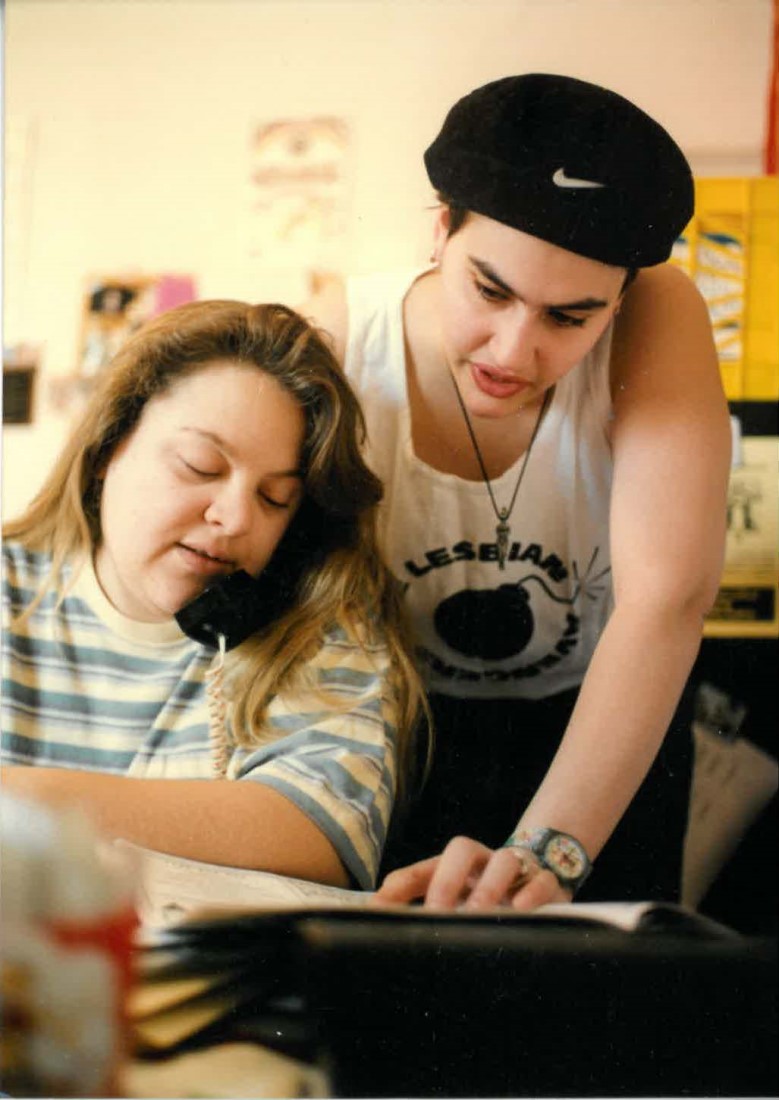
Kristi Parker, left, and Sharon “Vinnie” (Levine) Reed in the Liberty Press office, late 1990s. Call Number: RH MS-P 1480, Box 2, Folder 1. Click image to enlarge.
This October marks eighteen months since the final issue of Liberty Press was published shortly before Kristi Parker’s unexpected death last year at the age of forty-nine. During the Liberty Press’s twenty-four-year run, Parker and her team tackled an enormous variety of topics affecting the Kansas LGBTQ community, including politics, art, sports, health, parenting, events, religion, and education. The magazine was truly one of a kind in the central Midwest, and its regional focus created a sense of collective identity for Kansas’s LGBTQ community.
In addition to her role as editor and publisher of Liberty Press, Parker was also a member of the Wichita Pride Committee and Kansans for Human Dignity, and she was a member the governing board of The Center, an LGBTQ community center in Wichita.
We are fortunate to hold the papers of Kristi Parker at Spencer Research Library and would like to highlight a few items from the collection that demonstrate Parker’s role in the history of the Kansas LGBTQ community.
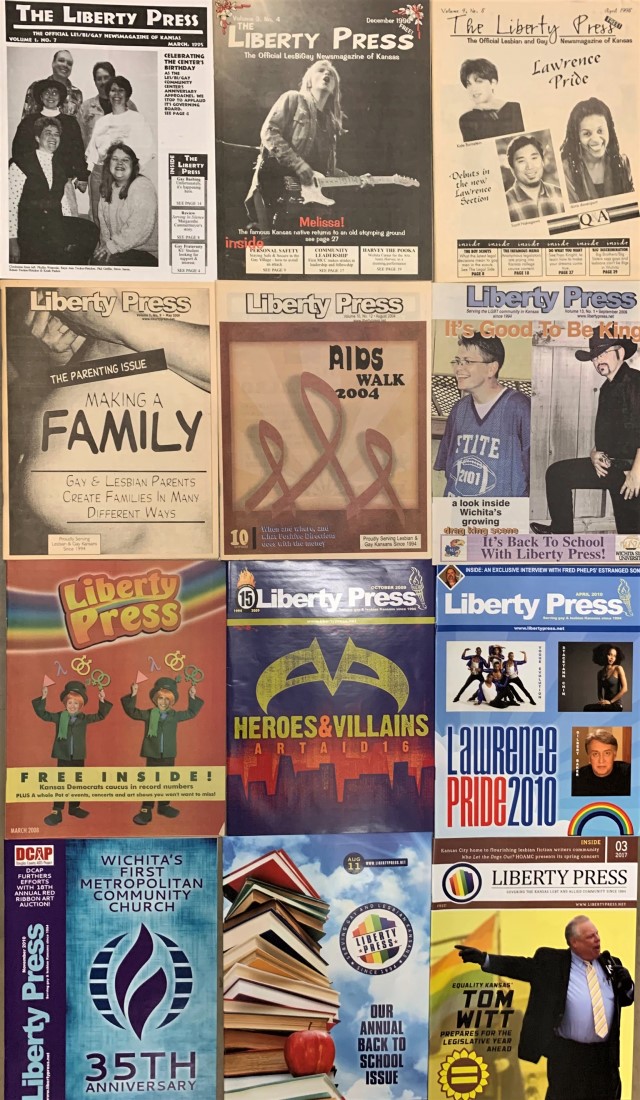
The evolution of Liberty Press covers over the years. Call Number: RH MS 1480, Boxes 1-2. Click image to enlarge.
We hold a nearly-complete run of Liberty Press issues from the second issue published in 1994 through the magazine’s final issue in 2018, as well as a full run of the Kansas City-specific edition, Liberty Press Kansas City. The production files that accompany each issue of the magazine include preparatory correspondence, mock-ups, photographs, and sample advertisements, all of which serve as evidence of the creative process behind the business. The files also provide invaluable insight into the LGBTQ community in Kansas from the mid-1990s through the 2010s, particularly through a selection of truly touching letters written by readers to Kristi Parker and others behind the magazine. Many letters come from members of the LGBTQ community living in small towns in Kansas; they write about the struggles and loneliness they feel as LGBTQ individuals in these rural communities, but also about the life-changing impact Liberty Press had on their lives. The magazine encouraged them to be confident and proud as LGBTQ Kansans and affirmed that they were not alone in their experience, but rather were part of a widespread, vibrant community across the state.
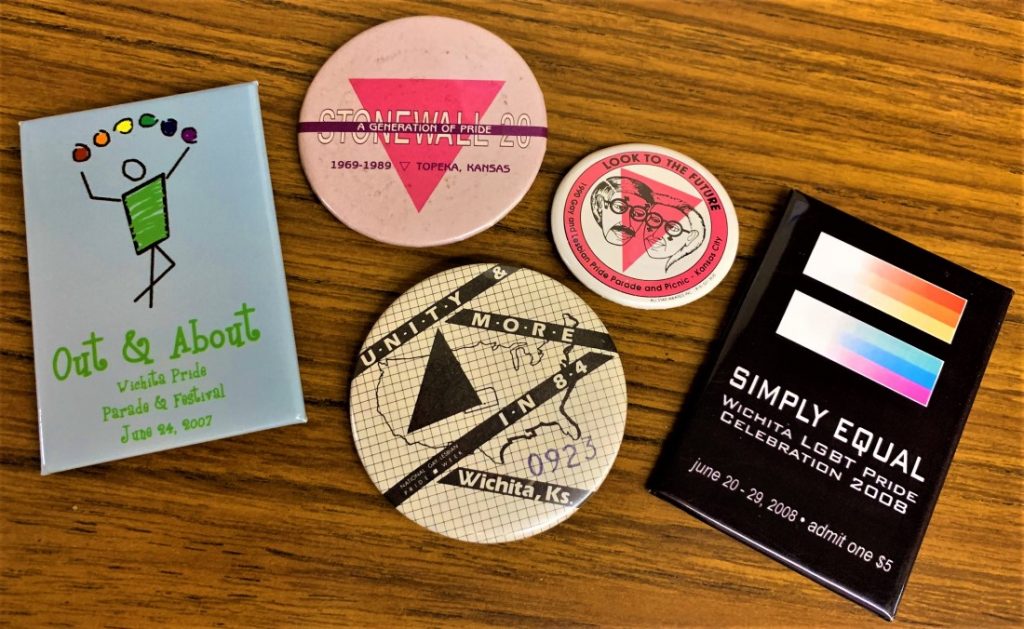
Buttons collected by Kristi Parker at LGBTQ Pride events in Wichita, Topeka, and Kansas City. Call Number: RH MS Q420, Box 2. Click image to enlarge.
Kristi Parker’s involvement in the LGBTQ community began several years before the founding of Liberty Press. Parker attended Stonewall and Pride events from the 1980s onward and became deeply involved in Wichita Pride in the early 1990s, writing guides for the festival, providing press coverage, and later sitting on the organizing committee. Her collection holds a vast amount of ephemera from Wichita Pride and other Kansas-based Pride events, including colorful buttons, lanyards, flags, magnets, posters, sashes, trophies, and even t-shirts. These artifacts complement the collection’s documentary evidence of these parades, rallies, and concerts celebrating the LGBTQ community in a very tangible way, allowing us to visualize these events and the energetic, joyful experience had by Parker and other attendees.
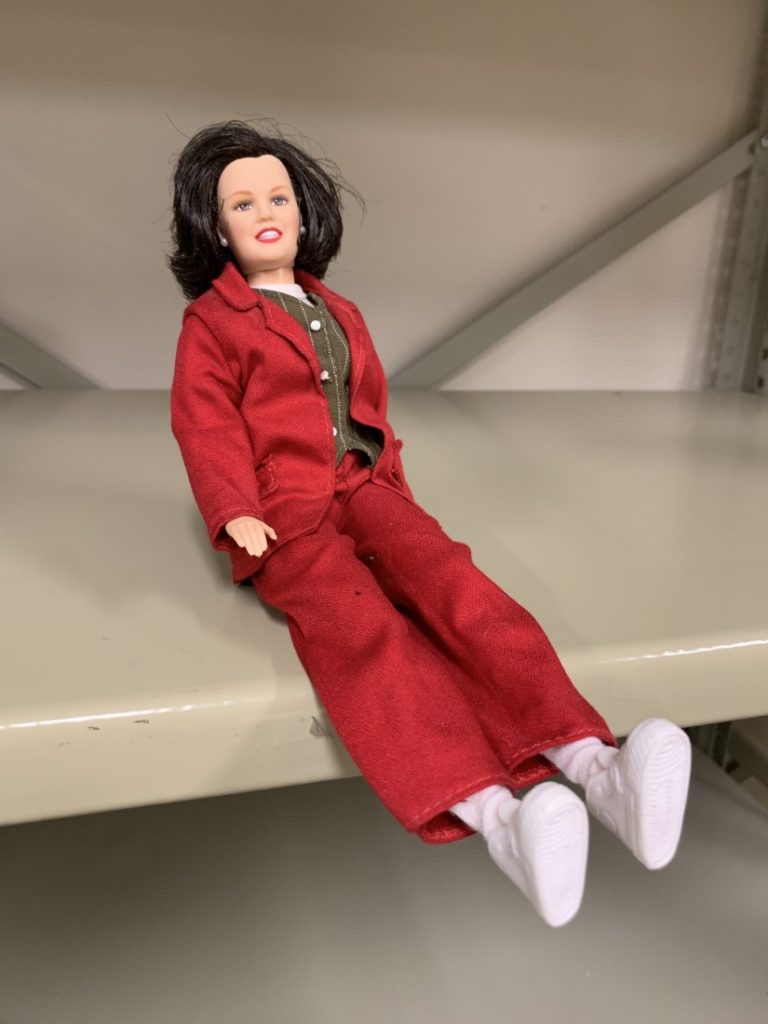
Rosie O’Donnell, a staff favorite among the Kristi Parker artifacts, relaxes in the Spencer Research Library mailroom. Call Number: RH MS Q452, Box 2. Click image to enlarge.
There are
countless other gems throughout Kristi Parker’s papers that testify to the
Kansan LGBTQ experience and to Parker’s work, life, and lasting impact on the
community. We hope you have enjoyed this brief tour of the insight Parker’s
papers have to offer, and we invite you to continue exploring her papers and
other collections we hold regarding the history of LGBTQ communities in Kansas
this October and beyond.
Each week we’ll be posting a photograph from University Archives that shows a scene from KU’s past. We’ve also scanned more than 34,800 images from KU’s University Archives and made them available online; be sure to check them out!
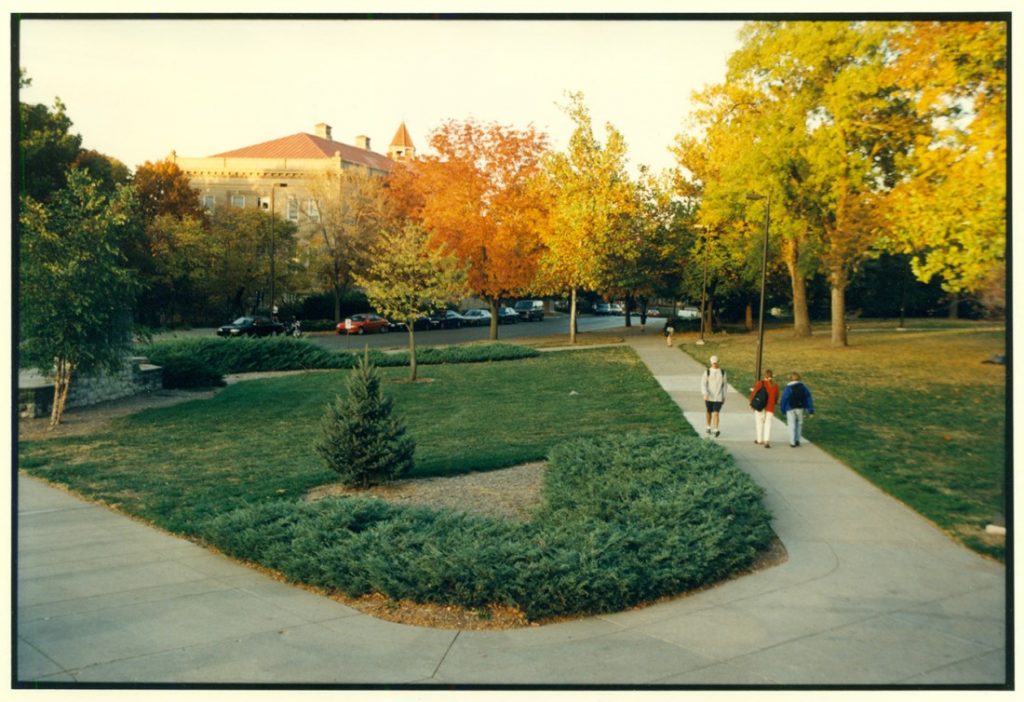
The KU campus during the fall, 1995. The students are walking front of Watson Library. Lippincott (Old Green) Hall is in the background, with the tower of Dyche Hall visible behind it. University Archives Photos. Call Number: RG 0/24/G 1995 Prints: Campus: General (Photos). Click image to enlarge (redirect to Spencer’s digital collections).
Each week we’ll be posting a photograph from University Archives that shows a scene from KU’s past. We’ve also scanned more than 34,800 images from KU’s University Archives and made them available online; be sure to check them out!
Who’s excited to cheer on the Jayhawks at this Saturday’s game against West Virginia?
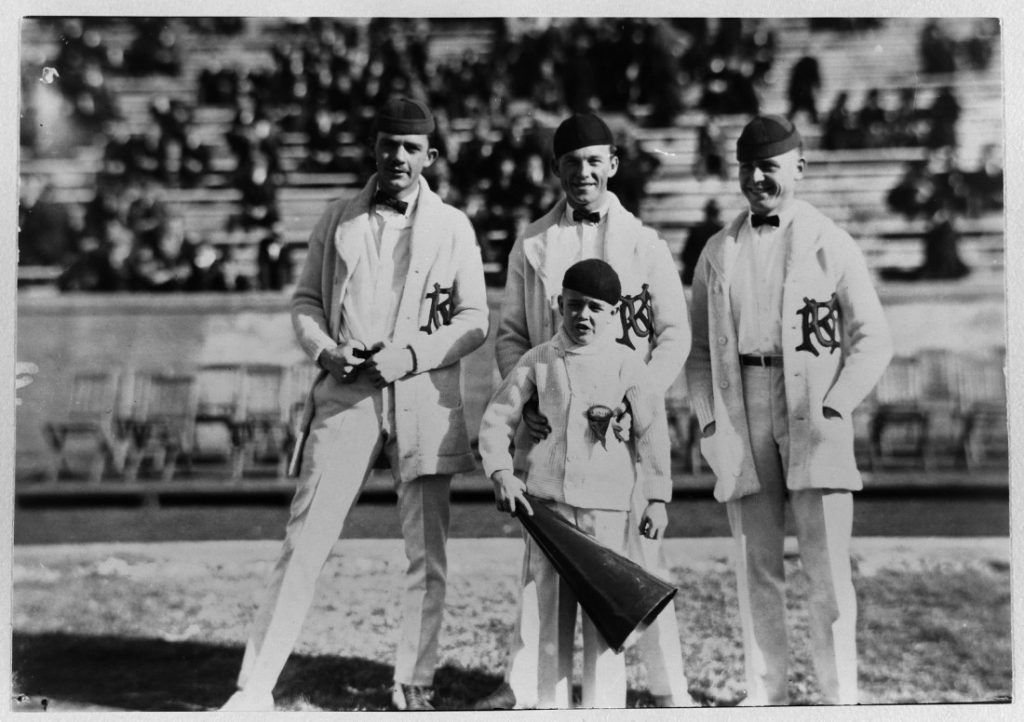
KU cheerleaders, 1922-1923. From left to right, they are Robert L. Gilbert, Assistant; Virgil Miller, Head Cheerleader; and Mark Waggner, Assistant. The boy is Johnnie Logue. University Archives Photos. Call Number: RG 66/23 1922/1923 Prints: Athletic Department: Cheerleaders and Pompom Girls (Photos). Click image to enlarge (redirect to Spencer’s digital collections).
En esta ocasión es importante agradecer a las redes sociales que han sido de gran importancia para resolver el caso que se antepuso al equipo de la Biblioteca para la Investigación Kenneth Spencer. El blog, Facebook e Instagram hicieron posible que el álbum costarricense (MS K35) pueda quedarse y ser parte de la colección especial de la biblioteca. Como consecuencia, ahora los investigadores especializados en Latinoamérica, específicamente en Costa Rica, pueden acceder a la historia y/o al aspecto fotográfico del país.
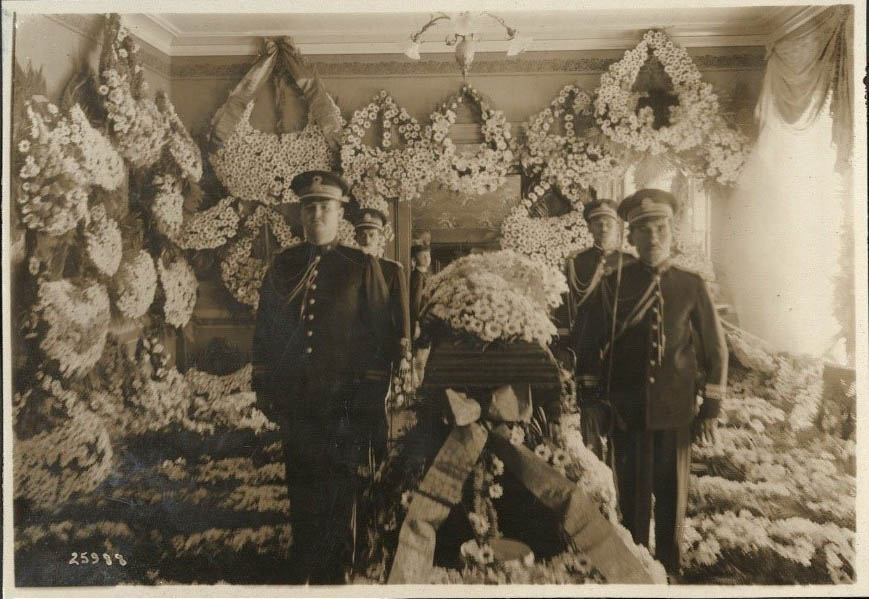
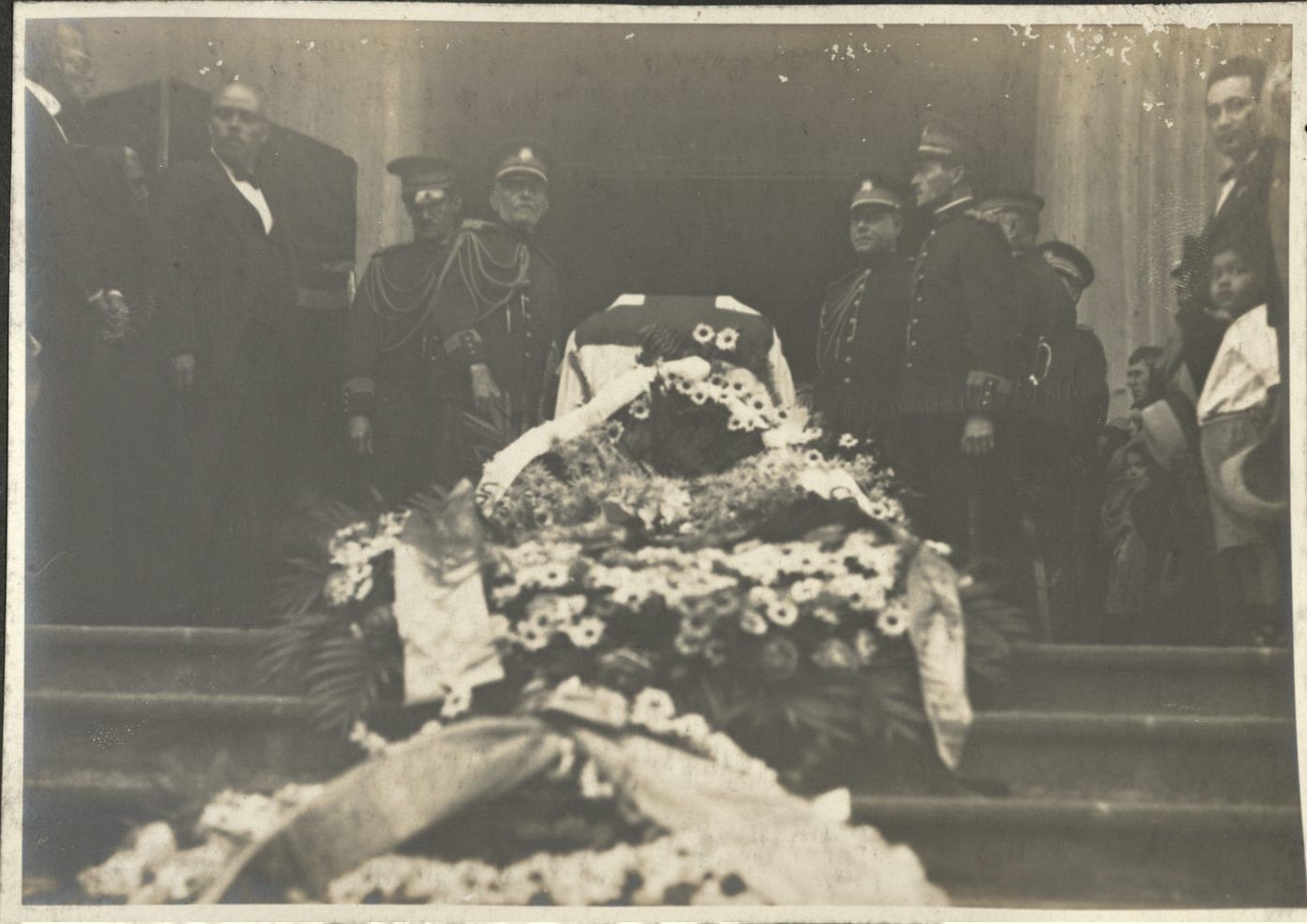
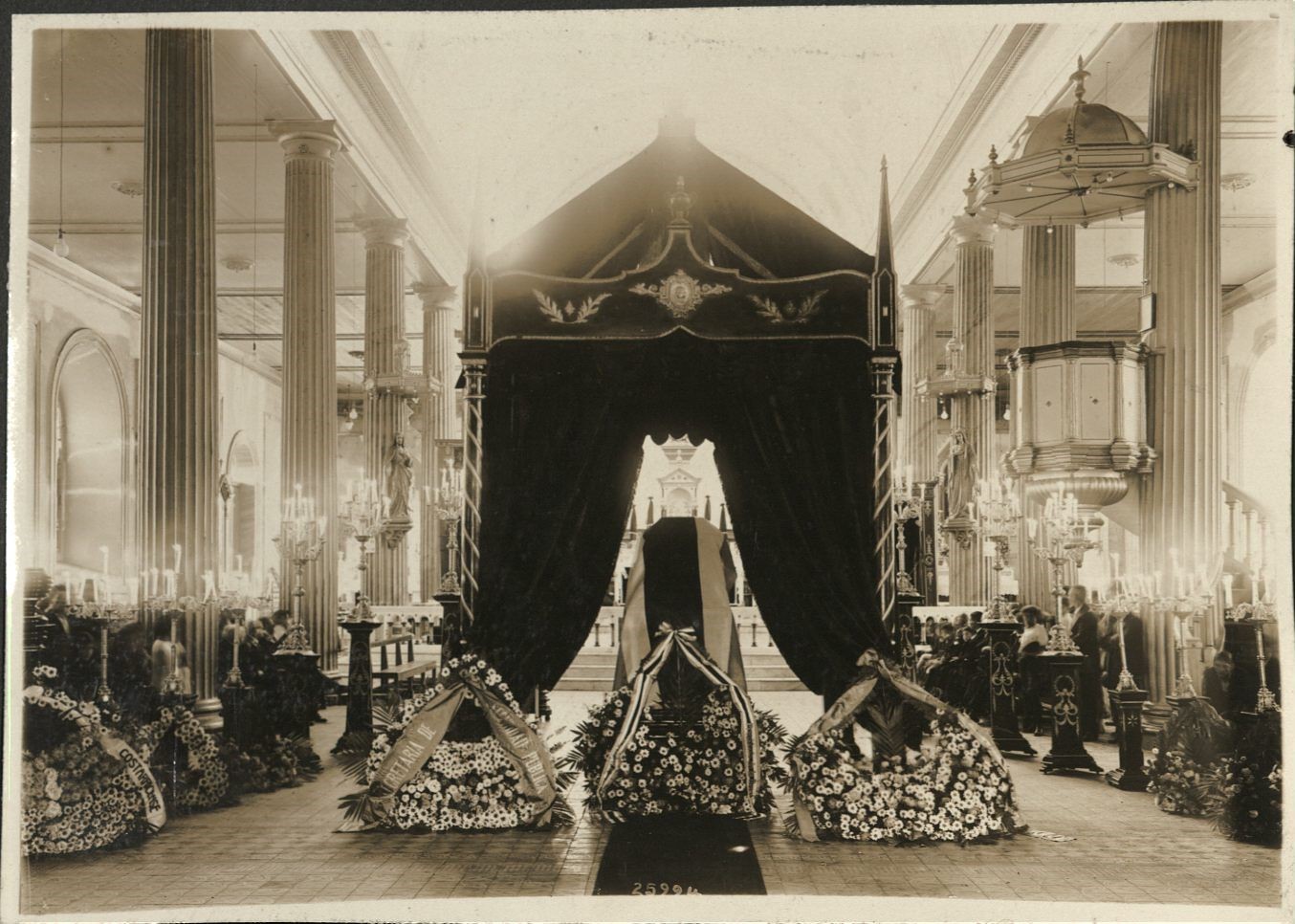
Feretro acompañado del cuerpo militar en un espacio privado / Casket accompanied by military officials in a private space. Click image to enlarge.
Como se indicó en este mismo blog de la biblioteca, el miércoles 3 de abril de este mismo año, a su llegada se creía que el álbum costarricense documentaba el funeral del ex presidente costarricense Federico Tinoco Granados. La información con la que en ese momento se contaba era un pequeño documento incluido en el álbum, el cual indica el lugar de compra y el supuesto contenido: “Bot in lit El Erial Oct 1980. Reported to be pictures of funeral of Tinoco 1919” (Comprado en la librería El Erial Oct 1980. Se dice que se trata del funeral de Tinoco 1919). Después de un análisis detallado en las fotografías, y de encontrar pistas suficientes para descartar la posibilidad de tal personaje político, buscamos más información sobre de quién podría tratarse. Varios eran los posibles candidatos, pero al publicarse el blog de la biblioteca se halló la respuesta. Hoy en día se tiene la certeza de que las 23 fotografías en blanco y negro, tomadas por el fotógrafo Manuel Gómez Miralles, documentan la despedida oficial que se le da a Ramón Bernardo Soto Alfaro en enero de 1931. A quien también se le conoce como General don Bernardo y quien fue presidente de Costa Rica durante dos mandatos (1885 & 1886-1890). Entre sus muchas actividades políticas, Soto Alfaro fue el fundador de la Cruz Roja Costarricense como parte de sus preparativos ante la campaña militar invasiva del Presidente guatemalteco Justo Rufino Barrios (1885).
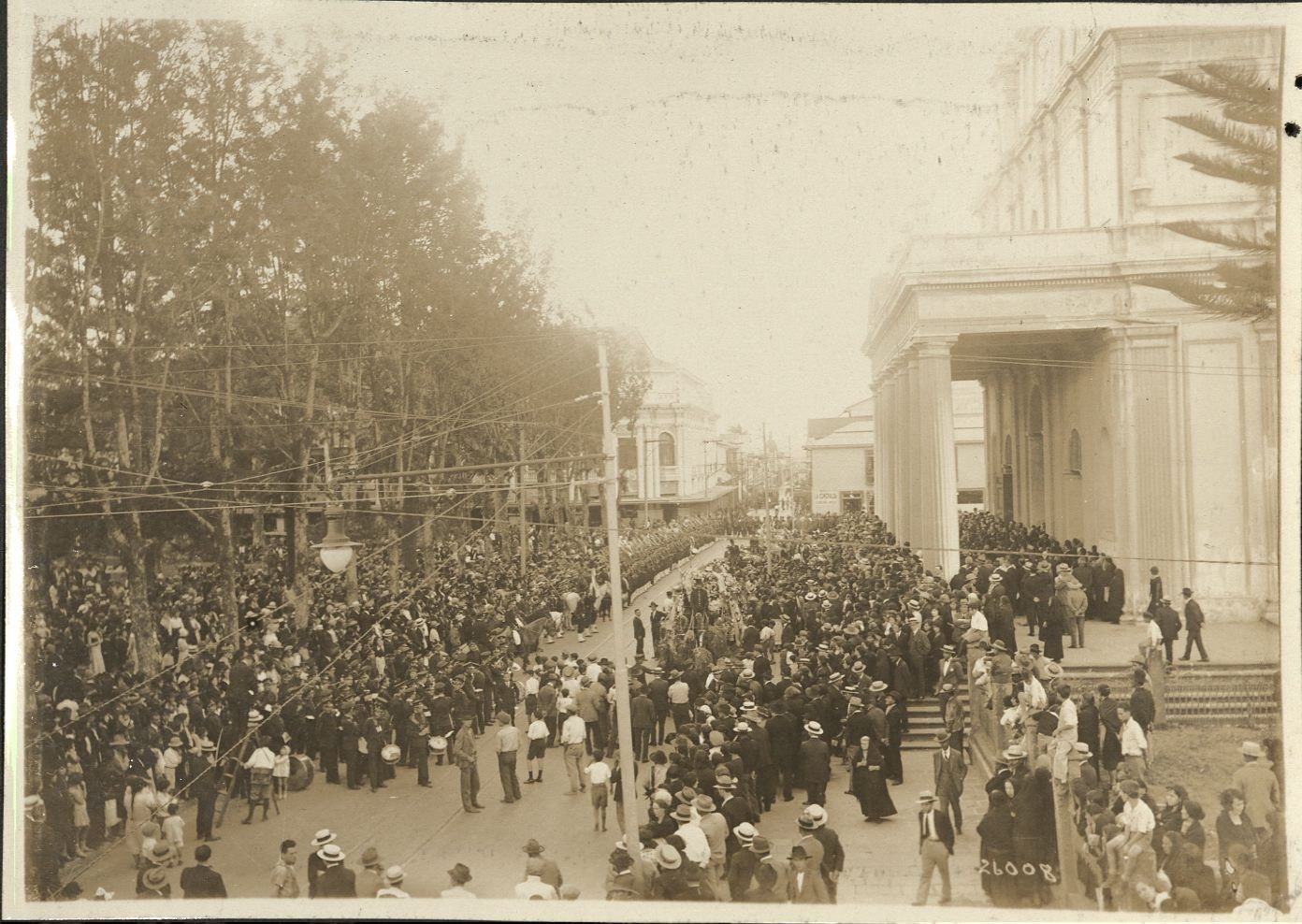
Feretro fuera de la Catedral Metropolitana de San Jose / Casket outside the Catedral Metropolitana de San José. Click image to enlarge.
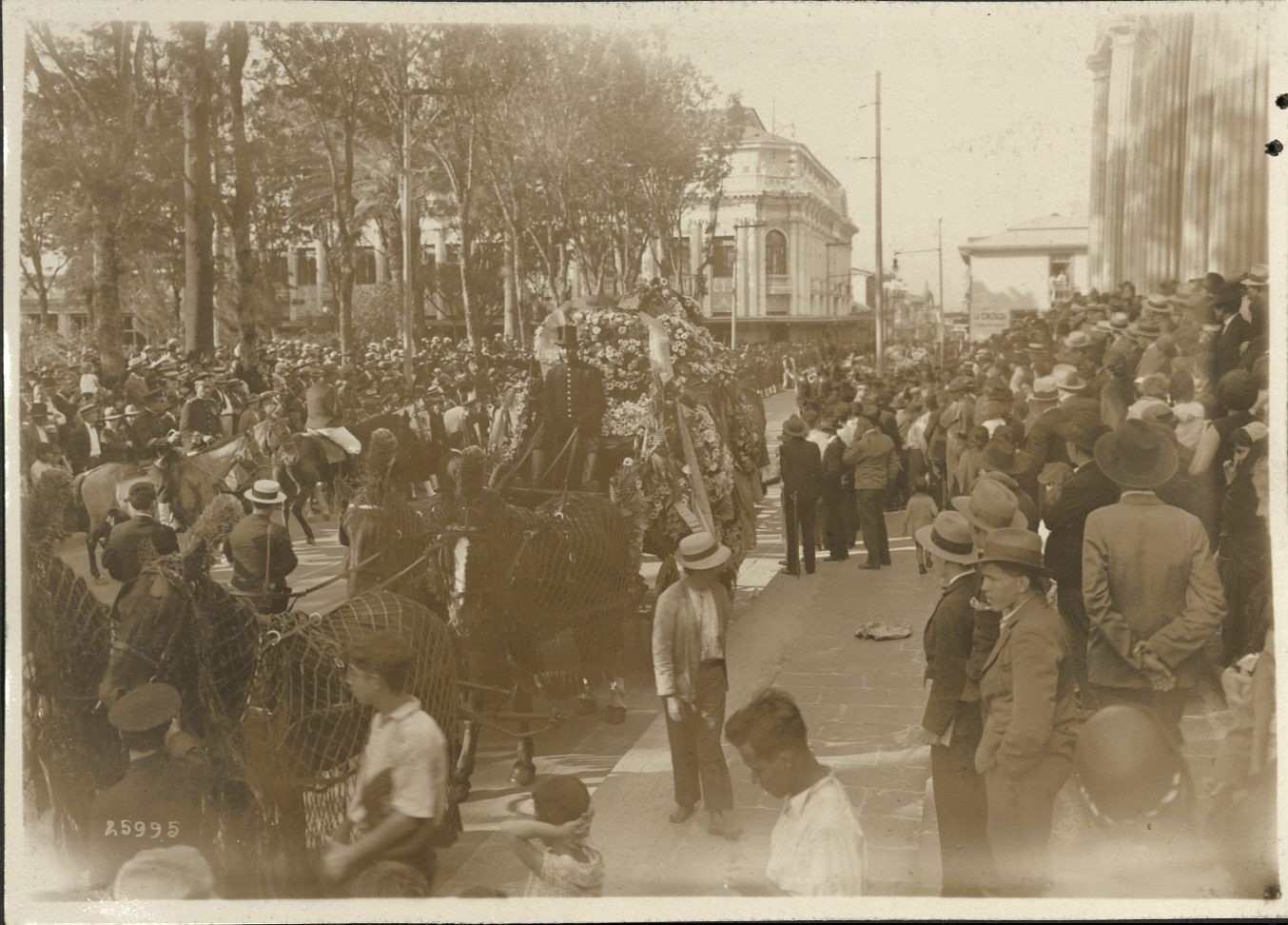
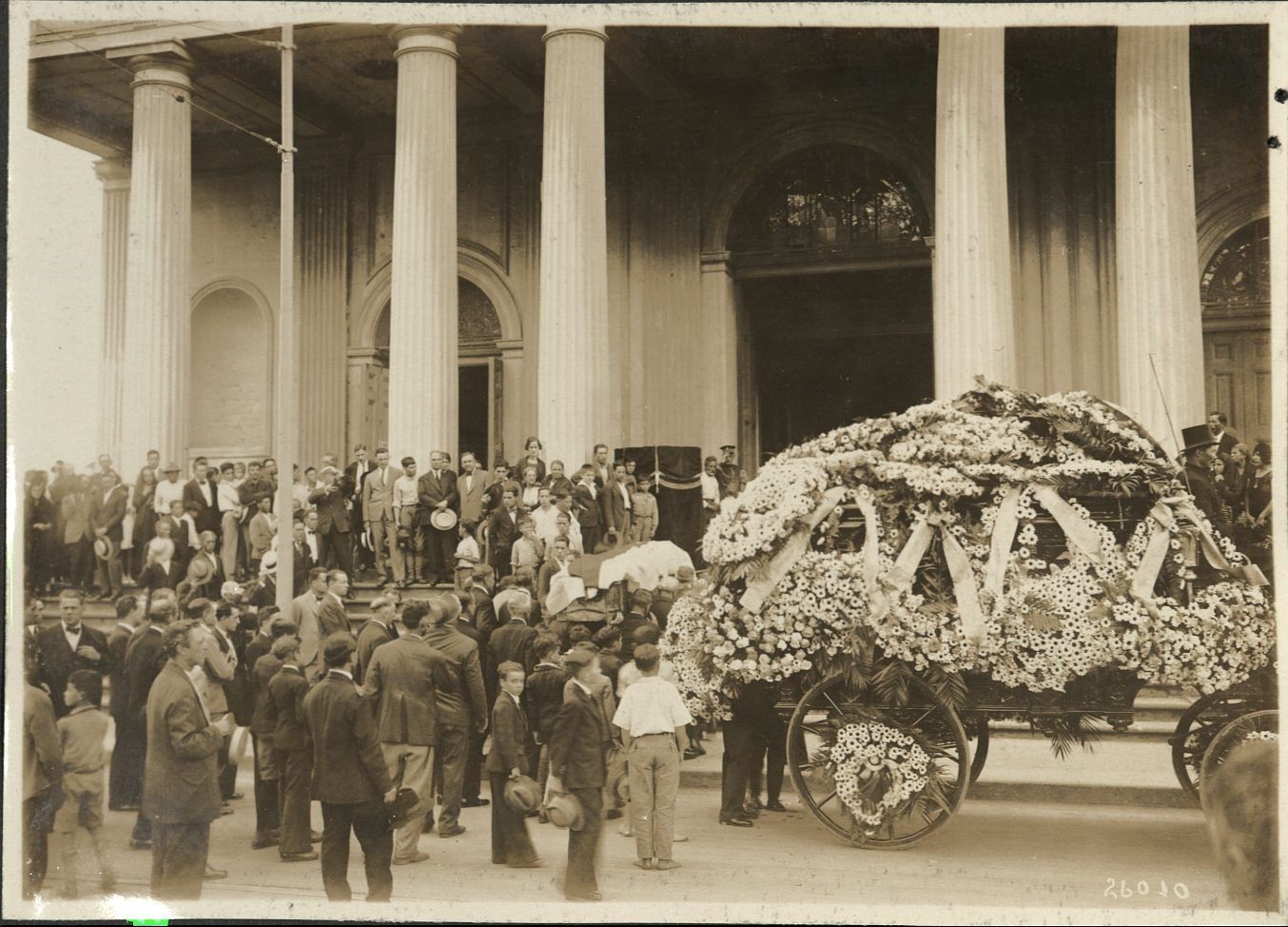
Las imágenes en el álbum, que han sido colocadas en un orden aparentemente cronológico, pueden verse divididas en dos categorías. Por un lado, las hay en un espacio público, donde vemos la conglomeración del pueblo y por otro se tiene el privado en donde vemos el orden militar que no fue abolido hasta 1948. El cuerpo militar en las imágenes está siempre presente, pero en espacios más privados y enfatizando la oficialidad del evento y por lo tanto de las fotografías. Con seguridad, si se tiene el conocimiento requerido, por las tomas directas de la cámara, algunos personajes políticos o del cuerpo militar podrían reconocerse. En cuanto a contenido, hasta este momento de lo único que se tiene certeza es de quién y que se celebra, pero no cabe duda de que hay mucho más que decir.
Cortejo Fúnebre a las afuera de la Catedral Metropolitana de San José / Funeral cortège outside the Catedral Metropolitana de San José. Click image to enlarge.
Debemos por lo tanto agradecer a Adrián Cortez Castro, quien, inmediatamente después de publicado el blog, nos proveyó el nombre de Soto Alfaro y la fecha de su fallecimiento. A la directora de la Biblioteca Nacional de Costa Rica Laura Rodríguez Amador, quien nos hizo el favor de confirmar por medio de la biblioteca digital la noticia publicada en Correo Nacional: diario de la mañana. A Rocío Fernández del Museo Nacional de Costa Rica y al especialista en la fotografía de Gómez Miralles, Gerardo Bolaños, quienes nos corroboraron la identidad del fallecido. Así mismo, nos proporcionaron la biografía de Gómez Miralles y del General don Bernardo. Gracias a la grata y amable cooperación de todos ellos el álbum MS K35 está formalmente disponible para todo aquel interesado de conocer más sobre la historia de Costa Rica.
Carruaje Fúnebre / Funeral cortège. Click image to enlarge.
We are happy to report that social media has been an important tool to help us solve the mystery of the Costa Rican album (MS K35). With the help of Facebook, Instagram, and the blog we have been able to share MS K35 housed in Kenneth Spencer Research Library’s special collections. Now, scholars dedicated to the study of Latin American, specifically Costa Rica, are able to access this contribution to the history and photographic material of the county.
Carruaje Fúnebre y público ciudadano / Funeral cortège with local citizens. Click image to enlarge.
As reported in our first blog entry (3 April 2019), tucked into the album was a note that read, “Bot in lib El Erial Oct 1980. Reported to be pictures of funeral of Federico Tinoco 1919.” However since Federico Tinoco, a former president of Costa Rica, died in exile in Paris in 1931, we knew this information couldn’t be correct. A detailed analysis of the album’s photos also suggested that it could not be the funeral of Tinoco’s brother, José, the Costa Rican Minister of War, who was murdered on August 10, 1919, so we continued a thorough search to find an accurate identity. There were many candidates to consider. Thankfully, a response to the previous blog entry provided us with the answer. We now know that the twenty-three black and white photographs taken by Manuel Gómez Miralles document the official memorial service of Ramón Bernardo Soto Alfaro in January 1931. Known as General Don Bernardo, this former two-term president of Costa Rica (1885 and 1886-1890) was also the founder of the Costa Rican Red Cross in 1885, as part of his preparations against a military invasion by Guatemalan President Justo Rufino Barrios.
Feretro dentro de la Catedral Metropolitana de San José / Casket inside the Catedral Metropolitana de San José. Click image to enlarge.
The album’s images, which appear to
be arranged chronologically, are divided into two main categories. The first
images depict a crowded public space and later ones depict the military, which
was not abolished in Costa Rica until 1948. In these images the military is
always present, emphasizing the official nature of the event and of the
photographs themselves. If we closely examine the images, we might recognize
certain politicians and military officials, as the photographer took direct
shots, positioning the camera on the faces of the political officials and
military groups.
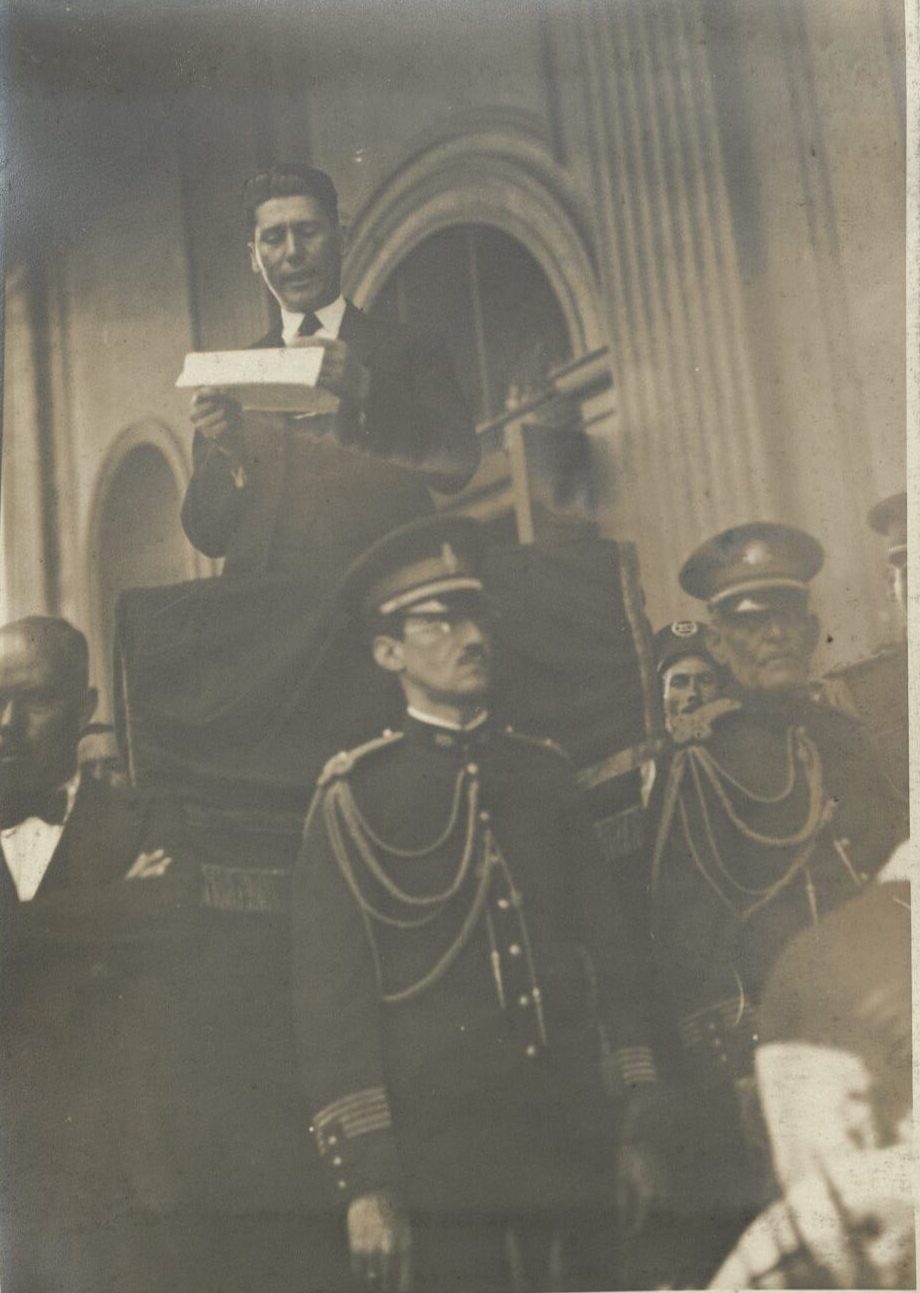
Discurso por personaje diplomatico en conmemoración a Bernardo Soto Alfaro / Diplomatic figure making a speech in honor of Bernardo Soto Alfaro. Click image to enlarge.
We would like to publicly acknowledge the assistance of Adrián Cortez Castro for his identification of Soto Alfaro (who had been one of our potential candidates). In response to the blog post, he was able to provide the exact date of Soto Alfaro’s death and a key reference to newspaper coverage of the funeral. We also wish to express our gratitude to Laura Rodríguez Amador, director of the National Library of Costa Rica, who provided a digital issue of the Correo Nacional: diario de la mañana to confirm Soto Alfaro’s identity. Additionally, we extend thanks to Rocío Fernández from the National Museum of Costa Rica, and Gerardo Bolaños, an expert on the photography of Gómez Miralles, who corroborated the identity of the deceased and provided the biographies of Gómez Miralles and General Don Bernardo. Thanks to the power of social media and the welcome and collegial cooperation of these individuals, the mystery of MS K35 is now solved. The album is available for research to anyone interested in learning more about Costa Rica and its history.
Indira García Varela Student Assistant Spanish- and Portuguese-Language Materials Preservation Project
Each week we’ll be posting a photograph from University Archives that shows a scene from KU’s past. We’ve also scanned more than 34,800 images from KU’s University Archives and made them available online; be sure to check them out!
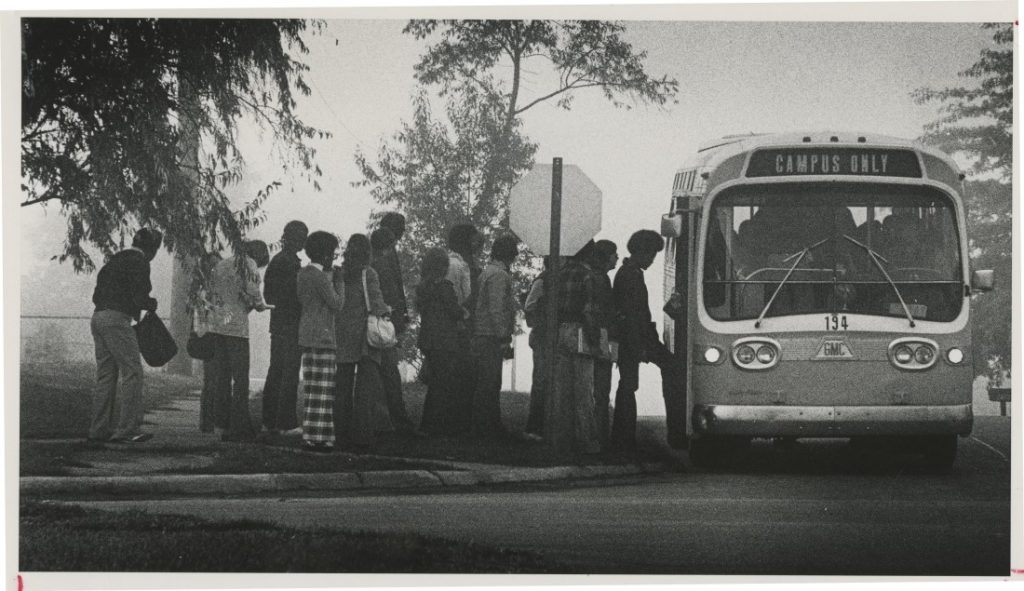
KU students boarding a bus on its way to campus, September 29, 1975. Lawrence Journal-World Photo Collection, University Archives Photos. Call Number: RG LJW 0/55 1975 Prints: University General: Bus Service (Photos). Click image to enlarge (redirect to Spencer’s digital collections).