The University of Kansas

Inside Spencer: The KSRL Blog

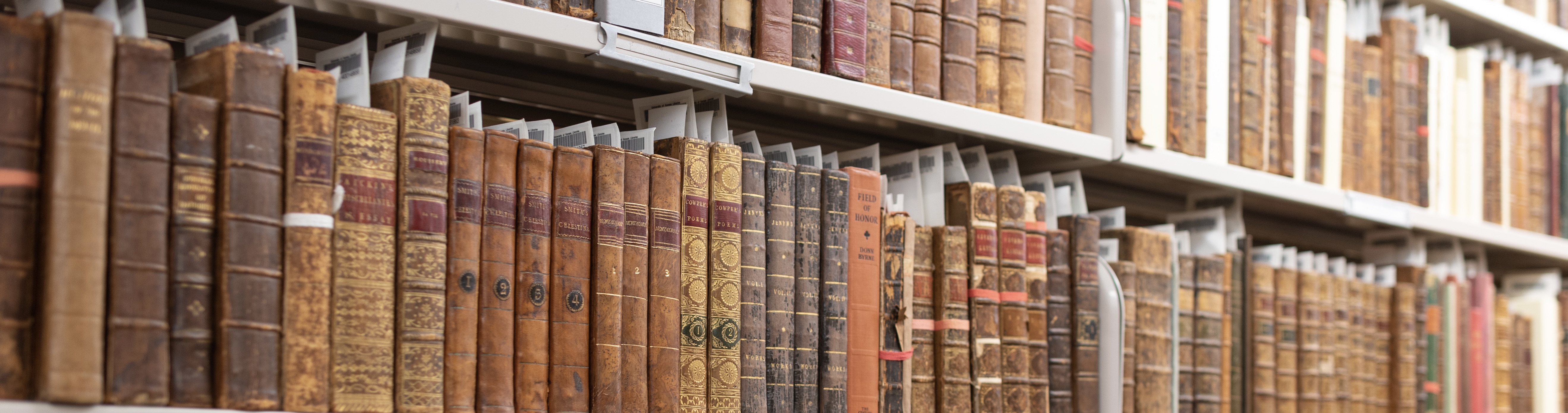
Books on a shelf

Welcome to the Kenneth Spencer Research Library blog! As the special collections and archives library at the University of Kansas, Spencer is home to remarkable and diverse collections of rare and unique items. Explore the blog to learn about the work we do and the materials we collect.

Native American Heritage Month: Haskell Indian Nations University

November 23rd, 2015

In celebration of Native American Heritage Month, I’m highlighting items from our Kansas Collection that feature events and people from Haskell Indian Nations University, which has been educating First Nations students since 1884 in Lawrence, KS.

Did you know that Haskell offered the first touch-typing class in Kansas? The commercial department, now known as the business department, opened in 1895 with five typewriters. To find this information and other interesting facts about Haskell, check out their school history webpage.

Vivian McAllister and students typing in class.

Vivian McAllister with students typing in class at Haskell.
Miscellaneous photographs and negatives, ca. 1970.
Wallace Galluzzi Papers. Call Number: RH MS 807. Click Image to Enlarge.

This picture was taken in the 1930s by the well-known local photographer, Duke D’ambra. It illustrates Haskell’s long history as a diverse intertribal educational institution. Haskell continues to celebrate its cultural diversity with the annual Haskell Indian Art Market.

Unknown Haskell students. Photograph of Haskell Activities, 1930s.

Unknown Haskell students. Photograph of Haskell Activities, 1930s.
Duke D’ambra photograph collection. Call Number: RH PH 69.542.6. Click Image to Enlarge.

Haskell has a long tradition of producing exceptional athletes. Below are a couple of examples from Haskell’s rich athletic history.

John Levi played football at Haskell from 1921-1924 and then came back to coach the team from 1926-1936. He has been inducted into 3 sports hall of fames, the Kansas Sports Hall of Fame, the Oklahoma Athletic Hall of Fame, and the American Indian Athletic Hall of Fame. Check out Haskell Athletics’ Flashback Friday post on John Levi to learn more.

Photograph of Haskell football player John Levi and accompanying document describing his actions in a game against the Quantico Marines.Photograph of Haskell football player John Levi and accompanying document describing his actions in a game against the Quantico Marines.

Photograph of Haskell football player John Levi and accompanying document chronicling
his actions in a game against the Quantico Marines. Duke D’ambra photograph collection.
Call Number: RH PH 69.583.3. Click Image to Enlarge.

Billy Mills was a graduate of both Haskell and KU. He is most remembered for his surprise win of the 10,000-meter race at the 1964 Tokyo Olympic Games. To learn more about Billy Mills and his incredible life story check out this interview with Mills from Haskell Athletics’ Flashback Friday post and “Mill’s Moment” on KUHistory.com written by Mark D. Hersey.

“Billy Mills is inducted in Sports Hall of Fame.” The Indian Leader, November 27, 1964.

“Billy Mills is inducted in Sports Hall of Fame.” The Indian Leader,
November 27, 1964.William Galluzzi Papers. Call Number: RH MS 807.
Click Image to Enlarge.

Mindy Babarskis
Library Assistant and Supply Coordinator

Thanksgiving on the Post: Images from the Pennell Collection

November 20th, 2015

The following images were taken by Joseph Judd Pennell, a professional photographer in Junction City, Kansas, from 1888 to 1923. The images in the collection represent a comprehensive record of life in a turn-of-the-century small Kansas town and the nearby army post of Fort Riley.

Photograph of a football team on Thanksgiving Day, Fort Riley, Kansas, 1896

Football team on Thanksgiving Day, Fort Riley, Kansas, 1896.
Joseph Judd Pennell Photograph Collection. Call Number: RH PH Pennell.
Click image to enlarge (redirect to Spencer’s digital collections).

A major U.S. Army post, Fort Riley was the site of a light artillery unit; several cavalry units, including the 9th and 10th black cavalry troops; one of the best cavalry schools in the world; and Camp Funston, a major army induction center during World War I.

Photograph of 20th Battery Dining Hall prepared for Thanksgiving meal, Fort Riley, Kansas, 1904

Kitchen staff in the 20th Battery Dining Hall prepared for Thanksgiving dinner, Fort Riley,
Kansas, 1904. Joseph Judd Pennell Photograph Collection. Call Number: RH PH Pennell.
Click image to enlarge (redirect to Spencer’s digital collections).

Photograph of soldiers in the 20th Battery Dining Hall for Thanksgiving meal, Fort Riley, Kansas, 1904

Soldiers gathered in the 20th Battery Dining Hall for Thanksgiving dinner, Fort Riley,
Kansas, 1904. Joseph Judd Pennell Photograph Collection. Call Number: RH PH Pennell.
Click image to enlarge (redirect to Spencer’s digital collections).

Although primarily a studio portrait photographer, Pennell also went out into the community to photograph. He recorded business, social, church, and school activities; people’s prized moments and possessions; and events that touched everyone’s lives, such as floods, parades, President Theodore Roosevelt‘s visit, the racket nine-cent sale, polo games, and Chautauqua. Revealed within the photographs is the detail and complexity of rural and urban life. The collection as a whole shows how a town and its people changed over time, evidenced in things like the styles of fashion and consumer goods, the appearance of new buildings as the town grew, and the entrance of technology into everyday life. One of the most notable technological changes that Pennell documented was the gradual movement from horse to automobile power.

Photograph of a dining room set for Thanksgiving dinner, Fort Riley, Kansas, 1905

Dining room set for Thanksgiving dinner, Fort Riley, Kansas, 1905.
Joseph Judd Pennell Photograph Collection. Call Number: RH PH Pennell.
Click image to enlarge (redirect to Spencer’s digital collections).

Photograph of the 6th Band dining room set for Thanksgiving dinner, Fort Riley, Kansas, 1913

6th Band dining room set for Thanksgiving dinner, Fort Riley, Kansas, 1913.
Joseph Judd Pennell Photograph Collection. Call Number: RH PH Pennell.
Click image to enlarge (redirect to Spencer’s digital collections).

Spencer’s Pennell collection consists of approximately 30,000 glass plate negatives, 6,074 contact prints (some dry-mounted on boards), 302 original Pennell photographs, and ten studio register books containing Pennell’s negative identification system. The glass plate negatives vary in size from 4″ x 5″ to 12″ x 20″, with the bulk of the collection in the 5″ x 7″ format. There are also a small number of flexible negatives and forty-six large panoramic negatives.

Kathy Lafferty
Public Services

Throwback Thursday: McCollum Hall Edition

November 19th, 2015

Each week we’ll be posting a photograph from University Archives that shows a scene from KU’s past. We’ve also scanned more than 11,400 images from KU’s University Archives and made them available online; be sure to check them out!

Photograph of construction on McCollum Hall, 1965

Construction nears completion on McCollum Hall, 1965. University Archives Photos.
Call Number: RG 0/22/45 1965: University General: Buildings: McCollum Hall (Photos).
Click image to enlarge.

As part of the goal to transform undergraduate education on the KU campus, two new residence halls opened on Daisy Hill in 2015. To make way for the new halls and a parking lot, McCollum Hall will be razed next Wednesday, November 25th. This selection of photographs highlights the fifty-year history of the building and those that lived there.

Aerial view of Daisy Hill, 1968

Aerial view of Daisy Hill, 1968

Aerial view of Daisy Hill and Iowa Street looking north (top) and southeast (bottom), 1968.
McCollum Hall is the t-shaped building. Lawrence Journal-World Photo Collection,
University Archives Photos. Call Number: RG LJW 0/24/1 Daisy Hill 1968:
University General: Campus: Areas and Objects: Daisy Hill (Photos).
Click images to enlarge.

Opened in the spring semester of 1965, the dormitory was planned as the fifth and last along Iowa between 15th and 19th streets in the area known as Daisy Hill. The hall was originally built as an all-male dorm to house 976 students. It has since become a co-ed dorm, dominating the Daisy Hill skyline. Thousands of students have called this hall home while at KU.

Photograph of McCollum Hall residents reading newspapers in the main lounge, 1965

McCollum Hall residents read newspapers in the main lounge, 1965.
University Archives Photos. Call Number: RG 56/15 1965: Housing:
McCollum Hall (Photos). Click image to enlarge.

Photograph of four students at the crossroads of McCollum Hall, 1967

Students in McCollum Hall, 1967. University Archives Photos.
Call Number: RG 56/15 1967: Housing: McCollum Hall (Photos).
Click image to enlarge.

Photograph of a student carrying clothes into McCollum Hall, 1978/1979

A student carries clothes into McCollum Hall, 1978/1979.
University Archives Photos. Call Number: RG 56/15 1978/1979:
Housing: McCollum Hall (Photos). Click image to enlarge.

Photograph of students in their dorm room at McCollum Hall, 1993

Students in their dorm room at McCollum Hall, 1993.
University Archives Photos. Call Number: RG 56/15 1993:
Housing: McCollum Hall (Photos). Click image to enlarge.

McCollum Hall was named after two noteworthy Kansas brothers, Elmer and Burton McCollum, who are among the University’s most distinguished graduates and the nation’s men of science. Elmer (1879-1967) discovered vitamins A, B, and D while Burton (1880-1964) developed many of the processes for finding underground oil with sound waves. The two brothers worked their way from impoverished youths on their family farm to remarkably successful and parallel careers, graduating together from KU in 1903. They never forgot their early struggles to earn an education. Burton designated that half his estate be used to aid deserving students and the University. The generosity, tenacity, and brilliance of the McCollum brothers made their name a natural one for a campus building.

Photograph of Elmer McCollum

Elmer McCollum, undated photograph. University Archives Photos.
Call Number: P/McCollum, Elmer (Photos). Click image to enlarge.

Painting of Burton McCollum

Portrait of Burton McCollum by Kansas City artist
Daniel MacMorris. The painting, along with one of his brother Elmer,
previously hung in the lobby of McCollum Hall. University Archives Photos.
Call Number: P/McCollum, Burton (Photos).
Click image to enlarge.

JoJo Palko
KU 150 Research Archivist
University Archives

Throwback Thursday: Game Day Travel Edition

November 12th, 2015

Each week we’ll be posting a photograph from University Archives that shows a scene from KU’s past. We’ve also scanned more than 10,100 images from KU’s University Archives and made them available online; be sure to check them out!

Photograph of KU fans taking a carriage to a football game, 1895

KU fans taking a carriage to a football game, 1895. University Archives Photos.
Call Number: RG 71/66/14 1895: Student Activities: Sports: Football (Photos).
Click image to enlarge (redirect to Spencer’s digital collections).

The caption on the back of the photograph states that it shows members of “Kappa Alpha Theta going to a football game in the ‘Jim Donnelley Talley Ho’. black and gold trimmings on the horse.”

James Donnelly (1842-1918) was born in Ireland and arrived in Lawrence with his siblings in 1857. A 1909 article in the Lawrence Daily Journal described him as a “fixture in this town [who] has always been one of our best citizens.” James, partnered with his brother Neill, managed a livery stable – where horses and vehicles are cared for or rented out for pay – under the name Donnelly Brothers. The 1909 article, which reported the sale of the business due to James’s poor health, stated that the “livery stable has a reputation all over the state. It has always been a favorite with the students. The firm always kept high grade rigs and accommodated the public.” The livery stable was located on New Hampshire Street at Winthrop (now 7th Street).

Caitlin Donnelly (no known relation to James)
Head of Public Services

Melissa Kleinschmidt, Megan Sims, and Abbey Ulrich
Public Services Student Assistants

Collection Feature: Veteran’s Day

November 9th, 2015

In honor of Veteran’s Day on November 11, we feature this item from the Verlean Tidwell Family Collection, from our African American Experience Collections. This collection was donated by Dr. John Edgar Tidwell, a KU English Department faculty member. His mother, Mrs. Verlean Tidwell, served as a member of Maple Street Baptist Church in Independence, Kansas, for more than 70 years.

This handmade Veteran’s Day book was compiled by Mrs. Arletta Moore in 1966 to honor veterans of World War I and II from Maple St. Baptist Church.

Handmade Veteran's Day book

The decorated cover features glitter, gold stickers, and a silk flower. Call number RH MS 1286 Box 10, Kansas Collection. Click image to enlarge.

Handmade Veteran's Day book  Handmade Veteran's Day book

The book includes clippings about war, a typed list of veterans and their next of kin, poems, and handwritten notations. Call number RH MS 1286 Box 10, Kansas Collection. Click images to enlarge.

Handmade Veteran's Day book

Detail of handwritten Pledge of Allegiance, along with gold stickers and handwritten “war” in block letters. Call number RH MS 1286 Box 10, Kansas Collection. Click image to enlarge.


Whitney Baker
Head, Conservation Services