The University of Kansas

Inside Spencer: The KSRL Blog

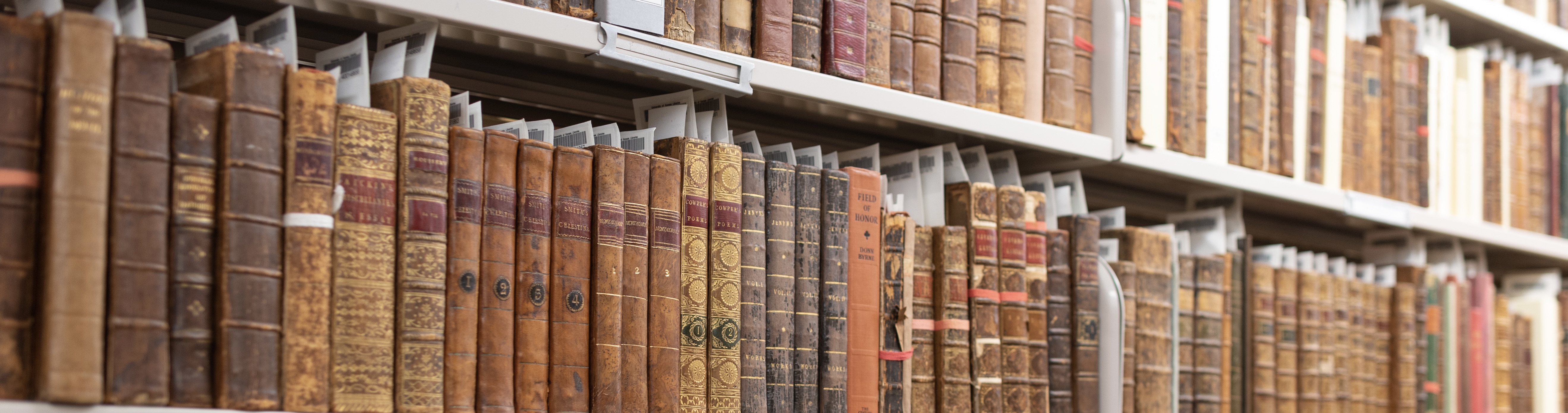
Books on a shelf

Welcome to the Kenneth Spencer Research Library blog! As the special collections and archives library at the University of Kansas, Spencer is home to remarkable and diverse collections of rare and unique items. Explore the blog to learn about the work we do and the materials we collect.

Throwback Thursday: Kenneth Spencer, Football Fan, Edition

October 13th, 2016

Each week we’ll be posting a photograph from University Archives that shows a scene from KU’s past. We’ve also scanned more than 29,500 images from KU’s University Archives and made them available online; be sure to check them out!

University Archives is home to a wealth of materials about KU athletics, including programs for the football team (as well as the men’s and women’s basketball teams). The advertisements in the programs can be particularly fun and interesting to explore, and we were delighted to find one 1955 ad referencing our library’s namesake.

KU football program, Spencer ad, 1955

Advertisement for Spencer Chemical Company and
the Pittsburg & Midway Coal Mining Co. in the KU football program,
October 22, 1955. Call Number: RG 66/14/1. Click image to enlarge.

KU football program, cover, 1955

Cover of the KU football program, October 22, 1955.
Call Number: RG 66/14/1. Click image to enlarge.

Caitlin Donnelly
Head of Public Services

Melissa Kleinschmidt and Abbey Ulrich
Public Services Student Assistants

Throwback Thursday: Tailgate Edition

October 6th, 2016

Each week we’ll be posting a photograph from University Archives that shows a scene from KU’s past. We’ve also scanned more than 29,500 images from KU’s University Archives and made them available online; be sure to check them out!

Photograph of KU football fans at a tailgate party, 1979/1980

KU football fans tailgating with the Campanile in the background, 1979/1980.
University Archives Photos. Call Number: RG 71/66/14 1979/1980 Prints:
Student Activities: Sports: Football (Photos).
Click image to enlarge (redirect to Spencer’s digital collections).

Caitlin Donnelly
Head of Public Services

Melissa Kleinschmidt and Abbey Ulrich
Public Services Student Assistants

“Law is a Bottomless-Pit, it is a Cormorant, a Harpy, that devours everything”

October 3rd, 2016

Of the ancient professions–law, medicine, and theology–law, with its private language, its proud practitioners, its high fees, and its dependence on procedure and detail, much of which has no obvious meaning to the lay public, has been the easiest target for satire. The rise in frequency and venom of the satire appears to have coincided, at least so far as the English-speaking world is concerned, with the rise in the use of English in the courts. Once the barrier of Latin and Law-French was lowered, the satirist, like the writer of do-it-yourself law manuals, felt qualified to attack this arcane world.

By the early 18th century, satire of the law was such a recognized and accepted genre that John Arbuthnot, physician to Queen Anne, was able to satirize contemporary English politics under the guise of satirizing an extravagant lawsuit. This pamphlet is the second in his series known as the History of John Bull.

Pages from Bond B290. Kenneth Spencer Research Library, University of Kansas

Cover of John Arbuthnot’s Law is a bottomless pit, exemplify’d in the case of the Lord Strutt, John Bull, Nicholas Frog, and Lewis Baboon, who spent all they had in a lawsuit. Second edition. London: for John Morphew, 1712. Call number Bond B290.

Pages from Bond B290. Kenneth Spencer Research Library, University of Kansas

Beginning of chapter one: The occasion of the law-suit.

A contemporary owner has added notes identifying the parties and concepts involved. The lawyer, “Hocus” (for “Hocus pocus”), is the great general, Marlborough, whose supposed political ambitions–or those of his dangerously capable duchess–were greatly resented.

Pages from Bond B290. Kenneth Spencer Research Library, University of Kansas

Chapter two: How Bull and Frog grew jealous that the Lord Strutt intended to give all his custom to his grandfather, Lewis Baboon.

From Civil, Canon, and Common: Aspects of Legal History. An exhibition of books and manuscripts in the Kenneth Spencer Research Library, University of Kansas, 1996.
Alexandra Mason and James Helyar, editors

Throwback Thursday: Classroom Edition

September 29th, 2016

Each week we’ll be posting a photograph from University Archives that shows a scene from KU’s past. We’ve also scanned more than 28,800 images from KU’s University Archives and made them available online; be sure to check them out!

Photograph of a classroom scene, 1930s

Classroom scene, 1930s. The students appear to be in an engineering class.
University Archives Photos. Call Number: RG 71/0 1930s Negatives: Student Activities (Photos).
Click image to enlarge (redirect to Spencer’s digital collections).

Caitlin Donnelly
Head of Public Services

Melissa Kleinschmidt and Abbey Ulrich
Public Services Student Assistants

Workshop Recap: Parchment Conservation

September 26th, 2016

Earlier this month, I had the opportunity to travel to the International Preservation Studies Center (IPSC, formerly known as the Campbell Center for Historic Preservation Studies) to participate in a 4-day workshop on the conservation of parchment. My nine classmates and I – conservators from a variety of institutions around the country – stayed in IPSC’s dormitory housing in the tiny town of Mount Carroll, Illinois (read about the interesting history of the IPSC campus here) and immersed ourselves in the subject under the guidance of instructor Sheila Siegler, a chemist and conservator with many years of experience treating parchment documents.

From her long experience working with parchment, Sheila brings a wealth of knowledge and a set of strong opinions, but also a refreshing lack of fussiness when it comes to working with a material that has a reputation for being difficult. Along the way she was always very encouraging, reminding us that parchment can be tamed as long as you know what you’re dealing with and accept its quirks and imperfections as par for the course.

We began on the first day with a morning lecture on the history of the use of parchment and how parchment is made. This part is not for the squeamish – the process of turning sheep or calf skin into parchment is a messy business! We also spent some time learning about the chemical structure of parchment and how it deteriorates; as a chemist, Sheila wanted us to understand how and why the parchment would respond to the treatments we performed in class.

We spent the afternoon of Day 1 trying out different ways of examining parchment – under various types of illumination and under different levels of magnification – and comparing the ways that parchment and “parchment paper” behaved under different kinds of stress. Using scraps of historic parchment, modern parchment, and modern parchment paper, we soaked, boiled, and burned samples and recorded the results. Some students had the idea to intentionally disfigure their samples quite severely so that later in the workshop they would have the fun challenge of trying to undo the damage. At the end of Day 1 we broke into pairs and were assigned a large folded historic parchment document (reportedly purchased on eBay) that it would be our responsibility to examine and treat over the rest of the workshop.

Examination of parchment under ultraviolet light.

Examining a parchment document under ultraviolet illumination. Photo by Kyle Clark.

On the morning of Day 2, we worked on cleaning our parchments and preparing adhesives to use in the afternoon session on parchment repair. Sheila’s preferred cleaning technique is simple – a plain cotton ball, slowly and gently brushed over the parchment surface. Very grimy areas could be cleaned with a swab moistened in water if necessary, but Sheila’s no-fuss approach calls for only as much intervention as is needed; after all, very old documents are bound to show their age, and the idea is not to make them look brand new again, but, for those of us who work in research institutions, to make their contents accessible to researchers.

The adhesive we made is called parchment size and is prepared very simply by slowly heating bits of parchment cuttings in water until the mixture thickens into a mild gelatinous adhesive. We put it to use in the afternoon session, experimenting with it and other adhesives (wheat starch paste and methylcellulose) and different kinds of repair tissues (Japanese paper and a material called goldbeater’s skin, made from ox intestines) to mend tears in parchment. We mixed and matched adhesives and repair materials and made notes on the effectiveness of each combination. We also discussed the types of historic stitched or embroidered repairs that are sometimes seen on parchment, and some students experimented with replicating this type of repair on our sample scraps.

Conservation tools and storeroom

The storerooms at IPSC are a little like a candy store to conservators.

On Day 3 it was time for the most harrowing part of our treatment – humidification and flattening of our parchment documents. Students traded horror stories – their own or second-hand – of parchment treatments gone awry, but in her easy way Sheila urged us to jump in and be brave. We laid down plastic on the table, then moistened absorbent material, then a layer of Tyvek (yes, that Tyvek that you see at construction sites – it protects the document from being saturated but allows water vapor through to gently humidify the object) followed by the parchment and then more Tyvek, another moistened layer, and finally more plastic. After around 30 to 60 minutes, most documents were humidified enough to be ready for flattening, a process that involves placing padded clips close together around the parchment edges and pinning them down (we pinned our to sheets of stiff foam insulation) so that the skin is pulled flat. As it dries, it will “remember” its new flat shape.

Parchment workshop

Sheila demonstrating how to flatten parchment with the assistance of students. Photo courtesy IPSC.

Sheila was right – it really wasn’t so scary after all, nor quite as time-consuming as it’s sometimes made out to be. The clips can leave some minor distortions along the parchment edges, but those can either be removed through a second, shorter humidification followed by flattening under weight, or they can simply be left alone if one is satisfied with just having removed the major folds. As for the scraps that had been intentionally damaged earlier in the workshop, we tried the same humidification and flattening technique on them and were surprised at how well it worked.

Parchment workshop

Sheila assessing a student’s flattened parchment. Photo courtesy IPSC.

During the periods of waiting for parchment to humidify or to dry, we did more experimenting, this time with various surface preparations such as those that scribes would have used to prepare parchment for writing upon. We tried an assortment of mild abrasives, liquids, oils, eggs, and combinations thereof to see how they affected the quality of the parchment surface. Someone even found a feather and carved its tip into a nib to make a pen for testing the writing surfaces.

And finally we came to Day 4, when we marveled at our nice flat parchments and did still more experimenting, this time with hinging and matting techniques. Sheila’s preferred method is characteristically simple: a fringe of closely-spaced Japanese tissue hinges all around the document, adhered with wheat starch paste. Using many small hinges (rather than one long one to a side, another common hinging method) allows the skin more room to flex with changes in environmental conditions, which parchment is apt to do.

This workshop was a great experience, and I certainly came away with a better understanding of parchment, as well as the confidence to approach treatment of parchment items in Spencer’s collections.

Angela Andres
Special Collections Conservator
Conservation Services