The University of Kansas

Inside Spencer: The KSRL Blog

Books on a shelf

Welcome to the Kenneth Spencer Research Library blog! As the special collections and archives library at the University of Kansas, Spencer is home to remarkable and diverse collections of rare and unique items. Explore the blog to learn about the work we do and the materials we collect.

This blog may contain archived web content. This blog may link to catalog records which no longer exist as of a software change in 2026.

Remembering Sam Adams and his Highways to Hope

October 28th, 2026

For 25 years, Sam Adams was an associate professor of journalism at the University of Kansas. That followed a career during which he worked as a reporter or editor at half a dozen newspapers, most notably the St. Petersburg Times.

Adams died in 2019 at the age of 93.  In 2025, his daughter, Carol Adams Smith, donated his personal papers to KU’s Kenneth Spencer Research Library.

Ken Stephens, a retired journalist and member of the Board of Advocates for KU Libraries, has since sifted through Adams’ papers and other sources for this report.

In June 1964, Newsweek wrote that “the race beat” was “the most dangerous domestic assignment in U.S. journalism.”

Among a handful of reporters, Newsweek’s story cited Sam Adams of the St. Petersburg Times. As a black reporter covering the civil rights struggle for a white-owned southern newspaper, Adams was exceptionally rare, the magazine noted.[i]

By the time of Newsweek’s 1964 report, Adams, at 38, had already faced the hostility of southern police officers and white crowds while covering racial unrest in Birmingham, Ala., Albany, Ga., and Jacksonville and St. Augustine, Fla.

For Adams, it began on Feb. 18, 1956, when the Atlanta Daily World sent him to Columbus, Ga., to cover the slaying of Dr. Thomas H. Brewer, a physician and president of the local NAACP.  “It was a harbinger of my career, trials and triumphs covering the struggle, the violence and killings that characterized the civil rights years,” Adams wrote in a speech prepared for delivery at Emory University on Nov. 8, 1997.[ii]

Working for the St. Petersburg Times, Adams covered Gov. George Wallace’s stand in the schoolhouse door in a failed attempt to block integration of the University of Alabama in June 1963. He also reported on the March on Washington for Jobs and Freedom in August 1963, when Martin Luther King Jr. delivered his “I have a dream” speech.
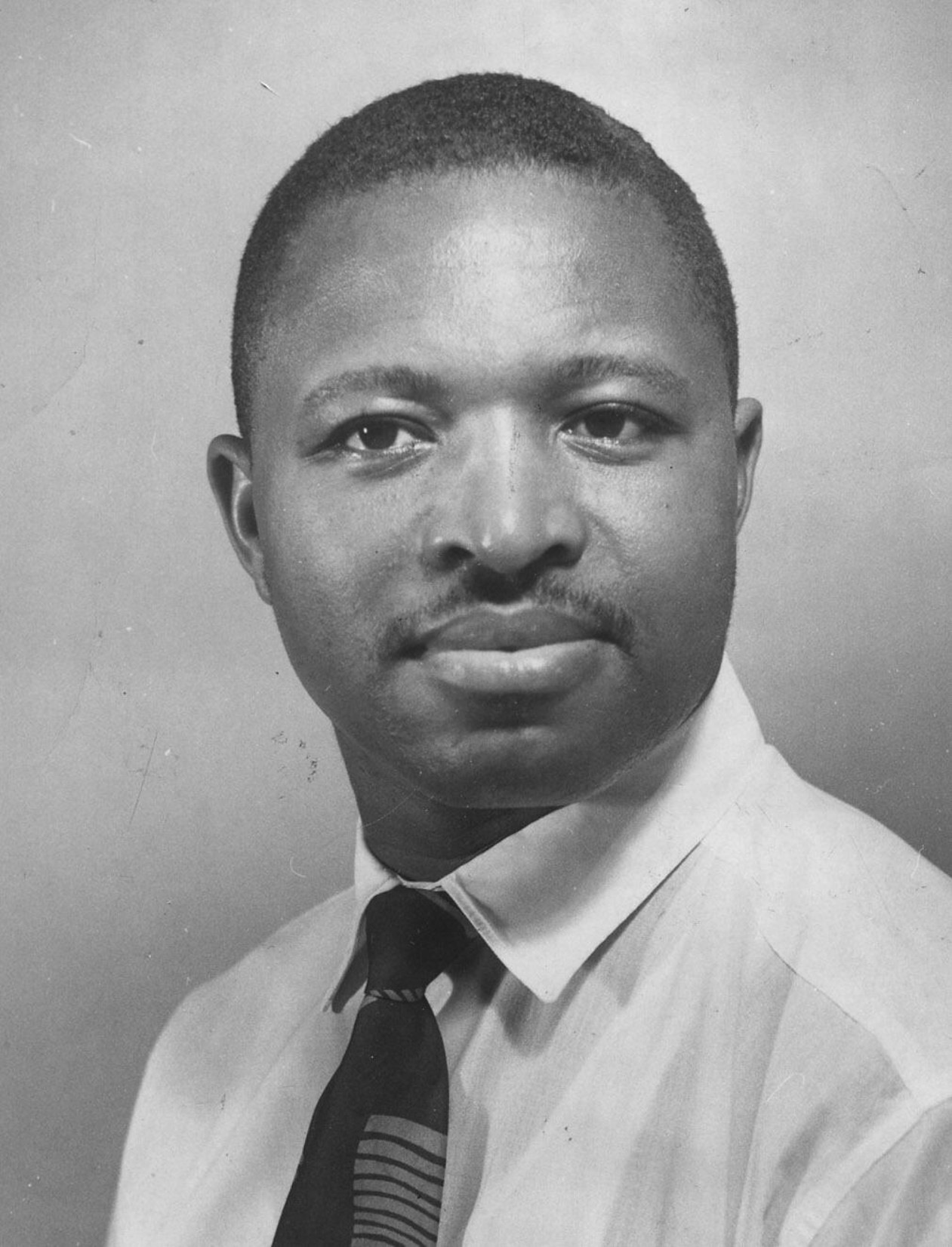
Photographic portrait of Samuel Adams, circa 1964
Photograph of Sam Adams, circa 1964, from the 2019 reprint of the original “Highways to Hope” series in the St. Petersburg Times (now the Tampa Bay Times). Tampa Bay Times, March 5, 2019. https://www.tampabay.com/florida/2019/03/05/highways-to-hope-read-a-times-reporters-account-of-a-road-trip-through-racism-in-1964/

Then, in October 1964, not quite four months after the Civil Rights Act became law, The St. Petersburg Times sent Adams and his wife, Elenora, on a 15-day, 4,300-mile driving tour across 12 southern states to see if the new law had changed anything in the South. They were to seemingly be just two middle-class black tourists.[iii]

“We were to forget, if we could, our color,” Adams wrote. “We were to report what happened to us, but to precipitate no trouble.”

Concerned friends had suggested that Adams shouldn’t embark on the trip without something to protect the two, and they offered to loan him a gun. Adams turned them down. A white friend had convinced Elenora to accept a tear gas pistol, but Sam vetoed that too.

“I have lived with fear so long I am hardly aware it’s there,” Adams wrote in the conclusion to his seven-part series.

They left their two young children, Carol, then 14, and Sam Jr., then 4, in the care of a young woman from Adams’ hometown who was staying with them while attending junior college.[iv]

Carol Adams Smith said she didn’t recall her parents telling them much about the planned trip.

“I think it was vaguely expressed to, to me, and so I don’t think at that time that I understood the seriousness of the journey that they were about to embark on,” she said.

The couple found that in many places discrimination remained unrepentant and undisguised, as when, just 50 miles into their journey, they were turned away at Hillsborough River State Park. “It’s my understanding I’m not to admit colored. I’m sorry,” the park attendant said.
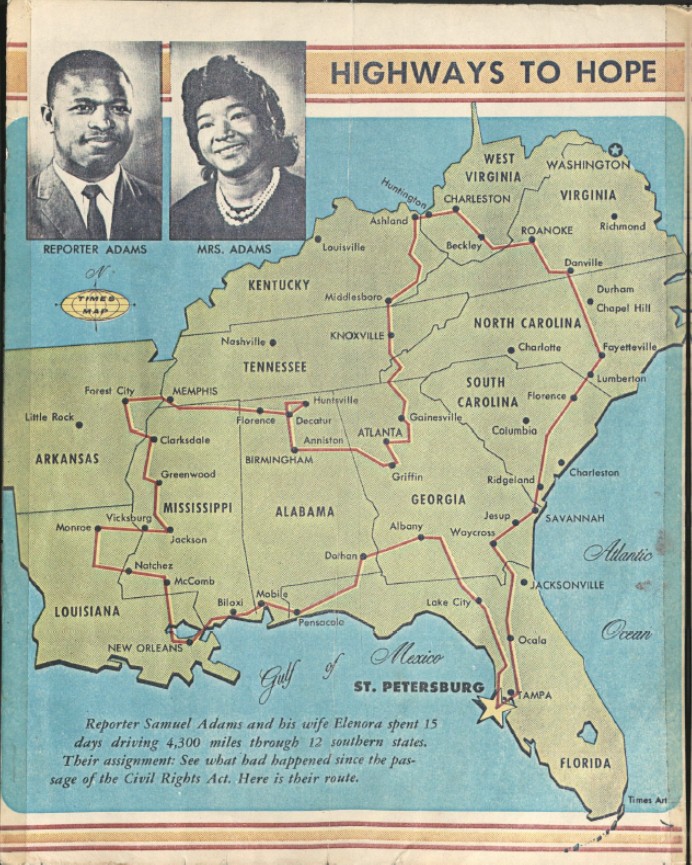
Map of "Highways to Hope" trip. with insert image of Sam Adams and his wife Elenora Adams.
Map of the 1964 “Highways to Hope” trip. From the Personal Papers of Samuel L. Adams, University Archives. Call # to be assigned (collection awaiting processing).

At a gas station in Belleview, Fla., restrooms were still designated Ladies, Gentlemen and Colored. In other places, they were told that the restrooms were out of order or locked and the key was missing. In one place they were told simply that the restrooms were “not for y’all.”

At two motels in Waterboro, S.C., they were refused a room because they were only two people and the only room available was for bigger families.  Sam offered to pay the family rate, but the Adamses were sent on down the highway.

At a restaurant in Hinesville, Ga., they were met at the door by a waitress who announced “we’re closing.” It was the middle of the afternoon, and the restaurant did not close. A restaurant in St. George, S.C., served them breakfast, but at twice the cost to white customers. At a truck stop in Liberty County, Ga., they were not seated in the large restaurant but taken to an area at the rear of the building near the colored restrooms.

However, they found other places where they were welcomed, enough such places to give the title “Highways to Hope” to Adams’ 7-part series in The St. Petersburg Times.

They were given a room at the Ware Hotel in Waycross, Ga., Adams’ hometown, “without question.” Some white guests looked on curiously, but the black maids and porters looked on with pride.

Five years earlier, at a gas station in Jackson, Ga., Sam, Elenora and Carol, then 9, had been chased off by an attendant with a handgun because Carol had walked into the ladies restroom instead of the colored restroom.

“I remember seeing that gun pointing at my dad and him actually coming to escort me back to the car after going into that restroom,” Carol said. “But I don’t know whether or not I actually understood the intensity of that situation, being at the age that I was at that time. But I remember my parents saying that I was crying and scared.”

Sam and Elenora returned to the gas station on their 1964 tour and were treated with respect by a different attendant and allowed to use the restrooms.
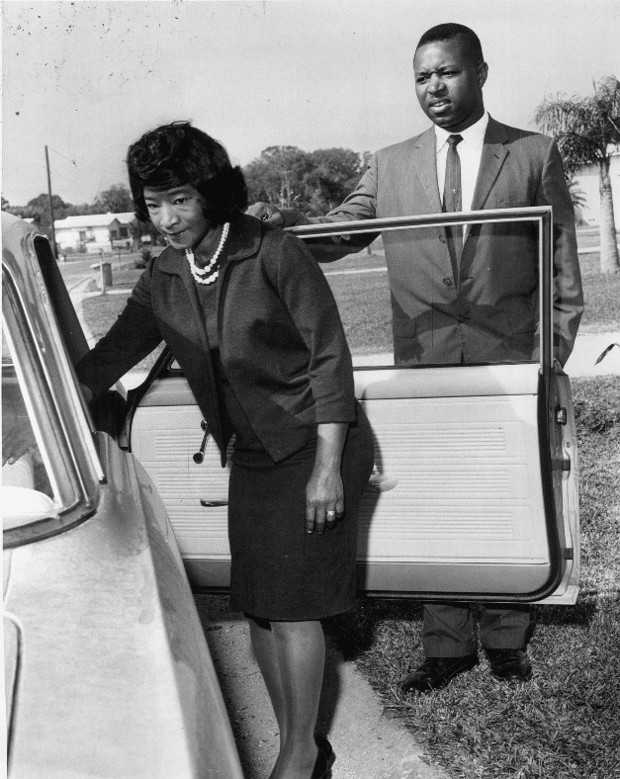
Photograph of Elenora Adams entering a car, with Sam Adams standing behind her behind the car door.
Sam and Elenora Adams by car, circa 1964. From 2019 reprint of the original “Highways to Hope” series in the St. Petersburg Times (now the Tampa Bay Times). Tampa Bay Times, March 5, 2019. https://www.tampabay.com/florida/2019/03/05/highways-to-hope-read-a-times-reporters-account-of-a-road-trip-through-racism-in-1964/

In Danville, Va., Elenora froze when they walked into honky tonk full of white beer drinkers listening to hillbilly songs on the juke box. Just a year earlier, she had been on a bus headed to the March on Washington, when a police officer stepped aboard and warned that they were not to sing any Freedom Songs while passing through Danville.

In the honky tonk in 1964, they seated themselves at the only empty table, ordered coffee and were pleasantly surprised when a burly shuffleboard player leaned over to politely ask if he could rest his beer glass on their table while he took his turn.

In Huntington, W.Va., they were refused service at a small restaurant, aptly named the White Pantry.  “Sorry, no colored,” a man in chef’s whites said. “We don’t serve colored.”

In Cumberland, Ky., they were denied a hotel room by a clerk employing one of the ruses used to try to get around the law: “This here is a club.”

But in Andrews, Tenn., they received a “warm and friendly welcome” at a small restaurant and a Western Auto store where they stopped to buy batteries for their radio.

In Mobile, Ala., Elenora spotted a message in a hotel clerk’s area that said, in part: “Every penny of Negro trade forced on this establishment will be donated to the White Citizens Council. If you want Negroes in the next door flat, vote Democrat.”

In Monroe, La., a hotel clerk found their reservation but turned them away because “we didn’t know you was colored when we took it.” The clerk insisted they go elsewhere “for your safety and mine.”

In Clarksdale, Miss., when they stopped at a pharmacy owned by a black doctor and his wife, a police officer repeatedly drove past, peering into the store.  The doctor’s wife assured them there was nothing to fear during daylight but rattled off a list of don’ts for when the sun went down. “They do their dirt at night,” she said.

They registered at a nearby Holiday Inn but were frightened when it became clear they were being watched closely. At Elenora’s insistence, they left the hotel and accepted an offer from the doctor’s wife to spend the night at her home. The next day, they were followed well out of town by a police officer.

Carol Adams Smith said that after her parents returned home, they shared “a little bit” about their journey. “But I still am not sure how much that registered for me in terms of the danger,” she said. “I don’t think I really explored that until I was a little older and thought. ‘Oh my gosh, we could have lost our parents.’ This was a very serious journey.”

Adams’ Highways to Hope stories were reprinted by other papers from Miami to New York to Denver and nominated for a Pulitzer Prize. A year later, Adams, along with a fellow reporter, was again nominated for a Pulitzer for a series on fraud and financial irregularities in student loans at what was then Gibbs Junior College in St. Petersburg.

Adams also wrote a series of stories on working and living conditions for migrant farm workers in Florida. That series won the Green Eyeshades Award from a regional branch of the Society of Professional Journalists.

Adams left daily newspapers in 1969. He would teach or consult at three universities. He served as director of the minorities division and assistant director of communications at the Democratic National Committee at the time of the Watergate break-in. His earlier reporting on hunger in the South led to an invitation to serve as a consultant to a congressional committee whose work eventually led to food stamp legislation.

As a teacher, his passion was to attract more black students to journalism, often through summer workshops for high school students, and to impress upon students the importance of writing stories that otherwise weren’t being written. That’s how he came to KU in 1973, recruited by Ed Bassett, then dean of the William Allen White School of Journalism and Mass Communications. He remained at KU until retiring in 1998 and returning to live in his native Waycross, Ga., where he died.

Current KU journalism professor Pat Gaston met Adams in 1976, when she was a student at Kansas City’s Schlagle High School and attended one of his urban journalism workshops.[v]

Though she never actually took a class from Adams, he became her advisor at KU and “my mentor until he died.”
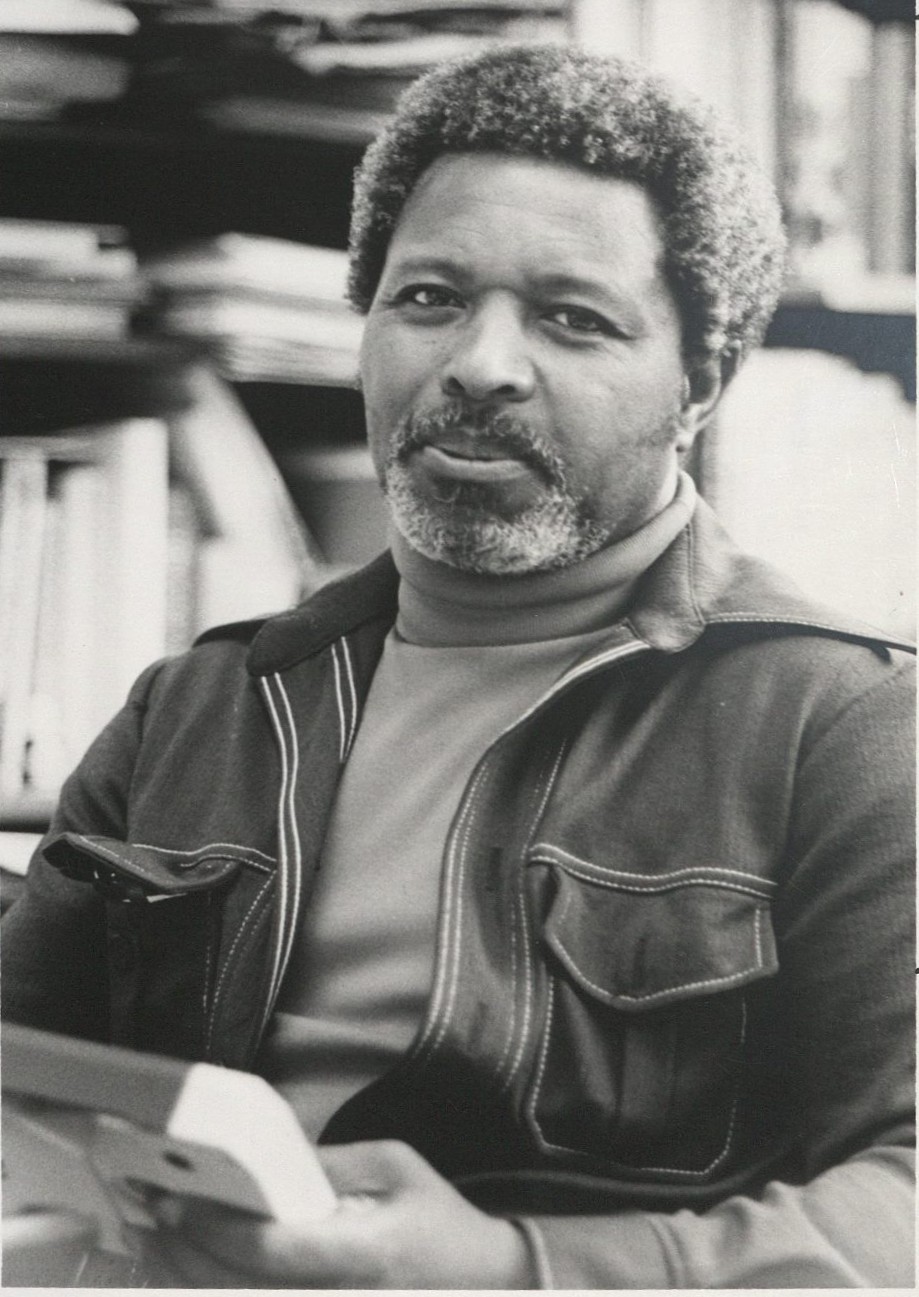
Photograph of Sam Adams in his KU office, late 1970s, early 1980s.
Sam Adams at KU, undated (late 1970s, early 1980s). University Archives. Call #: RG 41/0 Photos: Adams, Samuel

It was in the summer workshop that she learned of Highways to Hope. “As a youngster, 16 or 17 years old, you’re not thinking about what that really meant,” Gaston said. “But by the time I got to be a 20-something year old and was about to graduate college, I knew what that really meant and who he and Miss Eleanor, his wife, were, and why that was so important that they did that in the ‘60s.”

She has a picture of her, Adams and a group of workshop students in her office, and sometimes she will show it to her students and tell them about Adams. With the Trump administration’s rollback on diversity, equity and inclusion, she said that today Adams would never be hired for the role that brought him to KU, growing the number of students of color in journalism.

“I don’t know everybody out there in the business,” Gaston said, “but there’s a lot of us out there who knew him, who were mentored by him, who were encouraged by him. I don’t think we have any idea how many of us are out there, and I’m talking about black and brown. I’m not just talking about black students. I’m talking about all kinds of colors. So it’s hard to know, but he made some inroads. And he was the man for the time. He really was. Really was.”

Carol Adams Smith, who obtained a master’s degree in social work from KU, said Adams was like a father to many of his former students, including Mark McCormick, a journalist  and executive director of the Kansas Black Leadership Council, who called Adams “Daddy Sam.”

“I consulted with Pat and Mark,” Adams Smith said, “and they helped me come to some final decision that (Spencer Research Library) is where the paperwork needed to (be); this is where his legacy needed to be.”

The Adams papers at Spencer include a couple of scrapbooks prepared by the St. Petersburg Times for national and regional reporting contests, including the Pulitzer Prize, several award plaques and a letter of congratulations from President Bill Clinton when Adams received the National Association of Black Journalists’ Lifetime Achievement Award in 1997.

There also are illuminating biographical insights from a speech Adams gave in 1997, an essay he called “Random Notes on My Teaching Philosophy,” chapters from books in which he was a subject and three examples of racist hate mail he received in 1965.

Kenneth Stephens
KU alumnus, j’75, and immediate past chair of the KU Libraries Board of Advocates

Ken Stephens discusses Sam Adams among items from his papers at the Kenneth Spencer Research Library


[i] Newsweek Magazine, June 15, 1964, pp. 88-90.

[ii] Draft speech, Samuel L. Adams, Univ. of Kansas, Prepared for Delivery Nov. 8, 1997, Emory University, Atlanta, Ga. Personal Papers of Samuel L. Adams, call # yet to be assigned. Kenneth Spencer Research Library, University of Kansas.

[iii] All details of the Adams’s 1964 driving tour across the South are drawn from “Highways to Hope,” a seven-part series written by Adams and published by the St. Petersburg Times Nov. 8-14, 1964. Found in the Personal Papers of Samuel L. Adams, call # yet to be assigned. Kenneth Spencer Research Library, University of Kansas. Also available in the on-line archives of the Tampa Bay Times, as the St. Petersburg Times is now known, and on Newspapers.com.

[iv] Carol Adams Smith, interviewed by Ken Stephens Oct. 12, 2026.

[v] Pat Gaston, interviewed by Ken Stephens July 27, 2026.
Housing Small Parchment Items with Pendent and Tongue Seals

October 28th, 2026

I am currently treating items from the North Family Papers to accommodate various patron digitization requests and on-site visits. These documents are estate and personal archives of the North family of Kirtling, Cambridgeshire, and Wroxton Abbey, Oxfordshire, as well as other places in England. The collection includes items from the 13th to 19th centuries, with the majority of documents dating from the 16th through 18th centuries. Document types include deeds, manorial documents, legal and official matters, accounts, family papers, and correspondence.

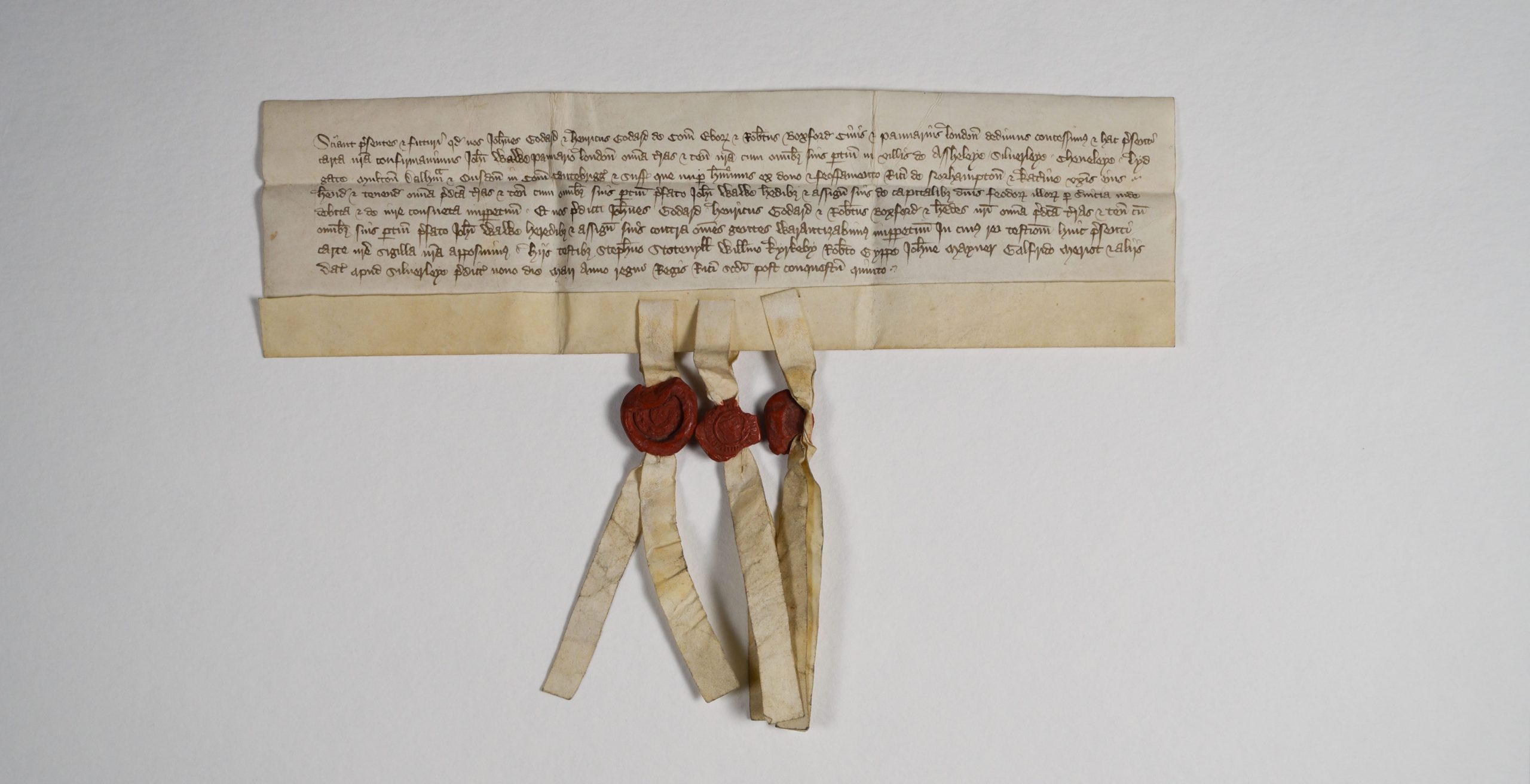
This collection includes many items with wax seals, both pendent seals that hang off the document on a parchment tag and tongue seals that are applied to a parchment strip in a horizontal orientation.

Parchment document with three parchment strips attached, each of which has a red wax seal.
Typical small parchment document with attached pendent seals. Deed, gift, May 9, 1382. Call number MS 240A:425. Spencer Library, University of Kansas.


A student intern and I recently completed simple housings for small parchment items with both of those seal types. Although it is preferable to store items with attached seals in a horizontal orientation, the North Collection is so large that many small items will have to remain in vertically-oriented folders. Angela Andres, Special Collections Conservator, helped us design this housing.


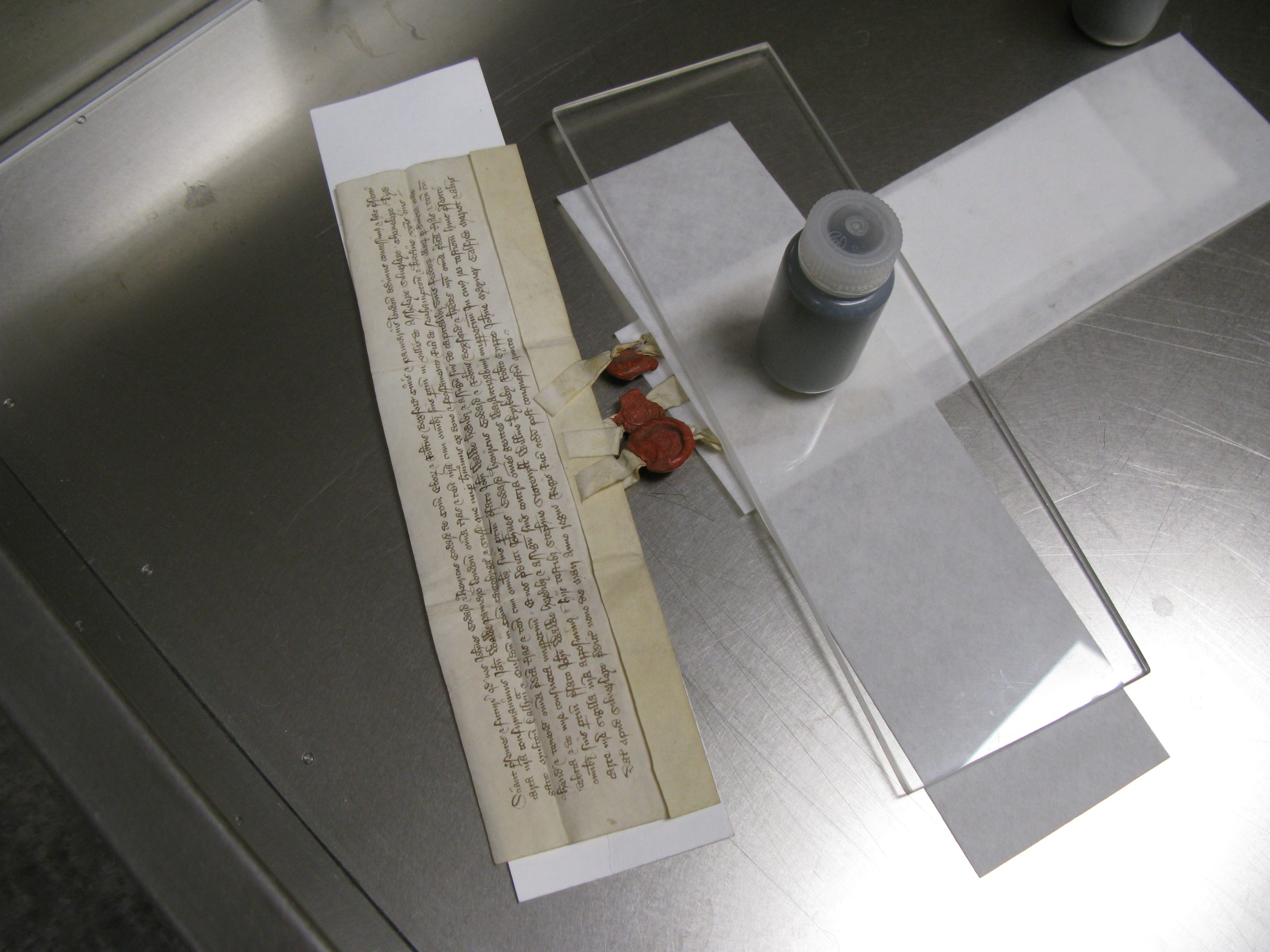
Some items need some gentle humidification and flattening to ensure that the text is legible and the parchment tags are out of the way of the seals before housing. For this project, I used damp blotter, Gore-Tex, and Pellon strips to gently humidify areas of the parchment under light weight.

Part of a parchment document is humidified with damp blotter, under light weight.
Localized humidification of the parchment tags on a small document. Deed, gift, May 9, 1382. Call number MS 240A:425. Spencer Library, University of Kansas.


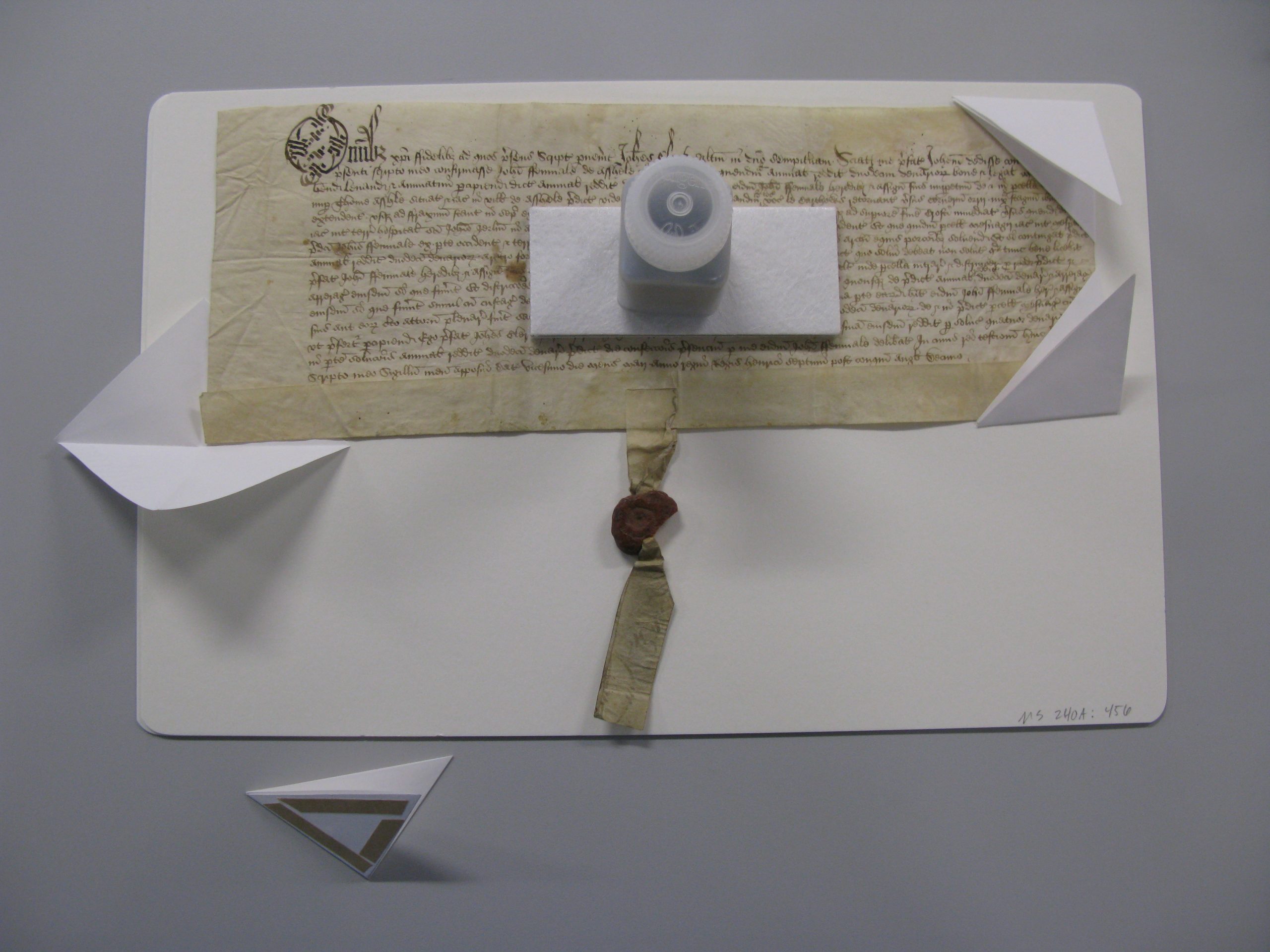
The item is supported by a backing board of thin, two-ply matboard to provide support but take up little extra depth in the folder. The document is held in place with corners, but because many of these documents have writing on both sides, the corners are made to be easily openable. The corners are constructed from squares of alkaline-buffered paper, folded twice to form triangles that can be unfolded if needed.

Parchment document attached to a support board with paper corners that can be opened to easily remove the document.
Foldable, openable corners made from alkaline-buffered paper and attached to the support board. Deed, grant of rent charge, May 20, 1495. Call number MS 240A:456. Spencer Library, University of Kansas Libraries.


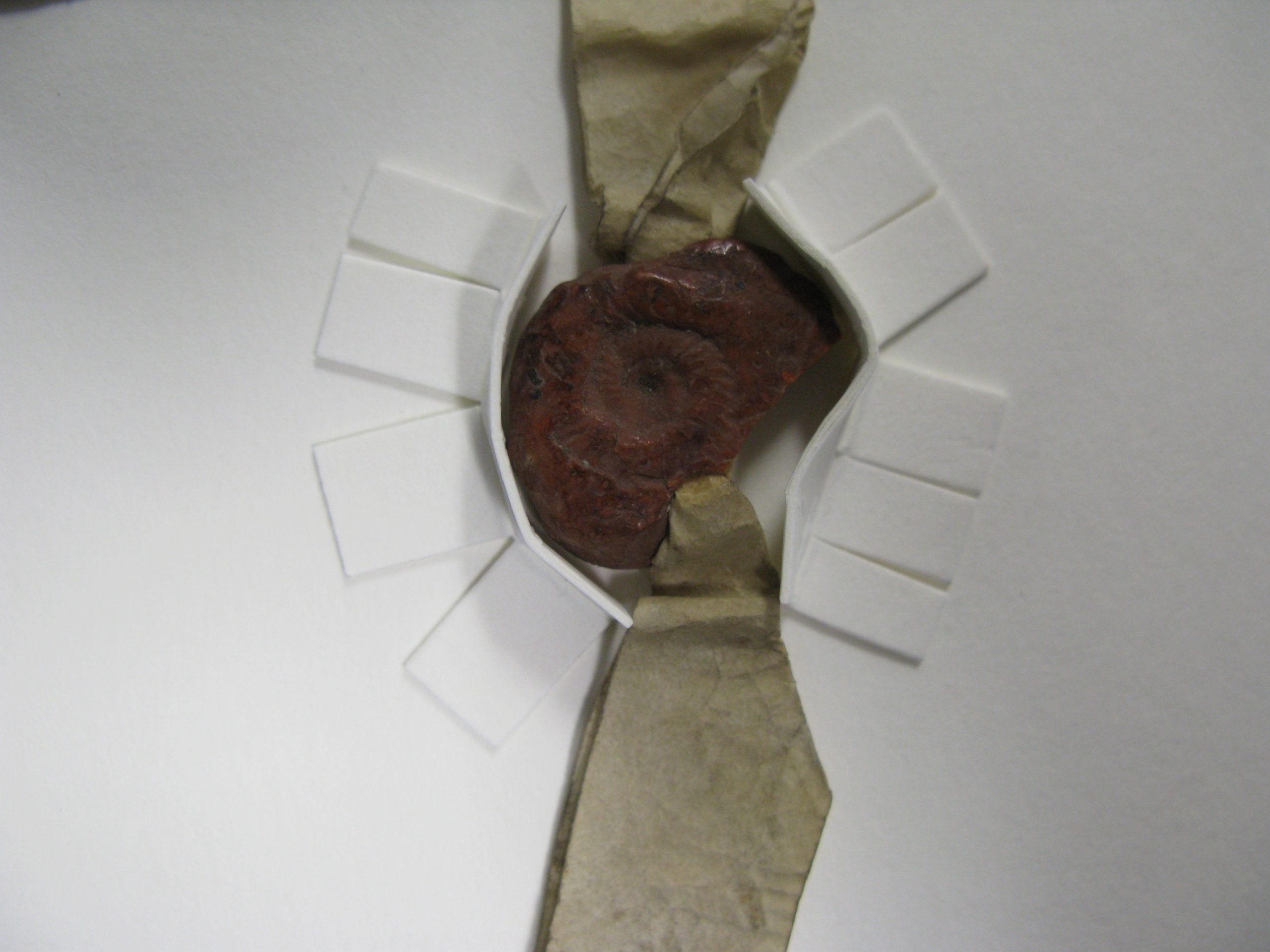
The seals are protected from jostling with tabbed strips constructed from 2-ply matboard. Long strips of matboard are folded in half, then cut to the size of the seals. One side of the matboard is cut into tabs to allow the bumpers to bend to the shape of the seal. The tabbed strips are adhered to the backing matboard close enough to the seals to protect them, but far enough away that the bumpers can be pushed back for the seals to be released safely.

Wax seal on strip of parchment, supported by matboard bumpers.
Detail of the two-ply matboard tabbed strips attached to the support board on either side of a wax seal.


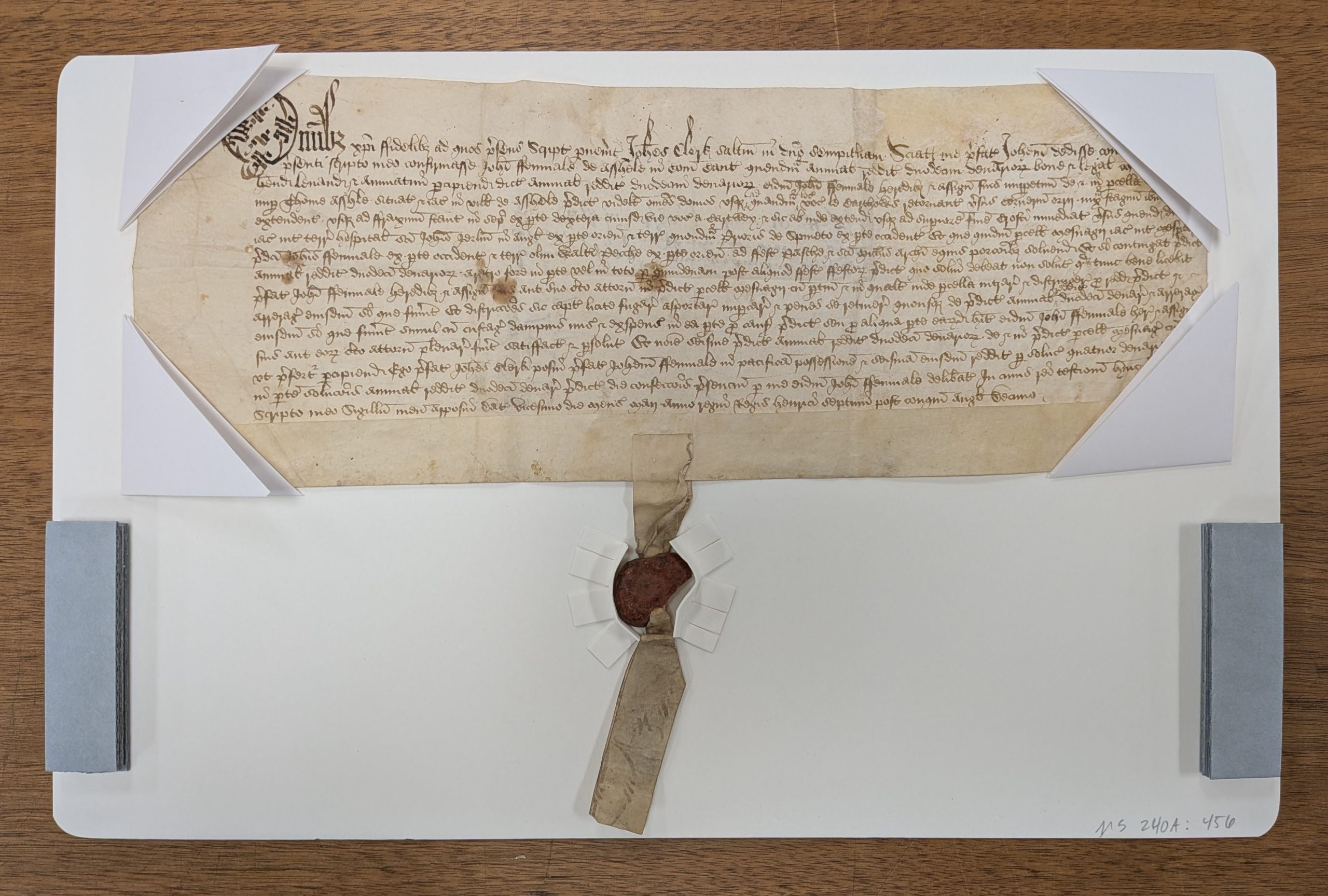
We constructed bumpers on the sides of the support board order to further protect the seal from touching the folder in the vertical orientation. The layers of alkaline-buffered corrugated board are slightly deeper than the seal.

Parchment document mounted on a piece of matboard, with support around the small, wax, pendent seal.
Small parchment document with pendent seal, mounted on support board for storage in a vertical orientation. Deed, grant of rent charge, May 20, 1495. Call number MS 240A:456. Spencer Library, University of Kansas Libraries.

Although these items would ideally be stored flat, this simple approach allows them to be stored vertically with added support.


Whitney Baker
Head, Conservation Services

Meet Kirsten at Spencer Research Library

October 23rd, 2026

As an elder millennial who loved history as a child and grew up with American Girl, I’ve been excited about the company’s 40th anniversary this year. As a result, I will be sharing a series of posts highlighting Spencer collection materials that connect to AG’s six original historical characters, in chronological order of when they “lived”: Felicity Merriman, Josefina Montoya, Kirsten Larson, Addy Walker, Samantha Parkington, and Molly McIntyre. Each post will focus on a different character and explore a selection of items that relate to the time and place in which she “lived” and topics or themes explored in her stories.

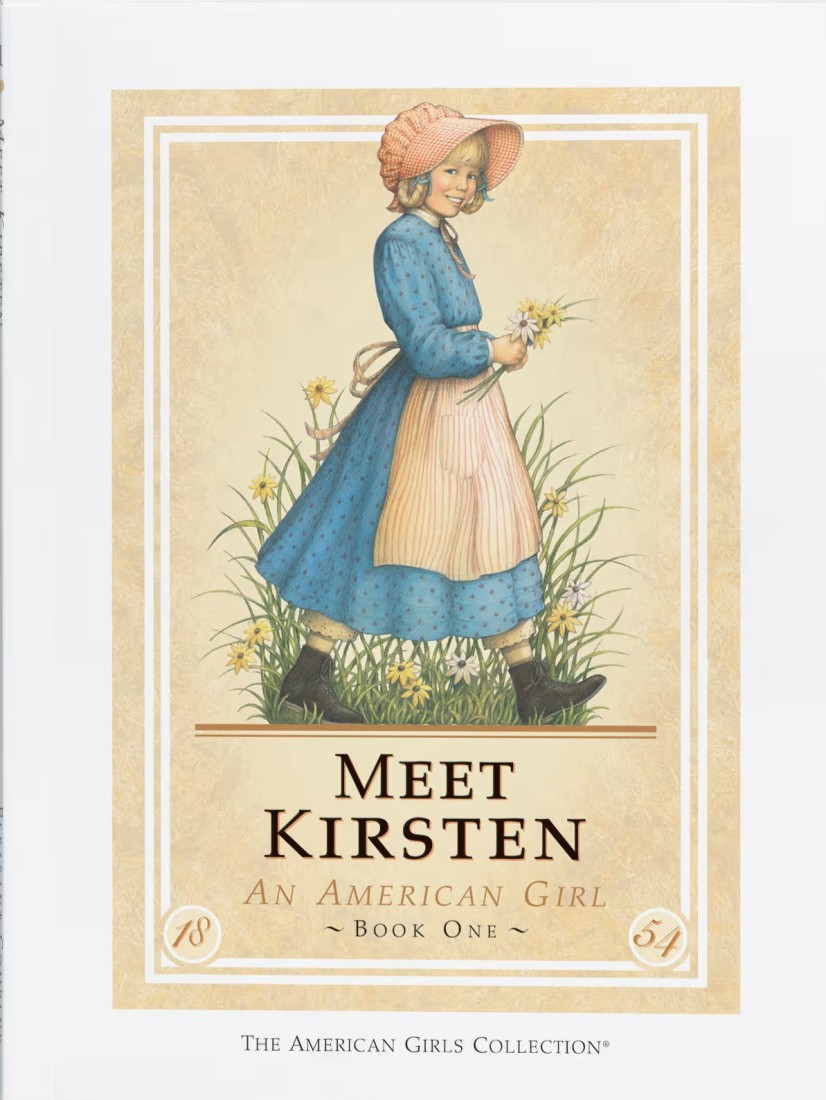
This image contains text with a color illustration of a girl walking in front of a patch of prairie grasses and flowers. She has blond hair in looped braids, and she's wearing a blue dress with flowers, a red and white striped apron, and a red bonnet.
The front cover of the first book in Kirsten’s series, first published in 1986. Click image to enlarge.

Nine-year-old Kirsten Larson is described as a girl of “strength and spirit.” When readers first meet Kirsten, she is on board a ship with her family and other Swedish immigrants in 1854. (Congress passed the Kansas-Nebraska Act that same year, although it is not mentioned in Kirsten’s books.) After landing in New York City, the Larsons travel by rail to Chicago, then by wagon to the Mississippi River, and then by riverboat to the territory of Minnesota, their final destination. Tragically – and memorably for young readers – Kirsten’s best friend Marta dies of cholera during the journey. Another iconic moment in Kirsten’s books occurs when she wears a wreath with lit candles to celebrate the feast day of St. Lucy (Saint Lucia) on December 13th. Additional plot points include Kirsten’s struggles to feel at home in America and learn English at school, her friendship with a Dakota girl named Singing Bird, her new baby sister, and dangerous encounters with bees and raccoons.

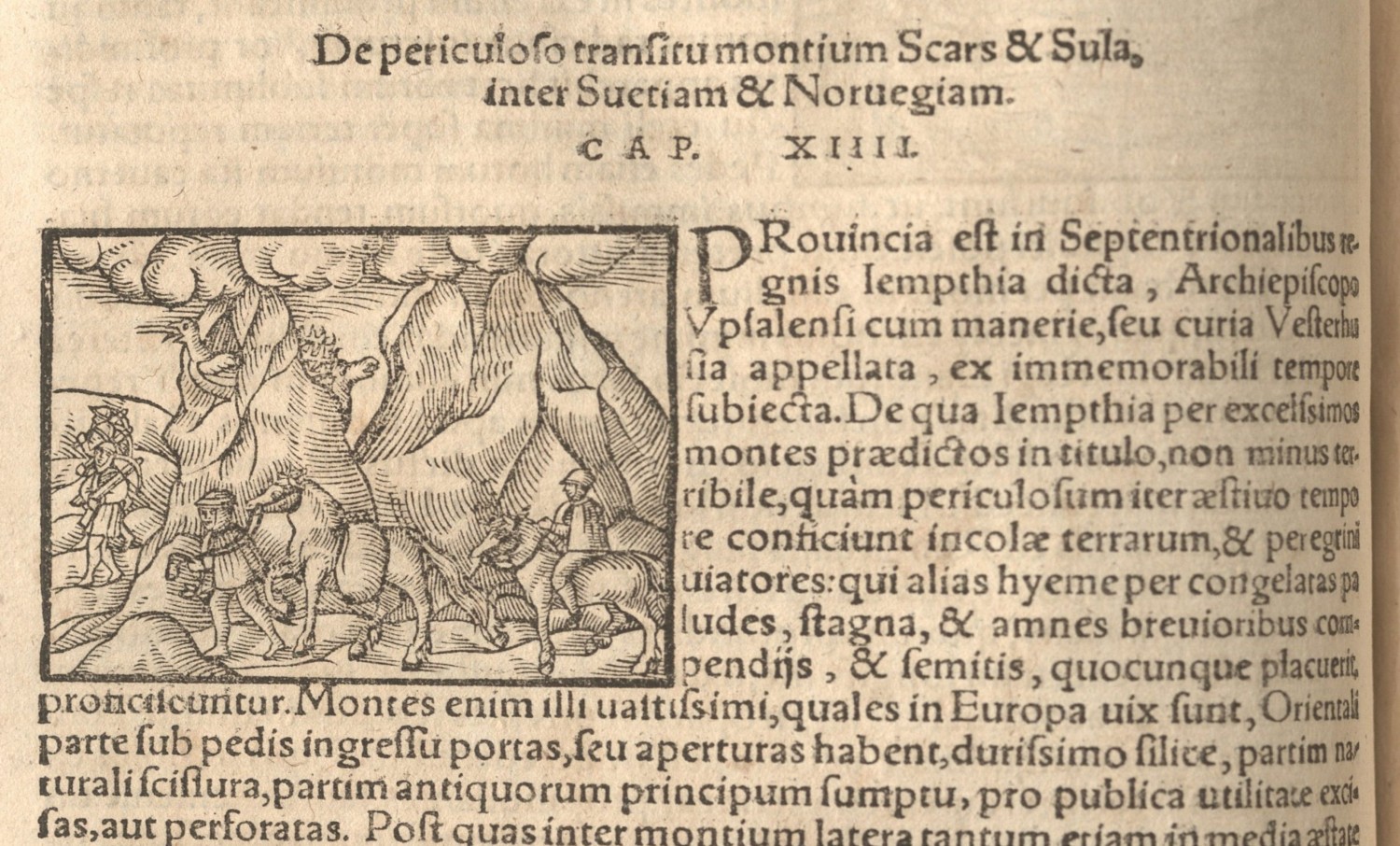
This image has text in Latin with a woodcut showing men on horses walking in front of tall mountains.
The beginning of Olaus Magnus’s description of the “dangerous passage of Scars and Sula [Sylan mountain range], between Sweden and Norway” in his work Historia de Gentibus Septentrionalibus (A Description of the Northern Peoples), 1567. For centuries after its initial publication in 1555, Europeans considered Magnus’s work to be the authoritative source on Scandinavian peoples, customs, folklore, and geography. Call Number: Summerfield E75. Click image to enlarge.
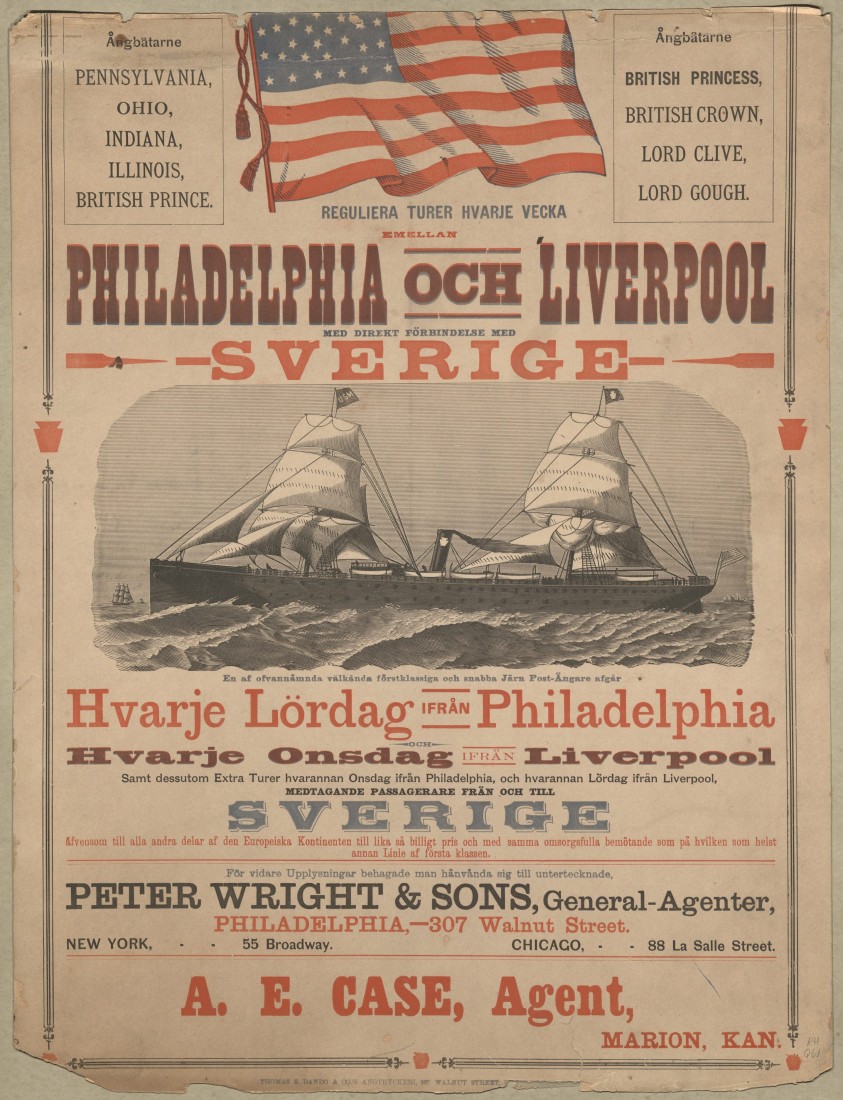
This image has text in red, blue, and black ink, accompanied by an American flag and a black-and-white illustration of a sailing ship at sea.
A Swedish language immigration broadside, 1870. The title can be translated to “regular voyages every week between Philadelphia and Liverpool; with direct connections to Sweden.” Call Number: RH Q61. Click image to enlarge.
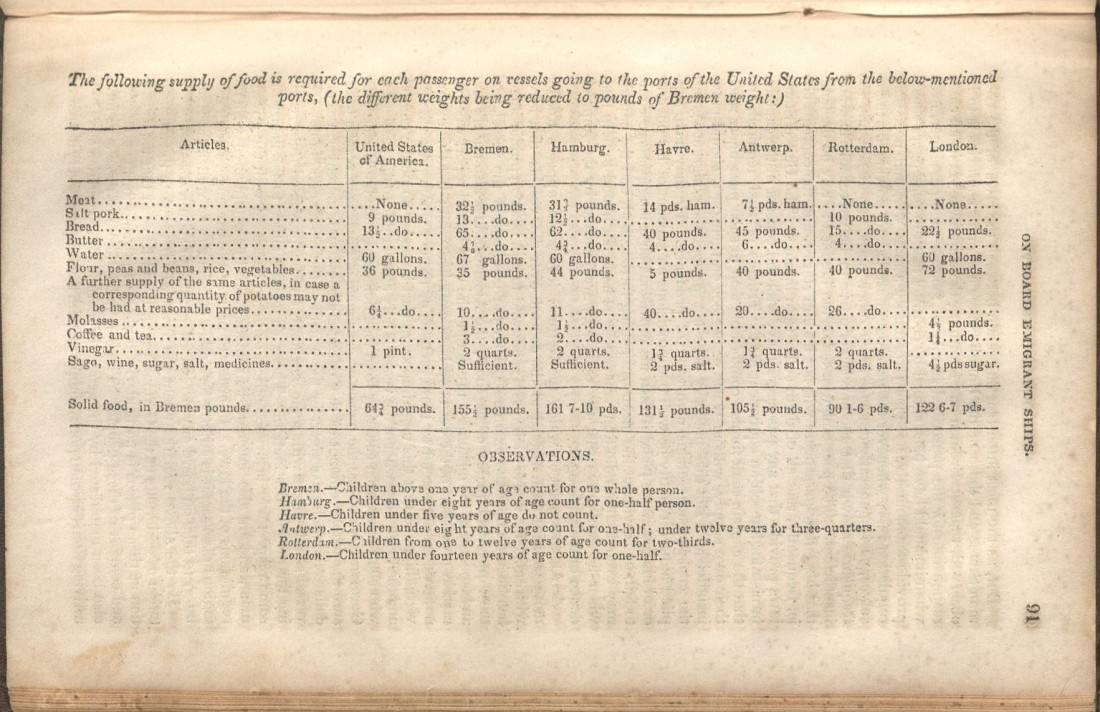
This image has text.
A chart showing the supply of food required for each passenger aboard ships traveling to the United States, from a Report of the Select Committee of the Senate of the United States on the Sickness and Mortality on Board Emigrant Ships, 1854. Call Number: C2776.

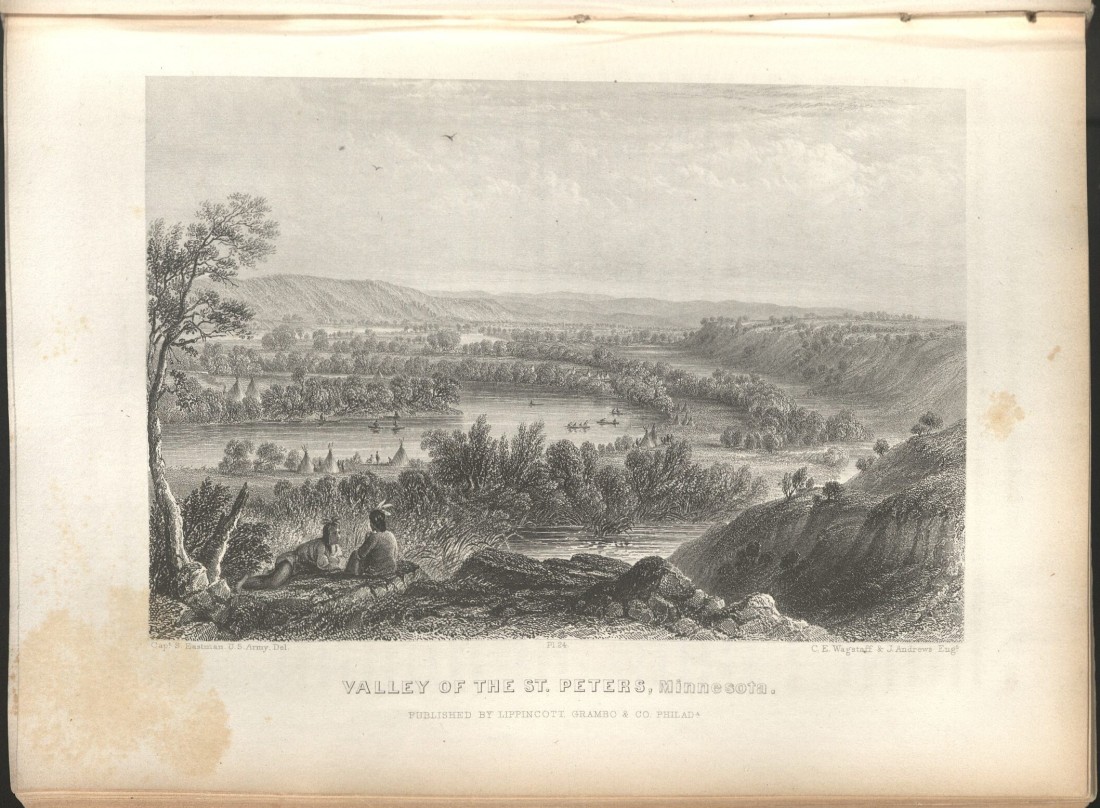
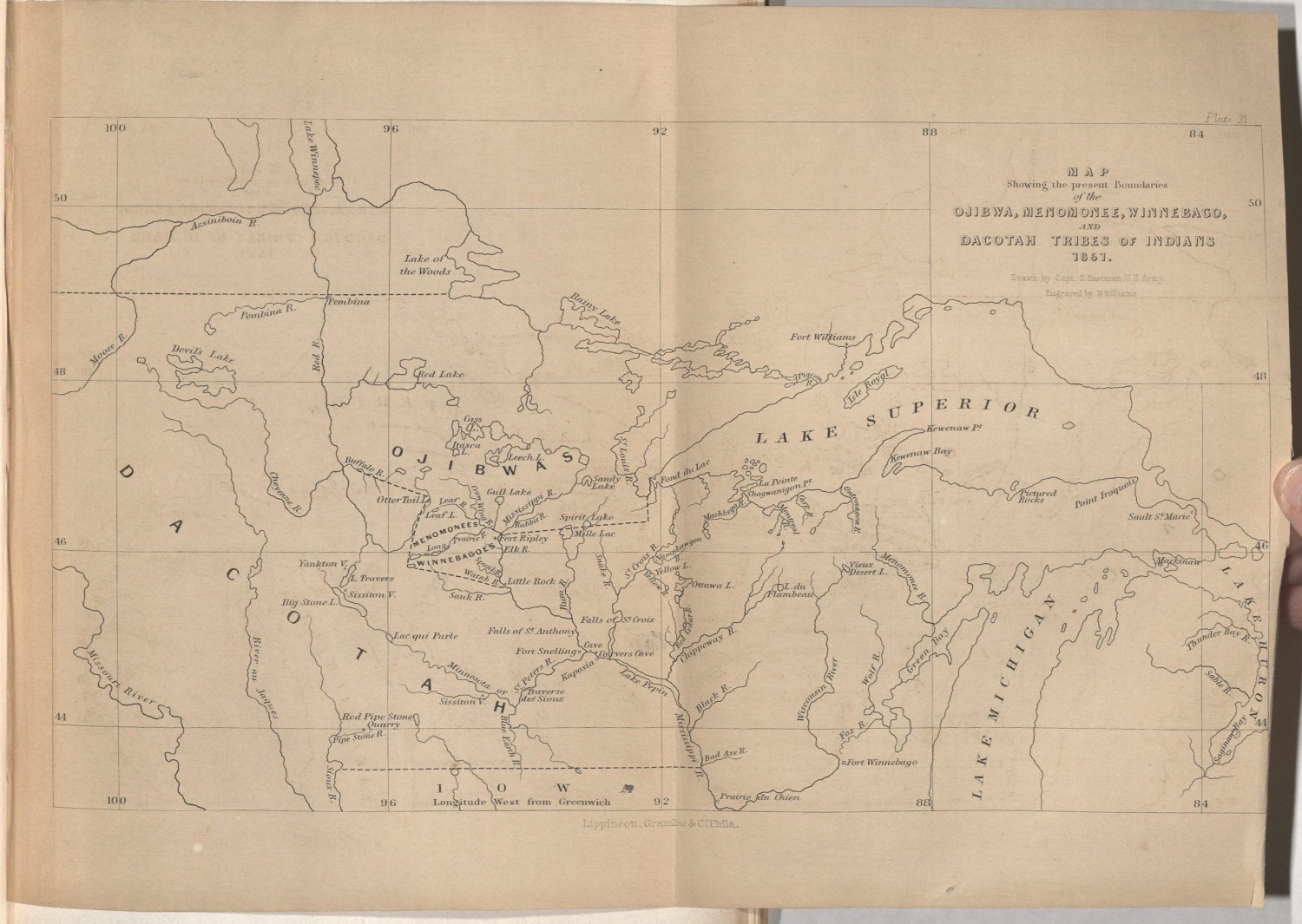
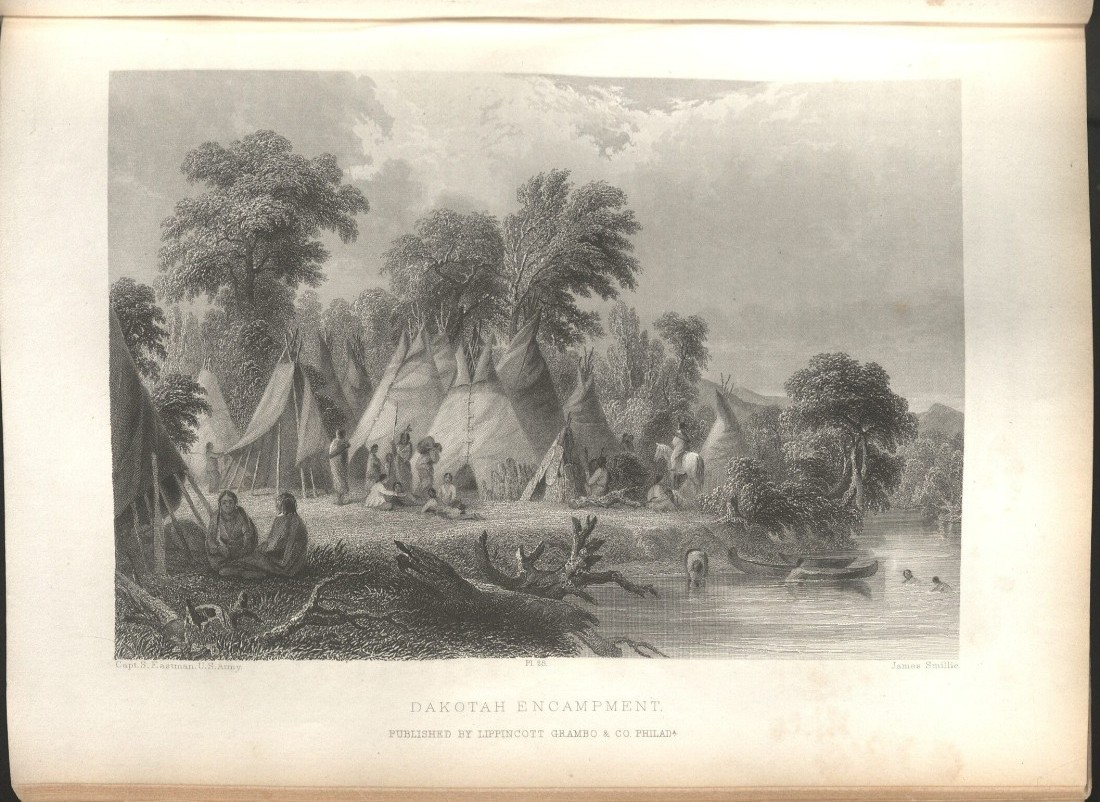
Left: A view of the scenic valley carved by the Minnesota River, which was previously named the St. Peter River. Middle: A “map showing the present boundaries of the Ojibwa [sic], Menomonee [sic], Winnebago, and Dacotah [sic] tribes.” Right: A “Dakotah [sic] encampment.” All images are from Information Respecting the History, Condition and Prospects of the Indian Tribes of the United States by Henry R. Schoolcraft and illustrated by Seth Eastman, volume 2, 1853. Containing six volumes of data “collected and prepared under the direction of the Bureau of Indian Affairs,” this work is considered the most comprehensive study of Native American cultures. Call Number: RH E175. Click images to enlarge.

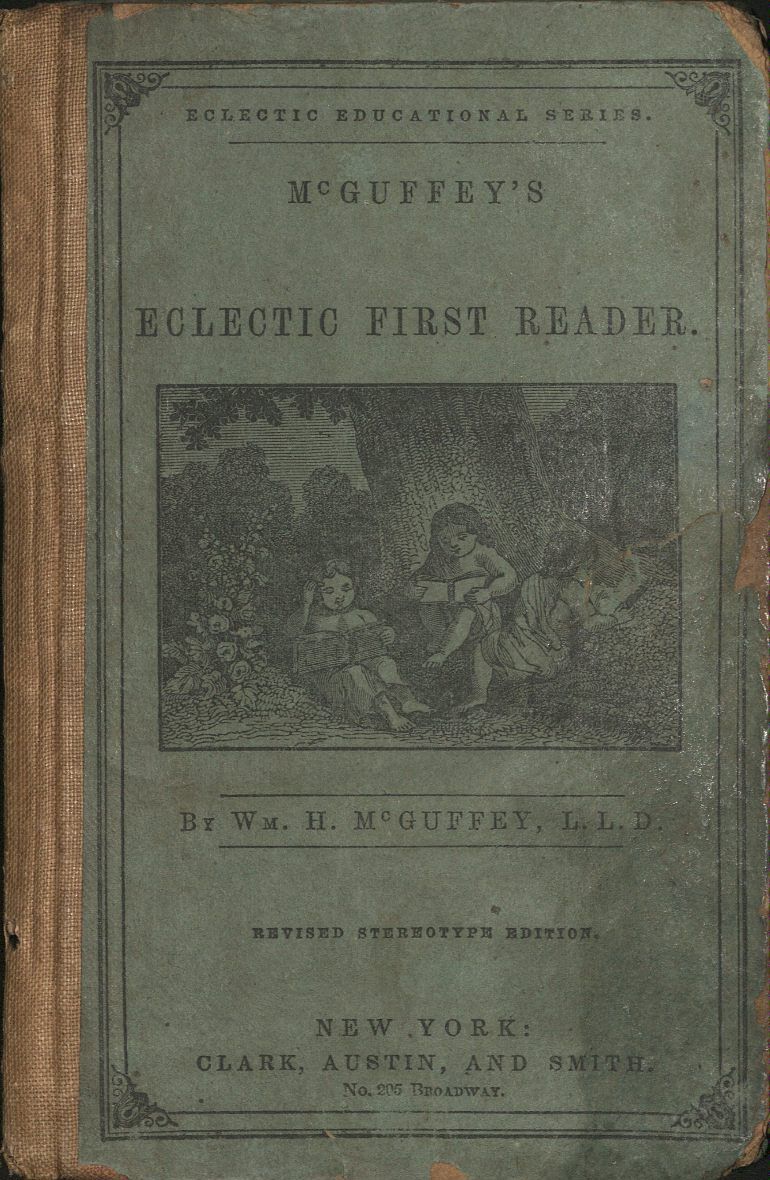
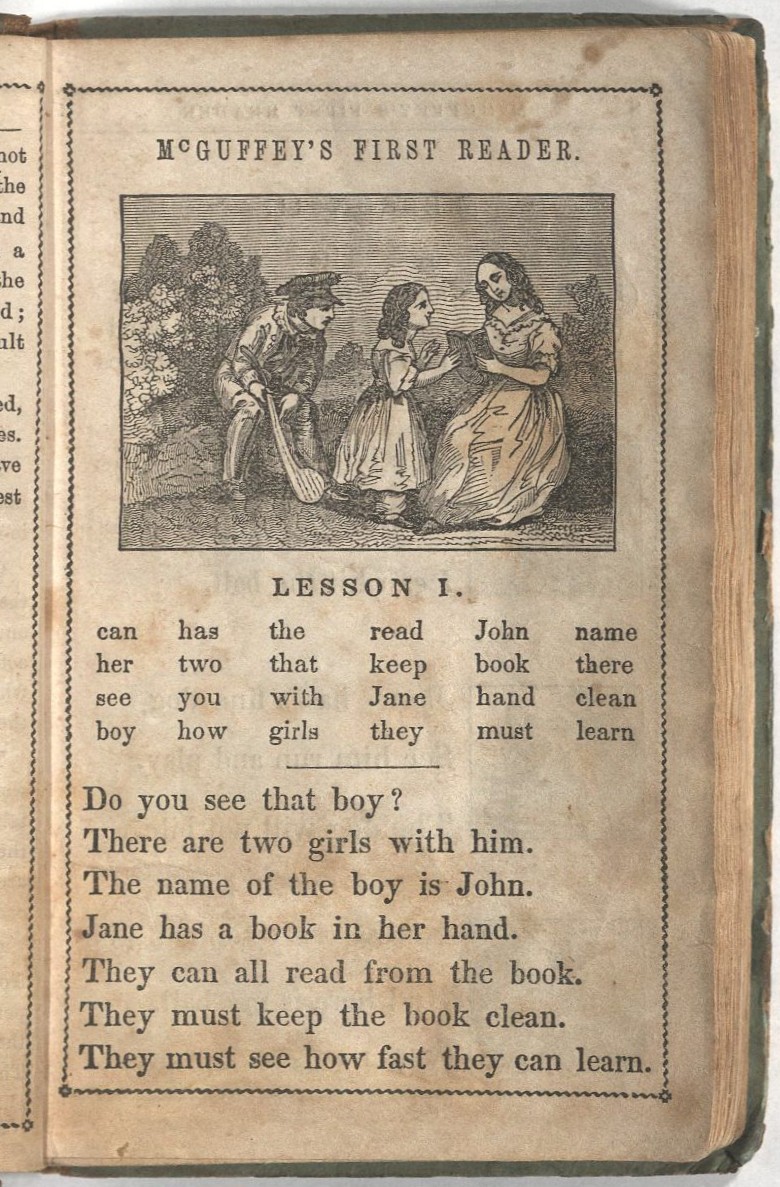
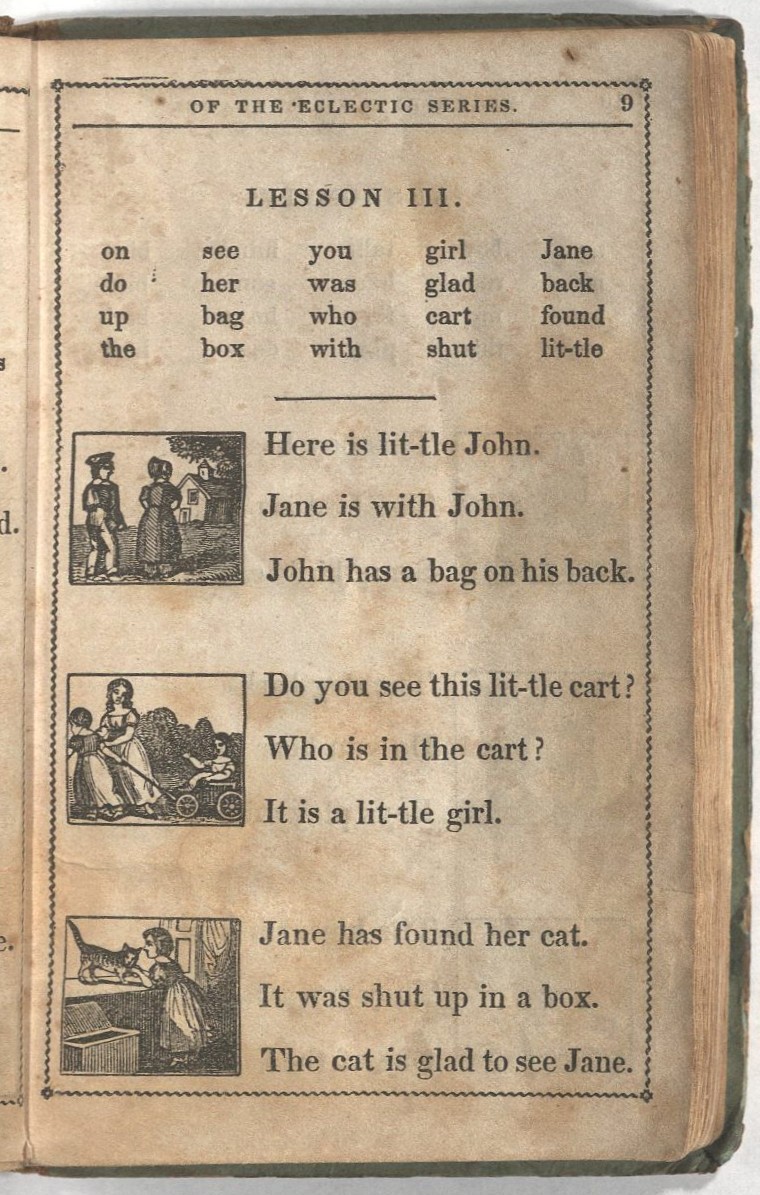
The front cover and selected early lessons from McGuffey’s New Eclectic First Reader by William H. McGuffey, 1853. According to Miami University Libraries, McGuffey Readers were an immediate success upon their initial publication in 1836. They “became standard texts in nearly all states, eclipsing all rival textbook publications for half a century and reaching a reputed total sale of over 150 million copies.” The textbook Kirsten used in school is listed below. Call Number: RH A94. Click images to enlarge.

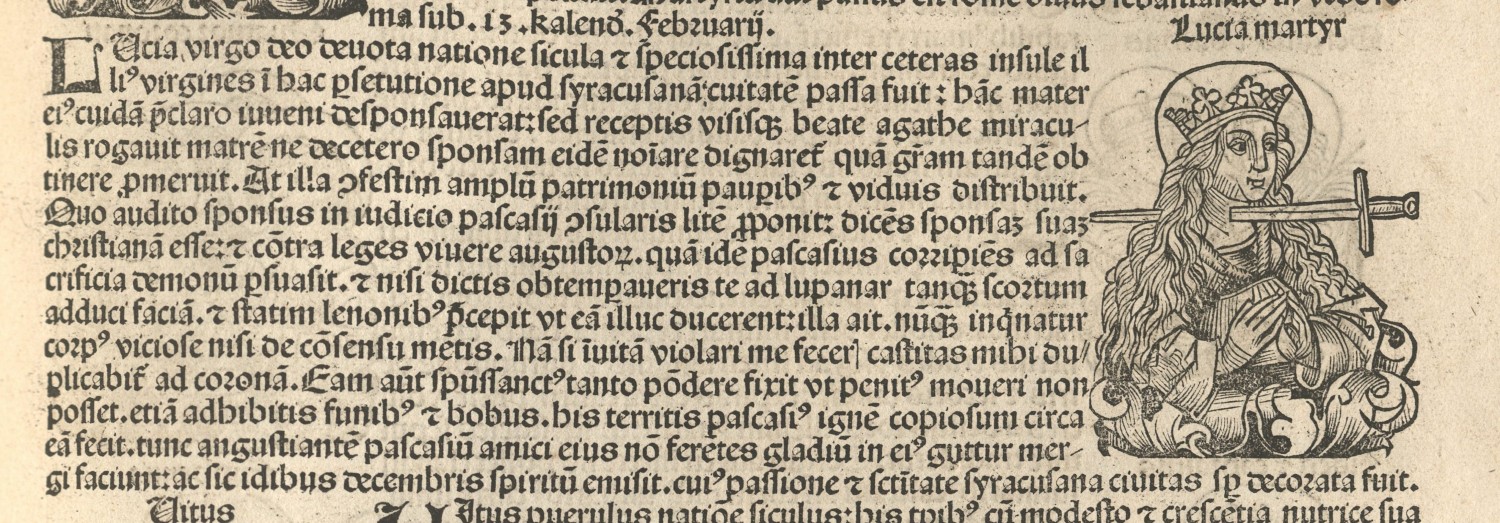
This image has text in Latin with an illustration of a praying woman being stabbed in the throat with a sword.
Information about St. Lucy (Saint Lucia) and a woodcut illustrating her martyrdom in Liber Chronicarum (The Nuremberg Chronicle) by Hartmann Schedel, 1493. Call Number: Summerfield H12. Click image to enlarge.
Full-page color illustration of two raccoons on tree branches.
A lithograph of raccoons in the second volume of The Quadrupeds of North America, a landmark work of natural history by John James Audubon and John Bachman, 1849. Kirsten’s experience does not match the description in the text accompanying this image: “the raccoon is a cunning animal, is easily tamed, and makes a pleasant monkey-like pet.” Call Number: Ellis Omnia D270. Click image to enlarge.

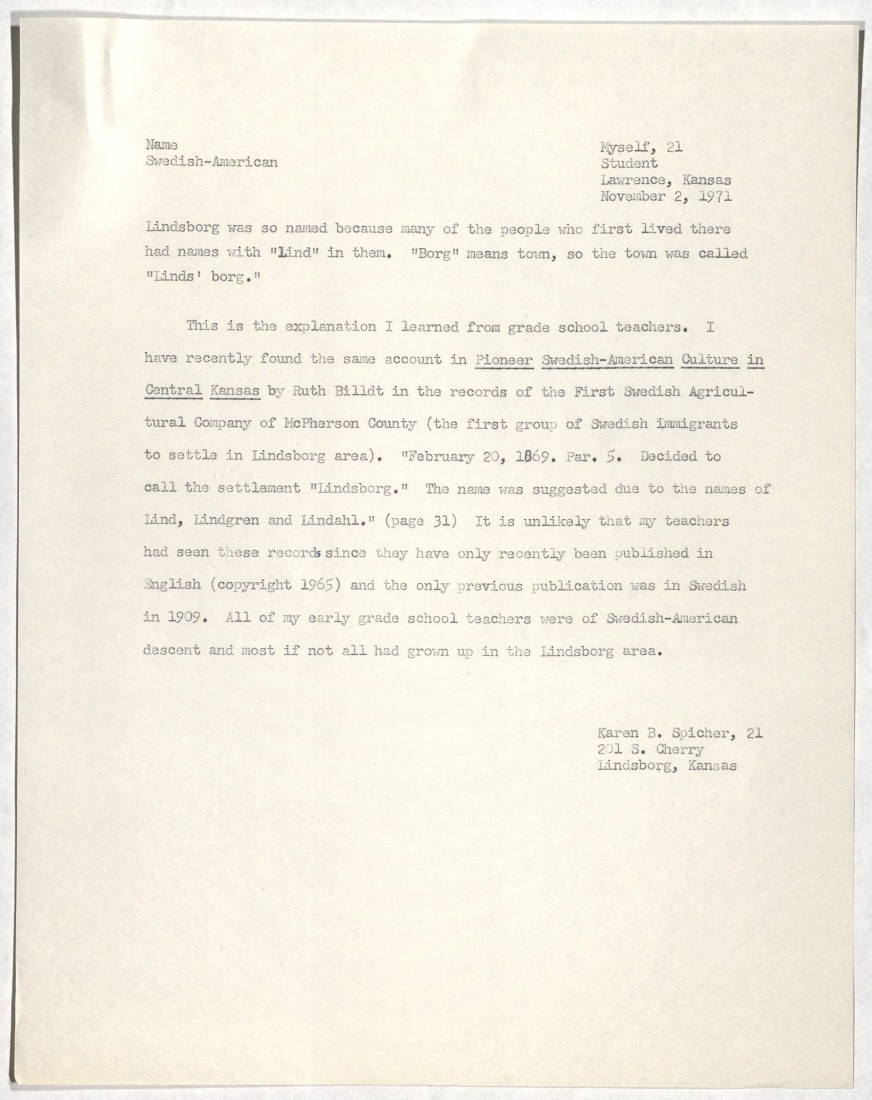
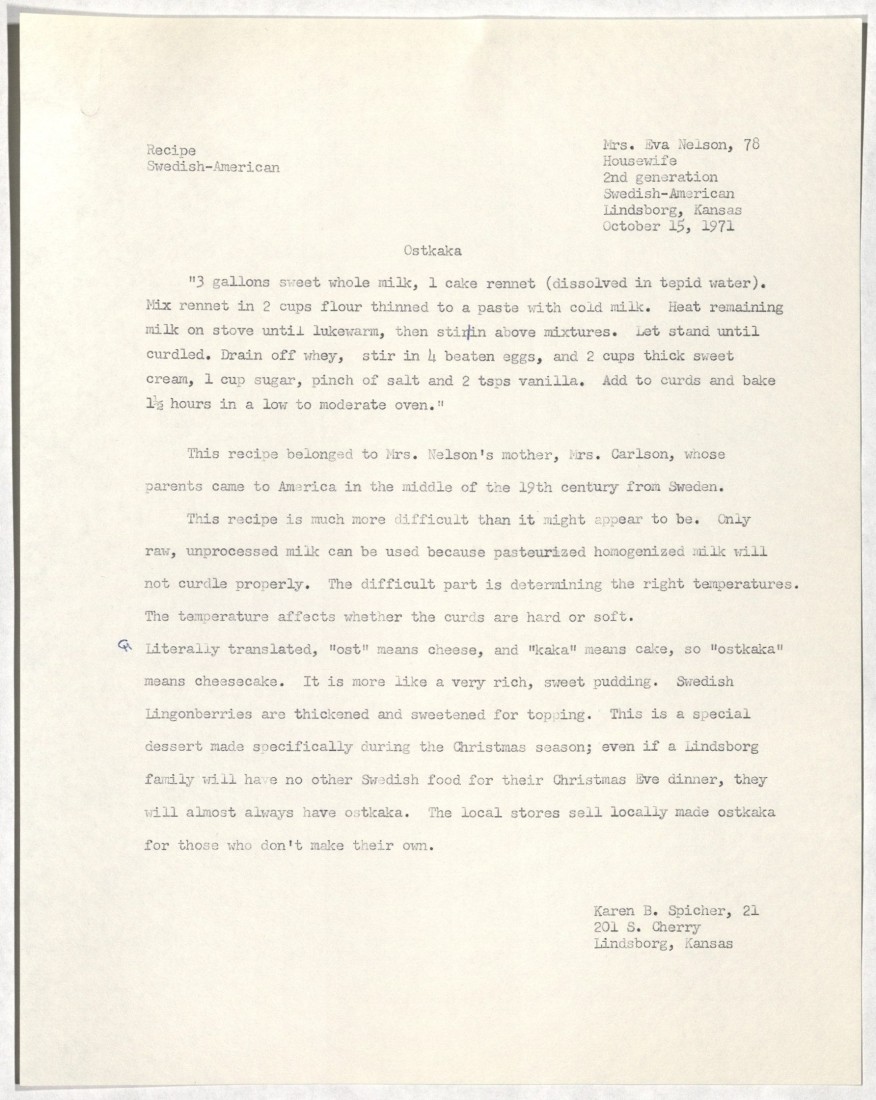
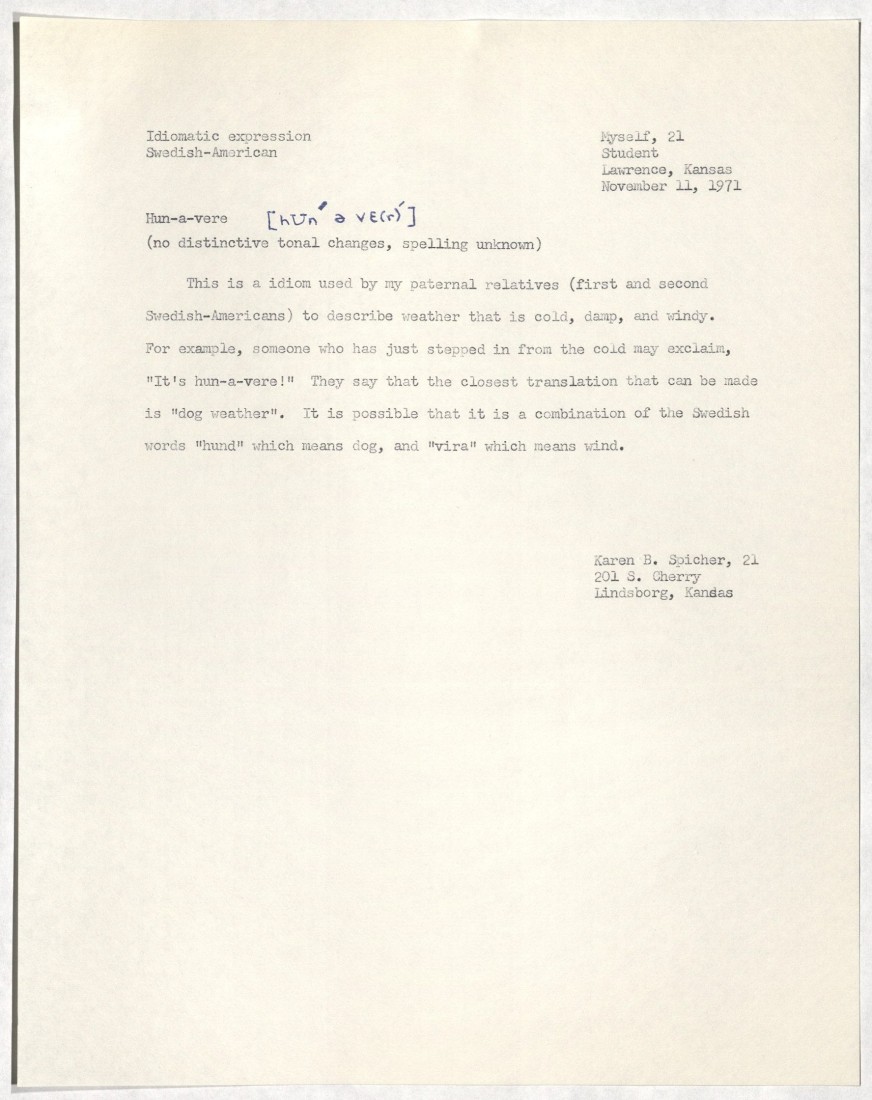
Selected pages from Karen B. Spicher’s “term paper and folklore collection relating to the Lindsborg, Kansas, area and Swedish-American culture,” English 104, University of Kansas, 1971. Swedish immigrants have been settling in Kansas since the 1850s, and Lindsborg (located roughly 160 miles west of Lawrence) is known as “Little Sweden USA.” Culture and Folklore Studies Collection. Call Number: RH MS 966. Click images to enlarge.

Selected Additional Collection Items

Sweden

  • A Compendious History of the Goths, Swedes, & Vandals and Other Northern Nations by Olaus Magnus, London: 1658. This is the first English publication of Magnus’s Historia de Gentibus Septentrionalibus (described above), although it was an abridged version and not a full translation. Call Number: D86.
  • Konungariket sveriges industriella tillstand år 1847 [The Industrial State of the Kingdom of Sweden in the Year 1847] by Ole Jørgen Rawert, Stockholm: 1849. Call Number: Howey C1755.
  • Yule-tide Stories: A Collection of Scandinavian and North German Popular Tales and Traditions, From the Swedish, Danish, and German edited by Benjamin Thorpe, London: 1853. Call Number: B12266.

Immigration, the West, and Minnesota (Including Maps)

  • Several of the sources listed here also document the early history of Kansas. Spencer’s Kansas Collection includes many additional works about the 1854 Kansas-Nebraska Act and the often violent territorial period that followed.
  • Historical Collections of the Great West by Henry Howe, Cincinnati: 1851. Call Number: RH C4344.
  • Western Portraiture, and Emigrants’ Guide: A Description of Wisconsin, Illinois, and Iowa; With Remarks on Minnesota, and Other Territories by Daniel S. Curtiss, New York: 1852. Call Number: RH B829.
  • Guide Through Ohio, Michigan, Indiana, Illinois, Missouri, Wisconsin & Iowa by J. Calvin Smith, New York: 1853. This map also includes Minnesota. It was frequently published with The Western Tourist and Emigrant’s Guide, listed below. Call Number: RH Map R244.
  • Disturnell’s New Map of the United States and Canada: Showing All the Canals, Rail Roads, Telegraph Lines and Principal Stage Routes by Henry A. Burr, New York: 1853. Call Number: Orbis Maps 2:211.
  • The Western Tourist and Emigrant’s Guide Through the States of Ohio, Michigan, Indiana, Illinois, Missouri, Iowa and Wisconsin, and the Territories of Minesota [sic], Missouri, and Nebraska by J. H. Colton, New York: 1854. Call Number: RH B1018.
  • The States and Territories of the Great West by Jacob Ferris, New York and Buffalo: 1856. Call Number: RH B153.

Indigenous Peoples

  • The Book of Genesis and a Part of the Psalms … the Gospels of Luke and John … the Acts of the Apostles and the Epistles of Paul, with the Revelation of John, in the Dakota Language, translated by Stephen R. Riggs and others, Cincinnati: 1842. Call Number: RH B838.
  • Stories About Indians, Concord, New Hampshire: 1850. Call Number: Children B13.
  • The Song of Hiawatha by Henry Wadsworth Longfellow, first edition, Boston: 1855. Call Number: B2858.

Science and Medicine

  • Spencer has an “impressive collection of over two thousand volumes of works” by and related to Swedish botanist Carl Linnaeus (1707-1778), who developed the system of binomial nomenclature that still used to name species of living organisms.
  • The Theory and Treatment of Fevers by Dr. John Sappington, Arrow Rock, Missouri: 1844. Call Number: B7574.
  • A Compendious System of Midwifery, Chiefly Designed to Facilitate the Inquiries of Those Who May be Pursuing This Branch of Study by William P. Dewees, Philadelphia: 1847. Call Number: C23432.
  • The Married Woman’s Private Medical Companion by Dr. A. M. Mauriceau, New York: 1850. Call Number: B18315.
  • Entomology, volume 7: Bees, by William Jardine, Edinburgh and London: 1853. Call Number: Ellis Omnia B239.

Children’s Books and Education

  • The Child’s First Reader by Salem Town, Portland, Maine: 1848. This is the textbook that Kirsten uses in school. Call Number: Monaghan B1040.
  • Thoughts on the Education of Girls by Mrs. Anna C. Lowell, Boston: 1853. Call Number: Children 1212B.
  • The Flower of the Family: A Book for Girls by Elizabeth Prentiss, New York: 1854. Call Number: Children 1104B.
  • Frank and the Farmer by Maria Edgeworth, Troy, New York: possibly 1854. Call Number: Children 6026.

Caitlin Klepper
Public Engagement Librarian

The Secret of James Tiptree Jr.

October 13th, 2026

This week, on October 15 & 16, KU’s Gunn Center for the Study of Science Fiction hosts their annual Sturgeon Symposium, showcasing work in the speculative fiction field from around the world. This year their theme is “Changing Words, Changing Worlds: SF as a Literature of Resistance”, and in honor of that, we’re highlighting an author from our Science Fiction Collections who challenged the genre’s ideas of gender. 

In 1977, the science fiction community was turned upside down when award-winning author James Tiptree Jr. was revealed to be a woman, Alice Bradley Sheldon, known to her friends as Alli.  

Typewritten letter with blue ink titled "The Secret of James Tiptree Jr."
“The Secret of James Tiptree Jr.” letter from Tiptree/Sheldon to Robert Mills, undated [circa October 1974]. Call Number: MS 307, Box 23, Folder 2. Click image to enlarge.

Alli led a fascinating and complicated life – much of which she drew from when creating the background for Tiptree. She was the only child of two high society, globetrotting adventurers from Chicago. Alli began her career as a professional painter & art critic, before joining the US Army during World War II and going into air force intelligence. After the war, she was with the CIA for several years until leaving to pursue a PhD in experimental psychology.  

Only in 1967 did she begin her pen-name journey as science fiction author James Tiptree Jr., publishing her first short story in Analog magazine in 1968. She went on to become a prolific and renowned author until her death in 1987, where she took her husband’s life and then her own, in alleged suicide pact.  

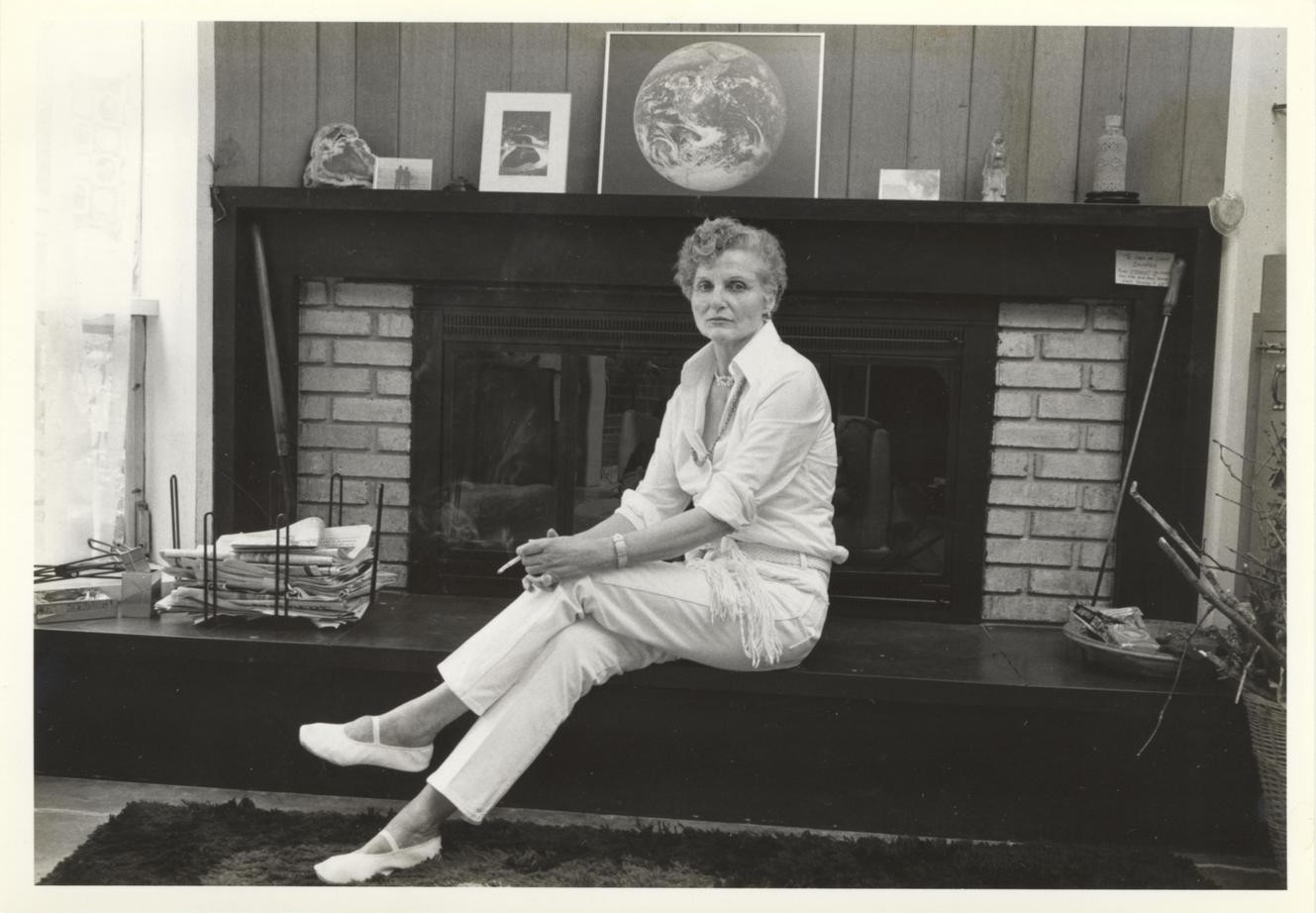
Black and white photograph of author Alice Bradley Sheldon sitting with her legs crossed in front of a fireplace.
Photograph of Alice B. Sheldon/James Tiptree Jr. by Patti Perret, undated [circa 1984]. Original photograph held at University of Oregon, “Alice B. Sheldon, pen name James Tiptree Jr. Papers”, Coll 45, Box 120, Folder 12 and reproduced with permission of Jeff Smith, copyright holder. Click image to enlarge.

Here at Spencer Research Library, we hold the original letters from Tiptree/Sheldon to her agent, Robert Mills, as well as a wide collection of her work as published in magazines, anthologies, and standalone volumes. Visit our North Gallery exhibit space throughout the month of October to learn more about Tiptree/Sheldon, see some of her original letters with her iconic blue-ribbon typewriter ink, and read her work. And join us in participating in the 2026 Sturgeon Symposium! 

Centi Newby 
Public Services Associate

Celebrate American Archives Month at Spencer Research Library!

October 6th, 2026

October is American Archives Month, a nationwide effort spearheaded by the Society of American Archivists to raise public awareness about the importance of historic documents and records and the importance of archivists. Spencer Research Library has a robust schedule of special events happening this October to celebrate Archives Month. All events are free and open to the public. We hope to see you at one, or even more!

This image has text with icons of leaves and items found in archives.
Putt Among the Pages Mini Golf Event

KU Family Weekend
North Gallery
Friday, October 2

Beyond the Reading Room Behind-the-Scenes Tour

Digital Lab
Thursday, October 8, 1-1:30pm
Registration required

Cáuigù Gù:t Exhibit Opening

Exhibit Space
Saturday, October 10, 10-11:30am

Kansas City Archives Bazaar

Kansas City (Missouri) Public Library, Central Library
Saturday, October 10, 1-4pm
Sponsored by Kansas City Area Archivists

Beyond the Reading Room Behind-the-Scenes Tour

Stacks Flashlight Tour
Thursday, October 15, 1-1:30pm

Stories That Connect Us: An American Girl Conversation with Angela Cervantes

North Gallery
Saturday, October 17, 10am-noon
Registration encouraged

Spencer Research Library Discovery Day

“Bodies & Bones: The Evolution of Medicine”
Johnson Room
Wednesday, October 21, 11am-noon

Beyond the Reading Room Behind-the-Scenes Tour

Conservation Lab
Thursday, October 22, 1-1:30pm
Registration required

Behind the Reading Room Behind-the-Scenes Tour

Manuscripts Processing
Thursday, October 29, 1-1:30pm
Registration required

Caitlin Klepper
Public Engagement Librarian