
Housing Small Parchment Items with Pendent and Tongue Seals
I am currently treating items from the North Family Papers to accommodate various patron digitization requests and on-site visits. These documents are estate and personal archives of the North family of Kirtling, Cambridgeshire, and Wroxton Abbey, Oxfordshire, as well as other places in England. The collection includes items from the 13th to 19th centuries, with the majority of documents dating from the 16th through 18th centuries. Document types include deeds, manorial documents, legal and official matters, accounts, family papers, and correspondence.
This collection includes many items with wax seals, both pendent seals that hang off the document on a parchment tag and tongue seals that are applied to a parchment strip in a horizontal orientation.
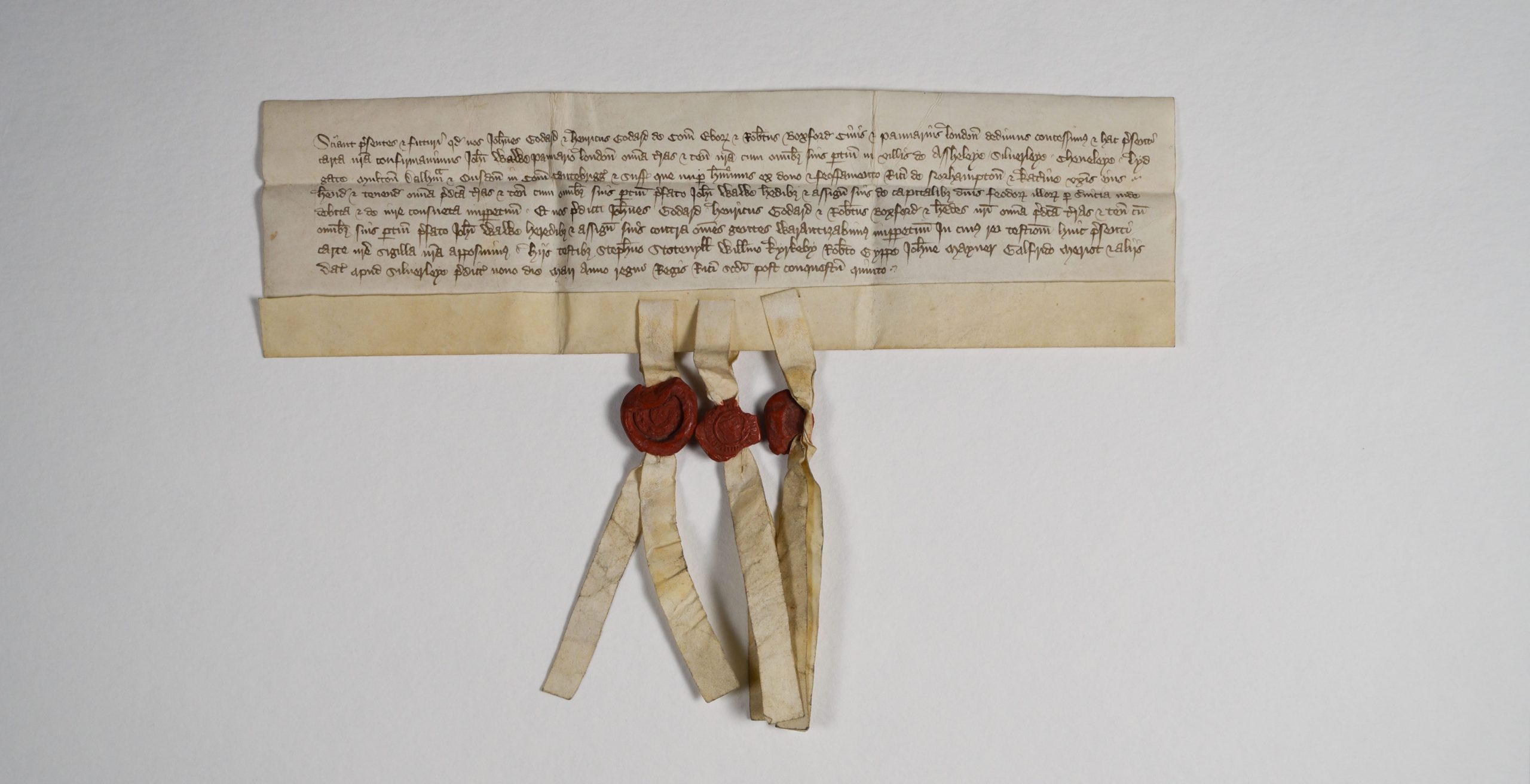
A student intern and I recently completed simple housings for small parchment items with both of those seal types. Although it is preferable to store items with attached seals in a horizontal orientation, the North Collection is so large that many small items will have to remain in vertically-oriented folders. Angela Andres, Special Collections Conservator, helped us design this housing.
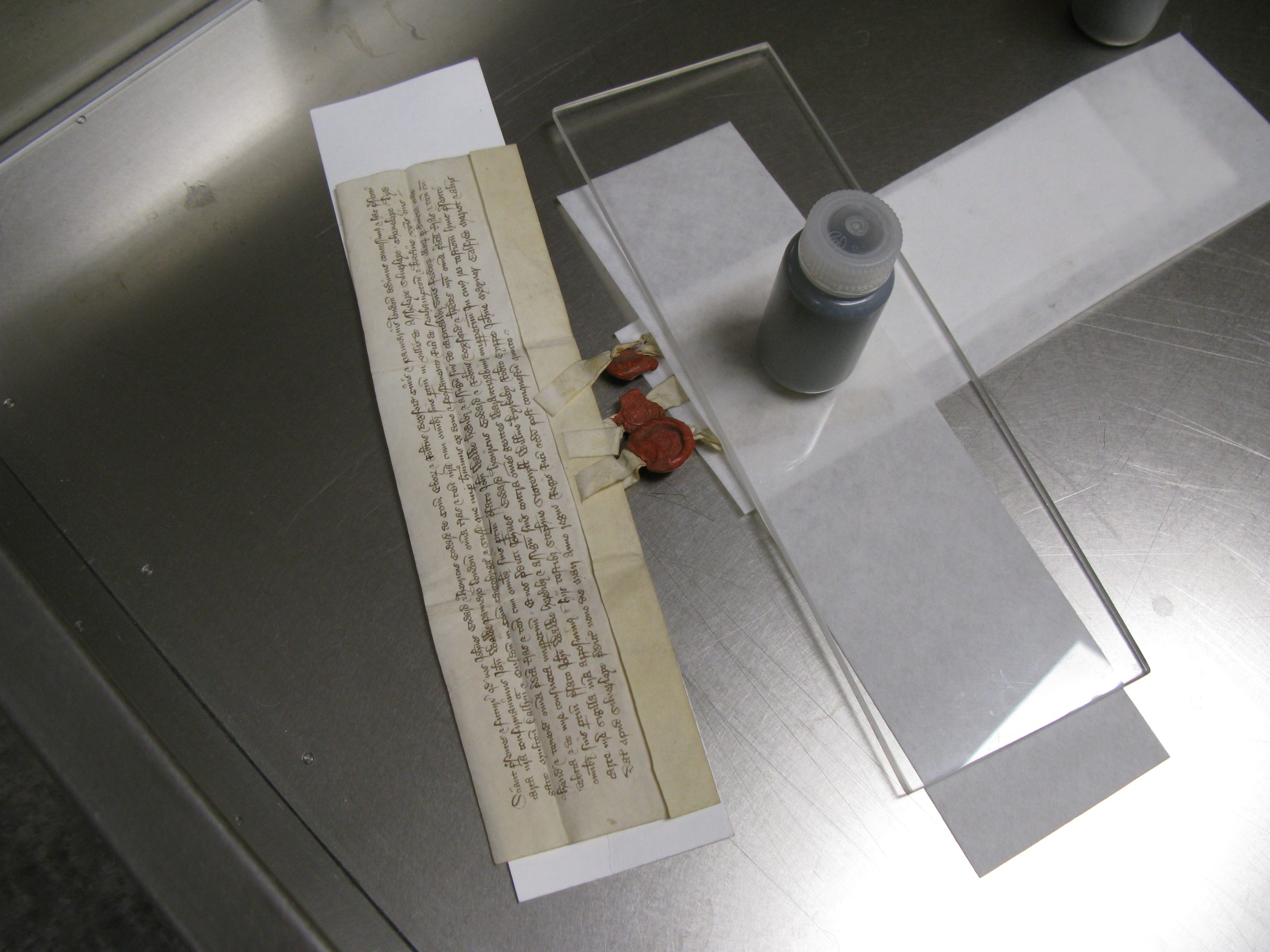
Some items need some gentle humidification and flattening to ensure that the text is legible and the parchment tags are out of the way of the seals before housing. For this project, I used damp blotter, Gore-Tex, and Pellon strips to gently humidify areas of the parchment under light weight.
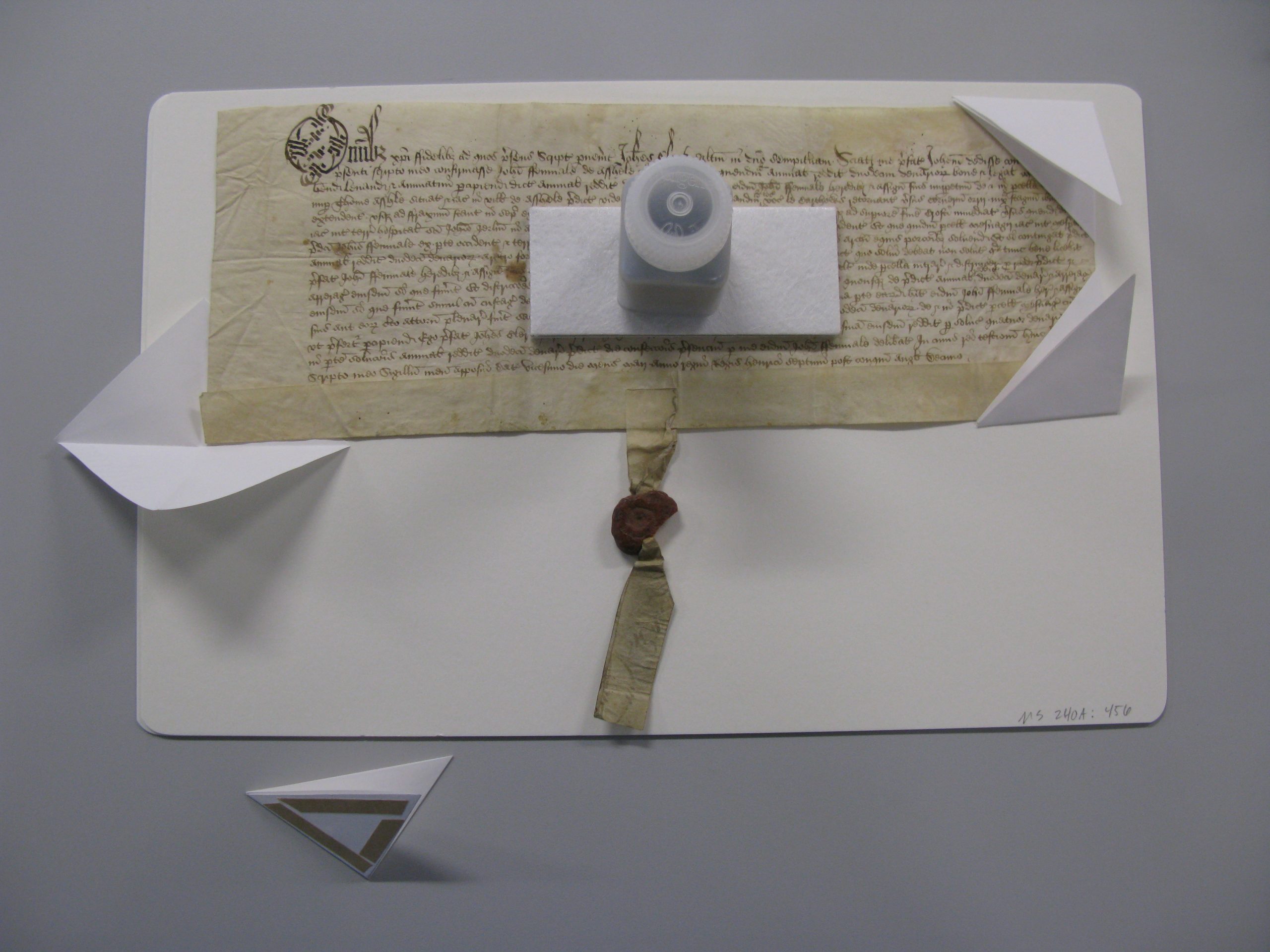
The item is supported by a backing board of thin, two-ply matboard to provide support but take up little extra depth in the folder. The document is held in place with corners, but because many of these documents have writing on both sides, the corners are made to be easily openable. The corners are constructed from squares of alkaline-buffered paper, folded twice to form triangles that can be unfolded if needed.
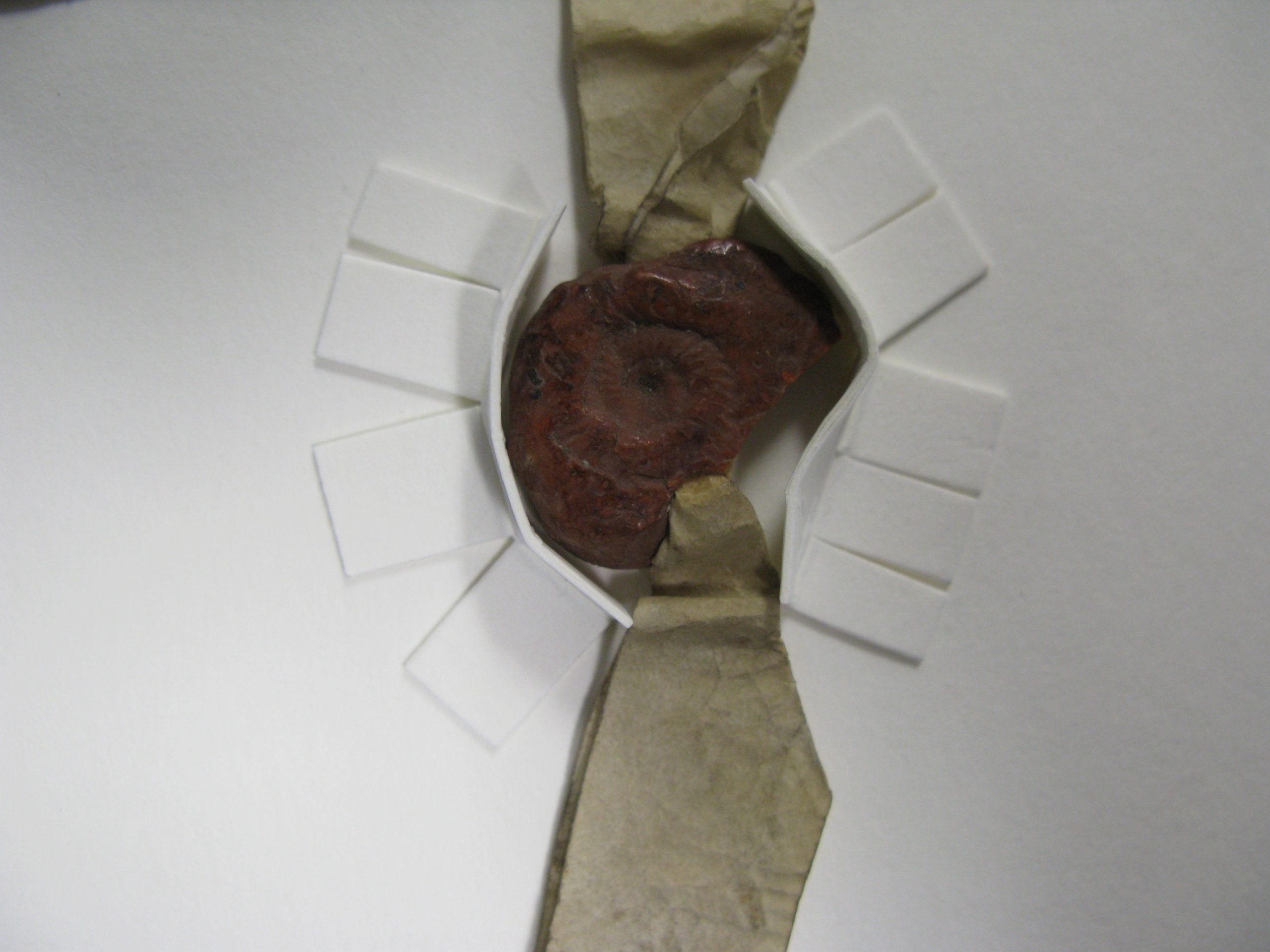
The seals are protected from jostling with tabbed strips constructed from 2-ply matboard. Long strips of matboard are folded in half, then cut to the size of the seals. One side of the matboard is cut into tabs to allow the bumpers to bend to the shape of the seal. The tabbed strips are adhered to the backing matboard close enough to the seals to protect them, but far enough away that the bumpers can be pushed back for the seals to be released safely.
We constructed bumpers on the sides of the support board order to further protect the seal from touching the folder in the vertical orientation. The layers of alkaline-buffered corrugated board are slightly deeper than the seal.
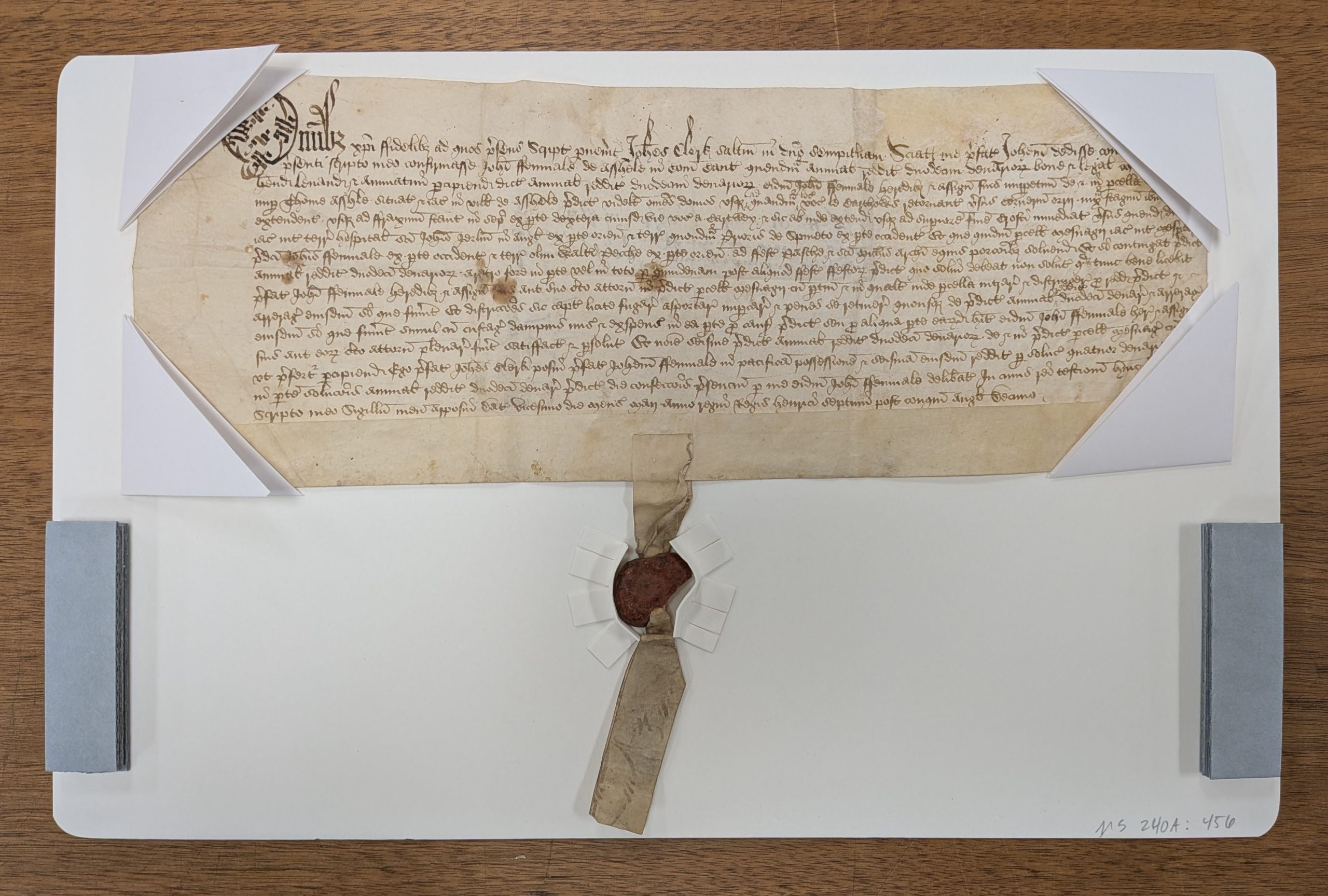
Although these items would ideally be stored flat, this simple approach allows them to be stored vertically with added support.
Whitney Baker
Head, Conservation Services
Tags: conservation treatment, humidification, North Family, parchment manuscripts, Pendent seal, seal housing, tongue seal