The University of Kansas

Inside Spencer: The KSRL Blog

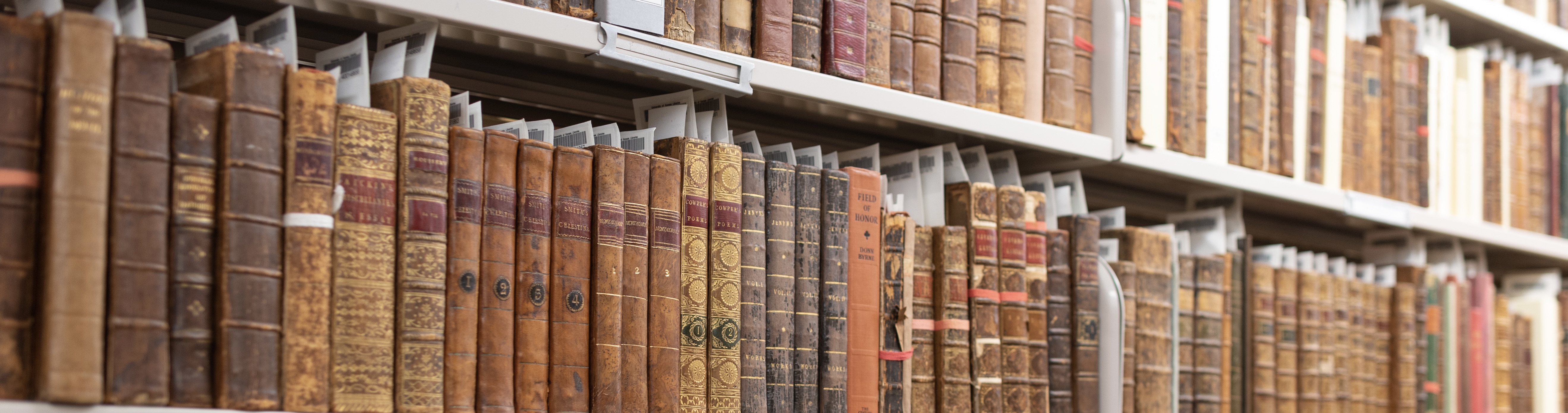
Books on a shelf

Welcome to the Kenneth Spencer Research Library blog! As the special collections and archives library at the University of Kansas, Spencer is home to remarkable and diverse collections of rare and unique items. Explore the blog to learn about the work we do and the materials we collect.

Meet the KSRL Staff: Karen Cook

November 14th, 2016

This is the tenth installment in what will be a recurring series of posts introducing readers to the staff of the Kenneth Spencer Research Library. Karen Cook is the Special Collections Librarian responsible for curating rare books and manuscripts from Continental Europe, Asia, Africa, and Australasia.

Karen Cook, Special Collections Librarian, Spencer Research Library.
Karen Cook, Special Collections Librarian,
Spencer Research Library.

Where are you from?

Although I was born in New York City, my hometown is Cooperstown, a small village located in at the foot of Otsego Lake in the lovely Appalachian foothills of upstate New York. It was founded by James Fenimore Cooper’s father in 1786 but is best known as the home of the National Baseball Museum and Hall of Fame (founded 1939).

What does your job at Spencer entail?

As a Special Collections Librarian in Kenneth Spencer Research Library (KSRL), I curate rare books and manuscripts from Continental Europe, Asia, Africa, and Australasia. My subject specialties are the graphic arts, maps, and the history of science. My main responsibilities are collection development, reference, instruction, and exhibitions.

How did you come to work at Spencer Research Library?

My academic background is in art history (BA) and geography (specializing in maps and their history) (MS & PhD). My first career was as a cartographer, but a move to London, England led to work as a librarian in the British Library Map Library. After a decade there, I returned to the USA in 1996 and came to KU, intending to learn computer mapping and return to my earlier career. At the same time, though, I began working part-time in KSRL, where the staff were so welcoming and the work so interesting that I decided to enroll in the library science graduate program program at Emporia State University (ESU). During three years of part-time graduate study at ESU I worked as the Operations Manager of the T.R. Smith Map Collection in Anschutz Library. Just as I finished the ESU program in 2001, a librarian position opened up in KSRL’s Special Collections, and I’ve been here ever since.

What is one of the most interesting items you’ve come across in Spencer’s collections?

The Consolidator, a satirical fantasy written by Daniel Defoe and published in 1705, criticizes the evils of life on Earth by contrasting it with an imaginary utopian civilization of Moon dwellers. The English narrator travels to China and thence by rocket ship to the Moon, where a Lunar philosopher shows him warfare and famine happening on Earth through magic glasses. The Lunarians debate how to depict this information and decide to produce a separate thematic map of each of these phenomena. This narrative, written a century before thematic maps would become common, has led me to research Defoe’s sources of information about mapmaking.

What part of your job do you like best?

The best part of my job is the variety of interesting tasks that I do, all centered around the history of books (and maps).

What are your favorite pastimes outside of work?

Research and writing about the history of cartography is a major interest. Less academic pastimes are gardening and botanical illustration.

What piece of advice would you offer a researcher walking into Spencer Research Library for the first time?

Register and go into the reading room. Tell the librarian/archivist on duty what you are interested in and ask for suggestions or a referral to someone who handles that subject specialty.

Karen Cook
Special Collections Librarian
Special Collections

Have a Dreadful Halloween!

October 31st, 2016

Here are some spooky penny dreadfuls from our Special Collections to help you get into the Halloween spirit! Come into Spencer Research Library and take a look at the rest of our sensational tales from Victorian England.

First page of the penny dreadful titled The Old Witchcrafts by Robert and William Chambers probably published in 1854 in London and Edinburgh. Special Collections, B1229.

First page of the penny dreadful titled
The Old Witchcrafts, with illustration.
Written and published by Robert and
William Chambers, London and Edinburgh, circa 1854.
Call number: B1229. Click image to enlarge.

First page of the penny dreadful titled The Vampire, or, the Bride of the Isles. Published by G. Purkess circa 1853. Special Collections, B1239

First page of the penny dreadful titled
The Vampire, or, the Bride of the Isles,
with illustration. Published in London by
G. Purkess, circa 1853.
Call number: B1239. Click image to enlarge.

First page of the penny dreadful titled The haunted forest, or, The demon raftsman. Published in London by G. Purkess circa1853. Special Collections, B1251.

First page of the penny dreadful titled
The Haunted Forest, or, the Demon Raftsman,
with illustration. Published in London by
G. Purkess, circa 1853.
Call number: B1251. Click image to enlarge.

Mindy Babarskis
Reference Specialist
Public Services

Happy 150th Birthday, Beatrix Potter!

July 29th, 2016

In celebration of the 150th birthday of the beloved children’s author and illustrator, Beatrix Potter, I am featuring a few examples of her beautiful work found in our Special Collections here at Spencer Research Library. Please enjoy the selections below along with a short biography introducing you to one of the most influential figures in children’s literature from the twentieth century.

Beatrix Potter was born on July 28, 1866 in London, England. Although she was a lonely child, she was able to find joy in drawing and painting things from the natural world, recording the plants and animals of the English countryside in stunning detail. As an adult she continued to illustrate, even drawing in the margins of letters sent to the children of her former governess, Annie Moore. Her first book, The Tale of Peter Rabbit came about from the drawings on one of these very letters from September 4, 1893!

Front cover of Beatrix Potter’s "The Tale of Peter Rabbit" published in Philadelphia by H. Altemus in 1904.Pages 34-35 ofFront cover of Beatrix Potter’s "The Tale of Peter Rabbit" published in Philadelphia by H. Altemus in 1904.

Front cover and pages 34-35 of Beatrix Potter’s The Tale of Peter Rabbit published in Philadelphia
by H. Altemus in 1904. Special Collections. Call Number: Children 5159. Click images to enlarge.

After partnering with the publishers of Frederick Warne & Co., twenty-two ‘little books’ with lovely color illustrations were produced. Some of these stories even featured her own pets, like the hedgehog Mrs. Tiggy-Winkle.

Front cover of Beatrix Potter’s The tale of Mrs. Tiggy-Winkle published in New York by Frederick Warne & Co. in 1905.

Front cover of Beatrix Potter’s The tale of Mrs. Tiggy-Winkle published
in New York by Frederick Warne & Co. in 1905. Special Collections.
Call Number: Children 2972. Click image to enlarge.

Because of her skill with writing exciting stories, painting detailed and colorful pictures, and using clear language, Potter’s works quickly became children’s classics.

Pages 52 & 53 of Beatrix Potter’s The Roly-Poly Pudding published in New York by Frederick Warne & Co. in 1908.

Here is an excellent example of Potter’s ability to capture humor and action in both the text
and accompanying illustration from pages 52 & 53 of Beatrix Potter’s The Roly-Poly Pudding
published in New York by Frederick Warne & Co. in 1908. Special Collections.
Call Number: Children C606. Click image to enlarge.

She eventually married William Heelis, a solicitor, in 1913 and retired to her farm, Hill Top, to become a prize-winning breeder of Herdwick sheep and a champion for local land conservation. After her death on December 22, 1943 she left 15 farms, several cottages, and over 4,000 acres of land to her husband and on his death to the National Trust, a conservation organization for the United Kingdom.

Page 56 of Beatrix Potter’s The Tale of Mr. Jeremy Fisher published in New York by Frederick Warne & Co. in 1906.

Potter’s fascination with nature is evident in the loving detail of both plants and animals
found in this example from page 56 of Beatrix Potter’s The Tale of Mr. Jeremy Fisher published
in New York by Frederick Warne & Co. in 1906. Call Number: Children 2983. Click image to enlarge.

To learn more about Beatrix Potter and view her delightful books, come visit us at Spencer Research Library and check out a few of these items:

  • Peter Rabbit & other tales : Art from the world of Beatrix Potter. New York: New York University, [c1977]. Shelved at Spencer Research Library. Call Number: C18290.
  • Potter, Beatrix. Beatrix Potter’s letters. London: Warne, 1989. Shelved at Watson Library. Call Number: PR6031.O72 Z48 1989.
  • Potter, Beatrix. Transcribed from her code writing by Leslie Linder. The journal of Beatrix Potter, 1881-1897. London; New York: F. Warne, 1989. Shelved at Watson Library. Call Number: PR6031.O72 Z52 1989.
  • Potter, Beatrix. The Tale of Squirrel Nutkin. New York: Frederick Warne, [c1903]. Shelved at Spencer Research Library. Call Number: Children A78.

Mindy Babarskis
Reference Specialist
Public Services

Nineteenth-Century Advice to Fathers

June 14th, 2016

In honor of Father’s Day this coming Sunday, this week’s blog post highlights a book in Special Collections that provides guidance for fathers: William Cobbett‘s 1829 work Advice to Young Men, and (Incidentally) to Young Women, in the Middle and Higher Ranks of Life, In a Series of Letters, Addressed to a Youth, a Bachelor, a Lover, a Husband, a Father, a Citizen, or a Subject.

Cobbett begins his “Letter to a Father” with a statement about the blessings of children and the important role of fathers.

Image of William Cobbett, Advice to Young Men, And (Incidentally) to Young Women, section 225, 1829

The beginning of William Cobbett’s “Letter to a Father,” in
Advice to Young Men, and (Incidentally) to Young Women.
London: The author, 1829. Call Number: B5060. Click image to enlarge.

Cobbett then continues on for roughly 116 pages, offering advice to fathers on a wide variety of topics including the importance of breastfeeding; the use of midwives and servants; the role of resolution, tenderness, and courage in parenting; the use of cradles; the controversy of smallpox inoculation; the roles of good food, clean air, exercise, book-learning, and schooling (by subject) in educating children; and the importance of impartial treatment of adult children, compared with their siblings.

On the surface, some of Cobbett’s advice seems surprisingly modern, as seen in the two excerpts below.

Image of William Cobbett, Advice to Young Men, And (Incidentally) to Young Women, section 249, 1829

In section 249 of his “Letter to a Father,” Cobbett offers this advice:
“Let no man imagine that the world will despise him for
helping to take care of his own child.” Click image to enlarge.

Image of William Cobbett, Advice to Young Men, And (Incidentally) to Young Women, section 289, 1829

“Men’s circumstances are so various,” Cobbett acknowledges in section 289.
“In giving an account, therefore, of my own conduct, in this respect, I am not to be understood
as supposing, that every father can, or ought, to attempt to do the same.” Click image to enlarge.

Other sections of Cobbett’s advice may seem more humorously outdated to 21st-century readers, such as his description of bath time.

A great deal, in providing for the health and strength of children, depends upon their being duly and daily washed, when well, in cold water from head to foot. Their cries testify to what a degree they dislike this. They squall and kick and twist about at a fine rate…Well and duly performed, [bathing children] is an hour’s good tight work; for, besides the bodily labour, which is not very slight when the child gets to be five or six months old, there is the singing to overpower the voice of the child. The moment the stripping of the child used to begin, the singing used to begin, and the latter never ceased till the former had ceased. (section 257).

You can read Cobbett’s work in its entirety through Project Gutenberg.

Caitlin Donnelly
Head of Public Services

Happy Birthday, Frank Lloyd Wright!

June 6th, 2016

To celebrate architect Frank Lloyd Wright’s 149th birthday on June 8th, I’m highlighting a few photos from the Wright Collection. This collection deals specifically with Frank Lloyd Wright and his buildings, but we have a number of other architecture items in our Special Collections. Come visit us anytime this summer from 9-5 pm on weekdays and explore these amazing collections yourself!

Photograph of Olgivanna and Frank Lloyd Wright.

Photograph of Olgivanna and Frank Lloyd Wright.
Special Collections, Spencer Research Library.
Call Number: Wright P:III:4:67. Click image to enlarge.

Photograph by Maynard L. Parker of the Juvenile Cultural Study Center (Also known as the Harry F. Corbin Education Center) in Wichita, Kansas by architect Frank Lloyd Wright, 1957.

Photograph of the Juvenile Cultural Study Center (Also known as the Harry F. Corbin Education Center)
in Wichita, Kansas by architect Frank Lloyd Wright, 1957. Special Collections, Spencer Research Library.
Call Number: Wright P:I:7:3. Click image to enlarge.

  Color print of the Bott residence in Kansas City, Missouri by architect Frank Lloyd Wright, 1956.

Color print of the Bott residence in Kansas City, Missouri by architect Frank Lloyd Wright, 1956.
Special Collections, Spencer Research Library. Call Number: Wright P:I:49:1. Click image to enlarge.

Mindy Babarskis
Reference Specialist
Public Services