The University of Kansas

Inside Spencer: The KSRL Blog

Books on a shelf

Welcome to the Kenneth Spencer Research Library blog! As the special collections and archives library at the University of Kansas, Spencer is home to remarkable and diverse collections of rare and unique items. Explore the blog to learn about the work we do and the materials we collect.

Legacy of the White City: Revisiting the World’s Columbian Exposition of 1893

May 16th, 2014

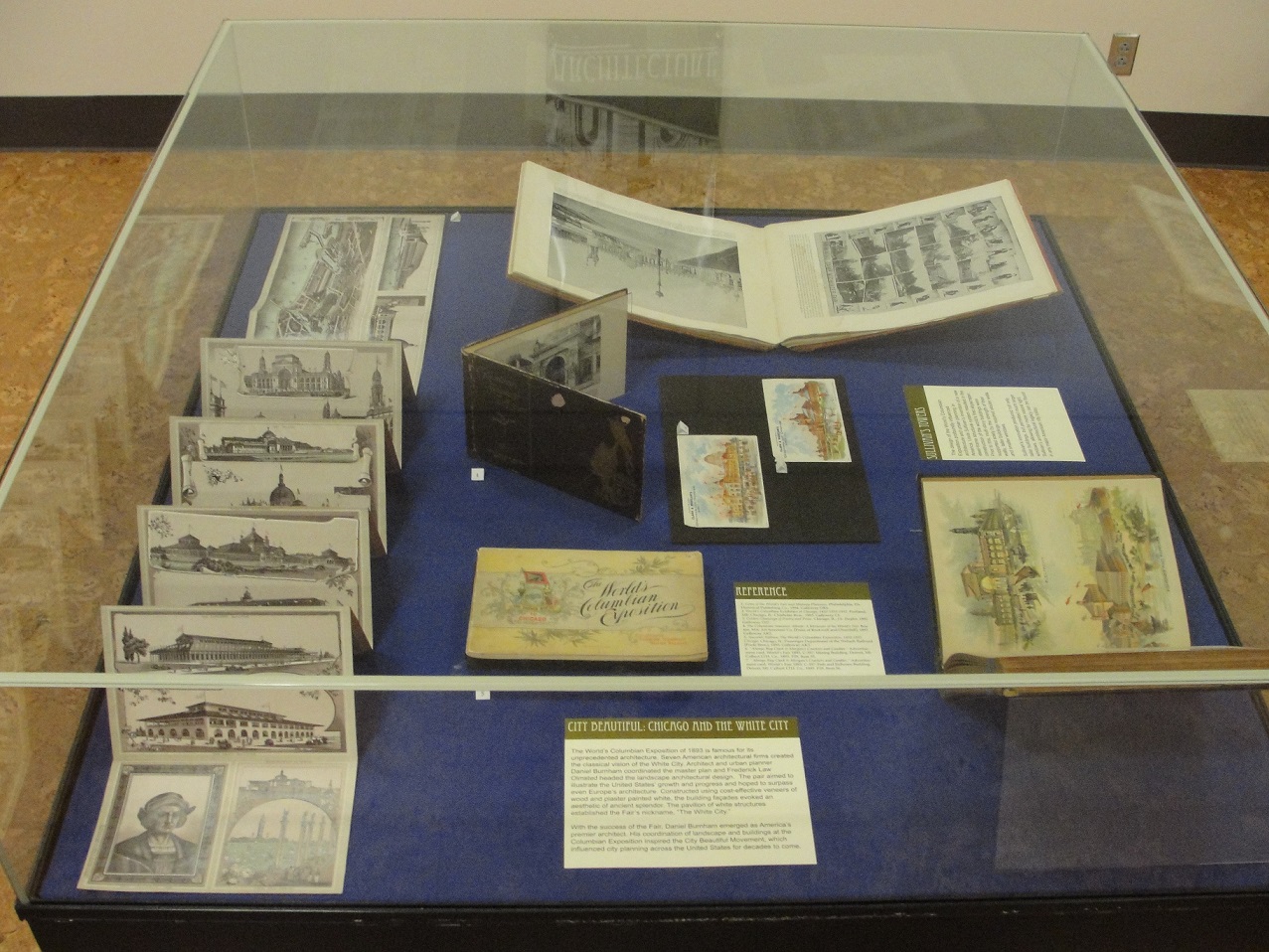
The 1893 Chicago World’s Fair, or the Columbian Exposition, served to showcase the transformation of America’s international presence from the wild frontier to a dominant world power. It also signaled Chicago’s rise to fame from the ashes of its Great Fire of 1871. Among the Fair’s major themes were architecture, women’s representation, diversity, and technology. From May 1 to October 31 of 1893, the World’s Columbian Exposition attracted 27 million visitors—a quarter of America’s population at the time.

More than 120 years after the Columbian Exposition, the Fair’s American legacy can be seen in this exhibit. We invite you to explore this period of rapid change, innovation, culture, and ingenuity.

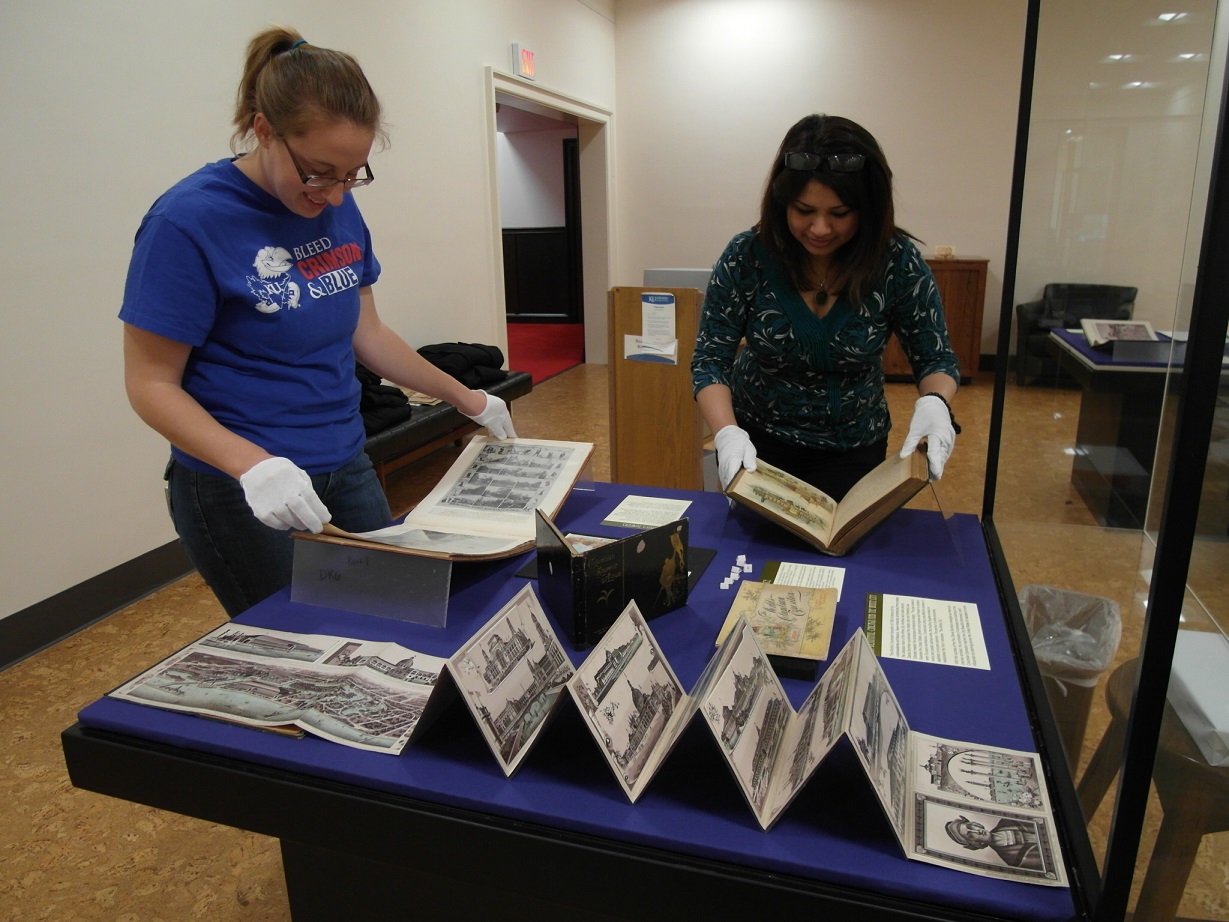
Image of museum studies graduate students installing the exhibition.  Image of installed case on architecture at the Fair

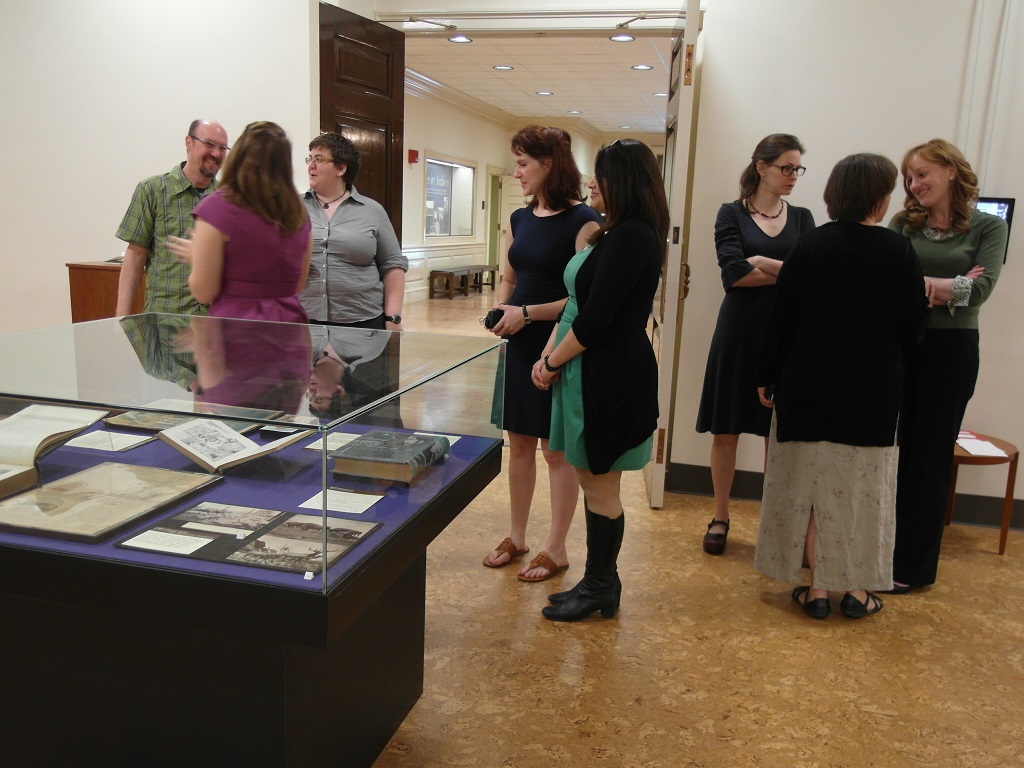
Image of people at the exhibition opening.

Top: Installing a case Bottom: Conversations at the exhibition opening

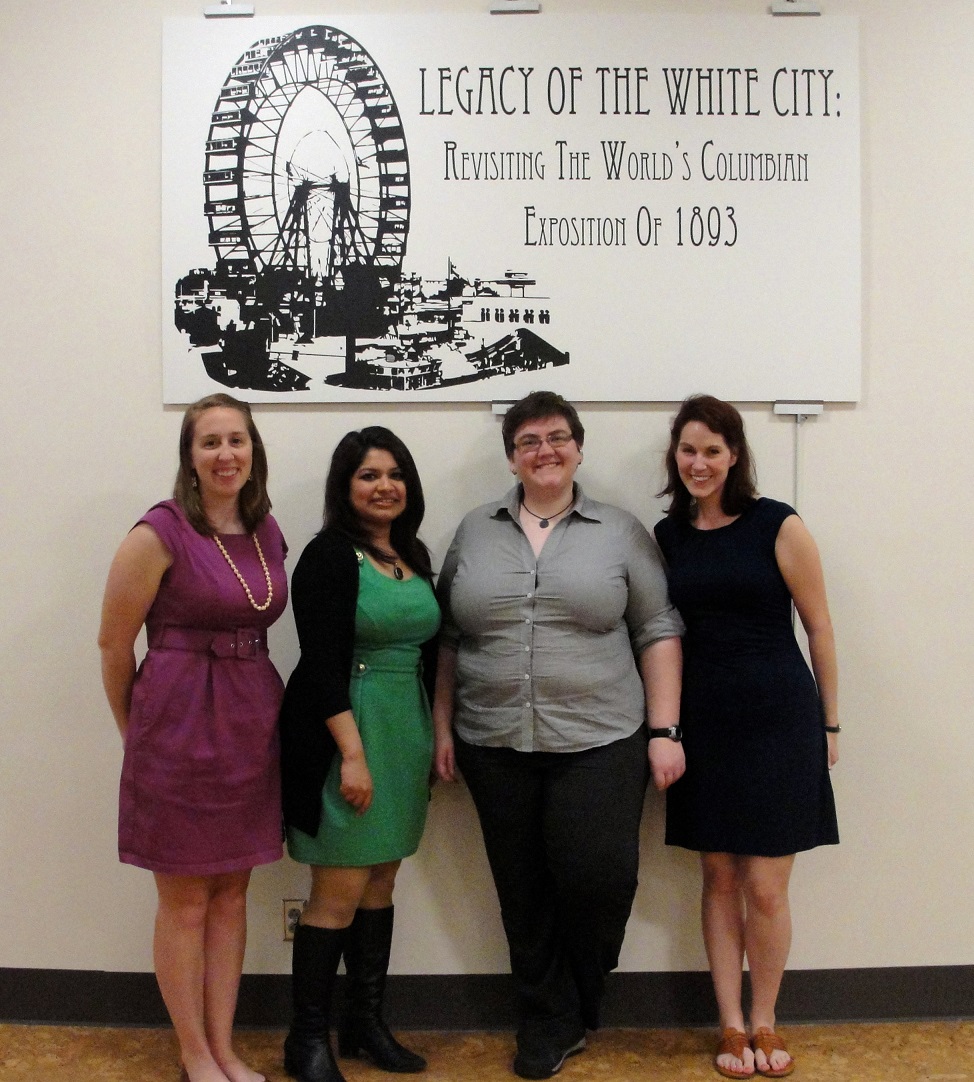
This exhibition, which opened on May 8th, 2014, features original literature from the Fair.  Most displayed objects originate from Spencer’s Thomas D. and Sharon Perry Galloway Collection. The exhibit was designed and executed by students Rachel Gibson, Alissa Meehan, Meg Schwend, and Sabrina Shafique as part of a an exhibition planning and design course (MUSE 703).

Image of the four exhibition curators in front of the exhibition sign

Exhibition curators (from left to right): Alissa Meehan, Sabrina Shafique, Rachel Gibson, Meg Schwend.

Meg Schwend
Museum Studies Graduate Student

Herps from Hell

April 11th, 2014

Herpetology is the study of amphibians and reptiles. Pictured here is the Supreme “Herp” from Hell in a manuscript that could be Heaven on Earth to a student of Old Russian. St. John Chrysostom was the most famous of the Greek fathers of the Church. His works consist of discourses illustrating passages of scripture, commentaries on the Biblical books, etc.

Saint John Chrysostom, Patriarch of Constantinople. [Extracts from the works, In Russian]. Manuscript from Russia, 16th-17th century. Call number MS C38. Kenneth Spencer Research Library, University of Kansas.

Above: Image from Saint John Chrysostom, Patriarch of Constantinople (died 407).
[Extracts from the works, In Russian]. Manuscript from Russia, 16th-17th century. Call Number: MS C38.

As we all know, Evil is in the eye of the beholder; indeed, the presence of a snake in a Russian peasant household was often considered an omen for Good, and brought wealth and good health. The snake, as one of the domovye, or house spritis, lived behind the stove or wherever fires were lighted. In White Russia the domovoi was called tsmok (snake). If the master of the house treated it badly or forgot to leave out some eggs for food at night, tsmok might burn the house down. In some Slavic households the snake was a bad egg, often the embodiment of a dead man’s soul, a rough and evil character like Baba Yaga.

The Spencer Library has books in Slavic languages scattered throughout the collections, and one of the best collections of rare Pollonica in the United States.

Sally Haines
Rare Books Cataloger
Adapted from her Spencer Research Library exhibit and catalog, Slithy Toves: Illustrated Classic Herpetological Books at the University of Kansas in Pictures and Conversations

William S. Burroughs’ Last Journals Come to KU Libraries

February 7th, 2014

It’s been an exciting week or two in Lawrence for scholars and fans of William S. Burroughs.  Wednesday, February 5 was the centenary of the writer’s birth, and around town events and exhibitions have been exploring his writing, art, and deep ties to Lawrence.  Burroughs made Lawrence his home during the last fifteen years of his life, and now, thanks to a gift from James Grauerholz, executor of the Burroughs estate and a KU alumnus, the influential author’s last journals will join the collections of KU Libraries.

Burroughs helped revolutionize the post-WWII literary landscape with novels like Naked Lunch and Nova Express, the latter a part of his cut-up trilogy.  To celebrate the gift, five of the ten journals will be on display in the Kenneth Spencer Research Library’s lobby through February.  These notebooks, which span from November 1996 to Burroughs’ death in August of 1997, were the basis for Last Words: The Final Journals of William S. Burroughs, a volume edited by Grauerholz and published in 2000.  In their pages we see literature, politics, art, and philosophy collide with everyday life.  A reference to speaking with an ailing friend, poet Allen Ginsberg  (“His voice over the phone from Beth Israel Hospital in NYC sounded very weak”), appears alongside a reminder to buy disposable razors.  The final entry (see below) offers a meditation on conflict and love.  To the left Burroughs has written:  “Love? What is it? / Most natural pain / killer what there is. / L O V E.”

Image of William Burroughs' last entry in one of his final journals.

William S. Burroughs’ final journal. Image courtesy of Chuck France / KU Office of Public Affairs. Click here for a larger version.

Image of display case containing five of Burroughs' last journals  Image of display case containing five of William S. Burroughs' last journals, as seen from above.

On display through February in Spencer Research Library’s lobby: five of the ten journals donated by the Burroughs estate.

In addition to the journals, the gift also includes typescripts and draft materials for the edition Grauerholz produced. Once cataloged, these “last words” of William S. Burroughs will be available for researchers and the public to consult at the Kenneth Spencer Research Library.

Elspeth Healey,
Special Collections Librarian

The Magic of Oz: A Collection Celebrating a Classic

January 24th, 2014

Like many people, I suspect, my knowledge of The Wizard of Oz has been limited to the 1939 MGM movie, which turns seventy-five years old this year. However, in recent months I’ve had the opportunity to learn a great deal more about the topic from Jane Albright, an Oz collector in Kansas City, Missouri, with an impressively comprehensive knowledge of all things related to the beloved story.
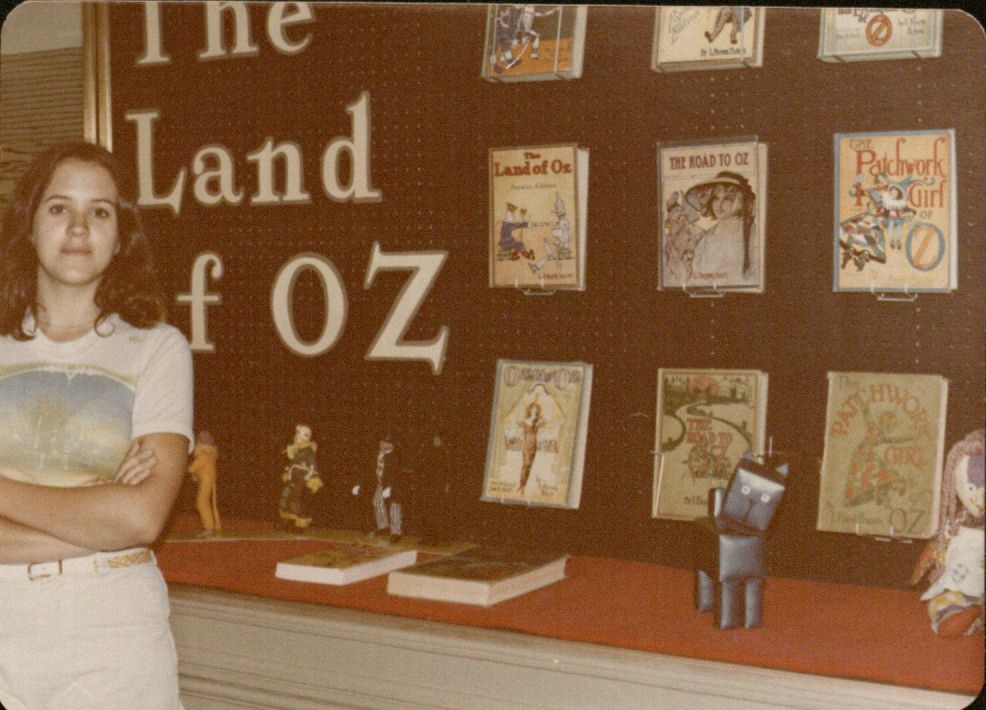
Image of Jane Albright in front of Oz exhibit at KSRL, 1977

As a student at KU, Jane Albright won the Snyder Book Collecting Contest
for her Oz collection in 1977. She is shown here with some of her books,
which were then displayed as a year-long exhibit in the Kansas Collection
at Spencer Research Library. From the collection of Jane Albright.

Jane and I have been collaborating to develop Spencer’s current exhibit, “The Magic of Oz: A Collection Celebrating a Classic.” The exhibition features books and other items from Jane’s wonderfully extensive collection of Oz materials and uses them to explore some of the contexts in which The Wonderful Wizard of Oz (1900) was created and enjoyed by readers. Jane and I also hope that visitors will come away from the exhibit excited by the “fantastic host of characters, marvelous adventures, and strong sense of place” found within the Oz stories, much as Jane fell in love with them as a young girl growing up in Topeka, Kansas.
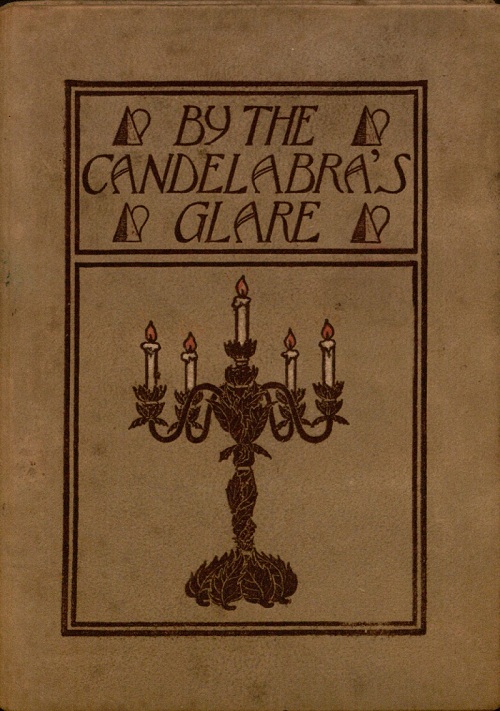
Image of the cover of By the Candelabra's Glare 1898

By the Candelabra’s Glare (1898) is a collection of Baum’s
own verse. He printed and bound each of the ninety-nine copies
himself. This copy is marked No. 2 and inscribed to his oldest son.
From the collection of Jane Albright.

Included in the exhibit are early editions and more-recent foreign-language translations of The Wonderful Wizard of Oz; examples other works written by L. Frank Baum or illustrated by W. W. Denslow, two men who had prolific careers beyond the Oz stories; ephemera from the 1903 stage musical based on the book, which was the greatest Broadway hit of its time; and copies of Oz books written by Baum and other authors. Noteworthy are the several exceptionally rare pieces from Jane’s collection that are included in the exhibit.
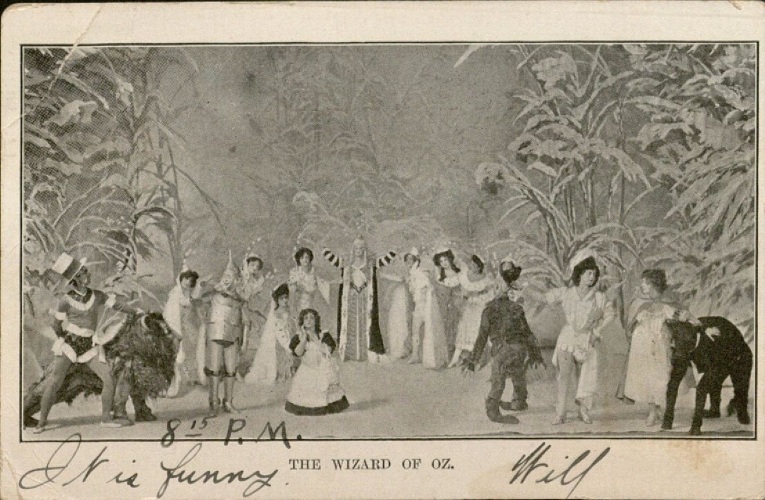
Image of Wizard of Oz postcard 1906

This postcard showing a scene from The Wizard of Oz stage musical has been
time-stamped and annotated. It was postmarked in Milwaukee on February 8, 1906,
and sent to a Mrs. Parish in Delavan, Wisconsin. From the collection of Jane Albright.

“The Magic of Oz: A Collection Celebrating a Classic” is free and open to the public in the Exhibit Gallery during Spencer’s regular hours: Monday through Friday, 9:00 am to 5:00 pm, and (when KU classes are in session) Saturday, 9:00 am to 1:00 pm. The exhibit will run through Saturday, April 19th. For additional information, please contact Caitlin Donnelly at (785) 864-4456 or cdonnelly@ku.edu.

KU Libraries will host a reception and lecture by Jane Albright later in the spring. The event is scheduled for Thursday, April 17th from 5:30 to 7:30 pm at Spencer Research Library. More information will soon be available at www.lib.ku.edu/events.

Caitlin Donnelly
Head of Public Services
The Double

January 10th, 2014

The statue of The Bronze Horseman (= Peter the Great, the inspired hero, rash, speedy, proud, majestic, handsome, and yes, six and a half feet tall in real life!) symbolized a powerful upsurge in Russian energy (and the horse and his rider are pointed westward). Indeed it is the subject of many a frontispiece in our holdings of St. Petersburg travel literature, and is immortalized in Pushkin’s poem, “The Bronze Horseman.”

Frontispiece illustration of the statue, "The Bronze Horseman," (i.e. Peter, the Great) from Granville's " St. Petersburg. A journal of travels to and from that capital." (1829, 2nd Edition)

Statue of Peter the Great: Frontispiece from Augustus Bozzi Granville’s St. Petersburg.
A Journal of Travels to and from that Capital
. 2nd ed., carefully revised and with considerable
additions. London: H. Colburn 1829. 2 vols. Call Number: C9755, v.1. Click image to enlarge.

French sculptor Étienne-Maurice Falconet was commissioned by Catherine II on recommendation of Diderot to erect a memorial to Peter I. Falconet apparently had only unhappy experiences during his Russian years and never came back to see his masterpiece in place and ready to leap into the no longer frozen future. Falconet knew that Catherine abhorred allegory, and he himself did not want a “Peter in Roman armor.” On this matter he locked horns with Ivan Betskoi of the Imperial Academy of Fine Arts. In the end he had his way artistically, but we have seen no images amongst our holdings that do it justice for display. Obviously this is one statue that must be seen “in the flesh.”

The story of the hauling from Finland of the granite block on which this saddle-sore Peter and his horse are erected is as dramatic as the story of obtaining the rock and wooden underpinnings of St. P., the city, in 1703. Both were the death of many a good Russian.

The biography of Granville, from whose travel journal the above frontispiece illustration is taken, reads like Candide: his Cornish mother’s death-bed wish was that he take a British last name, but in fact he was an Italian patriot and political rabble-rouser, journalist, actor, and eventually physician. He first visited Petersburg in 1827, a second time in 1829 as physician, when he predicted Nicholas would die before July 1855.

Sally Haines
Rare Books Cataloger

Adapted from her Spencer Research Library exhibit, Frosted Windows: 300 Years of St. Petersburg Through Western Eyes.