The University of Kansas

Inside Spencer: The KSRL Blog

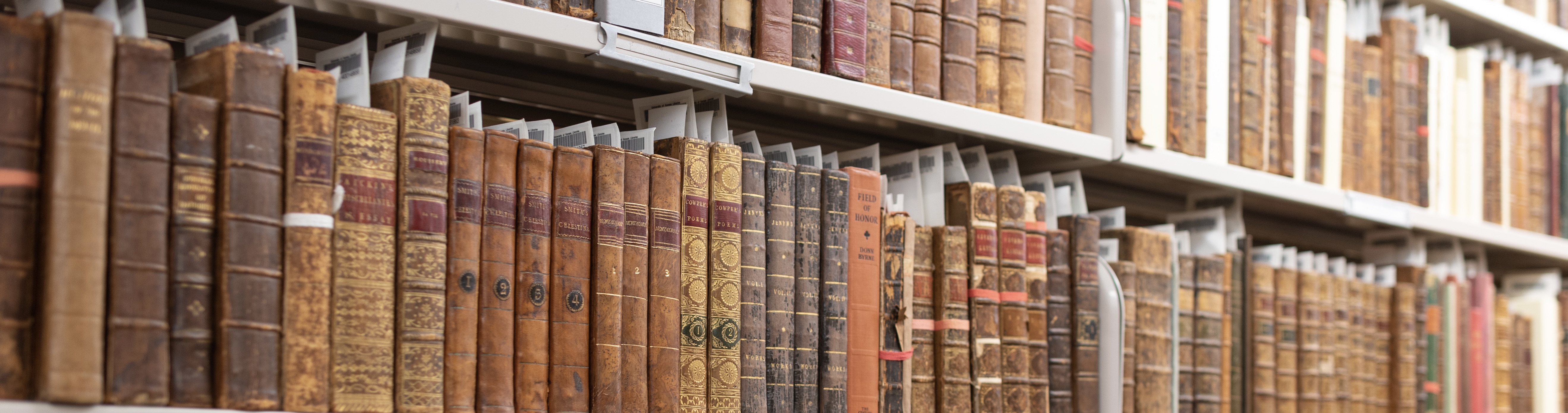
Books on a shelf

Welcome to the Kenneth Spencer Research Library blog! As the special collections and archives library at the University of Kansas, Spencer is home to remarkable and diverse collections of rare and unique items. Explore the blog to learn about the work we do and the materials we collect.

Historic Fingerpainting Seems More Dignified

August 24th, 2012

The volume below contains a wonderful example of paste paper on its binding.  Paste paper is most associated with 16th- and 17th-century books from the Netherlands, Germany, and Belgium. It was usually created in the bookbinding workshop for books that did not warrant the expense of marbled paper, a luxurious commodity.

Paste paper binding (call # D2304, Vol.107)      Paste paper detail (from call # D3204 Vol. 107)

Left: This 1815 volume from a run of the Spencer Library’s holdings for the periodical Allgemeine Literatur-Zeitung has a binding that uses paste paper (Call Number: D3204, Vol. 107).  Right: a detail from the bottom right corner of the volume. Click images to enlarge.

Paste paper was created with starch paste—a staple of any bookbinding operation—and some sort of pigment. Often an implement was dragged through the paper, creating lines that look remarkably three-dimensional.  Once in a while you find a mark of the bookbinder left behind: a finger or thumbprint used to make flowers or other patterns.  There are many instructions for making paste paper, easily discoverable on the internet.

Paste paper detail (Call # MS D38) 
Image of Paste paper detail from Spencer Library's copy of Poem to the Memory of Lady Miller  Paste paper detail (from call # D3254)

Paste paper details from the bindings of volumes in the Spencer Library’s collections. Top left: Tractatus optimus de arte bene moriendi (expanded version by Dominicus Capranica, d. 1458), Germany, 1456. (Call # MS D38). Top right: Saint Bonaventure’s Soliloquium , Germany, 1433. (Call# MS D37). Bottom left: Anna Seward’s Poem to the Memory of Lady Miller by Anna Seward,  1782 (Call Number: D2763). Bottom right: A modern example: Brian North Lee’s Bookplates and Labels by Leo Wyatt, 1988 (Call # D3245). Click images to enlarge.

For more information on paste paper, see Rosamond Loring’s book, Decorated Book Papers; being an account of their designs and fashions (Call Number: C6396).

Whitney Baker
Head, Conservation Services

Pulp Writer Homer Eon Flint: A Donor’s Story

August 7th, 2012

A guest post from Vella Munn

Securing a final resting place for my grandfather Homer Eon Flint’s body of published fiction at the University of Kansas began with a backdoor approach. An email I sent to a man involved with Science Fiction Writers of America led to an introduction to James Gunn, SF writer, scholar, and founder of KU’s Center for the Study of Science Fiction, and from there to a series of emails with Special Collections librarian Elspeth Healey.

Photograph of Homer Eon Flint

Homer Eon Flint, photograph courtesy of Vella Munn

As a result, nineteen 90+ year-old pulp magazines such as Argosy All-Story Weekly, Fantastic Novels, and Flynn’s carrying Grandpa’s work are no longer disintegrating in my office. They’re being preserved by those who know how to treat the fragile publications, and I no longer worry that I’m not doing right by what I inherited.

The youngest of four children, Homer Eon Flint was born on Sept. 9, 1888 in Albany, Oregon. He devoured H. G. Wells, Jules Verne, Conan Doyle, and Rider Haggard, all known for their romantic fiction, and they made an indelible impact on him. With the encouragement of his wife, a teacher, and a hefty hospital bill to pay off, he started writing. He sold at least eight movie treatments for the fledgling film industry before moving onto short stories, penning everything from horror to humor.

Image of Homer Eon Flint's "The Money-Miler" in Flynn's  Image of Cover of Flynn's Magazine
Photograph of Protective Enclosures for Homer Eon Flint Materials

Pictured above: The first installment of Homer Eon Flint’s “The Money-Miler” in Flynn’s, Vol. 1, No. 3,
October 4, 1924 (Call Number: ASF C924);  Cover of the issue of Flynn’s that contained the second
installment of Flint’s “The Money-Miler,” Vol. 1, No. 4, October 11, 1924 (Call Number: ASF C925);
and protective enclosures used to house the fragile pulp magazines.

Flint made his mark with such science fiction as “The Emancipatrix,” “The Devolutionist,” “The Lord of Death,” “The Queen of Life,” and his co-written book The Blind Spot. Some two and a half million readers devoured The Planeteer. “The Money-Miler” ( Flynn’s, October 4-18, 1924) was his last sale. He made it a month before his violent and mysterious death at 36. His 1924 payment for that novella-length story–$400.

In addition, Homer wrote a number of stories that weren’t published. Those as well as his published work are being brought out by Musa Publishing.

Vella Munn
Vella Munn has written a biography of Homer Eon Flint
, titled Grandfather Lost.

Boxes and Bosses

August 3rd, 2012

Summer Conservation Intern Cheyenne Bsaies reports on how to house huge, metal-clad volumes.

I want to talk to you about boxes. It’s a deceptively simple topic, truly. But the boxes I’m talking about are a far cry from the corrugated boxes every college student knows from moving apartments every summer. For one thing, the boxes I’ve been making are destined to house some of the rarer items in the Spencer collections. They’re studier than a corrugated box, they open differently and they’re cloth covered. In short, they’re very fancy boxes for very interesting and unusual tomes.

If you’ve never had the pleasure of seeing and/or handling a very old book, I highly recommend that you visit the Spencer Library and speak to a librarian there in order to avail yourself of their resources. Maybe the only old books you’ve seen have been in the movies when the protagonist uncovers a secret in an ancient library. They’re huge, leather beasts covered with metal studs and straps and clasps, and you just know something important is going to happen when the hero opens one of them.

Image of Image of Steinhardt Gradual (after 1253) Photograph of the binding of MS J4:1

Left: Steinhardt Gradual. France, after 1253,  (Call No.: MS J4:2); Right: Antiphonary,
Germany, 15–, (Call No.: MS J4:1). Click images to enlarge (trust us, they’re worth enlarging).

Well, those are exactly the books I had the pleasure of working with on this project! And, I have to admit, it’s hard not to feel a bit like Indiana Jones when turning their pages. First I’ll introduce each of them, talk about some of their special features, and then I’ll describe the box making process. Read the rest of this entry »

Austen-tacious and (Por)ter-rific: NEH Seminar visits KSRL

July 30th, 2012

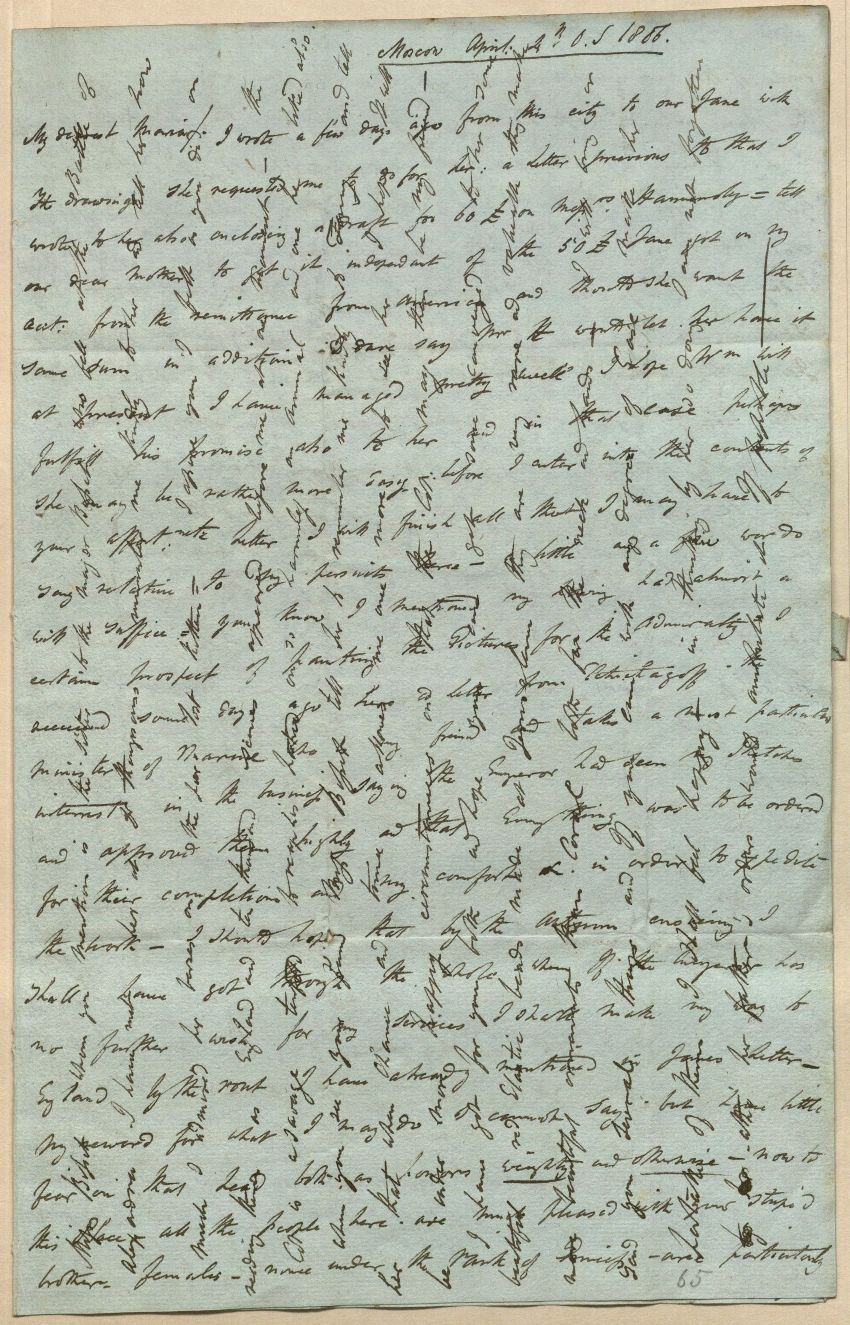
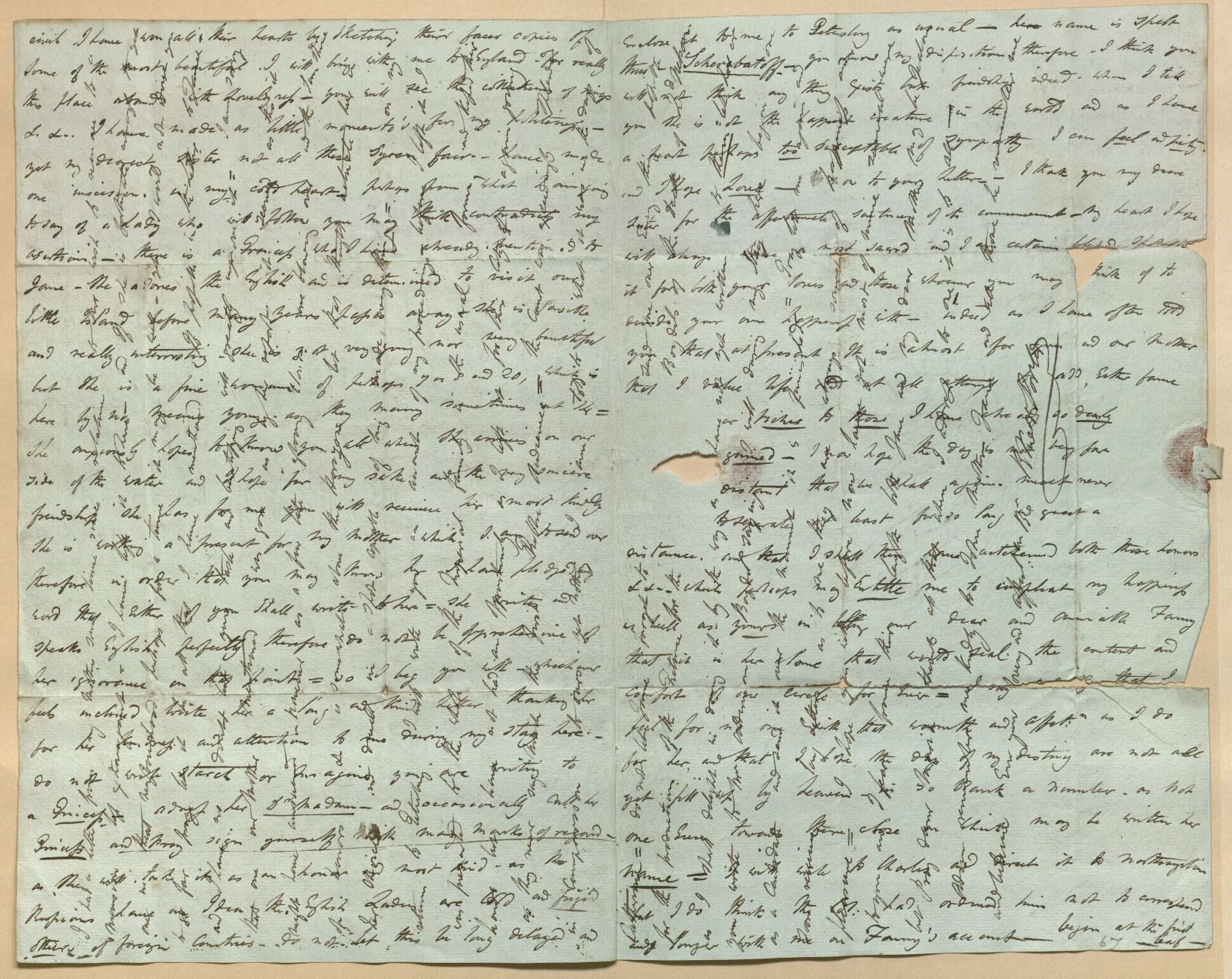
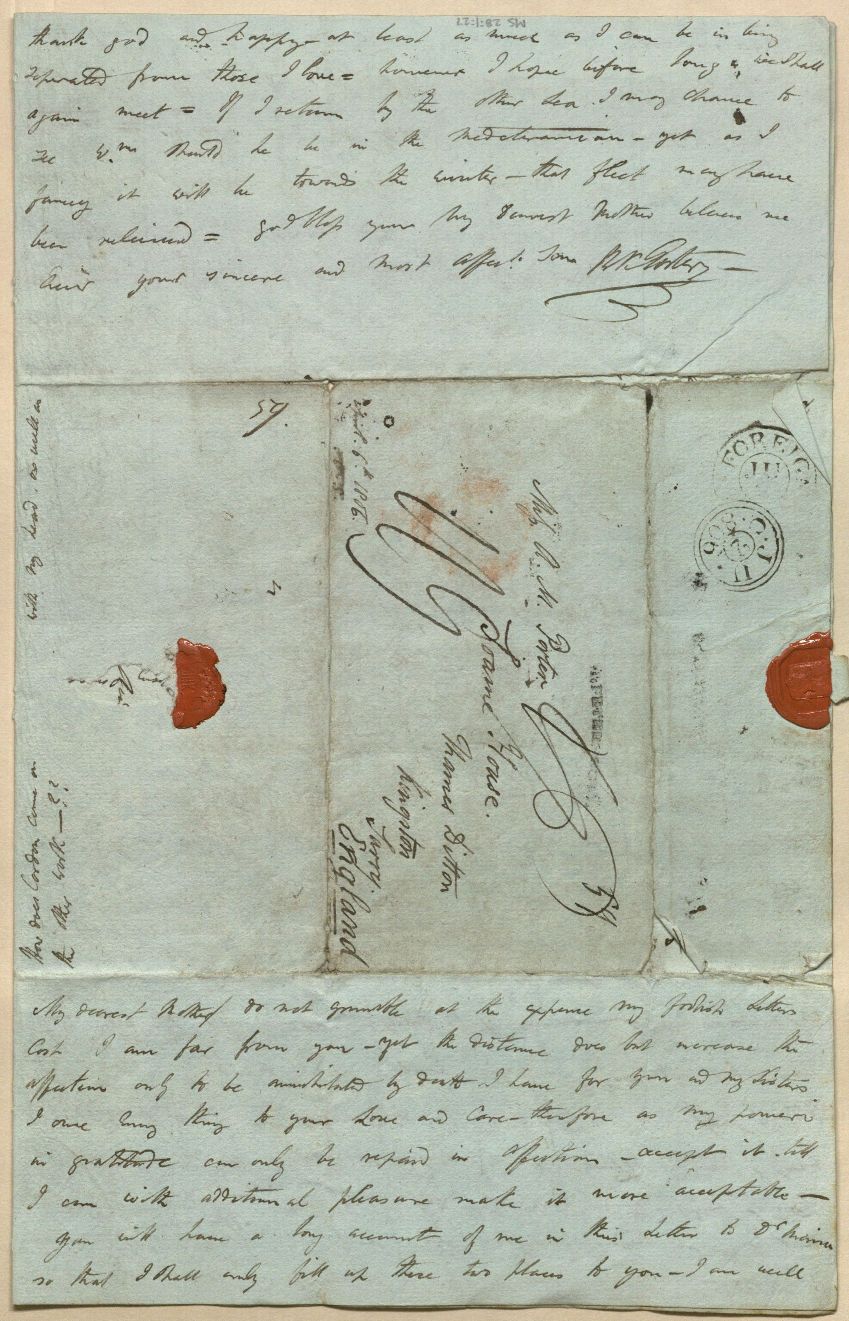
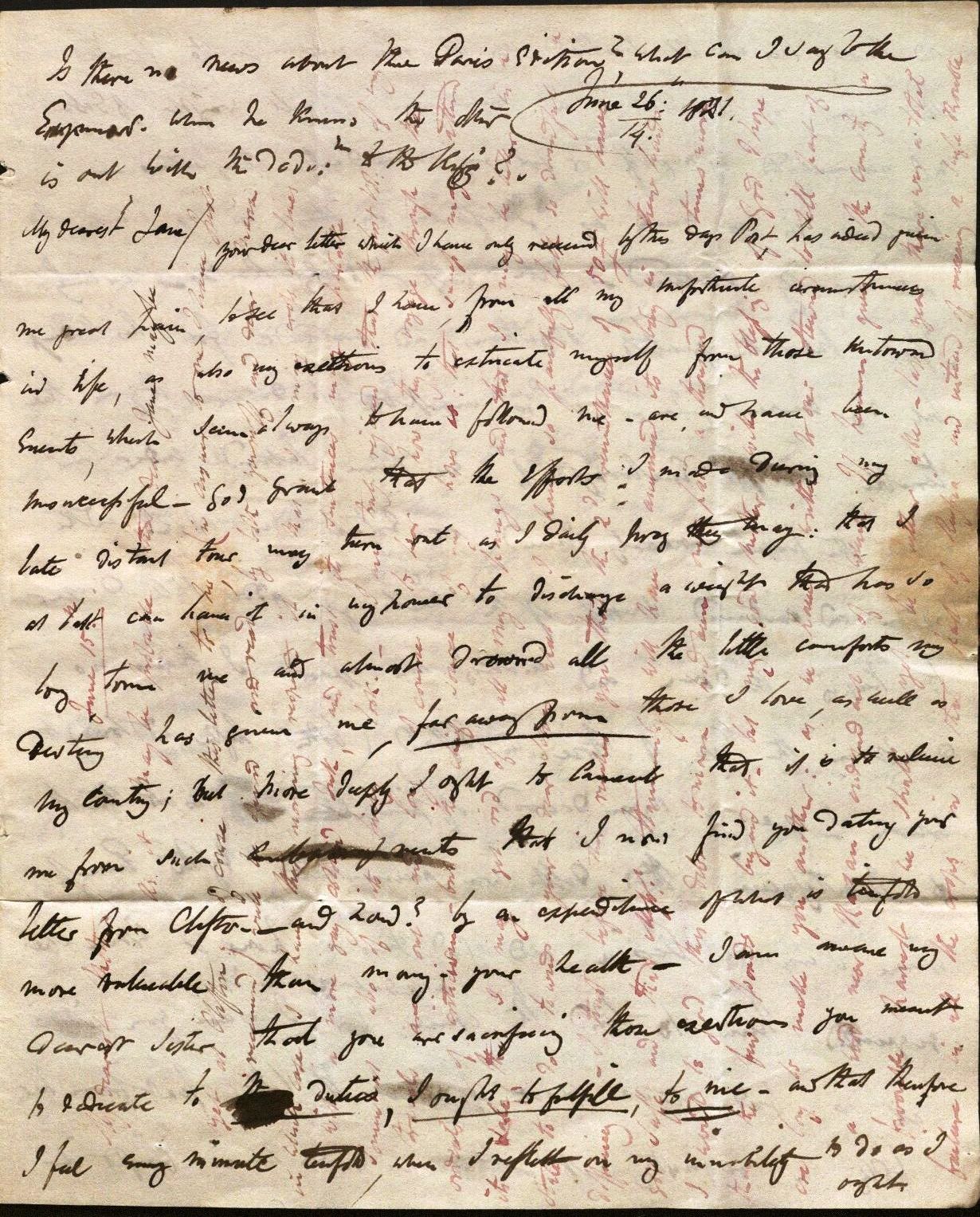
On a hot July morning two Mondays ago, a bus pulled up in front of the Kenneth Spencer Research Library and out stepped seventeen scholars.  The erudite visitors were participants in Jane Austen and Her Contemporaries, a five-week NEH Summer Seminar for College and University Teachers held at the University of Missouri and led by Dr. Devoney Looser. After some much-needed tea and victuals in Spencer’s North Gallery (the bus had left Columbia, MO at 5:45 am, after all), the scholars settled in for a day of workshops and research.  No time for pianoforte or leisurely games of cards for these visitors!  The morning’s activities included sessions with Spencer Library staff addressing genres of documents prevalent during Austen’s time, 18th- and 19th- century handwriting, and reference resources for working with rare books and manuscripts.

NEH Seminar "Jane Austen and Her Contemporaries" at the Kenneth Spencer Research Library

Say “Northanger Abbey!”:  Participants in the NEH Summer Seminar “Jane Austen and Her Contemporaries”
with Spencer Library staff.

In the afternoon, the scholars retired to the reading room where they threw themselves into conducting research with some of Spencer’s late 18th- and early 19th-century manuscript collections. Read the rest of this entry »

The North Gallery Revisited

July 18th, 2012

The word “iconic” is often overused, but I believe it describes, better than any other word, the power of the Spencer’s North Gallery. People who have not been on campus for decades remember “the red room,” or the “room with the books.” Often, of course, they remember the “room with the view of the Campanile.”

Spencer Library's North Gallery
Kenneth Spencer Research Library’s North Gallery, view into the
Summerfield and P. S. O’Hegarty collections. Click image to enlarge.

The exposed shelving of the North Gallery (once called “the Ambulatory”) has housed outstanding items from Special Collections since the opening of the library in 1968. Its visual and intellectual appeal cannot be overstated. It not only houses books, like a section of the larger Summerfield volumes, for example, but intriguing artifacts like several horn books and the jumbled writs of habeus corpus that fascinate visitors every day.

North Gallery, Rilke Collection
Kenneth Spencer Research Library’s North Gallery, with view of the Rilke Collection
and the horn books (center shelf) on display. Click image to enlarge.

The Spencer collections, however, are not the same as they were in 1968 when the third floor was the province of Special Collections and books were the name of the game. With the consolidation of the public spaces of Special Collections, Kansas Collection, and University Archives in the early years of the 21st century, and the continuing desire to provide a more interpretive context for our collections in general, we are considering how best to program this stunning space as a true gallery. An enthusiastic group of Museum Studies students recently completed a project to explore bringing diversity and experience into the space through an interesting array of physical and virtual exhibit “stations.”

What would you like see in our signature space for visitors? Is there something we should consider as we move forward with these plans? I’d welcome your input and suggestions as we look ahead to the future of the North Gallery.

The North Gallery at the Kenneth Spencer Research Library

View of the Campanile from the Kenneth Spencer Research Library's North Gallery

Amazing vistas: A wide view of the North Gallery (top)
and looking outward onto the Campanile (bottom).
Click images to enlarge.


Beth M. Whittaker
Head of Kenneth Spencer Research Library