The University of Kansas

Inside Spencer: The KSRL Blog

Books on a shelf

Welcome to the Kenneth Spencer Research Library blog! As the special collections and archives library at the University of Kansas, Spencer is home to remarkable and diverse collections of rare and unique items. Explore the blog to learn about the work we do and the materials we collect.

This blog may contain archived web content. This blog may link to catalog records which no longer exist as of a software change in 2026.

World War I Letters of Forrest W. Bassett: November 13-19, 1917

November 17th, 2017

In honor of the centennial of World War I, we’re going to follow the experiences of one American soldier: nineteen-year-old Forrest W. Bassett, whose letters are held in Spencer’s Kansas Collection. Each Monday we’ll post a new entry, which will feature selected letters from Forrest to thirteen-year-old Ava Marie Shaw from that following week, one hundred years after he wrote them.

Forrest W. Bassett was born in Beloit, Wisconsin, on December 21, 1897 to Daniel F. and Ida V. Bassett. On July 20, 1917 he was sworn into military service at Jefferson Barracks near St. Louis, Missouri. Soon after, he was transferred to Fort Leavenworth, Kansas, for training as a radio operator in Company A of the U. S. Signal Corps’ 6th Field Battalion.

Ava Marie Shaw was born in Chicago, Illinois, on October 12, 1903 to Robert and Esther Shaw. Both of Marie’s parents – and her three older siblings – were born in Wisconsin. By 1910 the family was living in Woodstock, Illinois, northwest of Chicago. By 1917 they were in Beloit.

Frequently mentioned in the letters are Forrest’s older half-sister Blanche Treadway (born 1883), who had married Arthur Poquette in 1904, and Marie’s older sister Ethel (born 1896).

In this week’s letter, Forrest mentions a parade in Leavenworth City, an event that was covered the next day (November 18th) by the Leavenworth Times. In reporting on the parade of 4,000 troops stationed at the fort, the newspaper noted that it “brought forcibly home the proximity of the war in which the United States is now engaged.” Even “residents of long-standing, to whom the military reservation has ceased practically to be a point of interest, were surprised at the number of men under the Fort Leavenworth command.”

Image of Leavenworth Times article, "Troops' Parade an Eye-Opener for This City," November 18, 1917

Image of Leavenworth Times article, "Troops' Parade an Eye-Opener for This City," November 18, 1917

Leavenworth Times article, November 18, 1917. Accessed via Newspapers.com.
Click images to enlarge.

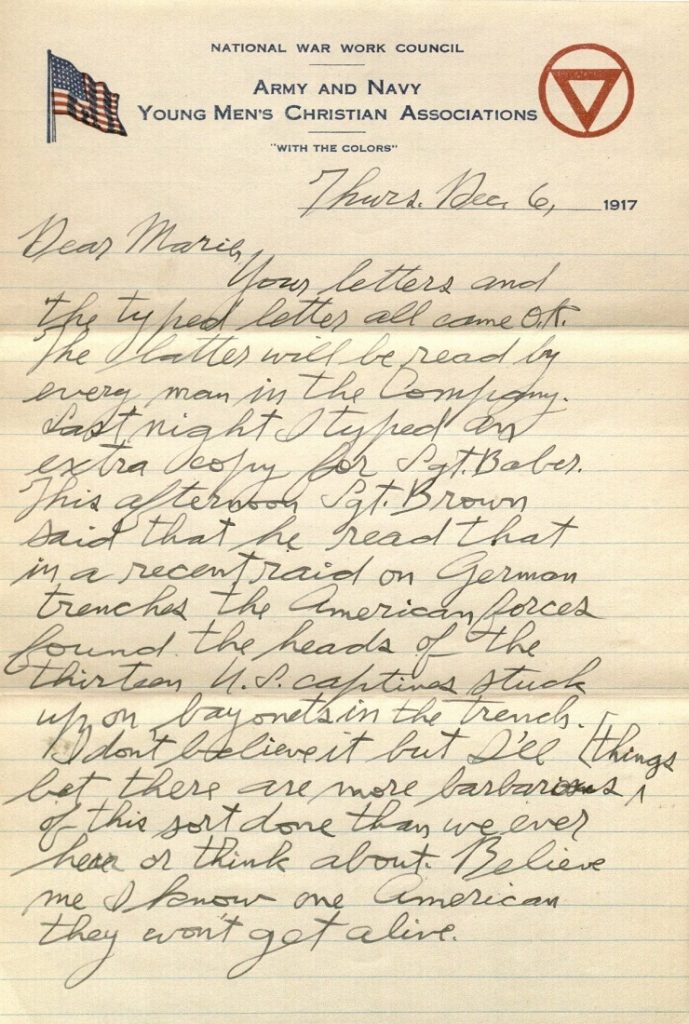
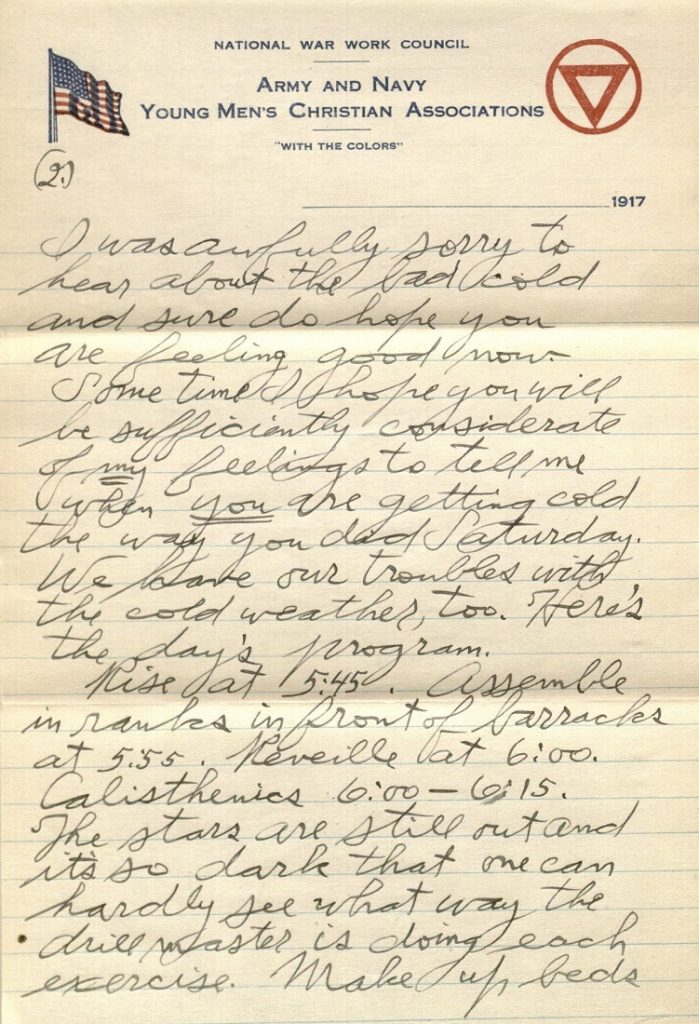
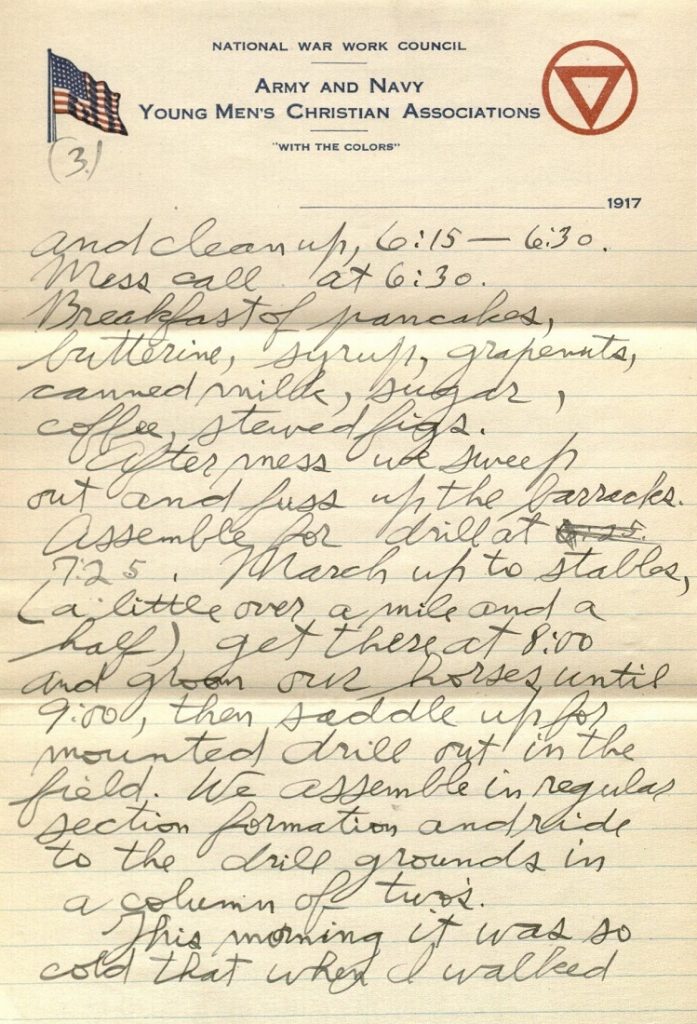
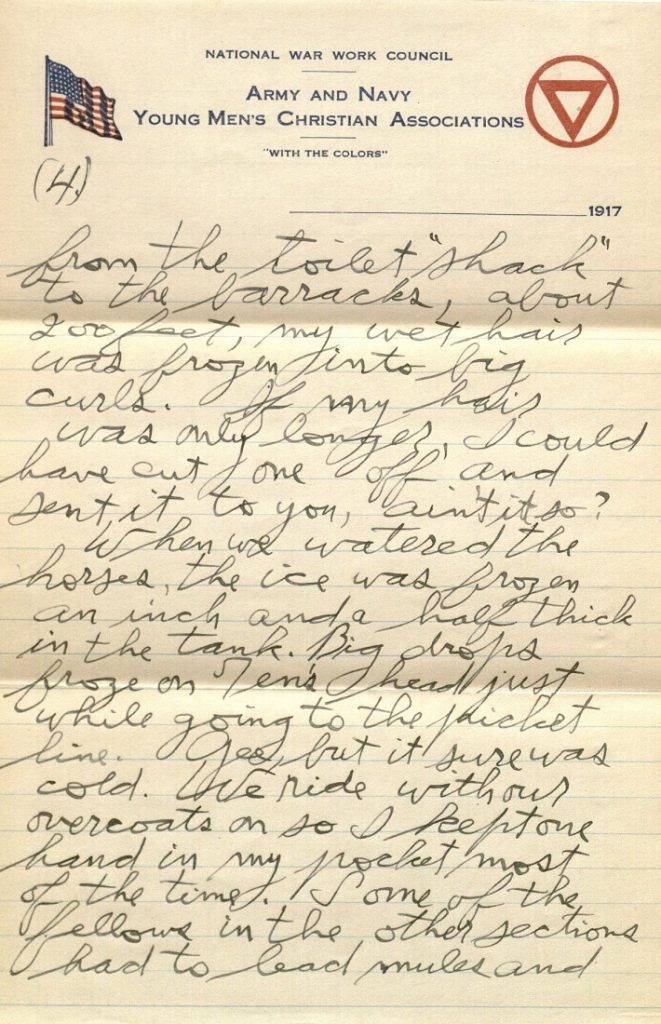
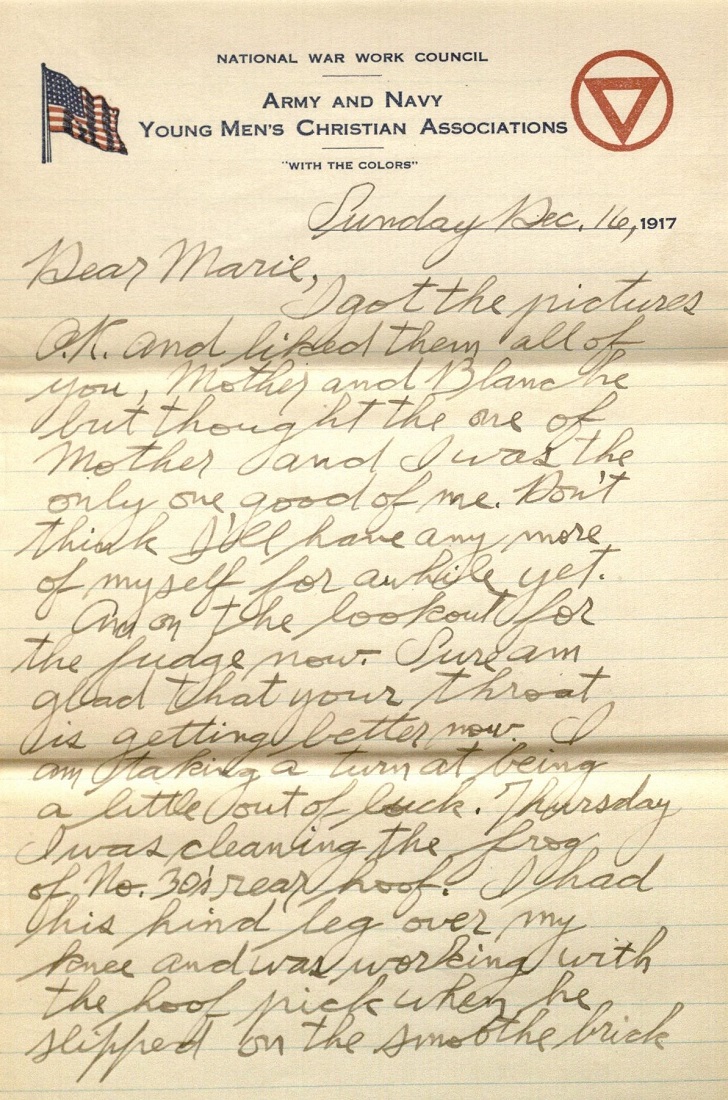
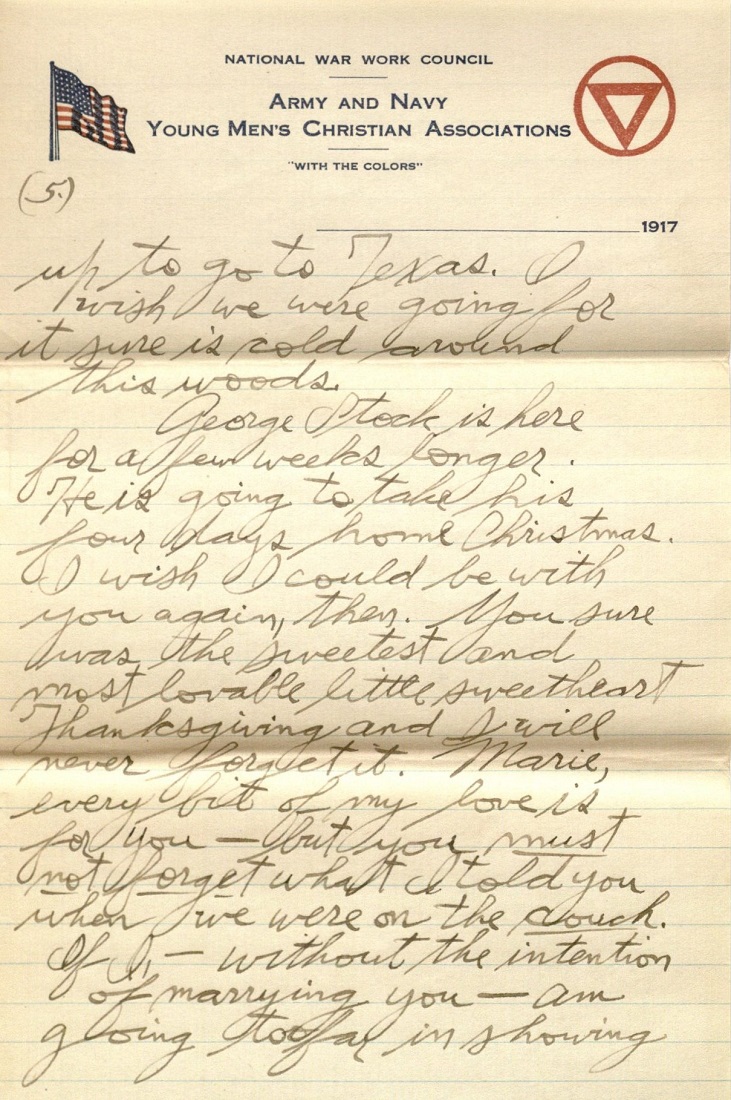
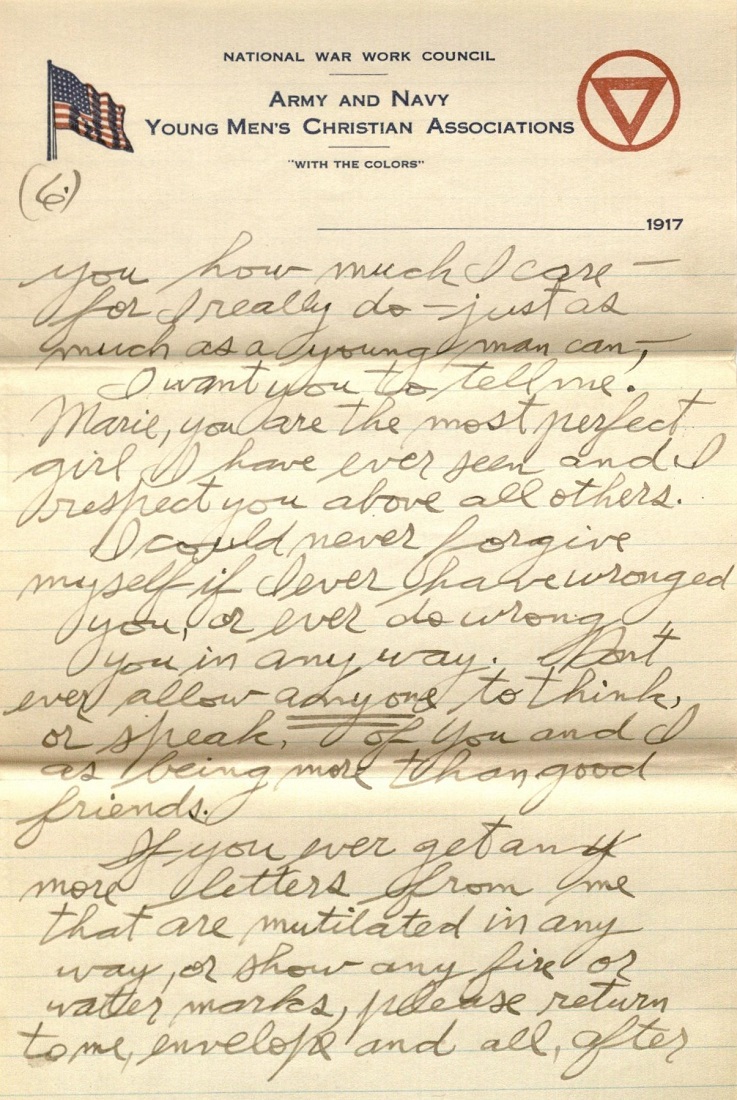
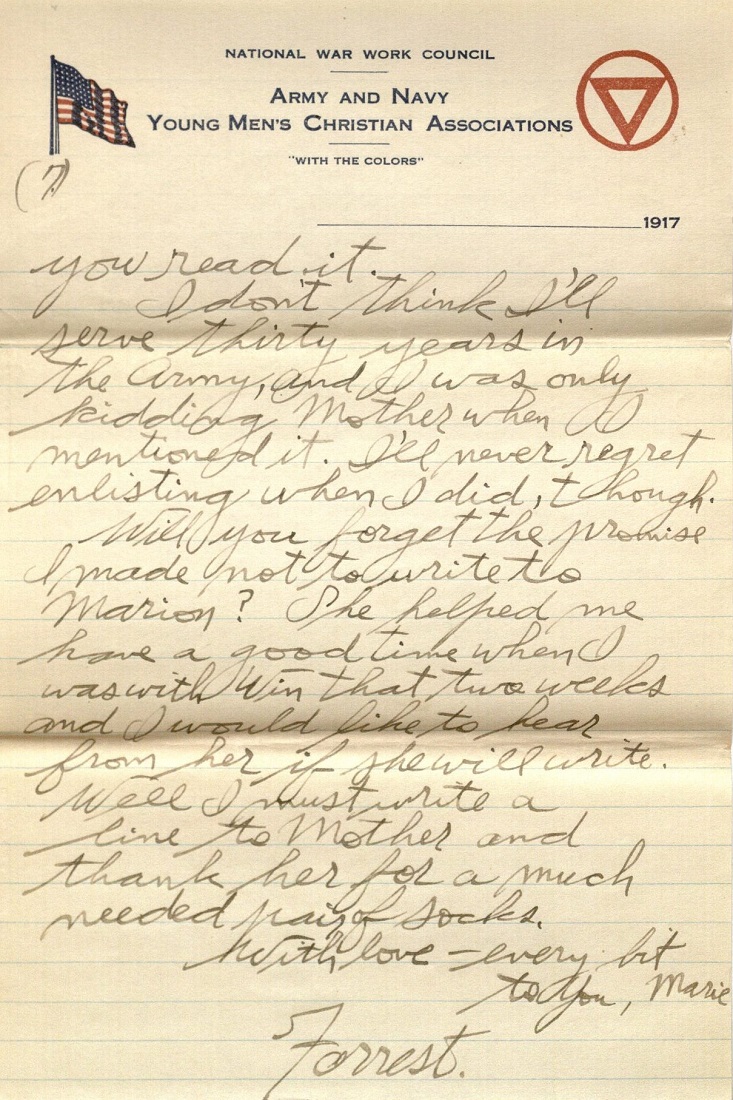
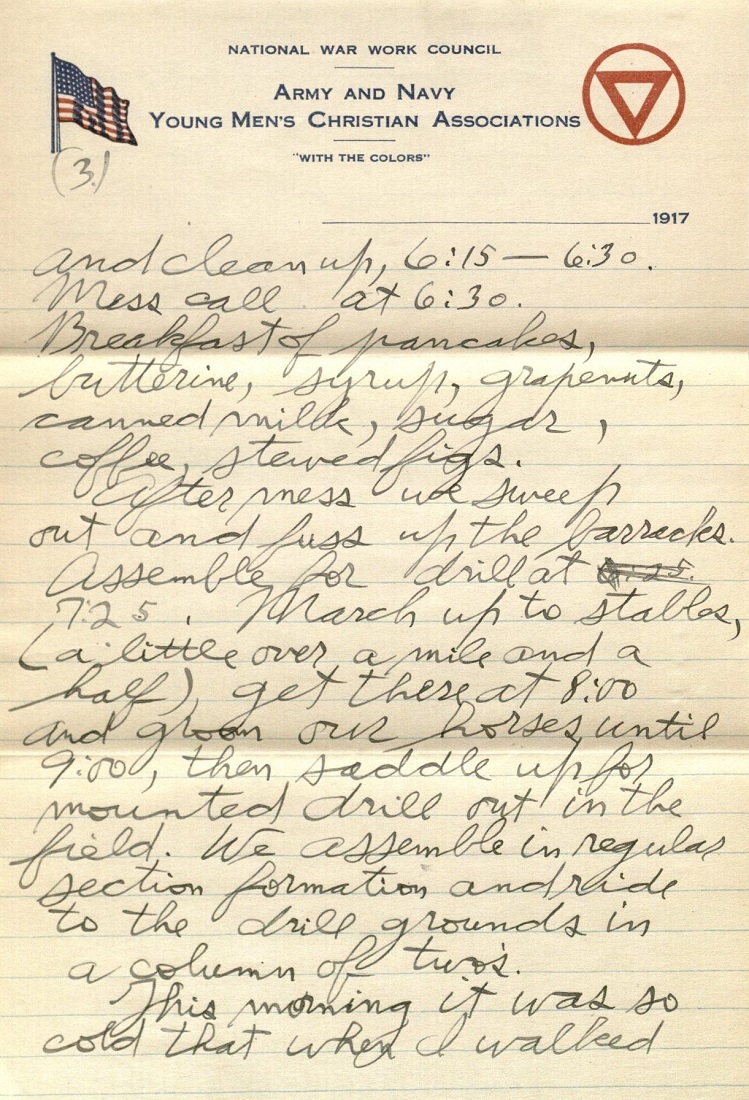
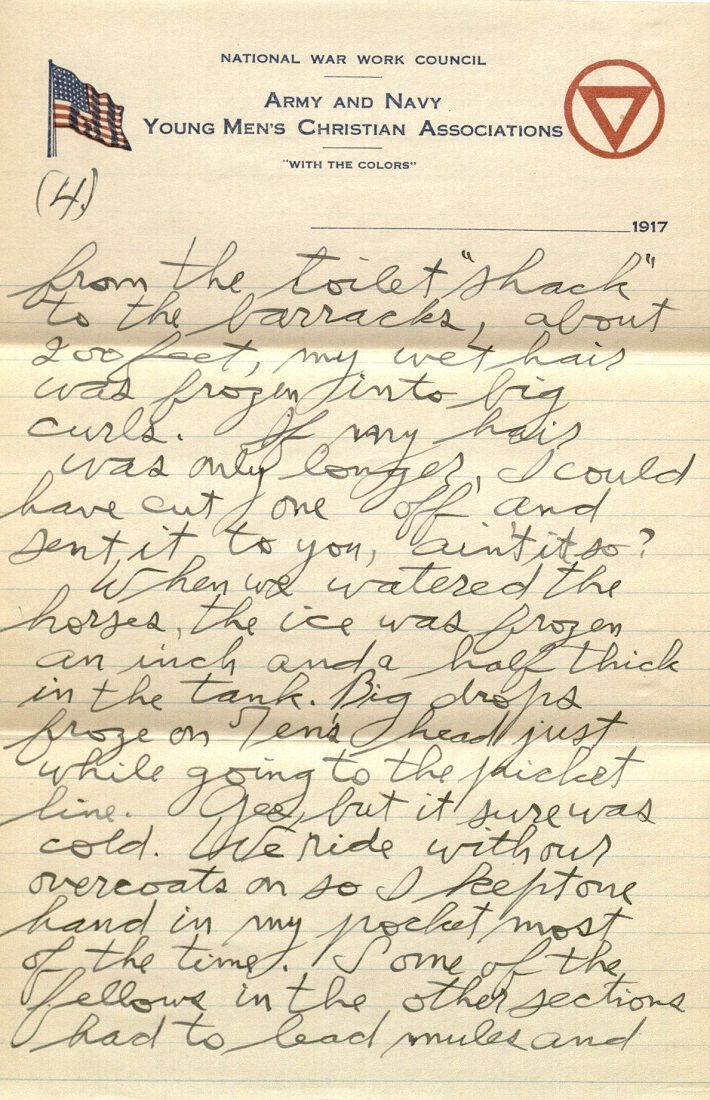
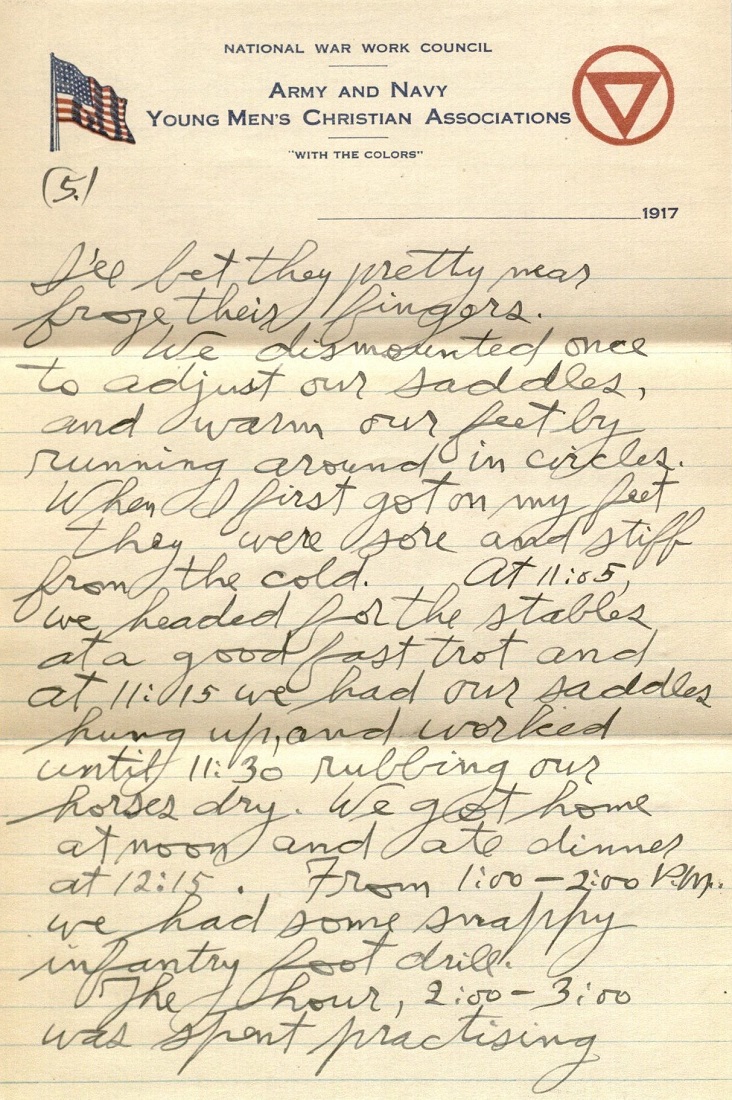
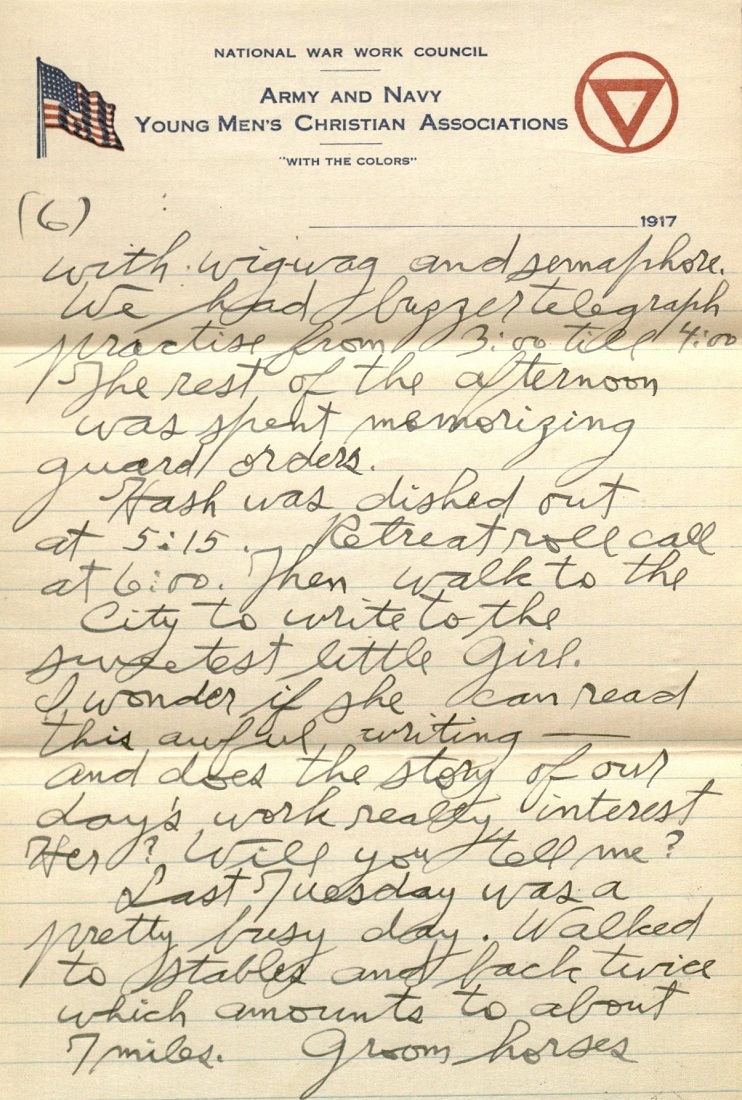
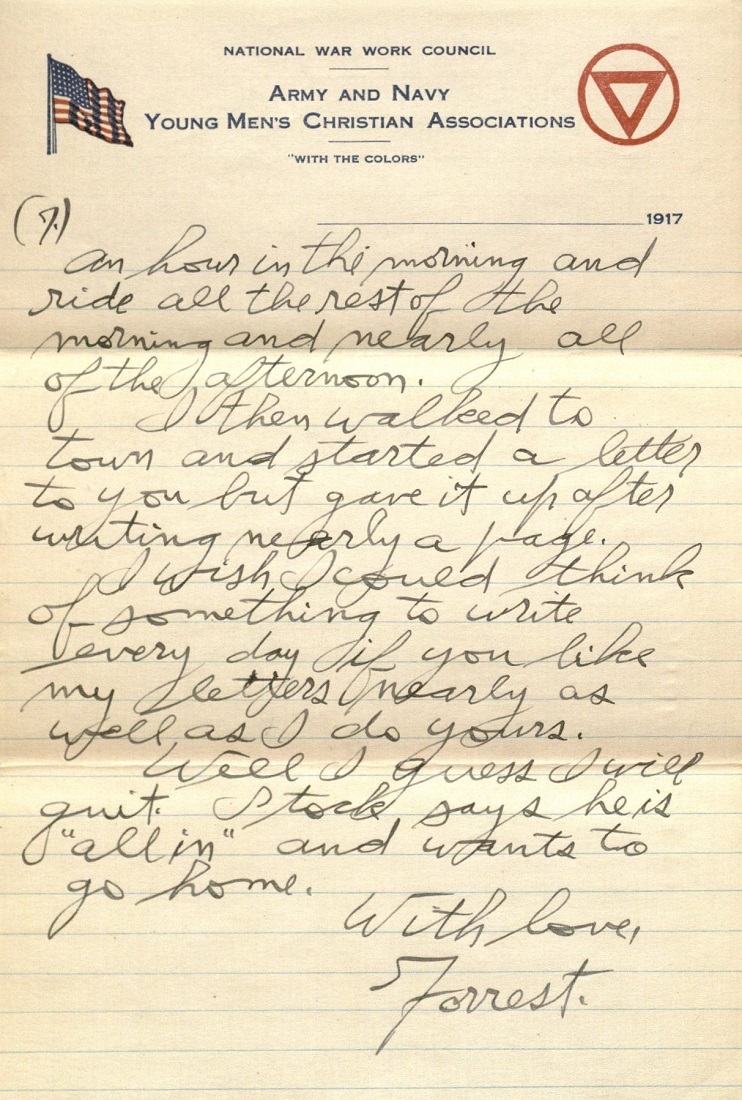
Image of Forrest W. Bassett's letter to Ava Marie Shaw, November 17, 1917 Image of Forrest W. Bassett's letter to Ava Marie Shaw, November 17, 1917

Click images to enlarge.

Sat. Nov. 17, 1917.

Dear Marie,

Well we moved into our new home last Thursday. It is pretty crowded but it won’t be so bad when we get settled down. We are at least a mile and a half from our stables now and that means six or seven miles kicking just for that. Here is a picture of Stock and I with the Wagon set. Some class to yours truly with a dress cap on. Stock borrowed it so I used it, too. The other picture is a case of three jugs of cider for the four of us. We sure had a gay time that Sunday.

This morning the Fort turned out for a parade in L. City. Believe me it was a parade & a half. Well I must quit and send some pictures to Blanche.

Yours,
Forrest.

Meredith Huff
Public Services

Emma Piazza
Public Services Student Assistant

Improving the Physical Environment in Spencer Library: A First Visit from Image Permanence Institute

November 14th, 2017

KU Libraries was recently awarded a planning grant from the National Endowment for the Humanities, under the Sustaining Cultural Heritage Collections program. The purpose of the grant is to work with an environmental consultant, Image Permanence Institute (IPI), to study the heating, ventilation, and air conditioning (HVAC) system in Spencer Research Library in order to better preserve our collections while also hopefully finding ways to save energy.

On October 23-25, 2017, we had our first visit from IPI consultants Christopher Cameron and Kelly Krish. The consultants met with the KU team, which consists of representation from Facilities Services, Campus Operations, Center for Sustainability, KU Libraries, Facilities Planning and Development, and the Department of English.

The first visit allowed the consultants to get a lay of the land: listening to participants’ concerns about the building’s environmental systems and collections issues, touring the spaces, and installing dataloggers to collect more information.

One of the first stops was the Spencer Library mechanical room. Facilities staff led the tour, pointing out how the system works, and, in particular, which parts have been most difficult to maintain.

In the mechanical room, Spencer Library, University of Kansas   In the mechanical room, Spencer Library, University of Kansas

Left: Entering Spencer Research Library’s mechanical room.
Right: Kelly Krish and Christopher Cameron in the supply air area, with filters to the left.

In the mechanical room, Spencer Library, University of Kansas

Facilities staff share energy data with IPI consultant Christopher Cameron.

The consultants also met separately with collections staff, walking the stacks and taking notes on anomalies in temperature and humidity, light, and other environmental issues. They asked many questions and took copious notes. They also used a handy infrared (IR) attachment to a smart phone in order to record hot and cold spots in the stacks. The IR images confirmed the ancedotal evidence that some of the vents aren’t functioning properly.

Consultants in stacks, Spencer Research Library, University of Kansas.

Kelly Krish and Christopher Cameron learn about environmental concerns in the stacks.

Consultant in stacks, Spencer Research Library, University of Kansas.

IPI also used an infrared camera to locate hot and cold spots in the stacks areas.

After discussing problems with collections staff, Christopher, Kelly, and Head of Conservation, Whitney Baker, discussed where additional dataloggers should be placed in order to supplement five years of data from thirteen loggers already in Spencer Library. They added loggers into the air handling unit, vents, and in collections spaces not previously monitored in order to gain a better overall picture in the coming months of the climate in Spencer Library.

Man placing datalogger in vent, Spencer Research Library, University of Kansas.

Christopher Cameron placing a datalogger in the air stream.

Until they visit us again next spring, we will take monthly data readings for twenty-three loggers in the Spencer stacks, vents, and mechanical systems. We look forward to IPI’s return visit, when we examine the data from the first six months and discuss additional testing that may be undertaken at that time.

Whitney Baker, Head
Conservation Services

Any views, findings, conclusions, or recommendations expressed in this blog post do not necessarily represent those of the National Endowment for the Humanities. “Improving the Physical Environment in Spencer Research Library” has been made possible by a grant from the National Endowment for the Humanities: Sustaining Cultural Heritage Collections.


World War I Letters of Forrest W. Bassett: November 6-12, 1917

November 6th, 2017

In honor of the centennial of World War I, we’re going to follow the experiences of one American soldier: nineteen-year-old Forrest W. Bassett, whose letters are held in Spencer’s Kansas Collection. Each Monday we’ll post a new entry, which will feature selected letters from Forrest to thirteen-year-old Ava Marie Shaw from that following week, one hundred years after he wrote them.

Forrest W. Bassett was born in Beloit, Wisconsin, on December 21, 1897 to Daniel F. and Ida V. Bassett. On July 20, 1917 he was sworn into military service at Jefferson Barracks near St. Louis, Missouri. Soon after, he was transferred to Fort Leavenworth, Kansas, for training as a radio operator in Company A of the U. S. Signal Corps’ 6th Field Battalion.

Ava Marie Shaw was born in Chicago, Illinois, on October 12, 1903 to Robert and Esther Shaw. Both of Marie’s parents – and her three older siblings – were born in Wisconsin. By 1910 the family was living in Woodstock, Illinois, northwest of Chicago. By 1917 they were in Beloit.

Frequently mentioned in the letters are Forrest’s older half-sister Blanche Treadway (born 1883), who had married Arthur Poquette in 1904, and Marie’s older sister Ethel (born 1896).

Previous letters have alluded to photographs being exchanged between Forrest and Ava. These photos appear to have not survived with the collection. However, one of the pictures Forrest sent Ava this week has been preserved with the letters, and it’s shown below with his caption.

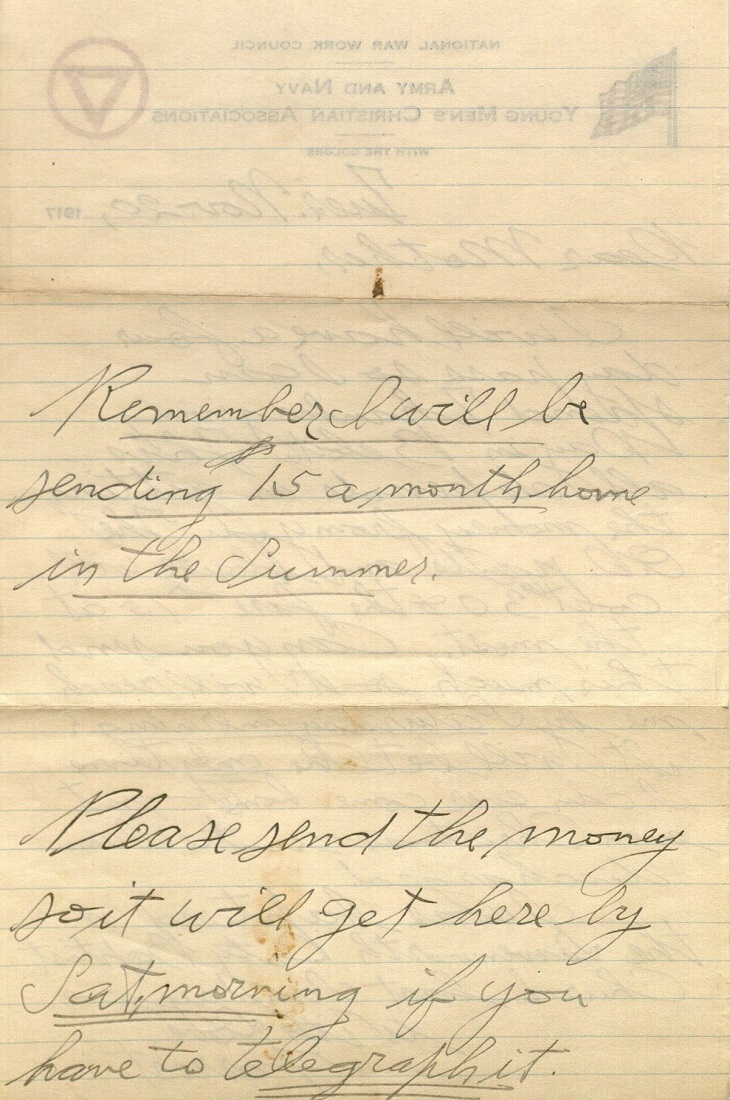
Image of Forrest W. Bassett's letter to Ava Marie Shaw, November 11, 1917 Image of Forrest W. Bassett's letter to Ava Marie Shaw, November 11, 1917

Image of Forrest W. Bassett's letter to Ava Marie Shaw, November 11, 1917

Click images to enlarge.

Sunday, Nov. 11, 1917

Dear Marie,

Was glad to hear that you are getting along so well in school. I am afraid that my report for that grade does not come up to yours.

Let’s forget all about that letter. It really was my fault anyway – I am pretty well acquainted with the feeling that prompted you the write that way. Wouldn’t you feel better if you went out more for good times among your boy and girl friends?

Anyway I do understand perfectly, and like you all the more for your mistake – (for it surely was one).

This is a fine afternoon for riding but I don’t feel quite so “funny” now. Stock and I got a few pictures this morning; if they are good I’ll send them later.

We are going to move into “winter quarters” this week. They are wooden cantonment barracks. The brick barracks will be occupied by reserve officers in training. We worked with picks and spades Thursday and Saturday morning at the “shacks.”

Here are a couple pictures that I took Saturday 3rd.

Yours,
F.

Be sure to have Roy take that picture.

Photograph of men on horses, enclosed with Forrest W. Bassett letter to Ava Marie Shaw, November 11, 1917

Photograph of men on horses, enclosed with Forrest W. Bassett letter to Ava Marie Shaw, November 11, 1917

Click images to enlarge.

Sg’t Westrum leading. Others: Weber, Gorney, Howe, & Meyers.
This is blurred – thanks to Ten, who was pulling on the rein I had slung on my arm.

Meredith Huff
Public Services

Emma Piazza
Public Services Student Assistant
Happy Halloween from Spencer Research Library

October 31st, 2017

Spencer Research Library houses the records and films of the Centron Corporation, a production company that specialized in industrial and educational films from the 1940s through the 1990s. Childhood friends and aspiring filmmakers Russell Mosser and Arthur Wolf started working in films together while they were attending the University of Kansas. Their first film was “Sewing Simple Seams,” a one-reel sewing lesson. The rights for this film were purchased by a large instructional film company, and soon Centron grew to be a successful, independent film production company, nationally known in the field. Their most successful film was “Leo Beuerman,” nominated for the Academy Award for best documentary short of 1969.

For your Halloween preparation and enjoyment, here, compliments of Internet Archive, is Centron’s film “Halloween Safety,” produced in 1977 and now in the public domain. This film was directed by Herk Harvey, who would go on to direct “Carnival of Souls,” another excellent film to watch in preparation of Halloween. Be safe out there, little trick-or-treaters!

Image of "Halloween Safety" Film title sequence.

Kathy Lafferty
Public Services

World War I Letters of Forrest W. Bassett: October 30-November 5, 1917

October 30th, 2017

In honor of the centennial of World War I, we’re going to follow the experiences of one American soldier: nineteen-year-old Forrest W. Bassett, whose letters are held in Spencer’s Kansas Collection. Each Monday we’ll post a new entry, which will feature selected letters from Forrest to thirteen-year-old Ava Marie Shaw from that following week, one hundred years after he wrote them.

Forrest W. Bassett was born in Beloit, Wisconsin, on December 21, 1897 to Daniel F. and Ida V. Bassett. On July 20, 1917 he was sworn into military service at Jefferson Barracks near St. Louis, Missouri. Soon after, he was transferred to Fort Leavenworth, Kansas, for training as a radio operator in Company A of the U. S. Signal Corps’ 6th Field Battalion.

Ava Marie Shaw was born in Chicago, Illinois, on October 12, 1903 to Robert and Esther Shaw. Both of Marie’s parents – and her three older siblings – were born in Wisconsin. By 1910 the family was living in Woodstock, Illinois, northwest of Chicago. By 1917 they were in Beloit.

Frequently mentioned in the letters are Forrest’s older half-sister Blanche Treadway (born 1883), who had married Arthur Poquette in 1904, and Marie’s older sister Ethel (born 1896).

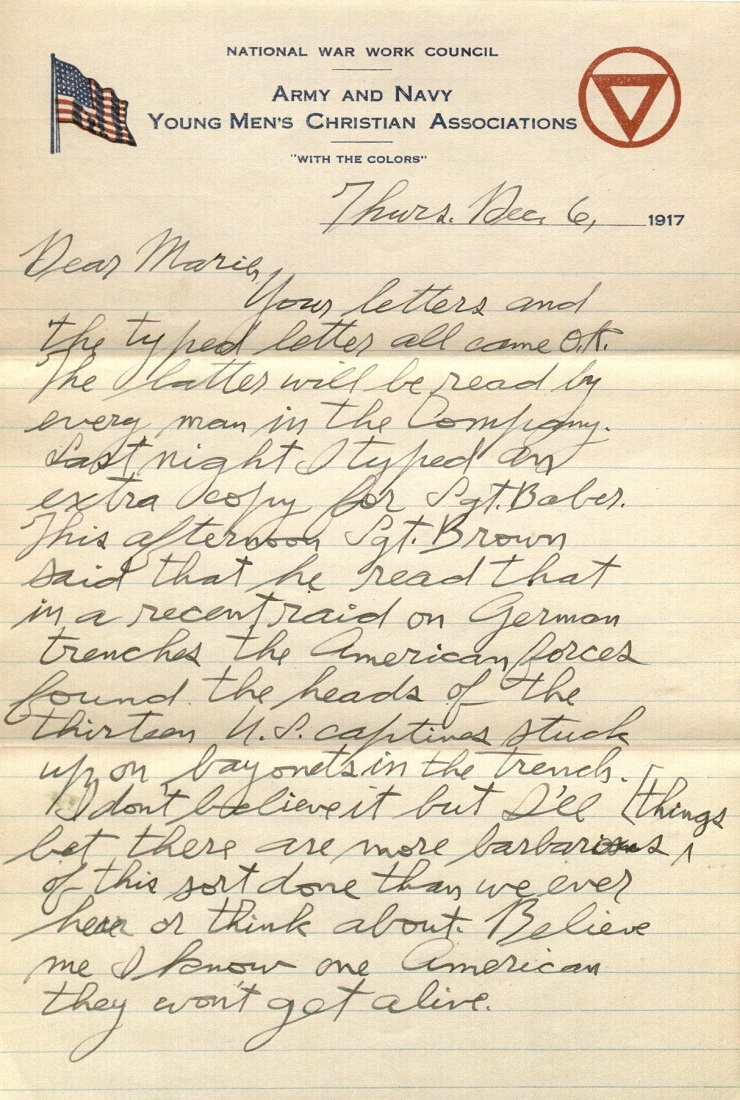
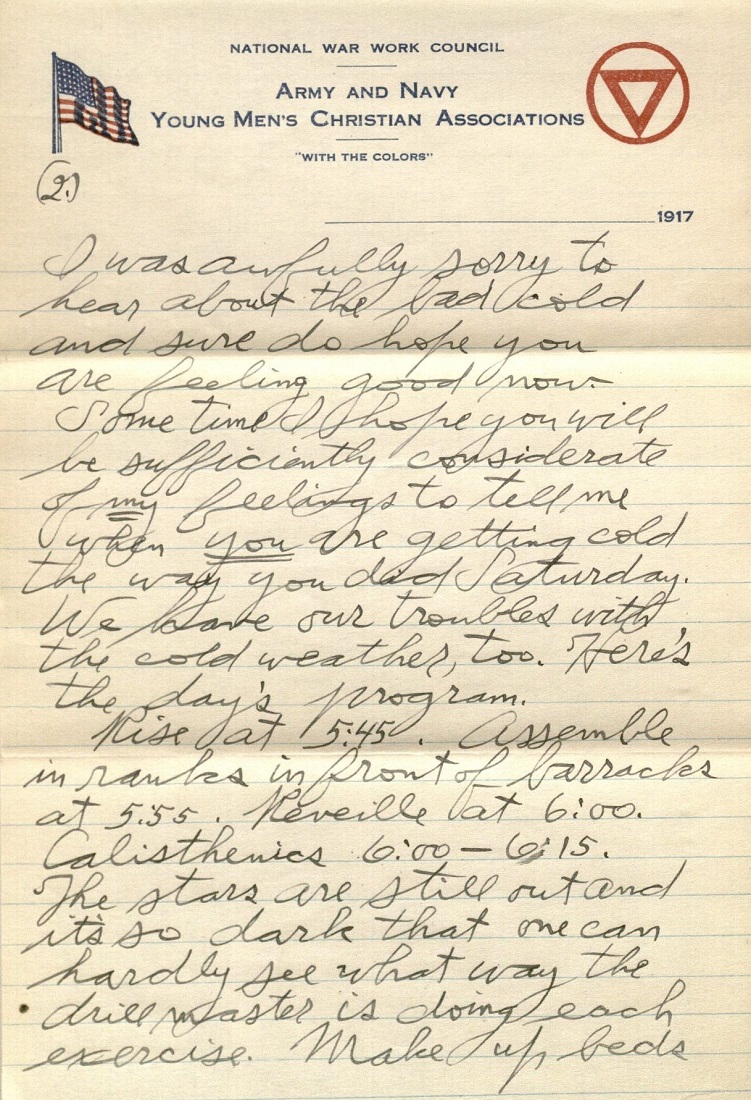
In last week’s letter, Forrest asked Marie “would your Mother let you use my .25 cal. automatic? If you want to shoot, and your folks don’t object, you’re welcome to it.” The answer to the question was apparently “yes,” because in this week’s letters Forrest instructs Marie on how to handle, load, and clean the gun. “I am going into detail so as to be sure you will know how to take good care of it,” he writes, “you know how ‘fussy’ I am about my ‘junk.’”

Friday 11-2, 1917

Dear Marie,

I managed to get hold of a Colt instruction sheet and will try to give you a clear explanation of it. (Seeing as how you are only a girl.)

I am going into detail so as to be sure you will know how to take good care of it – you know how “fussy” I am about my “junk.”

Let’s know what the names of the main parts of the pistol are. On the second page is a diagram showing:

No. 1. The receiver.
2. “ slide
3. “ barrel
21. “ Retractor spring guide.
20. The retractor spring.
7. “ Firing pin.
8. “ Mainspring.
9. “ Mainspring guide.

When the gun is taken apart you will have the loose parts shown on the third page. The firing pin – 7, 8 and 9 – will not always fall out.

The end of the barrel where the cartridge is “seated” when fired is the chamber. The other end is the muzzle end.

The magazine – No 23 – is the little box that holds the six cartridges. It must never be in the gun (empty or not) when the gun is being taken apart or put together.

  1. Remove the magazine.
  2. Pull back slide just as if you were going to shoot. This will throw out a cartridge that may be in the chamber of the barrel.
  3. Remove all cartridges from magazine and replace it in gun. Then pull the trigger – just as if you were shooting. When it snaps, the “hammer” is “uncocked.”
  4. Remove magazine.
  5. Hold the pistol in left hand exactly as if you were going to shoot, as shown on fourth page, except, keep your thumb down in normal position and not on the slide. The instruction sheet says to hold the slide back with the left thumb but your hands are too weak to do it this way. Instead – (of right hand) put thumb and index finger on the muzzle end of the slide so as to push it back instead of pulling at the rear.

Push it back far enough so that the muzzle end of the barrel shows as in picture on p. 4. Now, if you placed your thumb and finger right, you can hold the slide back and at the same time turn the barrel to the right a quarter turn, so that the 3 catches show, (as I have marked.)

Let the slide come forward and the gun will fall apart, exactly as shown on p. 3.

Note position of

No. 21 and 21 in

No. 1 and 2. Also 7, 8, &, 9

in No. 2.

Now remove the barrel from the slide by turning the barrel a quarter turn to the left and drawing it out to the rear.

Put the cleaning rod in the barrel with its ring end at the muzzle. Put a small patch of soft cloth (no lint) in the slot and moisten it well with “Hoppe’s Nitro Powder Solvent – No. 9.” Draw this thru the barrel several times – always from the chamber toward the muzzle.

Now wipe dry and apply 3-1 oil in the same manner, leaving a thin coat in the barrel. The first dope cleans only – 3-1 oil lubricates and prevents rusting. <- PLEASE

Now before you put the gun together be sure there are no bits of lint or threads in barrel or working parts. Read the above instructions Chinese fashion and you will know how to put the pistol together. Put the magazine – empty – in last and take the whole outfit to bed with you.

Always be careful to keep dirt out of the barrel so don’t put gun in a dirty sweater pocket.

Don’t let anyone stand at your right hand where he may get hit in the eye by the empty shell which is thrown out.

If the gun is ice-cold, warm it up before cleaning.

“””A gun is always loaded.””””

Do I get your goat at last?

Forrest.

See other letter.

Image of Forrest W. Bassett's letter to Ava Marie Shaw, November 2, 1917 Image of Forrest W. Bassett's letter to Ava Marie Shaw, November 2, 1917

Image of Forrest W. Bassett's letter to Ava Marie Shaw, November 2, 1917

Click images to enlarge.

Fri. 11-2, 1917

Dear Marie,

Have just finished writing the “gun” letter so will write another short note and enclose the instruction sheet in this.

I sure do wish I could be there with you but no such luck. Here’s hoping you will get lots of fun out of it. It will keep you busy tutoring to pay for its fodder, but it’s great sport – how is it by you? I am glad you like it so well and want you to keep it for me while I am gone just as if it were yours.

You will find the dope in that black tin box. If there are any of my cartridges in sight burn ‘em up. Gee, if I could only be there to keep you. I like this life here, but there is one big thing missing and that’s You.

How are you coming with the dancing? Hope you will get a chance to try the horseback riding. It sure is good sport.

Forget about the chevrons.

Don’t plan on sending me anything. May think of a stunt later. If there is anything I can do speak out.

Yours,
Forrest.

Don’t forget that picture with S.C. emblem

Sorry about your teeth – know what it is.

See other letter

Meredith Huff
Public Services

Emma Piazza
Public Services Student Assistant