The University of Kansas

Inside Spencer: The KSRL Blog

Books on a shelf

Welcome to the Kenneth Spencer Research Library blog! As the special collections and archives library at the University of Kansas, Spencer is home to remarkable and diverse collections of rare and unique items. Explore the blog to learn about the work we do and the materials we collect.

New Finding Aids, January-June 2020

July 21st, 2020

Our listing of new finding aids for the first six months of 2020 might look a little sparse compared to previous lists. As my colleague Lynn Ward wrote about last month, since mid-March processing staff have had limited or no access to our unprocessed collections and so did not have much opportunity during the last few months to process new collections.

As we prepare to reopen Spencer for researchers, starting in a limited fashion, we are also starting to return to processing new collections. In the meantime, our finding aids are available online twenty-four hours a day, seven days a week so you can begin your investigations from home.

Some collections we completed processing before the pandemic include this visually interesting collection of postcards of Lithuanian towns and the countryside:

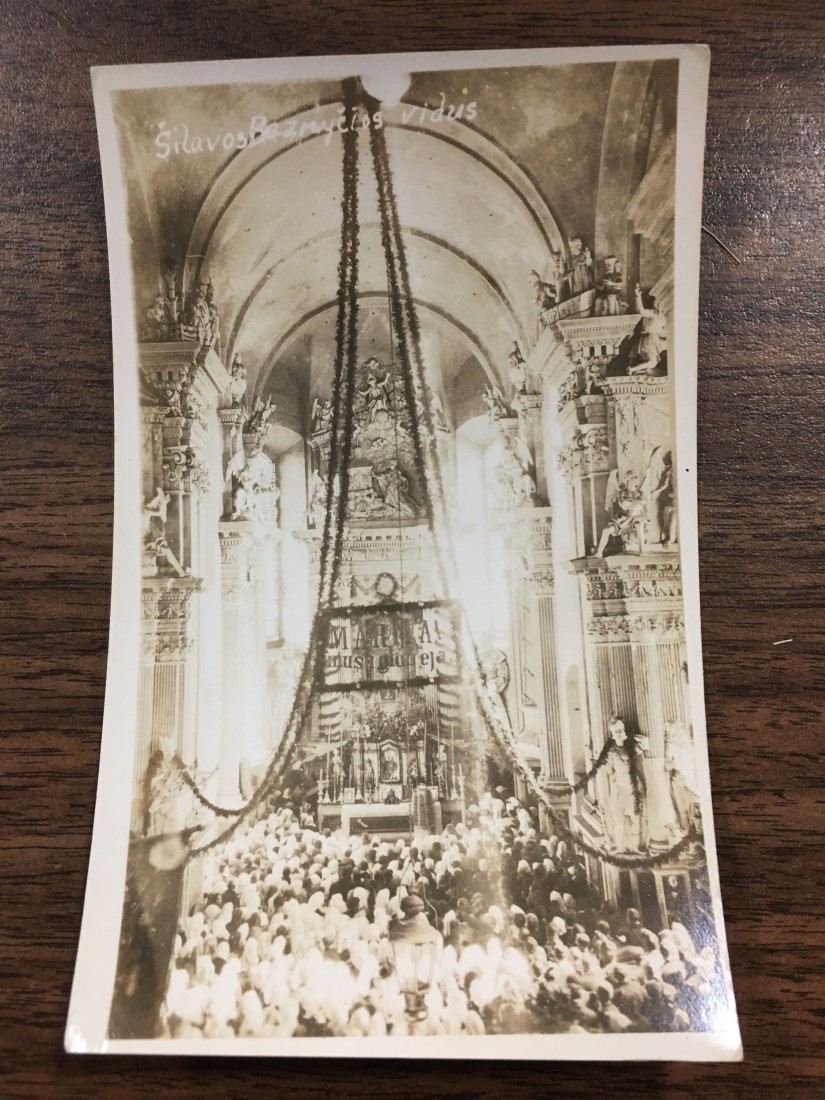
Photograph of the exterior of the Šilava church in Lithuania
Photograph of the interior of the Šilava church in Lithuania
Photographs of the exterior (top) and interior (bottom) of the Šilava church. Charles Luksis Photographic Postcard Collection. Call Number: MS 361, Box 1, Folder 83. Click images to enlarge.

For researchers interested in researching 20th-century right-wing conservative movements, the Willis Carto collection may have some interest:
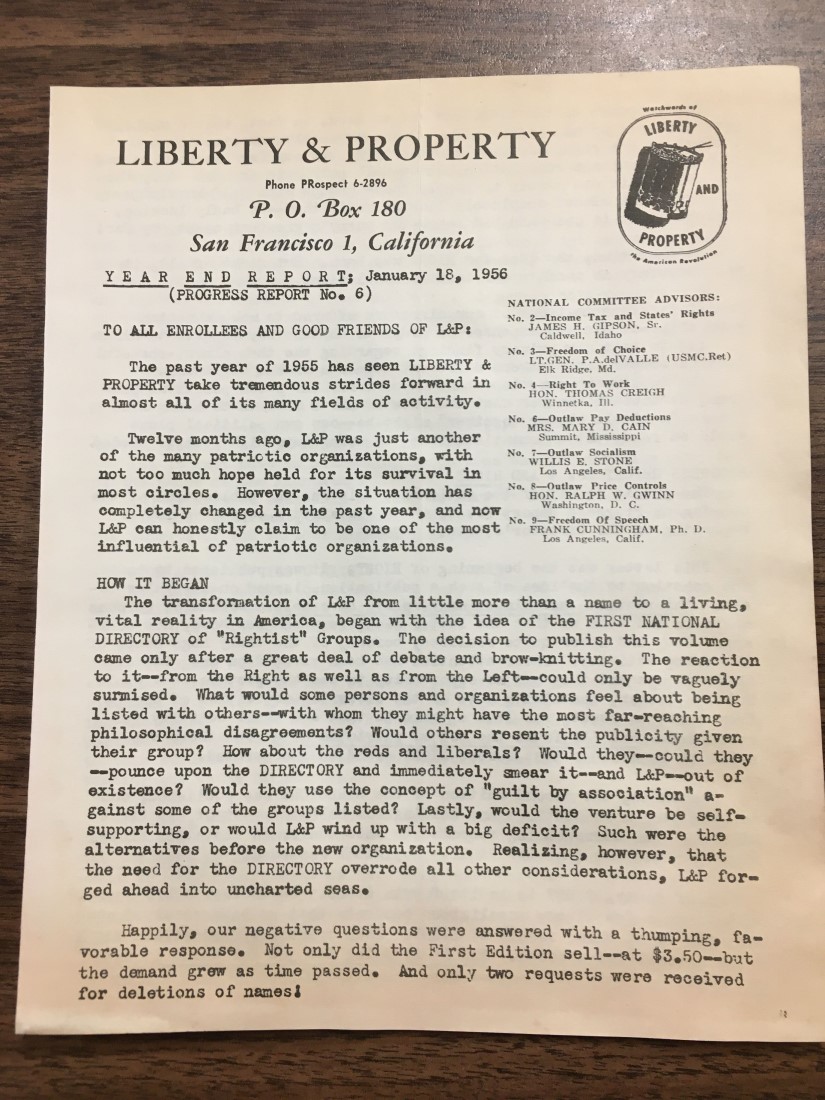
Photograph of the front page of a year-end report from the Liberty & Property organization, 1955
Front page of a year-end report from the Liberty & Property organization, 1955. Papers of Willis Carto. Call Number: RH WL MS 51, Box 1, Folder 24. Click image to enlarge.

Oscar Stark collected several late 19th- and early 20th-century photographic prints of African Americans, many of whom were photographed in Kansas and Missouri:
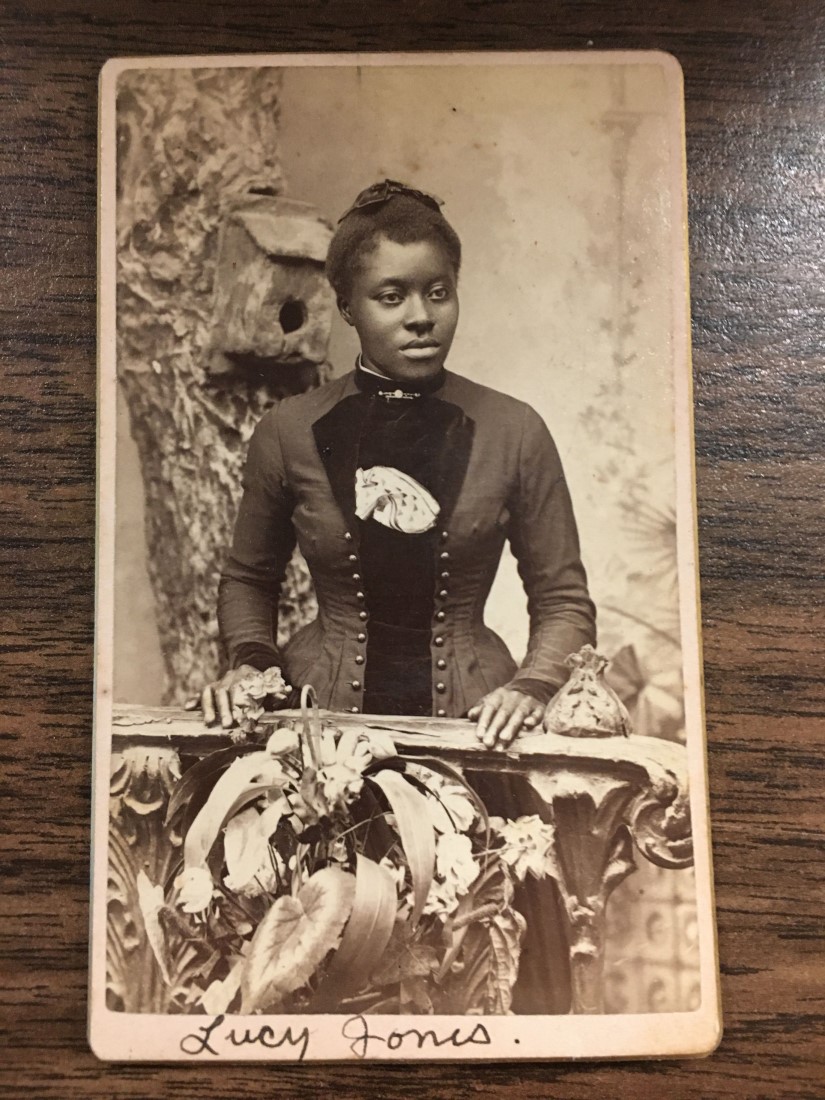
Carte de visite of Lucy Jones, dated 1887. Photographed by F.G. [Suden?] of Jefferson City, Missouri. Oscar Stark Collection of Photographs of African Americans. Call Number: RH PH 549, Box 1, Folder 1. Click image to enlarge.

Burton Marvin served as dean of the William Allen White School of Journalism at the University of Kansas from 1948 to 1965, and his papers at Spencer include a variety of materials related to his work with KU and to his personal life in the Lawrence community:
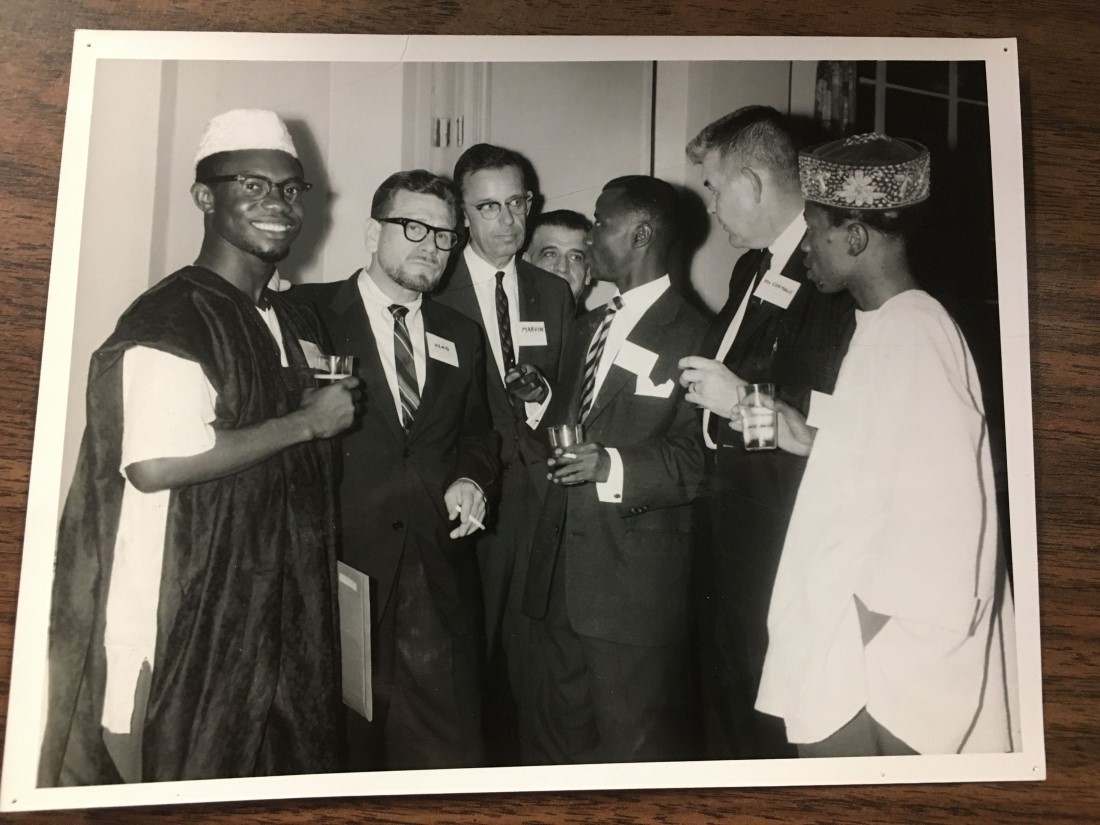
Photograph of Burton Marvin in Sierra Leone, 1963
Burton Marvin took part in an educational program that traveled to several African nations in 1963. In this picture taken in Sierra Leone, Marvin is third from the left. Personal Papers of Burton W. Marvin. Call Number: PP 620, Box 3, Folder 17. Click image to enlarge.

Please read further to see what other new and legacy collections we finished creating online finding aids for before March 2020!

Douglas County records, 1855-1989 (RH MS 261, RH MS 451, RH MF 196, DCR, 1990-1995 accessions, 1997-1998 accessions, 2000-2001 accessions)

Oscar Stark collection of photographs of African Americans, approximately 1870s-1920s (RH PH 549)

Charles Luksis photographic postcard collection, 1921-1935 (MS 361)

Barbara Ballard papers, 1982-2009 (RH MS 1507, RH MS-P 1507, RH MS R464)

Eliot S. Berkley collection, 1994-2007 (SC AV 27, MS P749)

Letter from Annie Besant to “Dear Sir,” September 24, 1885 (MS P751)

“Historia Flagellantium de recto et perverso flagrorum usu apud Christianos” manuscript, December 1691 (MS E279)

George F. Jenks map research projects collection, 1933, 1947, 1951-1980s (bulk 1950s-1970s) (MS 347, MS Q78, MS Qa25, MS R21, MS S9)

Letter from Frances Parkinson Keyes to Alice H. Dains, June 29, 1938 (MS P750)

Donald Moffitt papers, 1946-2015 (MS 360, MS Q90, MS Qa32, MS R25)

Letter from Erich Maria Remarque, November 26, 1937 (MS P745)

John Edgar Tidwell collection on Frank Marshall Davis, 1924-2015 (MS 353, SC AV 22, MS Q83, MS Qa28)

Personal papers of Burton Marvin, 1935-2002 (PP 620)

David Ewing papers, 1972-1988 (RH WL MS 57)

Left Curve collection, 1976-1990 (RH WL MS 58)

Kurt Thurmaier poster collection, 1975-1984 (RH WL MS R11, RH WL MS R12, RH WL MS S2)

Papers of Willis A. Carto, 1945-2013 (RH WL MS 51, RH WL MS Q51)

Peter Argersinger papers, 1965-2018 (RH MS 1502)

James and Fern Nelson-Coffin collection, 1942-1945 (RH MS 1501)

McGinnis/Perstein family papers, 1649-2009 (bulk 1860s-1970s) (RH MS 1498, RH MS Q463)

Ruben Menendez papers, majority of material found within 1884-1938 (RH MS Q468)

Anna Jane Michener, 1892-1982 (RH MS 1508, RH MS E211)

Simons family papers, approximately 1791-1960 (bulk 1920s-1952) (RH MS 1503, RH MS R458, RH MS R459)

Marcella Huggard
Archives and Manuscripts Processing Coordinator
Working from Home Without Manuscripts or Rare Books

June 24th, 2020

During Covid-19 isolation, our team in the cataloging and processing department at Kenneth Spencer Research Library has been busy working from home. Instead of working hands-on with the rare books and manuscripts, like we normally do, we have been working on our databases and other online sources to ensure that our all of our material is easily searchable and discoverable for researchers and scholars, not only here in Kansas, but worldwide. This work is important to the mission of the library.

Five professionals from the cataloging and processing department share their working-from-home experience.

Marcella Huggard, Manuscripts Coordinator

What are you working on?

I am continuing to coordinate my team’s projects of data cleanup or data creation for legacy collections that never had online finding aids; I’m also coordinating other folks’ work on legacy data projects. One of my own cleanup projects—consolidating finding aids that had been separated when they were first put online, due to descriptive decisions made at the time that no longer hold true—is something I’ve been wanting to focus on for a couple years now. I have also been working on a research project to document the history of the Menninger Foundation’s archives.

Why is this work important to the library?

The projects that I’m coordinating and working on myself continue to enhance access to our manuscript collections, so that when researchers request materials they’ll have a better sense of what we have available, and they’ll be able to find that information that much more easily in an era where expectations are that information will be discoverable online.

What will you miss from home when we go back to work in the Spencer building?

Sleeping in an extra hour! I will also miss the scheduling flexibility.

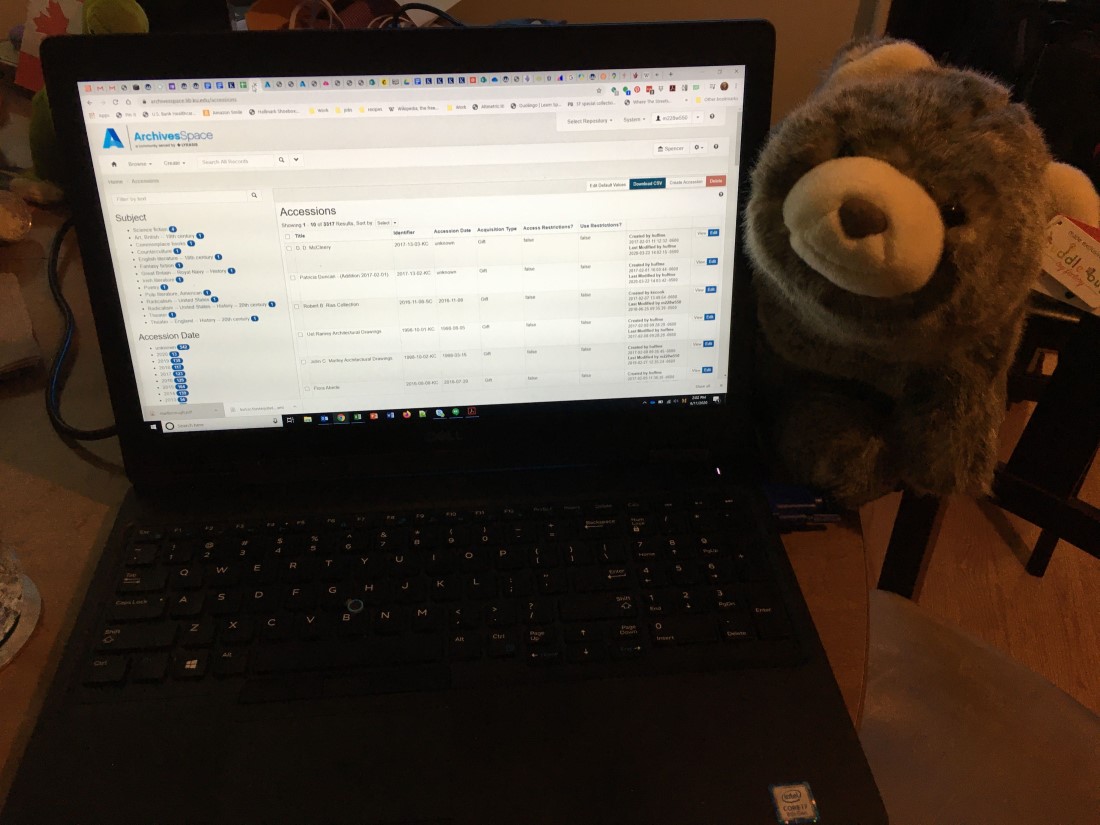
Photograph of Marcella and Salty Bear
Marcella’s new co-worker, Salty (short for Salted Caramel) Bear. “My spouse, a teddy bear himself, likes to buy me teddy bears; he got me this one soon after I started working from home.” Click image to enlarge.

Mike Readinger, Special Collections and Manuscript Cataloger

What are you working on?

I am working on ArchivesSpace database clean-up and creating bibliographic records for the legacy finding aids. In the early 2000s, we switched from using card files. Thousands of records in Voyager (the old, though still in use, KU Libraries online catalog) were created using these bibliographic cards. Those records were brief, so now I am using this time to create more complete records.

Why is this work important to the library?

These completed records will be put on OCLC WorldCat. The work done in cataloging and processing is the first step in letting the whole world know what we have. We make the information known, then our great reference staff can serve the scholars and researchers.

What will you miss from home when we go back to work in the Spencer building?

Right now, I have my home office set up in our basement. I can run upstairs to get dinner started, then come back down and keep working. I like the ease of doing those kinds of things.

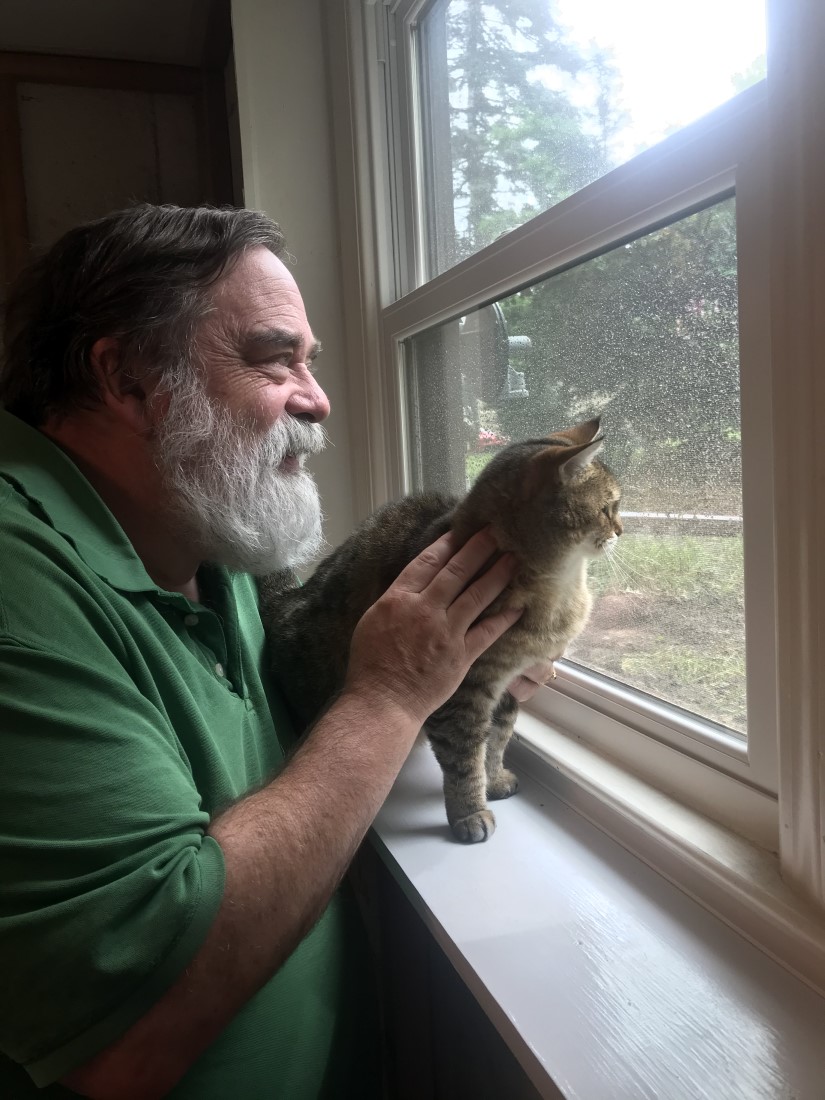
Photograph of Mike and his supervisor
Mike and his supervisor look out the window in Mike’s home office. Click image to enlarge.

Jennifer Johnson, Manager of the Non-Manuscript and Inventory Unit

What are you working on?

I am editing and creating personal name authorities and name/subject headings for the library catalog. Plus, I have been removing duplicate records from the catalog.

Why is this important to the library?

Authority control is important because it creates organization and structure of information resources, making the materials more accessible, allowing better researching for the users.

What will you miss from home when we go back to work in the Spencer building?

I love working from home! I really enjoy being able to go grab something to eat or drink. I work by a window that I can open. I’ll also miss being able to switch tasks, for example, I can do the dishes at lunchtime. And I love getting to see my son more often!

Photograph of Jennifer and her dog

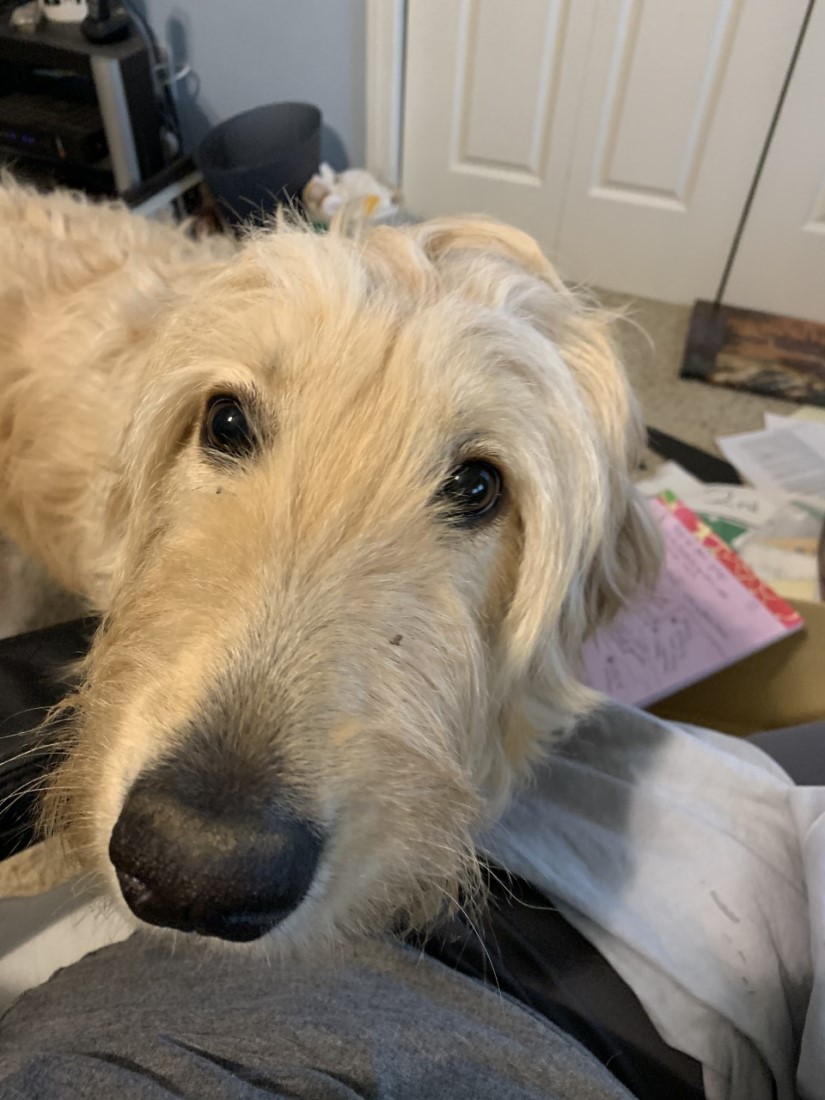
Jennifer’s loyal co-worker. Click image to enlarge.

Mary Ann Baker, Special Collections and Manuscript Processor

What are you working on?

I have been working on the Access database listing of The Miscellany part of the English Historical Documents Collection. Almost all the manuscripts in this collection were acquired in the late 1960s. Over all the decades that these collections have been worked on, data transference from one program to another has resulted in some data corruption. For example, the pound symbol (£) turned into an umlauted u (ü). So, I have been cleaning up the errors and expanding abbreviations to prepare the database for publication as part of the finding aid for the Miscellany Collection. 

Why is this important to the library?

Working on this collection contributes to making Spencer Library’s holdings known globally and accessible to all, one of the goals of the KU Libraries.

What will you miss from home when we go back to work in the Spencer building?  

Naps at their will. I will not miss Zoom meetings.


Lynn Ward, Manuscripts Processing

What are you working on?

I have been working on projects to clean-up and refine the information in our archives database, ArchivesSpace. I added “containers” to hundreds of the earlier resources that lacked box or volume information. I also have been adding collection inventory information directly to the ArchivesSpace resource; this information had previously only been available via a link to a separate scanned PDF document.

Why is this important to the library?

Adding “containers” makes it possible for researchers to request the material, which helps our reference staff to connect researchers with what they need. Adding the inventory information from the PDF to the resource makes the information more discoverable for researchers and scholars when they search online.

What will you miss from home when we go back to work in the Spencer building?

I have really been enjoying the extra time with my family, so I will miss that when I go back to working in the building.

Photograph of Lynn and her dog

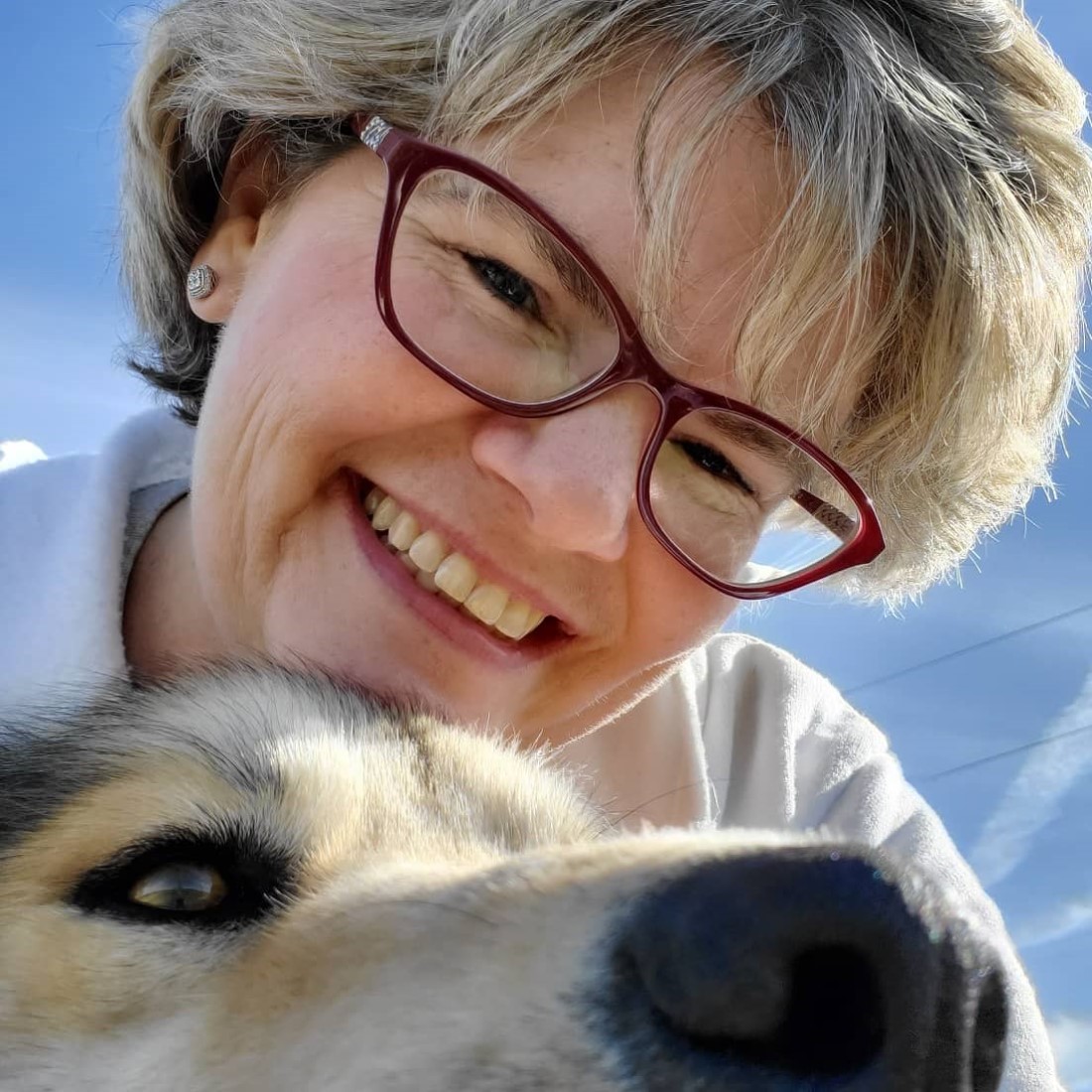
Lynn’s co-worker requires daily walks. Click image to enlarge.

The work described above is important to the library’s mission.

All of the faculty and staff working at the Spencer Research Library share one mission: to connect scholars in varied disciplines with the information that is critical to their research, while providing excellent services in a welcoming and comfortable environment.

The work in the cataloging and processing department is an important step to that mission. Even while we are enjoying different aspects about working from home during Covid-19, we are continuing to work hard to make sure scholars and researchers can search, find, and connect with the information contained in Spencer Research Library’s collections.

Lynn Ward
Processing Archivist

New Finding Aid Interface, Coming to a Device Near You!

March 13th, 2020

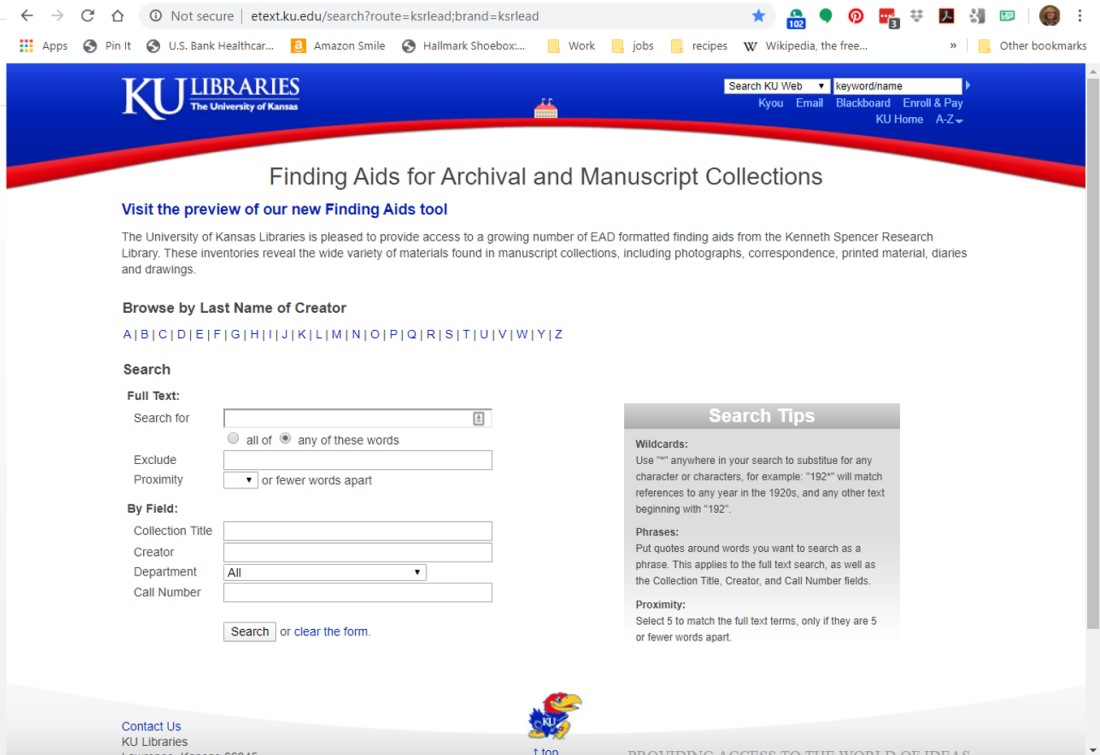
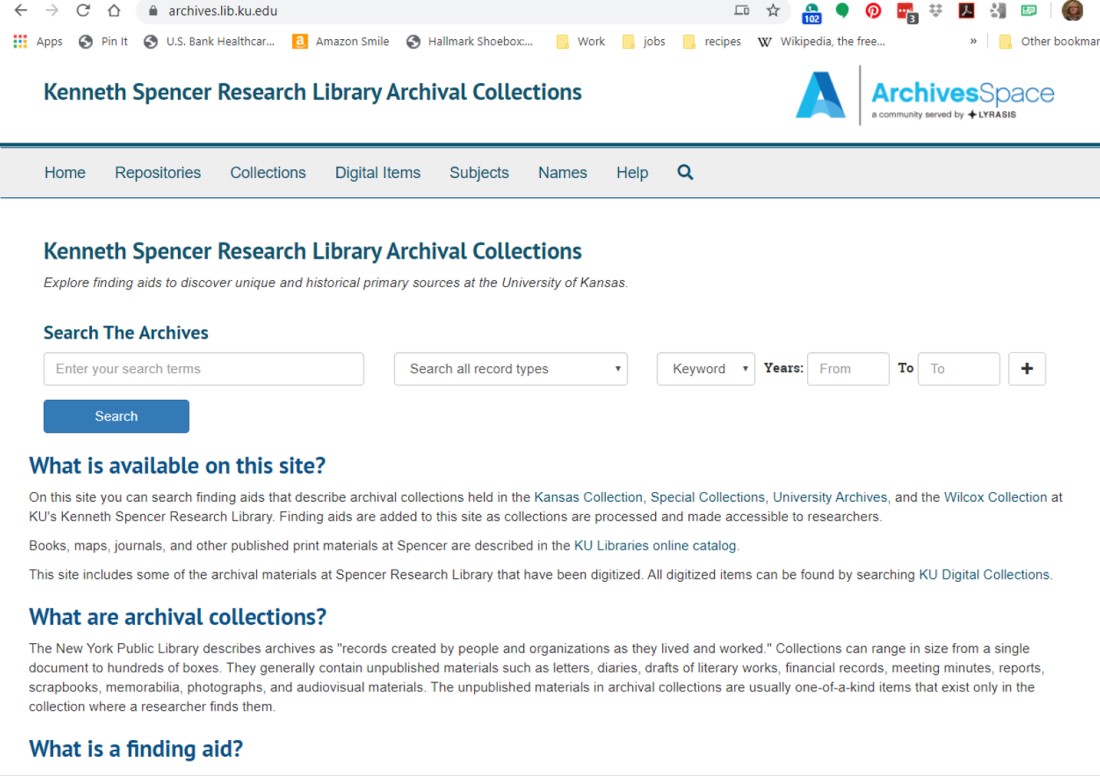
If you’ve done any research at Spencer Research Library in the past several years in our manuscript collections or records from the University Archives, then you’ve probably used our finding aids interface. This search screen might appear familiar:

Screenshot of Kenneth Spencer Research Library’s current finding aid interface
Kenneth Spencer Research Library’s current finding aid interface. Click image to enlarge.

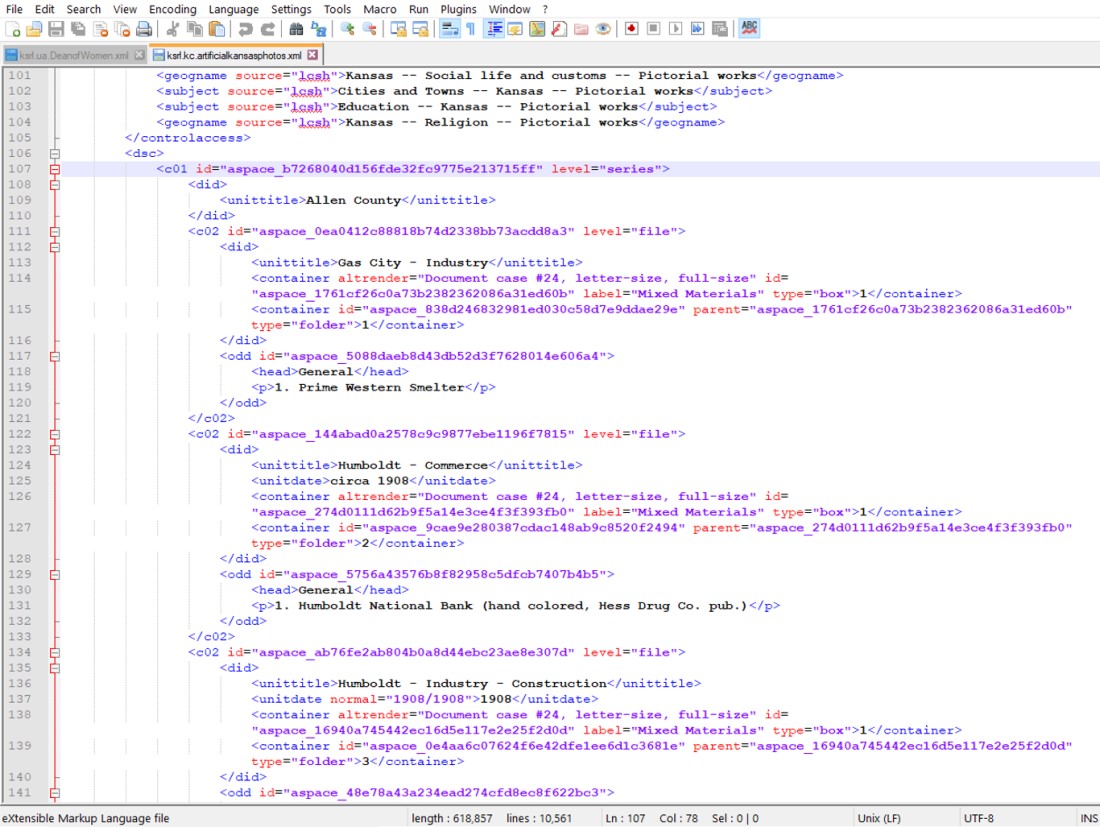
This interface is formed from encoded text documents created by manuscripts processing staff. This coding might also look familiar if you’ve ever worked with HTML:

Screenshot of the hard-coded version of a finding aid in Spencer Research Library’s current finding aid interface
The hard-coded version of a finding aid in Spencer Research Library’s current finding aid interface. Click image to enlarge.

This interface is operating on outdated technology that isn’t being updated. We also find the interface a little dated and a little static; you might find your wrist cramping from having to scroll through a really long finding aid to get to the box and folder you’re looking for. For these and many other reasons, KU Libraries are in the process of moving from our old interface to a new one:

Screenshot of the homepage for the system to which Spencer Research Library is moving
Ta-dah! This is the homepage for the system to which Spencer Research Library is moving. Click image to enlarge.

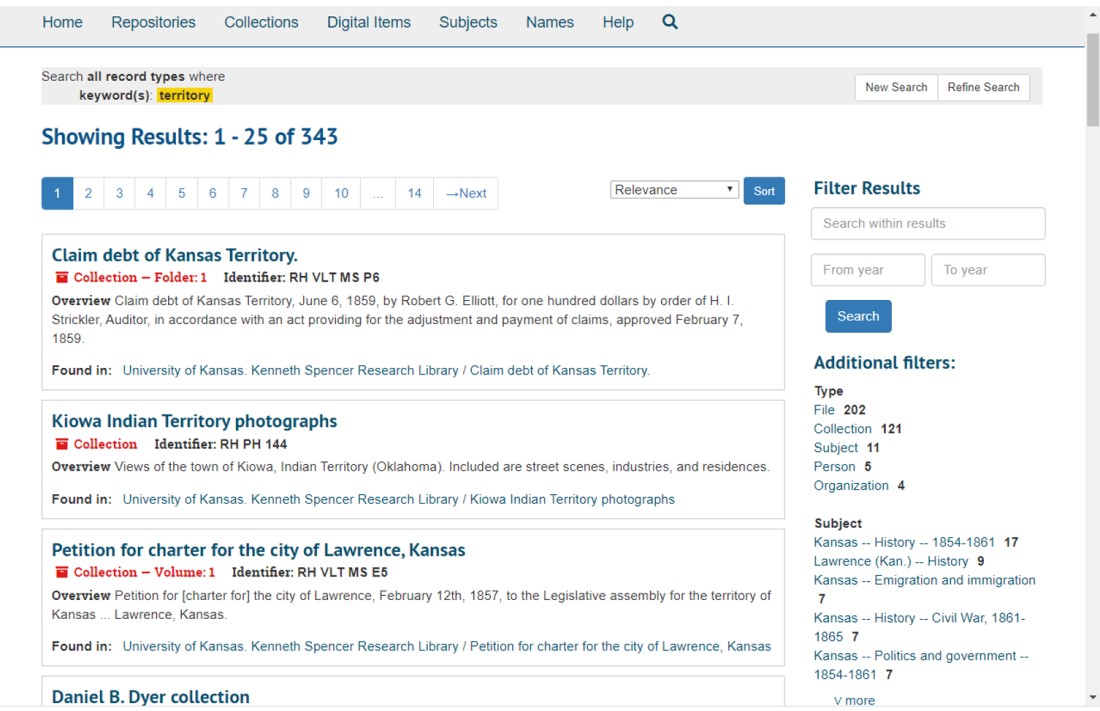
The data is the same, but the views are very different! This new interface has more refined searching capability (including by dates!), the ability to filter search results – including by subject headings and names of individuals or entities that might be involved in the collection you’re looking for – and different views once you’ve started looking through a specific finding aid for a specific collection.

Screenshot of the search results page in Spencer Research Library's new finding aid interface
The search results page in Spencer Research Library’s new finding aid interface. Notice how users have filtering options down the right-hand side to narrow search results! Click image to enlarge.
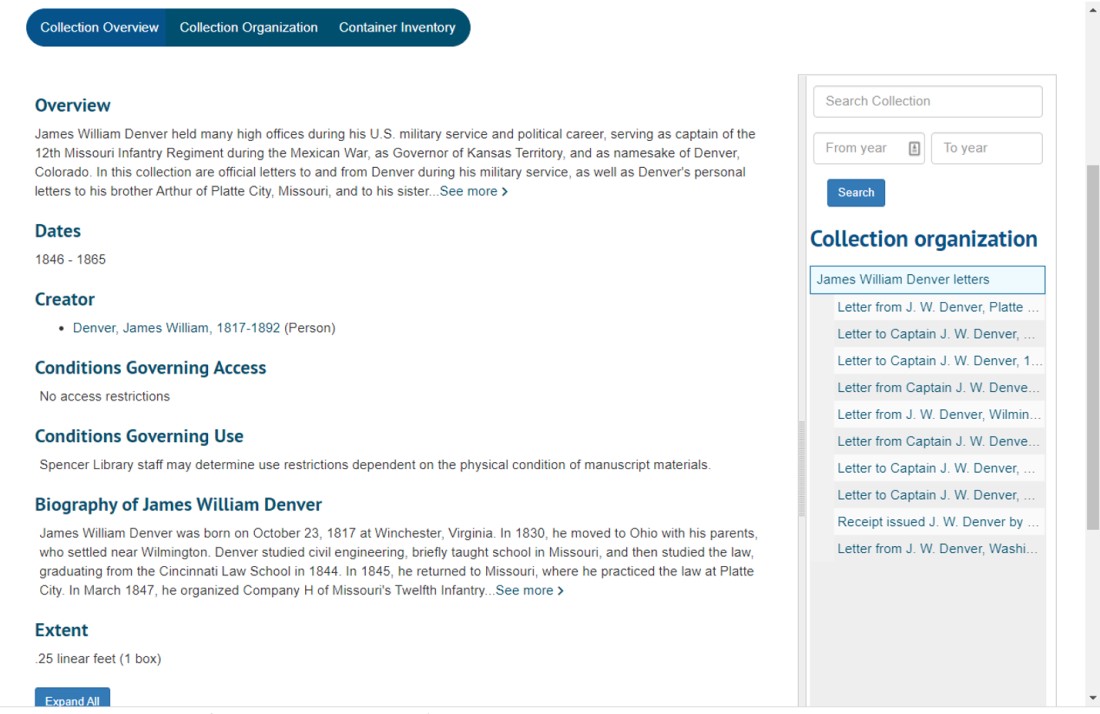
Screenshot of three ways to access information about a collection in Spencer Research Library's new interface
The three buttons at the top of this screenshot – Collection Overview, Collection Organization, and Container Inventory – give you three different ways to access information about an individual collection. You also have a sidebar, still on the right-hand side, which allows you to click on individual pieces of a collection, as well as search keywords and dates within that collection. Click image to enlarge.

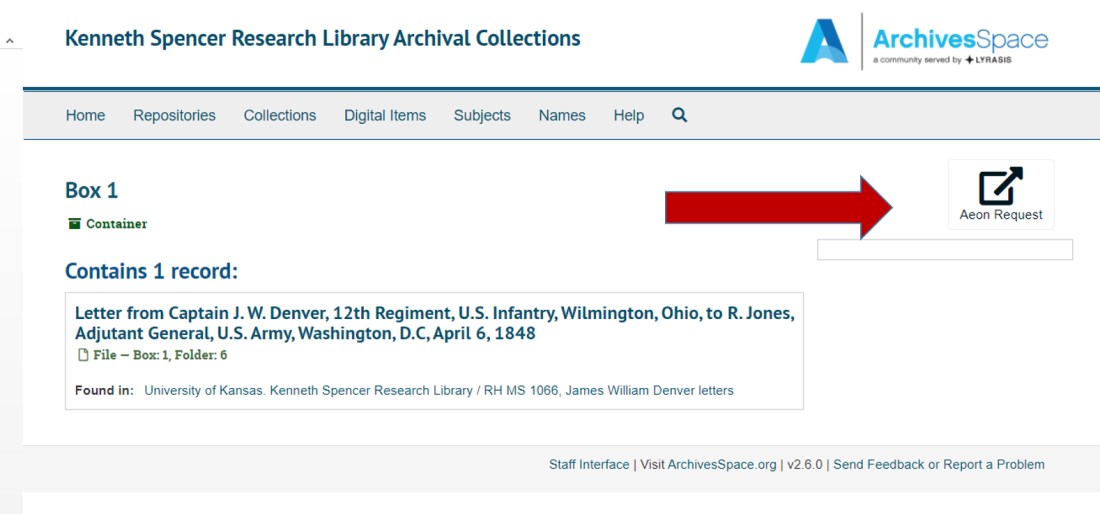
Another exciting aspect of the new interface is the capability to request collection items directly from this interface and send it to Aeon, the system patrons use to check items out at Spencer. Currently, users have to open a new browser tab or window, log in to Aeon, open a New Reading Room Request form, and type (or copy and paste) the information about the archival collection they want to see.

Screenshot of the Aeon request button in Spencer Research Library's new finding aid interface
Just click on “Aeon Request” to log in to your Aeon account and create a request for the box or manuscript volume you want to view in the Reading Room! Click image to enlarge.

You can also see some of our digital objects in context within our finding aids, or browse and search them separately through this interface:

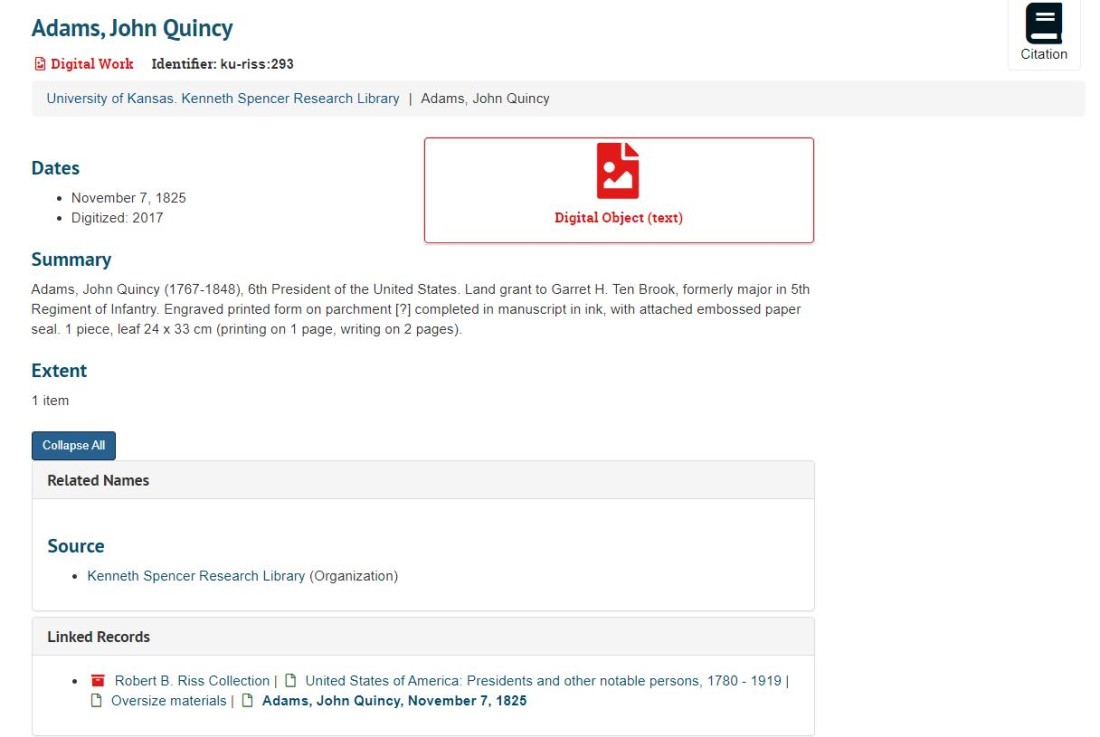
Screenshot of the digital object icon in Spencer Research Library's new finding aid interface
You can see that this is a digital object, as well as that it’s a digital surrogate for the original paper item located in the Robert B. Riss collection. Click image to enlarge.

Please note that what is included here are only digitized manuscripts from our collections, a subset of what is available at KU’s Digital Collections website.

This new system is available for you to use right now! You can get to it from this link: https://archives.lib.ku.edu/ or, if you’re on the old interface, you’ll see a link to “Visit the preview of our new Finding Aids tool” at the top of the home search screen.

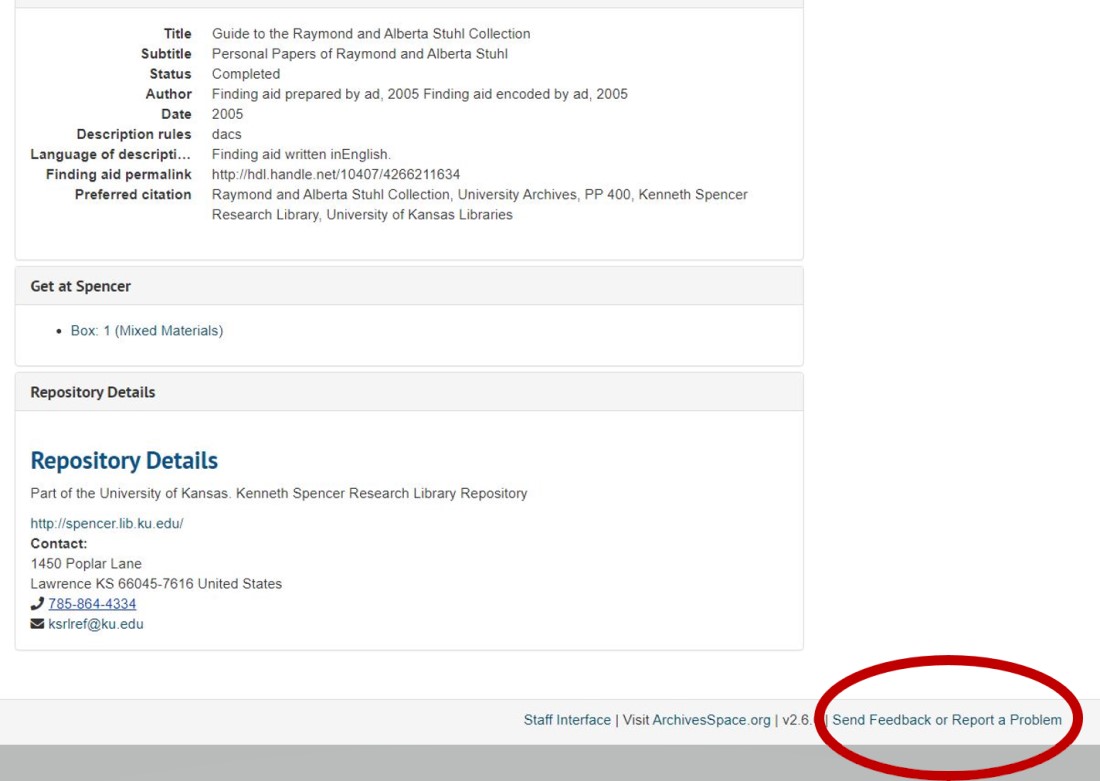
We need your help, in fact. We want people to start testing the system so we know what is working well, what doesn’t function the way it should, if you’re having issues with a particular component of the interface, or if something just doesn’t work the way you expect it to. Here are some questions you can think about to get you started: Are you not getting the search results you expected? Does the collection inventory look incomplete or like some information is missing? Does something just look weird? Let us know! At the bottom of every screen, in the right-hand corner, there is a link to “Send Feedback or Report a Problem.” Click on that and fill out the simple form that opens up with as much information as you can provide. We want to test the new interface as much as possible in the next few months before we transition to it fully and shut down the old finding aids interface.

Screenshot of the "send feedback" button in Spencer Research Library's new finding aid interface
This link is at the bottom of every screen in the new interface. Please let us know if you have any problems using the new system! Click image to enlarge.

Happy searching!

Marcella Huggard
Archives and Manuscripts Processing Coordinator
Working as a Team to Make Collections Accessible

February 11th, 2020

Lynn Ward, Processing Archivist:

When new collections, or additions to existing collections, are accessioned into the Spencer Research Library, I arrange and describe the material so that researchers can access them.  More often than not, when I begin to look through the unprocessed boxes, I find some interesting surprises.

The Frowe and Lathrop families collection recently received a donation of many additional boxes of correspondence, photographs, diaries, slides, documents, and other material. This collection comprises several generations of the Frowe and Lathrop families from the 1840s to 2016, many of whom lived primarily in Kansas.

Addition to Frowe and Lathrop Families Records prior to processing.
The collection addition was received in multiple boxes. A photograph of Eva Lathrop can be seen on top of one of the boxes. Frowe and Lathrop Families Records. Kansas Collection. RH MS 1510. Click image to enlarge.

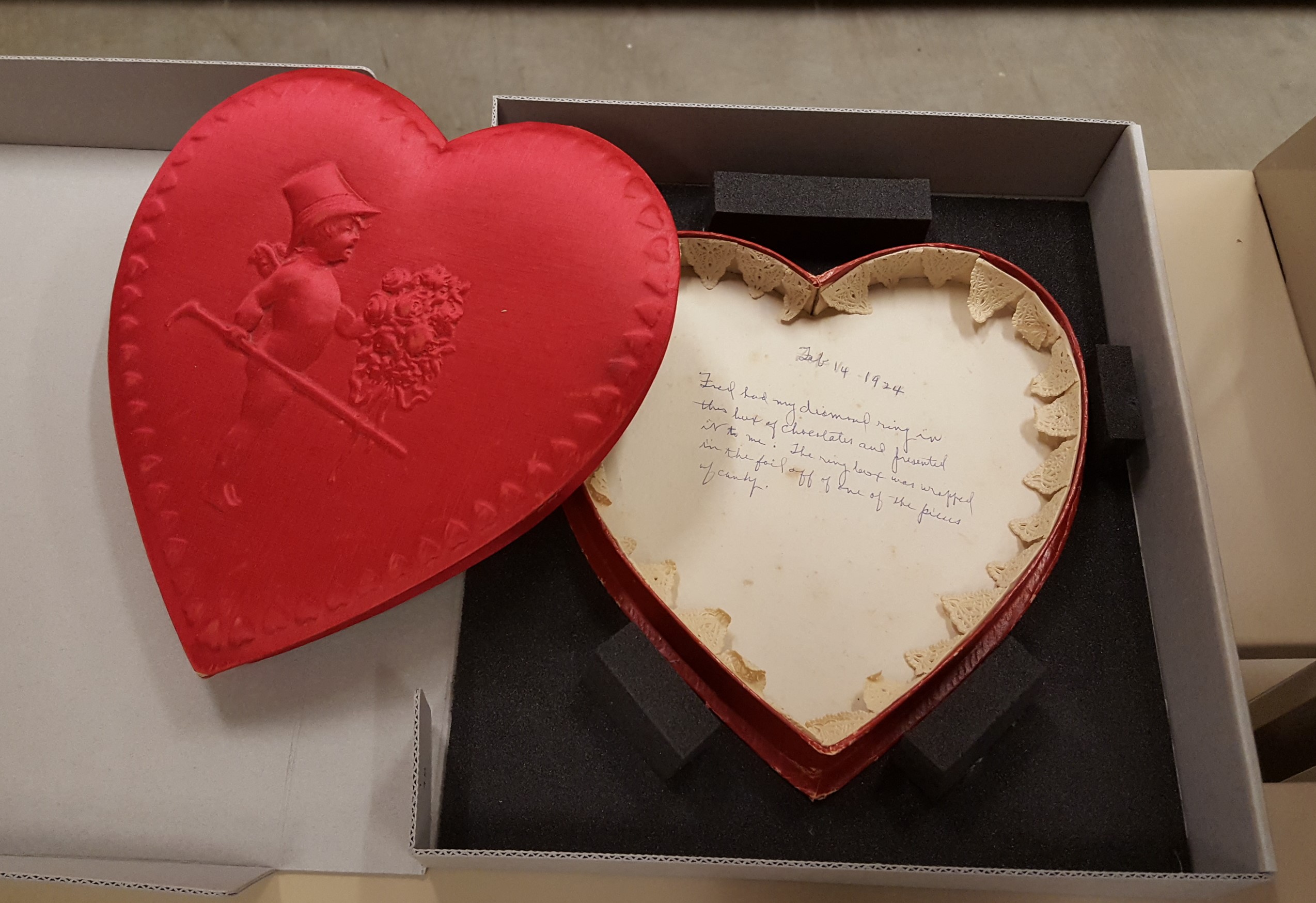
One of the interesting items that I found while going through the unprocessed boxes was a red satin Valentine box. When I opened the candy box, underneath cherished cards and invitations, I found an inscription on the bottom written by Eva Lathrop, “Feb[ruary] 14, 1924/ Fred had my diamond ring in this box of chocolates and presented it to me. The ring box was wrapped in the foil off of one of the pieces of candy.” She accepted A. G. (Fred) Phillips’ proposal, and they were married several months later. Spencer Research Library doesn’t always keep objects unless they have a good story to tell, which this candy box does. Kaitlin McGrath, a student in the conservation department working with Collections Conservator Roberta Woodrick, created a special box to house the Valentine box. 

Valentine candy box with inscription.
The Phillips’ valentine candy box with a ‘sweet’ story! Frowe and Lathrop Families Records. Kansas Collection. RH MS 1510, box 14. Click image to enlarge.

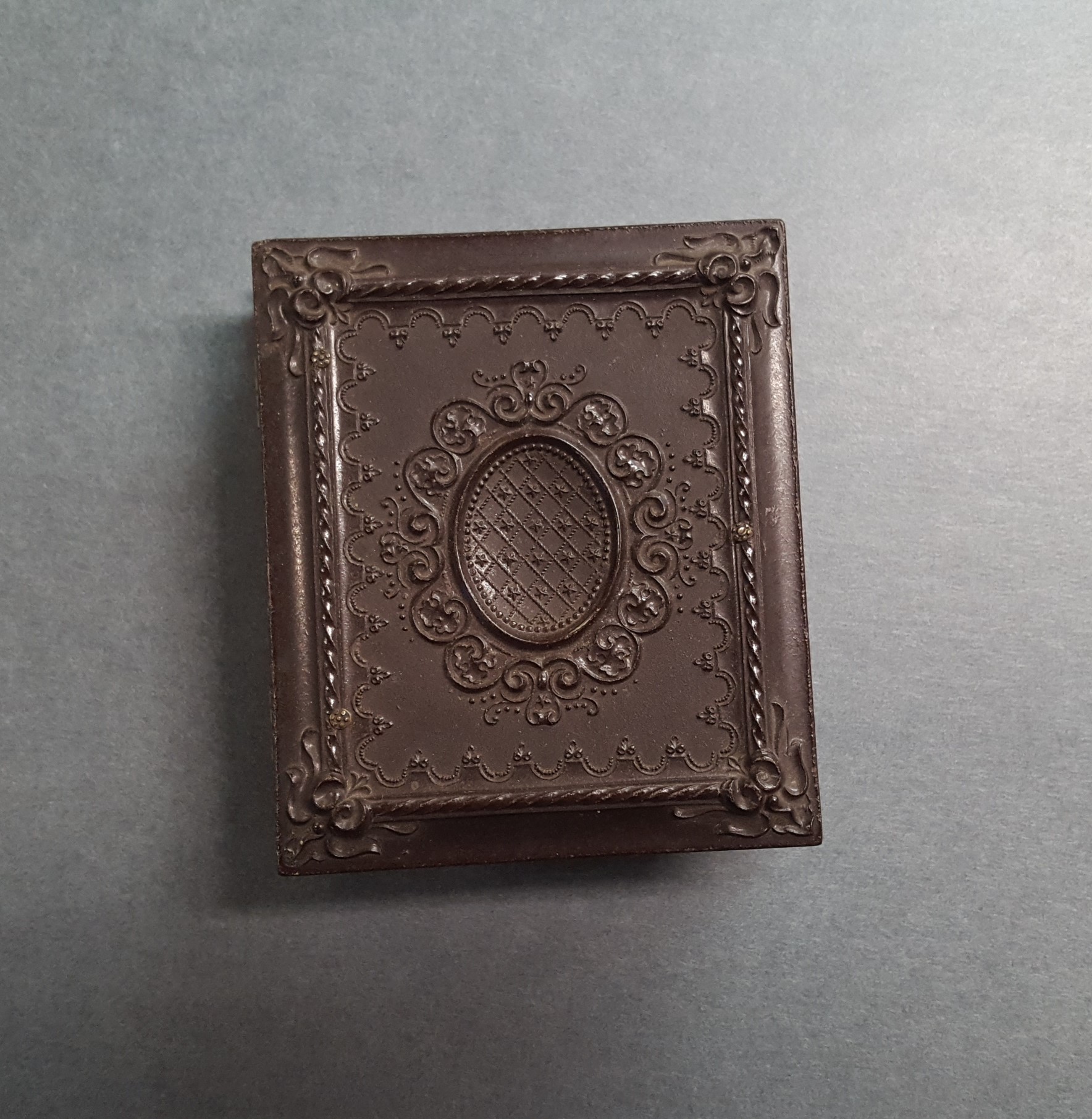
One of the most interesting sets of finds in this collection were very early family photographs inside hinged cases, dated from the 1850s-1870s.  There are over 20 daguerreotypes, tintypes, and ambrotypes of identified or partially identified men, women, and children related to the Frowe and Lathrop families. Some of the small, ornately-decorated cases appear to be made out of gutta purcha or vulcanite—common plant-based materials used in this time period. Normally, print photographs are put into acid-free folders and a document case. However, these fragile, bulky photographs in their cases needed special consideration for housing and accessibility.  

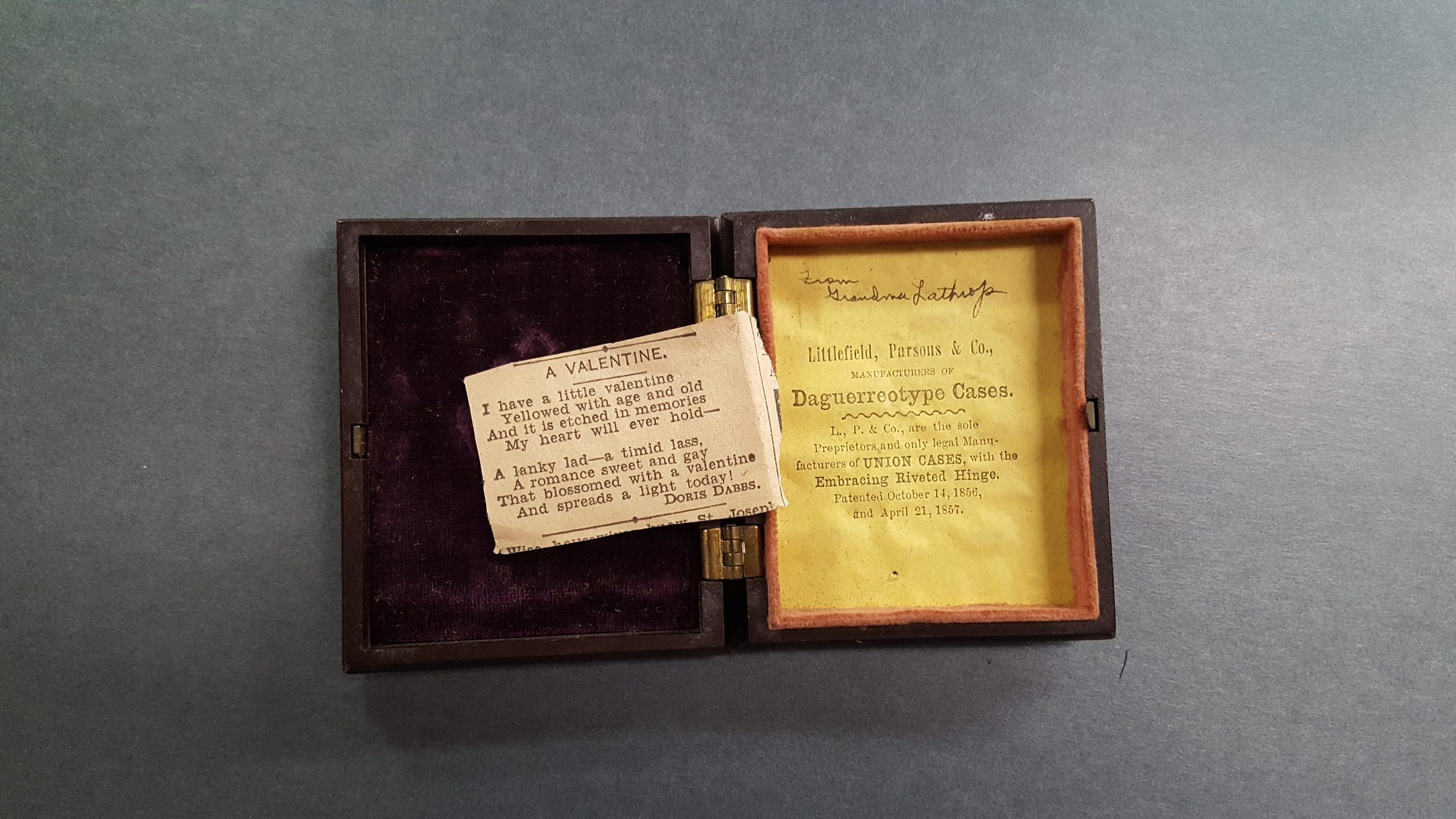
Valentine poem in a photograph case.
The interior of a photograph case containing a Valentine poem clipped from a newspaper. Frowe and Lathrop Families Records. Kansas Collection. RH MS-P 1510(f), box 1. Click image to enlarge.
Exterior of a photograph case containing a Valentine poem.
Exterior of a photograph case containing a Valentine poem. The case is possibly made out of gutta purcha or vulcanite. Frowe and Lathrop Families Records. Kansas Collection. RH MS-P 1510(f), box 1. Click image to enlarge.

Angela Andres, Special Collections Conservator: 

Most of the cased photographs that Spencer already holds are individual items within their collections, so they are housed individually in custom enclosures. The size of this group makes that approach impractical; it would be time-consuming to make so many special enclosures from scratch, and they would take up a lot of shelf space, which is always a consideration when housing our collections. Housing this group of photographs together also made sense from an access perspective; a single container is easier for staff to retrieve and for researchers to view than twenty-some separate containers.

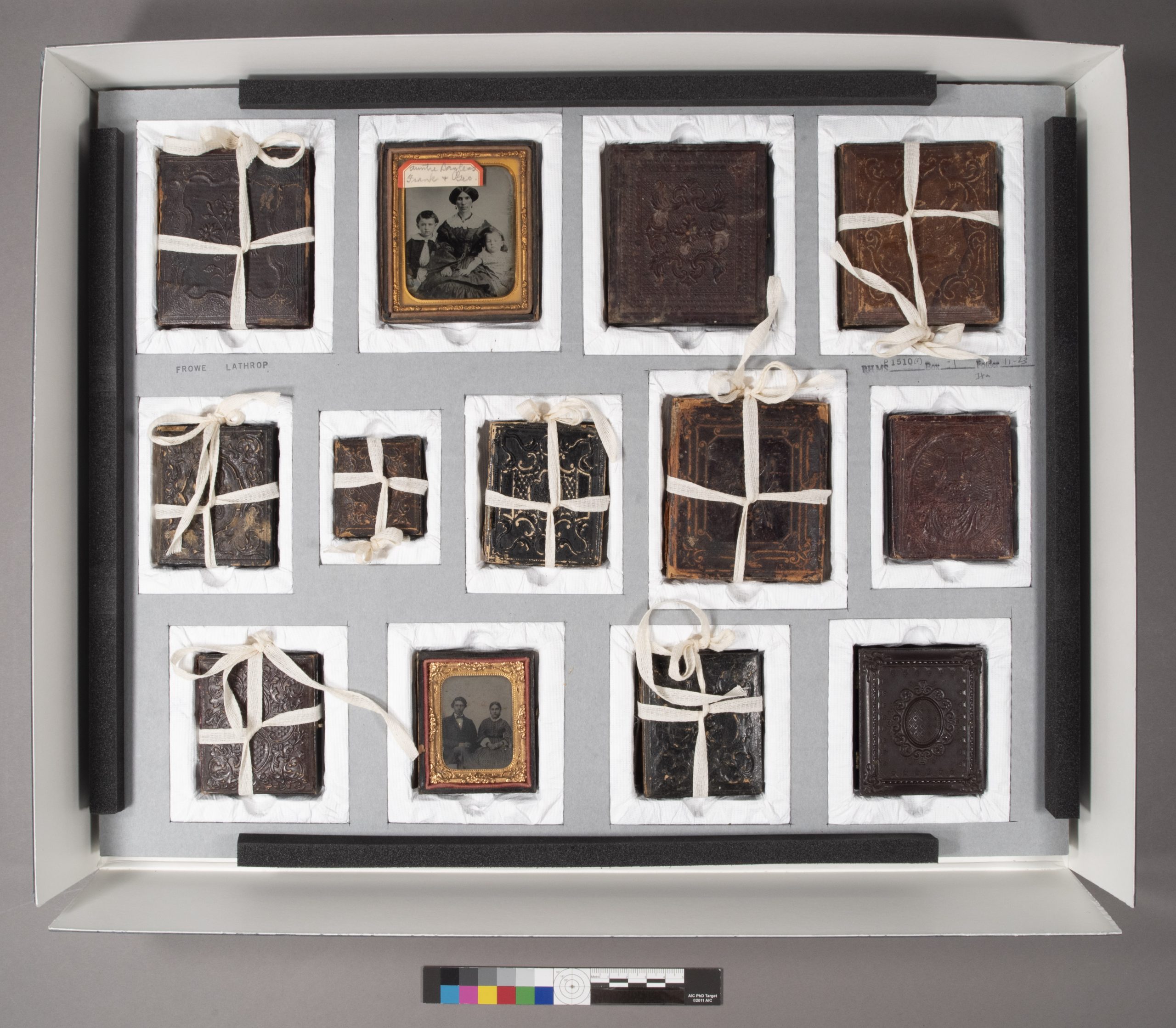
I estimated that I could fit all of the photographs into one standard size flat archival box, provided I could safely arrange them in two layers. Lynn sorted the photographs by family groups into two sets, and then set about devising a lightweight but protective structure for the interior of the box. I created two trays from layers of archival corrugated cardboard, with cavities cut to fit each of the cased photographs. Each cavity is lined with soft Tyvek® fabric to prevent abrasion of the cases, and cases with loose covers are tied with cotton tape to prevent shifting. I attached strips of archival foam around the edges of the lower tray to support the upper tray, and added handles of linen tape to the upper tray for easy removal.

Upper tray of housing for cased photographs from the Frowe and Lathrop Families Records.
The upper tray of the photograph housing, with handles for lifting the tray out. Frowe and Lathrop Families Records. Kansas Collection. RH MS-P 1510(f), box 1. Click image to enlarge.
Lower tray of housing for cased photographs from the Frowe and Lathrop Families Records.
The lower tray of the photograph housing, with foam bumpers to support the upper tray. Frowe and Lathrop Families Records. Kansas Collection. RH MS-P 1510(f), box 1. Click image to enlarge.

Lynn Ward, Processing Archivist:

After the cases returned from conservation in their special box, I needed to come up with a way to describe the cased photographs. Normally for a print photograph, the description would be connected to the folder in which the photograph is housed. Since these cased photographs were arranged in layers in their special box, I decided to describe them by layer and by rows within each layer. Each photograph in its case was described with its location in the box, as well as the identification, or partial identification of the individual(s) when known.   

The Frowe and Lathrop families collection finding aid can be accessed online. For more information on how to access these materials, see our website: https://spencer.lib.ku.edu/using-the-library/use-collections.

New Finding Aids, July-December 2019

January 21st, 2020

Archival collections do not always have a great deal of visual appeal—correspondence, diaries, reports, completed forms, memos, and other related record types may or may not include sketches, images, and other detritus that catches the eye when first opening a volume or folder.

But archival collections frequently contain photographs, ephemera, objects, and other items that do have visual appeal. In the last six months of 2019, Spencer Research Library staff completed processing a wide variety of archival collections, many of which have something to catch the eye as well as a great deal to research.

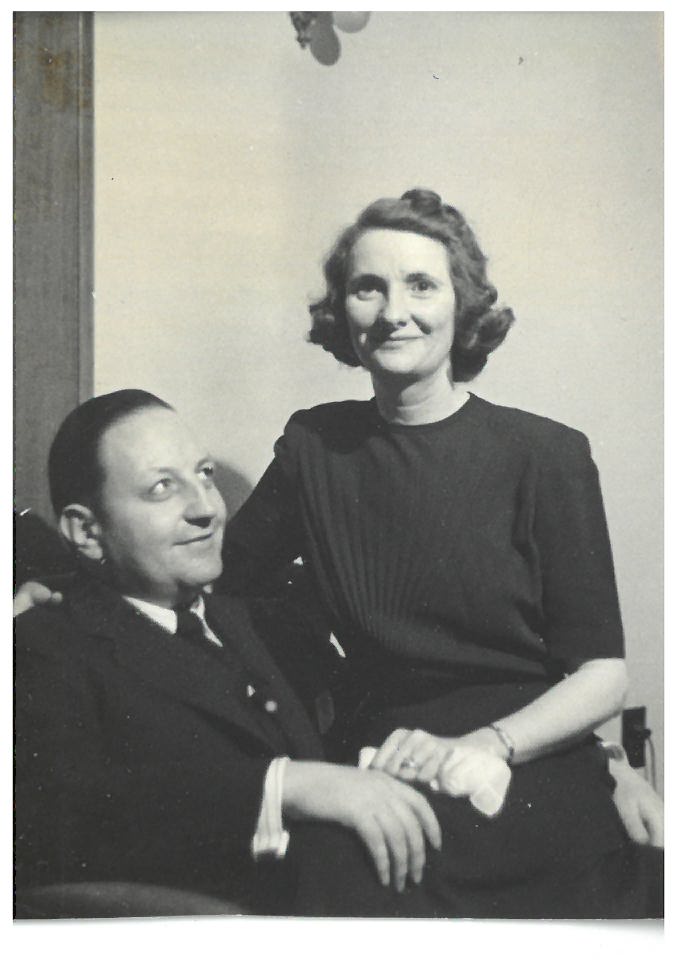
For example, Robert S. Lemon’s collection of photographs includes some lovely snapshots of Helen Spencer—funder of the Kenneth Spencer Research Library among many other projects on KU and elsewhere—and her husband Kenneth.

A candid photograph of Kenneth and Helen Spencer, probably dating from the 1940s
A candid photograph of Kenneth and Helen Spencer, probably dating from the 1940s. Robert S. Lemon Photographs. Call Number: RH PH P2837, Folder 2. Click image to enlarge.

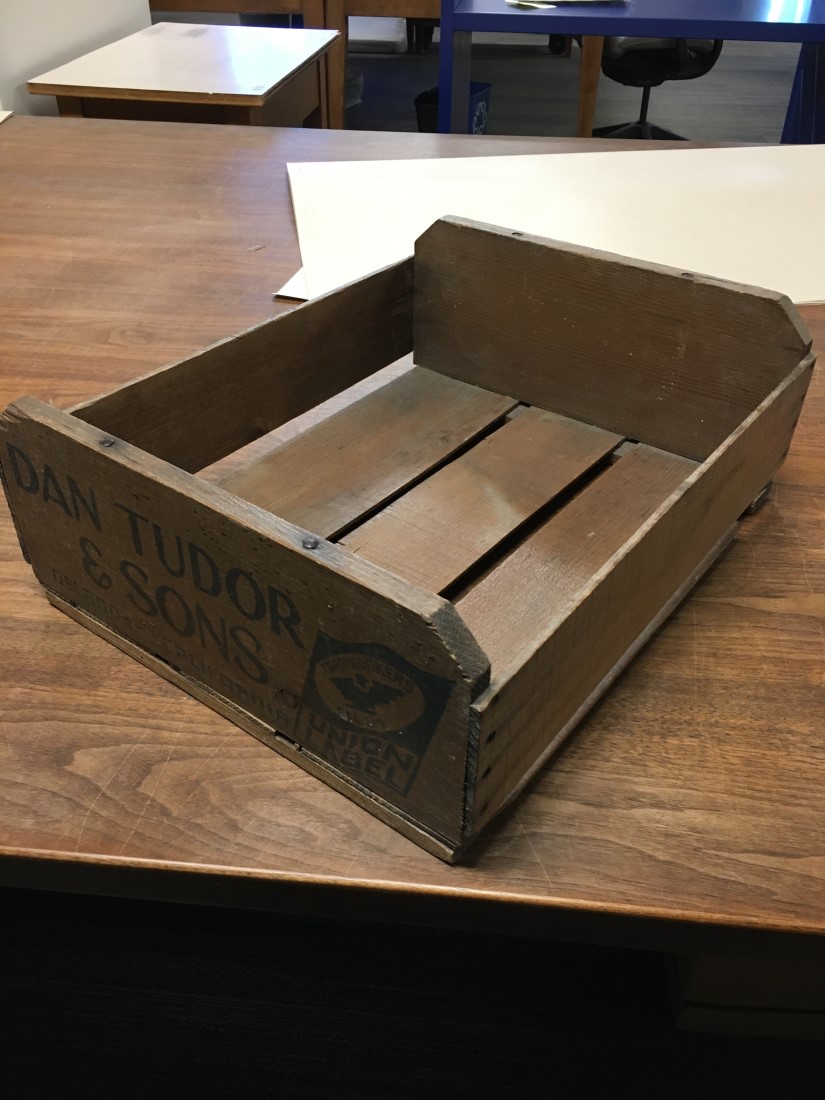
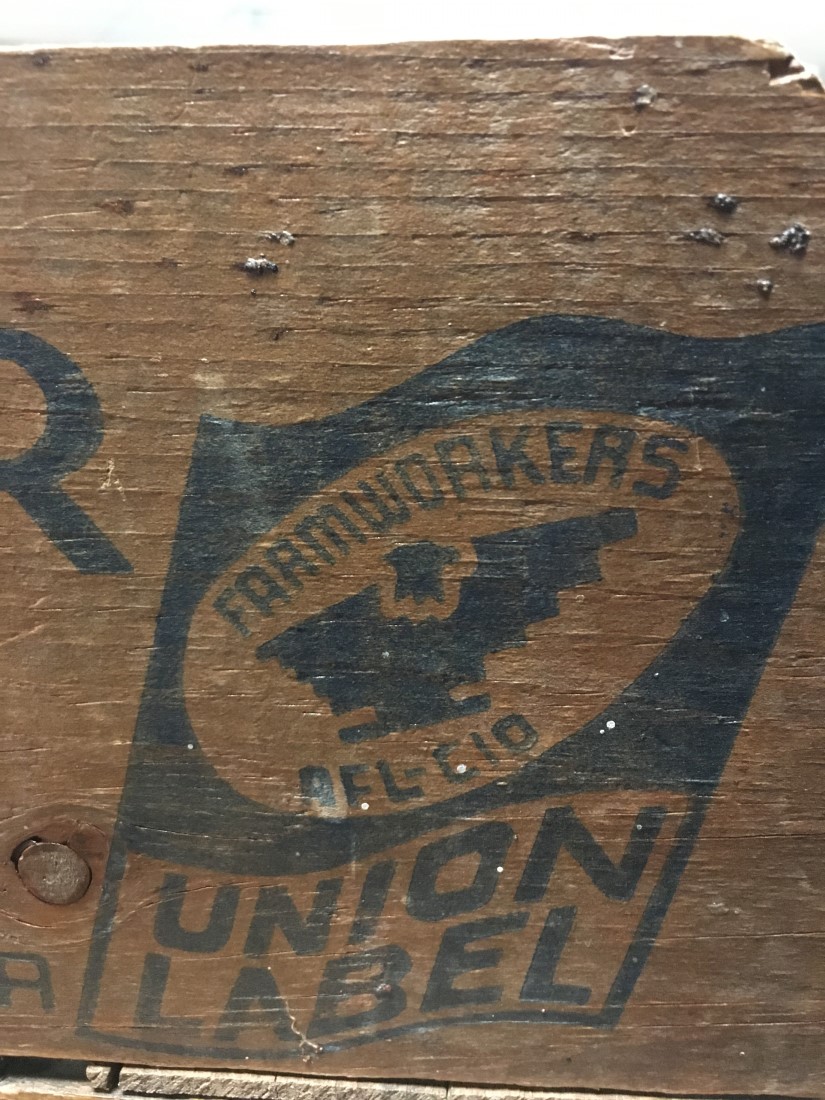
The United Farm Workers collection, part of the Wilcox Collection of Contemporary Political Movements, includes this wooden pickers’ crate proudly displaying the Farm Workers’ stamp:

Photograph of a wooden pickers’ crate displaying the United Farm Workers' stamp
Photograph of the detail of a United Farm Workers' stamp on the wooden pickers’ crate
A wooden pickers’ crate displaying the United Farm Workers’ stamp. United Farm Workers Collection. Call Number: RH WL MS Q8, Box 2. Kenneth Spencer Research Library, University of Kansas. Click images to enlarge.

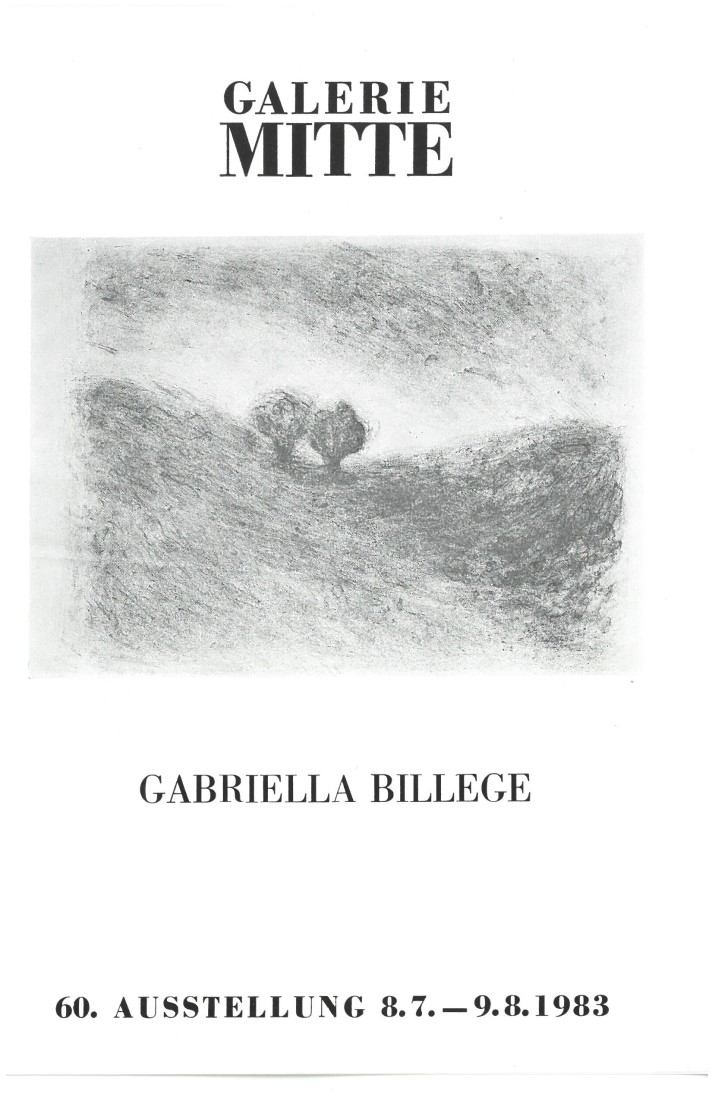
Edith Krull, a freelance art critic and journalist, reviewed and saw a wide variety of art exhibits in East Germany during the latter half of the twentieth century, presumably including this showing of Budapest-born artist Gabriella Billege:

Front cover of a leaflet from the Berlin Gallerie Mitte for a 1983 show of Gabriella Billege’s works
Front cover of a leaflet from the Berlin Gallerie Mitte for a 1983 show of Gabriella Billege’s works. Edith Krull Collection. Call Number: MS 345, Box 1, Folder 34. Click image to enlarge.

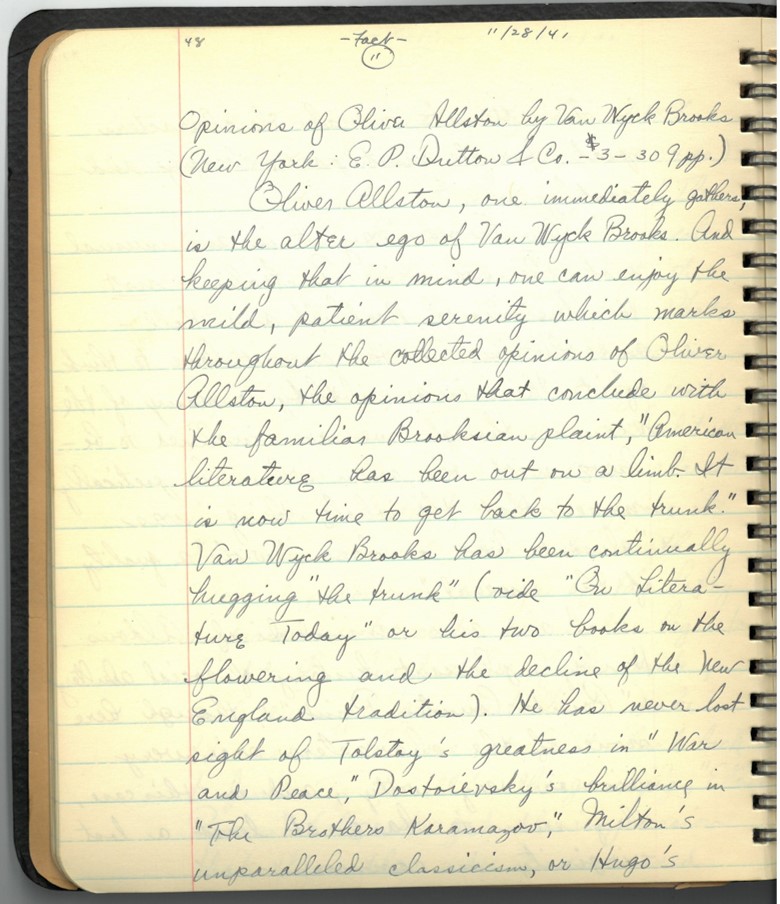
Harold Orel’s 1941 “Books I Have Read” journal may not at first glance appear visually appealing, but his witty writing style makes for entertaining reading.

Photograph of a page from Harold Orel’s reading journal, discussing one of the books he read as a teenager in November 1941
A page from Harold Orel’s reading journal, discussing one of the books he read as a teenager in November 1941. The entry foreshadows Orel’s future career as an English professor at KU. Personal Papers of Harold Orel. Call Number: PP 615, Box 30. Click image to enlarge.

Please feel free to perform research in any of the newly processed collections listed below and see what catches your eye!

Banks family papers, 1921-2017 (RH MS 1488, RH MS-P 1488, RH MS R453)

Clyde Bysom collection, 1925-2015 (RH MS 1493, RH MS-P 1493, RH MS Q459)

Brent Campney research on racist violence against African Americans, 1863-2001 (bulk 1863-1920s) (RH MS 1492, RH MS Q458)

James B. English letters, 1968-1969 (RH MS 664)

Gilbert H. Finlay Order of Eastern Star scrapbook material, 1966-1989 (RH MS 1491)

Gerladine Mowbray-Arnett collection, 1908-2000 (RH MS 1489)

Hiat-Hett family genealogy collection, 1879 (RH MS P966)

Emmanuel Jones scrapbook, 1891-1947 (RH MS E210)

Henry C. Kollings photographs, 1906-1968 (RH PH 546, RH PH 546(f))

Robert S. Lemon photographs, 1920s-approximately 1944 (RH PH P2837)

Margaret Verhage collection, 1892-1951 (RH MS P967)

Mike Kautsch collection of William Allen White materials, majority of material found within 1929-1986 (RH MS 1494)

Ernesto Alvarado Garcia, 1939-1966 (MS 64, MS Qa26)

Jack E. Lorts collection of Larry Eigner correspondence and manuscripts, January 1960-February 26, 1962 (MS 352)

Bolton Company letters, 1695-1711 (MS 84)

Edith Krull collection, 1952-1990 (MS 345, MS Q77, MS Qa24, MS R20, MS S8)

Personal papers of Richard F. Johnston, 1962-1986 (PP 612)

Personal papers of Kala Stroup, 1959-2018 (PP 613)

Personal papers of Alton Thomas, 1948-1987 (PP 614)

Personal papers of John Walter Pozdro, 1940s-2000s (PP 616)

Personal papers of Harold Orel, 1941-2012 (PP 615)

Backus family newspapers collection, 1795-1870, 1889 (MS R24, MS Q85, MS Qa30, MS S12, MS P748)

A. Doyle Moore collection, 1967-1988 (MS 357, MS Q87)

Linda Kay Davis collection of Ed Sanders materials, 1967-2011 (MS 356, MS Q86)

Records of the Emily Taylor Center for Women & Gender Equity, 1966-2019 (RG 76/3, several CT call numbers)

John Coelln papers, 1961-1975 (RH WL MS 54)

United Farm Workers collection, 1966-1979 (RH WL MS 53, RH WL MS Q8)

Michael Zweig papers, 1964-1971 and undated (RH WL MS 55, RH WL MS Q9)

Sharon Feldman papers, 1963-1993 (RH WL MS 56, RH WL MS Q10)

George Cruse autograph album, 1901 (RH MS P968)

Hutchinson, KS Cyrus Cauldron souvenir photo book, approximately 1920s (RH PH P2838)

Dwight Eisenhower speaking at Abilene, June 22, 1945 (KC AV 90)

R.H. Gandiven and R. Hugoboom photographs, 1883-1884 (RH PH 547(f))

Barbara Hays Duke papers, 1909-2006, 2016 (RH MS 1495, RH MS-P 1495(f), RH MS Q462)

Peace Mennonite Church records, 1978-2018 (RH MS 1496)

Fred Six papers, 1929-2011 (RH MS 1506, RH MS Q467)

John Kessel papers, 1969-2019 (MS 358, MS Q88, MS Qa31, SC AV 25)

Personal papers of David Frayer, 1972-2012 (PP 619)

Marcella Huggard
Archives and Manuscripts Processing Coordinator