“We Ask No Catch Questions, Nor Any of Extraordinary Difficulty”: The First Kansas Bar Exam
July 23rd, 2026Good luck to all Kansas law school graduates who are taking the bar exam next week! In honor of the occasion, we’re sharing the first two parts of the first Kansas bar exam, which was administered in Topeka on October 13-14, 1903, and later published in the Summary of the First Year’s Work of the State Board of Law Examiners. The Board’s first three annual reports – which include the bar exams administered during those years – can be found in Spencer’s collections (Call Number: RH C5864), although they are housed at the Annex and must requested ahead of a Reading Room visit.
The general guidance to “follow instructions in the Bulletin of Information to Applicants” included in the first exam was replaced by more specific instructions in the second (February 1904) exam: “The Board calls special attention to the fact that answers ‘yes’ and “no” will not be considered. In every case give the principles involved and the reasons for the answer. ” This statement was repeated for the third exam in June 1904, and additional clarification was added: “Write your answers plainly, on one side of the paper only, and guard your spelling and punctuation. Accuracy, clearness, and conciseness will be given weight.”
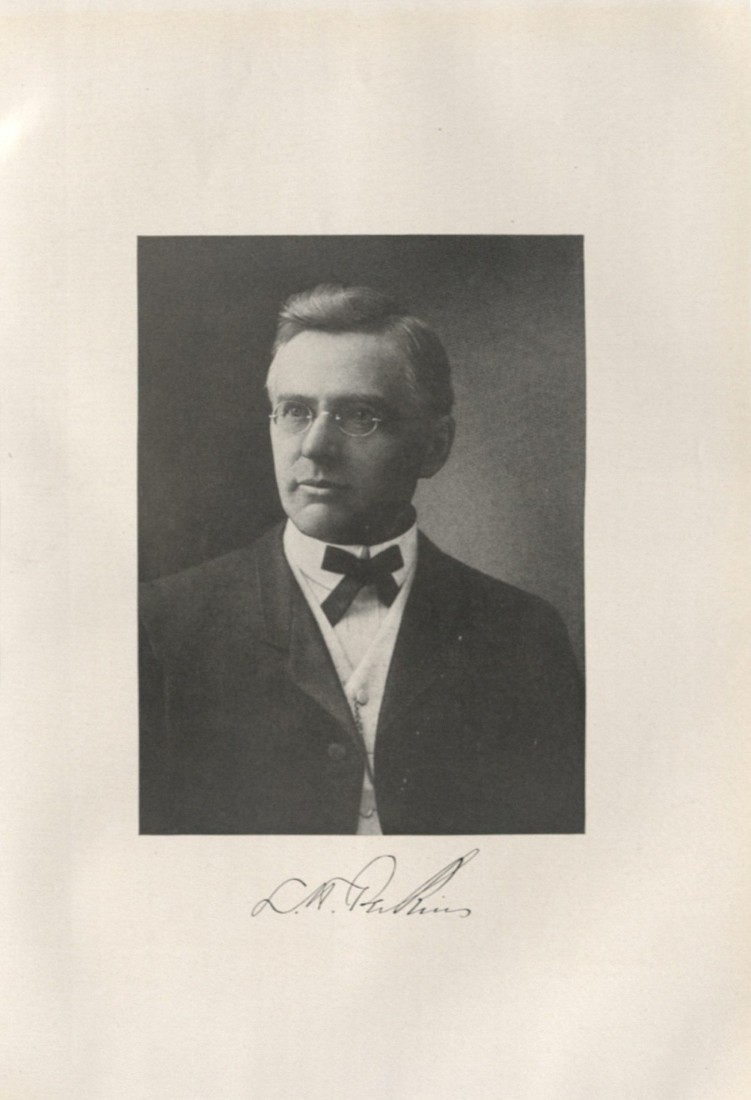
More details about the first bar exam can be found in the paper “The State Board – A Landmark in Lawyer-making” by Lucius H. Perkins, D. C. L., secretary of the Kansas Board. Perkins presented the paper at the first national conference of the State Boards of Law Examiners, which was held at the St. Louis World’s Fair in 1904. It was reprinted – “by request” – in the Board’s Second Annual Report (1904-1905). Perkins noted that applicants who had been “admitted to the highest courts of another jurisdiction and actually practiced for more than three years immediately preceding their application” were tested via an oral examination. Beyond that,
“all other examinations are in writing. We proposed eighty questions, divided into four sessions of three hours each [across two days]. We require a few definitions and ask a few categorical questions; but by far the greater number are hypothetical, and are intended to raise the ordinary questions that might be put to a lawyer any day. We ask no catch [trick] questions, nor any of extraordinary difficulty. Our aim is to test the applicant’s mental caliber as well as his knowledge of the law, and we give good credit for a brainy answer even though the solution be wrong…
At the beginning of an examination the clerk of the supreme court [sic] gives each applicant a number, with which he signs all his papers. The board does not know one from another, and each performance is passed upon solely on [sic] its merits. This impersonal method relieves the board from every suspicion of partiality.”
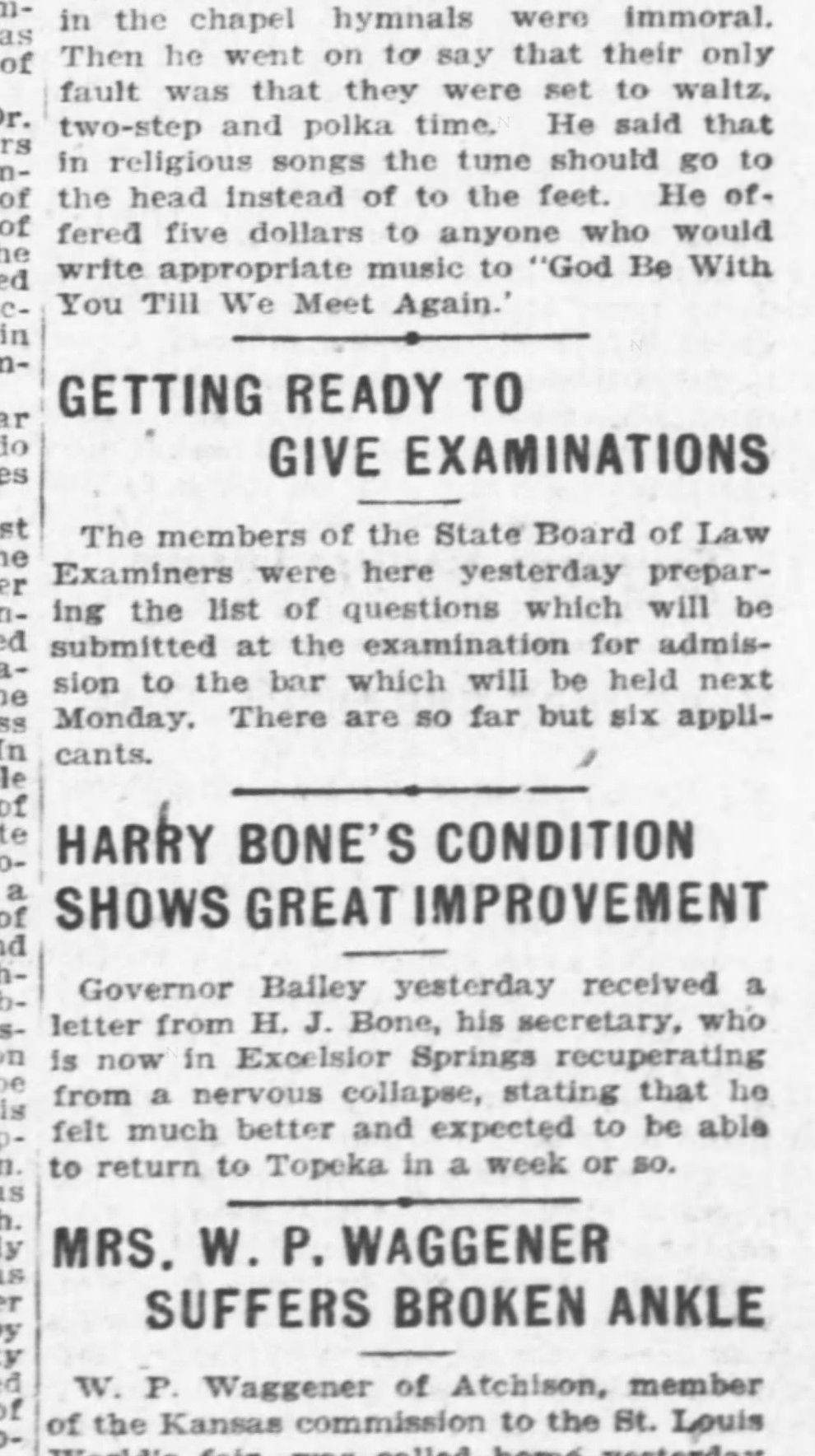
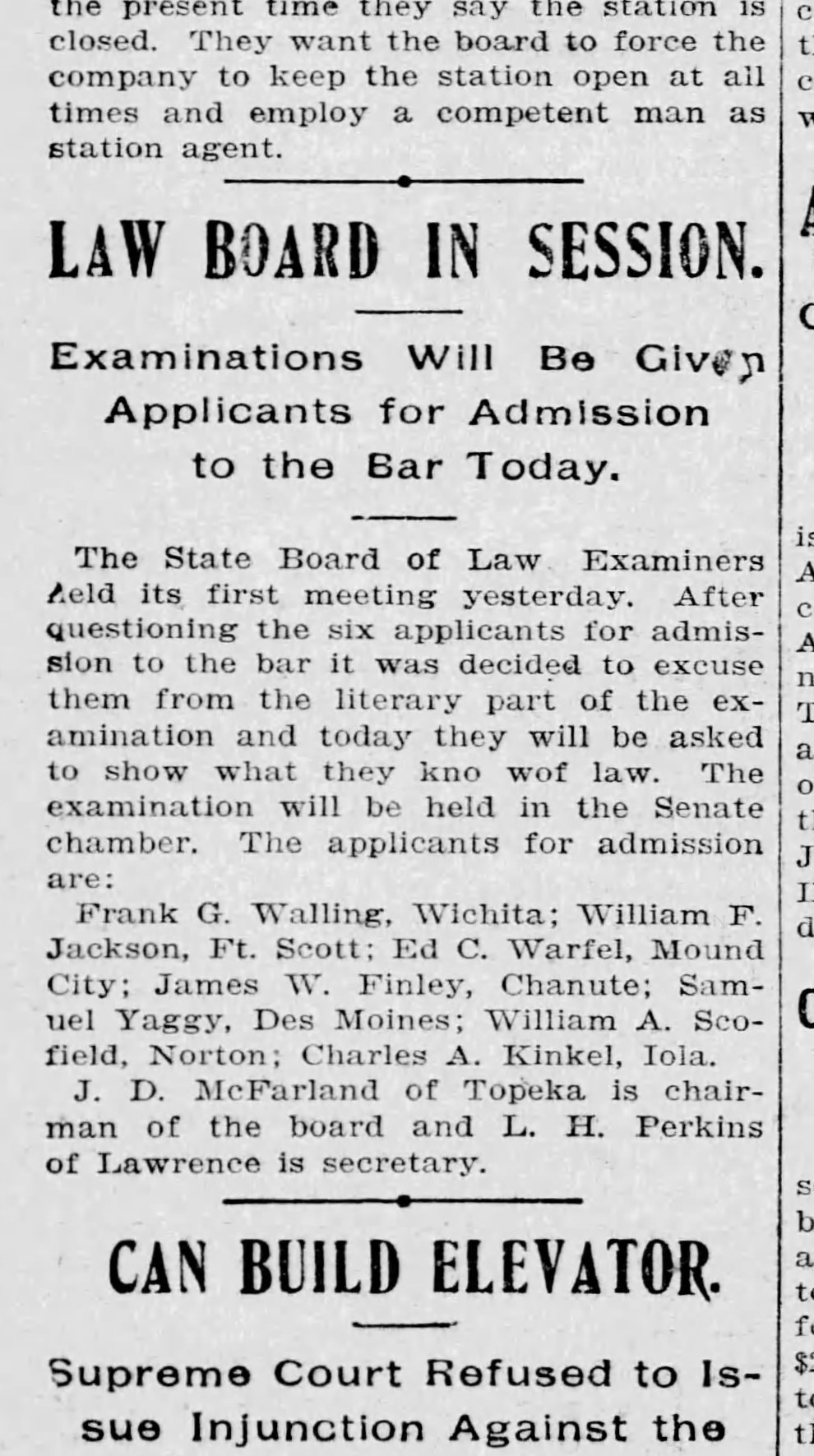
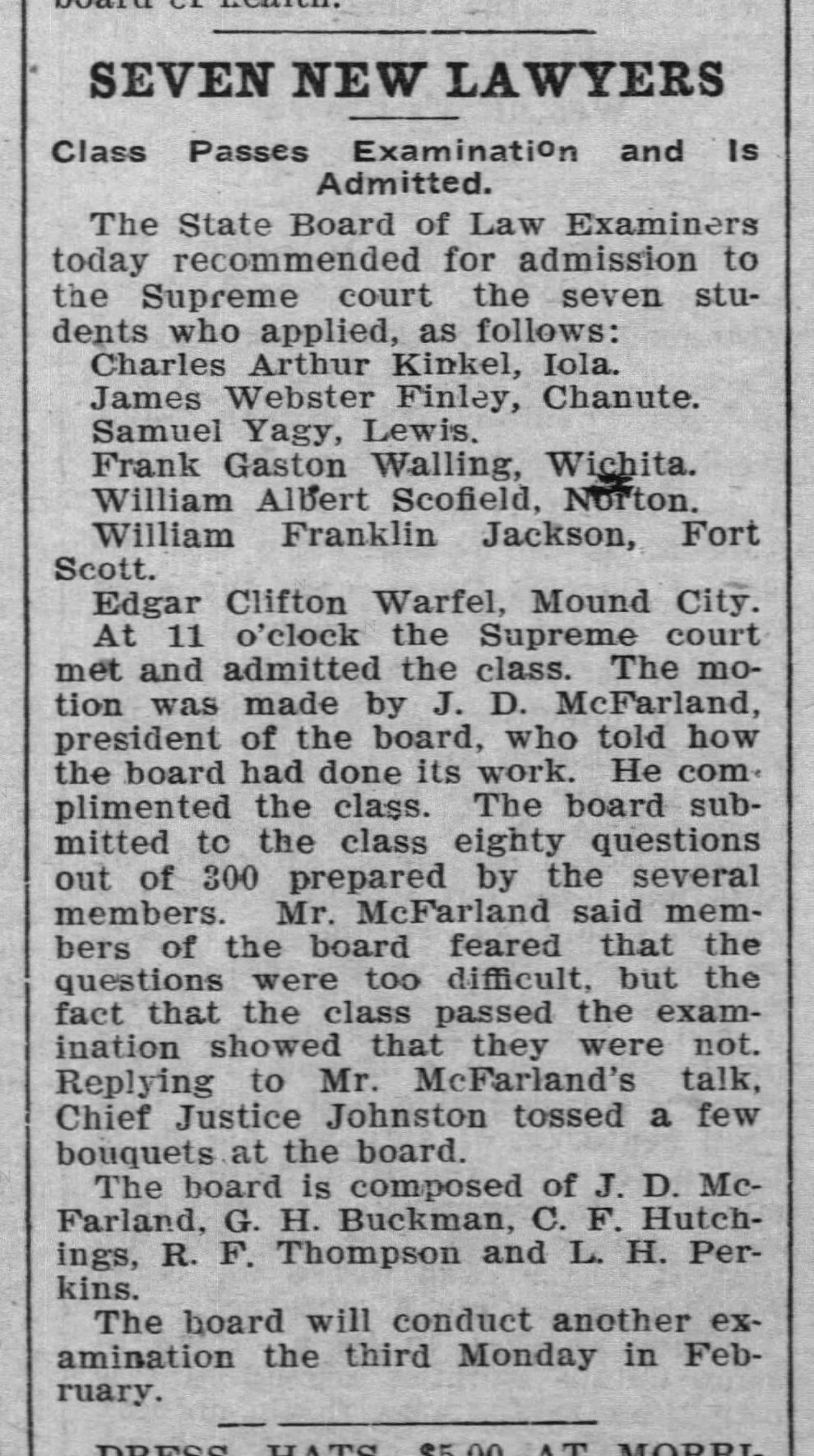
Newspaper coverage of the first Kansas bar exam. Left: The Topeka Daily Capital, October 9, 1903. Middle: Capper’s Weekly: The Kansas Semi-Weekly Capital, October 13, 1903. Right: The Topeka Daily Herald, October 15, 1903. All articles accessed via Newspapers.com. Click images to enlarge.
Additionally in his paper, Perkins describes the process by which individuals applied to take the bar exam, commenting that “the methods adopted by the Kansas board are in accord with the most advanced thought and the most successful experience in this work.”
“We furnish each applicant a regular set of printed forms, consisting of an application, affidavit of the applicant, affidavit of his preceptor, and a certificate of the local district judge and three practicing attorneys that he is a person of good moral character, and, if qualified, a suitable person to be admitted to the bar. We also send a copy of the rules and a bulletin of information. The applicant is required to frame his petition to the supreme court [sic], and it must be in his own handwriting. He files his petition in the office of the clerk of the supreme court, and sends a copy of it with all his other papers to the secretary of the board. In the application he gives his history, and especially the character of his education, the studies pursued, and what he has been doing for the past five years.
One of the most important requirements is that he give a satisfactory account of himself, and no man will be received in the examination if there is any cloud upon his character. We cannot reach the rascals who are already in, but the State Board of Law Examiners stands between [unscrupulous attorneys] and the lawyers of the future. We cannot catch them all, but we shall stop those whose rascality is already known.
Our requirements of preliminary education are equal to a four-year course in a standard high school. No diploma, ipso facto, admits the applicant to the examination. We reserve the right to determine what schools shall be accredited, and a diploma from a law school does not excuse the applicant from the preliminary examination, unless the standard of admission is up to the standard of the board. All applicants are examined. Graduates from our own or any other university or law school are not exempt.”
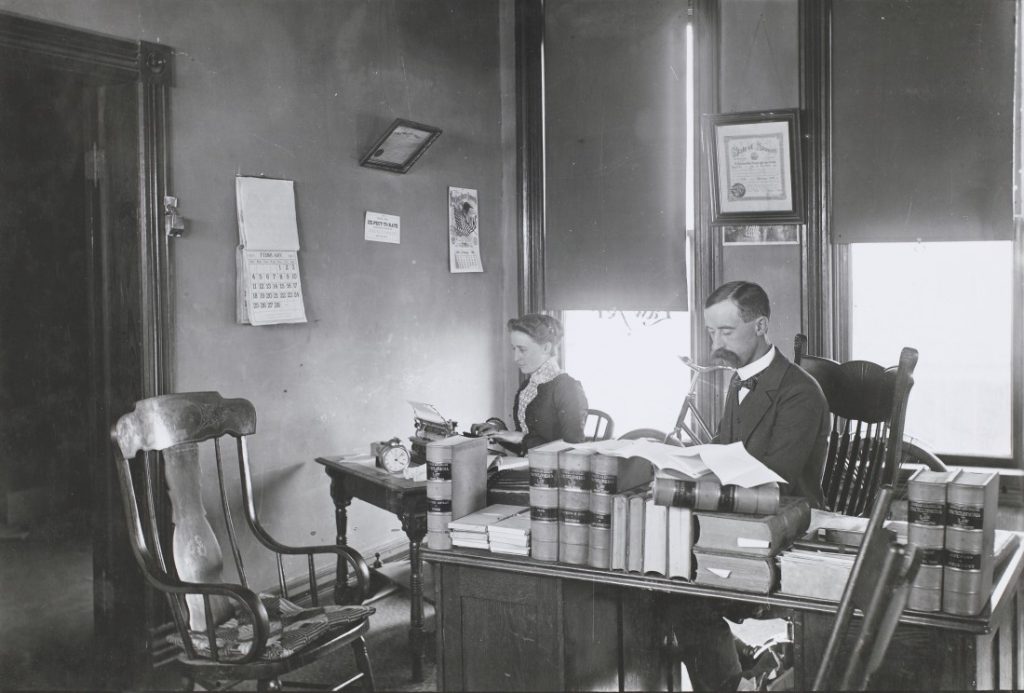
Readers, do you have a favorite question from the first Kansas bar exam?
Caitlin Klepper
Public Engagement Librarian