The University of Kansas

Inside Spencer: The KSRL Blog

Books on a shelf

Welcome to the Kenneth Spencer Research Library blog! As the special collections and archives library at the University of Kansas, Spencer is home to remarkable and diverse collections of rare and unique items. Explore the blog to learn about the work we do and the materials we collect.

Spencer’s Growing Zine Collection

January 28th, 2026

Zines are self-published writing and art, often made by collage with illustration, photos, and clippings from other publications, and printed like a pamphlet or small book. Zine production began the 1930s with sci-fi fanzines, but in the 1980s and ‘90s, the widespread availability of the copy machine and Kinko’s 24-hour stores spurred many disaffected young people to express their personal and political opinions, often anonymously, in zines that were distributed locally and nationally via word of mouth and the postal service. Although the internet later replaced much of the ways young people previously communicated with each other, zine production has continued and has been made easier with new digital tools and home printers.
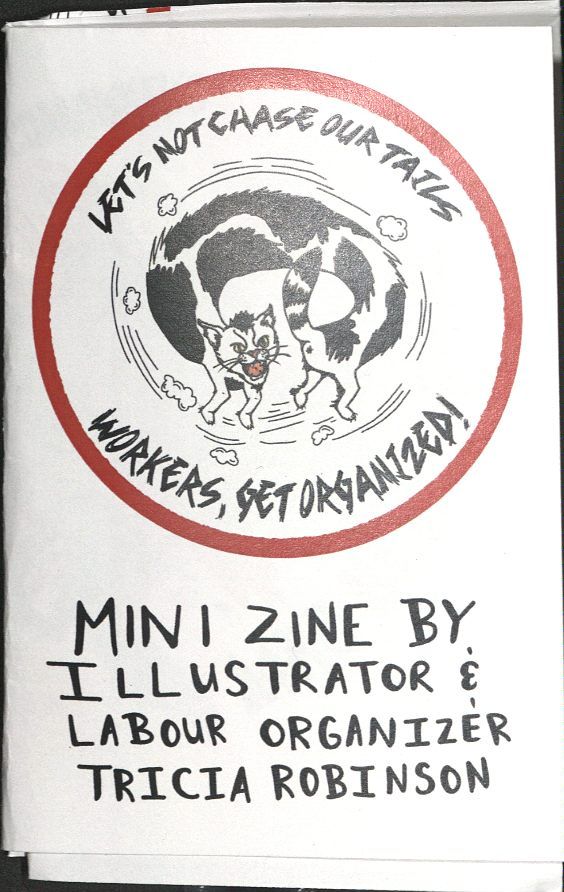
Bibliographic information in black text against a white background with a sketch of an angry cat chasing its tail.
Front cover of Let’s Not Chase Our Tails: Workers, Get Organized! by Tricia Robinson, circa 2025. Call Number: Uncataloged. Click image to enlarge.
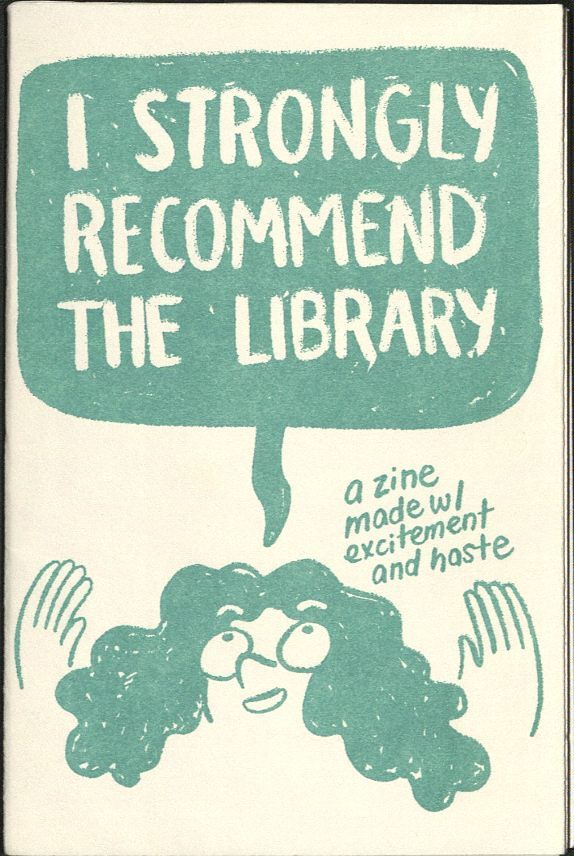
Bibliographic information in cream and green text against a cream background with a sketch of a woman and a speech bubble.
Front cover of I Strongly Recommend the Library, circa 2025. Call Number: Uncataloged. Click image to enlarge.
Bibliographic information in black text against a light blue background with an illustration of a man throwing something.
Front cover of Palestine, Mon Amour by Alfredo M. Bonnano, circa 2025. Call Number: Uncataloged. Click image to enlarge.

In 2016, Kenneth Spencer Research Library received a large donation of about a thousand left-wing, radical zines from the Lawrence-based Solidarity Revolutionary Center Library. The books remaining in the library are now housed at the Ecumenical Campus Ministries building near campus. Before they were donated to Spencer, many of these zines were scanned and made available on the Internet Archive.

Since adding the Solidarity Library zines to the Wilcox Collection of Contemporary Political Movements in 2016, interest in the collection has grown among KU students, KU faculty, and community members. Several classes come to Spencer each semester to learn about the collection, view a selection of zines, and complete a primary source analysis activity with one zine. These class visits help prepare students to tackle a creative, unique assignment to make their own zines. Students also tour the Makerspace at Anschutz Library, where they can utilize the tools and materials needed to write, illustrate, assemble, and print copies of their zines for classes and/or for fun. Additionally, Spencer also hosted attendees of Lawrence’s annual Paper Plains Zine Festival last September for a tour of the library and to view some of our zines up close. Library staff were thrilled to see this group of zine creators and collectors show so much excitement and joy for our zine collection.
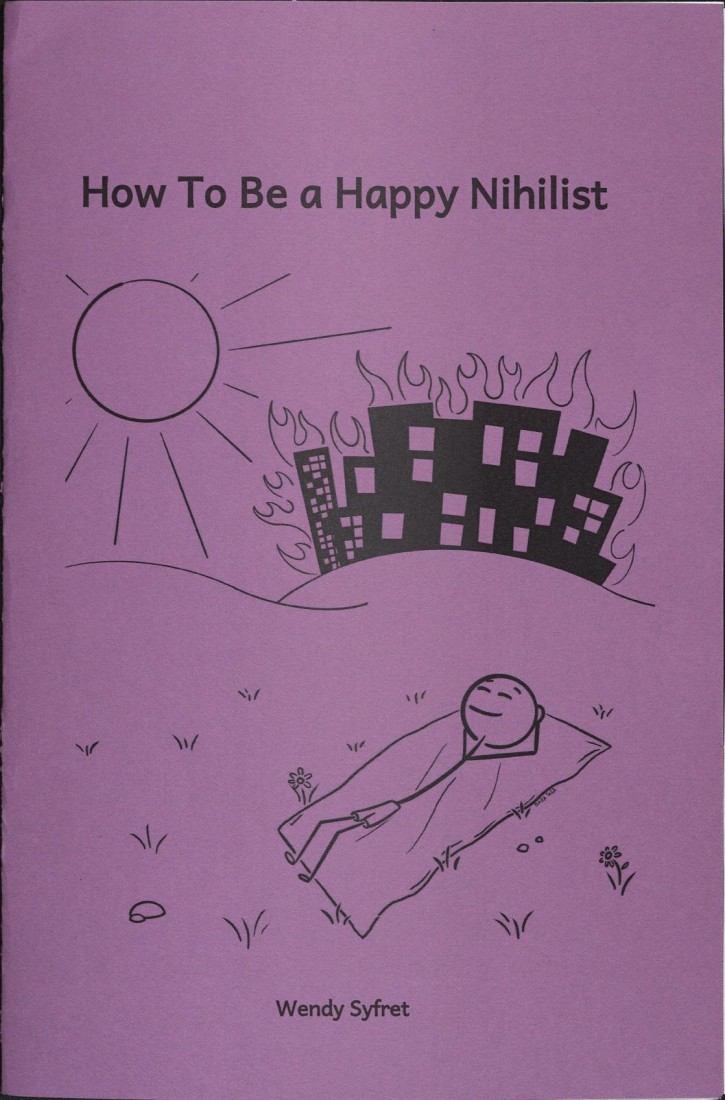
Bibliographic information in black text against a purple background with a sketch of a person laying under the sun on a blanket while a city burns behind them.
Front cover of How to Be a Happy Nihilist by Wendy Syfret, circa 2025. Call Number: Uncataloged. Click image to enlarge.
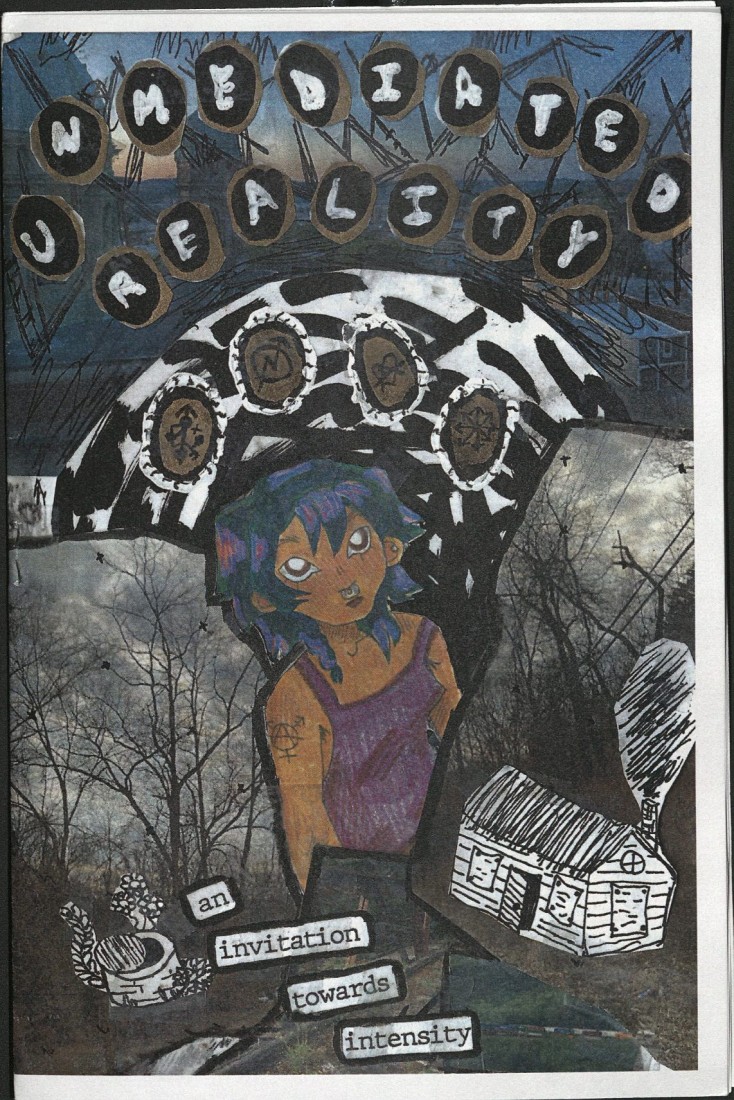
Bibliographic information in black and white text against a multicolored, illustrative background that includes a woman, a cabin, and trees.
Front cover of Unmediated Reality: An Invitation Towards Intensity, circa 2025. Call Number: Uncataloged. Click image to enlarge.
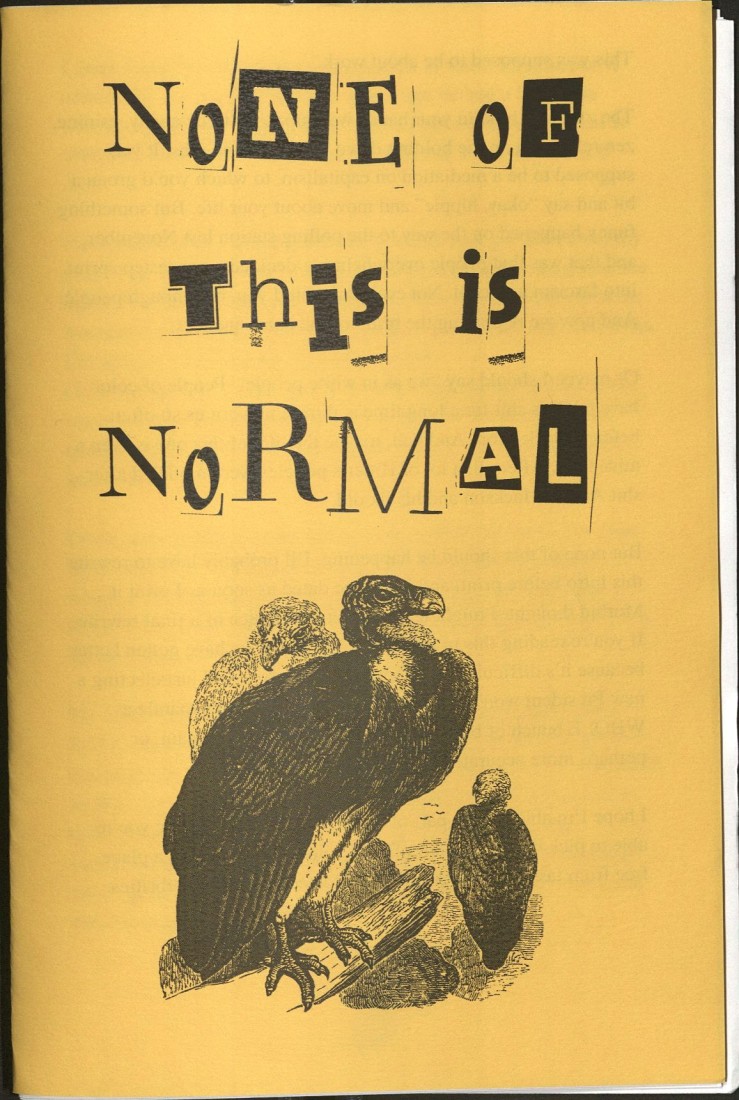
Bibliographic information in black text against a yellow background with an illustration of a large bird or hawk.
Front cover of None of This is Normal, circa 2025. Call Number: Uncataloged. Click image to enlarge.

Due to the popularity of the zine collection, it seemed like a good idea to acquire more recently published zines that address current topics students might be interested in. Last fall, we purchased about a hundred new zines (many of them created in 2025 and purchased on Etsy). While some of the zines are reprints of older publications, the more recent ones address topics such as political attacks on transgender people, resistance to fascism and state violence, the labor movement, the war in Gaza, the American tech oligarchy, artificial intelligence, the COVID-19 pandemic, and mutual aid. The zines are in the process of being cataloged; when that work is completed, information about them will be available via the KU Libraries online catalog, and the zines themselves will be available for classes and for research in our Reading Room.

Throughout this post is a sample of ten covers from our most recent purchase of zines. If you have suggestions for further purchases or donations of zines for the Wilcox Collection or if you would like to view these in our reading room, get in touch with Spencer staff!
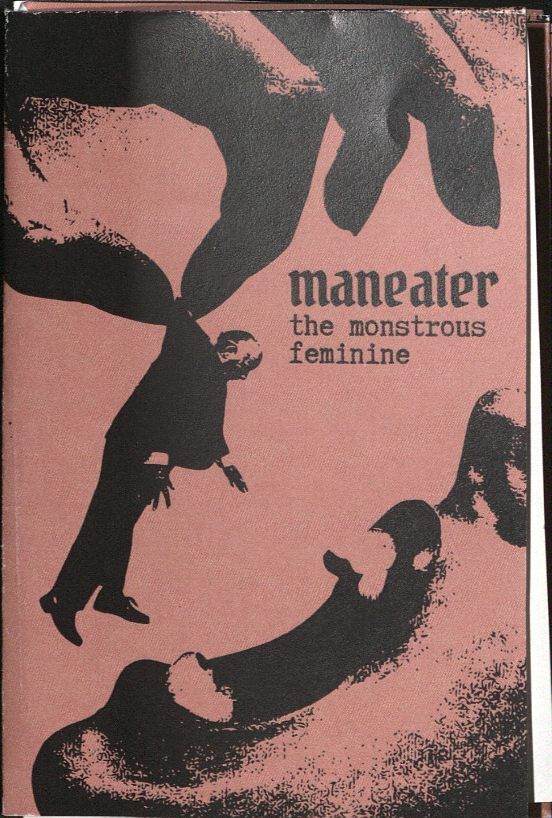
Bibliographic information in black text against a light pink background with an illustration of fingers dropping a small man into an open mouth.
Front cover of Maneater: The Monstrous Feminine, circa 2025. Call Number: Uncataloged. Click image to enlarge.
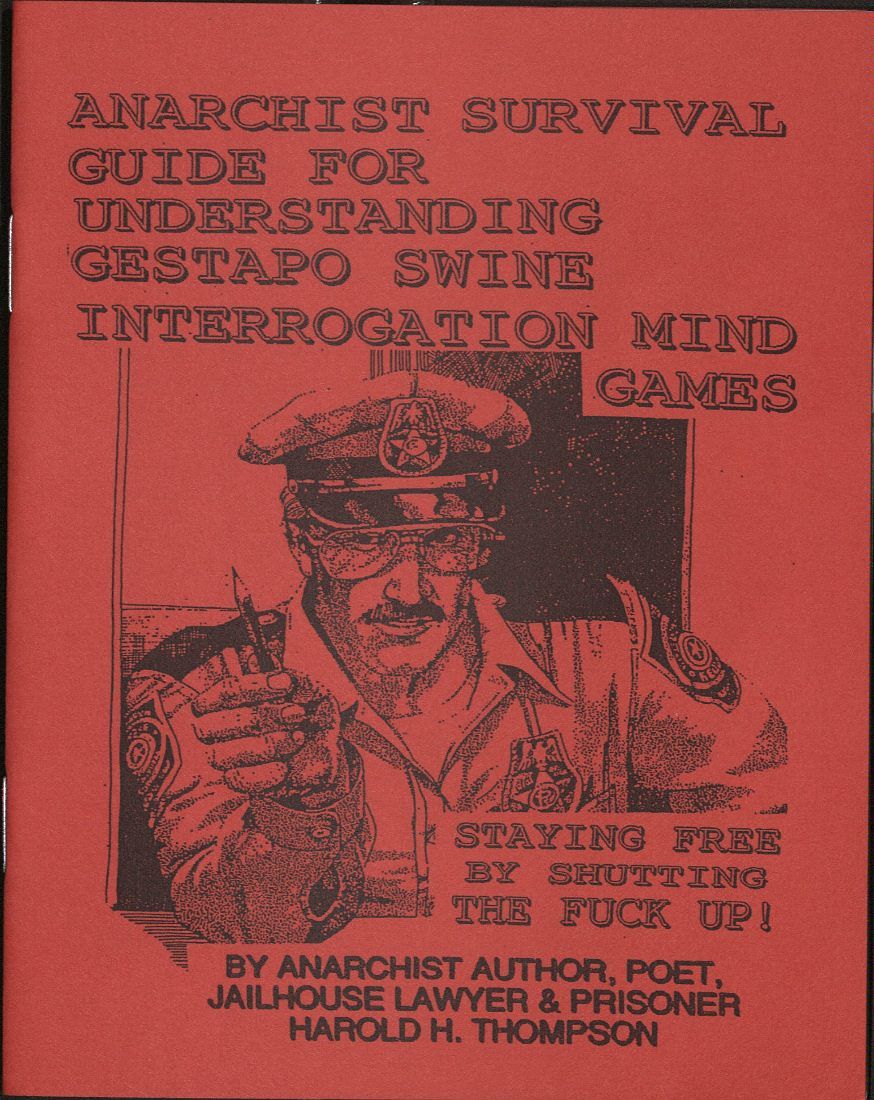
Bibliographic information in black text against a red background with a sketch of a male law enforcement officer holding out a pencil.
Front cover of the zine Anarchist Survival Guide for Understanding Gestapo Swine Interrogation Mind Games by Harold H. Thompson, circa 2025. Call Number: Uncataloged. Click image to enlarge.
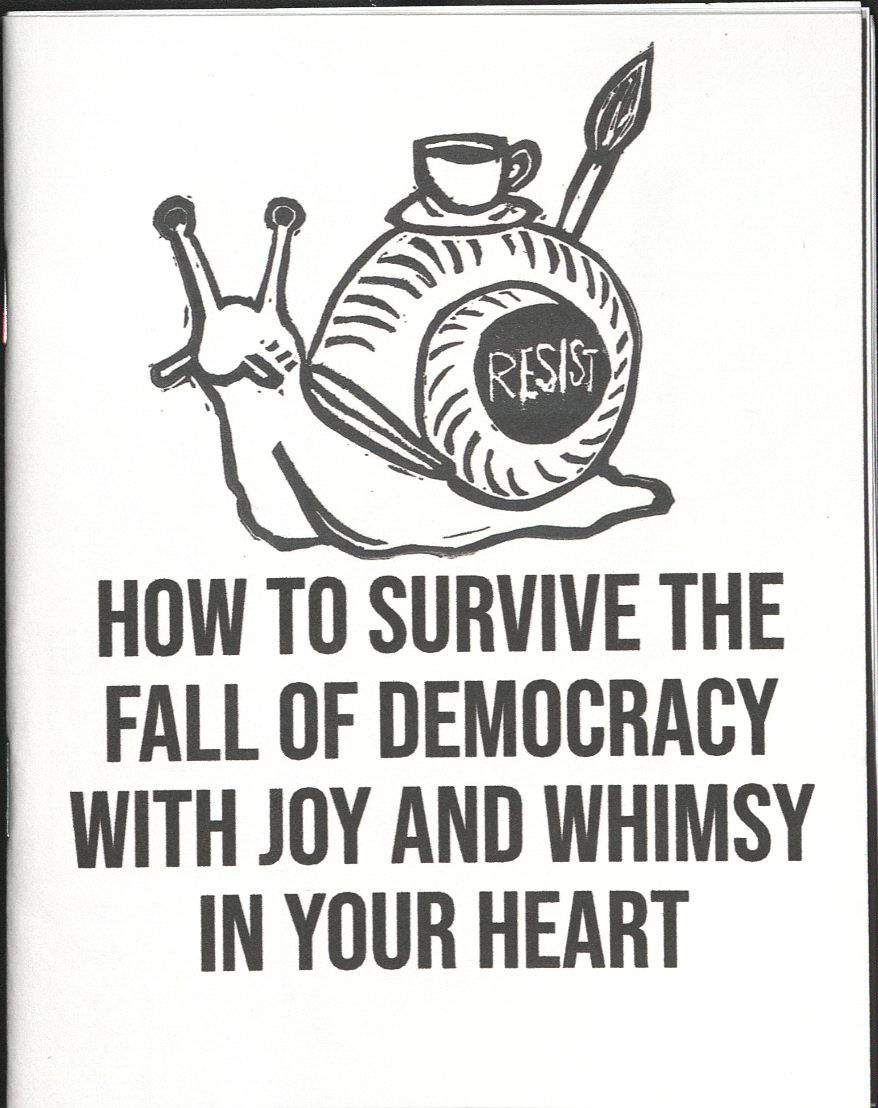
Bibliographic information in black text against a white background with a sketch of a snail that has a coffee cup on top of its shell and the word "resist" written on the shell's side.
Front cover of How to Survive the Fall of Democracy with Joy and Whimsy in Your Heart, circa 2025. Call Number: Uncataloged. Click image to enlarge.
Bibliographic information in pink and black text against a white background with a sketch of a growling animal.
Front cover of the zine Fight Fascism: How to Recognize It and Take Action, circa 2025. Call Number: Uncataloged. Click image to enlarge.

Kate Stewart
Curator of the Wilcox Collection of Contemporary Political Movements

Maureen Tuohey and Theo McKay
Public Services Student Assistants
Context Matters

October 24th, 2022

Like many institutions, KU Libraries (KUL) has come a long way in recognizing that we are not neutral and that our collecting practices, descriptive traditions, and operations are often not nearly as inclusive as we would like them to be. We have much, much further to go, but we are taking steps where we can. Libraries do not move quickly or easily when large-scale systems are on the line.

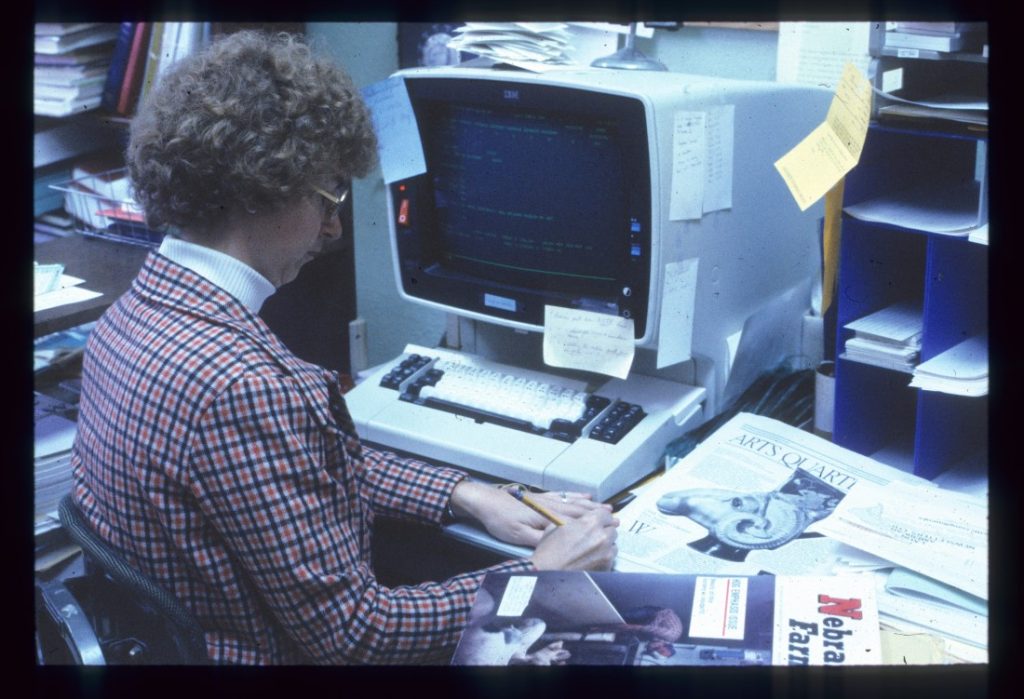
Color photograph of a woman sitting, with her back to the camera, facing a desktop computer. She is writing with a pencil, and there are library materials on her desk.
University Archives Photos. Call Number: RG 32/13: KU Libraries: Cataloging Department (Photos). Click image to enlarge (redirect to Spencer’s digital collections).

Realizing we should communicate transparently about our collections and practices, Spencer Research Library colleagues agreed we didn’t want to “disclaim” anything; we do not want to deny our responsibility to cover perceived liability or avoid a lawsuit. In fact, we are proud of our collections and the hard work that has gone into building them for decades. But in the world today, where images can be shared immediately, without context, and where intention is rarely assumed to be good, it was important to try to explain our work to those who might encounter our materials virtually.

Our reasons for collecting disturbing or offensive materials and making them available to users are grounded in library and archival best practices, our mission, and the mission of the larger university. In fact, sharing these materials with researchers, students, and the public around the world is our actual purpose for existing. If we don’t collect these materials, many of the perspectives they capture may not be represented elsewhere. Ignorance and secrecy rarely advance the best of our humanity.

But these reasons might not always be clear to folks outside the library, so we wanted to strike a balance between 1) providing information about why objectionable or even harmful material can be found in our library and 2) acknowledging that, even if we have good reasons to collect and share these materials, they have the potential to cause harm to users. Like libraries everywhere, we began by looking at what other institutions were doing.

We decided to call this work “contextual statements,” to make clear that we want to provide the context of our collections. We wanted to articulate our mission in a way that acknowledges that libraries are doing hard work in trying to capture voices and tell stories, even though we struggle to do enough with limited resources.

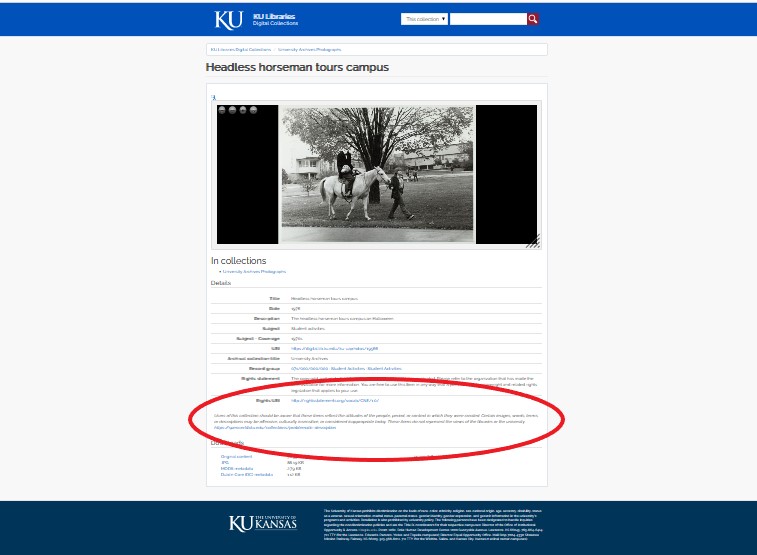
The first step was to add a phrase to all images from our collections in KU’s digital repository, where digitized versions of our collection materials are increasingly being made available to the world. This language was drafted by a small group and went through many revisions by the Spencer collections group, and was implemented by our colleagues in KUL Digital Initiatives:

“Users of this collection should be aware that these items reflect the attitudes of the people, period, or context in which they were created. Certain images, words, terms, or descriptions may be offensive, culturally insensitive, or considered inappropriate today. These items do not represent the views of the libraries or the university.”

Screenshot of a black-and-white photograph with textual description.
An example of an image in the University Archives Photographs digital collection with the contextual statement about problematic language. Click image to enlarge (redirect to Spencer’s digital collections).

We also decided we needed a longer statement about our collections, and added more information to our previously published collection development statements, also freely available. Initial work came from Head of Public Services Caitlin Klepper and Head of Manuscripts Processing Marcella Huggard with input from a group from across Spencer.

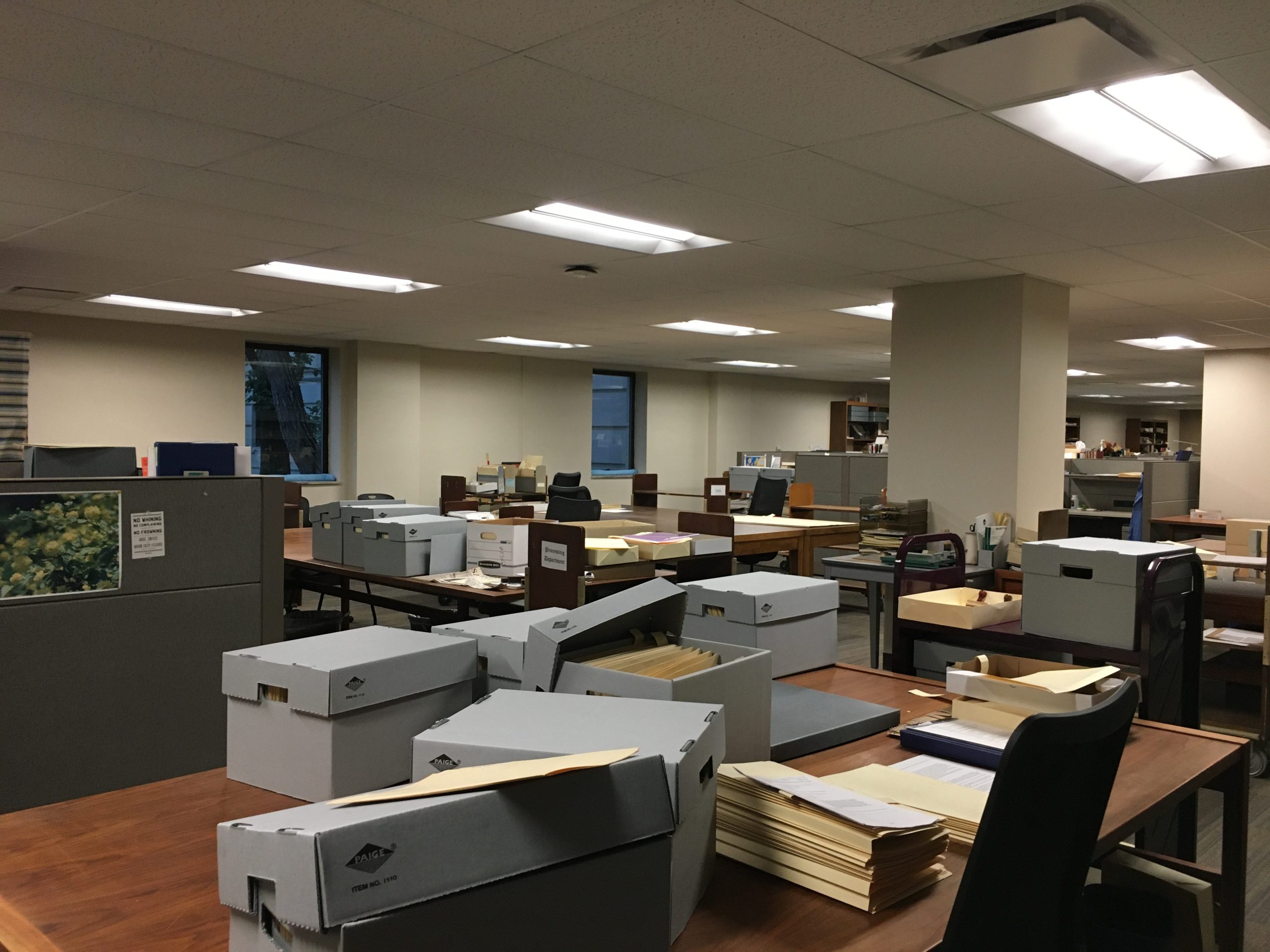
Finally, we saw an opportunity, as have many of our peer institutions, to expose the work of description, a professional specialty that has long been hidden behind card catalogs and filing cabinets, frequently in the basements of buildings and at the end of a long series of tasks that take collections from the donor’s attic to the loading dock and to the shelves (or laptops). We published a statement about that as well, initially drafted by Caitlin Klepper and Marcella Huggard, based on the work of other institutions.

Photograph of a large open room. Large tables in the foreground are full of boxes and other library materials.
A view of the Processing and Cataloging workspace at Spencer Research Library. Click image to enlarge.

In all of this, we relied heavily on the good judgement and best efforts of colleagues at peer institutions. We realize that every environment is unique, so we tailored it to the KU world, talking with colleagues and, where we could, members of our communities. We hope to get feedback as we go, as we begin a larger conversation with those who use our collections in various ways—about what we collect and why, how we describe it, and how we use the impact of our collections to make a better, more just world.

Beth M. Whittaker
Interim Co-Dean, University of Kansas Libraries
Associate Dean for Distinctive Collections
Director of Spencer Research Library