The University of Kansas

Inside Spencer: The KSRL Blog

Books on a shelf

Welcome to the Kenneth Spencer Research Library blog! As the special collections and archives library at the University of Kansas, Spencer is home to remarkable and diverse collections of rare and unique items. Explore the blog to learn about the work we do and the materials we collect.

This blog may contain archived web content. This blog may link to catalog records which no longer exist as of a software change in 2026.

Poetry with Purpose: Thematic Through Lines in Special Collections

July 16th, 2026

Poetry is occasionally seen as a “sillier” form of writing due to its limited boundaries and subjective meanings. However, as a form of revolution and rebellion, it remains a constant in the zeitgeist of American literary movements. By highlighting a handful of Special Collections material published by Beat poets, a fellow Kansan, and a Slavic studies scholar, I hope to shine a bit more light on the impactful messaging that came from different, often subversive, poetry collections! 
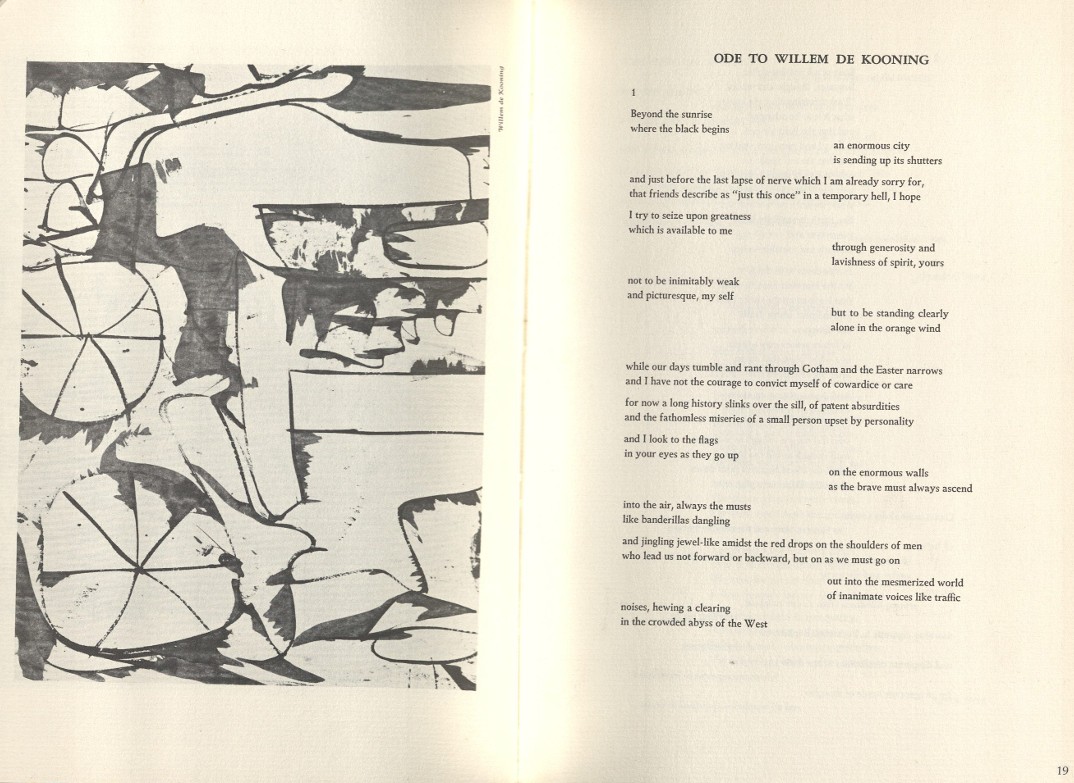
This image has text. The facing page has a black and white version of an unidentified painting by Willem de Kooning.
The poem “Ode to Willem de Kooning” by Frank O’Hara in A New Folder, Americans: Poems and Drawings, edited by Daisy Aldan with a foreword by Wallace Fowlie, 1959. Call Number: LE 1959 B23. Click image to enlarge.

The first work published in this list, Daisy Aldan’s A New Folder (1959) expresses the desire to reflect American poets’ complicated identity through their writing. The thematic subject for this collection is explained by Wallace Fowlie in his foreword. Fowlie writes that the book testifies to the “continuing vitality of American poetry” (1). With only the common thread of nationality, each poem in this collection provokes Fowlie’s quote: “The artists of a society are its only individuals, and society, by nature and definition, is opposed to individuals” (1). Complemented by American abstract artists like Jackson Pollock, Willem de Kooning, and Franz Kline, A New Folder pinpoints an incredibly specific time in Western art and culture. A product of Beat Generation ideals, the volume concentrates anti-conformist beliefs in relation to human expression and creation through the use of art and poetry.  
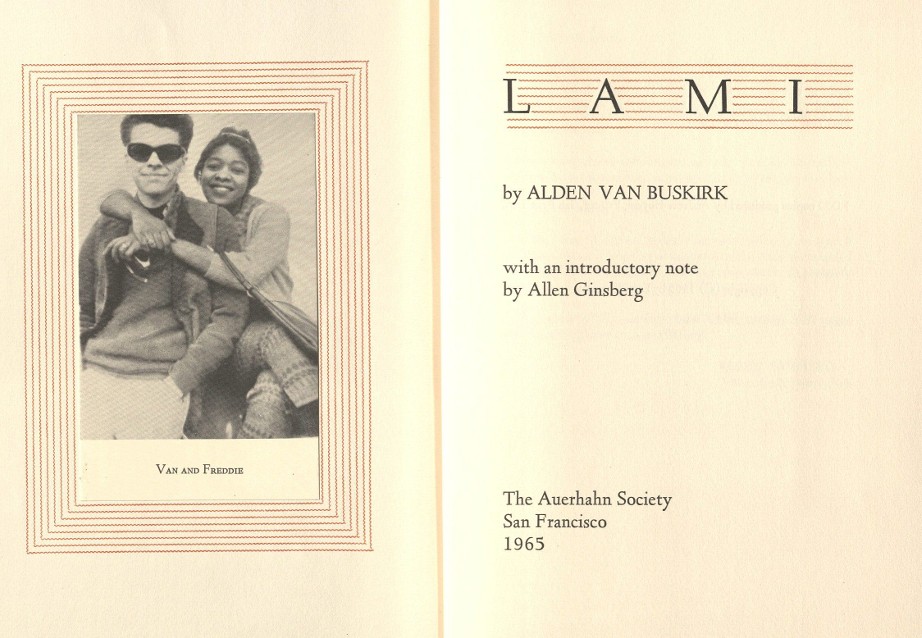
This image has text accompanied by a black-and-white photo of a white man and a Black woman labelled "Van and Freddie."
The frontispiece and title page of Lami by Alden Van Buskirk, with an introductory note by Allen Ginsberg, 1965. Call Number: LE 1965 B25. Click image to enlarge.

Composed and published by David Rattray, Lami (1965) memorializes the life of Alden Van Buskirk through a compilation of his poetry, which explores life in fragments leading up to his death in 1961. In his introduction, Allen Ginsberg describes the collection as a “whole witty­ – somber – book” that “consists of 91 pages and makes a complete statement of Person” (1). The reader is given a collection that feels raw and intimate as the posthumous publication reflects a beloved figure in the Beatnik subculture of the ’60s. The title is accompanied by many definitions as “Lami” is cited to mean “tenement elf but above all guiding genie”; “American lama descended from golden age ‘lambish folke’”; and “also l’ami” (Rattray, Table of Contents). Marked as a collection of poetry that encapsulates one man’s being, Van Buskirk’s mortality and the thematic presence of grief for one’s own life finds a certain intimacy within Lami that holds through to the end.  
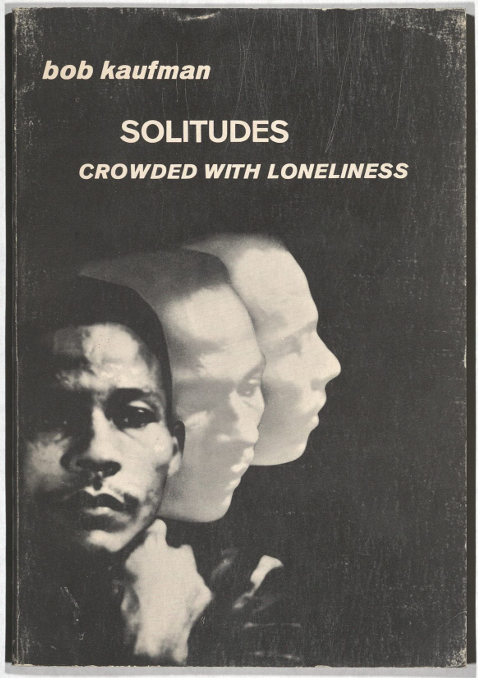
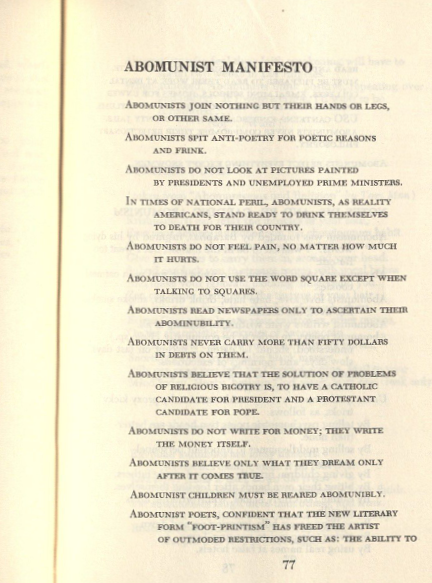
The front cover of (left) and the first page of the poem “Abomunist Manifesto” in (right) Solitudes Crowded with Loneliness by Bob Kaufman, 1965. Call Number: LE 1965 B16. Click images to enlarge.

A personal favorite of mine from Spencer’s collection, Bob Kaufman’s Solitudes Crowded with Loneliness (1965) is a tribute to social protest and, as the title suggests, the fight of the lonely subject amongst a crowd. Held at the back of Solitudes Crowded is a broadside of Kaufman’s “Abomunist Manifesto,” which appropriates the Communist Manifesto. Kaufman modifies the language of Marx and Engels with provocative, humorous statements designed to reflect his own radicalism within the counterculture of the 1960s. An “abomunist” is defined by Kaufman as a noun meaning “one who avows Abomunism, disavowing everything else, especially butterscotch” (81). Accompanying political rhetoric, the collection is rich with Kaufman’s “prophetic verse” in which he was known to have written with inspiration “from the improvisatory bebop jazz featured at the Beats’ favorite North Beach watering holes” [1]. The absurdity of Kaufman’s writing subverts expectation as he dedicates himself to the protest of a societal collective. 
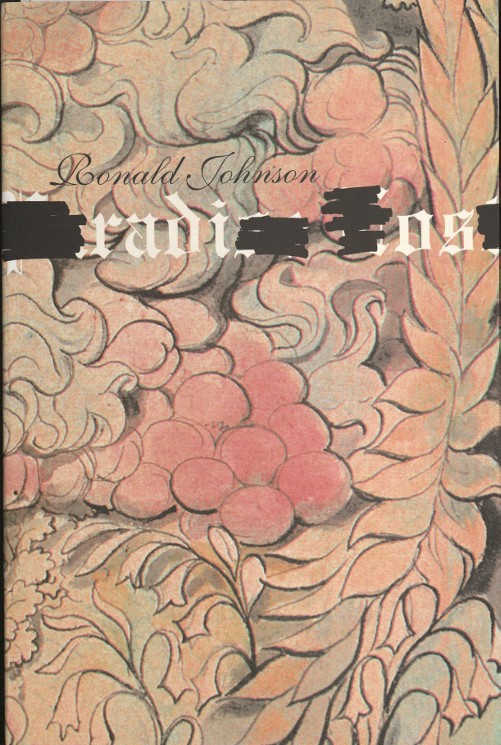
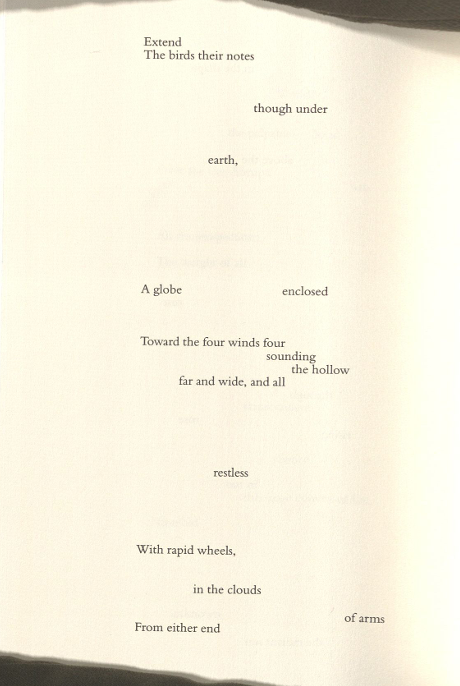
The front cover (left) and section (right) of RADI OS by Ronald Johnson, 1977. Call Number: C23084. Click images to enlarge.

Comparatively a much less political piece than the previous examples, Ronald Johnson’s RADI OS (1977) uses abstract design for the art and structure of his poetry. Erasure poetry is made by taking an already written text and erasing the words to create new poetry. As one of the earliest poets to create erasure poetry – one with Kansas roots, no less – Johnson takes John Milton’s Paradise Lost and transforms its text to express his own thematic subject and purpose. The genius of Johnson’s originality and meaning are enforced by Guy Davenport’s afterword, with its notes on the complex and thoughtful use of negative space and the ordering of each page. A particularly favorite insight of mine that Davenport says in his afterword: “What the artist seems to create has, as the artist is the first to appreciate and acknowledge, already been created. Design and arrangement are the artist’s passion. Place is all” (96). Davenport’s words ring true throughout this list, finding creation as a backbone to what makes an artist, and how that creation translates into meaning whether that is political, personal, or both.  

This image has text with a bat skeleton in silver gray.
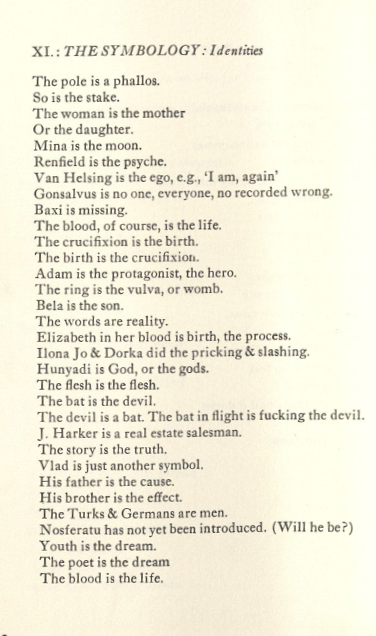
This image has text.
The front cover (top) and a portion (bottom) of The Dracula Poems by Bruce McClelland, 1978. Call Number: C24538. Click image to enlarge.

Finally, at first glance McClelland’s 1978 collection dedicated wholly to the existence of a brooding, bloodsucking myth has a comedic air to it. The 21st-century vampire has become more of an angsty, sparkling romantic lead than the seductive, psychological, and aristocratic figure that erupted from authors like Polidori, Le Fanu, and Stoker. Published in 1978 and prefaced by Robert Kelly, The Dracula Poems conceptualize the identity of “poet” as a vampire/monster who is uniquely open to interpretation by language. McClelland’s background in Slavic studies with a concentration in anthropology as well as linguistics offers more to every poem as they attempt to convey metaphorical wonderings of a monster “preserved and isolated at once” in the literary canon [2]. Still remaining an enjoyable and creative collection of well-crafted poetry, McClelland’s book suffuses a popular figure with identity, making the vampire a much more personal beast.  

Theo McKay
Public Services student assistant

[1] Biography of Bob Kaufman by the Academy of American Poets  
[2] Bruce A. McClelland’s website 

Spencer’s Growing Zine Collection

January 28th, 2026

Zines are self-published writing and art, often made by collage with illustration, photos, and clippings from other publications, and printed like a pamphlet or small book. Zine production began the 1930s with sci-fi fanzines, but in the 1980s and ‘90s, the widespread availability of the copy machine and Kinko’s 24-hour stores spurred many disaffected young people to express their personal and political opinions, often anonymously, in zines that were distributed locally and nationally via word of mouth and the postal service. Although the internet later replaced much of the ways young people previously communicated with each other, zine production has continued and has been made easier with new digital tools and home printers.

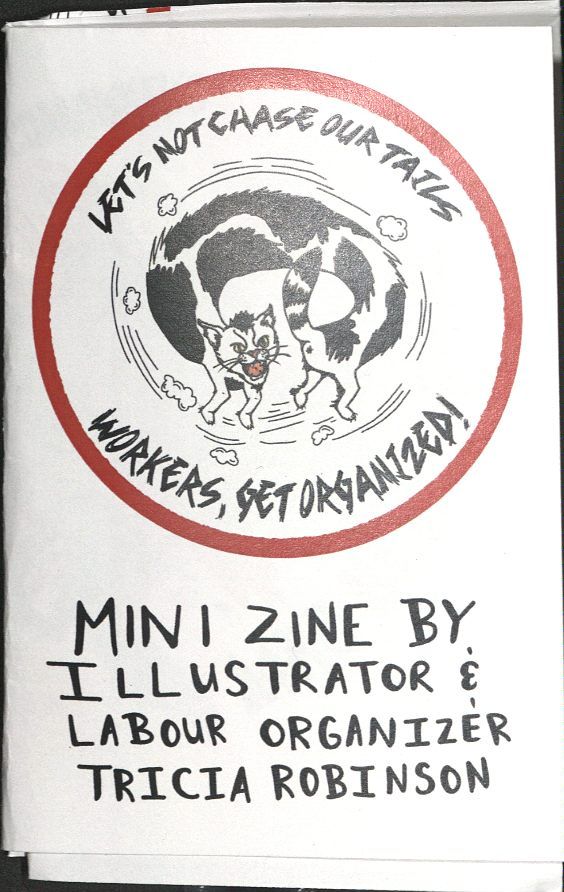
Bibliographic information in black text against a white background with a sketch of an angry cat chasing its tail.
Front cover of Let’s Not Chase Our Tails: Workers, Get Organized! by Tricia Robinson, circa 2025. Call Number: Uncataloged. Click image to enlarge.
Bibliographic information in cream and green text against a cream background with a sketch of a woman and a speech bubble.
Front cover of I Strongly Recommend the Library, circa 2025. Call Number: Uncataloged. Click image to enlarge.
Bibliographic information in black text against a light blue background with an illustration of a man throwing something.
Front cover of Palestine, Mon Amour by Alfredo M. Bonnano, circa 2025. Call Number: Uncataloged. Click image to enlarge.

In 2016, Kenneth Spencer Research Library received a large donation of about a thousand left-wing, radical zines from the Lawrence-based Solidarity Revolutionary Center Library. The books remaining in the library are now housed at the Ecumenical Campus Ministries building near campus. Before they were donated to Spencer, many of these zines were scanned and made available on the Internet Archive.

Since adding the Solidarity Library zines to the Wilcox Collection of Contemporary Political Movements in 2016, interest in the collection has grown among KU students, KU faculty, and community members. Several classes come to Spencer each semester to learn about the collection, view a selection of zines, and complete a primary source analysis activity with one zine. These class visits help prepare students to tackle a creative, unique assignment to make their own zines. Students also tour the Makerspace at Anschutz Library, where they can utilize the tools and materials needed to write, illustrate, assemble, and print copies of their zines for classes and/or for fun. Additionally, Spencer also hosted attendees of Lawrence’s annual Paper Plains Zine Festival last September for a tour of the library and to view some of our zines up close. Library staff were thrilled to see this group of zine creators and collectors show so much excitement and joy for our zine collection.

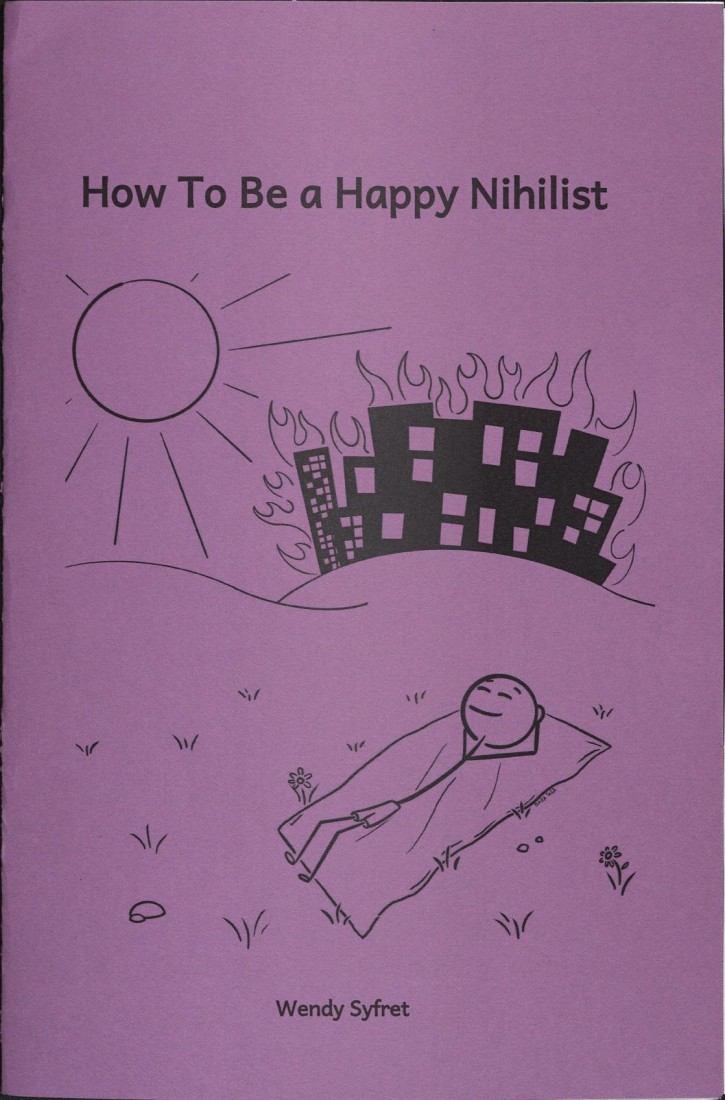
Bibliographic information in black text against a purple background with a sketch of a person laying under the sun on a blanket while a city burns behind them.
Front cover of How to Be a Happy Nihilist by Wendy Syfret, circa 2025. Call Number: Uncataloged. Click image to enlarge.
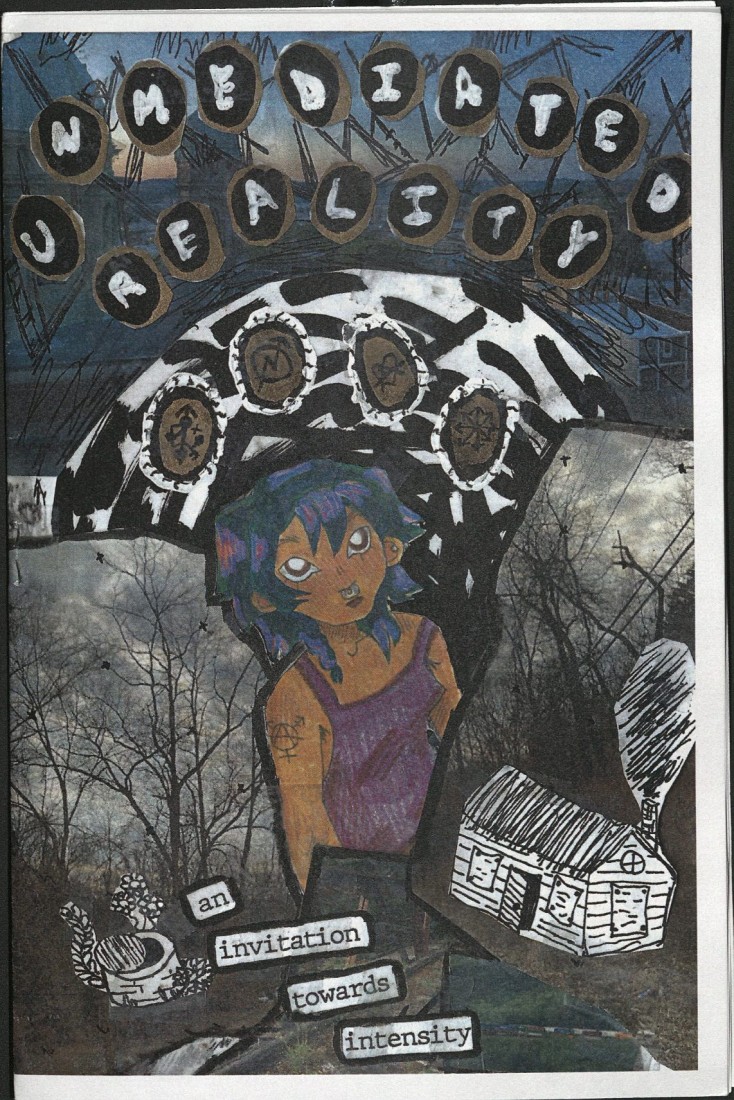
Bibliographic information in black and white text against a multicolored, illustrative background that includes a woman, a cabin, and trees.
Front cover of Unmediated Reality: An Invitation Towards Intensity, circa 2025. Call Number: Uncataloged. Click image to enlarge.
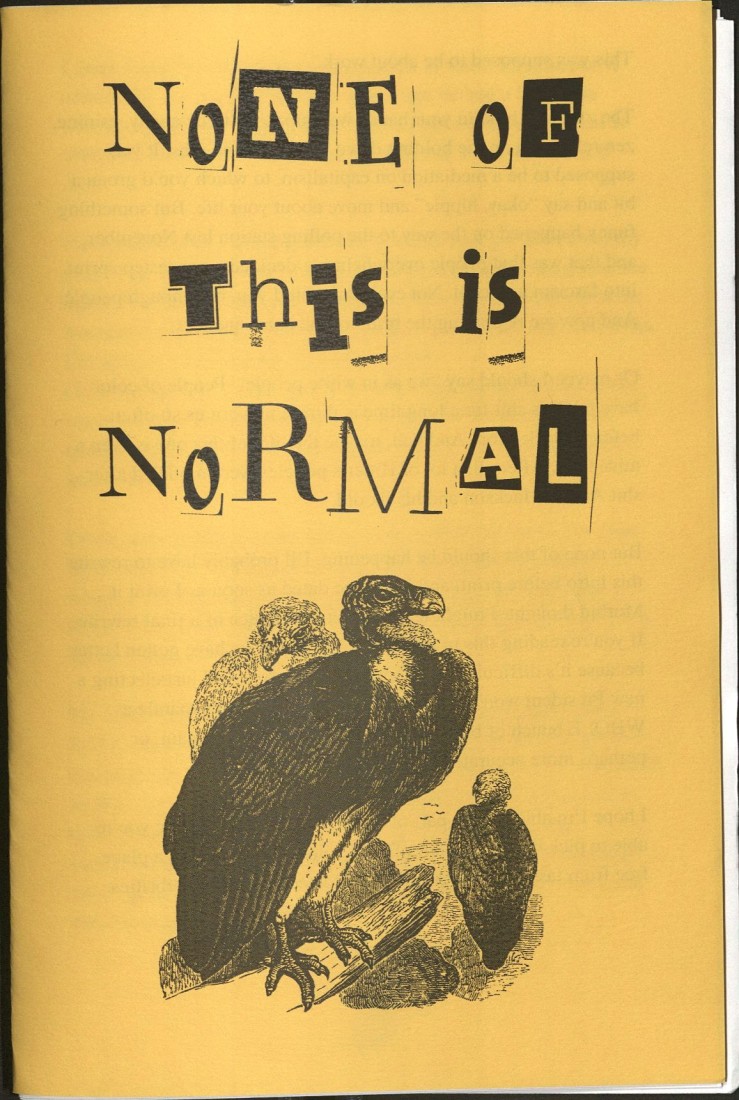
Bibliographic information in black text against a yellow background with an illustration of a large bird or hawk.
Front cover of None of This is Normal, circa 2025. Call Number: Uncataloged. Click image to enlarge.

Due to the popularity of the zine collection, it seemed like a good idea to acquire more recently published zines that address current topics students might be interested in. Last fall, we purchased about a hundred new zines (many of them created in 2025 and purchased on Etsy). While some of the zines are reprints of older publications, the more recent ones address topics such as political attacks on transgender people, resistance to fascism and state violence, the labor movement, the war in Gaza, the American tech oligarchy, artificial intelligence, the COVID-19 pandemic, and mutual aid. The zines are in the process of being cataloged; when that work is completed, information about them will be available via the KU Libraries online catalog, and the zines themselves will be available for classes and for research in our Reading Room.

Throughout this post is a sample of ten covers from our most recent purchase of zines. If you have suggestions for further purchases or donations of zines for the Wilcox Collection or if you would like to view these in our reading room, get in touch with Spencer staff!

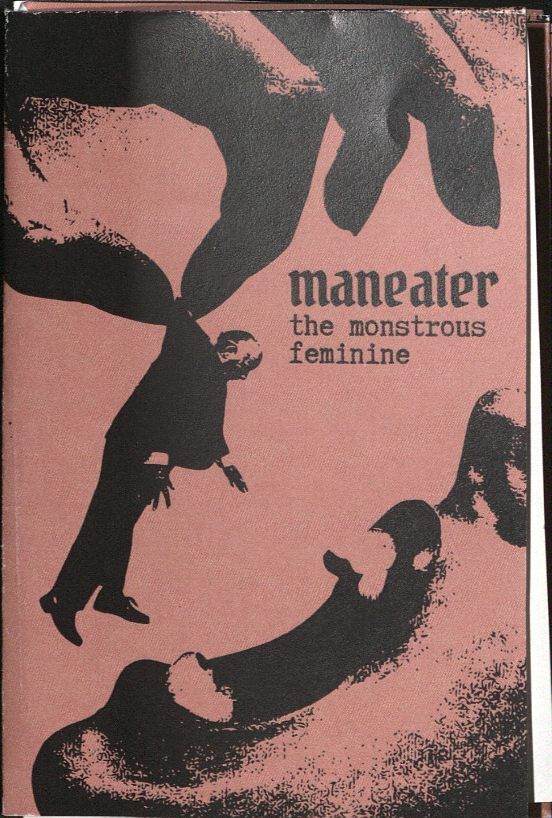
Bibliographic information in black text against a light pink background with an illustration of fingers dropping a small man into an open mouth.
Front cover of Maneater: The Monstrous Feminine, circa 2025. Call Number: Uncataloged. Click image to enlarge.
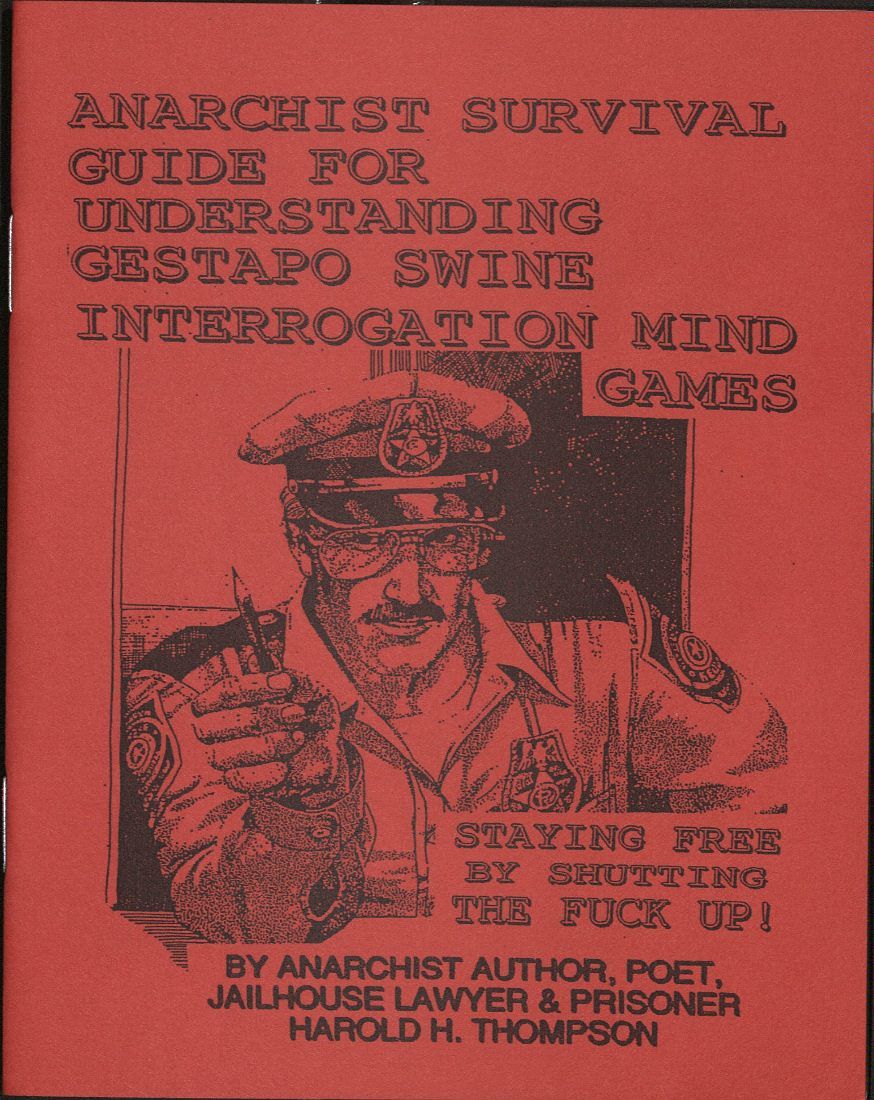
Bibliographic information in black text against a red background with a sketch of a male law enforcement officer holding out a pencil.
Front cover of the zine Anarchist Survival Guide for Understanding Gestapo Swine Interrogation Mind Games by Harold H. Thompson, circa 2025. Call Number: Uncataloged. Click image to enlarge.
Bibliographic information in black text against a white background with a sketch of a snail that has a coffee cup on top of its shell and the word "resist" written on the shell's side.
Front cover of How to Survive the Fall of Democracy with Joy and Whimsy in Your Heart, circa 2025. Call Number: Uncataloged. Click image to enlarge.
Bibliographic information in pink and black text against a white background with a sketch of a growling animal.
Front cover of the zine Fight Fascism: How to Recognize It and Take Action, circa 2025. Call Number: Uncataloged. Click image to enlarge.

Kate Stewart
Curator of the Wilcox Collection of Contemporary Political Movements

Maureen Tuohey and Theo McKay
Public Services Student Assistants