
The Magic of Classic Children’s Books: Beatrix Potter Edition
July 8th, 2026This is the third post in a series highlighting various titles from Spencer Research Library’s vast children’s book collection.
Well-loved children’s books spark magic from the thrill of adventure to imagination of far-off, enchanted places. Beloved by generations, classic children’s stories remain with us throughout life, whether it is re-reading childhood favorites or sharing our most loved stories with young people in our lives. These classics ignite imaginations and impart timeless lessons. They become some of our most cherished friends that stay with us throughout our lives.
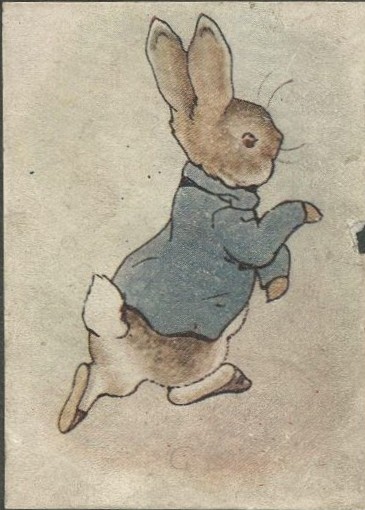
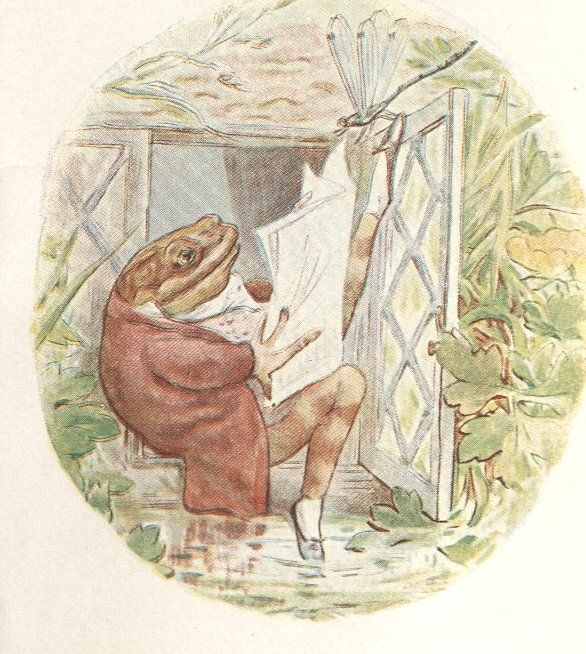
Most people first think of Peter Rabbit when they think about Beatrix Potter and her little, whimsical books. For me, the memories go somewhere else entirely. I think of my grandparents and those sleepover nights when I was small: the familiar rhythm of Wheel of Fortune and Jeopardy, the soft glow of the Lawrence Welk Show, and then the quiet ritual of getting tucked into bed. Before I’d climb up onto the tall double bed, Grandma let me choose a story. She had a small collection of Beatrix Potter books lined up neatly on the shelf of the secretary. I always picked The Tale of Mr. Jeremy Fisher. Something about that brave little frog in his tiny coat and galoshes captured my imagination every time.
Jeremy Fisher always stood out to me, and I think it began with something wonderfully simple: I liked his name and he wore galoshes. “Galoshes” is a funny word. Jeremy lived by a pond doing the kinds of things frogs like to do. There was an easy, everyday magic in that little world of lily pads, fishing lines, and soft water‑sounds. A place that simultaneously felt adventurous, comforting, and calming, thinking about the lily pads at Great Grandma and Great Pop’s house on Pleasant Lake. I could imagine him living out in the channel where the lily pads grew. There was something irresistible about this earnest little frog in his smart red coat, setting off across the water with more optimism than caution. He wasn’t the mischievous troublemaker like Peter or the tidy, bustling figure of Mrs. Tiggy‑Winkle. Jeremy was gentle, hopeful, and just a little bit unlucky, which made him feel wonderfully real. His world was quieter and calmer, full of reeds, shaded banks, and the small bravery of trying again after a mishap. That big water beetle was scary, but Jeremy persevered. Even then, I think I loved that he wasn’t perfect. He was brave and simply did his best, and somehow that made his story feel like a friend I’d return to every time I visited Grandma’s.
Beatrix Potter’s characters have a way of lasting, settling into memory long after childhood has passed. Part of their endurance comes from how Potter built them as small creatures with very human hearts. They’re mischievous or hopeful or a little unlucky, but always recognizable. Peter’s impulsiveness, Jemima’s earnestness, Jeremy’s gentle optimism: these aren’t just traits of animals in waistcoats (and galoshes), they’re reflections of us. And because Potter never talked down to children, her stories carry an honesty that still feels fresh. The stakes may be small like a lost handkerchief or a ruined fishing trip, but the emotions are real. Her characters inhabit tiny, complete worlds where courage is quiet, mistakes are forgivable, and trying again is its own kind of triumph. That’s why they stay with us. They grow as we grow, offering something new each time we return to them.
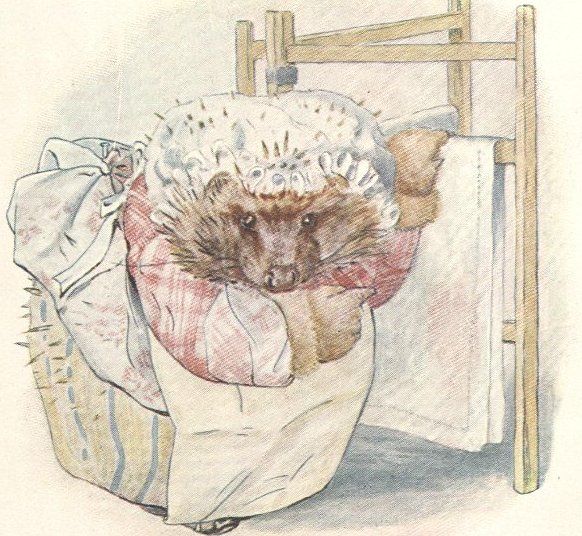
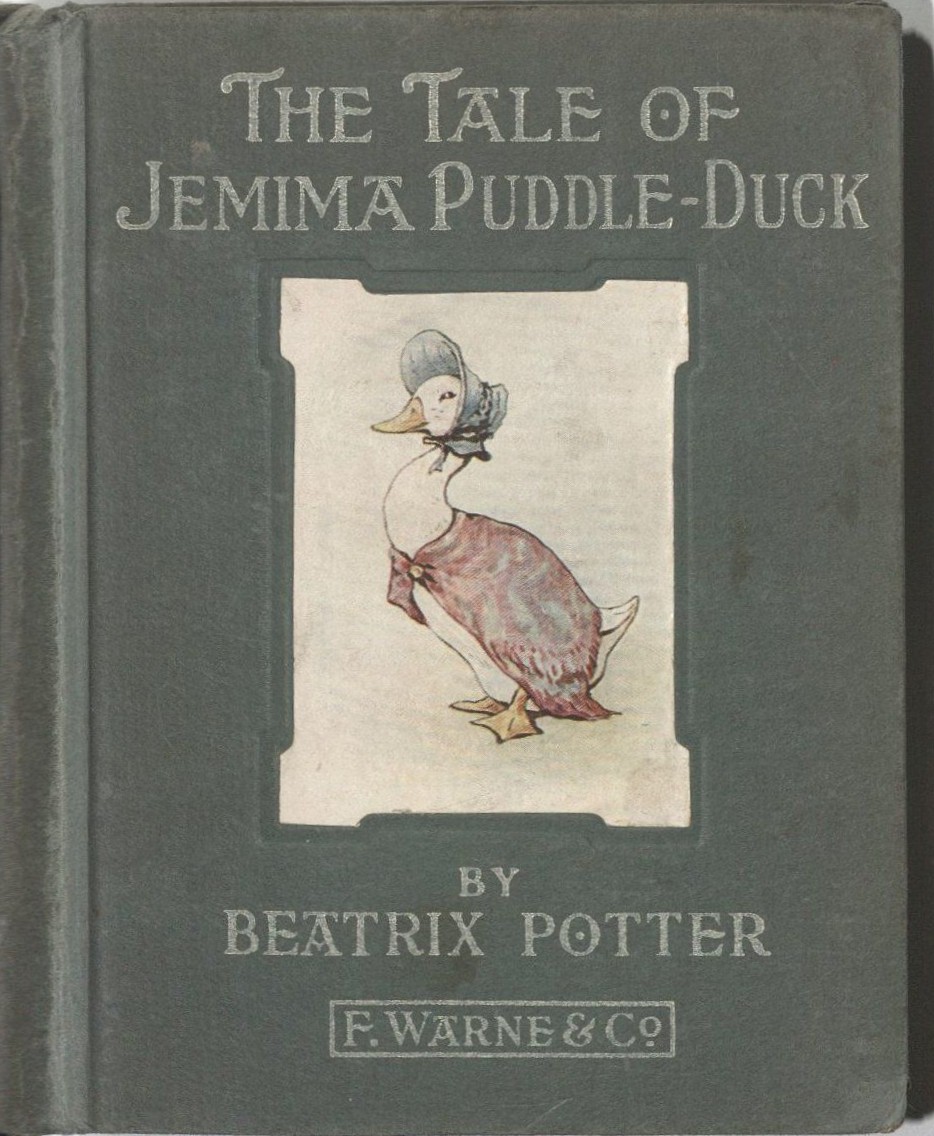
Left: An illustration of Mrs. Tiggy-Winkle in The Tale of Mrs. Tiggy-Winkle, New York: Frederick Warne & Co., 1905. Call Number: Children 2972. Right: The front cover of The Tale of Jemima Puddle-Duck, New York: Frederick Warne & Co., Inc., 1936. Call Number: Children 2974. Click images to enlarge.
Potter was famously particular about the size of her books. She wanted them to be small enough for children to hold comfortably as intimate little volumes that fit into a pocket or a bedtime routine. Her publishers pushed for larger formats, but she held her ground. To her, the charm of these stories depended on scale: tiny creatures deserved tiny books. A child should feel as though they were peeking into a private world, one they could cup in their palms. That insistence on smallness created a kind of closeness between reader and story, a feeling that Peter Rabbit or Mr. Tod might jump right off the page. It’s part of why her tales endure, they were designed not just to be read, but to be held.
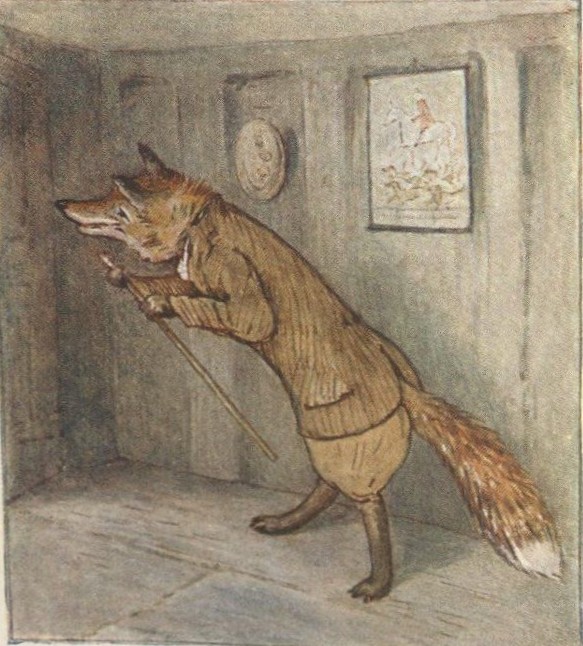
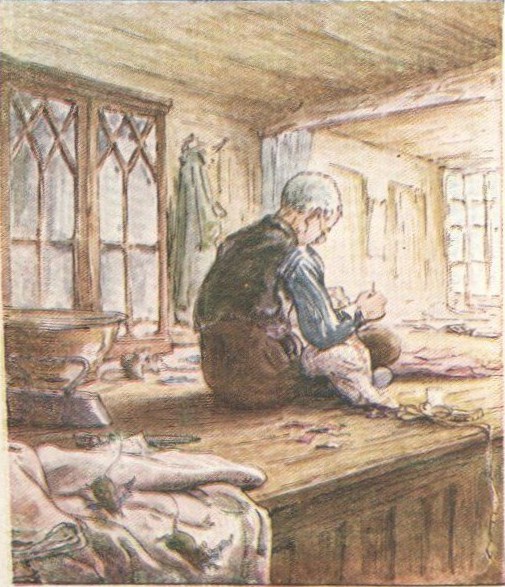
Left: The titular character of The Tale of Mr. Tod, New York: Frederick Warne & Co., Inc., 1912. Call Number: Children 2982. Right: An illustration from The Tailor of Gloucester, New York: Frederick Warne & Co., 1903. Call Number: Children 2981. Click images to enlarge.
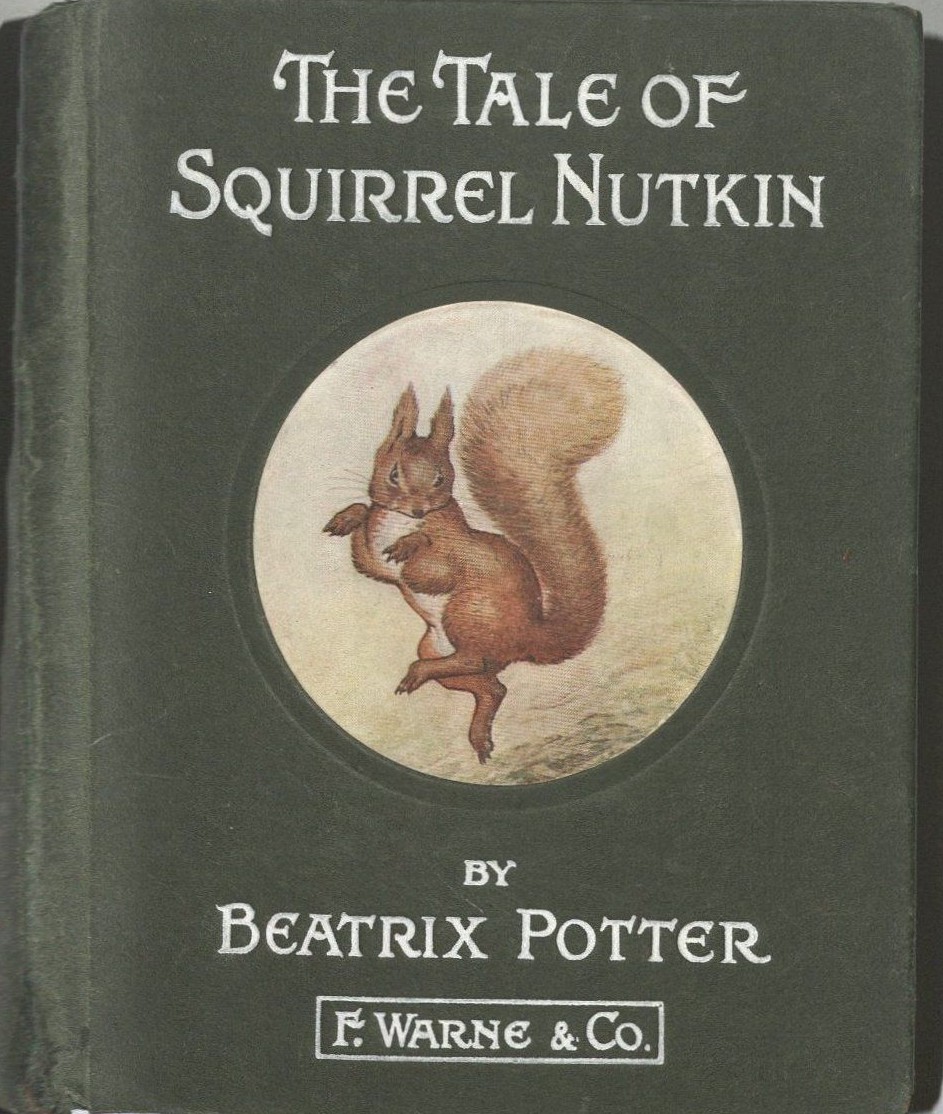
Potter’s little books didn’t just fit small hands; they shaped how children read. Their size created a sense of ownership, as if each story were a secret meant just for you. A child could hold the whole world of Squirrel Nutkin or the Tailor of Gloucester in one palm, turning pages that felt perfectly scaled to their own sense of wonder. The intimacy of that design slowed the reading experience down: you leaned in closer, studied the illustrations more carefully, and felt as though you were peeking into a miniature universe. Those tiny volumes made reading feel personal, portable, and inviting a quiet invitation to step into a story and carry it with you wherever you went.
Potter’s tiny, whimsical books didn’t stay tucked away in English nurseries for long. Their charm crossed borders almost as quickly as they captured hearts. They were small, easy to hold, easy to carry, and almost like treasures. They translated beautifully into other languages. Soon children around the world were meeting Peter Rabbit, Jemima Puddle‑Duck, and Jeremy Fisher in their own words, discovering the same quiet ponds, tidy burrows, and bustling little villages. Those pocket‑sized stories became tiny passports, carrying her small animal worlds from one country to the next, proving that gentle, kind wonder needs no translation.
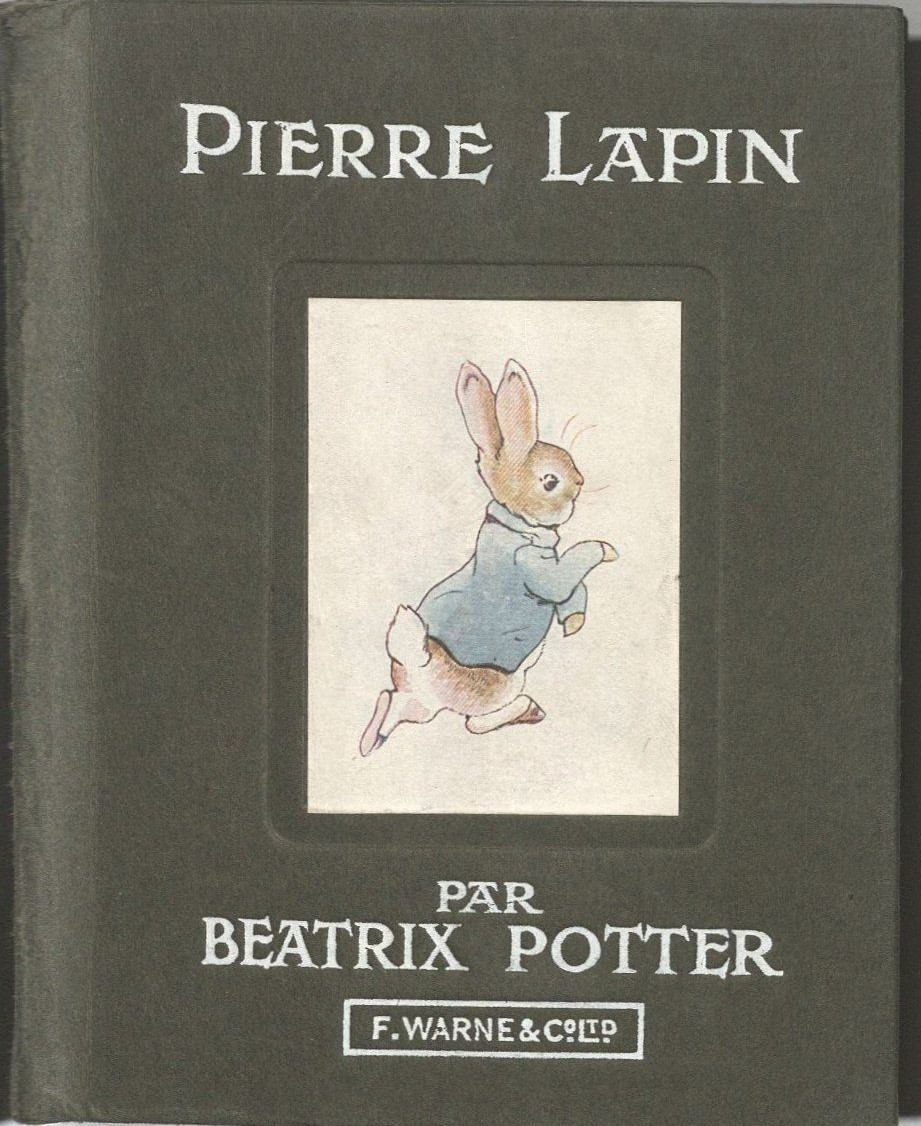
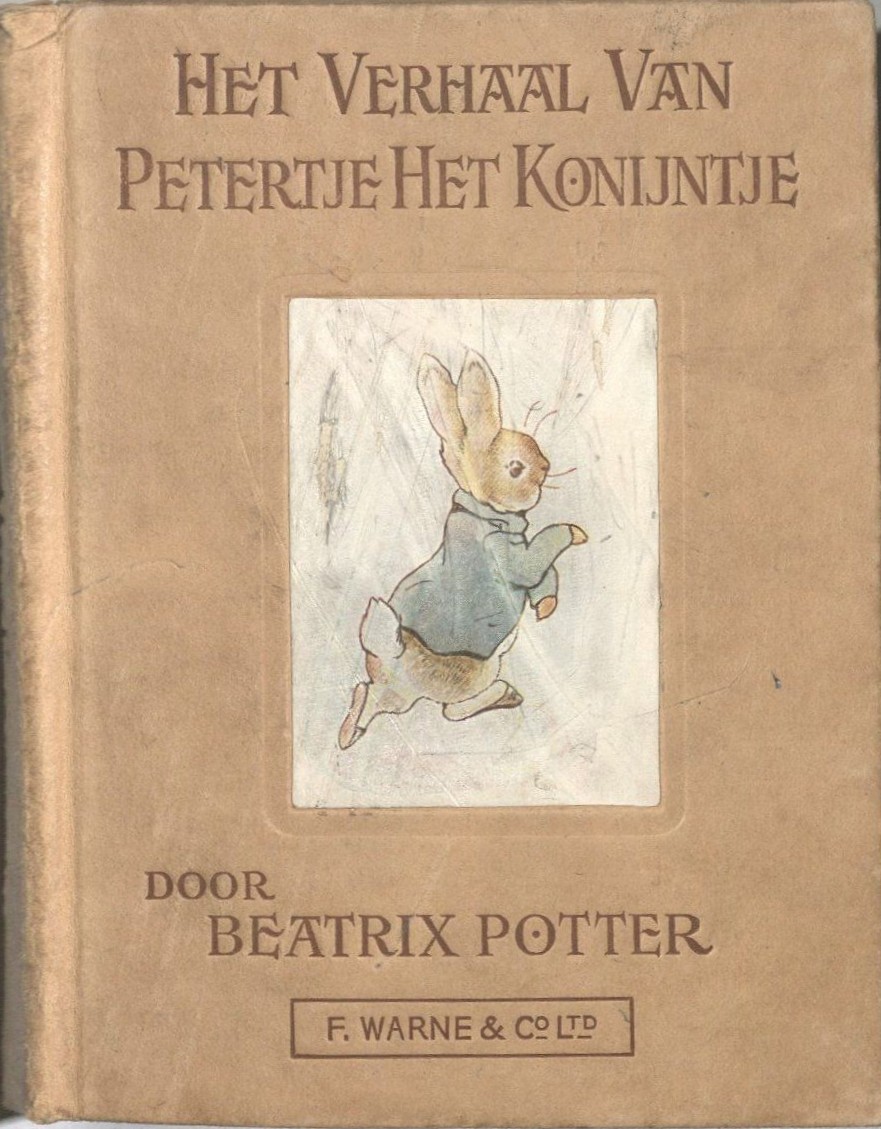
French (left) and German (right) translations of The Tale of Peter Rabbit, London and New York: Frederick Warne & Co., LTD, undated. Call Numbers: Children 2973A and Children 2975A. Click images to enlarge.
In the end, that’s what Beatrix Potter’s work has always done; taken something small and made it feel expansive. Her tiny books, perfectly sized for little hands, carried whole worlds inside them. And somehow those miniature stories traveled far beyond the quiet corners of English nurseries, finding their way into new languages, new homes, and new childhoods. It’s amazing that the same Jeremy Fisher who kept me company at my grandparents’ house has hopped across continents, meeting children who see their own wonder reflected in his gentle courage. These stories endure because they invite us in close, offering a world we can hold and one that, if we’re lucky, holds us right back.

Even for those of us who come to Beatrix Potter simply as readers, not scholars, there’s something quietly powerful about knowing these tiny books and their many editions are preserved in places like Spencer Research Library. Holding a physical copy of The Tale of Mr. Jeremy Fisher or The Tailor of Gloucester connects us to the way children first encountered these stories: small pages, careful illustrations, and a scale Potter insisted on because it shaped how young readers experienced wonder. Archives protect that experience. They safeguard the variations in printings, the translations that carried Peter Rabbit across borders, and the little design choices that made these books feel like treasures in a child’s hands. Preserving the books themselves ensures that future readers – whether curious visitors, devoted fans, or someone simply remembering a bedtime story at their grandparents’ house – can still encounter Potter’s world as she meant it to be held.
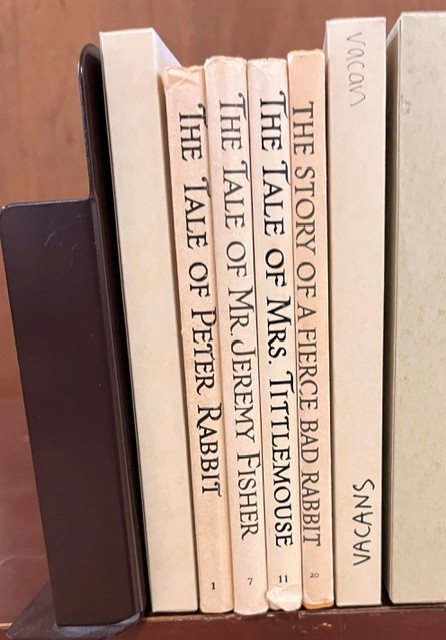
Spencer Research Library has twenty-one holdings of Beatrix Potter books. Frederick Warne & Co. (also Frederick Warne & Co., Inc. and Frederick Warne & Co., LTD) published Potter’s little books. The company had publishing houses in London and New York. The publication date and call number of each title are listed below:
- The Tale of Ginger and Pickles, 1909 (Children 2970)
- Histoire de Pierre Lapin [The Tale of Peter Rabbit, French], undated (Children 2973A)
- The Tale of the Pie and the Patty-Pan, 1905 (Children 2965)
- The Roly-Poly Pudding, 1908 (Children C606)
- The Tailor of Gloucester, 1903 (Children 2981)
- The Tale of Jemima Puddle-Duck, 1936 (Children 2974)
- The Tale of Mr. Jeremy Fisher, 1906 (Children 2983) and 1934 (Children 2984)
- The Tale of Mr. Tod, 1912 (Children 2982)
- The Tale of Mrs. Tiggy-Winkle, 1905 (Children 2972)
- The Tale of Mrs. Tittlemouse, 1910 (Children 2979)
- The Tale of Peter Rabbit, undated (Children 2978)
- The Tale of the Pigling Bland, 1913 (Children 2980)
- The Tale of Squirrel Nutkin,1903 (Children 2971)
- The Tale of the Flopsy Bunnies, 1909 (Children 2976A)
- Het verhall van Petertje het Konijntje [The Tale of Peter Rabbit, German], undated (Children 2975A)
- Wag-by-Wall, 1944 (Children B1119 and Children 2969)
Beatrix Potter titles by other publishers:
- The Fairy Caravan, Philadelphia: David McKay Company, 1929 (Children 3479)
- Peter Rabbit, Philadelphia: Henry Altemus Company, DATE (Children 5159A)
Meredith Phares
Operations Manager


