The University of Kansas

Inside Spencer: The KSRL Blog

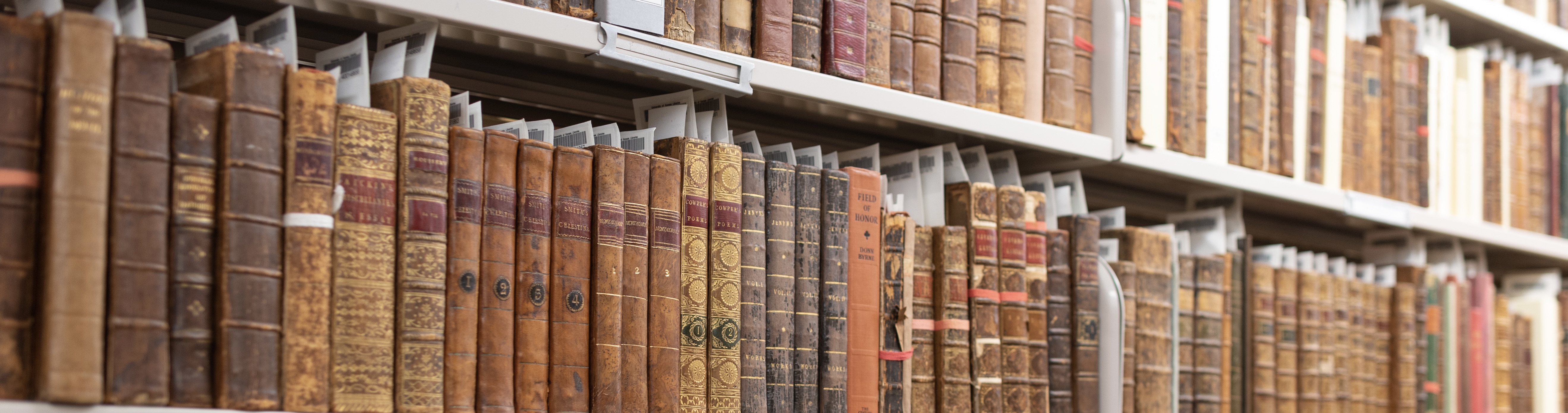
Books on a shelf

Welcome to the Kenneth Spencer Research Library blog! As the special collections and archives library at the University of Kansas, Spencer is home to remarkable and diverse collections of rare and unique items. Explore the blog to learn about the work we do and the materials we collect.

This blog may contain archived web content. This blog may link to catalog records which no longer exist as of a software change in 2026.

Collection Feature: Presidential Inauguration

January 16th, 2017

To mark this week’s United States presidential inauguration, we feature some inaugural items in Spencer Library’s collections.

Below are two tickets for the inauguration of Benjamin Harrison, who was sworn in as the 22nd U.S. President on March 4, 1889. The tickets are from the collection of John J. Ingalls, who represented Kansas in the United States Senate for 18 years (1873-1891), and served as President pro tempore of the Senate during three congressional sessions.

Inauguration tickets from the John J. Ingalls Collection.
Call number RH MS 43, Box 1 Folder 20.

Ingalls was also invited to a joint session of Congress to commemorate the centennial of George Washington’s inauguration, on December 11, 1889. President Harrison was also in attendance for this event.

Ticket for the commemoration celebration of Washington’s inauguration.
John J. Ingalls Collection. Call number RH MS 43, Box 1 Folder 20.

Whitney Baker
Head, Conservation Services

Labor Issues in the Josephson Collection

September 5th, 2016

The Josephson Collection contains booklets and pamphlets having to do with the labor union movement in the United States. The items were collected by Leon Josephson and later acquired by KU Libraries. The materials are not only from the United States, but also from Europe and Russia.

Leon Josephson, and his more famous brother Barney, were avowed Communists. Leon was an attorney and accused of aiding the Communist Party of the United States on behalf of the Soviet Union in the 1930s. He was held in contempt of Congress for refusing to testify before the House Committee on Un-American Activities in 1947.

The Josephson Collection also includes material on Communism and Socialism, but in honor of Labor Day weekend, here are some images of several of the U.S. labor-related items it contains.

Title pages of selected items from the Josephson Collection

Title pages of selected items from the Josephson Collection.
Call Numbers, from left to right: Josephson 5396, Josephson 4172,
Josephson 5608, and Josephson 4164. Click image to enlarge.

TItle pages of selected items from the Josephson Collection

A selection of materials from the Josephson Collection.
Call Numbers, from left to right: Josephson 1455, Josephson 4749,
Josephson 3472, and Josephson 3487. Click image to enlarge.

TItle pages of selected items from the Josephson Collection

A selection of materials from the Josephson Collection.
Call Numbers, from left to right: Josephson 2904, Josephson 3883,
Josephson 3974, and Josephson 3489. Click image to enlarge.

Cover of an issue of Labor Unity, February 1928

Cover of an issue of Labor Unity, February 1928.
Call Number: Josephson 4200. Click image to enlarge.

Cover of May Day vs. Labor Day, 1936

Cover of May Day vs. Labor Day: A Comparison of the
Social Significance of the Two Days of Labor Celebration
by Olive M. Johnson, 1936.
Call Number: Josephson 5757. Click image to enlarge.

Kathy Lafferty
Public Services

Not the End of the Track

August 29th, 2016

Summer is a time for both large and small projects for the students and staff in Conservation Services. Summer 2016 was certainly no exception, as our crew tackled a somewhat daunting and very dirty re-housing venture. This was an amazing group effort, with lots of help and good advice coming from many corners of the KU Libraries.

In the early nineties, the Spencer Research Library took possession of a massive set of technical drawings of the Kansas City Terminal Railway track system. The drawings date from the late nineteenth through the mid-twentieth  century, and are reproduced in a number of media including cyanotypes (aka blueprints), Photostat copies, and hand-drawn images. They range in size from smaller than a piece of notebook paper to rolls over thirty feet in length. There are just under five hundred sets of drawings varying in amount from one to more than twenty-five drawings per set.

Housing railway drawings at Spencer Research Library, University of Kansas Libraries

A sample drawer from the metal cabinets. Click image to enlarge.

The drawings arrived at Spencer Research in their original storage cabinets. The cabinets were metal, painted dark green, and came in four different depths, the largest of which could not be accommodated in the building. The drawers of the largest cabinet were thus removed and stored with boards separating each layer. Some of the drawers containing the drawings were lined with kraft paper, while others were not. Many of the drawings had been tightly rolled and secured with rubber bands. The rubber bands had become brittle with age and had also adhered themselves to the drawings. Because the cabinets had been stored in the train station, there was a great accumulation of grime and dust on cabinetry and drawings alike.

Housing railway drawings at Spencer Research Library, University of Kansas Libraries

Previous storage of the track drawings. Click image to enlarge.

Six student employees and I began the project by talking through various options for staging and cleaning the drawings, setting up the new storage area, and housing the drawing sets. Meetings were also held with Sherry Williams (Curator of the Kansas Collection), Meredith Huff (Operations Manager for Spencer Research Library), and Whitney Baker (Head of Conservation Services) to discuss the logistics of the project.

It was quite the puzzle to work out where and how to stage the drawings, since the incoming storage unit needed to be assembled where the old cabinetry had stood. The drawing sets in their drawers were eventually staged in four separate locations and the old cabinets were removed.

Housing railway drawings at Spencer Research Library, University of Kansas Libraries

Moving the cabinets required a lifting device. Click image to enlarge.

Using existing shelving hardware, the team put together a framework of upright brackets and placed shelves at strategic locations to give strength and support to the soon-to-be-constructed honeycomb of tubes. A total of five-hundred and thirty mailing tubes were assembled to house the drawings. Each tube was lined with a heavy-weight, acid-free piece of cardstock, and then placed into the shelving unit.

Housing railway drawings at Spencer Research Library, University of Kansas Libraries Housing railway drawings at Spencer Research Library, University of Kansas Libraries

Modified shelving units empty (left) and with cardstock-lined tubes inserted (right). Click images to enlarge.

At the same time, the student staff began removing the desiccated rubber bands from the drawings and gently cleaning each roll with a soft brush. It was a grungy task that took more than two months to complete. As throughout, the students handled this portion of the project with a great deal of aplomb and good-natured ribbing, and only a couple of grossed-out moments involving truly disgusting rubber bands.

Special Collections Conservator Angela Andres was instrumental in helping solve the issue of how to corral the drawing sets in the tubes, making retrieval and return go smoothly. Through her research, she found a medical supply company that was able to provide us with a continuous virgin Tyvek sheath that could be cut to the correct length for each set.

Housing railway drawings at Spencer Research Library, University of Kansas Libraries

Tyvek sheath securing a set of drawings together inside the cardboard tube. Click image to enlarge.

After cleaning, the drawings were slipped into the Tyvek sheath, secured with cotton tying tape, and loaded into the honeycomb.

Housing railway drawings at Spencer Research Library, University of Kansas Libraries

Honeycomb structure. Click image to enlarge.

As each bay was filled, labels were created that correspond with the set numbers and adhered to lids, and the tubes were capped.

Housing railway drawings at Spencer Research Library, University of Kansas Libraries

Caps and labels attached to the tubes. The final product! Click image to enlarge.

This project was a tremendous group effort, involving the cooperation and assistance of many library staff, including those mentioned above and also the Annex team, Michelle Curttright, Doug Hatton, and Ryan Swartz, and the Libraries procurement officer, Kristin Vickers. Most importantly though, was Conservation Services student staff: Brecken Liebl, Valery Herman, Sara Neel, Rebecca Younker, Monica Funk, and Jocelyn Wilkinson. Their hard work was graciously recognized by others in the KU Libraries, as the team won the Jayhawks of the Quarter award for the third quarter of the year.

Roberta Woodrick
General Collections Conservator

Perfect Stranger

August 22nd, 2016

Recently, I have been working with Sherry Williams, Curator of Collections and Curator of the Kansas Collection, to survey and treat priority materials from the Kansas Collection. Many of these items had notes in the finding aids about conservation treatment needs.

One particular item was accompanied by a note—dated 1968, the year Spencer Library opened—indicating that the item should not be used until treatment could be secured. The item, which was received in a mailing tube, had been dutifully filed away. We were happy to find it and finally be able to address its needs. Inside was a rolled paper item with a linen backing. It was a plat map of the town of Stranger, KS, surveyed by A.D. Searl and dated June 11, 1867. The item was caked in mud, extremely stained, and very fragile.

Map of Stranger, KS. Call number RH VLT MS Misc 5, Spencer Research Library

Rolled item as it appeared when removed from the tube. Call number RH Map R560. Click image to enlarge.

Map of Stranger, KS. Call number RH VLT MS Misc 5, Spencer Research Library

Detail of the mud along top edge, also showing linen backing below. Call number RH Map R560. Click image to enlarge.

I removed as much dirt and mud as possible with a tool called a microspatula (shown in the above image), lightly dry-cleaned the item with vinyl eraser crumbs to remove additional surface dirt, and removed the linen backing, which peeled right off. The map was placed in a bath to wash away as much of the water-soluble degradation products as possible, then placed in an alkaline bath to add a buffer as the paper ages. Next, it was lined on the back with Japanese paper and wheat starch paste to provide more support to the fragile item. Areas of loss were filled in with toned Japanese paper.

Map of Stranger, KS. Call number RH VLT MS Misc 5, Spencer Research Library     Map of Stranger, KS. Call number RH VLT MS Misc 5, Spencer Research Library

Map of Stranger, KS, before and after treatment. Call number RH Map R560. Click images to enlarge.

Once the treatment was completed and I could safely view the map, I had to learn more about this town with the “strange” name. From the History of Leavenworth County Kansas by Jesse A. Hall and Leroy T. Hand (Topeka: 1921), I discovered that the town was originally named “Journey-Cake” after a nickname given to a Delaware chief who lived nearby. When the town was platted in 1867 (the date of the map), the name was changed to Stranger after the Big Stranger Creek that flowed through the town. However, another nearby town had the same name, so in 1877 the name was again changed to Linwood, in honor of the linden trees in the area.

As you can see from the map, Stranger was situated along both the Big Stranger Creek and the Kansas River. In May and June of 1903, excessive flooding wreaked havoc in the town. On the evening of May 29, 1903, Hall and Hand note, “Many frame houses were swept away in the newly made channel of the Kaw. Some were upturned and were not swept away. Water in places was 20 feet deep over what had been Linwood. The postoffice was completely submerged” (324). The townspeople eventually decided to move their town of Linwood a mile north, where it remains today.

Kaw River flood, 1903? Call number RH Ph P 1055_2, Spencer Research Library

Photo print of flood, possibly 1903. Call number RH PH 1055.2.
Click image to enlarge (redirect to Spencer’s digital collections).

Whitney Baker
Head, Conservation Services

“Books That are Helping Us to Know Our Country”: The American Guide Series

August 10th, 2016

With the end of summer, and the start of school just around the corner, perhaps you are thinking about squeezing in just one more road trip. Maybe you’d like to explore a state you’ve never been to, or get to know the one you’re in a little better. You’ll need a good, concise guidebook for the journey, one with interesting facts and historical information, as well as reliable maps and tourist information. To start with, you might consider consulting the American Guide Series. Although they were published from the late 1930s through the mid-1940s, they still provide excellent background information to get you started, although you’ll probably want to get an up-to-date map.

Image of title pages for American Guide Series volumes on Missouri, Colorado, Nebraska, and Kansas

American Guide Series for Missouri (1941), Colorado (1946), Nebraska (1939),
and Kansas (1939). Call Numbers: RH C9550, RH C11457,
RH C11415, and RH C11429. Click image to enlarge.

When Franklin Roosevelt became our 32nd president in 1933, the biggest national issue he and his administration had to contend with was the country’s severe economic depression, then in its fourth year with no end in sight. The plan they came up with to address this predicament became known as the New Deal, and it put in place a series of programs created by Congress and by presidential executive order to provide relief, recovery, and reform, all aimed at getting people back to work and the national economy on its feet again. The Works Progress (later Projects) Administration (WPA) was the largest of the New Deal agencies.

Fold-out map of Kansas from the American Guide Series for Kansas, 1939.

Fold-out map of Kansas from the American Guide Series volume on the state, 1939.
Call Number: RH C11429.Click image to enlarge.

One of those WPA projects was the agency called the Federal Writers’ Project (FWP). Begun in 1935 and ending in 1943, the FWP, at its peak, employed approximately 6,600 unemployed writers, editors, researchers, historians, art critics, archaeologists, geologists, cartographers, and clerical workers. They produced more than 276 books, 701 pamphlets, and 340 other publications, such as articles, leaflets, and radio scripts. The most popular of these works was the American Guide Series. Each state, through the FWP, hired staff to create a guidebook that contained information about the state’s history, cities, landmarks, and historic sites; the culture of its people; and the geology and geography of the land. Each guidebook also contained a detailed highway map, usually folded up at the back of the book. In addition to the states, guidebooks were created for the territories (except Hawaii) and large cities, such as Washington, D.C. and New York. Some states, including Kansas, were able to create guidebooks for a few of their towns, as well. For their time, there is also a surprising amount of information about minority populations in the guidebooks, although often stereotypical and exploitative. The goal of the guidebooks was to familiarize Americans with their own state and country and to keep them in the United States on their vacations, where their tourism dollars were most needed.

Title page of American Guide Series for Washington, D.C., 1937

Title page of American Guide Series for Washington, D.C., 1937.
Call Number: RH C3424. Click image to enlarge.

Title pages for American Guide Series for Leavenworth and Larned, Kansas

Title pages for American Guide Series for Leavenworth (1940) and Larned (1938), Kansas.
Call Numbers: RH C4787 and RH C4999. Click image to enlarge.

Describing the Series, Harry Hopkins, federal relief administrator, perhaps said it best when he asserted (as quoted in Catherine A. Stewart’s Long Past Slavery):

The American traveler gets into his automobile and travels for four days…and has the conviction that there is nothing of interest between New York and Chicago. Outside of a few highly advertised [sites]…he isn’t conscious of what America contains, of what American folk habits are. Americans are the most travel-minded people in the world; but their travel is two percent education and 98 percent pure locomotion. Speeding through towns whose chain stores look as if they had been turned out on an assembly line, the American motorist is unaware of the infinite variety and rich folklore of the American scene…For the first time, we are being made aware of the rich and varied nature of our country…By producing books that are helping us to know our country, the Writers’ Project helps us become better acquainted with each other and, in that way, develops Americanism in the best sense of the word.

Sources:

Hobson, Archie. Remembering America: A Sampler of the WPA American Guide Series. New York: Columbia University Press, 1985.

Shortridge, James R. The WPA Guide to 1930s Kansas. Lawrence, Kansas: University Press of Kansas, 1984.

Stewart, Catherine A. Long Past Slavery: Representing Race in the Federal Writers’ Project. Chapel Hill, North Carolina: The University of North Carolina Press, 2016.

Kathy Lafferty
Public Services