The University of Kansas

Inside Spencer: The KSRL Blog

Books on a shelf

Welcome to the Kenneth Spencer Research Library blog! As the special collections and archives library at the University of Kansas, Spencer is home to remarkable and diverse collections of rare and unique items. Explore the blog to learn about the work we do and the materials we collect.

How to Spot a Poison Book

October 28th, 2025
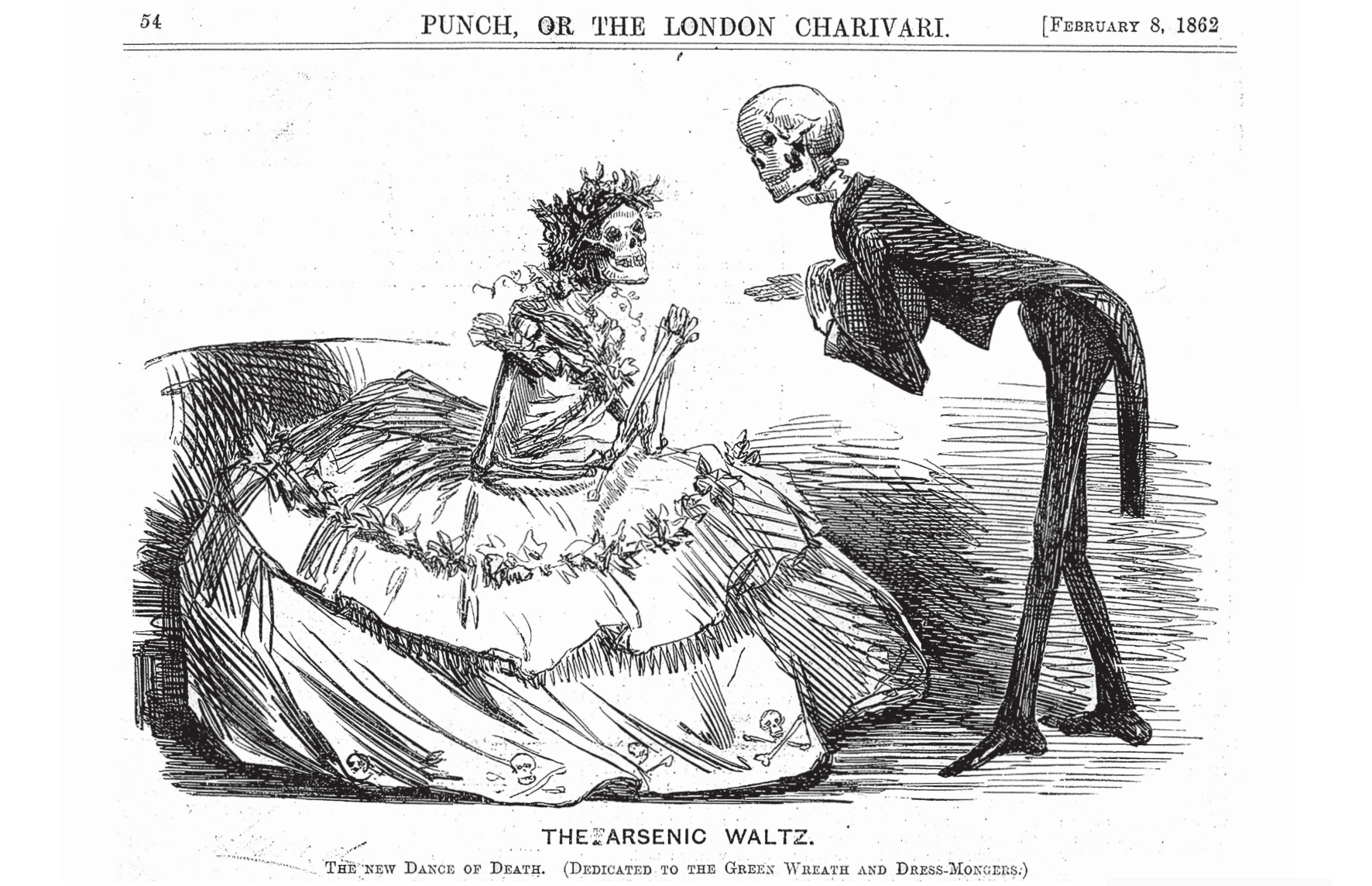
Illustration of two skeletons in formal ball dress entitled "The Arsenic Waltz. The New Dance of Death. (Dedicated to the Green Wreath and Dress-Mongers.)" Punch, or The London Charivari, February 8, 1862.
“The Arsenic Waltz. The New Dance of Death. (Dedicated to the Green Wreath and Dress-Mongers.)” Punch, or The London Charivari, February 8, 1862. Call Number: AP 101. P8. Click image to enlarge.

In 1775, the chemist Carl Wilhelm Scheele developed a striking shade of green that proliferated in the Western markets, creating a cultural phenomenon that could be — and in some cases was — deadly. Scheele’s green, a brighter and cheaper pigment to produce than previously popular shades, was one of many arsenical compounds that was used in soap, clothing, wallpaper, and even food for much of the nineteenth century. But the arsenic present in Scheele’s green (and pigments like it) can still be unsafe when handled for extended periods, which means a book that contains this Victorian Era pigment could pose its own risks today.
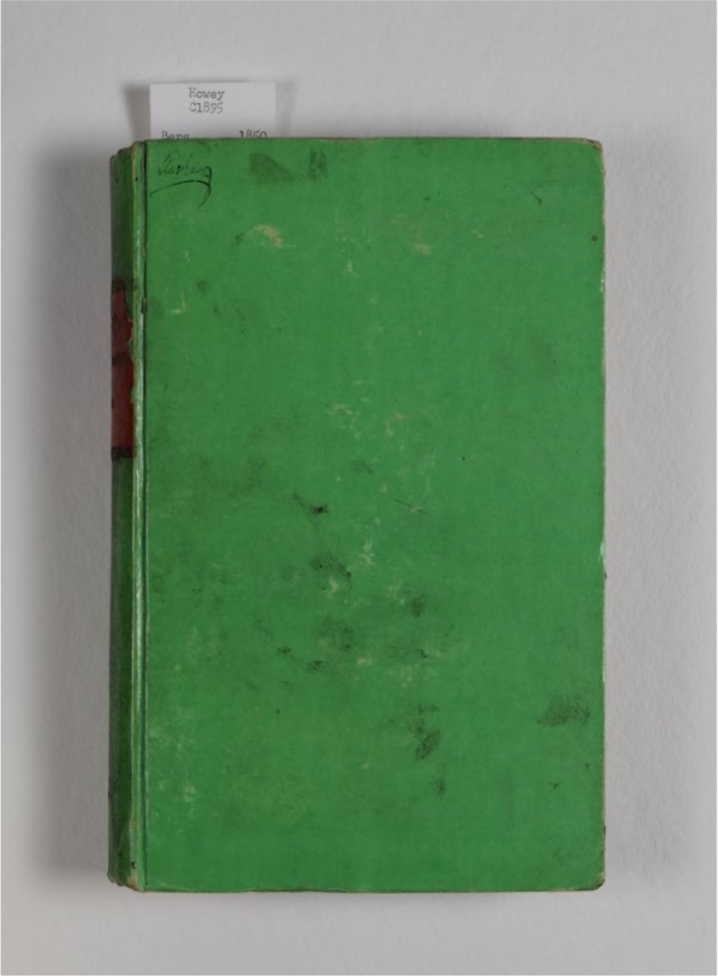
A book covered in vibrant green, arsenic-positive paper. Die Staatsforstwirthschaftslehre. Berg, Karl. Leipzig, 1850. Call Number: Howey C1895.
A book covered in vibrant green, arsenic-positive paper. Die Staatsforstwirthschaftslehre. Berg, Karl. Leipzig, 1850. Call Number: Howey C1895. Click image to enlarge.

Step One: Publication Date

At the beginning of the nineteenth century, bookbinders began constructing their own covers separately from the main textblock of each book. This, along with the introduction of a new cover material called bookcloth, allowed Victorian Era book covers to be elaborately dyed and decorated with an array of pigments; Scheele’s green and Paris green (or emerald green, or copper acetoarsenite) being the most arsenic-rich among them. Tracking these new developments, arsenical bookbindings are most likely to be found between the years 1820 and 1880, when the pigments began to be phased out slowly and irregularly across different regions. Because of this, any green book published in the nineteenth century could be a contender.
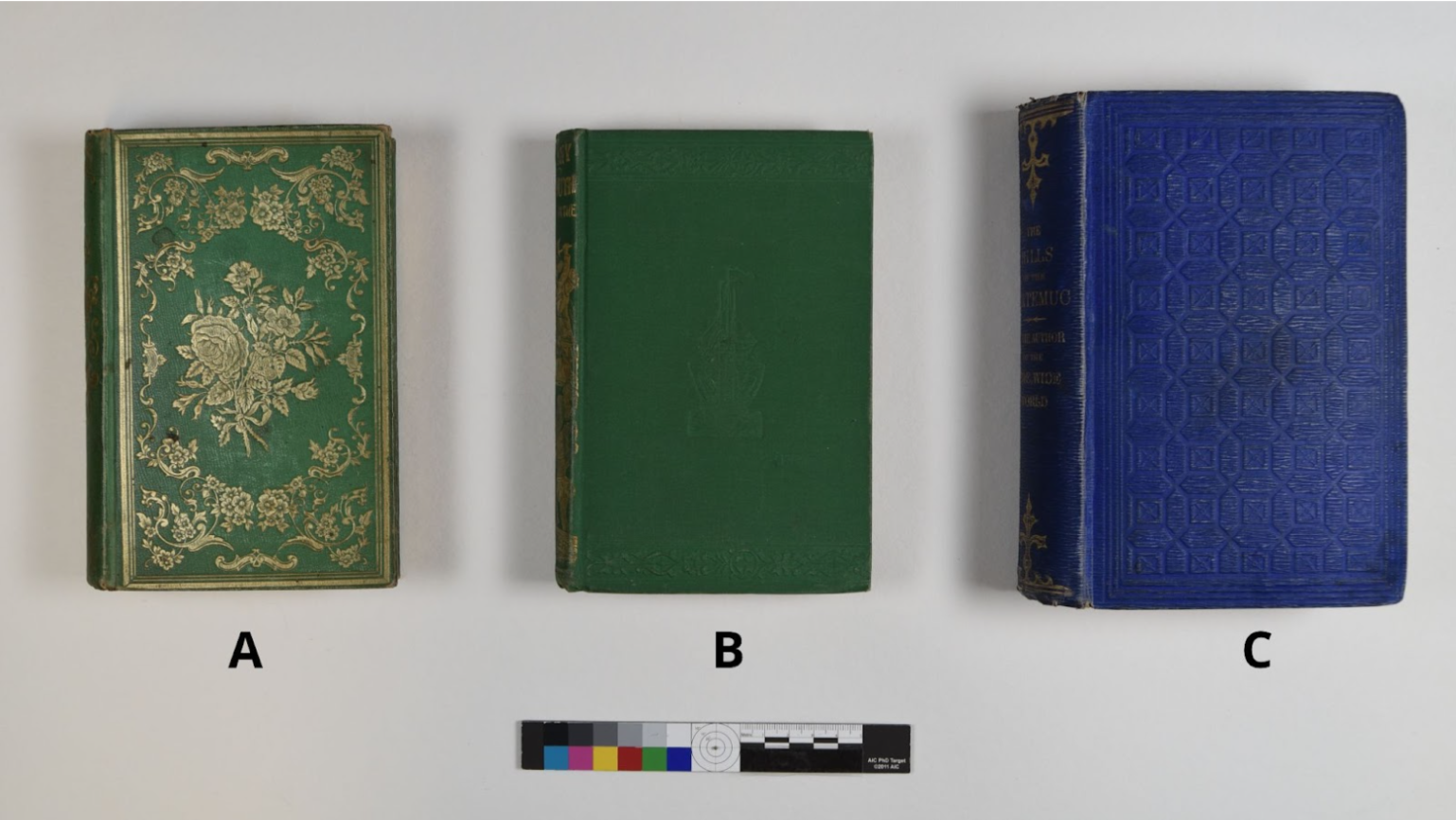
Three volumes from various Spencer collections. Books A (green) and C (blue) tested positive for arsenic; book B (green) did not.
Three volumes from various Spencer collections. Books A and C tested positive for arsenic; book B did not. Call Numbers: Book A, Children 1256. Book B, Children 1599. Book C, B12009. Click image to enlarge.

Step Two: Pigment

Arsenical pigmentscan take many forms, but they are most associated with the vibrant, almost neon shade of green that is shown in the first image, of Die Staatsforstwirthschaftslehre. In some cases, arsenical green stands out like a poison dart frog, but in other cases it’s not so clear. Many of the arsenical titles we’ve identified in KU’s collections align with this typical green pigment, but there have also been some surprises, such as the bright blue book in the image above, or greens that appear to be Scheele’s or emerald but chemically are not. This is where X-Ray Fluorescence (XRF) technology comes in.
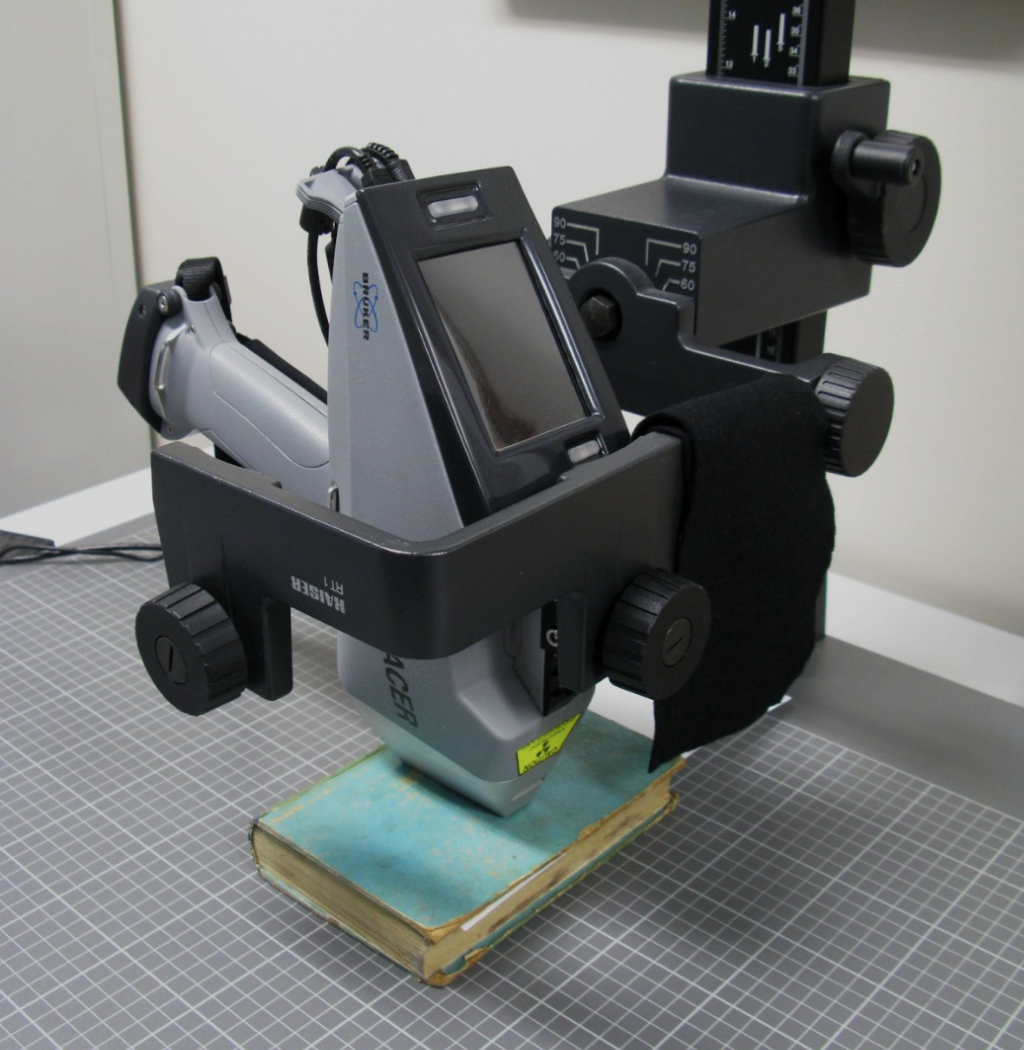
The conservation lab's XRF machine set up to test a 19th-century book for the presence of heavy metals.
The conservation lab’s XRF machine set up to test a 19th-century book for the presence of heavy metals. Click image to enlarge.
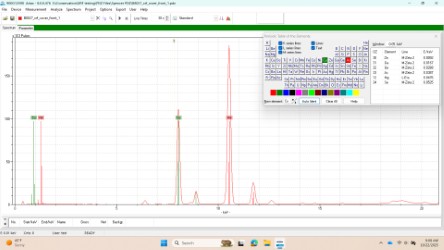
An arsenic-positive spectrum produced from an XRF test.
An arsenic-positive spectrum produced from an XRF test. Click image to enlarge.

Step Three: XRF Technology

Due to all these variables, the only sure way to identify a poison book is to test it. In the Spencer Research Library’s conservation lab, we’ve been using XRF technology to test KU’s 19th-century books as part of a larger effort protecting patrons against potentially toxic heavy metals. This machine produces a spectrum graph that allows us to identify which elements are present in an item. Through this process, we’ve identified a number of “poison books” which can now be properly labeled, contained, and served in the reading room with appropriate precautions assuring that the information in a potentially harmful book remains accessible while the patron handling it remains safe.

By Reece Wohlford, Heavy Metals in Bookbinding Project Student Assistant
Adjustable Conservation Book Support: An open-design conservation tool arrives at KU Libraries

May 16th, 2023

The conservation lab at the University of Kansas Libraries is now home to a pair of Adjustable Conservation Book Supports, or ACBS’s. The ACBS is a hinged cradle that supports a book during conservation treatment; fiberglass rods gently hold the book open in almost any desired position, a feat that can be difficult or impossible to achieve with our usual system using weights and fixed cradles or foam wedges, or other rigged-up arrangements. The ACBS was designed and developed at Northwestern University by conservator Roger Williams in collaboration with students in Northwestern’s School of Engineering. Williams wrote about the process in this blog post: Collaborating with engineering students to create an open-design conservation tool – LIBRARIES | Blog (northwestern.edu). We learned about the ACBS when Williams presented a webinar about the project during the COVID-19 pandemic, at a time when many conservators were unable to work in their labs. We and our colleagues around the world spent much of our pandemic work-at-home time learning and sharing on online platforms, saving up the new knowledge to try out when we were back in our workspaces.

One of Williams’ goals when creating the ACBS was to make it freely available and customizable  – an open-design tool that could be built with readily available supplies and that could be adapted and improved upon by the conservation community through use and experimentation. Conservators at the Auckland War Memorial Museum in New Zealand took up this challenge and created an (also open access!) alternative design for the two clamps that sit at the top of the ACBS. The 3D-printed Auckland clamp design increases the range of motion of the fiberglass rods, adding even more functionality to the ACBS. (See their blog post: Newest Trick in the Book – Blog – Auckland War Memorial Museum (aucklandmuseum.com))

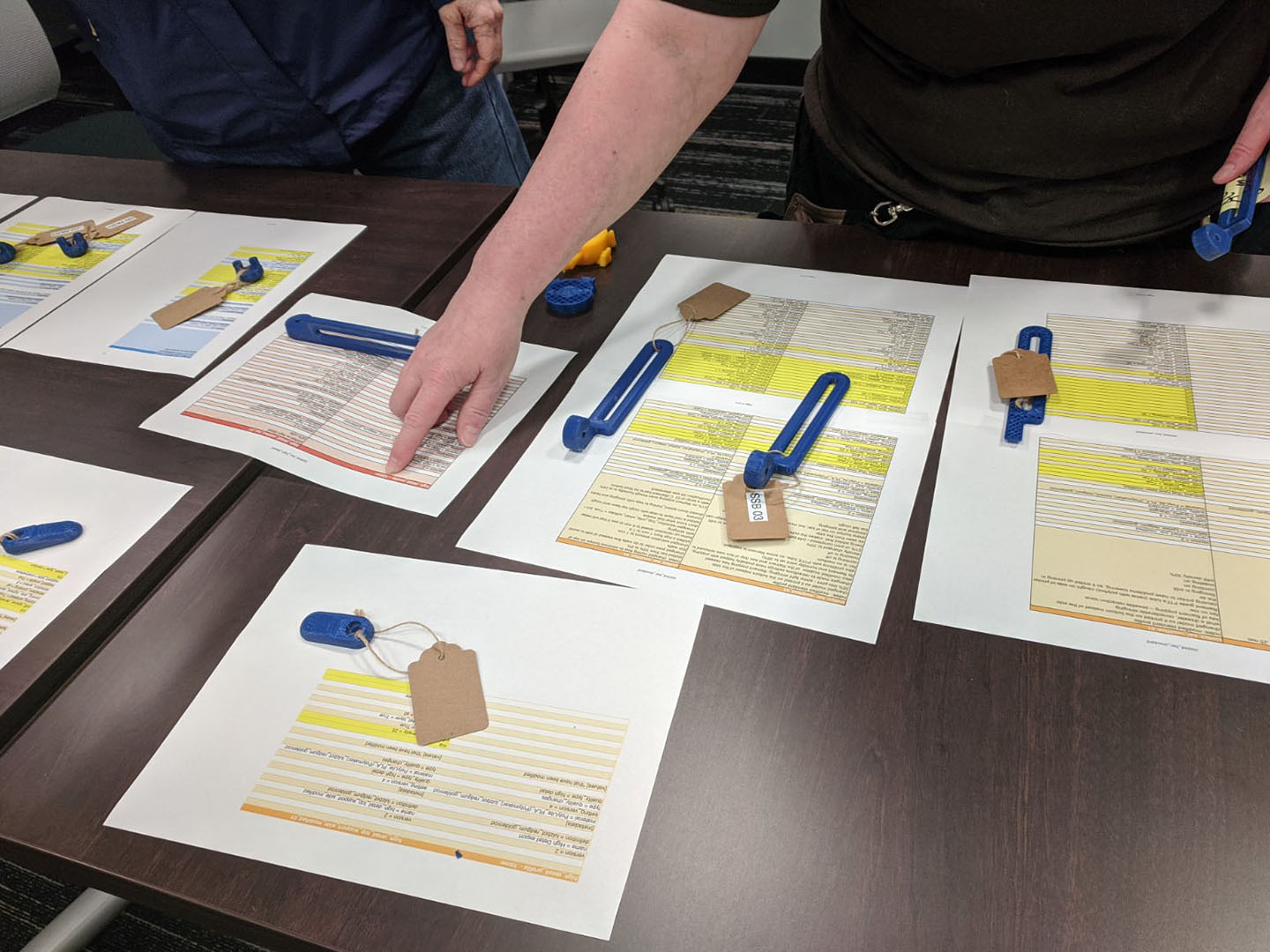
We wanted to build an ACBS for our lab, and we definitely wanted those clamps! We knew that KU Libraries had a 3D printer in our new Makerspace, so we reached out to Associate Librarian Tami Albin for her help. The Makerspace was in its early days, and Tami had been experimenting with the 3D printer, getting to know its capabilities and the properties of different filaments. We downloaded the files for the Auckland clamps and sent them to Tami. While Tami worked on the clamps, collections conservator Roberta Woodrick ordered the rest of the parts we needed for our ACBS’s (we had decided to build two), and she and I assembled them up to the point of adding the clamps. A few weeks later, Roberta and I visited the Makerspace to see the results of Tami’s first tests. Tami described how the 3D printer works, showed us the printed clamp parts, and explained how the type of filament affects the finished 3D print. She had printed an assortment of sample parts for us; we brought them back to the lab and examined each one to find those that had the look, feel, and weight that suited us, and to test the fit on the ACBS’s.

Two people whose faces are out of the frame stand next to a table laid with 3D printed samples of clamp parts for an adjustable book cradle.
Reviewing test prints of the clamp parts with Tami Albin at the Makerspace. Click image to enlarge.

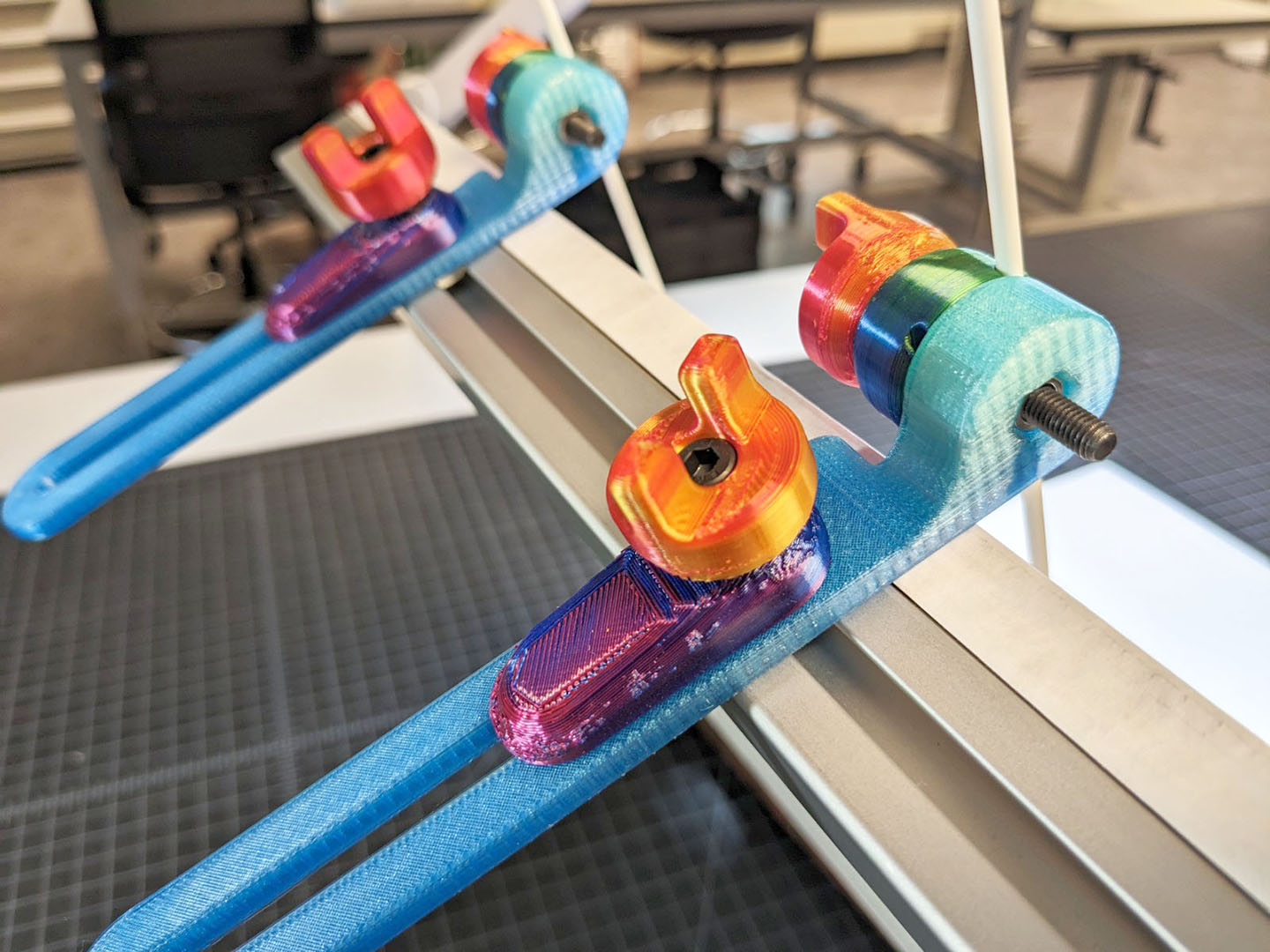
After we’d selected the samples that we liked best, we reported back to Tami and she set to work printing the final pieces. We were excited to get the email from her letting us know that the parts were ready! We gave Tami free rein to choose the filament colors, and she came through with a selection of bright, cheerful colors that add some fun and personality to our ACBS’s.

Close up image of colorful 3D printed clamps on an adjustable book cradle.
Detail of the clamps in their beautiful colors. Click image to enlarge.

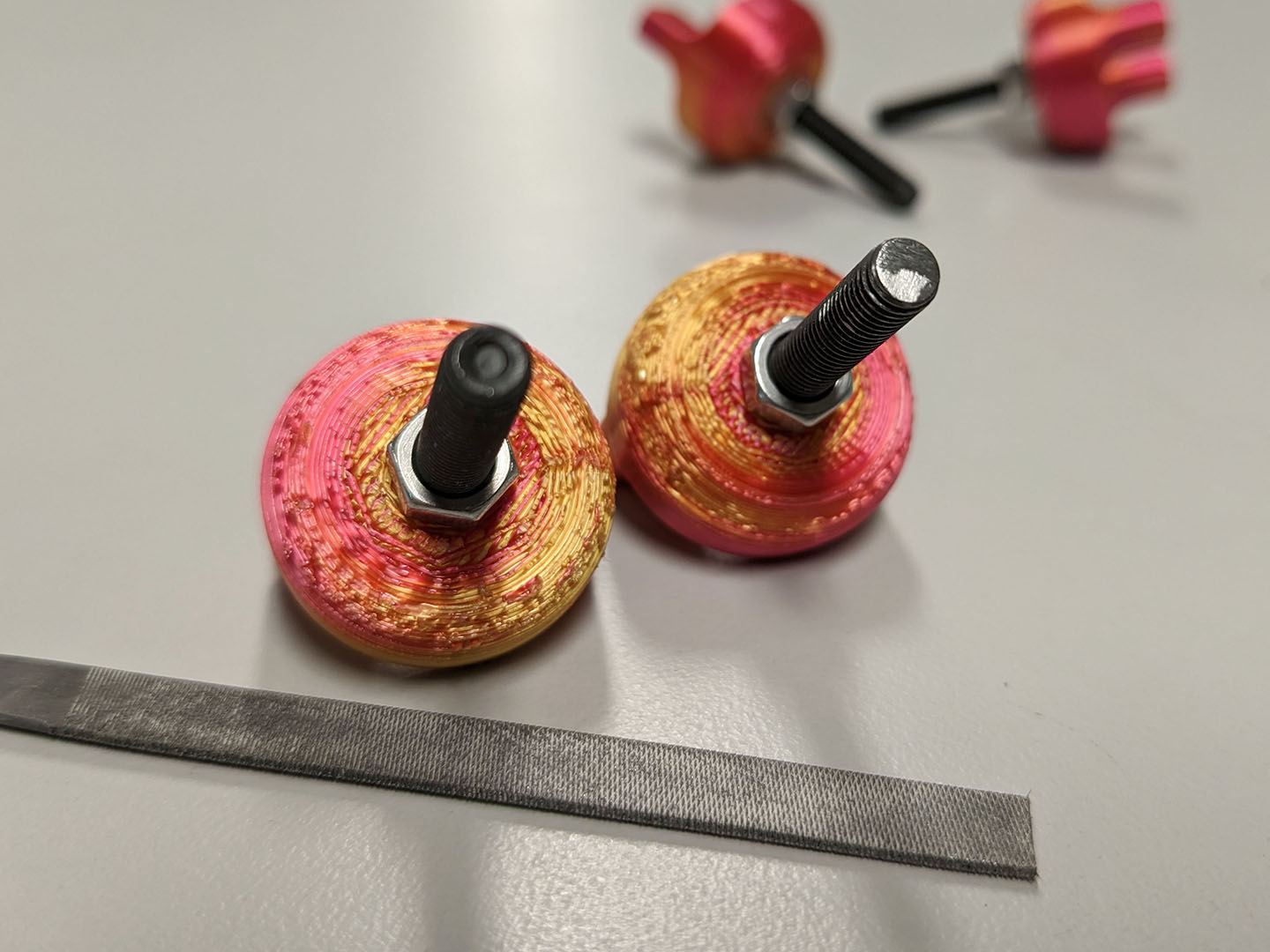
With the clamp parts in hand, we had a few more steps to go before the ABCS’s would be ready to use. I put together the clamp assembly and found that our off-the-shelf bolts were about 1mm too long, preventing the clamps from being fully tightened. I found my set of jeweler’s rasps (saved from a metals elective I took back in art school – conservators love to appropriate tools of many trades!) and used one to file down the ends of the bolts until they fit correctly.

Two black metal bolts, each with a small silver hex nut and large red-and-yellow 3D printed nut on its end, sit on a table next to a small metal rasp. The end of the bolt on the left has been filed down smooth.
A too-long bolt, left, and a filed-down bolt, right. Click image to enlarge.

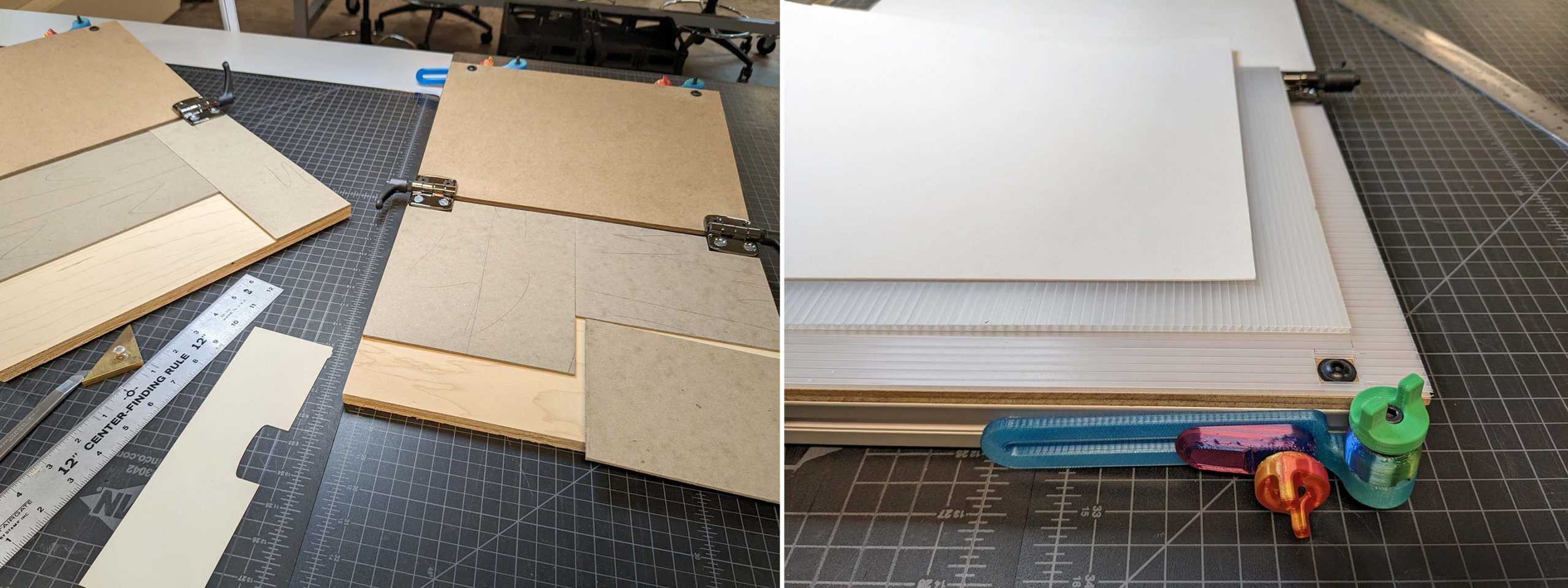
With the clamps assembled, the last step was to fill in the sides of the ACBS’s to bring the surfaces level with the thick hinges. Per Williams’ instructions, I filled the lower boards of the ACBS’s with scraps of binder’s board, a heavier material, and the upper board with corrugated plastic, a lighter material, to help balance the ACBS. I then covered each side with blotter and sealed the edges all around with Tyvek tape.

A split image: on the left, two adjustable book cradles atop a workbench with a utility knife, a triangle, and a ruler; on the right, a close-up of an adjustable book cradle lined with corrugated plastic.
Filling in the lower board with scraps of binder’s board, left, and the upper board with corrugated plastic, right. Click image to enlarge.

Conservation is always a collaborative effort, and we are so grateful for Tami’s contribution to this project. We are looking forward to all the ways that we can put these new tools to use in our work caring for KU Libraries’ collections.

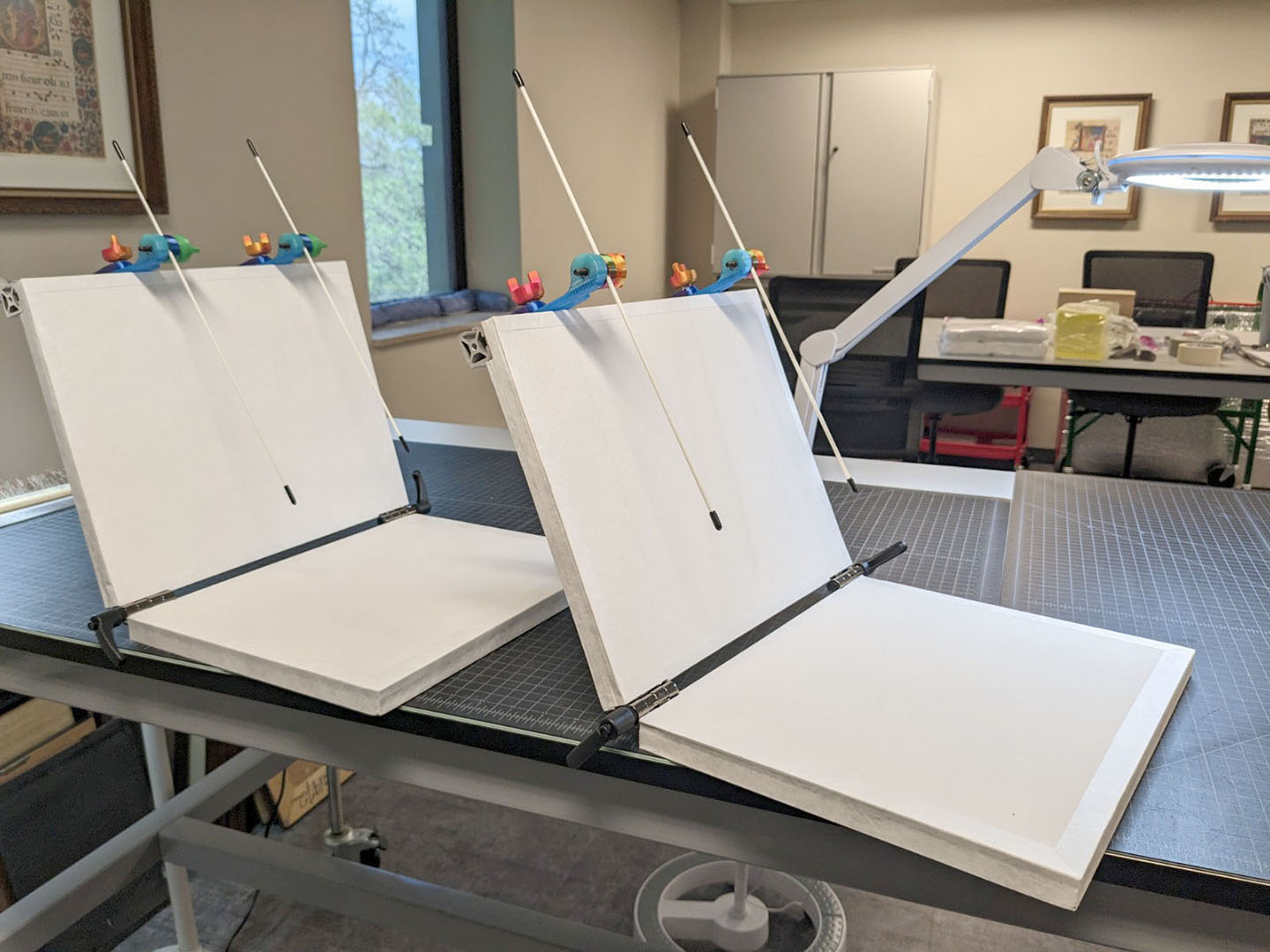
Two adjustable book cradles sit atop a workbench in a conservation lab.
Our two new ACBS’s! Click image to enlarge.
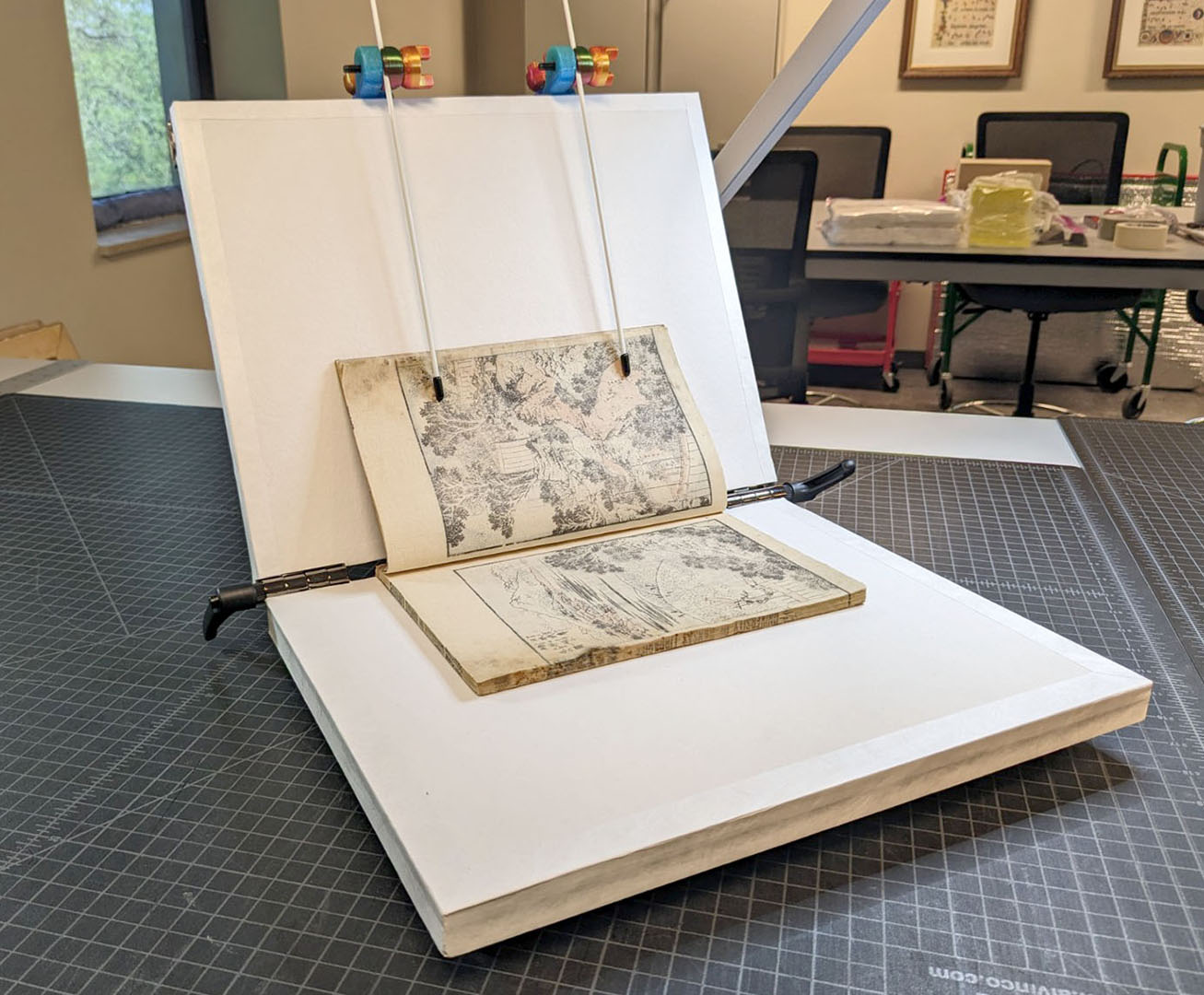
A thin Japanese book is held by fiberglass rods in an adjustable book cradle.
The fiberglass rods are strong but gentle enough for delicate materials. Katsushika Hokusai, Denshin kaishu Hokusai manga. Call Number: C22291. Kenneth Spencer Research Library, University of Kansas. Click image to enlarge.