Meet Felicity at Spencer Research Library
June 1st, 2026As an elder millennial who loved history as a child and grew up with American Girl, I’ve been excited about the company’s 40th anniversary this year. As a result, I will be sharing a series of posts highlighting Spencer collection materials that connect to AG’s six original historical characters, in chronological order of when they “lived”: Felicity Merriman, Josefina Montoya, Kirsten Larson, Addy Walker, Samantha Parkington, and Molly McIntyre. Each post will focus on a different character and explore a selection of items that relate to the time and place in which she “lived” and topics or themes explored in her stories.
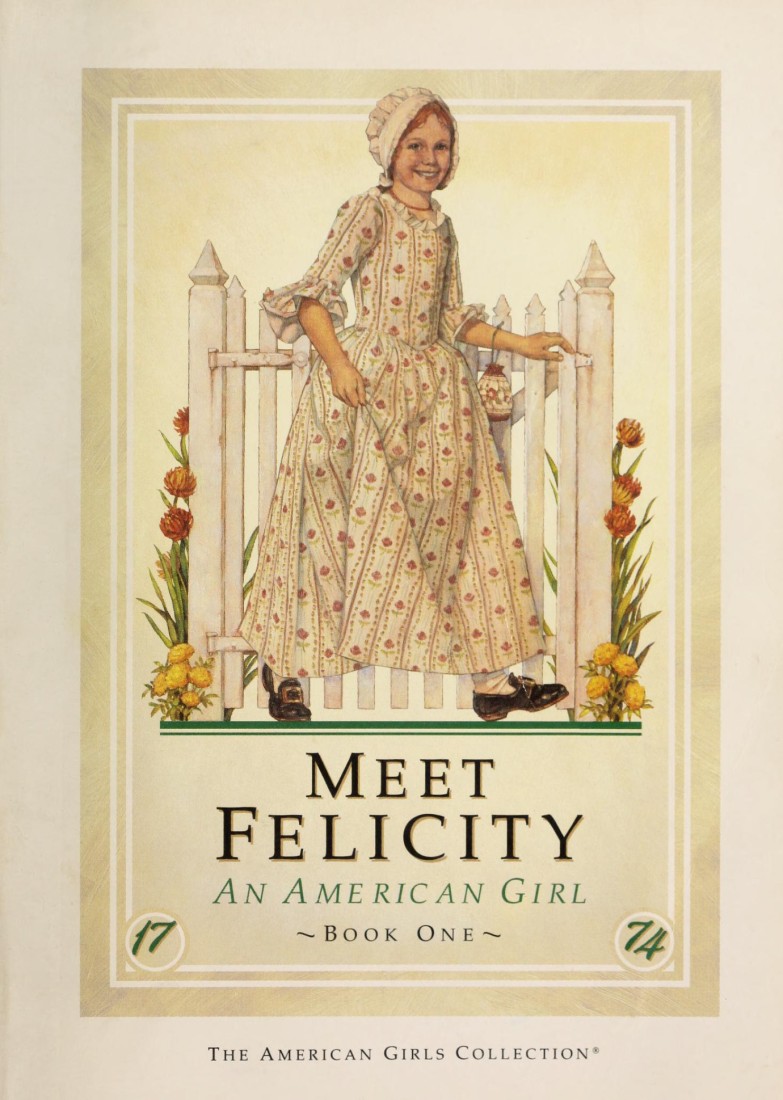
When readers meet Felicity Merriman, she is a “spunky, sprightly” nine-year-old girl living in Williamsburg, Virginia, in 1774. Her stories are set against the backdrop of rising tensions between Patriots and Loyalists just before the American Revolution, and the theme of independence runs throughout them. Felicity herself balks at learning expected housewifery skills, and she attempts to free a beloved horse named Penny from an abusive owner. The questions of freedom, liberty, and equality asked in the stories are not extended to the enslaved characters (and one free person of color) who are mentioned or implied. Other topics in Felicity’s books include education for girls, illnesses and injuries, British taxation especially on tea, her father’s store, and maintaining friendships in the face of disagreements.

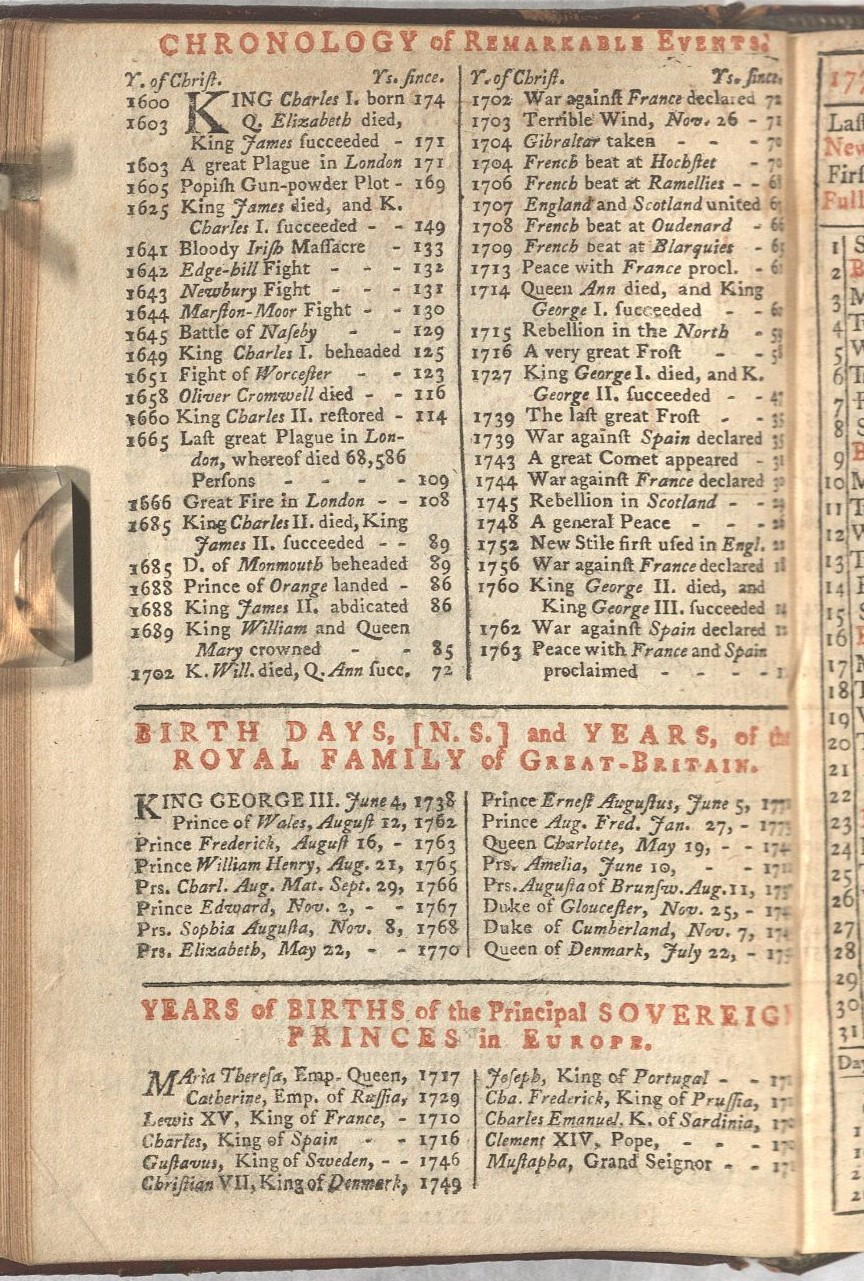

Selected pages in The Ladies’ Diary, or, Woman’s Almanack for the Year of Our Lord 1774. Published in London between 1704 and 1841, The Ladies’ Diary, or, Woman’s Almanack famously featured puzzles and mathematical questions in addition to calendars and important dates. Spencer’s 1774 copy appears to feature a red two-pence duty tax stamp. It is also bound with nine other popular Company of Stationers almanacs from the same year; similar volumes from several years between 1744 and 1826 can also be found at Spencer under the call number “Bond B17.” Call Number: Bond B17 1774. Click images to enlarge.
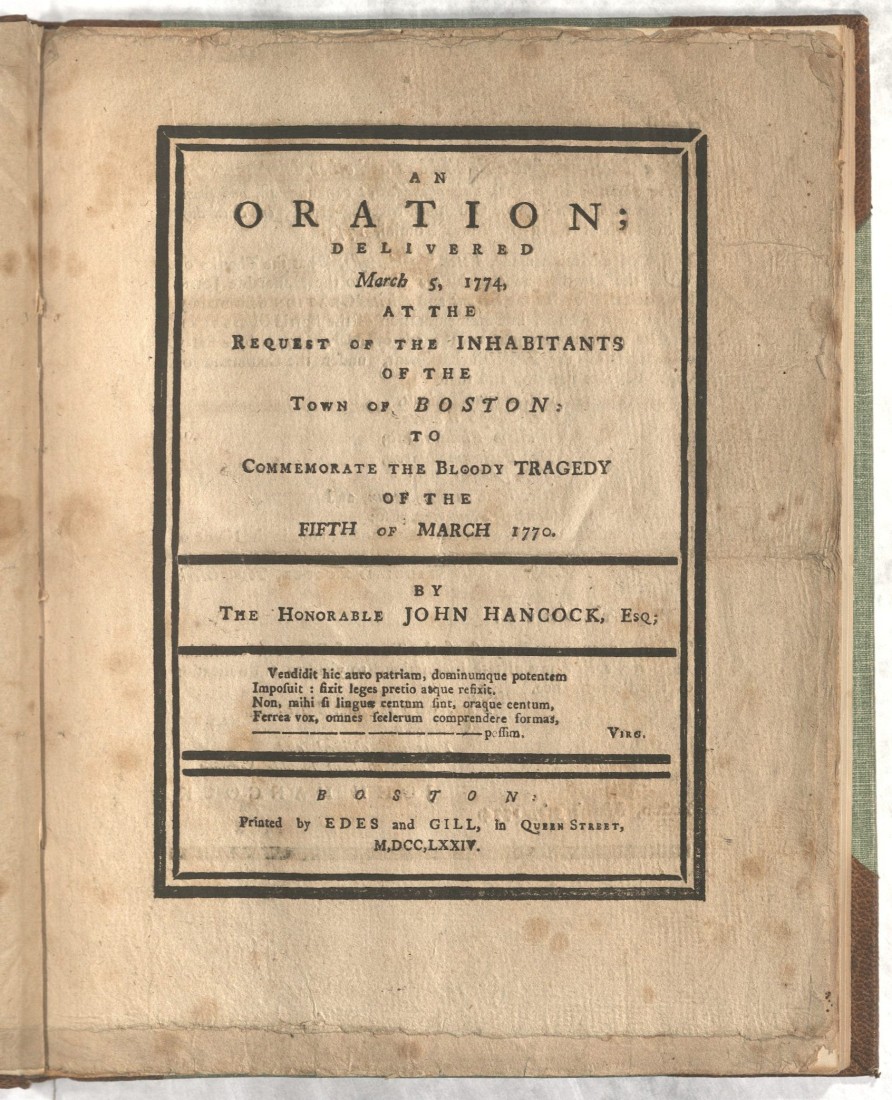
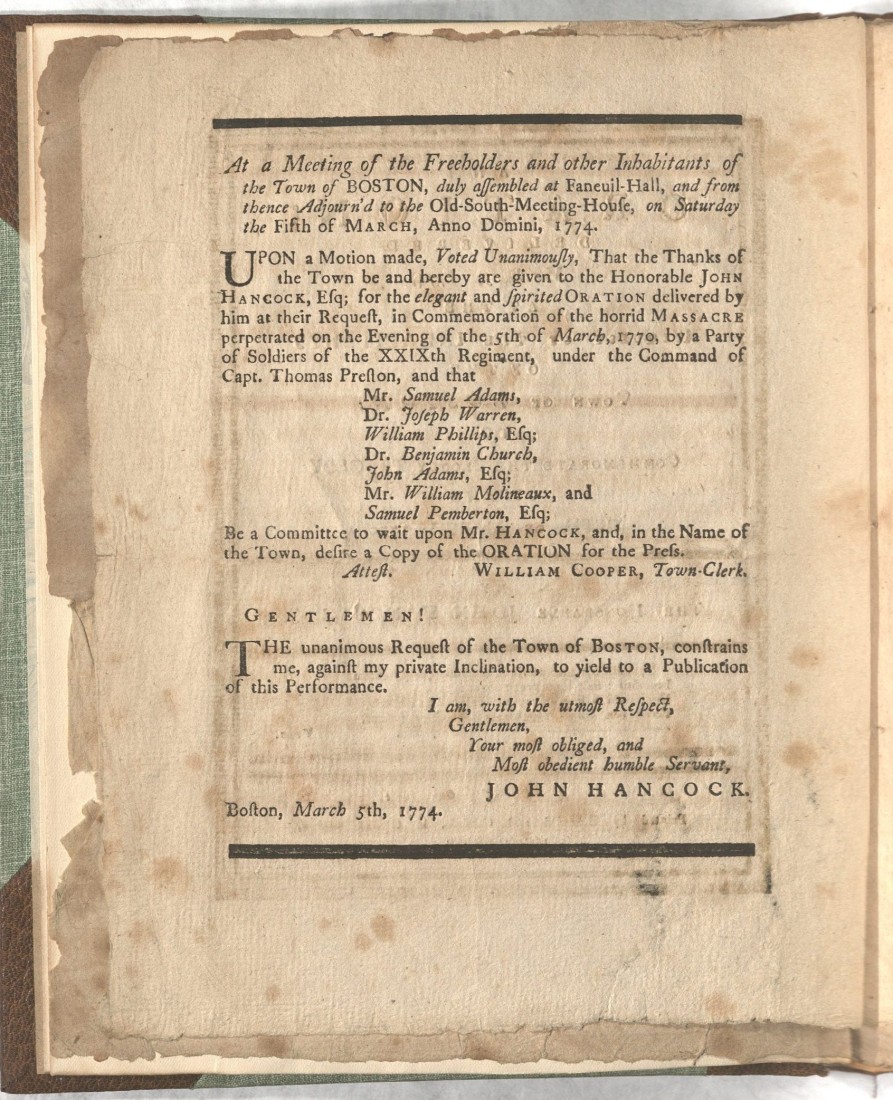
The title page and publication note of An Oration Delivered March 5, 1774: At the Request of the Inhabitants of the Town of Boston; To Commemorate the Bloody Tragedy of the Fifth of March 1770 by John Hancock, Boston: 1774. “Some boast of being friends to government,” Hancock asserted in this speech. “I am a friend to righteous government, to a government founded upon the principles of reason and justice; but I glory in publicly avowing my eternal enmity to tyranny.” This speech can be read online through the Massachusetts Historical Society; a transcription is available through the UMKC School of Law “Famous Trials” website. Call Number: D845. Click images to enlarge.
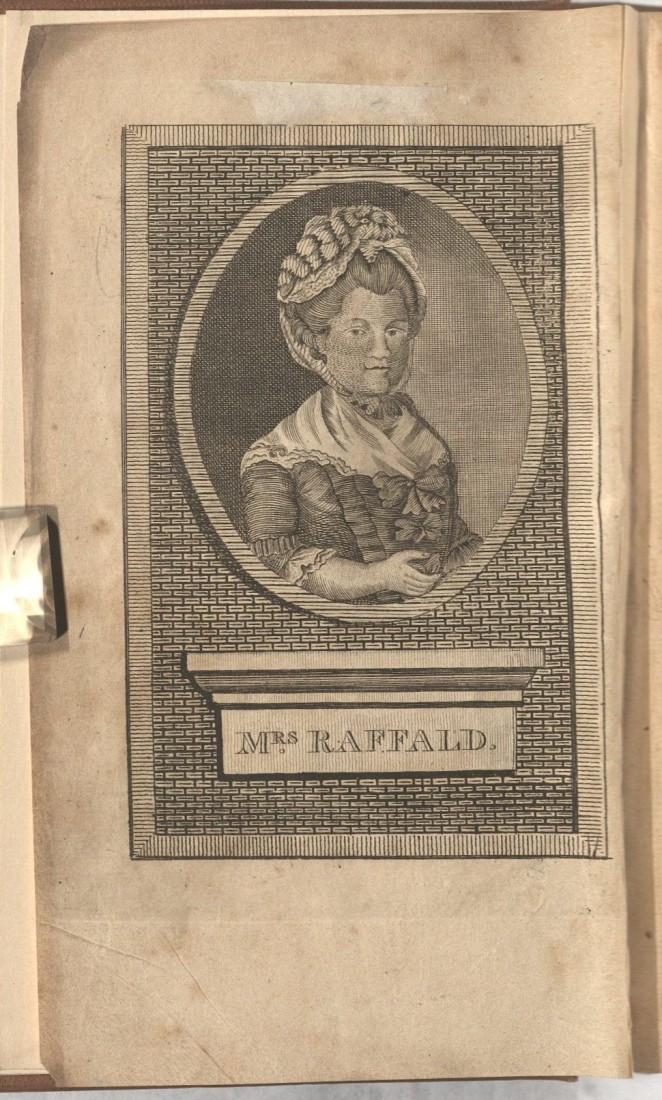
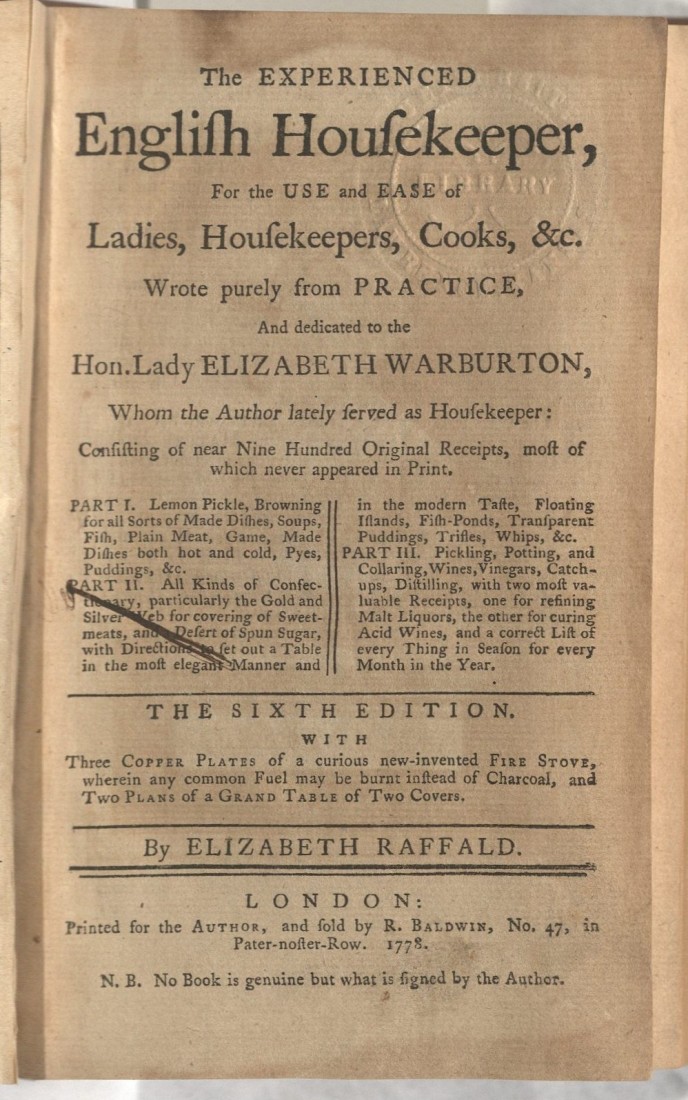
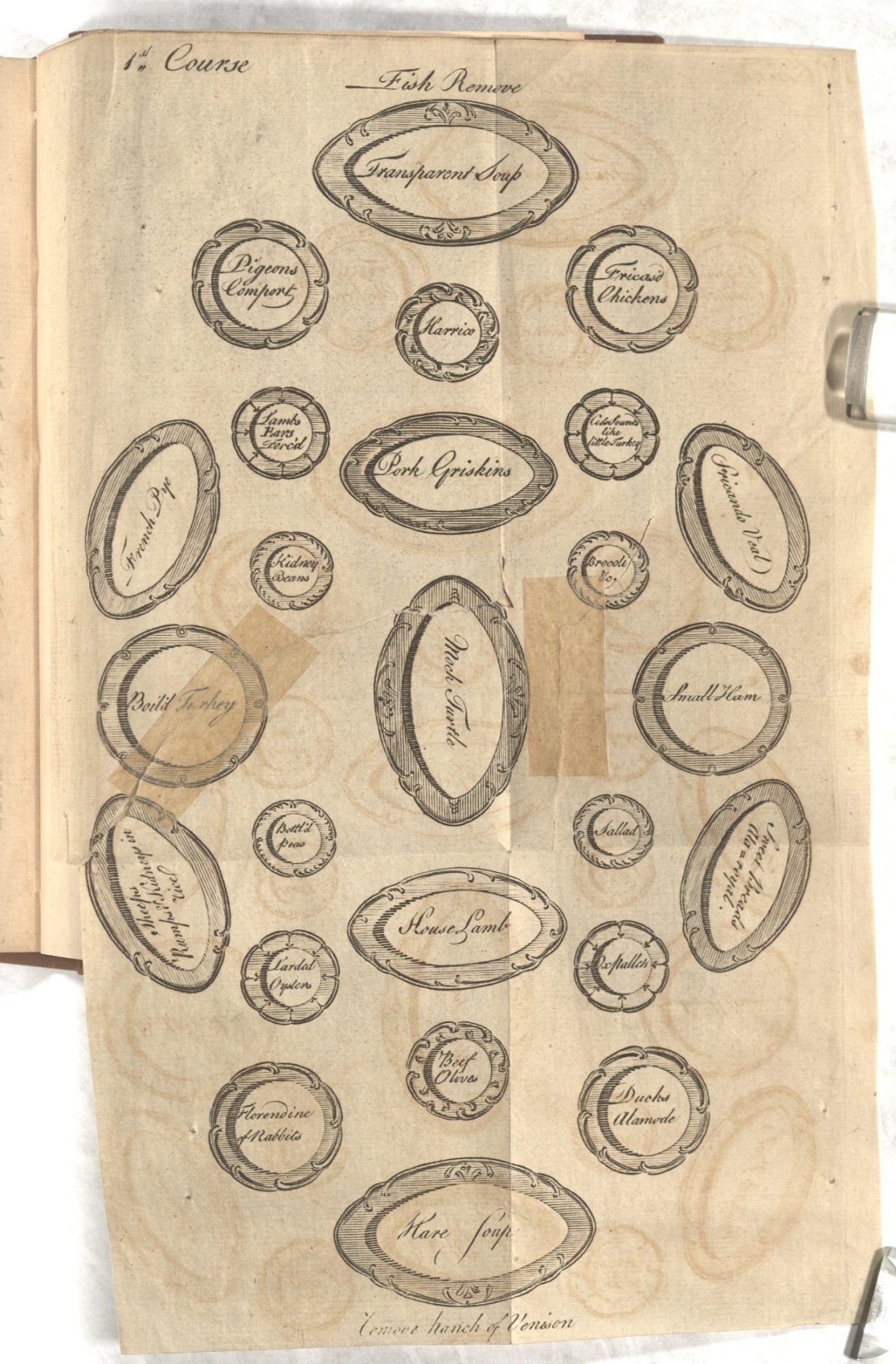
The frontispiece (left) and title page (middle) of The Experienced English Housekeeper, for the Use and Ease of Ladies, Housekeepers, Cooks, &c. by Elizabeth Raffald, London: 1778. On the right is a fold-out copper plate diagram of a first-course dinner arrangement consisting of 25 dishes, part of what Raffald calls a “grand table”: “January being a month when entertainments are most used, and most wanted, from that motive I have drawn my dinner at that season of the year.” A second copper plate diagram shows another 25 dishes, and Raffald asserts that the third (dessert) course “must” therefore “be of the same number.” Call Number: C3670. Click images to enlarge.
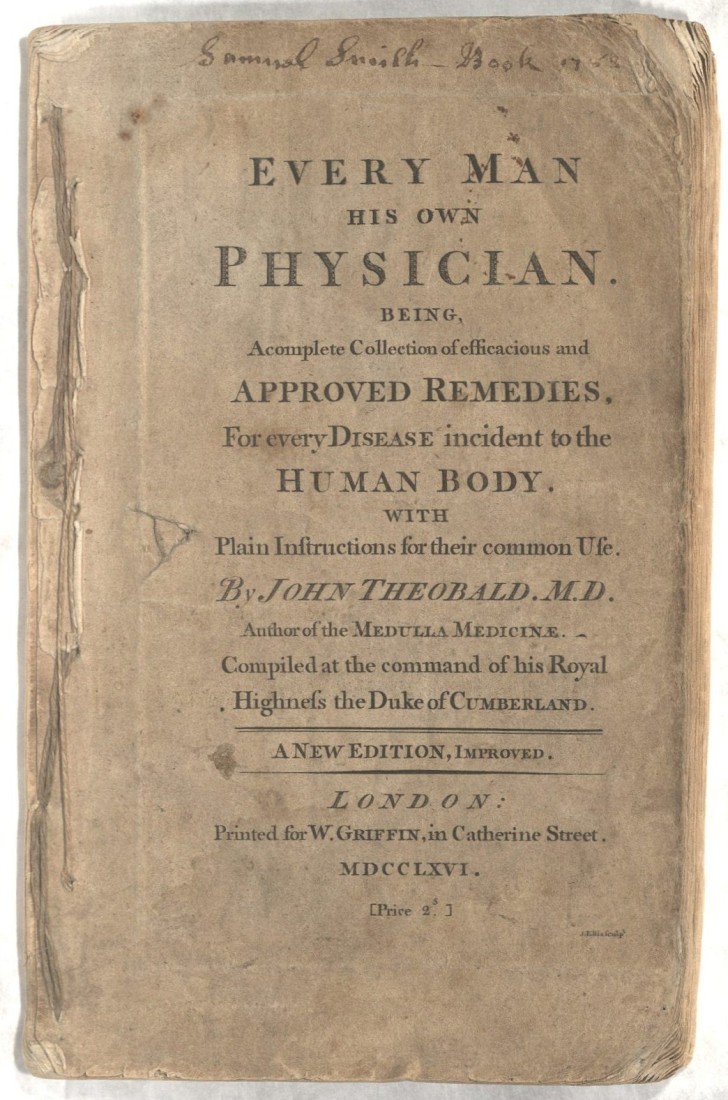
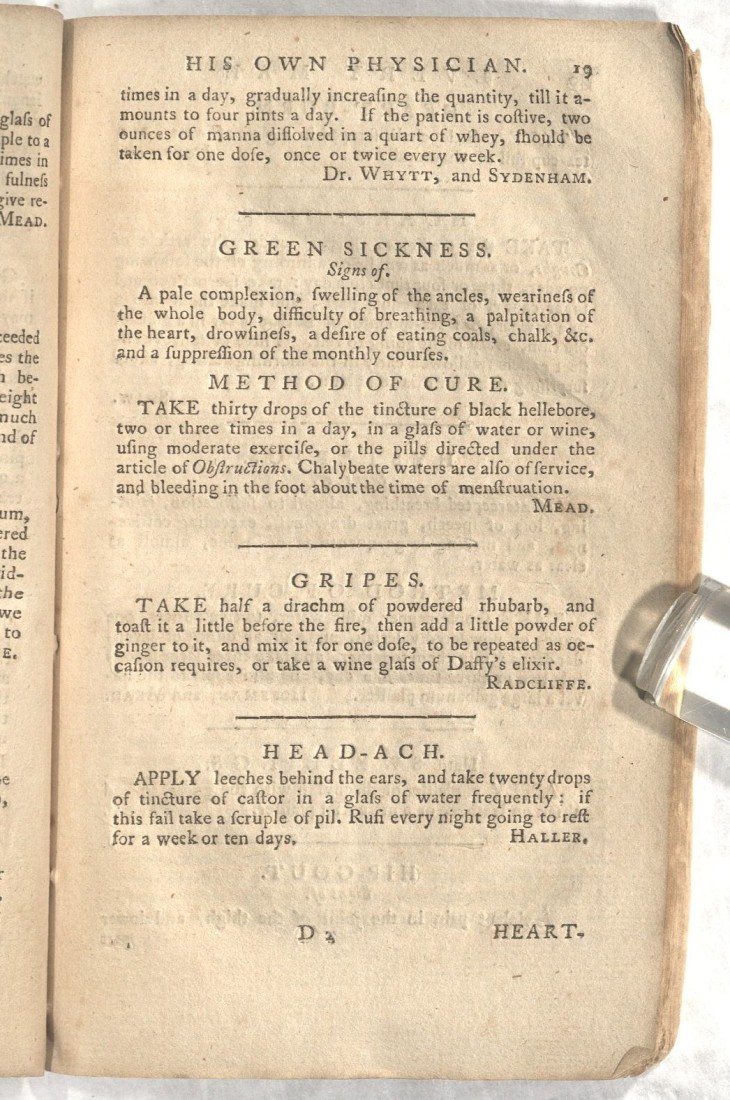
The title page and a selection of treatments in Every Man His Own Physician by John Theobald, London: 1766 (a “new edition, improved). Historically known as chlorosis, “green sickness” was primarily diagnosed in young, unmarried teenage girls. “Gripes” is an older term for influenza. Note that the cure for headaches includes “leeches behind the ears.” Call Number: B9522. Click images to enlarge.
Selected Additional Collection Items
Colonial British America, Virginia, and Williamsburg
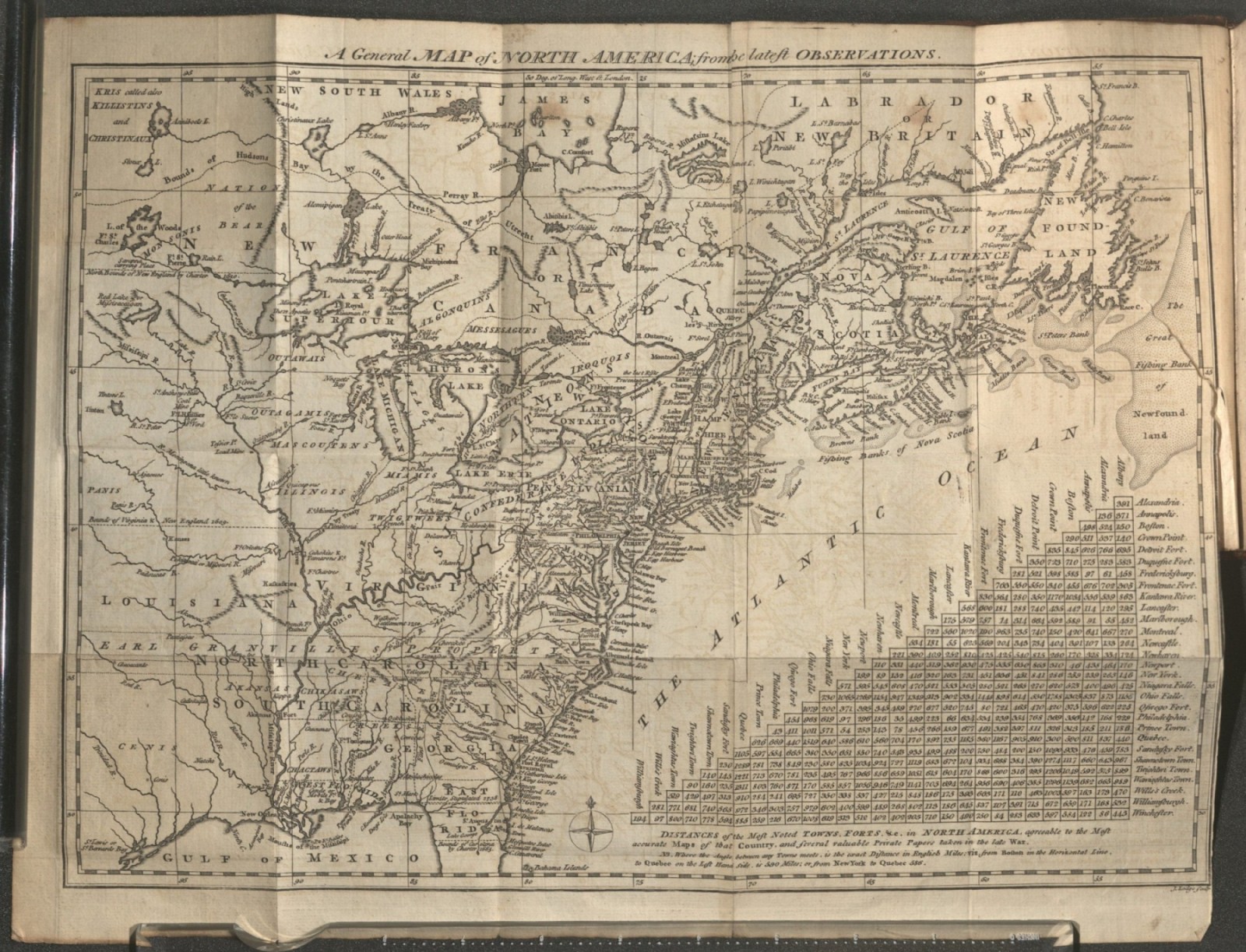
- Map, North America, as Divided Amongst the European Powers, London: 1774. Call Number: Orbis Maps 1:85.
- The Office and Authority of a Justice of Peace Explained and Digested, Under Proper Titles by Richard Starke, Williamsburg: 1774. Includes a section on penalties for (ahem, Felicity) stealing horses. George Washington had a copy of this work in his library. Call Number: C14997.
- Map, A New and Correct Map of North America, With the West India Islands; Divided According to the Last Treaty of Peace, Concluded at Paris. 10th. Feby. 1763, London: 1777. Call Number: N6 Orbis 1:81.
- Map, Bowles’s New Map of North America and the West Indies, London: 1781. Call Number: N7 Orbis 1:82.
- Notes on the State of Virginia by Thomas Jefferson, London: 1787. Call Number: C1485.
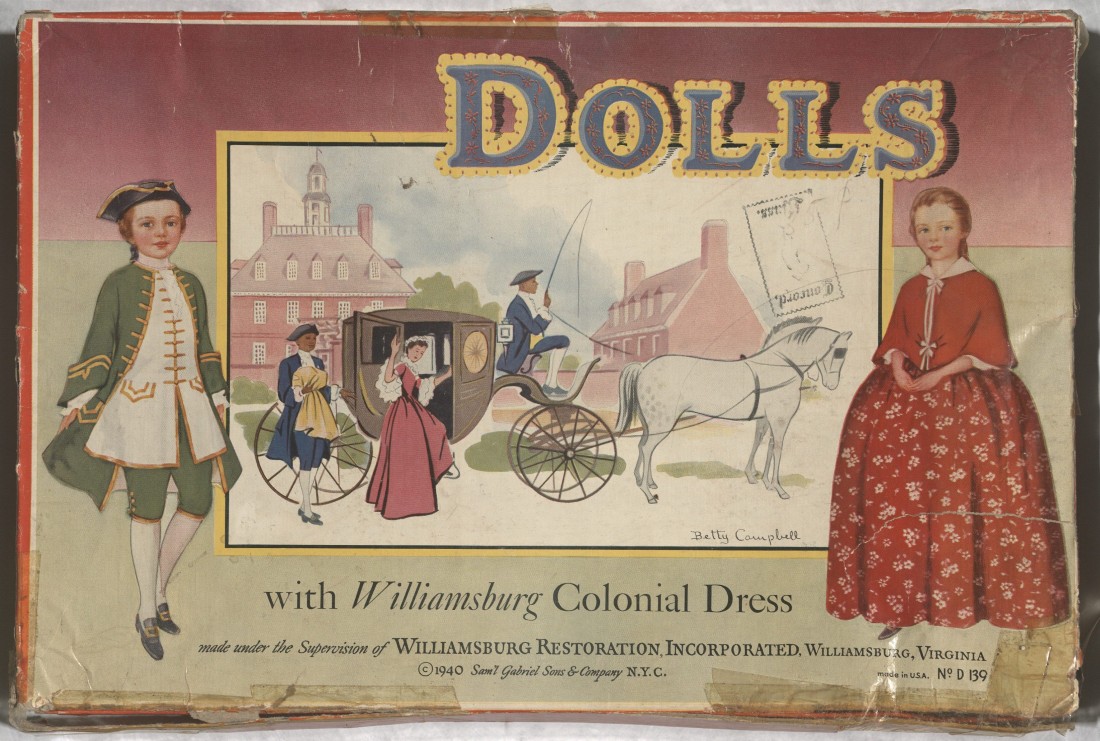
- Colonial Williamsburg, the First Twenty-Five Years; A Report, 1952. Call Number: RH D1411.
Rising Tensions Before the American Revolution
- First [-Fifth] Report from the Committee Appointed to Enquire [sic] into the Nature, State, and Condition, of the East India Company, and of the British Affairs in the East Indies, London: 1773? These reports document the UK Parliament’s investigation into the East India Company in 1772 and 1773. One result of this inquiry was the Tea Act of 1773, which features prominently in Felicity’s stories. Call Number: G374 v.3 items 6-10.
- Considerations on the Measures Carrying on With Respect to the British Colonies in North America, anonymously written by Matthew Robinson, 2nd Baron Rokeby, London: 1774. Call Number: 18th century Prose 716.
- Extracts from the Votes and Proceedings of the American Continental Congress, Held at Philadelphia, on the Fifth of September, 1774, Philadelphia: 1774. Call Number: 18th century Prose 2275.
- American Independence the Interest and Glory of Great Britain by John Cartwright, London: 1774. Call Number: C1497.
- Speech of Edmund Burke, Esq. on American Taxation, April 19, 1774, London: 1775. Call Number: C3454 item 3.
Slavery in Colonial British America
- A Caution to Great Britain and Her Colonies, in a Short Representation of the Calamitous State of the Enslaved Negroes in the British Dominions by Anthony Benezet, London: 1767. Call Number: C3749.
- Thoughts Upon Slavery by John Wesley, London: 1774. Call Number: Howey B2111.
- Fragment of an Original Letter on the Slavery of the Negroes; Written in the Year 1776 by Thomas Day, London: 1784. Call Number: Howey C3950 item 2.
Household Matters and Girls’ Education
- The Ready Calculator: or, Trader’s Certain Guide, in Computing the Price, or Amount of Any Quantity of Goods and Merchandizes by Thomas Slack, London: 1771. Call Number: Howey B856.
- An Essay Upon Nursing and the Management of Children, From Their Birth to Three Years of Age by William Cadogan, Boston: 1772. Call Number: C1801.
- Letters on the Improvement of the Mind, Addressed to a Young Lady. In Two Volumes by Mrs. (Hester) Chapone, London: 1773. Call Number: B3783.
- An Essay on the Learning, Genius, and Abilities of the Fair-Sex: Proving Them Not Inferior to Man, From a Variety of Examples, Extracted From Ancient and Modern History, an English translation of Defensa de las mujer by Benito Jerónimo Feijoo y Montenegro, London: 1774. Call Number: B7649.
- The Toilet of Flora, an English translation (with alterations) of La toilette de flore by Pierre-Joseph Buc’hoz, London: 1775. Contains “a collection of the most simple and approved methods of preparing baths, essences, pomatums, powders, perfumes, sweet-scented waters, and opiates for preserving and whitening the teeth” with “receipts [recipes] for cosmetics of every kind, that can smooth and brighten the skin, give force to beauty, and take off the appearance of old age and decay.” Call Number: B8738.
- The Complete Vermin-Killer: A Valuable and Useful Companion for Families, in Town and Country, London: 1777. Includes “safe and quick methods of destroying bugs, lice, fleas, rats, mice, moles, weazels [sic], caterpillars, frogs, pismires, snails, frogs, moths, earwigs, wasps, pole-cats, badgers, foxes, otters, and fish and birds of all kinds.” Also includes “useful family receipts, for the preparation of medicines” and “directions for the purchase, management and cure of horses.” Call Number: Ellis Omnia C437.
Horses
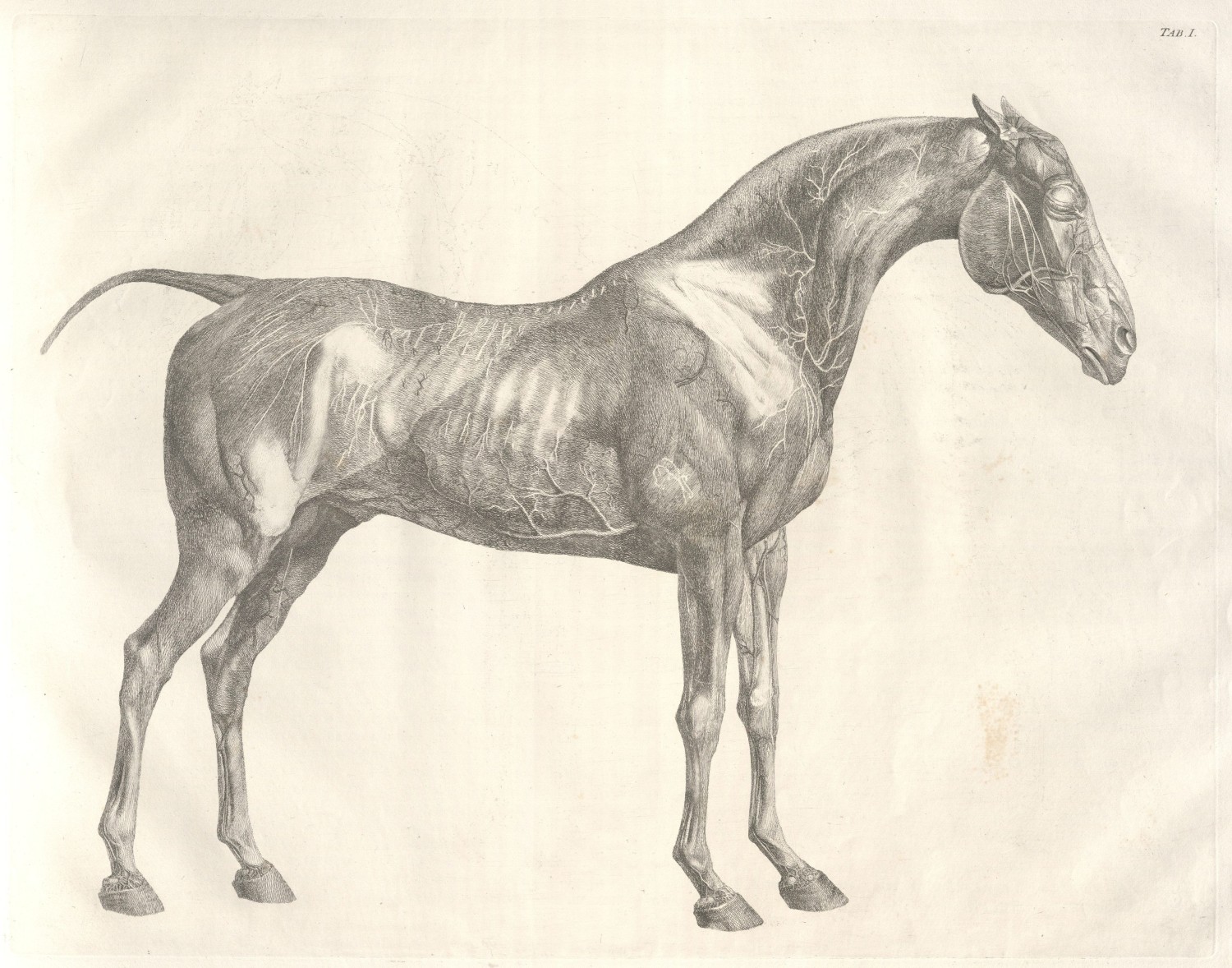
- Observations Upon the Shoeing of Horses: With an Anatomical Description of the Bones in the Foot of a Horse by James Clark, Edinburgh: 1770. Call Number: 18th century Prose 1841.
- A Treatise on Cattle: Shewing the Most Approved Methods of Breeding, Rearing, and Fitting for Use, Horses, Asses, Mules, Horned Cattle, Sheep, Goats, and Swine by John Mills, Dublin: 1776. Call Number: C4072.
Caitlin Klepper
Public Engagement Librarian