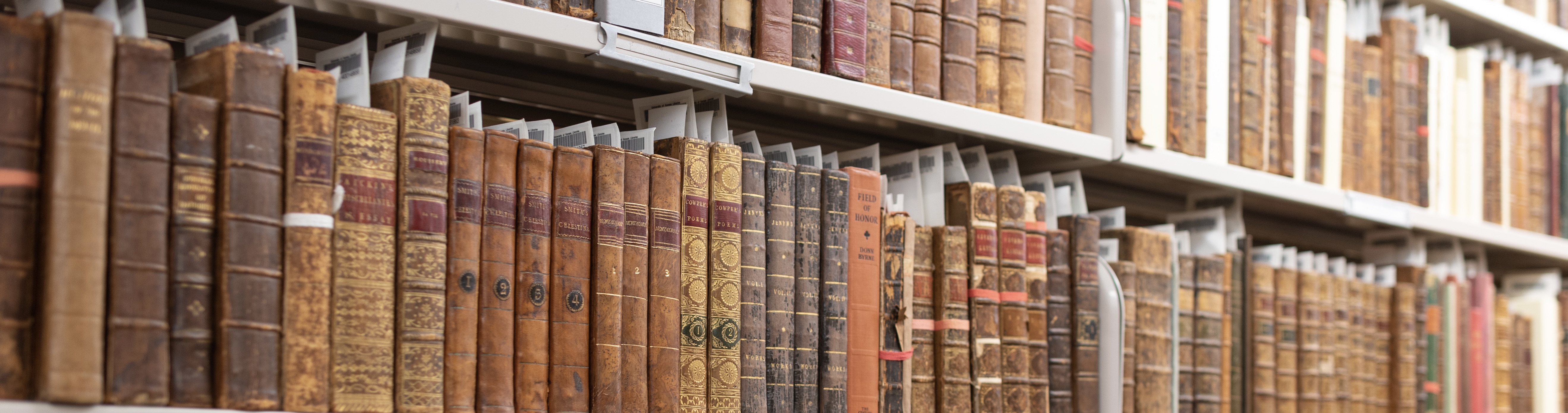
The Magic of Classic Children’s Books: Rumpelstiltskin
June 12th, 2026This is the second post in a series highlighting various titles from Spencer Research Library’s vast children’s book collection.
Well-loved children’s books spark magic from the thrill of adventure to imagination of far-off, enchanted places. Beloved by generations, classic children’s stories remain with us throughout life, whether it is re-reading childhood favorites or sharing our most loved stories with young people in our lives. These classics ignite imaginations and impart timeless lessons. They become some of our most cherished friends that stay with us throughout our lives.
While browsing our children’s collections for this series, my eye caught the book Rumpelstiltskin. It was a beloved story from my childhood. I carefully pulled the volume from the shelf and discovered that this is the exact same book with the little yellow troll that I remembered. The copy I grew up with made it from 1973 through three kids and years of love, although the dust jacket was lost along the way.
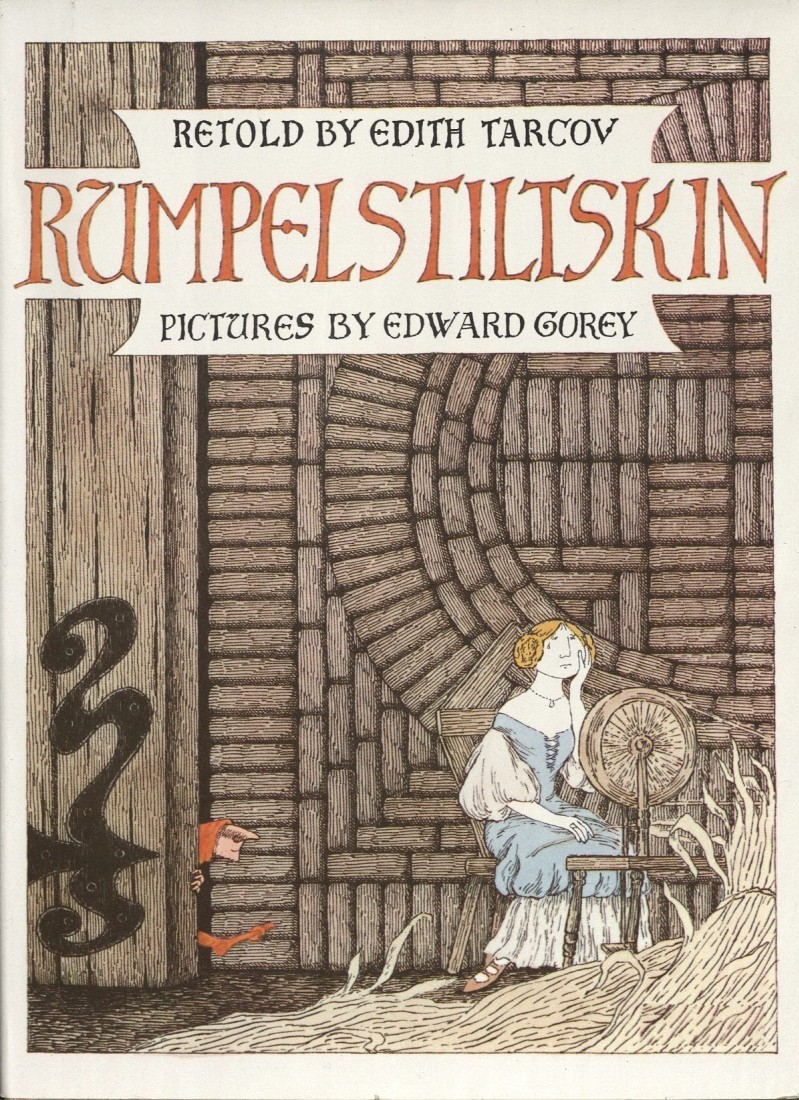

The front cover (left) and title page (right) of Edith H. Tarcov’s retelling of the Brothers Grimm story Rumpelstiltskin, illustrated by Edward Gorey, Four Winds Press: 1973. Call Number: Children C262. Click images to enlarge.
Before opening Spencer’s copy, I realized how little of the story I actually remembered – just impressions, really. A spinning wheel. A frightened girl. A strange little man whose name felt impossible and magical all at once. Childhood stories often linger this way, not as full plots but as bright fragments that stay tucked in the corners of memory. Holding the book again, I felt those fragments stir, as if the story had been waiting patiently for me to return.
Browsing through the pages, I was transported back to a place and time I had not visited in years. Books have that effect on people. They can sweep you into imagined worlds filled with wonder, but they can also return you to the most familiar corners of your own story: the home of your youth, your small hands turning the pages, the feeling of sitting on your mother’s lap as she reads to you. That quiet comfort stays with you long after childhood has passed.
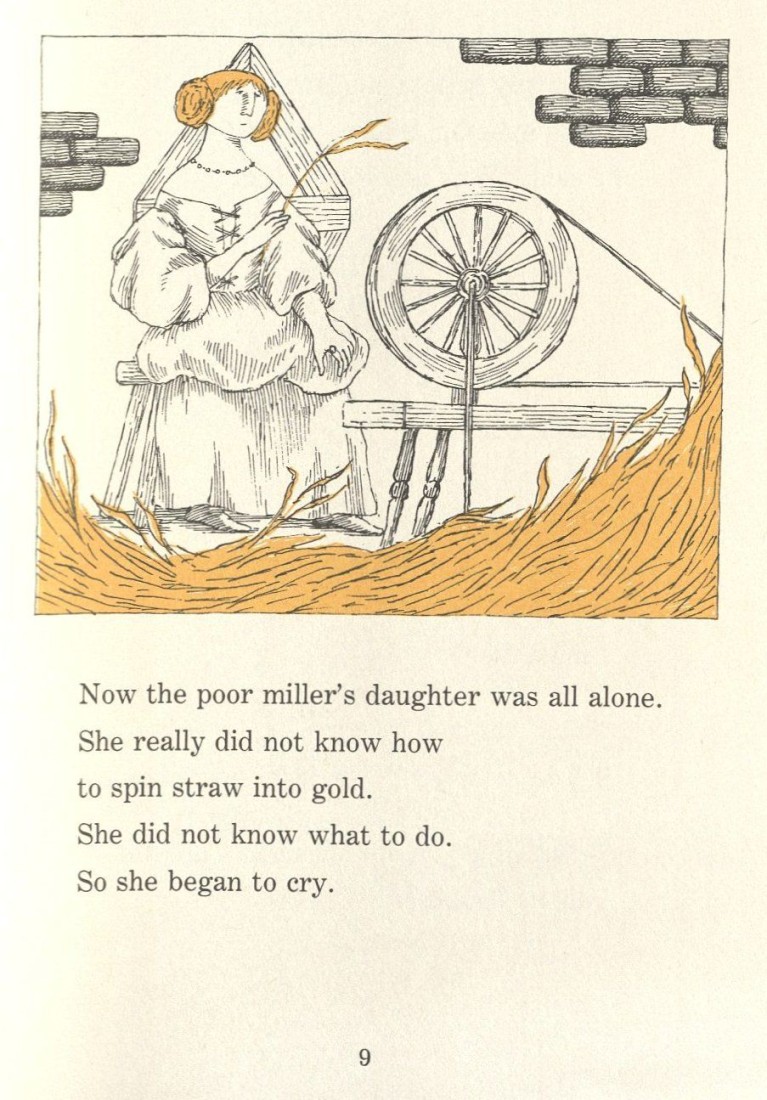
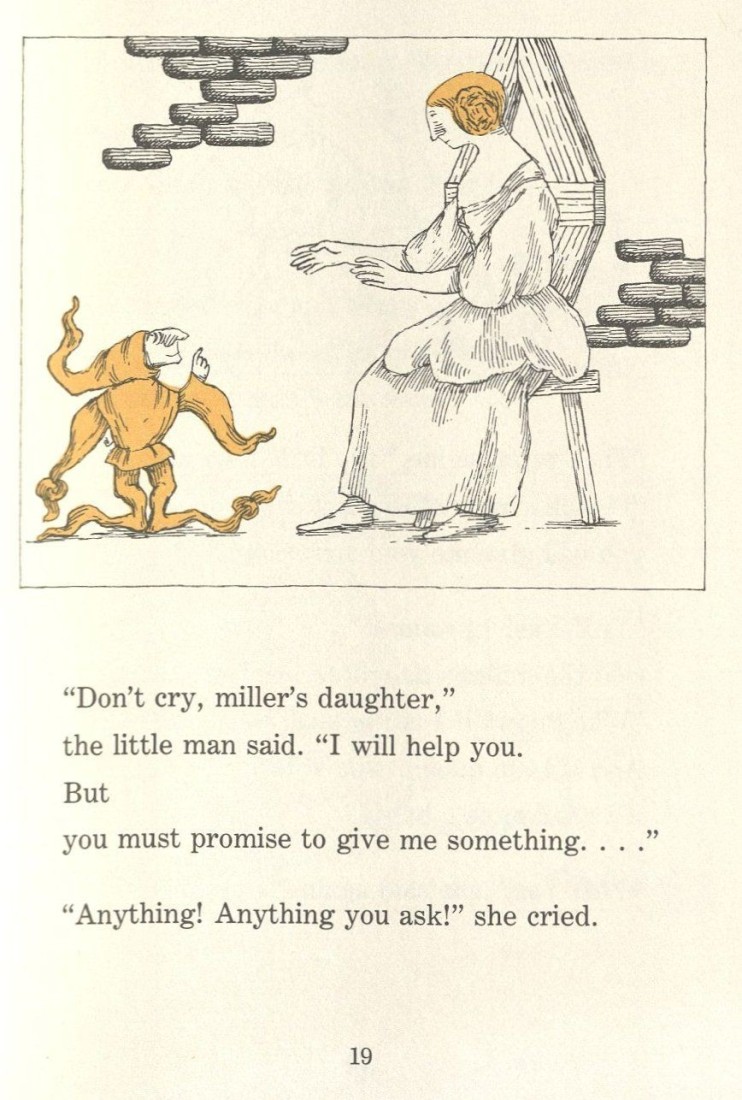
Selected pages in Rumpelstiltskin, 1973. Call Number: Children C262. Click images to enlarge.
The illustrations were the first things to rise up from memory, those bold shapes and bright colors that once felt larger than life. Seeing them again was like recognizing an old friend across a crowded room. Childhood stories often imprint themselves visually before anything else, and these images had lived quietly in the back of my mind for decades. Each page brought back a flicker of familiarity: the tilt of a character’s expression, the sweep of a dress, the way the little man seemed both mischievous and mysterious. Illustrations have a way of anchoring a story in the imagination and rediscovering them reminded me just how powerfully art shapes the way we remember the tales we loved.
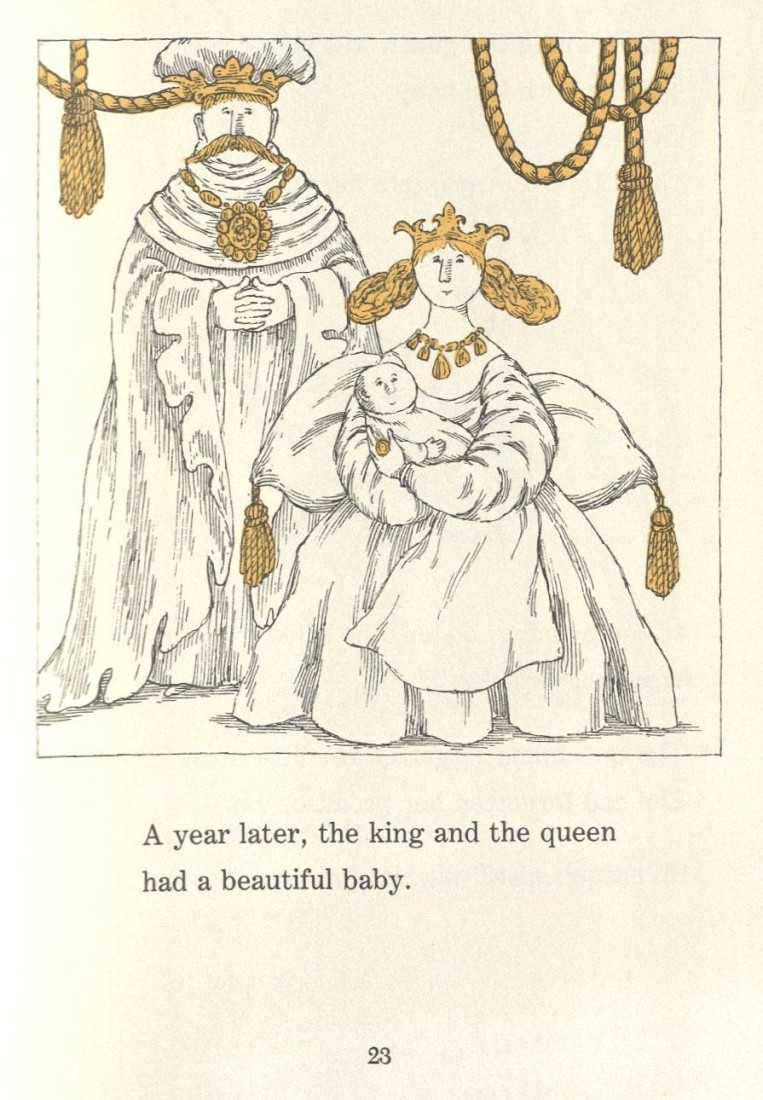
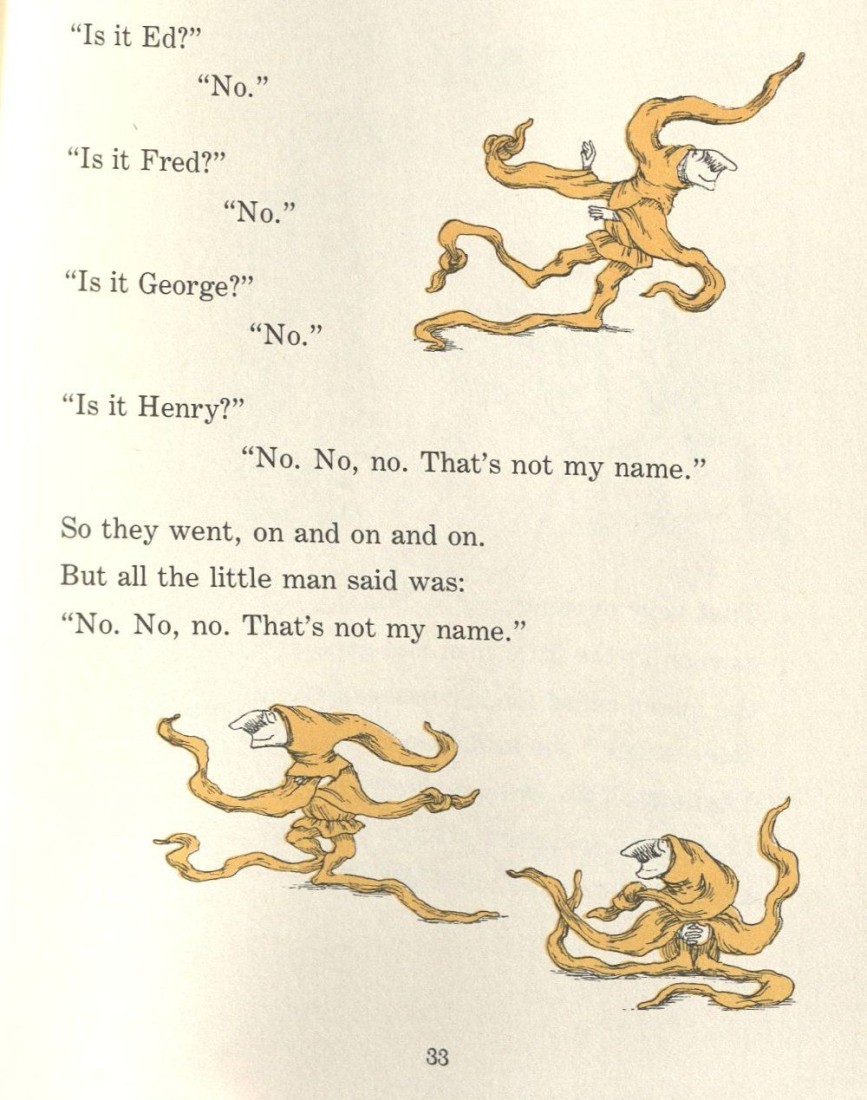
Selected pages in Rumpelstiltskin, 1973. Call Number: Children C262. Click images to enlarge.
Stories also change as we change. The tale I remembered from childhood – a frightened girl trapped in an impossible bargain – reads differently now. With adult eyes, I see a young woman navigating power, danger, and impossible expectations and ultimately outwitting the very creature who sought to control her. What once felt like a simple “damsel in distress” story reveals itself as something more layered: a narrative about resourcefulness, resilience, and the quiet strength of naming what threatens you. It is remarkable how familiar tales shift over time, offering new meanings as we grow into new versions of ourselves.
That feeling – that sudden, tender collapse of past and present – is exactly why special collections stewardship matters. We preserve these books because they are more than paper and ink. They are anchors. They are memory‑keepers. They are the quiet, steady companions that shaped childhoods, sparked imaginations, and offered refuge on difficult days. When we protect them, we are not just saving objects; we are safeguarding the emotional landscapes they hold.
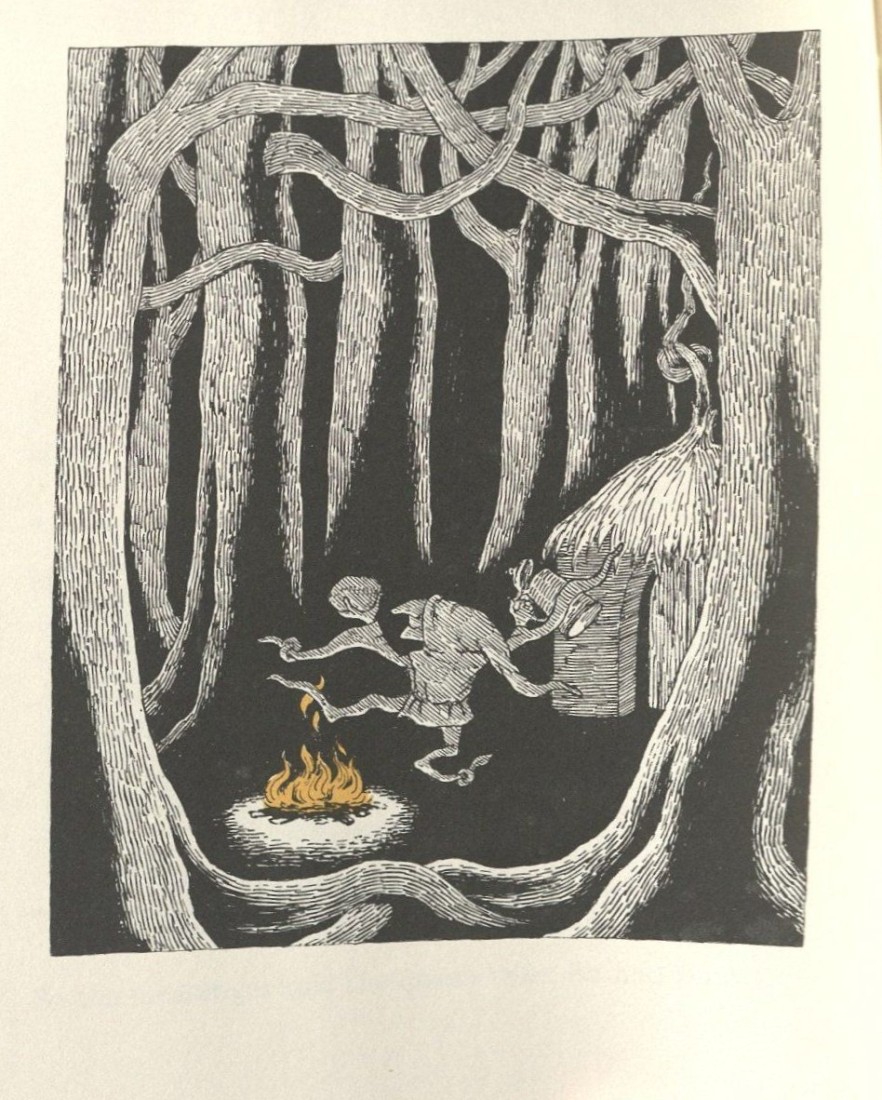
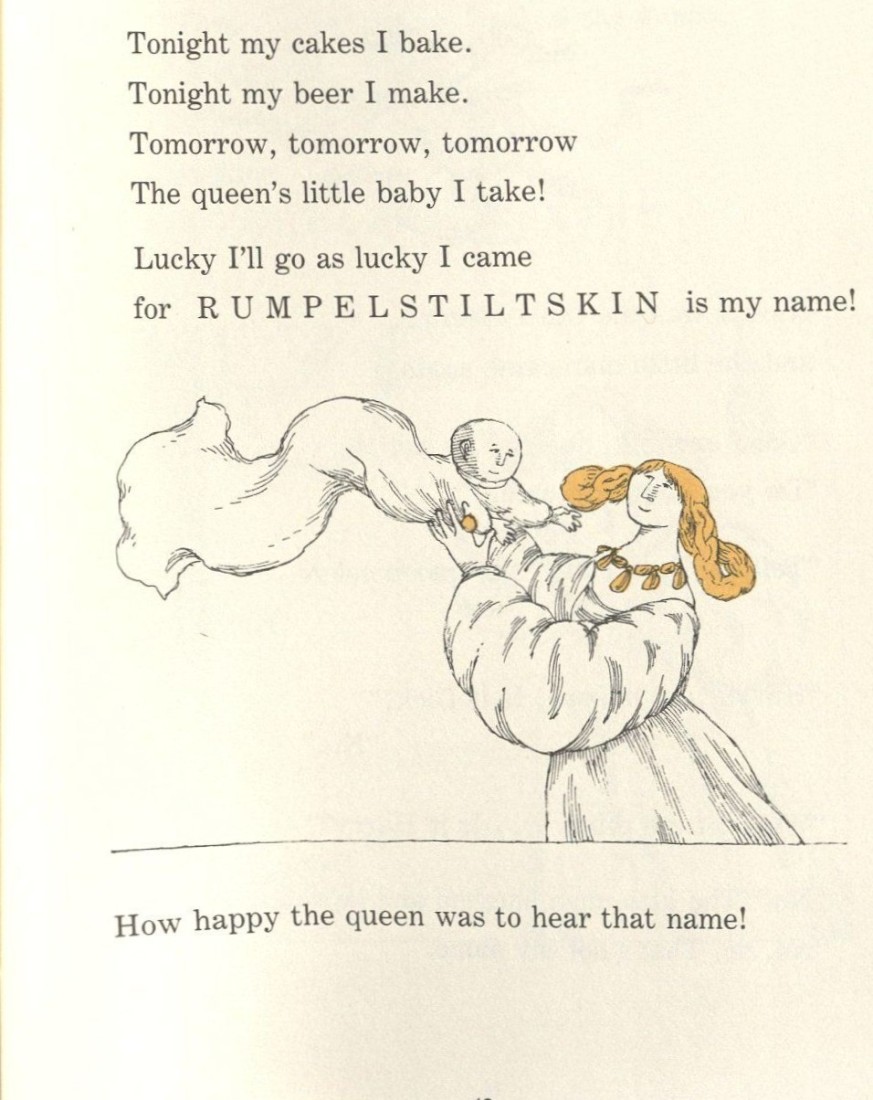
Selected pages in Rumpelstiltskin, 1973. Call Number: Children C262. Click images to enlarge.
In special collections, we make sure that these touchstones of childhood do not disappear into attics or thrift stores or the slow erosion of time. We keep them so that someone, decades from now, can open a familiar story and feel that same rush of recognition, that same warmth of being transported home.
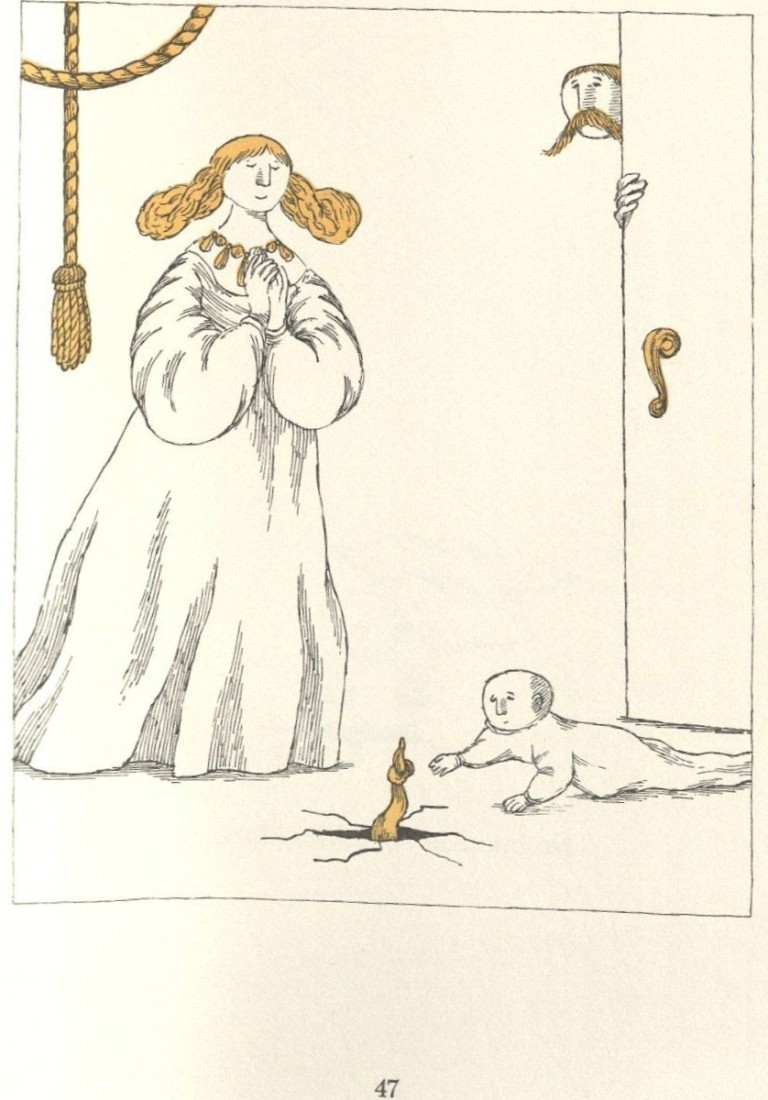
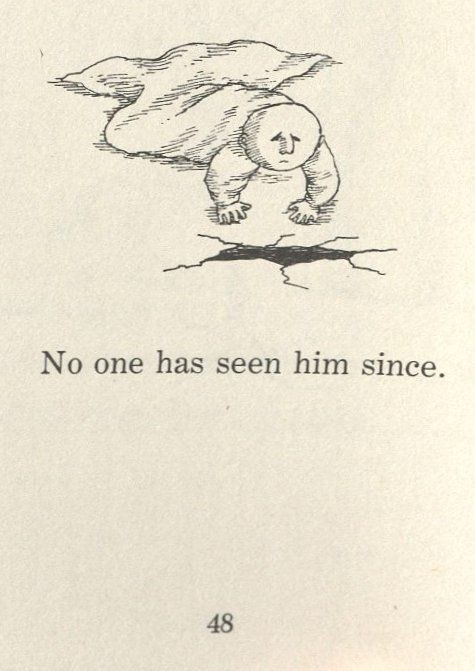
Selected pages in Rumpelstiltskin, 1973. Call Number: Children C262. Click images to enlarge.
As I closed the book and placed it back on the shelf, that familiar warmth lingered: the feeling of being carried, just for a moment, back into childhood. That is the quiet power of these stories, and the reason we preserve them. Through the work of special collections and the care of special collections stewardship, we ensure that these tales endure not only as artifacts, but as living companions. They remain ready to inspire new readers, spark new imaginations, and offer that same sense of home to someone else, years or even decades from now.
Meredith Phares
Operations Manager