
What is the Role of a University?: Scott Colby’s Papers on the 1968 Columbia University Demonstrations
September 2nd, 2026What is the role of a university regarding the needs and concerns of its students, staff, and faculty and members of the surrounding community? That is the central question posed by the 1968 student demonstrations at Columbia University in New York City.

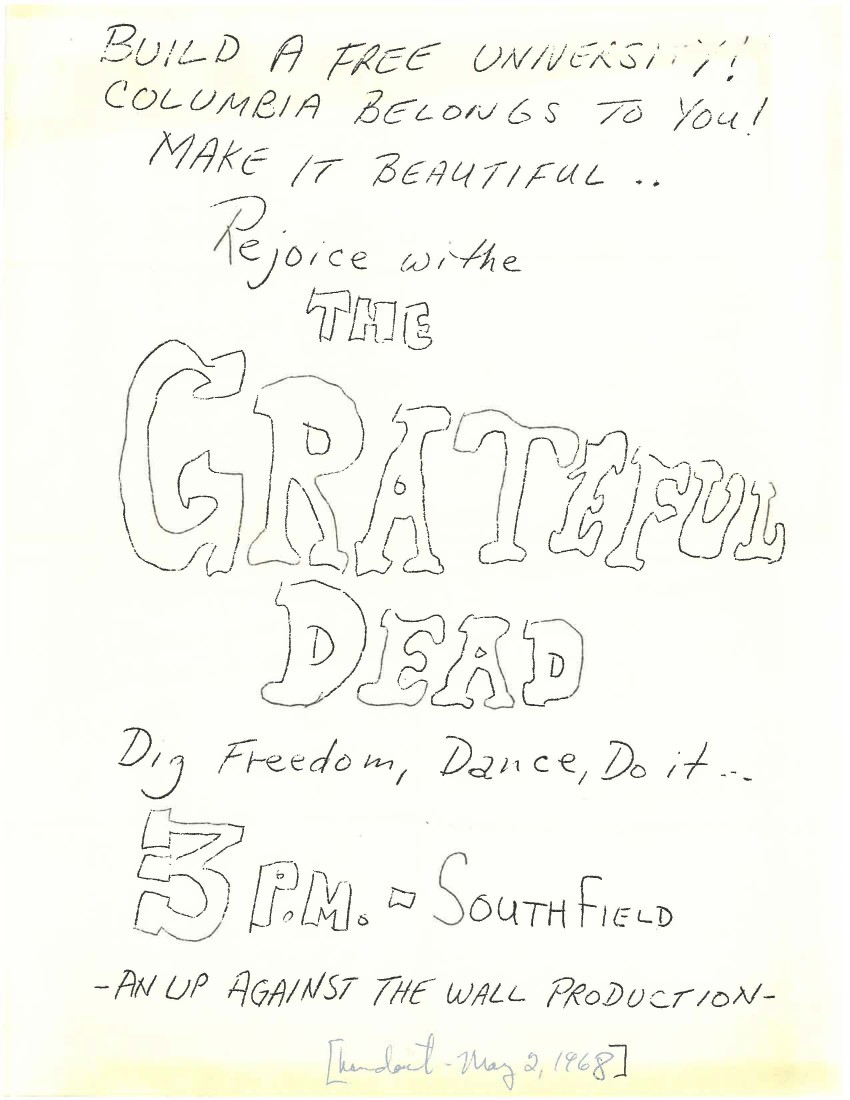
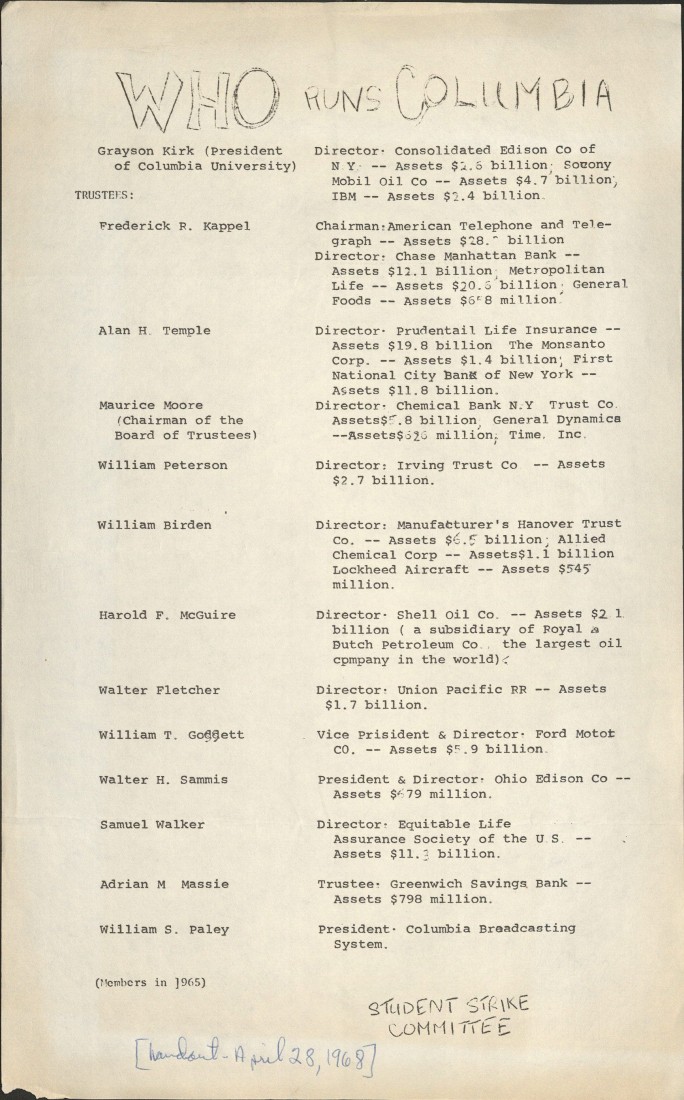
University of Kansas alum Scott Colby was a graduate fellow in the East Asian Studies Department at Columbia during the demonstrations. Appreciating the historical significance of the event, he preserved copies of the Columbia Daily Spectator student newspaper and news clippings about the demonstrations from The New York Times and other local papers. Colby also collected fliers, pamphlets, and various group statements from news boxes in campus buildings, stacks of papers around campus, and students. For example, some fliers announce performances by Phil Ochs and the Grateful Dead and other events held on or near the “liberated” campus. The document “Who Rules Columbia?” is an analysis of the university’s real-estate holdings, connections to the United States intelligence and defense agencies, and national corporations headed by Columbia trustees. It raises questions about taxpayer-funded research enriching private corporations.
Colby recently donated these materials to Spencer Research Library (Call Number: RH WL MS 65). The collection documents how a group of Columbia students began a protest inside of Hamilton Hall, on April 23, 1968, defying the recent university ban on sit-ins and blocking Dean Henry Coleman from leaving his office. The main organized groups involved were the Society for Afro-American Students (SAS) and Students for a Democratic Society (SDS). Columbia University had just broken ground on a gym in the publicly-owned Morningside Park, despite widespread opposition from student groups and the Harlem community. SAS dubbed it “Gym Crow” on account of the separate and much smaller facilities allocated for the mostly Black Harlem residents. In addition to supporting the SAS stance against the gym, SDS had demonstrated against military and CIA recruitment on campus and protested the university’s involvement with the Institute for Defense Analyses (IDA), which provided strategic military research.
The demonstrators issued a list of six demands (Box 1, Folders 6, 8, 11) of the university administration: give amnesty to demonstrators, halt construction of the gym, drop the charges against those who protested the gym construction, sever ties with the IDA, allow indoor demonstrations, and form a bipartite committee of students and faculty for judicial decisions. The students decided to stay in Hamilton Hall until the demands were met.
In his 2003 article on Black student activism at Columbia – part of Colby’s papers and available online – professor and author Stefan Bradley explains what happened next. The SAS rejected integrationist strategies of the nonviolent civil rights movement and focused on Black power, maintaining leadership of their demonstrations against the gym with the support of the surrounding Harlem community. For these reasons and others, SAS asked the white students to leave Hamilton Hall. Following the suggestion of the SAS, the leaders of SDS proceeded to occupy Low Library in solidarity. Over the course of the following week, SDS demonstrators (including students and community members) took over five campus buildings, causing classes to be cancelled. While the SAS activists focused on preventing the construction of the gym, SDS focused on ending Columbia’s support for the military, which they saw as a colonial power suppressing human rights in the region of Vietnam and elsewhere.
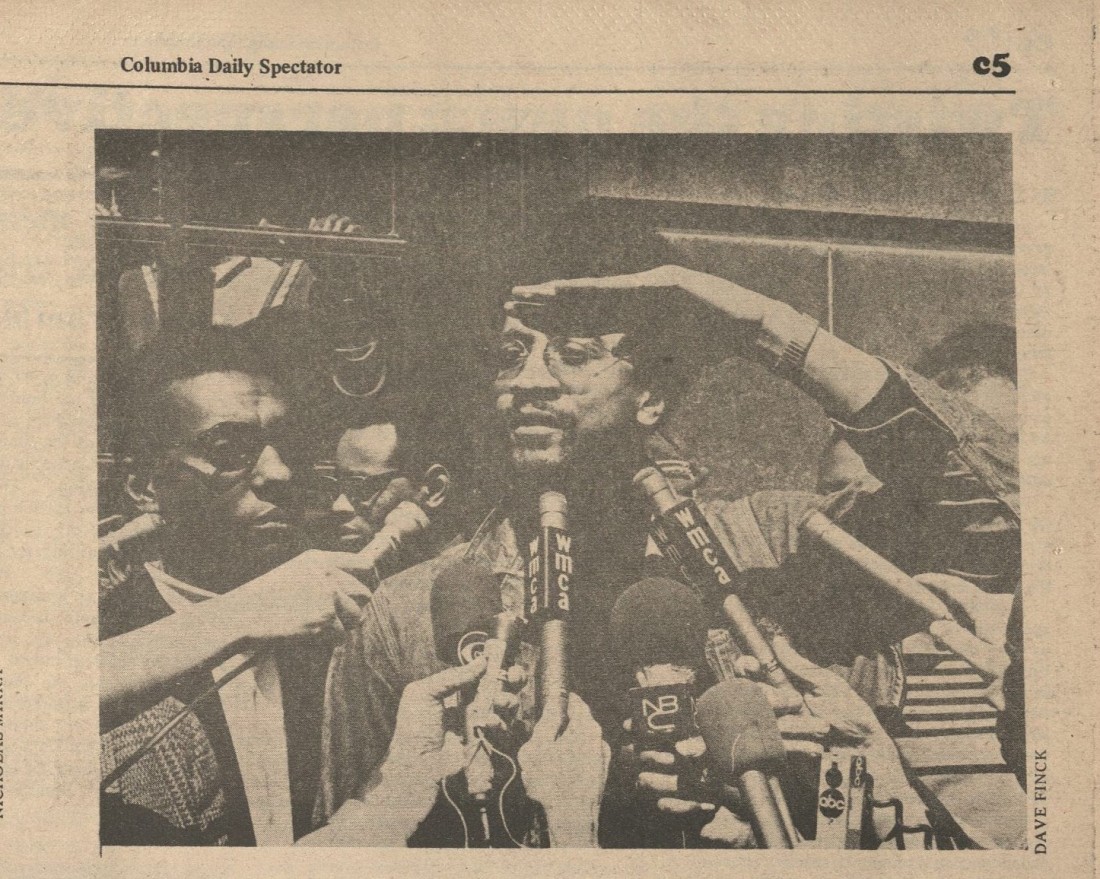
The recent unrest after the murder of Martin Luther King, Jr. was fresh in the minds of Columbia’s administrators, who feared the damage that the people of Harlem could do to the school.
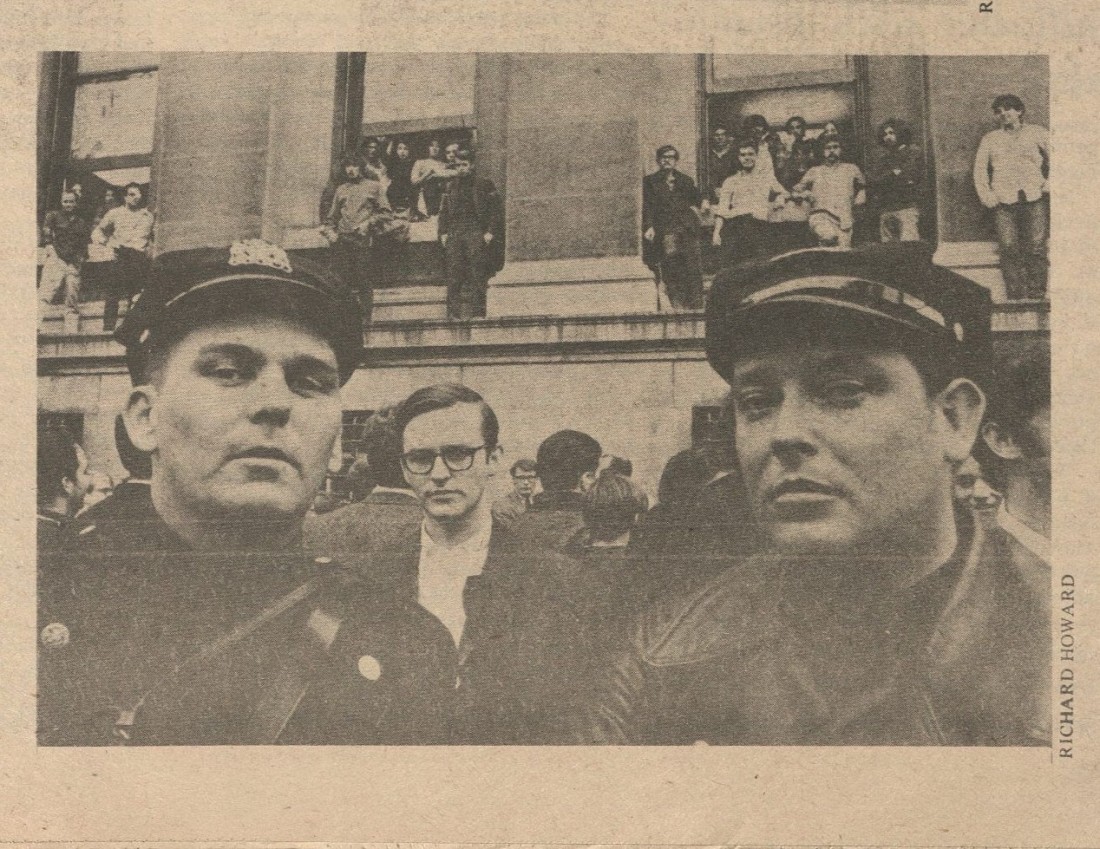
Then the administration called the police. The brutality of the NYPD violently removing students from campus buildings galvanized support for the protestors. Many, including faculty, called for a strike on the university. A strike coordinating committee was created to represent thousands of people who supported the demonstrators’ demands.
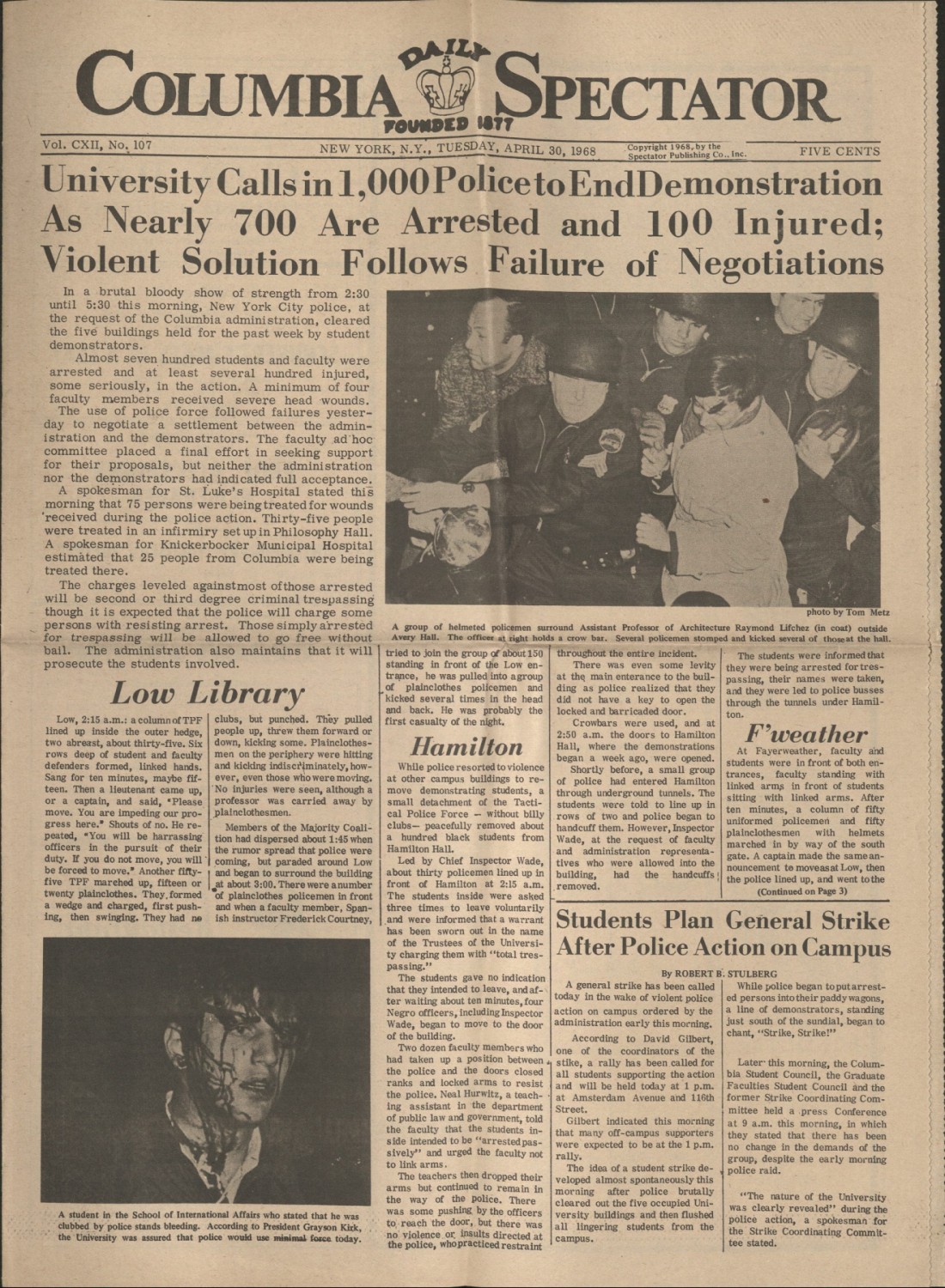
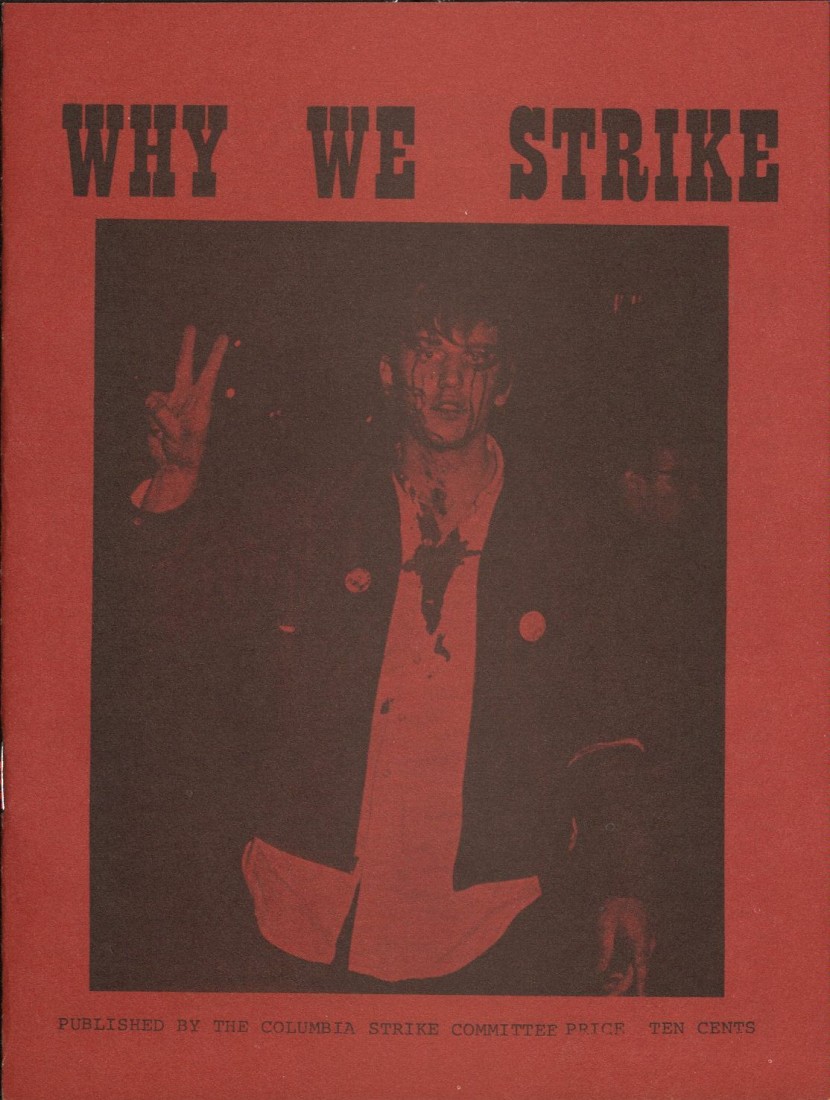
The SAS was ultimately successful in stopping the construction of the gym. In response to the student demonstrations shutting down the school, Columbia University additionally cut ties with the IDA and restricted military recruitment on campus. The school’s Board of Trustees, which previously held all decision-making power, adopted the faculty recommendation to form a tripartite university senate that included representation for faculty and students.
Stefan Bradley explains how solidarity was key to achieving these goals:
It would be too simple to state that the black students of Columbia University achieved their goal of stopping the construction of the gym by their own protest efforts. The black protesters needed the support to the white students, just as the white radicals needed the black militants to advance their goals. While the black demonstrators had the ability to draw the attention of the university officials, the larger number of white radicals added manpower and momentum to the black students who protested on behalf of the community. The black student demonstrators’ insistence on separating themselves from the white protesters helped the radical white students to focus on their own agenda and goals as well. Because the white radicals now had a different focus, they, along with the black protestors, radicalized much of the general student body, and eventually shut Columbia University down for six weeks.
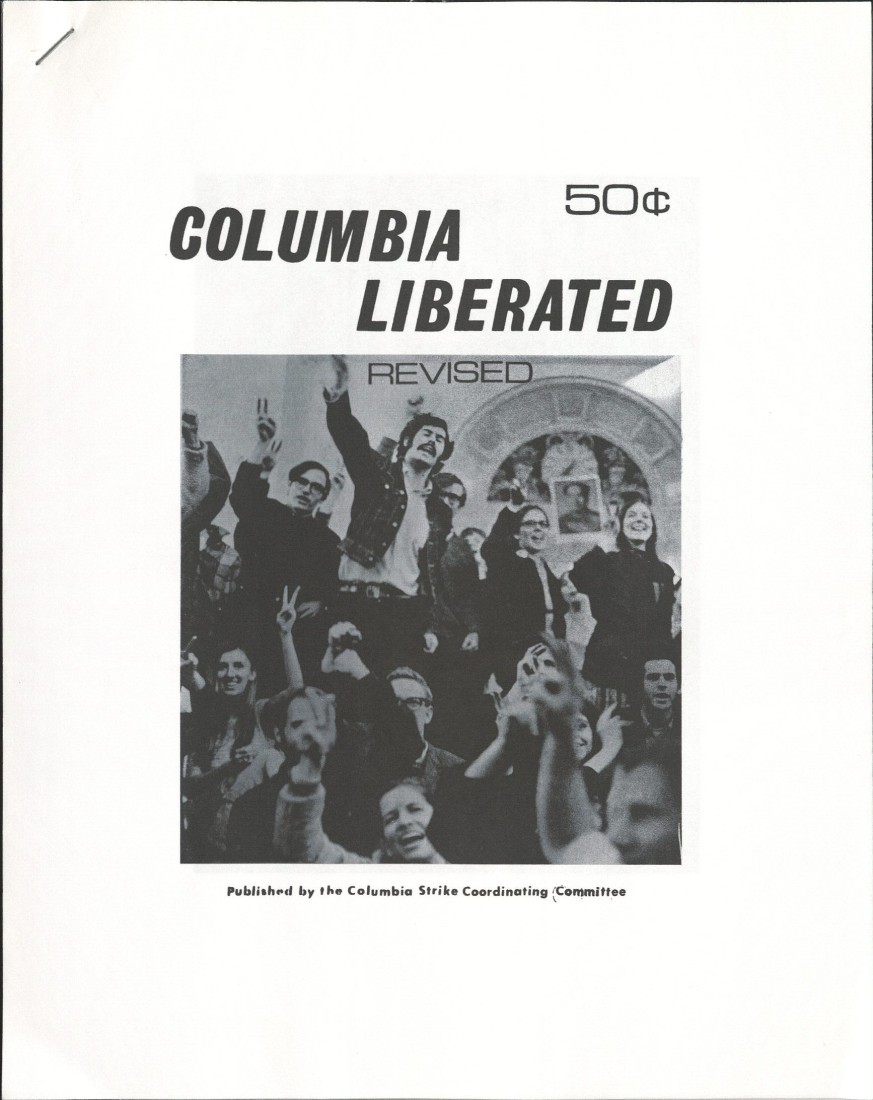
The student protests at Columbia were part of a nationwide movement in which students demanded that universities end militarism, corporatism, and racist policies on campus. There was a widespread push for more democratic control of universities to ensure these values. For example, about a year after the Columbia demonstrations, the governance structure at KU expanded beyond only tenured faculty.
The issues raised by the demonstrators are still being grappled with today – at Columbia, the University of Kansas, and other institutions of higher learning. University responsiveness to the concerns of minoritized communities, diversity of perspectives in the history of domestic and international conflicts, the impact of physical expansion of universities on the surrounding communities, institutional support for the military, students’ rights to protest, and police enforcement on campus are all critical issues today. The Spencer Research Library is glad to make Scott Colby’s papers on the 1968 Columbia University demonstrations available to the public. Come explore the collection in our Reading Room and gain various perspectives from the past on the issues of today.
Erika Earles
Manuscripts Processor