The University of Kansas

Inside Spencer: The KSRL Blog

Books on a shelf

Welcome to the Kenneth Spencer Research Library blog! As the special collections and archives library at the University of Kansas, Spencer is home to remarkable and diverse collections of rare and unique items. Explore the blog to learn about the work we do and the materials we collect.

Celebrating Ronald Johnson and Poetry In Kansas

April 12th, 2013

April is National Poetry Month, and in honor of this KU Libraries will host an event celebrating Ronald Johnson and poetry in Kansas at the Kenneth Spencer Research Library on Tuesday, April 16.

Revered as a poet’s poet, Ronald Johnson (1935-1998) was born and raised in Ashland, Kansas. Though he spent much of his literary career away from Kansas, first on the East Coast and then in San Francisco (where he lived for over two decades), his literary papers have long acted as a physical tie to his birth state.

The Kenneth Spencer Research Library acquired its first cache of the poet’s papers in April of 1969. By this time, Johnson had already published his early collections A Line of Poetry, A Row of Trees (1964) and The Book of the Green Man (1967), but was still building his reputation as a poet. Subsequent major installments followed in 1971 and 1987, culminating with a final acquisition of papers from Johnson’s literary estate in March of this year (2013).
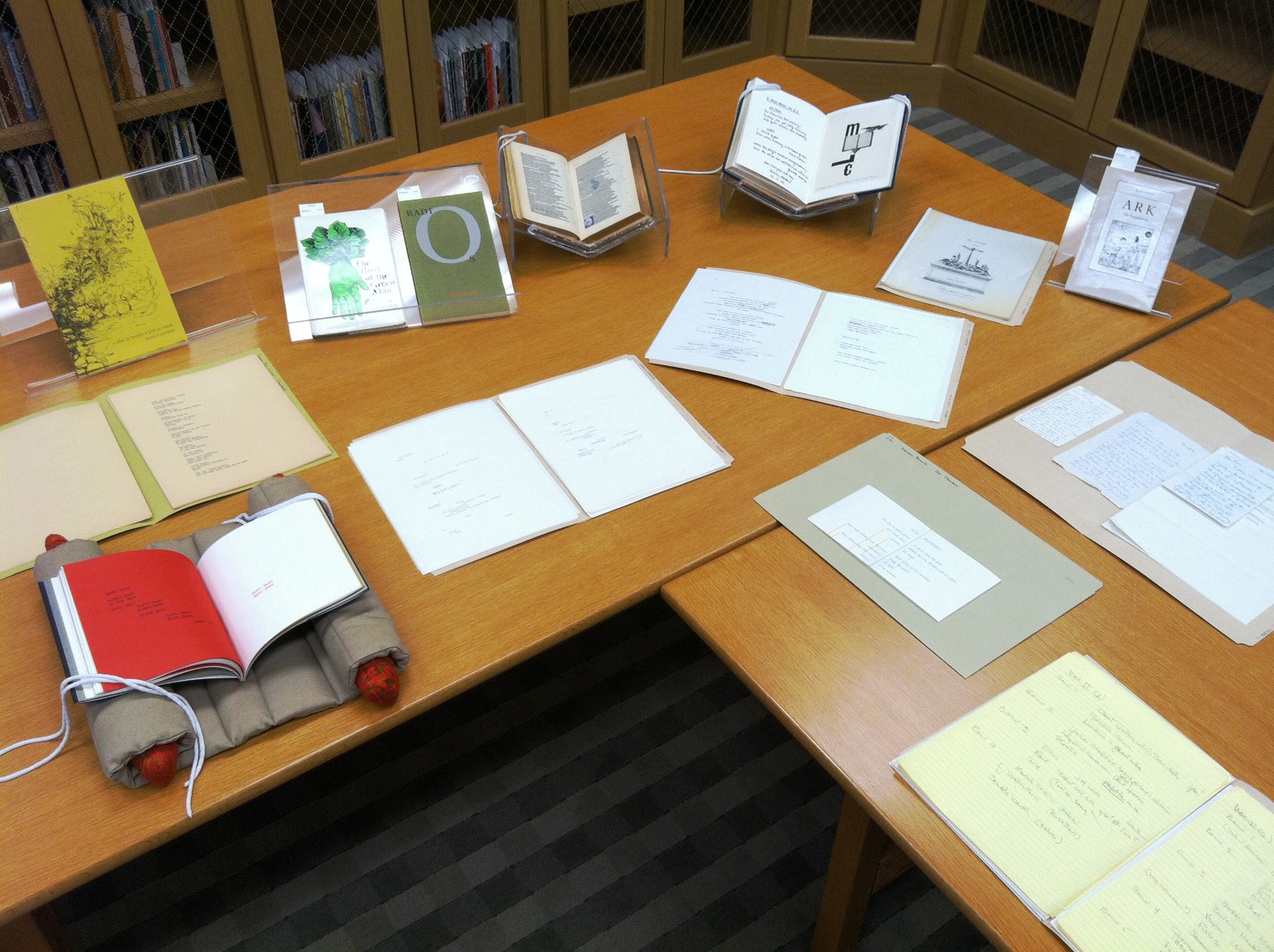
Photograph of a selection of book and manuscript holdings for Ronald Johnson

The papers are a magnificent record of Johnson’s life and literary endeavors. They include,

  • multiple drafts of his poetic works, such as his erasure poem Radi os (a re-writing of sections of Milton’s Paradise Lost by excision), and ARK, a long poem composed over twenty years (which will be republished by Flood Editions later this year)
  • drafts and prototypes for his concrete poetry (poetry which emphasizes and plays upon the visual element)
  • correspondence with friends, loved ones, and literary peers, such as writer Guy Davenport, a great champion and admirer of Johnson’s writing; Jonathan Williams, Jargon Society publisher, poet, and former love; and fellow poets such as Ian Hamilton Finlay, Louis Zukofsky, Mary Ellen Solt, and Robert Creeley.
  • materials documenting Johnson’s “other” career as a chef, caterer, and cookbook writer, including drafts of his popular cookbooks, such as The American Table and The Aficionado’s Southwestern Cooking, and (in the most recent accession) correspondence with food writer M. F. K. Fisher
  • research notes and writing journals
  • photographs and audio recordings of Johnson

One of the highlights of the new acquisition are drafts of Johnson’s The Shrubberies, poems which he composed upon returning to Kansas from San Francisco.  These were collected, edited, and posthumously published by his friend and literary executor, poet Peter O’Leary.  The poems were inspired in part by Ward-Meade Park in Topeka, where Johnson had worked before succumbing to brain cancer and where a plaque now stands in his honor.

Though the materials that arrived in March are not yet cataloged, an online guide exists for the twenty-nine boxes of Johnson’s earlier papers.  The library also houses a large number of Johnson’s published works, many of which exist in scarce and limited editions. These materials complement Spencer’s New American Poetry holdings and its wealth of materials for Kansas writers.

The celebration on April 16 will feature three Kansas poets renowned in their own right: Joseph Harrington and Kenneth Irby, Professors in KU’s Department of English, and Denise Low, Kansas Poet Laureate, 2007-2009.  These speakers will fête Johnson by reading favorite passages from his works alongside poems of their own.  A selection of materials from the library’s Ronald Johnson holdings will be on display during the event.

Elspeth Healey
Special Collections Librarian

Gossip and Literary Celebrity, Circa 1871

March 21st, 2013

Though public figures in late nineteenth-century England might not have had to contend with paparazzi or gossip bloggers, their lives and personal writings were nonetheless a subject of interest and speculation.  What might begin innocently as a jovial private communication between friends could one day find itself before a much wider circle of readers, or so Pre-Raphaelite artist and poet Dante Gabriel Rossetti (1828-1882) warned his friend and fellow poet Algernon Charles Swinburne (1837-1909).

Photogravure of Dante Gabriel Rossetty by G. F. Watts.        Image of black and white reproduction of Dante Gabriel Rossetti's portrait of Algernon Charles Swinburne

Left: Dante Gabriel Rossetti from photogravure by G. F. Watts;  Right: Black and white photograph of Dante Gabriel Rossetti’s portrait of Algernon Charles Swinburne, both reproduced in H. C. Marillier’s Dante Gabriel Rossetti: An Illustrated Memorial of his Art and Life. London: George Bell and Sons, 1899. Call Number: E1470.

In a letter likely dating from November 1871, Rossetti cautioned Swinburne,

[…] You seem to think that such things are likely to be restricted to the circle of their recipients. Why, my dear fellow, every line you have ever written will one day be religiously raked up by greedy & often doubtless malevolent exploiteurs, and it is very hard for those who receive these wonderfully funny things of yours to resolve on taking the only safe course with them for your sake — that is, to destroy them after they have been abundantly laughed over by a circle of friends who know what mere fun they are. (Call Number: MS 23D:3.2)

Though we can only hope that Rossetti wouldn’t have considered the staff at the Spencer Research Library to be greedy and malevolent “exploiteurs”–he had in mind perhaps critics of the day, publishers, or members of the periodical press–time has proven the validity of his concern.  For example, a number of Rossetti’s own private communications now reside in Spencer’s collection of Rossetti Family Correspondence (MS 23).  This collection includes letters by his father, Gabriele Rossetti, his sister, the poet Christina Georgina Rossetti, his brother, critic William Michael Rossetti, and his sister-in-law, painter and biographer Lucy Madox (nee Brown) Rossetti.  These letters are a boon to scholars, students, and the general public, even if their creators might not have wished for all of them to reach our prying eyes.

To read Rossetti’s letter to Swinburne, click on the thumbnails below to enlarge:

Image of Rossetti to Swinburne [circa Nov. 1871p.1]  Image of page 2 of Letter from Rossetti to Swinburne.  Image of page 3 of letter from Rossetti to Swinburne  Image of page four of letter from Rossetti to Swinburne

Letter from Dante Gabriel Rossetti to Algernon Charles Swinburne. [Shortly after 6 Nov. 1871?]. Rossetti Family Correspondence. Call Number: MS 23D:3.2. Click images to enlarge.

Elspeth Healey
Special Collections Librarian

From Spencer’s Irish Collections: Internment Camp Autograph Book

March 14th, 2013

St. Patrick’s Day is this Sunday, March 17, so we thought we would highlight a fascinating artifact from the Kenneth Spencer Research Library’s rich Irish holdings.

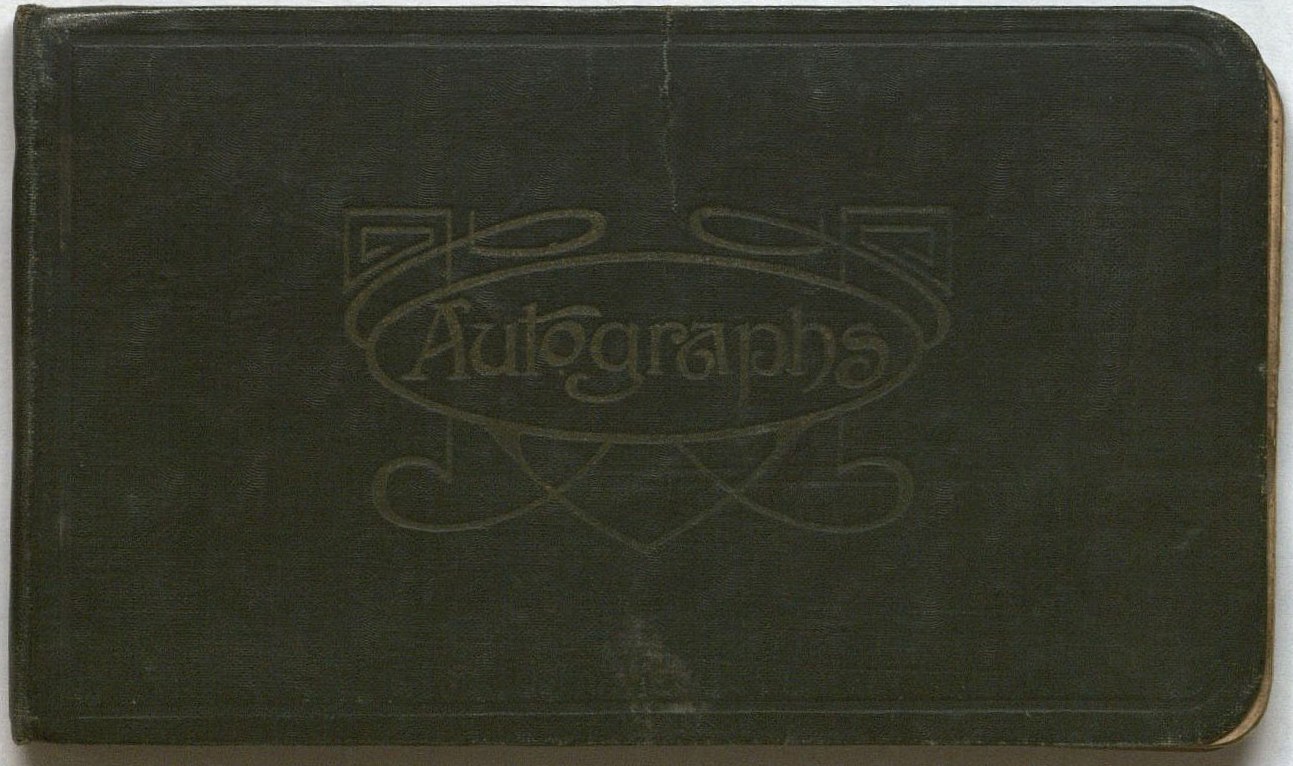
Image of cover of Ballykinlar Internment Camp Autograph Book

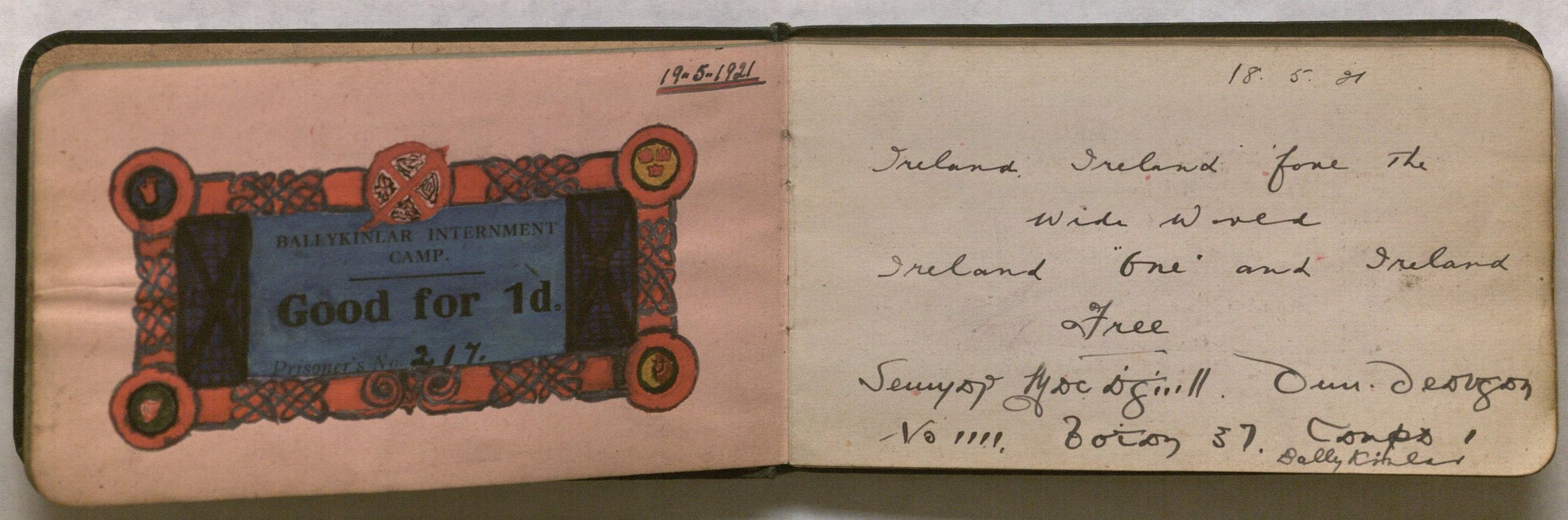
This autograph book, dating from 1921, contains entries by inmates at Ballykinlar Internment Camp.  Located in County Down in what is now Northern Ireland, Ballykinlar was a British-run camp that housed Irish prisoners during the Anglo-Irish War, also known as the Irish War of Independence (1919-1921).

Image of the Autograph Book open to an embellished credit ticket and an inscription bearing a patriotic sentiment.

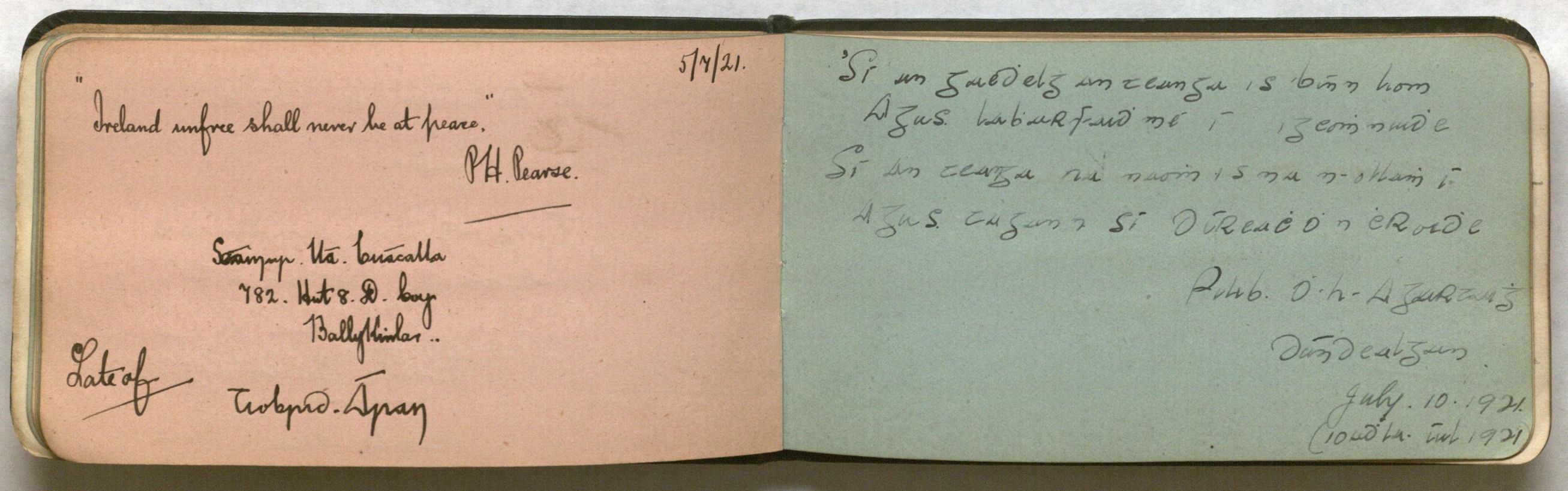
Image of Opening featuring quotation from Pearse and an inscription in Irish.

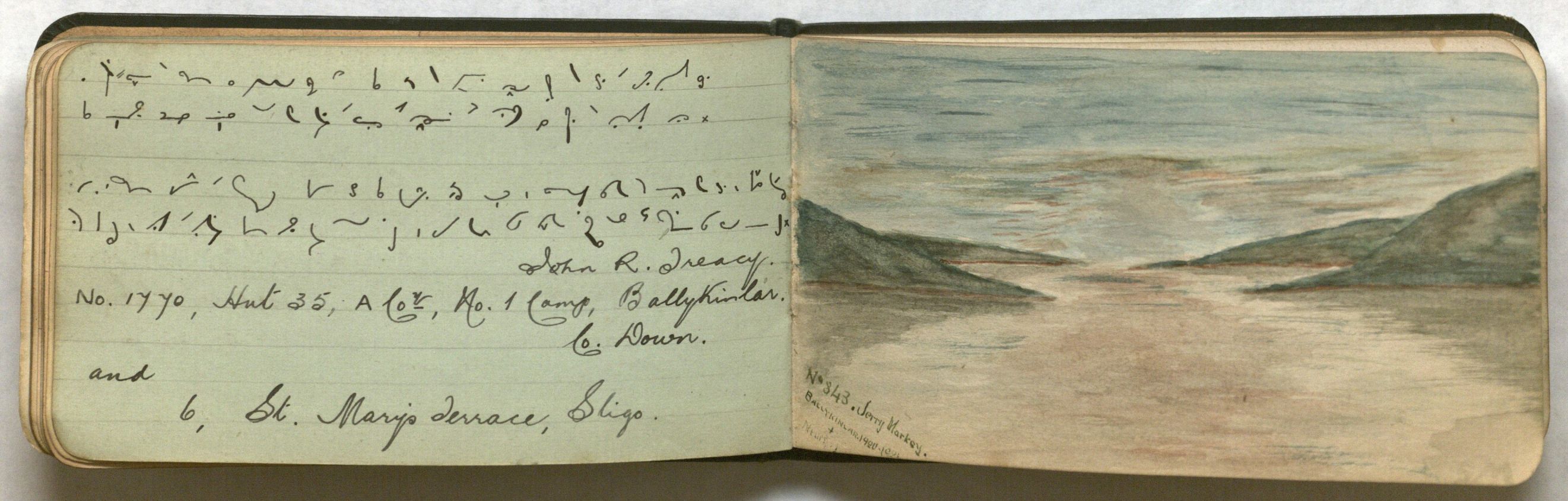
Photograph of an opening featuring an inscription in shorthand and a sketch.

Top: opening featuring an embellished camp credit ticket (left); Middle: opening featuring an inscription in Irish (right); Bottom: opening featuring a sketch and an inscription in shorthand.  Autograph Book, Ballykinlar Internment Camp, 1921. Call Number: MS K19. Click images to enlarge.

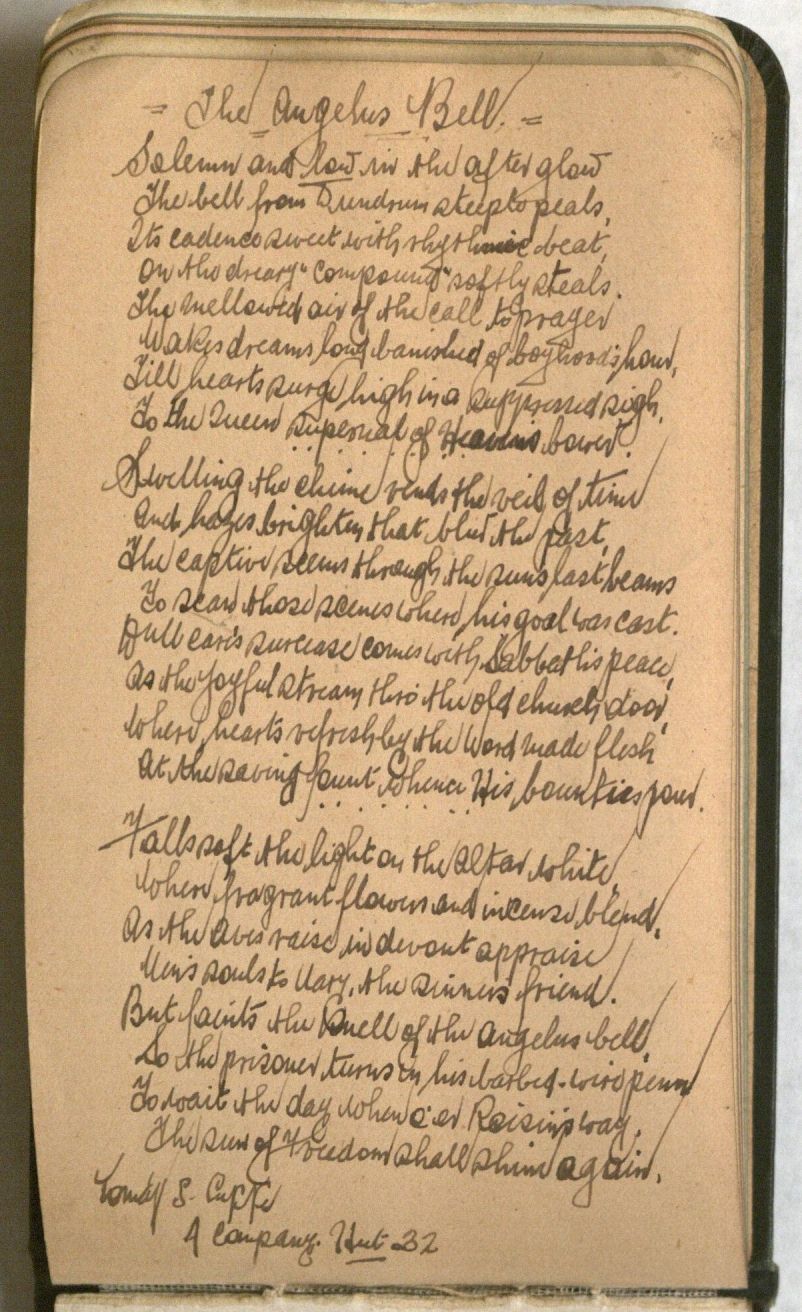
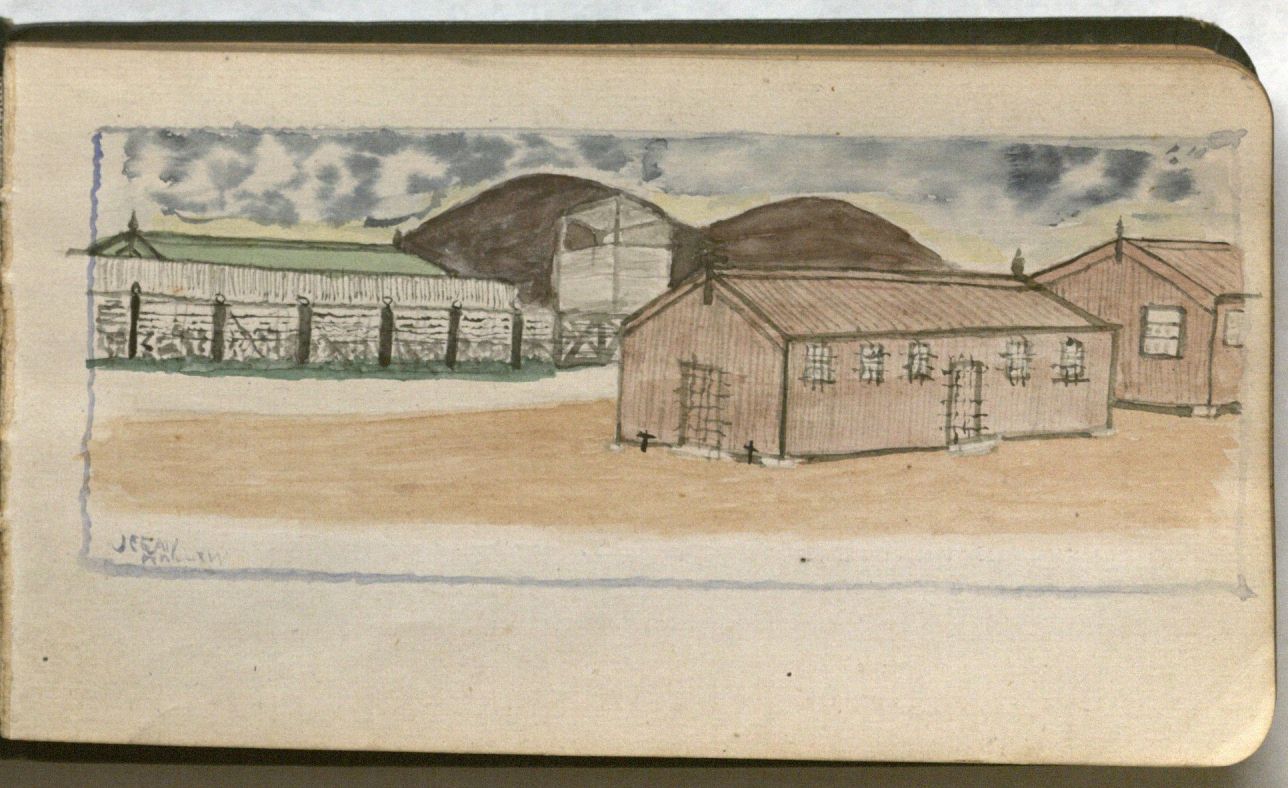
The book’s pages are filled with the internees’ inscriptions, drawings, patriotic sentiments, quotations, and poems (composed in English, Gaelic, and even shorthand).  Prisoners were housed in huts, as depicted in the sketch below, and many, like the author of the poem on the facing page, included their hut numbers when they signed their names.

Page containing the poem "The Angelus Bell" Last stanza of the poem “The Angelus Bell”, written in the autograph book by a Ballykinlar internee:

[….]

Falls soft the light on the Altar white
When fragrant flowers and incense blend
And as the Aves raise in devout appraise
Men’s souls to Mary, the sinner’s friend.
But faint’s the knell of the Angelus bell,
So the prisoner turns in his barbed-wire pen
To wait the day whenev’r Risings may [?],
The sun of Freedom shall shine again.

Image of a page containing a sketch of the camp's huts.

Poem “The Angelus Bell”  inscribed by an internee and facing page sketch of the camp. Autograph Book, Ballykinlar Internment Camp, 1921. Call Number: MS K19. Click images to enlarge.

This manuscript volume came to the Spencer Library from Ireland as part of the 25,000 item collection of Irish nationalist, civil servant, and book collector, P. S. O’Hegarty (1879-1955).  The collection is particularly strong in publications and ephemera related to Irish politics as well as literature of the Irish Literary Renaissance.  O’Hegarty’s  library contains another internment camp autograph book from the early twentieth century.  This second book belonged to a man named Paul Cusack, who was first a prisoner at Frongoch Internment Camp in Wales in 1916 following the Easter Rising and then later at Mountjoy Prison in Dublin in 1921 (Call Number: MS K18).  The portion of Cusack’s autograph book that dates from 1916 includes an inscription that appears to be by fellow Frongoch inmate Terence MacSwiney.  MacSwiney later became Lord Mayor of Cork and died during a hunger strike while incarcerated in Brixton Prison in 1920.  Autograph books such as these offer insight into an important period in Irish history.

To learn more about the Kenneth Spencer Research Library’s Irish Collections, visit the overview of Spencer’s Irish holdings on our website or delve deeper with our Irish Collections Lib Guide (especially helpful for identifying our Irish manuscript holdings).

Looking for St. Patrick’s Day-themed activities in town?  Lawrence’s annual St. Patrick’s Day parade will take place on March 17, 2013 at 1:30pm. On March 23, the Irish Roots Cafe will host a musical event at the Grenada, which will include Sean Nós style song in the Irish language.

Elspeth Healey
Special Collections Librarian

Collection Snapsot: A Presidential Pardon

February 21st, 2013

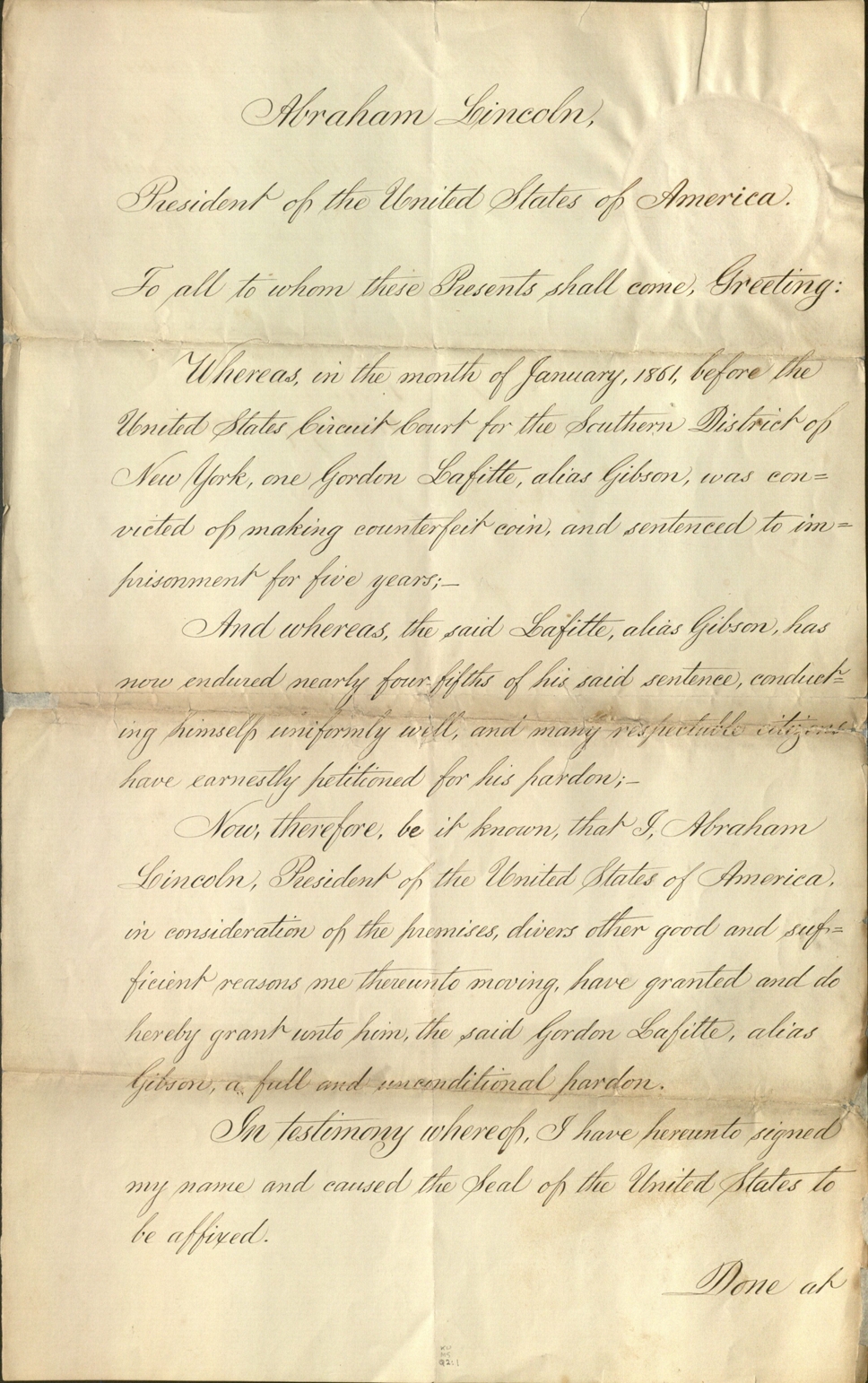
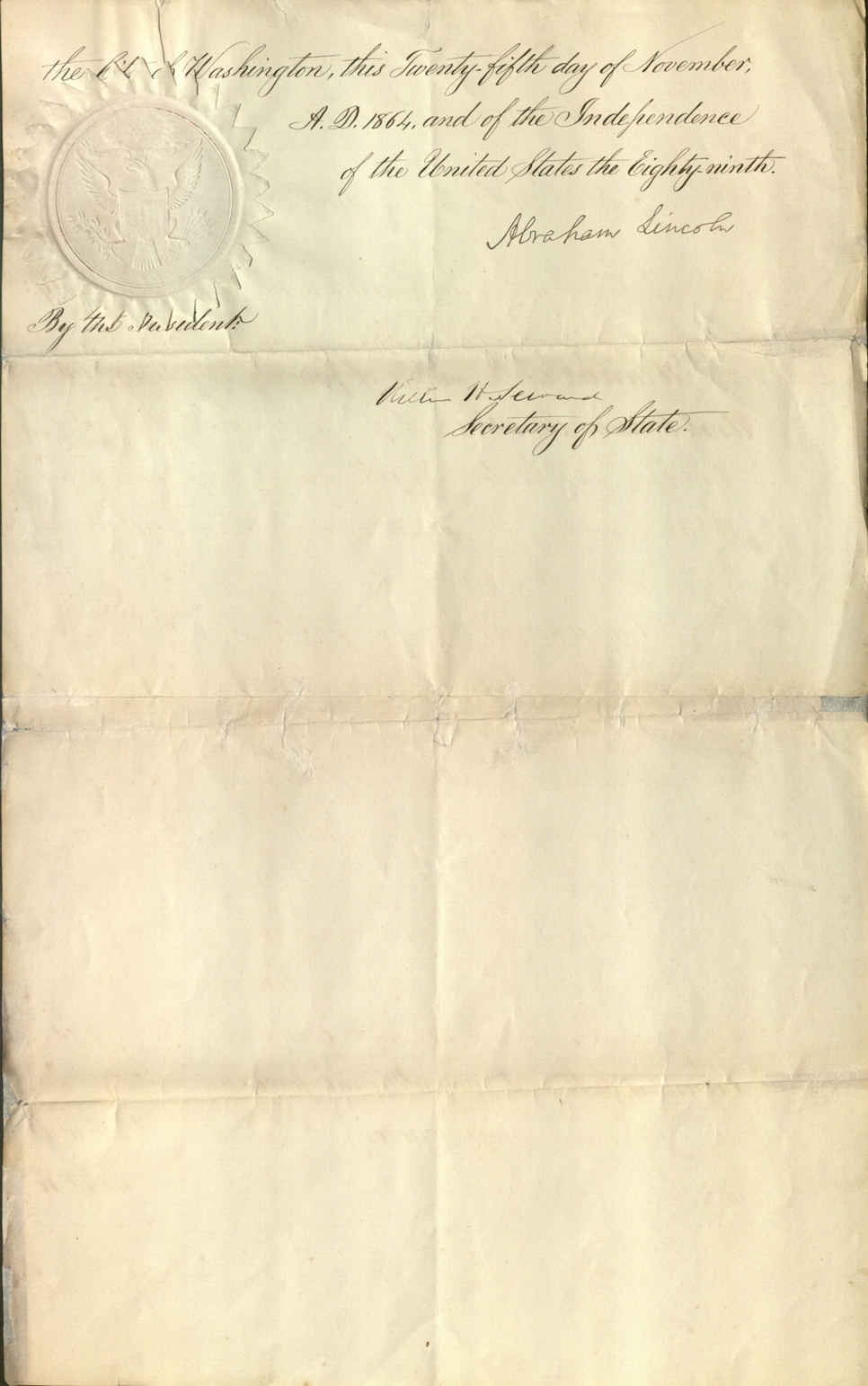
In honor of Presidents’ Day (and the upcoming Academy Awards with a certain Lincoln movie in the lead with twelve nominations), we highlight this Presidential pardon signed by Abraham Lincoln on November 25, 1864.

He pardoned one Gordon Lafitte, alias Gibson, for “making counterfeit coin.” Mr. Lafitte had served 4/5ths of his 5 year sentence and was pardoned for good behavior while behind bars.

Photograph of Lincoln Pardon of Gordon Lafitte (p. 1)  Photograph of Lincoln Pardon of Gordon Lafitte (p. 2)

Pardon for Gordon Lafitte. Signed by Abraham Lincoln and William H. Seward. November 25, 1864.
Call number: MS Q2:1. Click images to enlarge.

Whitney Baker
Head, Conservation Services

Crispy Critters

February 8th, 2013

Pliny the Elder, that most famous and trustworthy of the ancient Roman naturalists, was too curious about natural phenomena for his own good; as every school-child knows, he was asphyxiated by volcanic dust and gasses when he went to investigate the same eruption of Vesuvius that destroyed Pompeii in 79 A.D.

Aristotle and Pliny are the names that come to mind when we think of naturalists of the ancient world.  Aristotle was the originator of biological classification; in contrast to the Biblical groups of animals as “clean” or “unclean,” he established categories based primarily on anatomical and other observable characteristics. His was a coherent natural system. The Spencer Library has several editions of Aristotle’s Historia Animalium, the earliest printed in 1493.

The only surviving work of Pliny is the encylopedic Naturalis Historia, the earliest extant manuscript of which dates from the 10th century.** His work was a compilation of all the animals and plants that he knew of or had heard about, and contained little that was original. He was not yet a systematist and there was little order in his arrangement, but we have him to thank for the survival of some of the writings of others, and he is regarded as THE authority on natural history from the days of Imperial Rome through the Middle Ages.

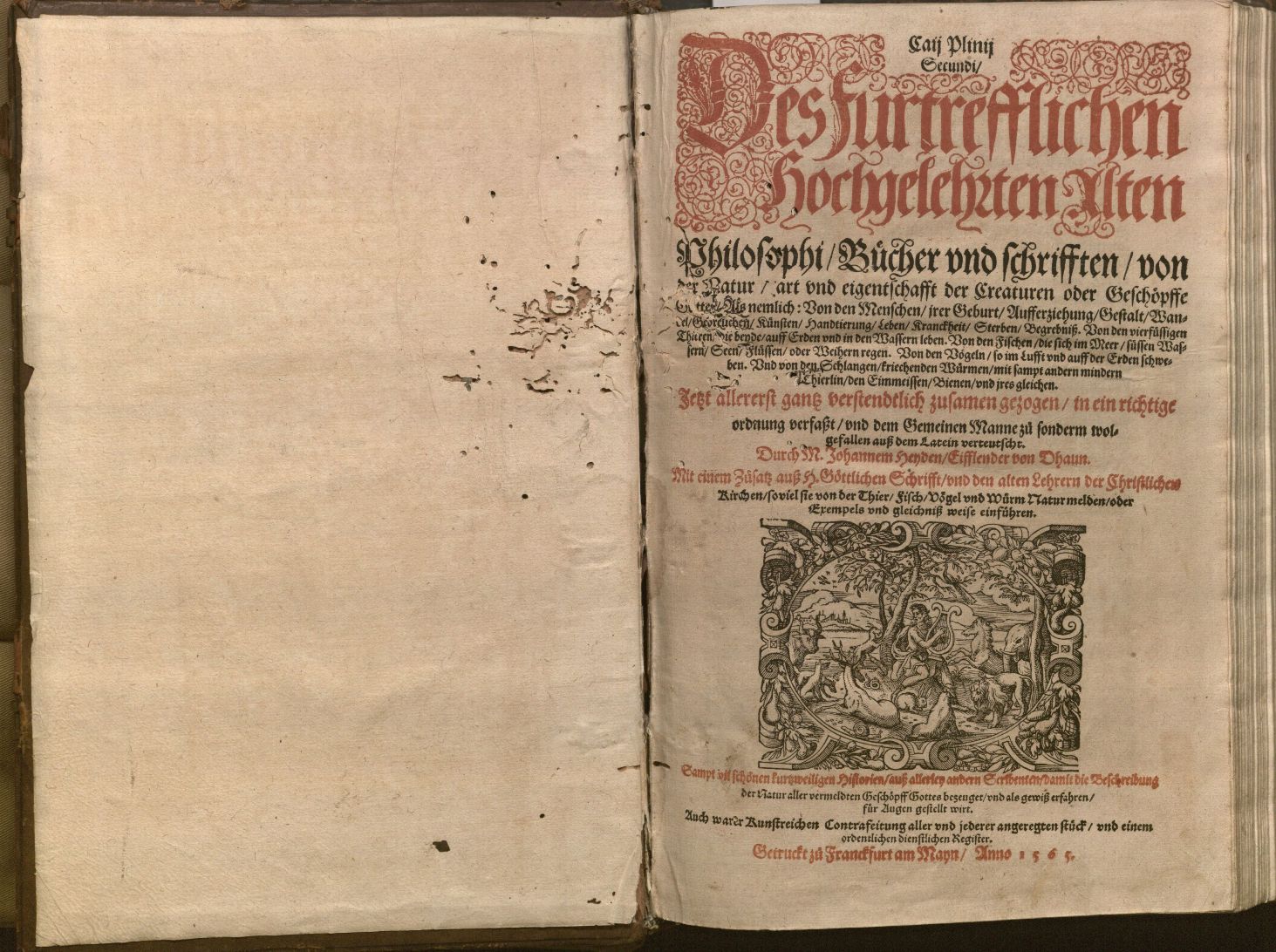
Image of title page for Bücher und Schrifften von der Natur (1565)

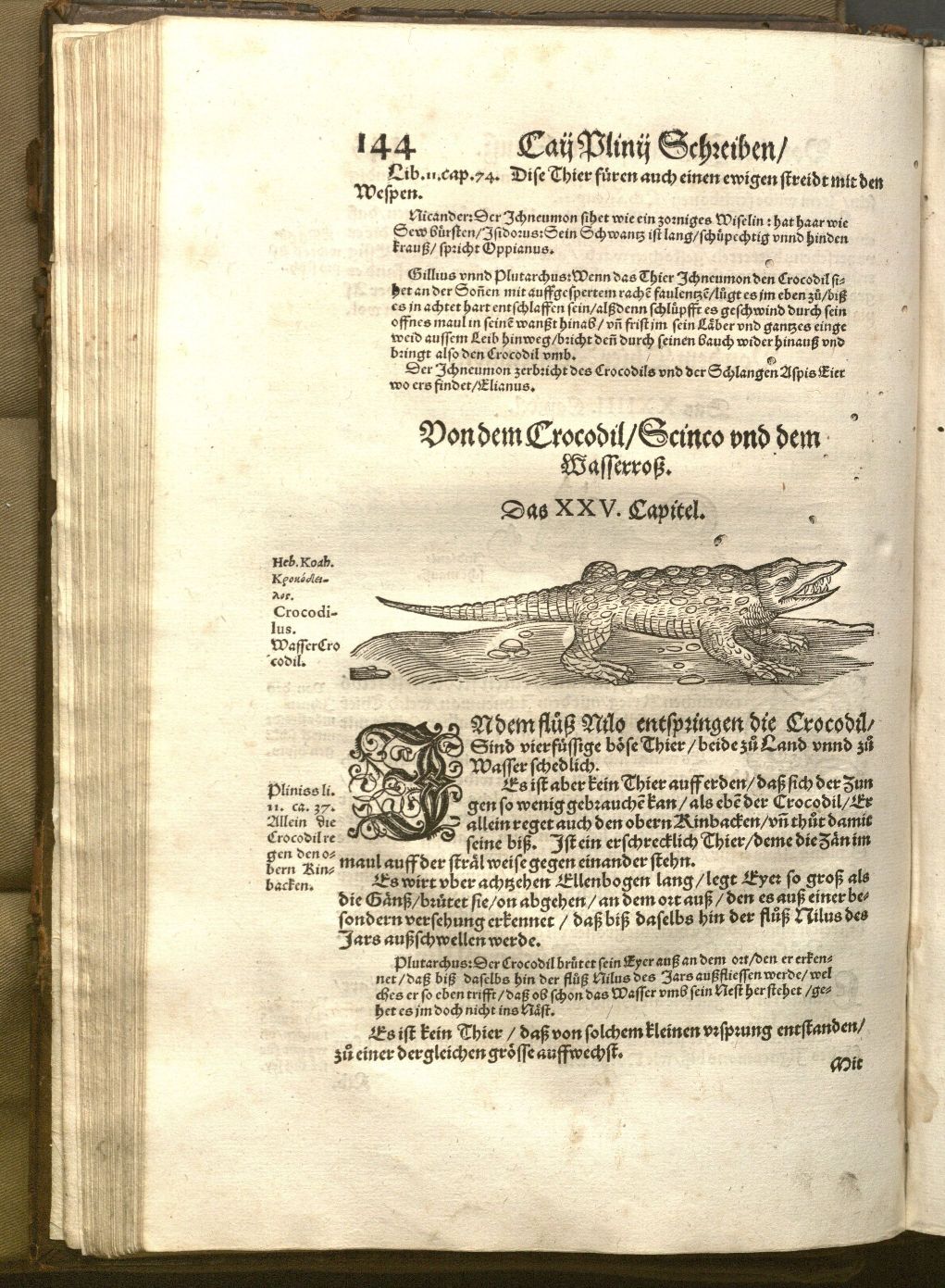
Photograph of page 144 from Bücher und Schrifften von der Natur, featuring a section on crocodiles

Pliny, the Elder. Caji Plinii Secundi … Bücher und Schrifften von der Natur, Art und Eigenschafft der Creaturen oder Geschöpfe Gottes … [Naturalis historia. German.] Franckfurt am Mayn : Feyrabend und Hüter, 1565. Call Number: Summerfield E1059. Click images to enlarge.

Beginning with the earliest printing of Pliny in 1469, there were at least 42 printings in numerous languages, including English, before 1536. The Kenneth Spencer Research Library houses 21 separate editions produced between 1476 and 1685. This German version contains books 7-10 and part of book 11. The translation was made by J. Heyden Eifflender von Dhaun and is illustrated with woodcuts by Jost Amman and Virgil Solis.

Sally Haines
Rare Books Cataloger
Adapted from her Spencer Research Library exhibit and catalog, Slithy Toves: Illustrated Classic Herpetological Books at the University of Kansas in Pictures and Conservations

**Author’s Note: This is the information we had at the time of publication of Slithy Toves in 2000; Mr. Roger Pearse has recently pointed out that in fact there do exist fragments of 5th century codices of Pliny.